


 Скачать презентацию Microsoft Saa S Disruptive Technology Research Matt Deacon
d024925f73d3337f8dbfcb9773936360.ppt
- Количество слайдов: 24
 Microsoft Saa. S Disruptive Technology Research Matt Deacon, Microsoft Dr Steven Moxey, Manchester Business School March, 2007 INSIGHT Conference Celtic Manor, UK
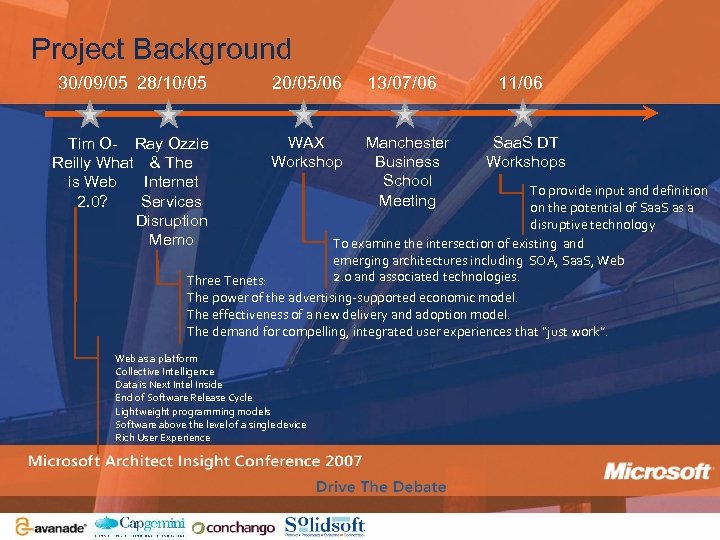 Project Background 30/09/05 28/10/05 20/05/06 13/07/06 Tim O- Ray Ozzie Reilly What & The is Web Internet 2. 0? Services Disruption Memo WAX Workshop Manchester Business School Meeting 11/06 Saa. S DT Workshops To provide input and definition on the potential of Saa. S as a disruptive technology To examine the intersection of existing and emerging architectures including SOA, Saa. S, Web 2. 0 and associated technologies. Three Tenets: The power of the advertising-supported economic model. The effectiveness of a new delivery and adoption model. The demand for compelling, integrated user experiences that “just work”. Web as a platform Collective Intelligence Data is Next Intel Inside End of Software Release Cycle Lightweight programming models Software above the level of a single device Rich User Experience
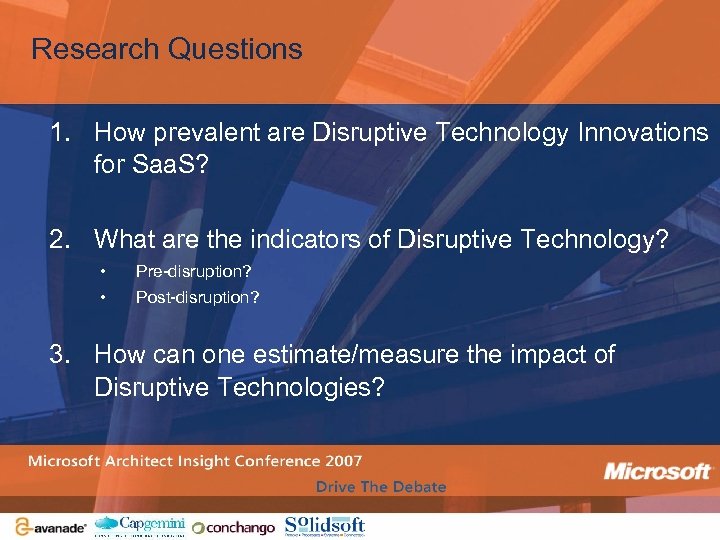 Research Questions 1. How prevalent are Disruptive Technology Innovations for Saa. S? 2. What are the indicators of Disruptive Technology? • Pre-disruption? • Post-disruption? 3. How can one estimate/measure the impact of Disruptive Technologies?
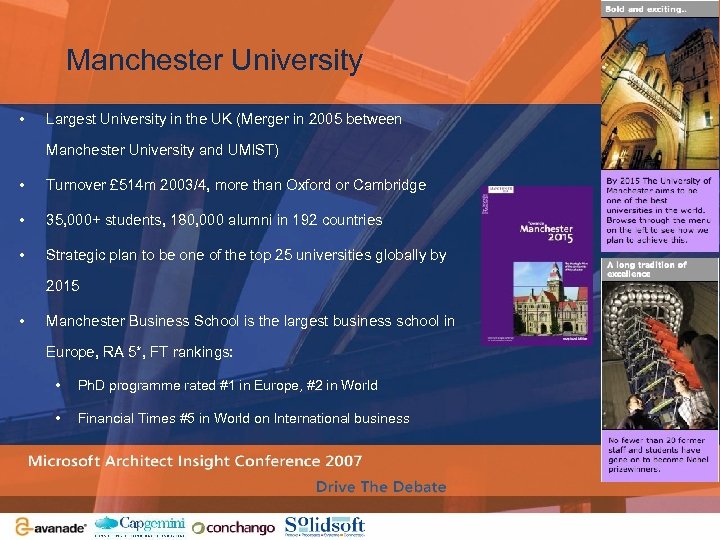 Manchester University • Largest University in the UK (Merger in 2005 between Manchester University and UMIST) • Turnover £ 514 m 2003/4, more than Oxford or Cambridge • 35, 000+ students, 180, 000 alumni in 192 countries • Strategic plan to be one of the top 25 universities globally by 2015 • Manchester Business School is the largest business school in Europe, RA 5*, FT rankings: • Ph. D programme rated #1 in Europe, #2 in World • Financial Times #5 in World on International business
 Seagate case study
 Definitions
 Disruptive Technologies Definition (Part 1) Disruptive technologies introduce a very different package of attributes from the mainstream technology that is currently valued. Furthermore, and most importantly, the new technology performs particularly badly on one or two dimensions that are currently particularly important to current customers.
 Disruptive Technologies Definition (Part 2) In addition, to be destructive, the new technology makes rapid strides on the key dimensions, those on which it massively underperformed initially, to the extent that it becomes competitive even on these dimensions. It thus has the potential to be destructive to the existing technology…
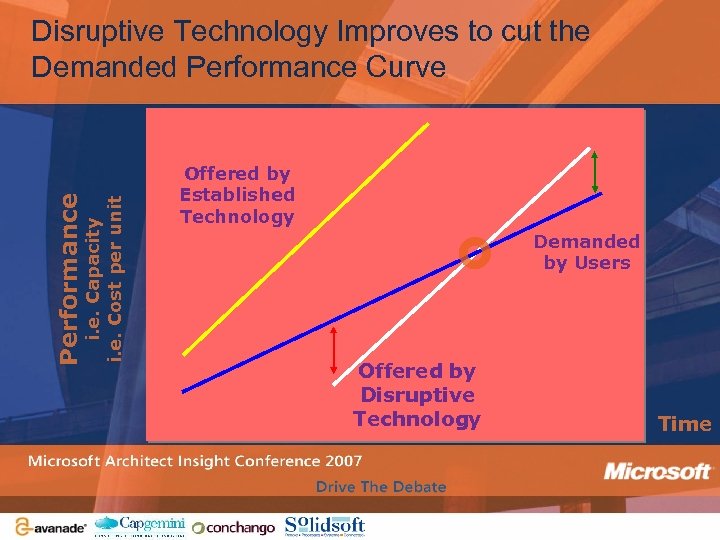 i. e. Capacity i. e. Cost per unit Performance Disruptive Technology Improves to cut the Demanded Performance Curve Offered by Established Technology Demanded by Users Offered by Disruptive Technology Time
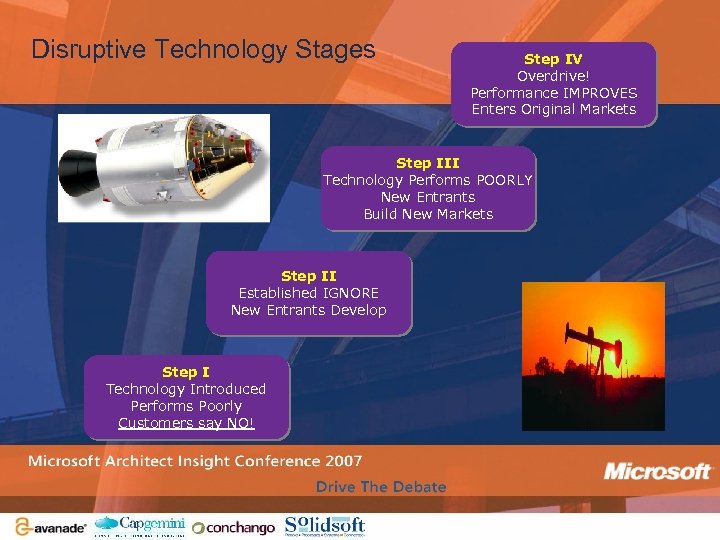 Disruptive Technology Stages Step IV Overdrive! Performance IMPROVES Enters Original Markets Step III Technology Performs POORLY New Entrants Build New Markets Step II Established IGNORE New Entrants Develop Step I Technology Introduced Performs Poorly Customers say NO!
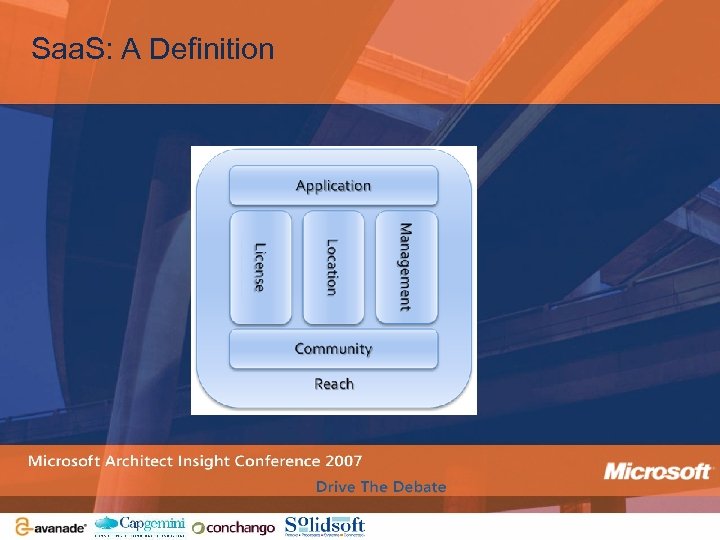 Saa. S: A Definition
 Saas: Definition • Software as a Service is … “A remotely hosted and managed internet-based software service that is charged for on a subscription basis. ”
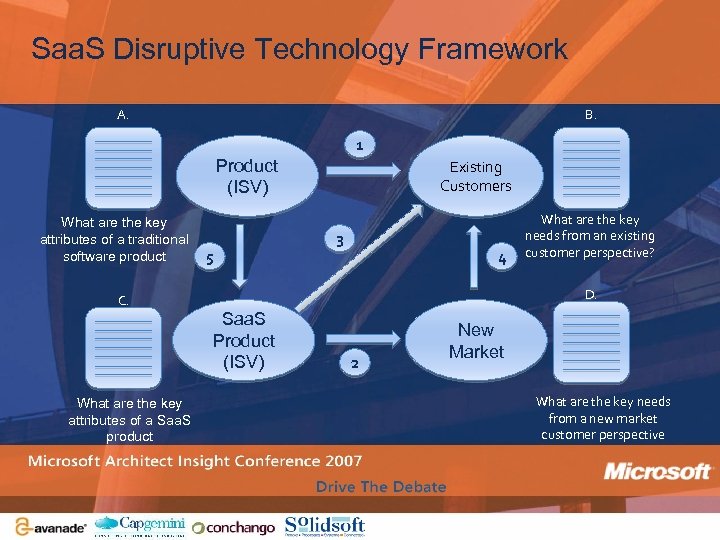 Saa. S Disruptive Technology Framework A. B. 1 Product (ISV) What are the key attributes of a traditional software product 5 Existing Customers 3 4 D. C. Saa. S Product (ISV) What are the key attributes of a Saa. S product What are the key needs from an existing customer perspective? 2 New Market What are the key needs from a new market customer perspective
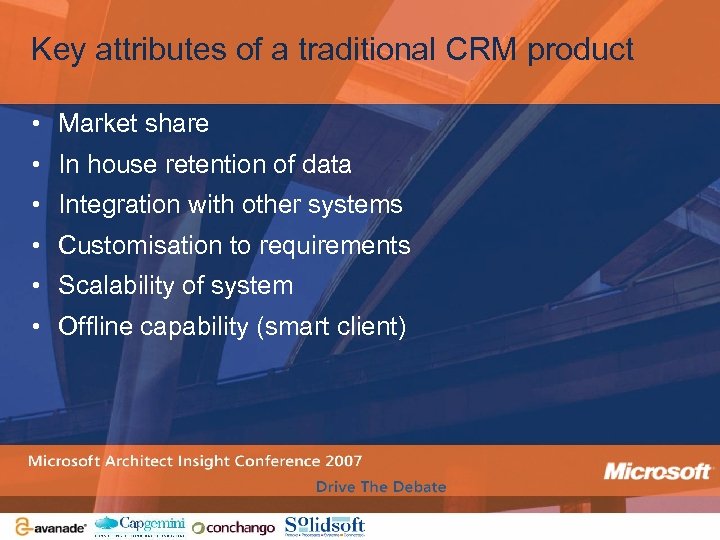 Key attributes of a traditional CRM product • Market share • In house retention of data • Integration with other systems • Customisation to requirements • Scalability of system • Offline capability (smart client)
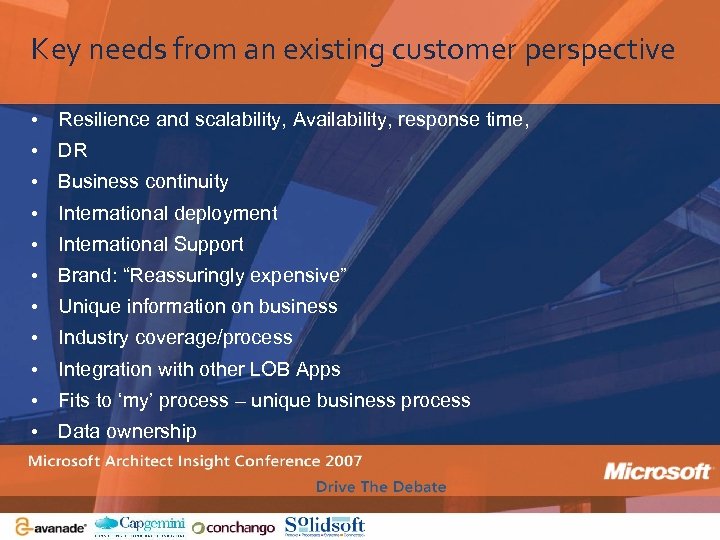 Key needs from an existing customer perspective • Resilience and scalability, Availability, response time, • DR • Business continuity • International deployment • International Support • Brand: “Reassuringly expensive” • Unique information on business • Industry coverage/process • Integration with other LOB Apps • Fits to ‘my’ process – unique business process • Data ownership
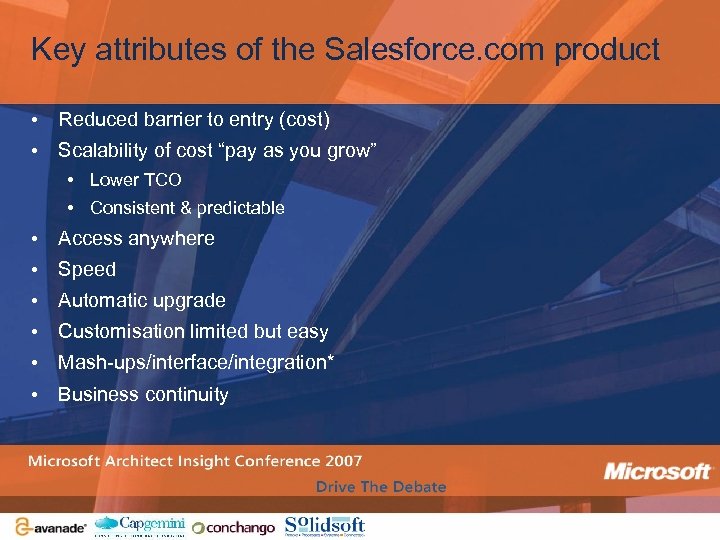 Key attributes of the Salesforce. com product • Reduced barrier to entry (cost) • Scalability of cost “pay as you grow” • Lower TCO • Consistent & predictable • Access anywhere • Speed • Automatic upgrade • Customisation limited but easy • Mash-ups/interface/integration* • Business continuity
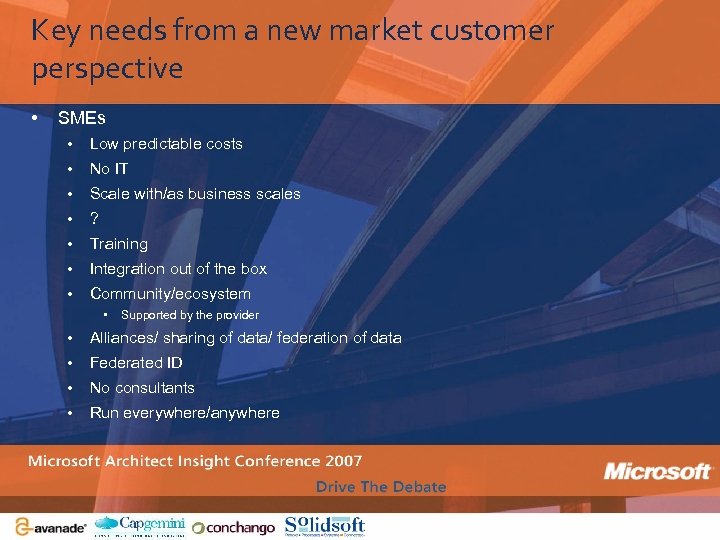 Key needs from a new market customer perspective • SMEs • Low predictable costs • No IT • Scale with/as business scales • ? • Training • Integration out of the box • Community/ecosystem • Supported by the provider • Alliances/ sharing of data/ federation of data • Federated ID • No consultants • Run everywhere/anywhere
 Votes? • Do you think sf. com have a disruptive technology? • Do you think sf. com will develop new markets for their products? • Do you think Saa. S provides a platform for disruptive innovation? • Do you think your business will create disruption? • Do you think your business will be disrupted?
 Votes? 1. Do you think sf. com have a disruptive technology? 2. Do you think sf. com will develop new markets for their products? 3. Do you think Saa. S provides a platform for disruptive innovation? 4. Do you think your business will create disruption? 5. Do you think your business will be disrupted?
 Disruptive Technology Conclusions
 Next Steps • Manchester Business School is designing the Saa. S Disruptive Technology survey, based on feedback from four ISV/Architect workshops, including SAF and INSIGHT • Participants from the workshops will be invited to participate in the Saa. S Disruptive Technology survey in March-April and will received early feedback on the results in May • Microsoft and Manchester Business School are considering the options for single company Disruptive Technology Workshops to help early adopters establish Disruptive Innovation plans • Any further ideas or requirements are very welcome! Please contact Matt Deacon (Microsoft) or Dr Steve Moxey (Manchester Business School)
 Microsoft Saa. S Disruptive Technology Research Matt Deacon, Microsoft mattd@microsoft. com Dr Steven Moxey, Manchester Business School Steve. moxey@serrula. com March, 2007 INSIGHT Conference Celtic Manor, UK
 Sustaining Technologies In contrast! Are technologies that sustain the current mix of performance attributes. They can be incremental, but can also be entirely new radical, technologies. The point is that they provide more of the attributes currently offered and demanded by the existing marketplace…
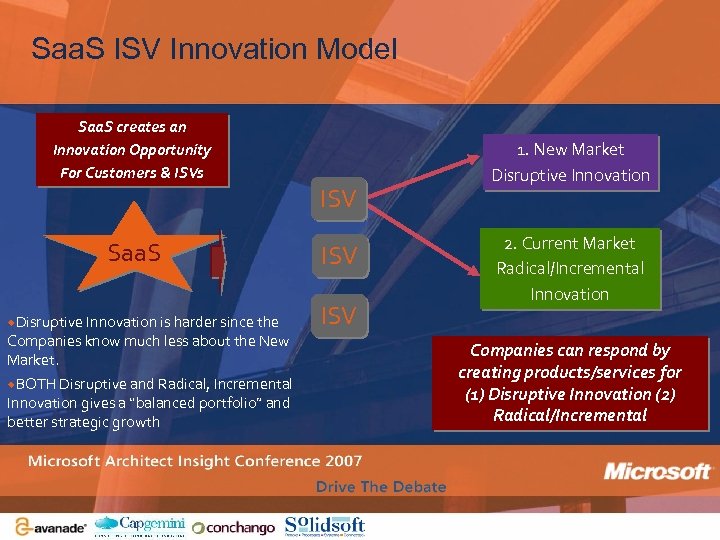 Saa. S ISV Innovation Model Saa. S creates an Innovation Opportunity For Customers & ISVs ISV Saa. S Disruptive Innovation is harder since the Companies know much less about the New Market. BOTH Disruptive and Radical, Incremental Innovation gives a “balanced portfolio” and better strategic growth ISV 1. New Market Disruptive Innovation 2. Current Market Radical/Incremental Innovation Companies can respond by creating products/services for (1) Disruptive Innovation (2) Radical/Incremental