


 Скачать презентацию Microgeneration Karl Letten Change Programme Support Officer
f9957dac70e2c478ea80894543a7c43d.ppt
- Количество слайдов: 14
 Microgeneration Karl Letten – Change Programme Support Officer (Environment) Change Management
 Structure of presentation • • What is microgeneration? Types of microgeneration Benefits of microgeneration Drivers for Microgeneration – Microgeneration Strategy – Climate change and sustainable energy bill • Microgeneration: potential implications for local authorities • Supporting the development of microgeneration
 What is microgeneration? • Microgeneration is the small scale production of heat and/or electricity from a low carbon source • Microgeneration can include Photovoltaic panels, micro Combined Heat and Power, micro wind, heat pumps, solar thermal systems, fuel cells and micro hydro schemes. • Estimated that 10 million homes in the UK could benefit from microgeneration • Potential to reduce UK’s carbon dioxide emissions by 15%
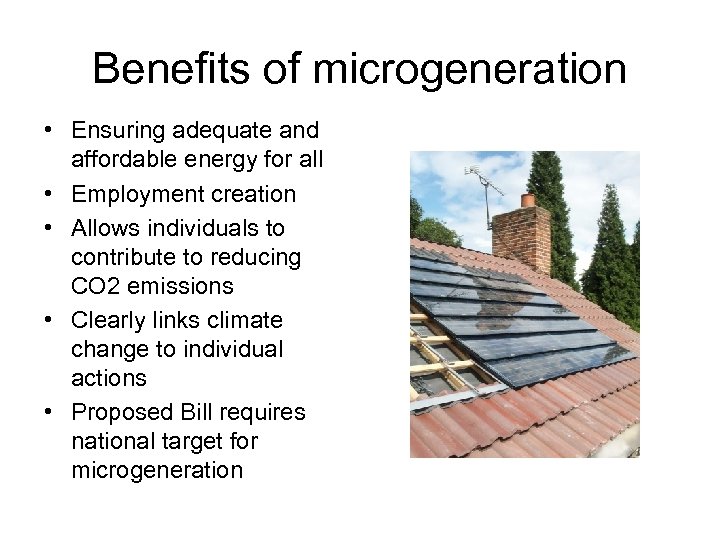
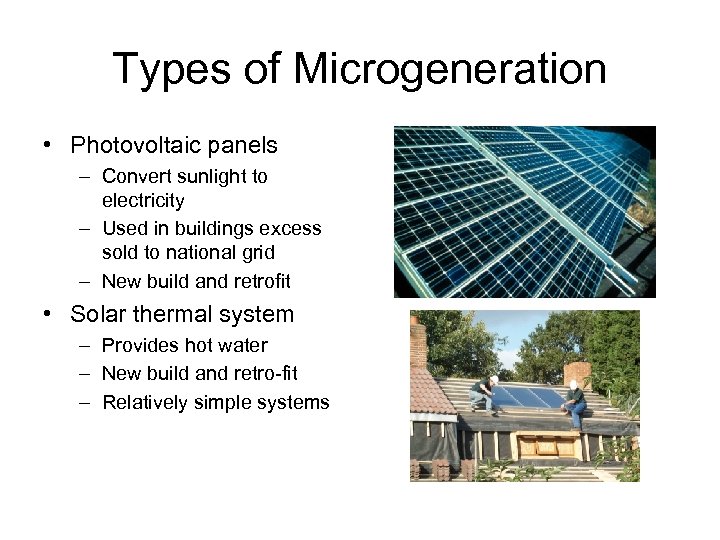 Types of Microgeneration • Photovoltaic panels – Convert sunlight to electricity – Used in buildings excess sold to national grid – New build and retrofit • Solar thermal system – Provides hot water – New build and retro-fit – Relatively simple systems
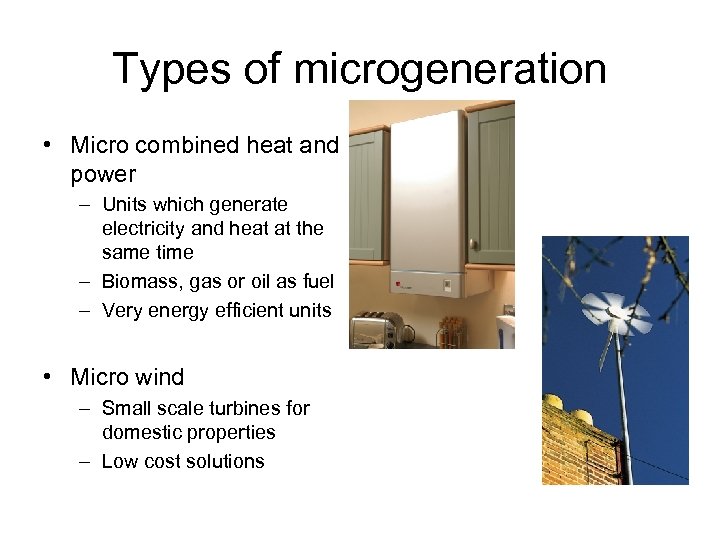 Types of microgeneration • Micro combined heat and power – Units which generate electricity and heat at the same time – Biomass, gas or oil as fuel – Very energy efficient units • Micro wind – Small scale turbines for domestic properties – Low cost solutions
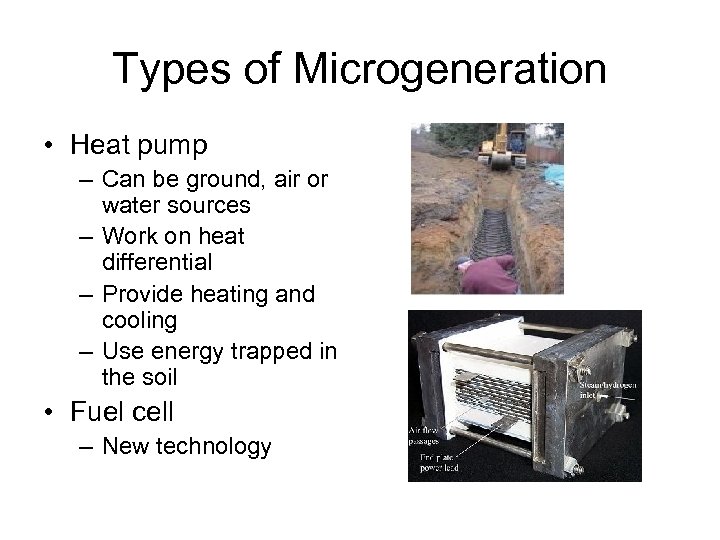 Types of Microgeneration • Heat pump – Can be ground, air or water sources – Work on heat differential – Provide heating and cooling – Use energy trapped in the soil • Fuel cell – New technology
 Benefits of microgeneration • Reduces carbon dioxide emissions • Ensures reliable energy supplies • Can provide both electricity and heat energy • Promotes competitive markets • Improved efficiency of energy generation
 Benefits of microgeneration • Ensuring adequate and affordable energy for all • Employment creation • Allows individuals to contribute to reducing CO 2 emissions • Clearly links climate change to individual actions • Proposed Bill requires national target for microgeneration
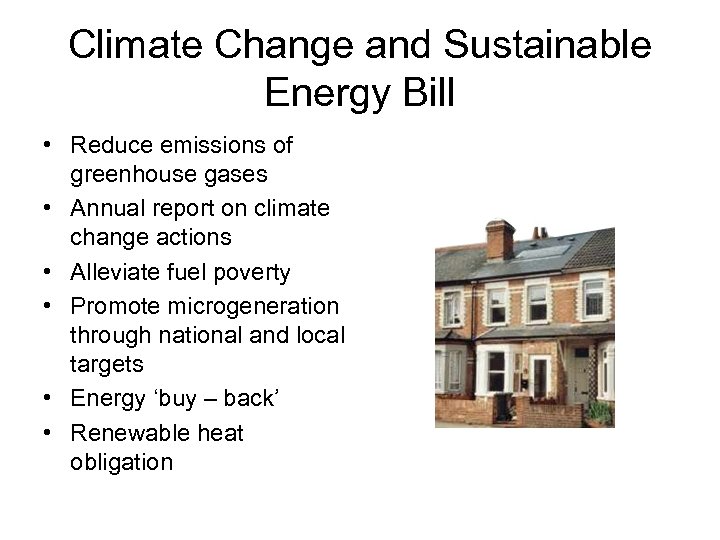 Climate Change and Sustainable Energy Bill • Reduce emissions of greenhouse gases • Annual report on climate change actions • Alleviate fuel poverty • Promote microgeneration through national and local targets • Energy ‘buy – back’ • Renewable heat obligation
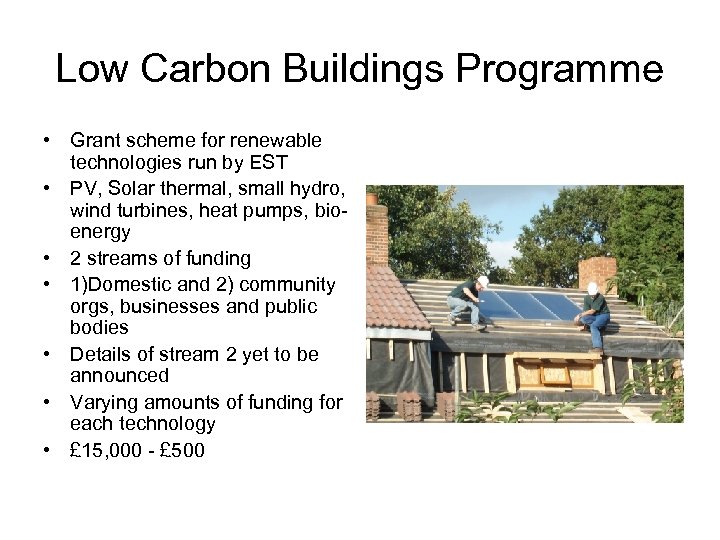 Low Carbon Buildings Programme • Grant scheme for renewable technologies run by EST • PV, Solar thermal, small hydro, wind turbines, heat pumps, bioenergy • 2 streams of funding • 1)Domestic and 2) community orgs, businesses and public bodies • Details of stream 2 yet to be announced • Varying amounts of funding for each technology • £ 15, 000 - £ 500
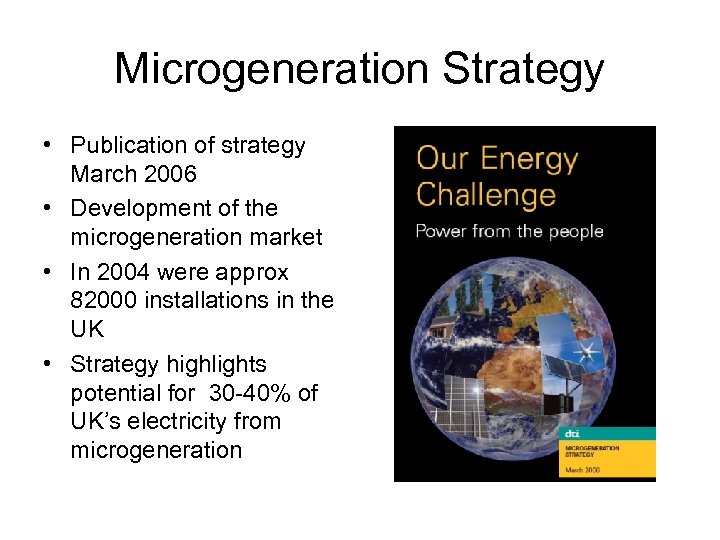 Microgeneration Strategy • Publication of strategy March 2006 • Development of the microgeneration market • In 2004 were approx 82000 installations in the UK • Strategy highlights potential for 30 -40% of UK’s electricity from microgeneration
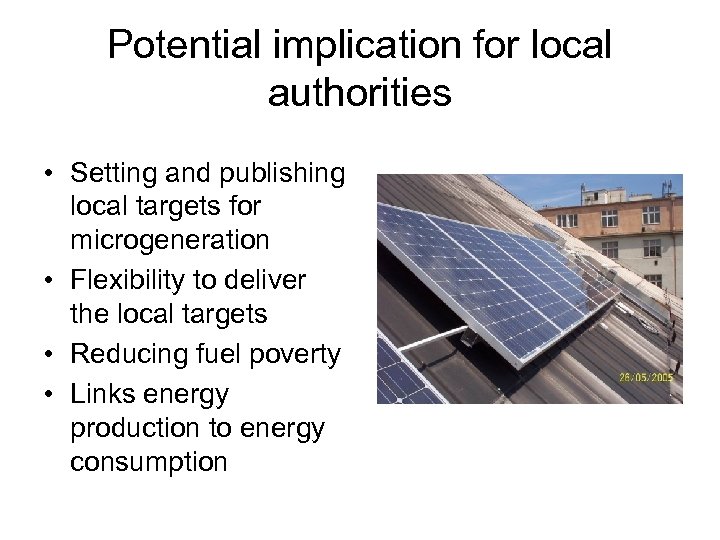 Potential implication for local authorities • Setting and publishing local targets for microgeneration • Flexibility to deliver the local targets • Reducing fuel poverty • Links energy production to energy consumption
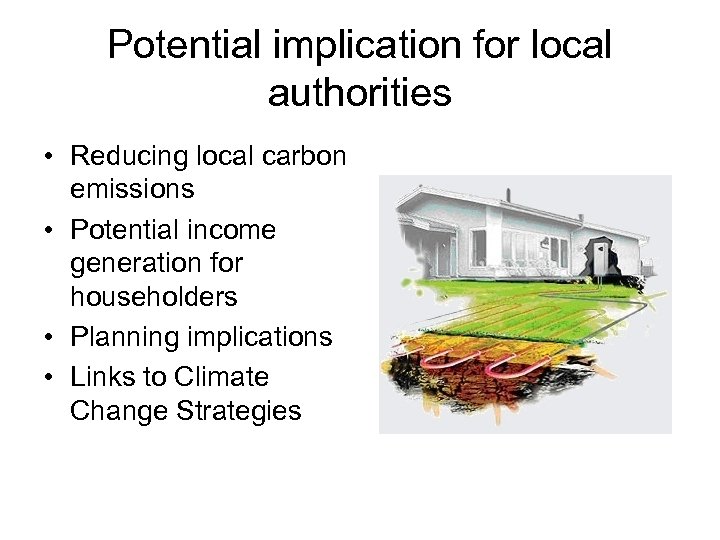 Potential implication for local authorities • Reducing local carbon emissions • Potential income generation for householders • Planning implications • Links to Climate Change Strategies
 Summary • Microgeneration has the potential to reduce carbon emissions • Some technologies are still being developed e. g. Fuel cells but most are well proven • Government grants will help improve numbers of microgeneration installations • Potential for 40, 000 mini energy generators in Charnwood