


 Скачать презентацию Microarray data analysis Gold-mining in a minefield
2074422a71c1060ef2d28414417e7ad1.ppt
- Количество слайдов: 66
 Microarray data analysis – Gold-mining in a minefield Matthias E. Futschik Institute for Theoretical Biology Medical Devision (Charité), Humboldt-University, Berlin, Germany MIR@W, Warwick Mathematics Institut, 15 November 2004
 Outline ● The Gold-mine ● ● Microarray Boom: 10 years ● ● Stake out the claim What can we learn from Greek philosophy? Minefield I : Microarray is not equal microarray ● ● Microarray technologies: Do we measure the same? Minefield II: Microarrays (almost) always find something ● Read-out, design and validation ●Minefield ● Error detection and correction ●Minefield ● IV: Choosing the right sieve. Significance of differential gene expression ●Minefield ● III: Not everything is gold that shines V: There is more than just nuggets and soil Soft clustering delivers gray values ●Conclusions
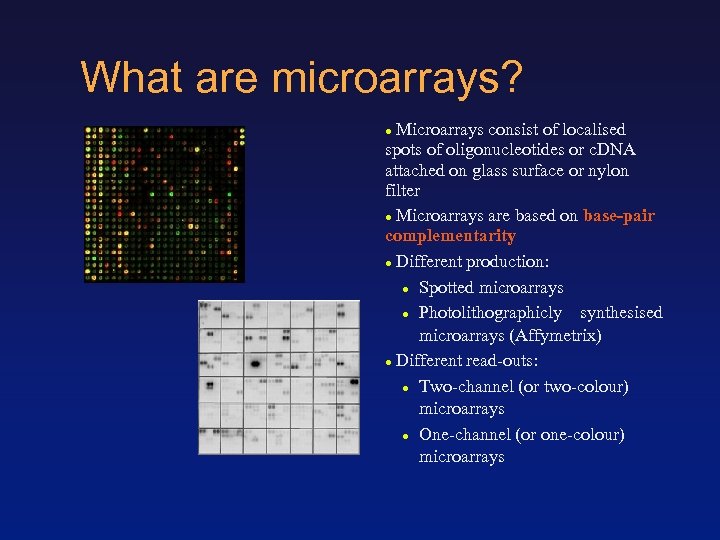 What are microarrays? Microarrays consist of localised spots of oligonucleotides or c. DNA attached on glass surface or nylon filter ● Microarrays are based on base-pair complementarity ● Different production: ● Spotted microarrays ● Photolithographicly synthesised microarrays (Affymetrix) ● Different read-outs: ● Two-channel (or two-colour) microarrays ● One-channel (or one-colour) microarrays ●
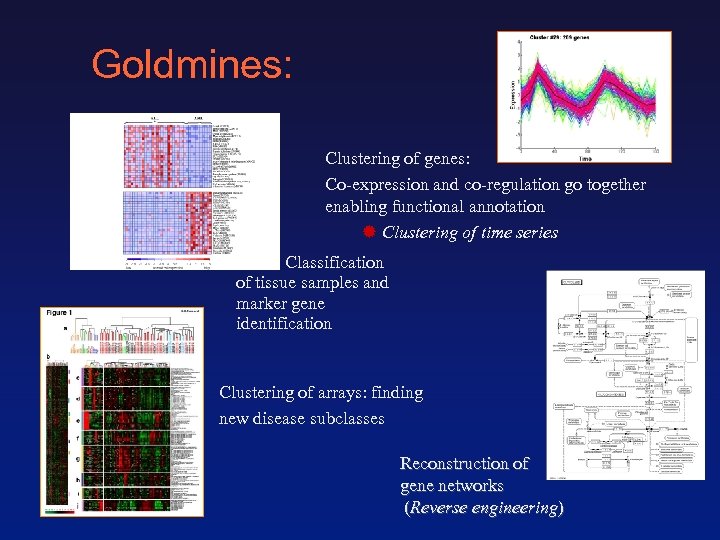 Goldmines: Clustering of genes: Co-expression and co-regulation go together enabling functional annotation Clustering of time series Classification of tissue samples and marker gene identification Clustering of arrays: finding new disease subclasses Reconstruction of gene networks (Reverse engineering)
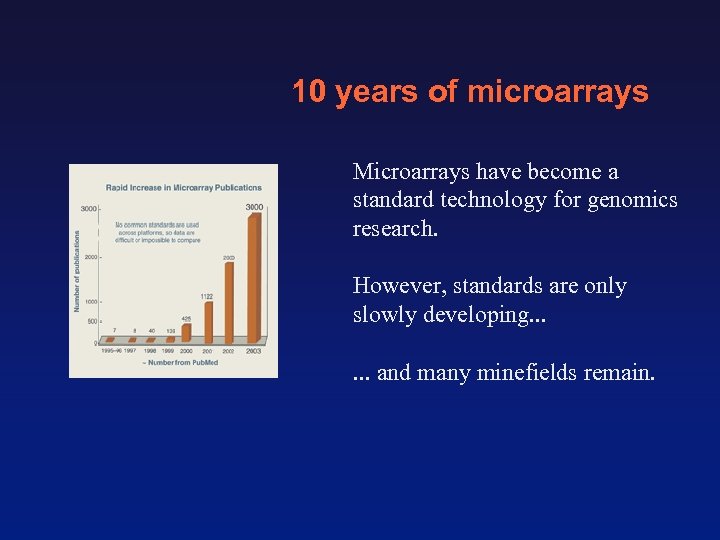 10 years of microarrays Microarrays have become a standard technology for genomics research. However, standards are only slowly developing. . . and many minefields remain.
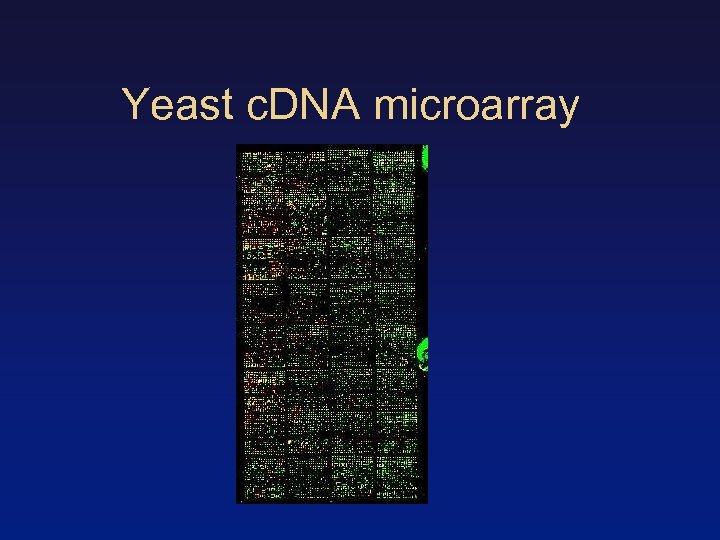 Yeast c. DNA microarray
 Plato’s Cave AND now, I said, let me show in a figure how far our nature is enlightened or unenlightened: Behold! Human beings living in a underground den, which has a mouth open towards the light and reaching all along the den; here they have been from their childhood, and have their leg and necks chained so that they cannot move, and can only see before them, being prevented by the chains from turning round their heads. Above and behind them a fire is blazing at a distance, and between the fire and the prisoners there is a raised way; and you will see, if you look, a low wall built along the way, like the screen which marionette players have in front of them, over which they show the puppets…. To them, I said, the truth would be literally nothing but the shadows of the images… And now look again, and see what will naturally follow if the prisoners are released and disabused of their error. At first, when any of them is liberated and compelled suddenly to stand up and turn his neck round and walk and look towards the light, he will suffer sharp pains; the glare will distress him, and he will be unable to see the realities of which in his former state he had seen the shadows; and then conceive some one saying to him, that what he saw before was an illusion, but that now, when he is approaching nearer to being and his eye is turned towards more real existence, he has a clearer vision, …
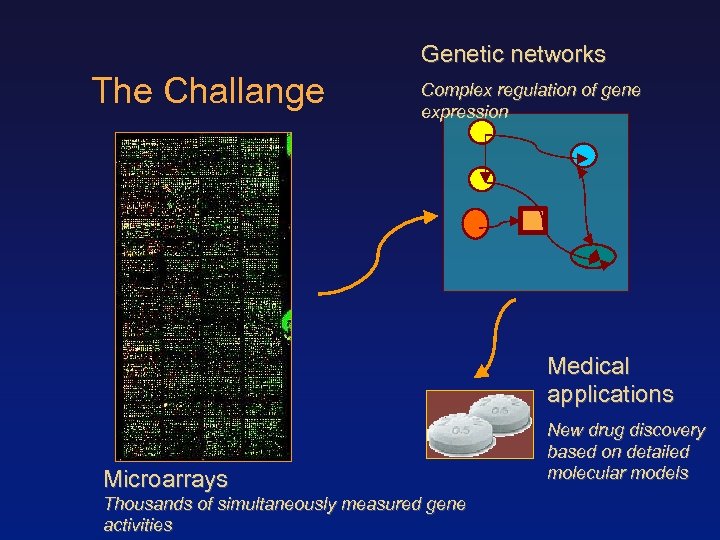 Genetic networks The Challange Complex regulation of gene expression Medical applications Microarrays Thousands of simultaneously measured gene activities New drug discovery based on detailed molecular models
 Minefield I : Microarray is not equal micorarray
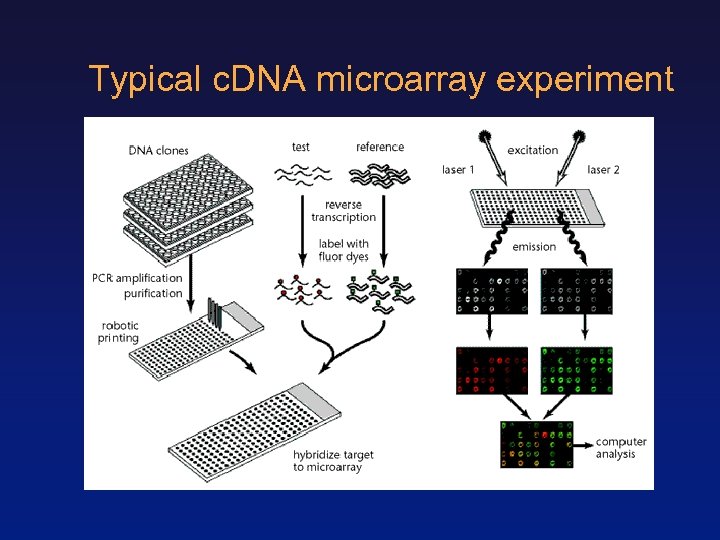 Typical c. DNA microarray experiment
 Microarray technology I Two-colour microarray (c. DNA and spotted oligonucleotide microarrays) Probes are PCR products based on a chosen c. DNA library or synthesized oligonucleotides (length 50 -70) optimized for specifity and binding properties >> probe design Probes are mechanically spotted. To control variation of amount of printed c. DNA/oligos and spot morphology, reference RNA sample is included. Thus, ratios are considered as basic units for analysing gene expression. Absolute intensities should be interpreted with care. MOVIE 1: Array production - Galbraith lab MOVIE 2: Principles – Schreiber lab
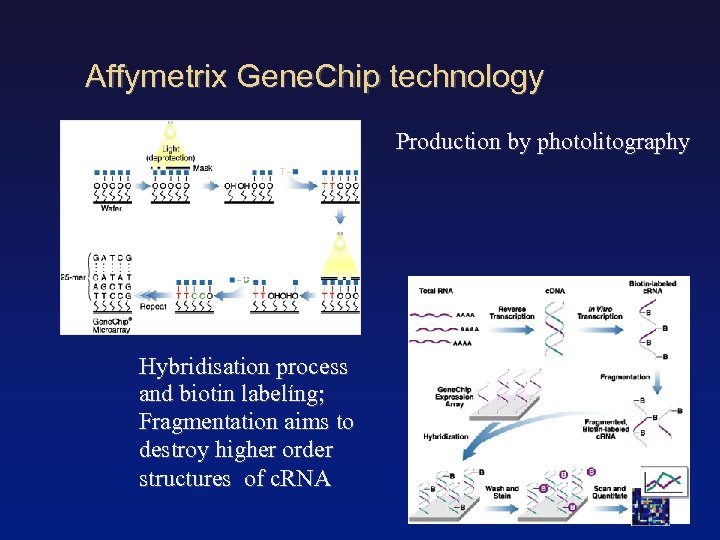 Affymetrix Gene. Chip technology Production by photolitography Hybridisation process and biotin labelíng; Fragmentation aims to destroy higher order structures of c. RNA
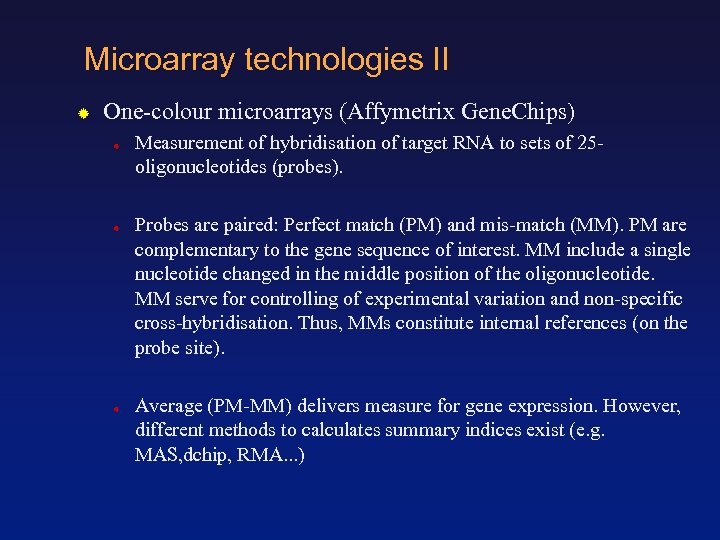 Microarray technologies II One-colour microarrays (Affymetrix Gene. Chips) Measurement of hybridisation of target RNA to sets of 25 oligonucleotides (probes). Probes are paired: Perfect match (PM) and mis-match (MM). PM are complementary to the gene sequence of interest. MM include a single nucleotide changed in the middle position of the oligonucleotide. MM serve for controlling of experimental variation and non-specific cross-hybridisation. Thus, MMs constitute internal references (on the probe site). Average (PM-MM) delivers measure for gene expression. However, different methods to calculates summary indices exist (e. g. MAS, dchip, RMA. . . )
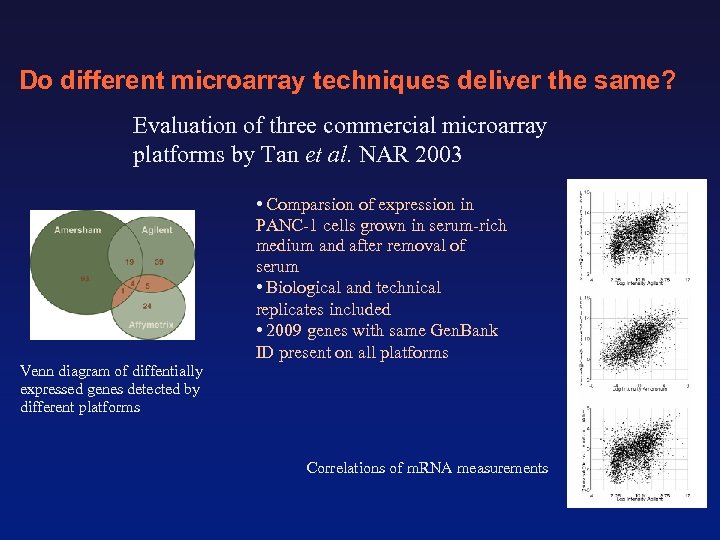 Do different microarray techniques deliver the same? Evaluation of three commercial microarray platforms by Tan et al. NAR 2003 Venn diagram of diffentially expressed genes detected by different platforms • Comparsion of expression in PANC-1 cells grown in serum-rich medium and after removal of serum • Biological and technical replicates included • 2009 genes with same Gen. Bank ID present on all platforms Correlations of m. RNA measurements
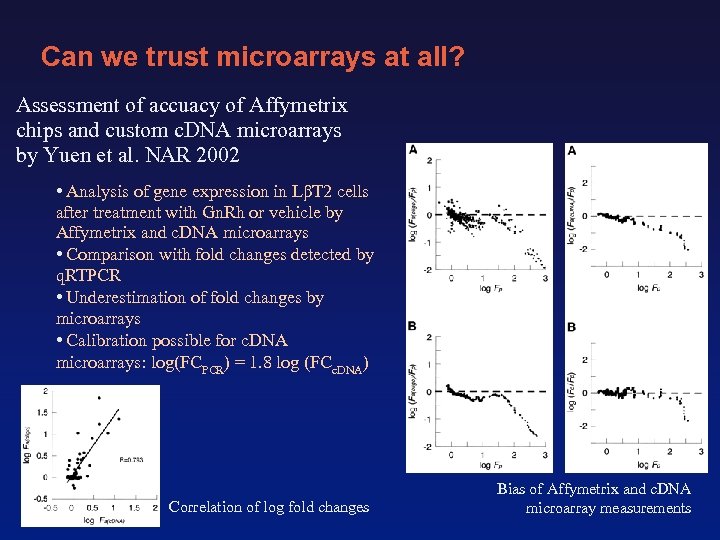 Can we trust microarrays at all? Assessment of accuacy of Affymetrix chips and custom c. DNA microarrays by Yuen et al. NAR 2002 • Analysis of gene expression in LβT 2 cells after treatment with Gn. Rh or vehicle by Affymetrix and c. DNA microarrays • Comparison with fold changes detected by q. RTPCR • Underestimation of fold changes by microarrays • Calibration possible for c. DNA microarrays: log(FCPCR) = 1. 8 log (FCc. DNA) Correlation of log fold changes Bias of Affymetrix and c. DNA microarray measurements
 Minefield II : Microarray always find something
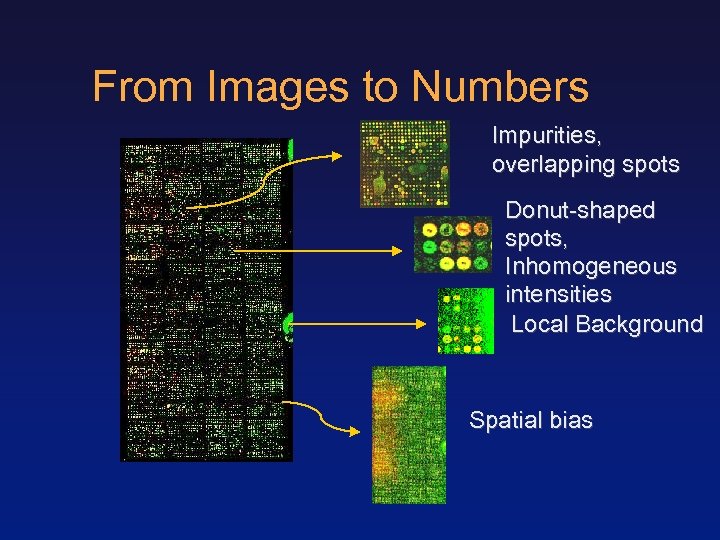 From Images to Numbers Impurities, overlapping spots Donut-shaped spots, Inhomogeneous intensities Local Background Spatial bias
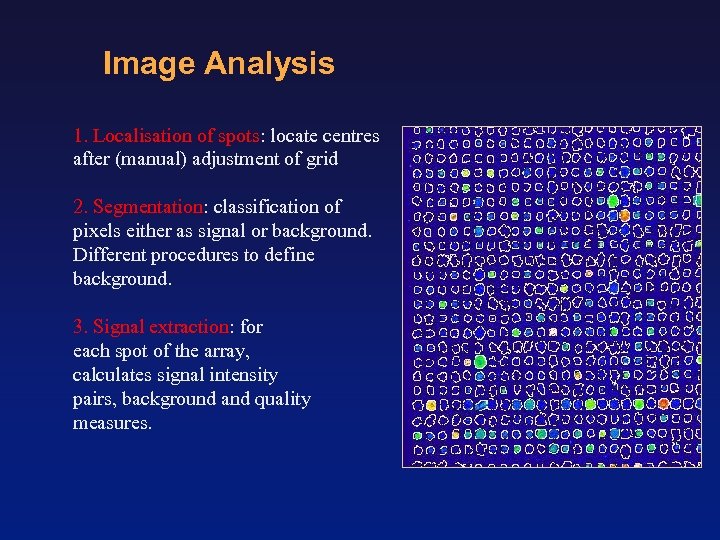 Image Analysis 1. Localisation of spots: locate centres after (manual) adjustment of grid 2. Segmentation: classification of pixels either as signal or background. Different procedures to define background. 3. Signal extraction: for each spot of the array, calculates signal intensity pairs, background and quality measures.
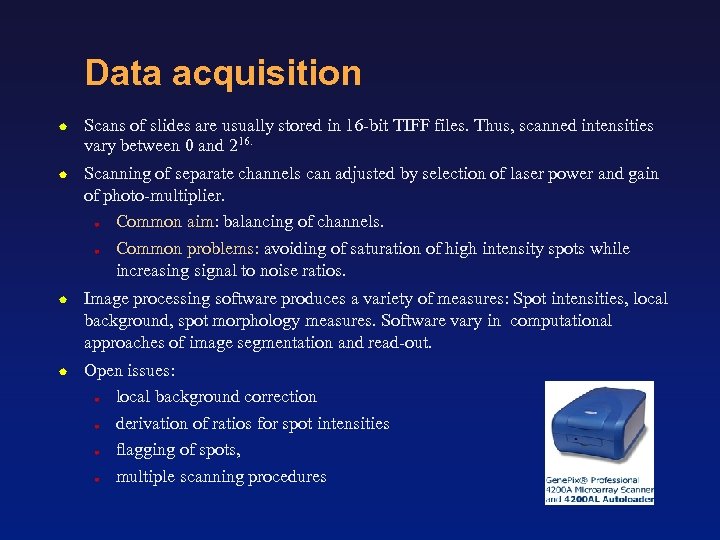 Data acquisition Scans of slides are usually stored in 16 -bit TIFF files. Thus, scanned intensities vary between 0 and 216. Scanning of separate channels can adjusted by selection of laser power and gain of photo-multiplier. Common aim: balancing of channels. Common problems: avoiding of saturation of high intensity spots while increasing signal to noise ratios. Image processing software produces a variety of measures: Spot intensities, local background, spot morphology measures. Software vary in computational approaches of image segmentation and read-out. Open issues: local background correction derivation of ratios for spot intensities flagging of spots, multiple scanning procedures
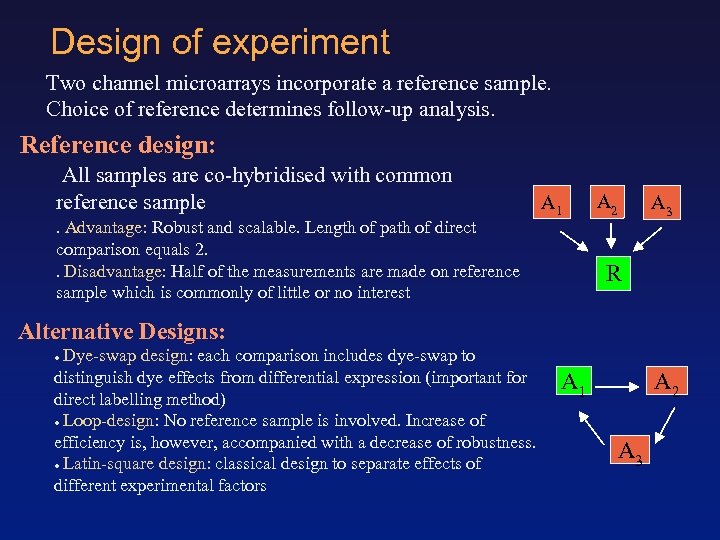 Design of experiment Two channel microarrays incorporate a reference sample. Choice of reference determines follow-up analysis. Reference design: All samples are co-hybridised with common reference sample Advantage: Robust and scalable. Length of path of direct comparison equals 2. Disadvantage: Half of the measurements are made on reference sample which is commonly of little or no interest A 1 A 2 A 3 ● R ● Alternative Designs: Dye-swap design: each comparison includes dye-swap to distinguish dye effects from differential expression (important for direct labelling method) ● Loop-design: No reference sample is involved. Increase of efficiency is, however, accompanied with a decrease of robustness. ● Latin-square design: classical design to separate effects of different experimental factors ● A 1 A 2 A 3
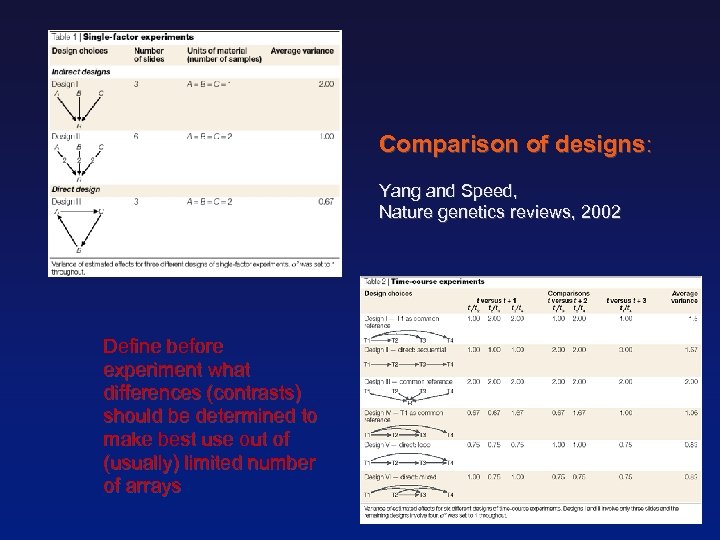 Comparison of designs: Yang and Speed, Nature genetics reviews, 2002 Define before experiment what differences (contrasts) should be determined to make best use out of (usually) limited number of arrays
 Sources of variation in gene expression measurements using microarrays Microarray platform Manufacturing or spotting process Manufacturing batch Amplification by PCR and purification Amount of c. DNA spotted, morphology of spot and binding of c. DNA to substrate m. RNA extraction and preparation Protocol of m. RNA extraction and amplification Labelling of m. RNA Hybridisation conditions such as temperature, humidity, hyb-buffer, . . . Scanning Type of scanner Scanning intensity and PMT settings Imaging Software Flagging, background correction, . . .
 Planning an microarray experiment Essentials: ● ● Technical replicates assess variability induced by experimental procedures. Biological replicates (assess generality of results). Number of replicates depends on desired sensitivity and sensibility of measurements and research goal. ● Randomisation to avoid confounding of experimental factors. Blocking to reduce number of experimental factors. ● Control spots assess reproducibility within and between array, background intensity, cross-hybridisation and/or sensitivity of measurement. They can consists of empty spots or hybridisation-buffer, genomic DNA, foreign DNA, house-holding genes of foreign (non-cross-hybridising) c. DNA. ● ● Validation of results is crucial by other experimental techniques (e. g. Northern, RT-PCR) By comparison with independent experiments. ● ●
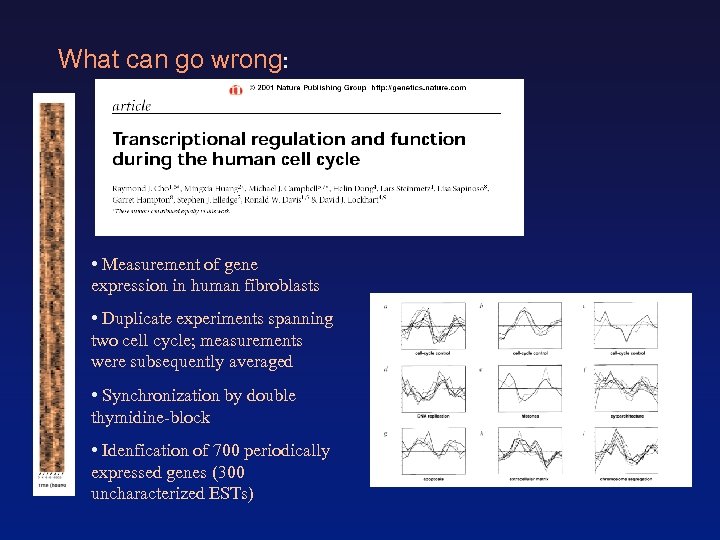 What can go wrong: • Measurement of gene expression in human fibroblasts • Duplicate experiments spanning two cell cycle; measurements were subsequently averaged • Synchronization by double thymidine-block • Idenfication of 700 periodically expressed genes (300 uncharacterized ESTs)
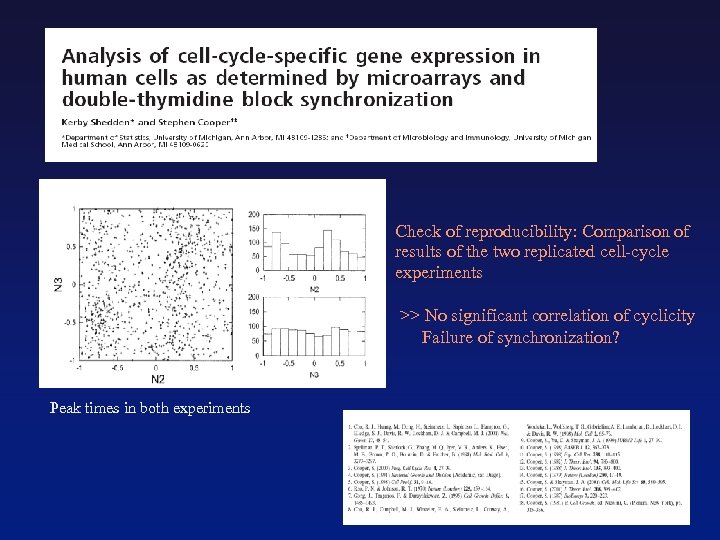 Check of reproducibility: Comparison of results of the two replicated cell-cycle experiments >> No significant correlation of cyclicity Failure of synchronization? Peak times in both experiments
 Minefield III : Not everything is gold that shines
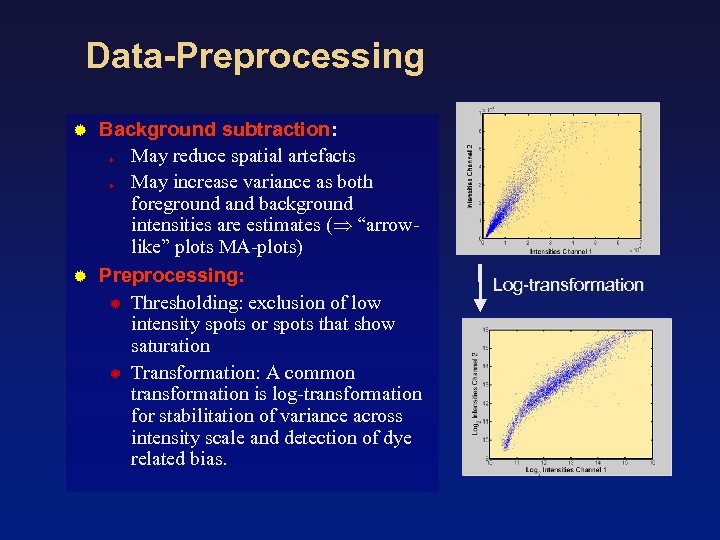 Data-Preprocessing Background subtraction: May reduce spatial artefacts May increase variance as both foreground and background intensities are estimates ( “arrowlike” plots MA-plots) Preprocessing: Thresholding: exclusion of low intensity spots or spots that show saturation Transformation: A common transformation is log-transformation for stabilitation of variance across intensity scale and detection of dye related bias. Log-transformation
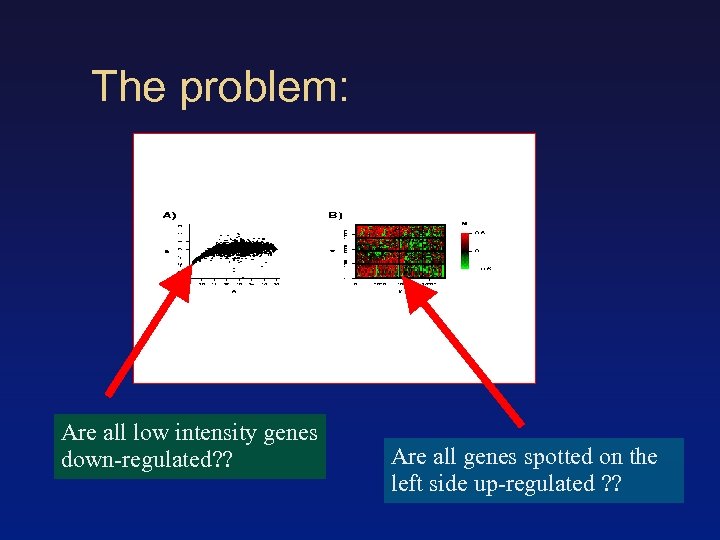 The problem: Are all low intensity genes down-regulated? ? Are all genes spotted on the left side up-regulated ? ?
 Normalization – bending data to make it look nicer. . . Normalization describes a variety of data transformations aiming to correct for experimental variation
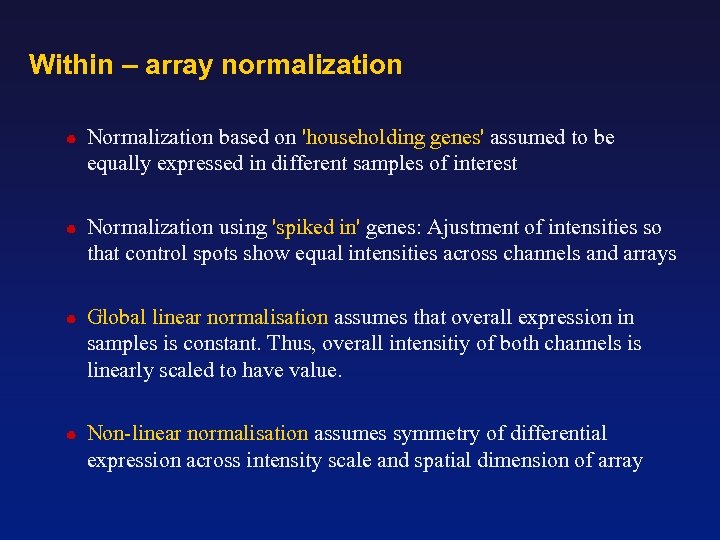 Within – array normalization Normalization based on 'householding genes' assumed to be equally expressed in different samples of interest Normalization using 'spiked in' genes: Ajustment of intensities so that control spots show equal intensities across channels and arrays Global linear normalisation assumes that overall expression in samples is constant. Thus, overall intensitiy of both channels is linearly scaled to have value. Non-linear normalisation assumes symmetry of differential expression across intensity scale and spatial dimension of array
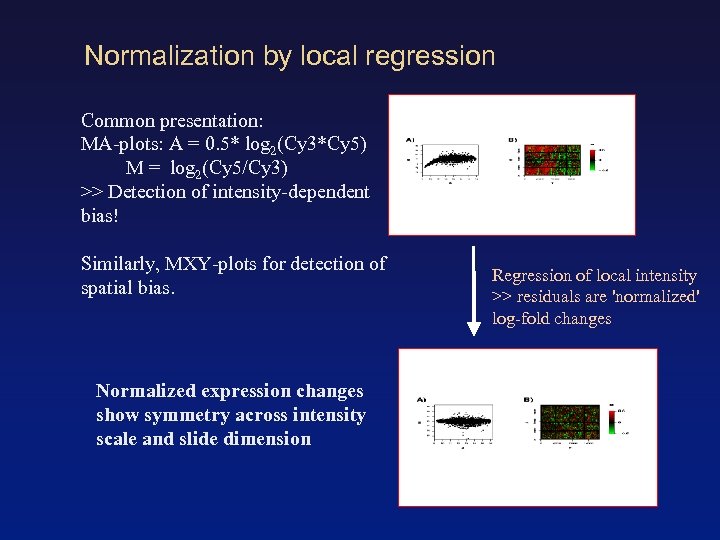 Normalization by local regression Common presentation: MA-plots: A = 0. 5* log 2(Cy 3*Cy 5) M = log 2(Cy 5/Cy 3) >> Detection of intensity-dependent bias! Similarly, MXY-plots for detection of spatial bias. Normalized expression changes show symmetry across intensity scale and slide dimension Regression of local intensity >> residuals are 'normalized' log-fold changes
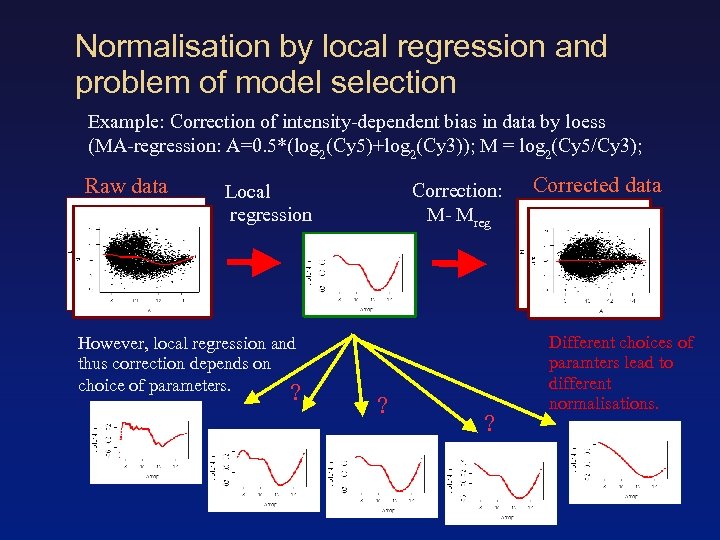 Normalisation by local regression and problem of model selection Example: Correction of intensity-dependent bias in data by loess (MA-regression: A=0. 5*(log 2(Cy 5)+log 2(Cy 3)); M = log 2(Cy 5/Cy 3); Raw data Correction: M- Mreg Local regression However, local regression and thus correction depends on choice of parameters. ? ? ? Corrected data Different choices of paramters lead to different normalisations.
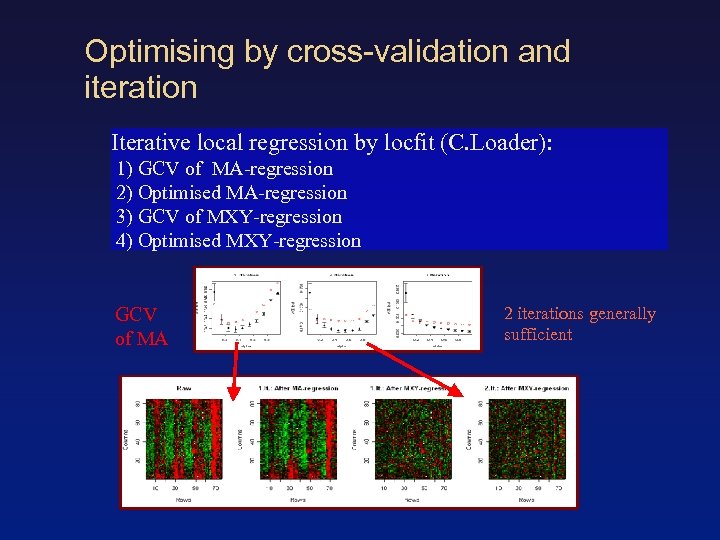 Optimising by cross-validation and iteration Iterative local regression by locfit (C. Loader): 1) GCV of MA-regression 2) Optimised MA-regression 3) GCV of MXY-regression 4) Optimised MXY-regression GCV of MA 2 iterations generally sufficient
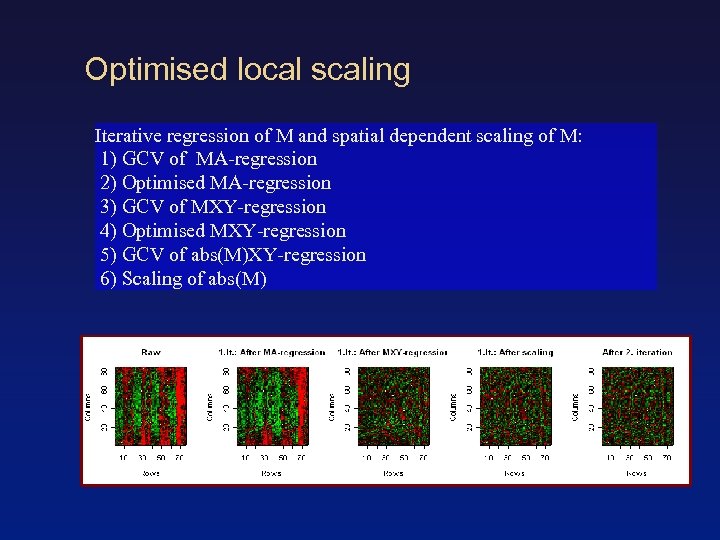 Optimised local scaling Iterative regression of M and spatial dependent scaling of M: 1) GCV of MA-regression 2) Optimised MA-regression 3) GCV of MXY-regression 4) Optimised MXY-regression 5) GCV of abs(M)XY-regression 6) Scaling of abs(M)
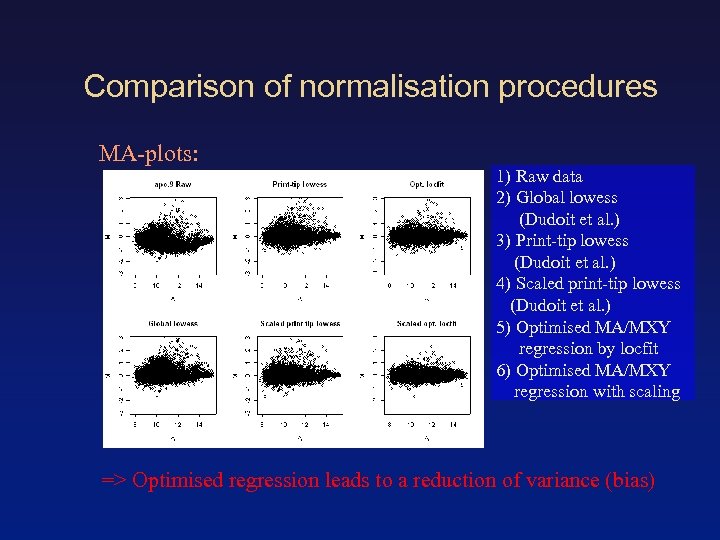 Comparison of normalisation procedures MA-plots: 1) Raw data 2) Global lowess (Dudoit et al. ) 3) Print-tip lowess (Dudoit et al. ) 4) Scaled print-tip lowess (Dudoit et al. ) 5) Optimised MA/MXY regression by locfit 6) Optimised MA/MXY regression with scaling => Optimised regression leads to a reduction of variance (bias)
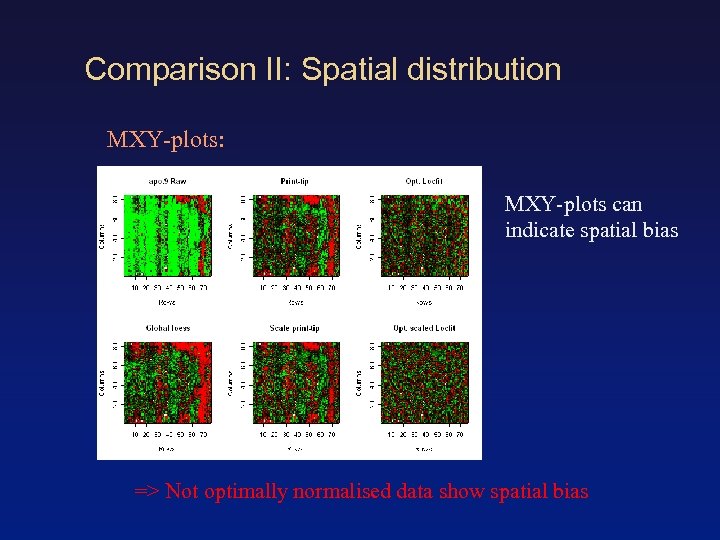 Comparison II: Spatial distribution MXY-plots: MXY-plots can indicate spatial bias => Not optimally normalised data show spatial bias
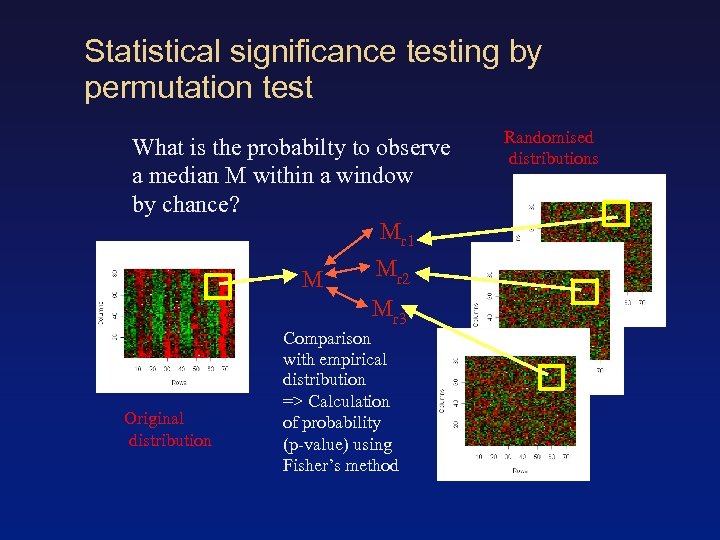 Statistical significance testing by permutation test What is the probabilty to observe a median M within a window by chance? Mr 1 M Mr 2 Mr 3 Original distribution Comparison with empirical distribution => Calculation of probability (p-value) using Fisher’s method Randomised distributions
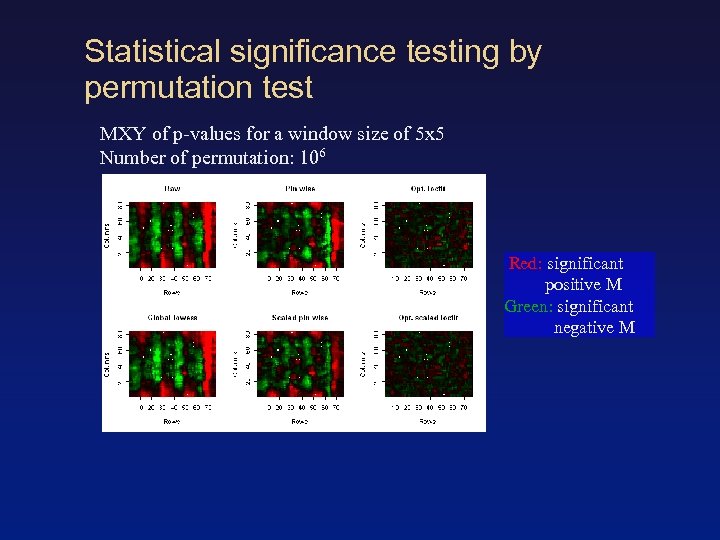 Statistical significance testing by permutation test MXY of p-values for a window size of 5 x 5 Number of permutation: 106 Red: significant positive M Green: significant negative M
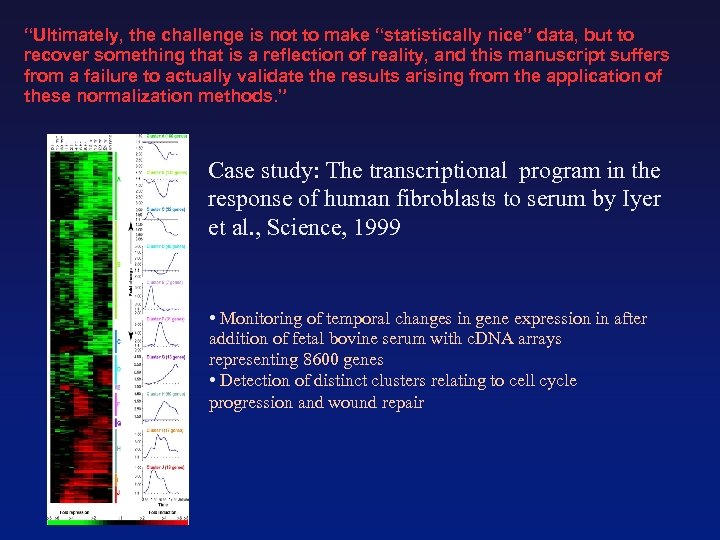 “Ultimately, the challenge is not to make “statistically nice” data, but to recover something that is a reflection of reality, and this manuscript suffers from a failure to actually validate the results arising from the application of these normalization methods. ” Case study: The transcriptional program in the response of human fibroblasts to serum by Iyer et al. , Science, 1999 • Monitoring of temporal changes in gene expression in after addition of fetal bovine serum with c. DNA arrays representing 8600 genes • Detection of distinct clusters relating to cell cycle progression and wound repair
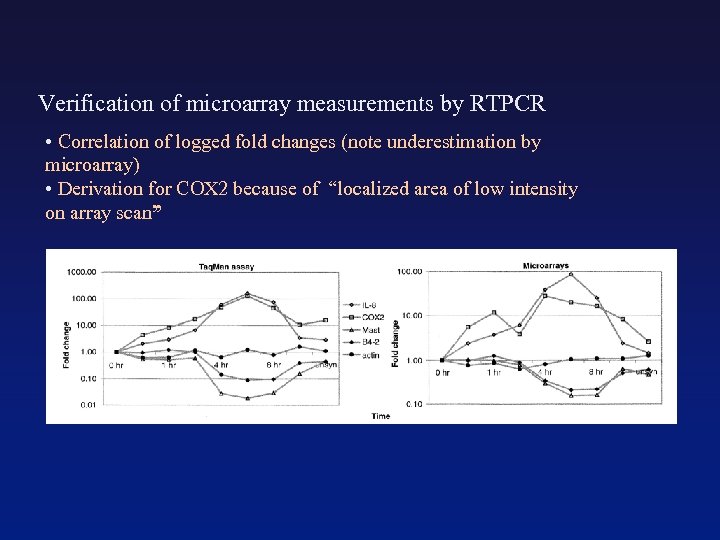 Verification of microarray measurements by RTPCR • Correlation of logged fold changes (note underestimation by microarray) • Derivation for COX 2 because of “localized area of low intensity on array scan”
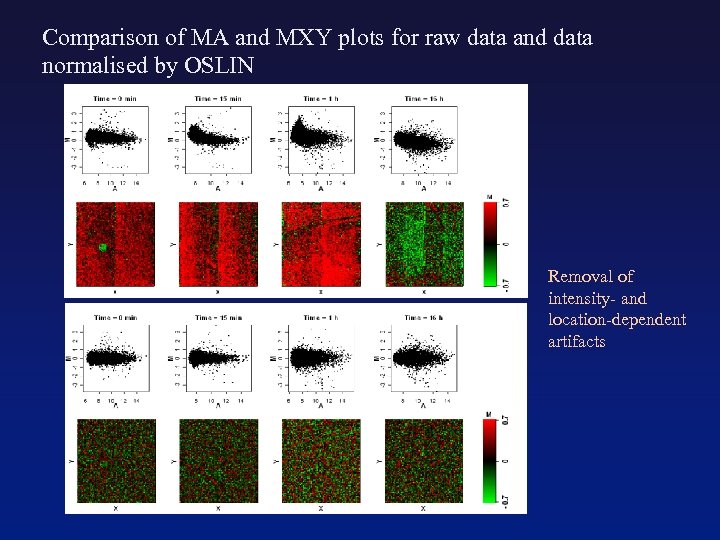 Comparison of MA and MXY plots for raw data and data normalised by OSLIN Removal of intensity- and location-dependent artifacts
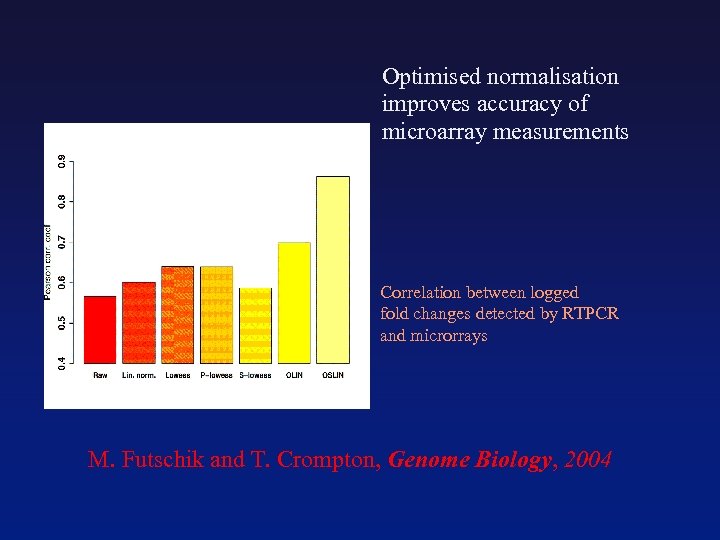 Optimised normalisation improves accuracy of microarray measurements Correlation between logged fold changes detected by RTPCR and microrrays M. Futschik and T. Crompton, Genome Biology, 2004
 Minefield IV : Choosing the right sieve
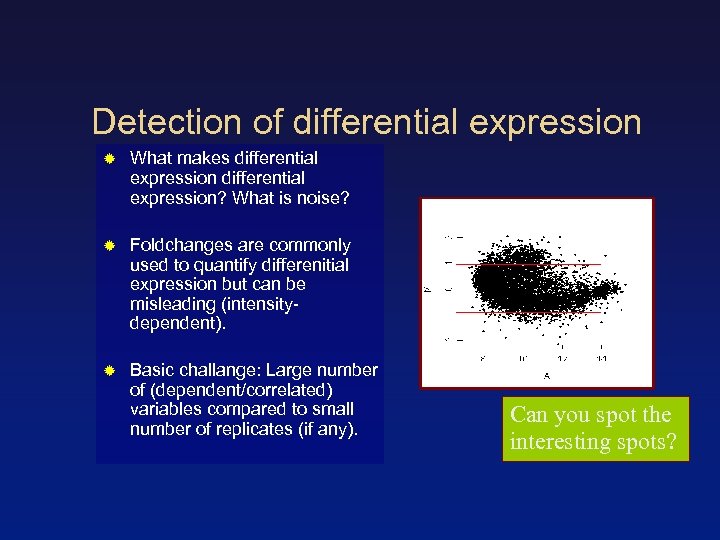 Detection of differential expression What makes differential expression? What is noise? Foldchanges are commonly used to quantify differenitial expression but can be misleading (intensitydependent). Basic challange: Large number of (dependent/correlated) variables compared to small number of replicates (if any). Can you spot the interesting spots?
 Going fishing: What is differentially expressed Classical hypothesis testing: 1) Setting up of null hypothesis H 0(e. g. gene X is not differentially expressed) and alternative hypothesis Ha (e. g. Gene X is differentially expressed) 2) Using a test statistic to compare observed values with values predicted for H 0. 3) Define region for the test statistic for which H 0 is rejected in favour of Ha.
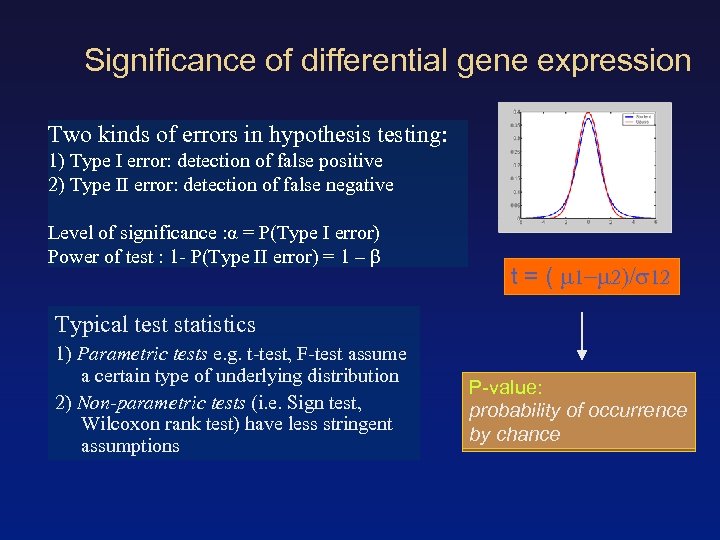 Significance of differential gene expression Two kinds of errors in hypothesis testing: 1) Type I error: detection of false positive 2) Type II error: detection of false negative Level of significance : α = P(Type I error) Power of test : 1 - P(Type II error) = 1 – β t = ( Typical test statistics 1) Parametric tests e. g. t-test, F-test assume a certain type of underlying distribution 2) Non-parametric tests (i. e. Sign test, Wilcoxon rank test) have less stringent assumptions P-value: probability of occurrence by chance
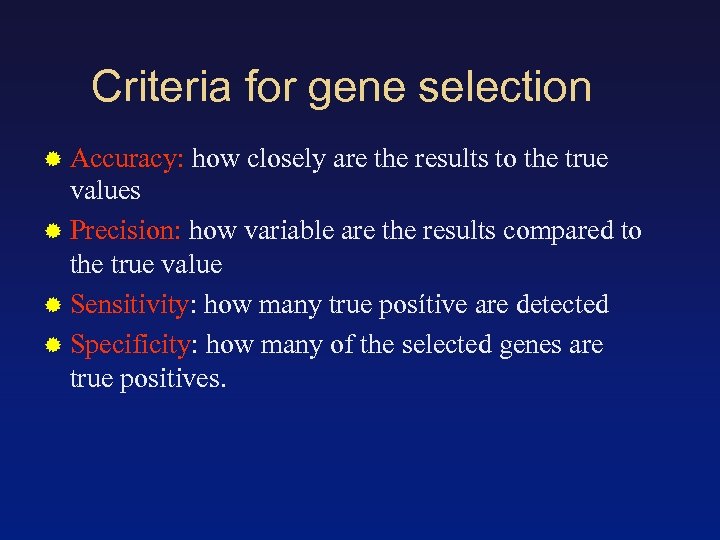 Criteria for gene selection Accuracy: how closely are the results to the true values Precision: how variable are the results compared to the true value Sensitivity: how many true posítive are detected Specificity: how many of the selected genes are true positives.
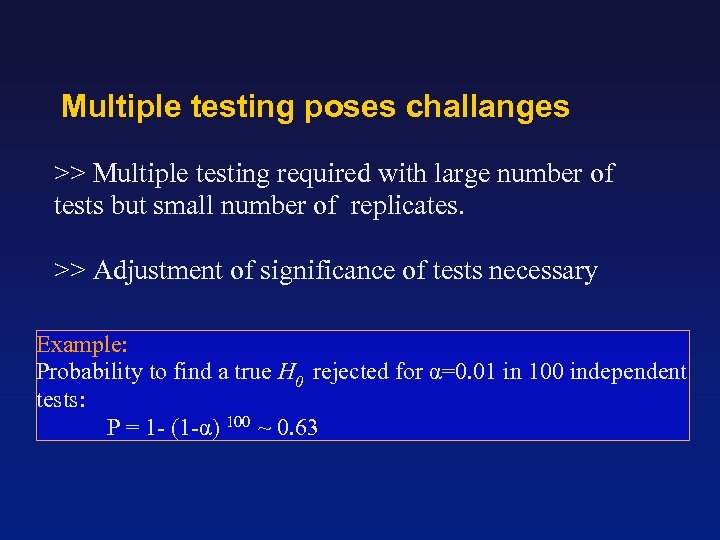 Multiple testing poses challanges >> Multiple testing required with large number of tests but small number of replicates. >> Adjustment of significance of tests necessary Example: Probability to find a true H 0 rejected for α=0. 01 in 100 independent tests: P = 1 - (1 -α) 100 ~ 0. 63
![Compound error measures: Per comparison error rate: PCER= E[V]/N Familiywise error rate: FWER=P(V≥ 1)](https://present5.com/presentation/2074422a71c1060ef2d28414417e7ad1/image-49.jpg "Compound error measures: Per comparison error rate: PCER= E[V]/N Familiywise error rate: FWER=P(V≥ 1)") Compound error measures: Per comparison error rate: PCER= E[V]/N Familiywise error rate: FWER=P(V≥ 1) False discovery rate: FDR= E[V/R] N: total number of tests V: number of reject true H 0 (FP) R: number of rejected H (TP+FP) Aim to control the error rate: 1) by p-value adjustment (step-down procedures: Bonferroni, Holm, Westfall-Young, . . . ) 2) by direct comparison with a background distribution (commonly generated by random permuation)
Compound error measures: Per comparison error rate: PCER= E[V]/N Familiywise error rate: FWER=P(V≥ 1) False discovery rate: FDR= E[V/R] N: total number of tests V: number of reject true H 0 (FP) R: number of rejected H (TP+FP) Aim to control the error rate: 1) by p-value adjustment (step-down procedures: Bonferroni, Holm, Westfall-Young, . . . ) 2) by direct comparison with a background distribution (commonly generated by random permuation)
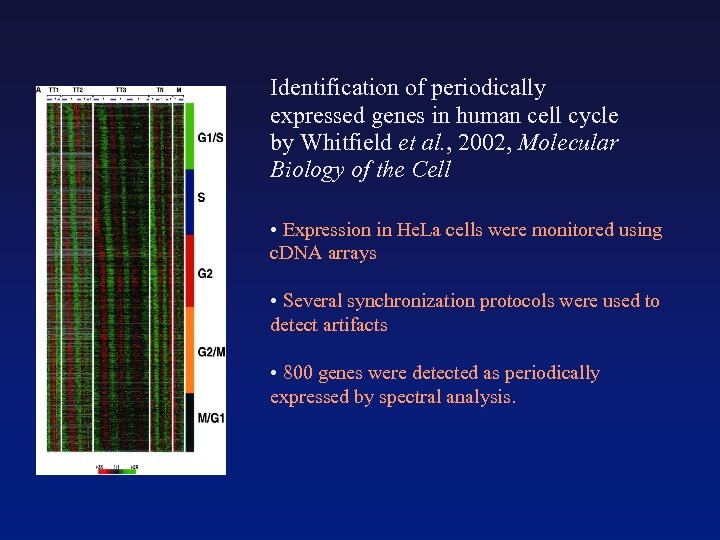 Identification of periodically expressed genes in human cell cycle by Whitfield et al. , 2002, Molecular Biology of the Cell • Expression in He. La cells were monitored using c. DNA arrays • Several synchronization protocols were used to detect artifacts • 800 genes were detected as periodically expressed by spectral analysis.
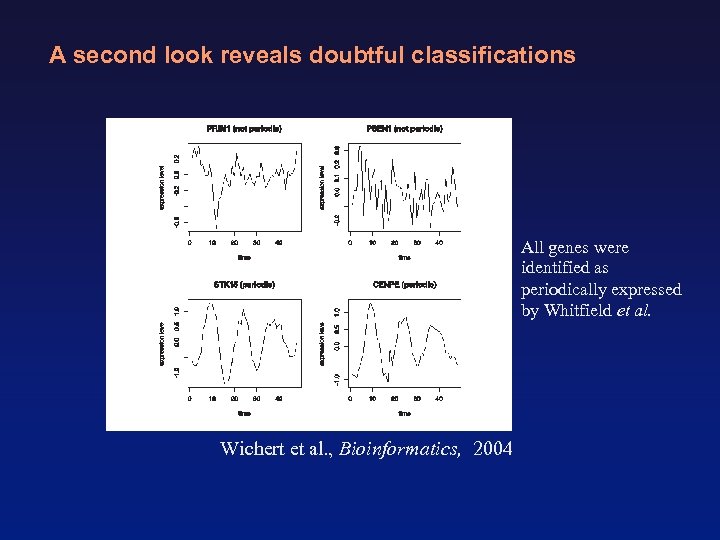 A second look reveals doubtful classifications All genes were identified as periodically expressed by Whitfield et al. Wichert et al. , Bioinformatics, 2004
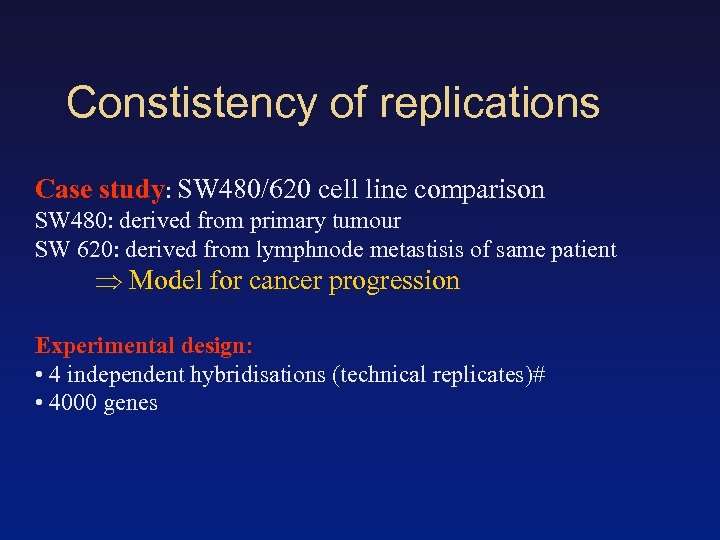 Constistency of replications Case study: SW 480/620 cell line comparison SW 480: derived from primary tumour SW 620: derived from lymphnode metastisis of same patient Model for cancer progression Experimental design: • 4 independent hybridisations (technical replicates)# • 4000 genes
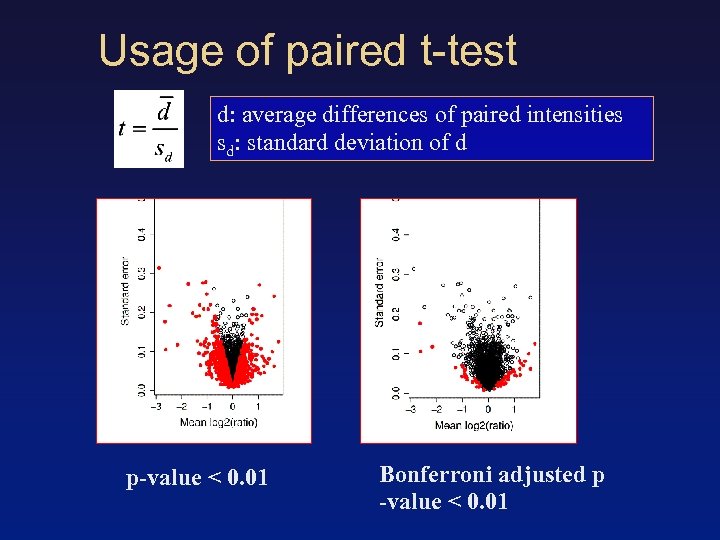 Usage of paired t-test d: average differences of paired intensities sd: standard deviation of d p-value < 0. 01 Bonferroni adjusted p -value < 0. 01
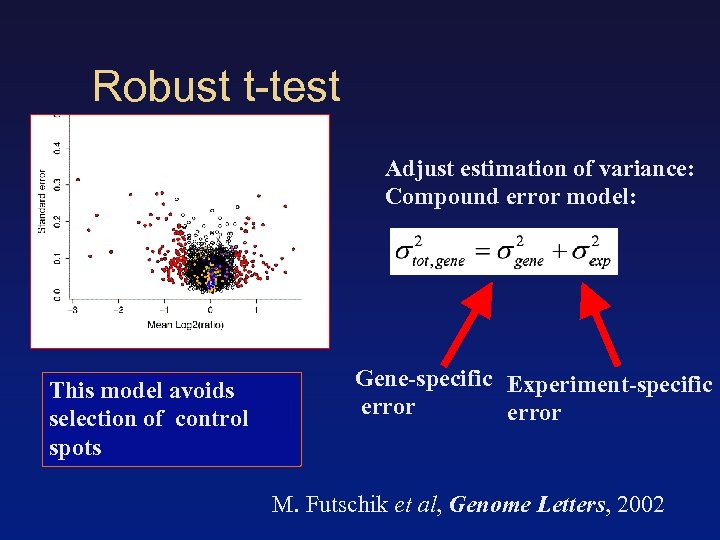 Robust t-test Adjust estimation of variance: Compound error model: This model avoids selection of control spots Gene-specific Experiment-specific error M. Futschik et al, Genome Letters, 2002
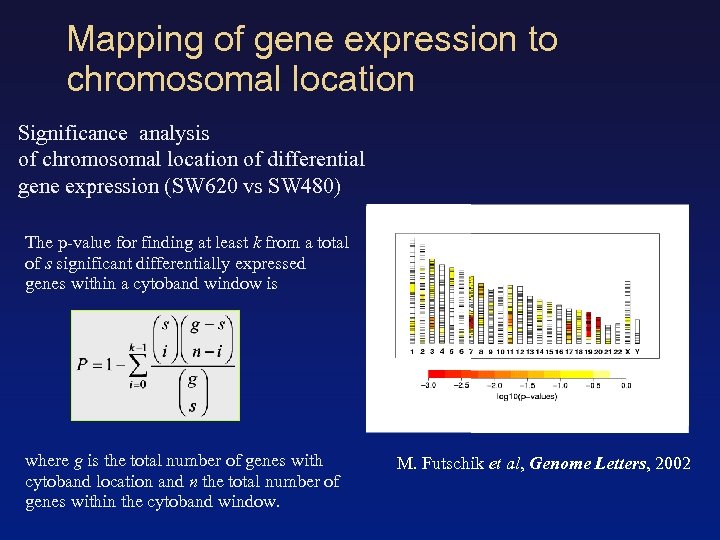 Mapping of gene expression to chromosomal location Significance analysis of chromosomal location of differential gene expression (SW 620 vs SW 480) The p-value for finding at least k from a total of s significant differentially expressed genes within a cytoband window is where g is the total number of genes with cytoband location and n the total number of genes within the cytoband window. M. Futschik et al, Genome Letters, 2002
 Minefield V : There is more than just nuggets and soil
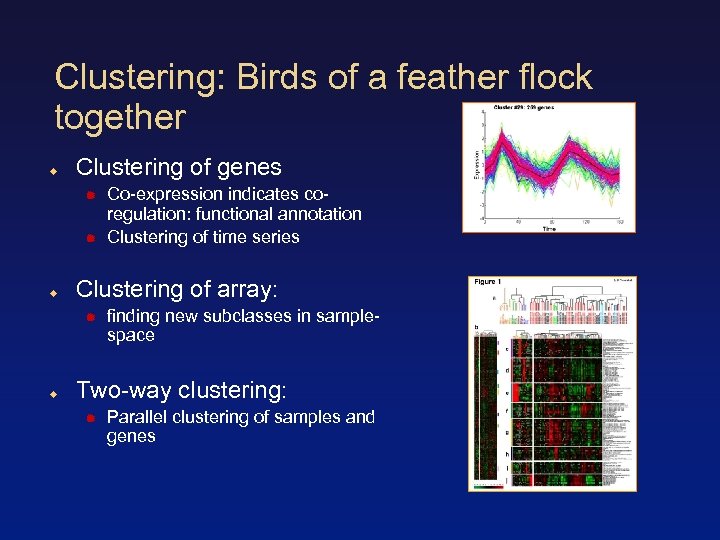 Clustering: Birds of a feather flock together Clustering of genes Clustering of array: Co-expression indicates coregulation: functional annotation Clustering of time series finding new subclasses in samplespace Two-way clustering: Parallel clustering of samples and genes
 Hard clustering vs. soft clustering Hard clustering: ● Based on classical set theory ● Assigns a gene to exactly one cluster ● ● No differentiation how well gene is represented by cluster centroid Examples: hierachical clustering, k-means, SOMs, . . . Soft clustering: ● ● ● Can assign a gene to several cluster Differentiate grade of representation (cluster membership) Example: Fuzzy c-means, HMMs, . . .
 K-means clustering Partitional clustering splits the data in k partitions with a given integer k. • Partition can represented by a partition matrix U that contains the membership values μij of each object i for each cluster j. • For clustering methods, which is based on classical set theory, clusters are mutually exclusive. This leads to the so called hard partitioning of the data. • Hard partions are defined as k is the number of clusters and N is the number of data objects. Partitional clustering is frequently based on the optimisation of a given objective function. If the data is given as a set of N dimensional vectors, a common objective function is the square error function: where d is the distance metric and cj is the centre of clusters.
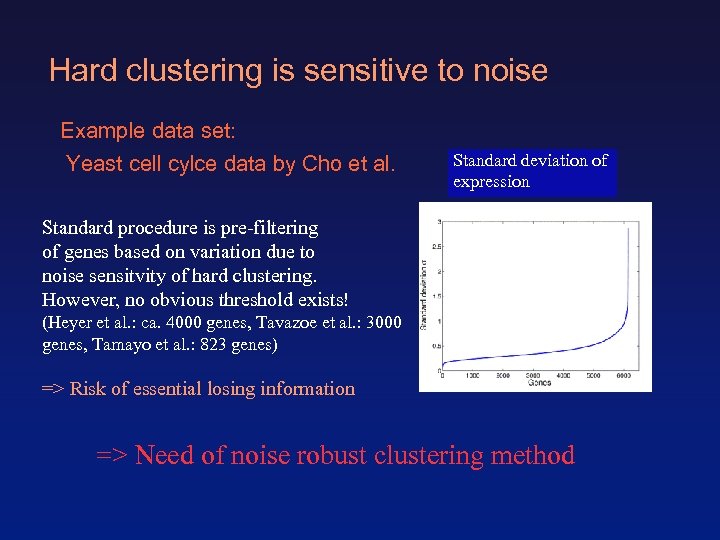 Hard clustering is sensitive to noise Example data set: Yeast cell cylce data by Cho et al. Standard deviation of expression Standard procedure is pre-filtering of genes based on variation due to noise sensitvity of hard clustering. However, no obvious threshold exists! (Heyer et al. : ca. 4000 genes, Tavazoe et al. : 3000 genes, Tamayo et al. : 823 genes) => Risk of essential losing information => Need of noise robust clustering method
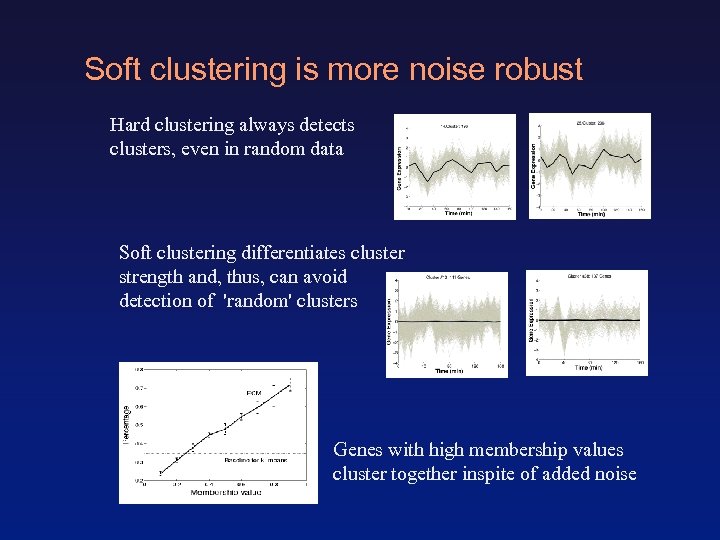 Soft clustering is more noise robust Hard clustering always detects clusters, even in random data Soft clustering differentiates cluster strength and, thus, can avoid detection of 'random' clusters Genes with high membership values cluster together inspite of added noise
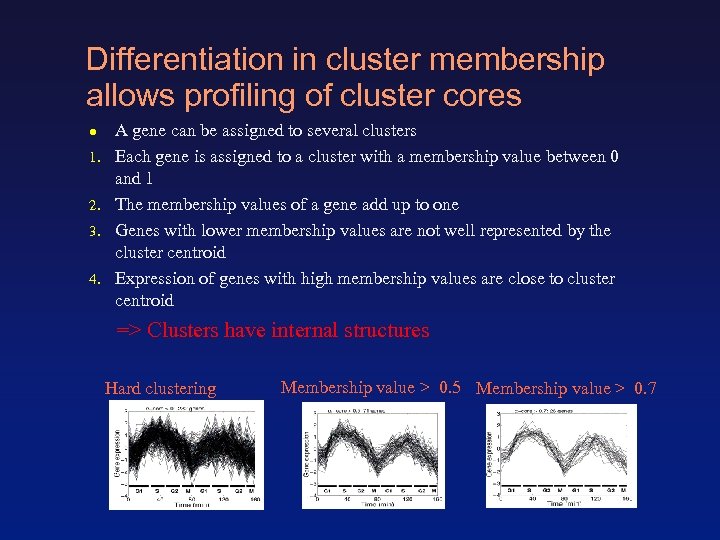 Differentiation in cluster membership allows profiling of cluster cores ● 1. 2. 3. 4. A gene can be assigned to several clusters Each gene is assigned to a cluster with a membership value between 0 and 1 The membership values of a gene add up to one Genes with lower membership values are not well represented by the cluster centroid Expression of genes with high membership values are close to cluster centroid => Clusters have internal structures Hard clustering Membership value > 0. 5 Membership value > 0. 7
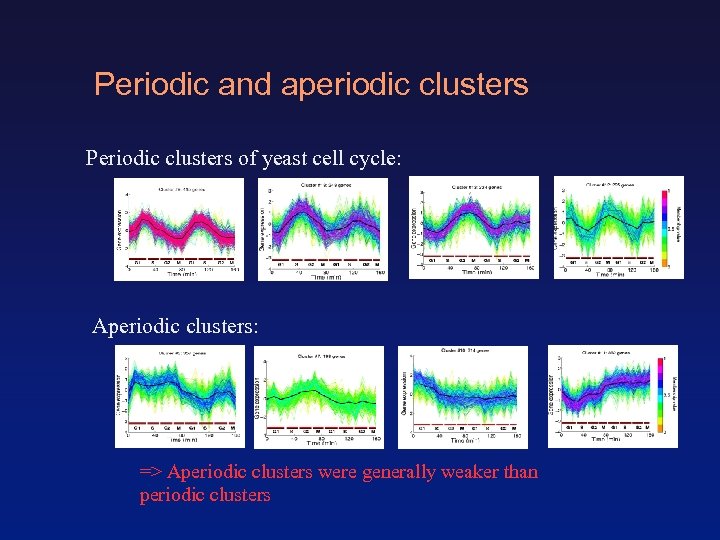 Periodic and aperiodic clusters Periodic clusters of yeast cell cycle: Aperiodic clusters: => Aperiodic clusters were generally weaker than periodic clusters
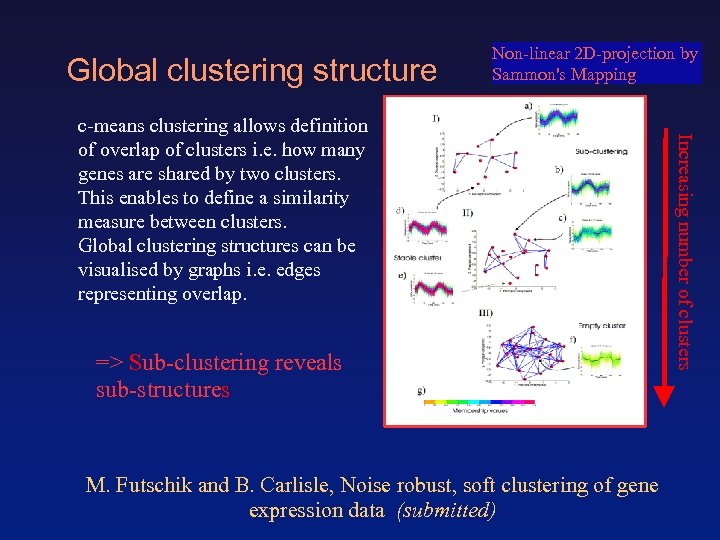 Global clustering structure Non-linear 2 D-projection by Sammon's Mapping => Sub-clustering reveals sub-structures M. Futschik and B. Carlisle, Noise robust, soft clustering of gene expression data (submitted) Increasing number of clusters c-means clustering allows definition of overlap of clusters i. e. how many genes are shared by two clusters. This enables to define a similarity measure between clusters. Global clustering structures can be visualised by graphs i. e. edges representing overlap.
 Take-home messages There are many mines to step in, so take care of every step ●Well begun is half done: A good design of an microarray experiment can avoid a lot of trouble. ● A detailed analysis of microarray data can be tedious, but is often worth the effort. ●There is still a lot of gold out there. . ●
 Thanks! This talk, the OLIN software and further information can be found at http: //itb. biologie. hu-berlin. de/~futschik