


 Скачать презентацию Micro-organisms and Swimming Pools Athena Mavridou Prof Emeritus
40be888e1c49455d816a517c1767afe0.ppt
- Количество слайдов: 35
 Micro-organisms and Swimming Pools Athena Mavridou Prof Emeritus, Microbiology
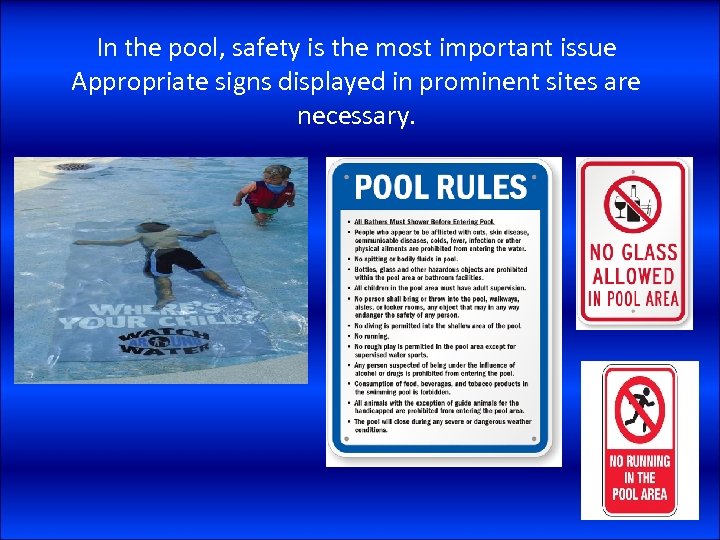 In the pool, safety is the most important issue Appropriate signs displayed in prominent sites are necessary.
 Micro-organisms in the pool • Autochthonous (non- faecally derived) – The water’s natural flora – High bathing load in a pool contributes to unsafe numbers in the water of various species, including pathogenic ones. • Allochthonous (mostly faecally but also non-faecally derived) – The water supply – Human skin (and via walking on surfaces) – Discharges from the nose, throat and eyes – Vomit – blood – Faeces (human, animal and birds) – Showers, floors, matts, towels and changing rooms – Wind blown debris and litter – Sewage waters • Autochthonous & allochthonous groups include opportunistic pathogens &/or pathogenic species
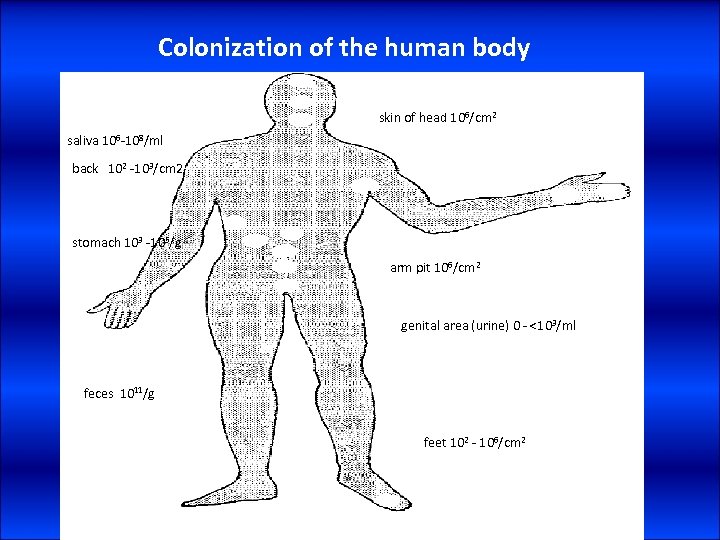 Colonization of the human body skin of head 106/cm 2 saliva 106 -108/ml back 102 -103/cm 2 stomach 103 -105/g arm pit 106/cm 2 genital area (urine) 0 - <103/ml feces 1011/g feet 102 - 106/cm 2
 What do these micro-organisms cause? • • Skin & outer ear infections Throat & eye infections Gastroenteritis Hepatitis A & E Respiratory diseases Pneumonia Meningitis Herpes
 Ways of transmission • • • Skin contact Cuts & abrasions Ingestion Nose & conjunctival contact Puncture wound Inhalation
 Survival time • In the pool environment faecally derived pathogens are exposed to difficult and unusual conditions for their metabolism • As a consequence they gradually enter a lethal phase and then they die. • Survival time varies between species. • As a general rule, survival time increases from – Bacteria → fungi → Viruses → protozoa • Nevertheless there are inner important differences in each group • Important! • All national regulations, including WHO Guidelines, for the pool monitoring require some bacterial indicators. The absence of bacterial indicators in the samples does not necessary secures the absence of viruses and protozoa.
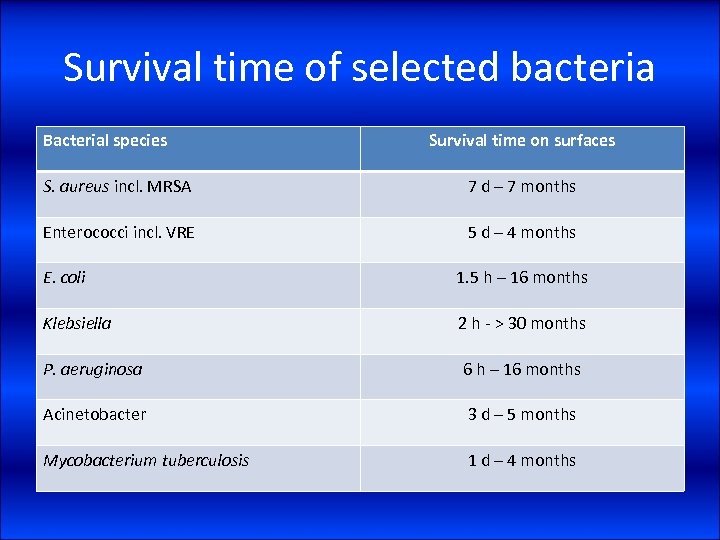 Survival time of selected bacteria Bacterial species Survival time on surfaces S. aureus incl. MRSA 7 d – 7 months Enterococci incl. VRE 5 d – 4 months E. coli 1. 5 h – 16 months Klebsiella 2 h - > 30 months P. aeruginosa 6 h – 16 months Acinetobacter 3 d – 5 months Mycobacterium tuberculosis 1 d – 4 months
 Survival time – infective dose • Please note the difference between survival & growth – Example: viruses survive for a long period of time in the pool water, nevertheless they do nor multiply – Because of a minimal survival time (fraction of a sec) HIV, HBV, HCV cannot be transmitted though swimming in the pool. – The transmission of HPV is limited as the survival time is relatively small • The infective dose (I. D. ) • Pathogenicity depends on I. D. that is the number of pathogenic cells capable to induce a disease • it varies with the species. Bacterial I. D. is generally higher than the I. D. of viruses and protozoa. • Because of a very high I. D. the transmission of salmonellosis in the pool is quite limited, unlike shigellosis and bacterial gastroenteritis caused by E. coli 0: 157: Η 7
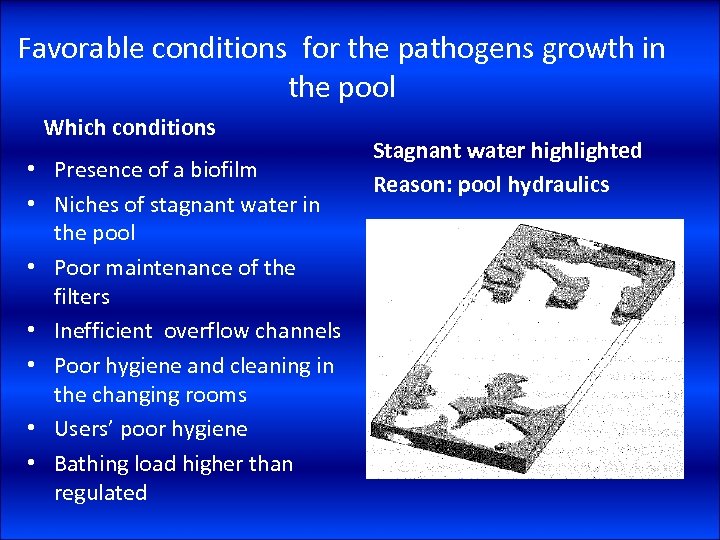 Favorable conditions for the pathogens growth in the pool Which conditions • Presence of a biofilm • Niches of stagnant water in the pool • Poor maintenance of the filters • Inefficient overflow channels • Poor hygiene and cleaning in the changing rooms • Users’ poor hygiene • Bathing load higher than regulated Stagnant water highlighted Reason: pool hydraulics
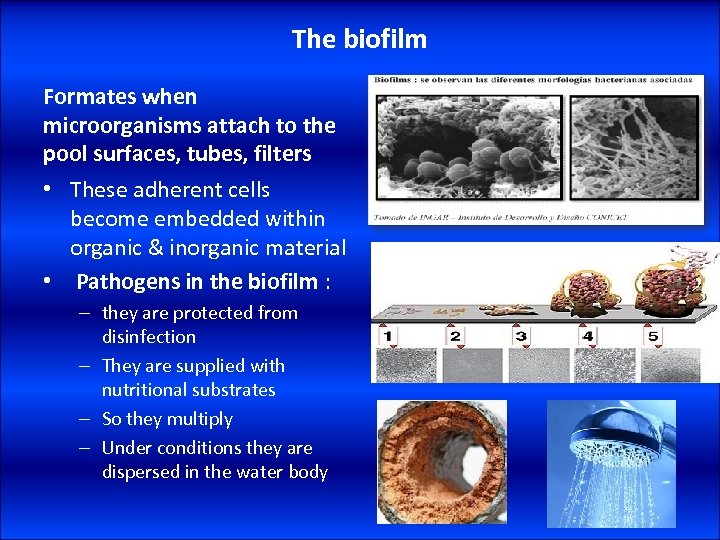 The biofilm Formates when microorganisms attach to the pool surfaces, tubes, filters • These adherent cells become embedded within organic & inorganic material • Pathogens in the biofilm : – they are protected from disinfection – They are supplied with nutritional substrates – So they multiply – Under conditions they are dispersed in the water body
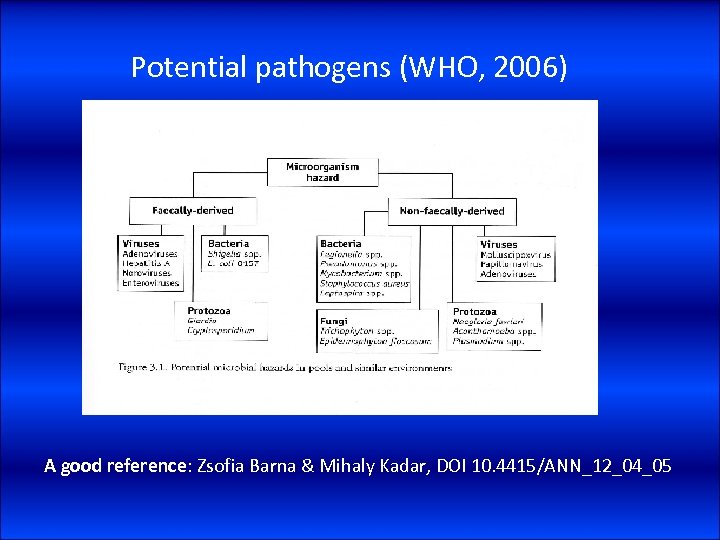 Potential pathogens (WHO, 2006) A good reference: Zsofia Barna & Mihaly Kadar, DOI 10. 4415/ANN_12_04_05
 Main autochthonous pathogens • P. aeruginosa – An opportunistic pathogen – It grows well in oligotrophic waters & in the biofilm – It can cause ear and eye infections – It is included in many regulations as an imperative indicator • S. aureus – Colonises the human skin – Causes ear infections, dermititis & gastrenteritis – It is included in many regulations as an imperative indicator • Legionella spp • It can cause pneumonia when inhaled, so it spread s in jacuzzis & hot tubs • Aeromonas hydrophila • It can be the cause of gastroenteritis in children
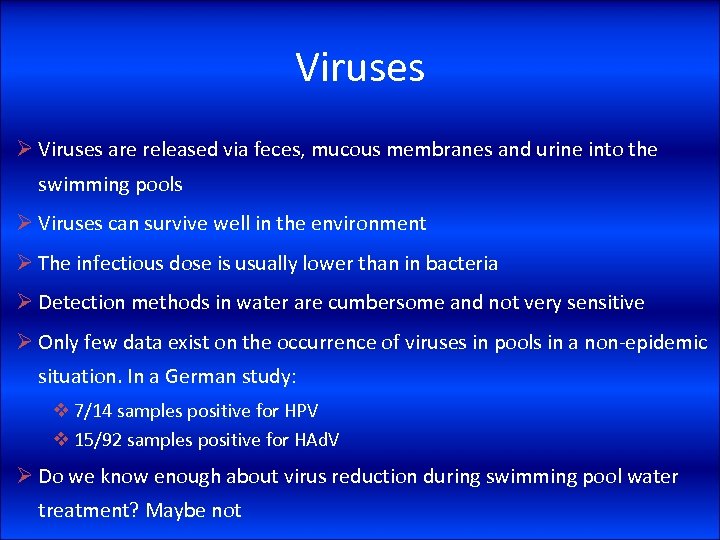 Viruses Ø Viruses are released via feces, mucous membranes and urine into the swimming pools Ø Viruses can survive well in the environment Ø The infectious dose is usually lower than in bacteria Ø Detection methods in water are cumbersome and not very sensitive Ø Only few data exist on the occurrence of viruses in pools in a non-epidemic situation. In a German study: v 7/14 samples positive for HPV v 15/92 samples positive for HAd. V Ø Do we know enough about virus reduction during swimming pool water treatment? Maybe not
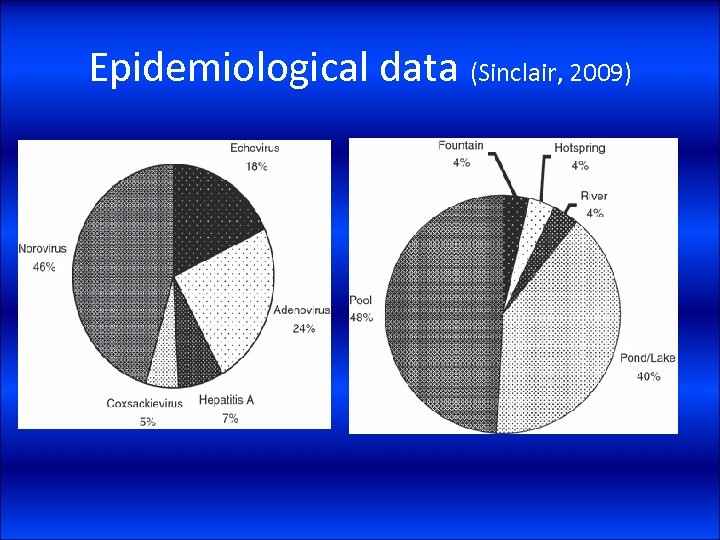 Epidemiological data (Sinclair, 2009)
 Viruses spread by mosquito bites- the case of West Nile virus • Epidemic in Kern County, CA, 2004 -2007 when the human case annual incidence increased from 6 -8 to 17 per 100, 000, respectively. • The 2007 increase in human infection was associated with contradictory surveillance indicators: • severe drought, warm spring but cool summer, decreased rural and urban mosquito abundance but increased early season infection in urban Culex quinquefasciatus Say, moderate avian "herd immunity, " and declines in the catch of competent (western scrub-jay and house finch) and noncompetent (California quail and mourning dove) avian species. • The marked increase in home foreclosures and associated neglected swimming pools increased urban mosquito production sites (Reisen WK et al. 2009) • Kern County’s West Nile Virus Strategic Response Plan: • “Fight the Bite” campaign, which calls for reporting of neglected swimming pools
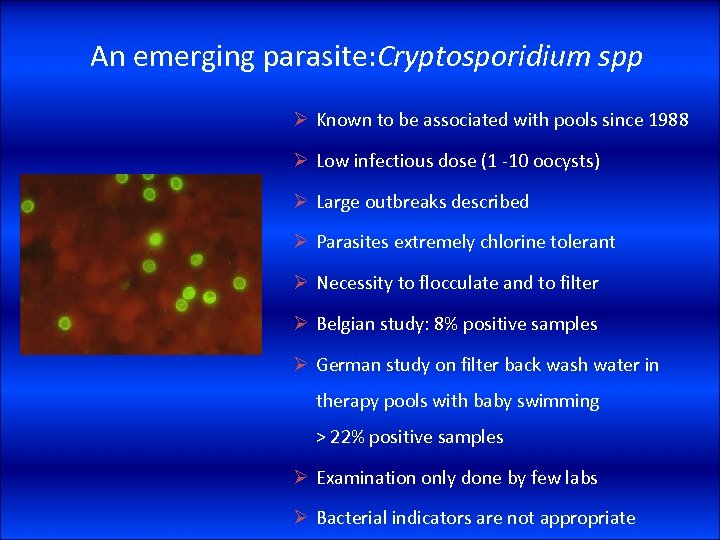 An emerging parasite: Cryptosporidium spp Ø Known to be associated with pools since 1988 Ø Low infectious dose (1 -10 oocysts) Ø Large outbreaks described Ø Parasites extremely chlorine tolerant Ø Necessity to flocculate and to filter Ø Belgian study: 8% positive samples Ø German study on filter back wash water in therapy pools with baby swimming > 22% positive samples Ø Examination only done by few labs Ø Bacterial indicators are not appropriate
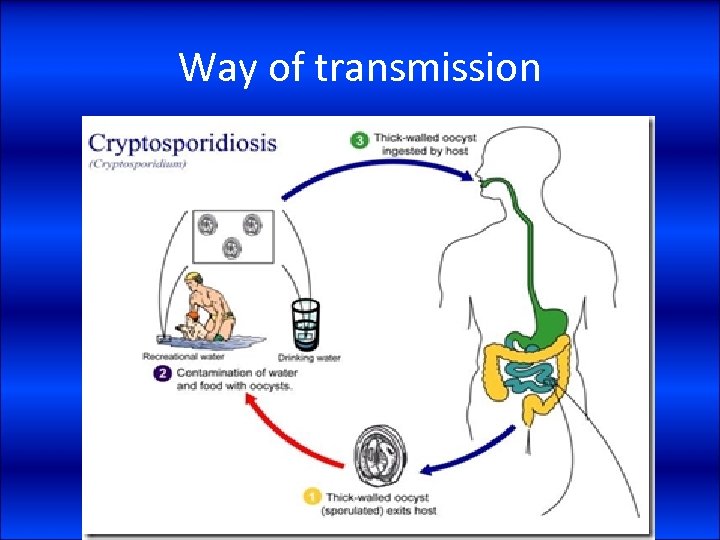 Way of transmission
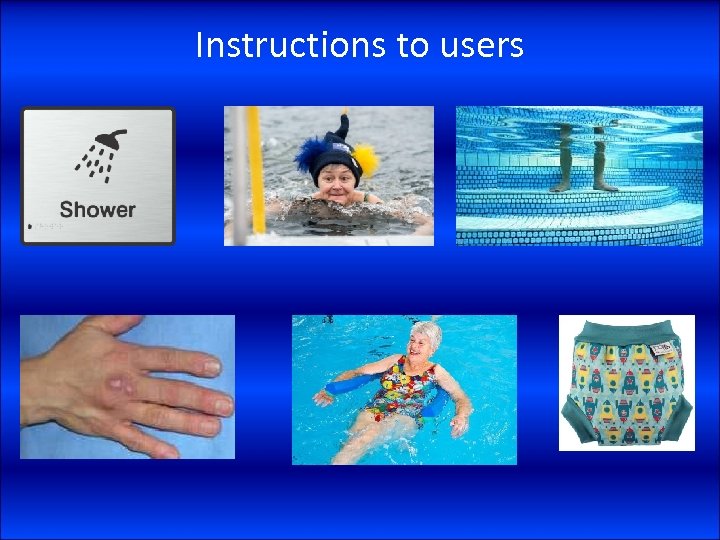
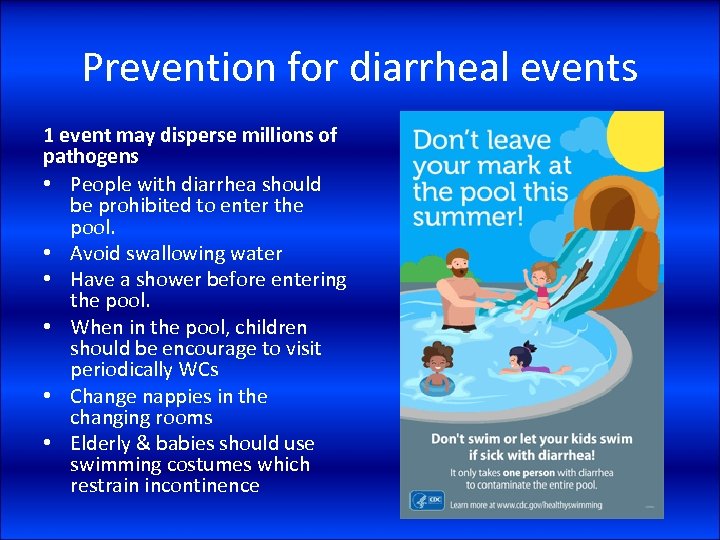 Prevention for diarrheal events 1 event may disperse millions of pathogens • People with diarrhea should be prohibited to enter the pool. • Avoid swallowing water • Have a shower before entering the pool. • When in the pool, children should be encourage to visit periodically WCs • Change nappies in the changing rooms • Elderly & babies should use swimming costumes which restrain incontinence
 New“ pathogens in pools: Antibiotic resistant strains Ø Antibiotic resistance is increasing worldwide Ø Travel and migration enhances the problem Ø MRSA, ESBL, VRE, NDM…. . some strains creating allarm Ø Carrier rates in the population vary extremely depending on species, endemic situation and local antibiotic usage Ø Nearly no new antibiotics are currently in the pipe line = antibiotic gap Ø Knowledge about transmission in the community or in special therapy situations is very limited Ø Do we need to re-assess the public health risk?
 International regulations • In the E. U. there is no European Directive imperative for the member states. • Each member state applies their national regulations. • Who Guidelines serve as a general Guidance. • Publications containing information on European and International regulations – Crespi et al, 2016 Swimming pool regulations and pool market analysis in the tourism sector. – Mavridou et al, 2014 An overview of pool& spa regulations in the Mediterranean countries. JWH, 12. 3.
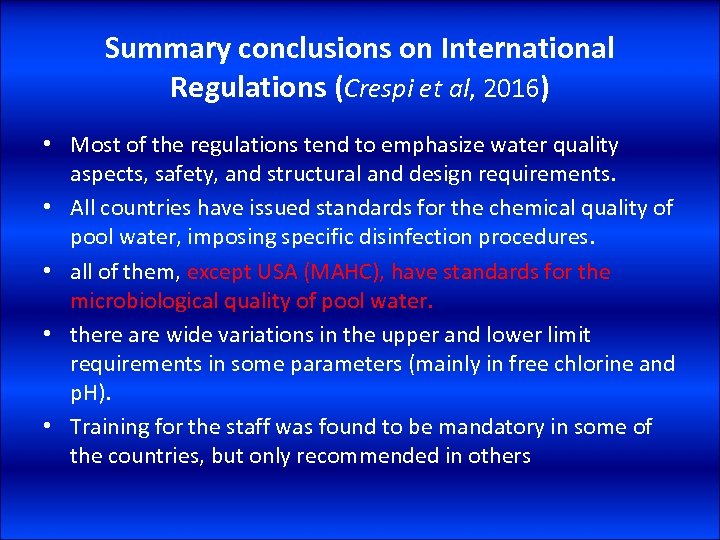 Summary conclusions on International Regulations (Crespi et al, 2016) • Most of the regulations tend to emphasize water quality aspects, safety, and structural and design requirements. • All countries have issued standards for the chemical quality of pool water, imposing specific disinfection procedures. • all of them, except USA (MAHC), have standards for the microbiological quality of pool water. • there are wide variations in the upper and lower limit requirements in some parameters (mainly in free chlorine and p. H). • Training for the staff was found to be mandatory in some of the countries, but only recommended in others
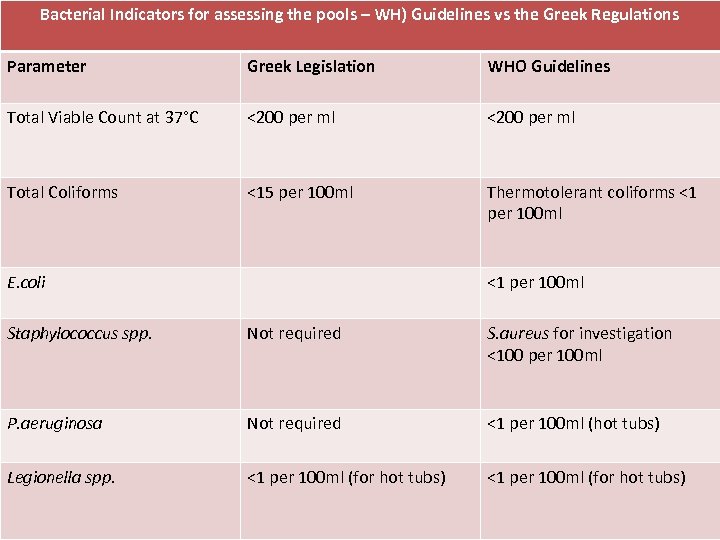 Bacterial Indicators for assessing the pools – WH) Guidelines vs the Greek Regulations Parameter Greek Legislation WHO Guidelines Total Viable Count at 37°C <200 per ml Total Coliforms <15 per 100 ml Thermotolerant coliforms <1 per 100 ml E. coli <1 per 100 ml Staphylococcus spp. Not required S. aureus for investigation <100 per 100 ml P. aeruginosa Not required <1 per 100 ml (hot tubs) Legionella spp. <1 per 100 ml (for hot tubs)
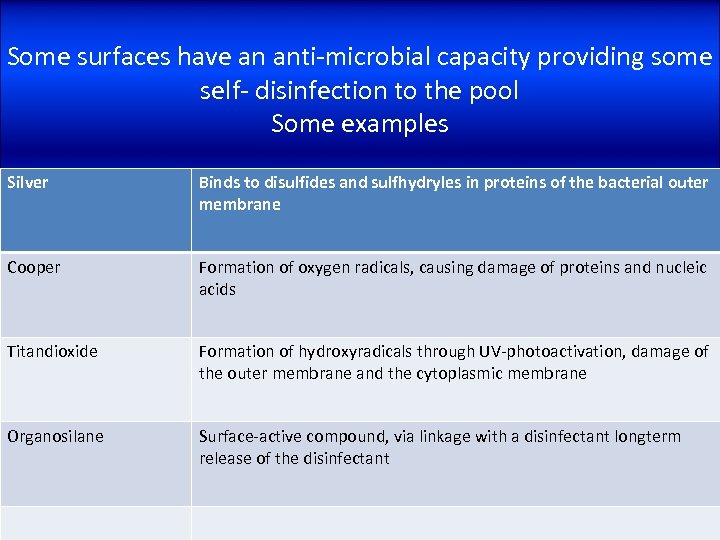 Some surfaces have an anti-microbial capacity providing some self- disinfection to the pool Some examples Silver Binds to disulfides and sulfhydryles in proteins of the bacterial outer membrane Cooper Formation of oxygen radicals, causing damage of proteins and nucleic acids Titandioxide Formation of hydroxyradicals through UV-photoactivation, damage of the outer membrane and the cytoplasmic membrane Organosilane Surface-active compound, via linkage with a disinfectant longterm release of the disinfectant
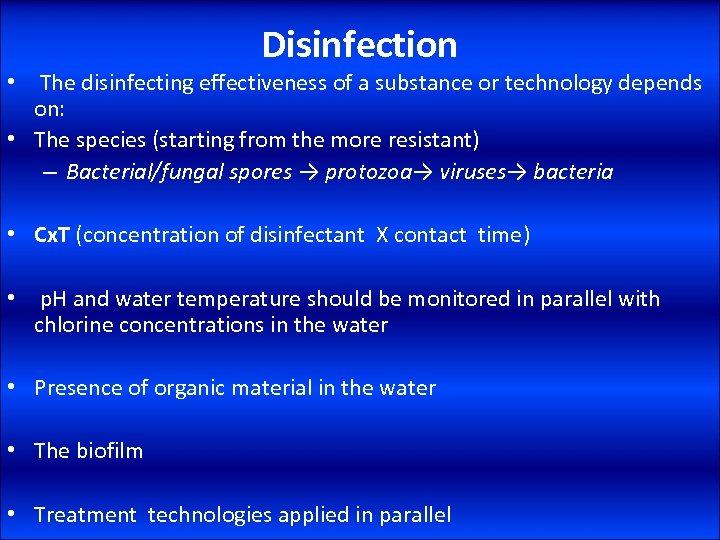 Disinfection • The disinfecting effectiveness of a substance or technology depends on: • The species (starting from the more resistant) – Bacterial/fungal spores → protozoa→ viruses→ bacteria • Cx. T (concentration of disinfectant X contact time) • p. H and water temperature should be monitored in parallel with chlorine concentrations in the water • Presence of organic material in the water • The biofilm • Treatment technologies applied in parallel
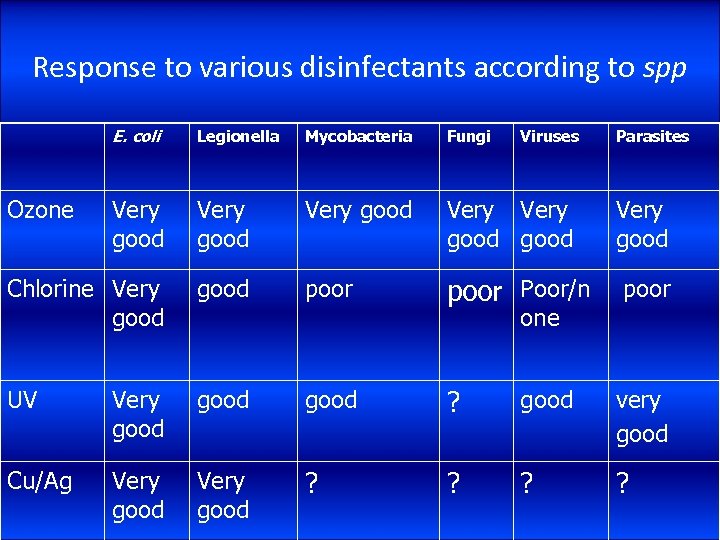 Response to various disinfectants according to spp Ε. coli Legionella Mycobacteria Fungi Very good Very good Chlorine Very good poor Poor/n UV Very good ? good very good Cu/Ag Very good ? ? Ozone Viruses one Parasites Very good poor
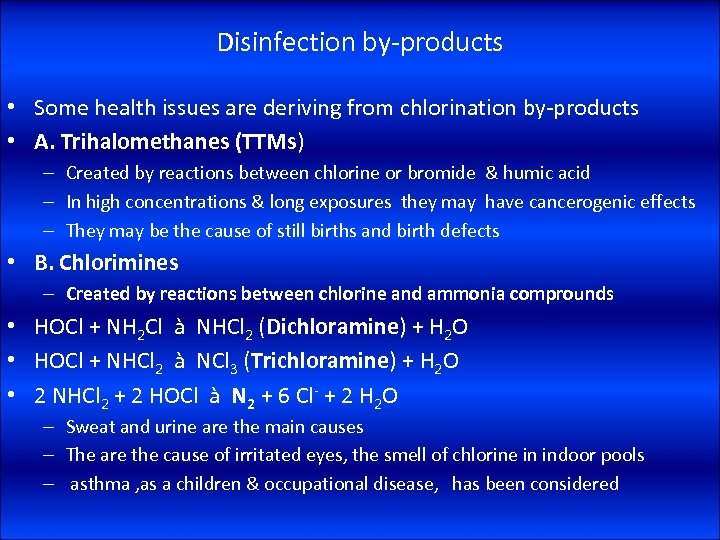 Disinfection by-products • Some health issues are deriving from chlorination by-products • A. Trihalomethanes (TTMs) – Created by reactions between chlorine or bromide & humic acid – In high concentrations & long exposures they may have cancerogenic effects – They may be the cause of still births and birth defects • Β. Chlorimines – Created by reactions between chlorine and ammonia comprounds • HOCl + NH 2 Cl à NHCl 2 (Dichloramine) + H 2 O • HOCl + NHCl 2 à NCl 3 (Trichloramine) + H 2 O • 2 NHCl 2 + 2 HOCl à N 2 + 6 Cl- + 2 H 2 O – Sweat and urine are the main causes – The are the cause of irritated eyes, the smell of chlorine in indoor pools – asthma , as a children & occupational disease, has been considered
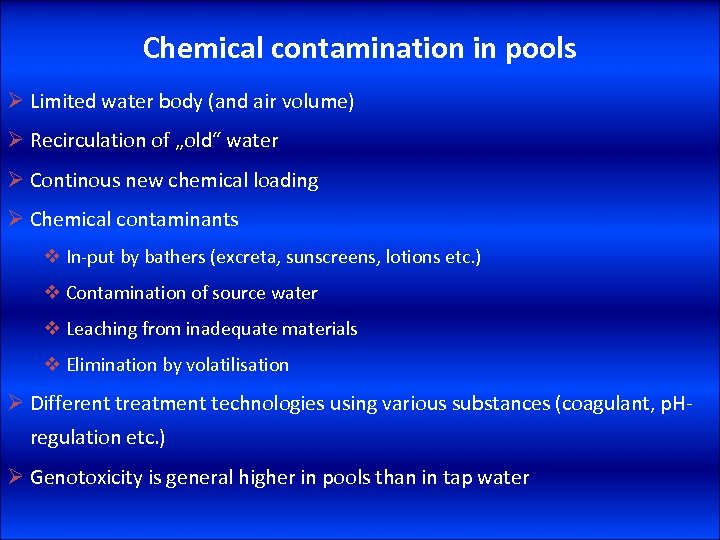 Chemical contamination in pools Ø Limited water body (and air volume) Ø Recirculation of „old“ water Ø Continous new chemical loading Ø Chemical contaminants v In-put by bathers (excreta, sunscreens, lotions etc. ) v Contamination of source water v Leaching from inadequate materials v Elimination by volatilisation Ø Different treatment technologies using various substances (coagulant, p. Hregulation etc. ) Ø Genotoxicity is general higher in pools than in tap water
 Personal care products (PCPs) - Sunscreens/UV-Filters ØThey are mostly lipophilic and can accumulate ØHighest levels of sunscreens were found in children‘s pools ØSome partition into the surface layer ØSome sunscreens have a potential ability for endocrine disruption ØEstrogenicity and antiandrogenicity is exhibited by some substances ØPhotodegradation can produce more harmful compounds than the parent compound ØStudies on the fate of UV-filters and potential effect on disinfectants are limited ØStudies exist only on a limited number of compounds ØCan the risk be minimized by special treatment technologies?
 Pools of specific use • They often require specific regulations • • Children pools Baby swim pools Hydrotherapy pools Birth pools Water parks Hot tubs- sauna- spa Domestic pools
 Spa pools • They are of many types, all are of a sitting in type, • They may be used individually or with up to 8 users. • High bathing load combined with elevated temperatures enhances bacterial proliferation and makes difficult to maintain satisfactory bacterial residual and p. H value. • Many spa pools will have hydrojet circulation and so they may cause Legionella infections. So they should never run without residual disinfectant
 Instructions to users
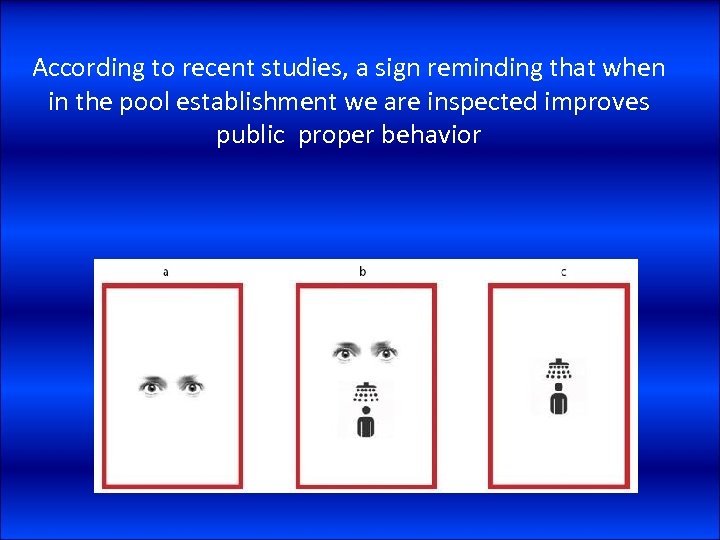 According to recent studies, a sign reminding that when in the pool establishment we are inspected improves public proper behavior
 Thank you for your attention