


 Скачать презентацию MGT 301 Principles of Marketing Lecture-18 Summary
29676d1b802a8ae3f320d52e8036a533.ppt
- Количество слайдов: 41
 MGT 301 Principles of Marketing Lecture-18
 Summary of Lecture-17
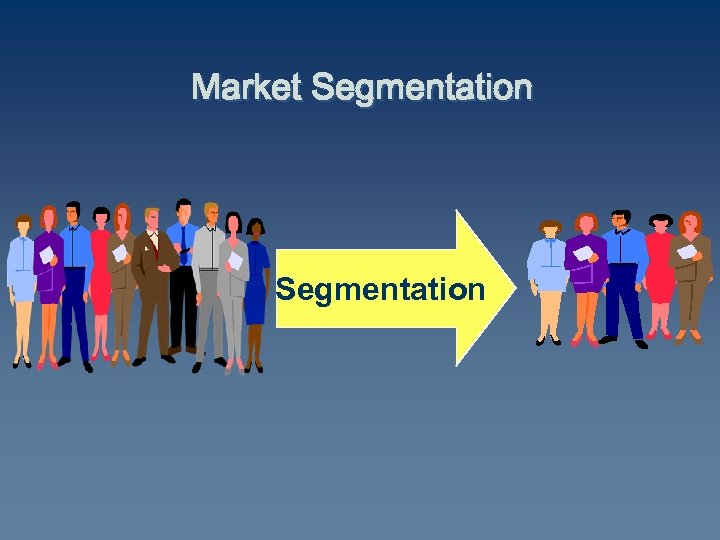 Market Segmentation
 Major Steps in Target Marketing ü Segmentation ü Target Marketing ü Market Positioning
 Segmentation Variables C Geographical segmentation C Demographic segmentation C Psychographic segmentation C Behavioral segmentation
 Today’s Topics Market Segmentation (cont. . )
 How Segments are Developed?
 Segmentation plans developed through a 3 -stage process – survey – analysis – interpretation
 Bases for Segmenting Business Markets
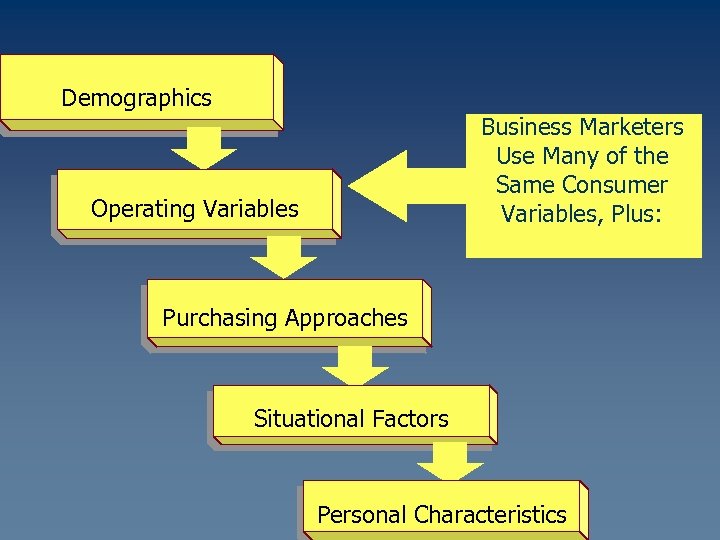 Demographics Business Marketers Use Many of the Same Consumer Variables, Plus: Operating Variables Purchasing Approaches Situational Factors Personal Characteristics
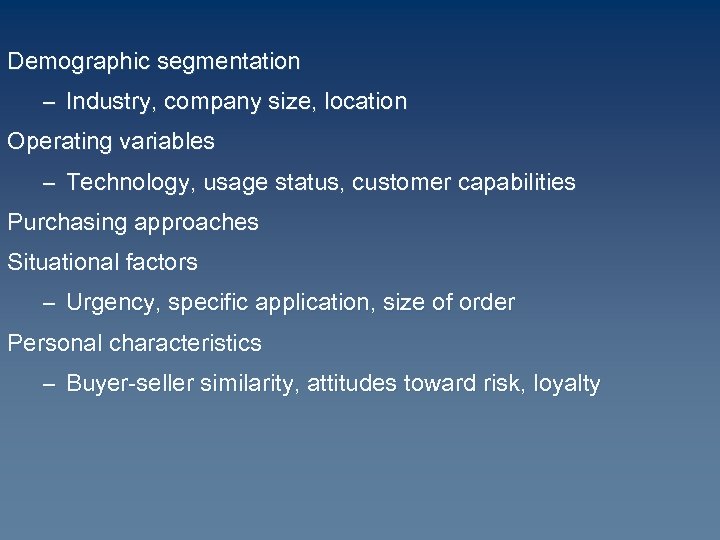 Demographic segmentation – Industry, company size, location Operating variables – Technology, usage status, customer capabilities Purchasing approaches Situational factors – Urgency, specific application, size of order Personal characteristics – Buyer-seller similarity, attitudes toward risk, loyalty
 Bases for Segmenting International Markets
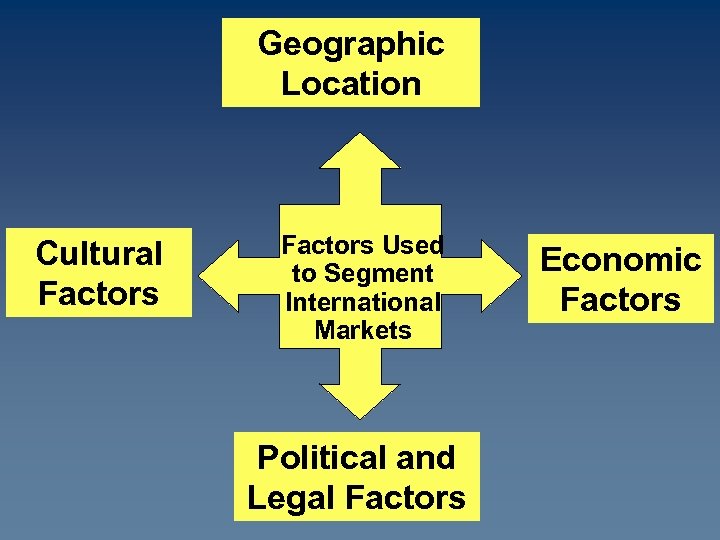 Geographic Location Cultural Factors Used to Segment International Markets Political and Legal Factors Economic Factors
 Geographic segmentation – Location or region Economic factors – Population income or level of economic development Political and legal factors – Type / stability of government, monetary regulations, amount of bureaucracy, etc. Cultural factors – Language, religion, values, attitudes, customs, behavioral patterns
 Intermarket Segmentation Forming segments of consumers who have similar needs and buying behavior even though they are located in different countries
 Requirements for Effective Segmentation
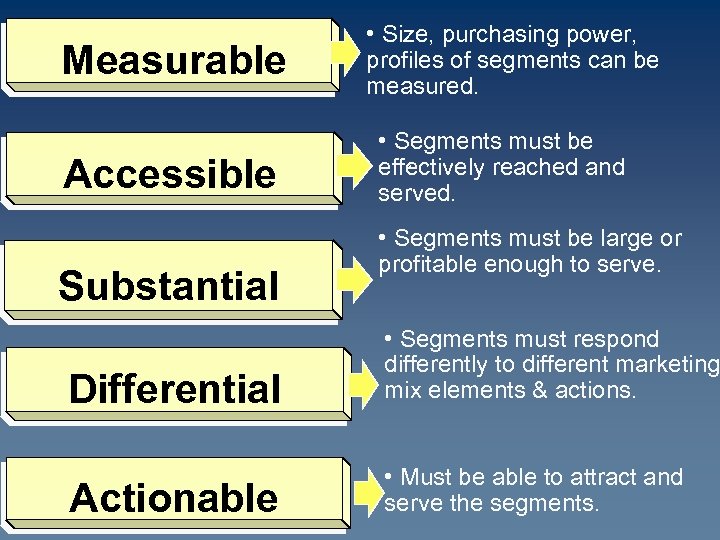
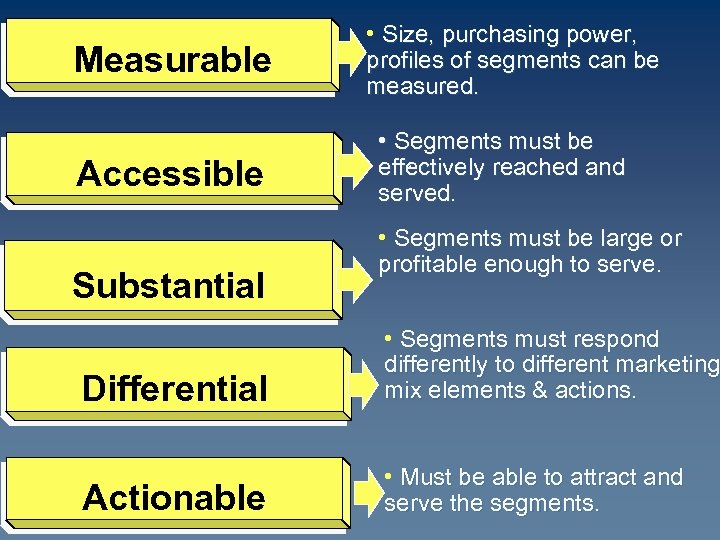 Measurable Accessible Substantial • Size, purchasing power, profiles of segments can be measured. • Segments must be effectively reached and served. • Segments must be large or profitable enough to serve. Differential • Segments must respond differently to different marketing mix elements & actions. Actionable • Must be able to attract and serve the segments.
 Target Marketing
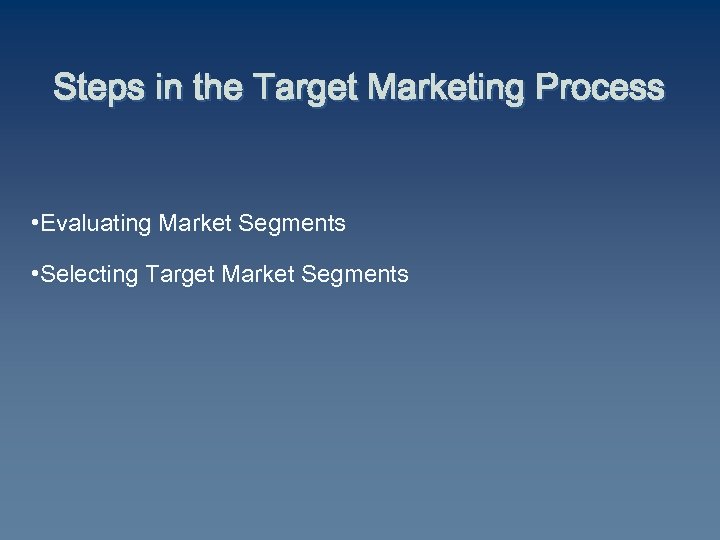 Steps in the Target Marketing Process • Evaluating Market Segments • Selecting Target Market Segments
 Evaluating Market Segments
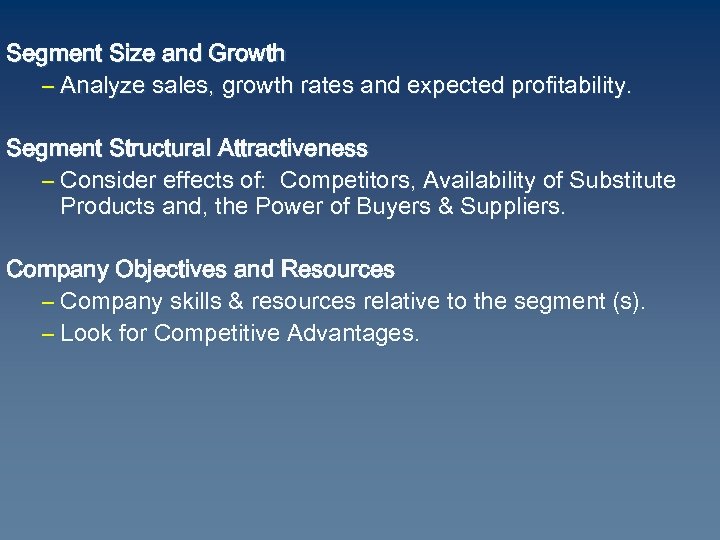 Segment Size and Growth – Analyze sales, growth rates and expected profitability. Segment Structural Attractiveness – Consider effects of: Competitors, Availability of Substitute Products and, the Power of Buyers & Suppliers. Company Objectives and Resources – Company skills & resources relative to the segment (s). – Look for Competitive Advantages.
 Choosing a Market-Coverage/Target. Marketing Strategy
 Target Marketing Strategies
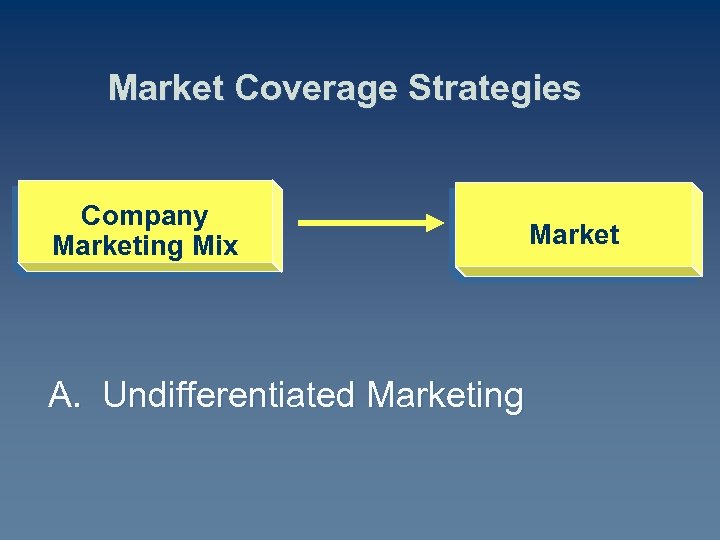 Market Coverage Strategies Company Marketing Mix A. Undifferentiated Marketing Market
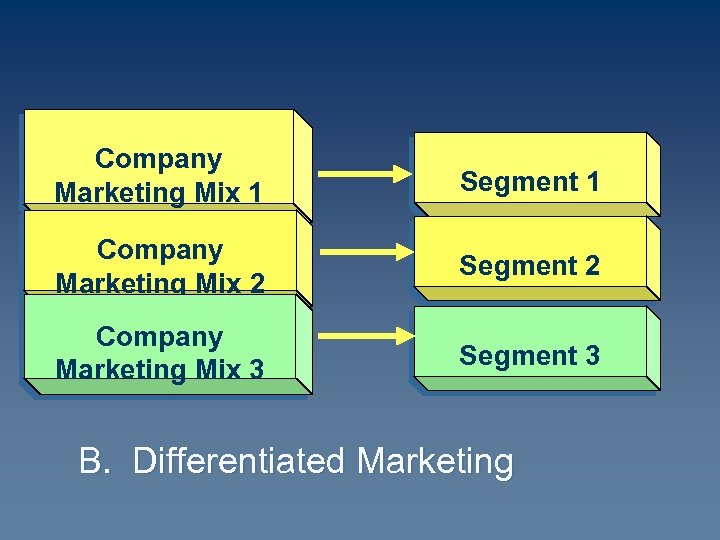 Company Marketing Mix 1 Segment 1 Company Marketing Mix 2 Segment 2 Company Marketing Mix 3 Segment 3 B. Differentiated Marketing
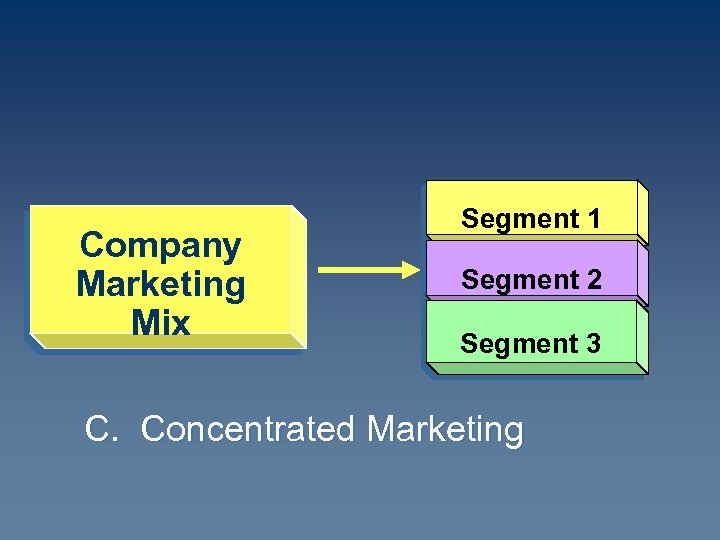 Company Marketing Mix Segment 1 Segment 2 Segment 3 C. Concentrated Marketing
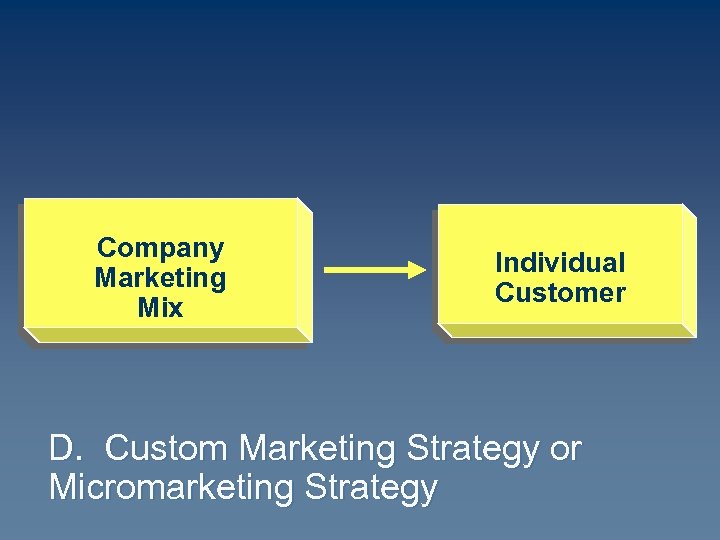 Company Marketing Mix Individual Customer D. Custom Marketing Strategy or Micromarketing Strategy
 Positioning for Competitive Advantage u Product’s Position - the place the product occupies in consumers’ minds relative to competing products; i. e. Volvo positions on “safety”. u Marketers must: – Plan positions to give products the greatest advantage – Develop marketing mixes to create planned positions
 Choosing and Implementing a Positioning Strategy u Step 1. Identifying a set of possible competitive advantages: Competitive Differentiation. u Step 2. Selecting the right competitive advantage. 3. Effectively communicating and delivering the chosen position to the market.
 Positioning Strategy Development Process C Identify the competitors. C Assess perceptions of them. C Determine their positions. C Analyze consumer preferences. C Make the positioning decision.
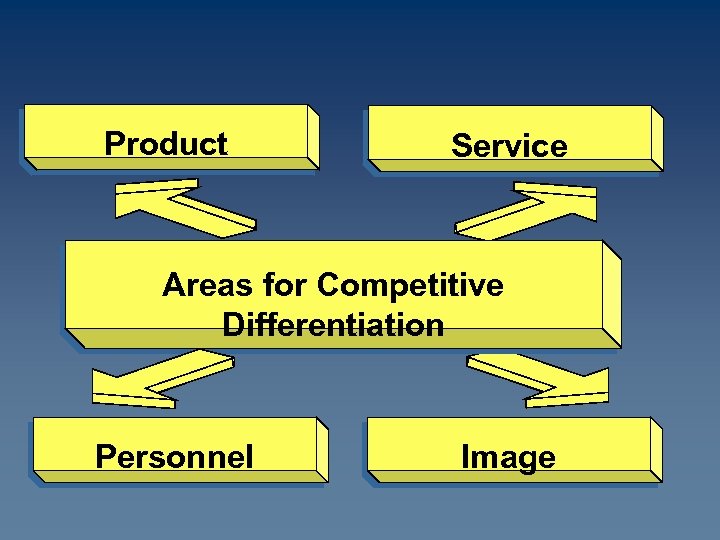 Product Service Areas for Competitive Differentiation Personnel Image
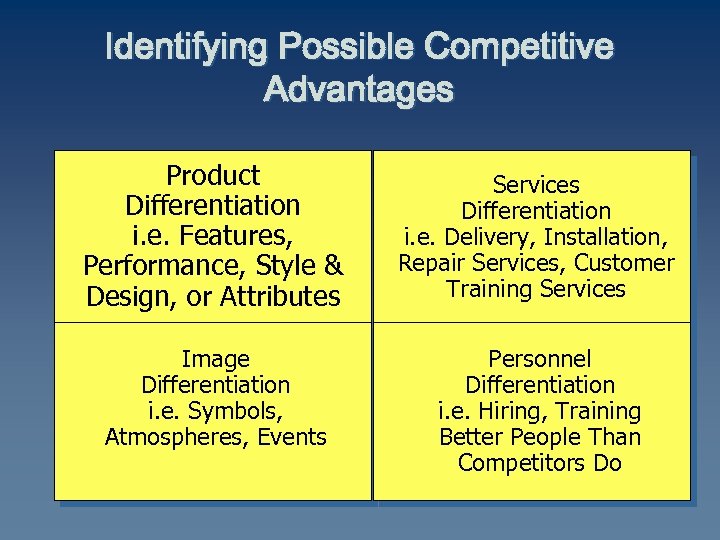 Identifying Possible Competitive Advantages Product Differentiation i. e. Features, Performance, Style & Design, or Attributes Image Differentiation i. e. Symbols, Atmospheres, Events Services Differentiation i. e. Delivery, Installation, Repair Services, Customer Training Services Personnel Differentiation i. e. Hiring, Training Better People Than Competitors Do
 Six Positioning Questions What position do we have now? What position do we want to own? From whom must we win this position? Do we have the money to do the job? Do we have the tenacity to stay with it? Does our creative strategy match it?
 Positioning By What? C C C C Product Attributes Price/Quality Use or Application Product Class Product User Competitor Cultural Symbols
 A Strategic Resource Must Be: è è è Hard to copy Durable Tied to the company Not substitutable Superior
 Summary Market Segmentation (cont. . ) Bases for Segmenting Business Markets Bases for Segmenting International Markets Requirements for Effective Segmentation
 Measurable Accessible Substantial • Size, purchasing power, profiles of segments can be measured. • Segments must be effectively reached and served. • Segments must be large or profitable enough to serve. Differential • Segments must respond differently to different marketing mix elements & actions. Actionable • Must be able to attract and serve the segments.
 Target Marketing
 Positioning for Competitive Advantage
 Next…. Marketing Mix 4 Ps
 MGT 301 Principles of Marketing Lecture-18