


 Скачать презентацию MFIRS V-5 Training 1 NFIRS MFIRS V-5
04941bdff8e6a01e2dca153d415bd74b.ppt
- Количество слайдов: 41
 MFIRS V-5 Training 1
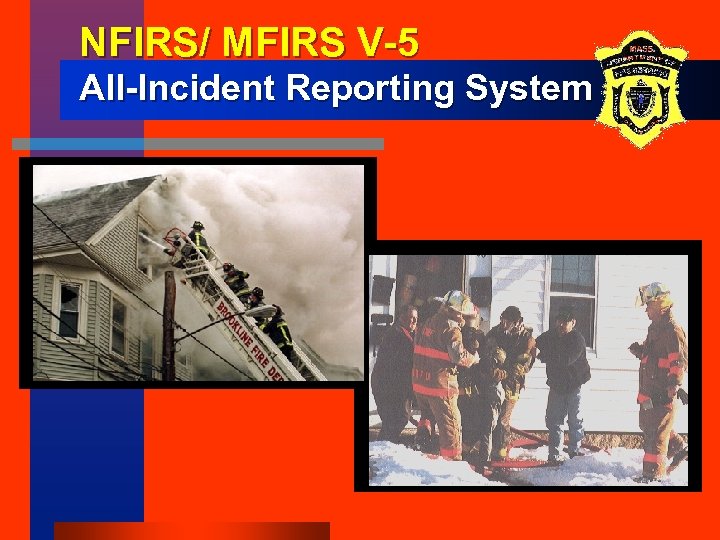 NFIRS/ MFIRS V-5 All-Incident Reporting System
 Objectives The participants will be able to: – describe the benefits of MFIRS 5. 0. – explain what led to the organization and development of NFIRS/ MFIRS. – identify the modules which are required as part of MGL 148 Section 2 & 2 A. – Be able to use the NFIRS Quick Reference Guide (QRG).
 MFIRS V-5 4 hour Training This seminar will provide the student with enough basic information to begin to use MFIRS V-5 mandated reporting. w This is not a comprehensive class in all of V-5 MFIRS reporting modules. w
 MGL Chapter 148 Section 2 All. . Fire or explosions by which a loss is sustained shall be reported to the State Fire Marshal on forms furnished by the department… w MFIRS V-5 shall be the means by which this data is collected… w Enacted in 1886 & amended in 1977. w
 MGL Chapter 148 Section 2 a w This law requires the principal of any school of grades 1 -12 to immediately report any fire incident to the local fire department. The fire department shall report the incident to OSFM via MFIRS. – Response or no response.
 Optional Reporting Many departments are now sending us all of their incidents. w Boston, Worcester, Springfield, New Bedford, Florida, Dalton, Lenox… w – Both big & small departments. – If you’re automated you should be sending us all of your runs – It’s in your best interest. – More runs = Need = More $$$$$. w Have to have the documentation & stats to back it up your requests.
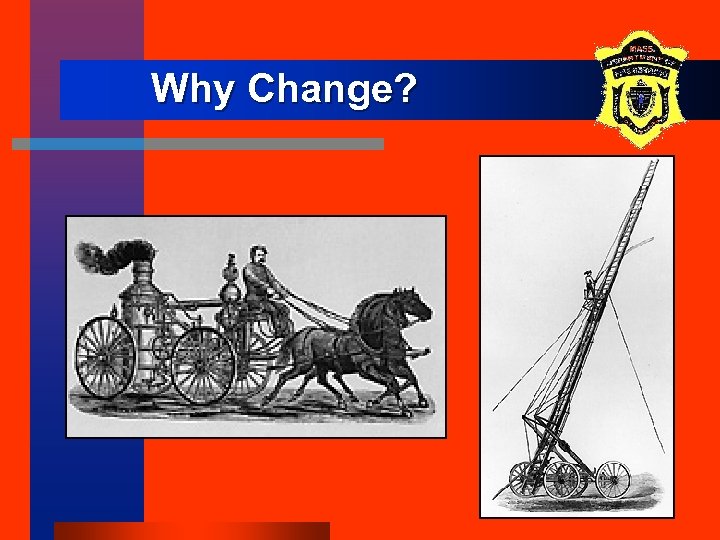 Why Change?
 Need for Data Fire service leaders need up-to-date, comprehensive data for decision making: w w w w Program Effectiveness Resource Deployment Codes & Standards Development Need for New Programs and Services Legislative Initiatives Identify Training Needs Product Safety
 1. Changing Role of the Fire Service ß Multi-Discipline Agencies ß Complex Incident Types ß Greater Reliance on Information to Manage Limited Resources
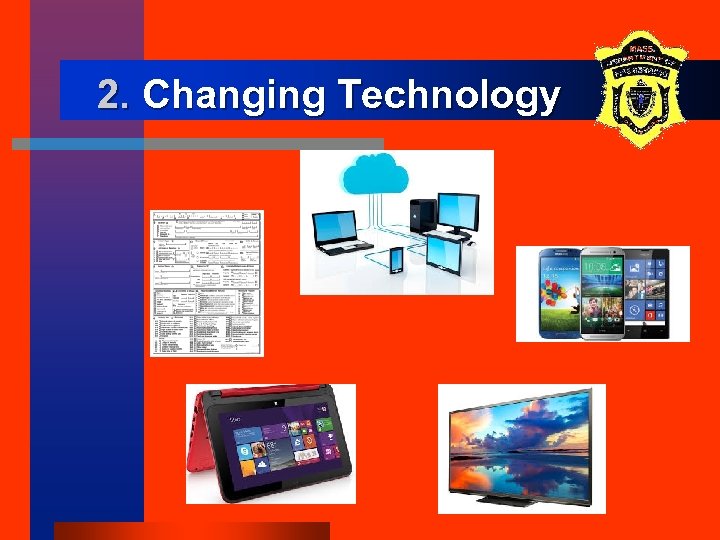 2. Changing Technology
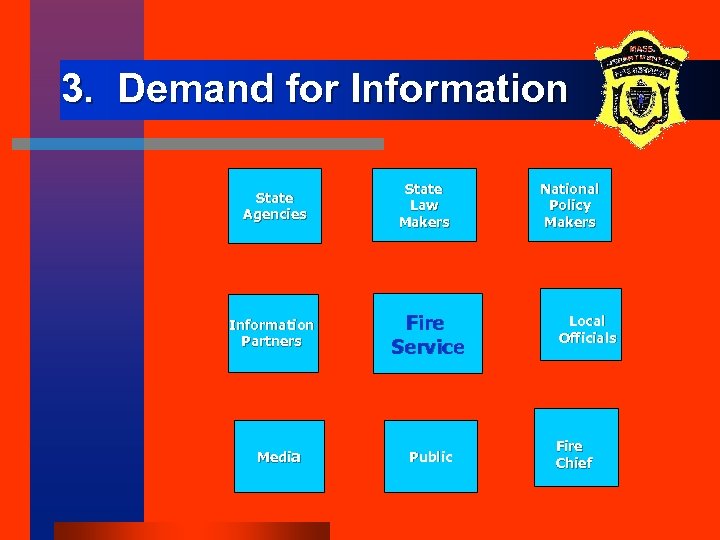 3. Demand for Information State Agencies State Law Makers Information Partners Fire Service Media Public National Policy Makers Local Officials Fire Chief
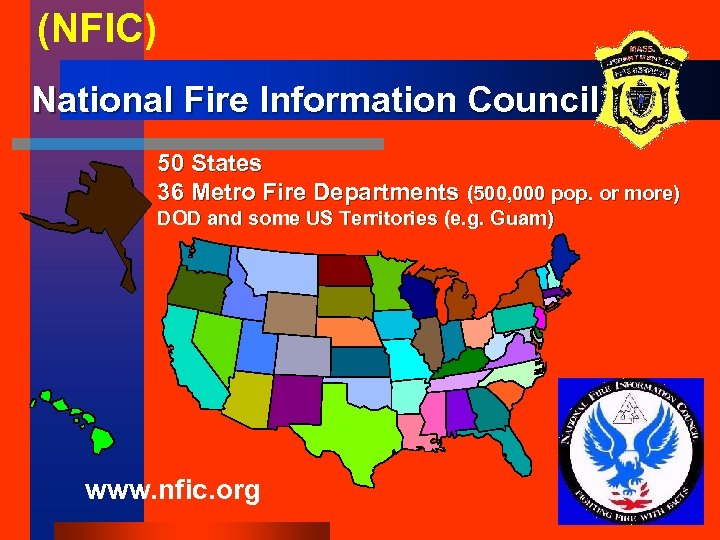 (NFIC) National Fire Information Council 50 States 36 Metro Fire Departments (500, 000 pop. or more) DOD and some US Territories (e. g. Guam) www. nfic. org
 NFIRS/ MFIRS 5. 0 Objectives w Develop an All-Incident Reporting Standard w – Open Specification w Address Information Needs of Local, State, Federal Agencies & Information Partners – Reportable, Collectable, Useable – Local/State Option w Focus on Ease of Use for Local Departments – Simplified & Abbreviated Reporting Fire Department Resource Management Tools – Track apparatus use and actions taken at the scene – Track personnel and activities performed on the scene w Meet the specific requirements of Massachusetts
 Key Features and Benefits 4 Simplicity à- Ease of Use 4 Abbreviated reporting 4 Modular design 4 Capture multiple 4 Local Options actions taken 4 Flexibility à -Expandable 4 Future Considerations
 Simplicity of Reporting 4 Single Entry of Data 3 Accuracy 3 Acceptance 3 Participation 4 Point and Click 4 Check-off Boxes
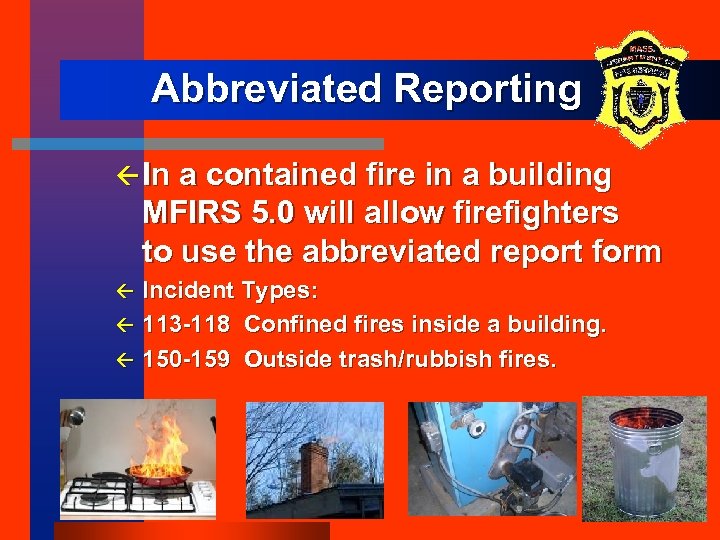 Abbreviated Reporting ß In a contained fire in a building MFIRS 5. 0 will allow firefighters to use the abbreviated report form Incident Types: ß 113 -118 Confined fires inside a building. ß 150 -159 Outside trash/rubbish fires. ß
 Simplified Choices
 Multiple Actions Taken 4 Can list multiple actions taken þ Shows the productivity of the department þ A single scene can involve Extinguishment, Overhaul, Rescue, EMS þ Explain unusual circumstances
 Flexibility 4 Room for expansion 4 Special studies field 4 National Code Plus One
 Other Local Options ß Capture Resources, Staff, and Apparatus used on the scene
 Other Benefits for Users á Contributing Factors á Captures up to two factors á Ability to capture relationships between injury and contributing factors á Human Factors á Gangs, alcohol, drugs, cigarettes, etc. á Improved collection of data on Juvenile Firesetters and the elderly á Cause of Ignition á Intentional, unintentional, under investigation, or undetermined after investigation á GIS Compatible
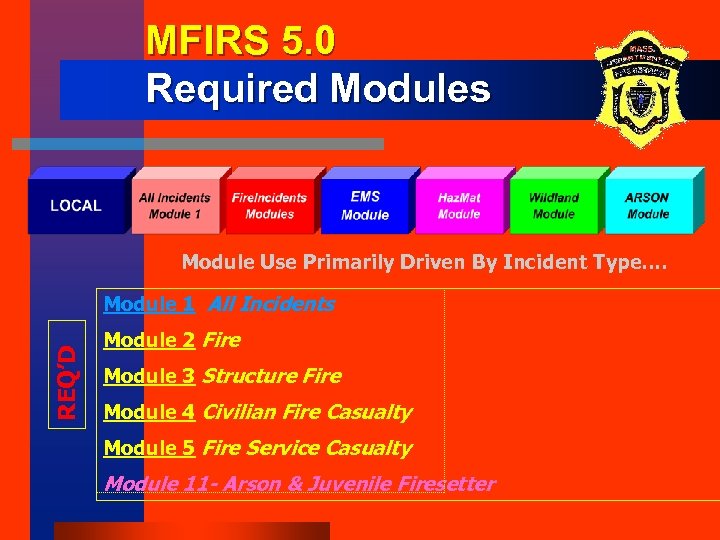 MFIRS 5. 0 Required Modules Module Use Primarily Driven By Incident Type…. REQ’D Module 1 All Incidents Module 2 Fire Module 3 Structure Fire Module 4 Civilian Fire Casualty Module 5 Fire Service Casualty Module 11 - Arson & Juvenile Firesetter
 MFIRS 1 Basic Module Is completed for every incident.
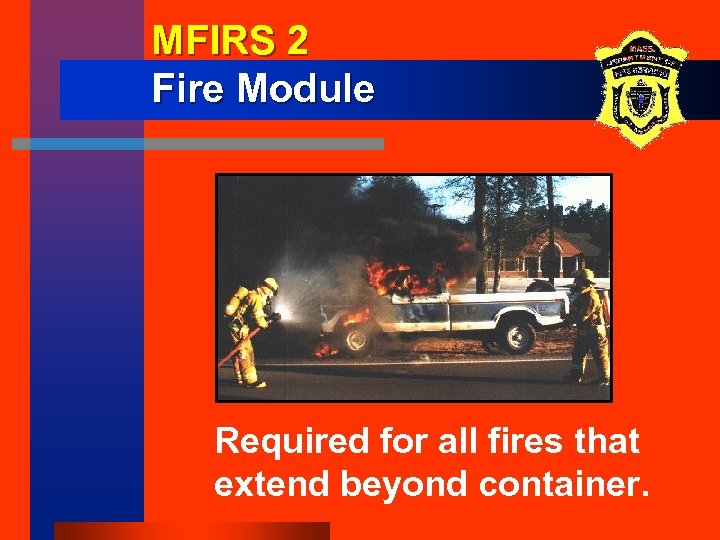 MFIRS 2 Fire Module Required for all fires that extend beyond container.
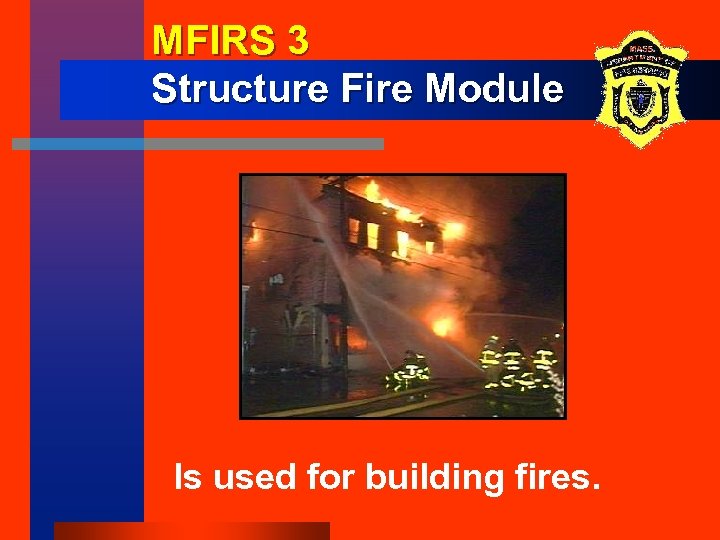 MFIRS 3 Structure Fire Module Is used for building fires.
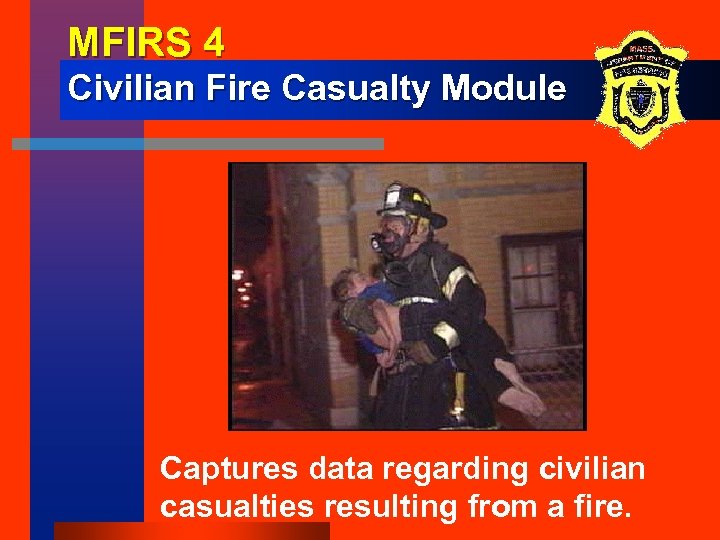 MFIRS 4 Civilian Fire Casualty Module Captures data regarding civilian casualties resulting from a fire.
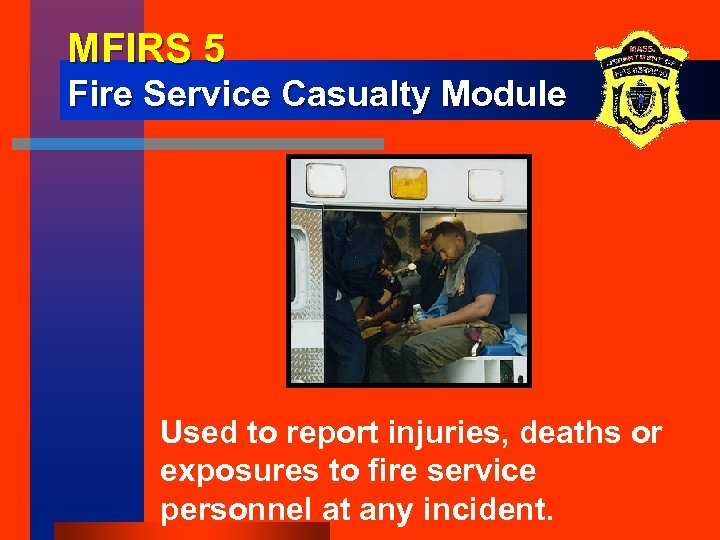 MFIRS 5 Fire Service Casualty Module Used to report injuries, deaths or exposures to fire service personnel at any incident.
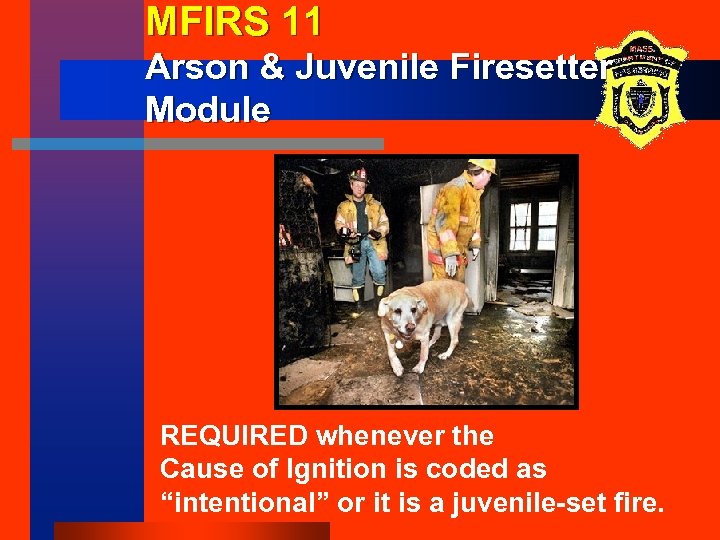 MFIRS 11 Arson & Juvenile Firesetter Module REQUIRED whenever the Cause of Ignition is coded as “intentional” or it is a juvenile-set fire.
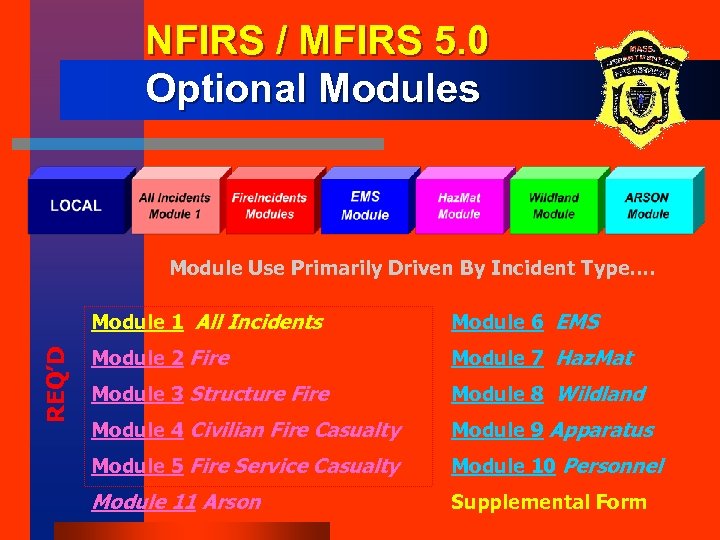 NFIRS / MFIRS 5. 0 Optional Modules Module Use Primarily Driven By Incident Type…. REQ’D Module 1 All Incidents Module 6 EMS Module 2 Fire Module 7 Haz. Mat Module 3 Structure Fire Module 8 Wildland Module 4 Civilian Fire Casualty Module 9 Apparatus Module 5 Fire Service Casualty Module 10 Personnel Module 11 Arson Supplemental Form
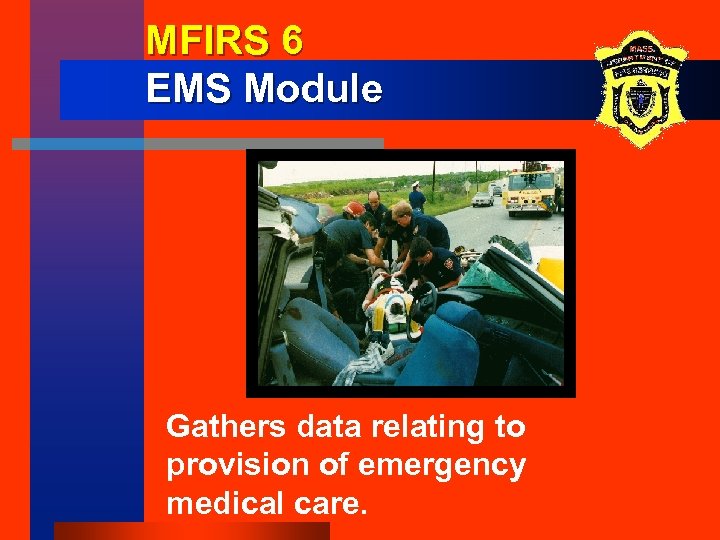 MFIRS 6 EMS Module Gathers data relating to provision of emergency medical care.
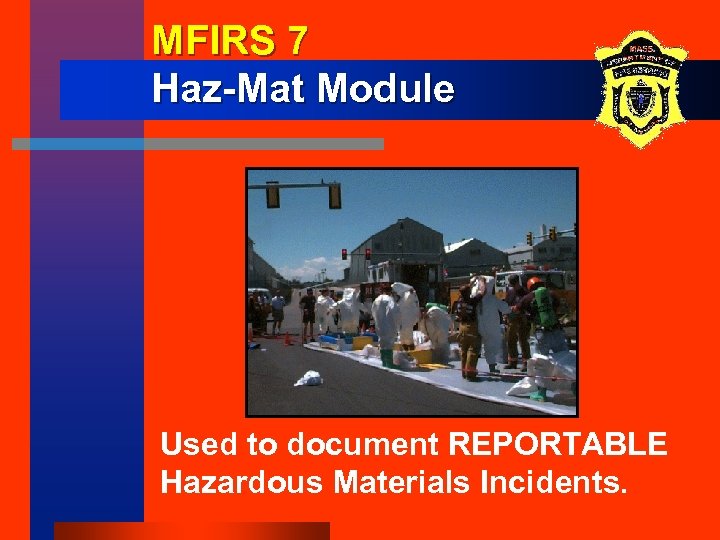 MFIRS 7 Haz-Mat Module Used to document REPORTABLE Hazardous Materials Incidents.
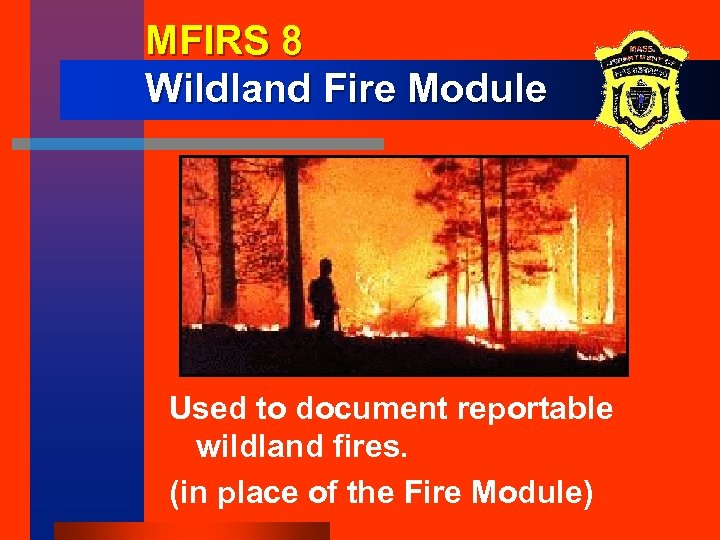 MFIRS 8 Wildland Fire Module Used to document reportable wildland fires. (in place of the Fire Module)
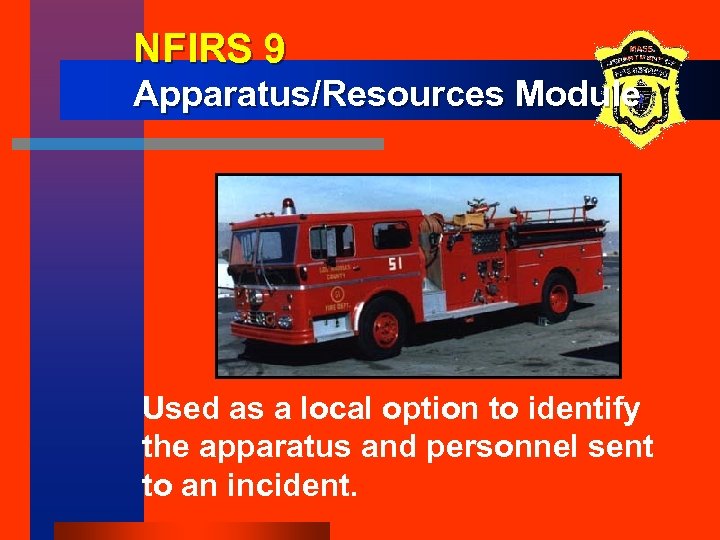 NFIRS 9 Apparatus/Resources Module Used as a local option to identify the apparatus and personnel sent to an incident.
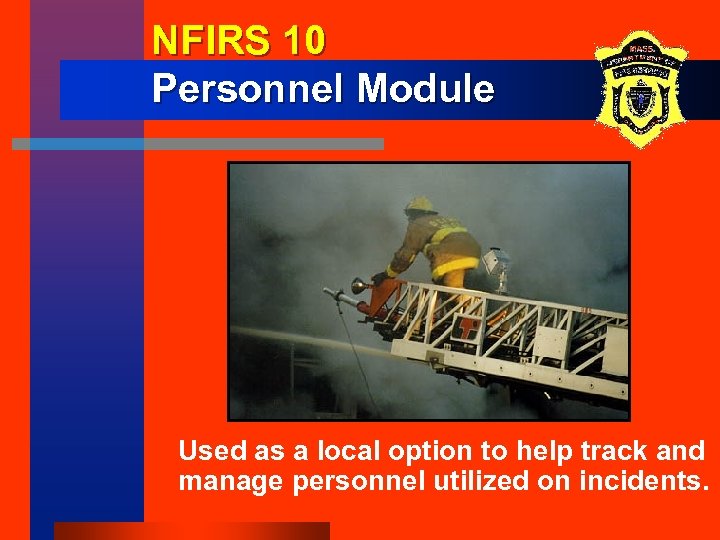 NFIRS 10 Personnel Module Used as a local option to help track and manage personnel utilized on incidents.
 MFIRS 5. 0 Submission 4 Departments can use either electronic or paper based reporting systems 4 MFIRS / NFIRS 5. 0 Specification is a standardized format that is flexible and expandable for future needs 4 All software must be certified by MA State Fire Marshal’s Office and listed as ‘Active’ by the USFA
 Public Records These reports are public documents. w Need to be retained for upto 7 years. w – Retained = Be able to reproduce the individual incident reports for the public.
 Public Records w Civilian Fire & Fire Service Casualties – Casualty reports will be exempted from public disclosure - Under MGL Ch. 4 S. 7 c 1. 26(c) – “personnel & medical files or information, also any other materials or data relative to a specifically named individual the disclosure of which may constitute an unwarranted invasion of personal privacy. ” – Federal HIPAA law
 Public Records Arson/Juvenile Firesetters Module w Exempt from Public Records Law w – Investigatory materials necessarily compiled out of the public view by law enforcement or other investigatory officials.
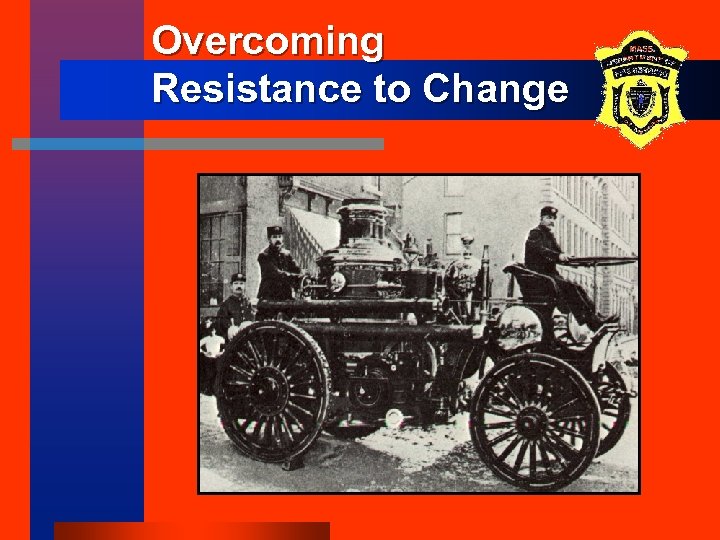 Overcoming Resistance to Change
 Questions?