


 Скачать презентацию Metric System and Physical properties of glass and
44a9115818f4c6fd4efdc9bc79004f74.ppt
- Количество слайдов: 32
 Metric System and Physical properties of glass and soil.
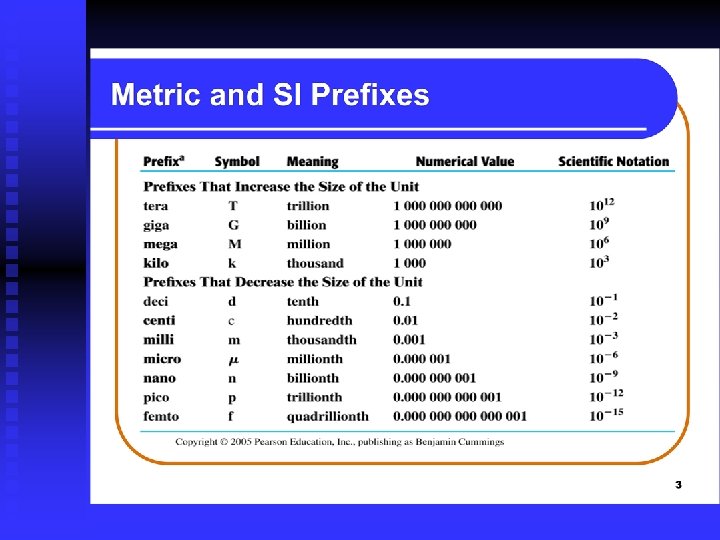
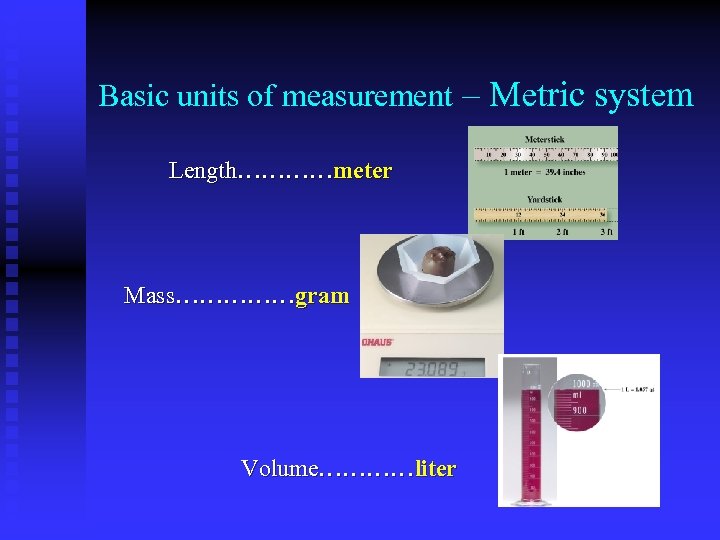 Basic units of measurement – Metric system Length…………meter Mass……………gram Volume…………liter
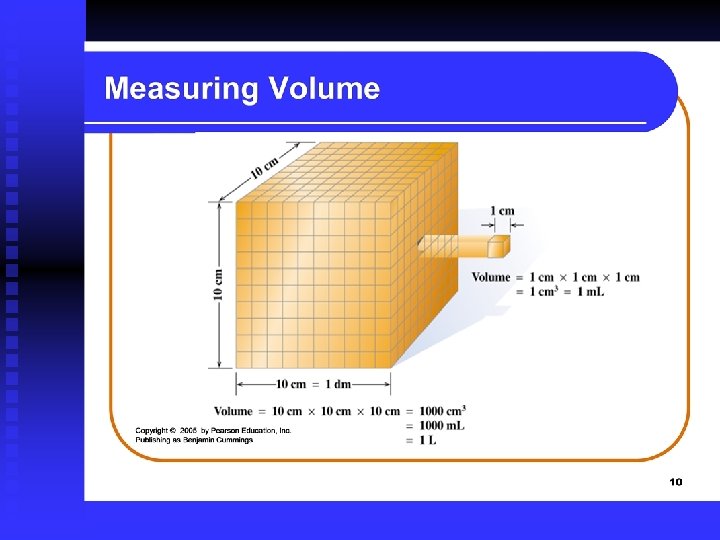
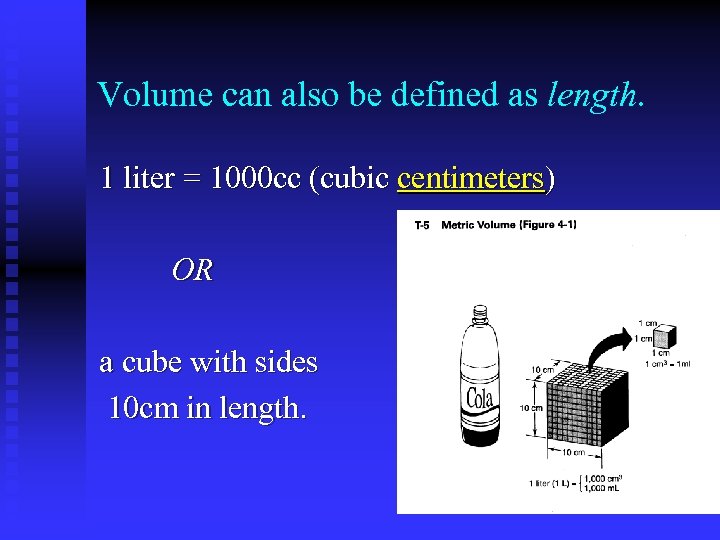 Volume can also be defined as length. 1 liter = 1000 cc (cubic centimeters) OR a cube with sides 10 cm in length.
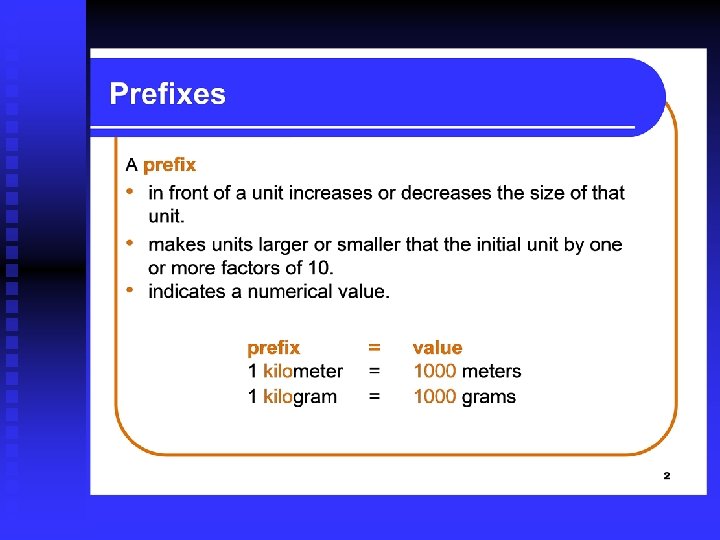
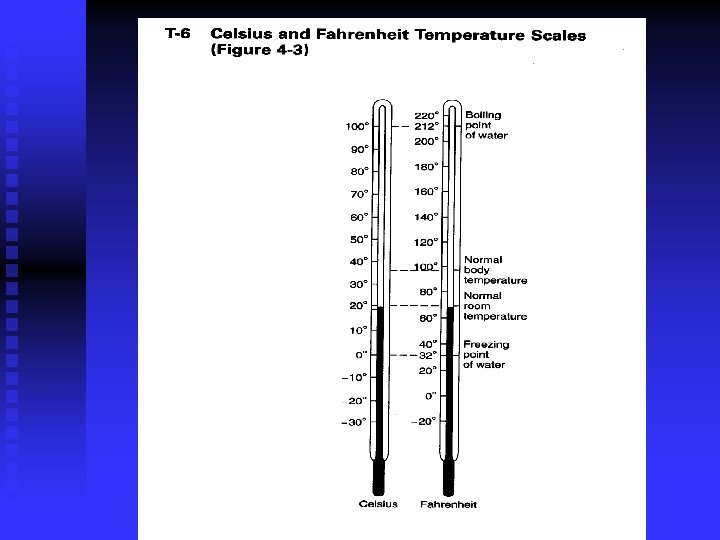
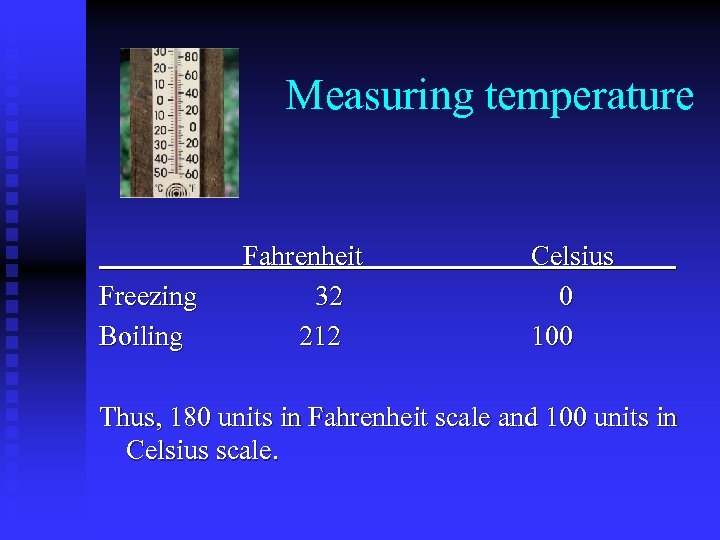 Measuring temperature Freezing Boiling Fahrenheit 32 212 Celsius 0 100 Thus, 180 units in Fahrenheit scale and 100 units in Celsius scale.
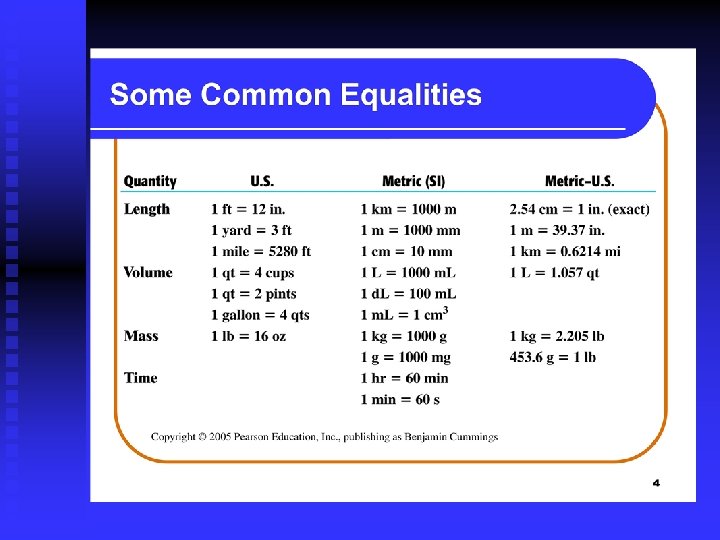
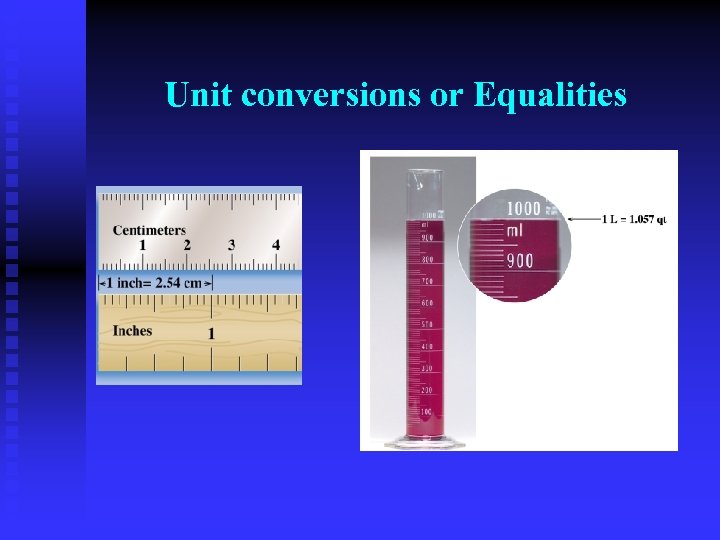 Unit conversions or Equalities
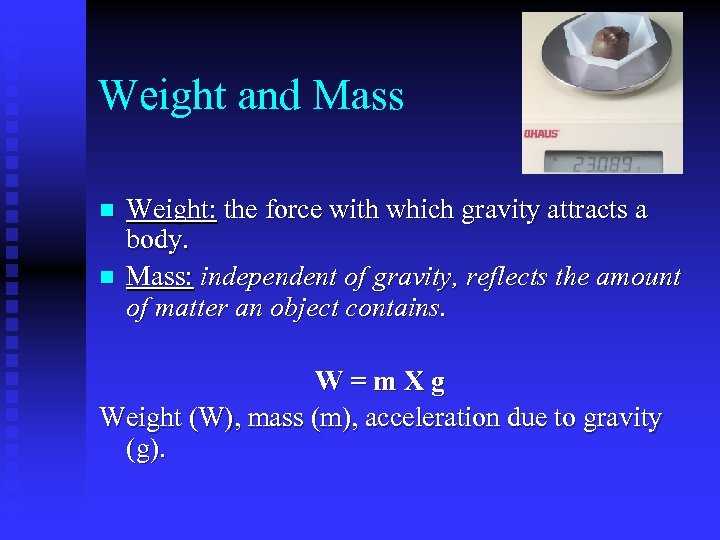 Weight and Mass n n Weight: the force with which gravity attracts a body. Mass: independent of gravity, reflects the amount of matter an object contains. W=m. Xg Weight (W), mass (m), acceleration due to gravity (g).
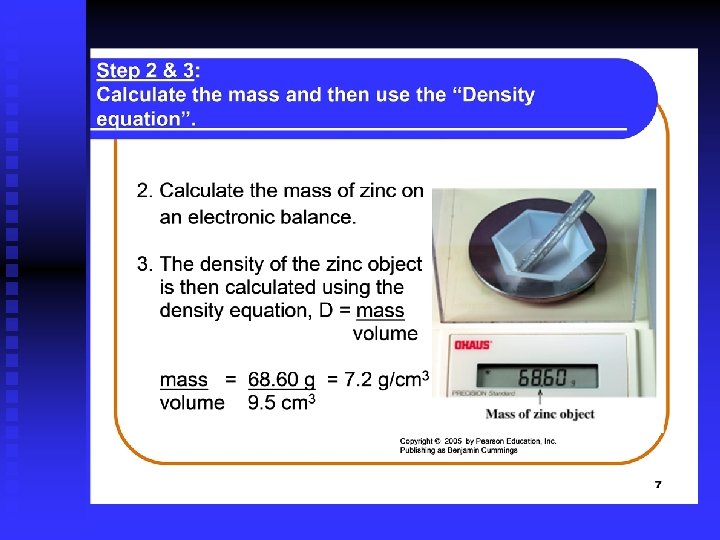
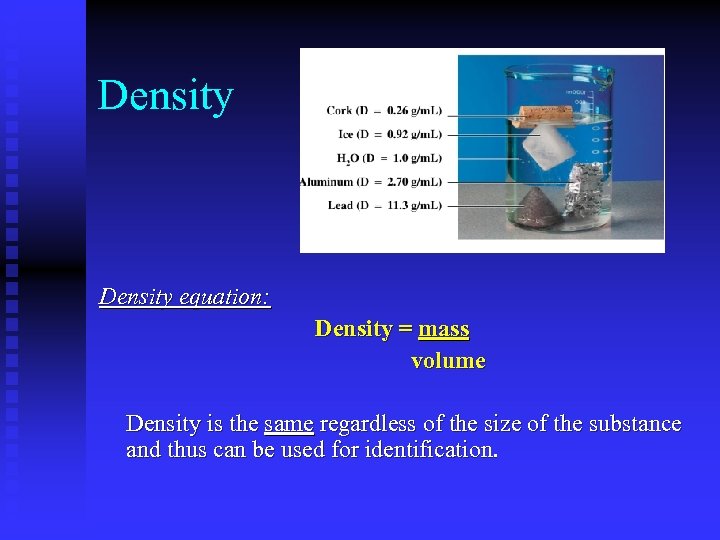 Density equation: Density = mass volume Density is the same regardless of the size of the substance and thus can be used for identification.
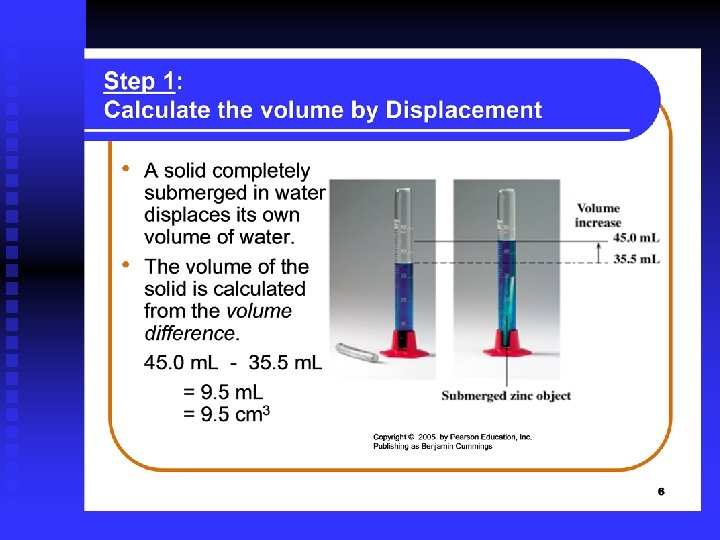
 Density measurement of solids n 1. Water displacement for determining volume (then use density equation). 2. Flotation – mix bromobenzene and bromoform to achieve a medium of density in which the object will remain suspended. - use control or reference samples for comparison. n
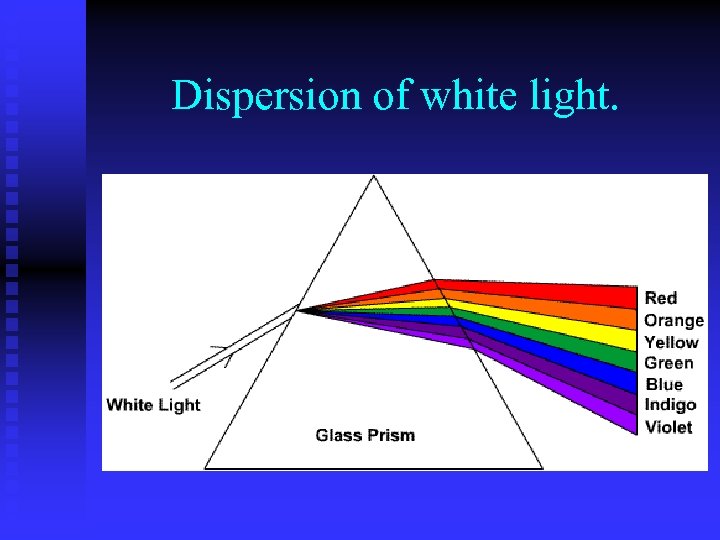 Dispersion of white light.
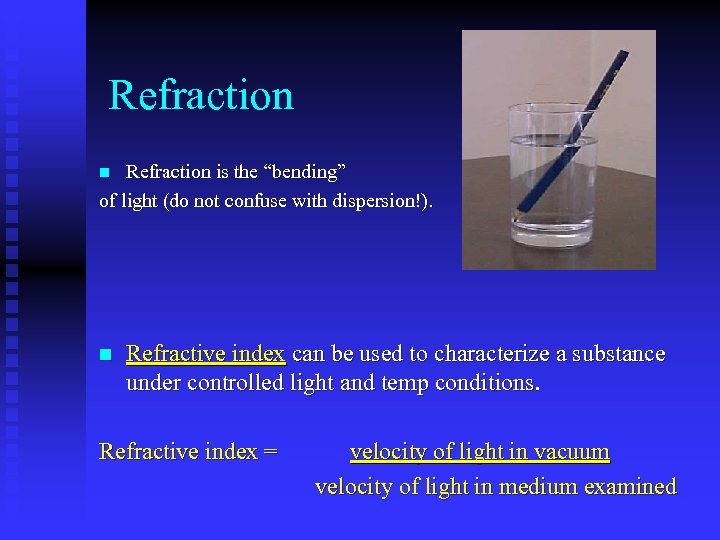 Refraction is the “bending” of light (do not confuse with dispersion!). n n Refractive index can be used to characterize a substance under controlled light and temp conditions. Refractive index = velocity of light in vacuum velocity of light in medium examined
 Determining the R. I. n Glass Refractive Index measurement (GRIM 2) uses the immersion technique principle. - automated instrument linked to a video camera refractive index of medium is adjusted until the match point (the disappearance of the Becke line) is achieved. - Final comparative determination FBI database- correlates density and R. I. of glass to the frequency of occurrence in the USA.
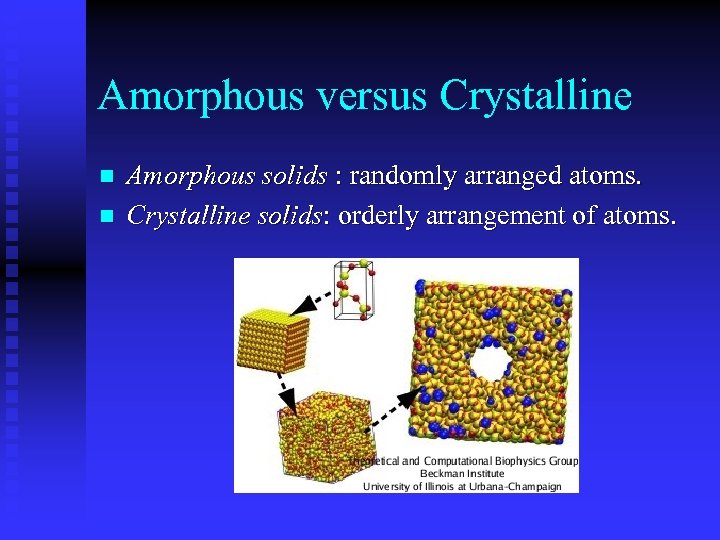 Amorphous versus Crystalline n n Amorphous solids : randomly arranged atoms. Crystalline solids: orderly arrangement of atoms.
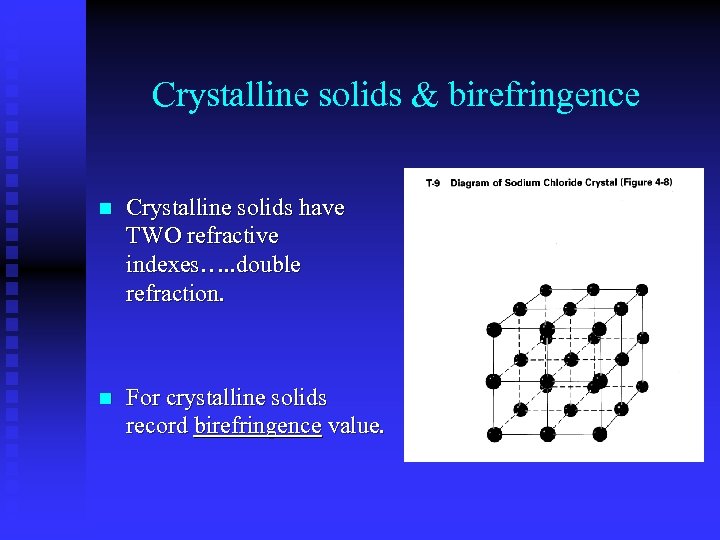 Crystalline solids & birefringence n Crystalline solids have TWO refractive indexes…. . double refraction. n For crystalline solids record birefringence value.
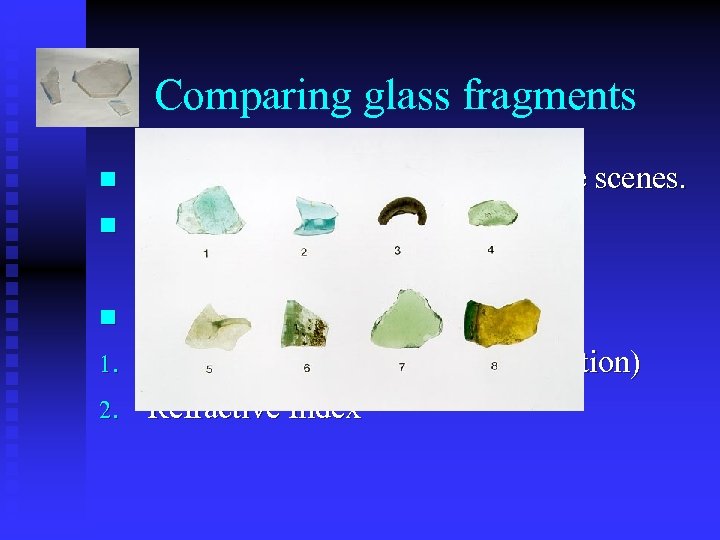 Comparing glass fragments n n n 1. 2. Glass is commonly found at crime scenes. Class characteristics Glass fragments are compared by: Density (water displacement/flotation) Refractive Index
 Chemistry of glass Glass is an amorphous solid comprised of silicon oxides mixed with various metal oxides. n Main ingredient is sand: Sand + soda (Na 2 CO 3) soda-lime glass n Common metal oxides : sodium, calcium, magnesium and aluminium.
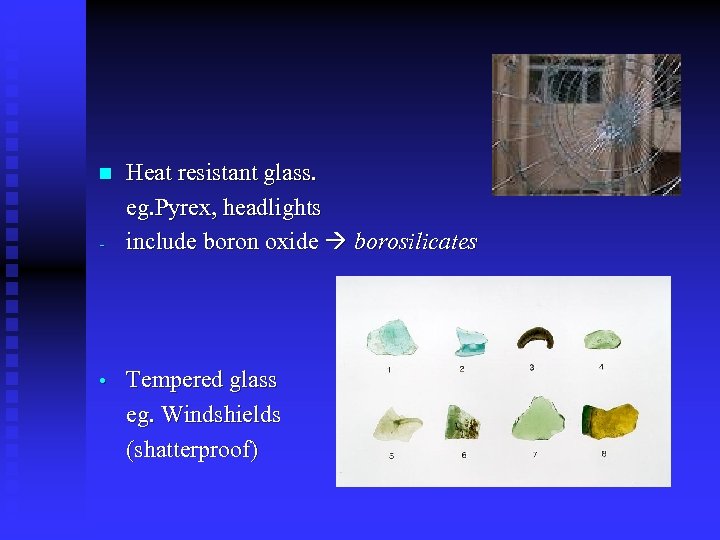 n - • Heat resistant glass. eg. Pyrex, headlights include boron oxide borosilicates Tempered glass eg. Windshields (shatterproof)
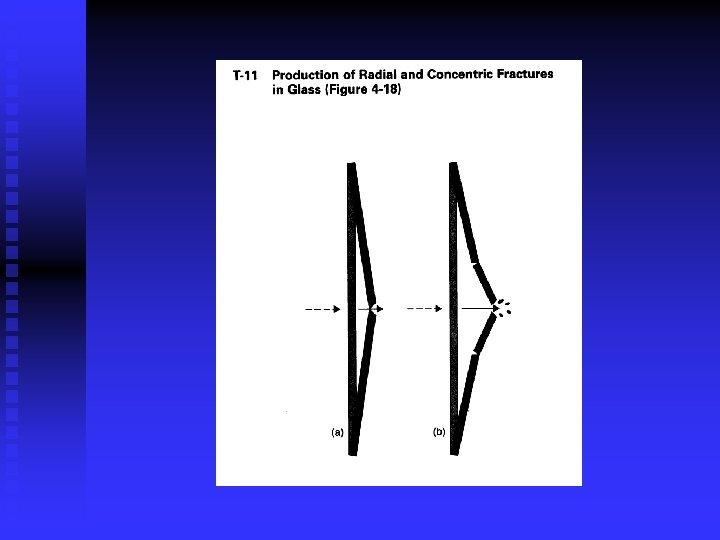
 Properties of glass n Glass bends! radial and concentric fractures. n 3 R rule: Radial cracks form a right angle on the reverse side of force.
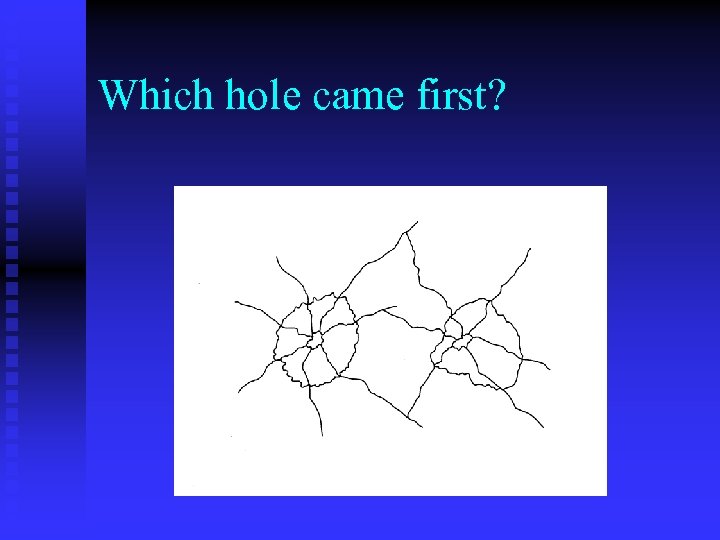 Which hole came first?
 Characteristics of soil
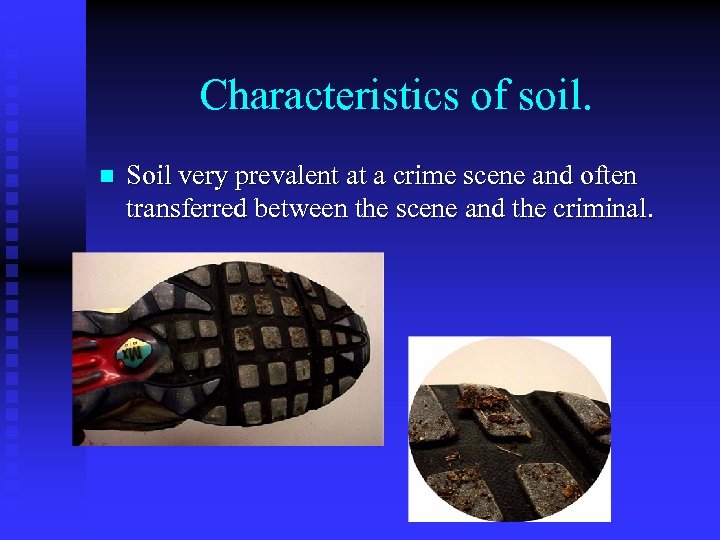 Characteristics of soil. n Soil very prevalent at a crime scene and often transferred between the scene and the criminal.
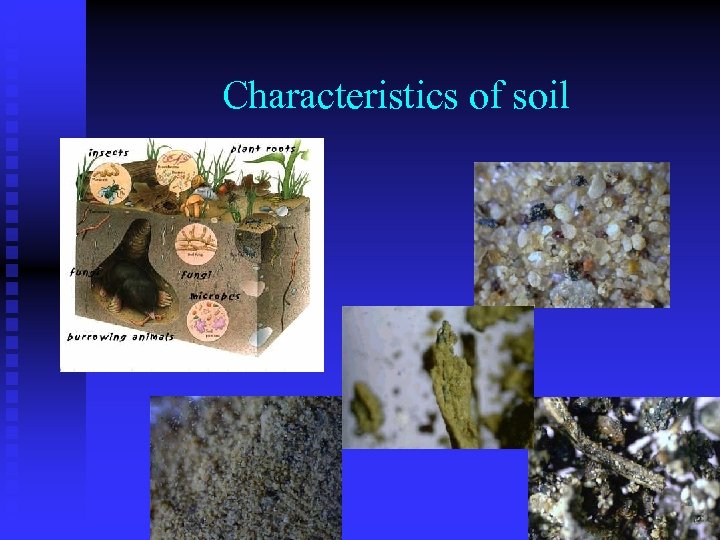
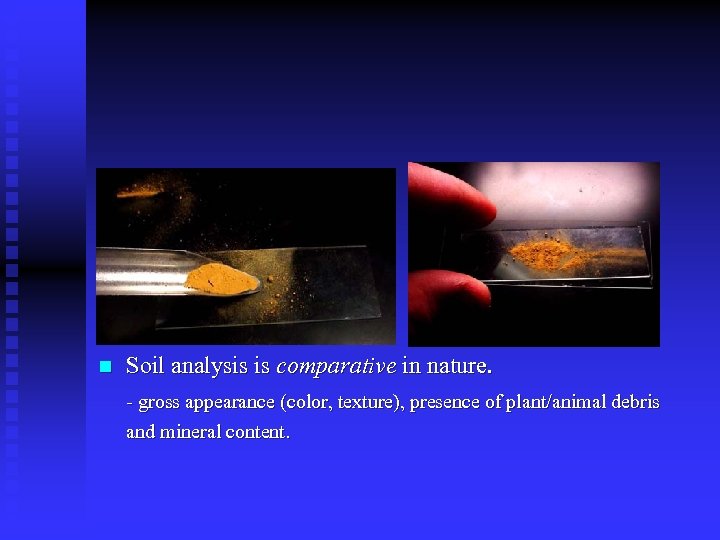 n Soil analysis is comparative in nature. - gross appearance (color, texture), presence of plant/animal debris and mineral content.
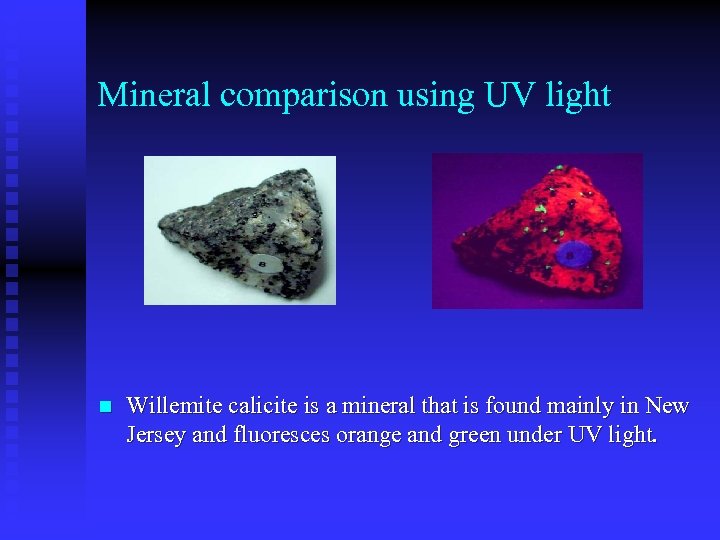 Mineral comparison using UV light n Willemite calicite is a mineral that is found mainly in New Jersey and fluoresces orange and green under UV light.
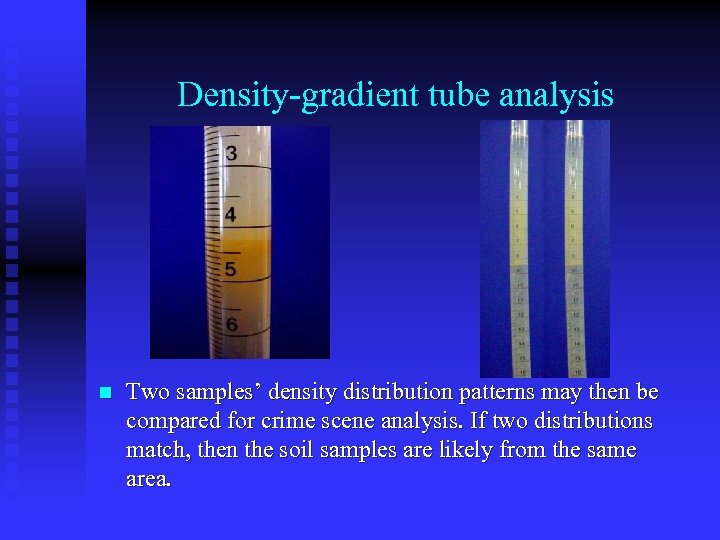 Density-gradient tube analysis n Two samples’ density distribution patterns may then be compared for crime scene analysis. If two distributions match, then the soil samples are likely from the same area.
 Collections of control samples for comparison n Examiner must establish variation of soil at a crime scene. - collect 1 -2 tablespoons at various intervals within 100 yards of the crime scene.