


 Скачать презентацию Metal Casting Process in which molten metal
6afef547290a73ded1d581bcddb778ff.ppt
- Количество слайдов: 66
 Metal Casting • Process in which molten metal is poured into a mold (shaped after the part to be manufactured), then allowed to cool and solidify. Engr 241 0
 Engr 241 1
 Metal Casting (cont. ) • After solidification occurs the part is removed from the mold to cool further. • The main objective is to produce parts free of defects and with the desired properties. Engr 241 2
 Process Characteristics • Complex shapes that may have internal cavities • Large or small parts. • Can use materials which are otherwise hard to shape. • Economical. • Near net shape manufacturing. Engr 241 3
 Considerations • Solidification – mold design and material effect cooling rate (Heat transfer). • Metal flow into mold cavity – Flow. Engr 241 4
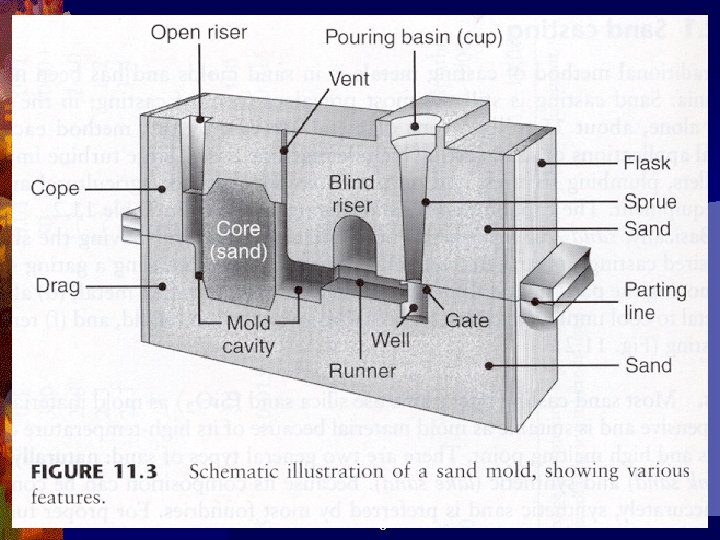
 Fluid Flow • Basic Casting System • Pouring basin (cup). • Sprue, runners- channels • Gate- entry point for mold • Riser- reservoir Engr 241 5
 Engr 241 6
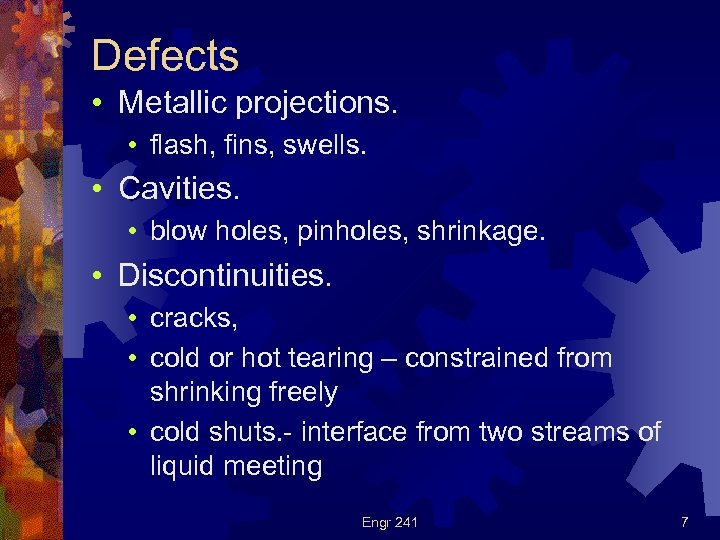 Defects • Metallic projections. • flash, fins, swells. • Cavities. • blow holes, pinholes, shrinkage. • Discontinuities. • cracks, • cold or hot tearing – constrained from shrinking freely • cold shuts. - interface from two streams of liquid meeting Engr 241 7
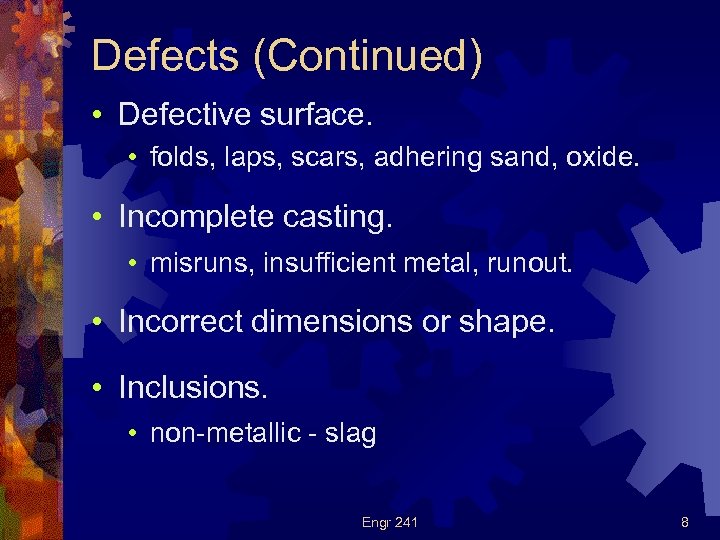 Defects (Continued) • Defective surface. • folds, laps, scars, adhering sand, oxide. • Incomplete casting. • misruns, insufficient metal, runout. • Incorrect dimensions or shape. • Inclusions. • non-metallic - slag Engr 241 8
 Molds Engr 241 9
 Expendable molds. • made of sand, plaster, or ceramics (mixed with bonding agents/binders). • broken up to remove casting. Engr 241 10
 Permanent molds • used repeatedly. • made from metals which maintain strength at high temperatures. Engr 241 11
 Composite molds. • two or more types of materials. • used to improve mold strength, cooling rates, cost of process. Engr 241 12
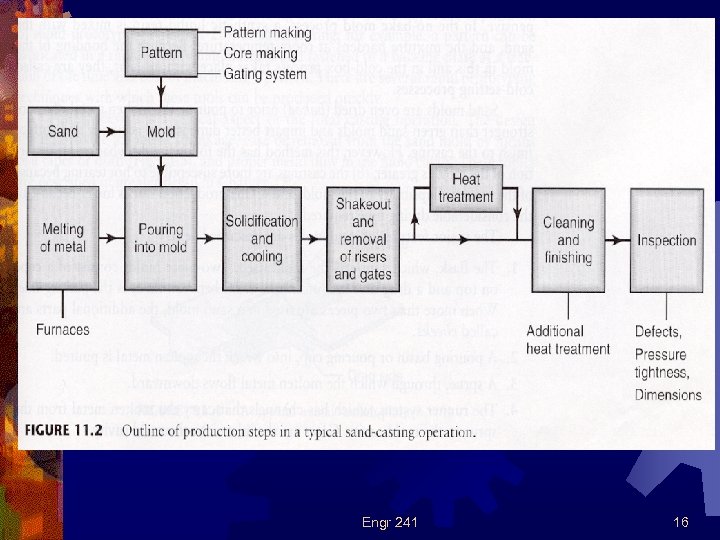
 Sand Casting • Consists in placing a pattern in sand to make an imprint, incorporating a gating system, filling the cavity with molten metal, letting it cool, breaking the mold to remove the casting. Engr 241 13
 Characteristics • Traditional casting method. • Loose tolerances. • “poor” surface finish. • low cost. Engr 241 14
 Examples of products • Engine blocks • Pump housings • Cylinder heads Engr 241 15
 Engr 241 16
 Sands • Silica based (Si. O 2), inexpensive, resistance to high temperature. Engr 241 17
 Sands (Cont. ) • Mulling- mixing sand with additives - conditioning • Clay used as cohesive agent to aid in bonding sand particles Engr 241 18
 3 Types of Sand Molds • 1. Green Sand: • sand, clay, and water. • least expensive. • Can dry mold surfaces – called “skin dried” Engr 241 19
 2 Cold-box: • organic and inorganic binders added. • greater dimensional accuracy. • greater cost. Engr 241 20
 3 No-bake: • synthetic liquid resin mixed with sand. • Cold-setting process- bonding of mold takes place without heat • Petrobond Engr 241 21
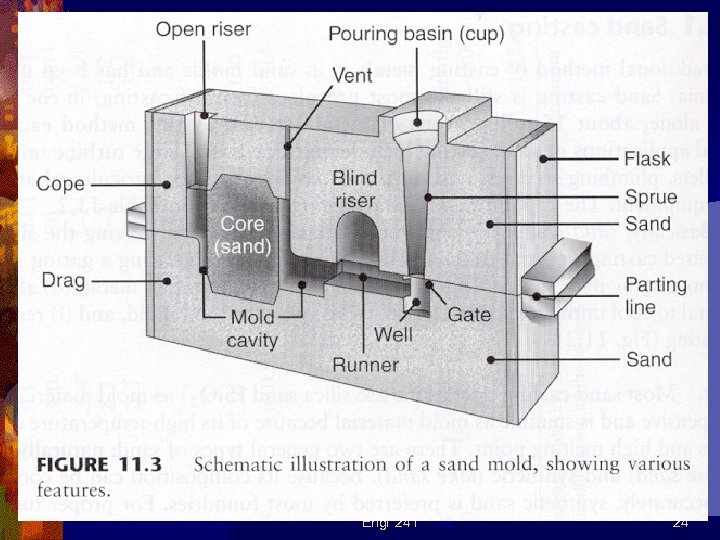
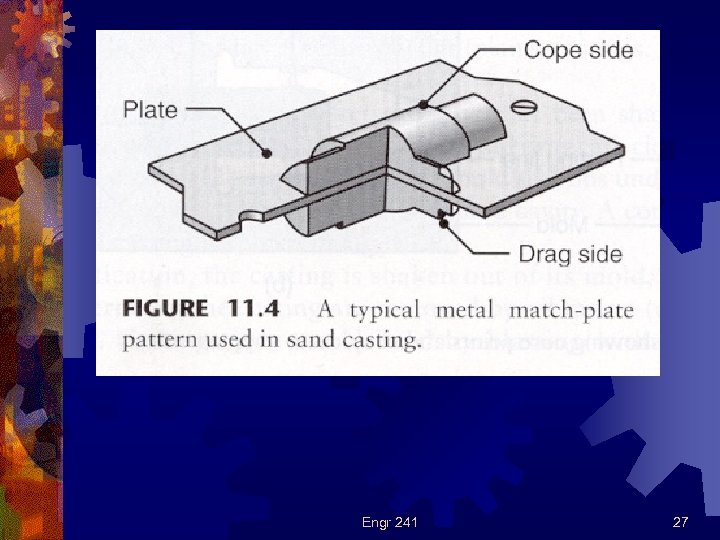
 Mold Components • Flask. • Cope (top) • Drag (bottom) • Parting line - seam • Pouring basin or pouring cup. • Sprue – molten metal flows downward. Engr 241 22
 Mold components (cont. ) • • Runner and gates. Risers (blind and open). Cores – form hollow regions Vents – vent gasses Engr 241 23
 Engr 241 24
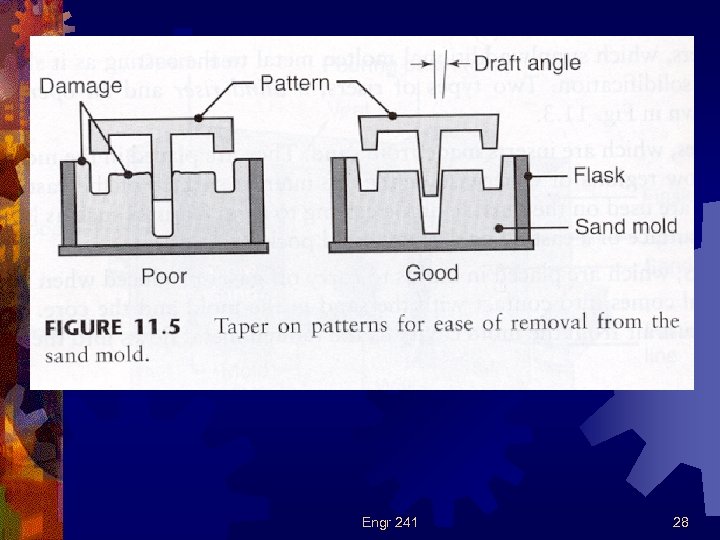
 Patterns • Used to create sand molds • Made of wood, aluminum, steel, plastic, cast iron. Engr 241 25
 Types of mold patterns • One piece (loose pattern). • simple shapes, low quantity production. • Split pattern • Two piece patterns, complex shapes. • Match plate • Split patterns secured to plate Engr 241 26
 Engr 241 27
 Engr 241 28
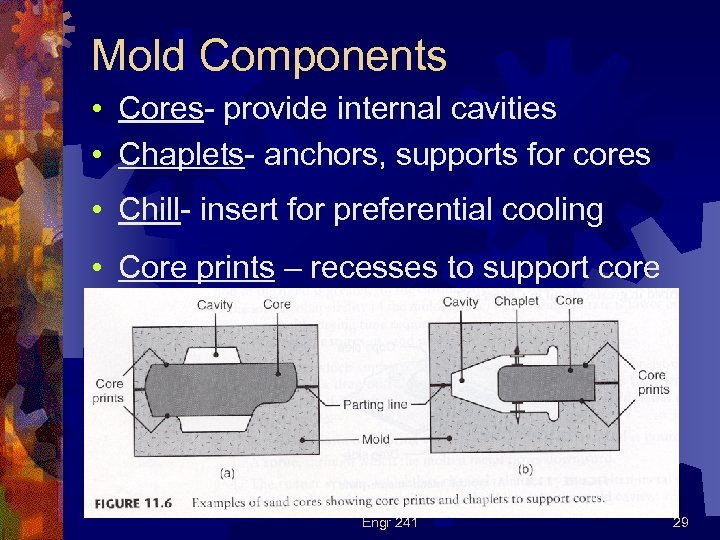 Mold Components • Cores- provide internal cavities • Chaplets- anchors, supports for cores • Chill- insert for preferential cooling • Core prints – recesses to support core Engr 241 29
 Shell Mold Casting • • • Pattern coated with sand binder Cured in oven Shell removed Left with hollow shell for filling Close tolerance good surface finish, low cost. Engr 241 30
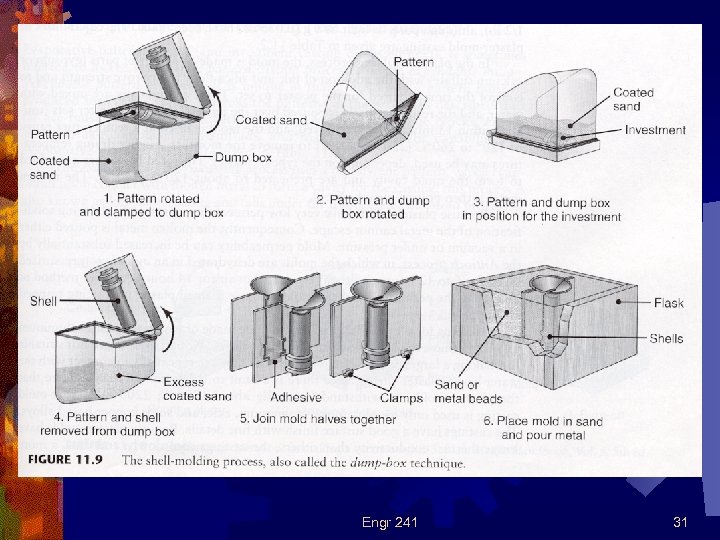 Engr 241 31
 Shell molding: • Close tolerances • Good surface finish • Low cost Engr 241 32
 Plaster-Mold Casting • • Plaster of paris with talc and silica flour. Mixed with water Poured over pattern Plaster sets – pattern removed Engr 241 33
 Plaster–mold casting(cont. ) • Mold dried in oven • Poured in vacuum or under pressure due to low permeability • Low permeability (gas cannot escape) Engr 241 34
 Plaster mold casting characteristics: • Plaster can only withstand about 2200 deg F. • Good surface and details. • “Lower” temperature alloys (Mg, Al, Zn) Engr 241 35
 Ceramic-Mold Casting Similar to plaster mold casting but utilizes refractory mold materials of zircon, aluminum oxide and fused silica • Good dimensional accuracy and surface finish, but expensive. Engr 241 36
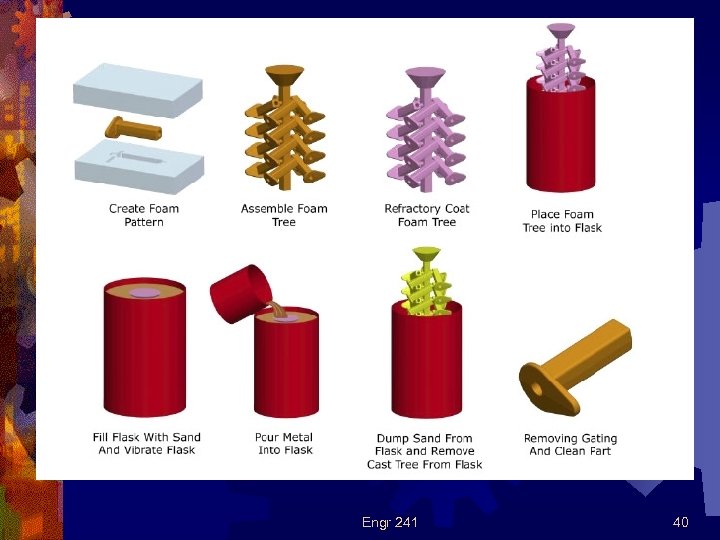
 Expendable-Pattern Casting • Also known as Lost Foam, Evaporativepattern, or Lost Pattern Casting Engr 241 37
 Process: • Polystyrene pattern coated with refractory slurry • Polystyrene pattern buried in silica sand within flask • Sprue extending out of sand Engr 241 38
 Process (cont. ) • Flask vibrated to settle sand around pattern • Molten metal poured over sprue • Polystyrene vaporizes as metal fills cavity Engr 241 39
 Engr 241 40
 Expendable Foam Advantages • • simple process, no parting lines, or risers inexpensive flasks, minimum finishing polystyrene is cheap and gives good detail. economical for long production runs (pattern mold cost). • can be automated. Engr 241 41
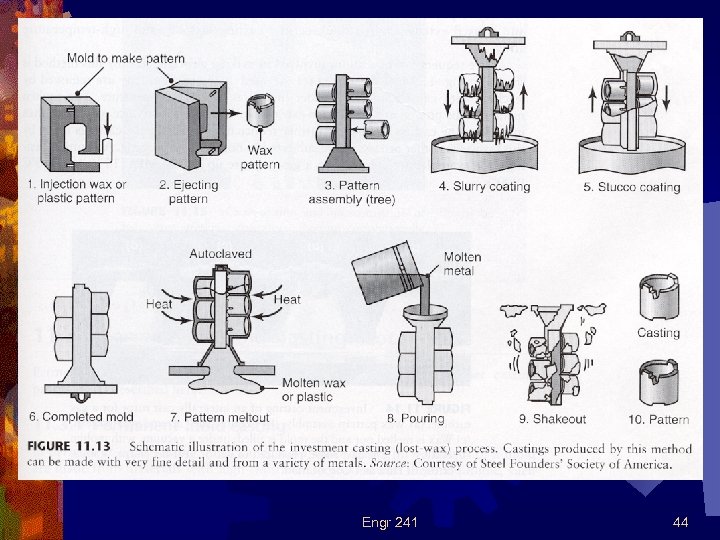
 Investment Casting Process • Inject wax (plastic) in to metal die (pattern shape) • Wax pattern dipped to coat in refractory slurry – dries to form hard shell Engr 241 42
 Investment casting (cont. ) • Wax melted out of hardened shell • Molds connected to tree with central sprue • Molten metal poured in • Mold destroyed to expose solidified parts Engr 241 43
 Engr 241 44
 Characteristics • • High quality Good surface finish Good detail Expensive process Engr 241 45
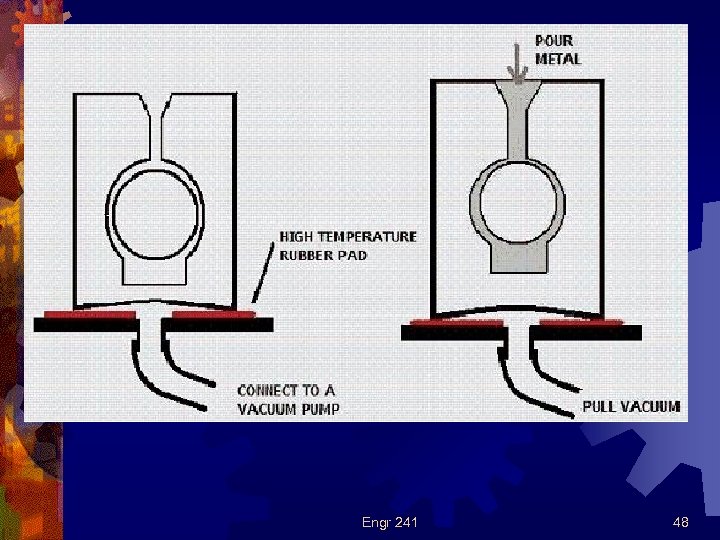
 Vacuum Casting • Counter-gravity low pressure process. • Sand urethane molded over metal die. • Gate is on the bottom. Engr 241 46
 Vacuum Casting (cont. ) • Immersed into molten metal, which is drawn into mold cavity. • Thin wall, complex shapes, uniform properties, high volume, low cost. Engr 241 47
 Engr 241 48
 Die Casting • Type of permanent die casting • Molten metal is forced into a permanent mold (die) at high pressure. • Dies are steel or graphite • Two types of die casting Engr 241 49
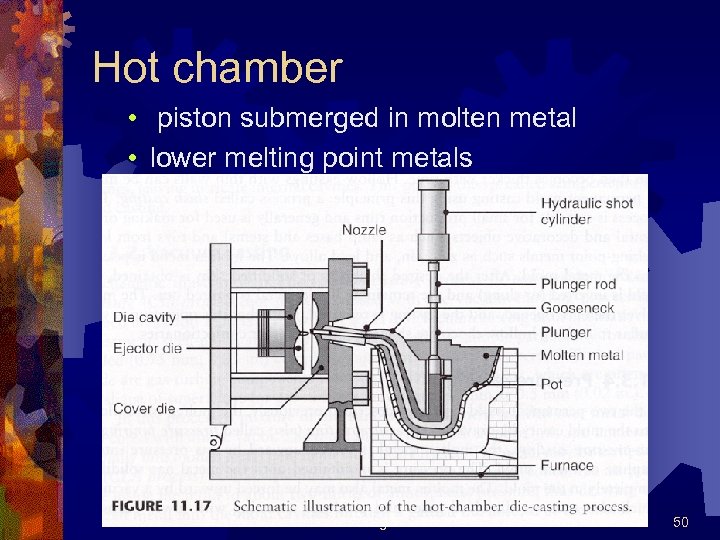 Hot chamber • piston submerged in molten metal • lower melting point metals Engr 241 50
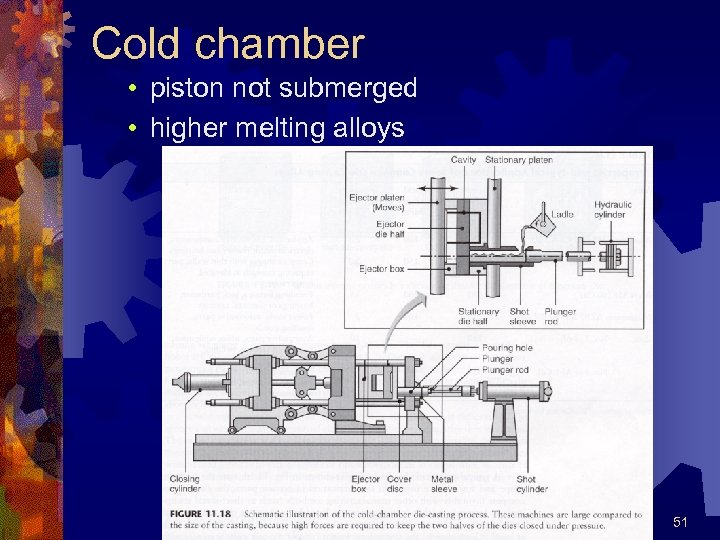 Cold chamber • piston not submerged • higher melting alloys Engr 241 51
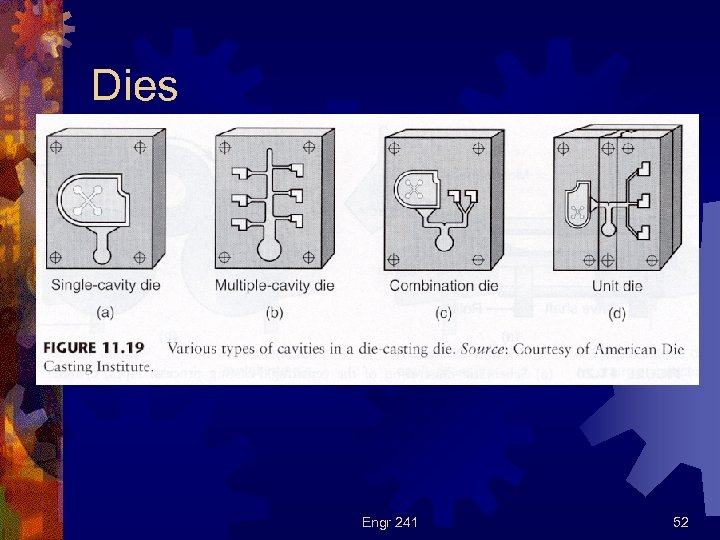 Dies Engr 241 52
 Characteristics • • High production rates high quality parts Close dimensional tolerances complex shapes, good surface (net shape). Engr 241 53
 Slush casting • Metal poured in • Allowed to cool until outer skin solidifies and thickens to desired size • Excess metal poured out Engr 241 54
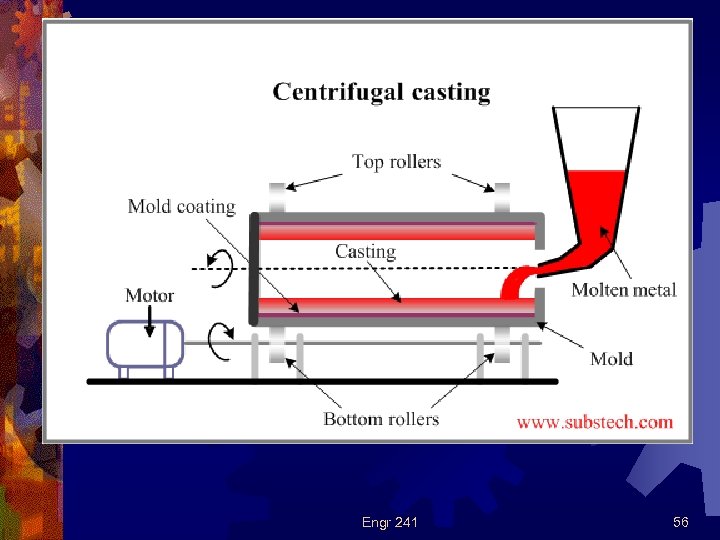
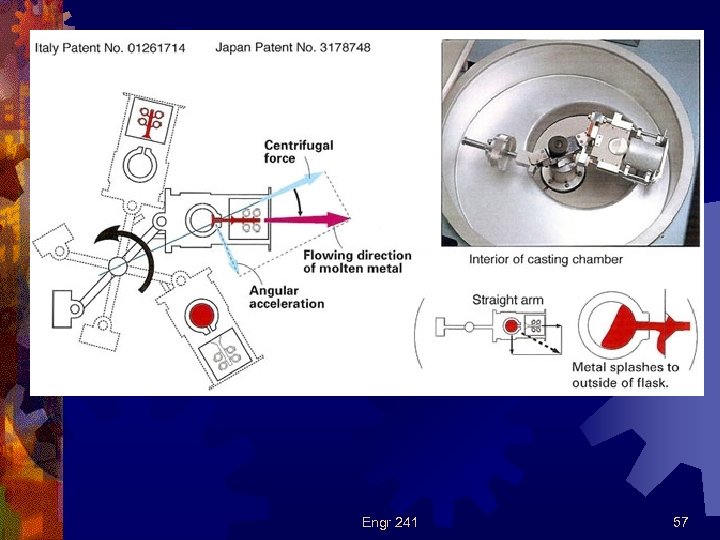
 Centrifugal casting • • Produces hollow cylindrical parts Street lamp posts Gun barrels Etc. Engr 241 55
 Engr 241 56
 Engr 241 57
 Squeeze casting • Solidification of molten metal under high pressure • Combination of casting and forging Engr 241 58
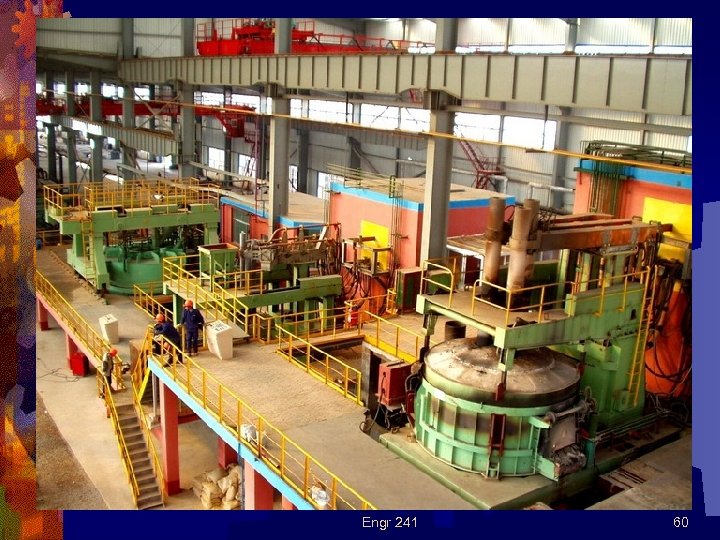
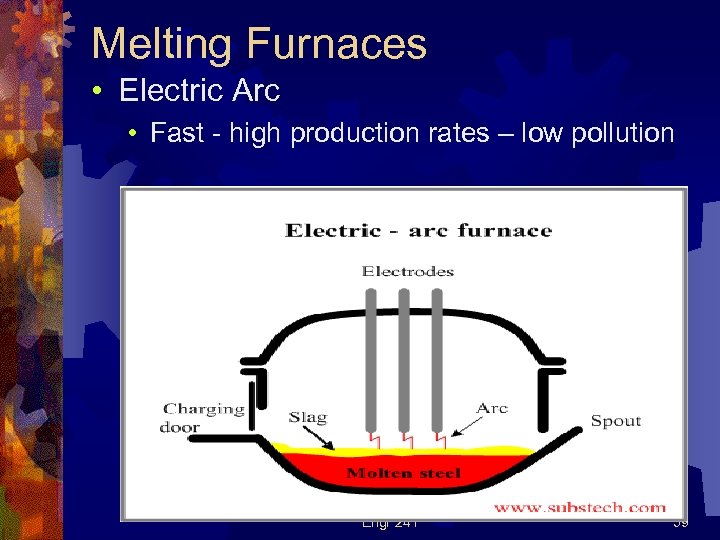 Melting Furnaces • Electric Arc • Fast - high production rates – low pollution Engr 241 59
 Engr 241 60
 Induction Furnace • Electrical Furnace • Heat applied by induction heating of metal through coils • Well controlled heating • Common in foundries today • Low pollution Engr 241 61
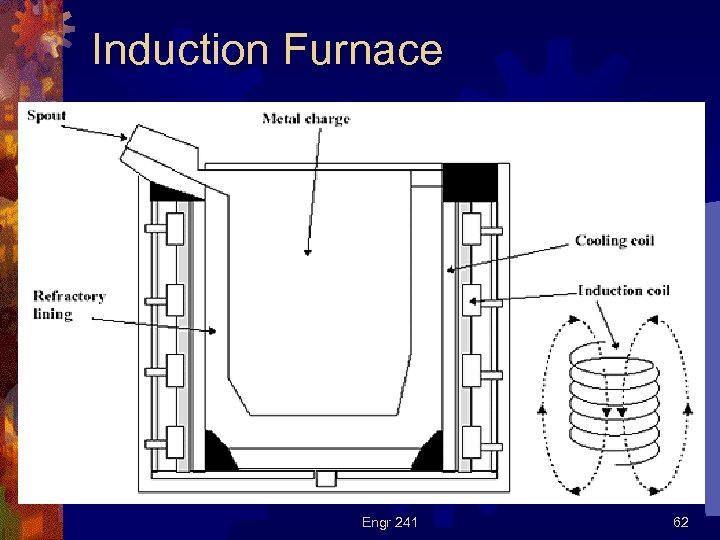 Induction Furnace Engr 241 62
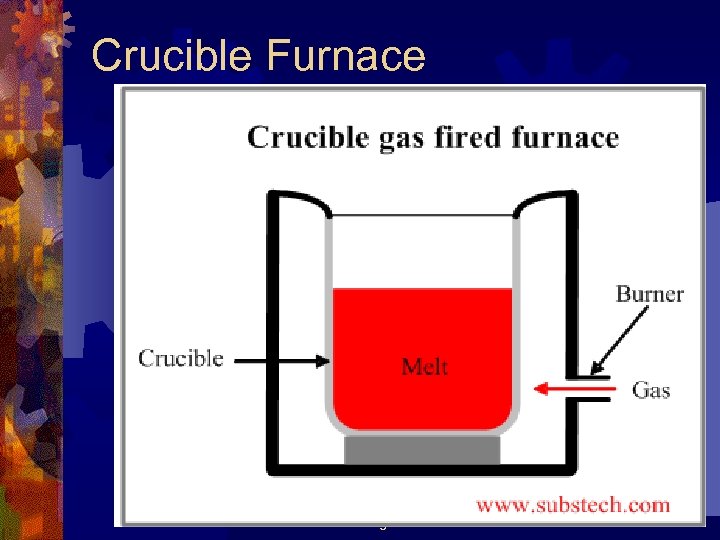 Crucible Furnace Engr 241 63
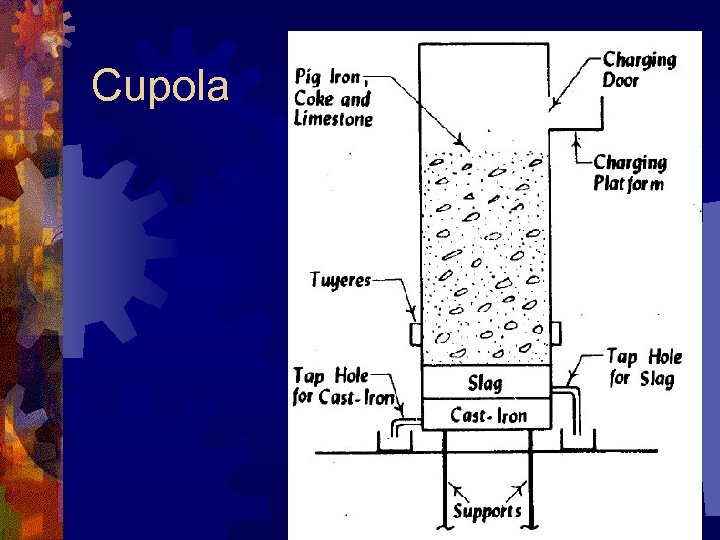 Cupola Engr 241 64
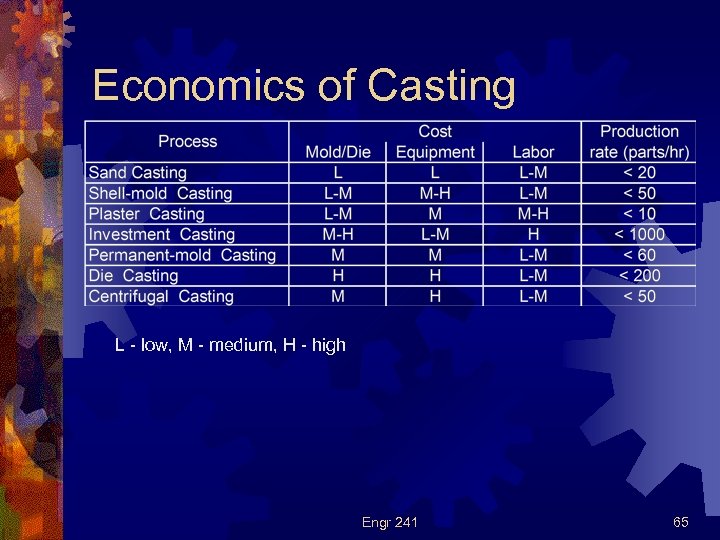 Economics of Casting L - low, M - medium, H - high Engr 241 65