 Скачать презентацию Mesoscale Convective Systems in AMMA What has been
22943b642a876e81eb6865fb70a14bb6.ppt
- Количество слайдов: 31



Mesoscale Convective Systems in AMMA What has been learned from previous campaigns? • GATE—off the coast of west Africa • COPT 81—over the west African continent What has been learned since these campaigns? • TOGA COARE • TRMM What can we learn from AMMA? How can we learn it? How can this new MCS knowledge help the overall goals of AMMA?
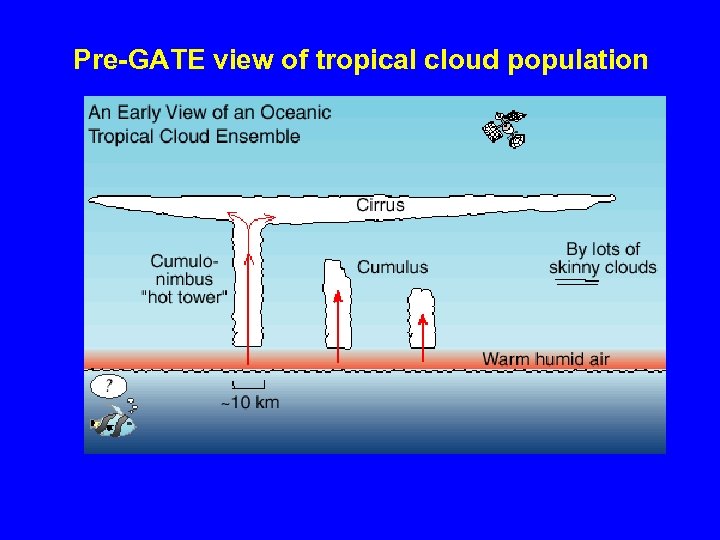
Pre-GATE view of tropical cloud population
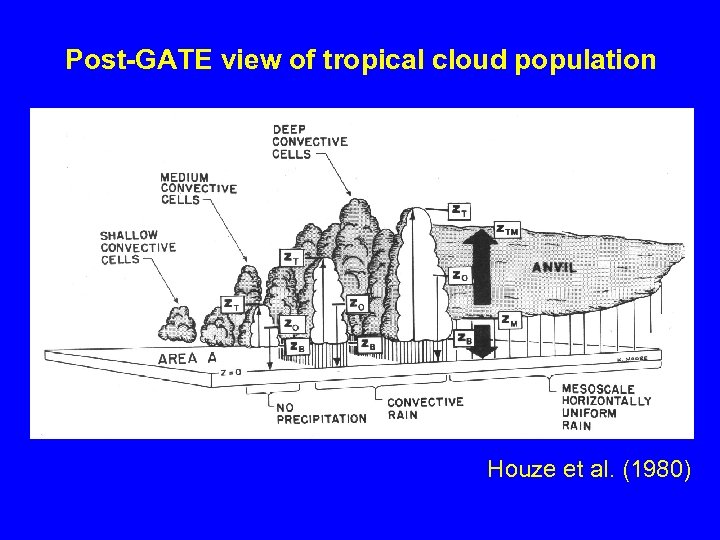
Post-GATE view of tropical cloud population Houze et al. (1980)
GATE & COPT 81: MCS water, mass, and heat budgets
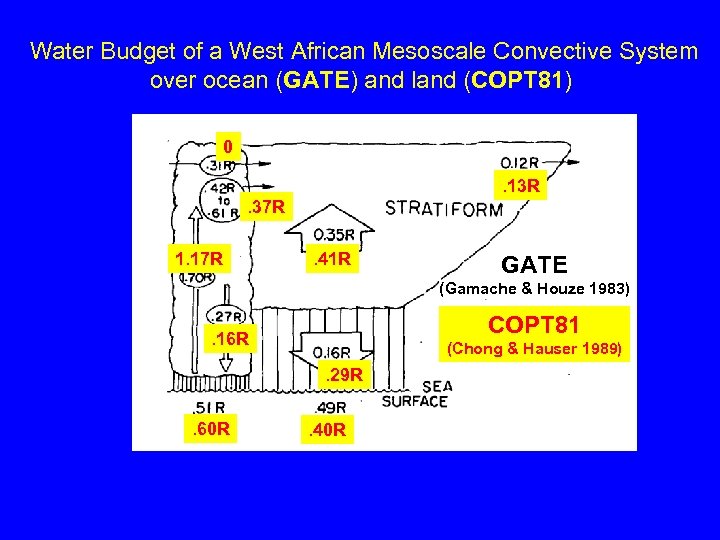
Water Budget of a West African Mesoscale Convective System over ocean (GATE) and land (COPT 81) 0. 13 R. 37 R 1. 17 R . 41 R GATE (Gamache & Houze 1983) COPT 81 . 16 R (Chong & Hauser 1989) . 29 R. 60 R . 40 R
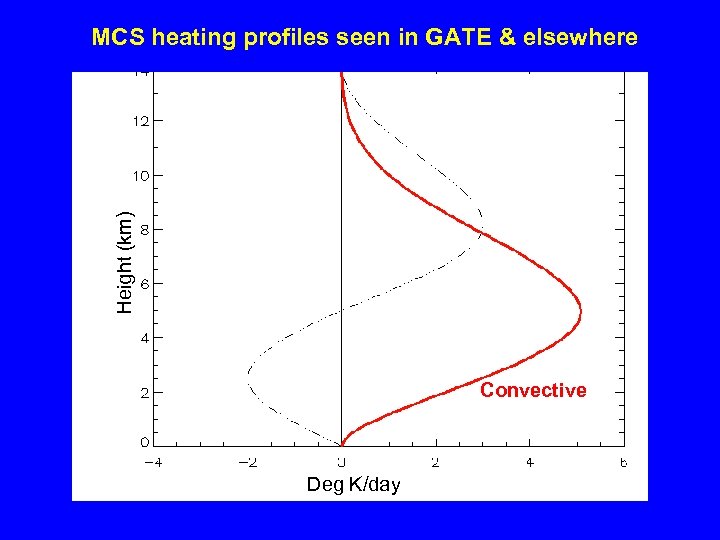
Height (km) MCS heating profiles seen in GATE & elsewhere Assumed heating profiles Convective Deg K/day
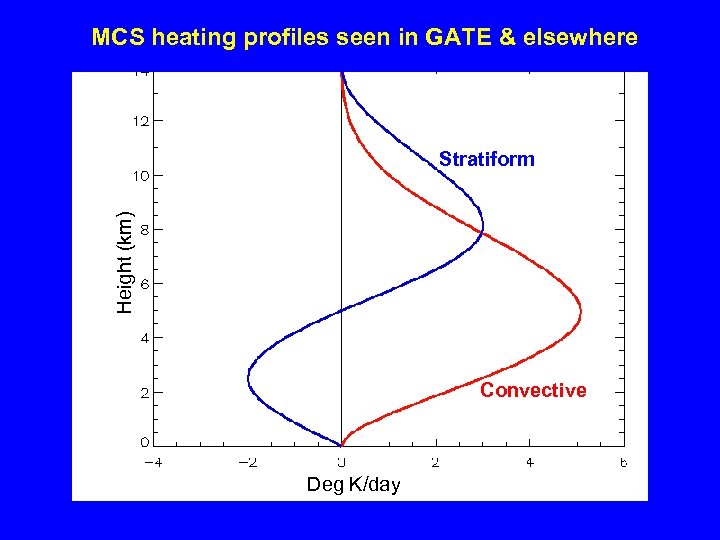
MCS heating profiles seen in GATE & elsewhere Assumed heating profiles Height (km) Stratiform Convective Deg K/day
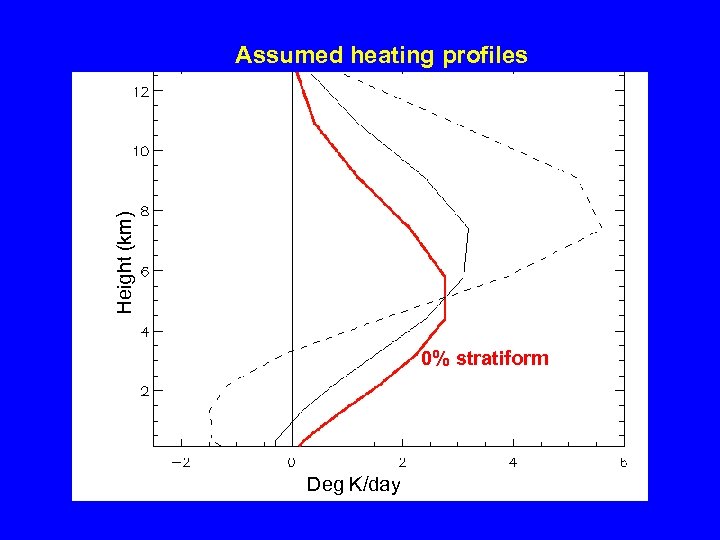
Height (km) Assumed heating profiles 0% stratiform Deg K/day
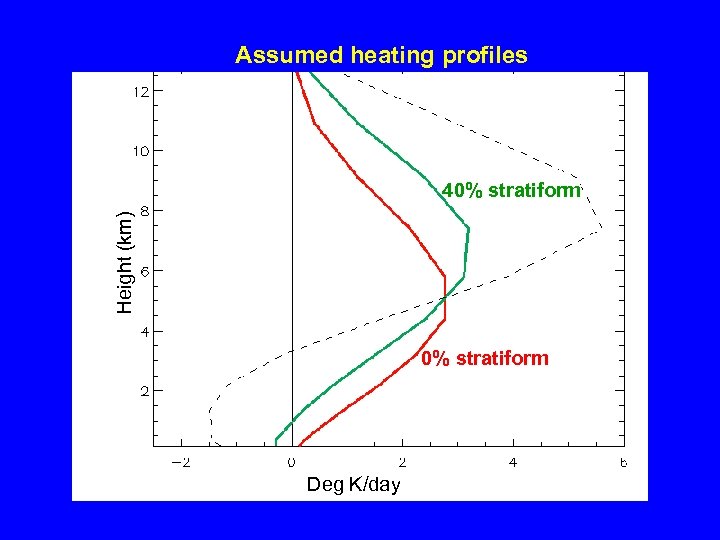
Assumed heating profiles Height (km) 40% stratiform Deg K/day
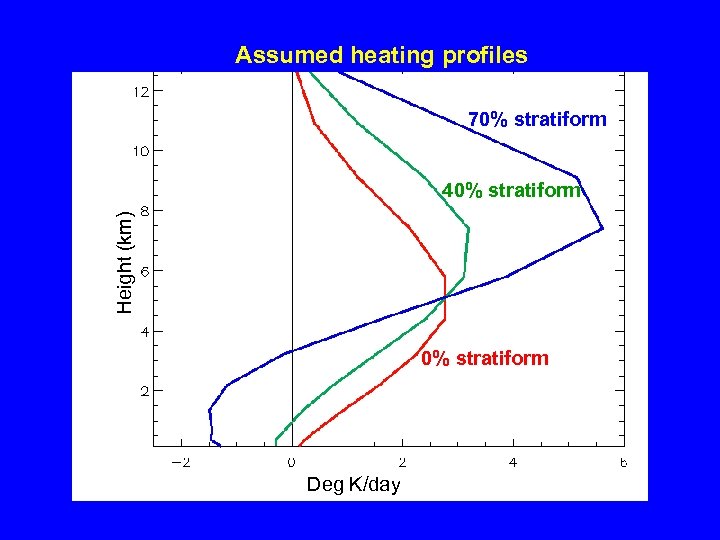
Assumed heating profiles 70% stratiform Height (km) 40% stratiform Deg K/day
TRMM: Global mapping of MCSs
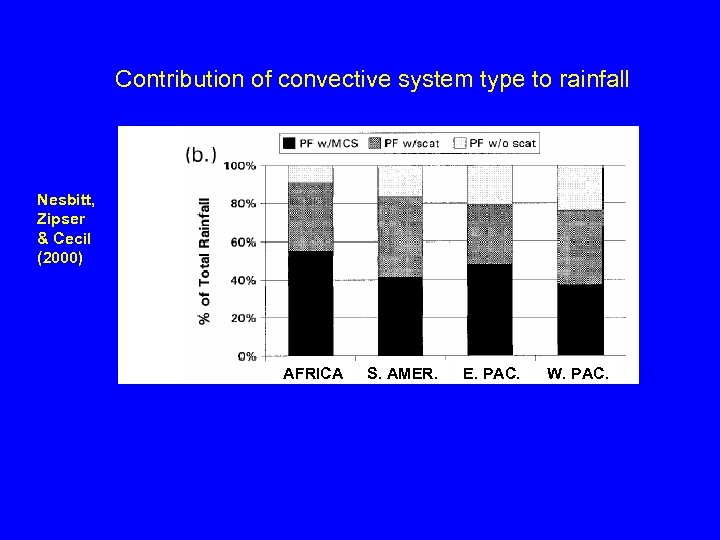
Contribution of convective system type to rainfall Nesbitt, Zipser & Cecil (2000) AFRICA S. AMER. E. PAC. W. PAC.
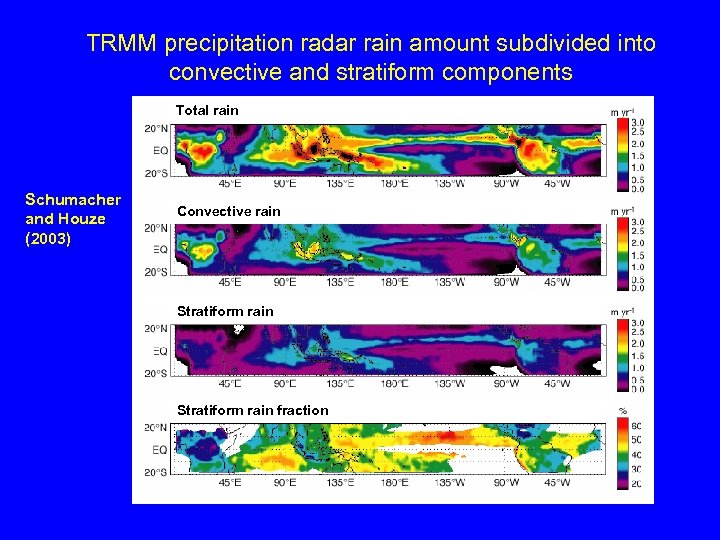
TRMM precipitation radar rain amount subdivided into convective and stratiform components Total rain Schumacher and Houze (2003) Convective rain Stratiform rain fraction
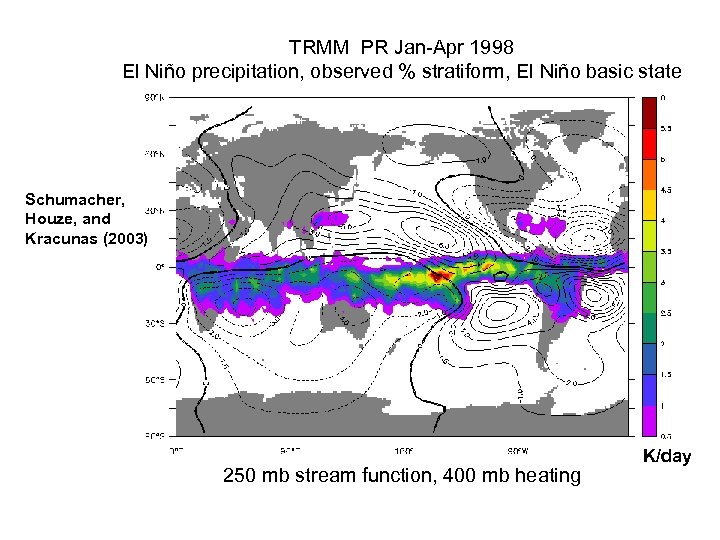
TRMM PR Jan-Apr 1998 El Niño precipitation, observed % stratiform, El Niño basic state Schumacher, Houze, and Kracunas (2003) 250 mb stream function, 400 mb heating K/day
TOGA COARE: Implications of tropical MCSs for momentum transport in large-scale waves
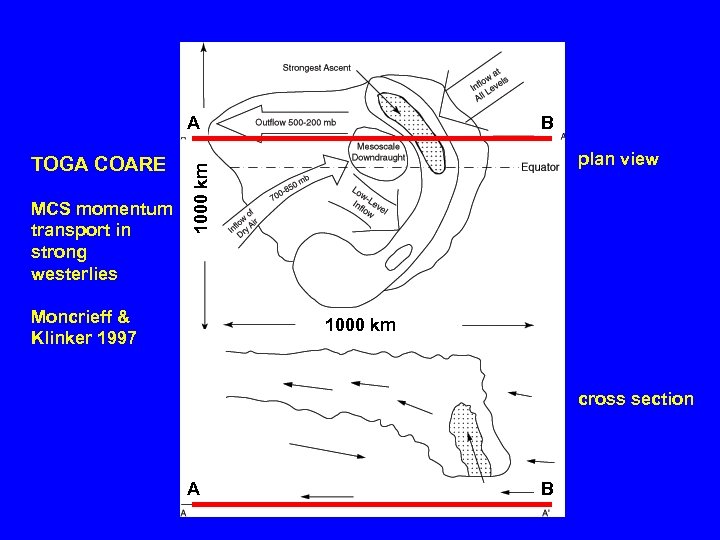
A MCS momentum transport in strong westerlies plan view 1000 km TOGA COARE B Moncrieff & Klinker 1997 1000 km cross section A B
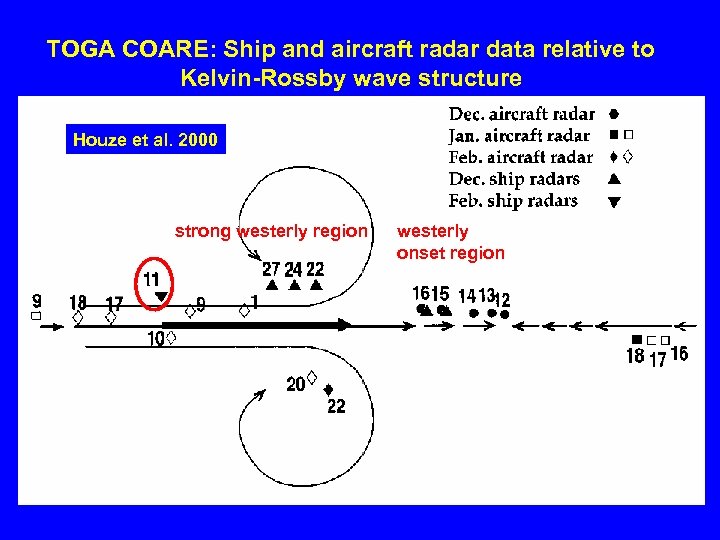
TOGA COARE: Ship and aircraft radar data relative to Kelvin-Rossby wave structure Houze et al. 2000 strong westerly region westerly onset region
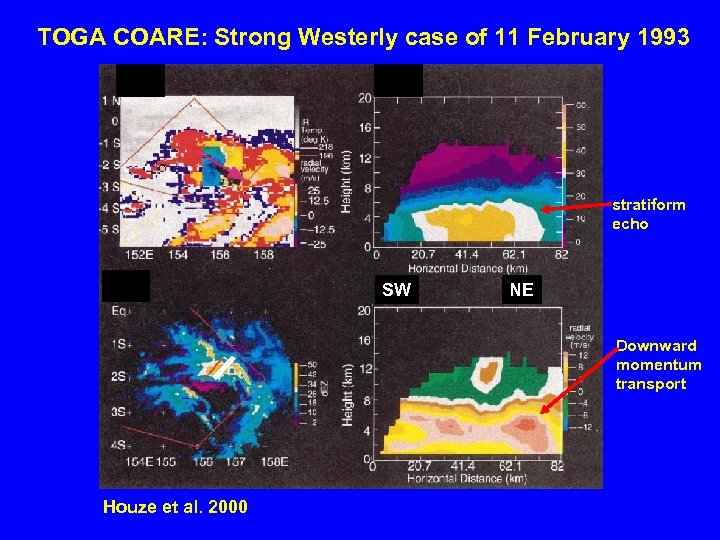
TOGA COARE: Strong Westerly case of 11 February 1993 stratiform echo SW NE Downward momentum transport Houze et al. 2000
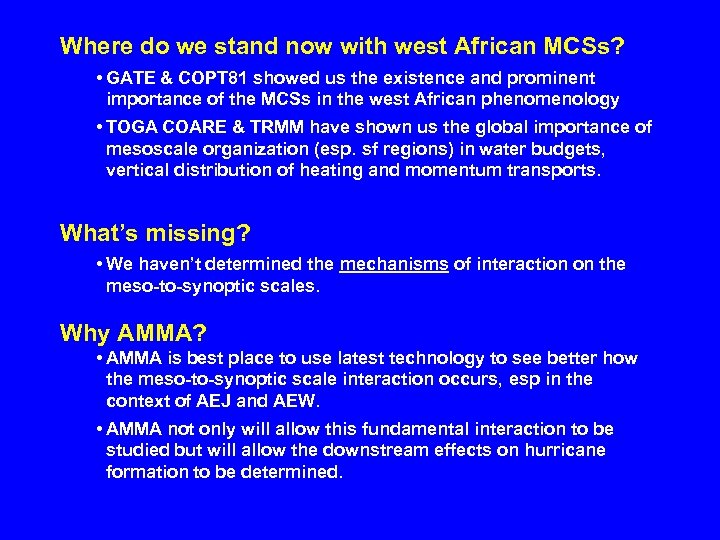
Where do we stand now with west African MCSs? • GATE & COPT 81 showed us the existence and prominent importance of the MCSs in the west African phenomenology • TOGA COARE & TRMM have shown us the global importance of mesoscale organization (esp. sf regions) in water budgets, vertical distribution of heating and momentum transports. What’s missing? • We haven’t determined the mechanisms of interaction on the meso-to-synoptic scales. Why AMMA? • AMMA is best place to use latest technology to see better how the meso-to-synoptic scale interaction occurs, esp in the context of AEJ and AEW. • AMMA not only will allow this fundamental interaction to be studied but will allow the downstream effects on hurricane formation to be determined.
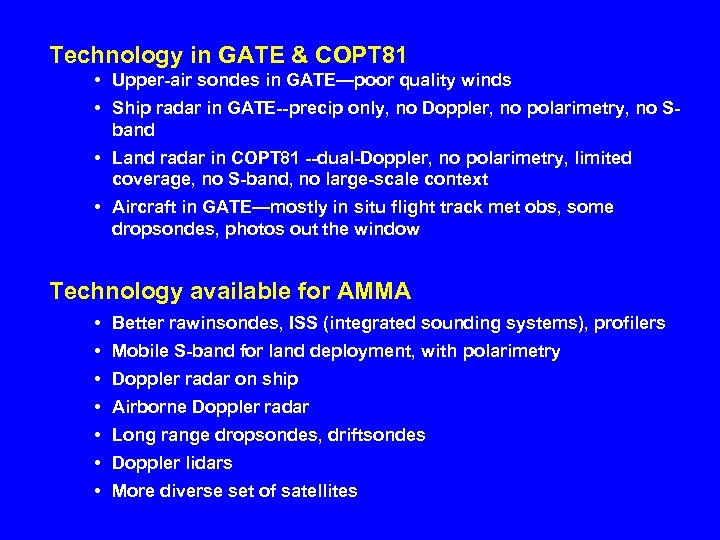
Technology in GATE & COPT 81 • Upper-air sondes in GATE—poor quality winds • Ship radar in GATE--precip only, no Doppler, no polarimetry, no Sband • Land radar in COPT 81 --dual-Doppler, no polarimetry, limited coverage, no S-band, no large-scale context • Aircraft in GATE—mostly in situ flight track met obs, some dropsondes, photos out the window Technology available for AMMA • Better rawinsondes, ISS (integrated sounding systems), profilers • Mobile S-band for land deployment, with polarimetry • Doppler radar on ship • Airborne Doppler radar • Long range dropsondes, driftsondes • Doppler lidars • More diverse set of satellites
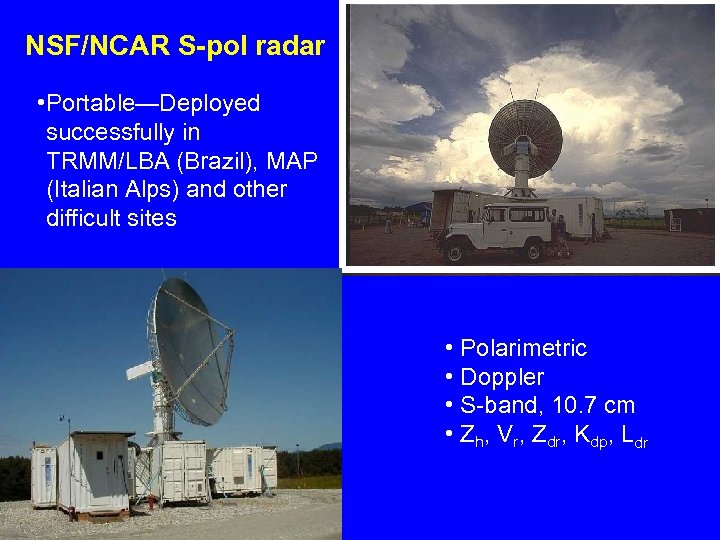
NSF/NCAR S-pol radar • Portable—Deployed successfully in TRMM/LBA (Brazil), MAP (Italian Alps) and other difficult sites • Polarimetric • Doppler • S-band, 10. 7 cm • Zh, Vr, Zdr, Kdp, Ldr
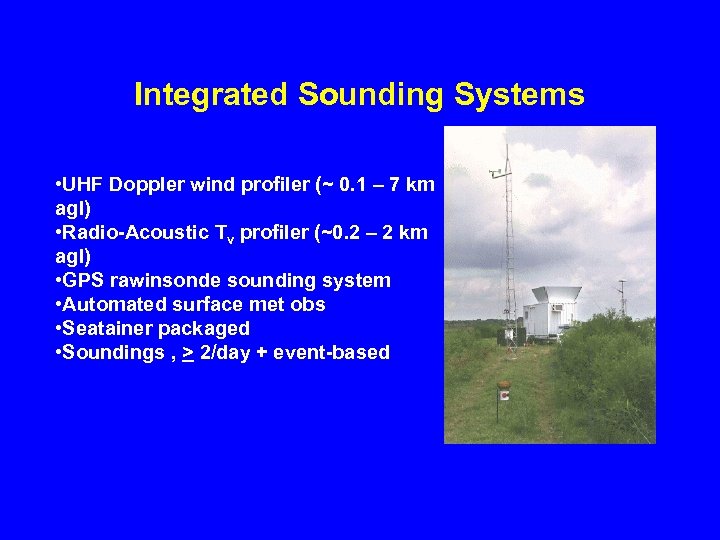
Integrated Sounding Systems • UHF Doppler wind profiler (~ 0. 1 – 7 km agl) • Radio-Acoustic Tv profiler (~0. 2 – 2 km agl) • GPS rawinsonde sounding system • Automated surface met obs • Seatainer packaged • Soundings , > 2/day + event-based
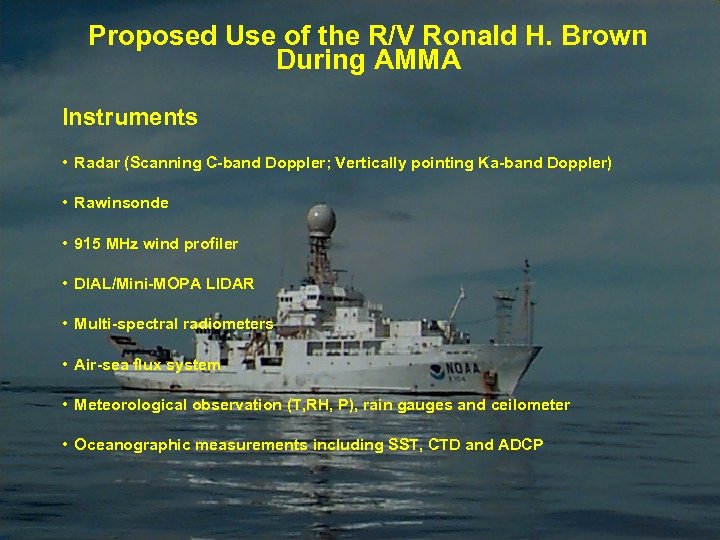
Proposed Use of the R/V Ronald H. Brown During AMMA Instruments • Radar (Scanning C-band Doppler; Vertically pointing Ka-band Doppler) • Rawinsonde • 915 MHz wind profiler • DIAL/Mini-MOPA LIDAR • Multi-spectral radiometers • Air-sea flux system • Meteorological observation (T, RH, P), rain gauges and ceilometer • Oceanographic measurements including SST, CTD and ADCP
Summary: MCSs in AMMA GATE & COPT 81 showed that mesoscale organization was an important part of the tropical cloud population, both on land offshore Since GATE & COPT 81, the mesoscale organization of tropical cloud populations has been seen to have global significance, esp. via TRMM & TOGA COARE • Water budgets & precipitation • Heating profiles • Momentum transports AMMA is the best place to use new technology to understand the meso-synoptic scale connection, since the interaction ofwest African MCSs & larger-scale dynamics is so robust: • AEJ & AEWs • Saharan air layer • Tropical cyclone formation These meso-synoptic scale linkages are essential to the overall picture of the west African monsoon sought by AMMA
Convection, microphysics, & lightning in AMMA S. A. Rutledge AMMA domain is a natural laboratory to study aerosol/cloud interactions and associated feedbacks to cloud dynamics. Lightning: Recent work from TRMM-LBA (Brazil) suggests that aerosols may exert a fundamental control on flash rate and cloud dynamics. This issue can be further evaluated in AMMA. Precipitation microphysics: Need to understand the microphysical aspects of the formation of the stratiform anvil precipitation. Overarching issue: Microphysical aspects of African convective systems virtually unexplored.
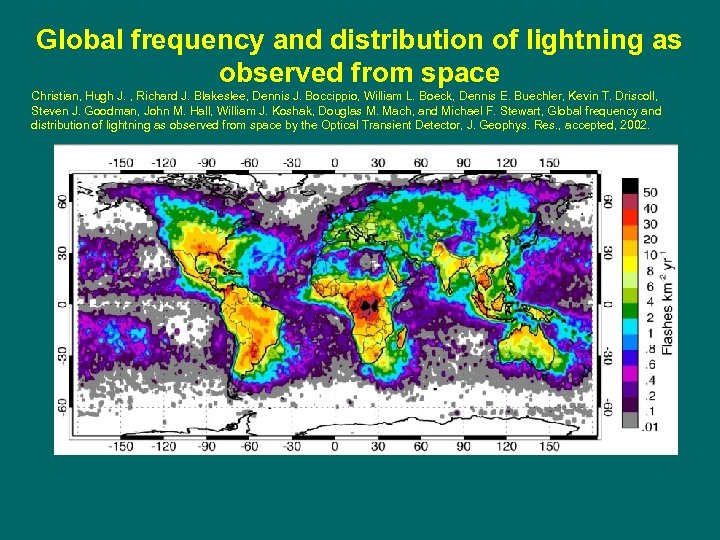
Global frequency and distribution of lightning as observed from space Christian, Hugh J. , Richard J. Blakeslee, Dennis J. Boccippio, William L. Boeck, Dennis E. Buechler, Kevin T. Driscoll, Steven J. Goodman, John M. Hall, William J. Koshak, Douglas M. Mach, and Michael F. Stewart, Global frequency and distribution of lightning as observed from space by the Optical Transient Detector, J. Geophys. Res. , accepted, 2002.
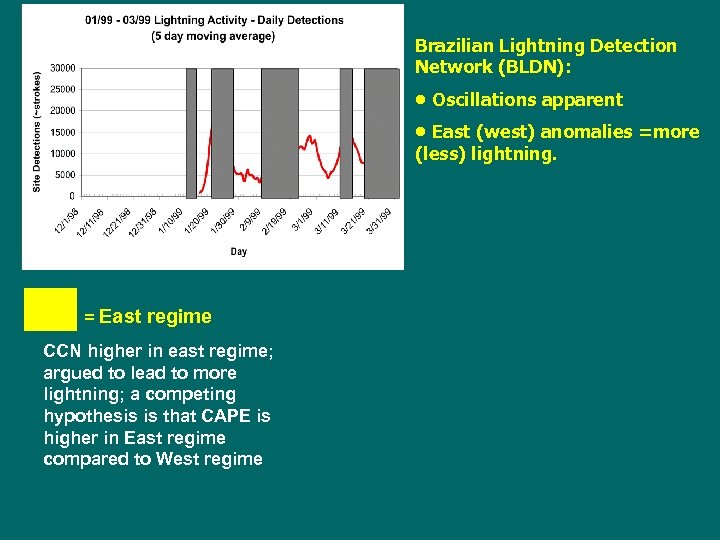
Brazilian Lightning Detection Network (BLDN): • Oscillations apparent • East (west) anomalies =more (less) lightning. = East regime CCN higher in east regime; argued to lead to more lightning; a competing hypothesis is that CAPE is higher in East regime compared to West regime
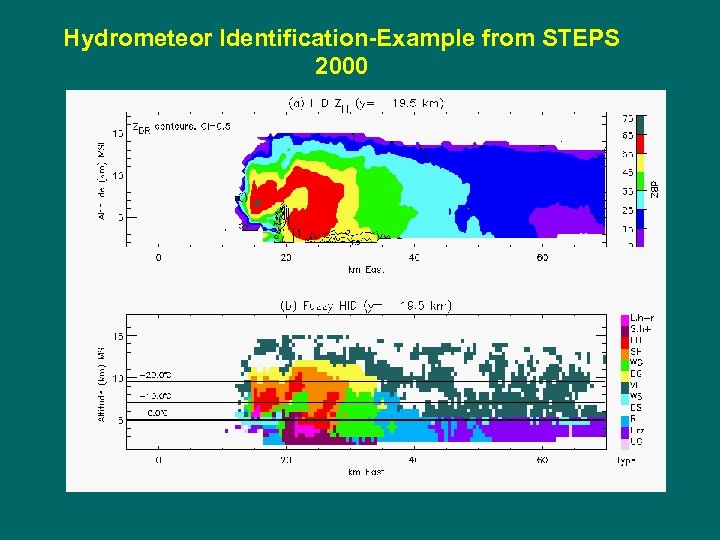
Hydrometeor Identification-Example from STEPS 2000
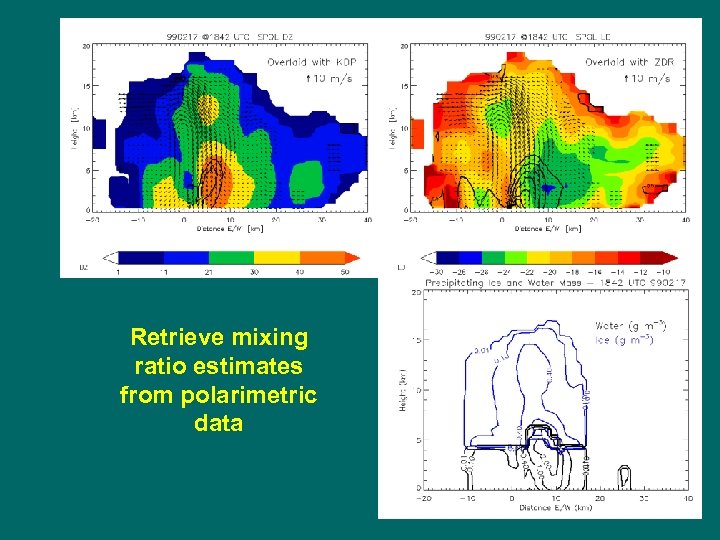
Retrieve mixing ratio estimates from polarimetric data
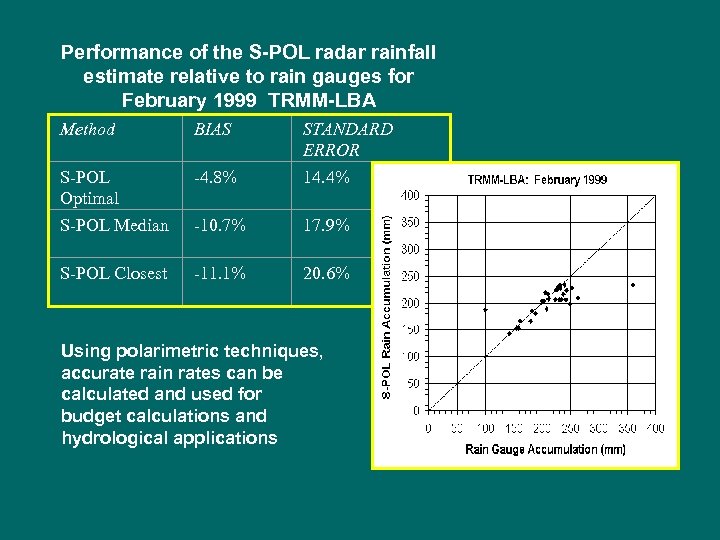
Performance of the S-POL radar rainfall estimate relative to rain gauges for February 1999 TRMM-LBA Method BIAS S-POL Optimal S-POL Median -4. 8% STANDARD ERROR 14. 4% -10. 7% 17. 9% S-POL Closest -11. 1% 20. 6% Using polarimetric techniques, accurate rain rates can be calculated and used for budget calculations and hydrological applications
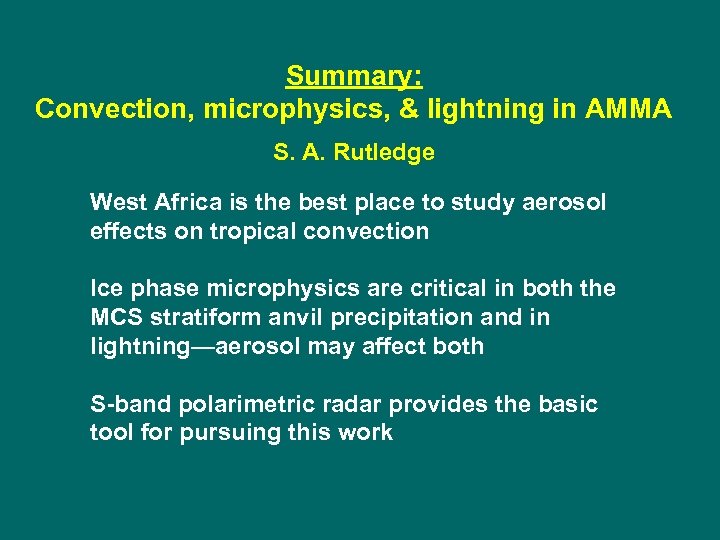
Summary: Convection, microphysics, & lightning in AMMA S. A. Rutledge West Africa is the best place to study aerosol effects on tropical convection Ice phase microphysics are critical in both the MCS stratiform anvil precipitation and in lightning—aerosol may affect both S-band polarimetric radar provides the basic tool for pursuing this work
Скачать презентацию Mesoscale Convective Systems in AMMA What has been
22943b642a876e81eb6865fb70a14bb6.ppt