


 Скачать презентацию Mesopotamia The Fertile Crescent Chapter 2 Notes
ece945ae0850a50901d87fa4d2033fec.ppt
- Количество слайдов: 19
 Mesopotamia: The Fertile Crescent Chapter 2 Notes
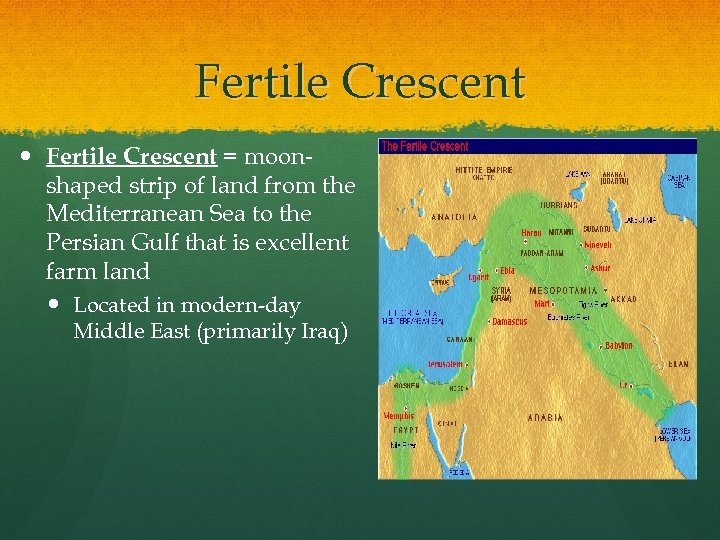 Fertile Crescent = moonshaped strip of land from the Mediterranean Sea to the Persian Gulf that is excellent farm land Located in modern-day Middle East (primarily Iraq)
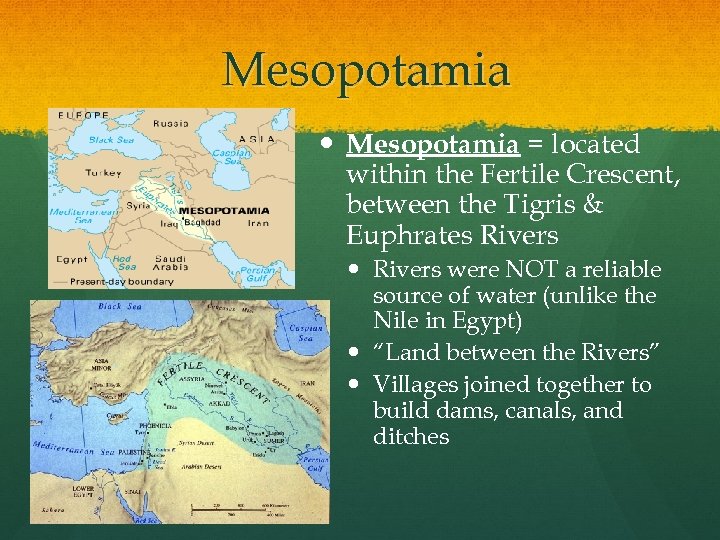 Mesopotamia = located within the Fertile Crescent, between the Tigris & Euphrates Rivers were NOT a reliable source of water (unlike the Nile in Egypt) “Land between the Rivers” Villages joined together to build dams, canals, and ditches
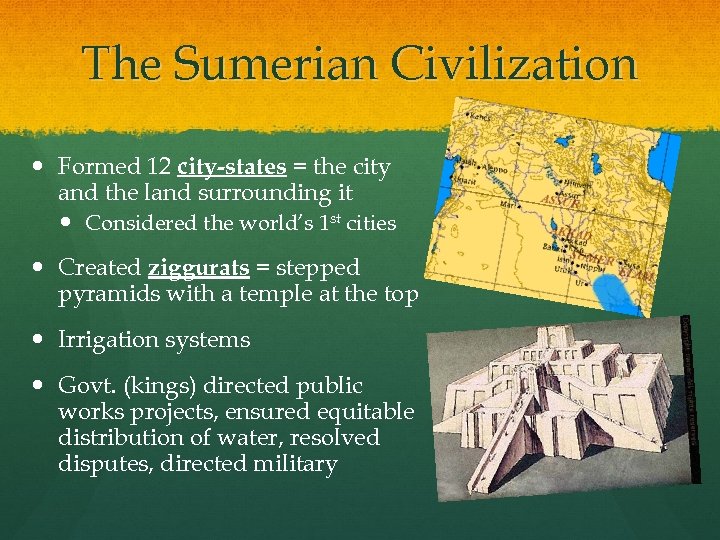 The Sumerian Civilization Formed 12 city-states = the city and the land surrounding it Considered the world’s 1 st cities Created ziggurats = stepped pyramids with a temple at the top Irrigation systems Govt. (kings) directed public works projects, ensured equitable distribution of water, resolved disputes, directed military
 The Sumerian Civilization Sumerians shared common culture, language, and religion City-states governed themselves Were theocracies = kings served as both government leaders AND high priests Laws regulated the roles of women & men had far more rights
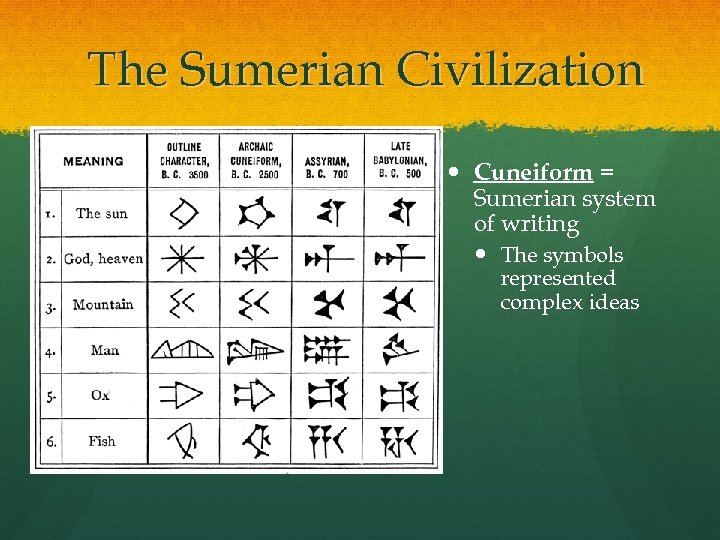 The Sumerian Civilization Cuneiform = Sumerian system of writing The symbols represented complex ideas
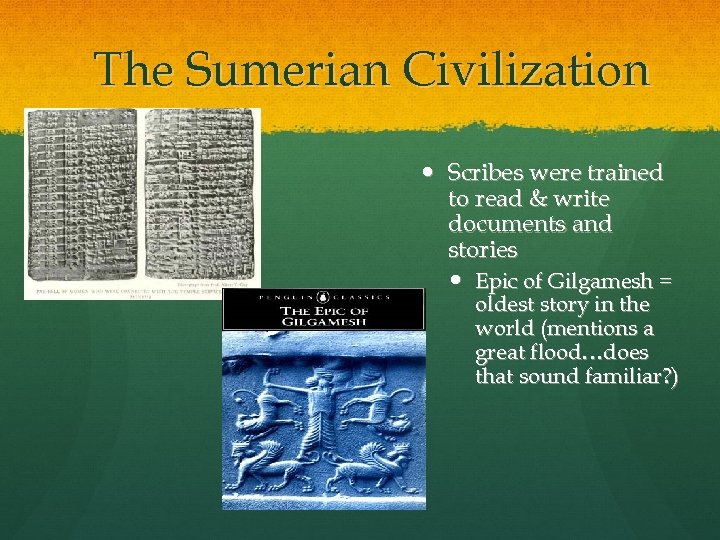 The Sumerian Civilization Scribes were trained to read & write documents and stories Epic of Gilgamesh = oldest story in the world (mentions a great flood…does that sound familiar? )
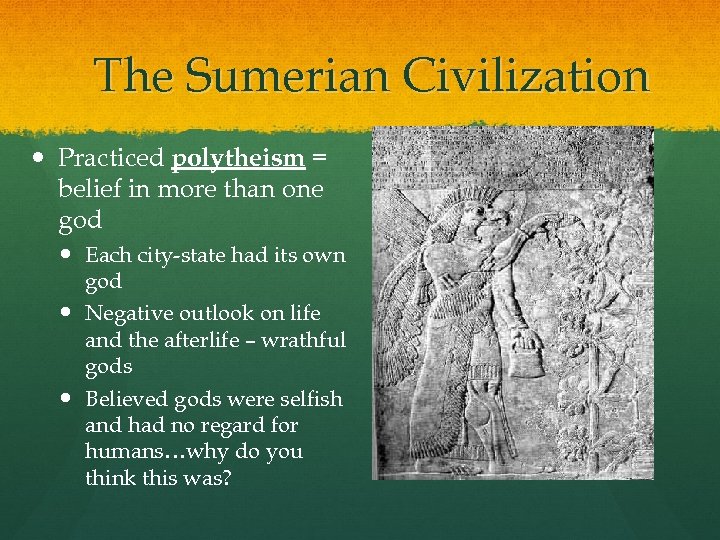 The Sumerian Civilization Practiced polytheism = belief in more than one god Each city-state had its own god Negative outlook on life and the afterlife – wrathful gods Believed gods were selfish and had no regard for humans…why do you think this was?
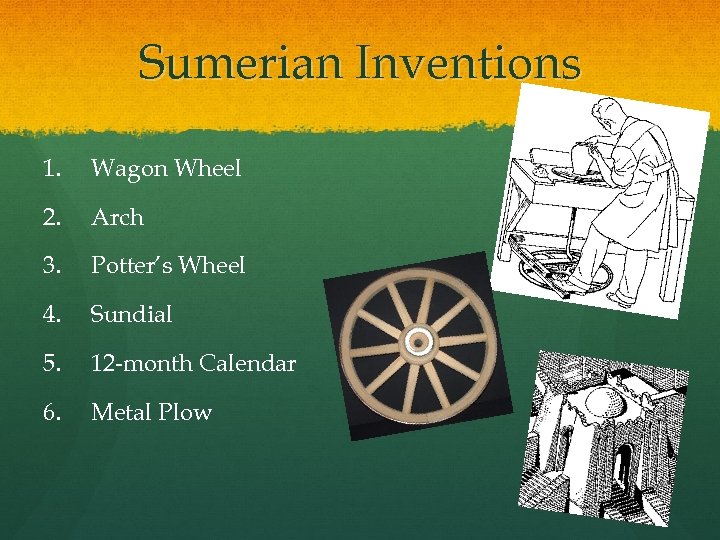 Sumerian Inventions 1. Wagon Wheel 2. Arch 3. Potter’s Wheel 4. Sundial 5. 12 -month Calendar 6. Metal Plow
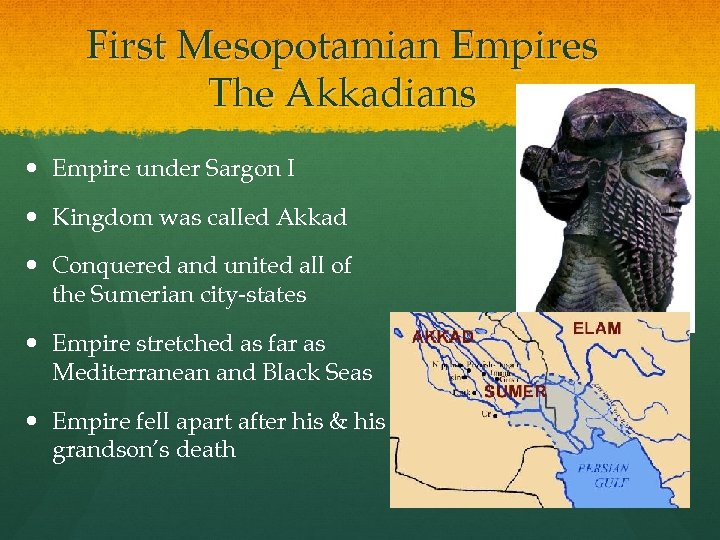 First Mesopotamian Empires The Akkadians Empire under Sargon I Kingdom was called Akkad Conquered and united all of the Sumerian city-states Empire stretched as far as Mediterranean and Black Seas Empire fell apart after his & his grandson’s death
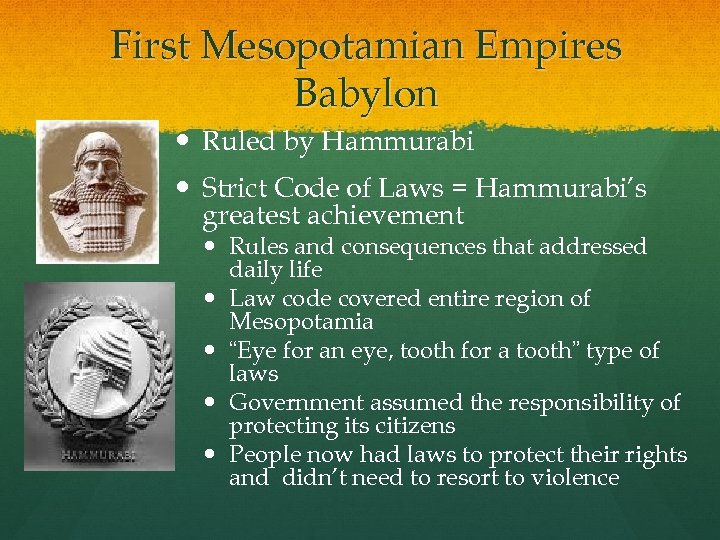 First Mesopotamian Empires Babylon Ruled by Hammurabi Strict Code of Laws = Hammurabi’s greatest achievement Rules and consequences that addressed daily life Law code covered entire region of Mesopotamia “Eye for an eye, tooth for a tooth” type of laws Government assumed the responsibility of protecting its citizens People now had laws to protect their rights and didn’t need to resort to violence
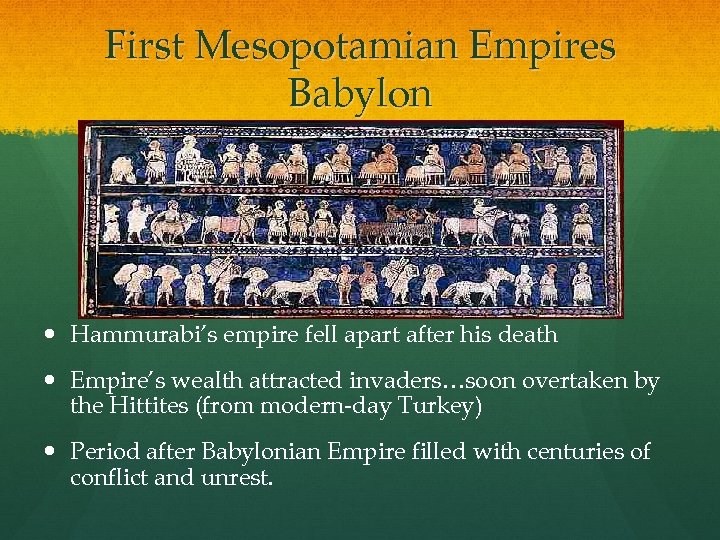 First Mesopotamian Empires Babylon Hammurabi’s empire fell apart after his death Empire’s wealth attracted invaders…soon overtaken by the Hittites (from modern-day Turkey) Period after Babylonian Empire filled with centuries of conflict and unrest.
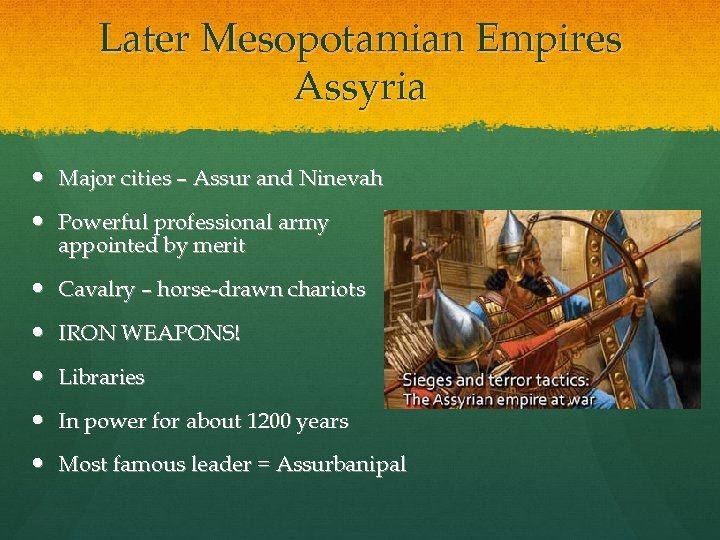 Later Mesopotamian Empires Assyria Major cities – Assur and Ninevah Powerful professional army appointed by merit Cavalry – horse-drawn chariots IRON WEAPONS! Libraries In power for about 1200 years Most famous leader = Assurbanipal
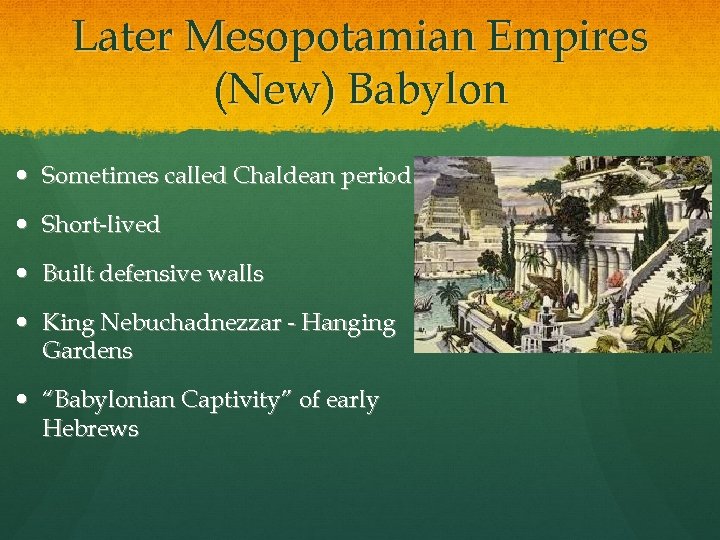 Later Mesopotamian Empires (New) Babylon Sometimes called Chaldean period Short-lived Built defensive walls King Nebuchadnezzar - Hanging Gardens “Babylonian Captivity” of early Hebrews
 Characteristics of all Mesopotamian Societies Patriarchal Distinct social classes – wealth and power resting with small group at the top of society Job specialization – potters, textile-manufacturers, stone-cutters, brick-makers, masons, etc. Writing Metals in order: Copper, Bronze, Iron Trade with outsiders Slavery – POWs, criminals, debtors Astronomy and mathematics
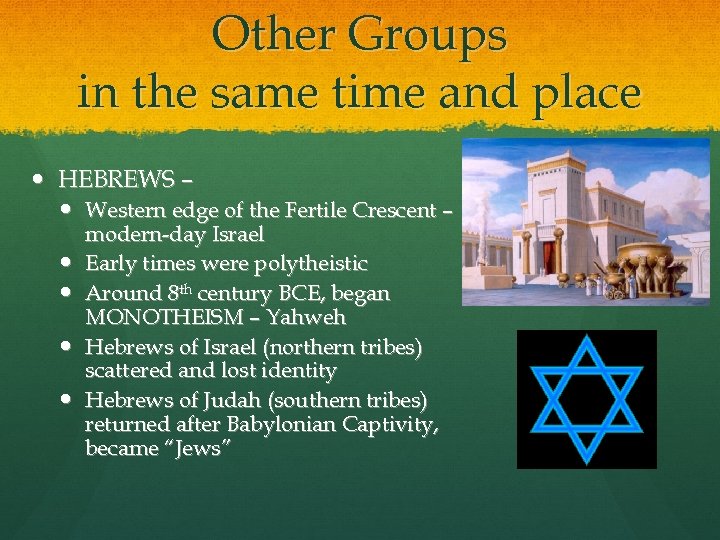 Other Groups in the same time and place HEBREWS – Western edge of the Fertile Crescent – modern-day Israel Early times were polytheistic Around 8 th century BCE, began MONOTHEISM – Yahweh Hebrews of Israel (northern tribes) scattered and lost identity Hebrews of Judah (southern tribes) returned after Babylonian Captivity, became “Jews”
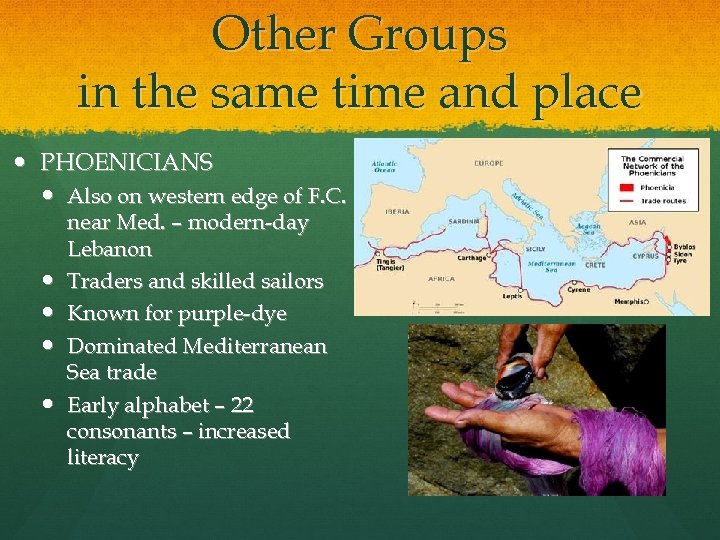 Other Groups in the same time and place PHOENICIANS Also on western edge of F. C. near Med. – modern-day Lebanon Traders and skilled sailors Known for purple-dye Dominated Mediterranean Sea trade Early alphabet – 22 consonants – increased literacy
 Indo-European Migrations began from steppes of Southern Russia Indo-European Languages – Greek, Slavic, Germanic, Celtic, etc… what do common language characteristics mean? Horses Hittites were one of the first groups to move into “Mesopotamia”…iron and chariots
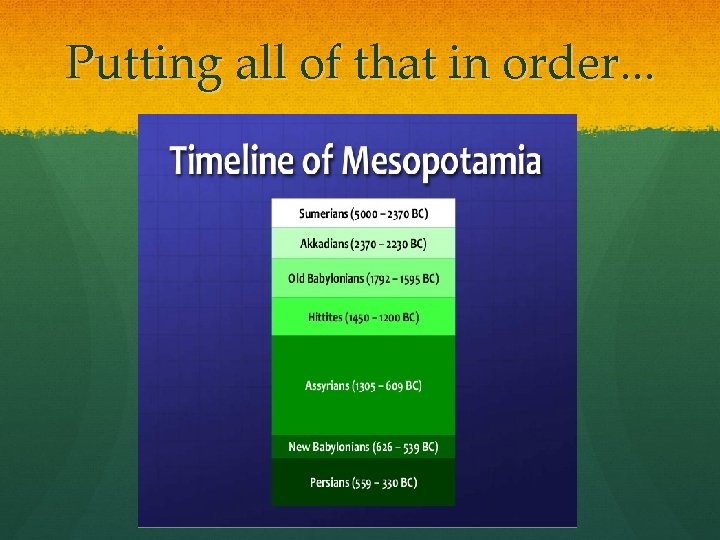 Putting all of that in order. . .