


 Скачать презентацию Mergers among firms that manage revenue The curious
b6d484d690ac7f66680d775f0ce06c03.ppt
- Количество слайдов: 48
 Mergers among firms that manage revenue: The curious case of hotels Luke Froeb Vanderbilt University May 17, 2008 (10: 20 am) “New Perspectives on Competition Policy“ Truland, IIOC, Arlington, VA
 • “…an economist is somebody who sees something happen in practice and wonders if it will work in theory. " 2
 Joint work • Arturs Kalnins – School of Hotel Administration, Cornell University • Steven Tschantz – Mathematics, Vanderbilt University 3
 Summary of Findings • Empirical Finding: Hotel in-market mergers – Relative to in-market non-merging; • increase capacity utilization 3%; reduce price 1% – Relative out-of-market merging • increase capacity utilization 3%; same price • Theoretical Mechanisms: – Post-merger information sharing – Post-merger referrals to sister hotels – Post-merger loyalty to merged hotels • Antitrust Policy: short run gain from merger, “call-arounds” 4
 Talk Outline • Empirical Finding • Revenue management heuristics • Can we find a theory to explain the finding? – Post-merger information sharing – Post-merger referrals to sister hotels – Post-merger loyalty to merged hotel • Antitrust Policy – Mergers – “Call arounds” 5
 Data • Texas Comptroller of Public Accounts. – Owner, address, rooms, quarterly revenue. – entry and exit dates – ownership transfer • Smith Travel Research (proprietary) – 1999 Q 2 -2005 Q 3, self-reported • Larger, brand-affiliated (82%) hotels – average price per room-night (Price) – room-nights sold (Quantity) 6
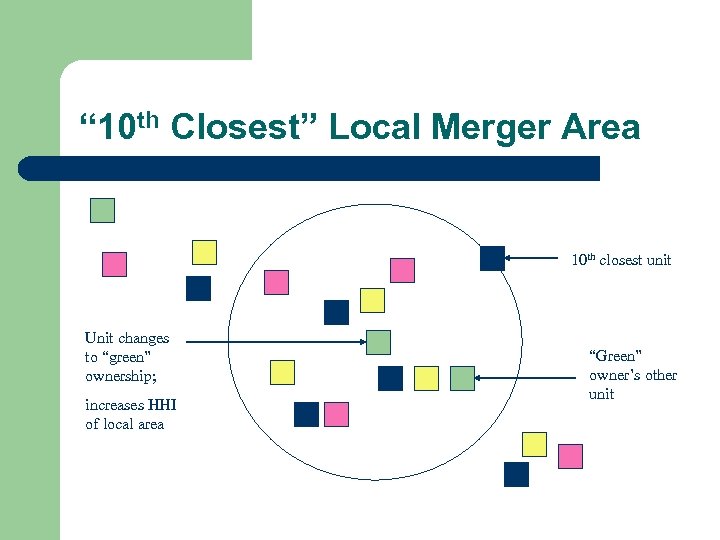 “ 10 th Closest” Local Merger Area 10 th closest unit Unit changes to “green” ownership; increases HHI of local area “Green” owner’s other unit
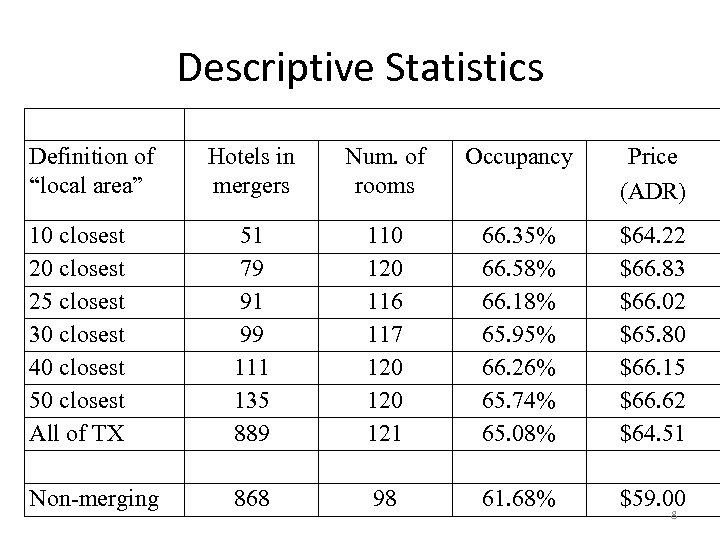 Descriptive Statistics Definition of “local area” Hotels in mergers Num. of rooms Occupancy Price (ADR) 10 closest 25 closest 30 closest 40 closest 50 closest All of TX 51 79 91 99 111 135 889 110 120 116 117 120 121 66. 35% 66. 58% 66. 18% 65. 95% 66. 26% 65. 74% 65. 08% $64. 22 $66. 83 $66. 02 $65. 80 $66. 15 $66. 62 $64. 51 Non-merging 868 98 61. 68% $59. 00 8
 Fixed-Effects Regressions • Data – 196 Texas hotel mergers (889 hotels) from 1999 -2005 – Which increase local HHI • Effects – Hotel dummies – Year X Type dummies • Type s: urban, suburban, small town, highway, airport and resort – AR(1) • Owner characteristics – First year of new owner – Experience of owner – Number of other hotels 9
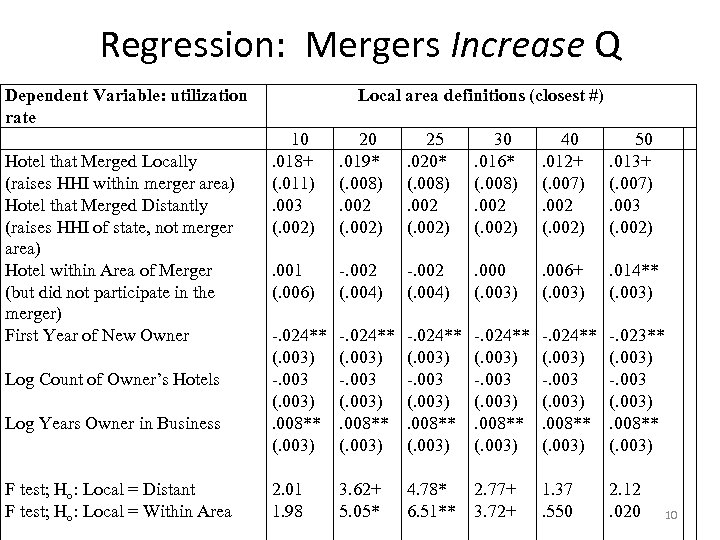 Regression: Mergers Increase Q Dependent Variable: utilization rate Hotel that Merged Locally (raises HHI within merger area) Hotel that Merged Distantly (raises HHI of state, not merger area) Hotel within Area of Merger (but did not participate in the merger) First Year of New Owner Log Count of Owner’s Hotels Log Years Owner in Business F test; Ho: Local = Distant F test; Ho: Local = Within Area Local area definitions (closest #) 10. 018+ (. 011). 003 (. 002) 20. 019* (. 008). 002 (. 002) 25. 020* (. 008). 002 (. 002) 30. 016* (. 008). 002 (. 002) 40. 012+ (. 007). 002 (. 002) 50. 013+ (. 007). 003 (. 002) . 001 (. 006) -. 002 (. 004) . 000 (. 003) . 006+ (. 003) . 014** (. 003) -. 024** (. 003) -. 003 (. 003). 008** (. 003) -. 023** (. 003) -. 003 (. 003). 008** (. 003) 2. 01 1. 98 3. 62+ 5. 05* 4. 78* 6. 51** 2. 77+ 3. 72+ 1. 37. 550 2. 12. 020 10
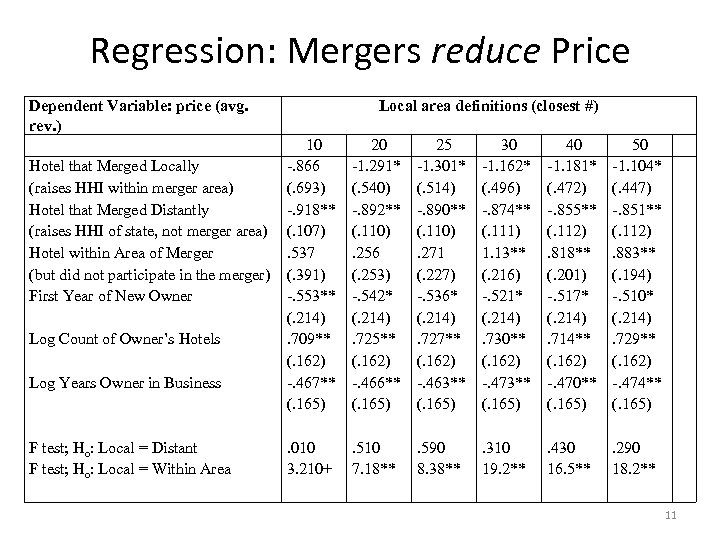 Regression: Mergers reduce Price Dependent Variable: price (avg. rev. ) Hotel that Merged Locally (raises HHI within merger area) Hotel that Merged Distantly (raises HHI of state, not merger area) Hotel within Area of Merger (but did not participate in the merger) First Year of New Owner Log Count of Owner’s Hotels Log Years Owner in Business F test; Ho: Local = Distant F test; Ho: Local = Within Area Local area definitions (closest #) 10 -. 866 (. 693) -. 918** (. 107). 537 (. 391) -. 553** (. 214). 709** (. 162) -. 467** (. 165) 20 -1. 291* (. 540) -. 892** (. 110). 256 (. 253) -. 542* (. 214). 725** (. 162) -. 466** (. 165) 25 -1. 301* (. 514) -. 890** (. 110). 271 (. 227) -. 536* (. 214). 727** (. 162) -. 463** (. 165) 30 -1. 162* (. 496) -. 874** (. 111) 1. 13** (. 216) -. 521* (. 214). 730** (. 162) -. 473** (. 165) 40 -1. 181* (. 472) -. 855** (. 112). 818** (. 201) -. 517* (. 214). 714** (. 162) -. 470** (. 165) 50 -1. 104* (. 447) -. 851** (. 112). 883** (. 194) -. 510* (. 214). 729** (. 162) -. 474** (. 165) . 010 3. 210+ . 510 7. 18** . 590 8. 38** . 310 19. 2** . 430 16. 5** . 290 18. 2** 11
 12
12
 Talk Outline • Empirical Finding • Revenue Management Heuristics • Which theory can explain the finding? – Post-merger information sharing – Post-merger referrals to sister hotels – Post-merger loyalty to merged hotel • Antitrust Policy – Mergers – “Call arounds” 13
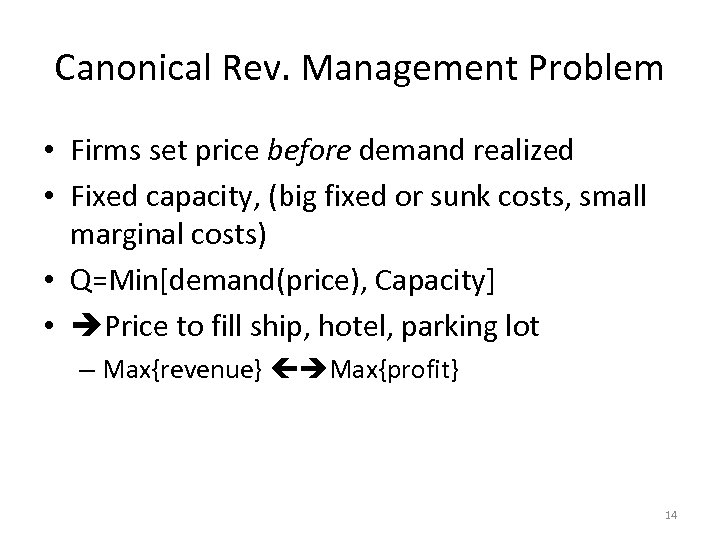 Canonical Rev. Management Problem • Firms set price before demand realized • Fixed capacity, (big fixed or sunk costs, small marginal costs) • Q=Min[demand(price), Capacity] • Price to fill ship, hotel, parking lot – Max{revenue} Max{profit} 14
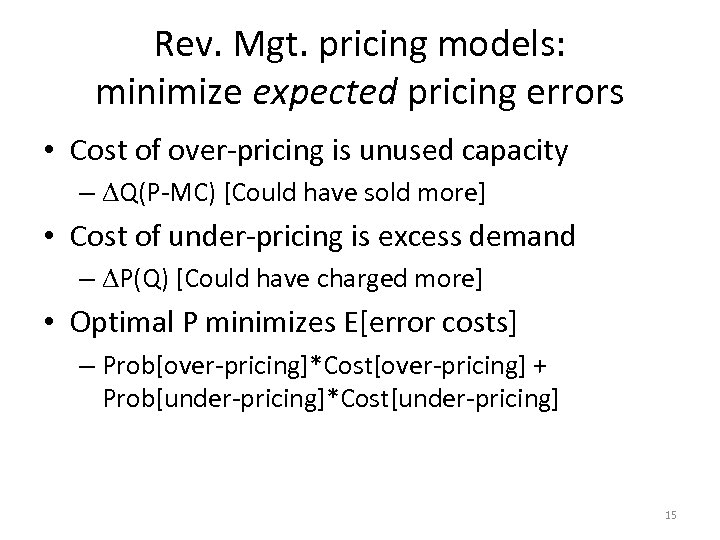 Rev. Mgt. pricing models: minimize expected pricing errors • Cost of over-pricing is unused capacity – Q(P-MC) [Could have sold more] • Cost of under-pricing is excess demand – P(Q) [Could have charged more] • Optimal P minimizes E[error costs] – Prob[over-pricing]*Cost[over-pricing] + Prob[under-pricing]*Cost[under-pricing] 15
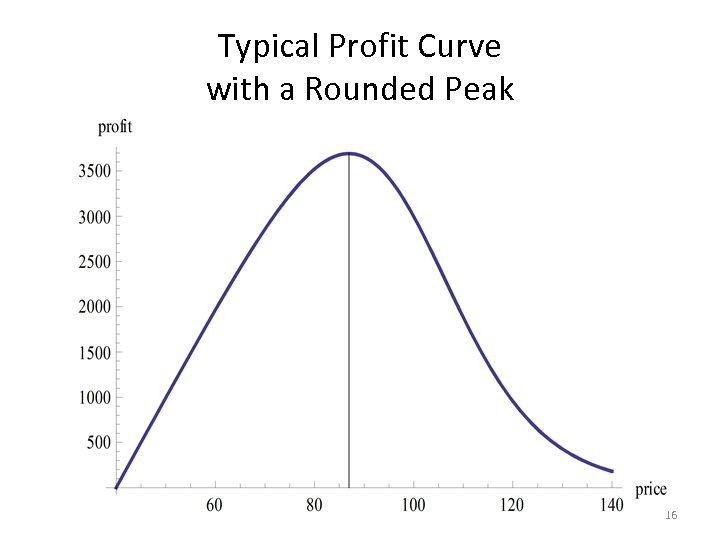 Typical Profit Curve with a Rounded Peak 16
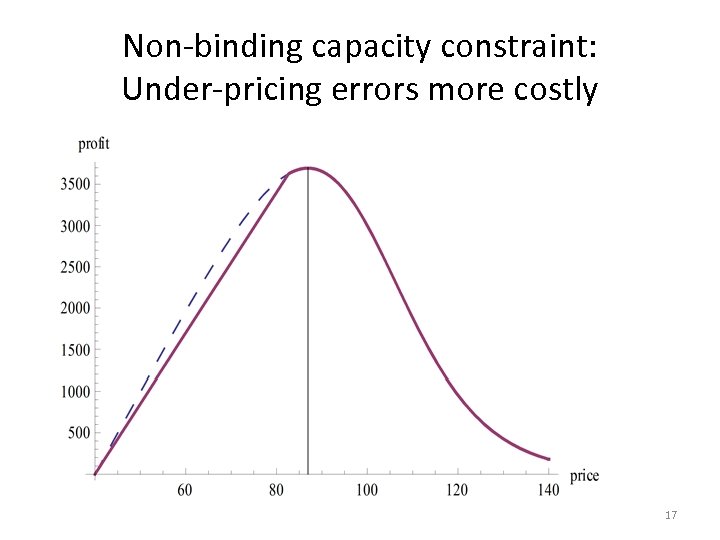 Non-binding capacity constraint: Under-pricing errors more costly 17
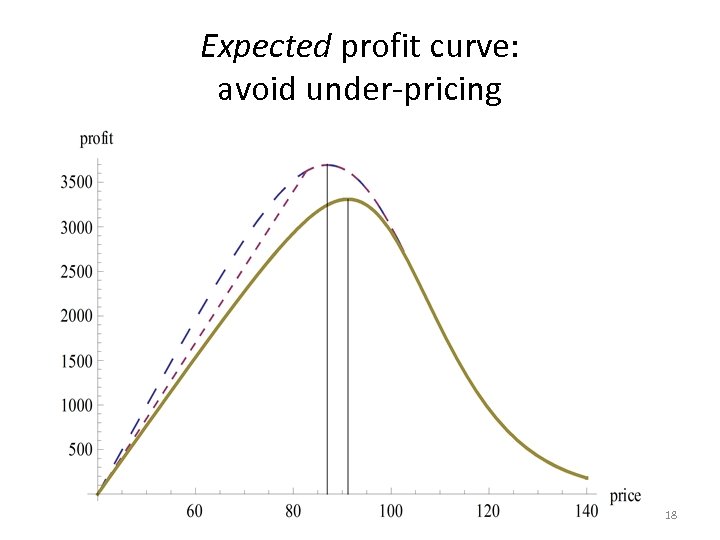 Expected profit curve: avoid under-pricing 18
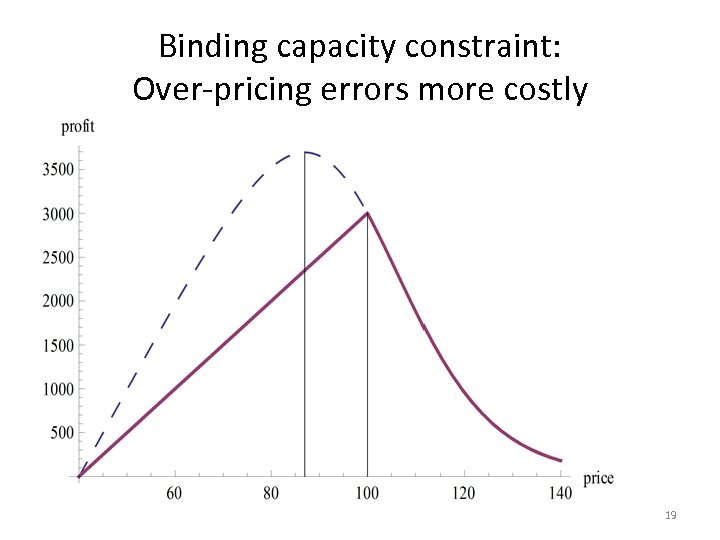 Binding capacity constraint: Over-pricing errors more costly 19
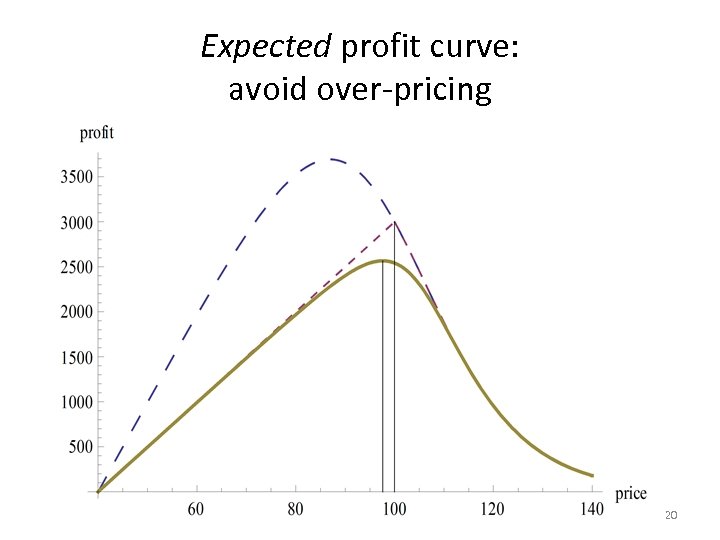 Expected profit curve: avoid over-pricing 20
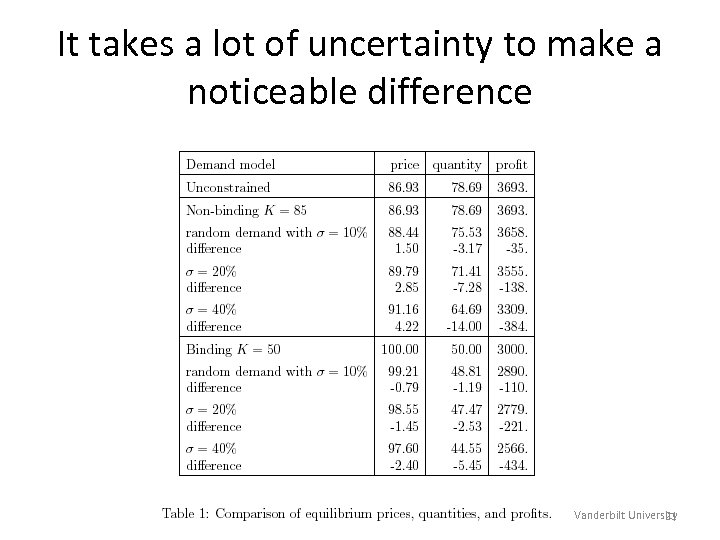 It takes a lot of uncertainty to make a noticeable difference Vanderbilt University 21
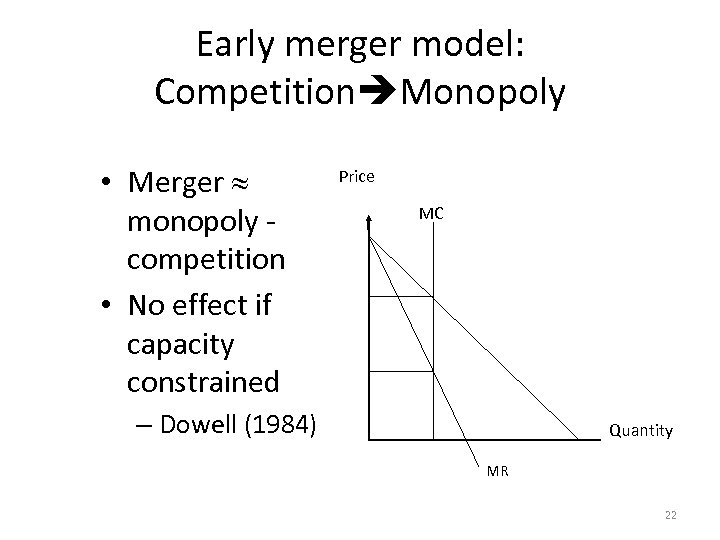 Early merger model: Competition Monopoly • Merger monopoly competition • No effect if capacity constrained Price MC – Dowell (1984) Quantity MR 22
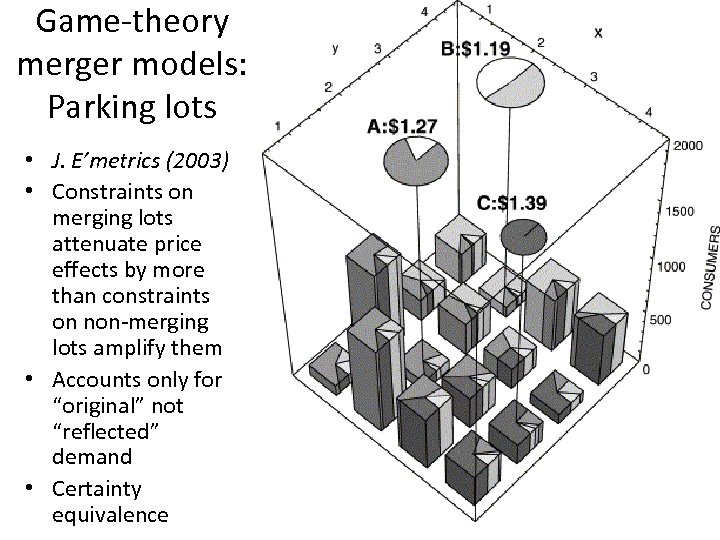 Game-theory merger models: Parking lots • J. E’metrics (2003) • Constraints on merging lots attenuate price effects by more than constraints on non-merging lots amplify them • Accounts only for “original” not “reflected” demand • Certainty equivalence 23
 Rev. Mgt. Merger Heuristics • Unilateral effect for unconstrained hotel: – Increases under-pricing error costs because a decrease in price steals share from sister hotels • Info sharing: fewer pricing errors – Fewer over-pricing errors higher utilization • Referrals: reduce under-pricing error costs – Hotel can refer over-booked customers to sister hotel • Loyalty: reduces under-pricing error cost – Increases future demand for hotel “network. ” – Role of merger? 24
 25
25
 Talk Outline • Empirical Finding • Revenue Management Heuristics • Which theory can explain the finding? – Post-merger information sharing – Post-merger referrals to sister hotels – Post-merger loyalty to merged hotel • Antitrust Policy – Mergers – “Call arounds” 26
 Post-merger information sharing • Our hotel participates in call-arounds regularly, daily at 8 am, 6 pm, and 11 pm. We will ask [for all proximate properties] availability, rate, number of arrivals, and how many rooms are left to sell. Hotels that are not among the Midway Hotel Center [i. e. , not operated by the same management company] participate as well, but front desk attendants will give false information because they are too lazy or don’t care enough to give accurate numbers. – Hampton Inn, Chicago Midway Airport. 27
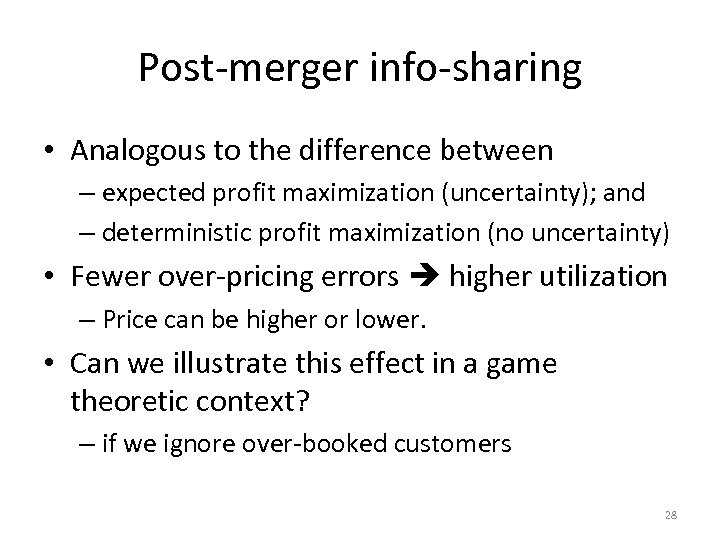 Post-merger info-sharing • Analogous to the difference between – expected profit maximization (uncertainty); and – deterministic profit maximization (no uncertainty) • Fewer over-pricing errors higher utilization – Price can be higher or lower. • Can we illustrate this effect in a game theoretic context? – if we ignore over-booked customers 28
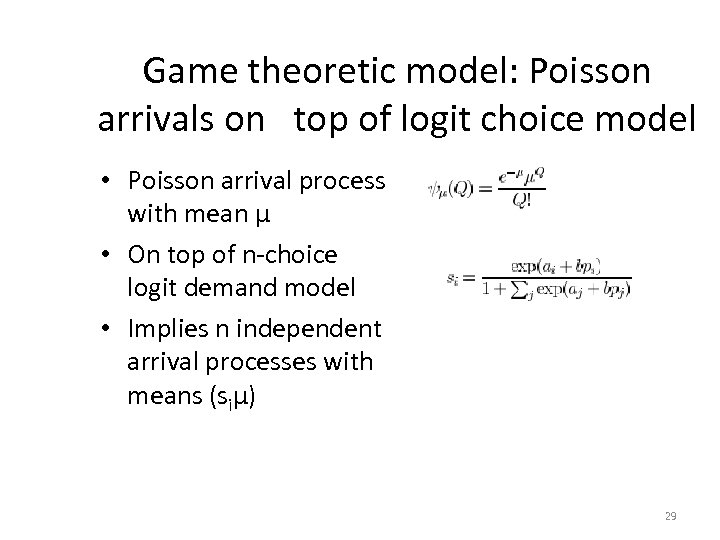 Game theoretic model: Poisson arrivals on top of logit choice model • Poisson arrival process with mean µ • On top of n-choice logit demand model • Implies n independent arrival processes with means (siµ) 29
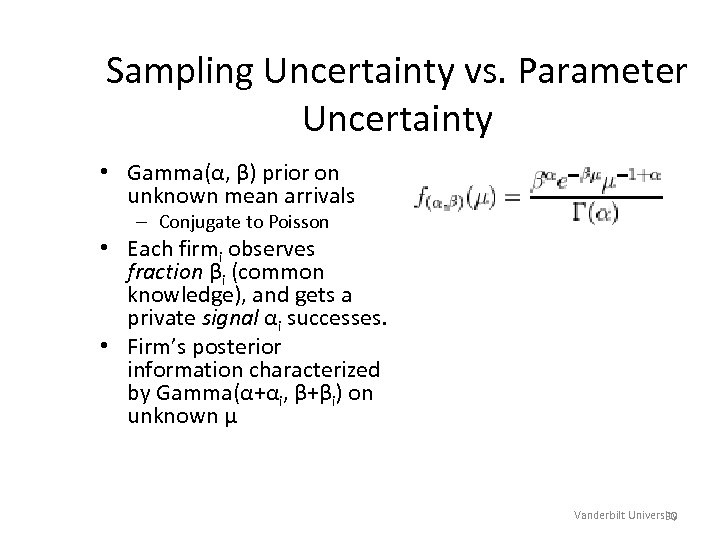 Sampling Uncertainty vs. Parameter Uncertainty • Gamma(α, β) prior on unknown mean arrivals – Conjugate to Poisson • Each firmi observes fraction βi (common knowledge), and gets a private signal αi successes. • Firm’s posterior information characterized by Gamma(α+αi, β+βi) on unknown µ Vanderbilt University 30
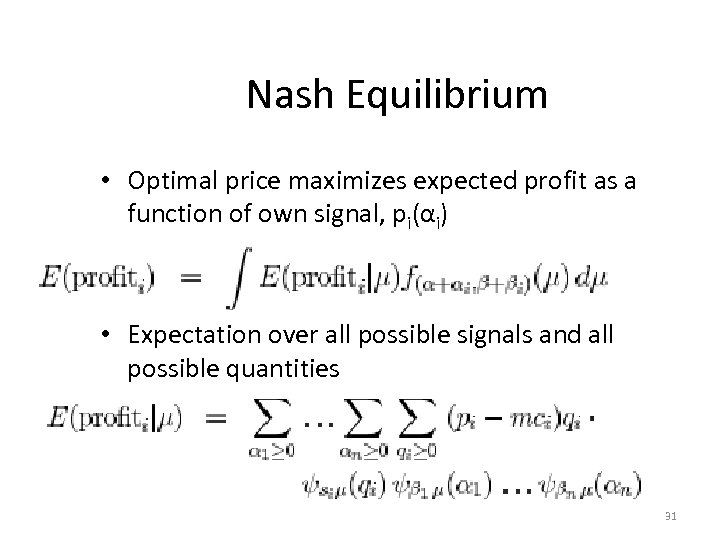 Nash Equilibrium • Optimal price maximizes expected profit as a function of own signal, pi(αi) • Expectation over all possible signals and all possible quantities 31
 32
32
 Talk Outline • Empirical Finding • Revenue Management Heuristics • Which Theory can explain finding? – Post-merger information sharing – Post-merger referrals to sister hotels – Post-merger loyalty to merged hotel • Antitrust Policy – Mergers – “Call arounds” 33
 Post-merger referrals to sister hotels • We do refer, and referrals account for a substantial part of our sales. We first refer to the properties owned by our same owner. These are our sister hotels. But if our sister hotels are full, we will refer to other non-affiliated hotels. We get very few referrals from hotels that are not our sister hotels because most of our competitive set are chains that have sister hotels of their own that they refer to. We do get other referrals occasionally and these are the people [the other hotels] we refer to when sisters are at full occupancy. – General Manager, Hotel Lombardy, Washington, DC 34
 Post-merger referrals to sister hotels (cont. ) • In 2000, Hilton bought Promus Hotels (4 brands and 1, 700 hotels) – “After the acquisition, … when there wasn't a room available in the Hilton … [we would] … crosssell them to the Embassy Suite or Double Tree Hotel in Times Square. And at last count, starting in 2000, we run on an annual basis about US $400 million in cross-sell revenue. ” 35
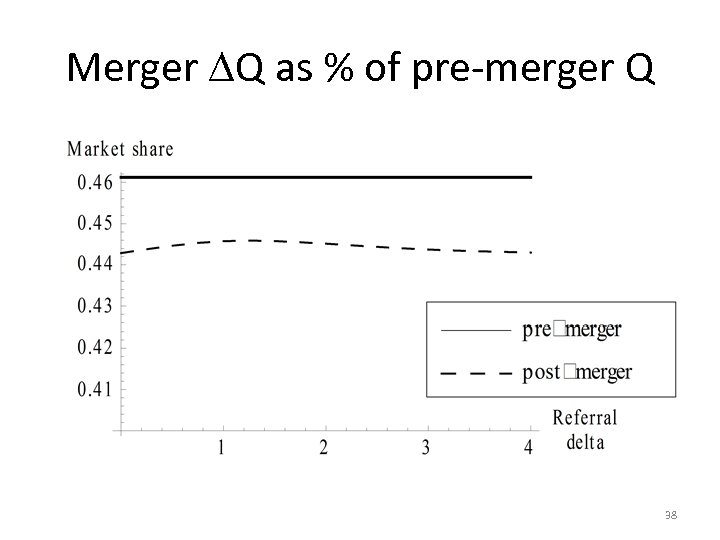
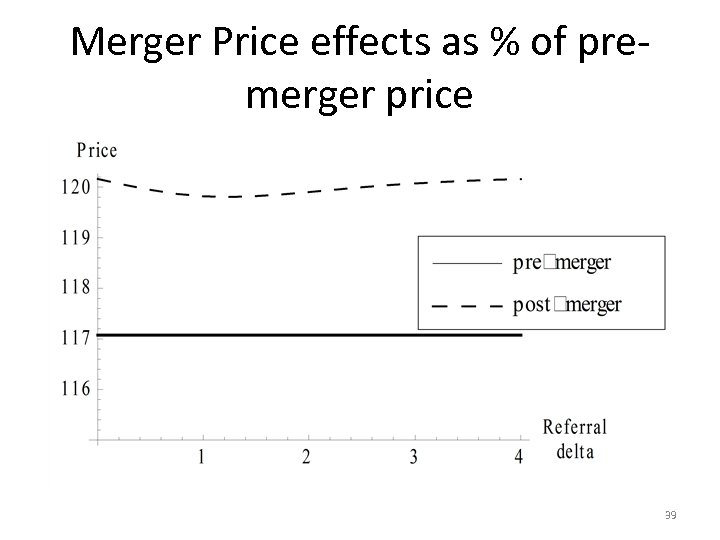
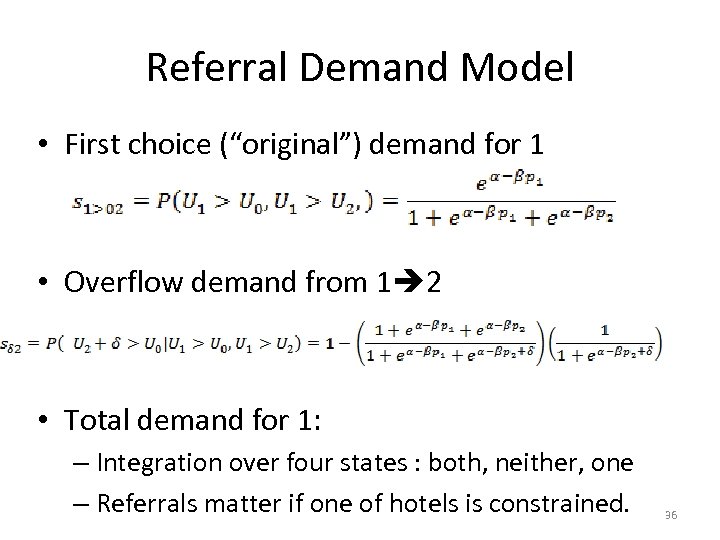 Referral Demand Model • First choice (“original”) demand for 1 • Overflow demand from 1 2 • Total demand for 1: – Integration over four states : both, neither, one – Referrals matter if one of hotels is constrained. 36
 Referral Model Results • Unilateral merger Effect – Price goes up, Quantity goes down 37
 Merger Q as % of pre-merger Q 38
 Merger Price effects as % of premerger price 39
 40
40
 Talk Outline • Empirical Finding • Revenue Management Heuristics • Which Theory can explain the finding? – Post-merger information sharing – Post-merger referrals to sister hotels – Post-merger loyalty to merged hotel • Antitrust Policy – Mergers – “Call arounds” 41
![Repeat business and customer loyalty • This [walking guests] is particularly important because hotels](https://present5.com/presentation/b6d484d690ac7f66680d775f0ce06c03/image-42.jpg "Repeat business and customer loyalty • This [walking guests] is particularly important because hotels") Repeat business and customer loyalty • This [walking guests] is particularly important because hotels are always wary of walking guests to a property they may not win them back from! – Manager, Mandarin Oriental, Washington DC • We take the viewpoint that referrals are good. When we receive a walked guest this is viewed as a new customer. We do everything to make them a regular guest of the property. – Revenue Manager, Jurys Washington Hotel, Washington, DC 42
Repeat business and customer loyalty • This [walking guests] is particularly important because hotels are always wary of walking guests to a property they may not win them back from! – Manager, Mandarin Oriental, Washington DC • We take the viewpoint that referrals are good. When we receive a walked guest this is viewed as a new customer. We do everything to make them a regular guest of the property. – Revenue Manager, Jurys Washington Hotel, Washington, DC 42
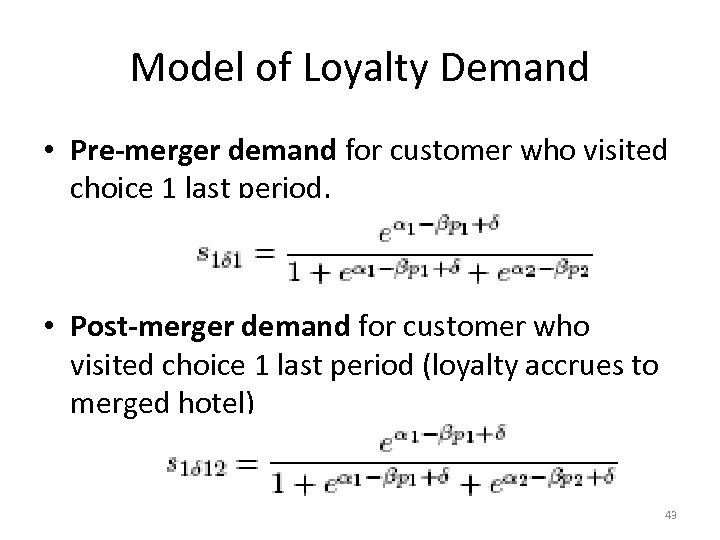 Model of Loyalty Demand • Pre-merger demand for customer who visited choice 1 last period. • Post-merger demand for customer who visited choice 1 last period (loyalty accrues to merged hotel) 43
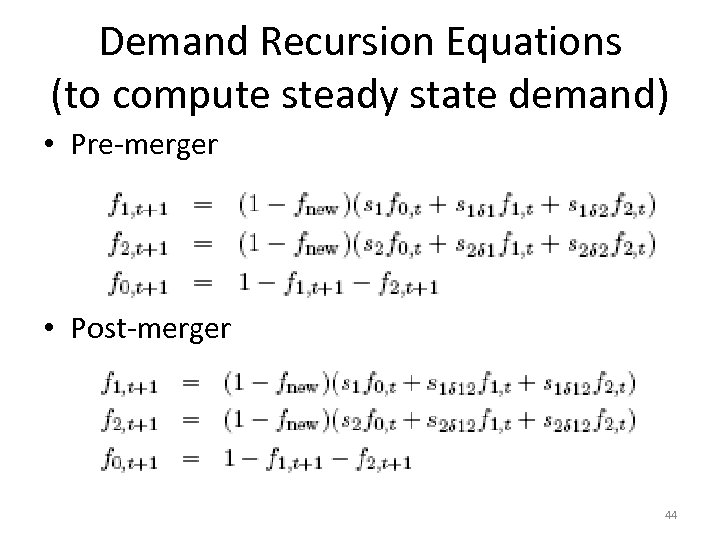 Demand Recursion Equations (to compute steady state demand) • Pre-merger • Post-merger 44
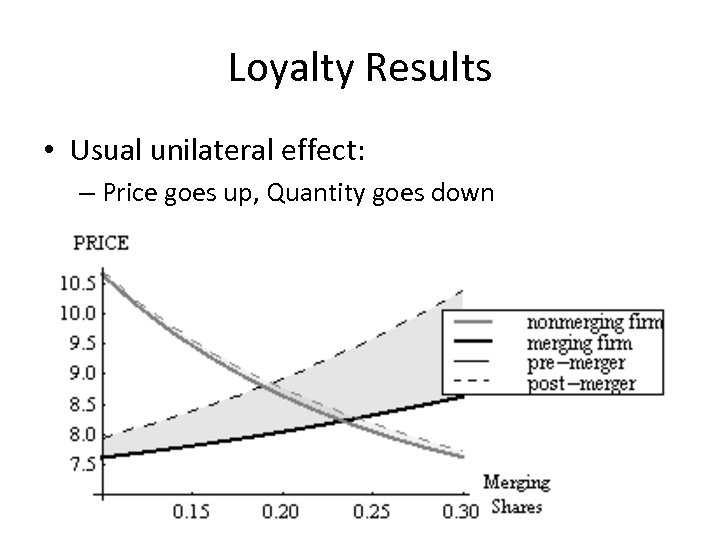 Loyalty Results • Usual unilateral effect: – Price goes up, Quantity goes down 45
 Talk Outline • Empirical Finding – Hotel mergers reduce P and increase Q • Revenue Management Heuristics • Which theory can explain the finding? – Post-merger information sharing – Post-merger referrals to sister hotels – Post-merger loyalty to merged hotel • Antitrust Policy – Mergers – “Call arounds” 46
 Antitrust Policy: Mergers • Parking, cruise lines, hotel/casinos, hospitals • In short run, empirical results suggest a short run gain – Consistent with info-sharing; – not consistent with referrals or loyalty • In long run, with capacity adjustment, mergers may be anti-competitive, but – Entry – Product repositioning 47
 Do “Call-arounds” = Collusion? • Investigation of high-end Paris hotels followed TV show. – Ritz employee explained (on-camera) how regularly exchanging data helped each hotel analyze competitors. • Competition Council: “Although the six hotels did not explicitly fix prices, they operated as a cartel that exchanged confidential information which had the result of keeping prices artificially high” – Fines from $65, 000 to $292, 000 for the Crillon • Over-deterrence? – EU managers now afraid to share info. • Hotel exec’s : call-arounds used forecasting – And “to bring more people to the area and to maximize hotel utilization”