


 Скачать презентацию Mercury Product Phaseout Collection Retirement Issues Putting our
c1af20f1fdcd71efc5abe1c1a4f61af2.ppt
- Количество слайдов: 38
 Mercury Product Phaseout, Collection, ‘Retirement’ Issues: Putting our house in order John Gilkeson Minnesota Office of Environmental Assistance Boston, May 1, 2002 (electronic version of this presentation includes notes) 1
 Quicksilver Caucus-EPA Mercury Stewardship Initiative needs YOU! • QSC and EPA have established three mercury initiatives: – Stewardship (long term management) – TMDL – National Action Plan • All need more states - esp. Stewardship see David Lennett or me during the conference 2
 Mercury mine & stockpile issues (1) • ~160 dedicated mines in US in 1960’s • Most closed by early 1970’s with new environmental and worker safety laws/rules and heightened awareness of mercury problems • Last US commercial mine closed 1990; could not compete in market with declining demand US/other stockpile sales – production costs exceeded domestic/world price 3
 Mercury mine & stockpile issues (2) • Mercury produced as byproduct at gold and other mines in US – USGS estimates 1 unit mercury produced for 5 units gold produced – Therefore US produces ~70 metric tons/year • Outside of US, large and small dedicated mercury mines continue to produce 4
 Mercury mine & stockpile issues (3) • Internationally, no large dedicated mercury mine operates without government subsidy • World’s major mercury reserves are owned by governments and chlor-alkali industry – Therefore, governments are direct economic players in international mercury markets, “market makers” • Governments also directly and indirectly influence markets thru policy, regulation, and treaties (e. g. , Oslo-Paris Accord) 5
 Chlor alkali plants • Currently 9 plants operating in AL, DE, GA, LA (2), OH, TN, WI, WV • 1 idle in TX; 2 recently closed in KY, ME – 4+ million pounds in last 10 US plants • Worldwide, 150 -200 plants – 40 to 50 million pounds of mercury (smaller plants) 6
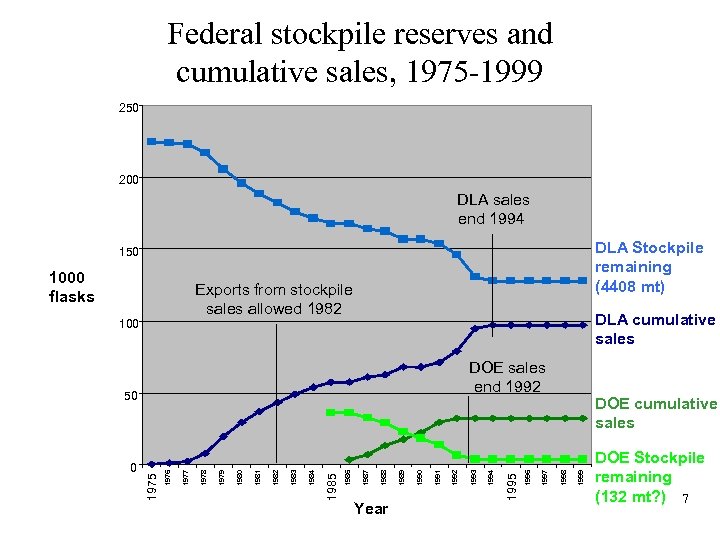 Federal stockpile reserves and cumulative sales, 1975 -1999 250 200 DLA sales end 1994 DLA Stockpile remaining (4408 mt) 150 1000 flasks Exports from stockpile sales allowed 1982 100 DLA cumulative sales 1999 DOE cumulative sales 1998 1997 1996 1994 1992 1991 1990 1995 Year 1989 1988 1987 1986 1985 1984 1983 1982 1981 1980 1979 1978 1977 1976 0 1975 50 1993 DOE sales end 1992 DOE Stockpile remaining (132 mt? ) 7
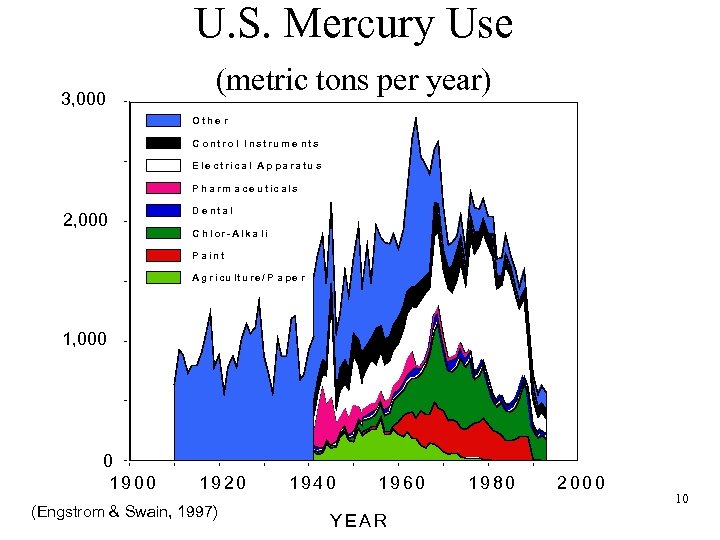
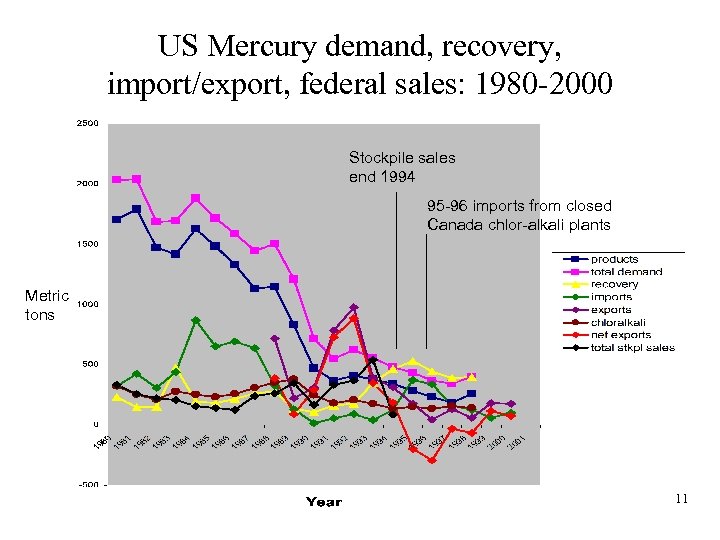
 Mercury use and recovery trends • Product use declined >80% between 1980 and 1995, from ~1700 mt/yr to ~300 mt/yr • Batteries (1000 mt) and paint (300 mt) accounted for most of the 1400 mt decline • Product use now appears stable (why? ? ) • Chloralkali demand dropped >50% during the same time, from 326 mt/yr to 154 mt/yr • Before 1992, recovery and chloralkali demand are closely associated 8
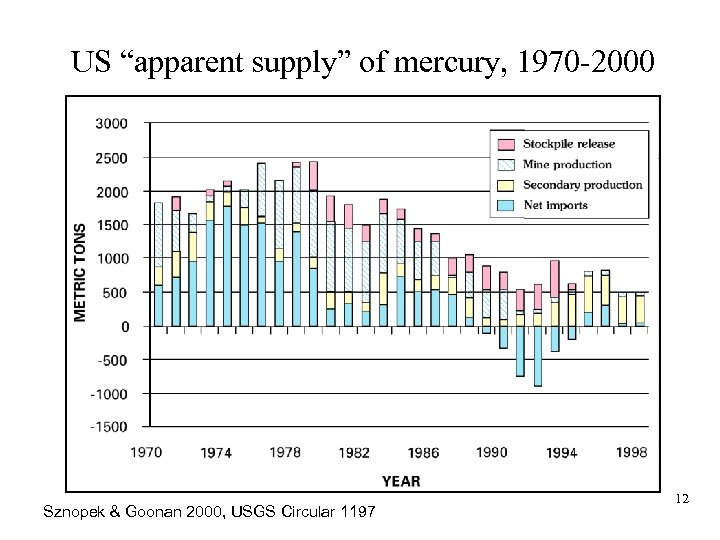
 Mercury use and recovery trends (2) • Recovery increases 2 x-3 x between 1991 and 1998 • Recovery meets or exceeds total domestic demand from 1994 on • Federal stockpile sales accelerated 19891994 as domestic demand dropped and recovery increased • US net exports increased 1989 -1994 • US net importer 1996 -1998, now exporter 9
 U. S. Mercury Use 3, 000 (metric tons per year) O the r C o nt ro l I ns t rum e nt s E le c t r ic a l A p p a r a tu s P h a r m a ce u t ic a ls 2, 000 D e nt a l C h lo r - A lk a li P a in t A g r icu lt u r e / P a p e r 1, 000 0 1900 1920 (Engstrom & Swain, 1997) 1940 1960 YEAR 1980 2000 10
 US Mercury demand, recovery, import/export, federal sales: 1980 -2000 Stockpile sales end 1994 95 -96 imports from closed Canada chlor-alkali plants Metric tons 11
 US “apparent supply” of mercury, 1970 -2000 Sznopek & Goonan 2000, USGS Circular 1197 12
 Federal, state policies; consequences • States are regulating mercury sales, use, and waste management/air releases (also feds) • State and federal government policy is “virtual elimination” of mercury release • Governments, NGOs, others operate mercury waste collection programs…. • Result of all these activities? – product use/demand declines – recovery/recycling increases 13
 Mercury users respond to gov’t policy • Users of mercury respond to gov’t policy by switching to non-mercury products and removing mercury products from service – product use/demand declines – recovery/recycling increases • These users want to know that the mercury being removed from service in response to gov’t policies is not going into another use or export, from which it will be released 14
 Mercury product mfrs respond to gov’t • Mfrs of mercury-containing products respond by developing and selling nonmercury products; some take back old mercury products – product use/demand declines – recovery/recycling increases • But use has apparently stabilized - some mfrs and use sectors can’t or won’t change 15
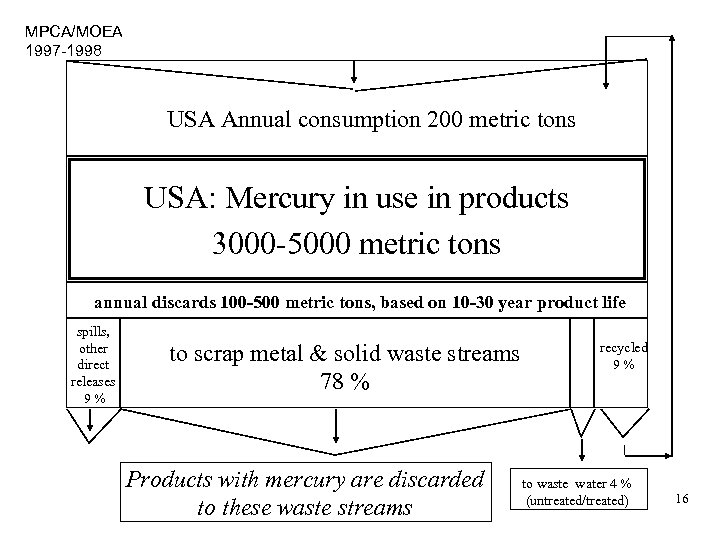 MPCA/MOEA 1997 -1998 USA Annual consumption 200 metric tons USA: Mercury in use in products 3000 -5000 metric tons annual discards 100 -500 metric tons, based on 10 -30 year product life spills, other direct releases 9% to scrap metal & solid waste streams 78 % Products with mercury are discarded to these waste streams recycled 9% to waste water 4 % (untreated/treated) 16
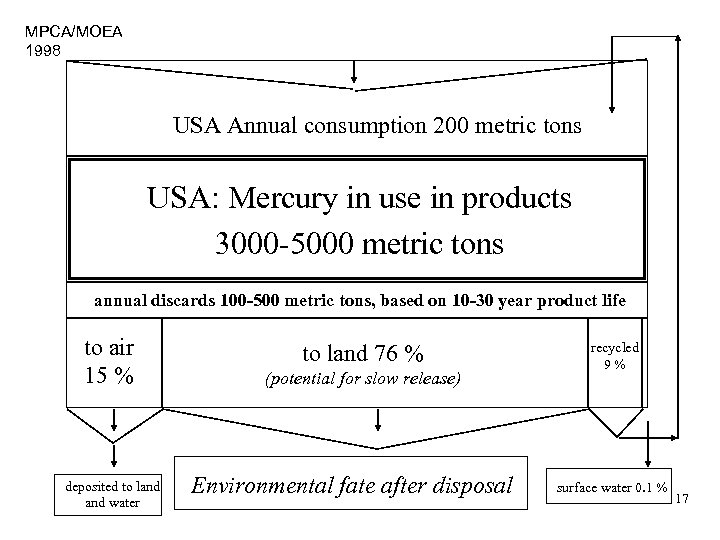 MPCA/MOEA 1998 USA Annual consumption 200 metric tons USA: Mercury in use in products 3000 -5000 metric tons annual discards 100 -500 metric tons, based on 10 -30 year product life to air 15 % deposited to land water to land 76 % (potential for slow release) Environmental fate after disposal recycled 9% surface water 0. 1 % 17
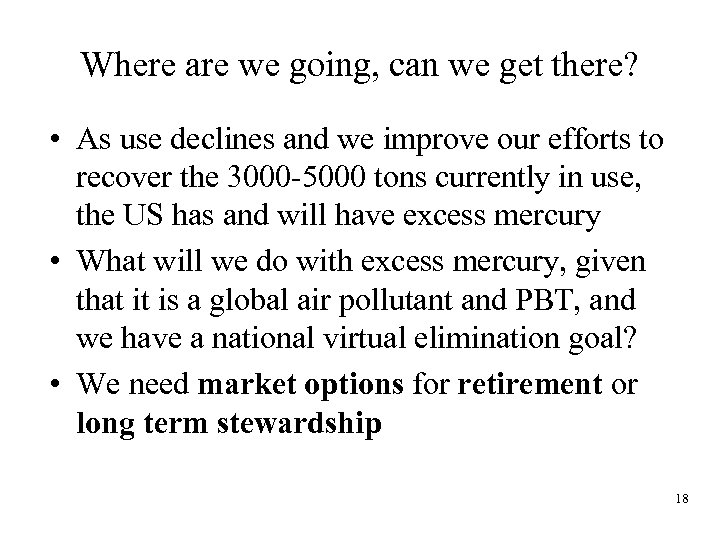 Where are we going, can we get there? • As use declines and we improve our efforts to recover the 3000 -5000 tons currently in use, the US has and will have excess mercury • What will we do with excess mercury, given that it is a global air pollutant and PBT, and we have a national virtual elimination goal? • We need market options for retirement or long term stewardship 18
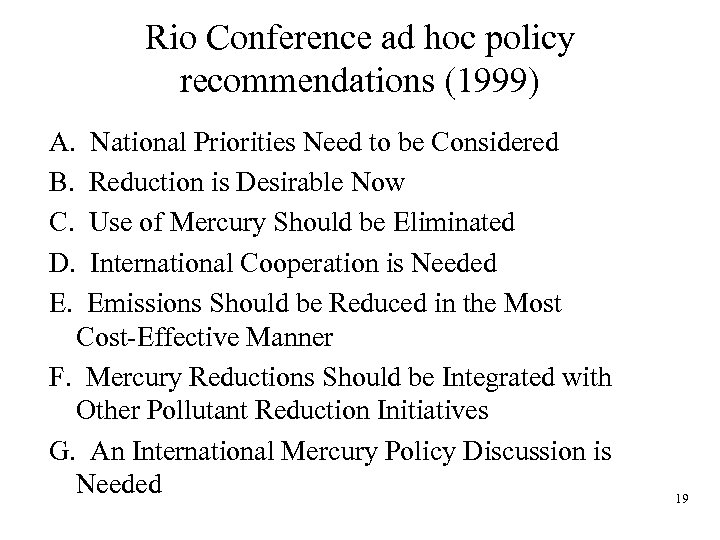 Rio Conference ad hoc policy recommendations (1999) A. National Priorities Need to be Considered B. Reduction is Desirable Now C. Use of Mercury Should be Eliminated D. International Cooperation is Needed E. Emissions Should be Reduced in the Most Cost-Effective Manner F. Mercury Reductions Should be Integrated with Other Pollutant Reduction Initiatives G. An International Mercury Policy Discussion is Needed 19
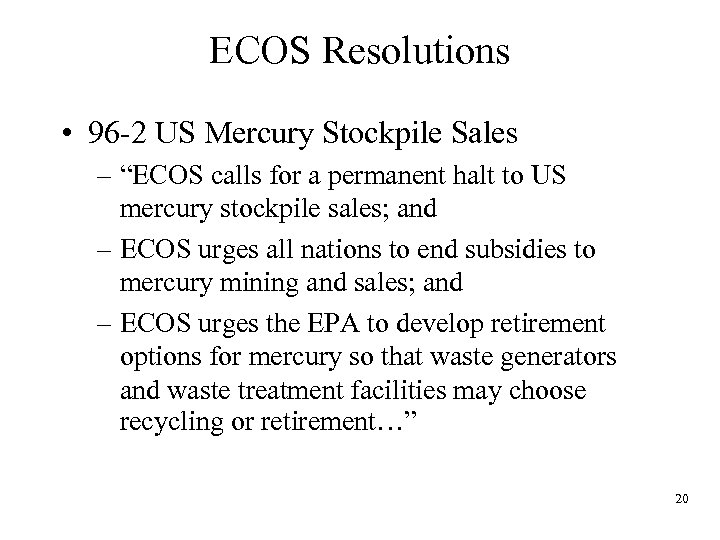 ECOS Resolutions • 96 -2 US Mercury Stockpile Sales – “ECOS calls for a permanent halt to US mercury stockpile sales; and – ECOS urges all nations to end subsidies to mercury mining and sales; and – ECOS urges the EPA to develop retirement options for mercury so that waste generators and waste treatment facilities may choose recycling or retirement…” 20
 ECOS Resolutions • 01 -3 Mercury Retirement and Stockpiling – “ECOS recognizes that long-term storage of mercury is a federal responsibility. ” – “ECOS requests that the President. . . issue a directive to federal agencies, including the DOD and the EPA. . . to recommend a plan to manage the long-term storage of mercury by January 1, 2003, and implement such plan. ” ? What does “federal responsibility” mean? ? What is “long-term storage? ” 21
 Where does our mercury go, and does it come back to us? • Major export destinations for US mercury are India and China – Kodaikanal Hindustan Lever Thermometer Co. is “alleged” to have dumped over 7 tons of mercury-contaminated waste in several locations; Faichney Medical was primary/sole US marketer of their products – Several companies in China make mercury devices or chemicals for export, including these three…. 22
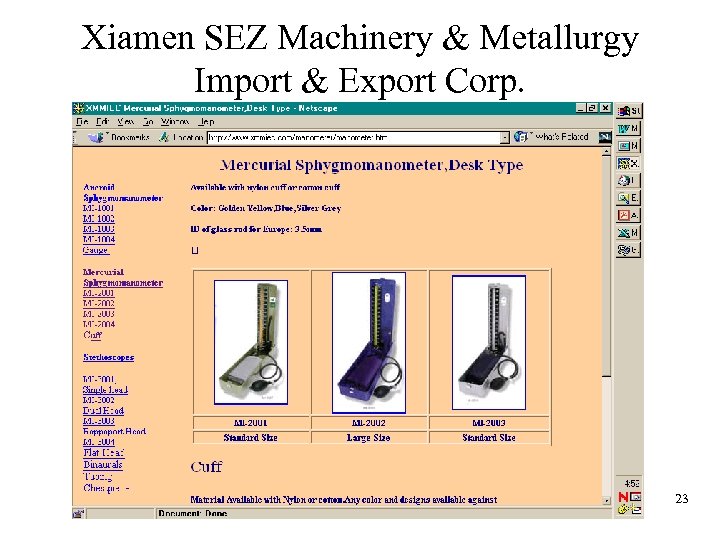 Xiamen SEZ Machinery & Metallurgy Import & Export Corp. 23
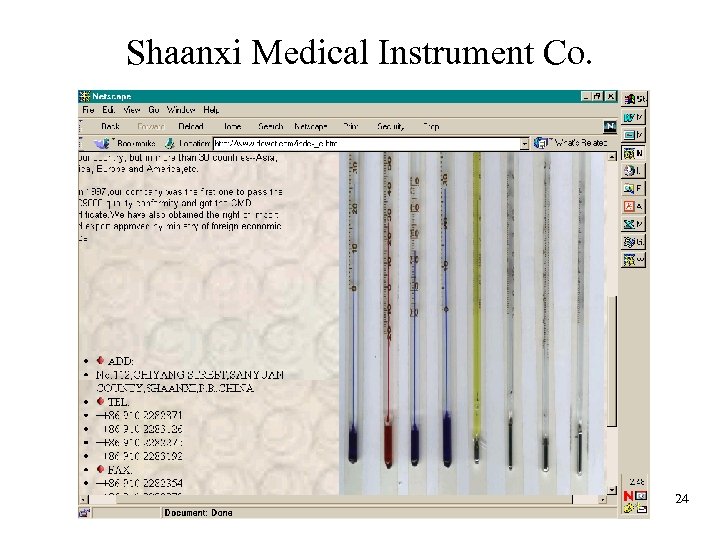 Shaanxi Medical Instrument Co. 24
 A distributor of mercuric compounds including mercurochrome, PMA, PMN, thimerosal, mercuric oxides 25
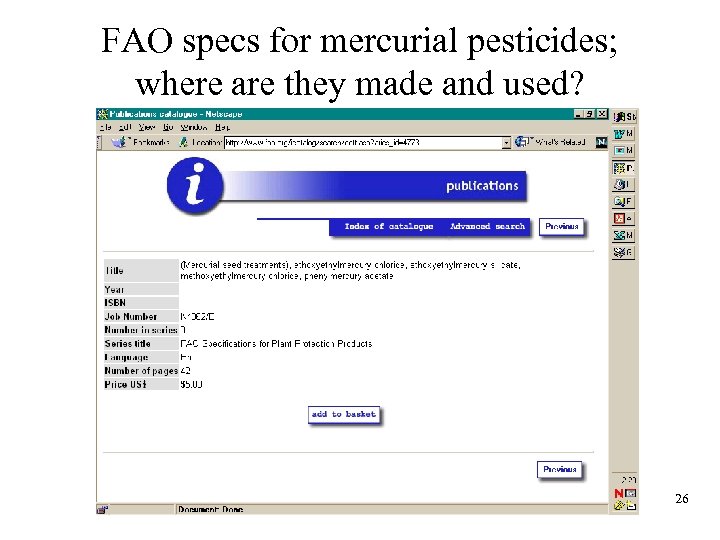 FAO specs for mercurial pesticides; where are they made and used? 26
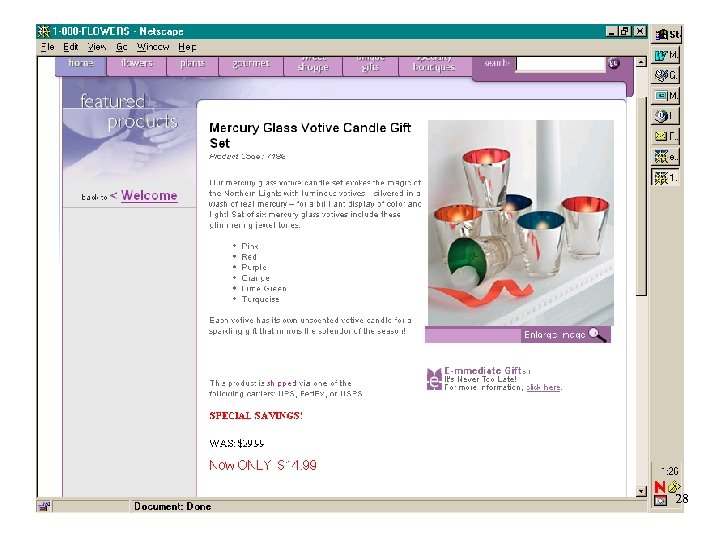
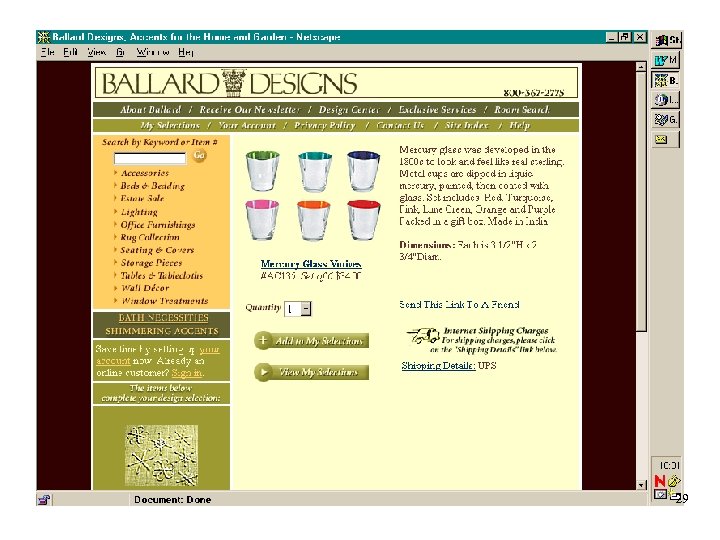
 …but not all products can be considered necessities or an acceptable use of mercury… Is US mercury used in this non-essential product imported from India? 27
 28
28
 29
29
 Acknowledgements Data in this presentation is from a variety of sources, including: • USBM & USGS publications & staff • Engineering and Mining Journal, 1974 -2000 • National Geographic, October 1972 • Mercury refiners and processors • Mercury product manufacturers • US DOD, DOE, EPA • State and local governments 30
 Mercuric pesticides • Food contact use banned in US in 1969 – Primarily anti-mold orchard and fruit uses • Seed treatment use banned around same time • Paper mill slimicide use ended 1960 -1970 • Last US product registrations withdrawn by mfrs in ~1992 when EPA requires safety & efficacy studies: – turf mold, outdoor fabric treatment, fresh cut wood mold treatment, paint 31
 Paint • Registered pesticide(s) used as mildewcides and in-can preservatives (latex and oil) • EPA sought to ban mercury in paint in 1976 but industry fought proposal and ban did not take effect • Poisoning incident in Michigan in ~1990 finally led to phase-out – product had over 4 x allowed level, air levels in house poisoned family 32
 Batteries • Largest US product use category until 1990 • Alkaline batteries were up to 1% mercury • 1990 Minnesota Legislature proposed mercury phaseout or manufacturer takeback: – mfrs opposed, then one agreed to phaseout and first US phaseout law passed • Mercuric oxide subject to manufacturer takeback, then state/federal phaseout requirements as substitutes developed 33
 Pharmaceuticals • Most OTC and prescription pharmaceutical uses phased out by early 1970’s as ‘unsafe’ • Mercurial topical anti-microbials determined by FDA to be ‘unsafe’ in mid 1980’s but remain on the market today • Mercurial preservatives remain in several types of OTC/prescription products • Vaccine preservatives scrutinized and phased out of domestic use 1999 -2001 34
 Sales and use restrictions • “CONEG” packaging legislation restricts mercury content of packaging to level that effectively stops intentional introduction of mercury to any packaging material (1991) • Minnesota legislation prohibits sale of inks, dyes, pigments, paints, and fungicides containing mercury (1991) 35
 Sales and use restrictions, other • Minnesota law prohibits sale of toys and games containing mercury (1992) • Wisconsin laws/rules prohibit use of mercury in children’s products • Other laws prohibit disposal; require sales reporting, product labeling, phaseout, takeback, etc. 36
 Mercury phaseout decisions • One mercury displacement relay mfr stopped production in mid-1990 s • Many large retailers stopped selling mercury fever thermometers 2000 -on • EPA-AHA MOU: virtual elimination • Industrial/lab thermometer mfrs are introducing new non-mercury products • NIST, ASTM, others are developing and certifying non-mercury devices and standards 37
 Thermostats • Oregon and Maine laws prohibit the sale of mercury thermostats after 2006 • February 2002 news article reports that Honeywell will stop making mercury thermostats • Honeywell later says article not accurate; they have no plans to stop making mercury thermostats • Est’d discards: 4. 5 million/yr; 23. 6 mt/yr 38