


 Скачать презентацию Mercury Monitoring Update for the Utility MACT Working
b6746775fefd80eccdb24faf976fbeb0.ppt
- Количество слайдов: 22
 Mercury Monitoring Update for the Utility MACT Working Group Barrett Parker OAQPS 03/04/03
 Overview • • • Purpose Background Phase II Planned Phase III
 Purpose • Explain – Where we are – How we got here – Where we intend to go • EPA’s goal – Options for continuous mercury monitoring • Maximum flexibility • Minimum cost
 Background Partners • External – NIST – DOE – ETV – EPRI
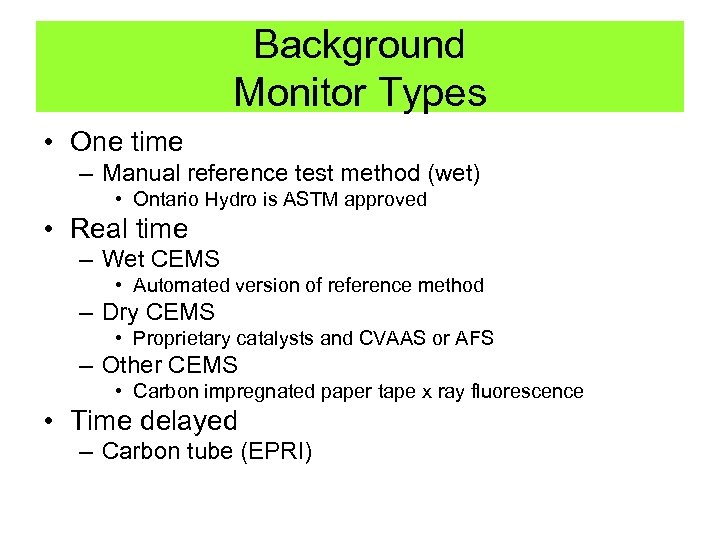 Background Monitor Types • One time – Manual reference test method (wet) • Ontario Hydro is ASTM approved • Real time – Wet CEMS • Automated version of reference method – Dry CEMS • Proprietary catalysts and CVAAS or AFS – Other CEMS • Carbon impregnated paper tape x ray fluorescence • Time delayed – Carbon tube (EPRI)
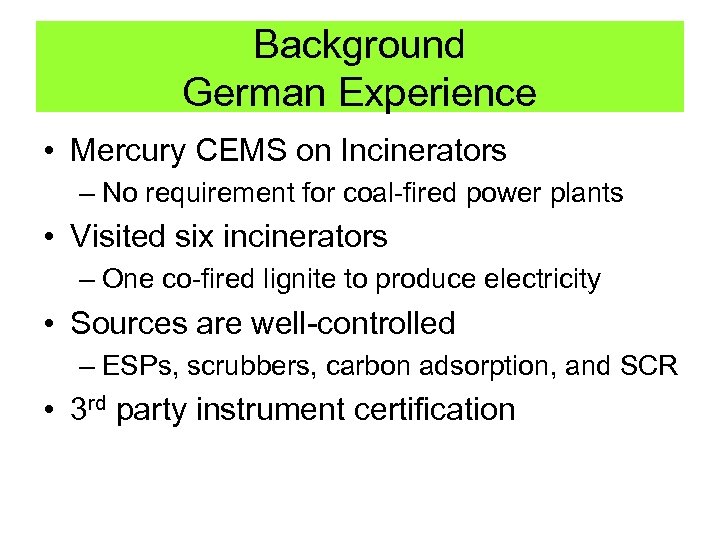 Background German Experience • Mercury CEMS on Incinerators – No requirement for coal-fired power plants • Visited six incinerators – One co-fired lignite to produce electricity • Sources are well-controlled – ESPs, scrubbers, carbon adsorption, and SCR • 3 rd party instrument certification
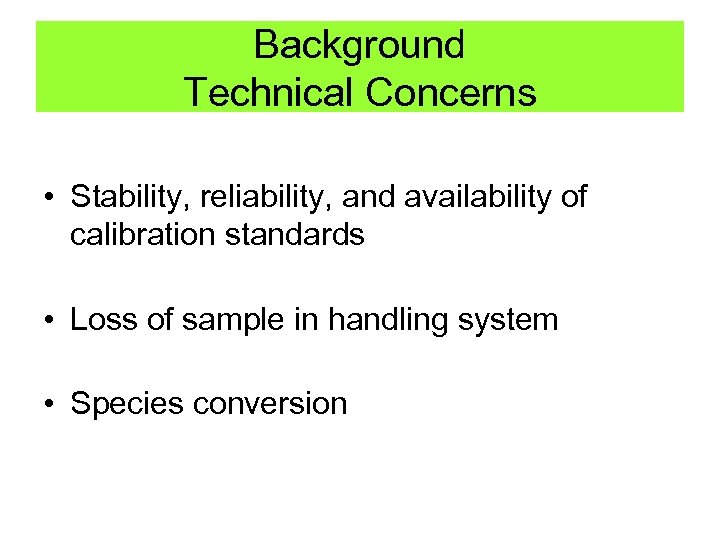 Background Technical Concerns • Stability, reliability, and availability of calibration standards • Loss of sample in handling system • Species conversion
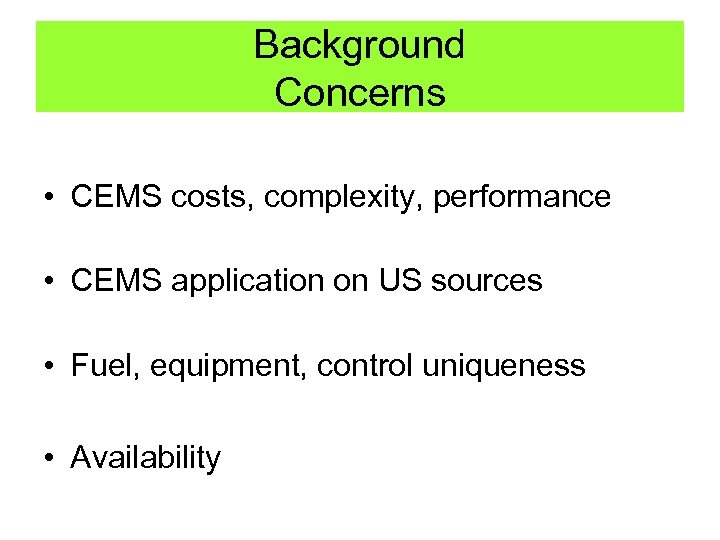 Background Concerns • CEMS costs, complexity, performance • CEMS application on US sources • Fuel, equipment, control uniqueness • Availability
 Background Work plan • Phase I - summer 01 – Test 2 German certified CEMS at minimally controlled coal-fired power plant • Phase II - fall 02 – Test 7 CEMS and EPRI’s carbon tube at minimally controlled coal-fired power plant • Phase III - spring 03 to spring 04 – Test most promising CEMS and EPRI’s carbon tube at well controlled coal-fired power plant(s)
 Phase I Description • Installed 2 German certified dry CEMS at a full scale, representative power plant – 140 MW PC with cold-side ESP firing bituminous – Plant type provides most challenge to CEMS • Collected data over 5 months with 2 Relative Accuracy Test Audits (RATAs) – Total mercury using Ontario Hydro • Included ORD’s wet CEMS
 Phase I Initial RATA
 Phase I Final RATA
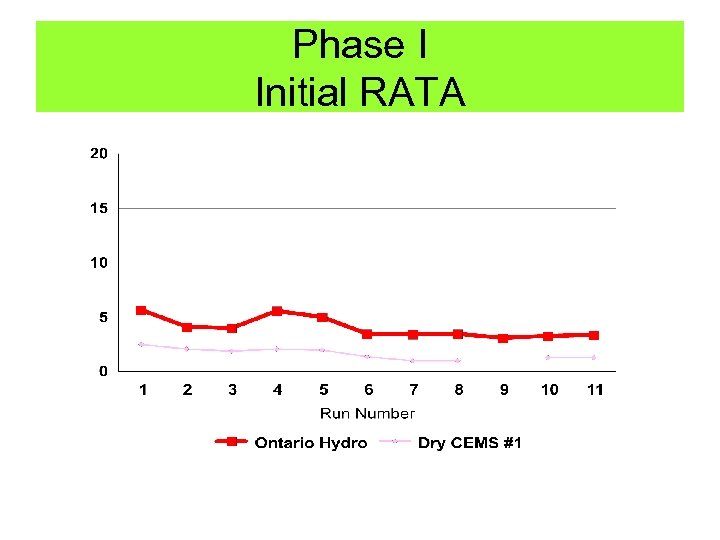
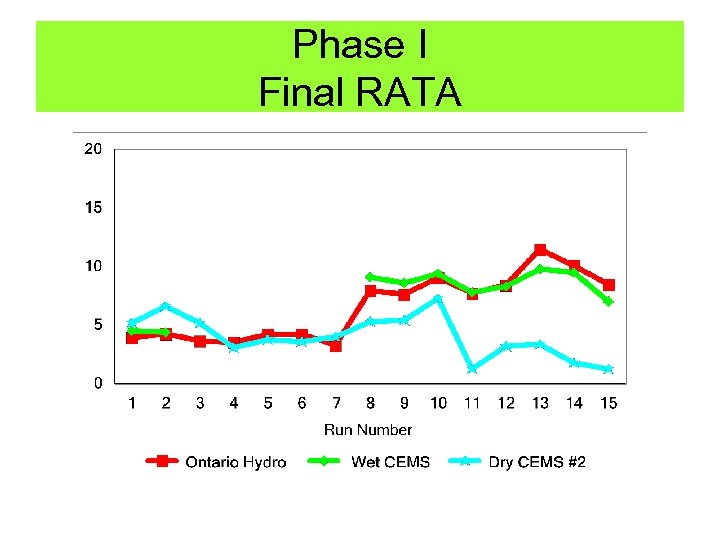
 Phase I Results • Collected evidence of stable, reliable calibration standards – Elemental and ionic • Demonstrated no mercury loss in sample handling system • Showed wet CEMS met draft RATA criteria
 Phase II Description • Continued with 2 Phase I CEMS – Modified dry CEMS converter – Relocated wet CEMS to trailer • Tested 4 new CEMS – 3 with differing dry conversion systems – 1 with plasma emission spectroscopy • Included EPRI’s carbon tube sampler • Gathered reliability and operational data
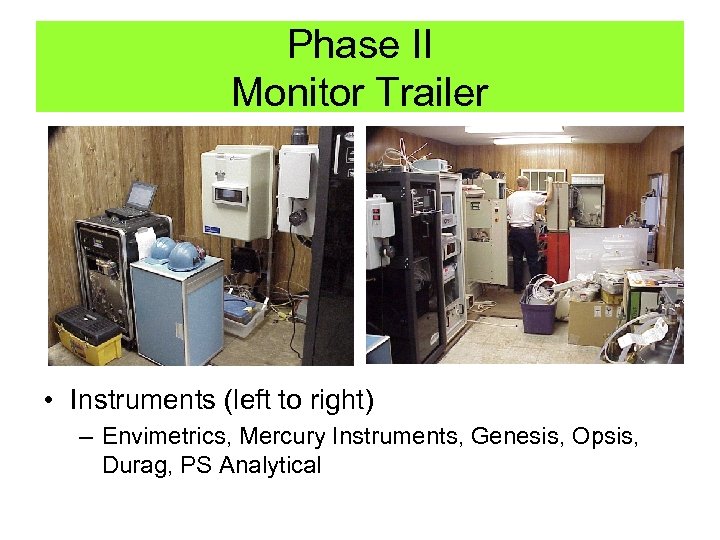 Phase II Monitor Trailer • Instruments (left to right) – Envimetrics, Mercury Instruments, Genesis, Opsis, Durag, PS Analytical
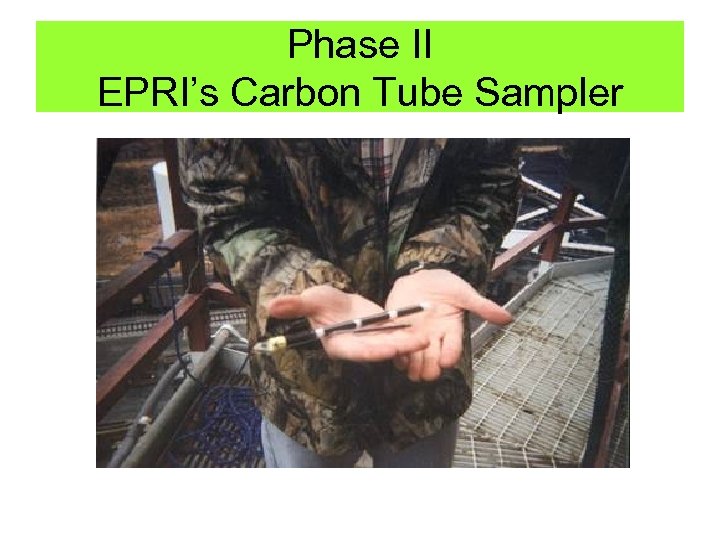 Phase II EPRI’s Carbon Tube Sampler
 Phase II Results (ready spring 03) • Reliability, cost, and operational data over 3 months • Analysis of – Differing approaches • Plasma emission spectroscopy and X ray fluorescence – Differing interference minimization • Larger volume systems and manual response correction
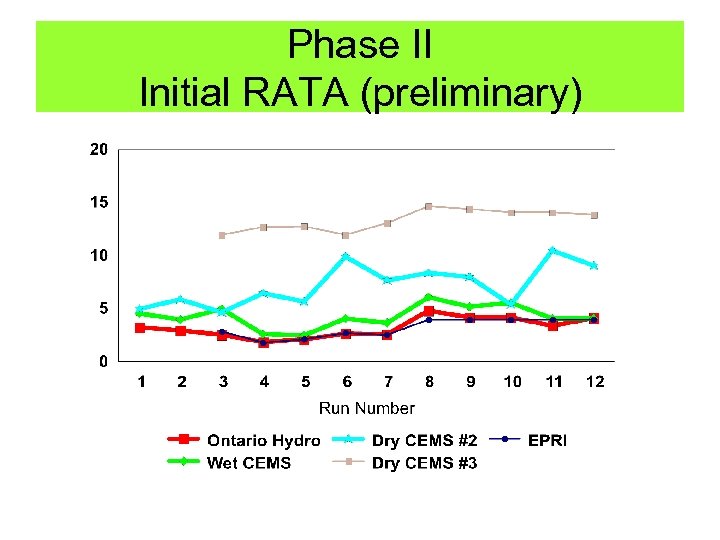 Phase II Initial RATA (preliminary)
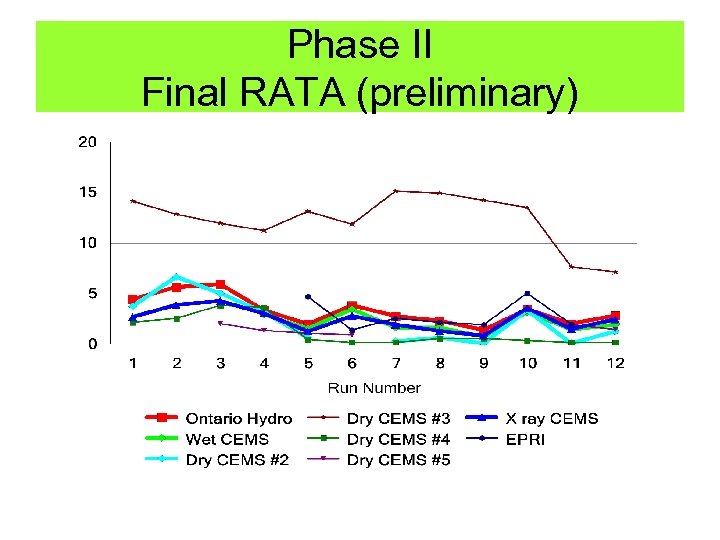 Phase II Final RATA (preliminary)
 Planned Phase III • Determine low level, co-pollutant impacts (by Jun 03) • Manage NIST standards development (by Jan 06)
 Planned Phase III • Evaluate CEMS at better controlled full scale power plant (by Aug 03) – Dry FGD with SCR and baghouse firing subbituminous coal – Evaluate carbon tube sampler with EPRI
 Planned Phase III • Evaluate CEMS at full scale power plants (by Jan 04) – Wet scrubber firing bituminous coal or – Uncontrolled unit firing subbituminous coal