


 Скачать презентацию Mental Health Care for Older Adults in Primary
93207a47be75fa3ecfe6598f8f854e62.ppt
- Количество слайдов: 43
 Mental Health Care for Older Adults in Primary Care University of Iowa March 29, 2006 Martha L. Bruce, Ph. D. , M. P. H. Professor of Sociology in Psychiatry Weill Medical College of Cornell University
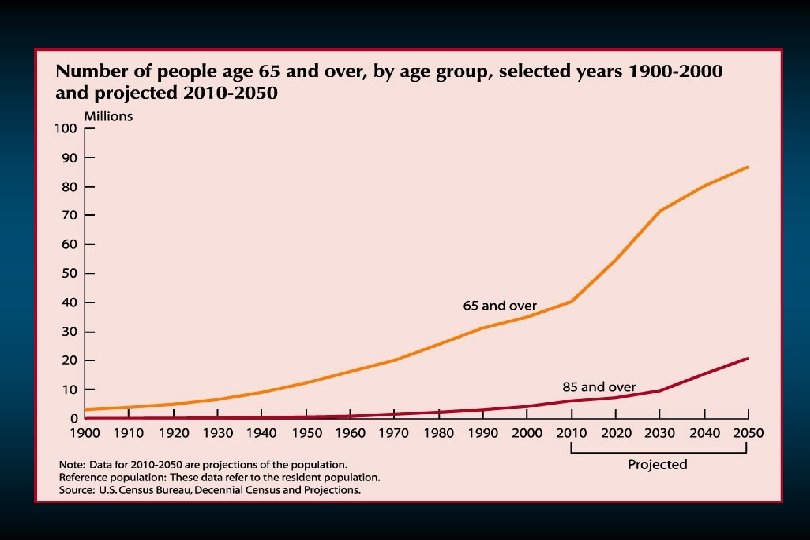
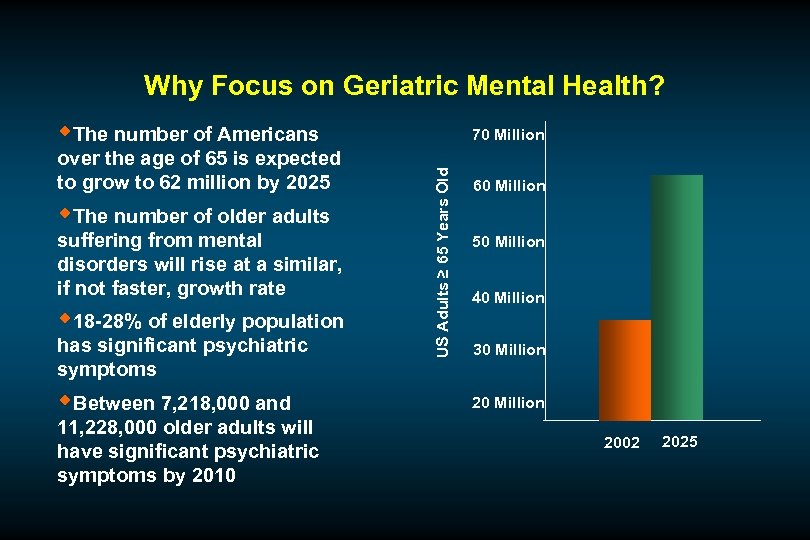 Why Focus on Geriatric Mental Health? w. The number of Americans w. The number of older adults suffering from mental disorders will rise at a similar, if not faster, growth rate w 18 -28% of elderly population has significant psychiatric symptoms w. Between 7, 218, 000 and 11, 228, 000 older adults will have significant psychiatric symptoms by 2010 US Adults ≥ 65 Years Old over the age of 65 is expected to grow to 62 million by 2025 70 Million 60 Million 50 Million 40 Million 30 Million 2002 2025
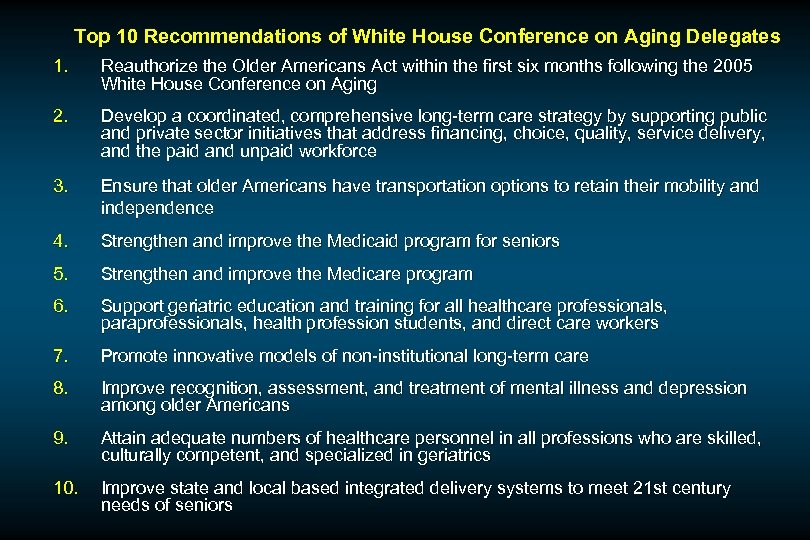 Top 10 Recommendations of White House Conference on Aging Delegates 1. Reauthorize the Older Americans Act within the first six months following the 2005 White House Conference on Aging 2. Develop a coordinated, comprehensive long-term care strategy by supporting public and private sector initiatives that address financing, choice, quality, service delivery, and the paid and unpaid workforce 3. Ensure that older Americans have transportation options to retain their mobility and independence 4. Strengthen and improve the Medicaid program for seniors 5. Strengthen and improve the Medicare program 6. Support geriatric education and training for all healthcare professionals, paraprofessionals, health profession students, and direct care workers 7. Promote innovative models of non-institutional long-term care 8. Improve recognition, assessment, and treatment of mental illness and depression among older Americans 9. Attain adequate numbers of healthcare personnel in all professions who are skilled, culturally competent, and specialized in geriatrics 10. Improve state and local based integrated delivery systems to meet 21 st century needs of seniors
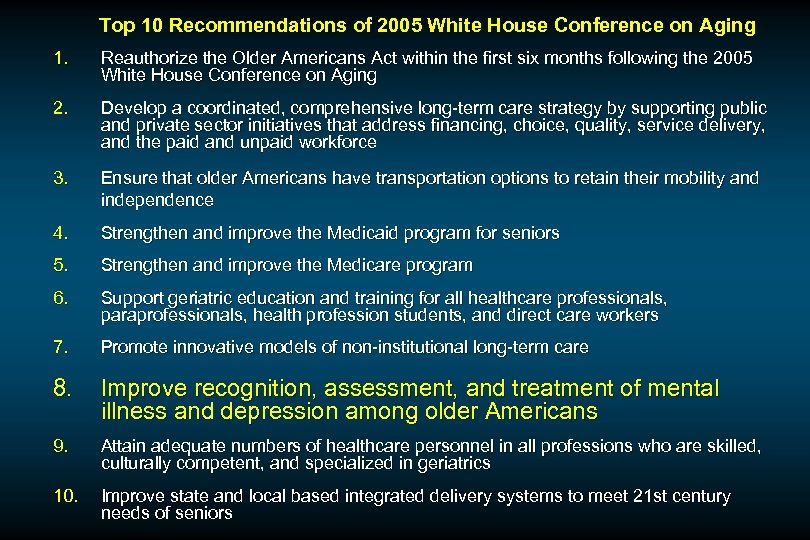 Top 10 Recommendations of 2005 White House Conference on Aging 1. Reauthorize the Older Americans Act within the first six months following the 2005 White House Conference on Aging 2. Develop a coordinated, comprehensive long-term care strategy by supporting public and private sector initiatives that address financing, choice, quality, service delivery, and the paid and unpaid workforce 3. Ensure that older Americans have transportation options to retain their mobility and independence 4. Strengthen and improve the Medicaid program for seniors 5. Strengthen and improve the Medicare program 6. Support geriatric education and training for all healthcare professionals, paraprofessionals, health profession students, and direct care workers 7. Promote innovative models of non-institutional long-term care 8. Improve recognition, assessment, and treatment of mental illness and depression among older Americans 9. Attain adequate numbers of healthcare personnel in all professions who are skilled, culturally competent, and specialized in geriatrics 10. Improve state and local based integrated delivery systems to meet 21 st century needs of seniors
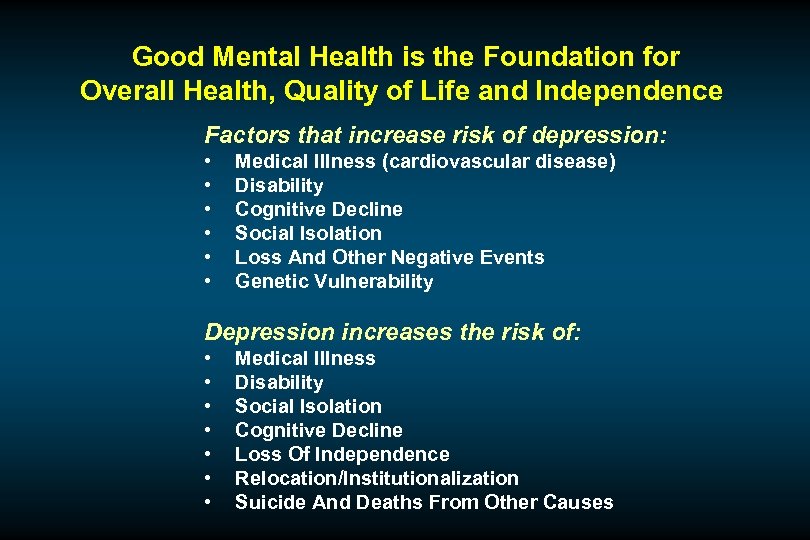 Good Mental Health is the Foundation for Overall Health, Quality of Life and Independence Factors that increase risk of depression: • • • Medical Illness (cardiovascular disease) Disability Cognitive Decline Social Isolation Loss And Other Negative Events Genetic Vulnerability Depression increases the risk of: • • Medical Illness Disability Social Isolation Cognitive Decline Loss Of Independence Relocation/Institutionalization Suicide And Deaths From Other Causes
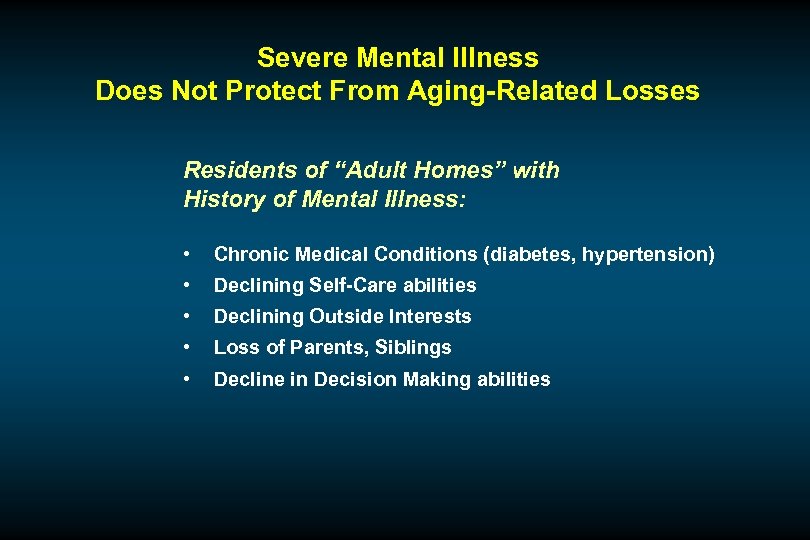 Severe Mental Illness Does Not Protect From Aging-Related Losses Residents of “Adult Homes” with History of Mental Illness: • Chronic Medical Conditions (diabetes, hypertension) • Declining Self-Care abilities • Declining Outside Interests • Loss of Parents, Siblings • Decline in Decision Making abilities
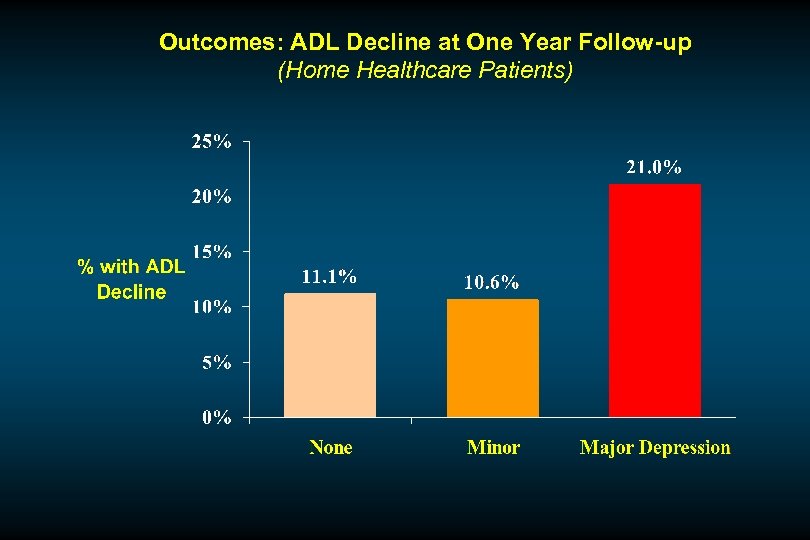 Outcomes: ADL Decline at One Year Follow-up (Home Healthcare Patients)
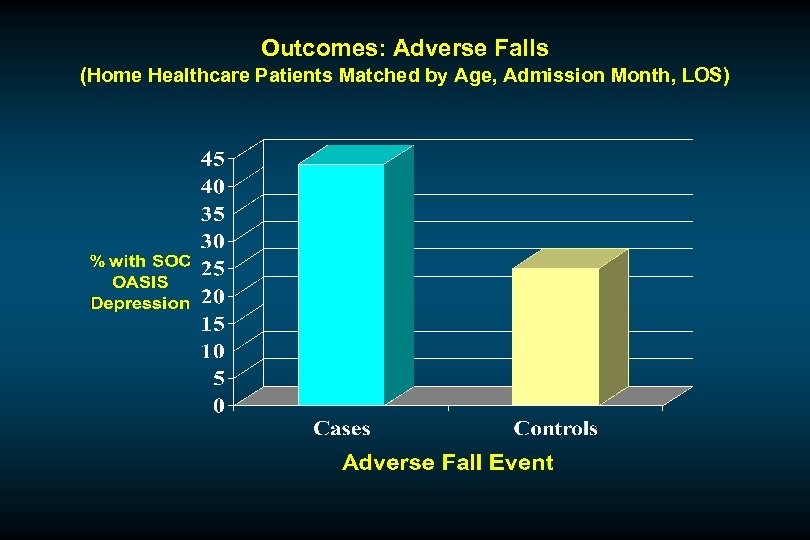 Outcomes: Adverse Falls (Home Healthcare Patients Matched by Age, Admission Month, LOS)
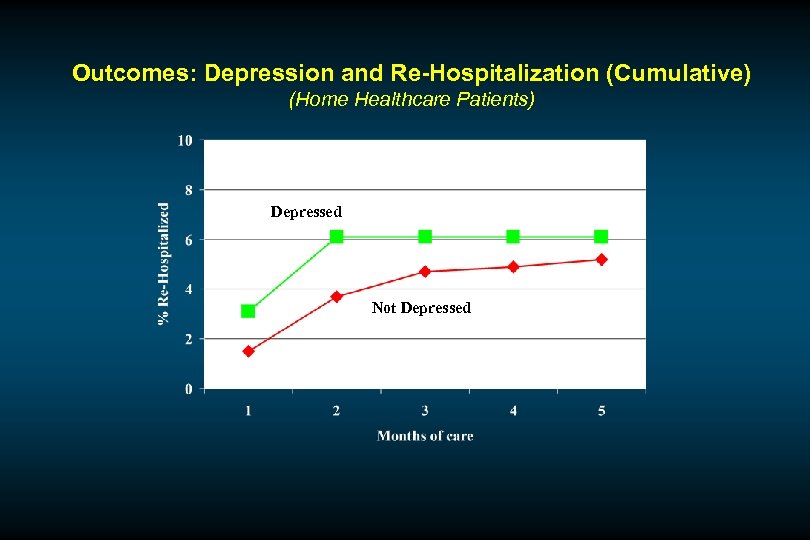 Outcomes: Depression and Re-Hospitalization (Cumulative) (Home Healthcare Patients) Depressed Not Depressed
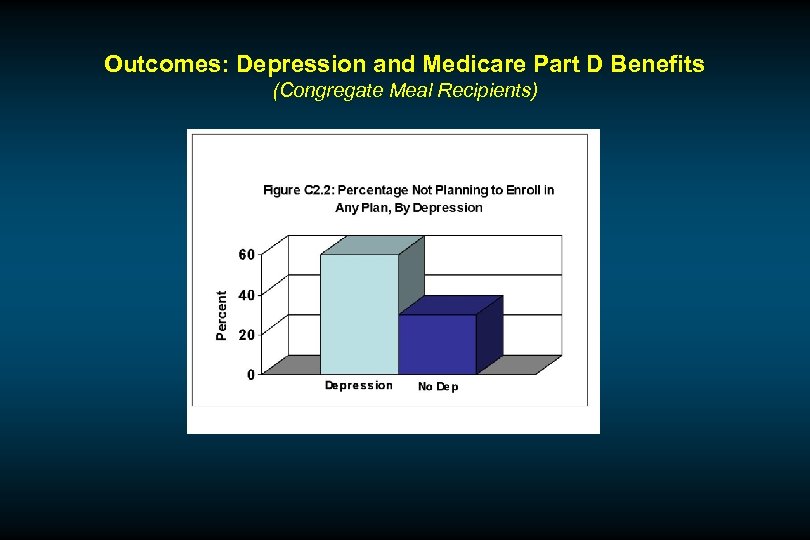 Outcomes: Depression and Medicare Part D Benefits (Congregate Meal Recipients)
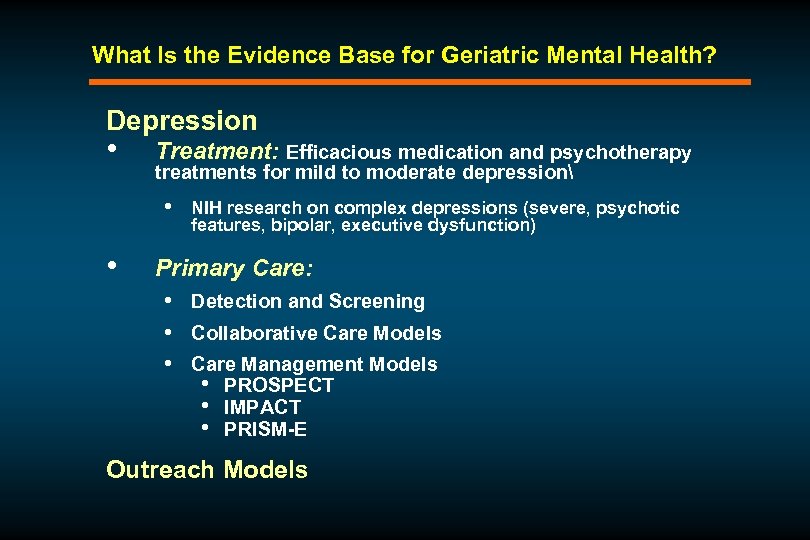 What Is the Evidence Base for Geriatric Mental Health? Depression • Treatment: Efficacious medication and psychotherapy treatments for mild to moderate depression • • NIH research on complex depressions (severe, psychotic features, bipolar, executive dysfunction) Primary Care: • Detection and Screening • Collaborative Care Models • Care Management Models • • • PROSPECT IMPACT PRISM-E Outreach Models
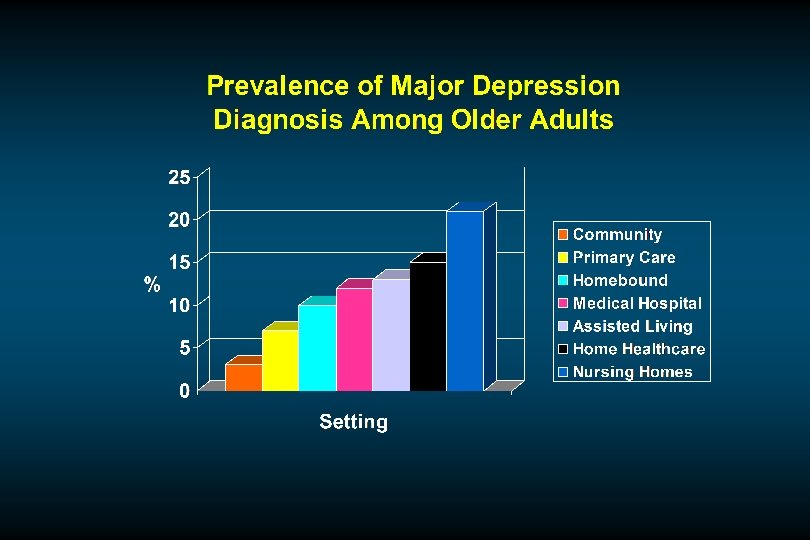
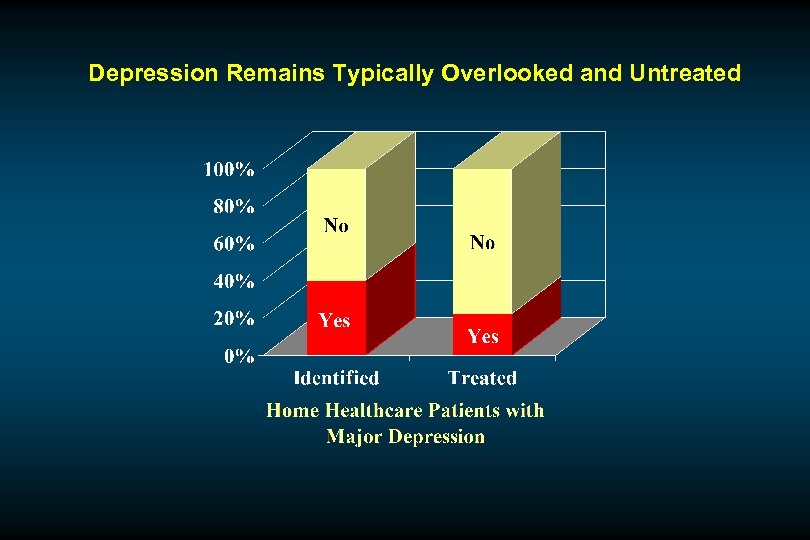 Depression Remains Typically Overlooked and Untreated
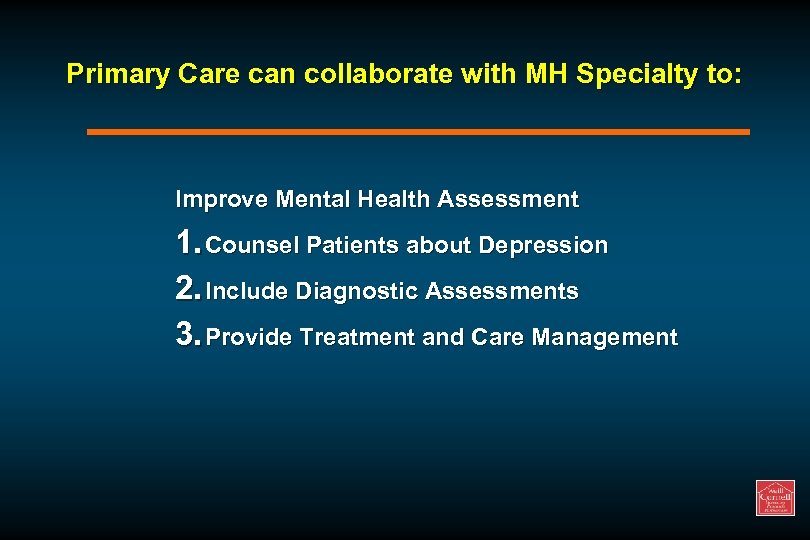 Primary Care can collaborate with MH Specialty to: Improve Mental Health Assessment 1. Counsel Patients about Depression 2. Include Diagnostic Assessments 3. Provide Treatment and Care Management
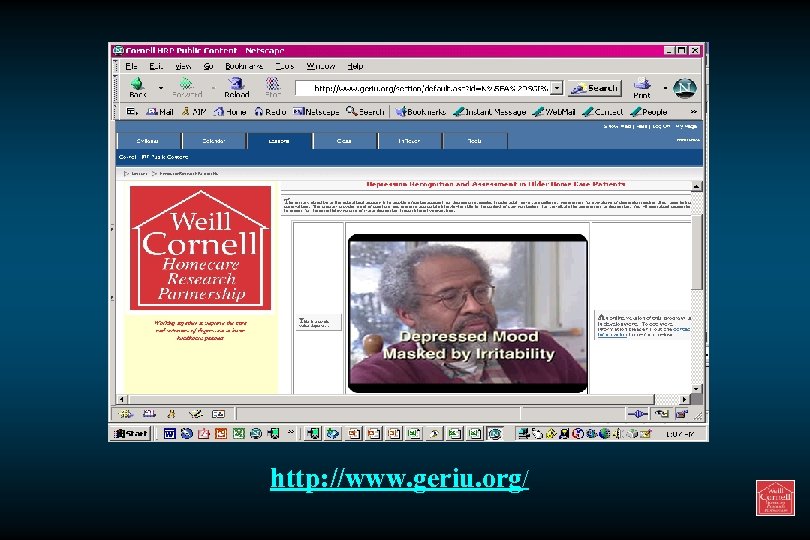
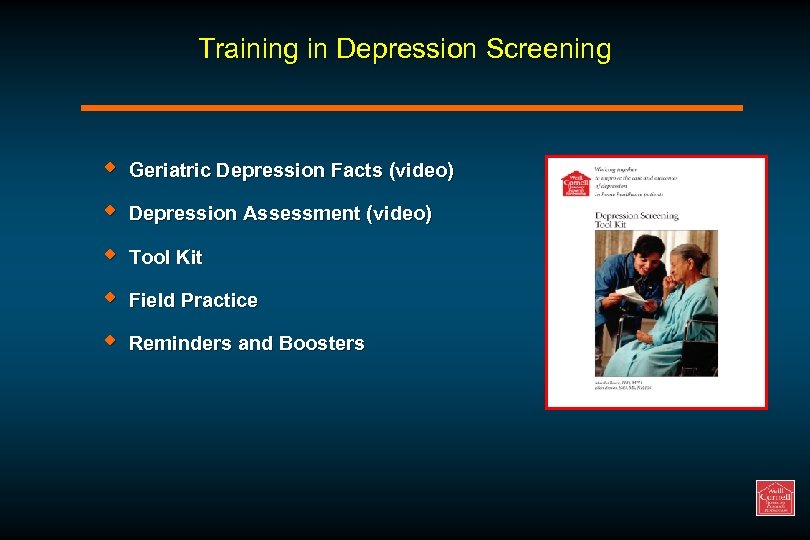 Training in Depression Screening w Geriatric Depression Facts (video) w Depression Assessment (video) w Tool Kit w Field Practice w Reminders and Boosters
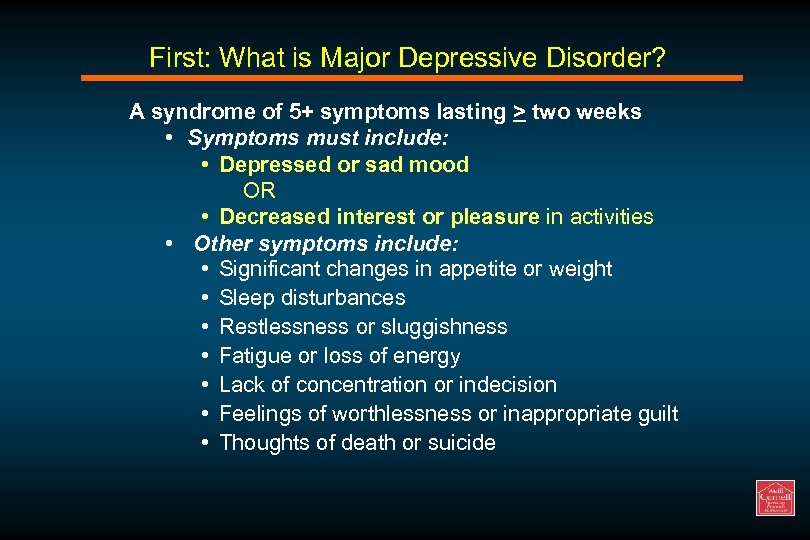 First: What is Major Depressive Disorder? A syndrome of 5+ symptoms lasting > two weeks • Symptoms must include: • Depressed or sad mood OR • Decreased interest or pleasure in activities • Other symptoms include: • Significant changes in appetite or weight • Sleep disturbances • Restlessness or sluggishness • Fatigue or loss of energy • Lack of concentration or indecision • Feelings of worthlessness or inappropriate guilt • Thoughts of death or suicide
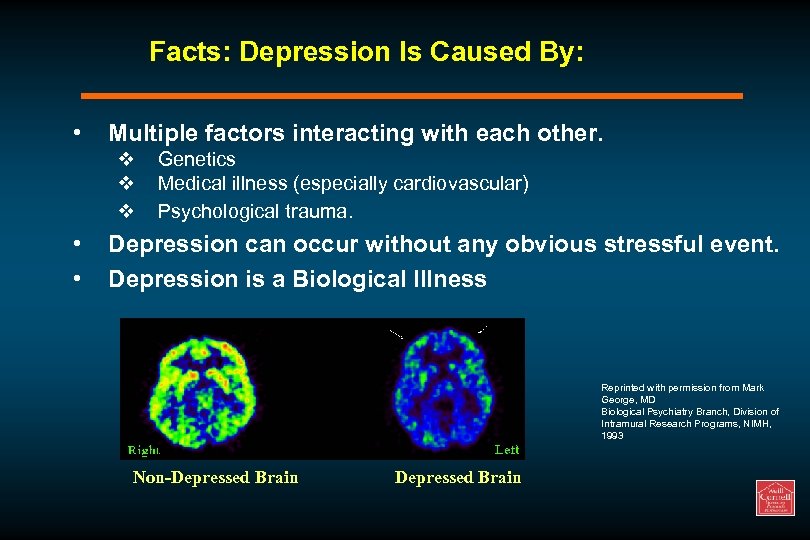 Facts: Depression Is Caused By: • Multiple factors interacting with each other. v v v • • Genetics Medical illness (especially cardiovascular) Psychological trauma. Depression can occur without any obvious stressful event. Depression is a Biological Illness Reprinted with permission from Mark George, MD Biological Psychiatry Branch, Division of Intramural Research Programs, NIMH, 1993 Non-Depressed Brain
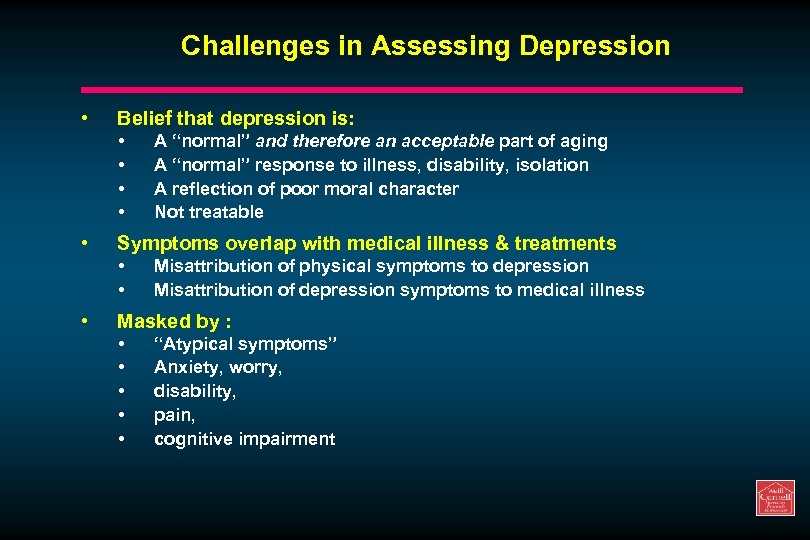 Challenges in Assessing Depression • Belief that depression is: • • • Symptoms overlap with medical illness & treatments • • • A “normal” and therefore an acceptable part of aging A “normal” response to illness, disability, isolation A reflection of poor moral character Not treatable Misattribution of physical symptoms to depression Misattribution of depression symptoms to medical illness Masked by : • • • “Atypical symptoms” Anxiety, worry, disability, pain, cognitive impairment
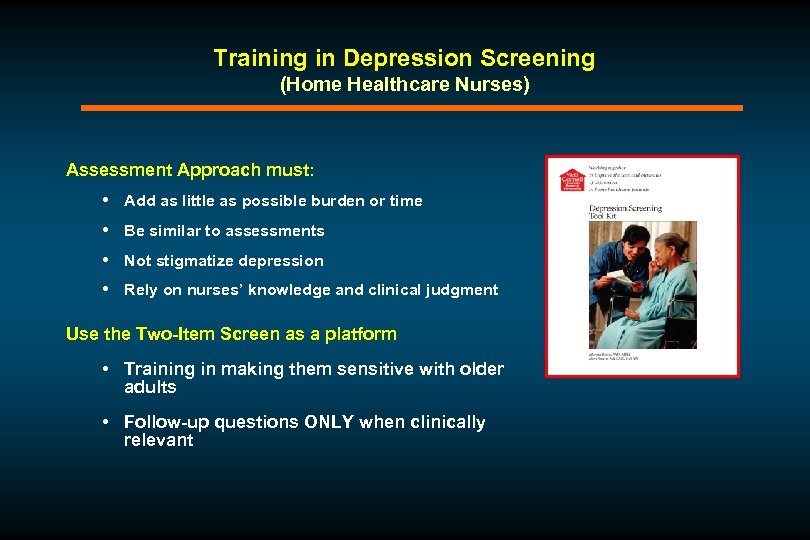 Training in Depression Screening (Home Healthcare Nurses) Assessment Approach must: • Add as little as possible burden or time • Be similar to assessments • Not stigmatize depression • Rely on nurses’ knowledge and clinical judgment Use the Two-Item Screen as a platform • Training in making them sensitive with older adults • Follow-up questions ONLY when clinically relevant
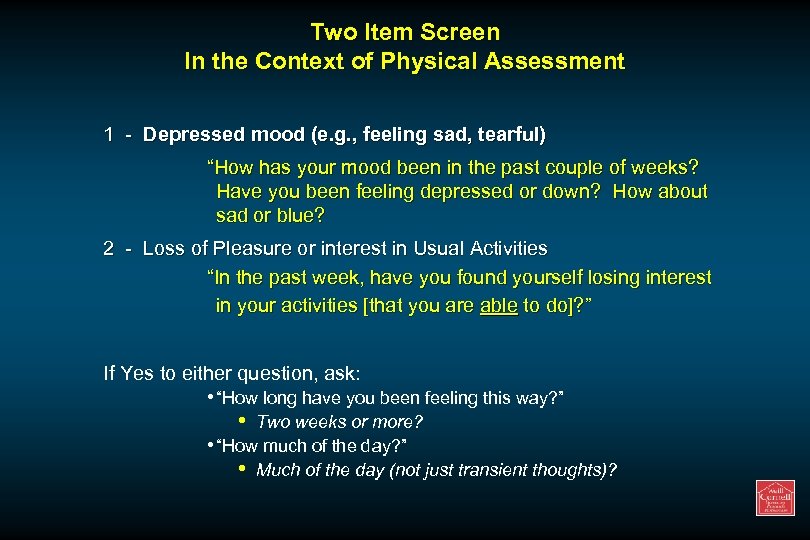 Two Item Screen In the Context of Physical Assessment 1 - Depressed mood (e. g. , feeling sad, tearful) “How has your mood been in the past couple of weeks? Have you been feeling depressed or down? How about sad or blue? 2 - Loss of Pleasure or interest in Usual Activities “In the past week, have you found yourself losing interest in your activities [that you are able to do]? ” If Yes to either question, ask: • “How long have you been feeling this way? ” • Two weeks or more? • “How much of the day? ” • Much of the day (not just transient thoughts)?
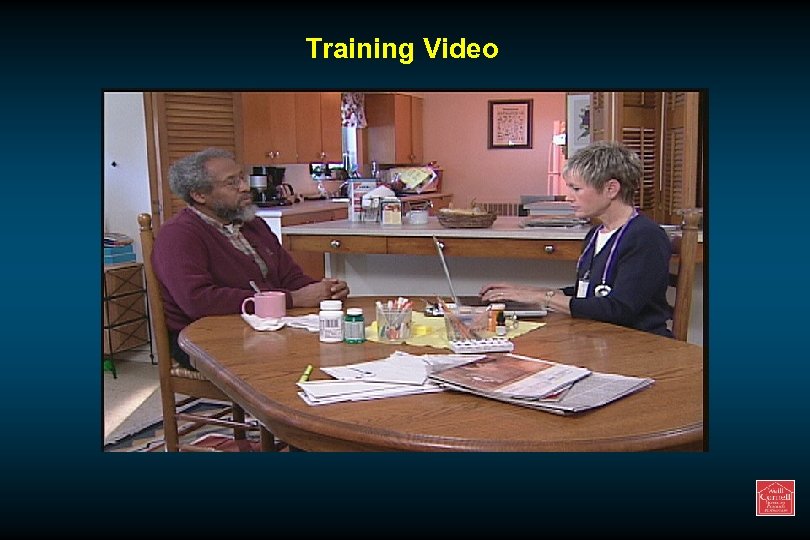 Training Video
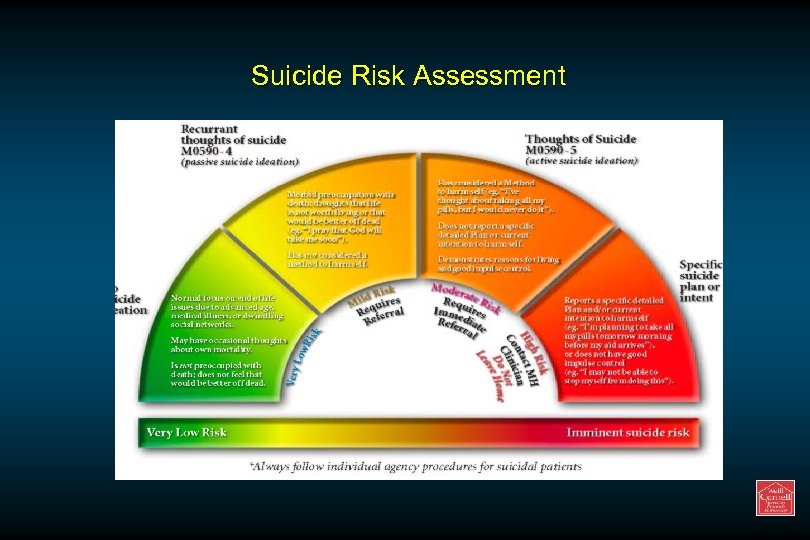 Suicide Risk Assessment
 Interacting with Depressed Patients REASSESS symptoms at each visit. If symptoms persist after a month of treatment, contact physician REASSURE patients that being depressed is not their fault SUPPORT patients by reassuring them that they can always call on you or other health care provide for help and support ENCOURAGE patients to engage in activities that are pleasant to them and that they are still able to do REMIND patients that depression is treatable, but it takes time REMAIN positive -- yet matter of fact -- yourself
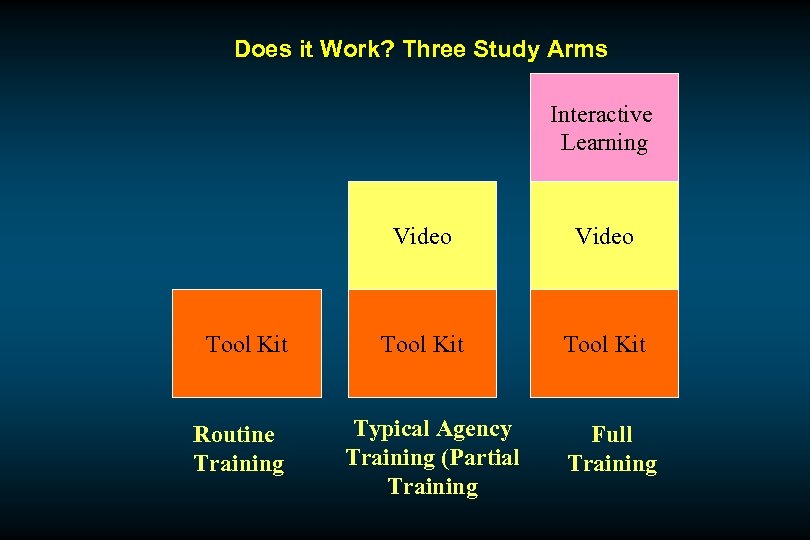 Does it Work? Three Study Arms Interactive Learning Video Tool Kit Routine Training Video Tool Kit Typical Agency Training (Partial Training Full Training
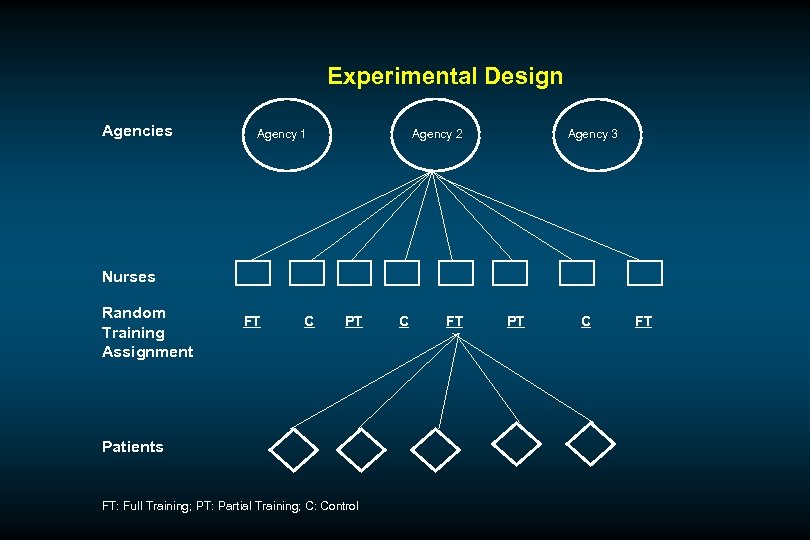 Experimental Design Agencies Agency 1 Agency 2 Agency 3 Nurses Random Training Assignment FT C PT Patients FT: Full Training; PT: Partial Training; C: Control C FT PT C FT
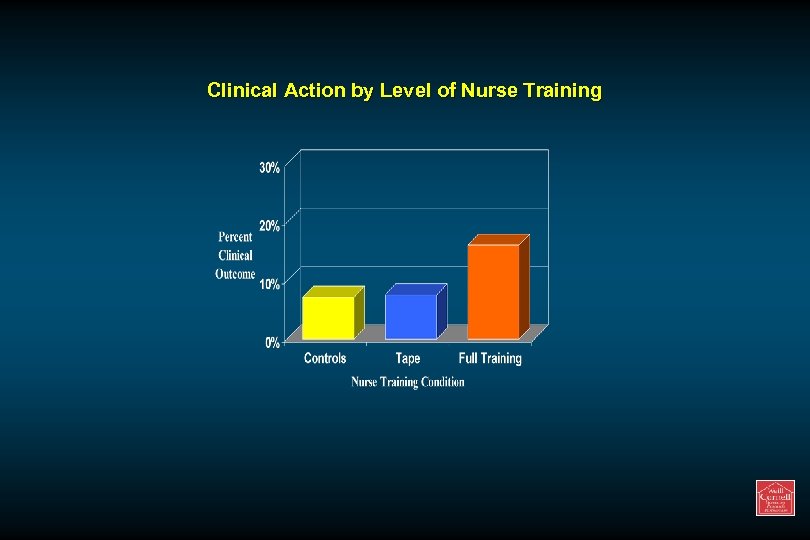 Clinical Action by Level of Nurse Training
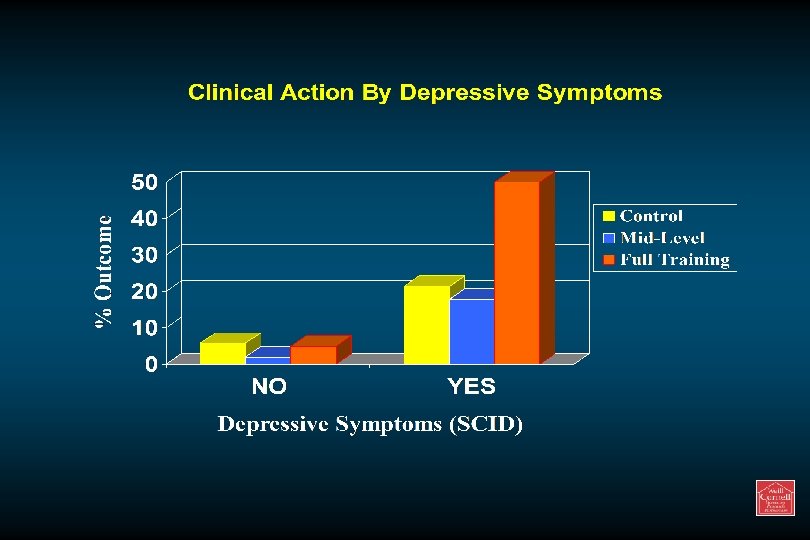
 http: //www. geriu. org/
 Depression is treatable w Antidepressants as effective in older patients as younger patients (Reynolds et al, 2003, JAMA) w Psychotherapy also as effective in older patients as younger patients (Arean & Cook, 2002 Biol. Psych. )
 Psychotherapy for late-life depression w 27 RCTs to date (Mackin & w Cognitive Behavioral Therapy w w w Interpersonal Therapy Areán, 2005; Areán & Cook, 2003) Problem Solving Therapy Brief Dynamic Therapy Reminiscence Therapy Bibliotherapy
 Common Adaptations w Longer session times. w More sessions. w “Say-it, show-it, do-it”/ “Cue and Review” w Relying on past experiences to enhance learning. w Involving significant others.
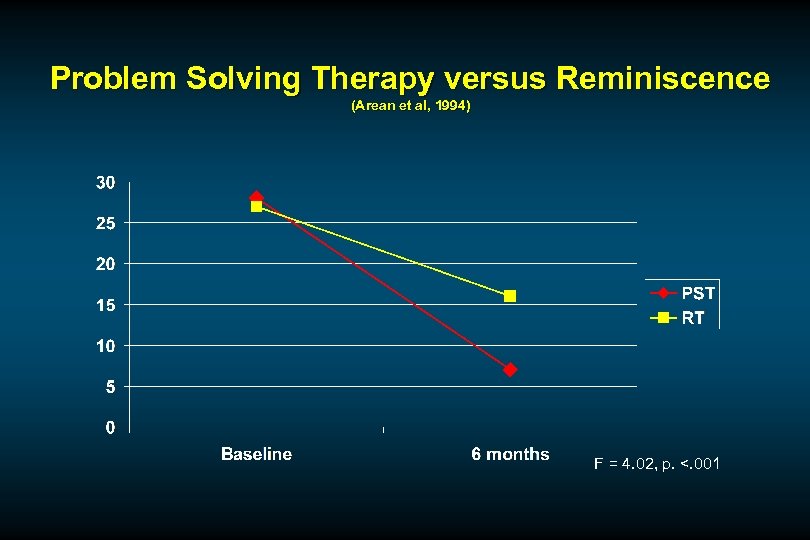 Problem Solving Therapy versus Reminiscence (Arean et al, 1994) F = 4. 02, p. <. 001
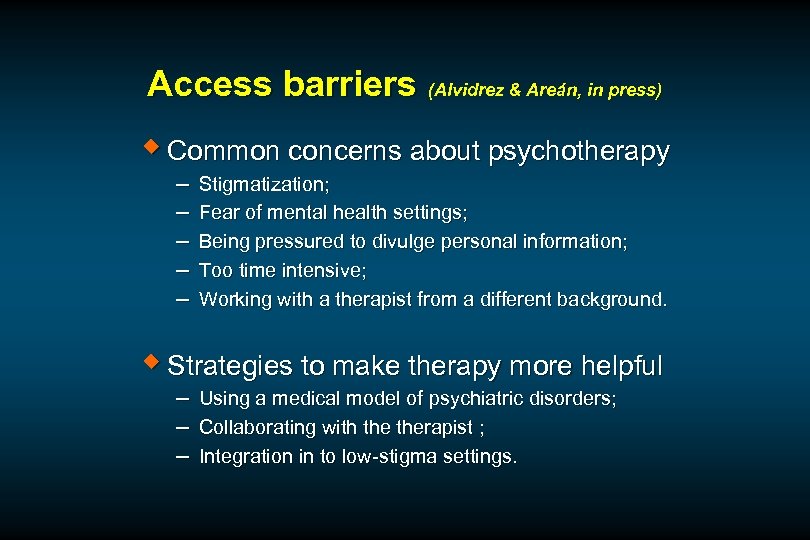 Access barriers (Alvidrez & Areán, in press) w Common concerns about psychotherapy – – – Stigmatization; Fear of mental health settings; Being pressured to divulge personal information; Too time intensive; Working with a therapist from a different background. w Strategies to make therapy more helpful – Using a medical model of psychiatric disorders; – Collaborating with therapist ; – Integration in to low-stigma settings.
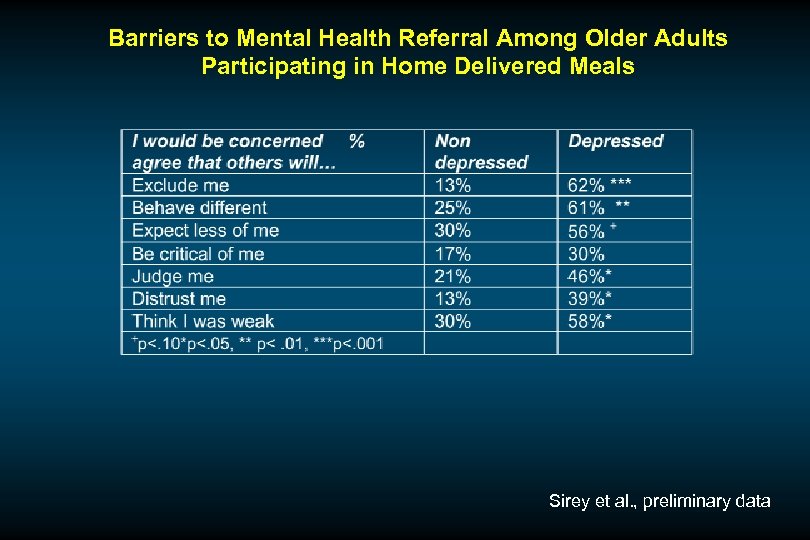 Barriers to Mental Health Referral Among Older Adults Participating in Home Delivered Meals Sirey et al. , preliminary data
 Evidence Based Systems of Care for Depression in Primary Care
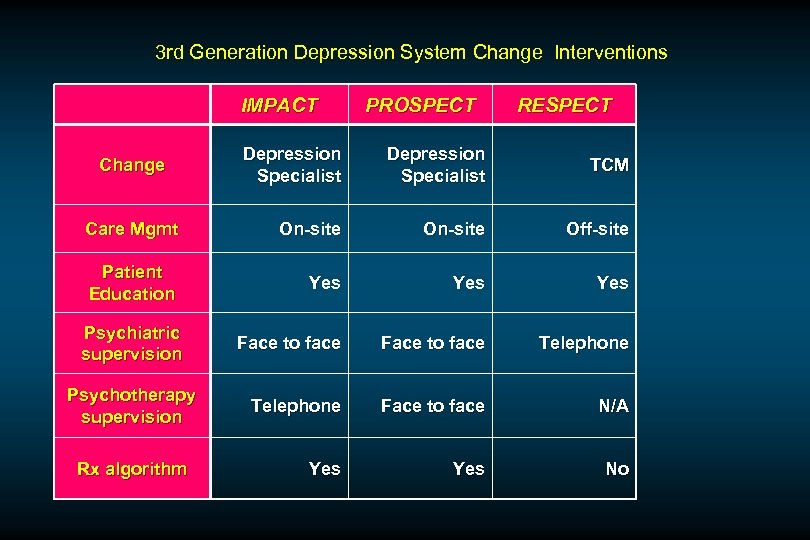 3 rd Generation Depression System Change Interventions IMPACT PROSPECT RESPECT Depression Specialist TCM Care Mgmt On-site Off-site Patient Education Yes Yes Face to face Telephone Face to face N/A Yes No Change Psychiatric supervision Psychotherapy supervision Rx algorithm
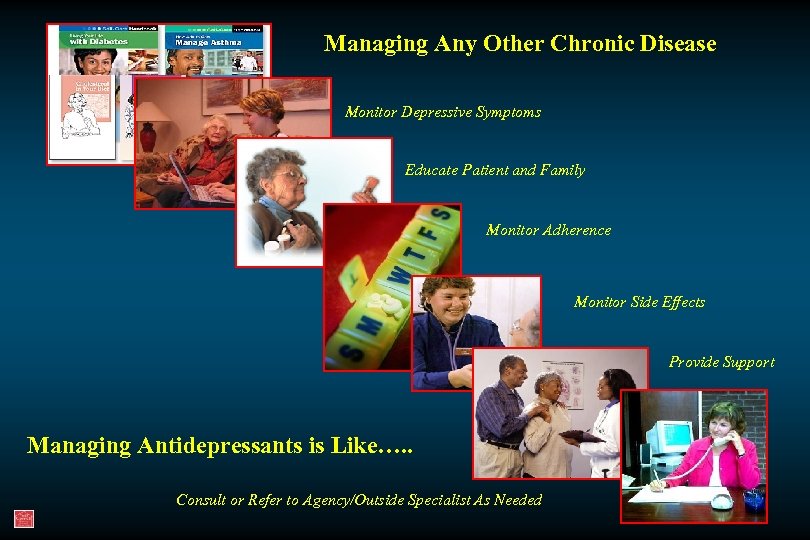 Managing Any Other Chronic Disease Monitor Depressive Symptoms Educate Patient and Family Monitor Adherence Monitor Side Effects Provide Support Managing Antidepressants is Like…. . Consult or Refer to Agency/Outside Specialist As Needed
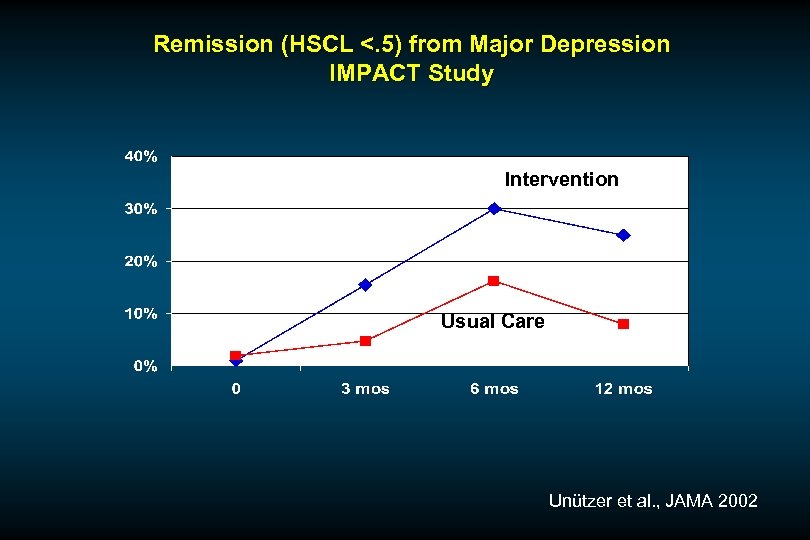 Remission (HSCL <. 5) from Major Depression IMPACT Study Intervention Usual Care Unützer et al. , JAMA 2002
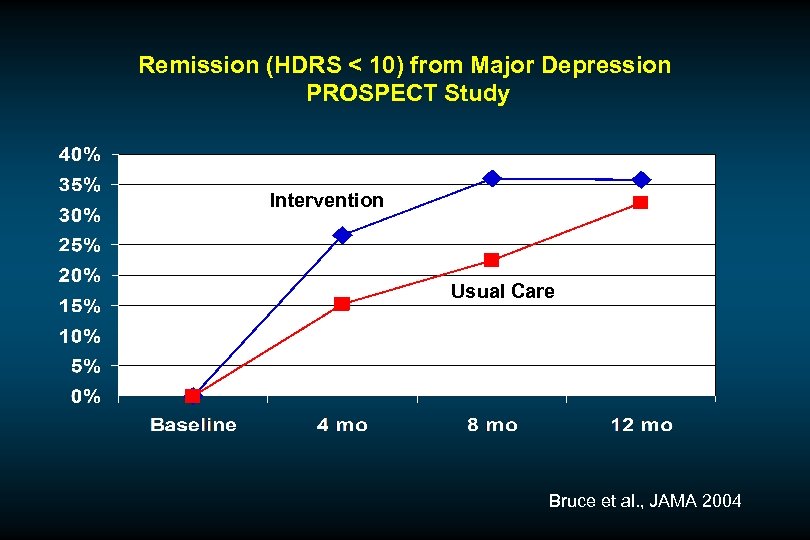 Remission (HDRS < 10) from Major Depression PROSPECT Study Intervention Usual Care Bruce et al. , JAMA 2004
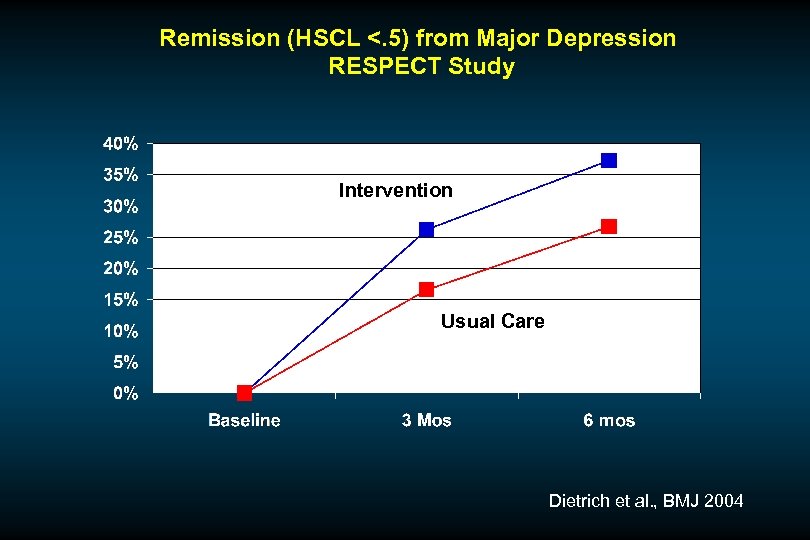 Remission (HSCL <. 5) from Major Depression RESPECT Study Intervention Usual Care Dietrich et al. , BMJ 2004
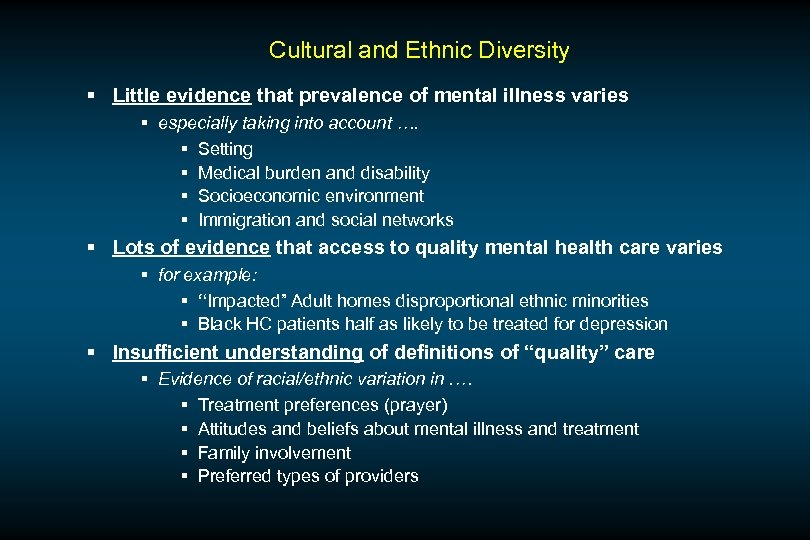 Cultural and Ethnic Diversity § Little evidence that prevalence of mental illness varies § especially taking into account …. § Setting § Medical burden and disability § Socioeconomic environment § Immigration and social networks § Lots of evidence that access to quality mental health care varies § for example: § “Impacted” Adult homes disproportional ethnic minorities § Black HC patients half as likely to be treated for depression § Insufficient understanding of definitions of “quality” care § Evidence of racial/ethnic variation in. … § Treatment preferences (prayer) § Attitudes and beliefs about mental illness and treatment § Family involvement § Preferred types of providers
 Thank you Questions?