


 Скачать презентацию Mendel s Experiments 2 Types of Fertilization 1 Self-pollination
985ae3c05c746677d05a97b3c83d414a.ppt
- Количество слайдов: 87
 Mendel’s Experiments 2 Types of Fertilization: 1. Self-pollination: pollen fertilizes the egg cells in the very same flower. o n n n They inherit all the characteristics of the single parent that bore them. This is called true-breeding. Mendel used true breeding plants.
 Mendel’s Experiments 2. Cross-pollination n n Male cells in the pollen of one flower fertilize the egg cells of another plant. Mendel controlled this by cutting off the male anthers of one plant and dusting that flower with the pollen from another plant.
 Terms o Phenotype: physical characteristics o Genotype: set of alleles, genetic makeup, RR, Rr, rr o Homozygous: 2 identical alleles for a certain gene. Example: RR or rr o Heterozygous: 2 different alleles for a gene. Example: Rr (a hybrid)
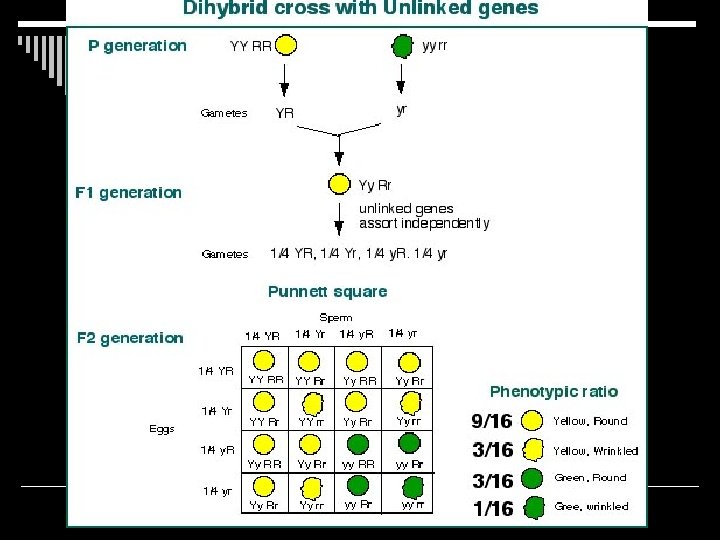 Your numbers should always add up to 16!
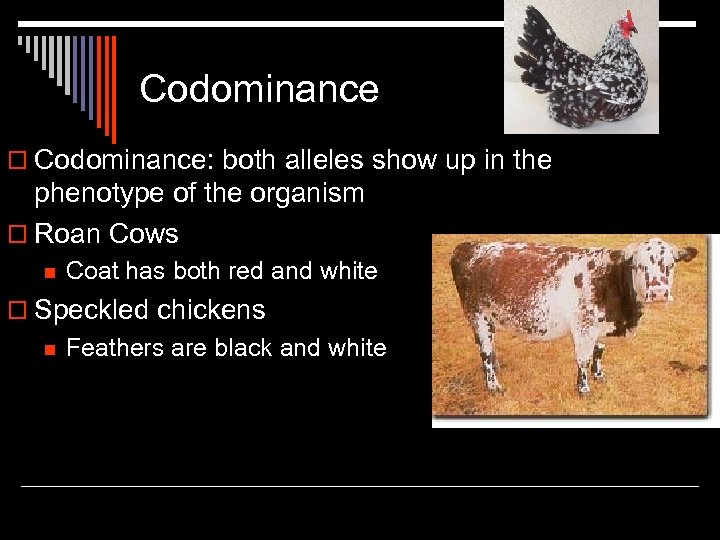 Codominance o Codominance: both alleles show up in the phenotype of the organism o Roan Cows n Coat has both red and white o Speckled chickens n Feathers are black and white
 Multiple Alleles o Multiple Alleles: genes with more than two alleles o Four alleles in rabbits can produce four possible combinations of coat color. (Fig. 1112 on pg. 273) o Human blood type is also determined by multiple alleles –A, B, and O
 Polygenic Traits o Polygenic traits: traits produced by a combination of several genes. o Examples n n n Human eye color, this is why there are so many different shades Human skin color Height and weight
 2 Kinds of Reproduction o Asexual Reproduction n n Only one parent is needed Somatic (body) cells are copied by Mitosis o Sexual Reproduction n n 2 parent cells produce a new individual Production of sex (germ) cells occurs through Meiosis
 Chromosome Number o Diploid (“two sets”) cells have both sets of homologous chromosomes (the set from the male and the set from the female) o Diploid is represented 2 N n n for fruit flies 2 N = 8 for humans 2 N = 46
 Chromosome Number o Haploid (“one set”) cells have only a single set of chromosomes, so a single set of genes. o Haploid is represented N n for fruit flies N = 4; for humans N = 23 o Sex cells (gametes) are haploid cells o Somatic (body) cells are diploid cells
 Meiosis o The result: n n Four new haploid daughter cells Each of the four cells is different because of crossing-over.
 Ch. 12 DNA
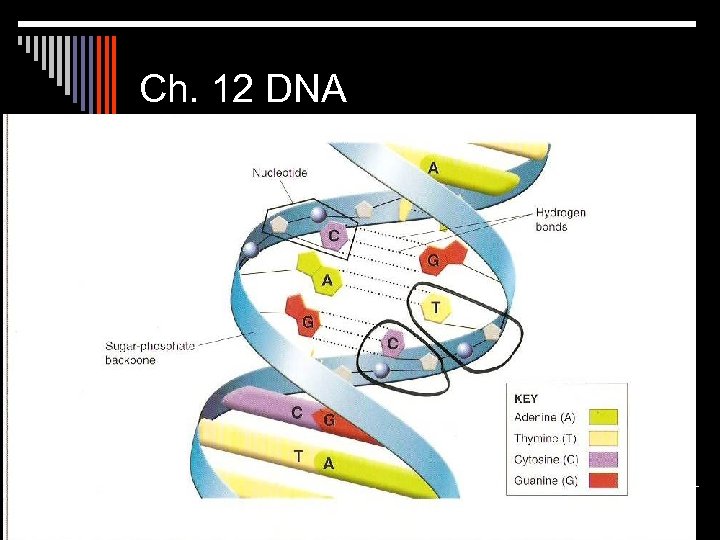
 Structure of DNA o 3 parts of a nucleotide: 1. 2. 3. 5 -carbon sugar called deoxyribose A phosphate group A nitrogenous base
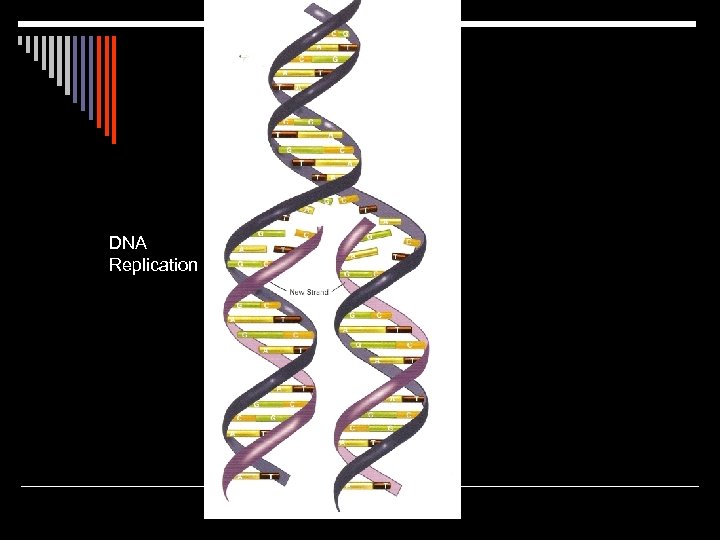 DNA Replication
 Structure of RNA o Ribose sugar o Single-stranded o Uracil replaces thymine to pair with adenine DNA o Deoxyribose sugar o Double-stranded o Thymine pairs with adenine
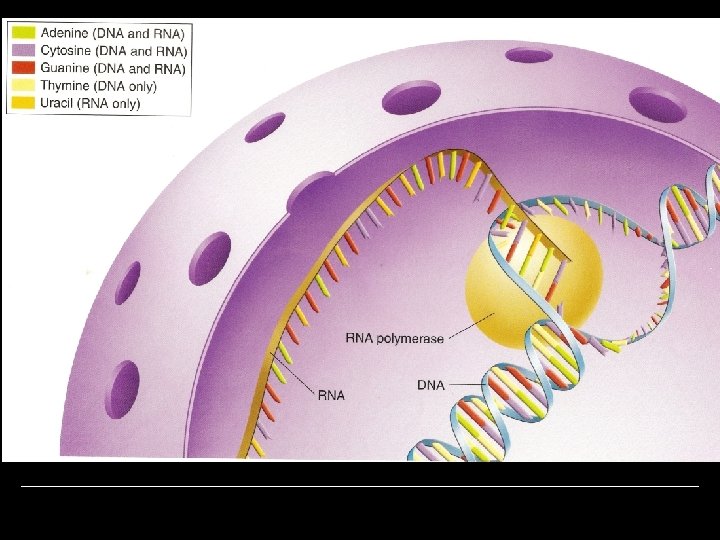
 3 Types of RNA o Messenger RNA (m. RNA)—carries copies of instructions for assembling amino acids into proteins. o Ribosomal RNA (r. RNA)—contained in the ribosome where proteins are made. o Transfer RNA (t. RNA)—transfers amino acids to the ribosome; anticodon
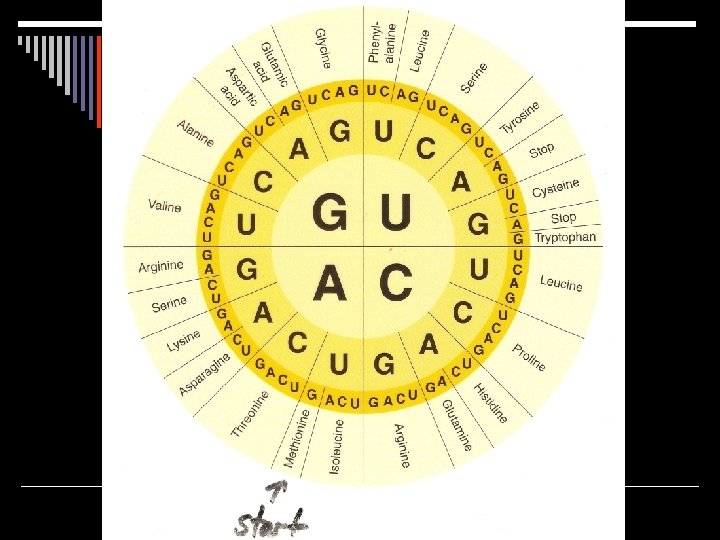
 Codons o Codons are three-letter “words” in m. RNA o Three consecutive nucleotides code for an amino acid o There are 64 possible three-base codons for m. RNA (4 x 4 x 4=64)
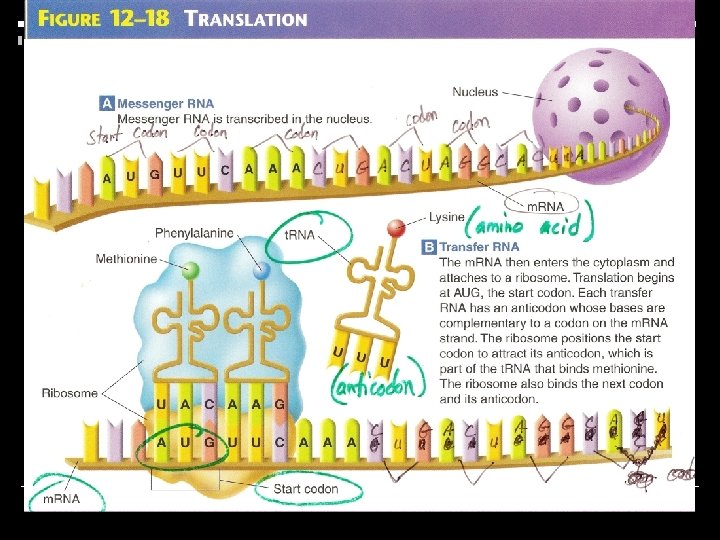
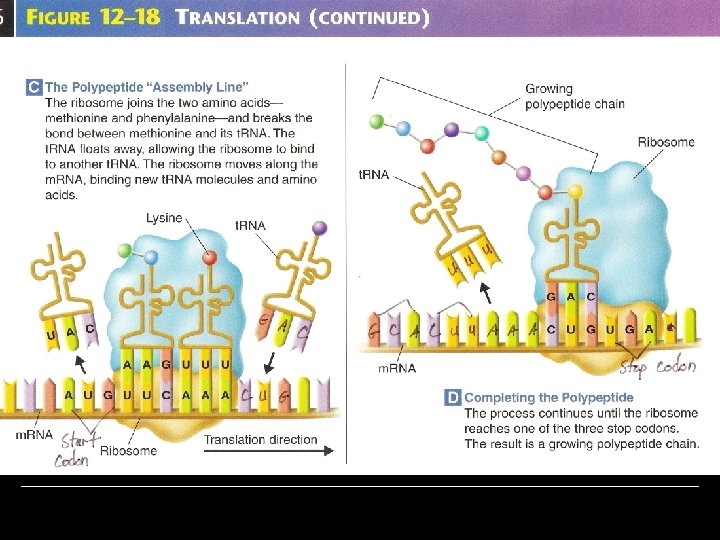
 Recap o Transcription happens in the nucleus n DNA to m. RNA o Translation happens in the cytoplasm (ribosome) n m. RNA to polypeptide o m. RNA has the codons, t. RNA has the anticodons and the amino acids
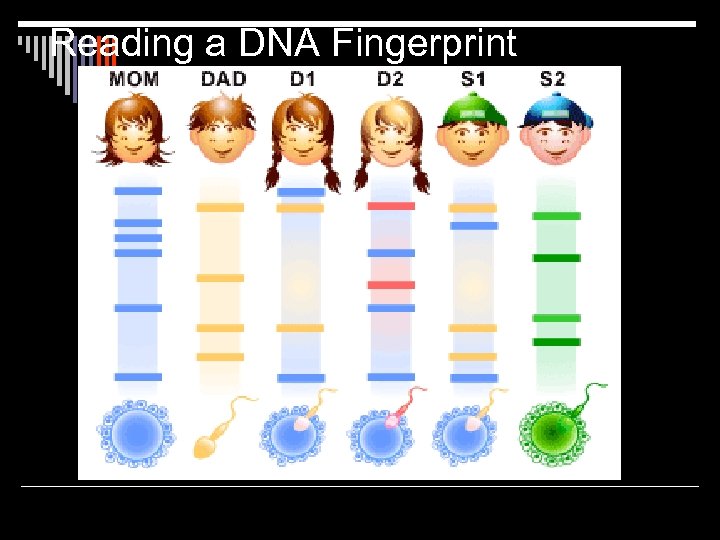 Reading a DNA Fingerprint
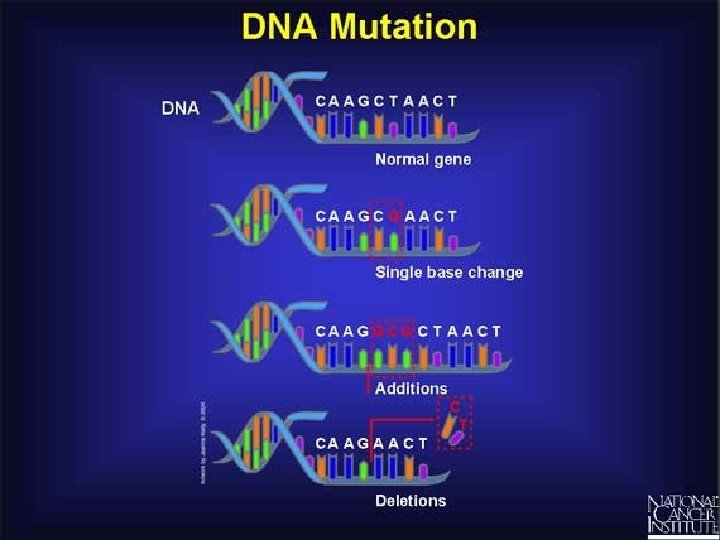
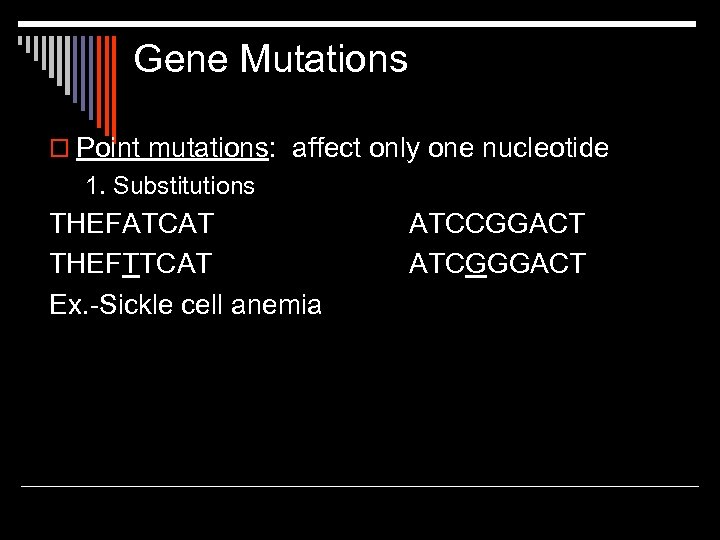 Gene Mutations o Point mutations: affect only one nucleotide 1. Substitutions THEFATCAT THEFTTCAT Ex. -Sickle cell anemia ATCCGGACT ATCGGGACT
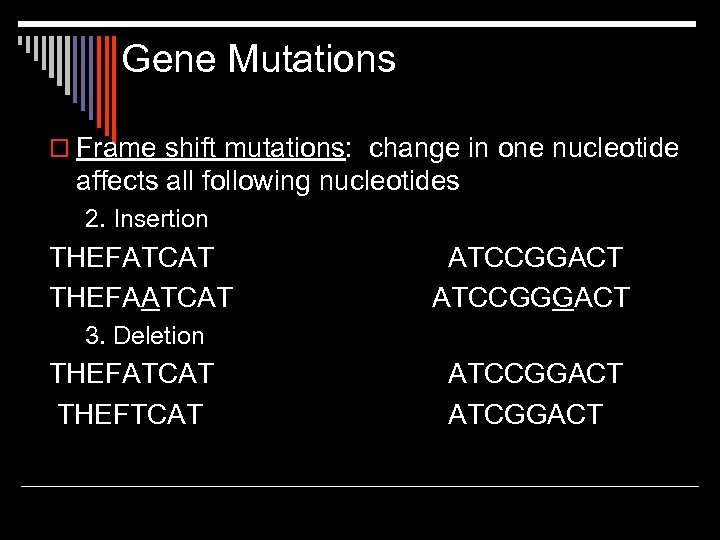 Gene Mutations o Frame shift mutations: change in one nucleotide affects all following nucleotides 2. Insertion THEFATCAT THEFAATCAT ATCCGGACT ATCCGGGACT 3. Deletion THEFATCAT THEFTCAT ATCCGGACT ATCGGACT
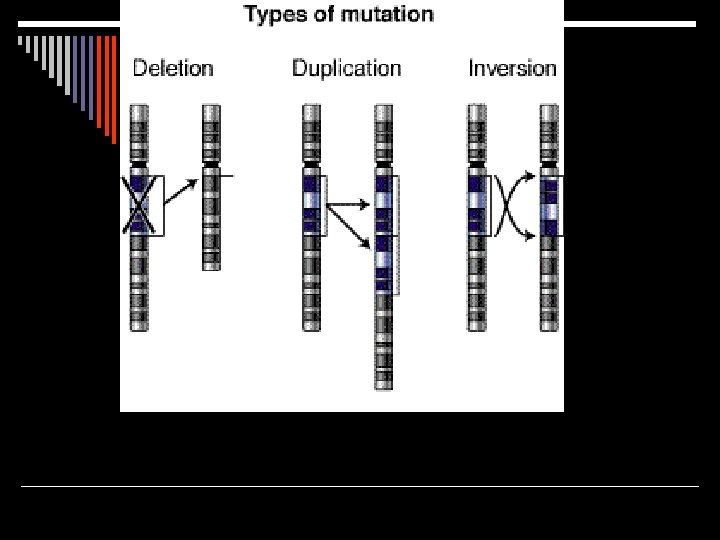
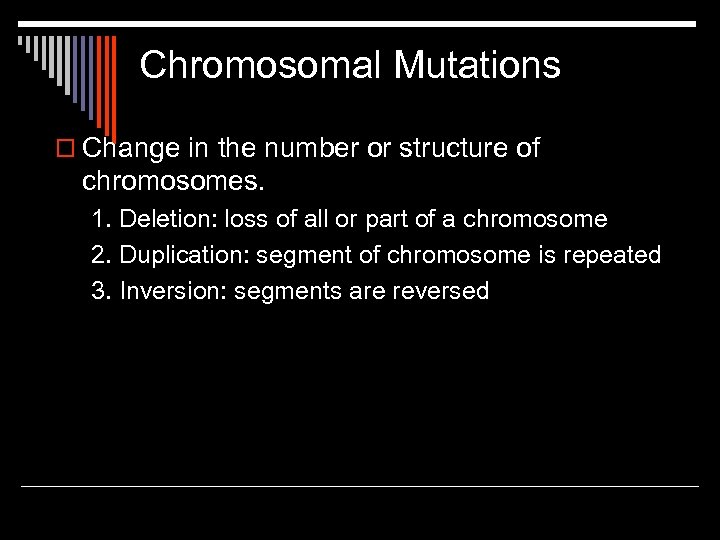 Chromosomal Mutations o Change in the number or structure of chromosomes. 1. Deletion: loss of all or part of a chromosome 2. Duplication: segment of chromosome is repeated 3. Inversion: segments are reversed
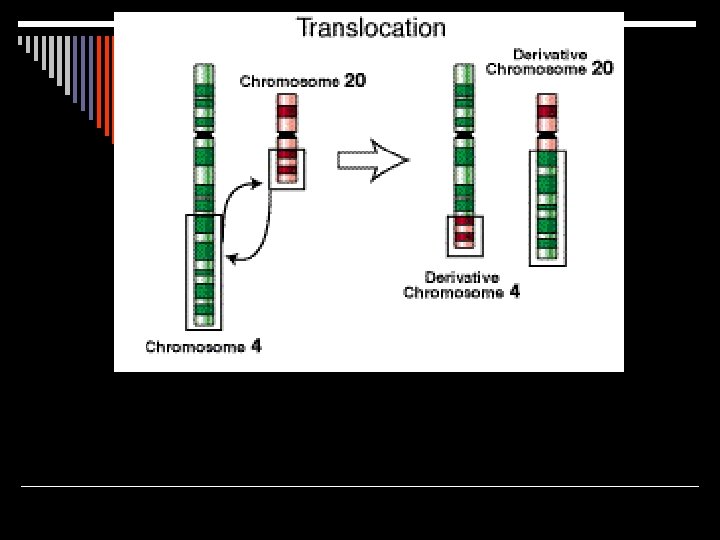
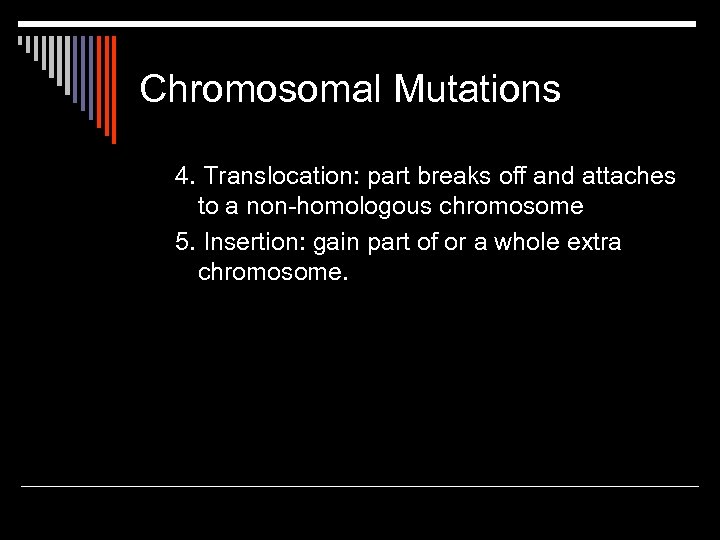 Chromosomal Mutations 4. Translocation: part breaks off and attaches to a non-homologous chromosome 5. Insertion: gain part of or a whole extra chromosome.
 Human Chromosomes o Humans have 46 chromosomes (23 pairs) o 1 pair (#23) are sex chromosomes n n XX for female XY for male o The other 22 pairs are called autosomes.
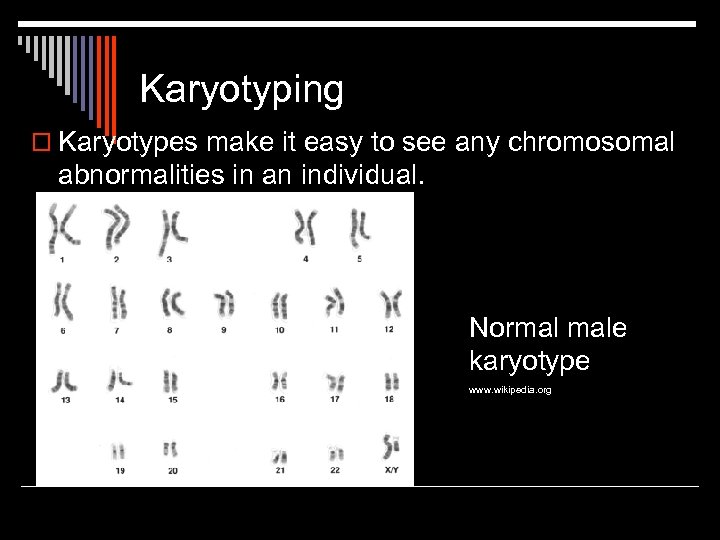 Karyotyping o Karyotypes make it easy to see any chromosomal abnormalities in an individual. Normal male karyotype www. wikipedia. org
 p. 342
 Human Blood Groups o Human blood is divided into 2 groups: ABO and Rh. o Rh blood group is determined by a positive or negative allele of a single gene. o Rh stands for “rhesus monkey” because it was discovered in this animal.
 o The second group, ABO, is determined by three alleles for the gene (multiple alleles). n n A, B, and O. Also written IA, IB, and i. o A and B are codominant, neither is stronger or dominant over the other. o Type O is recessive.
 o It is important to know blood types for transfusions. o Type O- is the universal donor. o AB+ is the universal acceptor. o - can only receive from – o + can receive from + or – since + is dominant. o + can only donate to + o - can donate to + or -
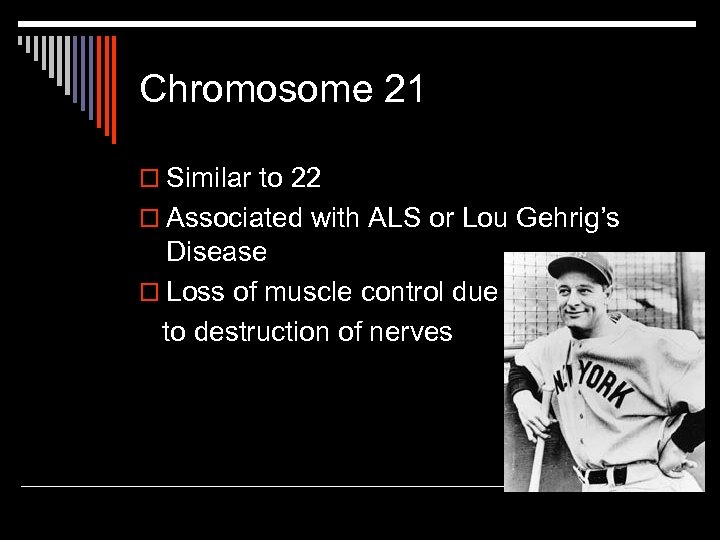 Chromosome 21 o Similar to 22 o Associated with ALS or Lou Gehrig’s Disease o Loss of muscle control due to destruction of nerves
 Sex-Linked Genes on X are called sex-linked o More than 100 sex-linked disorders on X o Y only has a few genes because it’s small o We will study 3 sex-linked disorders: colorblindness, hemophilia, duchenne muscular dystrophy
 1. Colorblindness o In males, if the X chromosome is affected, he will be colorblind o Defective version of genes produces colorblindness in males. n Red-green colorblindness: 1 in 8 males in US o Colorblindness is very rare in females. Why?
 Other Sex-linked Disorders 2. Hemophilia n n n Missing a protein required for blood clotting A recessive allele in 1 of 2 genes causes it Can bleed to death Royal family in England Occurs in 1 out of 10, 000 males
 Chromosomal Disorders o Nondisjunction: (“not coming apart”) homologous chromosomes fail to separate during meiosis. o May cause extra chromosomes. o Trisomy- three copies of a chromosome
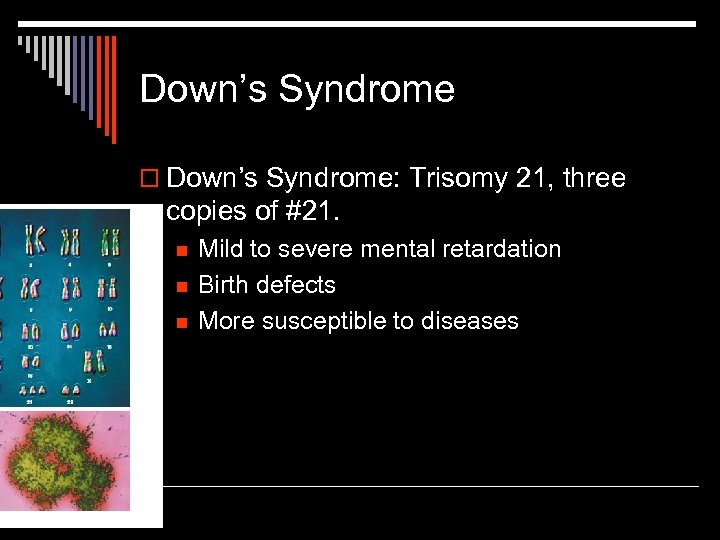 Down’s Syndrome o Down’s Syndrome: Trisomy 21, three copies of #21. n n n Mild to severe mental retardation Birth defects More susceptible to diseases
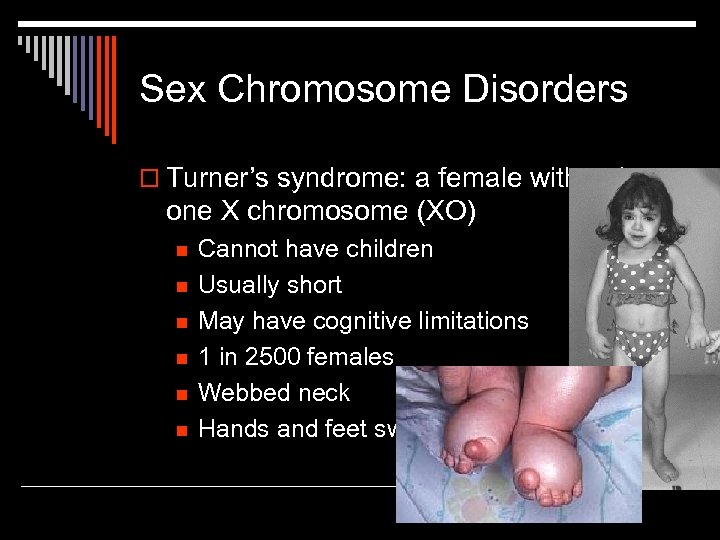 Sex Chromosome Disorders o Turner’s syndrome: a female with only one X chromosome (XO) n n n Cannot have children Usually short May have cognitive limitations 1 in 2500 females Webbed neck Hands and feet swollen
 Sex Chromosome Disorders o Klinefelter’s Syndrome: males with an extra X chromosome (XXY) or (XXXY) n n n Cannot have children Breast enlargement 1 in 500 -1000 males Lack of facial hair, overweight Why aren’t they females?
 Human Genome Project o Attempt to sequence all human DNA o Began in 1990 o Essentially complete in June 2000 o Still in progress o Estimated 30, 000 genes
 Gene Therapy o Replaces a missing or faulty gene with a normal gene o Enables protein production o First attempt in 1990
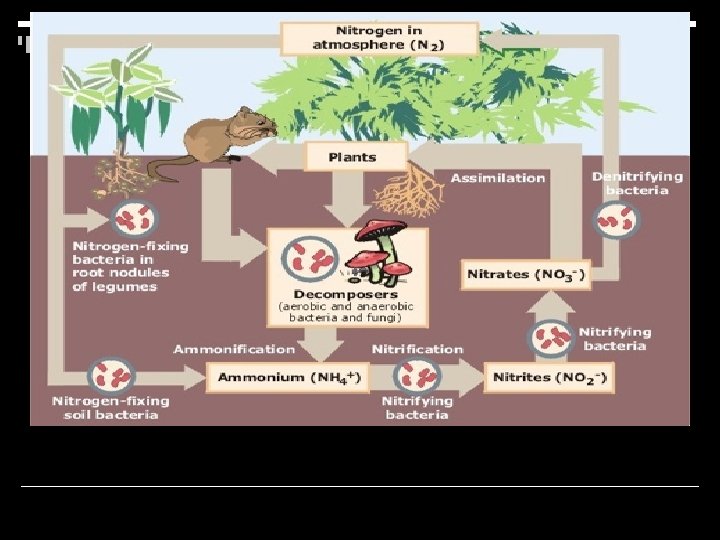
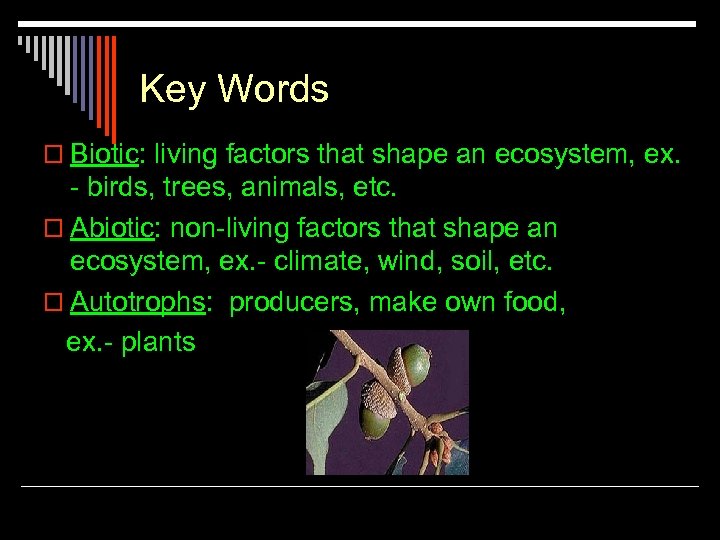 Key Words o Biotic: living factors that shape an ecosystem, ex. - birds, trees, animals, etc. o Abiotic: non-living factors that shape an ecosystem, ex. - climate, wind, soil, etc. o Autotrophs: producers, make own food, ex. - plants
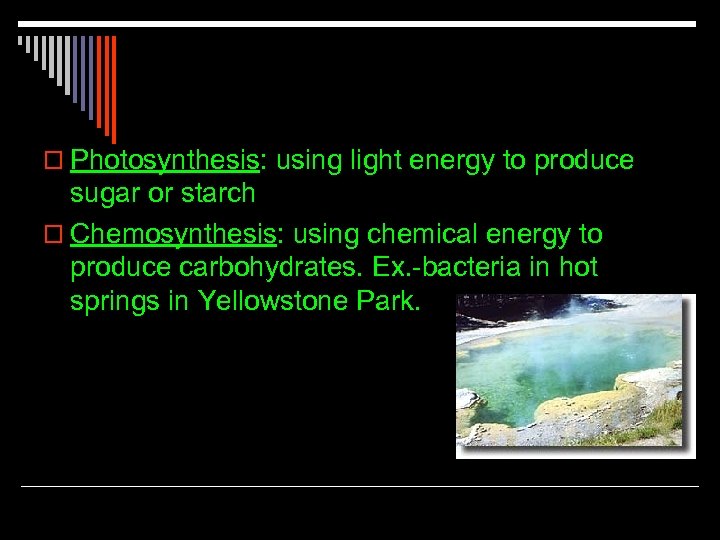 o Photosynthesis: using light energy to produce sugar or starch o Chemosynthesis: using chemical energy to produce carbohydrates. Ex. -bacteria in hot springs in Yellowstone Park.
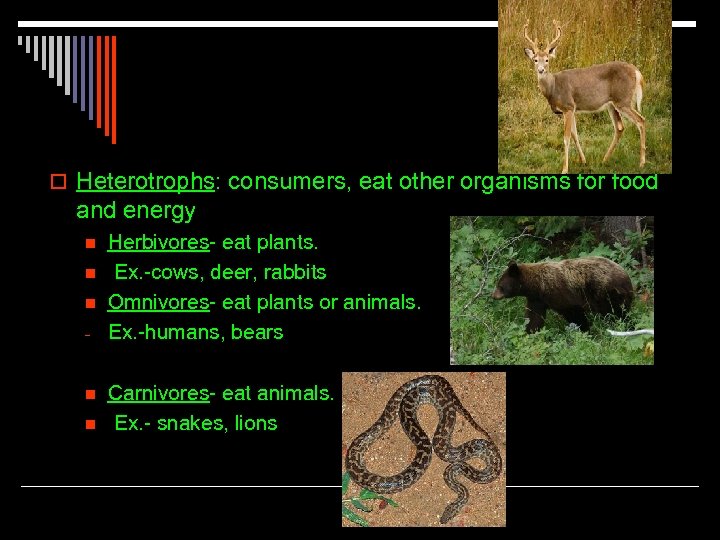 o Heterotrophs: consumers, eat other organisms for food and energy n n n - n n Herbivores- eat plants. Ex. -cows, deer, rabbits Omnivores- eat plants or animals. Ex. -humans, bears Carnivores- eat animals. Ex. - snakes, lions
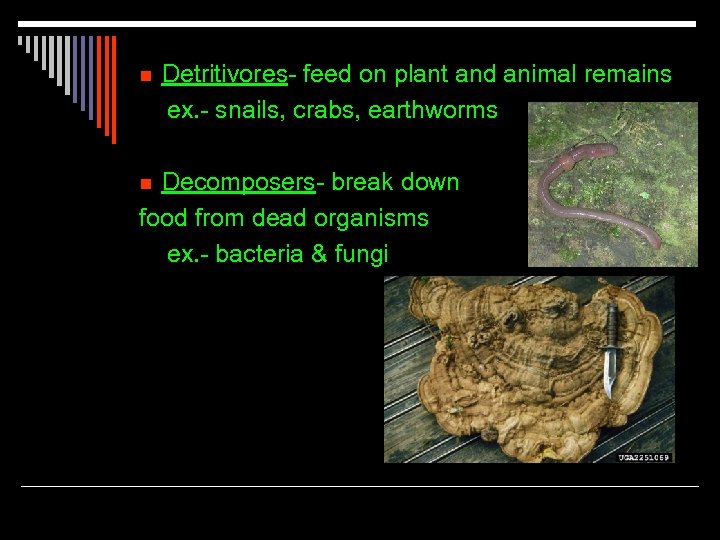 n Detritivores- feed on plant and animal remains ex. - snails, crabs, earthworms Decomposers- break down food from dead organisms ex. - bacteria & fungi n
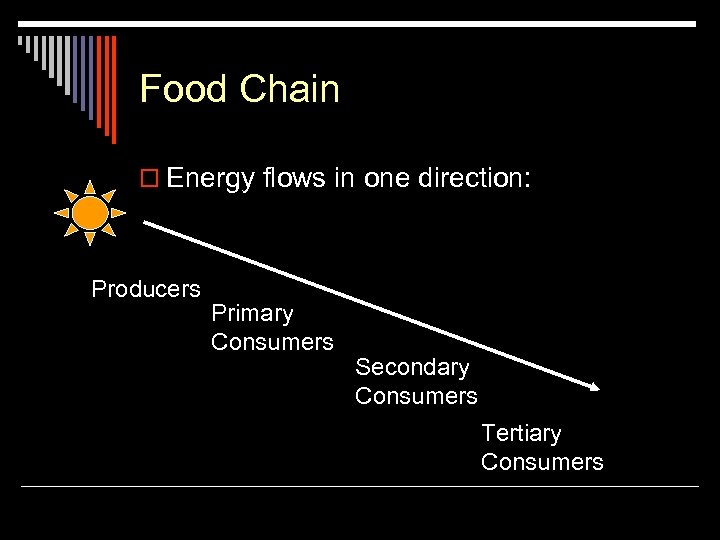 Food Chain o Energy flows in one direction: Producers Primary Consumers Secondary Consumers Tertiary Consumers
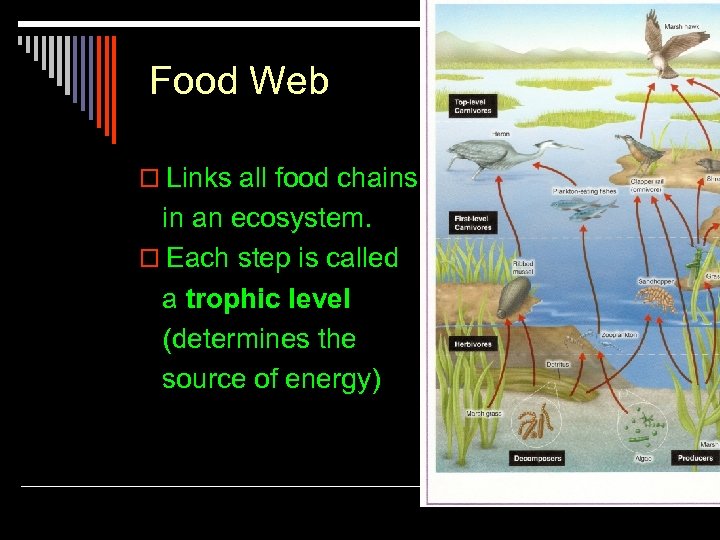 Food Web o Links all food chains in an ecosystem. o Each step is called a trophic level (determines the source of energy)
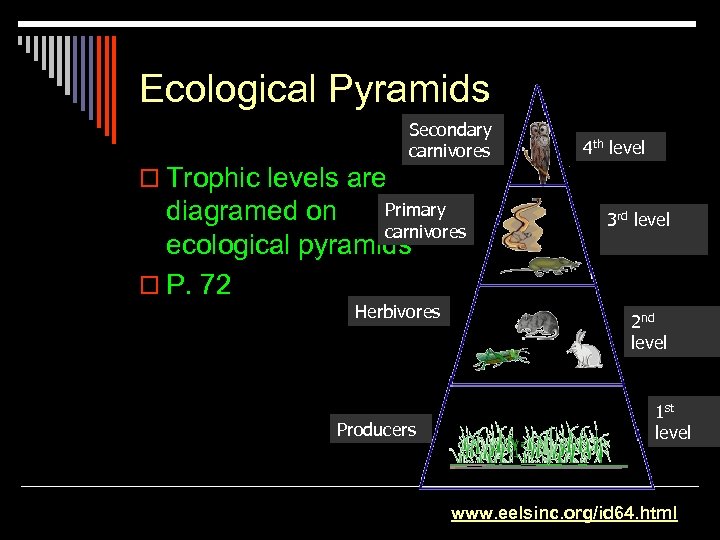 Ecological Pyramids Secondary carnivores 4 th level o Trophic levels are Primary diagramed on carnivores ecological pyramids o P. 72 Herbivores Producers 3 rd level 2 nd level 1 st level www. eelsinc. org/id 64. html
 Energy Pyramids o Only 10% of energy is transferred as you go up the pyramid. o 90% of energy is lost from one trophic level to the next. o More levels between consumer and producer = less energy gained.
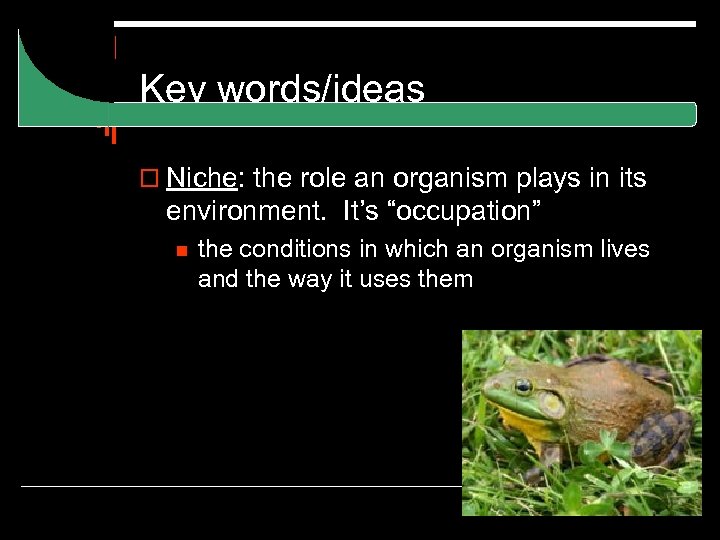 Key words/ideas o Niche: the role an organism plays in its environment. It’s “occupation” n the conditions in which an organism lives and the way it uses them
 o Habitat-area where an organism lives. It’s “address” -Includes biotic and abiotic factors. o No 2 species can occupy the same niche in the same habitat. o Resources-necessities of life-water, food, light, space
 Community 1. Competition: two organisms try to use the same resource in the same place at the same time o Competitive Exclusion Principle: If 2 species are competing, the one that uses the resources more efficiently will eliminate the others.
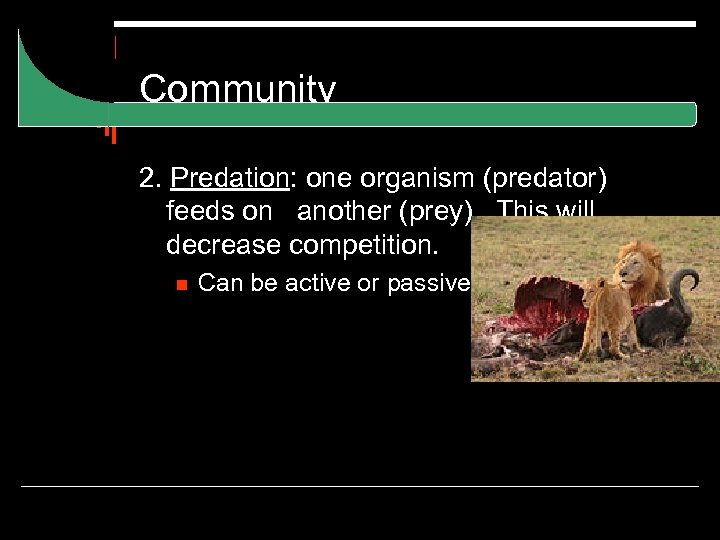 Community 2. Predation: one organism (predator) feeds on another (prey). This will decrease competition. n Can be active or passive
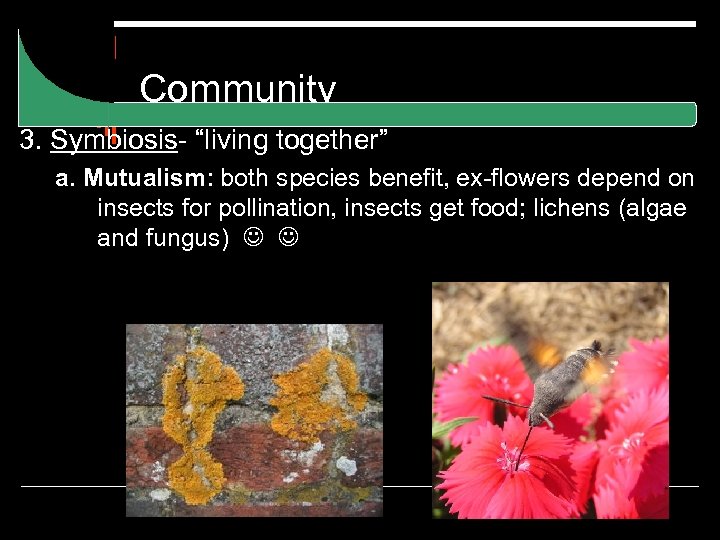 Community 3. Symbiosis- “living together” a. Mutualism: both species benefit, ex-flowers depend on insects for pollination, insects get food; lichens (algae and fungus)
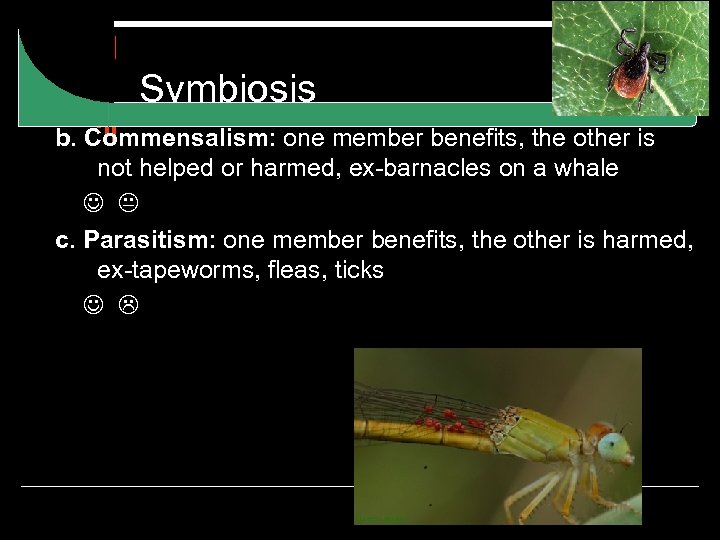 Symbiosis b. Commensalism: one member benefits, the other is not helped or harmed, ex-barnacles on a whale c. Parasitism: one member benefits, the other is harmed, ex-tapeworms, fleas, ticks
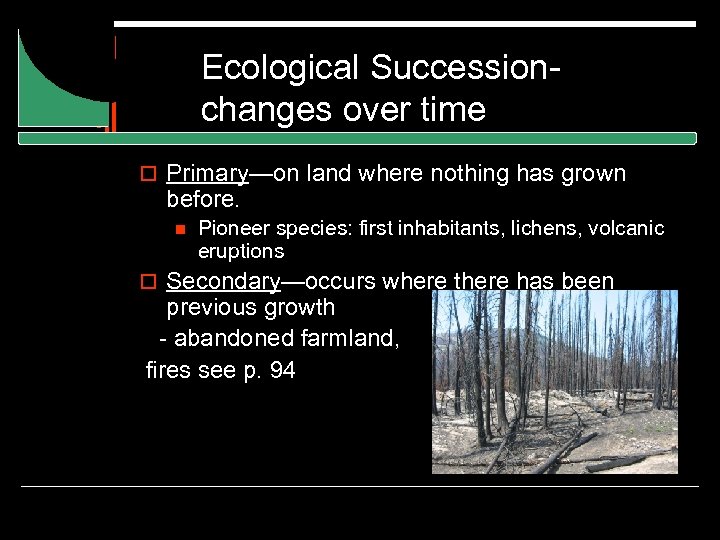 Ecological Successionchanges over time o Primary—on land where nothing has grown before. n Pioneer species: first inhabitants, lichens, volcanic eruptions o Secondary—occurs where there has been previous growth - abandoned farmland, fires see p. 94
 Definitions o Biome: a large land region with certain plants and animals. o Ecosystem: the living and nonliving things in an area interacting with each other o Climate: the average temperature and precipitation pattern of a region o Microclimate: small area that differs from the climate around it. Ex. - California has redwood forest & a few miles away is the desert.
 Population Growth o 3 factors affecting population size: n n n Number of births Number of deaths Number of individuals entering (immigration) or leaving (emigration) o Growth = birthrate > than death rate o Shrinking = birthrate < than death rate
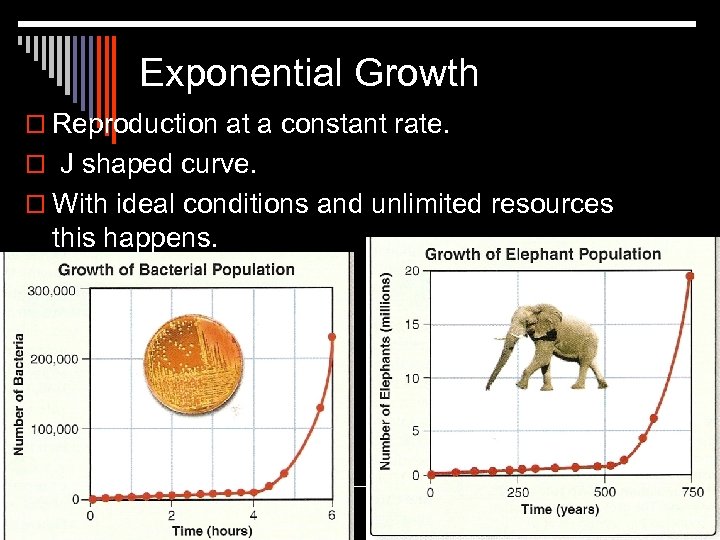 Exponential Growth o Reproduction at a constant rate. o J shaped curve. o With ideal conditions and unlimited resources this happens.
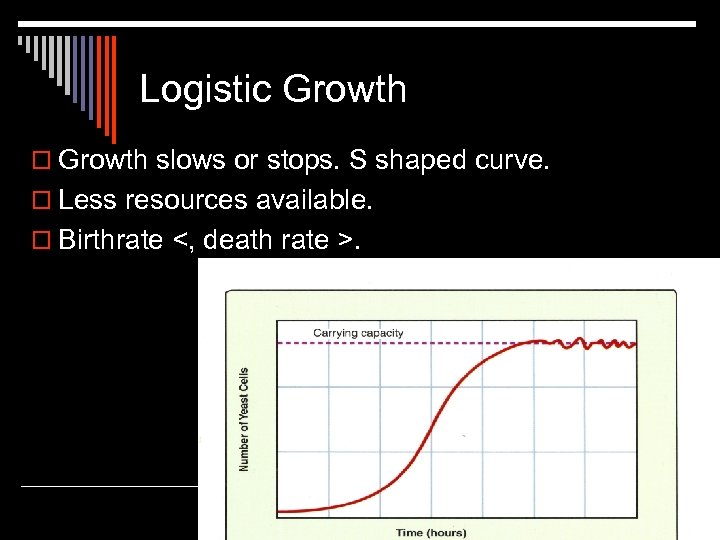 Logistic Growth o Growth slows or stops. S shaped curve. o Less resources available. o Birthrate <, death rate >.
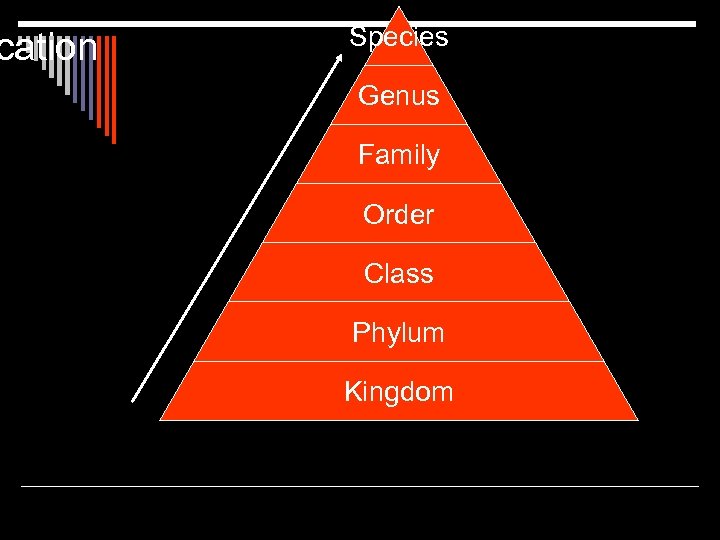
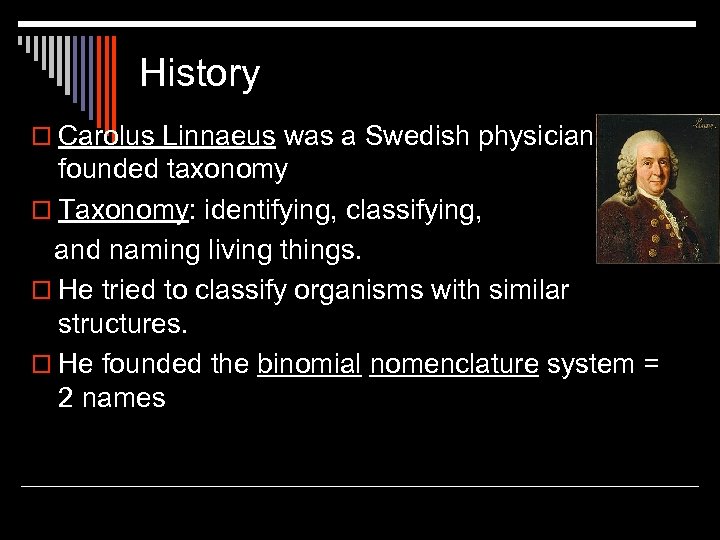 History o Carolus Linnaeus was a Swedish physician who founded taxonomy o Taxonomy: identifying, classifying, and naming living things. o He tried to classify organisms with similar structures. o He founded the binomial nomenclature system = 2 names
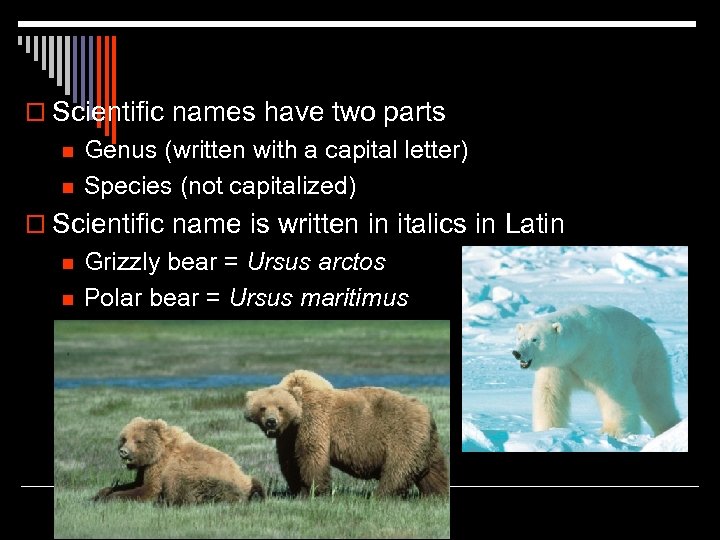 o Scientific names have two parts n n Genus (written with a capital letter) Species (not capitalized) o Scientific name is written in italics in Latin n n Grizzly bear = Ursus arctos Polar bear = Ursus maritimus
 cation Species Genus Family Order Class Phylum Kingdom
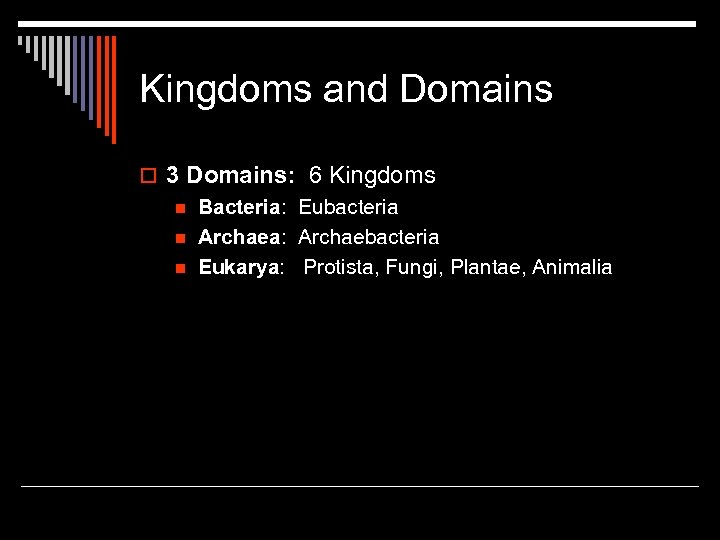 Kingdoms and Domains o 3 Domains: 6 Kingdoms n Bacteria: Eubacteria n Archaea: Archaebacteria n Eukarya: Protista, Fungi, Plantae, Animalia
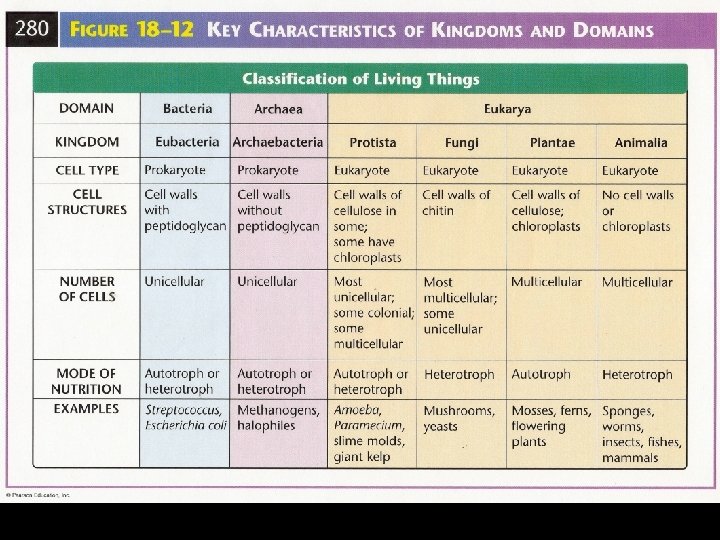
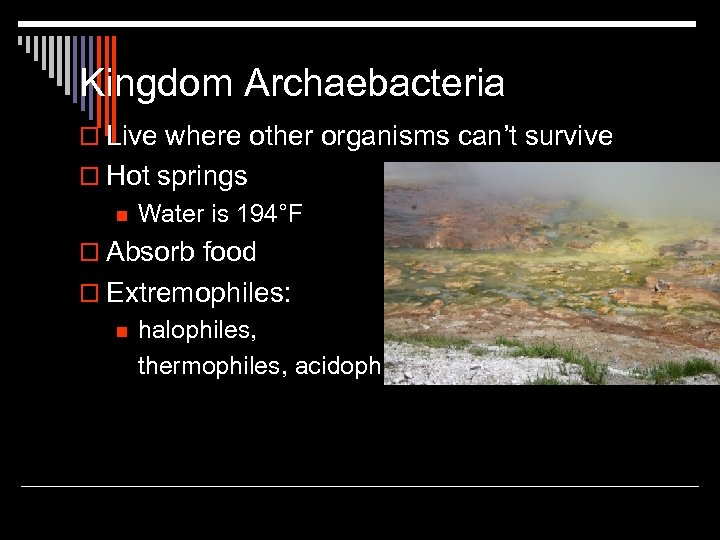 Kingdom Archaebacteria o Live where other organisms can’t survive o Hot springs n Water is 194°F o Absorb food o Extremophiles: n halophiles, thermophiles, acidophiles
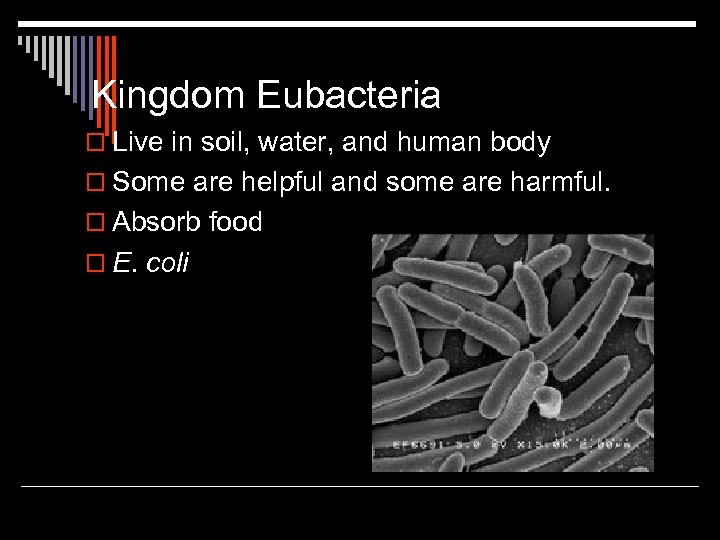 Kingdom Eubacteria o Live in soil, water, and human body o Some are helpful and some are harmful. o Absorb food o E. coli
 Kingdom Protista o Single-celled or simple multicellular o Eukaryotes (have a nucleus) o May have evolved from ancient bacteria o Most diverse kingdom
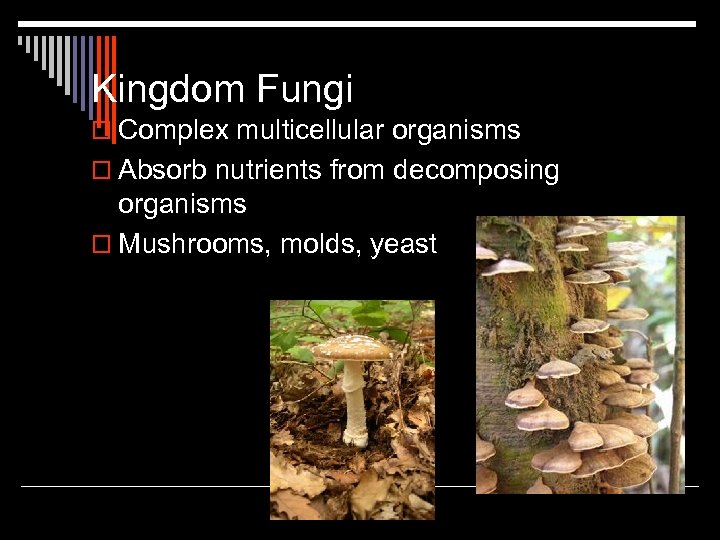 Kingdom Fungi o Complex multicellular organisms o Absorb nutrients from decomposing organisms o Mushrooms, molds, yeast
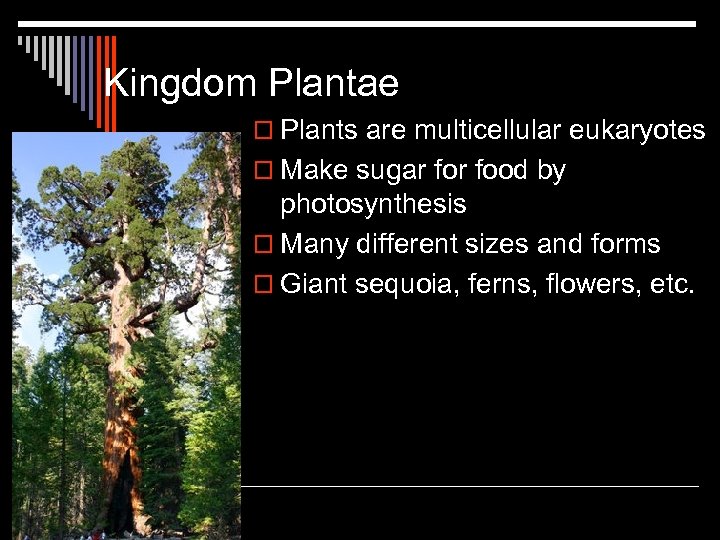 Kingdom Plantae o Plants are multicellular eukaryotes o Make sugar food by photosynthesis o Many different sizes and forms o Giant sequoia, ferns, flowers, etc.
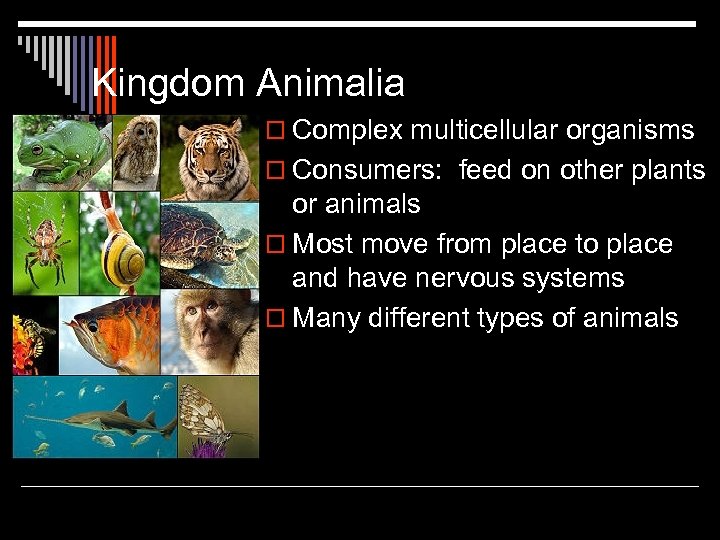 Kingdom Animalia o Complex multicellular organisms o Consumers: feed on other plants or animals o Most move from place to place and have nervous systems o Many different types of animals
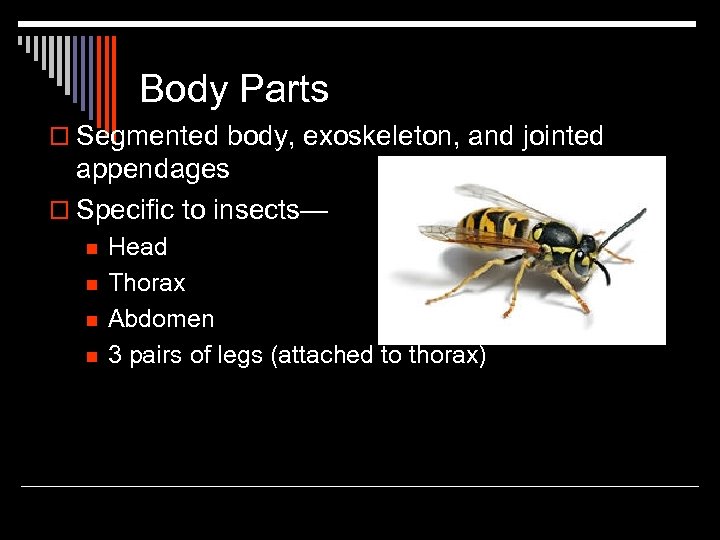 Body Parts o Segmented body, exoskeleton, and jointed appendages o Specific to insects— n n Head Thorax Abdomen 3 pairs of legs (attached to thorax)
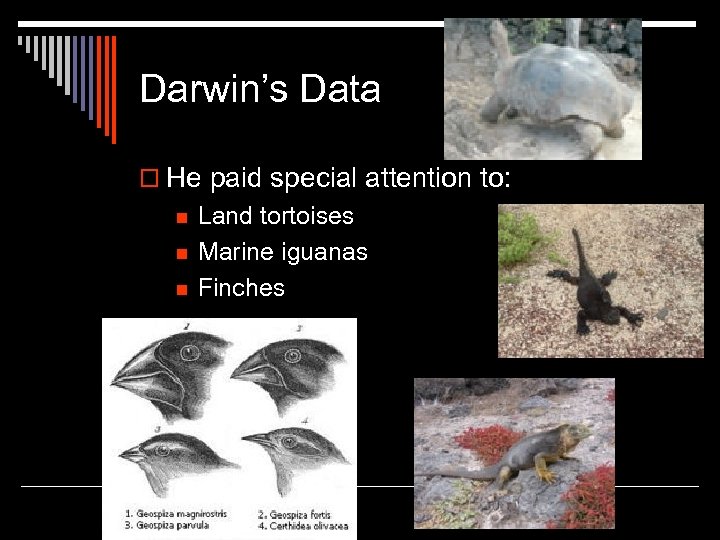 Darwin’s Data o He paid special attention to: n n n Land tortoises Marine iguanas Finches
 Darwin’s Work o Natural variation: all organisms display differences within the species o Artificial selection: nature provides variation, humans choose varieties that are most beneficial. o Natural Selection: only certain individuals of a population successfully reproduce.
 Animal Adaptation o An adaptation is a change to adjust to environmental conditions. o Adaptation is change that increases the chance of survival. o This change takes place over several generations.
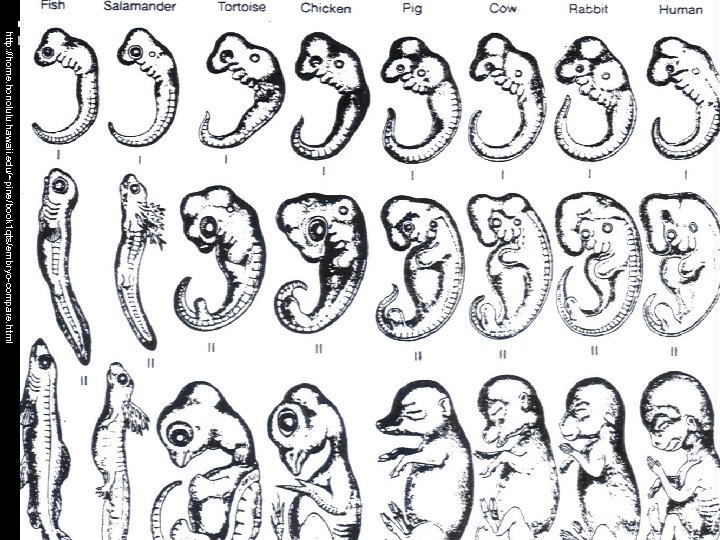 http: //home. honolulu. hawaii. edu/~pine/book 1 qts/embryo-compare. html
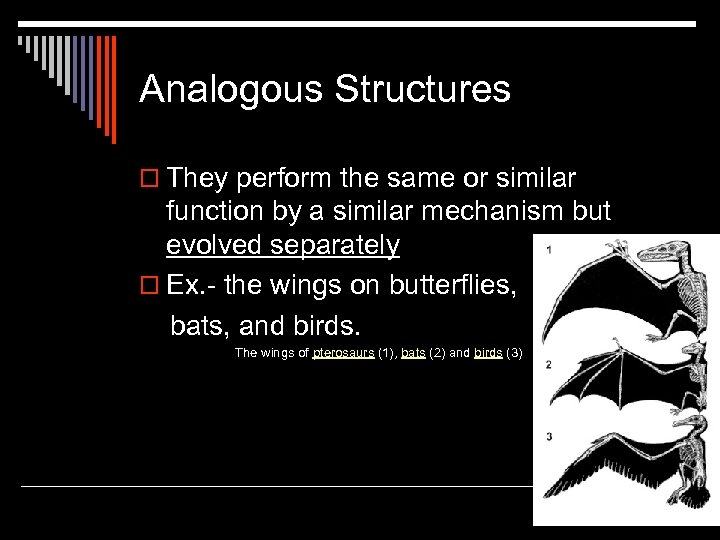 Analogous Structures o They perform the same or similar function by a similar mechanism but evolved separately o Ex. - the wings on butterflies, bats, and birds. The wings of pterosaurs (1), bats (2) and birds (3)
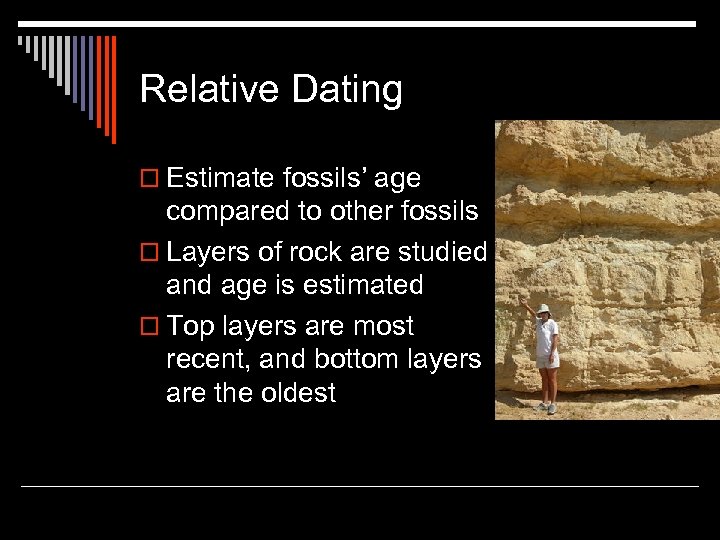 Relative Dating o Estimate fossils’ age compared to other fossils o Layers of rock are studied and age is estimated o Top layers are most recent, and bottom layers are the oldest
 Radioactive Dating o Isotopes break down at a constant rate o Half-life is length of time required for half the radioactive atoms to decay o Carbon-14 has half-life of 5730 years o Carbon-12 is not radioactive; does not decay
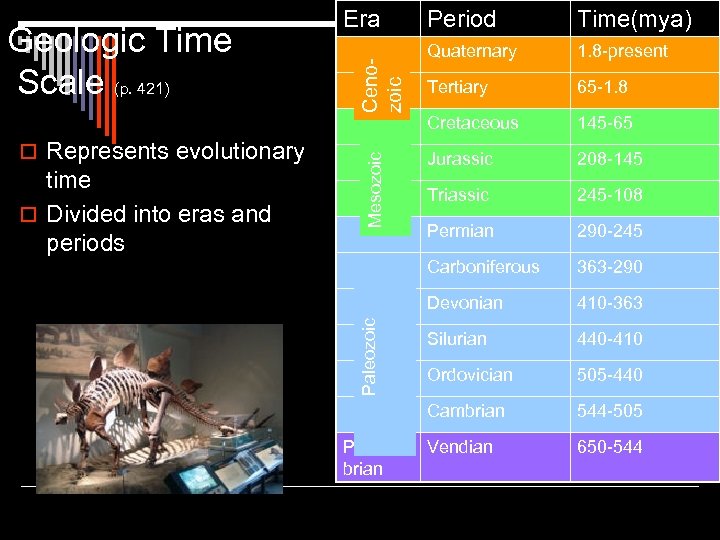 1. 8 -present Tertiary 65 -1. 8 145 -65 Jurassic 208 -145 Triassic 245 -108 Permian 290 -245 363 -290 410 -363 Silurian 440 -410 Ordovician 505 -440 Cambrian Cenozoic Quaternary Devonian Precam brian Time(mya) Carboniferous Mesozoic time o Divided into eras and periods Paleozoic o Represents evolutionary Period Cretaceous Geologic Time Scale (p. 421) Era 544 -505 Vendian 650 -544