


 Скачать презентацию Memory Chapter 5 Psyc 103 Jen Wright
605f915c72c5adb1a1d20a78645e9dd0.ppt
- Количество слайдов: 55
 Memory Chapter 5 Psyc 103 Jen Wright
 announcements • Mid-semester evaluation – emailed link • Exam extra credit – MC/TF – Colin & Cosette will administer an “extra credit” (. 5 pt/question) – Research Essay – article write-up off ereserve • Instructions will be posted on the website
 what is memory? • A) the ability to store information over long periods of time. • B) the ability to store information over short periods of time. • C) the ability to retrieve information. • D) A&B • E) all of the above
 three steps… • The first step of memory is…? – A) storage – B) retrieval – C) encoding • The second step of memory is…? • The third step of memory is…?
 Ø Encoding Storage Retrieval
 memory: two views • Memory as a passive recording device – Just like a tape-recorder, video-camera, copy machine – Accurately and reliably records information from our environment. • Memory as an active process of construction (and re -construction) – Influenced by • • prior knowledge. future knowledge. emotional experiences. goals, interests, desires of rememberer. • Hmmm…what is this starting to sound like?
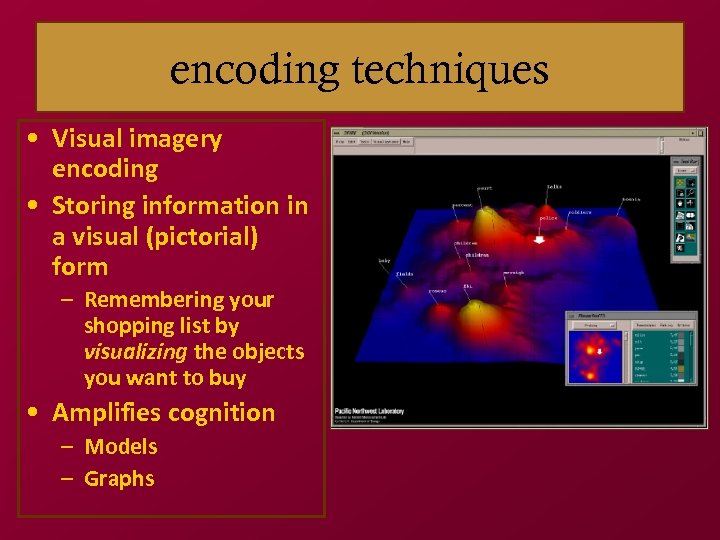 encoding techniques • Visual imagery encoding • Storing information in a visual (pictorial) form – Remembering your shopping list by visualizing the objects you want to buy • Amplifies cognition – Models – Graphs
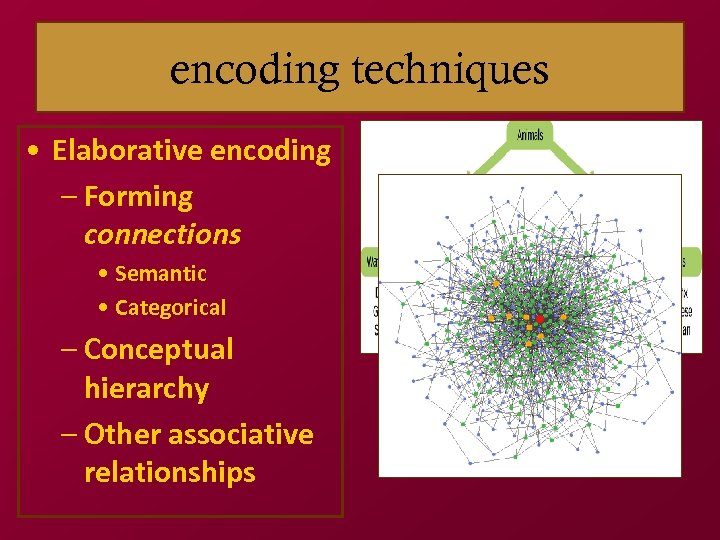 encoding techniques • Elaborative encoding – Forming connections • Semantic • Categorical – Conceptual hierarchy – Other associative relationships
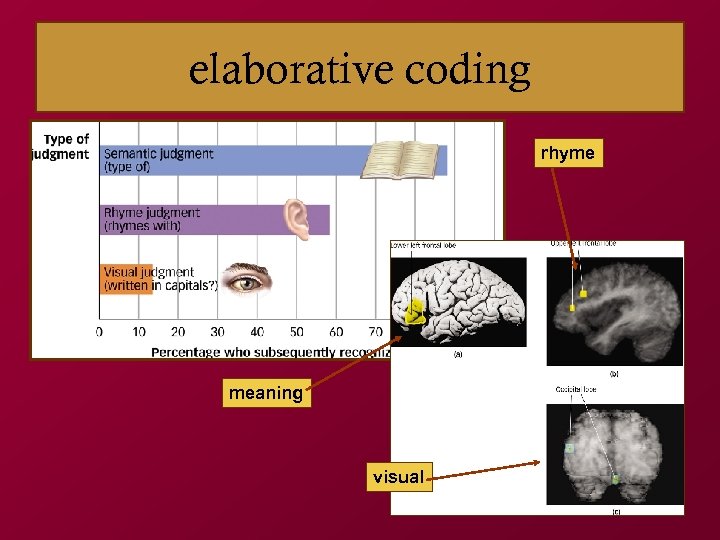 elaborative coding rhyme meaning visual
 elaborative coding (cont’d) • Encoding influenced by many aspects of the coder him/herself • Historic connections (connections in time) • Emotional significance • Even (possibly) gender! • What encoding techniques do you use?
 reminders • Mid-semester evaluation • Exam “make-up” points – Instructions for points missed on research essay are posted on the website – Extra credit for points missed on MC/TF will be available starting next Monday • Research participation
 storage • When it comes to storage, what comes first? – A) sensory store – B) long-term memory (LTM) – C) short-term memory (STM) • What comes second? • What comes third? • Working memory typically refers to: – A) long-term memory – B) short-term memory
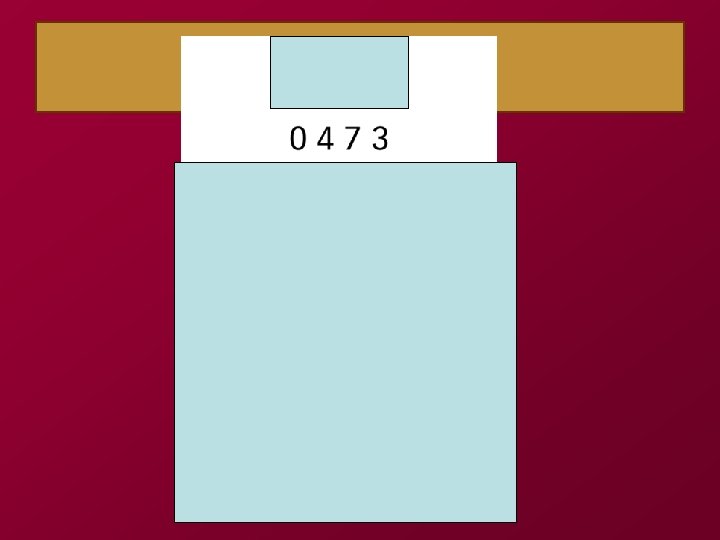
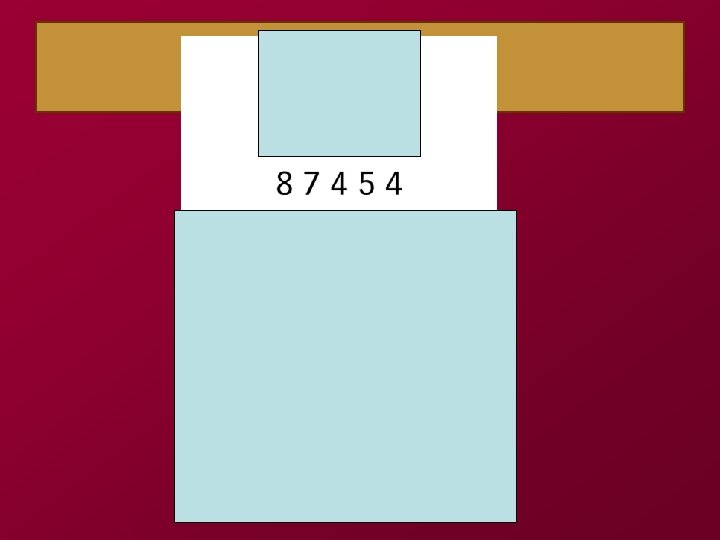
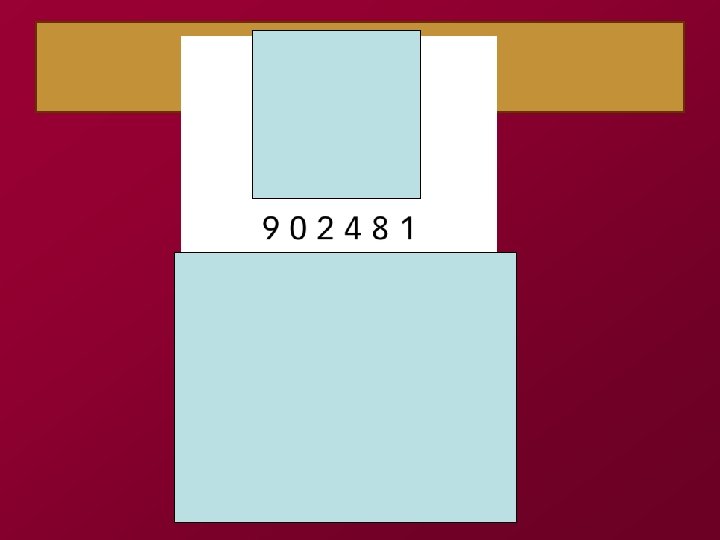
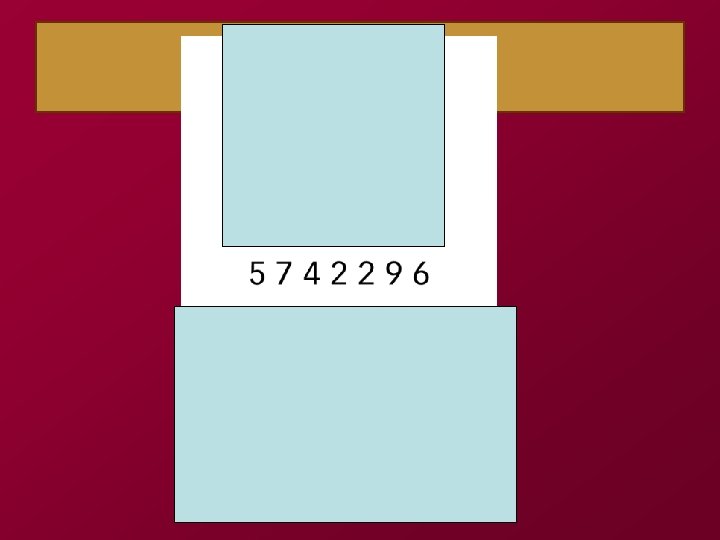
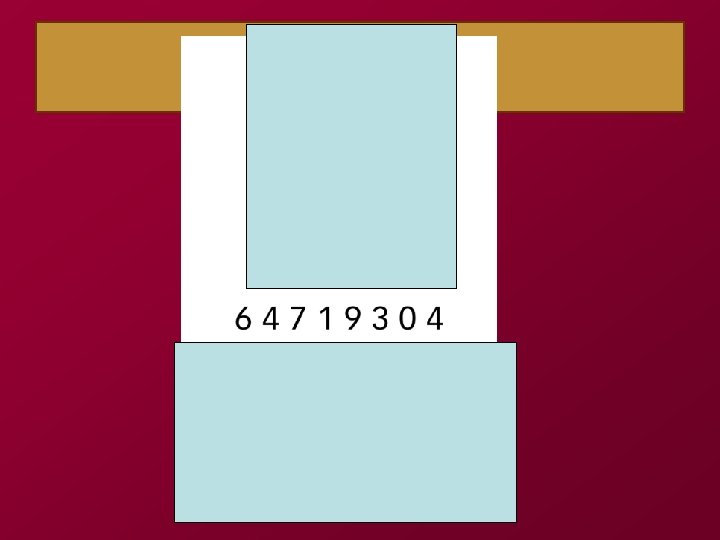
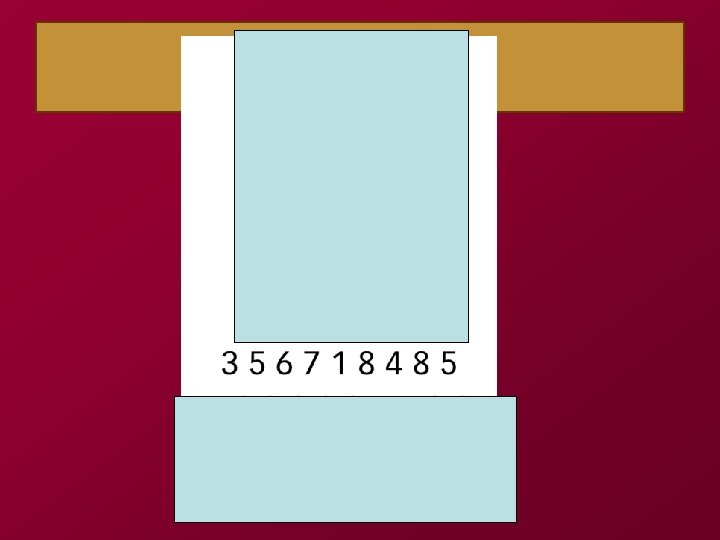
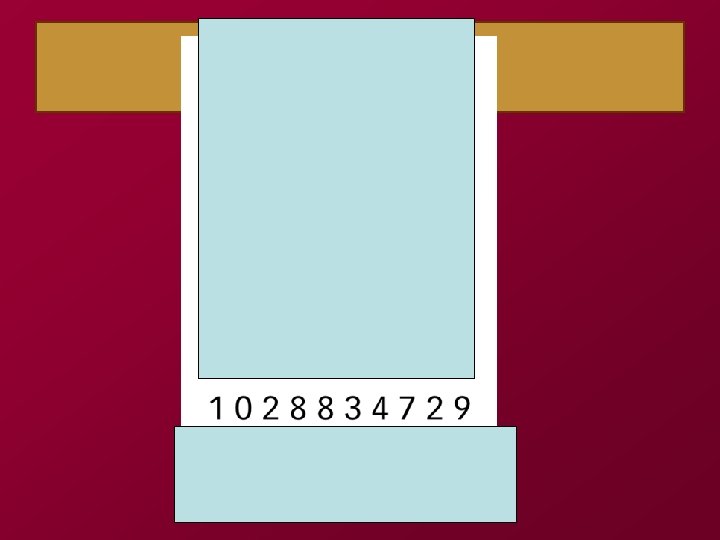
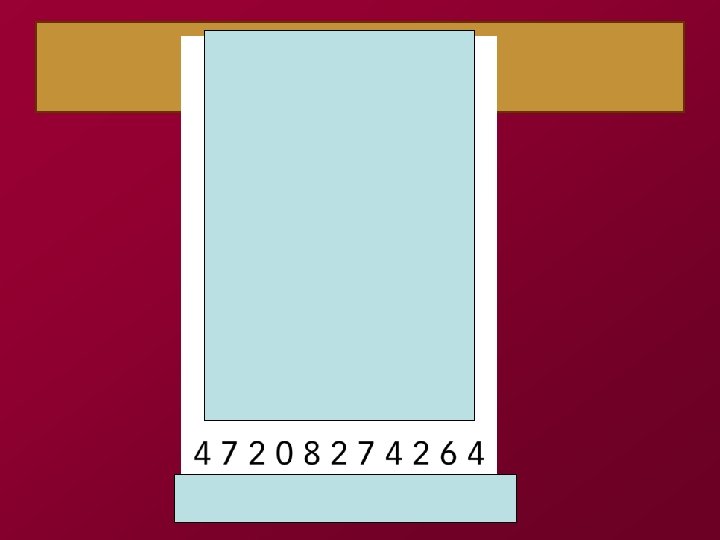
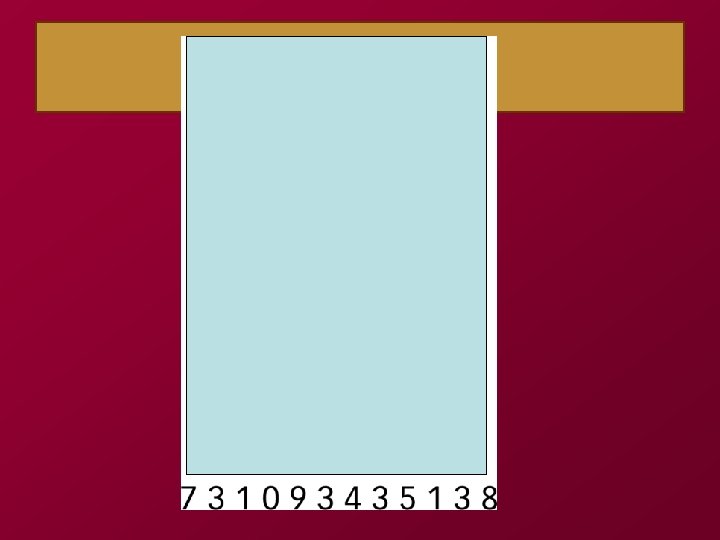
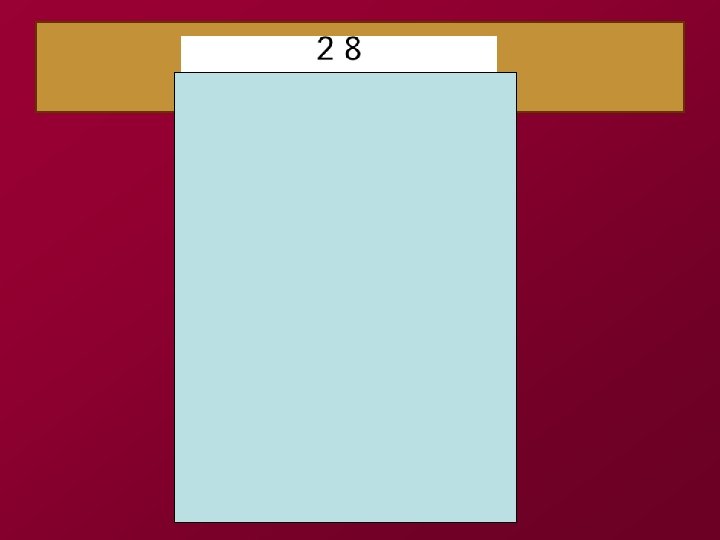
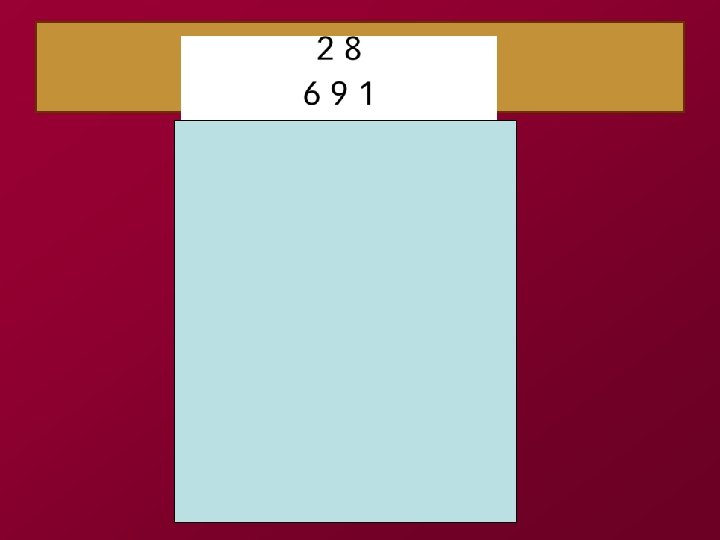
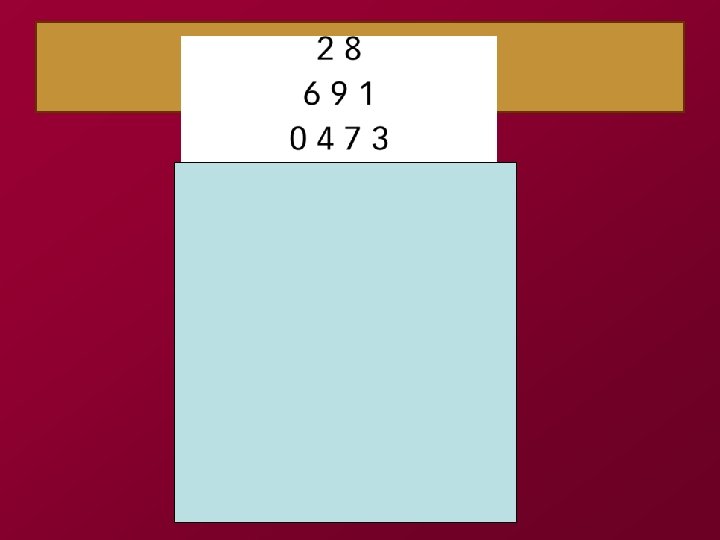
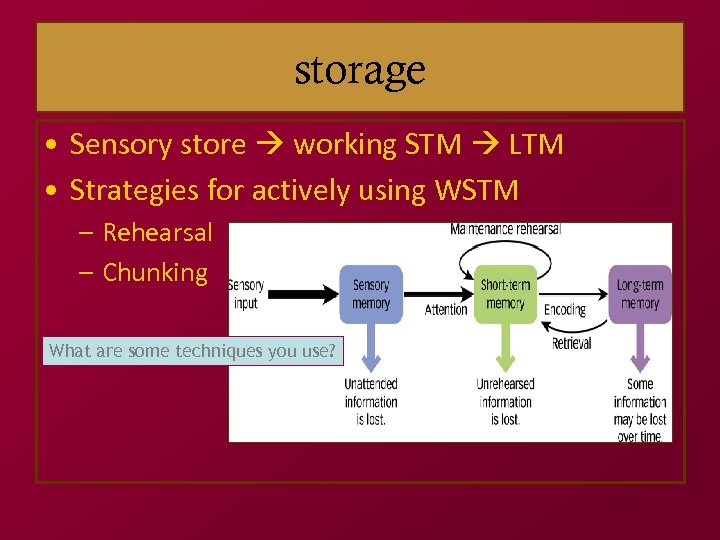 storage • Sensory store working STM LTM • Strategies for actively using WSTM – Rehearsal – Chunking What are some techniques you use?
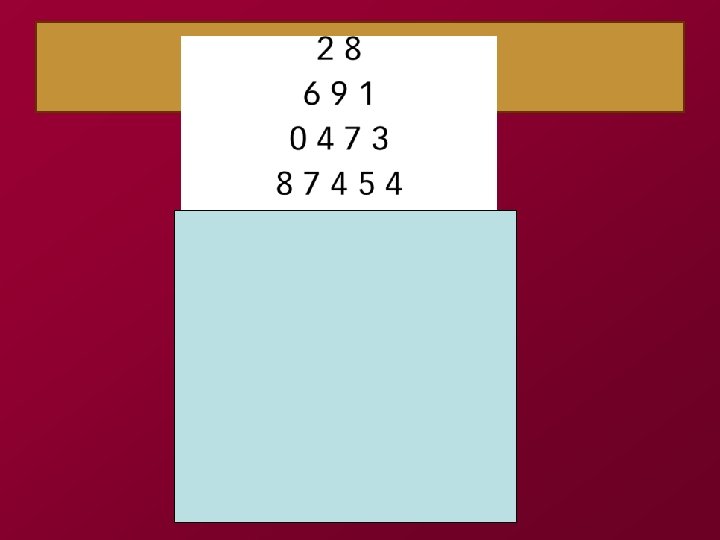
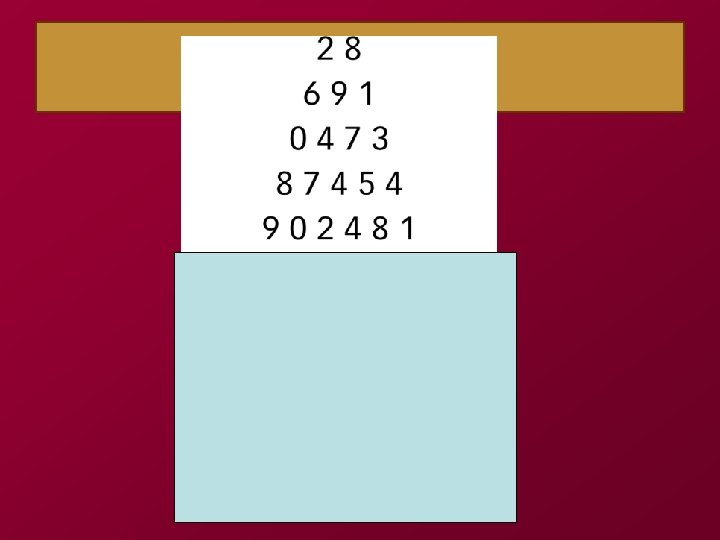
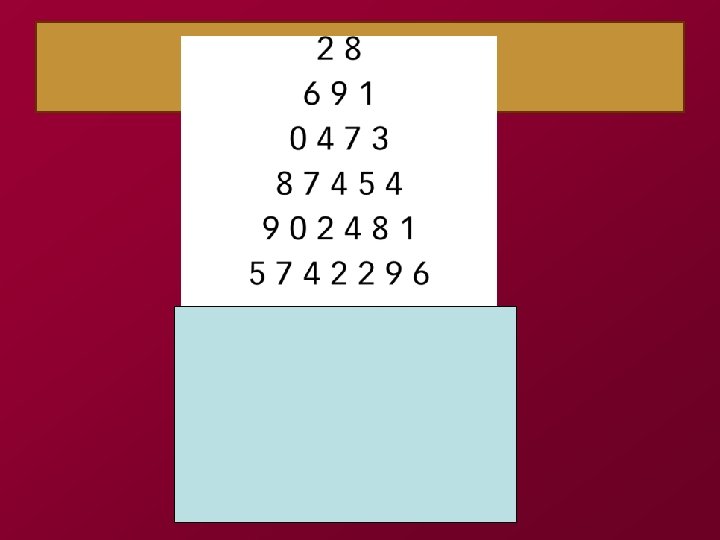
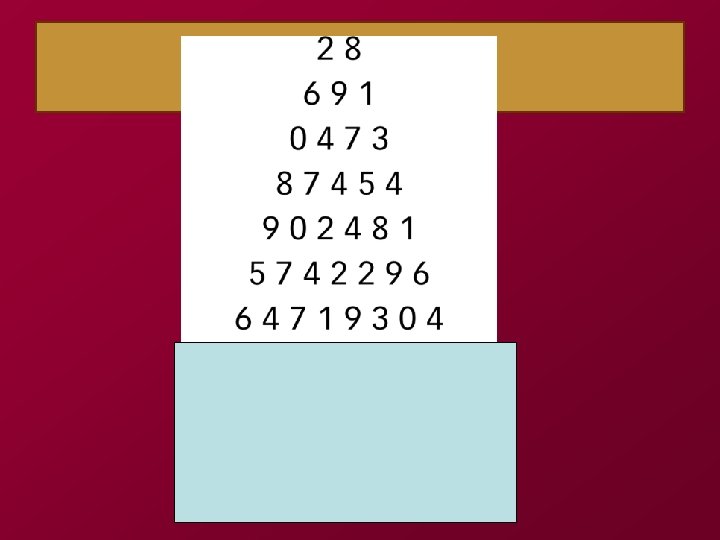
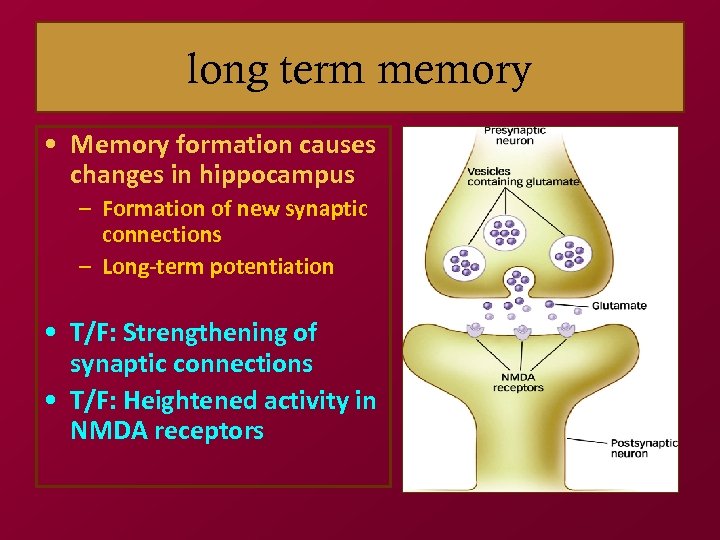 long term memory • Memory formation causes changes in hippocampus – Formation of new synaptic connections – Long-term potentiation • T/F: Strengthening of synaptic connections • T/F: Heightened activity in NMDA receptors
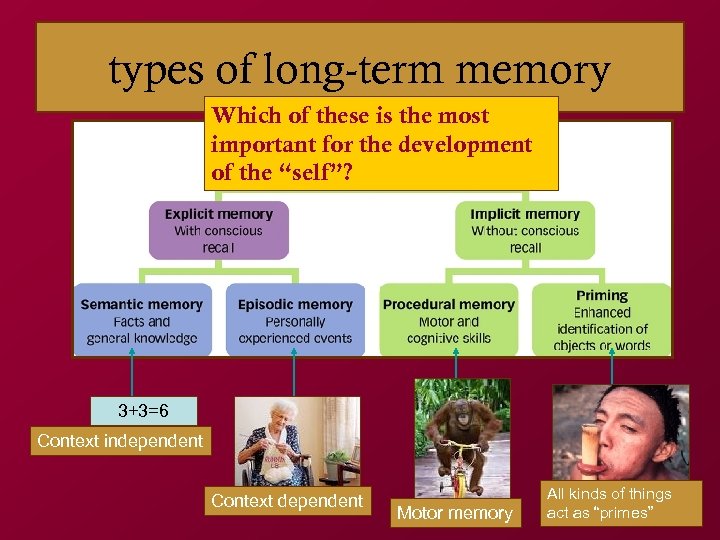 types of long-term memory Which of these is the most important for the development of the “self”? 3+3=6 Context independent Context dependent Motor memory All kinds of things act as “primes”
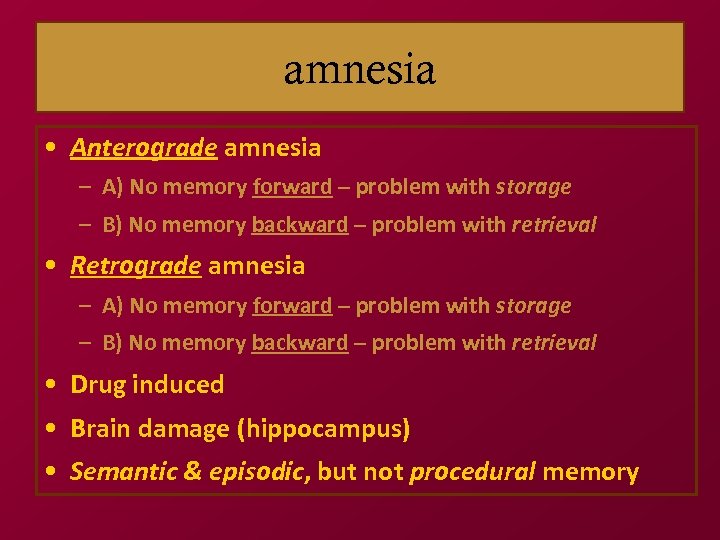 amnesia • Anterograde amnesia – A) No memory forward – problem with storage – B) No memory backward – problem with retrieval • Retrograde amnesia – A) No memory forward – problem with storage – B) No memory backward – problem with retrieval • Drug induced • Brain damage (hippocampus) • Semantic & episodic, but not procedural memory
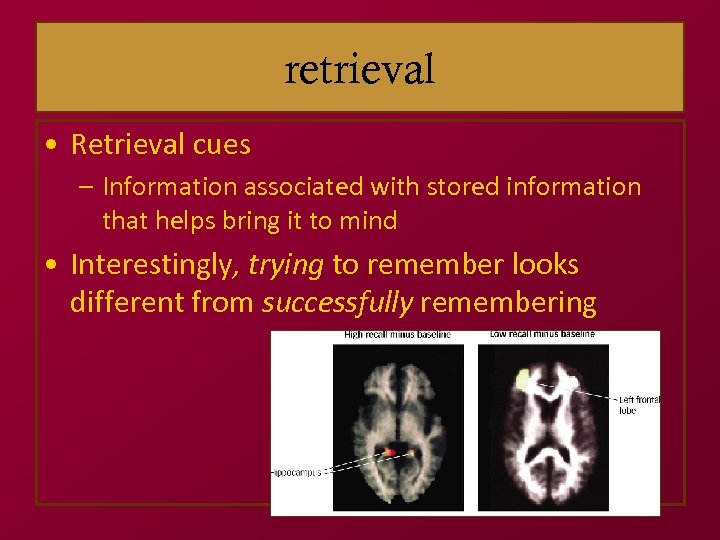 retrieval • Retrieval cues – Information associated with stored information that helps bring it to mind • Interestingly, trying to remember looks different from successfully remembering
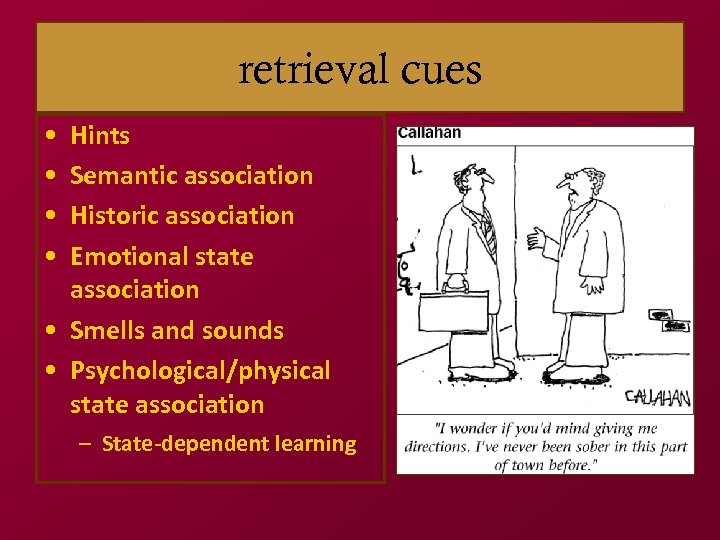 retrieval cues • • Hints Semantic association Historic association Emotional state association • Smells and sounds • Psychological/physical state association – State-dependent learning
 seven “sins” of memory • Transience Ø T/F: Forgetting things with the passing of time. • Switch from specific memory to general memory – “fill-in-the-blanks” – Gist memories • Gradual reconstruction (patch-work quilt) • Interference – Retroactive interference – Proactive interference
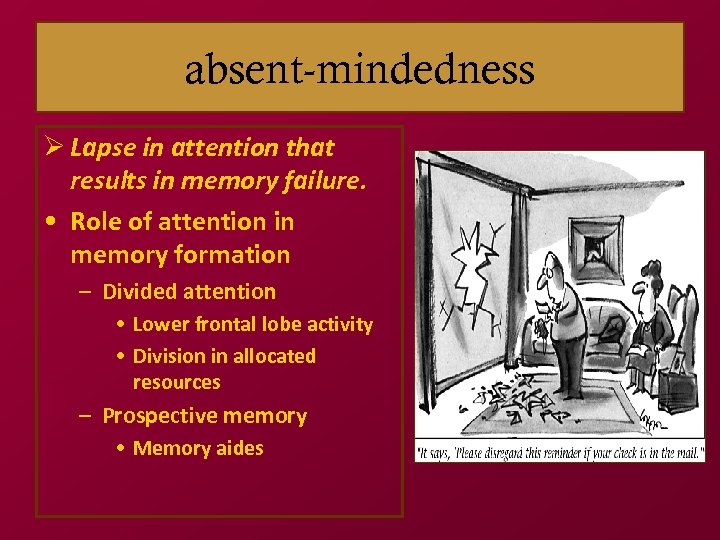 absent-mindedness Ø Lapse in attention that results in memory failure. • Role of attention in memory formation – Divided attention • Lower frontal lobe activity • Division in allocated resources – Prospective memory • Memory aides
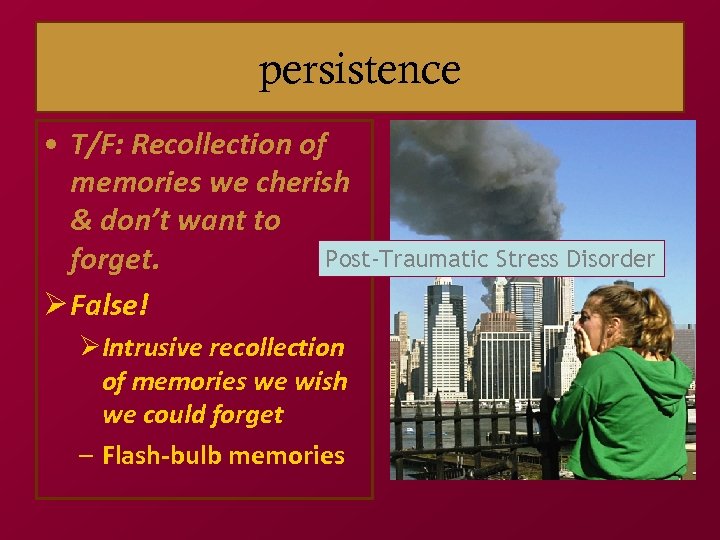 persistence • T/F: Recollection of memories we cherish & don’t want to Post-Traumatic Stress Disorder forget. Ø False! ØIntrusive recollection of memories we wish we could forget – Flash-bulb memories
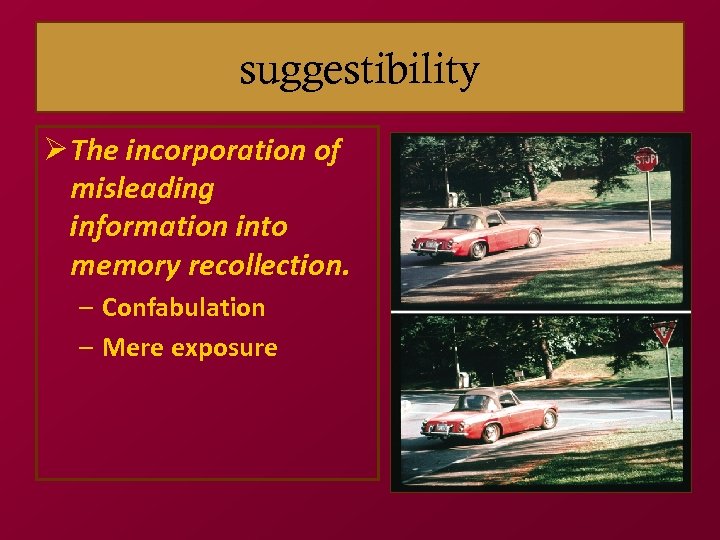 suggestibility Ø The incorporation of misleading information into memory recollection. – Confabulation – Mere exposure
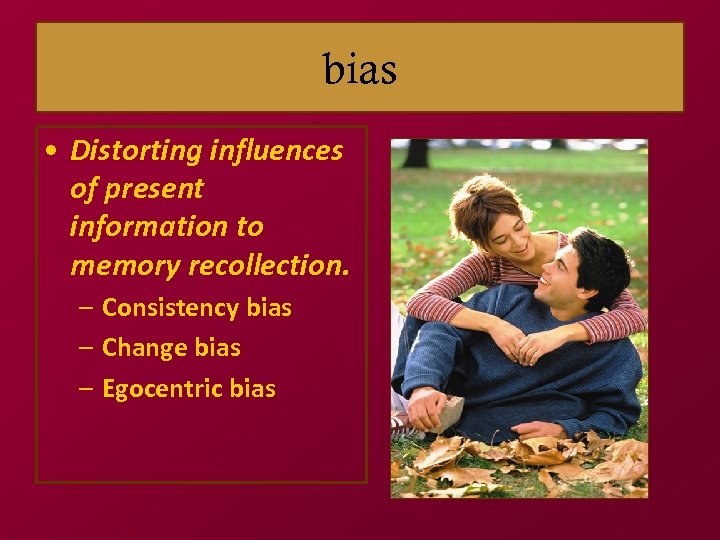 bias • Distorting influences of present information to memory recollection. – Consistency bias – Change bias – Egocentric bias
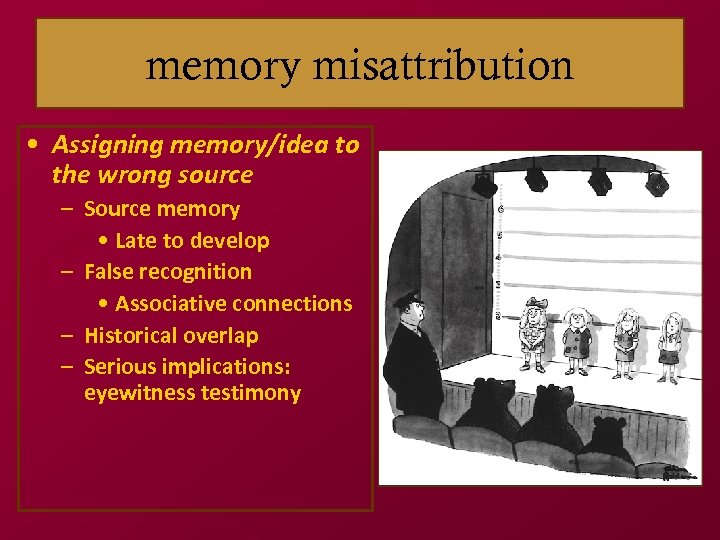 memory misattribution • Assigning memory/idea to the wrong source – Source memory • Late to develop – False recognition • Associative connections – Historical overlap – Serious implications: eyewitness testimony
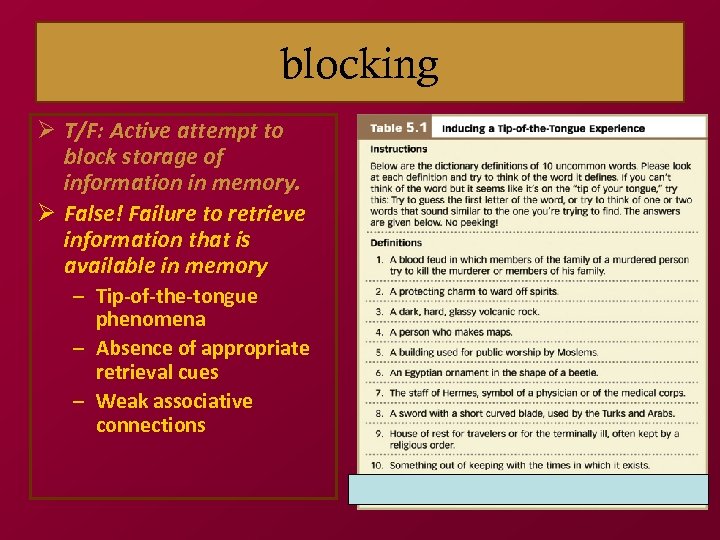 blocking Ø T/F: Active attempt to block storage of information in memory. Ø False! Failure to retrieve information that is available in memory – Tip-of-the-tongue phenomena – Absence of appropriate retrieval cues – Weak associative connections
 constructive nature of memory • If constructive memory is so bad, then why do we have it? Ø Constructive episodic simulation – Being able to actively construct our past allows us to actively imagine our future • We need to learn to avoid future dangers by remembering past dangers – But the future is never an exact replica of the past – It would be a useful adaptation to be able to alter the past in ways that allow for an anticipation of possible future events
 erasing our memories • Eternal sunshine of the spotless mind…? – http: //www. youtube. com/watch? v=1 Gi. Lxk. DK 8 s. I • If you could erase bad memories and/or create good ones – would you? • Nozick’s “experience machine”