


 Скачать презентацию MEDICINE IN THE MIDDLE AGES Medieval medicine
anglish.pptx
- Количество слайдов: 20
 MEDICINE IN THE MIDDLE AGES
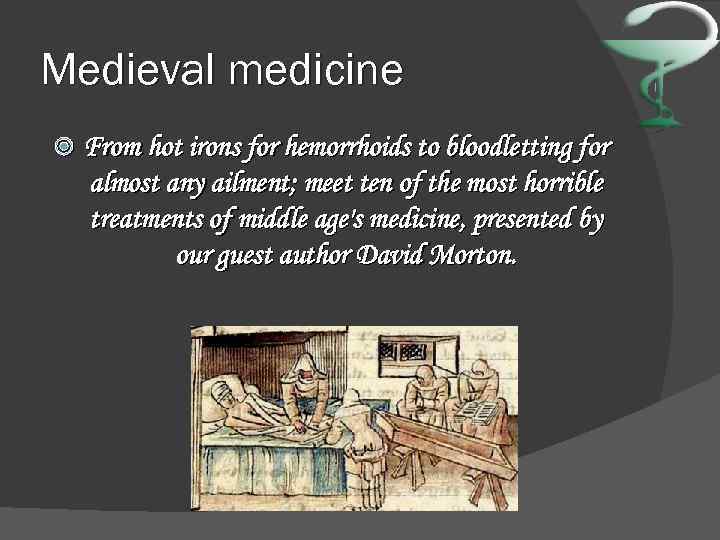 Medieval medicine From hot irons for hemorrhoids to bloodletting for almost any ailment; meet ten of the most horrible treatments of middle age's medicine, presented by our guest author David Morton.
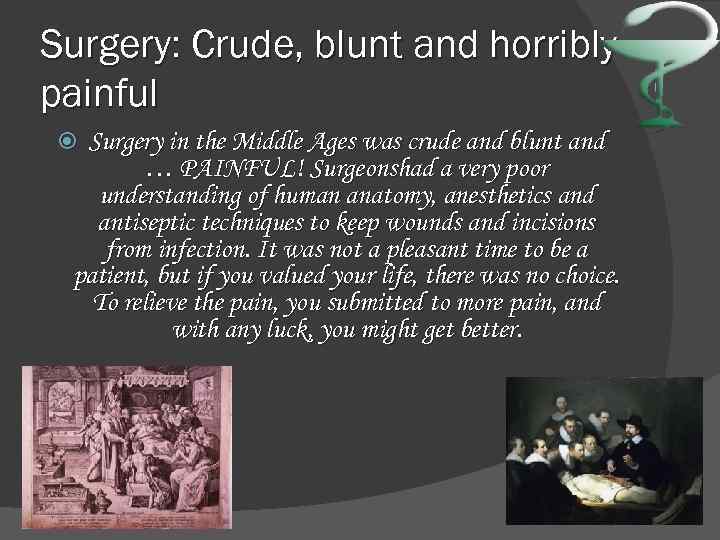 Surgery: Crude, blunt and horribly painful Surgery in the Middle Ages was crude and blunt and … PAINFUL! Surgeonshad a very poor understanding of human anatomy, anesthetics and antiseptic techniques to keep wounds and incisions from infection. It was not a pleasant time to be a patient, but if you valued your life, there was no choice. To relieve the pain, you submitted to more pain, and with any luck, you might get better.
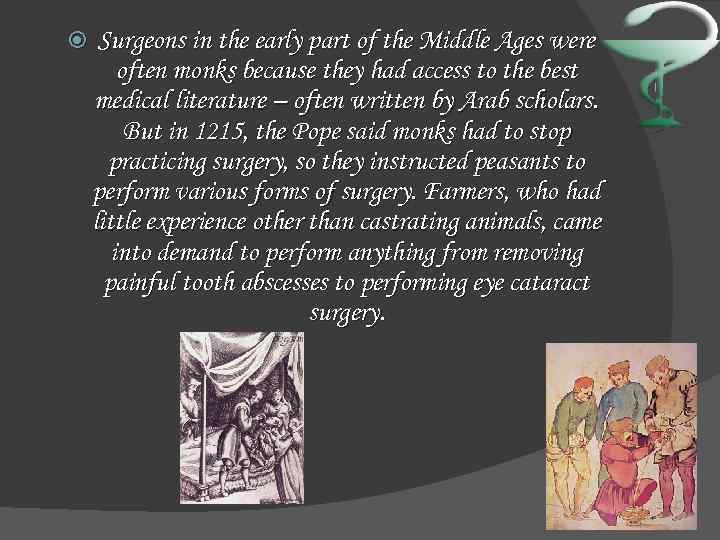 Surgeons in the early part of the Middle Ages were often monks because they had access to the best medical literature – often written by Arab scholars. But in 1215, the Pope said monks had to stop practicing surgery, so they instructed peasants to perform various forms of surgery. Farmers, who had little experience other than castrating animals, came into demand to perform anything from removing painful tooth abscesses to performing eye cataract surgery.
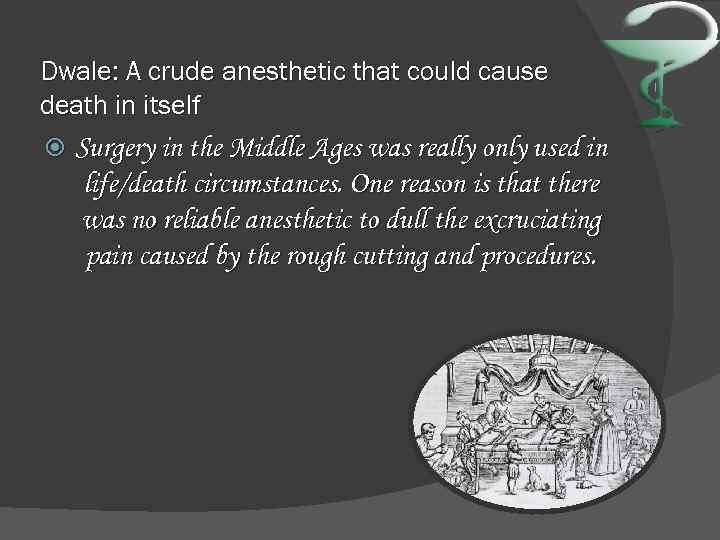 Dwale: A crude anesthetic that could cause death in itself Surgery in the Middle Ages was really only used in life/death circumstances. One reason is that there was no reliable anesthetic to dull the excruciating pain caused by the rough cutting and procedures.
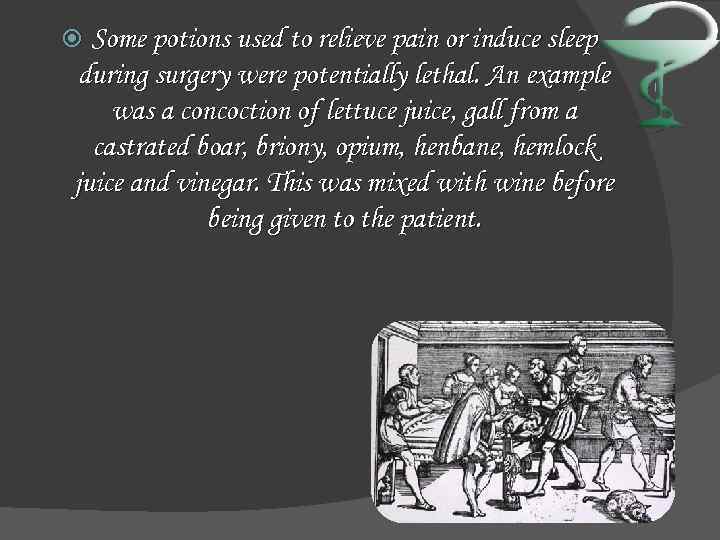 Some potions used to relieve pain or induce sleep during surgery were potentially lethal. An example was a concoction of lettuce juice, gall from a castrated boar, briony, opium, henbane, hemlock juice and vinegar. This was mixed with wine before being given to the patient.
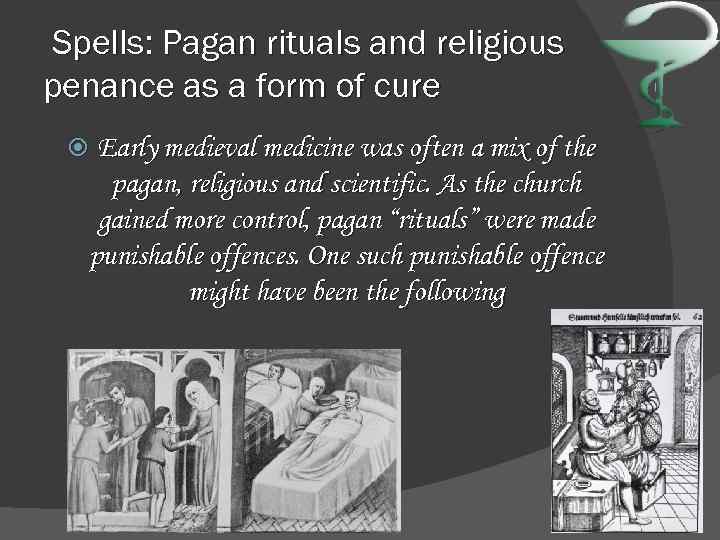 Spells: Pagan rituals and religious penance as a form of cure Early medieval medicine was often a mix of the pagan, religious and scientific. As the church gained more control, pagan “rituals” were made punishable offences. One such punishable offence might have been the following
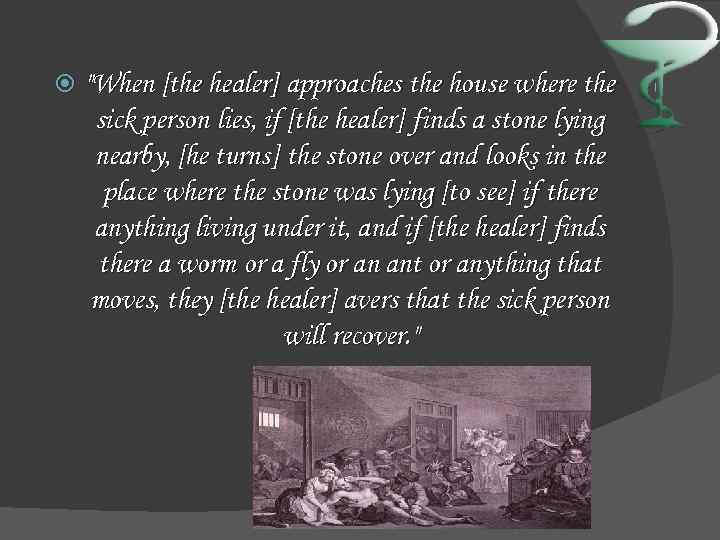 "When [the healer] approaches the house where the sick person lies, if [the healer] finds a stone lying nearby, [he turns] the stone over and looks in the place where the stone was lying [to see] if there anything living under it, and if [the healer] finds there a worm or a fly or an ant or anything that moves, they [the healer] avers that the sick person will recover. "
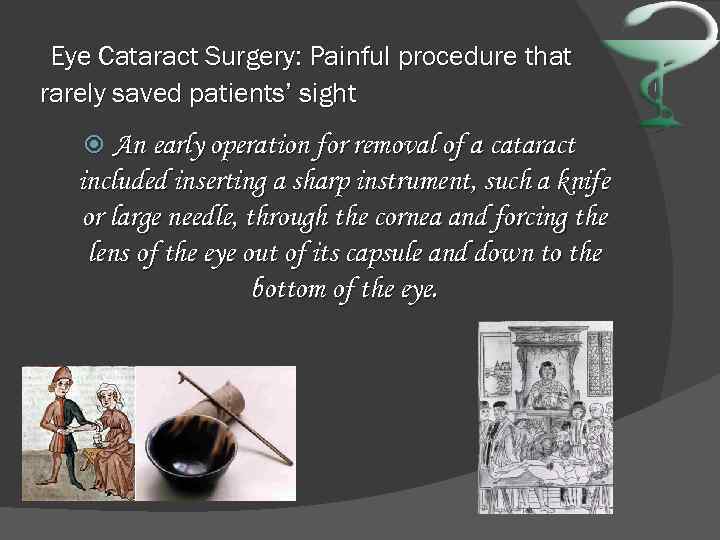 Eye Cataract Surgery: Painful procedure that rarely saved patients’ sight An early operation for removal of a cataract included inserting a sharp instrument, such a knife or large needle, through the cornea and forcing the lens of the eye out of its capsule and down to the bottom of the eye.
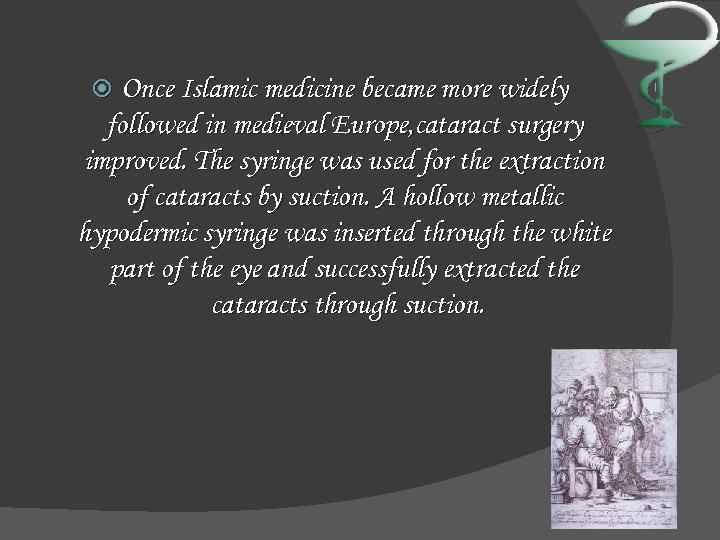 Once Islamic medicine became more widely followed in medieval Europe, cataract surgery improved. The syringe was used for the extraction of cataracts by suction. A hollow metallic hypodermic syringe was inserted through the white part of the eye and successfully extracted the cataracts through suction.
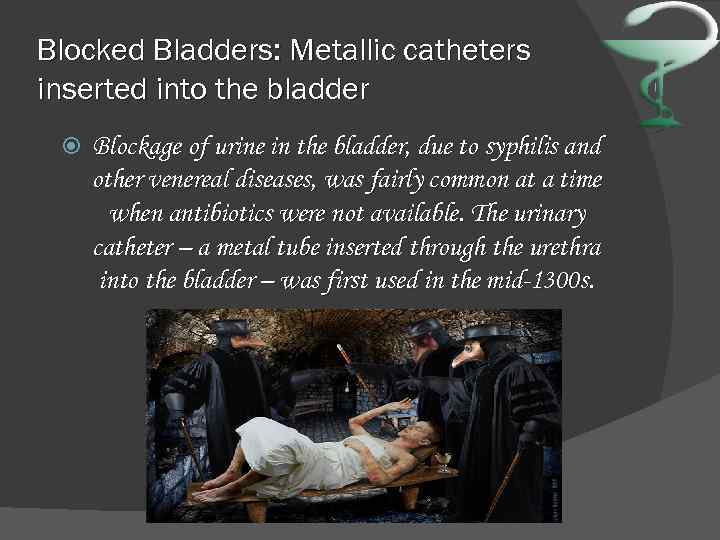 Blocked Bladders: Metallic catheters inserted into the bladder Blockage of urine in the bladder, due to syphilis and other venereal diseases, was fairly common at a time when antibiotics were not available. The urinary catheter – a metal tube inserted through the urethra into the bladder – was first used in the mid-1300 s.
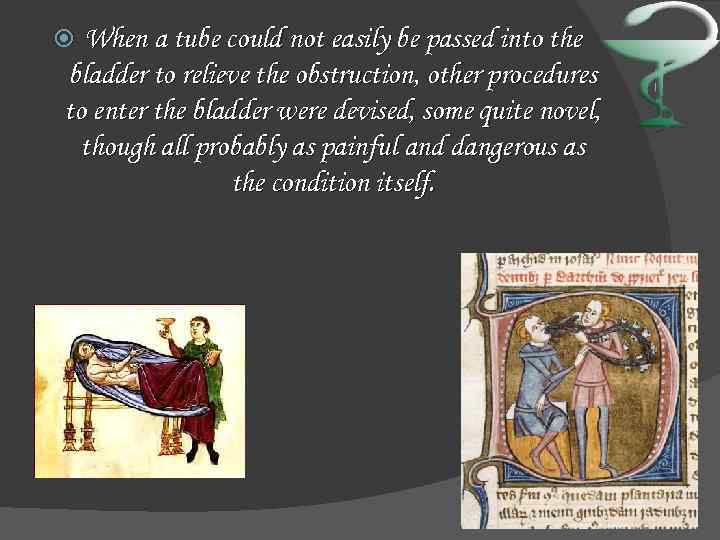 When a tube could not easily be passed into the bladder to relieve the obstruction, other procedures to enter the bladder were devised, some quite novel, though all probably as painful and dangerous as the condition itself.
 Surgeons on the Battlefield: Pulling of arrows was a nasty business Use of the longbow – a large powerful bow that could shoot arrows great distances – flourished in the Middle Ages. This created a real problem for battlefield surgeons: how to remove arrows from the bodies of soldiers. The heads of war arrows weren’t necessarily glued onto the shafts, but attached with warm beeswax. After the wax set, they could be handled normally, but once shot into something if the shaft was pulled, the head would come off inside the body.
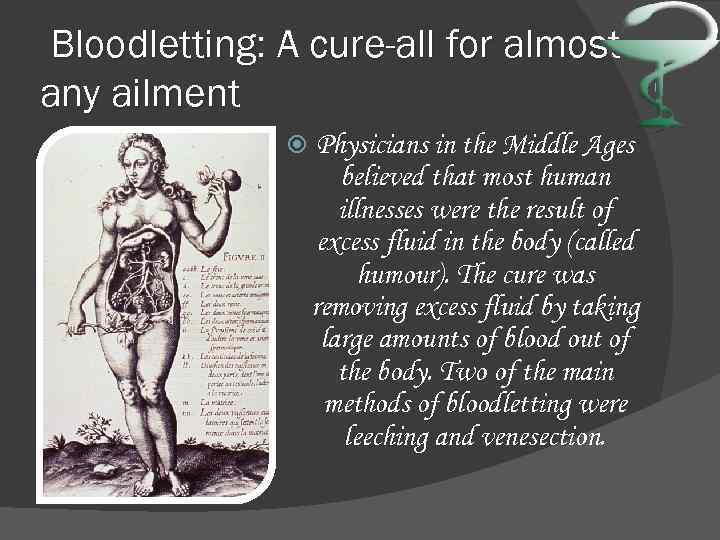 Bloodletting: A cure-all for almost any ailment Physicians in the Middle Ages believed that most human illnesses were the result of excess fluid in the body (called humour). The cure was removing excess fluid by taking large amounts of blood out of the body. Two of the main methods of bloodletting were leeching and venesection.
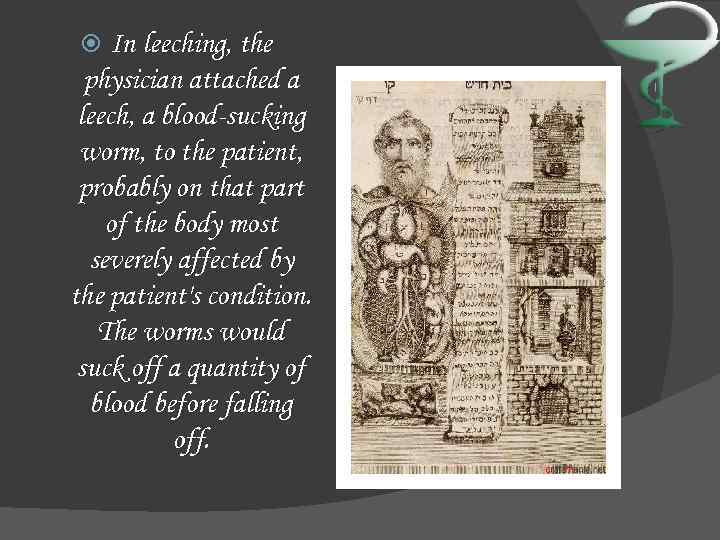 In leeching, the physician attached a leech, a blood-sucking worm, to the patient, probably on that part of the body most severely affected by the patient's condition. The worms would suck off a quantity of blood before falling off.
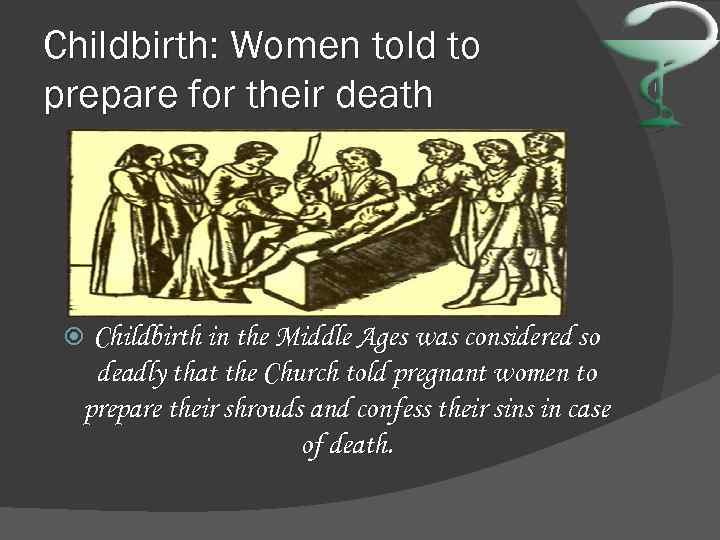 Childbirth: Women told to prepare for their death Childbirth in the Middle Ages was considered so deadly that the Church told pregnant women to prepare their shrouds and confess their sins in case of death.
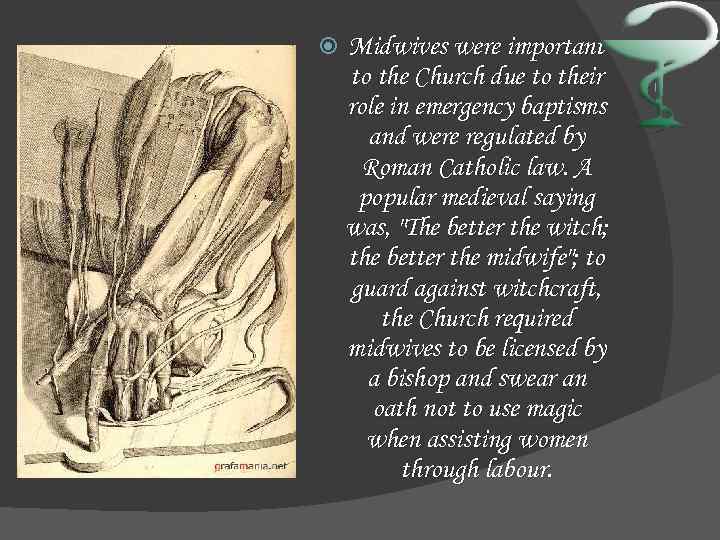 Midwives were important to the Church due to their role in emergency baptisms and were regulated by Roman Catholic law. A popular medieval saying was, "The better the witch; the better the midwife"; to guard against witchcraft, the Church required midwives to be licensed by a bishop and swear an oath not to use magic when assisting women through labour.
 Clysters: A medieval method of injecting medicines into the anus The medieval version of the enema was known as the clyster, which is really an instrument for injecting fluids into the body through the anus. The clyster was a long metallic tube with a cupped end, into which the medicinal fluid was poured. The other end, a dull point, which was drilled with several small holes, was inserted into the anus. Fluids were poured in and a plunger was used to inject the fluids into the colon area, using a pumping action.
 Hemorrhoids: Agony of the anus treated with hot irons Treatment of many diseases in the Middle Ages included prayers to patron saints for possible divine intervention. A seventh century Irish monk, St. Fiacre, was the patron saint for hemorrhoid sufferers. He developed hemorrhoids from digging in his garden, one day, and sat on a stone which gave him a miraculous cure. The stone survives to this day with the imprint of his hemorrhoids and is visited by many hoping for a similar cure. The disease was often called “St. Fiacre’s curse” in the Middle Ages.
 The end