


 Скачать презентацию Medication Administration Teresa V Hurley MSN RN
6ce8df745804091caf17a6f1be0cc3a7.ppt
- Количество слайдов: 33
 Medication Administration Teresa V. Hurley, MSN, RN

 Pharmacological Concepts o Drug Names n Chemical Name: molecular composition o n Generic Name: common name o n N-acetyl-para-aminophenol acetaminophen Trade Mark: official name, brand name o tylenol
 Pharm Concepts o Classification n Effects on body system Symptoms relieved Desired effect o o Oral hypoglycemic agents Aspirin (analgesic, antipyretic, anti-inflammatory)
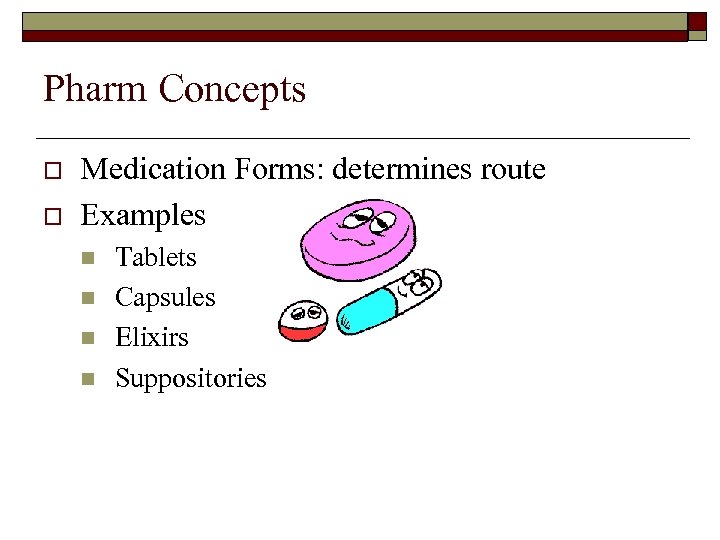 Pharm Concepts o o Medication Forms: determines route Examples n n Tablets Capsules Elixirs Suppositories
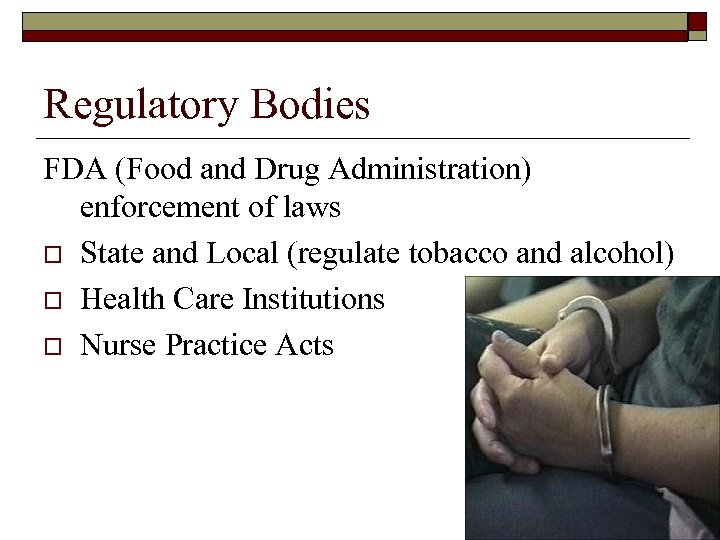 Regulatory Bodies FDA (Food and Drug Administration) enforcement of laws o State and Local (regulate tobacco and alcohol) o Health Care Institutions o Nurse Practice Acts
 Pharmocokinetics o Absorbed n n n Administration route Rate differs (skin, mucous membranes, respiratory airways, GI system) Dissolved (acidic versus base) Blood Flow to site of administration Body Surface Area Lipid Solubility, with or between meals
 o Distribution n n Circulation Membrane Permeability Protein Binding (free form does not bind to albumin and is the active form of medication) What happens in liver disease, malnurtition and elderly?
 o Metabolism n Bio-tranformation (detoxify) medications o o o Liver main organ Less extent lungs, kidneys, intestines Excretion n Kidneys( main) and liver, bowel, lungs, skin o Gases and alcohol through the lungs
 Medication Action o Therapeutic Effect n ASA o o o Analgesic Antipyretic Anti-inflammatory Reduces platelet agglutination Anti-hypertensives and Mood elevators in small doses given for night sweats Nitroglycerine to increase o 2 supply to heart and reduce cardiac workload
 o Side Effects n o Adverse Effects n o Minimal or serious effect Severe response as coma Toxic Prolonged use, metabolism or excretion impairments lead to build-up Opiod Toxicity: morphine leads to respiratory depression and death; antagonist narcon to reverse n
 o Allergic Reactions n n n o Medication acts as antigen Antigen triggers release of antibodies Mild (uriticaria; rash, pruritus, rhinitis) Anaphylactic n n constriction muscles, pharyngeal and laryngeal edema, wheezing, SOB, hypotension, Medic Alert Bracelet
 Medication Interactions o o One medication increases or lessens effect the other Synergistic: combined effect produces greater effect than if given separately n Alcohol and antihistamines, antidepressants, barbiturates and narcotics
 Therapeutic Ranges o o o Onset: time it takes to produce a response Peak: highest effective concentration Trough: lowest concentration just before next scheduled dose Duration: concentration great enough to produce a response Plateau: concentration reached and maintained after administration of fixed doses
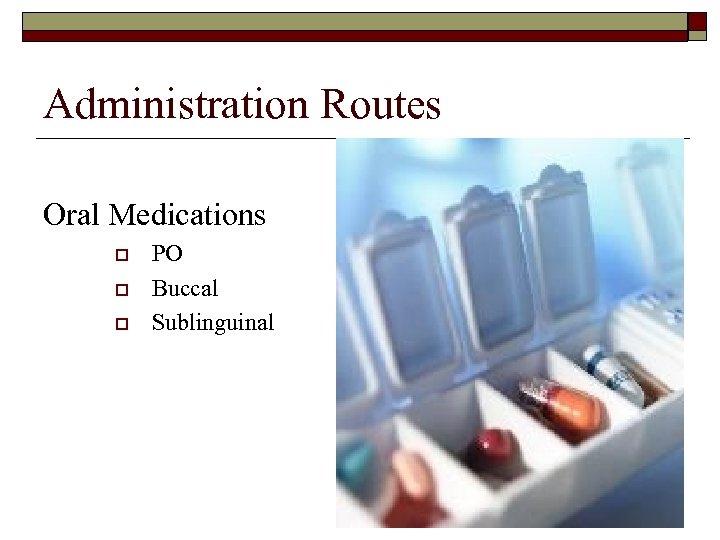 Administration Routes Oral Medications o o o PO Buccal Sublinguinal
 Parenteral Administration (Injections) Intradermal (ID) dermis layer
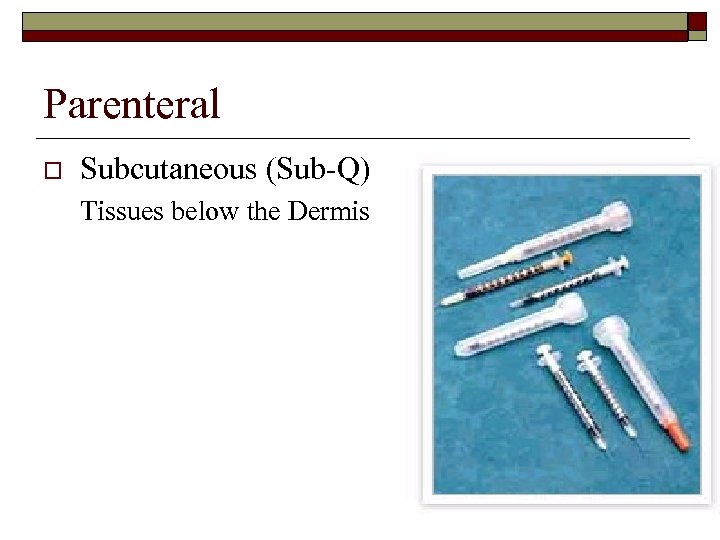 Parenteral o Subcutaneous (Sub-Q) Tissues below the Dermis
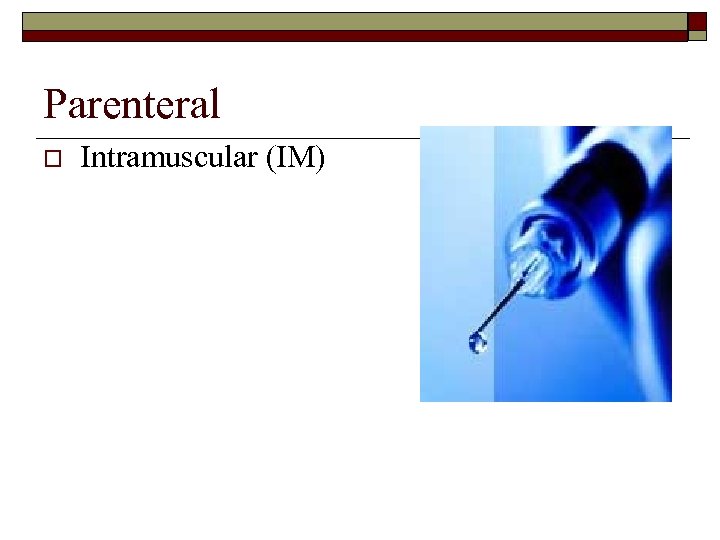 Parenteral o Intramuscular (IM)
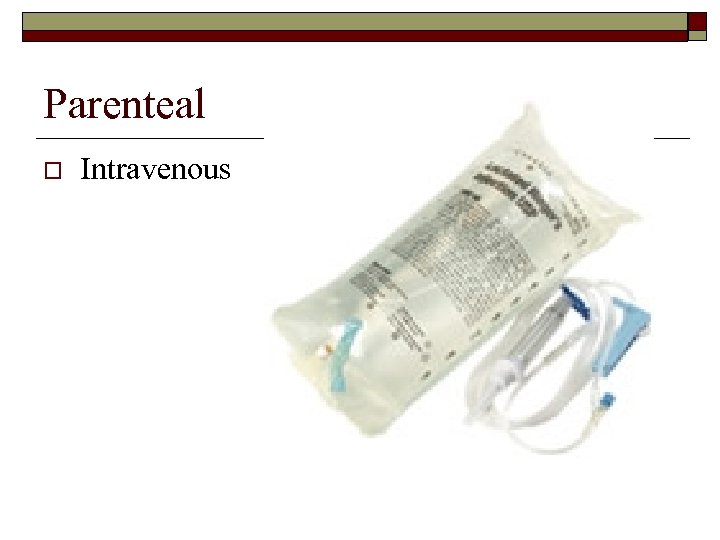 Parenteal o Intravenous
 Topical Administration o Transdermal: 24 hours to 7 days with a systemic effect (nitroglycerine, estrogens) o Topical provide local effects (eye, ear, nose gtts, gargling, swabbing; rectal or vaginal suppositories; flushing or spraying)
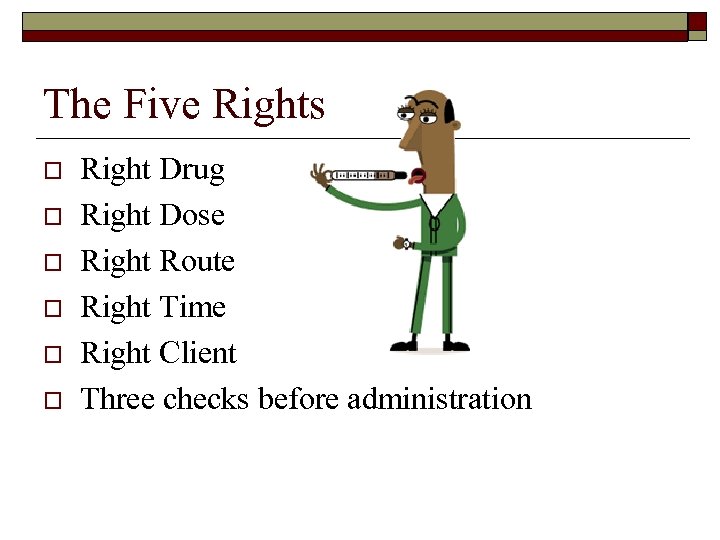 The Five Rights o o o Right Drug Right Dose Right Route Right Time Right Client Three checks before administration
 Types of Orders o Standing or Routine n o Tetracycline 500 mg PO q 6 h prn: when ever necessary is a subjective and objective determination n n Morphine sulfate 2 mg IV 12 hr prn for incisional pain Document assessment, time given, effectiveness
 Order Types o Single (one time only) as pre-op or prediagnostic n o o o Valium 10 mg PO at (9: 00 am) STAT (single dose, immediately) Surgery Automatically cancels all of client’s existing medication orders New Orders Written: Transfer to another Health Care Facility; from 1 unit to another
 Distribution Systems o o Must be kept under lock and key Must be under surveillance Stock Supply Delivery: costly and extremely high incidence of errors Unit Dose System: mandated by states and regulatory agencies (NYS) and supply only for 24 hours
 Newer Technological Systems o Automated Medicine Dispensing Systems (AMDS) n n n Computer control of unit doses and narcotics via client profile Access via nurse security code, client ID, desired med, dosage, route from computer screen and drawer opens, records and charges Bar Code Scans (client and medication (name, dosage and strength) and nurse administering
 Medication Administrative Records o o o Check written order against the MAR Check written order when administering IV solutions Document all medications given on MAR Document unusual side effects in nurses notes Document IV solutions given on I and O sheet and in nurses notes Document amount of fluid given PO with medications on the I&O sheet if client on intake and output
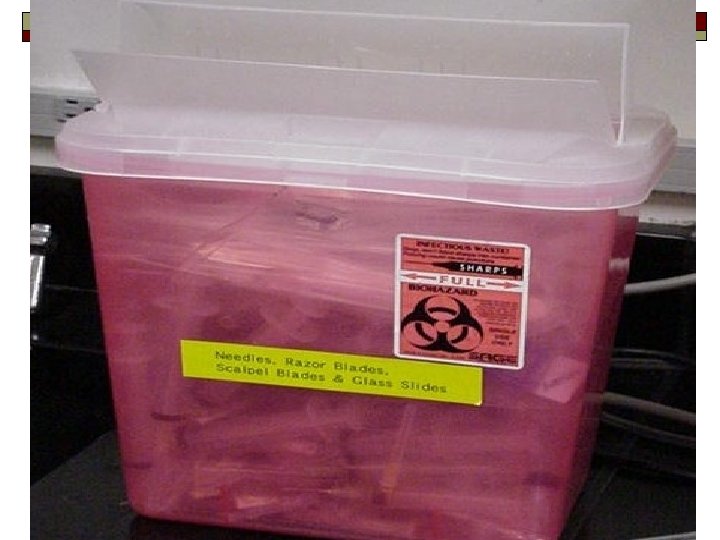
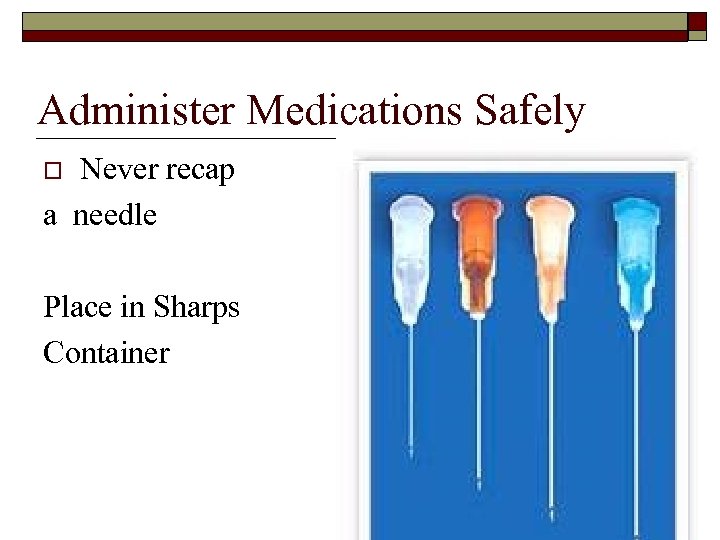 Administer Medications Safely Never recap a needle o Place in Sharps Container
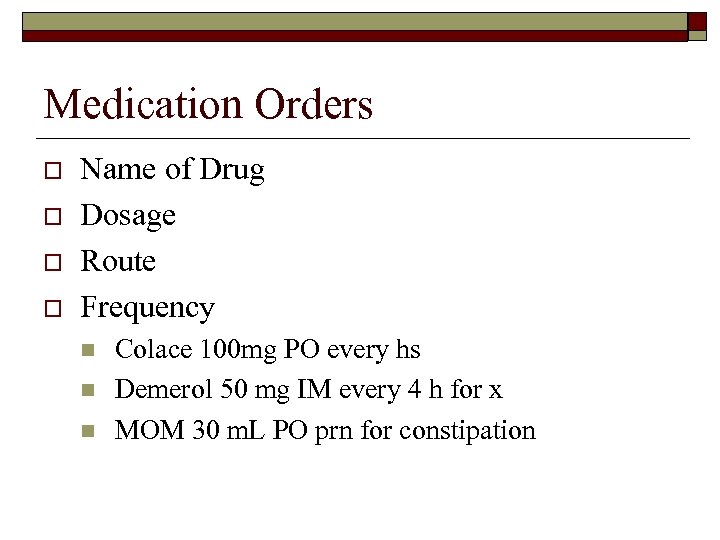 Medication Orders o o Name of Drug Dosage Route Frequency n n n Colace 100 mg PO every hs Demerol 50 mg IM every 4 h for x MOM 30 m. L PO prn for constipation
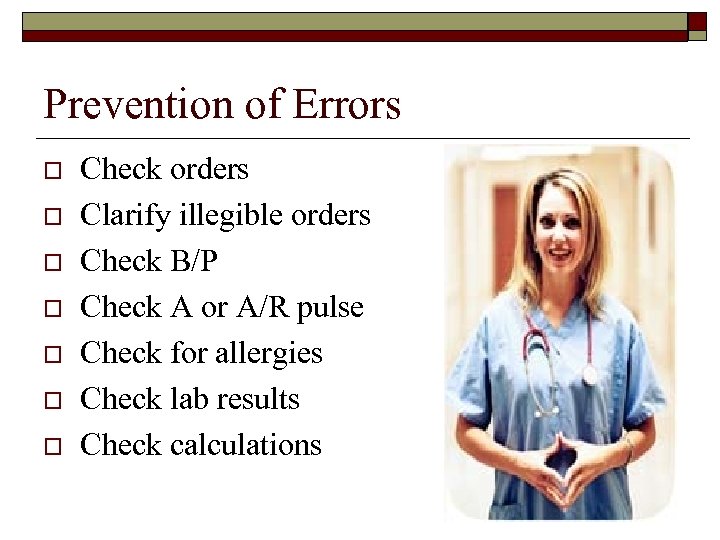 Prevention of Errors o o o o Check orders Clarify illegible orders Check B/P Check A or A/R pulse Check for allergies Check lab results Check calculations
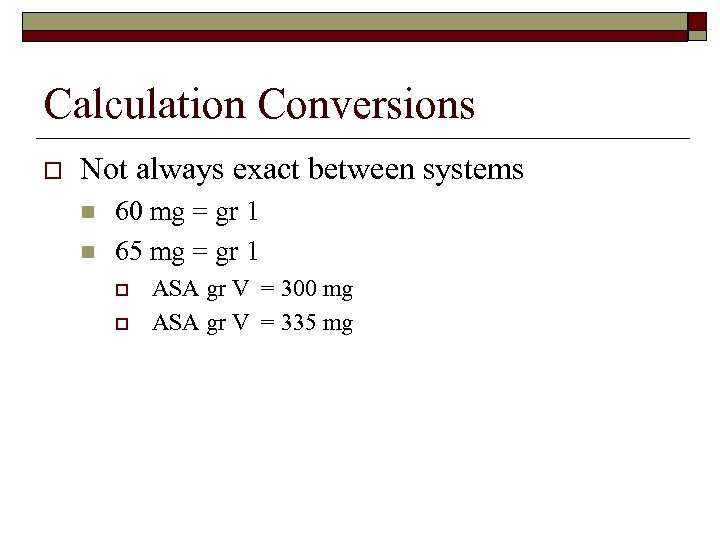 Calculation Conversions o Not always exact between systems n n 60 mg = gr 1 65 mg = gr 1 o o ASA gr V = 300 mg ASA gr V = 335 mg