 Скачать презентацию Medical School Global Health Tips and Resources for
e91b588a95b4173d8f8f83be8967ea7e.ppt
- Количество слайдов: 47



Medical School Global Health: Tips and Resources for Initiating Your Program BEN FREDRICK, M. D. ASSOCIATE PROFESSOR OF FAMILY AND COMMUNITY MEDICINE PENN STATE COLLEGE OF MEDICINE, HERSHEY PA JANE WEIDA, M. D. FACULTY ASSOCIATE READING HOSPITAL FAMILY MEDICINE RESIDENCY, WEST READING PA CLINICAL ASSOCIATE PROFESSOR FAMILY AND COMMUNITY MEDICINE PENN STATE COLLEGE OF MEDICINE, HERSHEY PA
Educational Goals and Objectives Participants will develop a knowledge of structure and content of a global health program for medical students. Participants will be able to assess barriers to establishing a global health program. Participants will better understand methods to address barriers to program development. Participants will be able to access global health resources.
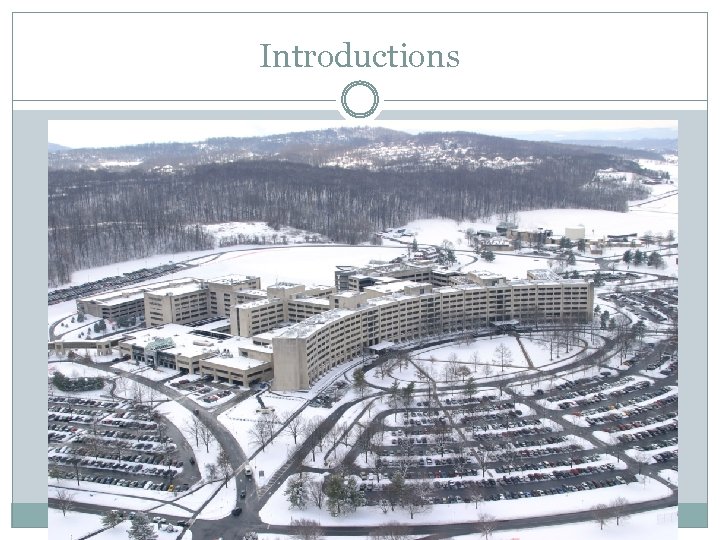
Introductions
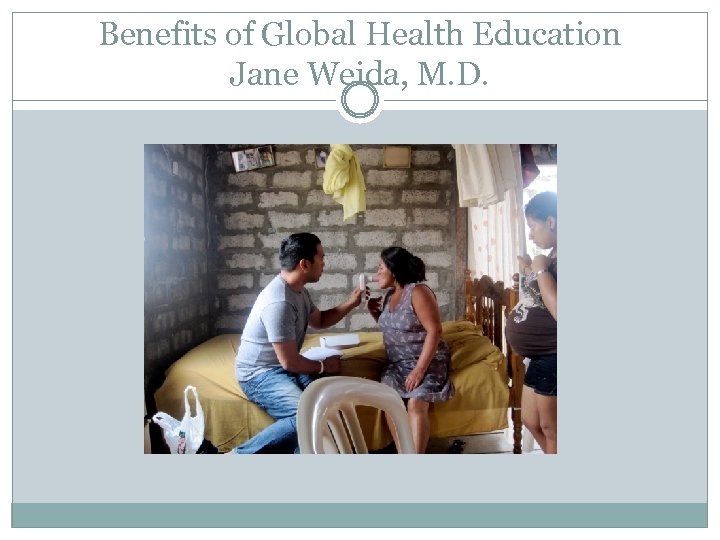
Benefits of Global Health Education Jane Weida, M. D.
Benefits of Global Health Education Meets expressed need of medical students Awakens medical humanitarianism Better preparation for future practice in this age of globalization and interconnectedness
Benefits of Global Health Education Furthers knowledge (and experience) of non-biologic determinants of health AAMC’s Medical School Objectives Program, “Physicians must be dutiful. ” ACGME Competency: Medical Knowledge Opportunity to promote professionalism (altruism, respect, duty) AAMC, Medical School Objectives Project (MSOP), “Physicians must be altruistic. ” ACGME Competency: Professionalism
Benefits of Global Health Education Opportunity to promote cultural competence ED-21. The faculty and students must demonstrate an understanding of the manner in which people of diverse cultures and belief systems perceive health and illness and respond to various symptoms, diseases, and treatments. ED-22. Medical students must learn to recognize and appropriately address gender and cultural biases in themselves and others, and in the process of health care delivery. ACGME Competency: Interpersonal Skills and Communication
Benefits of Global Health Education Opportunity for service and service-learning IS-14 -A. Medical schools should make available sufficient opportunities for medical students to participate in servicelearning activities, and should encourage and support student participation. [New standard annotation approved by the LCME in February 2007; effective July 1, 2008. ] Promotes primary care as a career choice; and later to serve among the poor
Benefits of Global Health Education Those completing international rotations have reported: Increased skills and confidence Enhanced sensitivity to cost issues Less reliance on technology Greater appreciation for cross-cultural communication Broader clinical exposure to developing country endemic diseases These all strengthen our own health care system Academic Medicine, Vol. 82, No. 3 / March 2007
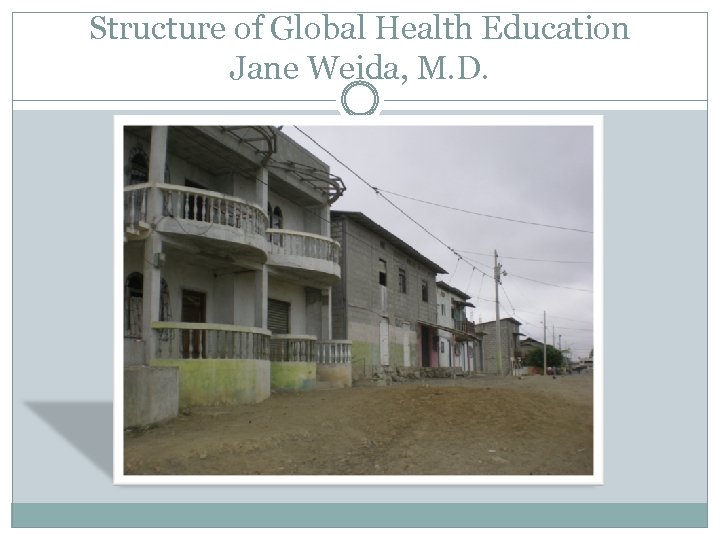
Structure of Global Health Education Jane Weida, M. D.
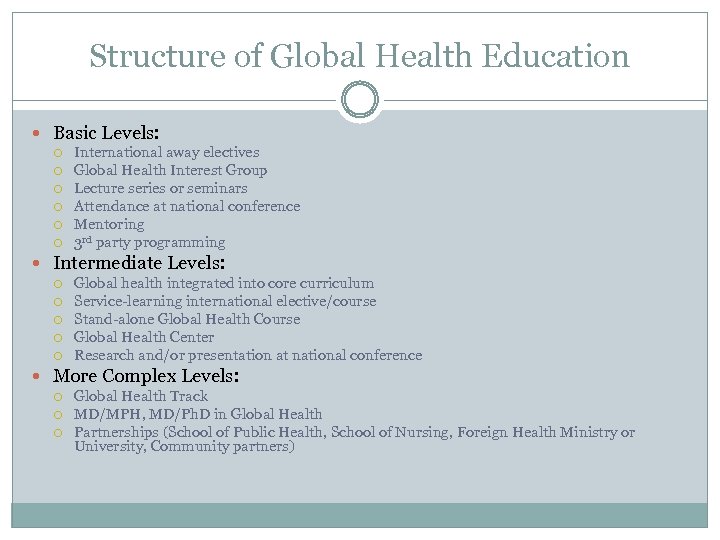
Structure of Global Health Education Basic Levels: International away electives Global Health Interest Group Lecture series or seminars Attendance at national conference Mentoring 3 rd party programming Intermediate Levels: Global health integrated into core curriculum Service-learning international elective/course Stand-alone Global Health Course Global Health Center Research and/or presentation at national conference More Complex Levels: Global Health Track MD/MPH, MD/Ph. D in Global Health Partnerships (School of Public Health, School of Nursing, Foreign Health Ministry or University, Community partners)
Structure of Global Health Education Basic Levels: International away electives Global Health Interest Group Lecture series or seminars Attendance at national conference Mentoring 3 rd party programming
Structure of Global Health Education Intermediate Levels: Global health integrated into core curriculum Service-learning international elective/course Stand-alone Global Health Course Global Health Center Research and/or presentation at national conference
Structure of Global Health Education More Complex Levels: Global Health Track MD/MPH, MD/Ph. D in Global Health Partnerships (School of Public Health, School of Nursing, Foreign Health Ministry or University, Community partners)
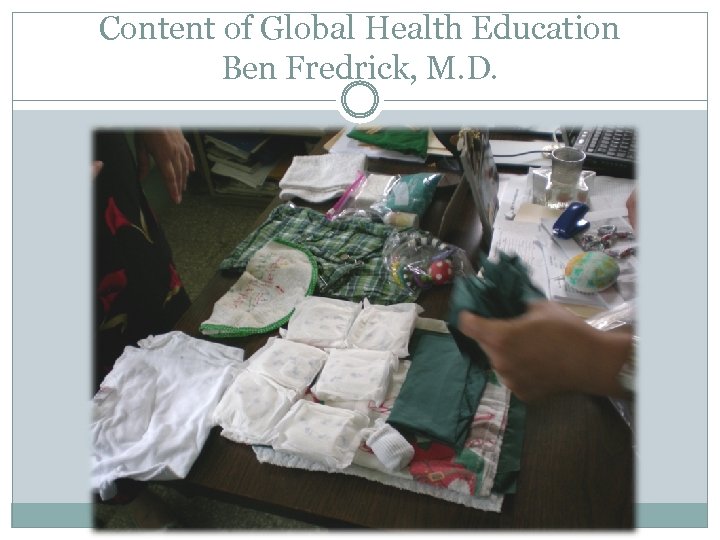
Content of Global Health Education Ben Fredrick, M. D.
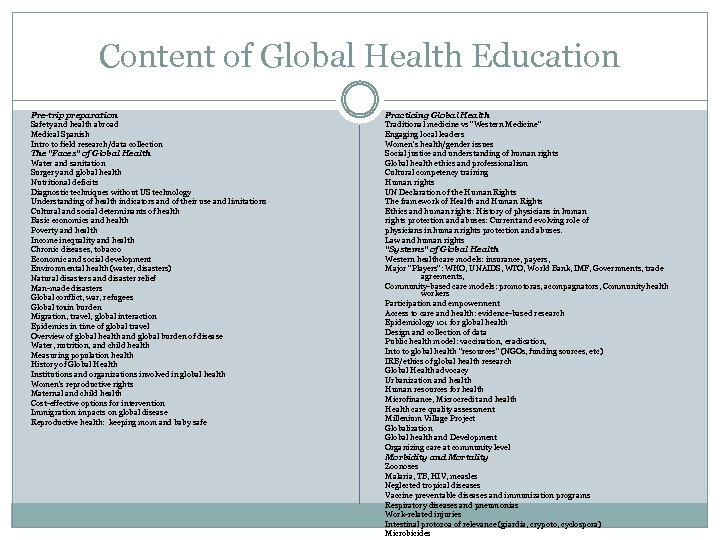
Content of Global Health Education Pre-trip preparation Safety and health abroad Medical Spanish Intro to field research/data collection The "Faces" of Global Health Water and sanitation Surgery and global health Nutritional deficits Diagnostic techniques without US technology Understanding of health indicators and of their use and limitations Cultural and social determinants of health Basic economics and health Poverty and health Income inequality and health Chronic diseases, tobacco Economic and social development Environmental health (water, disasters) Natural disasters and disaster relief Man-made disasters Global conflict, war, refugees Global toxin burden Migration, travel, global interaction Epidemics in time of global travel Overview of global health and global burden of disease Water, nutrition, and child health Measuring population health History of Global Health Institutions and organizations involved in global health Women's reproductive rights Maternal and child health Cost-effective options for intervention Immigration impacts on global disease Reproductive health: keeping mom and baby safe Practicing Global Health Traditional medicine vs "Western Medicine" Engaging local leaders Women's health/gender issues Social justice and understanding of human rights Global health ethics and professionalism Cultural competency training Human rights UN Declaration of the Human Rights The framework of Health and Human Rights Ethics and human rights: History of physicians in human rights protection and abuses: Current and evolving role of physicians in human rights protection and abuses. Law and human rights "Systems" of Global Health Western healthcare models: insurance, payers, Major “Players”: WHO, UNAIDS, WTO, World Bank, IMF, Governments, trade agreements, Community-based care models: promotoras, acompagnators, Community health workers Participation and empowerment Access to care and health: evidence-based research Epidemiology 101 for global health Design and collection of data Public health model: vaccination, eradication, Into to global health "resources" (NGOs, funding sources, etc) IRB/ethics of global health research Global Health advocacy Urbanization and health Human resources for health Microfinance, Microcredit and health Health care quality assessment Millenium Village Project Globalization Global health and Development Organizing care at community level Morbidity and Mortality Zoonoses Malaria, TB, HIV, measles Neglected tropical diseases Vaccine preventable diseases and immunization programs Respiratory diseases and pneumonias Work-related injuries Intestinal protozoa of relevance (giardia, crypoto, cyclospora) Microbicides
Content of Global Health Education Consider “Core” topics first Overview and History of Global Health Disparities Poverty and Health Global Burden of Disease Communicable, Non-communicable, Injuries Health Care Delivery Systems Environment and Health Includes Nutrition, Water, Sanitation, Pollution etc.
Content of Global Health Education Others have proposed ALL medical students be competent in the following: Global burden of disease Traveler’s medicine Immigrant health Three Domains of Competency in Global Health Education: Recommendations for All Medical Students Eric R. Houpt, MD, Richard D. Pearson, MD, and Thomas L. Hall, MD, Dr. PH Academic Medicine, Vol. 82, No. 3 / March 2007
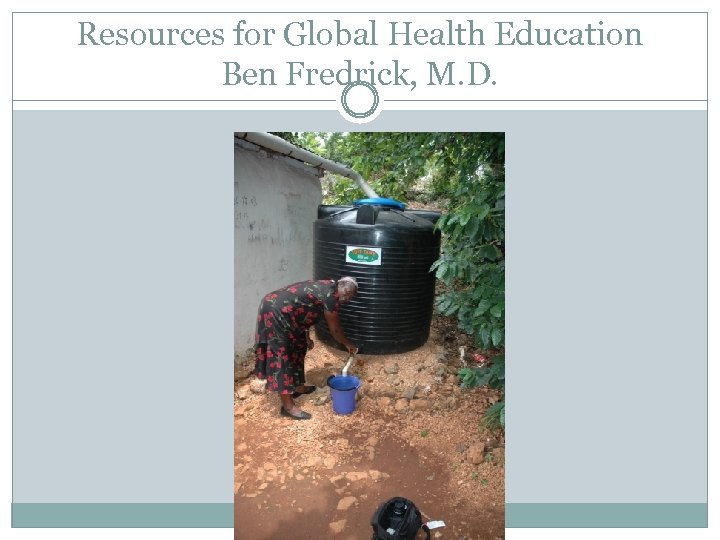
Resources for Global Health Education Ben Fredrick, M. D.
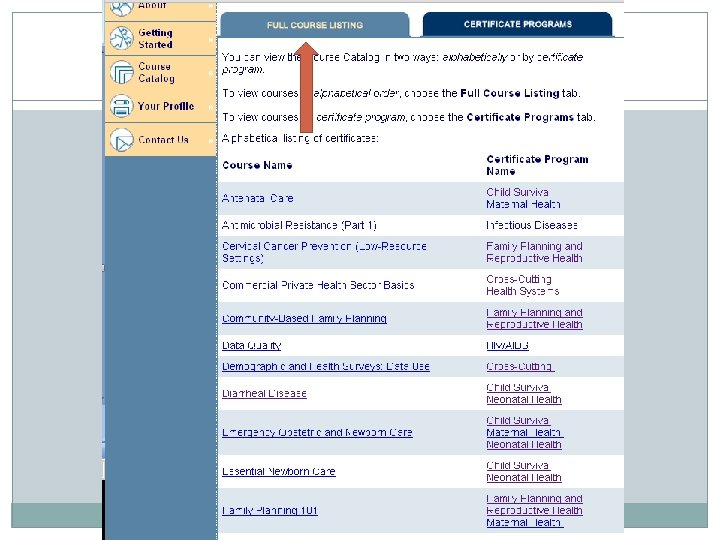
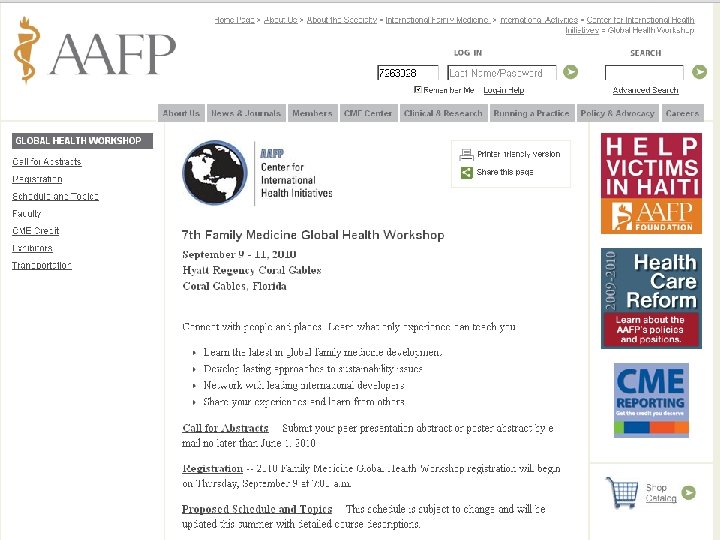
Resources for Global Health Education Consortium Modules http: //globalhealthedu. org Global Health Learning (USAID) http: //www. globalhealthlearning. org Johns Hopkins Open. Courseware (i. e Malaria) http: //ocw. jhsph. edu/Topics. cfm? topic_id=25 AAFP Global Health (i. e. Global Health Workshop) http: //www. aafp. org/international Medact. org (Global Health Studies, teaching pack) www. medact. org
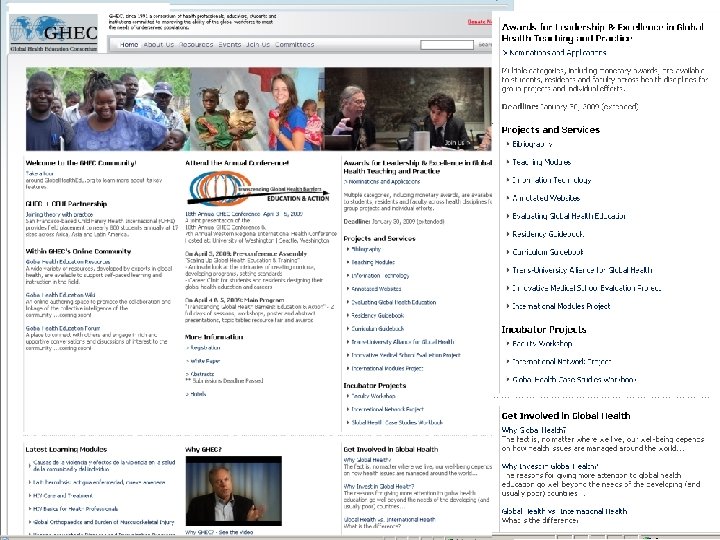
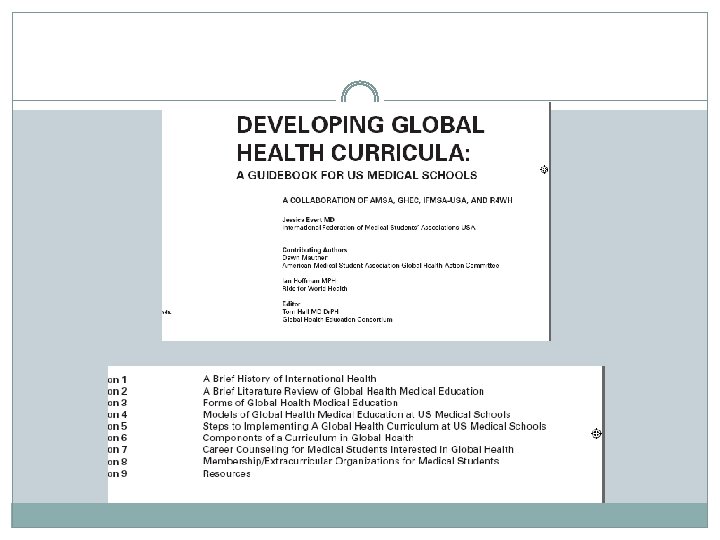
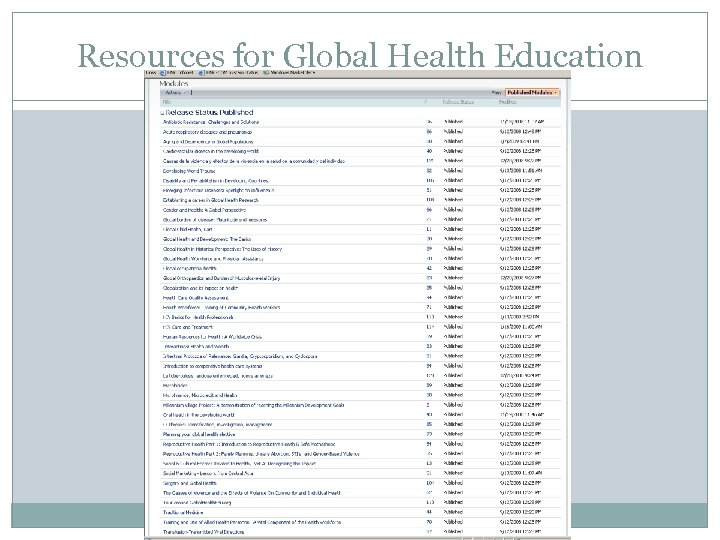
Resources for Global Health Education
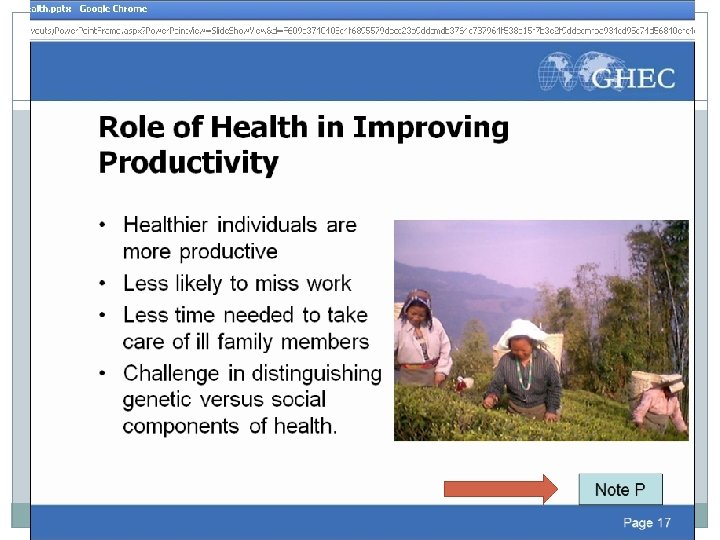
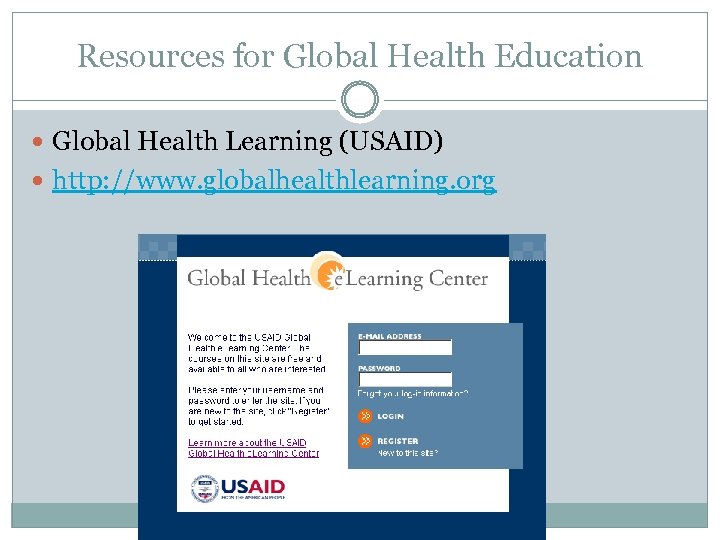
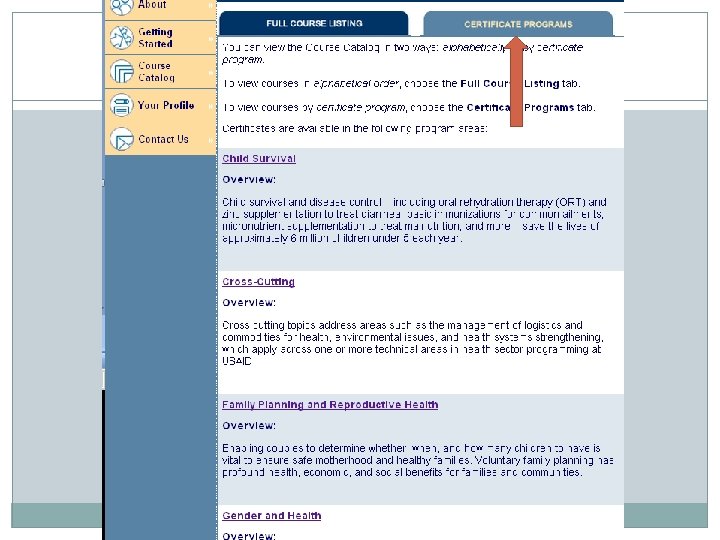
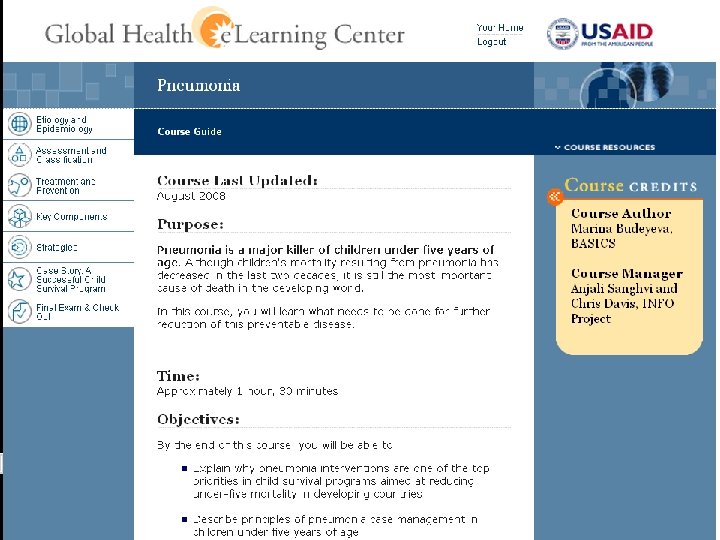
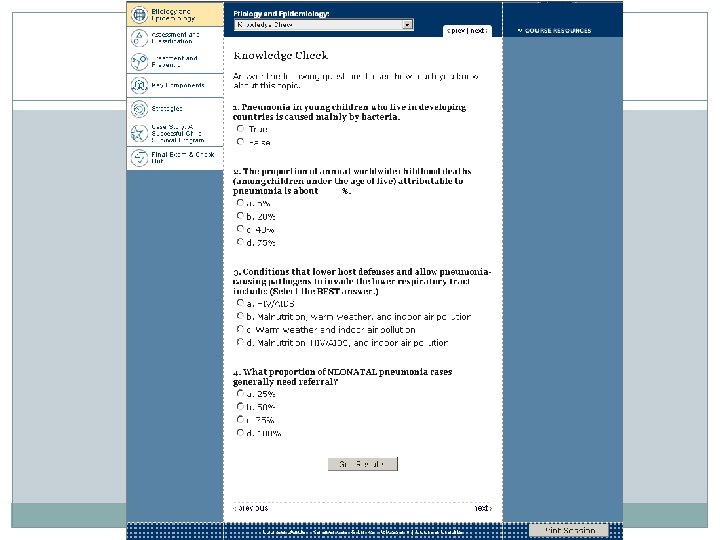
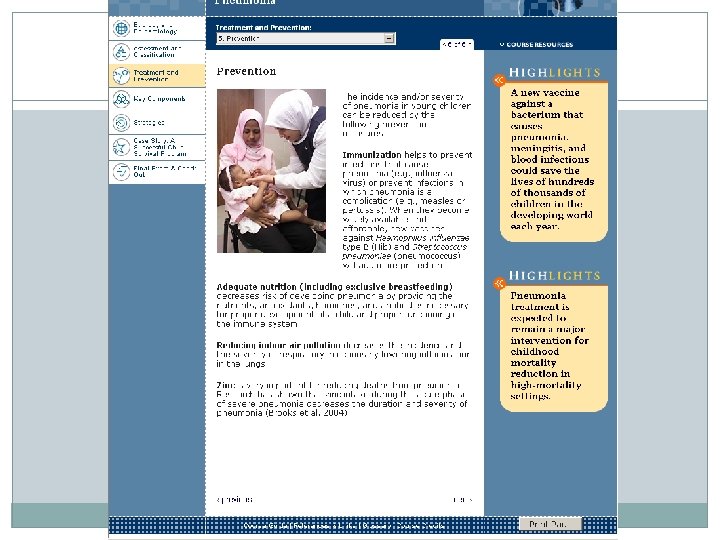
Resources for Global Health Education Global Health Learning (USAID) http: //www. globalhealthlearning. org
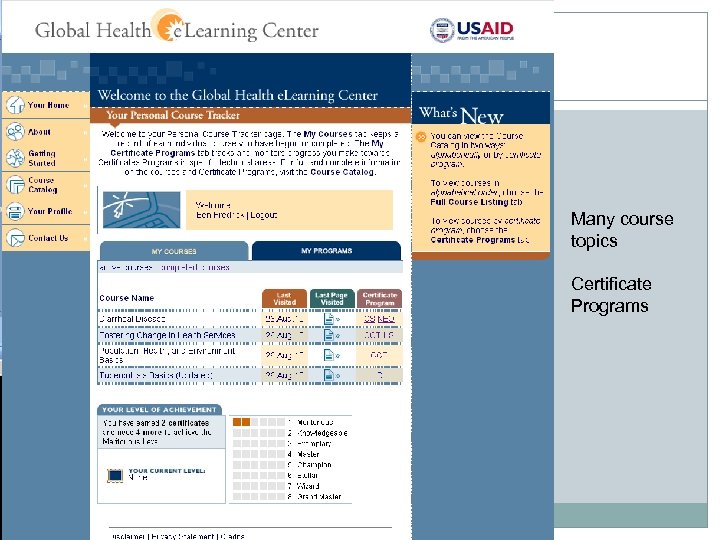
Many course topics Certificate Programs
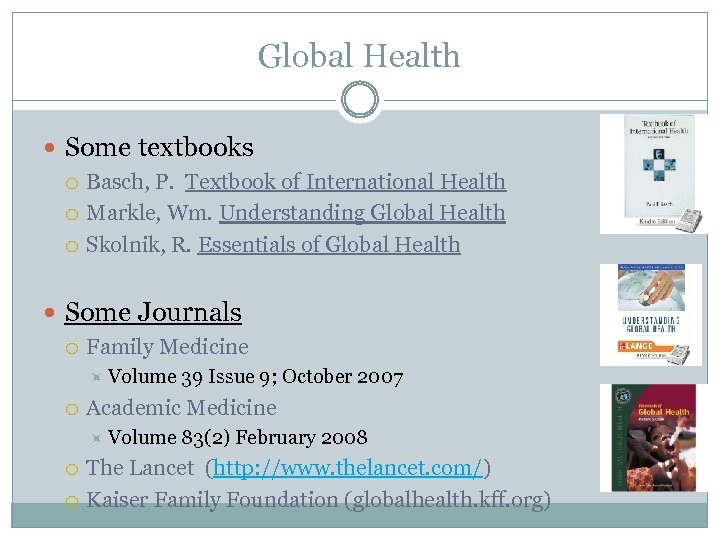
Global Health Some textbooks Basch, P. Textbook of International Health Markle, Wm. Understanding Global Health Skolnik, R. Essentials of Global Health Some Journals Family Medicine Volume 39 Issue 9; October 2007 Academic Medicine Volume 83(2) February 2008 The Lancet (http: //www. thelancet. com/) Kaiser Family Foundation (globalhealth. kff. org)
Barriers to Global Health Education Jane Weida, M. D.
Barriers to Global Health Education Institutional barriers Educational barriers Personal barriers Insurance Startup, growth, maintenance
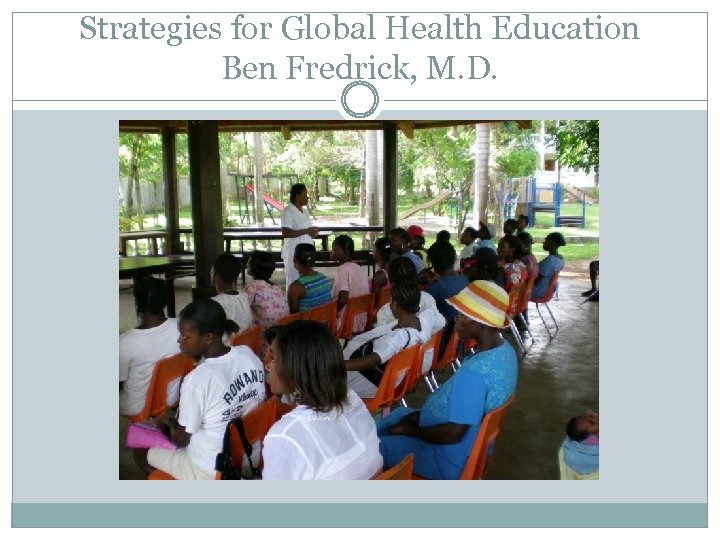
Strategies for Global Health Education Ben Fredrick, M. D.
Strategies for Global Health Education Discovery Phase Define goals and scope High level stakeholder assessment (department chair, dean, pre-clinical director) Determine current global efforts underway at institution Determine deficits related to global health education Look for touchpoints
Strategies for Global Health Education Project Planning Phase Assemble team (people interested in getting the program/venture off the ground) Funding (consider multiple sources) Curriculum (structure, content, format) Infrastructure (administrative support, trip planning, website development)
Strategies for Global Health Education Design Phase Idealized design to shape Future State recommendation Curriculum development (new course, new track, use existing structure) Determine approval process (if needed) Develop budget (if needed)
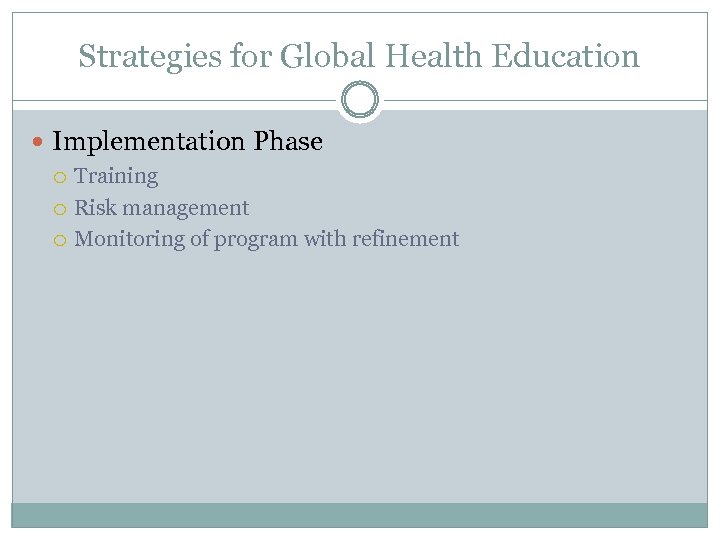
Strategies for Global Health Education Implementation Phase Training Risk management Monitoring of program with refinement
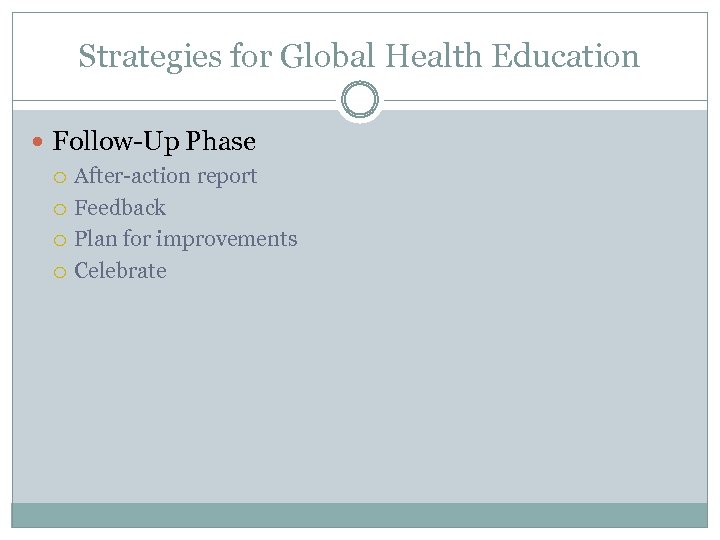
Strategies for Global Health Education Follow-Up Phase After-action report Feedback Plan for improvements Celebrate
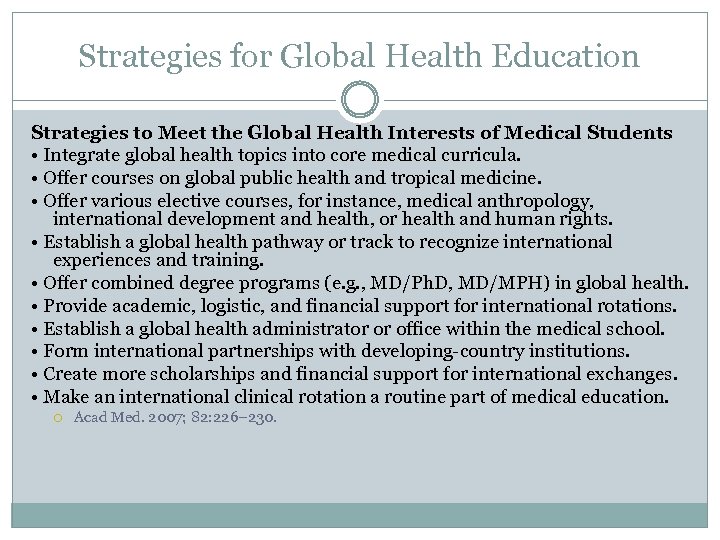
Strategies for Global Health Education Strategies to Meet the Global Health Interests of Medical Students • Integrate global health topics into core medical curricula. • Offer courses on global public health and tropical medicine. • Offer various elective courses, for instance, medical anthropology, international development and health, or health and human rights. • Establish a global health pathway or track to recognize international experiences and training. • Offer combined degree programs (e. g. , MD/Ph. D, MD/MPH) in global health. • Provide academic, logistic, and financial support for international rotations. • Establish a global health administrator or office within the medical school. • Form international partnerships with developing-country institutions. • Create more scholarships and financial support for international exchanges. • Make an international clinical rotation a routine part of medical education. Acad Med. 2007; 82: 226– 230.

Questions & Discussion
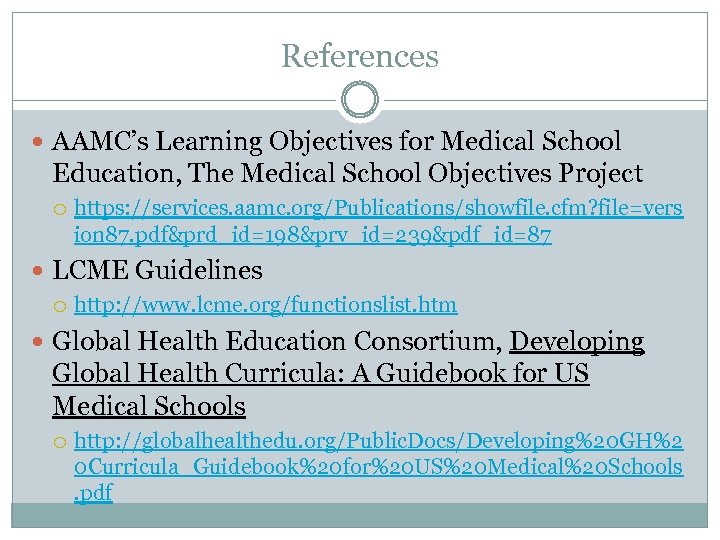
References AAMC’s Learning Objectives for Medical School Education, The Medical School Objectives Project https: //services. aamc. org/Publications/showfile. cfm? file=vers ion 87. pdf&prd_id=198&prv_id=239&pdf_id=87 LCME Guidelines http: //www. lcme. org/functionslist. htm Global Health Education Consortium, Developing Global Health Curricula: A Guidebook for US Medical Schools http: //globalhealthedu. org/Public. Docs/Developing%20 GH%2 0 Curricula_Guidebook%20 for%20 US%20 Medical%20 Schools. pdf
References Drain P, et. Al. Global Health in Medical Education: A Call for More Training and Opportunities, Academic Medicine, Vol. 82, No. 3 / March 2007. Evert J, Bazemore A, Hixon A, Withey K. Going Global: Considerations for Introducing Global health into Family Medicine Training programs. Family Medicine 2007; 39 (9): 659 -65.
References Houpt, et al. Three Domains of Competency in Global Health Education: Recommendations for all medical students. Academic Medicine, Vol. 82, No. 3 / March 2007 Markel, H. Exposing Poverty and Inspiring Medical Humanitarianism. JAMA, July 9, 2008—Vol 300, No. 2
Скачать презентацию Medical School Global Health Tips and Resources for
e91b588a95b4173d8f8f83be8967ea7e.ppt