


 Скачать презентацию Medical Response to Nuclear and Radiological Events Cham
c97da49a4e0c23ca462da7c4a8861f97.ppt
- Количество слайдов: 39
 Medical Response to Nuclear and Radiological Events Cham Dallas, Ph. D Director CDC Center for Mass Destruction Defense BDLS is a registered service mark of the Board of Regents University System of Georgia
 Overview • • Nuclear scenario effects Radiation injury § Acute radiation syndrome § Mass burn casualties § External contamination § Internal contamination • Pharmaceutical intervention strategies
 Question Which of the following are most likely to occur and result in significant casualties? A. Nuclear power plant release B. Improvised nuclear devise C. Conventional nuclear weapon D. “Dirty” bomb
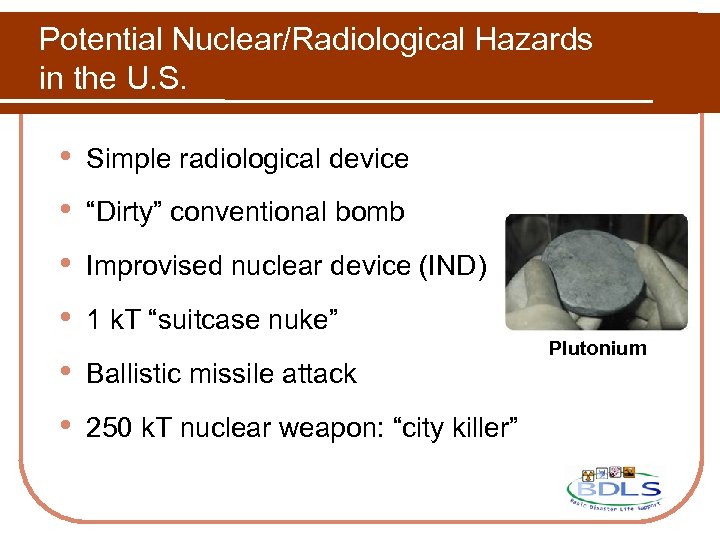 Potential Nuclear/Radiological Hazards in the U. S. • • • Simple radiological device “Dirty” conventional bomb Improvised nuclear device (IND) 1 k. T “suitcase nuke” Ballistic missile attack 250 k. T nuclear weapon: “city killer” Plutonium
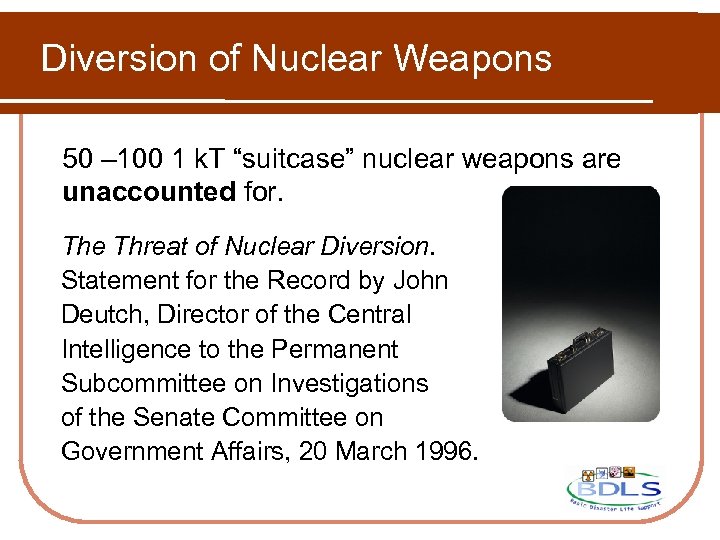 Diversion of Nuclear Weapons 50 – 100 1 k. T “suitcase” nuclear weapons are unaccounted for. The Threat of Nuclear Diversion. Statement for the Record by John Deutch, Director of the Central Intelligence to the Permanent Subcommittee on Investigations of the Senate Committee on Government Affairs, 20 March 1996.
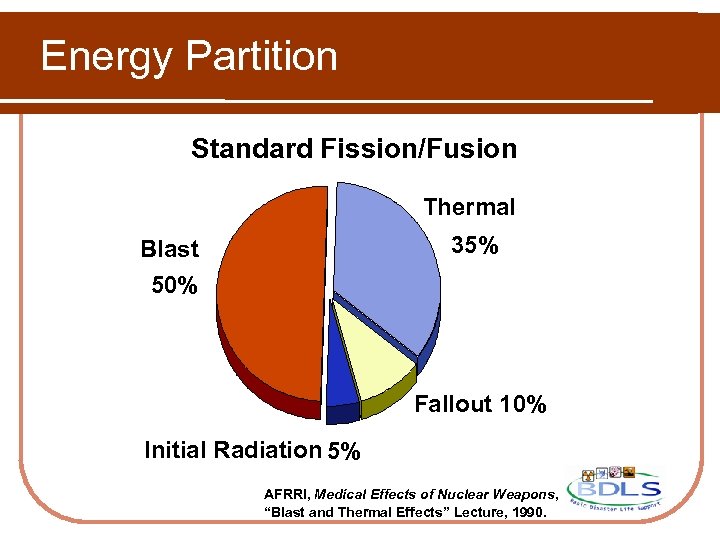 Energy Partition Standard Fission/Fusion Thermal 35% Blast 50% Fallout 10% Initial Radiation 5% AFRRI, Medical Effects of Nuclear Weapons, “Blast and Thermal Effects” Lecture, 1990.
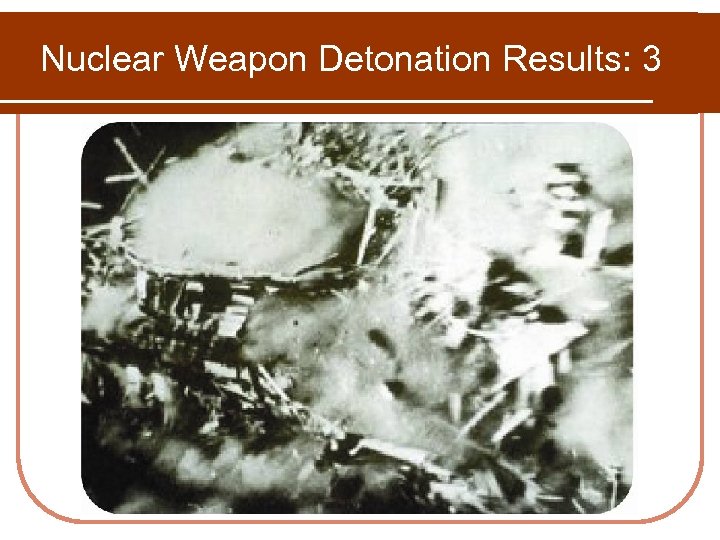
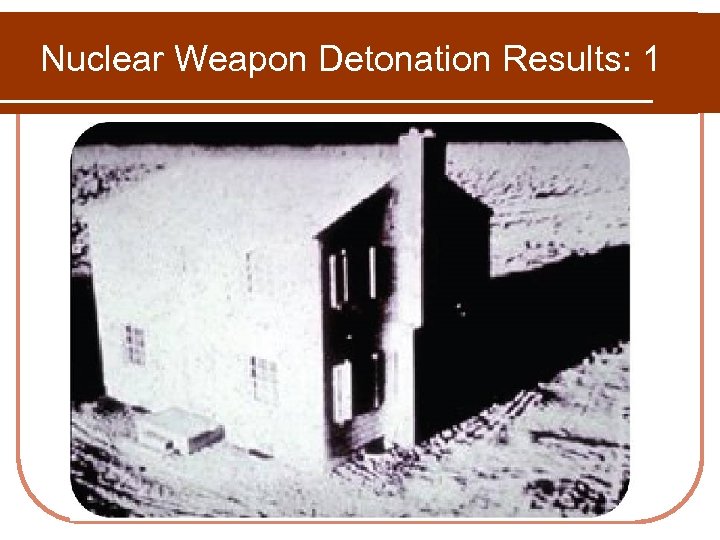 Nuclear Weapon Detonation Results: 1
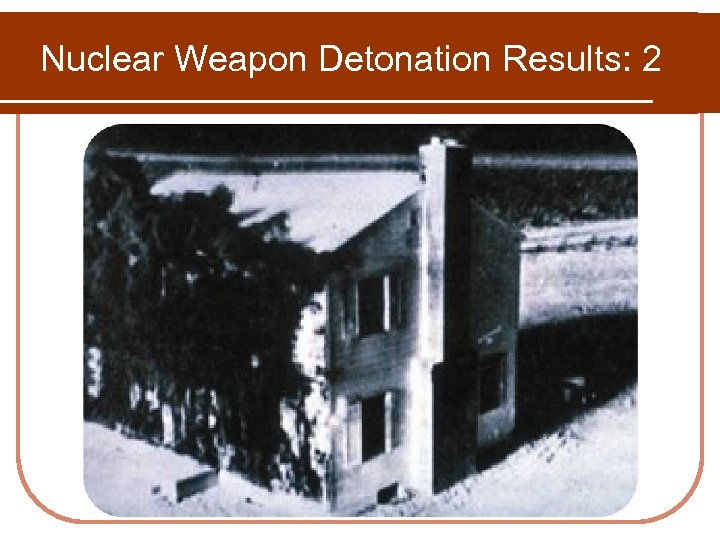 Nuclear Weapon Detonation Results: 2
 Nuclear Weapon Detonation Results: 3
 Scenario: Washington Mall White House Capitol Lincoln Memorial Washington Monument Potomac River The Mall
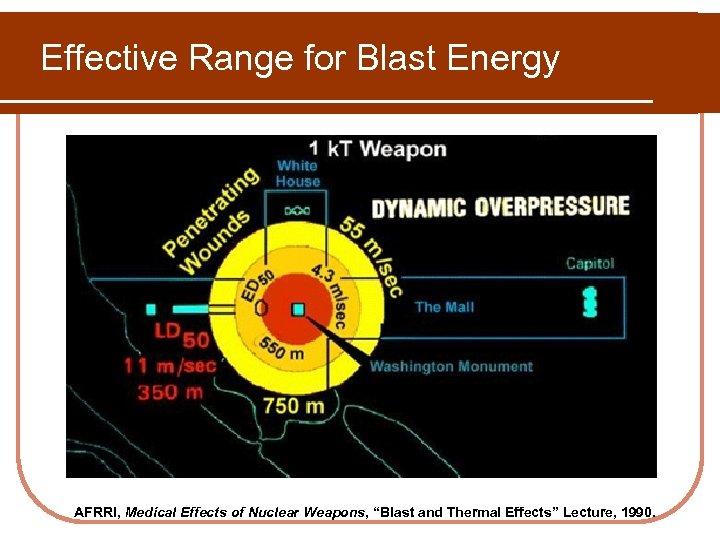 Effective Range for Blast Energy AFRRI, Medical Effects of Nuclear Weapons, “Blast and Thermal Effects” Lecture, 1990.
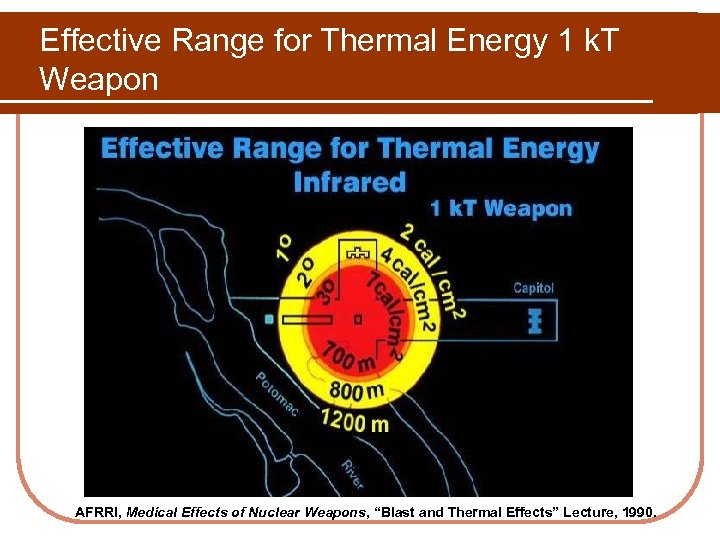 Effective Range for Thermal Energy 1 k. T Weapon AFRRI, Medical Effects of Nuclear Weapons, “Blast and Thermal Effects” Lecture, 1990.
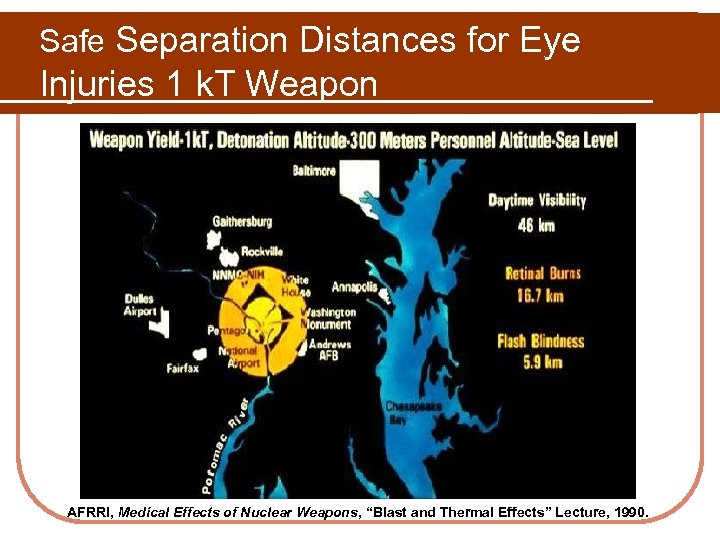 Safe Separation Distances for Eye Injuries 1 k. T Weapon AFRRI, Medical Effects of Nuclear Weapons, “Blast and Thermal Effects” Lecture, 1990.
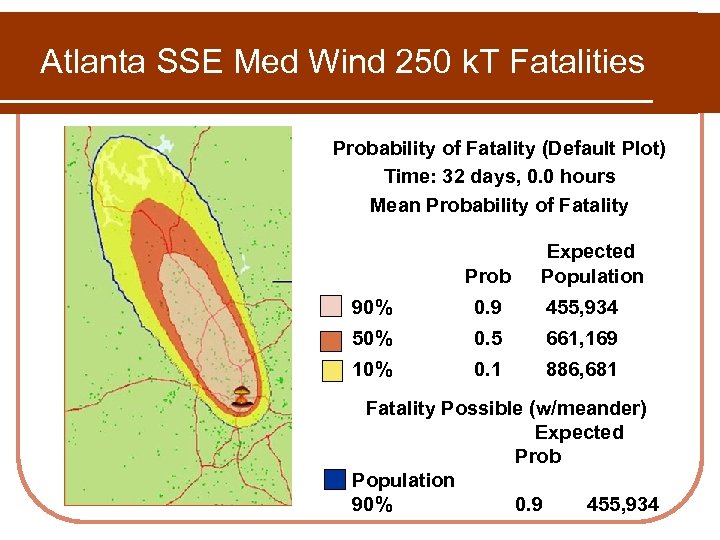 Atlanta SSE Med Wind 250 k. T Fatalities Probability of Fatality (Default Plot) Time: 32 days, 0. 0 hours Mean Probability of Fatality Prob Expected Population 90% 0. 9 455, 934 50% 0. 5 661, 169 10% 0. 1 886, 681 Fatality Possible (w/meander) Expected Prob Population 90% 0. 9 455, 934
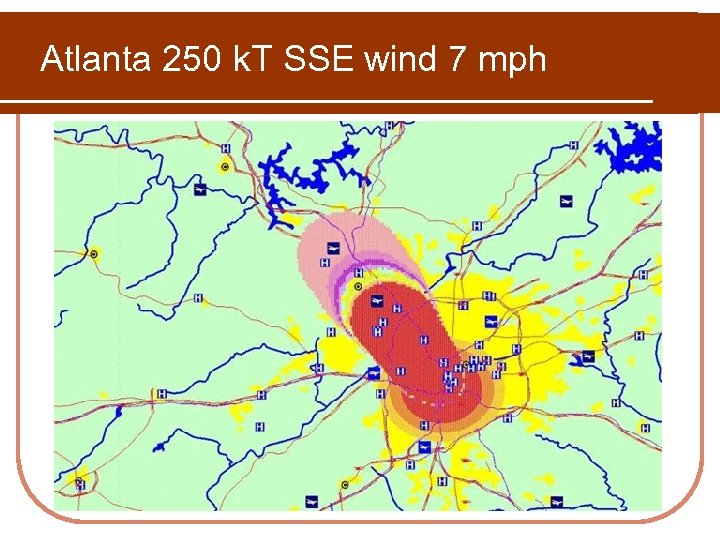 Atlanta 250 k. T SSE wind 7 mph
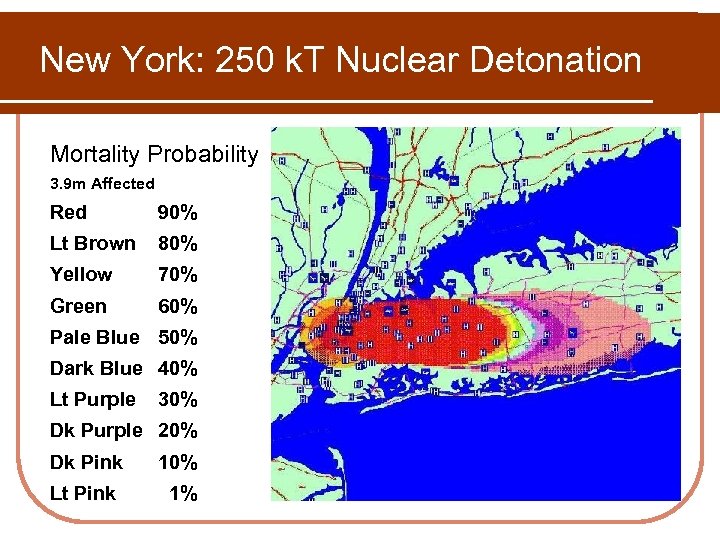 New York: 250 k. T Nuclear Detonation Mortality Probability 3. 9 m Affected Red 90% Lt Brown 80% Yellow 70% Green 60% Pale Blue 50% Dark Blue 40% Lt Purple 30% Dk Purple 20% Dk Pink 10% Lt Pink 1%
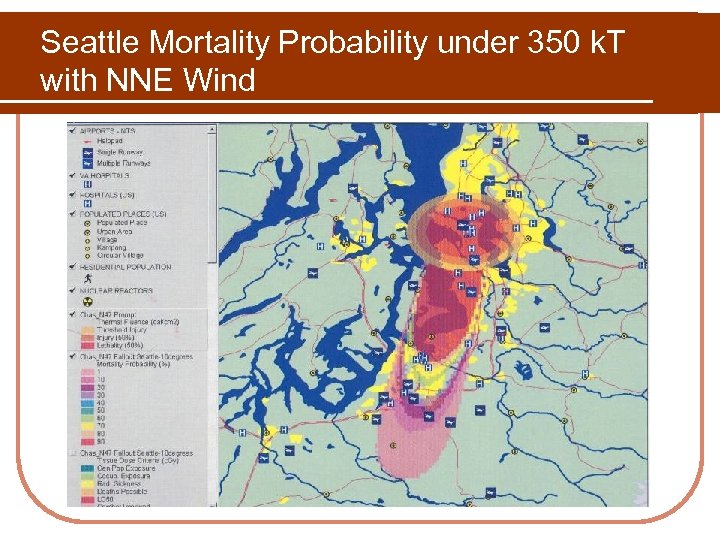 Seattle Mortality Probability under 350 k. T with NNE Wind
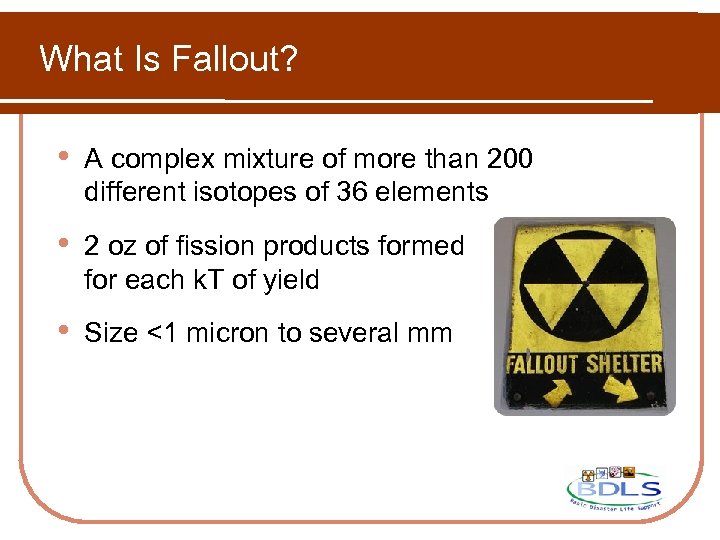 What Is Fallout? • A complex mixture of more than 200 different isotopes of 36 elements • 2 oz of fission products formed for each k. T of yield • Size <1 micron to several mm
 Question The risk from delayed fallout that is dispersed long distances (>100 miles) still has a devastating impact on public health. A. True B. False
 Early Fallout • That which reaches the ground during the first 24 hours after detonation • Early fallout fraction 50 – 70% of total radioactivity • Highest degree of fallout risk
 Delayed Fallout • Arrives after the first day, very fine invisible particles which settle in low concentrations over a considerable portion of the earth’s surface • 40% of total radioactivity • Much lower degree of risk relative to early fallout
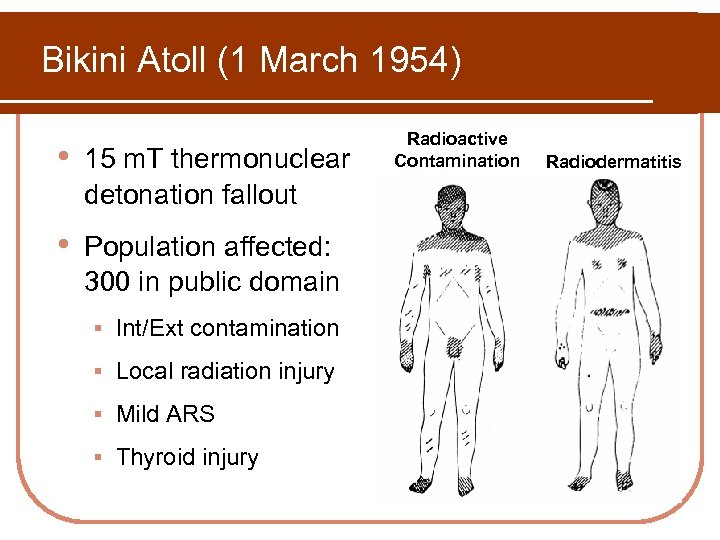 Bikini Atoll (1 March 1954) • 15 m. T thermonuclear detonation fallout • Population affected: 300 in public domain § Int/Ext contamination § Local radiation injury § Mild ARS § Thyroid injury Radioactive Contamination Radiodermatitis
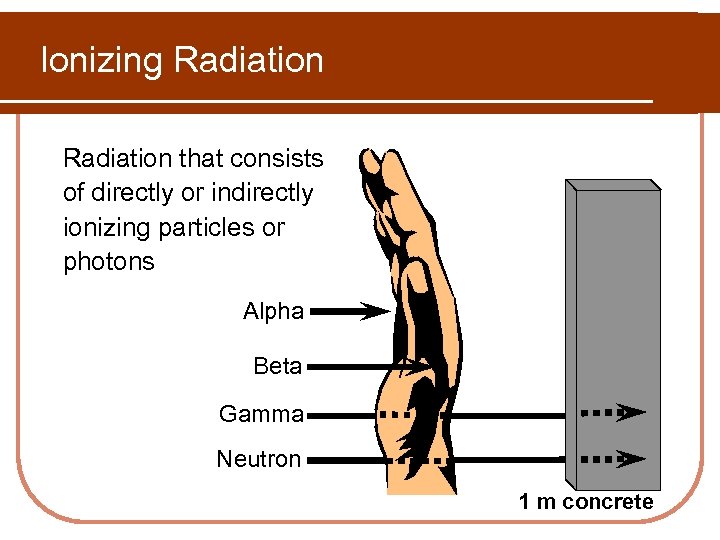 Ionizing Radiation that consists of directly or indirectly ionizing particles or photons Alpha Beta Gamma Neutron 1 m concrete
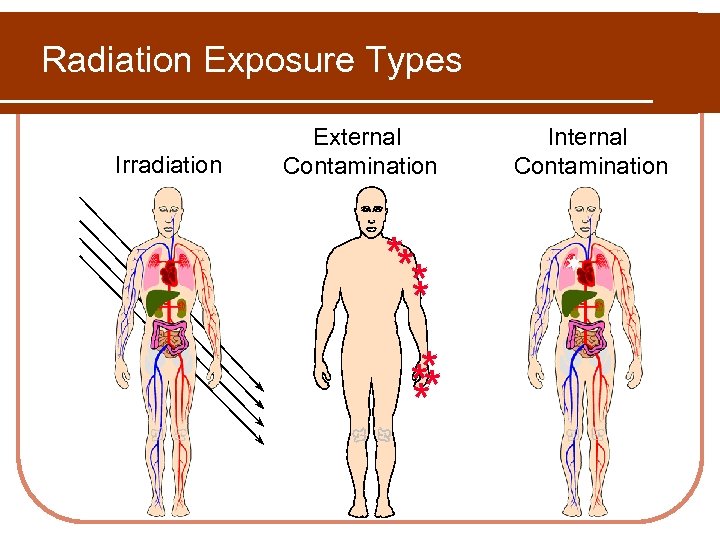 Radiation Exposure Types Irradiation External Contamination ** * * ** ** Internal Contamination ¬¬ ¬ ¬¬
 Acute Radiation Syndrome • Systemic effects of radiation § Prodromal § Hematologic § Gastronintestinal § Pulmonary § Cutaneous § Neurovascular • Combined injury
 Prodromal Component (0. 5– 3 Gy and higher) • Immediate effect of cell membrane damage • Onset of nausea, vomiting, diarrhea • Mediated neurologically by the parasympathetic system
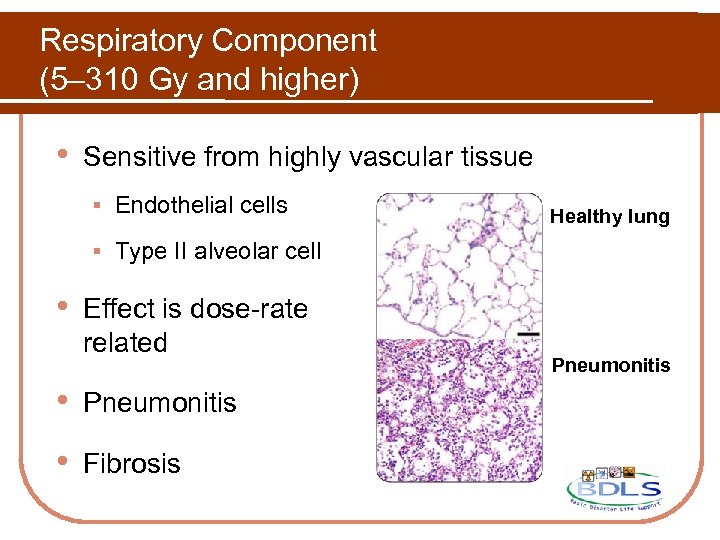 Respiratory Component (5– 310 Gy and higher) • Sensitive from highly vascular tissue § Endothelial cells Healthy lung § Type II alveolar cell • Effect is dose-rate related • Pneumonitis • Fibrosis Pneumonitis
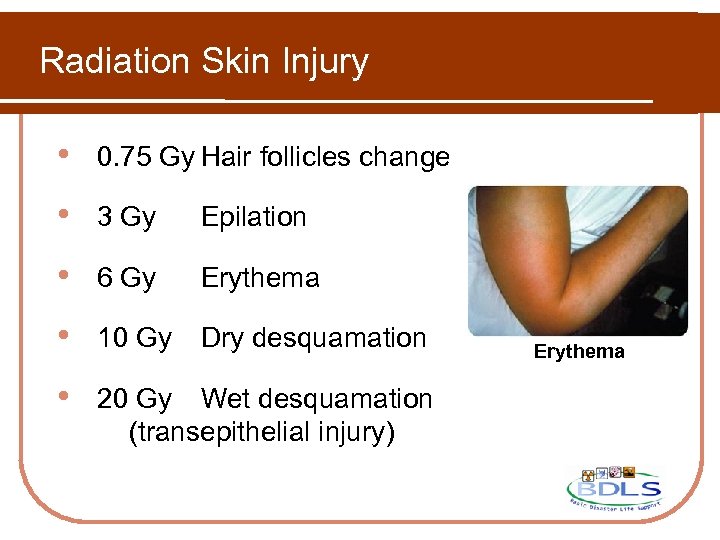 Radiation Skin Injury • 0. 75 Gy Hair follicles change • 3 Gy Epilation • 6 Gy Erythema • 10 Gy Dry desquamation • 20 Gy Wet desquamation (transepithelial injury) Erythema
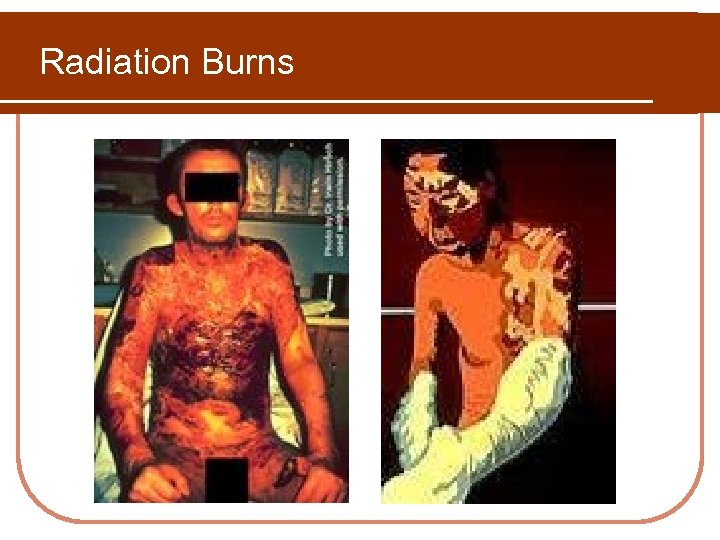 Radiation Burns
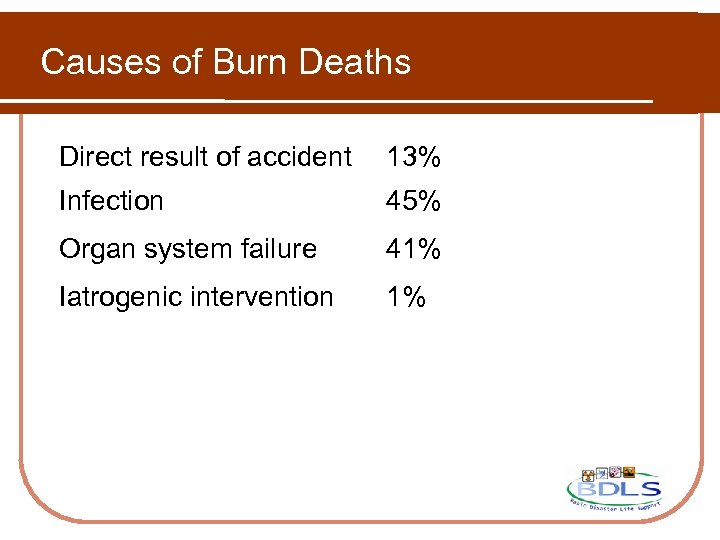 Causes of Burn Deaths Direct result of accident 13% Infection 45% Organ system failure 41% Iatrogenic intervention 1%
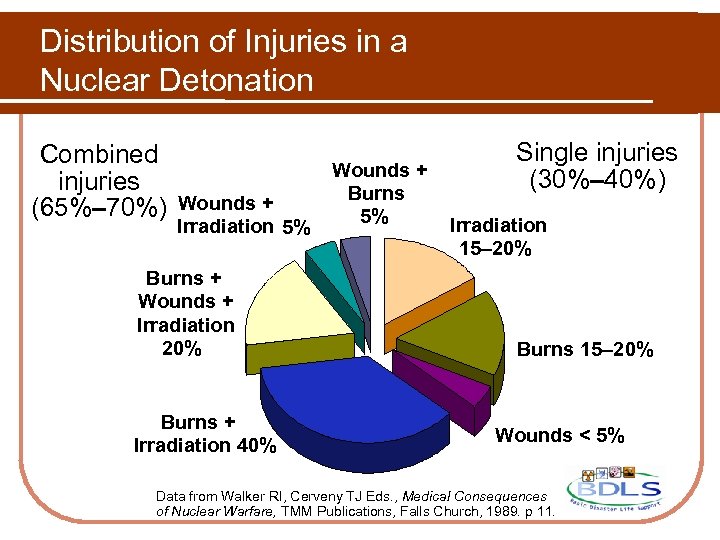 Distribution of Injuries in a Nuclear Detonation Combined injuries (65%– 70%) Wounds + Irradiation 5% Burns + Wounds + Irradiation 20% Burns + Irradiation 40% Wounds + Burns 5% Single injuries (30%– 40%) Irradiation 15– 20% Burns 15– 20% Wounds < 5% Data from Walker RI, Cerveny TJ Eds. , Medical Consequences of Nuclear Warfare, TMM Publications, Falls Church, 1989. p 11.
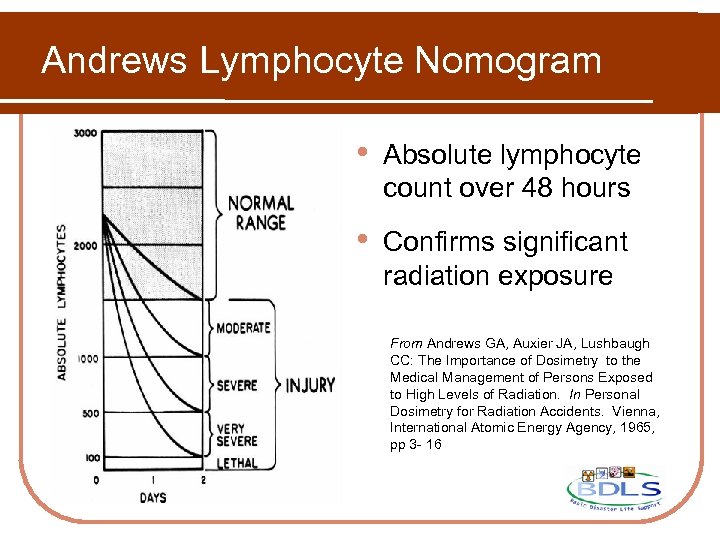 Andrews Lymphocyte Nomogram • Absolute lymphocyte count over 48 hours • Confirms significant radiation exposure From Andrews GA, Auxier JA, Lushbaugh CC: The Importance of Dosimetry to the Medical Management of Persons Exposed to High Levels of Radiation. In Personal Dosimetry for Radiation Accidents. Vienna, International Atomic Energy Agency, 1965, pp 3 - 16
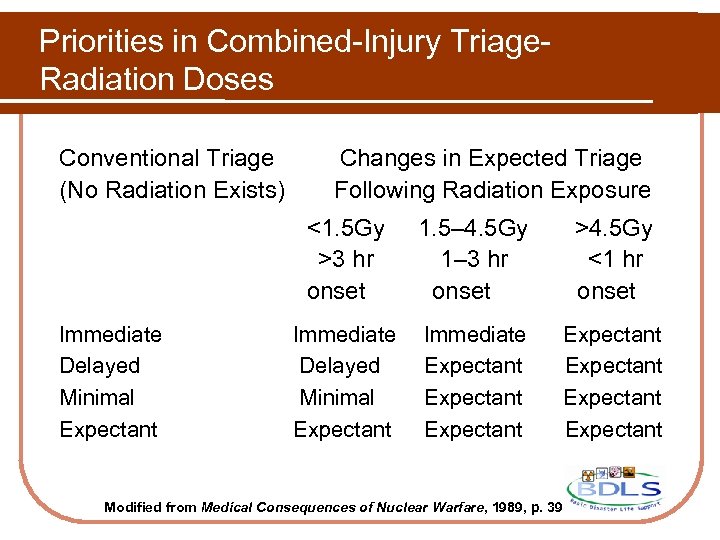 Priorities in Combined-Injury Triage. Radiation Doses Conventional Triage (No Radiation Exists) Changes in Expected Triage Following Radiation Exposure <1. 5 Gy >3 hr onset Immediate Delayed Minimal Expectant 1. 5– 4. 5 Gy 1– 3 hr onset >4. 5 Gy <1 hr onset Immediate Delayed Minimal Expectant Immediate Expectant Expectant Modified from Medical Consequences of Nuclear Warfare, 1989, p. 39
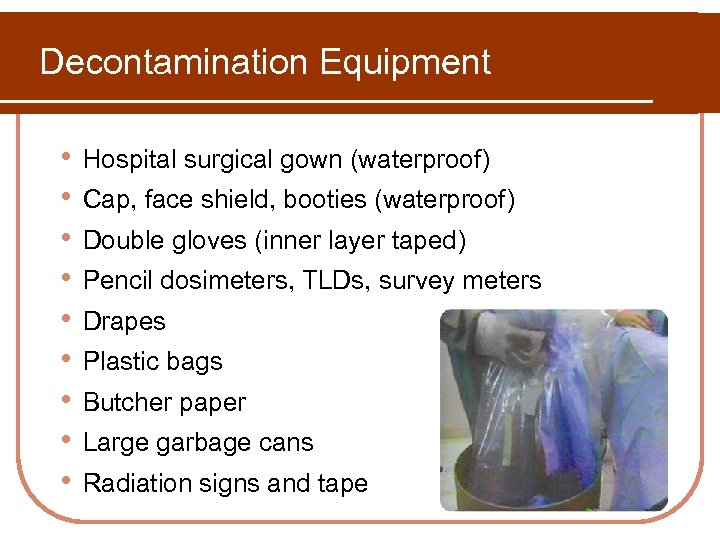 Decontamination Equipment • • • Hospital surgical gown (waterproof) Cap, face shield, booties (waterproof) Double gloves (inner layer taped) Pencil dosimeters, TLDs, survey meters Drapes Plastic bags Butcher paper Large garbage cans Radiation signs and tape
 Question Which of the following is the best decontamination agent? A. Dry removal B. Bleach C. Soap & water D. Waterless cleanser
 Decon Agents: 1 • • • Dry removal Soap/shampoo Household bleach 1: 10 (sodium hypochlorite) Waterless cleansers Povidone-iodine Lava soap Cornmeal/Tide 50: 50 Vinegar (32 P) or club soda Toothpaste
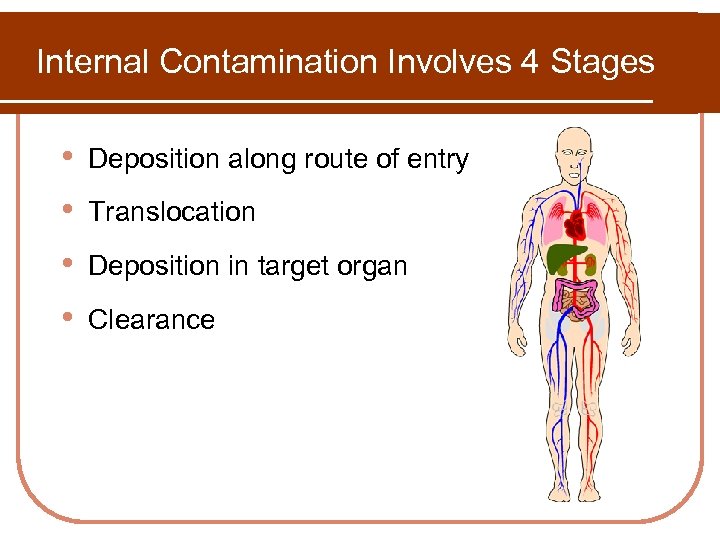 Internal Contamination Involves 4 Stages • • Deposition along route of entry Translocation Deposition in target organ Clearance
 Therapeutic Interventions • Plutonium/transuranics: DTPA • Cesium: insoluble Prussian Blue • Uranium: alkalinization of urine • Radioiodine: radiostable iodine • Tritium: radiostable water
 All that is necessary for the triumph of evil… …is for good men and women to do nothing.