 Скачать презентацию Media Theories ﻧﻈﺮﻳﺎﺕ ﺍﻻﻋﻼﻡ Effects Theories ﻧﻈﺮﻳﺎﺕ
0c599e42f83570fd410d7a2dbf5c165f.ppt
- Количество слайдов: 41



Media Theories ﻧﻈﺮﻳﺎﺕ ﺍﻻﻋﻼﻡ Effects Theories ﻧﻈﺮﻳﺎﺕ ﺗﺄﺜﻴﺮ ﻭﺳﺎﺋﻞ ﺍﻻﻋﻼﻡ
Elements of Mass Communication l Five elements of mass communication 1. 2. 3. 4. 5. Sender: : ﻣﺮﺳﻞ It may be media professional or media institution or organization which sends the information. Receiver: ﻣﺴﺘﻘﻝ person who receives the information sent. This mass of receivers are often called mass audience . ﺍﻟﺠﻤﻬﻮﺭ ﺍﻟﻤﺘﻠﻘﻲ Message: ﺍﻟﺮﺳﺎﻟﺔ content of information sent by sender. The message is put in various forms like an interview, documentary, film, an article, feature or news story. Channel ﺍﻻﺗﺼﺎﻝ ﻗﻨﺎﺓ : Modern mass media like radio, television or newspapers spread the message with great speed. Feedback: ﺍﻟﺘﻐﺬﻳﺔ ﺍﻟﺮﺍﺟﻌﺔ response from receiver. Mass communication will have indirect feedback.
Persuasion vs. Manipulation ﺍﻻﻗﻨﺎﻉ ﺍﻟﺘﻼﻋﺐ ﻣﻘﺎﺑﻞ l What is the difference between persuasion and manipulation?
Persuasion ﺍﻻﺳﺘﻤﺎﻟﺔ l l l - ﺍﻻﻗﻨﺎﻉ Persuasion is an attempt to influence a person’s actions through an appeal to his/her self-interest ﺍﻹﻗﻨﺎﻉ ﻫﻮ ﻣﺤﺎﻭﻟﺔ ﻟﻠﺘﺄﺜﻴﺮ ﻋﻠﻰ ﺃﻌﻤﺎﻝ ﺍﻟﺸﺨﺺ ﻣﻦ ﺧﻼﻝ ﺍﻟﺘﺮﻛﻴﺰ ﻋﻠﻰ ﺃﻦ ﻟﻪ ﻣﺼﻠﺤﺔ ﺫﺍﺗﻴﺔ A PR person must be aware of what the audience wants to know. Gained knowledge is “mutually beneficial” ﺍﻟﻤﻌﺮﻓﺔ ﺍﻟﻤﻜﺘﺴﺒﺔ ﻓﻴﻬﺎ ﻣﻨﻔﻌﺔ ﻣﺘﺒﺎﺩﻟﺔ
Manipulation ﺍﻟﺘﻼﻋﺐ Coercion ﺍﻟﻘﻬﺮ l l The audience might not need to know the message, but they are coerced or tricked into that knowledge when there is little of no benefit to them. ﻻ ﻳﺤﺘﺎﺝ ﺍﻥ ﻳﻌﺮﻑ ﺍﻟﺮﺳﺎﻟﺔ ﻭﻟﻜﻦ ﻳﺘﻢ ﺍﻟﺠﻤﻬﻮﺭ ﻗﺪ ﺍﻛﺮﺍﻫﻪ ﺃﻮ ﺧﺪﺍﻋﻪ ﺑﺨﺼﻮﺹ ﻫﺬﻩ ﺍﻟﻤﻌﺮﻓﺔ ﺣﺘﻰ ﻭﺍﻥ ﻛﺎﻧﺖ . ﺑﻼ ﻓﺎﺋﺪﺓ ﻟﻬﻢ There is manipulation of audience’s feelings, emotions, thinking into believing certain things or favouring or disfavouring other things. ﻫﻨﺎﻙ ﺗﻼﻋﺐ ﺑﻌﻮﺍﻃﻒ ﺍﻟﺠﻤﻬﻮﺭ ﻭﺗﻔﻜﻴﺮﻩ ﺑﺪﻓﻌﻪ ﺗﺠﺎﻩ ﺗﻔﻀﻴﻞ ﺃﺸﻴﺎﺀ ﻭﻋﺪﻡ ﺗﻘﺒﻞ ﺃﺸﻴﺎﺀ ﺃﺨﺮﻯ
Effects Theories ﻧﻈﺮﻳﺎﺕ ﺗﺄﺜﻴﺮ ﻭﺳﺎﺋﻞ ﺍﻻﻋﻼﻡ l l Do the media have an effect on viewers and listeners? There are several theories that support the extremes and the middle on this l l l Yes, it impacts us No, it does not Yes and No. . . somewhere in between
Effects Theories Mass media/mass communications make people powerless to resist messages the media carries. ﻭﺳﺎﺋﻞ ﺍﻹﻋﻼﻡ / ﻭﺳﺎﺋﻞ ﺍﻻﺗﺼﺎﻝ ﺍﻟﺠﻤﺎﻫﻴﺮﻱ ﺗﺠﻌﻞ ﺍﻟﻨﺎﺱ ﻋﺎﺟﺰﻳﻦ ﻋﻦ ﻣﻘﺎﻭﻣﺔ ﺍﻟﺮﺳﺎﺋﻞ ﺍﻟﺘﻲ ﺗﺤﻤﻠﻬﺎ ﻭﺳﺎﺋﻞ . ﺍﻹﻋﻼﻡ l Consumers seem to be ‘drugged’ or ‘addicted’ to the media messages. ﻳﺒﺪﻭ ﺍﻟﻤﺴﺘﻬﻠﻜﻮﻥ ﻭﻛﺄﻨﻬﻢ . ﻣﺨﺪﺭﻭﻥ ﺃﻮ ﻣﺪﻣﻨﻮﻥ ﻋﻠﻰ ﺍﻟﺮﺳﺎﺋﻞ ﺍﻟﺘﻲ ﺗﺤﻤﻠﻬﺎ ﻭﺳﺎﺋﻞ ﺍﻻﻋﻼﻡ l Effects theories establish links between violence and the media, especially with the effects on the young. l
Effects Theories Historical Background l Frankfurt School: Marxist German intellectuals reacting against Nazi propaganda and US advertising. ﺍﻟﻤﺪﺭﺳﺔ ﺍﻟﻔﺮﺍﻧﻜﻔﻮﺭﺗﻴﺔ: ﻣﺜﻘﻔﻮﻥ ﺃﻠﻤﺎﻥ ﻣﺎﺭﻛﺴﻴﻮﻥ ﺍﻟﻮﻻﻳﺎﺕ . ﺍﻟﻤﺘﺤﺪﺓ l l ﻭﺍﻹﻋﻼﻧﺎﺕ ﻓﻲ ﺍﻧﺘﻘﺪﻭﺍ ﺩﻭﺭ ﺍﻟﺪﻋﺎﻳﺔ ﺍﻟﻨﺎﺯﻳﺔ It suggested the power of big corporations and the state to control how we think. ﺃﺸﺎﺭﺕ ﺇﻟﻰ ﻗﻮﺓ ﺗﺄﺜﻴﺮ . ﺍﻟﺸﺮﻛﺎﺕ ﺍﻟﻜﺒﺮﻯ ﻭﺍﻟﺪﻭﻟﺔ ﻓﻲ ﺗﺸﻜﻴﻞ ﺗﻔﻜﻴﺮﻧﺎ Rise of TV in the 50’s and 60’s – fear of danger to children ﻇﻬﻮﺭ ﺍﻟﺘﻠﻔﺎﺯ ﻓﻲ ﺍﻟﺨﻤﺴﻴﻨﺎﺕ ﻭﺍﻟﺴﺘﻴﻨﺎﺕ ﺃﺜﺎﺭ ﻣﺨﺎﻭﻑ . ﺍﻷﻄﻔﺎﻝ ﻣﻦ ﺗﺎﺛﻴﺮﻩ ﺍﻟﺴﻠﺒﻲ ﻋﻠﻰ
Effects Theories Historical Background l Influence of behavioural scientists (think of Pavlov’s dogs) – media may reinforce attitudes through repetition ﺗﺄﺜﺮﺕ ﺑﺎﻟﻌﻠﻤﺎﺀ ﺍﻟﺴﻠﻮﻛﻴﻴﻦ )ﺍﻟﻤﺜﻴﺮ ﻭﺍﻻﺳﺘﺠﺎﺑﺔ ﺍﻟﺸﺮﻃﻴﺔ( ﺑﻤﻌﻨﻰ ﺃﻦ ﻭﺳﺎﺋﻞ ﺍﻻﻋﻼﻡ ﺗﻌﺰﺯ . ﺍﻻﺗﺠﺎﻫﺎﺕ ﻣﻦ ﺧﻼﻝ ﺍﻟﺘﻜﺮﺍﺭ l Bobo doll experiment (1963) that pointed out that children imitate adult treatment of doll. ﺗﺠﺮﺑﺔ ﺩﻣﻴﺔ ﺍﻟﺒﻮﺑﻮ ﺃﺸﺎﺭﺕ ﺍﻟﻰ ﺍﻥ ﺍﻻﻃﻔﺎﻝ ﻳﻘﻠﺪﻭﻥ ﺗﻌﺎﻣﻞ ﺍﻟﻜﺒﺎﺭ . ﻣﻊ ﺍﻟﺪﻣﻰ
Moderate-Effects Theory ﻧﻈﺮﻳﺔ ﺍﻟﺘﺄﺜﻴﺮ ﺍﻟﻤﻌﺘﺪﻝ Recognizes that media is not all-powerful in its influence l However, under certain circumstances it can have a very strong effect ﺗﻌﺘﺮﻑ ﺃﻦ ﻭﺳﺎﺋﻞ ﺍﻻﻋﻼﻡ ﻟﻴﺴﺖ ﻗﻮﻳﺔ ﻓﻲ ﻛﻞ ﻧﻔﻮﺫﻫﺎ، ﻭﻟﻜﻦ ﻓﻲ ﻇﺮﻭﻑ ﻣﻌﻴﻨﺔ ﻓﺎﻥ ﻟﻬﺎ ﺗﺄﺜﻴﺮ ﻗﻮﻱ ﺟﺪﺍ l
Limited-Effects Theory ﻧﻈﺮﻳﺔ ﺍﻟﺘﺄﺜﻴﺮ ﺍﻟﻤﺤﺪﻭﺩ l l Media often does not have a direct effect on audience and decision making. ﻭﺳﺎﺋﻞ ﺍﻹﻋﻼﻡ ﻓﻲ ﻛﺜﻴﺮ ﻣﻦ ﺍﻷﺤﻴﺎﻥ ﻻ ﻳﻜﻮﻥ ﻟﻬﺎ ﺗﺄﺜﻴﺮ ﻣﺒﺎﺷﺮ ﻋﻠﻰ ﺍﻟﺠﻤﻬﻮﺭ ﻭﺍﺗﺨﺎﺫ ﺍﻟﻘﺮﺍﺭﺍﺕ However, it is just one of many influences, including: l l l Opinion leaders One’s prior held beliefs Influence of family, friends, peers
Powerful-Effects Theory ﻧﻈﺮﻳﺔ ﺍﻟﺘﺄﺜﻴﺮ ﺍﻟﻘﻮﻱ l l Media has the potential for a huge influence on the audience Influence increases if: l l Audience has little or no opinion on an issue Audience has no direct experience with the issue
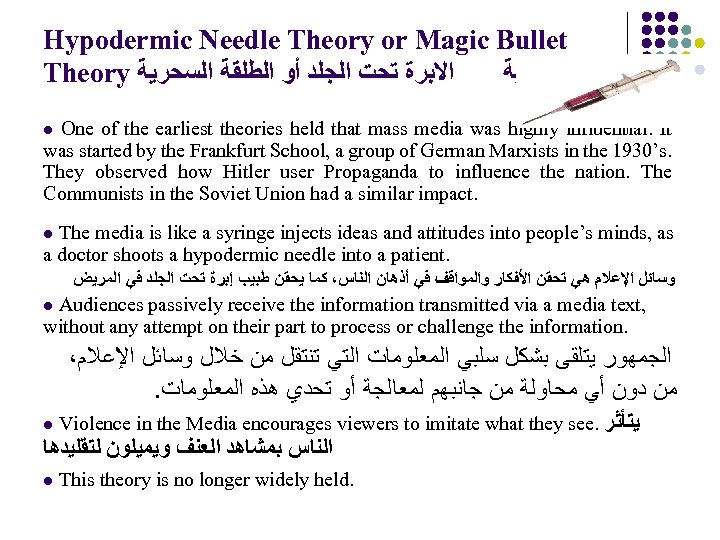
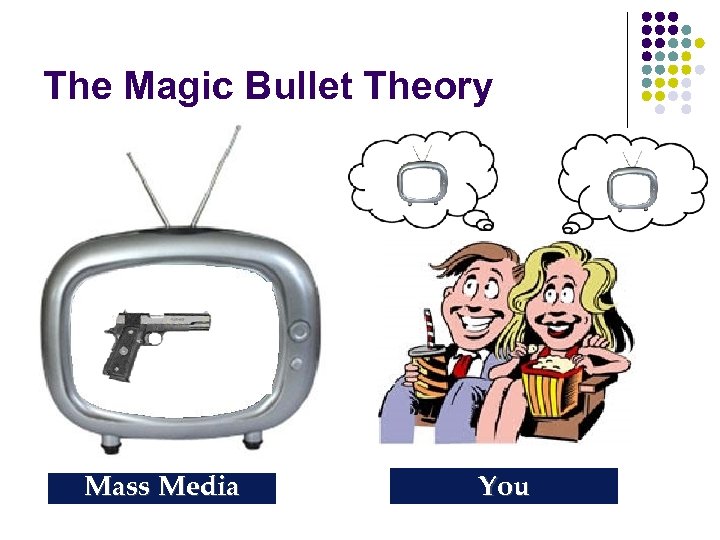
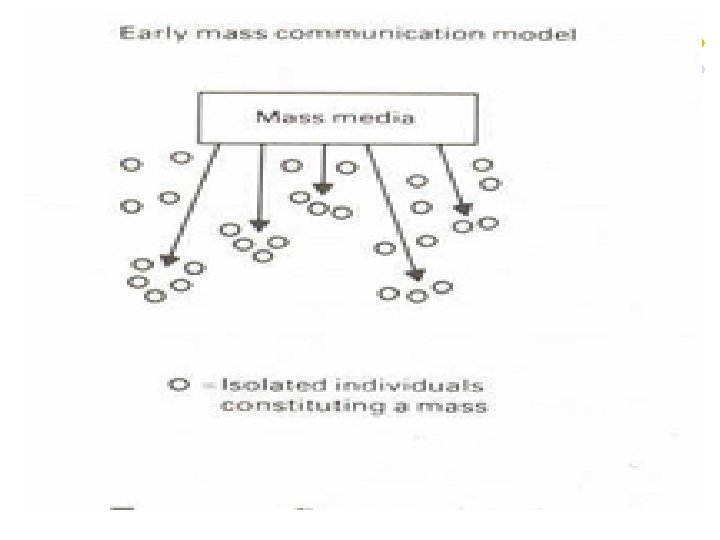
Hypodermic Needle Theory or Magic Bullet Theory ﺍﻻﺑﺮﺓ ﺗﺤﺖ ﺍﻟﺠﻠﺪ ﺃﻮ ﺍﻟﻄﻠﻘﺔ ﺍﻟﺴﺤﺮﻳﺔ ﻧﻈﺮﻳﺔ One of the earliest theories held that mass media was highly influential. It was started by the Frankfurt School, a group of German Marxists in the 1930’s. They observed how Hitler user Propaganda to influence the nation. The Communists in the Soviet Union had a similar impact. l The media is like a syringe injects ideas and attitudes into people’s minds, as a doctor shoots a hypodermic needle into a patient. l ﻭﺳﺎﺋﻞ ﺍﻹﻋﻼﻡ ﻫﻲ ﺗﺤﻘﻦ ﺍﻷﻔﻜﺎﺭ ﻭﺍﻟﻤﻮﺍﻗﻒ ﻓﻲ ﺃﺬﻫﺎﻥ ﺍﻟﻨﺎﺱ، ﻛﻤﺎ ﻳﺤﻘﻦ ﻃﺒﻴﺐ ﺇﺑﺮﺓ ﺗﺤﺖ ﺍﻟﺠﻠﺪ ﻓﻲ ﺍﻟﻤﺮﻳﺾ Audiences passively receive the information transmitted via a media text, without any attempt on their part to process or challenge the information. l ، ﺍﻟﺠﻤﻬﻮﺭ ﻳﺘﻠﻘﻰ ﺑﺸﻜﻞ ﺳﻠﺒﻲ ﺍﻟﻤﻌﻠﻮﻣﺎﺕ ﺍﻟﺘﻲ ﺗﻨﺘﻘﻞ ﻣﻦ ﺧﻼﻝ ﻭﺳﺎﺋﻞ ﺍﻹﻋﻼﻡ . ﻣﻦ ﺩﻭﻥ ﺃﻲ ﻣﺤﺎﻭﻟﺔ ﻣﻦ ﺟﺎﻧﺒﻬﻢ ﻟﻤﻌﺎﻟﺠﺔ ﺃﻮ ﺗﺤﺪﻱ ﻫﺬﻩ ﺍﻟﻤﻌﻠﻮﻣﺎﺕ l Violence in the Media encourages viewers to imitate what they see. ﻳﺘﺄﺜﺮ ﺍﻟﻨﺎﺱ ﺑﻤﺸﺎﻫﺪ ﺍﻟﻌﻨﻒ ﻭﻳﻤﻴﻠﻮﻥ ﻟﺘﻘﻠﻴﺪﻫﺎ l This theory is no longer widely held.
The Magic Bullet Theory Mass Media You
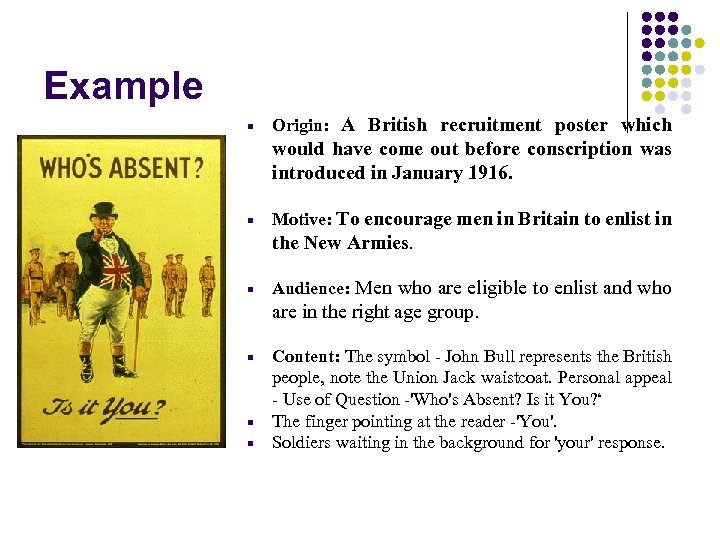
Example Origin: A British recruitment poster which would have come out before conscription was introduced in January 1916. Motive: To encourage men in Britain to enlist in the New Armies. Audience: Men who are eligible to enlist and who are in the right age group. Content: The symbol - John Bull represents the British people, note the Union Jack waistcoat. Personal appeal - Use of Question -'Who's Absent? Is it You? ‘ The finger pointing at the reader -'You'. Soldiers waiting in the background for 'your' response.
Two-Step Flow Theory ﻧﻈﺮﻳﺔ ﺍﻟﺘﺪﻓﻖ ﻋﻠﻰ ﻣﺮﺣﻠﺘﻴﻦ Media messages analyzed, interpreted and passed on by opinion leaders first. ﺍﻻﻋﻼﻣﻴﺔ ﻳﺘﻢ ﺍﻟﺮﺳﺎﻟﺔ ﺃﻮﻻ ﺗﺤﻠﻴﻠﻬﺎ ﻭﺗﻔﺴﻴﺮﻫﺎ ﻭﺗﻤﺮﻳﺮﻫﺎ ﻣﻦ ﻗﺒﻞ ﻗﺎﺩﺓ ﺍﻟﺮﺃﻲ l Ideas flow from mass media to opinion leaders and from them to the less active sections of the population ﺍﻻﻋﻼﻡ ﺍﻟﻰ ﻗﺎﺩﺓ ﺍﻟﺮﺃﻲ ﻭﻣﻦ ﺛﻢ ﺍﻷﻔﻜﺎﺭ ﻣﻦ ﻭﺳﺎﺋﻞ ﺗﺘﺪﻓﻖ . ﺍﻻﺧﺮﻯ ﻓﻲ ﺍﻟﻤﺠﺘﻤﻊ ﺍﻟﻰ ﺍﻟﻔﺌﺎﺕ l l The mass public gets information via these opinion leaders: l Opinions are formed l Perceptions are created l Knowledge is gained (or repressed)
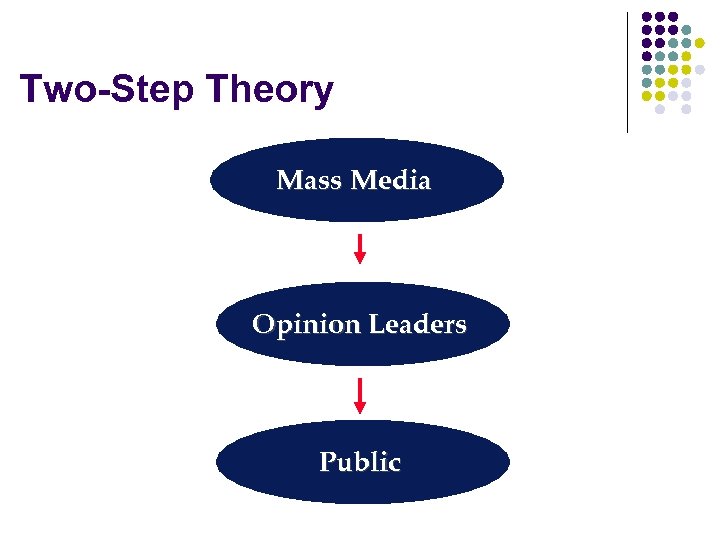
Two-Step Theory Mass Media Opinion Leaders Public
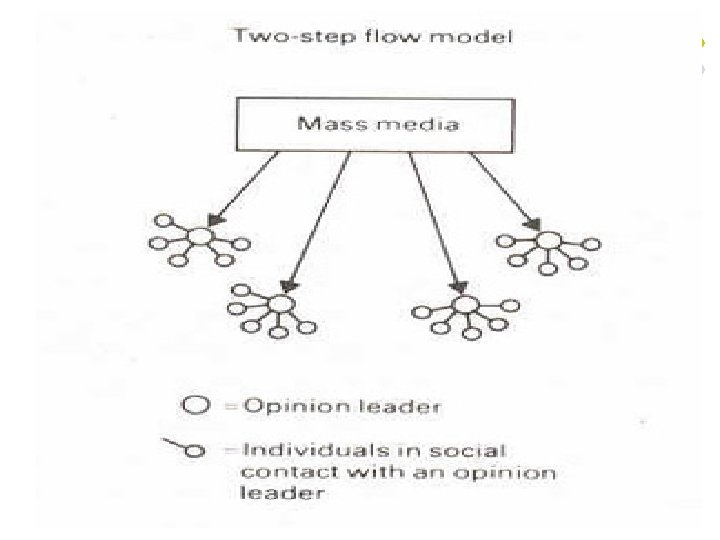
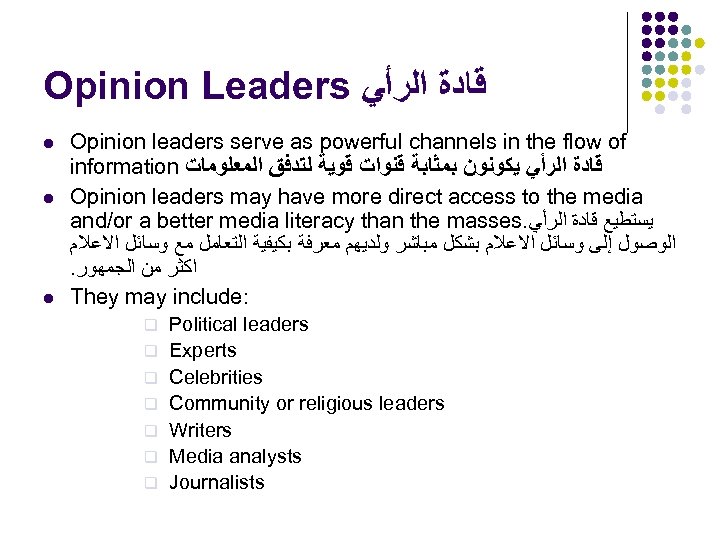
Opinion Leaders ﻗﺎﺩﺓ ﺍﻟﺮﺃﻲ l l l Opinion leaders serve as powerful channels in the flow of information ﻗﺎﺩﺓ ﺍﻟﺮﺃﻲ ﻳﻜﻮﻧﻮﻥ ﺑﻤﺜﺎﺑﺔ ﻗﻨﻮﺍﺕ ﻗﻮﻳﺔ ﻟﺘﺪﻓﻖ ﺍﻟﻤﻌﻠﻮﻣﺎﺕ Opinion leaders may have more direct access to the media and/or a better media literacy than the masses. ﻳﺴﺘﻄﻴﻊ ﻗﺎﺩﺓ ﺍﻟﺮﺃﻲ ﺍﻟﻮﺻﻮﻝ ﺇﻟﻰ ﻭﺳﺎﺋﻞ ﺍﻻﻋﻼﻡ ﺑﺸﻜﻞ ﻣﺒﺎﺷﺮ ﻭﻟﺪﻳﻬﻢ ﻣﻌﺮﻓﺔ ﺑﻜﻴﻔﻴﺔ ﺍﻟﺘﻌﺎﻣﻞ ﻣﻊ ﻭﺳﺎﺋﻞ ﺍﻻﻋﻼﻡ . ﺍﻛﺜﺮ ﻣﻦ ﺍﻟﺠﻤﻬﻮﺭ They may include: q q q q Political leaders Experts Celebrities Community or religious leaders Writers Media analysts Journalists
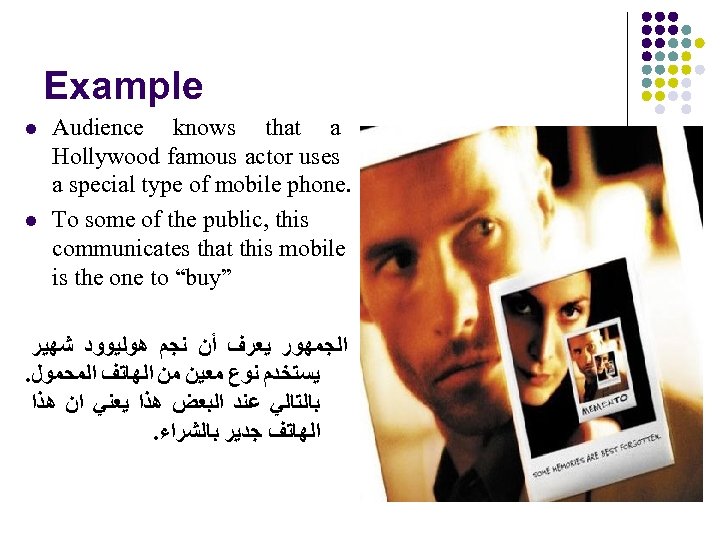
Example l l Audience knows that a Hollywood famous actor uses a special type of mobile phone. To some of the public, this communicates that this mobile is the one to “buy” ﺍﻟﺠﻤﻬﻮﺭ ﻳﻌﺮﻑ ﺃﻦ ﻧﺠﻢ ﻫﻮﻟﻴﻮﻭﺩ ﺷﻬﻴﺮ . ﻳﺴﺘﺨﺪﻡ ﻧﻮﻉ ﻣﻌﻴﻦ ﻣﻦ ﺍﻟﻬﺎﺗﻒ ﺍﻟﻤﺤﻤﻮﻝ ﺑﺎﻟﺘﺎﻟﻲ ﻋﻨﺪ ﺍﻟﺒﻌﺾ ﻫﺬﺍ ﻳﻌﻨﻲ ﺍﻥ ﻫﺬﺍ . ﺍﻟﻬﺎﺗﻒ ﺟﺪﻳﺮ ﺑﺎﻟﺸﺮﺍﺀ
Decision-making Process ﻋﻤﻠﻴﺔ ﺍﺗﺨﺎﺫ ﺍﻟﻘﺮﺍﺭ l l Exists on a continuum ﻣﻮﺟﻮﺩﺓ ﻋﻠﻰ ﺷﻜﻞ ﺳﻠﻢ ﻣﺘﺪﺭﺝ Depends on: l l l The information itself Personal psyche or disposition Some key factors: l Socio-economic status (class) l Religion l Gender l Intra-familial status
l Uses and Gratifications – what audiences do with the media ﻧﻈﺮﻳﺔ ﺍﻻﺳﺘﺨﺪﺍﻣﺎﺕ ﻭﺍﻻﺷﺒﺎﻋﺎﺕ
Uses and Gratifications Theory ﻧﻈﺮﻳﺔ ﺍﻻﺳﺘﺨﺪﺍﻣﺎﺕ ﻭﺍﻻﺷﺒﺎﻋﺎﺕ l l l attempts to answer: What do people do with the media? ﺗﺤﺎﻭﻝ ﺃﻦ ﺗﺠﻴﺐ ﻋﻦ ﺍﻟﺴﺆﺎﻝ: ﻣﺎﺫﺍ ﻳﻔﻌﻞ ﺍﻟﻨﺎﺱ ﻣﻊ ﻭﺳﺎﺋﻞ ﺍﻻﻋﻼﻡ؟ The media have a limited effect on their audiences because audiences are able to exercise control over their media active use of media by audience members to seek gratification of a variety of needs. ﻫﻨﺎﻙ ﺍﺳﺘﺨﺪﺍﻡ ﻧﺸﻂ ﻟﻮﺳﺎﺋﻞ ﺍﻹﻋﻼﻡ ﻣﻦ ﻗﺒﻞ ﺃﻔﺮﺍﺩ ﺍﻟﺠﻤﻬﻮﺭ ﻟﻠﺤﺼﻮﻝ ﻋﻠﻰ ﺍﻹﺷﺒﺎﻉ ﻓﻲ ﻣﺠﻤﻮﻋﺔ ﻣﺘﻨﻮﻋﺔ ﻣﻦ ﺍﻻﺣﺘﻴﺎﺟﺎﺕ l The needs most commonly identified are: l Information ( ﺍﻟﻤﻌﻠﻮﻣﺎﺕ i. e. monitoring what's going on in the world) l integration and social interaction ( ﺍﻻﻧﺪﻣﺎﺝ ﻭﺍﻟﺘﻔﺎﻋﻞ ﺍﻻﺟﺘﻤﺎﻋﻲ we use the media to find out more about the circumstances of other people perhaps through empathy or sympathy) l personal identity (ﺍﻟﻬﻮﻳﺔ ﺍﻟﺸﺨﺼﻴﺔ we may watch television for models for our behaviour. For instance - we may identify with soap characters or their situations) l Diversion ( ﺗﺤﻮﻳﻞ ﺍﻻﻧﻈﺎﺭ i. e. entertainment and escapism ﺍﻟﺘﺮﻓﻴﻪ . )ﻭﺍﻟﻬﺮﻭﺏ
The Uses and Gratifications of a Quiz Show l Information/Education l l l I find I know more than I thought I find I have improved myself I feel respect for the people on the programme I think over some of the questions afterwards It’s educational
Framing ﺍﻹﻃﺎﺭ l l “Framing” is the shaping of views and discussions through selective choice of facts, themes and words ﺍﻟﺘﺄﻄﻴﺮ ﻫﻮﺗﺸﻜﻴﻞ ﺍﻵﺮﺍﺀ ﻭﺍﻟﻤﻨﺎﻗﺸﺎﺕ ﻣﻦ ﺧﻼﻝ ﺍﻻﺧﺘﻴﺎﺭ ﺍﻻﻧﺘﻘﺎﺋﻲ ﻟﻠﺤﻘﺎﺋﻖ، ﻭﺍﻟﻤﻮﺍﺿﻴﻊ ﻭﺍﻟﻜﻠﻤﺎﺕ Sender makes the selection PR has a huge influence in “framing” how the media will discuss a product, person, issue or ideology “Framing” creates the context in which the discussion occurs. ﺍﻟﺘﺄﻄﻴﺮ ﻳﺨﻠﻖ ﺍﻟﺴﻴﺎﻕ ﺍﻟﺬﻱ ﻣﻦ ﺧﻼﻟﻪ . ﻳﺘﻢ ﺍﻟﻨﻘﺎﺵ
Examples The war on Iraq is a “war on terrorism”. ﺍﻟﺤﺮﺏ ﻋﻠﻰ ﺍﻟﻌﺮﺍﻕ ﻫﻲ "ﺍﻟﺤﺮﺏ ﻋﻠﻰ ﺍﻹﺭﻫﺎﺏ l The Conflict between Israel and the Palestinians is “a border dispute” ﺍﻟﺼﺮﺍﻉ ﺑﻴﻦ " ﺍﺳﺮﺍﺋﻴﻞ ﻭﺍﻟﻔﻠﺴﻄﻴﻨﻴﻴﻦ ﻫﻮ "ﻧﺰﺍﻉ ﺣﺪﻭﺩﻱ l
Agenda Setting ﺗﺮﺗﻴﺐ ﺍﻻﻭﻟﻮﻳﺎﺕ The pattern of news coverage of a particular topic helps to determine what the public perceives as important ﻧﻤﻂ ﺍﻟﺘﻐﻄﻴﺔ ﺍﻹﻋﻼﻣﻴﺔ ﻟﻤﻮﺿﻮﻉ ﻣﻌﻴﻦ ﻳﺴﺎﻋﺪ ﻋﻠﻰ ﺗﺤﺪﻳﺪ ﻣﺎ ﻫﻮ ﺍﻟﻤﻬﻢ ﻟﻠﺠﻤﻬﻮﺭ l In other words, the media sets the agenda ﻭﺑﻌﺒﺎﺭﺓ ﺃﺨﺮﻯ ، ﻓﺈﻥ ﻭﺳﺎﺋﻞ ﺍﻹﻋﻼﻡ ﺗﻀﻊ ﺟﺪﻭﻝ ﺍﻷﻌﻤﺎﻝ l
Normative Theories ﺍﻟﻨﻈﺮﻳﺎﺕ ﺍﻟﻤﻌﻴﺎﺭﻳﺔ l l This is a type of theory that describes an ideal way for media systems to be structured and operated. Normative theories do not describe things as they are nor do they provide scientific explanations; instead, they describe the way things shall be if some ideal values or principles are to be realized. ﻫﺬﺍ ﻫﻮ ﻧﻮﻉ ﻣﻦ ﺍﻟﻨﻈﺮﻳﺎﺕ ﺍﻟﺘﻲ ﺗﺼﻒ ﺍﻟﻄﺮﻳﻘﺔ ﺍﻟﻤﺜﺎﻟﻴﺔ ﻟﻌﻤﻞ ﺃﻨﻈﻤﺔ . ﻭﺳﺎﺋﻞ ﺍﻹﻋﻼﻡ ، ﺍﻟﻨﻈﺮﻳﺎﺕ ﺍﻟﻤﻌﻴﺎﺭﻳﺔ ﻻ ﺗﺼﻒ ﺍﻷﺸﻴﺎﺀ ﻛﻤﺎ ﻫﻲ ﻭﻻ ﺗﻘﺪﻡ ﺗﻔﺴﻴﺮﺍﺕ ﻋﻠﻤﻴﺔ ﺑﺪﻻ ﻣﻦ ﺫﻟﻚ، ﻓﺈﻧﻬﺎ ﺗﺼﻒ ﻛﻴﻒ ﻳﻤﻜﻦ ﺃﻦ ﺗﻜﻮﻥ ﺍﻷﻤﻮﺭ ﻟﻮ ﺗﺤﻘﻘﺖ ﺑﻌﺾ . ﺍﻟﻘﻴﻢ ﺃﻮ ﺍﻟﻤﺒﺎﺩﺉ ﺍﻟﻤﺜﺎﻟﻴﺔ
Authoritarian Media Theory ﻧﻈﺮﻳﺔ ﺍﻻﻋﻼﻡ ﺍﻟﺴﻠﻄﻮﻱ 1. This is the oldest type of the press theories. It states the complete domination of media by a government for the purpose of forcing the media to serve the government. ﻫﺬﻩ ﺍﻟﻨﻈﺮﻳﺔ ﻣﻦ ﺃﻘﺪﻡ ﻧﻈﺮﻳﺎﺕ ﺍﻟﺼﺤﺎﻓﺔ. ﺗﻨﺺ ﻋﻠﻰ ﺍﻟﻬﻴﻤﻨﺔ ﺍﻟﻜﺎﻣﻠﺔ ﻋﻠﻰ ﻭﺳﺎﺋﻞ ﺍﻹﻋﻼﻡ ﻋﻠﻰ ﺍﻻﻋﻼﻡ ﻣﻦ ﻗﺒﻞ ﺍﻟﺤﻜﻮﻣﺔ ﻟﻐﺮﺽ ﺇﺟﺒﺎﺭ ﻭﺳﺎﺋﻞ . ﺧﺪﻣﺔ ﺍﻟﺤﻜﻮﻣﺔ 2. The media were forbidden to criticize the government or its tools. ﺍﻻﻋﻼﻡ ﻣﻦ ﺍﻧﺘﻘﺎﺩ ﺍﻟﺤﻜﻮﻣﺔ ﺃﻮ ﺃﺪﻭﺍﺗﻬﺎ ﻣﻨﻊ ﻭﺳﺎﺋﻞ 3. The media in an authoritarian system are not allowed to print or broadcast anything which could undermine the established authority, and any offense to the existing political values is avoided. ﻻ ﻳﺴﻤﺢ ﻟﻮﺳﺎﺋﻞ ﺍﻹﻋﻼﻡ ﻓﻲ ﻧﻈﺎﻡ ﺳﻠﻄﻮﻱ ﻃﺒﺎﻋﺔ ﺃﻮ ﺑﺚ ﺃﻲ ﺷﻴﺀ ﻳﻤﻜﻦ ﺃﻦ ﻳﻘﻮﺽ . ﺍﻟﺴﻠﻄﺔ ﺍﻟﻘﺎﺋﻤﺔ ، ﻭﻳﺘﻢ ﺗﺠﻨﺐ ﺗﻮﺟﻴﻪ ﺃﻲ ﺇﻫﺎﻧﺔ ﻟﻠﻘﻴﻢ ﺍﻟﺴﻴﺎﺳﻴﺔ ﺍﻟﻘﺎﺋﻤﺔ
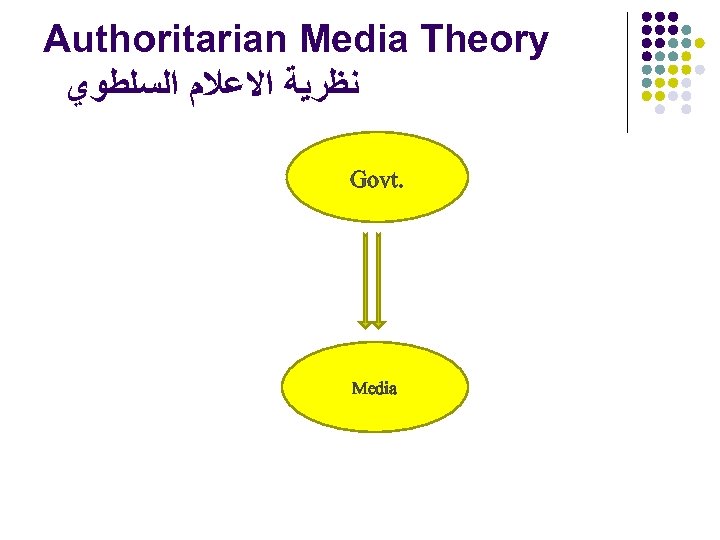
Authoritarian Media Theory ﻧﻈﺮﻳﺔ ﺍﻻﻋﻼﻡ ﺍﻟﺴﻠﻄﻮﻱ Govt. Media
Libertarian Media Theory (Free Press Theory) ﻧﻈﺮﻳﺔ ﺍﻻﻋﻼﻡ ﺍﻟﺘﺤﺮﺭﻱ ﺃﻮ ﻧﻈﺮﻳﺔ ﺍﻟﺼﺤﺎﻓﺔ ﺍﻟﺤﺮﺓ 1. It sees that individuals should be free to publish what they like and to express opinions freely. It sees the press as a free ‘market place’ of ideas. ﺗﺮﻯ ﺃﻨﻪ ﻳﺠﺐ ﺃﻦ ﻳﻜﻮﻥ ﺍﻷﻔﺮﺍﺩ ﺃﺤﺮﺍﺭ ﻓﻲ ﻧﺸﺮ ﻣﺎ ﻳﺤﻠﻮ ﻟﻬﻢ ﻭﻳﻌﺒﺮﻭﺍ ﻋﻦ آﺮﺍﺋﻬﻢ ﺑﺤﺮﻳﺔ. ﻓﻬﻲ ﺗﺮﻯ . ” ﺍﻟﺼﺤﺎﻓﺔ ﺑﺄﻨﻬﺎ "ﺳﻮﻕ ﺣﺮﺓ ﻟﻸﻔﻜﺎﺭ 2. All ideas should be put before the public, and the public will choose the best from that ‘market place’. ﻳﻨﺒﻐﻲ ﺃﻦ ﻭﺿﻊ ﻛﻞ ﺍﻷﻔﻜﺎﺭ ﺃﻤﺎﻡ . ' ﺍﻟﺠﻤﻬﻮﺭ ، ﻭﺍﻟﺠﻤﻬﻮﺭ ﻳﺨﺘﺎﺭ ﺃﻔﻀﻞ ﻣﺎ ﻓﻲ ﻫﺬﻩ 'ﺍﻟﺴﻮﻕ 3. Criticisms of the government's policies are fully accepted and even encouraged. There should be no restrictions on import or export of media messages. ﻼ ﻳﻜﻮﻥ ﺍﻻﻧﺘﻘﺎﺩﺍﺕ ﺍﻟﻤﻮﺟﻬﺔ ﻟﺴﻴﺎﺳﺎﺕ ﺍﻟﺤﻜﻮﻣﺔ ﻣﻘﺒﻮﻟﺔ ﺗﻤﺎﻣﺎ ﻭﺣﺘﻰ ﻳﺠﺐ ﺗﺸﺠﻴﻌﻬﺎ. ﻳﻨﺒﻐﻲ ﺃ . ﺍﻹﻋﻼﻣﻴﺔ ﻫﻨﺎﻙ ﺃﻲ ﻗﻴﻮﺩ ﻋﻠﻰ ﺍﺳﺘﻴﺮﺍﺩ ﺃﻮ ﺗﺼﺪﻳﺮ ﺍﻟﺮﺳﺎﺋﻞ
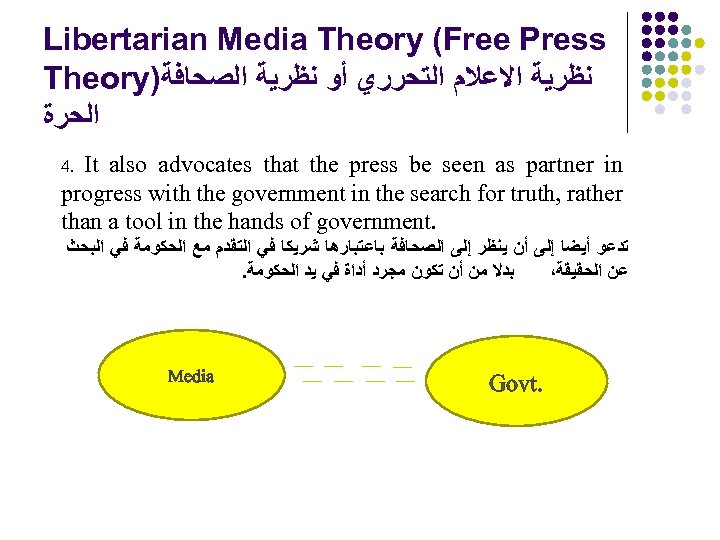
Libertarian Media Theory (Free Press Theory) ﻧﻈﺮﻳﺔ ﺍﻻﻋﻼﻡ ﺍﻟﺘﺤﺮﺭﻱ ﺃﻮ ﻧﻈﺮﻳﺔ ﺍﻟﺼﺤﺎﻓﺔ ﺍﻟﺤﺮﺓ It also advocates that the press be seen as partner in progress with the government in the search for truth, rather than a tool in the hands of government. 4. ﺗﺪﻋﻮ ﺃﻴﻀﺎ ﺇﻟﻰ ﺃﻦ ﻳﻨﻈﺮ ﺇﻟﻰ ﺍﻟﺼﺤﺎﻓﺔ ﺑﺎﻋﺘﺒﺎﺭﻫﺎ ﺷﺮﻳﻜﺎ ﻓﻲ ﺍﻟﺘﻘﺪﻡ ﻣﻊ ﺍﻟﺤﻜﻮﻣﺔ ﻓﻲ ﺍﻟﺒﺤﺚ . ﺑﺪﻻ ﻣﻦ ﺃﻦ ﺗﻜﻮﻥ ﻣﺠﺮﺩ ﺃﺪﺍﺓ ﻓﻲ ﻳﺪ ﺍﻟﺤﻜﻮﻣﺔ ، ﻋﻦ ﺍﻟﺤﻘﻴﻘﺔ Media Govt.
Social Responsibility Media Theory ﻧﻈﺮﻳﺔ ﺍﻟﻤﺴﺆﻮﻟﻴﺔ ﺍﻻﺟﺘﻤﺎﻋﻴﺔ ﻟﻺﻋﻼﻡ 1. The media can be used by anyone who has an idea to express but they are forbidden to violate private rights or disrupt social structures. ﺣﻈﺮ ﺍﻹﻋﻼﻡ ﻣﻦ ﻗﺒﻞ ﺃﻲ ﺷﺨﺺ ﻟﺪﻳﻪ ﻓﻜﺮﺓ ﻳﻌﺒﺮﻭﺍ ﻋﻨﻬﺎ ﻭﻟﻜﻦ ﻭﻳﻤﻜﻦ ﺍﺳﺘﺨﺪﺍﻡ ﻭﺳﺎﺋﻞ . ﺍﻻﺟﺘﻤﺎﻋﻴﺔ ﻋﻠﻴﻬﻢ ﺍﻧﺘﻬﺎﻙ ﺍﻟﺤﻘﻮﻕ ﺍﻟﺨﺎﺻﺔ ﺃﻮ ﺗﻌﻄﻴﻞ ﺍﻟﺒﻨﻰ 2. It emphasizes the freedom of the press and places responsibility on media practitioners to abide by certain social standards. ﺍﻹﻋﻼﻣﻴﻴﻦ ﻫﻲ ﺗﺆﻜﺪ ﻋﻠﻰ ﺣﺮﻳﺔ ﺍﻟﺼﺤﺎﻓﺔ ﻭﺗﻀﻊ ﺍﻟﻤﺴﺆﻮﻟﻴﺔ ﻋﻠﻰ . ﺑﺎﻻﻟﺘﺰﺍﻡ ﺑﻤﻌﺎﻳﻴﺮ ﺍﺟﺘﻤﺎﻋﻴﺔ ﻣﻌﻴﻨﺔ
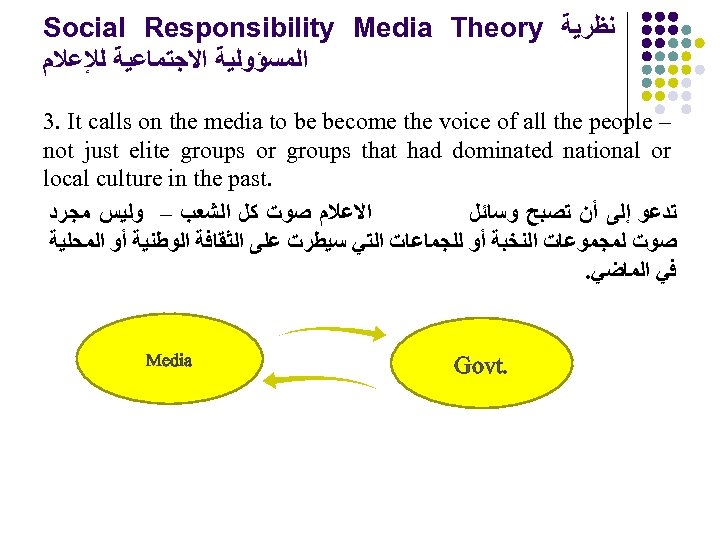
Social Responsibility Media Theory ﻧﻈﺮﻳﺔ ﺍﻟﻤﺴﺆﻮﻟﻴﺔ ﺍﻻﺟﺘﻤﺎﻋﻴﺔ ﻟﻺﻋﻼﻡ 3. It calls on the media to be become the voice of all the people – not just elite groups or groups that had dominated national or local culture in the past. ﺍﻻﻋﻼﻡ ﺻﻮﺕ ﻛﻞ ﺍﻟﺸﻌﺐ – ﻭﻟﻴﺲ ﻣﺠﺮﺩ ﺗﺪﻋﻮ ﺇﻟﻰ ﺃﻦ ﺗﺼﺒﺢ ﻭﺳﺎﺋﻞ ﺻﻮﺕ ﻟﻤﺠﻤﻮﻋﺎﺕ ﺍﻟﻨﺨﺒﺔ ﺃﻮ ﻟﻠﺠﻤﺎﻋﺎﺕ ﺍﻟﺘﻲ ﺳﻴﻄﺮﺕ ﻋﻠﻰ ﺍﻟﺜﻘﺎﻓﺔ ﺍﻟﻮﻃﻨﻴﺔ ﺃﻮ ﺍﻟﻤﺤﻠﻴﺔ . ﻓﻲ ﺍﻟﻤﺎﺿﻲ Media Govt.
Democratic-Participant Media Theory ﻧﻈﺮﻳﺔ ﺍﻟﻤﺸﺎﺭﻛﺔ ﺍﻟﺪﻳﻤﻮﻗﺮﺍﻃﻴﺔ ﻟﻺﻋﻼﻡ 1. It calls for breaking down existing bureaucracy, commercialization and professional hegemony in the media system to allow or guarantee easy media access to all potential users and consumers. ﺗﺪﻋﻮ ﺇﻟﻰ ﻛﺴﺮ ﺍﻟﻬﻴﻤﻨﺔ ﺍﻟﺒﻴﺮﻭﻗﺮﺍﻃﻴﺔ ﻭﺍﻟﺘﺴﻮﻳﻘﻴﺔ ﻭﺍﻟﻤﻬﻨﻴﺔ ﺍﻟﺴﺎﺋﺪﺓ ﺍﻟﻤﻮﺟﻮﺩﺓ ﻓﻲ ﻧﻈﺎﻡ ﻭﺳﺎﺋﻞ ﺍﻻﻋﻼﻡ ﻭﺻﻮﻻ ﺍﻟﻰ ﺍﻟﺴﻤﺎﺡ ﺃﻮ ﺿﻤﺎﻥ ﺳﻬﻮﻟﺔ ﺍﻟﻮﺻﻮﻝ ﺇﻟﻰ ﻭﺳﺎﺋﻞ ﺍﻹﻋﻼﻡ ﻟﺠﻤﻴﻊ ﺍﻟﻤﺴﺘﺨﺪﻣﻴﻦ ﻭﺍﻟﻤﺴﺘﻬﻠﻜﻴﻦ . ﺍﻟﻤﺤﺘﻤﻠﻴﻦ 2. This is done by the development of innovative “small” media that can be directly controlled by social group members. ﻳﻤﻜﻦ ﺗﺤﻘﻴﻖ ﺫﻟﻚ ﻣﻦ ﺧﻼﻝ ﺗﻄﻮﻳﺮ ﻭﺳﺎﺋﻞ ﺍﻹﻋﻼﻡ ﺍﻟﻤﺒﺘﻜﺮﺓ "ﺍﻟﺼﻐﻴﺮﺓ ﻳﺘﻢ ﺍﻟﺴﻴﻄﺮﺓ . ﻋﻠﻴﻬﺎ ﻣﺒﺎﺷﺮﺓ ﻣﻦ ﻗﺒﻞ ﺃﻌﻀﺎﺀ ﺍﻟﻤﺠﻤﻮﻋﺔ ﺍﻻﺟﺘﻤﺎﻋﻴﺔ
Democratic-Participant Media Theory ﻧﻈﺮﻳﺔ ﺍﻟﻤﺸﺎﺭﻛﺔ ﺍﻟﺪﻳﻤﻮﻗﺮﺍﻃﻴﺔ ﻟﻺﻋﻼﻡ 3. It condemns the monopolization of privately owned media, and the concentration and bureaucratization of government owned media. ﺍﻹﻋﻼﻡ ﺍﻟﺨﺎﺻﺔ، ﻭﺗﺮﻛﻴﺰ ﻭﺳﺎﺋﻞ ﺗﺪﻳﻦ ﻋﻤﻠﻴﺔ ﺍﺣﺘﻜﺎﺭ ﻭﺳﺎﺋﻞ ﺍﻻﻋﻼﻡ ﺍﻟﺘﻲ ﺗﻤﻠﻜﻬﺎ ﺍﻹﻋﻼﻡ ﻭﺍﻟﺒﻴﺮﻭﻗﺮﺍﻃﻴﺔ ﻓﻲ ﻭﺳﺎﺋﻞ . ﺍﻟﺤﻜﻮﻣﺔ 4. It calls for greater attention of the media to the needs, interests and aspirations of the audience in a political society. Media conglomerates be replaced or mixed with smallscale media enterprises. ﺍﻹﻋﻼﻡ ﻟﻤﺼﺎﻟﺢ ﻭﺍﺣﺘﻴﺎﺟﺎﺕ ﺍﻻﻫﺘﻤﺎﻡ ﻣﻦ ﻭﺳﺎﺋﻞ ﺗﺪﻋﻮ ﺍﻟﻰ ﻣﺰﻳﺪ ﻣﻦ ﻭﺗﻄﻠﻌﺎﺕ ﺍﻟﺠﻤﻬﻮﺭ ﻓﻲ ﺍﻟﻤﺠﺘﻤﻊ ﺍﻟﺴﻴﺎﺳﻲ. ﻭﺃﻴﻀﺎ ﺍﻟﻰ ﺍﺳﺘﺒﺪﺍﻝ ﻭﺧﻠﻂ ﺷﺮﻛﺎﺕ . ﺍﻹﻋﻼﻣﻴﺔ ﺫﺍﺕ ﺍﻟﻨﻄﺎﻕ ﺻﻐﻴﺮ ﺍﻻﻋﻼﻡ ﺍﻟﻜﺒﺮﻯ ﻣﻊ ﺍﻟﻤﺆﺴﺴﺎﺕ
Media Violence Theories ﺍﻟﻨﻈﺮﻳﺎﺕ ﺍﻟﻤﻔﺴﺮﺓ ﻟﻠﻌﻨﻒ ﻓﻲ ﻭﺳﺎﺋﻞ ﺍﻹﻋﻼﻡ Catharsis Theory ﻧﻈﺮﻳﺔ ﺍﻟﺘﻄﻬﻴﺮ ﺃﻮ ﺍﻟﺘﻨﻔﻴﺲ Catharsis theory states that viewing violence is sufficient to purge or at least satisfy a person’s aggressive drive and, therefore, reduce the likelihood of aggressive behaviour. In other words, viewing mediated aggression reduces people’s natural aggressive drives. ﻧﻈﺮﻳﺔ ﺍﻟﺘﻨﻔﻴﺲ ﺗﻨﺺ ﻋﻠﻰ ﺃﻦ ﻣﺸﺎﻫﺪﺓ ﺍﻟﻌﻨﻒ ﻳﻜﻔﻲ ﻟﻠﺘﻨﻔﻴﺲ ﺃﻮ ﻋﻠﻰ ﺍﻷﻘﻞ ﻟﺘﻠﺒﻴﺔ ﺩﻭﺍﻓﻊ ﺍﻟﺸﺨﺺ ﺍﻟﻌﺪﻭﺍﻧﻴﺔ، ﻭﺑﺎﻟﺘﺎﻟﻲ ﻳﻘﻠﻞ ﻣﻦ ﺍﺣﺘﻤﺎﻻﺕ ﺍﻟﺴﻠﻮﻙ ﺍﻟﻌﺪﻭﺍﻧﻲ. ﻭﺑﻌﺒﺎﺭﺓ ﺃﺨﺮﻯ، ﻣﺸﺎﻫﺪﺓ ﺍﻟﻌﻨﻒ ﻋﺒﺮ ﻭﺳﺎﺋﻞ ﺍﻻﻋﻼﻡ ﻳﻘﻠﻞ ﺩﻭﺍﻓﻊ . ﺍﻟﻨﺎﺱ ﺍﻟﻌﺪﻭﺍﻧﻴﺔ ﺍﻟﻄﺒﻴﻌﻴﺔ
Aggressive Cues Theory ﻧﻈﺮﻳﺔ ﺍﻻﺳﺘﺜﺎﺭﺓ ﺃﻮ ﺍﻻﺷﺎﺭﺍﺕ ﺍﻟﻌﺪﻭﺍﻧﻴﺔ l It believes that people who see mediated violence show higher levels of aggression. In other words, watching mass-mediated violence increases people’s level of emotional and psychological stimulation which can in turn lead to aggressive behaviour. ﺃﻨﻬﺎ ﺗﻌﺘﻘﺪ ﺃﻦ ﺍﻟﻨﺎﺱ ﺍﻟﺬﻳﻦ ﻳﺮﻭﻥ ﺍﻟﻌﻨﻒ ﻣﻦ ﺧﻼﻝ ﻭﺳﺎﺋﻞ ﺍﻻﻋﻼﻡ ﺗﻈﻬﺮ ﻣﺴﺘﻮﻳﺎﺕ ﺃﻌﻠﻰ ﻣﻦ ﺍﻟﻌﺪﻭﺍﻥ. ﻭﺑﻌﺒﺎﺭﺓ ﺃﺨﺮﻯ، ﺍﻟﺘﻌﺮﺽ ﻟﻠﻌﻨﻒ ﻋﺒﺮ ﺍﻻﻋﻼﻡ ﻳﺰﻳﺪ ﻣﻦ ﻣﺴﺘﻮﻯ ﺍﻻﺳﺘﺜﺎﺭﺓ ﺍﻟﻌﺎﻃﻔﻴﺔ ﻭﺍﻟﻨﻔﺴﻴﺔ ﺍﻟﺬﻱ ﻳﻤﻜﻦ ﺃﻦ . ﻳﺆﺪﻱ ﺑﺪﻭﺭﻩ ﺇﻟﻰ ﺍﻟﺴﻠﻮﻙ ﺍﻟﻌﺪﻭﺍﻧﻲ
Reinforcement Theory ﻧﻈﺮﻳﺔ ﺍﻟﺘﺪﻋﻴﻢ l It states that mass-mediated violence reinforce the existing aggressive inclinations that people bring to media exposure. It is not that the media make people to be violent but they simply reinforce people’s existing aggressive attitudes and behaviours. ﺗﻨﺺ ﻋﻠﻰ ﺃﻦ ﻣﺸﺎﻫﺪﺓ ﺍﻟﻌﻨﻒ ﻣﻦ ﺧﻼﻝ ﻭﺳﺎﺋﻞ ﺍﻻﻋﻼﻡ ﻳﻌﺰﺯ ﺍﻟﻤﻴﻮﻝ ﺍﻻﻋﻼﻡ. ﻟﻴﺲ ﺍﻟﻌﺪﻭﺍﻧﻴﺔ ﺍﻟﻘﺎﺋﻤﺔ ﺍﻟﺘﻲ ﻳﺠﻠﺒﻬﺎ ﺍﻟﻨﺎﺱ ﻋﻨﺪ ﻣﺸﺎﻫﺪﺓ ﺍﻹﻋﻼﻡ ﺗﺠﻌﻞ ﺍﻟﻨﺎﺱ ﻋﻨﻴﻔﻴﻦ ﻟﻜﻨﻬﺎ ﺍﻷﻤﺮ ﻫﻮ ﺃﻦ ﻭﺳﺎﺋﻞ . ﺍﺻﻼ ﺑﺒﺴﺎﻃﺔ ﺗﻌﺰﺯ ﺍﺗﺠﺎﻫﺎﺕ ﻭﺳﻠﻮﻛﻴﺎﺕ ﺍﻟﻨﺎﺱ ﺍﻟﻌﺪﻭﺍﻧﻴﺔ ﺍﻟﻘﺎﺋﻤﺔ
Social Learning Theory ﺍﻻﺟﺘﻤﺎﻋﻲ ( )ﻧﻈﺮﻳﺔ ﺍﻟﺘﻮﺣﺪ l ﻧﻈﺮﻳﺔ ﺍﻟﺘﻌﻠﻢ This theory assumes that people, children especially, tend to learn aggression from the mass media and to model their behaviour after the ones shown. When people observe media violence, they learn and imitate what is seen. ﻫﺬﻩ ﺍﻟﻨﻈﺮﻳﺔ ﺗﻔﺘﺮﺽ ﺃﻦ ﺍﻟﻨﺎﺱ، ﺧﺼﻮﺻﺎ ﺍﻷﻄﻔﺎﻝ ، ﺗﻤﻴﻞ ﺇﻟﻰ ﺗﻌﻠﻢ ﺍﻟﻌﺪﻭﺍﻥ ﻣﻦ ﻭﺳﺎﺋﻞ ﺍﻹﻋﻼﻡ ﻭﻳﺸﻜﻠﻮﺍ ﺳﻠﻮﻛﻬﻢ ﻋﻠﻰ ﻧﻤﻂ ﺍﻟﻨﺎﺱ ﺍﻟﻤﻮﺟﻮﺩﻳﻦ ﻓﻲ ﺍﻻﻋﻼﻡ. ﻋﻨﺪﻣﺎ ﻳﺘﻔﺮﺝ ﺍﻟﻨﺎﺱ ﺍﻟﻌﻨﻒ ﻋﻠﻰ ﻭﺳﺎﺋﻞ ﺍﻹﻋﻼﻡ ﻓﺎﻧﻬﻢ ﻳﺘﻌﻠﻤﻮﻥ . ﻭﻳﻘﻠﺪﻭﻥ ﻣﺎ ﻳﺸﺎﻫﺪﻭﻥ
Скачать презентацию Media Theories ﻧﻈﺮﻳﺎﺕ ﺍﻻﻋﻼﻡ Effects Theories ﻧﻈﺮﻳﺎﺕ
0c599e42f83570fd410d7a2dbf5c165f.ppt