 Скачать презентацию Measuring true profits using embedded value Peter Luk
7dc5ce6718dad695fc8dec0b6a570847.ppt
- Количество слайдов: 17



Measuring true profits using embedded value Peter Luk Plan-B Consulting Ltd. August 2004
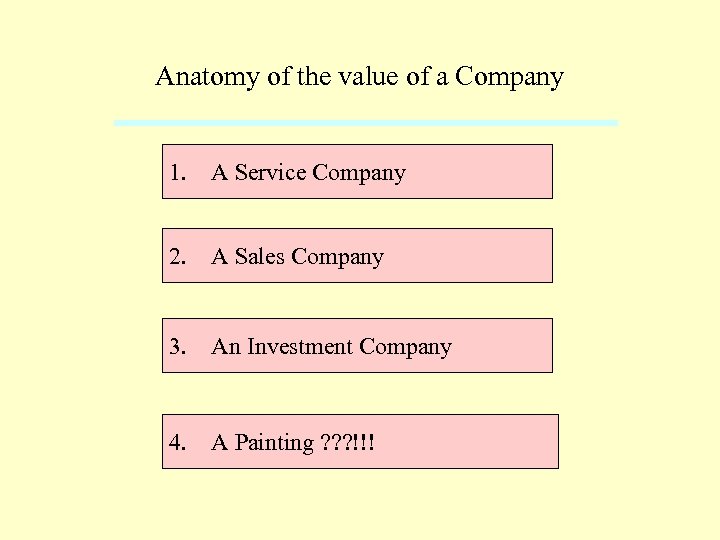
Anatomy of the value of a Company 1. A Service Company 2. A Sales Company 3. An Investment Company 4. A Painting ? ? ? !!!
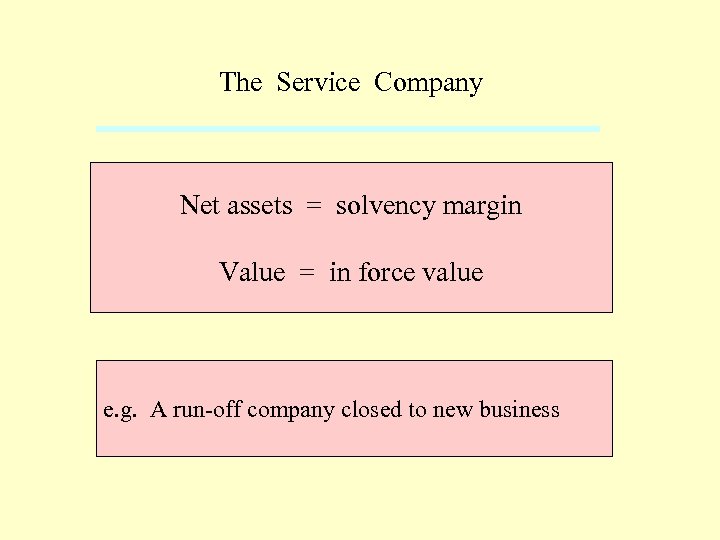
The Service Company Net assets = solvency margin Value = in force value e. g. A run-off company closed to new business
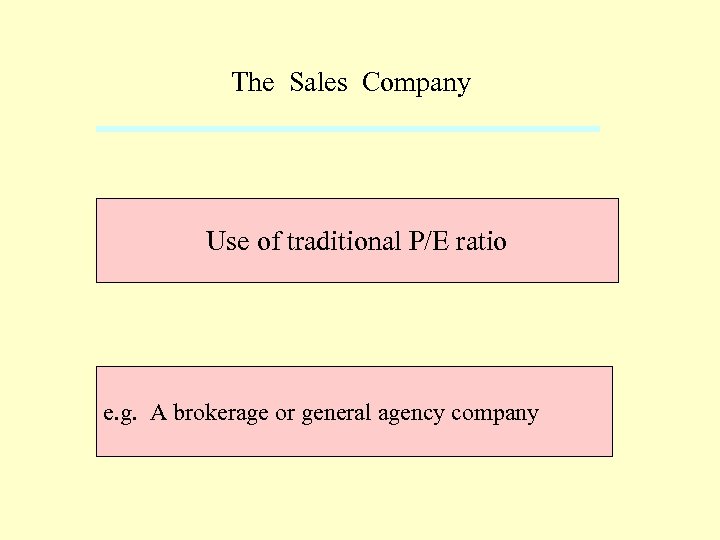
The Sales Company Use of traditional P/E ratio e. g. A brokerage or general agency company
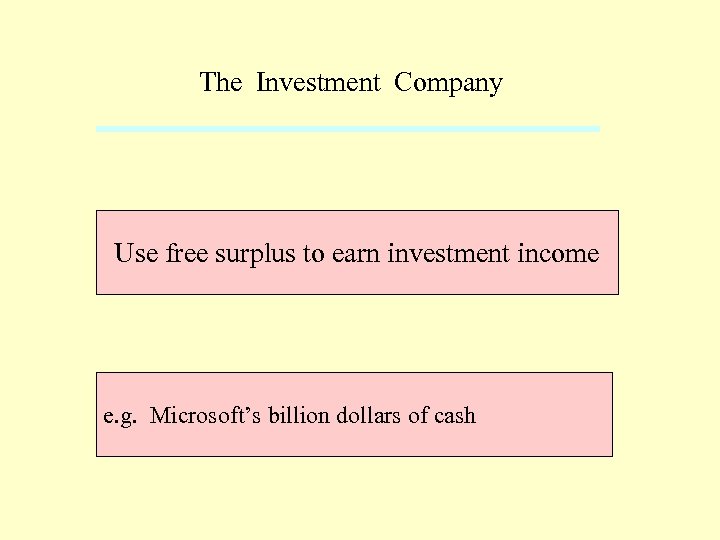
The Investment Company Use free surplus to earn investment income e. g. Microsoft’s billion dollars of cash

The Painting value ? ? ? !!! Investors’ psychology e. g. Picasso’s “Boy with a pipe” – US$104 M
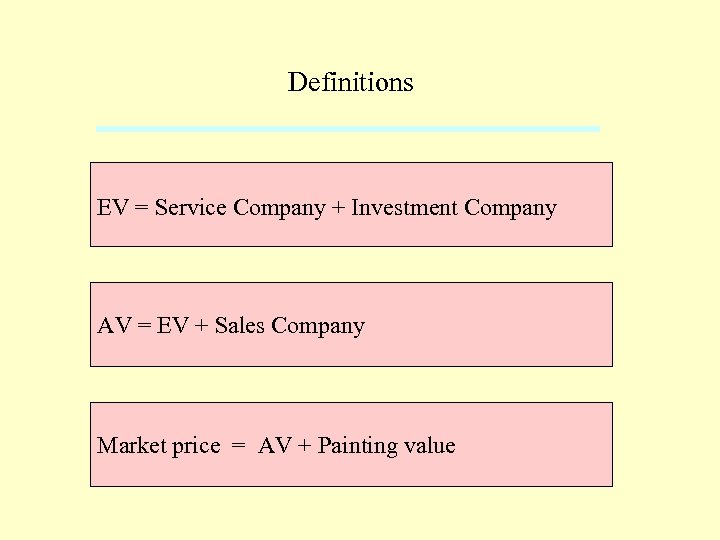
Definitions EV = Service Company + Investment Company AV = EV + Sales Company Market price = AV + Painting value
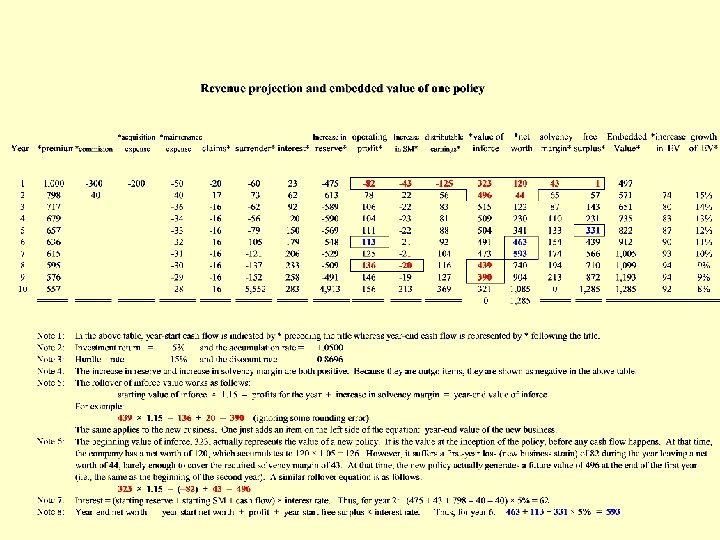
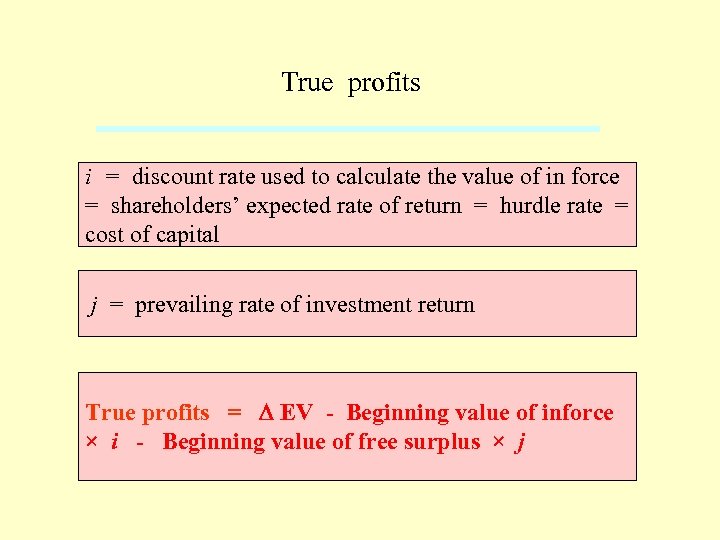
True profits i = discount rate used to calculate the value of in force = shareholders’ expected rate of return = hurdle rate = cost of capital j = prevailing rate of investment return True profits = D EV - Beginning value of inforce × i - Beginning value of free surplus × j
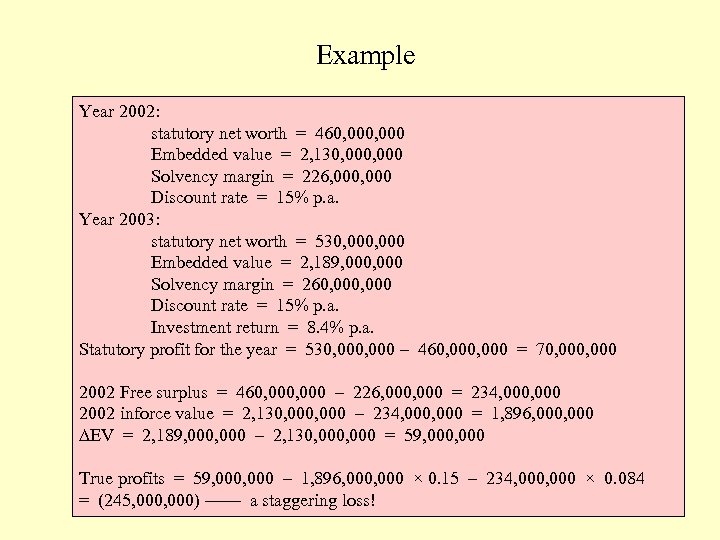
Example Year 2002: statutory net worth = 460, 000 Embedded value = 2, 130, 000 Solvency margin = 226, 000 Discount rate = 15% p. a. Year 2003: statutory net worth = 530, 000 Embedded value = 2, 189, 000 Solvency margin = 260, 000 Discount rate = 15% p. a. Investment return = 8. 4% p. a. Statutory profit for the year = 530, 000 – 460, 000 = 70, 000 2002 Free surplus = 460, 000 – 226, 000 = 234, 000 2002 inforce value = 2, 130, 000 – 234, 000 = 1, 896, 000 DEV = 2, 189, 000 – 2, 130, 000 = 59, 000 True profits = 59, 000 – 1, 896, 000 × 0. 15 – 234, 000 × 0. 084 = (245, 000) –––– a staggering loss!

Debate ?
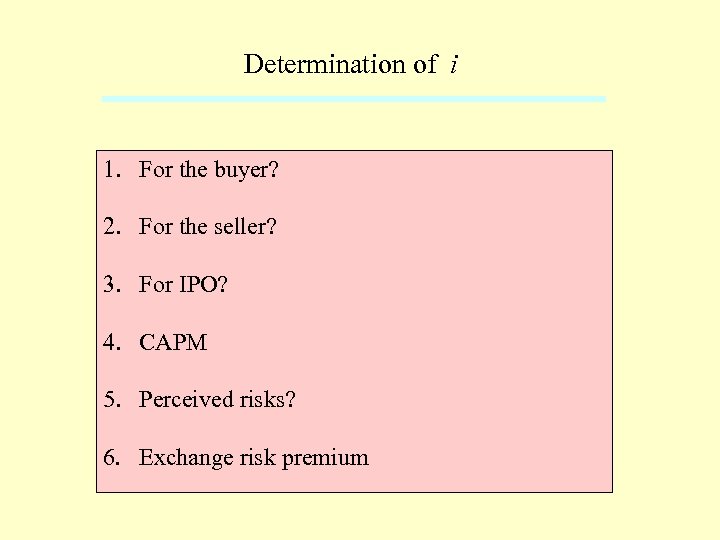
Determination of i 1. For the buyer? 2. For the seller? 3. For IPO? 4. CAPM 5. Perceived risks? 6. Exchange risk premium
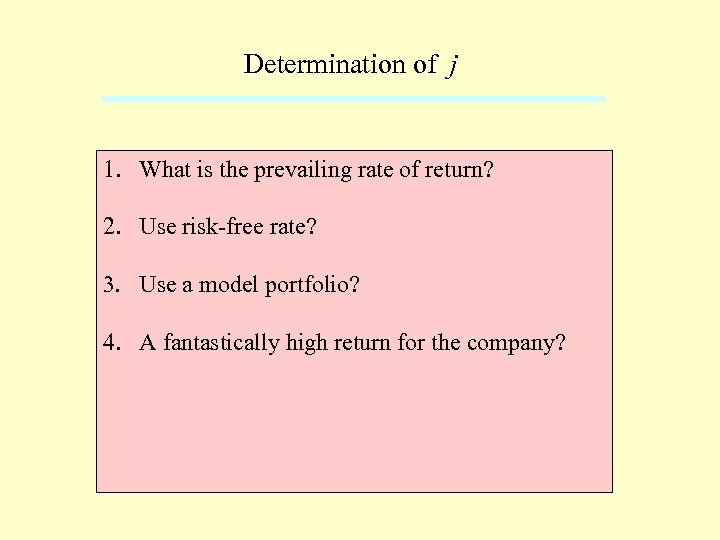
Determination of j 1. What is the prevailing rate of return? 2. Use risk-free rate? 3. Use a model portfolio? 4. A fantastically high return for the company?
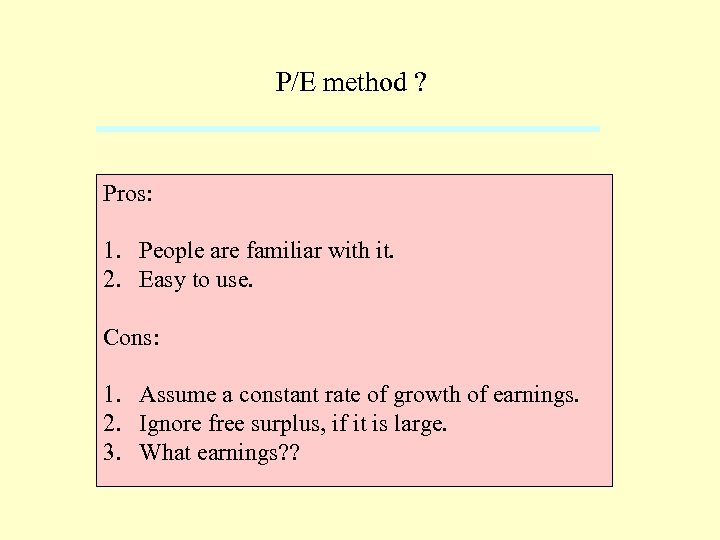
P/E method ? Pros: 1. People are familiar with it. 2. Easy to use. Cons: 1. Assume a constant rate of growth of earnings. 2. Ignore free surplus, if it is large. 3. What earnings? ?
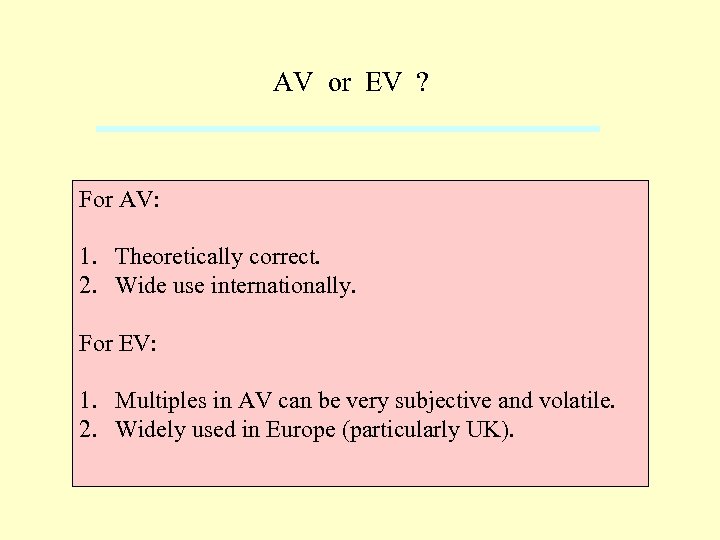
AV or EV ? For AV: 1. Theoretically correct. 2. Wide use internationally. For EV: 1. Multiples in AV can be very subjective and volatile. 2. Widely used in Europe (particularly UK).
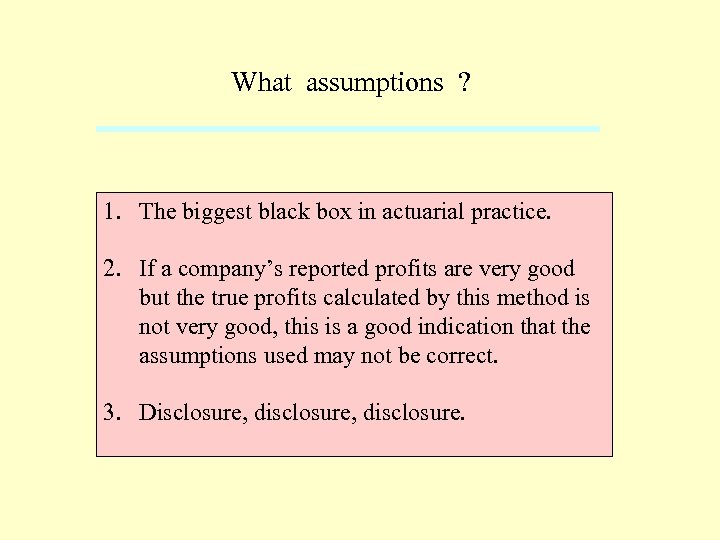
What assumptions ? 1. The biggest black box in actuarial practice. 2. If a company’s reported profits are very good but the true profits calculated by this method is not very good, this is a good indication that the assumptions used may not be correct. 3. Disclosure, disclosure.
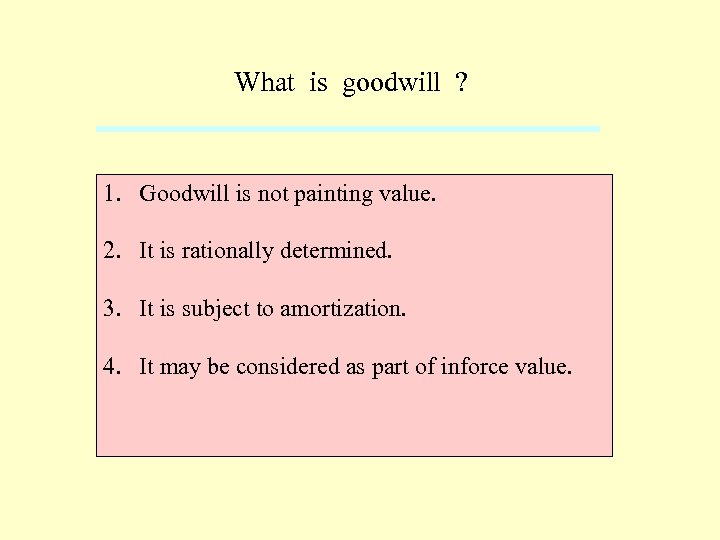
What is goodwill ? 1. Goodwill is not painting value. 2. It is rationally determined. 3. It is subject to amortization. 4. It may be considered as part of inforce value.
Скачать презентацию Measuring true profits using embedded value Peter Luk
7dc5ce6718dad695fc8dec0b6a570847.ppt