 Скачать презентацию Measuring the Ecological Carbon Footprint The Experience
b52f9bfd6b092198b5ccb769c91f11d1.ppt
- Количество слайдов: 28



Measuring the Ecological & Carbon Footprint The Experience of South West Tourism Malcolm Bell & Emma Whittlesea South West Tourism
Sustainable Tourism in the SW of England • “Towards 2015” - identifying sustainability as one of the three key strategic aims for tourism in the region “Meeting the needs of the visitor, industry and community within agreed environmental and social limits” • Recognition that the environmental consequences of tourism can no longer be ignored • Aim - to make sustainability integral to the functions & structures of Tourism • Coordination • Leading on relevant interventions • Monitoring and measurement
Stepping forward or backwards? • If we can’t measure it, how can we manage it? • What gets measured gets done • If you don’t measure results, you can’t tell success from failure • Set of indicators cannot always provide the ‘big picture’ • How do we reflect cross cutting issues adequately • Economic value of tourism better known. . . but what about the environmental impact? • Size of the problem - how do we respond? • Can any one tool, indicator and approach suffice?
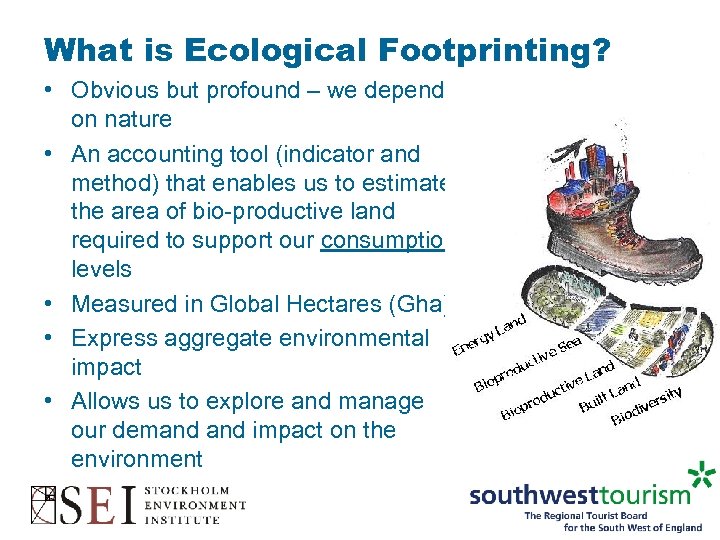
What is Ecological Footprinting? • Obvious but profound – we depend on nature • An accounting tool (indicator and method) that enables us to estimate the area of bio-productive land required to support our consumption levels • Measured in Global Hectares (Gha) • Express aggregate environmental impact • Allows us to explore and manage our demand impact on the environment
REAP Tourism We are developing a tool to help: • Measure the impact of visitor behaviour in a consistent fashion at all spatial levels • Identify areas of visitor behaviour with a high environmental impact • Demonstrate the impact of attracting different types of visitor or promoting different visitor behaviour • Help us understand the impact of tourism in the context of our lifestyles as a whole
The challenge part 1: Capturing all tourist activity It isn’t just about hotels and tourist attractions • The definition of tourism endorsed by the UN covers the consumption of all goods and services by visitors to an area • Every consumption activity has an environmental consequence But its hard to get beyond this ‘recognised’ tourist spend: • Focussing on business turnover can make it difficult to capture all impacts & distinguish between residents and tourists • Tracking tourist consumption can be hampered by limited data
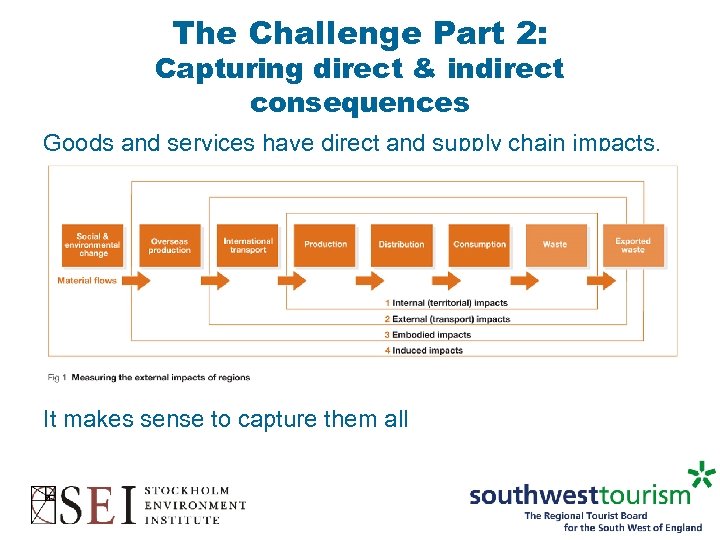
The Challenge Part 2: Capturing direct & indirect consequences Goods and services have direct and supply chain impacts. It makes sense to capture them all
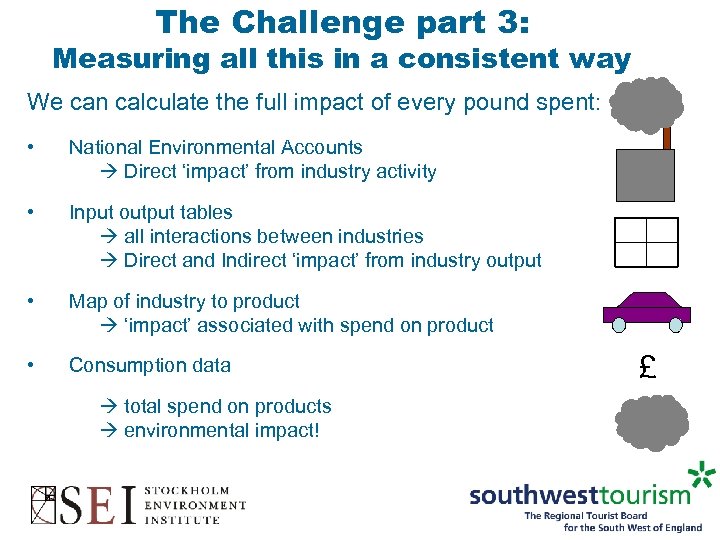
The Challenge part 3: Measuring all this in a consistent way We can calculate the full impact of every pound spent: • National Environmental Accounts Direct ‘impact’ from industry activity • Input output tables all interactions between industries Direct and Indirect ‘impact’ from industry output • Map of industry to product ‘impact’ associated with spend on product • Consumption data total spend on products environmental impact! £
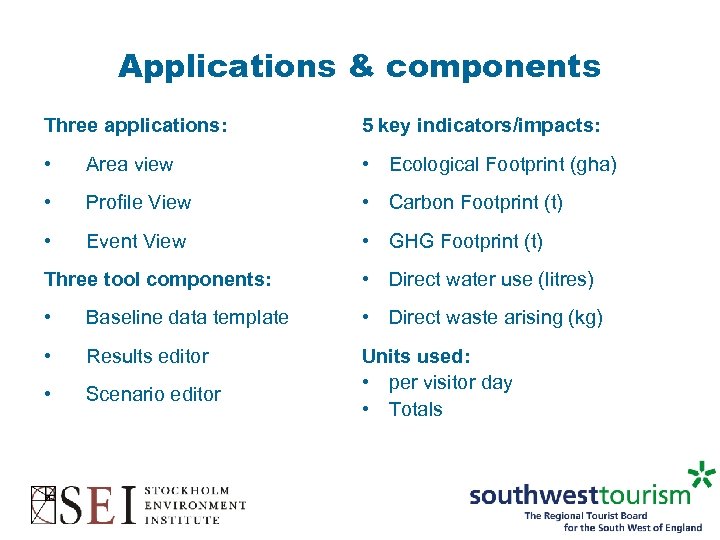
Applications & components Three applications: 5 key indicators/impacts: • Area view • Ecological Footprint (gha) • Profile View • Carbon Footprint (t) • Event View • GHG Footprint (t) Three tool components: • Direct water use (litres) • Baseline data template • Direct waste arising (kg) • Results editor • Scenario editor Units used: • per visitor day • Totals
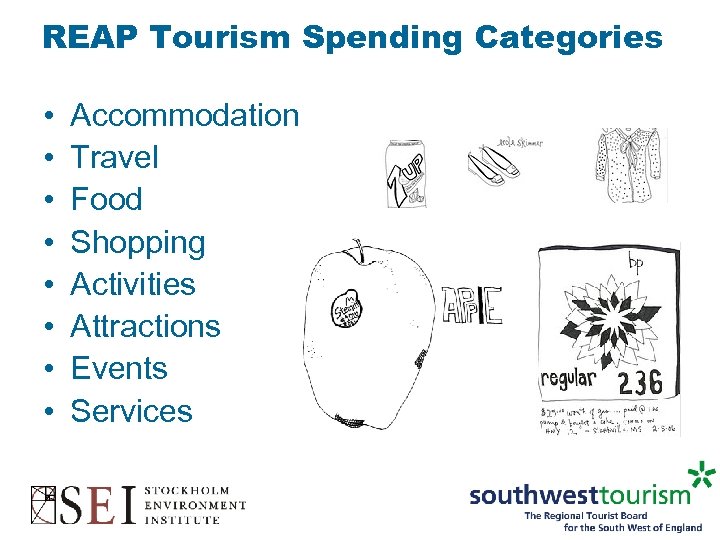
REAP Tourism Spending Categories • • Accommodation Travel Food Shopping Activities Attractions Events Services
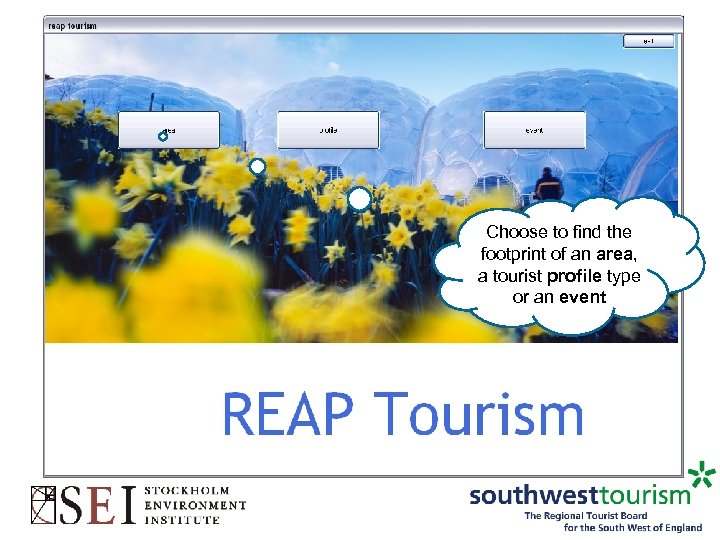
Choose to find the footprint of an area, a tourist profile type or an event
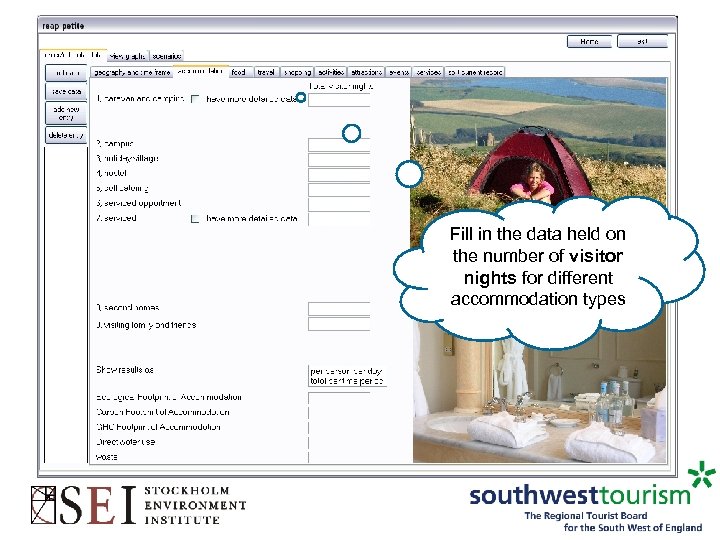
Fill in the data held on the number of visitor nights for different accommodation types
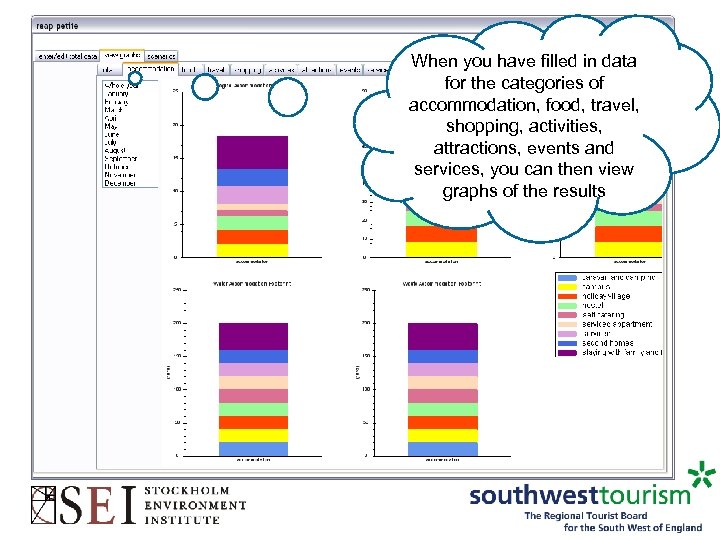
When you have filled in data for the categories of accommodation, food, travel, shopping, activities, attractions, events and services, you can then view graphs of the results
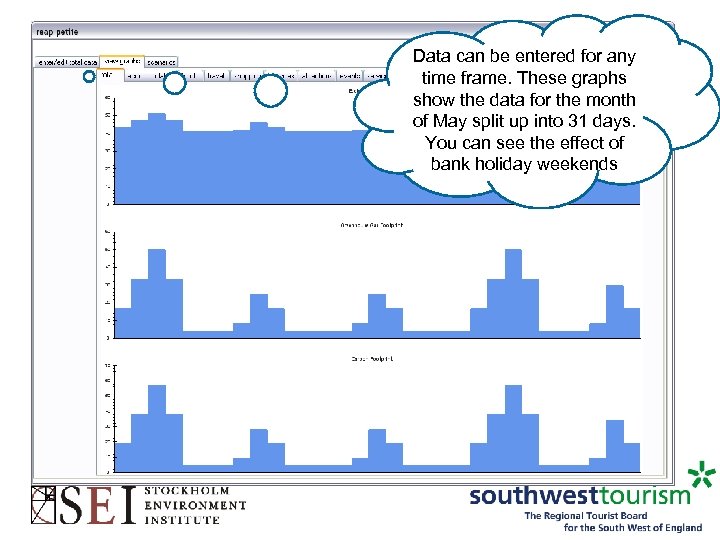
Data can be entered for any time frame. These graphs show the data for the month of May split up into 31 days. You can see the effect of bank holiday weekends
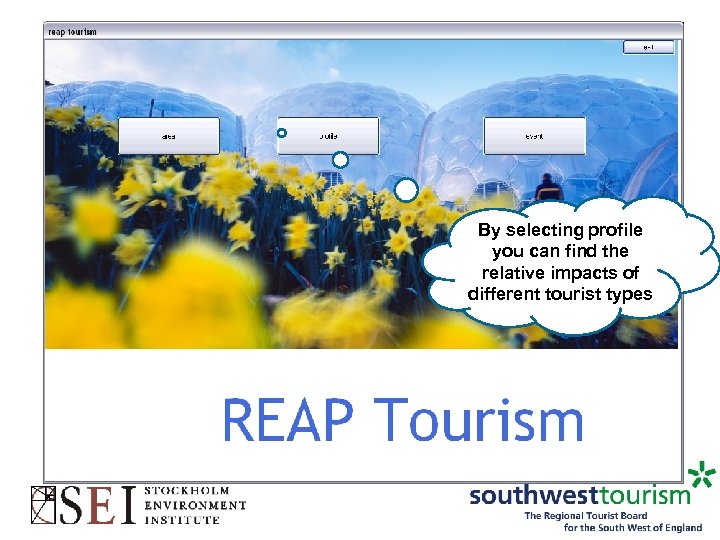
By selecting profile you can find the relative impacts of different tourist types
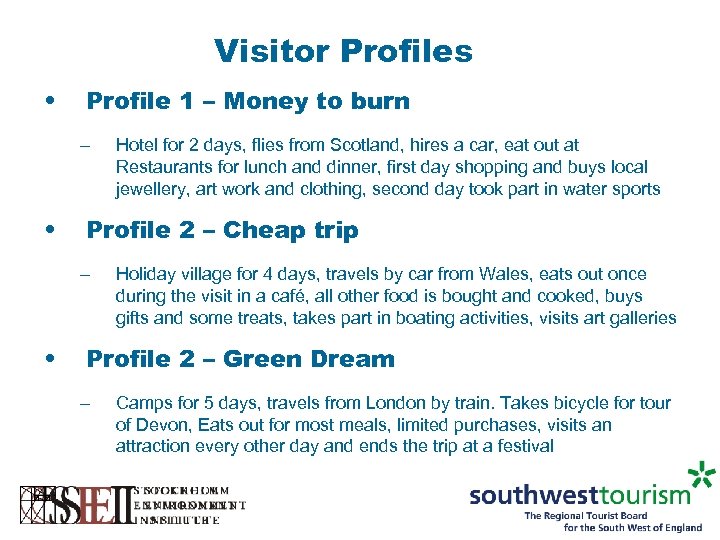
Visitor Profiles • Profile 1 – Money to burn – • Profile 2 – Cheap trip – • Hotel for 2 days, flies from Scotland, hires a car, eat out at Restaurants for lunch and dinner, first day shopping and buys local jewellery, art work and clothing, second day took part in water sports Holiday village for 4 days, travels by car from Wales, eats out once during the visit in a café, all other food is bought and cooked, buys gifts and some treats, takes part in boating activities, visits art galleries Profile 2 – Green Dream – Camps for 5 days, travels from London by train. Takes bicycle for tour of Devon, Eats out for most meals, limited purchases, visits an attraction every other day and ends the trip at a festival
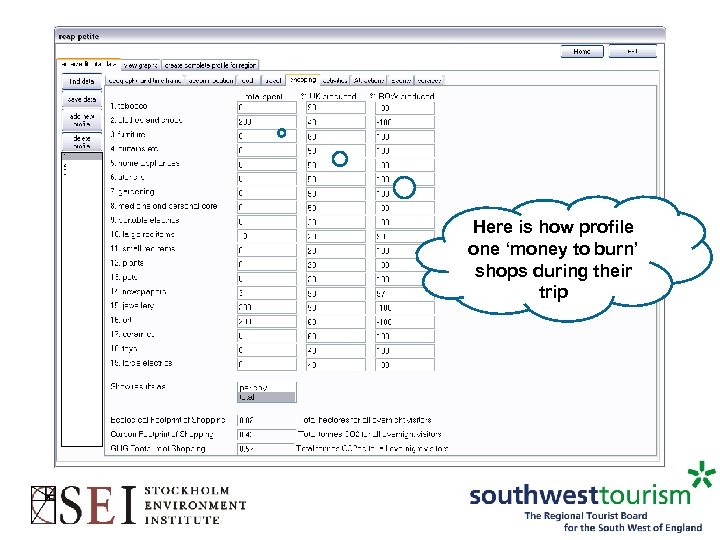
Here is how profile one ‘money to burn’ shops during their trip
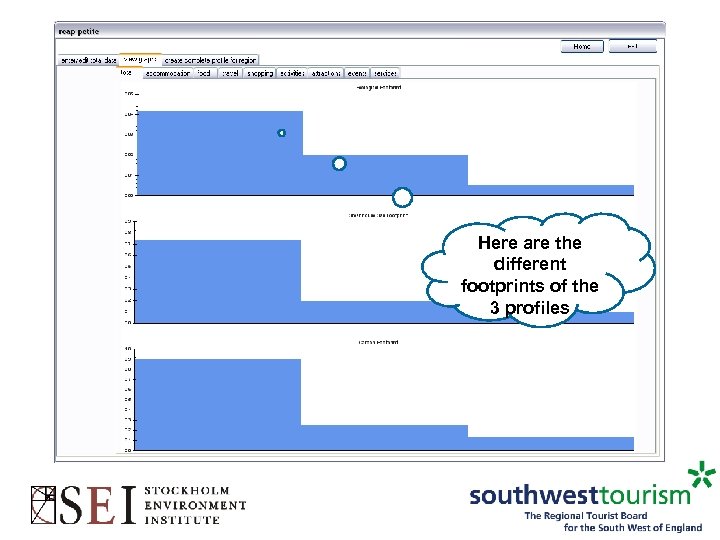
Here are the different footprints of the 3 profiles
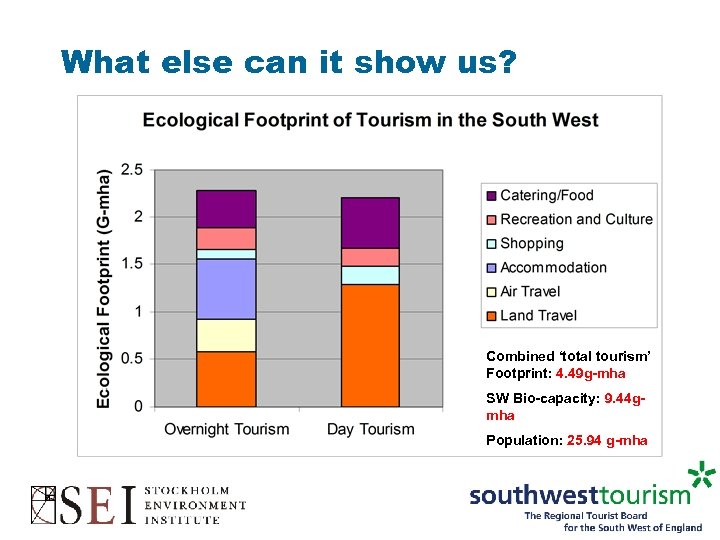
What else can it show us? Combined ‘total tourism’ Footprint: 4. 49 g-mha SW Bio-capacity: 9. 44 gmha Population: 25. 94 g-mha
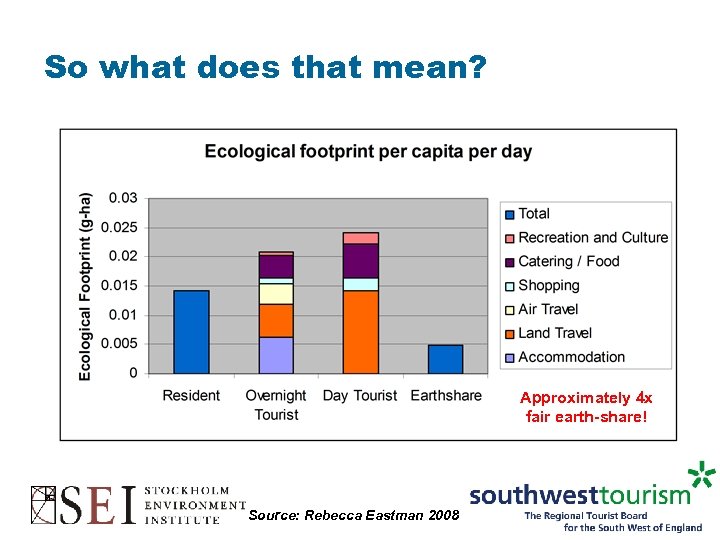
So what does that mean? Approximately 4 x fair earth-share! Source: Rebecca Eastman 2008
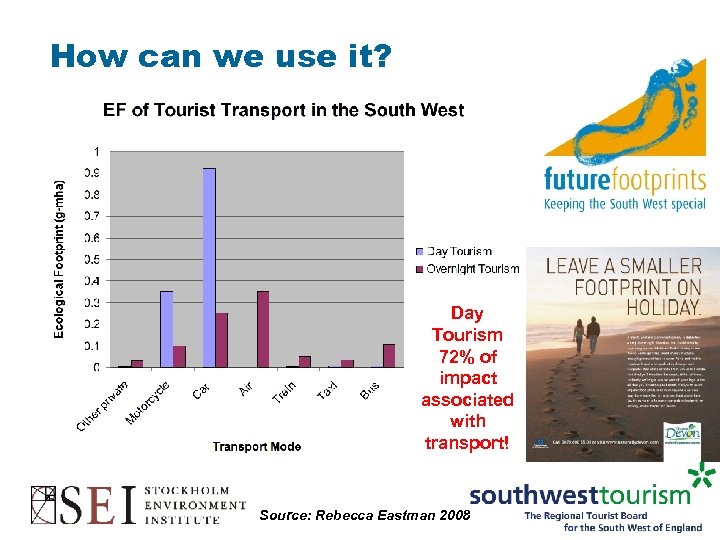
How can we use it? Day Tourism 72% of impact associated with transport! Source: Rebecca Eastman 2008
Creating Tourism Policy Scenarios • Visitor numbers and types • Transport demand behaviour • Business energy consumption • Tourist activity and expenditure on consumable and durables • Food and eating patterns • Visitor behaviours • Pressures on tourist services e. g. Life guards, beach cleaning, Police etc.
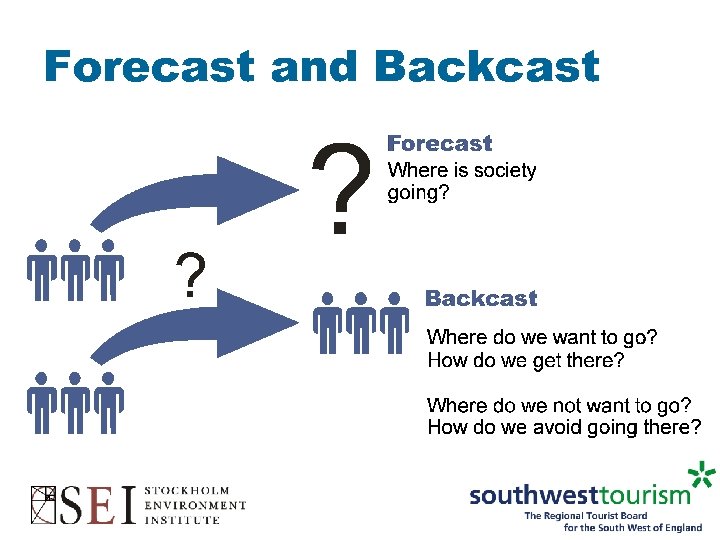
Forecast and Backcast
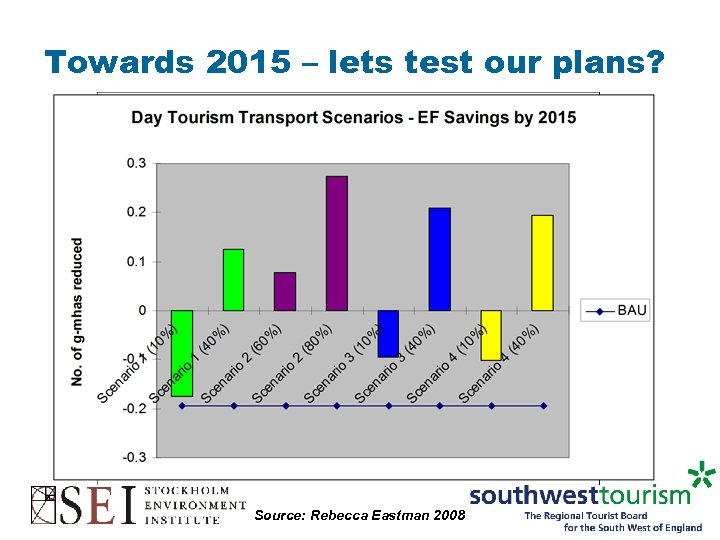
Towards 2015 – lets test our plans? Source: Rebecca Eastman 2008
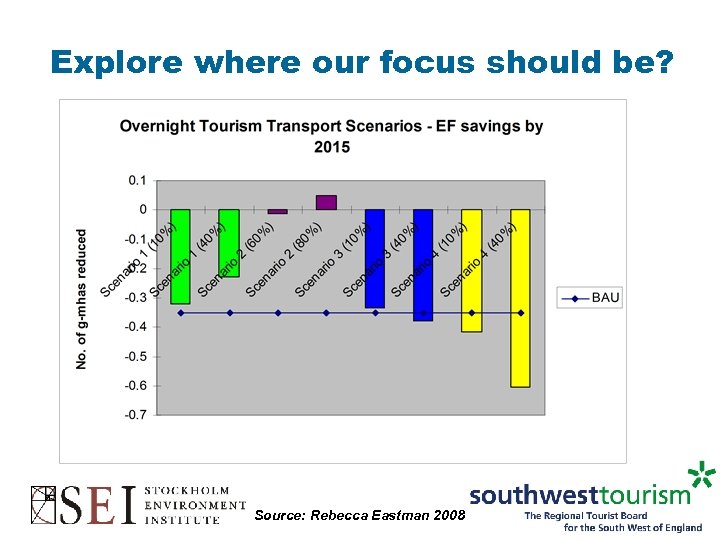
Explore where our focus should be? Source: Rebecca Eastman 2008
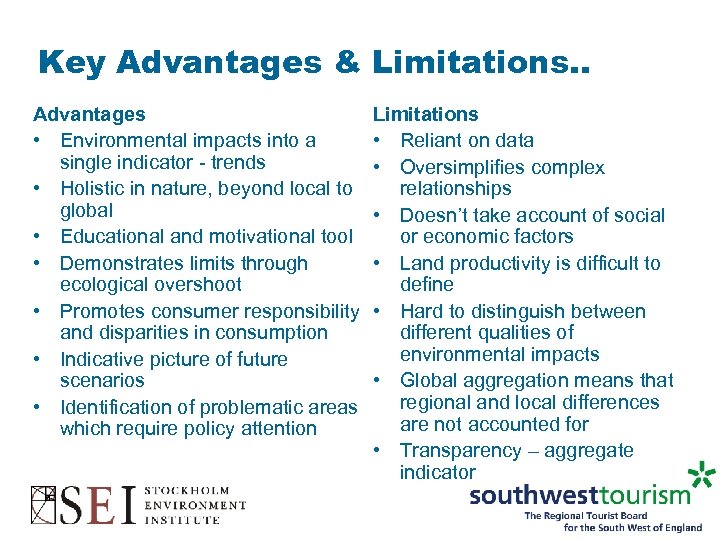
Key Advantages & Limitations. . Advantages • Environmental impacts into a single indicator - trends • Holistic in nature, beyond local to global • Educational and motivational tool • Demonstrates limits through ecological overshoot • Promotes consumer responsibility and disparities in consumption • Indicative picture of future scenarios • Identification of problematic areas which require policy attention Limitations • Reliant on data • Oversimplifies complex relationships • Doesn’t take account of social or economic factors • Land productivity is difficult to define • Hard to distinguish between different qualities of environmental impacts • Global aggregation means that regional and local differences are not accounted for • Transparency – aggregate indicator
Next Steps • Completing the tool and creating an initial SW baseline • Adding tool tips, help functions, manual • A Beta version of tool completed by January 2009 • Application alongside other tools/indicators • Results, scenario planning & communicating findings • Business Planning (Regional & Local level) • ‘Towards 2015’ Refresh • Distribution, Training & Information Exchange • Continuous development
Thank you Emma Whittlesea Sustainability Strategist South West Tourism ewhittlesea@swtourism. co. uk 00 44 1392 353233
Скачать презентацию Measuring the Ecological Carbon Footprint The Experience
b52f9bfd6b092198b5ccb769c91f11d1.ppt