


 Скачать презентацию Measurement of Ammonia Concentrations and Fluxes Recent Examples
080c63f184aaa4af4830ebe1e90c4170.ppt
- Количество слайдов: 36
 Measurement of Ammonia Concentrations and Fluxes: Recent Examples Using Denuder and Chemiluminescence Technologies John Walker U. S. Environmental Protection Agency National Risk Management Research Laboratory Air Pollution Prevention and Control Division Research Triangle Park, NC 27711 NADP Annual Technical Committee Meeting and Ammonia Workshop, 20 -22 October 2003, Washington, D. C.
 Research and Development at EPA • 1, 950 employees • $700 million budget • $100 million extramural research grant program • 13 lab or research facilities across the U. S. • Credible, relevant and timely research results and technical support that inform EPA policy decisions
 Making decisions with sound science requires. . • Relevant, high quality, cutting-edge research in human health, ecology, pollution control and prevention, economics and decision sciences • Proper characterization of scientific findings • Appropriate use of science in the decision process Research and development contribute uniquely to. . • Health and ecological research, as well as research in pollution prevention and new technology • In-house research and an external grants program • Problem-driven and core research
 High Priority Research Areas • Human Health • Particulate Matter • Drinking Water • Clean Water • Global Change • Endocrine Disruptors • Ecological Risk • Pollution Prevention • Homeland Security
 Ammonia Research within U. S. EPA/NRMRL/APPCD • Development of Emission Factors for Animal Production Bruce Harris, Richard Shores, and Susan Thorneloe Swine, Poultry, Cattle OP-FTIR/TDL with computed tomography • Natural emissions, atmospheric chemistry and deposition John Walker Spatio-temporal variability in NH 3/NHx, air/surface exchange over crops, soil emissions NH 3 NH 4+
 Outline • Annular Denuder – Ambient monitoring in eastern North Carolina • Chemiluminescence NH 3 Analyzer – Air/surface exchange of NH 3 • Passive Denuder – Spatial gradients in the vicinity of a swine production facility NH 3 NH 4+
 Ambient Ammonia and Ammonium Aerosol across an Area of Variable Ammonia Emission Density Co-authors Wayne Robarge North Carolina State University, Department of Soil Science, Raleigh, NC 27695 Dave R. Whitall Center for Coastal Monitoring and Assessment, NOAA, Silver Spring, MD 20910 Hans W. Paerl University of North Carolina at Chapel Hill, Institute of Marine Sciences, Morehead City, NC 28557 NH 3 NH 4+
 Background: Ammonia in North Carolina • Eastern North Carolina contains some of the highest county-scale NH 3 emission rates in the U. S. (Sampson and Duplin Counties; Strader et al. , 2001). • Livestock and fertilizer account for 90% (116, 000 tons N) of statewide NH 3 emissions. NH 3 NH 4+
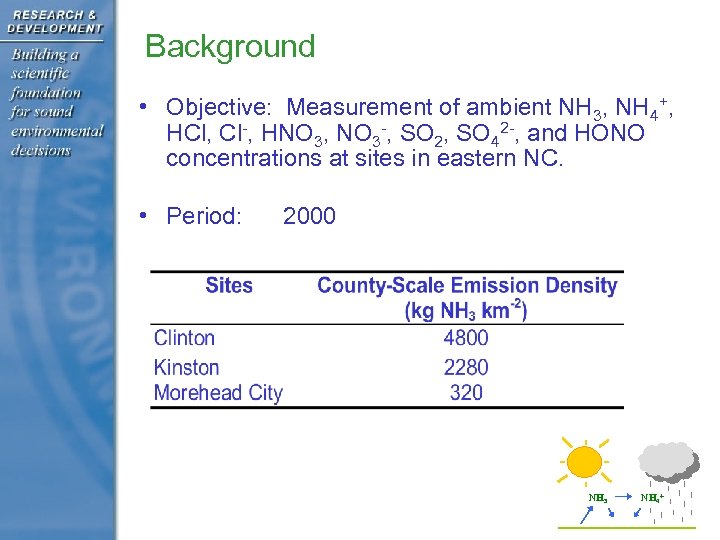 Background • Objective: Measurement of ambient NH 3, NH 4+, HCl, Cl-, HNO 3, NO 3 -, SO 2, SO 42 -, and HONO concentrations at sites in eastern NC. • Period: 2000 NH 3 NH 4+
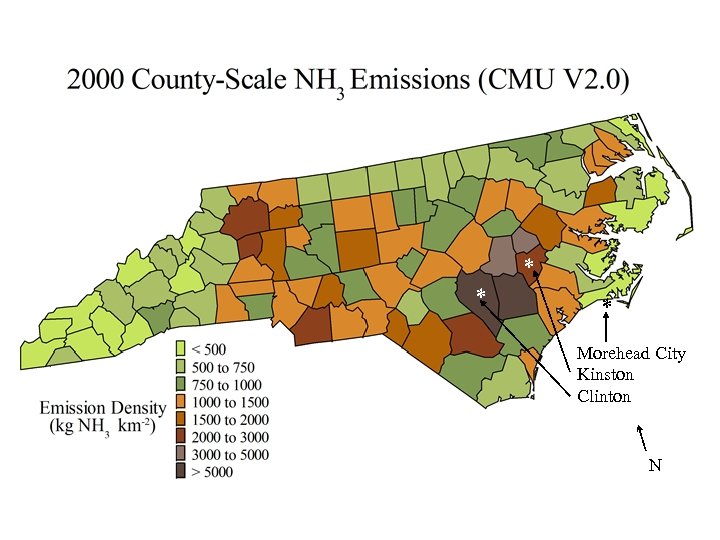 * * * Morehead City Kinston Clinton N
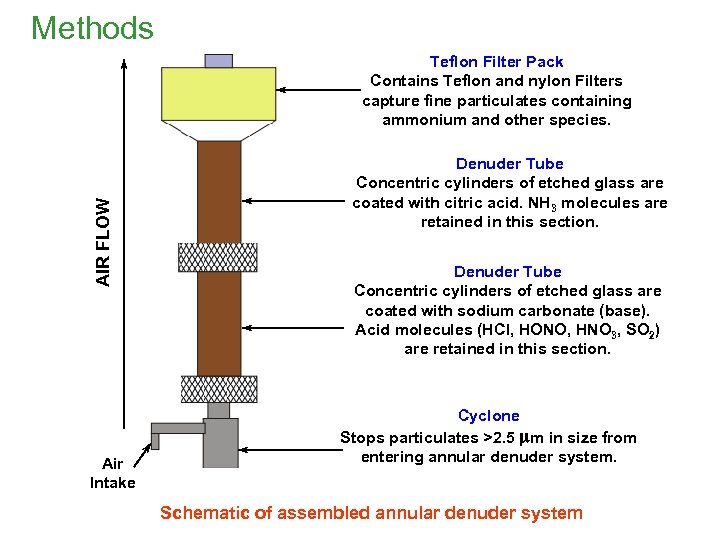 Methods AIR FLOW Teflon Filter Pack Contains Teflon and nylon Filters capture fine particulates containing ammonium and other species. Air Intake Denuder Tube Concentric cylinders of etched glass are coated with citric acid. NH 3 molecules are retained in this section. Denuder Tube Concentric cylinders of etched glass are coated with sodium carbonate (base). Acid molecules (HCl, HONO, HNO 3, SO 2) are retained in this section. Cyclone Stops particulates >2. 5 m in size from entering annular denuder system. Schematic of assembled annular denuder system
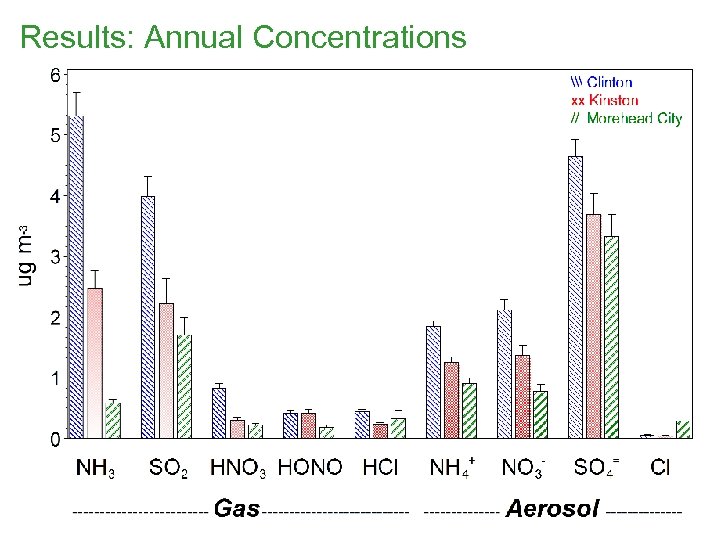 Results: Annual Concentrations
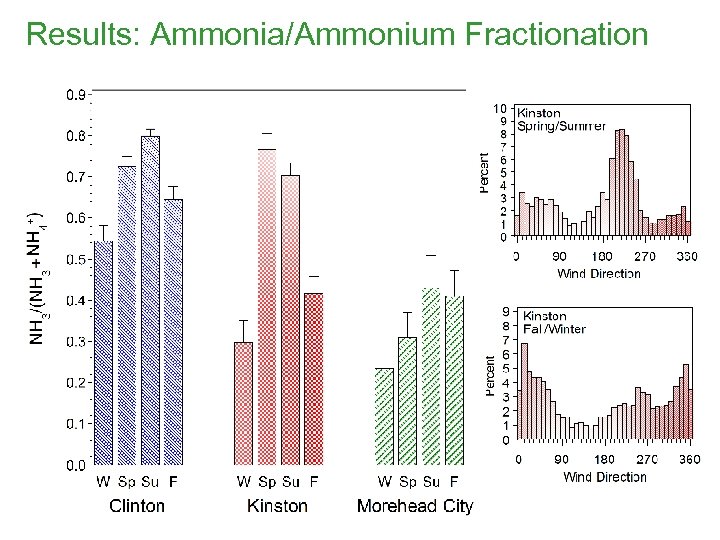 Results: Ammonia/Ammonium Fractionation
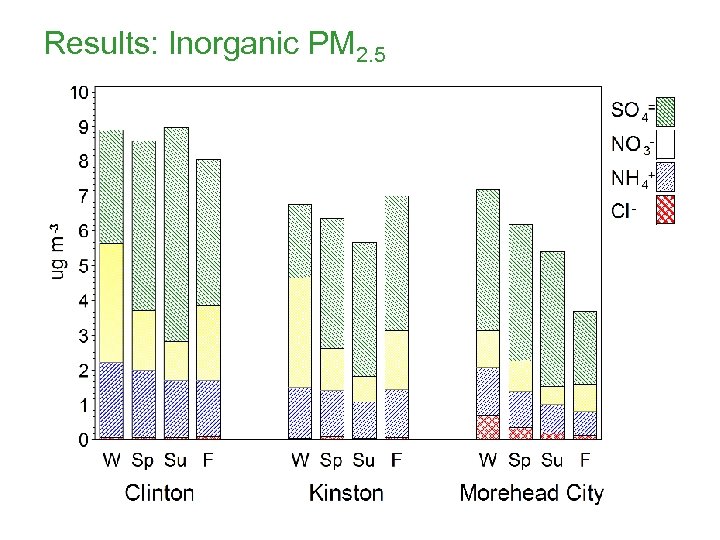 Results: Inorganic PM 2. 5
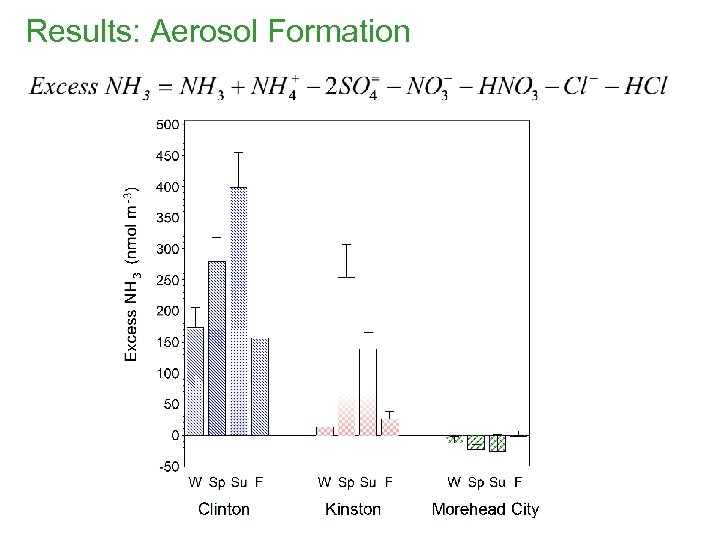 Results: Aerosol Formation
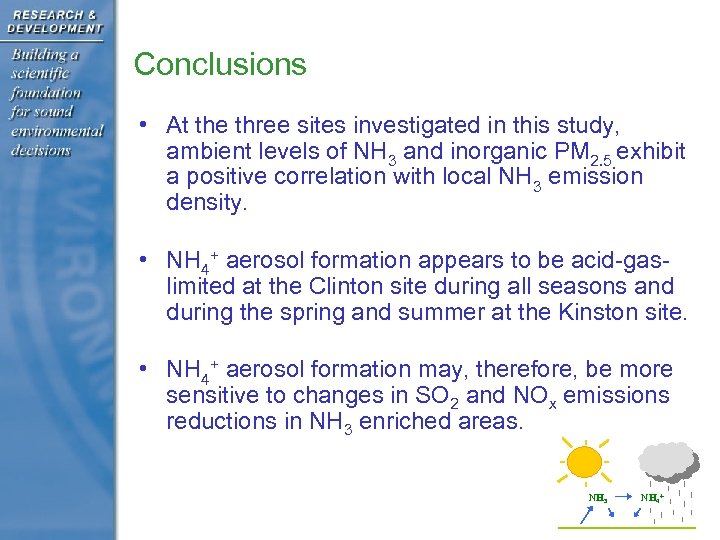 Conclusions • At the three sites investigated in this study, ambient levels of NH 3 and inorganic PM 2. 5 exhibit a positive correlation with local NH 3 emission density. • NH 4+ aerosol formation appears to be acid-gaslimited at the Clinton site during all seasons and during the spring and summer at the Kinston site. • NH 4+ aerosol formation may, therefore, be more sensitive to changes in SO 2 and NOx emissions reductions in NH 3 enriched areas. NH 3 NH 4+
 Air Surface Exchange of NH 3 over Agricultural Crops • Objective: Measurement of NH 3 exchange over soybean, corn and winter wheat using the modified Bowen ratio approach. • Period: 2002 – 2003 • Site: Duplin County, NC Coastal Plain NH 3 NH 4+
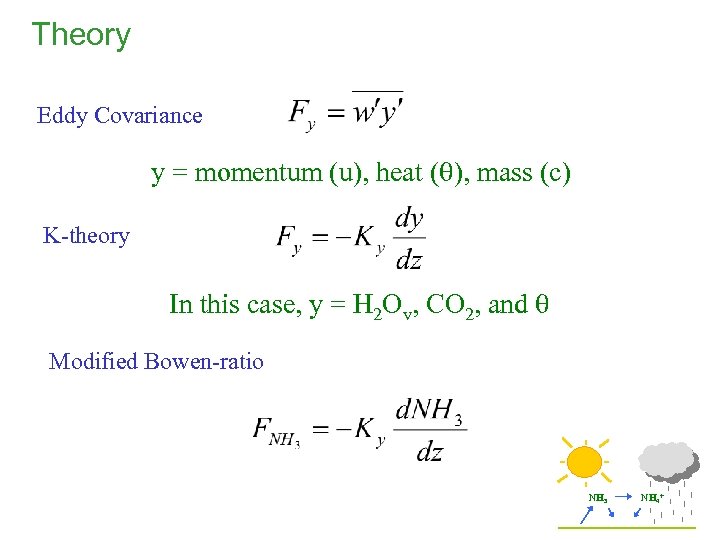 Theory Eddy Covariance y = momentum (u), heat ( ), mass (c) K-theory In this case, y = H 2 Ov, CO 2, and Modified Bowen-ratio NH 3 NH 4+
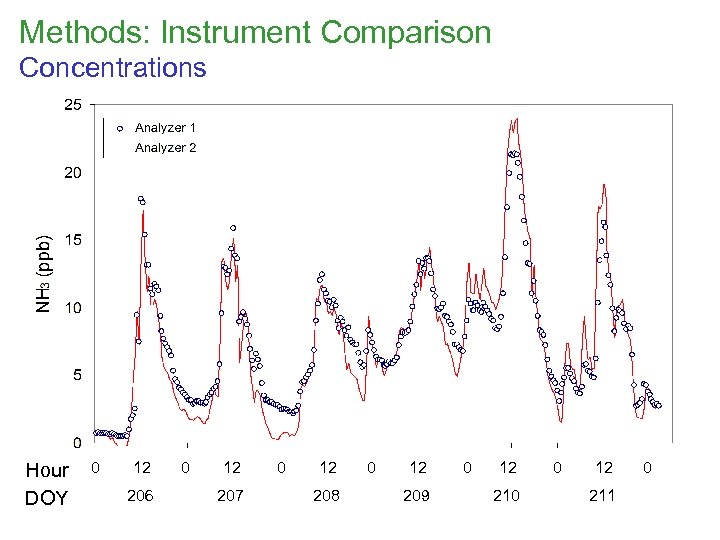
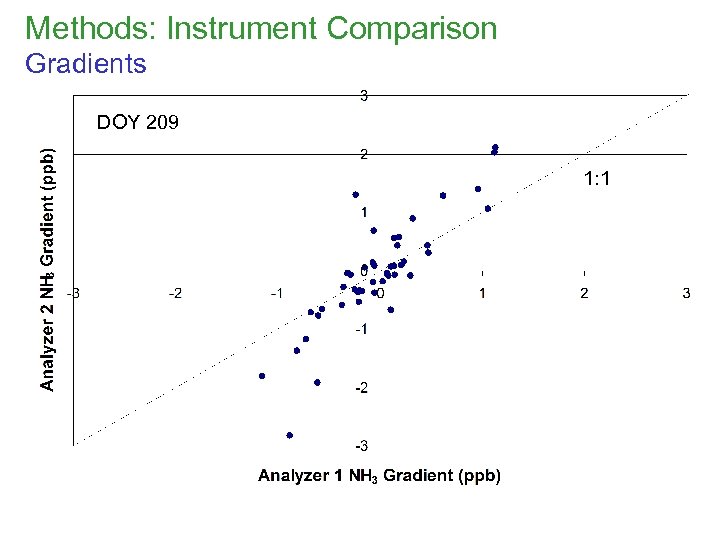
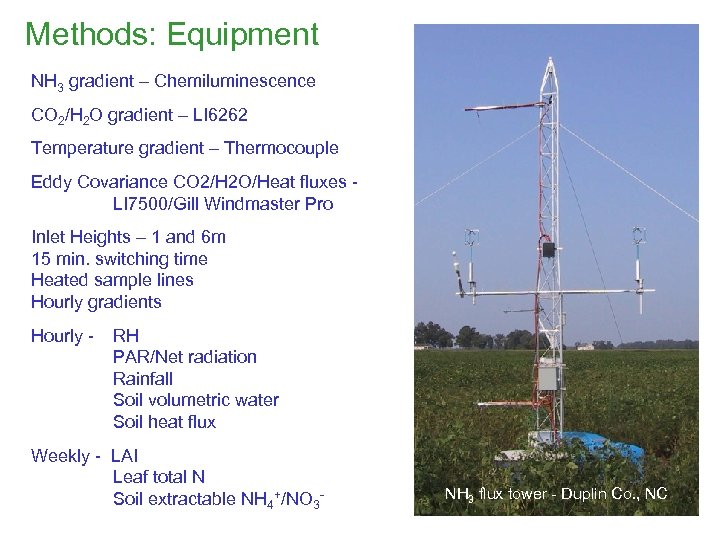 Methods: Equipment NH 3 gradient – Chemiluminescence CO 2/H 2 O gradient – LI 6262 Temperature gradient – Thermocouple Eddy Covariance CO 2/H 2 O/Heat fluxes LI 7500/Gill Windmaster Pro Inlet Heights – 1 and 6 m 15 min. switching time Heated sample lines Hourly gradients Hourly - RH PAR/Net radiation Rainfall Soil volumetric water Soil heat flux Weekly - LAI Leaf total N Soil extractable NH 4+/NO 3 - NH 3 flux tower - Duplin Co. , NC
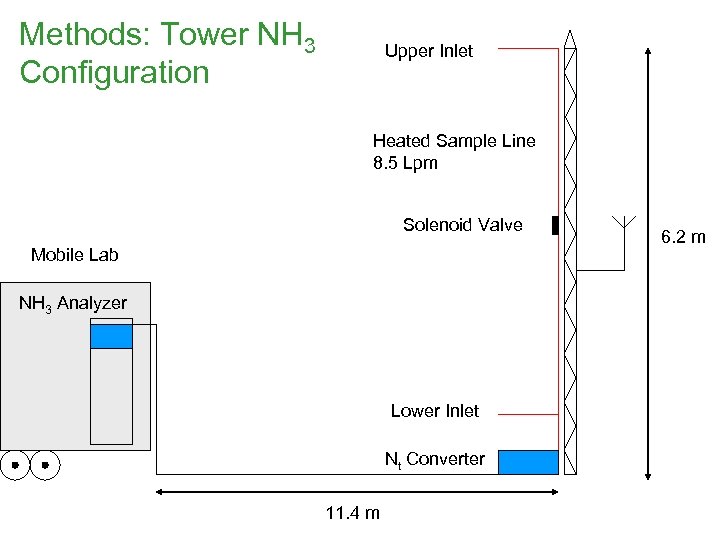 Methods: Tower NH 3 Configuration Upper Inlet Heated Sample Line 8. 5 Lpm Solenoid Valve Mobile Lab NH 3 Analyzer Lower Inlet Nt Converter 11. 4 m 6. 2 m
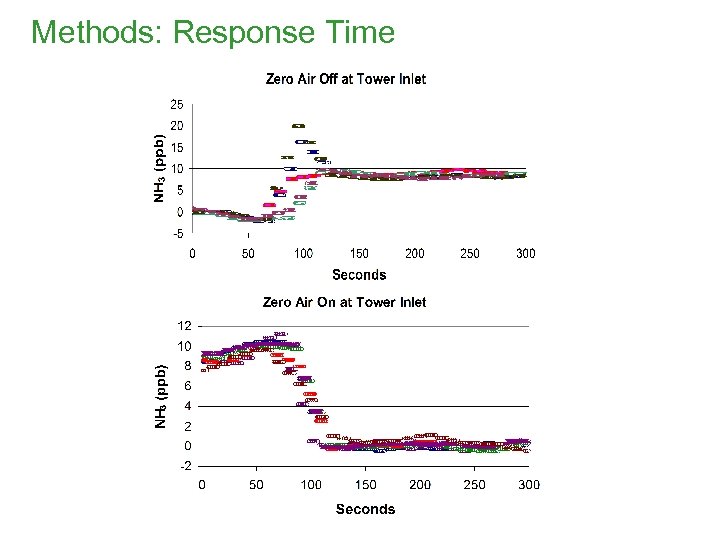
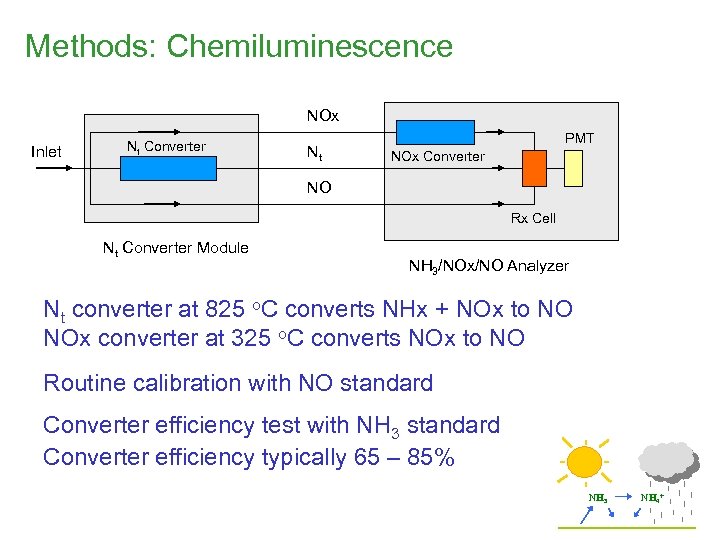 Methods: Chemiluminescence NOx Inlet Nt Converter Nt PMT NOx Converter NO Rx Cell Nt Converter Module NH 3/NOx/NO Analyzer Nt converter at 825 o. C converts NHx + NOx to NO NOx converter at 325 o. C converts NOx to NO Routine calibration with NO standard Converter efficiency test with NH 3 standard Converter efficiency typically 65 – 85% NH 3 NH 4+
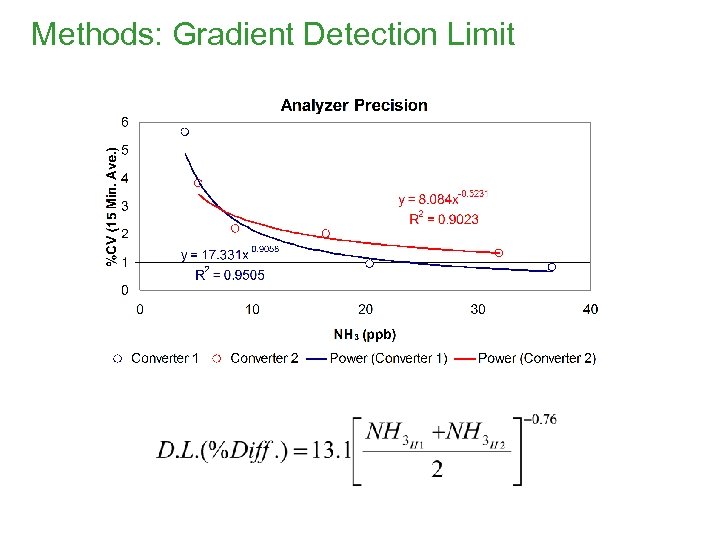 Methods: Gradient Detection Limit
 Methods: Response Time
 Methods: Instrument Comparison Concentrations Hour DOY 0 12 206 0 12 207 0 12 208 0 12 209 0 12 210 0 12 211 0
 Methods: Instrument Comparison Gradients DOY 209 1: 1
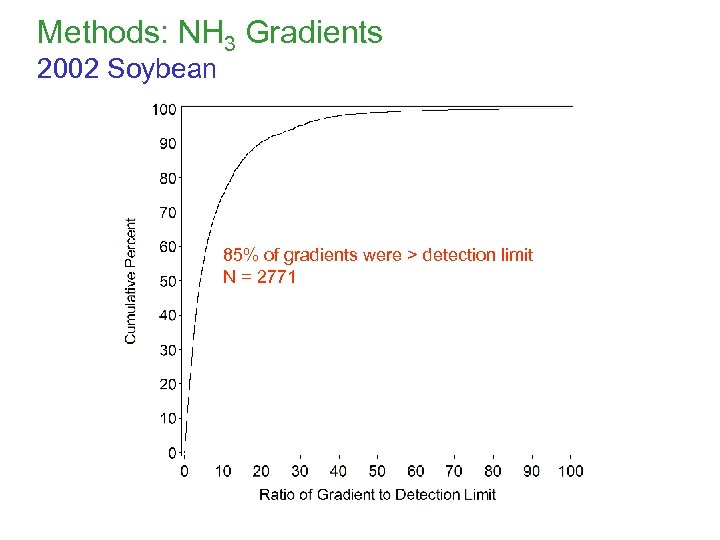 Methods: NH 3 Gradients 2002 Soybean 85% of gradients were > detection limit N = 2771
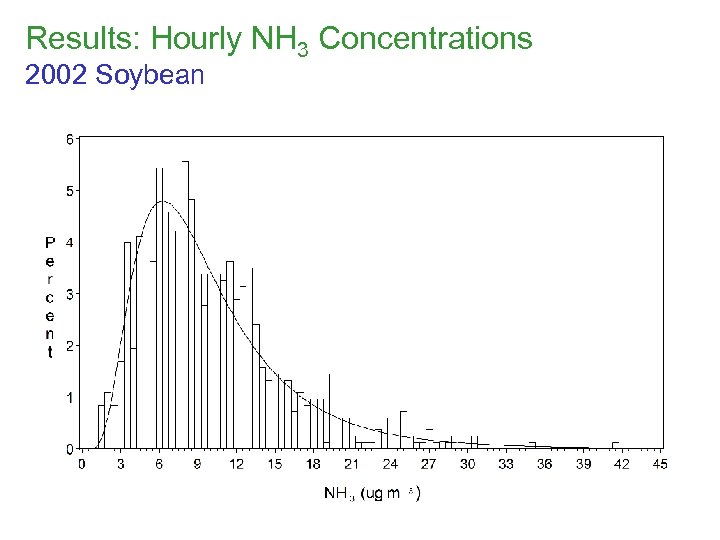 Results: Hourly NH 3 Concentrations 2002 Soybean
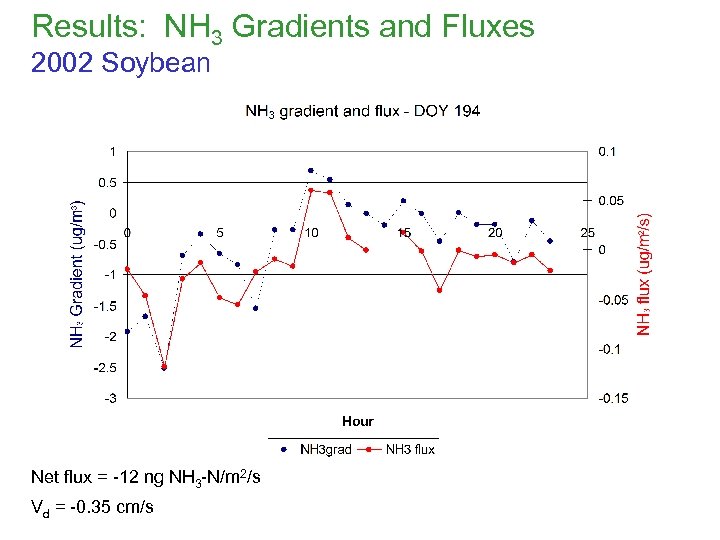 Results: NH 3 Gradients and Fluxes 2002 Soybean Net flux = -12 ng NH 3 -N/m 2/s Vd = -0. 35 cm/s
 Ammonia Concentrations Within the Vicinity of a Swine Production Facility • Objectives: Measurement of horizontal NH 3 gradients around a swine production facility from the housing/lagoon complex to 500 m. Estimation of NH 3 dry deposition using the resistance approach (Fowler et al. , 1998) and Gaussian modeling. Development of a mass balance using measured emissions (Harris et al. , 2001). NH 3 NH 4+
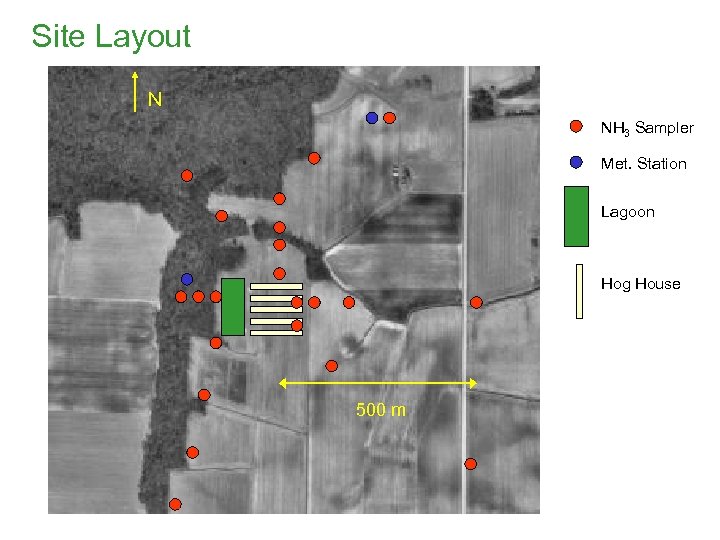 Site Layout N NH 3 Sampler Met. Station Lagoon Hog House 500 m
![Methods [NH 3] = Q/V Q = Mass of NH 3 adsorbed V =](https://present5.com/presentation/080c63f184aaa4af4830ebe1e90c4170/image-31.jpg "Methods [NH 3] = Q/V Q = Mass of NH 3 adsorbed V =") Methods [NH 3] = Q/V Q = Mass of NH 3 adsorbed V = Volume of air sampled Sutton et al. , 2001 Q = (ce – cb)v Ce – Measured NH 3 concentration Cb – Blank value V – Extract volume (2. 5 ml) V = D • A • t/L D – Diffusion coefficient A – Area of adsorbing surface t – Duration of exposure (1 week) L – Length of diffusion path (35 mm)
Methods [NH 3] = Q/V Q = Mass of NH 3 adsorbed V = Volume of air sampled Sutton et al. , 2001 Q = (ce – cb)v Ce – Measured NH 3 concentration Cb – Blank value V – Extract volume (2. 5 ml) V = D • A • t/L D – Diffusion coefficient A – Area of adsorbing surface t – Duration of exposure (1 week) L – Length of diffusion path (35 mm)
![Methods • Deposition FNH 3 = [NH 3] • Vd Vd = 1/(Ra +](https://present5.com/presentation/080c63f184aaa4af4830ebe1e90c4170/image-32.jpg "Methods • Deposition FNH 3 = [NH 3] • Vd Vd = 1/(Ra +") Methods • Deposition FNH 3 = [NH 3] • Vd Vd = 1/(Ra + Rb + Rc) Rc will be calculated using the relationship between Rc and [NH 3] (Fowler et al. , 1998) and Gaussian modeling. Rb Rb = (2/(ku*))(Sc/Pr)2/3 Ra Ra = U/(u*)2 u* is determined using velocity profile (crops) and eddy covariance (forest) approaches
Methods • Deposition FNH 3 = [NH 3] • Vd Vd = 1/(Ra + Rb + Rc) Rc will be calculated using the relationship between Rc and [NH 3] (Fowler et al. , 1998) and Gaussian modeling. Rb Rb = (2/(ku*))(Sc/Pr)2/3 Ra Ra = U/(u*)2 u* is determined using velocity profile (crops) and eddy covariance (forest) approaches
 Methods • Calibrate using NH 3 standard in flow-through chamber and by comparison with annular denuder. Results • Measurements began April 2003 • Median C. V. = 6. 4% (N = 236) • Mean Blank = 2. 7 g NH 3 m-3 (N = 86) NH 3 NH 4+
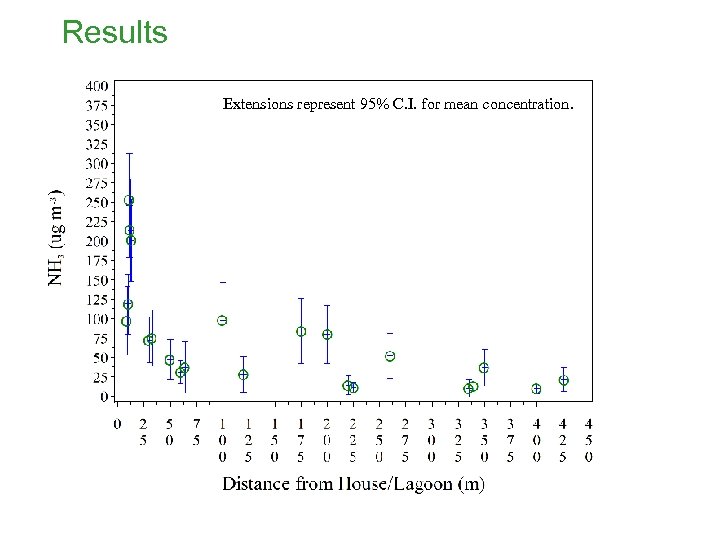 Results Extensions represent 95% C. I. for mean concentration.
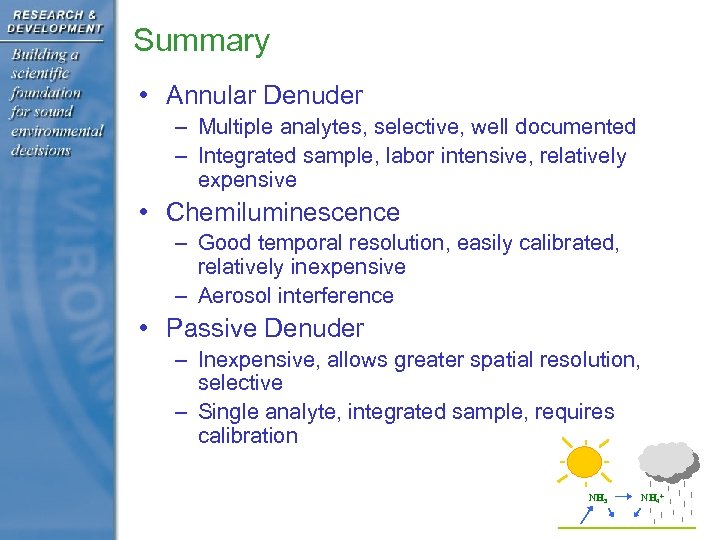 Summary • Annular Denuder – Multiple analytes, selective, well documented – Integrated sample, labor intensive, relatively expensive • Chemiluminescence – Good temporal resolution, easily calibrated, relatively inexpensive – Aerosol interference • Passive Denuder – Inexpensive, allows greater spatial resolution, selective – Single analyte, integrated sample, requires calibration NH 3 NH 4+
 Acknowledgements • North Carolina Division of Air Quality, North Carolina Pork Council, National Pork Producers Council, and North Carolina Water Resources Research Institute. • Wayne Fowler (U. S. EPA), Lynette Mathis (North Carolina State University), Mark Barnes (North Carolina State University), and Brad Hendrickson (UNC-CH IMS). NH 3 NH 4+