


 Скачать презентацию Mean INTERHEART Risk Score IHRS Yusuf et al
7bc6fd50bb4129443d36096a02c38a40.ppt
- Количество слайдов: 31
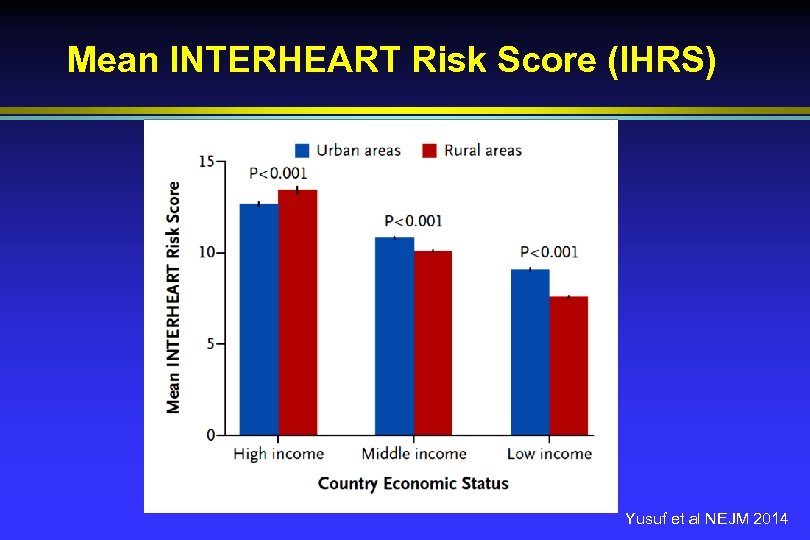 Mean INTERHEART Risk Score (IHRS) Yusuf et al NEJM 2014
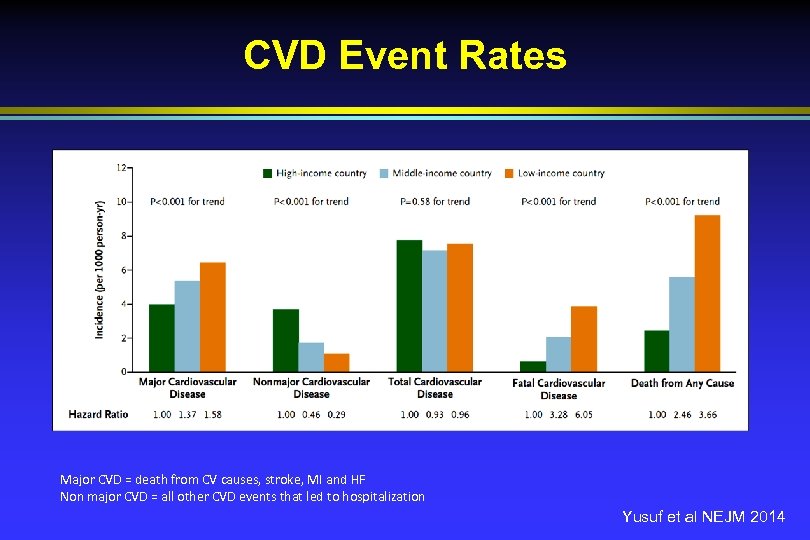 CVD Event Rates Major CVD = death from CV causes, stroke, MI and HF Non major CVD = all other CVD events that led to hospitalization Yusuf et al NEJM 2014
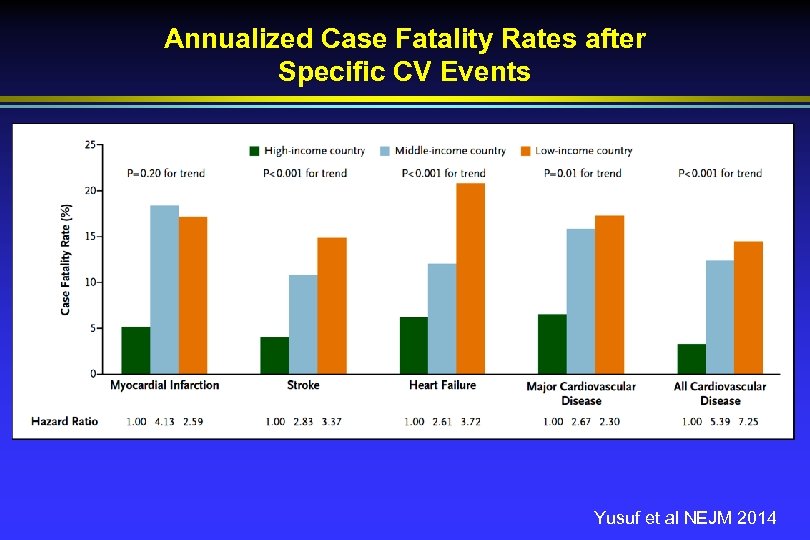 Annualized Case Fatality Rates after Specific CV Events Yusuf et al NEJM 2014
 Management of Total CVD Risk Resource sensitive management of: 1. Acute CVD events 2. Secondary Prevention 3. Primary Prevention
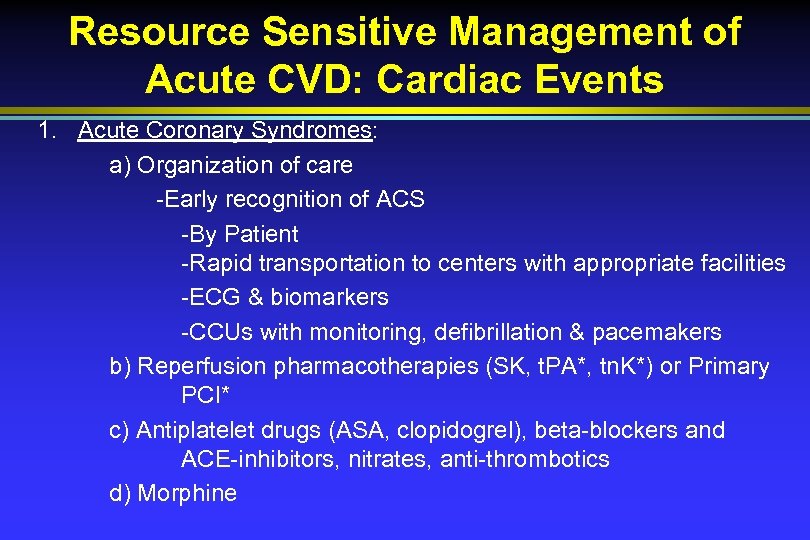 Resource Sensitive Management of Acute CVD: Cardiac Events 1. Acute Coronary Syndromes: a) Organization of care -Early recognition of ACS -By Patient -Rapid transportation to centers with appropriate facilities -ECG & biomarkers -CCUs with monitoring, defibrillation & pacemakers b) Reperfusion pharmacotherapies (SK, t. PA*, tn. K*) or Primary PCI* c) Antiplatelet drugs (ASA, clopidogrel), beta-blockers and ACE-inhibitors, nitrates, anti-thrombotics d) Morphine
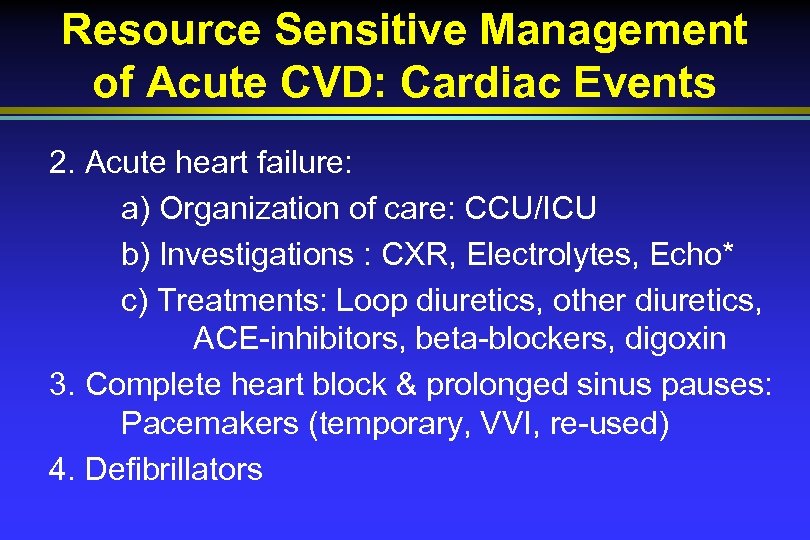 Resource Sensitive Management of Acute CVD: Cardiac Events 2. Acute heart failure: a) Organization of care: CCU/ICU b) Investigations : CXR, Electrolytes, Echo* c) Treatments: Loop diuretics, other diuretics, ACE-inhibitors, beta-blockers, digoxin 3. Complete heart block & prolonged sinus pauses: Pacemakers (temporary, VVI, re-used) 4. Defibrillators
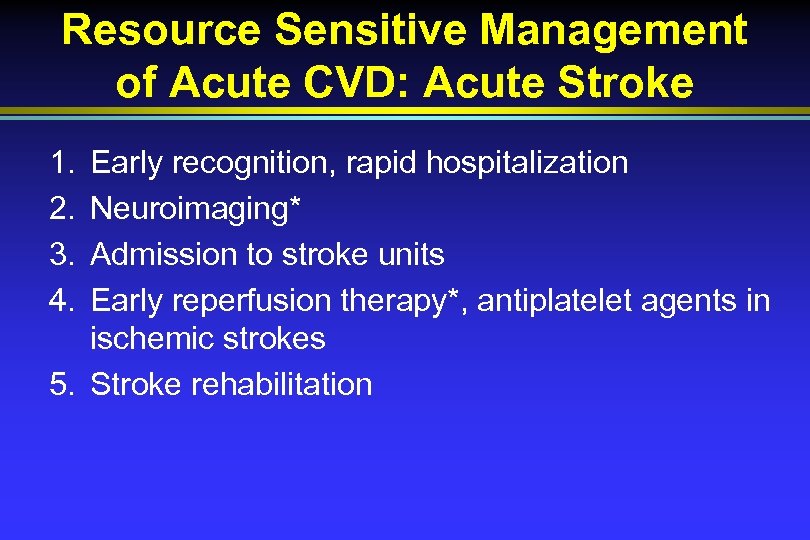 Resource Sensitive Management of Acute CVD: Acute Stroke 1. 2. 3. 4. Early recognition, rapid hospitalization Neuroimaging* Admission to stroke units Early reperfusion therapy*, antiplatelet agents in ischemic strokes 5. Stroke rehabilitation
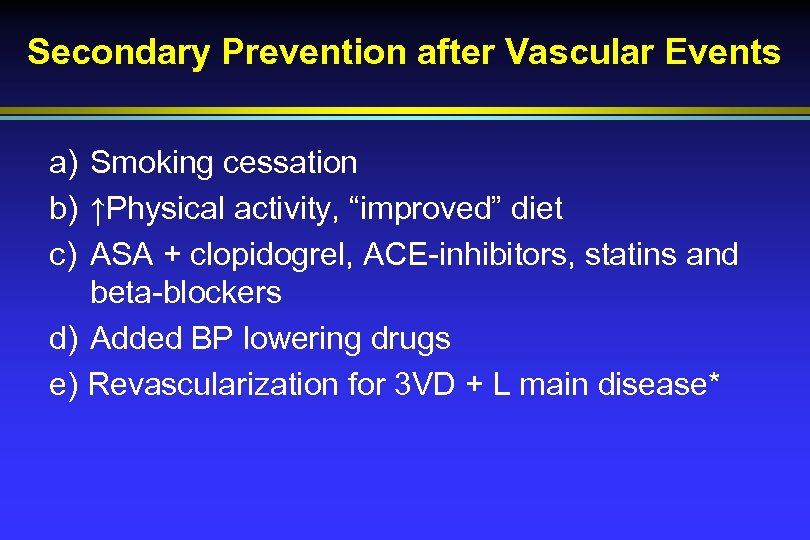 Secondary Prevention after Vascular Events a) Smoking cessation b) ↑Physical activity, “improved” diet c) ASA + clopidogrel, ACE-inhibitors, statins and beta-blockers d) Added BP lowering drugs e) Revascularization for 3 VD + L main disease*
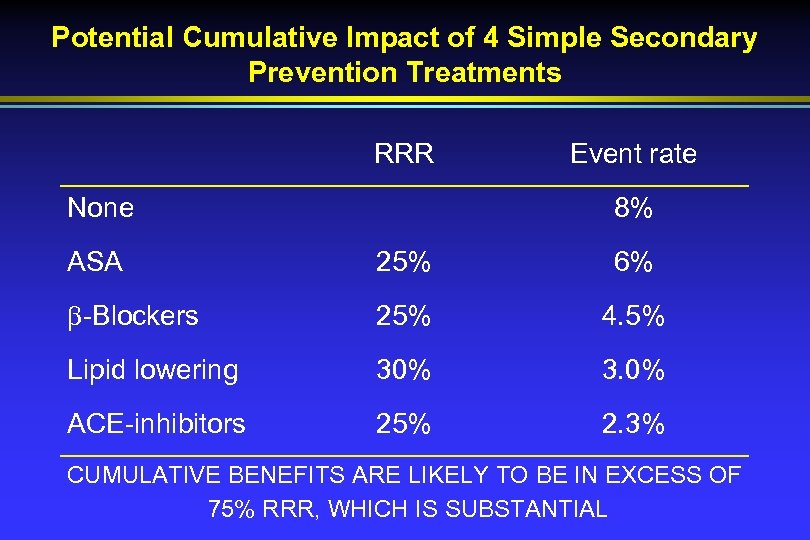 Potential Cumulative Impact of 4 Simple Secondary Prevention Treatments RRR None Event rate 8% ASA 25% 6% -Blockers 25% 4. 5% Lipid lowering 30% 3. 0% ACE-inhibitors 25% 2. 3% CUMULATIVE BENEFITS ARE LIKELY TO BE IN EXCESS OF 75% RRR, WHICH IS SUBSTANTIAL
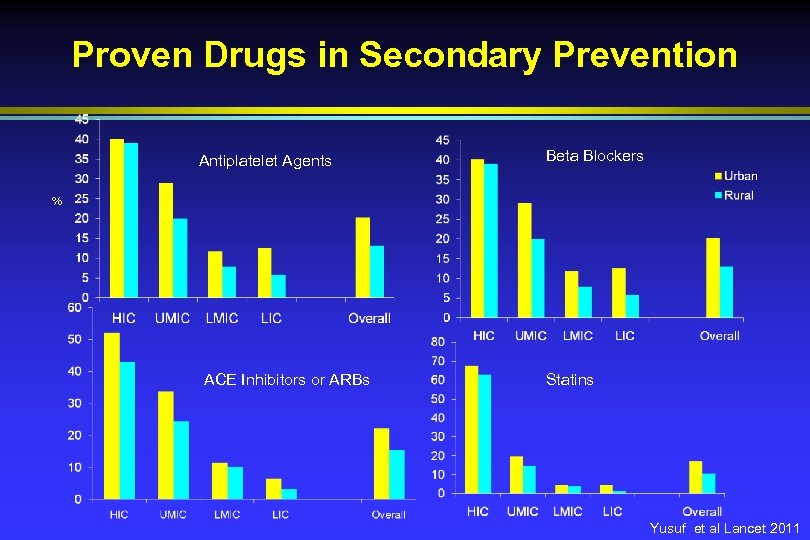 Proven Drugs in Secondary Prevention Antiplatelet Agents Beta Blockers % ACE Inhibitors or ARBs Statins Yusuf et al Lancet 2011
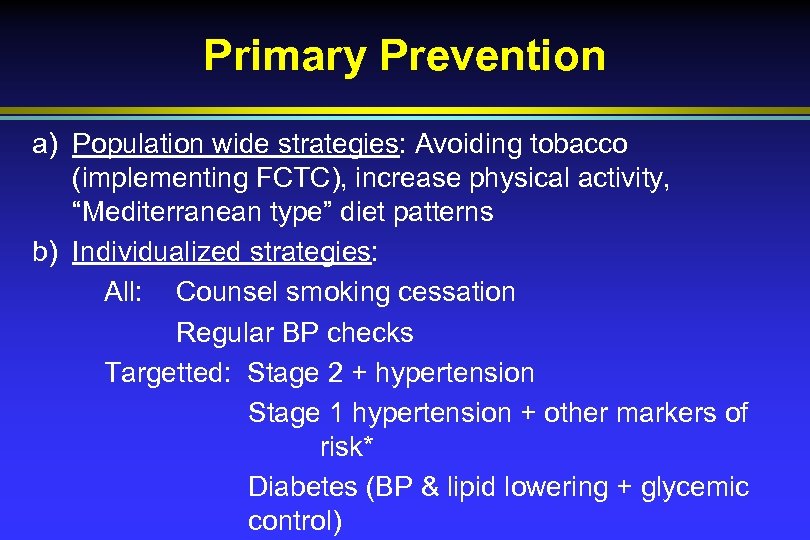 Primary Prevention a) Population wide strategies: Avoiding tobacco (implementing FCTC), increase physical activity, “Mediterranean type” diet patterns b) Individualized strategies: All: Counsel smoking cessation Regular BP checks Targetted: Stage 2 + hypertension Stage 1 hypertension + other markers of risk* Diabetes (BP & lipid lowering + glycemic control)
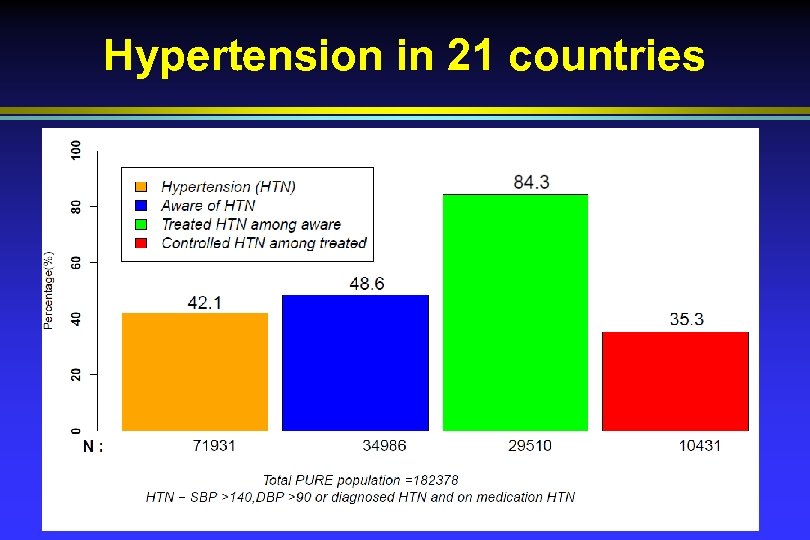 Hypertension in 21 countries
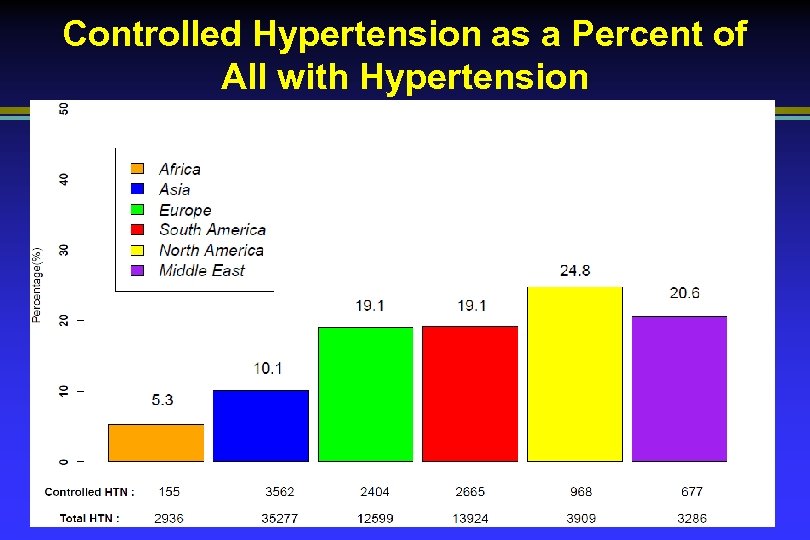 Controlled Hypertension as a Percent of All with Hypertension
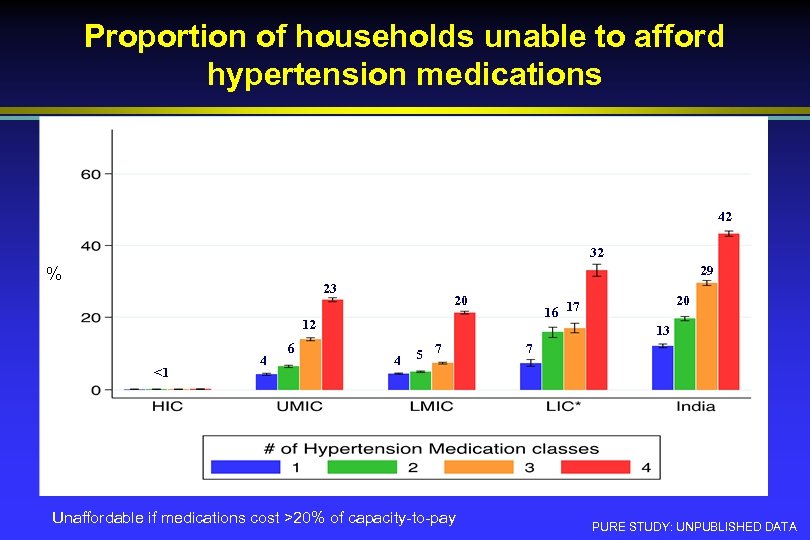 Proportion of households unable to afford hypertension medications 42 32 29 % 23 20 12 <1 4 6 20 16 17 13 4 5 7 Unaffordable if medications cost >20% of capacity-to-pay 7 PURE STUDY: UNPUBLISHED DATA
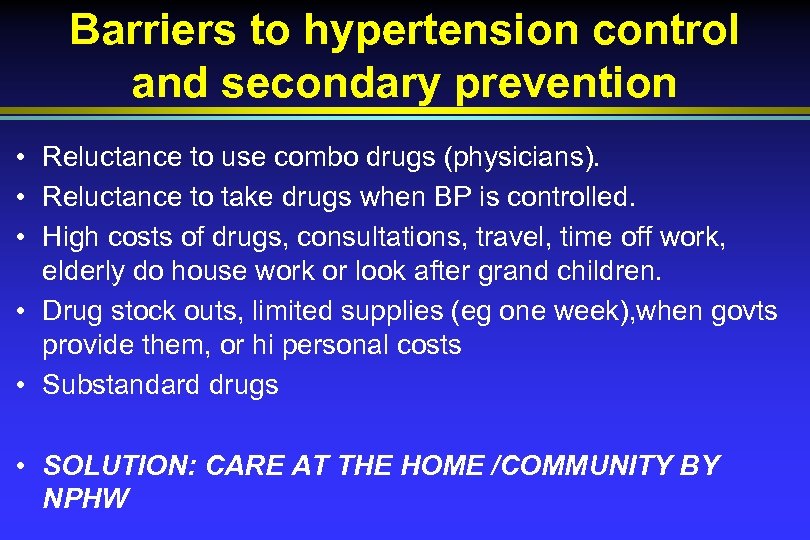 Barriers to hypertension control and secondary prevention • Reluctance to use combo drugs (physicians). • Reluctance to take drugs when BP is controlled. • High costs of drugs, consultations, travel, time off work, elderly do house work or look after grand children. • Drug stock outs, limited supplies (eg one week), when govts provide them, or hi personal costs • Substandard drugs • SOLUTION: CARE AT THE HOME /COMMUNITY BY NPHW
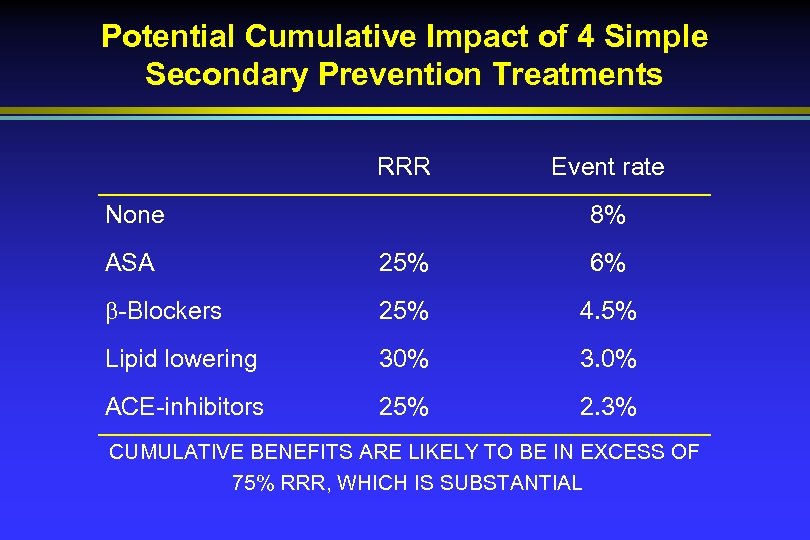 Potential Cumulative Impact of 4 Simple Secondary Prevention Treatments RRR None Event rate 8% ASA 25% 6% -Blockers 25% 4. 5% Lipid lowering 30% 3. 0% ACE-inhibitors 25% 2. 3% CUMULATIVE BENEFITS ARE LIKELY TO BE IN EXCESS OF 75% RRR, WHICH IS SUBSTANTIAL
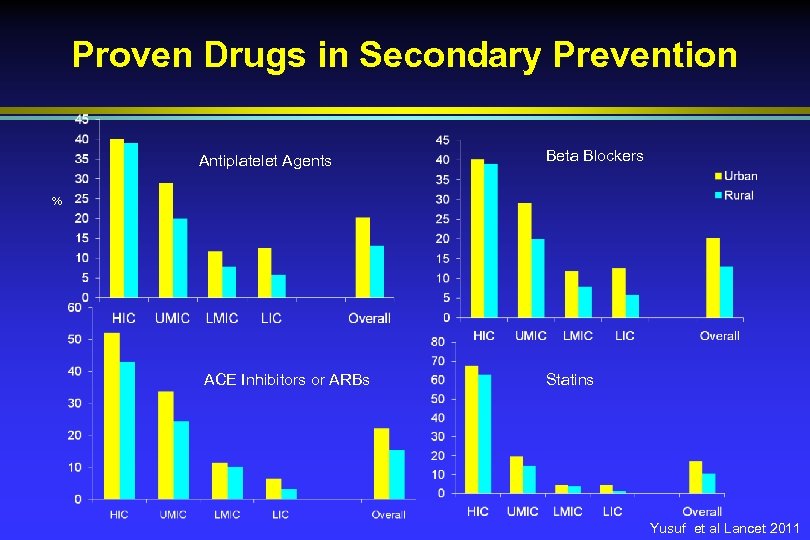 Proven Drugs in Secondary Prevention Antiplatelet Agents Beta Blockers % ACE Inhibitors or ARBs Statins Yusuf et al Lancet 2011
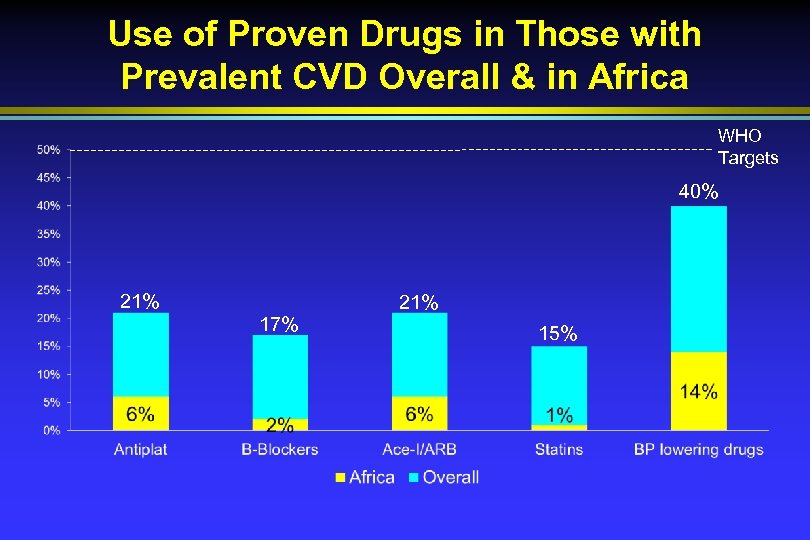 Use of Proven Drugs in Those with Prevalent CVD Overall & in Africa WHO Targets 40% 21% 17% 15%
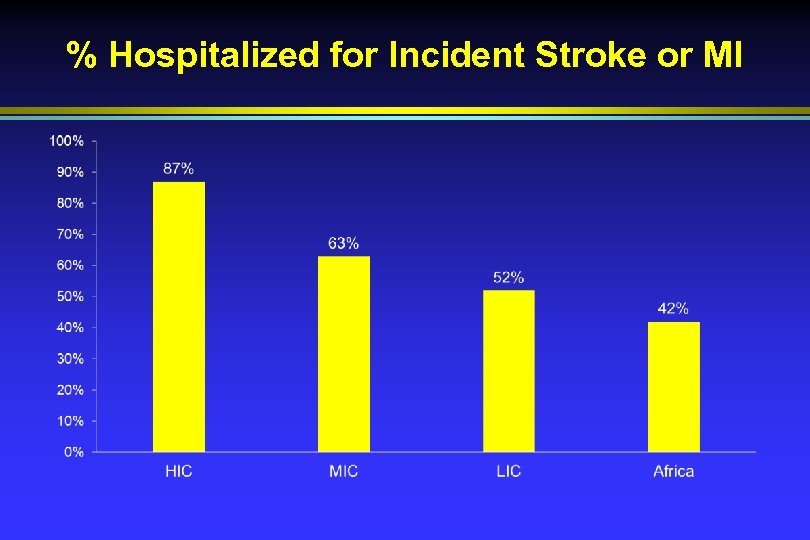 % Hospitalized for Incident Stroke or MI
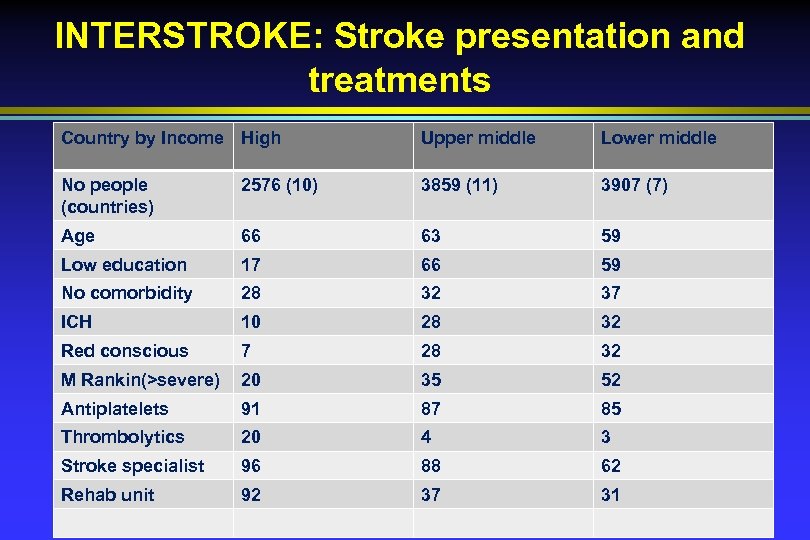 INTERSTROKE: Stroke presentation and treatments Country by Income High Upper middle Lower middle No people (countries) 2576 (10) 3859 (11) 3907 (7) Age 66 63 59 Low education 17 66 59 No comorbidity 28 32 37 ICH 10 28 32 Red conscious 7 28 32 M Rankin(>severe) 20 35 52 Antiplatelets 91 87 85 Thrombolytics 20 4 3 Stroke specialist 96 88 62 Rehab unit 92 37 31
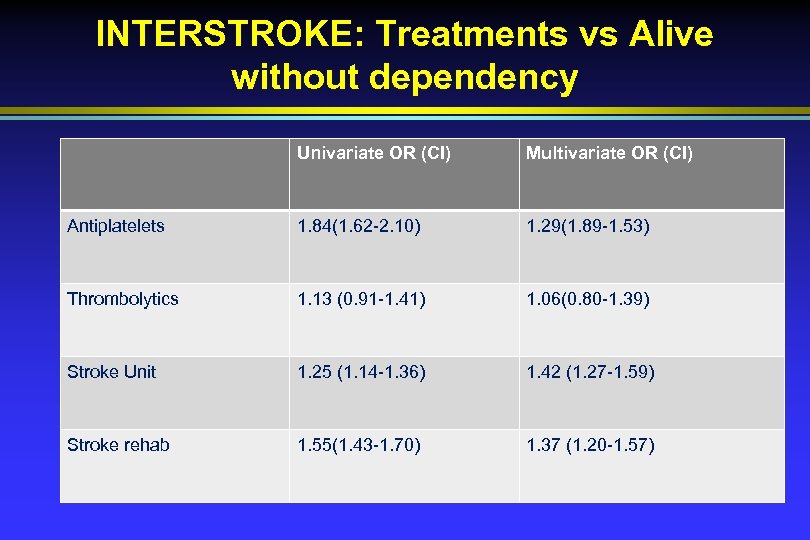 INTERSTROKE: Treatments vs Alive without dependency Univariate OR (CI) Multivariate OR (CI) Antiplatelets 1. 84(1. 62 -2. 10) 1. 29(1. 89 -1. 53) Thrombolytics 1. 13 (0. 91 -1. 41) 1. 06(0. 80 -1. 39) Stroke Unit 1. 25 (1. 14 -1. 36) 1. 42 (1. 27 -1. 59) Stroke rehab 1. 55(1. 43 -1. 70) 1. 37 (1. 20 -1. 57)
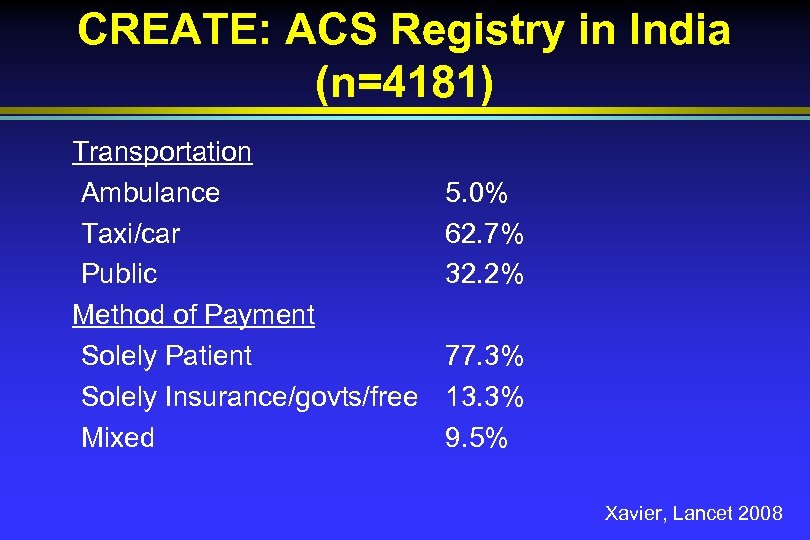 CREATE: ACS Registry in India (n=4181) Transportation Ambulance Taxi/car Public Method of Payment Solely Patient Solely Insurance/govts/free Mixed 5. 0% 62. 7% 32. 2% 77. 3% 13. 3% 9. 5% Xavier, Lancet 2008
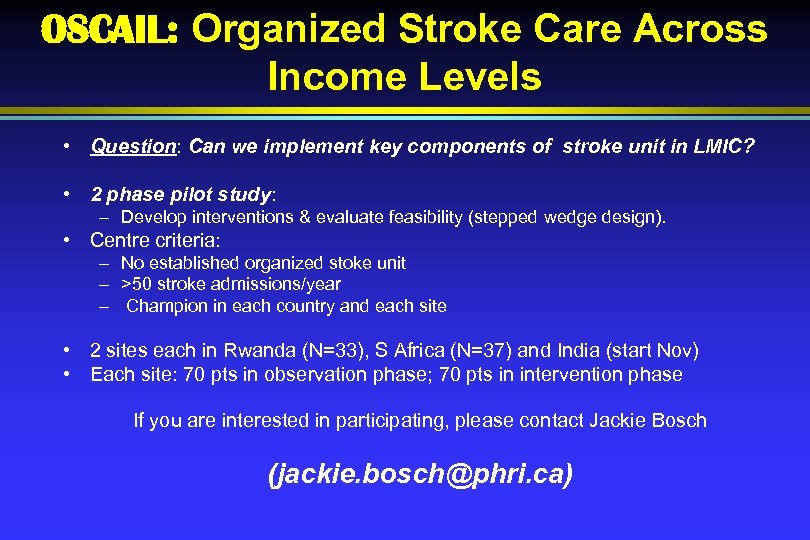 OSCAIL: Organized Stroke Care Across Income Levels • Question: Can we implement key components of stroke unit in LMIC? • 2 phase pilot study: – Develop interventions & evaluate feasibility (stepped wedge design). • Centre criteria: – No established organized stoke unit – >50 stroke admissions/year – Champion in each country and each site • 2 sites each in Rwanda (N=33), S Africa (N=37) and India (start Nov) • Each site: 70 pts in observation phase; 70 pts in intervention phase If you are interested in participating, please contact Jackie Bosch (jackie. bosch@phri. ca)
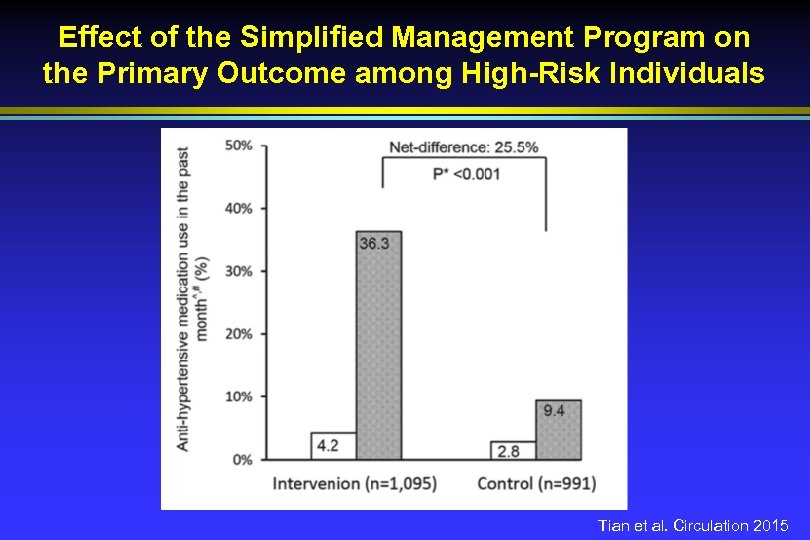 Effect of the Simplified Management Program on the Primary Outcome among High-Risk Individuals Tian et al. Circulation 2015
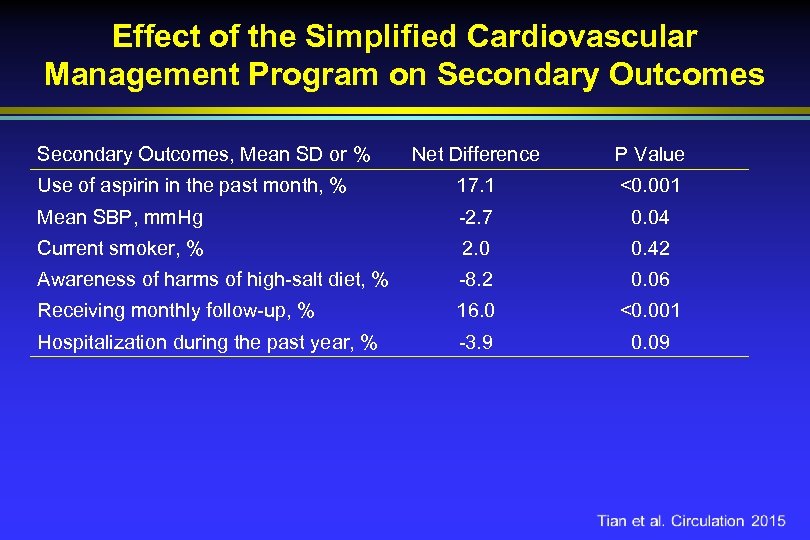 Effect of the Simplified Cardiovascular Management Program on Secondary Outcomes, Mean SD or % Net Difference P Value Use of aspirin in the past month, % 17. 1 <0. 001 Mean SBP, mm. Hg -2. 7 0. 04 Current smoker, % 2. 0 0. 42 Awareness of harms of high-salt diet, % -8. 2 0. 06 Receiving monthly follow-up, % 16. 0 <0. 001 Hospitalization during the past year, % -3. 9 0. 09
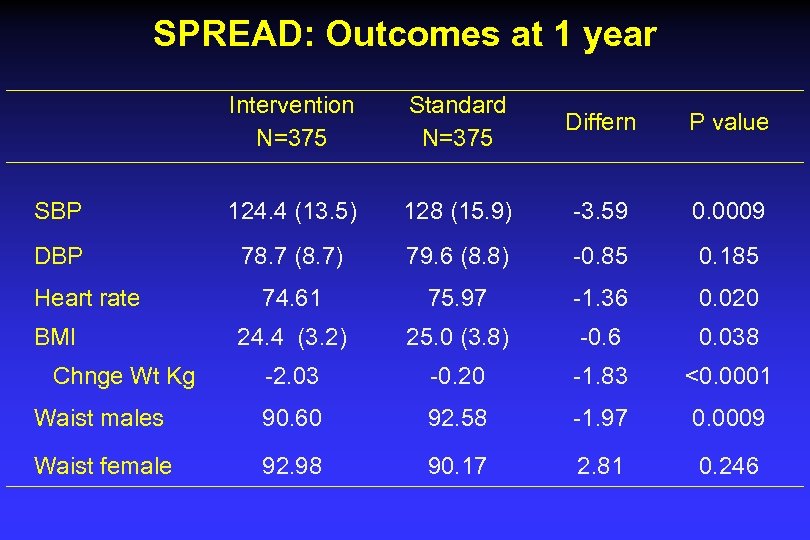 SPREAD: Outcomes at 1 year Intervention N=375 Standard N=375 Differn P value SBP 124. 4 (13. 5) 128 (15. 9) -3. 59 0. 0009 DBP 78. 7 (8. 7) 79. 6 (8. 8) -0. 85 0. 185 74. 61 75. 97 -1. 36 0. 020 24. 4 (3. 2) 25. 0 (3. 8) -0. 6 0. 038 -2. 03 -0. 20 -1. 83 <0. 0001 Waist males 90. 60 92. 58 -1. 97 0. 0009 Waist female 92. 98 90. 17 2. 81 0. 246 Heart rate BMI Chnge Wt Kg
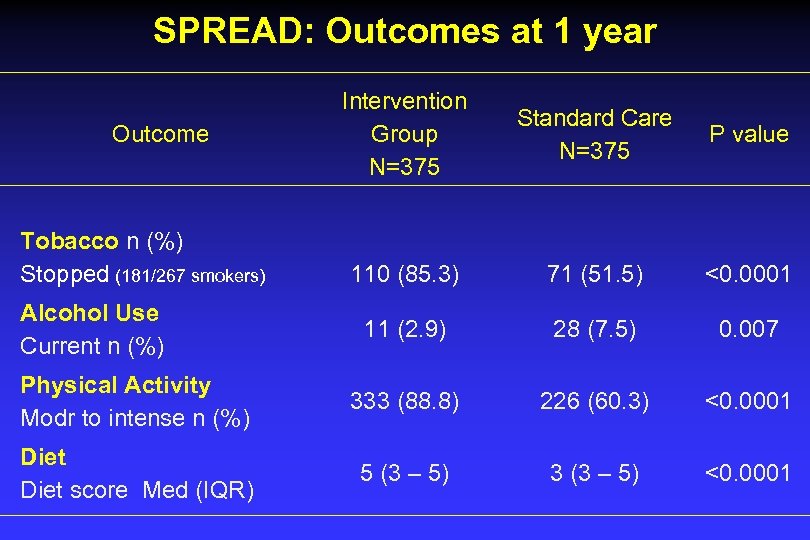 SPREAD: Outcomes at 1 year Intervention Group N=375 Standard Care N=375 P value 110 (85. 3) 71 (51. 5) <0. 0001 11 (2. 9) 28 (7. 5) 0. 007 Physical Activity Modr to intense n (%) 333 (88. 8) 226 (60. 3) <0. 0001 Diet score Med (IQR) 5 (3 – 5) 3 (3 – 5) <0. 0001 Outcome Tobacco n (%) Stopped (181/267 smokers) Alcohol Use Current n (%)
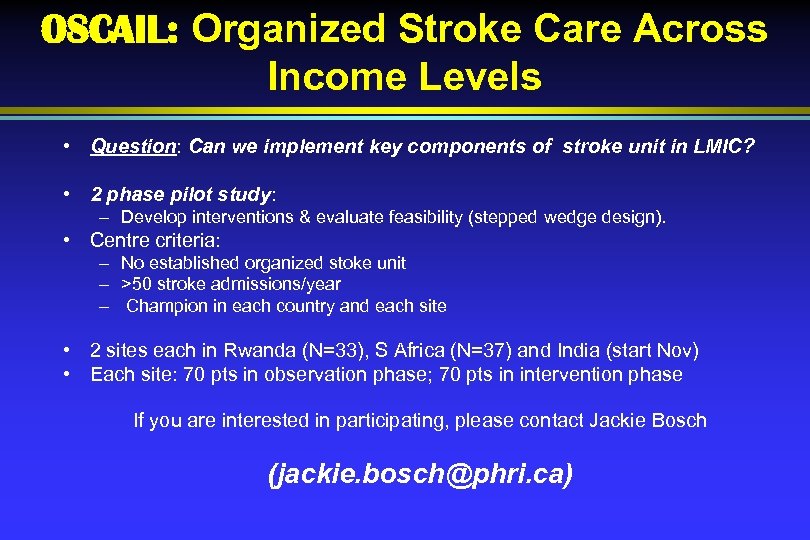 OSCAIL: Organized Stroke Care Across Income Levels • Question: Can we implement key components of stroke unit in LMIC? • 2 phase pilot study: – Develop interventions & evaluate feasibility (stepped wedge design). • Centre criteria: – No established organized stoke unit – >50 stroke admissions/year – Champion in each country and each site • 2 sites each in Rwanda (N=33), S Africa (N=37) and India (start Nov) • Each site: 70 pts in observation phase; 70 pts in intervention phase If you are interested in participating, please contact Jackie Bosch (jackie. bosch@phri. ca)
 HOPE 4 • Randomize 25 communities( 2500 people) in Columbia and Malaysia to an NPHW based vs routine( physician based) control of hypertension , improve secondary prevention, prevention in diabetes, • NPHW screen house to house and initiate counselling ( tobacco, diet , PA + combo drugs + statins for HTN, diabetes and secondary prevention. Followup by NPHW. • Outcome : One yr control of BP and overall
 African Research agenda to facilitate Implementation & reduce CVD by 50% in a generation • Identify treatment gaps : Periodic registries in many countries (eg “one month in the life of Africa”----- rotate between different disease eg RHD, valve, hypertension, AMI, stroke, HF, AF). • Simple population based longitudinal cohort studies of 10, 000 + per country--- “know your norms & risks” • Develop sentinel monitoring of households (eg 2% of population) for deaths and hospitalizations by cause every 5 years (using “tro-hoc” designs). Build capacity for clinical, population and health systems research
 Conclusions: Management of patients with or at hi risk of CVD 1. Organization of the health care systems: Patient education, pre-, inand post hospital mgmt, adequate number of CCUs & stroke units. 2. Increased use of NPHW for secondary prevention, tobacco cessation and hypertension control. 3. Widespread access to affordable, proven and simple interventions : Polypill, drugs for AMI , stroke and HF, Penicillin, pacemakers 4. A few specialized centers in each region /country for angiography, PCI, CABG & valve surgery, ICD, etc 5. Universal health care can improve above of all the above. Increase in govt health care funding to about 5% of GDP