


 Скачать презентацию ME_3 The Risk and Term Structure of Interest
87b1d893e816ae867b19839ad18195cb.ppt
- Количество слайдов: 56
 ME_3 The Risk and Term Structure of Interest Rates 20 -1 © 2016 Pearson Education Ltd. All rights reserved.
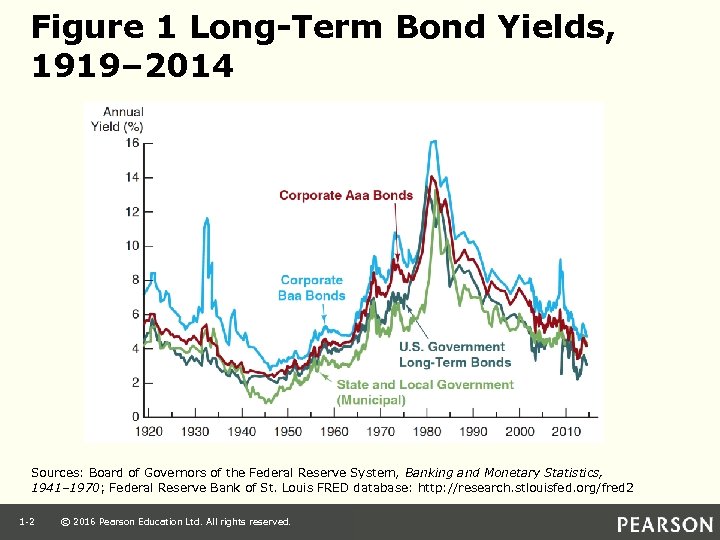 Figure 1 Long-Term Bond Yields, 1919– 2014 Sources: Board of Governors of the Federal Reserve System, Banking and Monetary Statistics, 1941– 1970; Federal Reserve Bank of St. Louis FRED database: http: //research. stlouisfed. org/fred 2 1 -2 © 2016 Pearson Education Ltd. All rights reserved.
 Learning Objectives • Identify and explain three factors explaining the risk structure of interest rates. • List and explain the three theories of why interest rates vary across maturities. 1 -3 © 2016 Pearson Education Ltd. All rights reserved.
 Risk Structure of Interest Rates • Bonds with the same maturity have different interest rates due to: – Default risk – Liquidity – Tax considerations 1 -4 © 2016 Pearson Education Ltd. All rights reserved.
 Risk Structure of Interest Rates • Default risk: probability that the issuer of the bond is unable or unwilling to make interest payments or pay off the face value – U. S. Treasury bonds are considered default free (government can raise taxes). – Risk premium: the spread between the interest rates on bonds with default risk and the interest rates on (same maturity) Treasury bonds 1 -5 © 2016 Pearson Education Ltd. All rights reserved.
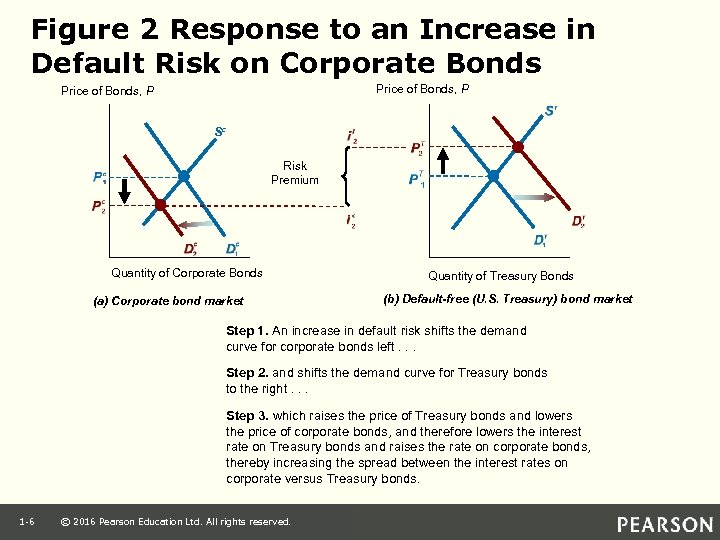 Figure 2 Response to an Increase in Default Risk on Corporate Bonds Price of Bonds, P Sc Risk Premium Quantity of Corporate Bonds (a) Corporate bond market Quantity of Treasury Bonds (b) Default-free (U. S. Treasury) bond market Step 1. An increase in default risk shifts the demand curve for corporate bonds left. . . Step 2. and shifts the demand curve for Treasury bonds to the right. . . Step 3. which raises the price of Treasury bonds and lowers the price of corporate bonds, and therefore lowers the interest rate on Treasury bonds and raises the rate on corporate bonds, thereby increasing the spread between the interest rates on corporate versus Treasury bonds. 1 -6 © 2016 Pearson Education Ltd. All rights reserved.
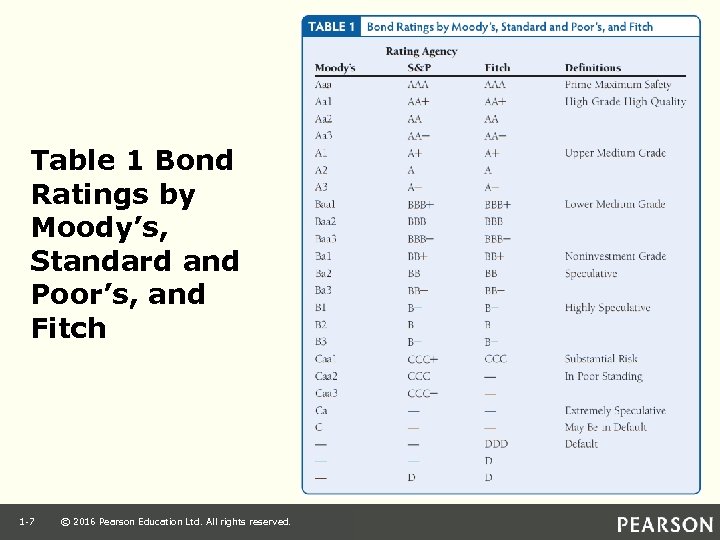 Table 1 Bond Ratings by Moody’s, Standard and Poor’s, and Fitch 1 -7 © 2016 Pearson Education Ltd. All rights reserved.
 Risk Structure of Interest Rates • Liquidity: the relative ease with which an asset can be converted into cash – Cost of selling a bond – Number of buyers/sellers in a bond market • Income tax considerations – Interest payments on municipal bonds are exempt from federal income taxes. 1 -8 © 2016 Pearson Education Ltd. All rights reserved.
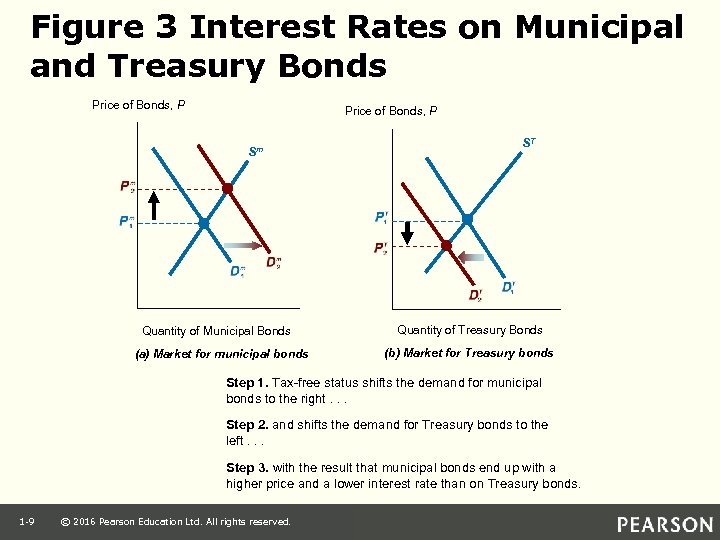 Figure 3 Interest Rates on Municipal and Treasury Bonds Price of Bonds, P Sm Quantity of Municipal Bonds (a) Market for municipal bonds ST Quantity of Treasury Bonds (b) Market for Treasury bonds Step 1. Tax-free status shifts the demand for municipal bonds to the right. . . Step 2. and shifts the demand for Treasury bonds to the left. . . Step 3. with the result that municipal bonds end up with a higher price and a lower interest rate than on Treasury bonds. 1 -9 © 2016 Pearson Education Ltd. All rights reserved.
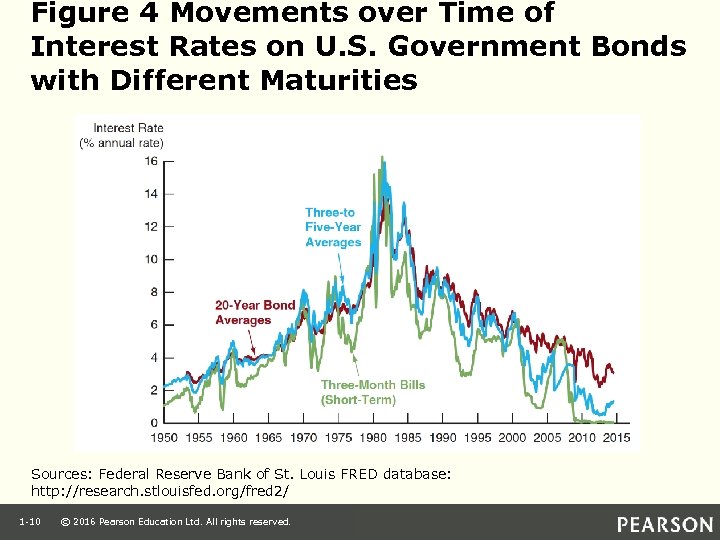 Figure 4 Movements over Time of Interest Rates on U. S. Government Bonds with Different Maturities Sources: Federal Reserve Bank of St. Louis FRED database: http: //research. stlouisfed. org/fred 2/ 1 -10 © 2016 Pearson Education Ltd. All rights reserved.
 Term Structure of Interest Rates • Bonds with identical risk, liquidity, and tax characteristics may have different interest rates because the time remaining to maturity is different 1 -11 © 2016 Pearson Education Ltd. All rights reserved.
 Term Structure of Interest Rates • Yield curve: a plot of the yield on bonds with differing terms to maturity but the same risk, liquidity and tax considerations – Upward-sloping: long-term rates are above short-term rates – Flat: short- and long-term rates are the same – Inverted: long-term rates are below short-term rates 1 -12 © 2016 Pearson Education Ltd. All rights reserved.
 Term Structure of Interest Rates The theory of the term structure of interest rates must explain the following facts: 1. Interest rates on bonds of different maturities move together over time. 2. When short-term interest rates are low, yield curves are more likely to have an upward slope; when short-term rates are high, yield curves are more likely to slope downward and be inverted. 3. Yield curves almost always slope upward. 1 -13 © 2016 Pearson Education Ltd. All rights reserved.
 Three theories to explain the three facts: (The first: ) 1. Expectations theory explains the first two facts but not the third. 2. Segmented markets theory explains the third fact but not the first two. 3. Liquidity premium theory combines the two theories to explain all three facts. 1 -14 © 2016 Pearson Education Ltd. All rights reserved.
 Expectations Theory • The interest rate on a long-term bond will equal an average of the short-term interest rates that people expect to occur over the life of the longterm bond. • Buyers of bonds do not prefer bonds of one maturity over another; they will not hold any quantity of a bond if its expected return is less than that of another bond with a different maturity. • Bond holders consider bonds with different maturities to be perfect substitutes. 1 -15 © 2016 Pearson Education Ltd. All rights reserved.
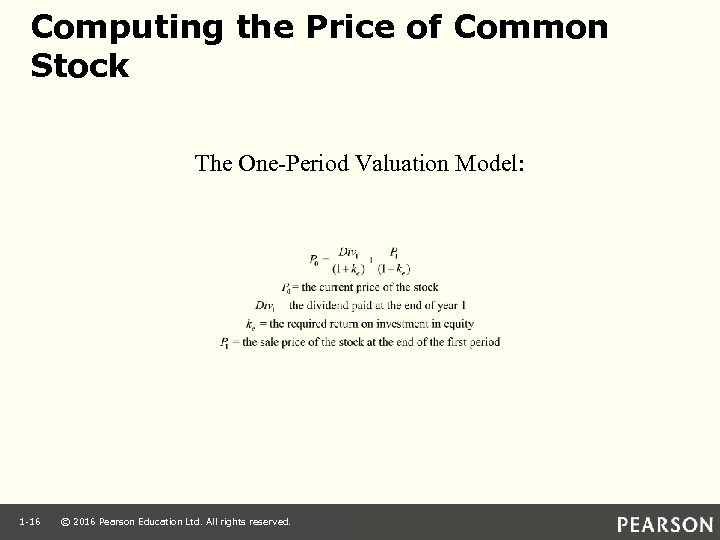 Computing the Price of Common Stock The One-Period Valuation Model: 1 -16 © 2016 Pearson Education Ltd. All rights reserved.
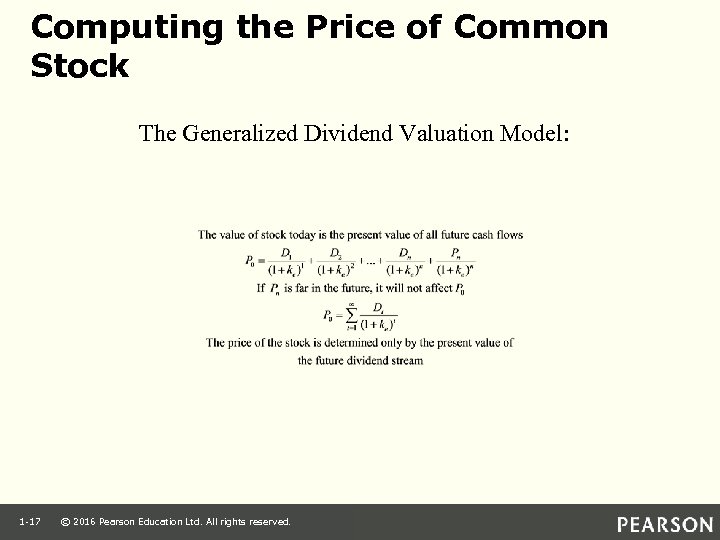 Computing the Price of Common Stock The Generalized Dividend Valuation Model: 1 -17 © 2016 Pearson Education Ltd. All rights reserved.
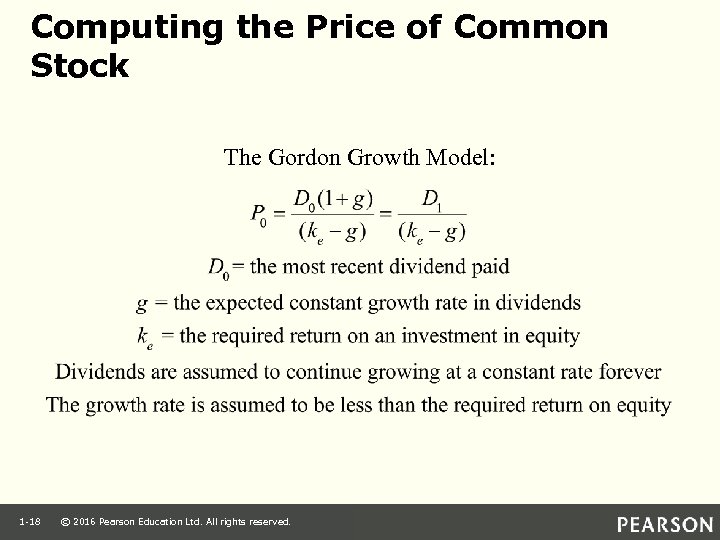 Computing the Price of Common Stock The Gordon Growth Model: 1 -18 © 2016 Pearson Education Ltd. All rights reserved.
 How the Market Sets Stock Prices • The price is set by the buyer willing to pay the highest price. • The market price will be set by the buyer who can take best advantage of the asset. • Superior information about an asset can increase its value by reducing its perceived risk. 1 -19 © 2016 Pearson Education Ltd. All rights reserved.
 How the Market Sets Stock Prices • Information is important for individuals to value each asset. • When new information is released about a firm, expectations and prices change. • Market participants constantly receive information and revise their expectations, so stock prices change frequently. 1 -20 © 2016 Pearson Education Ltd. All rights reserved.
 Application: The Global Financial Crisis and the Stock Market • The financial crisis that started in August 2007 led to one of the worst bear markets in 50 years. • Downward revision of growth prospects: ↓g • Increased uncertainty: ↑ke • Gordon model predicts a drop in stock prices. 1 -21 © 2016 Pearson Education Ltd. All rights reserved.
 The Theory of Rational Expectations • Adaptive expectations: – Expectations are formed from past experience only. – Changes in expectations will occur slowly over time as data changes. – However, people use more than just past data to form their expectations and sometimes change their expectations quickly. 1 -22 © 2016 Pearson Education Ltd. All rights reserved.
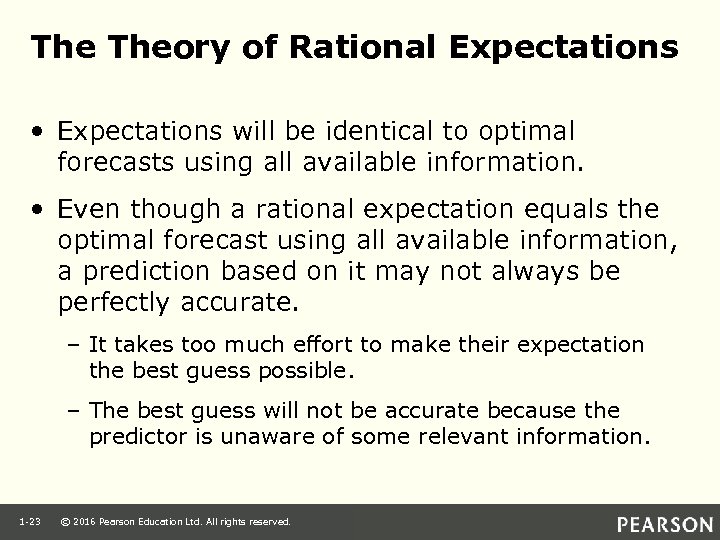 The Theory of Rational Expectations • Expectations will be identical to optimal forecasts using all available information. • Even though a rational expectation equals the optimal forecast using all available information, a prediction based on it may not always be perfectly accurate. – It takes too much effort to make their expectation the best guess possible. – The best guess will not be accurate because the predictor is unaware of some relevant information. 1 -23 © 2016 Pearson Education Ltd. All rights reserved.
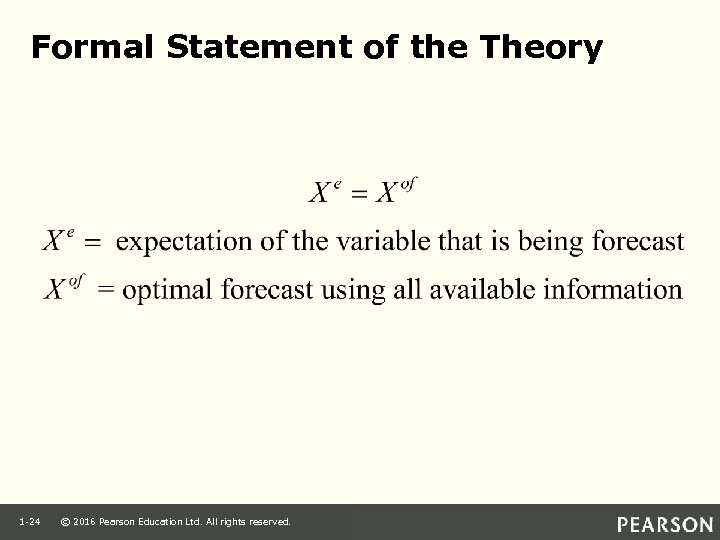 Formal Statement of the Theory 1 -24 © 2016 Pearson Education Ltd. All rights reserved.
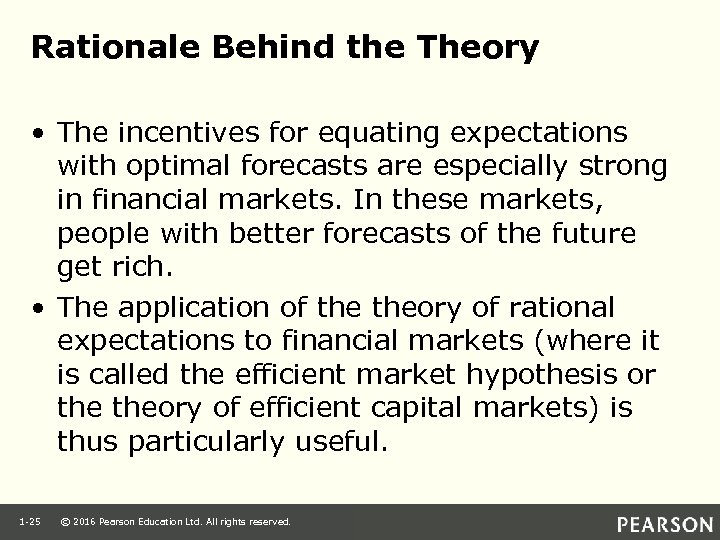 Rationale Behind the Theory • The incentives for equating expectations with optimal forecasts are especially strong in financial markets. In these markets, people with better forecasts of the future get rich. • The application of theory of rational expectations to financial markets (where it is called the efficient market hypothesis or theory of efficient capital markets) is thus particularly useful. 1 -25 © 2016 Pearson Education Ltd. All rights reserved.
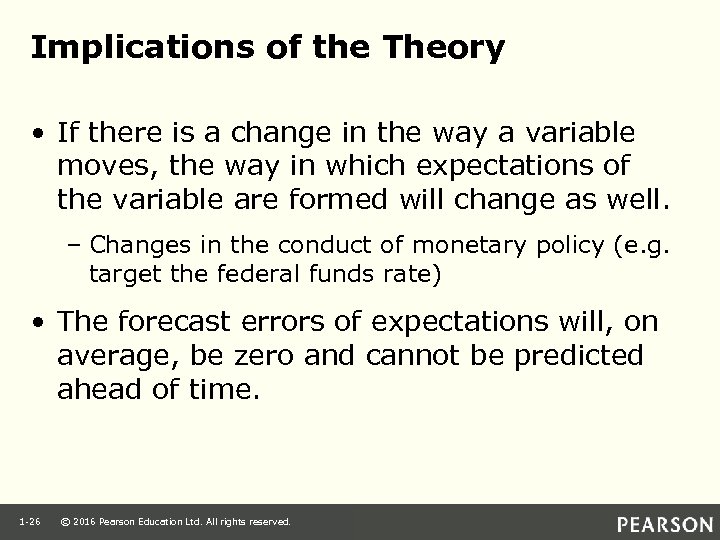 Implications of the Theory • If there is a change in the way a variable moves, the way in which expectations of the variable are formed will change as well. – Changes in the conduct of monetary policy (e. g. target the federal funds rate) • The forecast errors of expectations will, on average, be zero and cannot be predicted ahead of time. 1 -26 © 2016 Pearson Education Ltd. All rights reserved.
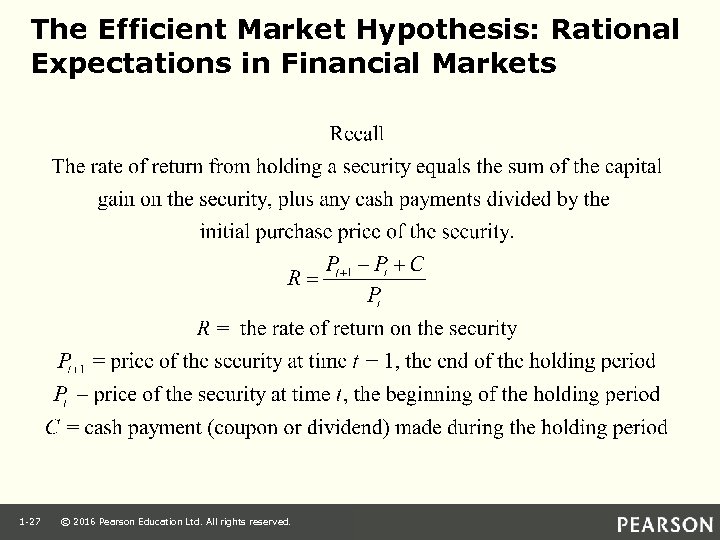 The Efficient Market Hypothesis: Rational Expectations in Financial Markets 1 -27 © 2016 Pearson Education Ltd. All rights reserved.
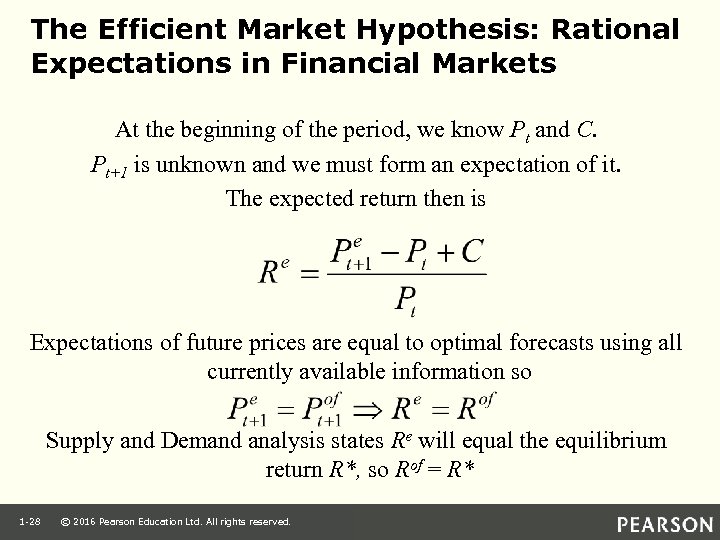 The Efficient Market Hypothesis: Rational Expectations in Financial Markets At the beginning of the period, we know Pt and C. Pt+1 is unknown and we must form an expectation of it. The expected return then is Expectations of future prices are equal to optimal forecasts using all currently available information so Supply and Demand analysis states Re will equal the equilibrium return R*, so Rof = R* 1 -28 © 2016 Pearson Education Ltd. All rights reserved.
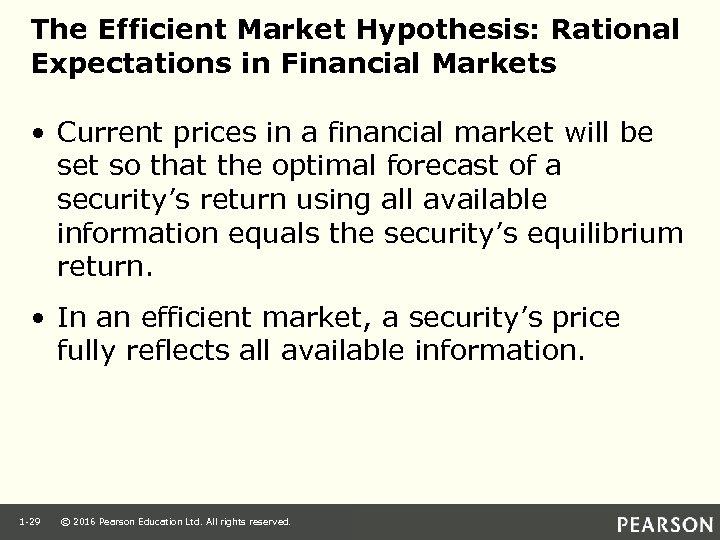 The Efficient Market Hypothesis: Rational Expectations in Financial Markets • Current prices in a financial market will be set so that the optimal forecast of a security’s return using all available information equals the security’s equilibrium return. • In an efficient market, a security’s price fully reflects all available information. 1 -29 © 2016 Pearson Education Ltd. All rights reserved.
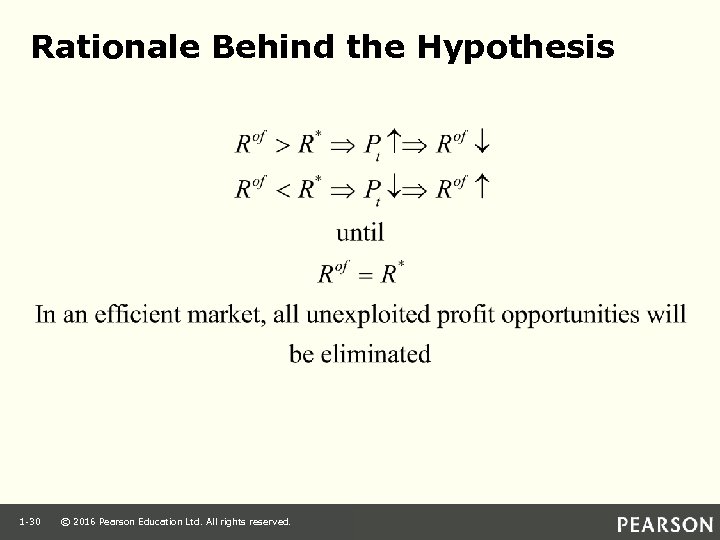 Rationale Behind the Hypothesis 1 -30 © 2016 Pearson Education Ltd. All rights reserved.
 Expectations Theory • Expectations theory explains: – Why the term structure of interest rates changes at different times. – Why interest rates on bonds with different maturities move together over time (fact 1). – Why yield curves tend to slope up when shortterm rates are low and slope down when shortterm rates are high (fact 2). • Cannot explain why yield curves usually slope upward (fact 3) 1 -31 © 2016 Pearson Education Ltd. All rights reserved.
 Three theories to explain the three facts: (TWO ) 1. Expectations theory explains the first two facts but not the third. 2. Segmented markets theory explains the third fact but not the first two. 3. Liquidity premium theory combines the two theories to explain all three facts. 1 -32 © 2016 Pearson Education Ltd. All rights reserved.
 Segmented Markets Theory • Bonds of different maturities are not substitutes at all. • The interest rate for each bond with a different maturity is determined by the demand for and supply of that bond. • Investors have preferences for bonds of one maturity over another. • If investors generally prefer bonds with shorter maturities that have less interest-rate risk, then this explains why yield curves usually slope upward (fact 3). 1 -33 © 2016 Pearson Education Ltd. All rights reserved.
 Three theories to explain the three facts: (Three) 1. Expectations theory explains the first two facts but not the third. 2. Segmented markets theory explains the third fact but not the first two. 3. Liquidity premium theory combines the two theories to explain all three facts. 1 -34 © 2016 Pearson Education Ltd. All rights reserved.
 Liquidity Premium & Preferred Habitat Theories • The interest rate on a long-term bond will equal an average of short-term interest rates expected to occur over the life of the long-term bond plus a liquidity premium that responds to supply and demand conditions for that bond. • Bonds of different maturities are partial (not perfect) substitutes. 1 -35 © 2016 Pearson Education Ltd. All rights reserved.
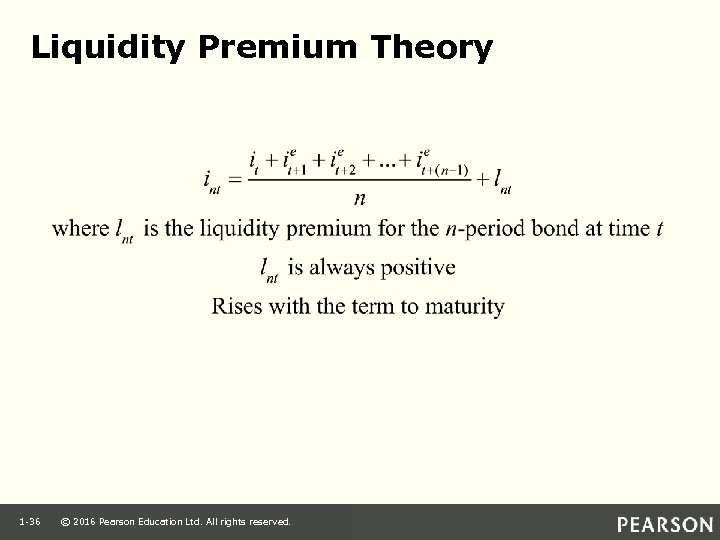 Liquidity Premium Theory 1 -36 © 2016 Pearson Education Ltd. All rights reserved.
 Preferred Habitat Theory • Investors have a preference for bonds of one maturity over another. • They will be willing to buy bonds of different maturities only if they earn a somewhat higher expected return. • Investors are likely to prefer short-term bonds over longer-term bonds. 1 -37 © 2016 Pearson Education Ltd. All rights reserved.
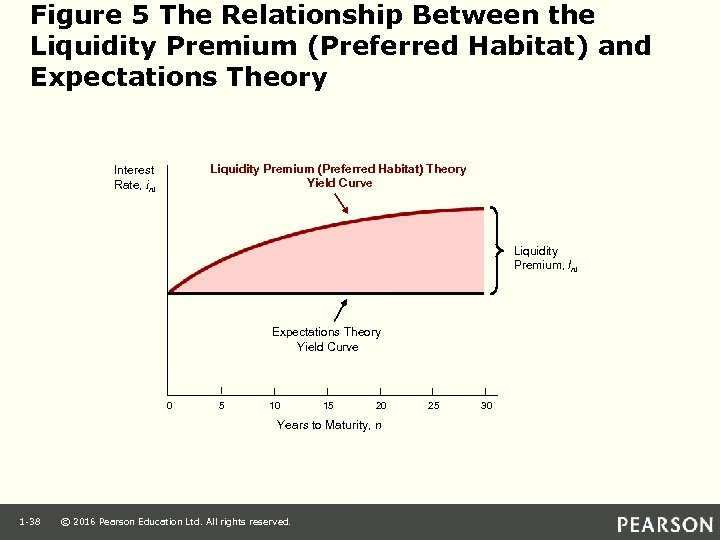 Figure 5 The Relationship Between the Liquidity Premium (Preferred Habitat) and Expectations Theory Liquidity Premium (Preferred Habitat) Theory Yield Curve Interest Rate, int Liquidity Premium, lnt Expectations Theory Yield Curve 0 5 10 15 20 Years to Maturity, n 1 -38 © 2016 Pearson Education Ltd. All rights reserved. 25 30
 Liquidity Premium & Preferred Habitat Theories • Interest rates on different maturity bonds move together over time; explained by the first term in the equation • Yield curves tend to slope upward when short-term rates are low and to be inverted when short-term rates are high; explained by the liquidity premium term in the first case and by a low expected average in the second case • Yield curves typically slope upward; explained by a larger liquidity premium as the term to maturity lengthens 1 -39 © 2016 Pearson Education Ltd. All rights reserved.
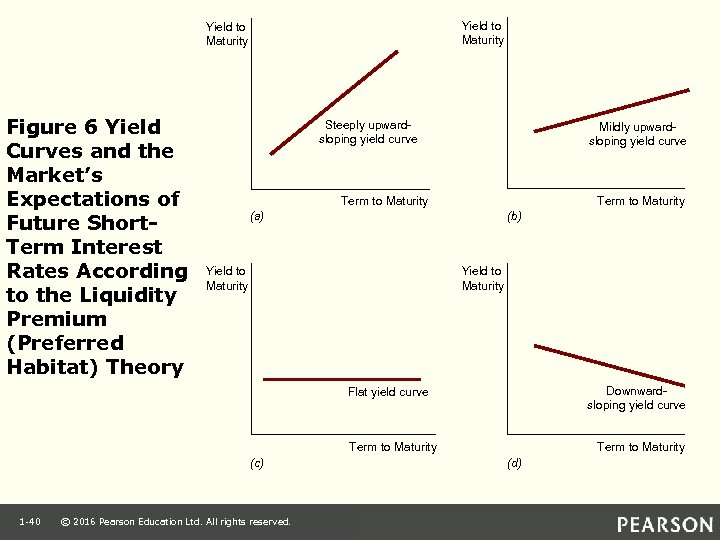 Yield to Maturity Figure 6 Yield Curves and the Market’s Expectations of Future Short. Term Interest Rates According to the Liquidity Premium (Preferred Habitat) Theory Steeply upwardsloping yield curve Mildly upwardsloping yield curve Term to Maturity (a) (b) Yield to Maturity Downwardsloping yield curve Flat yield curve Term to Maturity (c) 1 -40 © 2016 Pearson Education Ltd. All rights reserved. Term to Maturity (d)
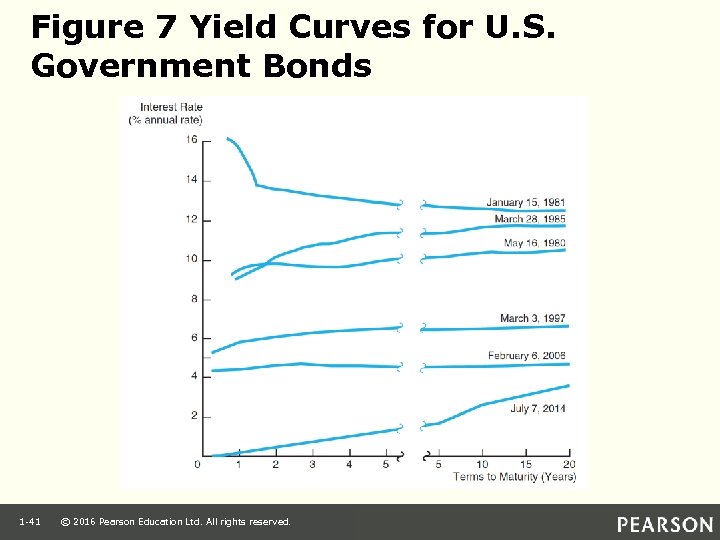 Figure 7 Yield Curves for U. S. Government Bonds 1 -41 © 2016 Pearson Education Ltd. All rights reserved.
 ME_A 00 Intermediaries & transaction cost 20 -42 © 2016 Pearson Education Ltd. All rights reserved.
 Learning Objectives • Identify eight basic facts about the global financial system. • Summarize how transaction costs affect financial intermediaries. • Describe why asymmetric information leads to adverse selection and moral hazard. • Recognize adverse selection and summarize the ways in which they can be reduced. 1 -43 © 2016 Pearson Education Ltd. All rights reserved.
 Learning Objectives • Recognize the principal-agent problem arising from moral hazard in equity contracts and summarize the methods for reducing it. • Summarize the methods used to reduce moral hazard in debt contracts 1 -44 © 2016 Pearson Education Ltd. All rights reserved.
 Basic Facts about Financial Structure Throughout the World • This chapter provides an economic analysis of how our financial structure is designed to promote economic efficiency. • The bar chart in Figure 1 shows how American businesses financed their activities using external funds (those obtained from outside the business itself) in the period 1970– 2000 and compares U. S. data to those of Germany, Japan, and Canada. 1 -45 © 2016 Pearson Education Ltd. All rights reserved.
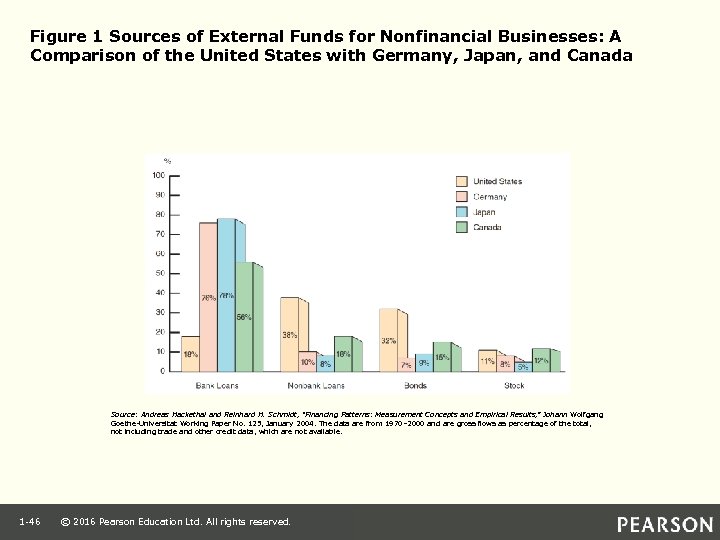 Figure 1 Sources of External Funds for Nonfinancial Businesses: A Comparison of the United States with Germany, Japan, and Canada Source: Andreas Hackethal and Reinhard H. Schmidt, “Financing Patterns: Measurement Concepts and Empirical Results, ” Johann Wolfgang Goethe-Universitat Working Paper No. 125, January 2004. The data are from 1970– 2000 and are gross flows as percentage of the total, not including trade and other credit data, which are not available. 1 -46 © 2016 Pearson Education Ltd. All rights reserved.
 Basic Facts about Financial Structure Throughout the World 1. Stocks are not the most important sources of external financing for businesses. 2. Issuing marketable debt and equity securities is not the primary way in which businesses finance their operations. 3. Indirect finance is many times more important than direct finance 4. Financial intermediaries, particularly banks, are the most important source of external funds used to finance businesses. 1 -47 © 2016 Pearson Education Ltd. All rights reserved.
 The Lemons Problem: How Adverse Selection Influences Financial Structure • If quality cannot be assessed, the buyer is willing to pay at most a price that reflects the average quality. • Sellers of good quality items will not want to sell at the price for average quality. • The buyer will decide not to buy at all because all that is left in the market is poor quality items. • This problem explains fact 2 and partially explains fact 1. 1 -48 © 2016 Pearson Education Ltd. All rights reserved.
 Tools to Help Solve Adverse Selection Problems • Private production and sale of information – Free-rider problem • Government regulation to increase information – Not always works to solve the adverse selection problem, explains Fact 5 • Financial intermediation – Explains facts 3, 4, & 6 • Collateral and net worth – Explains fact 7 1 -49 © 2016 Pearson Education Ltd. All rights reserved.
 How Moral Hazard Affects the Choice Between Debt and Equity Contracts • Called the Principal-Agent Problem: – Principal: less information (stockholder) – Agent: more information (manager) • Separation of ownership and control of the firm – Managers pursue personal benefits and power rather than the profitability of the firm. 1 -50 © 2016 Pearson Education Ltd. All rights reserved.
 Tools to Help Solve the Principal. Agent Problem • Monitoring (Costly State Verification) – Free-rider problem – Fact 1 • Government regulation to increase information – Fact 5 • Financial Intermediation – Fact 3 • Debt Contracts – Fact 1 1 -51 © 2016 Pearson Education Ltd. All rights reserved.
 How Moral Hazard Influences Financial Structure in Debt Markets • Borrowers have incentives to take on projects that are riskier than the lenders would like. – This prevents the borrower from paying back the loan. 1 -52 © 2016 Pearson Education Ltd. All rights reserved.
 Tools to Help Solve Moral Hazard in Debt Contracts • Net worth and collateral – Incentive compatible • Monitoring and enforcement of restrictive covenants – Discourage undesirable behavior – Encourage desirable behavior – Keep collateral valuable – Provide information • Financial intermediation – Facts 3 & 4 1 -53 © 2016 Pearson Education Ltd. All rights reserved.
 Summary Table 1 Asymmetric Information Problems and Tools to Solve Them 1 -54 © 2016 Pearson Education Ltd. All rights reserved.
 Application: Financial Development and Economic Growth • Financial repression created by an institutional environment is characterized by: – Poor system of property rights (unable to use collateral efficiently) – Poor legal system (difficult for lenders to enforce restrictive covenants) – Weak accounting standards (less access to good information) – Government intervention through directed credit programs and state owned banks (less incentive to proper channel funds to its most productive use) 1 -55 © 2016 Pearson Education Ltd. All rights reserved.
 Application: Financial Development and Economic Growth • The financial systems in developing and transition countries face several difficulties that keep them from operating efficiently. • In many developing countries, the system of property rights (the rule of law, constraints on government expropriation, absence of corruption) functions poorly, making it hard to use these two tools effectively. 1 -56 © 2016 Pearson Education Ltd. All rights reserved.