 Скачать презентацию Mc Graw-Hill Irwin Copyright 2011 by The Mc
aa71570ebf22b7311012a9b361053700.ppt
- Количество слайдов: 28



Mc. Graw-Hill/Irwin Copyright © 2011 by The Mc. Graw-Hill Companies, Inc. All rights reserved. Customer Relationship Management and Business Intelligence Chapter 9
SECTION 9. 1 Chapter 9 CUSTOMER RELATIONSHIP MANAGEMENT 9 -3
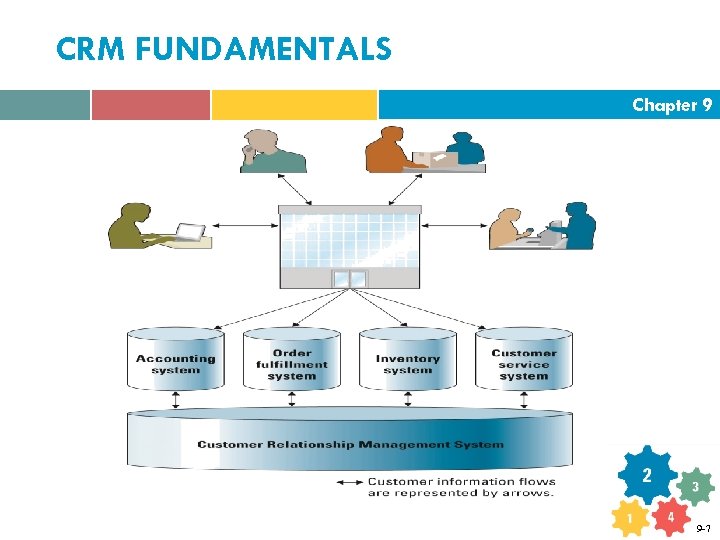
CRM FUNDAMENTALS Chapter 9 9 -7
CRM AS A BUSINESS STRATEGY Chapter 9 • CRM is not just technology, but a strategy, process, and business goal that an organization must embrace on an enterprisewide level. 9 -8
CRM ENABLES ORGANIZATIONS TO Chapter 9 • Identify types of customers • Design individual customer marketing campaigns • Treat each customer as an individual • Understand customer buying behaviors
RFM Chapter 9 • How recently a customer purchased items • How frequently a customer purchased items • How much a customer spends on each purchase (monetary value) 9 -9
BUSINESS BENEFITS OF CRM Chapter 9 • Provide better customer service • Make call centers more efficient • Cross sell products more effectively • Help sales staff close deals faster • Simplify marketing and sales processes • Discover new customers • Increase customer revenues 9 -10
CRM TECHNOLOGIES Chapter 9 • Reporting technology • Analysis technologies • Predicting technologies 9 -11
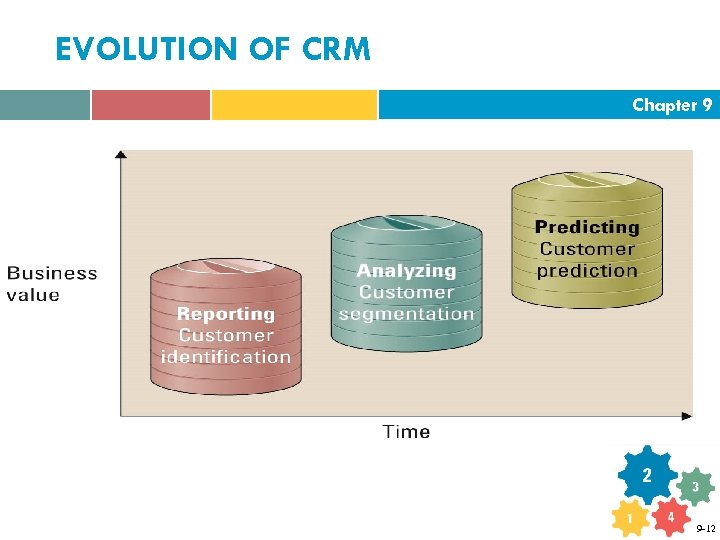
EVOLUTION OF CRM Chapter 9 9 -12
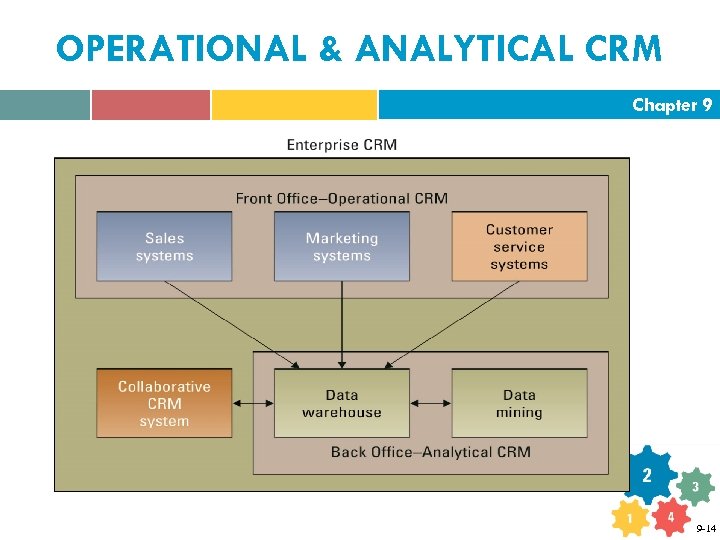
OPERATIONAL & ANALYTICAL CRM Chapter 9 9 -14
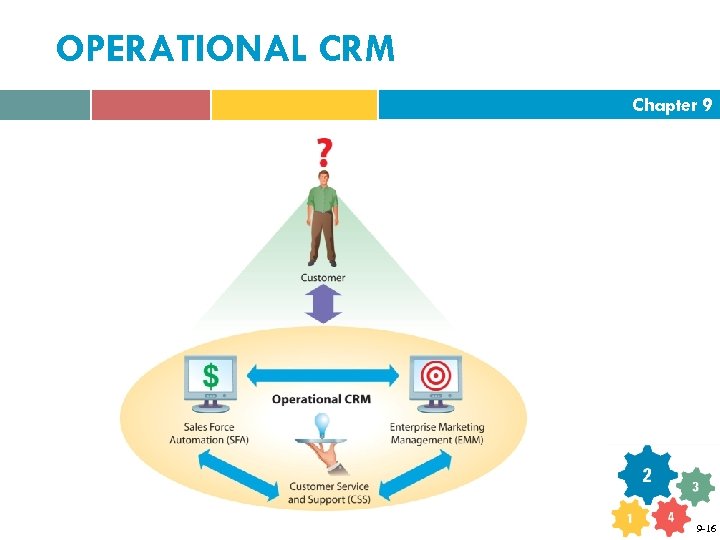
OPERATIONAL CRM Chapter 9 9 -16
MARKETING & OPERATIONAL CRM Chapter 9 • List generator • Campaign management system • Cross-selling and up-selling § Cross-selling § Up-selling 9 -17
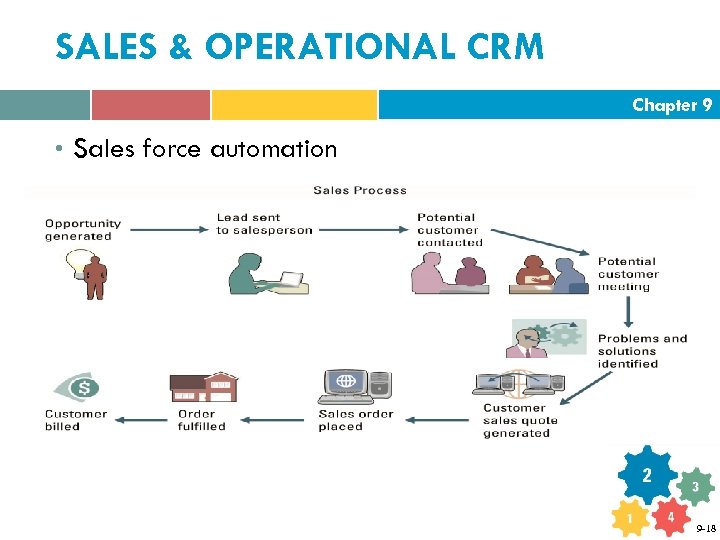
SALES & OPERATIONAL CRM Chapter 9 • Sales force automation 9 -18
SALES & OPERATIONAL CRM Chapter 9 • Sales management CRM system • Contact management CRM system • Opportunity management CRM system 9 -19
CUSTOMER SERVICE & OPERATIONAL CRM Chapter 9 • Contact center (call center) • Web-based self-service system § Click-to-talk • Call scripting system 9 -21
CUSTOMER SERVICE & OPERATIONAL CRM Chapter 9 • Automatic call distribution • Interactive voice response • Predictive dialing 9 -22
USING IT TO DRIVE ANALYTICAL CRM Chapter 9 • Personalization • Analytical CRM relies heavily on data warehousing technologies and business intelligence to glean insights into customer behavior 9 -26
USING IT TO DRIVE ANALYTICAL CRM Chapter 9 • Give customers more of what they want • Value their time • Overdeliver • Contact frequently • Generate a trustworthy mailing list • Follow up 9 -27
CRM TRENDS: SRM, PRM, AND ERM Chapter 9 • Supplier relationship management (SRM) • Partner relationship management (PRM) • Employee relationship management (ERM) 9 -28
SECTION 9. 2 Chapter 9 BUSINESS INTELLIGENCE 9 -30
DATA RICH, INFORMATION POOR Chapter 9 • The amount of data generated doubles every year • Improving the quality of business decisions has a direct impact on costs and revenue 9 -34
THE SOLUTION: BUSINESS INTELLIGENCE Chapter 9 • Reliable • Consistent • Understandable • Easily manipulated 9 -36
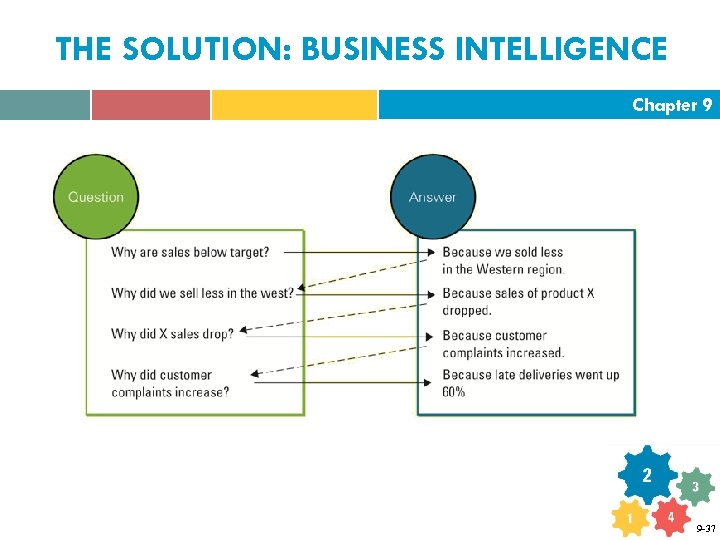
THE SOLUTION: BUSINESS INTELLIGENCE Chapter 9 9 -37
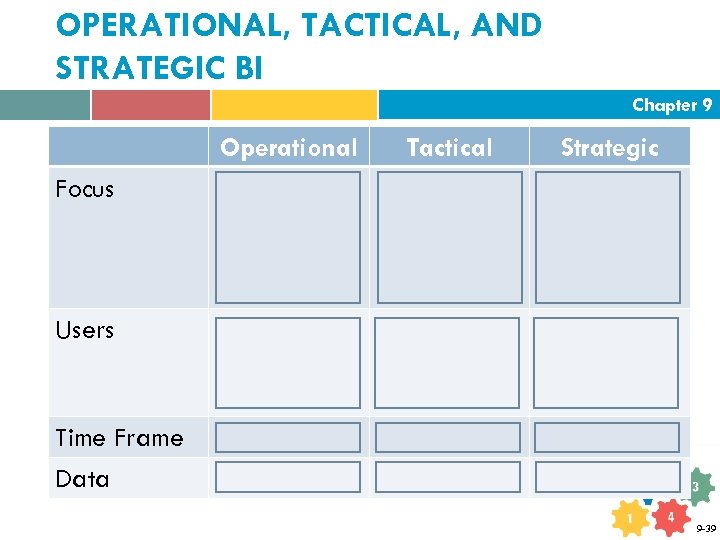
OPERATIONAL, TACTICAL, AND STRATEGIC BI Chapter 9 Focus Users Time Frame Data Operational Tactical Daily Short term to operations achieve strategic goals Managers, Executives, operational Managers users Days Months Realtime Historical Strategic Long term goals Executives, Managers Years Historical 9 -39
DATA MINING Chapter 9 • Data mining • Data-mining tools § Classification § Estimation § Affinity grouping § Clustering 9 -43
DATA MINING CAPABILITIES Chapter 9 • Cluster analysis • Association detection • Statistical analysis § Forecast § Time-series information 9 -44
BUSINESS BENEFITS OF BI Chapter 9 • Single point of access to information for all users • BI across organizational departments • Up-to-the-minute information for everyone 9 -48
Chapter 9
Скачать презентацию Mc Graw-Hill Irwin Copyright 2011 by The Mc
aa71570ebf22b7311012a9b361053700.ppt