


 Скачать презентацию May 2007 What Every Transportation Manager Should Know
a1eb759e18ea2cf92c09c94e2401385d.ppt
- Количество слайдов: 35
 May 2007 What Every Transportation Manager Should Know About GARVEEs Frederick J. Werner Federal Highway Administration Resource Center Frederick. werner@fhwa. dot. gov
 Outline • • • Background on Debt and Infrastructure Finance Definition of GARVEE Steps Required to Issue a GARVEE Hypothetical Example Real Examples Contacts for More Information 1
 GARVEE Basics • The objectives today are to explain: – Why do states consider debt for transportation infrastructure projects? – What is a bond? What is a GARVEE (Grant Anticipation Revenue Vehicle)? – What are the potential advantages of using a GARVEE? – What are some limitations? Why might GARVEEs not be suitable? 2
 GARVEE Basics • The objectives today are to explain: – What steps do you have to take to issue a GARVEE? – What is the role of FHWA in a state's GARVEE program? – What does FHWA not determine about a state's GARVEE program? – Where can I go for more information? 3
 Infrastructure Finance & Personal Finance • • • Infrastructure Finance = financing capital assets, assets that typically last many years To explain infrastructure finance, let’s look at personal finance How do you finance long-term investments for yourself? 4
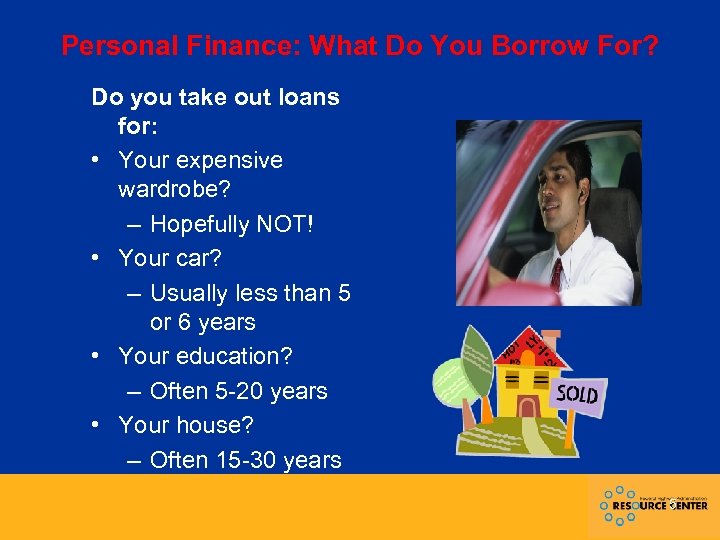 Personal Finance: What Do You Borrow For? Do you take out loans for: • Your expensive wardrobe? – Hopefully NOT! • Your car? – Usually less than 5 or 6 years • Your education? – Often 5 -20 years • Your house? – Often 15 -30 years 5
 Infrastructure Finance: Match Payments to Useful Asset Life • Typically, long-term debt is used to finance capital assets that will last many years • The goal, just as in personal finance: the asset should last longer than the payment! • Governments may also want to spread the costs of infrastructure to future as well as current users • If your grandkids will use it, let them help pay for it! (position may be controversial) 6
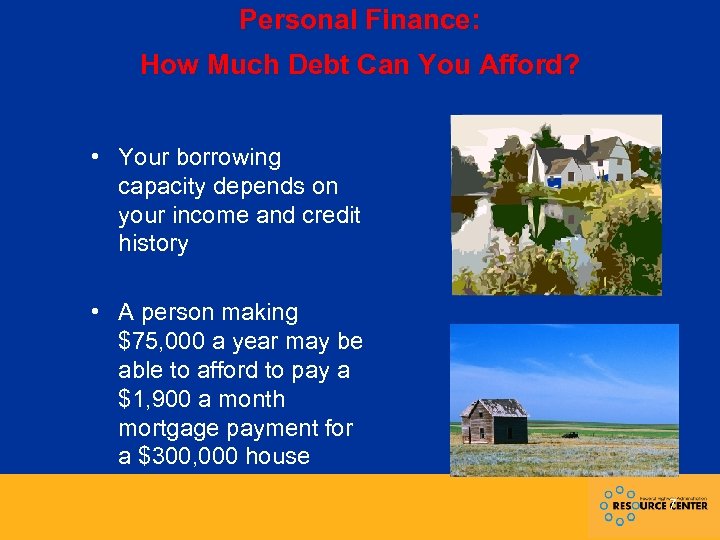 Personal Finance: How Much Debt Can You Afford? • Your borrowing capacity depends on your income and credit history • A person making $75, 000 a year may be able to afford to pay a $1, 900 a month mortgage payment for a $300, 000 house 7
 Infrastructure Finance: How Much Debt Can Governments Afford? • States’ borrowing capacity also depends on income and credit history • Each state has its own process for deciding how much debt is appropriate (voter approval, constitutional limits, political perspective, etc. ) 8
 Potential Debt Advantages – Accelerated Construction Program: • Avoided inflation costs • Accelerated benefits (safety, economic) • Ability to achieve both large and smaller-scale projects – Better Funds Management: • Match payment to useful life of asset 9
 Potential Limitations to Use of Debt – Fiscal: Is money really the problem? Or is it environmental or other delays? – Administrative: Can DOT oversee more projects? Can local contractors build more? – Legislative: Does DOT have legal authority to borrow? 10
 Infrastructure Finance: Bonds • A bond is a type of debt issued by a state or local government or corporation • Bonds are essentially loans from the capital markets (private investors) • Issuers typically repay bonds with semiannual payments 11
 Tax-Exempt Bonds • Investors provide funds by purchasing bonds in various denominations • Interest payments on bonds issued by state and local governments are tax-exempt for US Federal income tax purposes and sometimes from state / territorial income tax as well 12
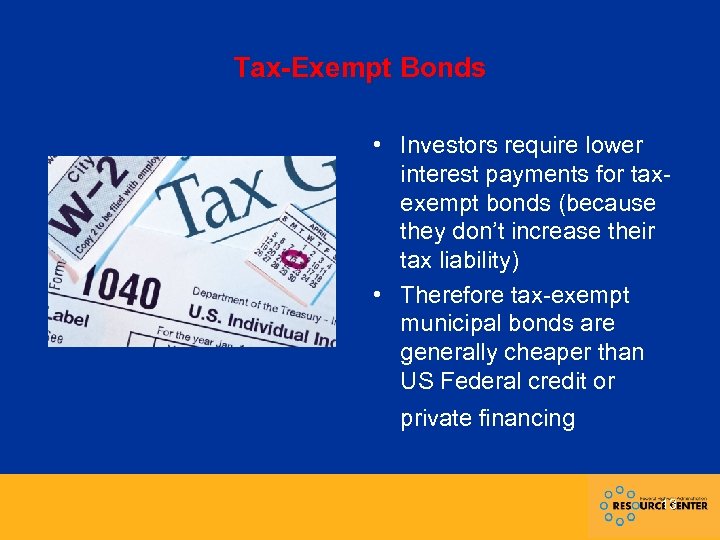 Tax-Exempt Bonds • Investors require lower interest payments for taxexempt bonds (because they don’t increase their tax liability) • Therefore tax-exempt municipal bonds are generally cheaper than US Federal credit or private financing 13
 What is a GARVEE? • A GARVEE (Grant Anticipation Revenue Vehicle) is a term created by USDOT for debt that is repaid fully or partially with Federal-aid funds • GARVEEs (and GANs) are tax-exempt • The funds borrowed must be used for an eligible Title 23 highway project • FHWA GARVEE guidance issued in August 2000; revised 2004 14
 Why Have GARVEEs and Other Types of Grant Anticipation Debt Increased? • Legal Change in US Code: Permits use of Federalaid funds to pay interest and issuance costs of debt (1995) • Partial Conversion of Advance Construction: Procedure allows states to claim partial reimbursement for construction of eligible projects (formerly, states were required to receive reimbursements all at once!) • Low Interest Rates: Important factor, especially when construction and ROW inflation runs higher than interest rate 15
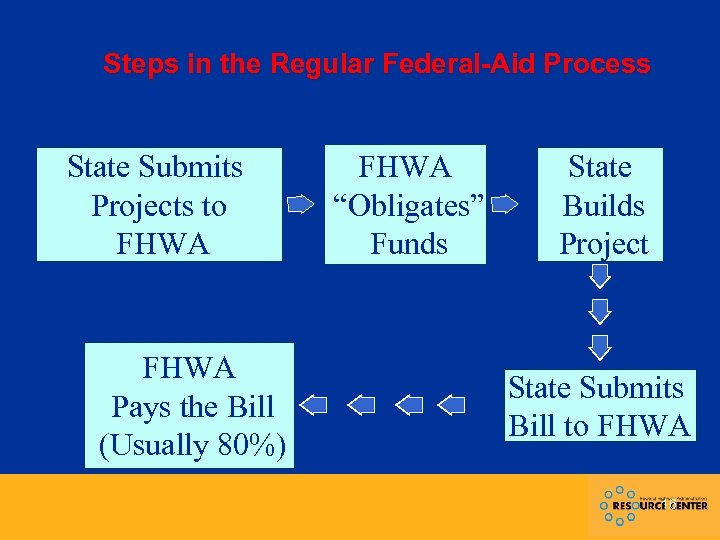 Steps in the Regular Federal-Aid Process State Submits Projects to FHWA Pays the Bill (Usually 80%) FHWA “Obligates” Funds State Builds Project State Submits Bill to FHWA 16
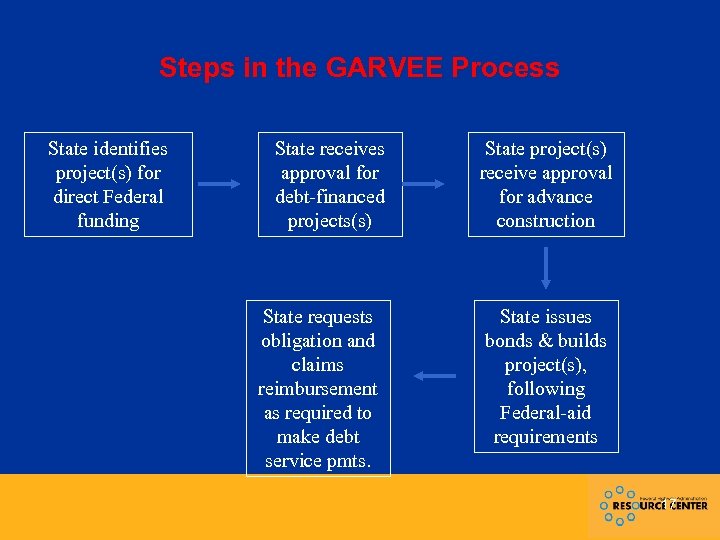 Steps in the GARVEE Process State identifies project(s) for direct Federal funding State receives approval for debt-financed projects(s) State requests obligation and claims reimbursement as required to make debt service pmts. State project(s) receive approval for advance construction State issues bonds & builds project(s), following Federal-aid requirements 17
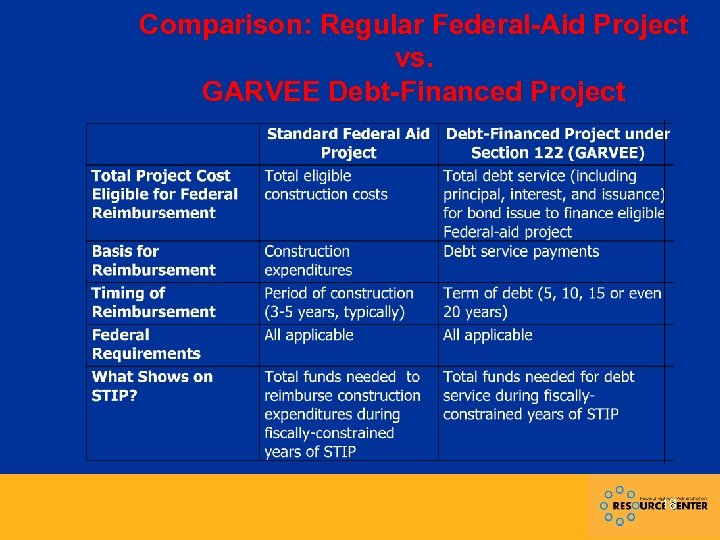 Comparison: Regular Federal-Aid Project vs. GARVEE Debt-Financed Project 18
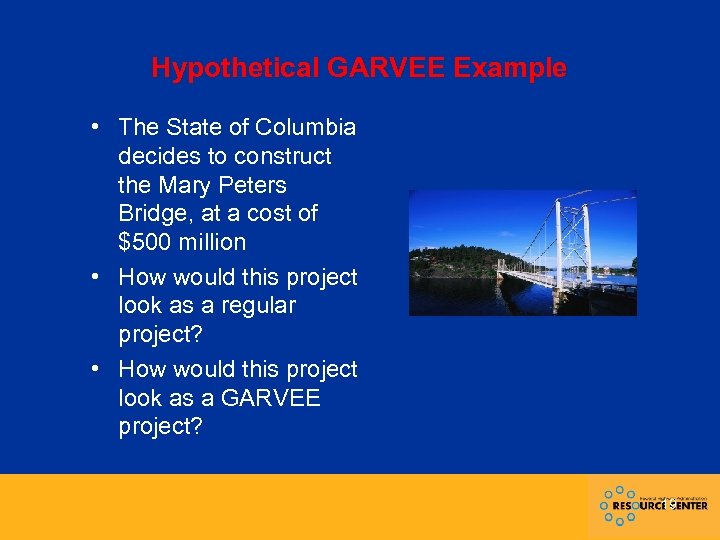 Hypothetical GARVEE Example • The State of Columbia decides to construct the Mary Peters Bridge, at a cost of $500 million • How would this project look as a regular project? • How would this project look as a GARVEE project? 19
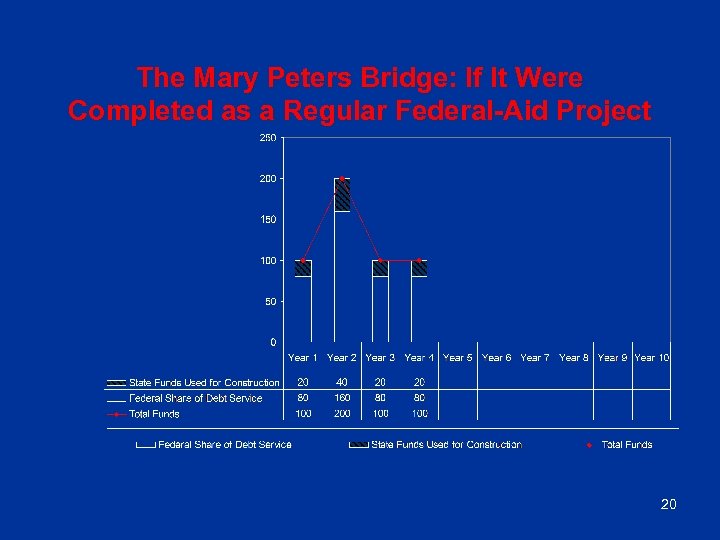 The Mary Peters Bridge: If It Were Completed as a Regular Federal-Aid Project 20
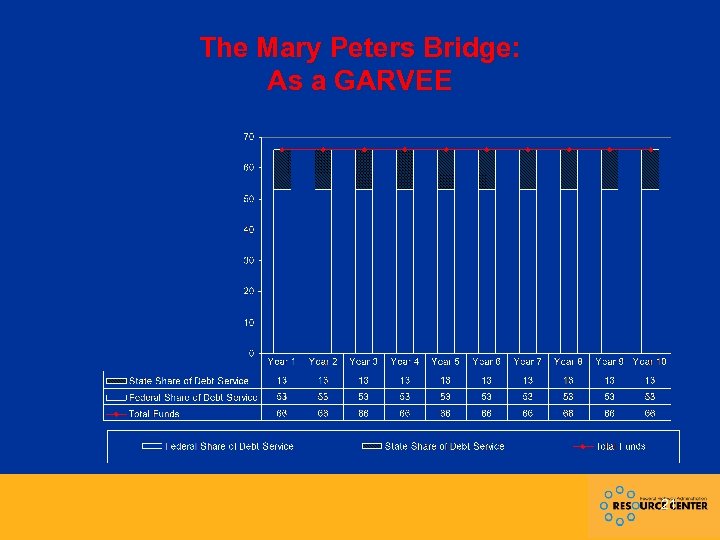 The Mary Peters Bridge: As a GARVEE 21
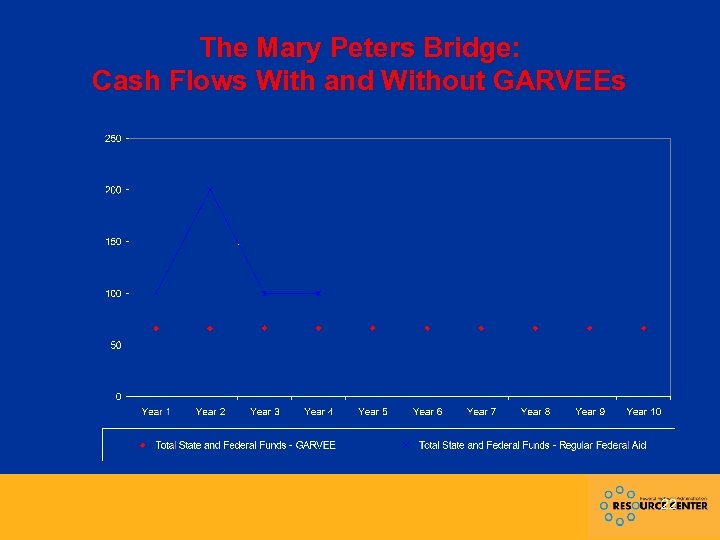 The Mary Peters Bridge: Cash Flows With and Without GARVEEs 22
 Federal Role in GARVEEs • Project Approval: FHWA approves the projects financed by the GARVEE • Federal Requirements: FHWA ensures that applicable federal requirements (NEPA, Davis. Bacon, Uniform Relocation Act) are followed • Non-Federal Match: FHWA ensures that matching requirements are met for debt service payments • FHWA is notified that project reimbursements will be based on debt service costs; other administrative requirements found in guidance 23
 What the Federal Role ISN’T • FHWA does NOT: – Review or approve interest rates, backstops, terms, or anything else regarding the debt instruments themselves – Guarantee payment of bonds. There is no Federal guarantee of payment, and any pledges or obligations must come from state legislation and/or executive authority 24
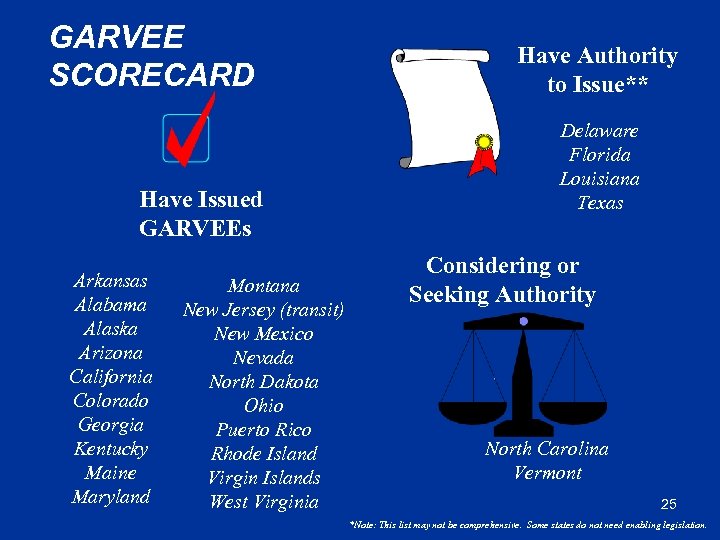 GARVEE SCORECARD Have Issued GARVEEs Arkansas Alabama Alaska Arizona California Colorado Georgia Kentucky Maine Maryland Montana New Jersey (transit) New Mexico Nevada North Dakota Ohio Puerto Rico Rhode Island Virgin Islands West Virginia Have Authority to Issue** Delaware Florida Louisiana Texas Considering or Seeking Authority North Carolina Vermont 25 *Note: This list may not be comprehensive. Some states do not need enabling legislation.
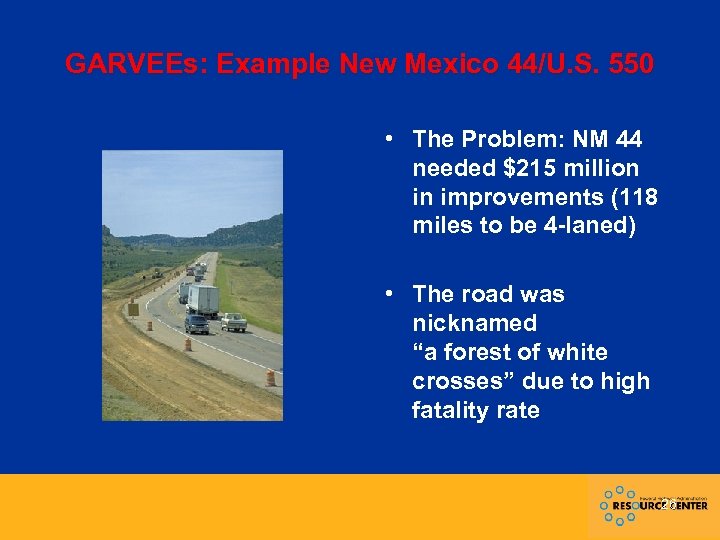 GARVEEs: Example New Mexico 44/U. S. 550 • The Problem: NM 44 needed $215 million in improvements (118 miles to be 4 -laned) • The road was nicknamed “a forest of white crosses” due to high fatality rate 26
 GARVEEs: Example New Mexico 44/U. S. 550 • At the time (1998), New Mexico received approximately $256 million in Federal aid annually • The Choice: NM 44 or all the other projects? 27
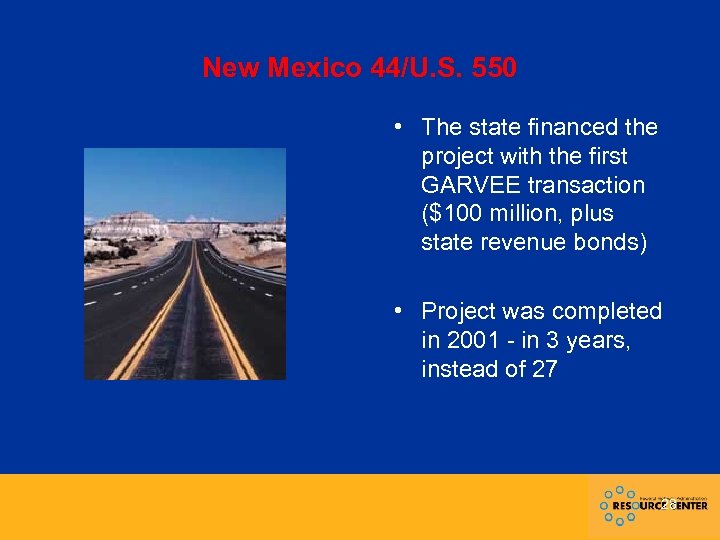 New Mexico 44/U. S. 550 • The state financed the project with the first GARVEE transaction ($100 million, plus state revenue bonds) • Project was completed in 2001 - in 3 years, instead of 27 28
 New Mexico 44/U. S. 550 • Project also involved an innovative, long-term warranty on pavement and structures for $62 million • The rest of New Mexico’s program was able to continue at the same time • The use of GARVEES was extended to other projects as well 29
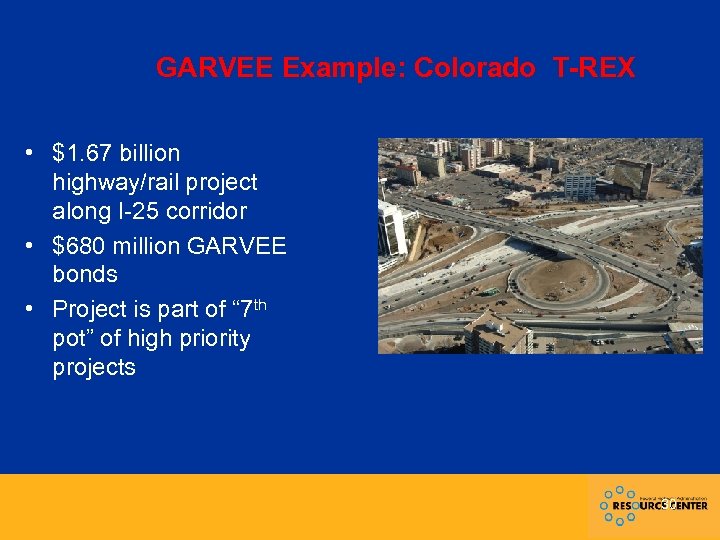 GARVEE Example: Colorado T-REX • $1. 67 billion highway/rail project along I-25 corridor • $680 million GARVEE bonds • Project is part of “ 7 th pot” of high priority projects 30
 GARVEE Example: Colorado T-REX • At the time GARVEEs were issued, inflation was running at 9%; interest rates were 5% • Each year of delay would have incurred significant costs; savings are already substantial 31
 Oregon Example: State Infrastructure Bank + GARVEE • In Oregon, the State Infrastructure Bank (SIB) lends funds to local governments • Local governments repay some of these loans with Federal-aid funds • In this case, the GARVEE debt is the SIB loan • This is a legal and innovative combination of two innovative finance tools 32
 GARVEEs and PPPs • All GARVEEs to date have been tax-exempt • Tax-exempt bonds have significant limitations on use in public-private projects: contract length and type are limited, but some innovative contracting can be used • States might be able to use the Private Activity Bond (PAB) allocation from USDOT to overcome these limitations, and use a GARVEE in a public-private transaction 33
 For More Information • http: //www. fhwa. dot. gov/innovativefinance/garguid 1. htm – Official FHWA Guidance on the GARVEE program • http: //www. fhwa. dot. gov/resourcecenter/teams/finan ce/index. cfm – Website for the Resource Center Innovative Finance Team 34