


 Скачать презентацию MATHEMATICS AS CULTURAL PRAXIS EECERA conference 3 -6
8de90ddf1f7ac3a75f6bdf88e8dd9170.ppt
- Количество слайдов: 23
 MATHEMATICS AS CULTURAL PRAXIS EECERA conference 3 -6. 9. 2008 Jyrki Reunamo Jari-Matti Vuorio Department of Applied Sciences of Education, UNIVERSITY OF HELSINKI 2008
 Finnish national curriculum guidelines on ECEC (2005, 24 -25) n Mathematics is considered as a content orientation, in which children start to acquire tools and capabilities by means of which they are able to gradually increase their ability to examine, understand experience a wide range of phenomena in the world around them. Mathematical orientation is based on making comparisons, conclusions and calculations in a closed conceptual system. In ECEC, this takes place in a playful manner in daily situations by using concrete materials, objects and equipment that children know and that they find interesting. Jyrki Reunamo & Jari-Matti Vuorio University of Helsinki 2008 2
 Research question n What does mathematics look like through Vygotskian lenses? n What kind of educational questions Vygotskian mathematics provoke? n How to apply Vygotskian mathematics? Jyrki Reunamo & Jari-Matti Vuorio University of Helsinki 2008 3
 Culturally existing math (Proximal development) n Mathematics is out there. The problem is how to find it. n People can get access to the existing mathematics by reaching out for the physical or social content of mathematics. n There is a lot of existing mathematics. The problem is to find the important or relevant mathematics. n There may be a mathematical truth. Math is still incomplete and open for new organizational principles or a more profoundation. Jyrki Reunamo & Jari-Matti Vuorio University of Helsinki 2008 4
 Closed doctrine (Actual development) n Mathematics is a doctrine, philosophy or science defined by mathematicians. n Mathematics represents itself in human understanding, operations and schemas. n Mathematics is what one sees it being or defines it being. n There is a lot of mathematical beliefs. The problem is their preference and their questionable relation to reality. n There are many mathematical models with respective axioms and theorems. New axioms may be added to a closed model. It is not possible to always tell if the statement is true or false. Jyrki Reunamo & Jari-Matti Vuorio University of Helsinki 2008 5
 Math application (Instrumental tools) n The power of mathematics can be seen in the application of it in real life situations. Pure mathematic thinking can have an unexpected relation to reality. n Math explains reality and has an effect on reality. Math is a tool to get things done or understood. n Mathematics is a powerful instrument for constructing and analyzing reality. The problem is in the practical enforcement of mathematics. n The environment can be seen as organizing along mathematical principles. Math is the origin, foundation or explanation of environmental change. Jyrki Reunamo & Jari-Matti Vuorio University of Helsinki 2008 6
 Math production (Producing tools) n Mathematics is a cultural product without predefined content or axioms. The problem is to use culturally relevant mathematics. n Culture and mathematics have an effect on each other. n Mathematics is reflected e. g. in ICT, science and information society. The problem is that when pure mathematics is used in cultural contexts it has ethical and esthetic connections. n Math and historical context are related and reflect each other, e. g. stone age, agriculture, modern, postmodern. Jyrki Reunamo & Jari-Matti Vuorio University of Helsinki 2008 7
 Math education: Proximal development n The child’s open and involved contact to the math content in the environment, more advanced math helps the child in producing more advanced interaction. n The child learns the uses and contents of math to better correspond to the socially shared society. It can be appreciated and benefited by others too. n Learning is reaching for even more advanced math used by more skilful partners. Jyrki Reunamo & Jari-Matti Vuorio University of Helsinki 2008 8
 Math education: Actual development n The math skills the child has learned and can use without help from others. The developmental phase of the child. n The internalized math tools and restrictions for processing things. The child’s use of math tells about child’s mental operations and schemas, imagination and orientation. n Learning is adding elements and inventing new ones, ability to use new elements without external help. Jyrki Reunamo & Jari-Matti Vuorio University of Helsinki 2008 9
 Math education: Instrumental tools n Math is the connection between the child’s motives and reality. Child tests the different outcomes of different mathematics. Math is a tool to get things done. n The child’s personal application of math in the environment. The impact is not wholly restricted by deficiencies in math. n Math is a tool for influencing environmental changes. Learning is to find ways to control and organize the environment using math. Jyrki Reunamo & Jari-Matti Vuorio University of Helsinki 2008 10
 Math education: Producing tools n A child’s contribution to the math content. A child tests, stretches and remolds the limits of math. For example 2 pieces of clay + 2 pieces of clay = 3 apples. n Dialogue produces a common workspace. Creative expression with play. The child redefines and tests the structure of clay. n Participative math learning is producing dynamic versions of mathematical time and space. Math is a cultural product without predefined axioms. Jyrki Reunamo & Jari-Matti Vuorio University of Helsinki 2008 11
 Jyrki Reunamo & Jari-Matti Vuorio University of Helsinki 2008 12
 Jyrki Reunamo & Jari-Matti Vuorio University of Helsinki 2008 13
 Jyrki Reunamo & Jari-Matti Vuorio University of Helsinki 2008 14
 Jyrki Reunamo & Jari-Matti Vuorio University of Helsinki 2008 15
 Jyrki Reunamo & Jari-Matti Vuorio University of Helsinki 2008 16
 Jyrki Reunamo & Jari-Matti Vuorio University of Helsinki 2008 17
 Jyrki Reunamo & Jari-Matti Vuorio University of Helsinki 2008 18
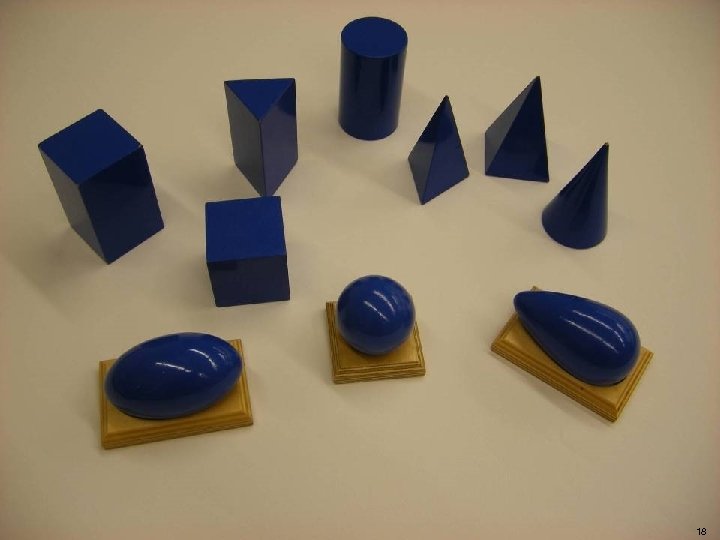
 Solid shapes: Proximal development n Blocks are discussed, feeled, smelled and guessed by their sound. n The teacher presents and uses the concepts of ball, cube etc. n The mobility of the objects are studied, same shapes are looked after in the environment. n The properties, differencies and similarities are discussed. n Playing with the shadows of the shapes. Covering the blocks under a cloth. n The teacher helps children to perceive aspects of the blocks. n Children’s involvement is important. Jyrki Reunamo & Jari-Matti Vuorio University of Helsinki 2008 19
 Solid shapes: Actual development n Children do exercises with the blocks. n Children solve math problems. The blocks are counted, identified, remembered, classified and compared. n The objects are measured and their properties investigated. n Memory games are played, the properties of the shapes are learned and repeated again and again. n The teacher teaches the proper use of mathematical concepts. n Children’s independent mastery of the concepts related to the blocks is important. Jyrki Reunamo & Jari-Matti Vuorio University of Helsinki 2008 20
 Solid shapes: Instrumental tools n The blocks are relocated from the teaching tool cabinet to readily available playing material. n The use of blocks is encouraged. The blocks are of good quality and there is enough of them. n The teacher participates in children’s play when opportunity arises enriching and offering new ideas to play with the blocks. n Children’s play is appreciated and given time. Children’s products are left for others to see and they are discussed together. n The use of the blocks in children’s personal play is appreciated. Jyrki Reunamo & Jari-Matti Vuorio University of Helsinki 2008 21
 Solid shapes: Producing tools n The teacher makes a puppet theater in which the puppet uses the blocks to build a house, but the puppet does everything wrong. Luckily the children help him. The finished house is awesome! n In small groups children plan and build their own houses of the blocks. In the end the finished houses are evaluated by all. n A village of the houses is created. New shapes are discussed and introduced. The blocks are material for a social and cultural development. n Children adventure in a village filled with mathematical content. Jyrki Reunamo & Jari-Matti Vuorio University of Helsinki 2008 22
 The cycle of math development n The four points of view produce a cycle: first the math content of the blocks is perceived and interactively contacted (PD). n Then the mathematical content is practiced, repeated, remembered and learned (AD). n After possessing the mathematical tools the blocks can be used as personal instruments for personal production (IT). n In the end the products and tools become part of cultural development, which in turn is a new platform for proximal development (PT). Jyrki Reunamo & Jari-Matti Vuorio University of Helsinki 2008 23