


 Скачать презентацию Maternal Infant and Child Healthy Kansans 2010 Steering
ec959bc00b9c06d2ff40ede14f6884f0.ppt
- Количество слайдов: 22
 Maternal, Infant, and Child Healthy Kansans 2010 Steering Committee Meeting April 1, 2005
 IMR Significance • Infant deaths / 1000 LB • Quality of life indicator – Reflection of adequacy of food, shelter, education, sanitation, and health care • Compare populations (nations, states, subgroups)
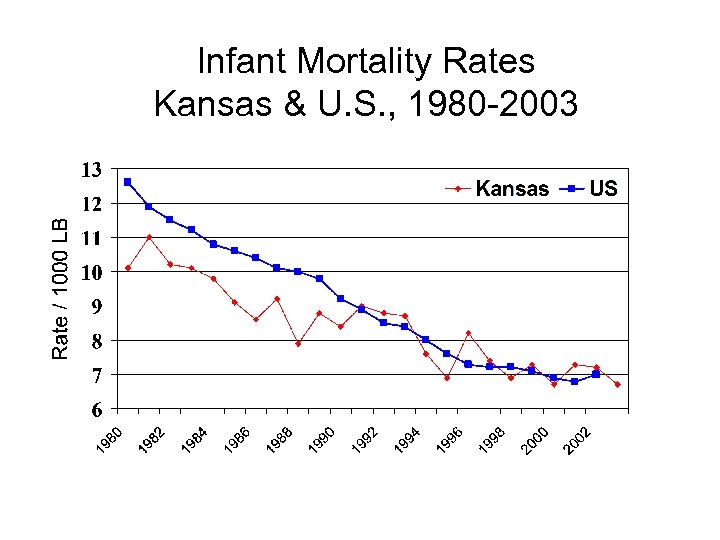 Infant Mortality Rates Kansas & U. S. , 1980 -2003
 Infant Mortality Rates • During 1980’s – KS IMR favorable in relation to U. S. IMR • During 1990’s – KS losing ground in relation to U. S.
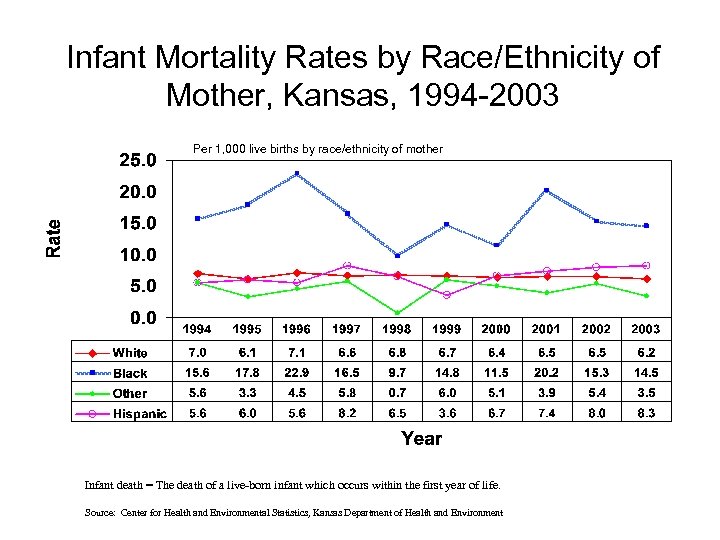 Infant Mortality Rates by Race/Ethnicity of Mother, Kansas, 1994 -2003 Per 1, 000 live births by race/ethnicity of mother Infant death = The death of a live-born infant which occurs within the first year of life. Source: Center for Health and Environmental Statistics, Kansas Department of Health and Environment
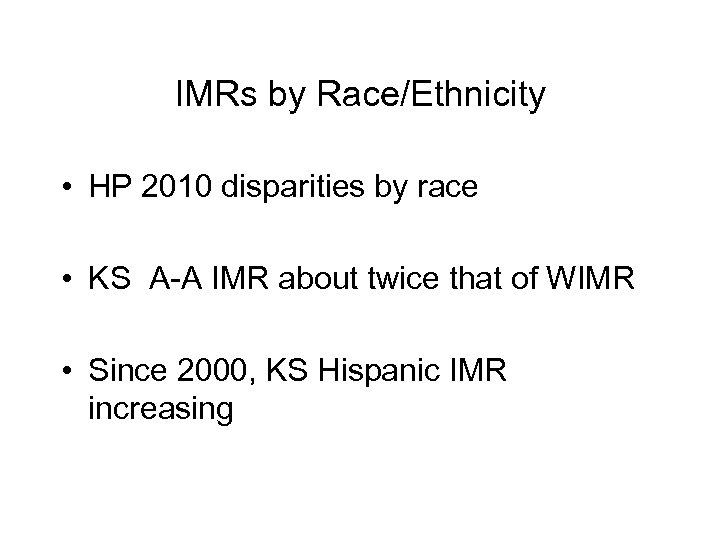 IMRs by Race/Ethnicity • HP 2010 disparities by race • KS A-A IMR about twice that of WIMR • Since 2000, KS Hispanic IMR increasing
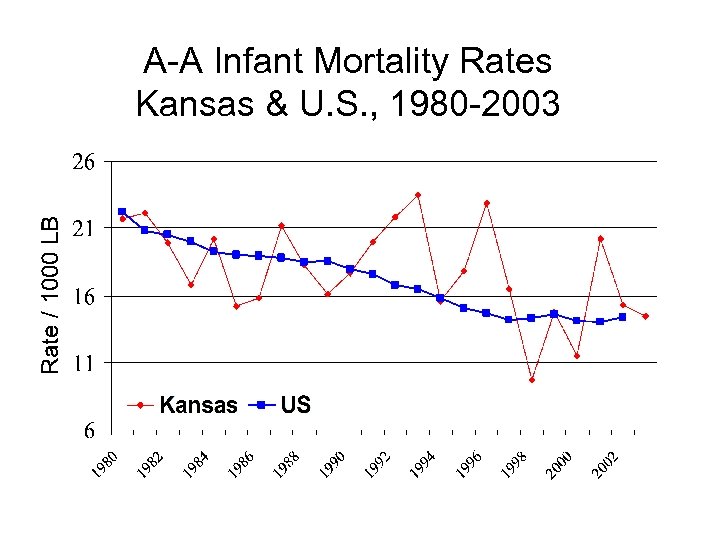 A-A Infant Mortality Rates Kansas & U. S. , 1980 -2003
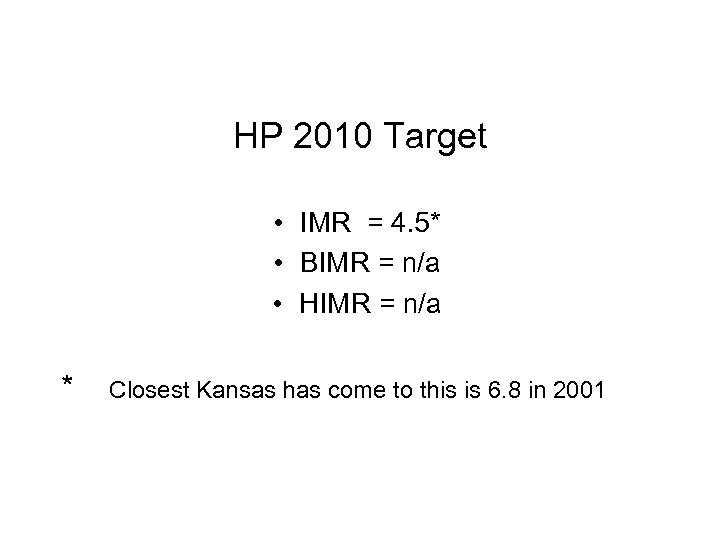 HP 2010 Target • IMR = 4. 5* • BIMR = n/a • HIMR = n/a * Closest Kansas has come to this is 6. 8 in 2001
 LBW - Significance • LBW data parallel IMR data • Increased risk of severe physical and developmental complications & death • Linked to SES status, prenatal care, nutritional status and many other factors • Related to maternal health status and behaviors • VLBW at highest risk
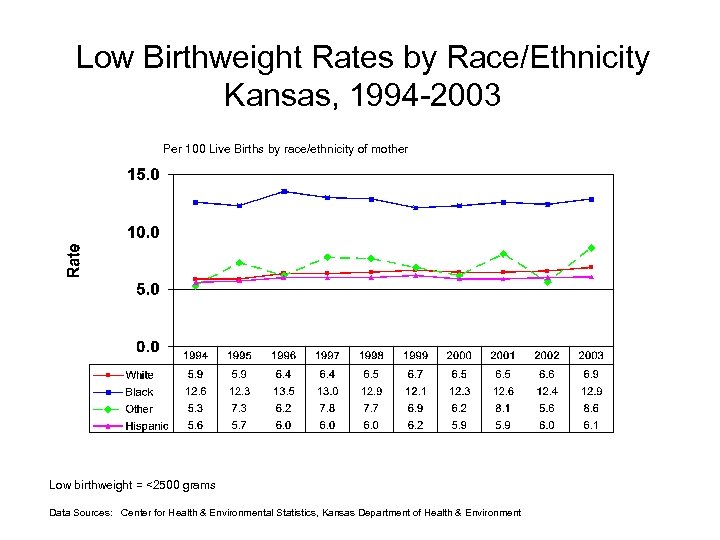 Low Birthweight Rates by Race/Ethnicity Kansas, 1994 -2003 Per 100 Live Births by race/ethnicity of mother Low birthweight = <2500 grams Data Sources: Center for Health & Environmental Statistics, Kansas Department of Health & Environment
 HP 2010 Target • LBW = 5. 0 per 1000 LB* • VLBW = 0. 9 per 1000 LB** • *Closest Kansas has come to target is 6. 4 in 1992 and 1995 • ** Closest Kansas has come to target is 1. 2 in 1997
 Activities/Best Practices • Early and comprehensive health care before, during and after pregnancy • Preconception / prenatal screening and counseling • Culturally appropriate and linguistically competent care, education and counseling • High-quality PNC to ID complications early • Prenatal visits as opportunities to address nutrition, alcohol, tobacco, other risk behaviors • Provide psychosocial or support services
 Recommendations • Improve access to medical care and health care services - Medicaid Waiver to ensure that all women of reproductive age have access to health care before, during and after pregnancy • Quality, comprehensive services that encourage good nutrition and healthy lifestyles along with reduction in harmful substances (e. g. , M&I, Healthy Start, etc. ) • In particular, address prenatal smoking (Quitline, etc. )
 Prenatal Smoking Cessation / LBW (12. 7% LB or 5, 000/year) • • • Screen Clients Provide Counseling Provide Cessation Materials Conduct Prenatal Media Campaigns Train MCH Professionals Provide Interventions through Medicaid
 BF – Significance & Trends • Health benefits for both infant and mother nutritional, immunological and psychological • Economic benefits • Lower BF rates for low-income (WIC <185% FPL) • Lower BF rates for African-American women • Sharp drop off after hospital discharge
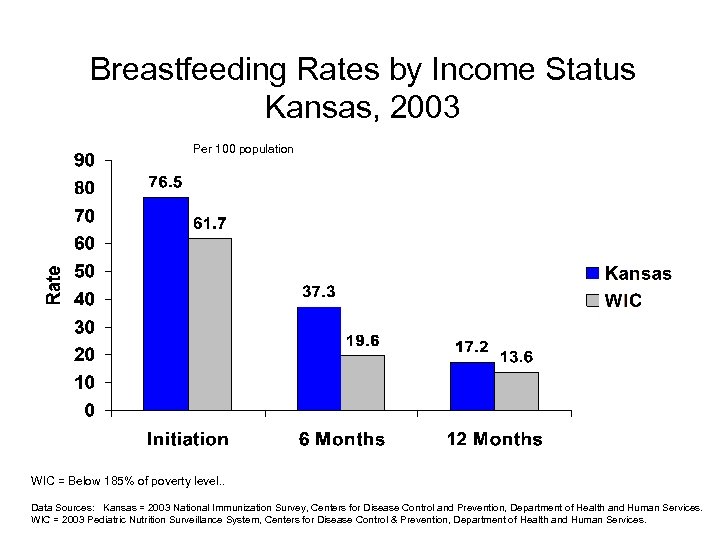 Breastfeeding Rates by Income Status Kansas, 2003 Per 100 population WIC = Below 185% of poverty level. . Data Sources: Kansas = 2003 National Immunization Survey, Centers for Disease Control and Prevention, Department of Health and Human Services. WIC = 2003 Pediatric Nutrition Surveillance System, Centers for Disease Control & Prevention, Department of Health and Human Services.
 Activities/Best Practices • Support AAP recommendations of 6 months exclusive BF and BF to one year • Promote community health services (WHO/UNICEF Baby-Friendly Initiative – Breastfeeding Committee for Canada) • Breastfeeding Peer Counselor Program (12 counties USDA funding through 9 -06) • Breastfeeding promotion & support - WIC, MCH programs • Partnerships - K-State Extension, PAT, EHS, M&I, HS, La. Leche League, AAP, hospitals
 Recommendations • Public policy – public places, accommodation in workplace, jury duty exempt, HB 2284 • Incorporate into all MCH programs • Build strong partnerships • Breastfeeding Friendly Workplace awards • Baby Friendly Hospital certification (WHO) • Public education on benefits to mother and child
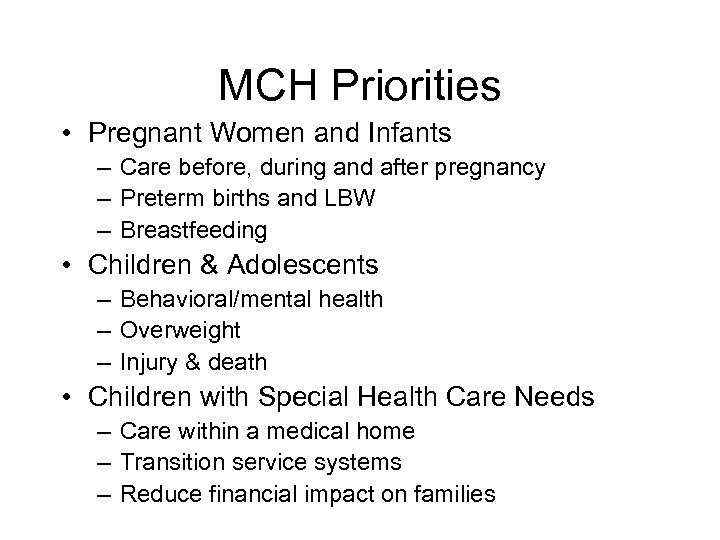 MCH Priorities • Pregnant Women and Infants – Care before, during and after pregnancy – Preterm births and LBW – Breastfeeding • Children & Adolescents – Behavioral/mental health – Overweight – Injury & death • Children with Special Health Care Needs – Care within a medical home – Transition service systems – Reduce financial impact on families
 Linda Kenney Bureau for Children, Youth and Families 785 -296 -1310 Lkenney@kdhe. state. ks. us MCH 2010 -- www. kdhe. state. ks. us/bcyf