


 Скачать презентацию Materials and the Environment Part 4 Monitoring
8935680f52e72ea32f6da704d156aab5.ppt
- Количество слайдов: 39
 Materials and the Environment Part 4 – Monitoring, Measuring, and Assessing Environmental Impacts (Most recent update April 1, 2013)
 Raw materials extraction activity within the United States and Canada is subject to many federal, state, and provincial laws and regulations. This is not always the case in countries from which we obtain raw materials.
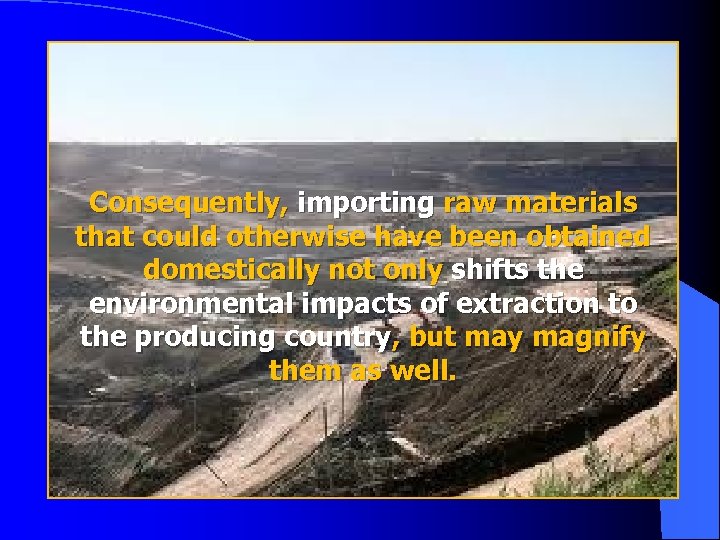 Consequently, importing raw materials that could otherwise have been obtained domestically not only shifts the environmental impacts of extraction to the producing country, but may magnify them as well.
 In addition to laws, there are now certification programs, operated outside of government, in which third parties oversee and evaluate extraction and land management activity against independently developed standards.
 In the agricultural sector, there is a USDA certified organic program. In this case, the program is administered by USDA, with oversight provided by third-party agents around the world With regard to industrial materials, certification is available only forest management and harvesting, with the majority of certified forests located within North America.
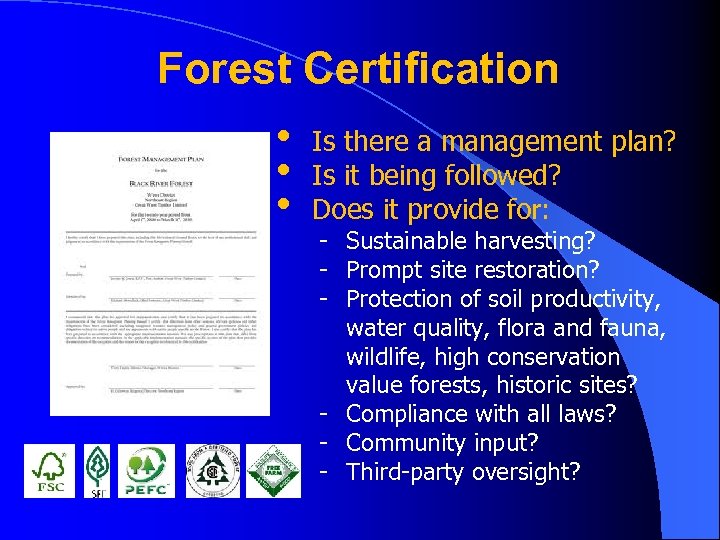 Forest Certification • • • Is there a management plan? Is it being followed? Does it provide for: - Sustainable harvesting? - Prompt site restoration? - Protection of soil productivity, water quality, flora and fauna, wildlife, high conservation value forests, historic sites? - Compliance with all laws? - Community input? - Third-party oversight?
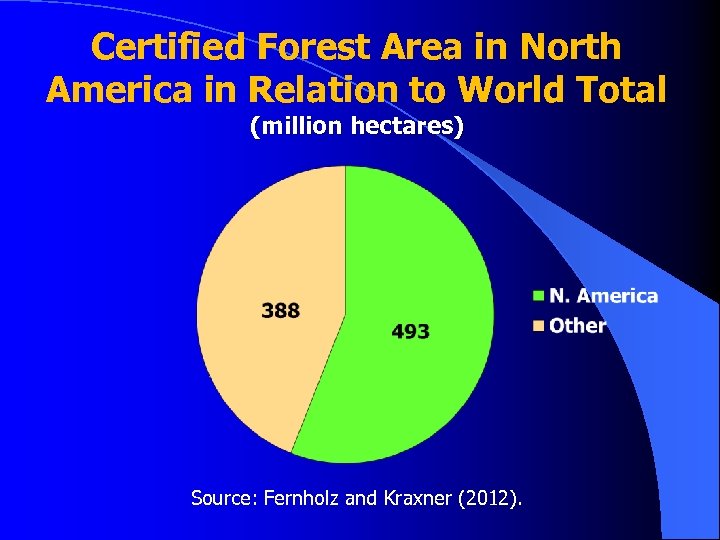 Certified Forest Area in North America in Relation to World Total (million hectares) Source: Fernholz and Kraxner (2012).
 As yet, there is no independent oversight or certification of mining activity or products.
 Beyond landscape impacts, there a number of environmental impacts linked to primary and secondary processing, transportation, and use.
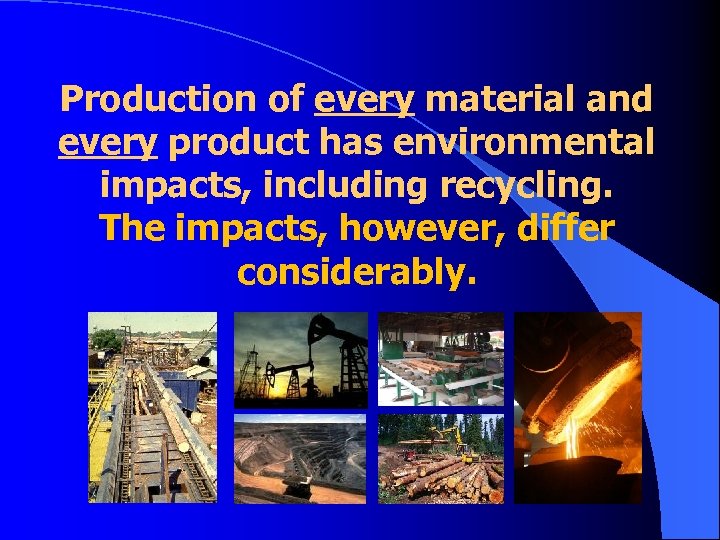 Production of every material and every product has environmental impacts, including recycling. The impacts, however, differ considerably.
 Identifying environmentally superior products and practices requires careful and systematic analysis. Brainstorming and intuition, commonly relied upon in making environmental decisions, are notoriously unreliable.
 A growing field of increasing importance is Life Cycle Analysis (LCA). LCA involves measurement and evaluation of a wide range of environmental impact parameters, and use of this information to inform process and product improvements.
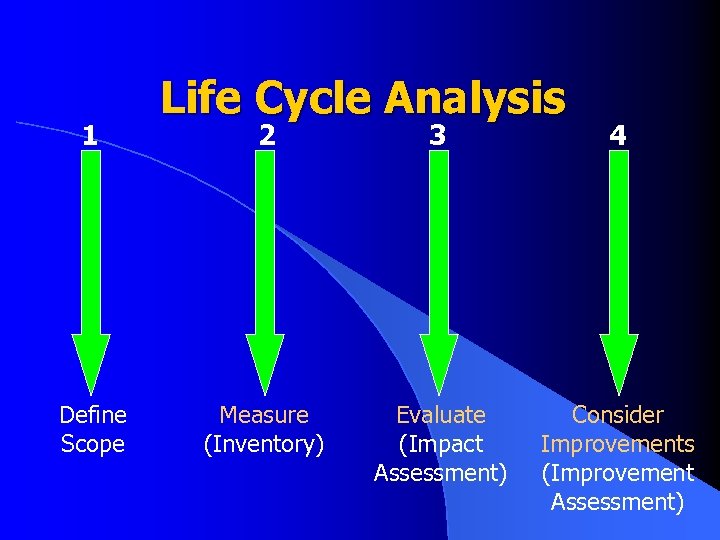 1 Define Scope Life Cycle Analysis 2 3 4 Measure (Inventory) Evaluate (Impact Assessment) Consider Improvements (Improvement Assessment)
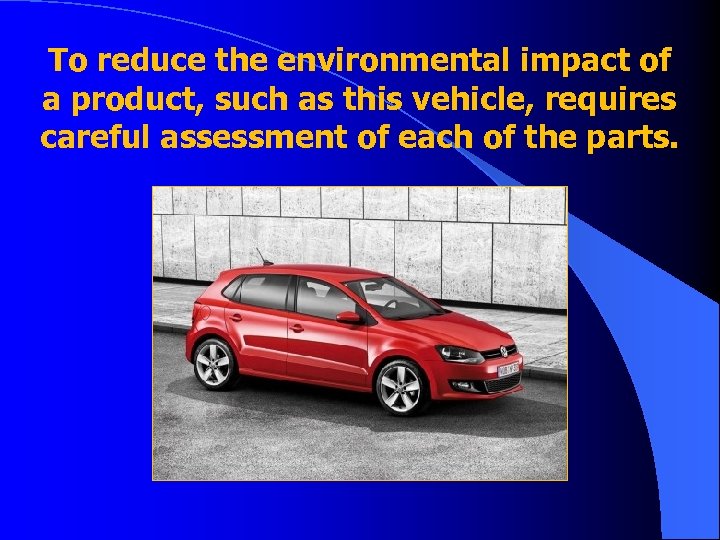 To reduce the environmental impact of a product, such as this vehicle, requires careful assessment of each of the parts.
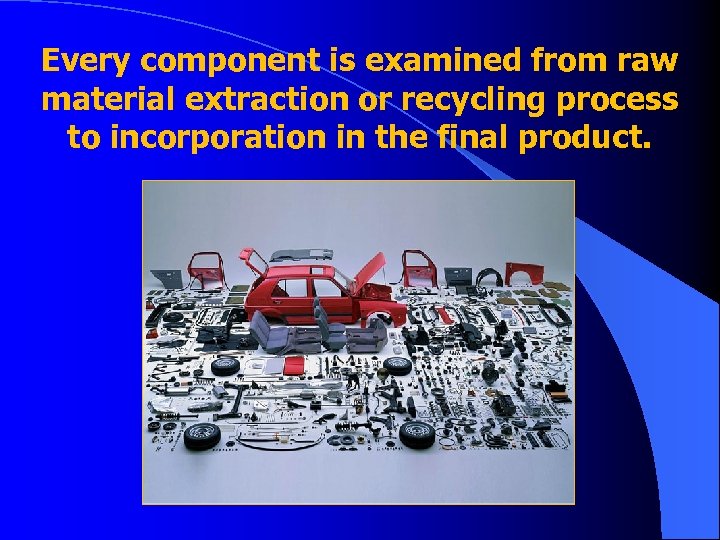 Every component is examined from raw material extraction or recycling process to incorporation in the final product.
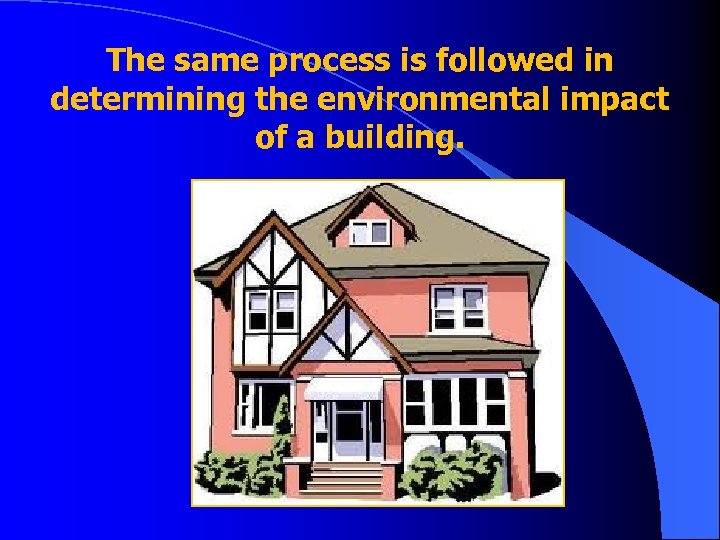 The same process is followed in determining the environmental impact of a building.
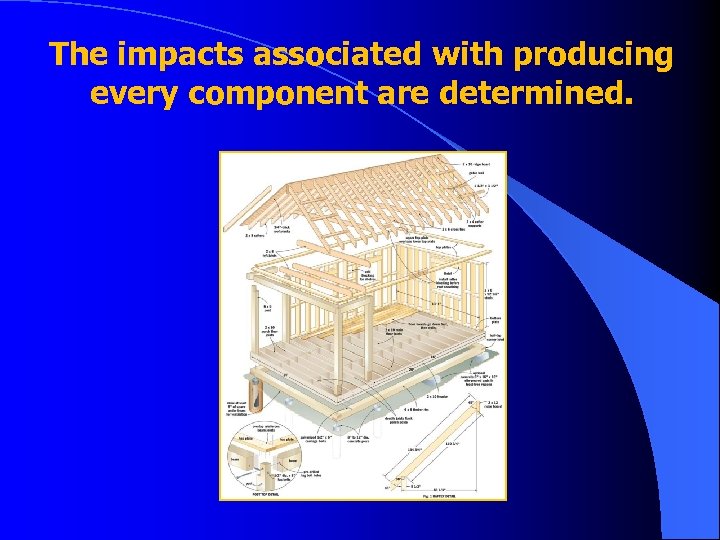 The impacts associated with producing every component are determined.
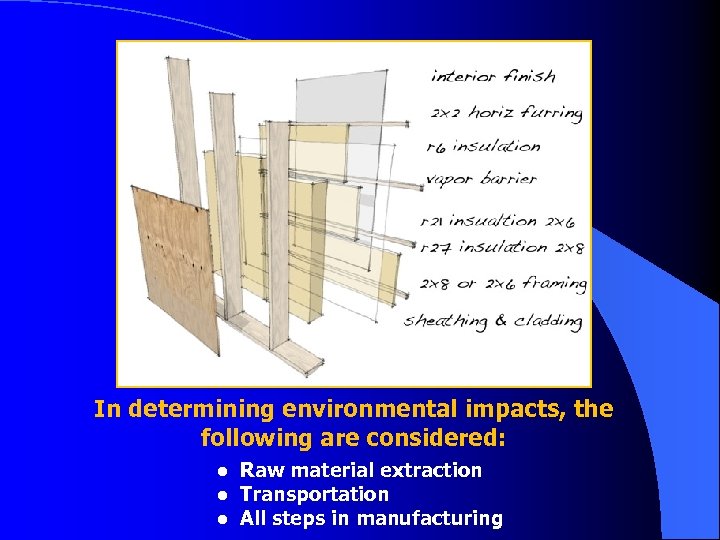 In determining environmental impacts, the following are considered: ● Raw material extraction ● Transportation ● All steps in manufacturing
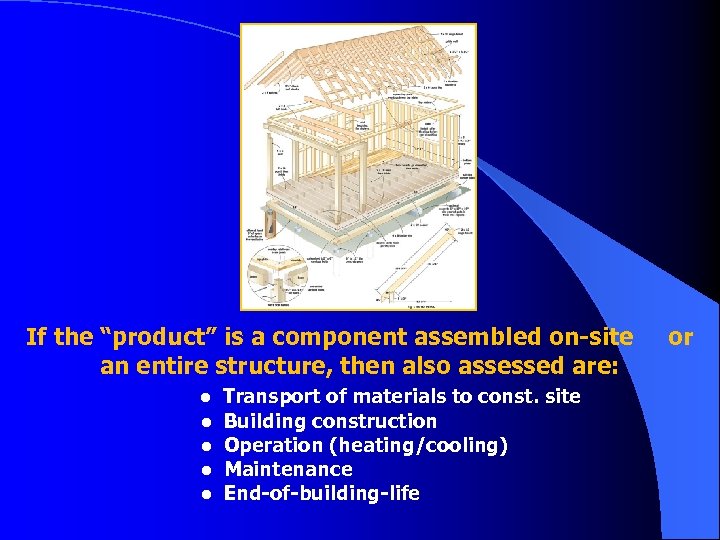 If the “product” is a component assembled on-site an entire structure, then also assessed are: ● ● ● Transport of materials to const. site Building construction Operation (heating/cooling) Maintenance End-of-building-life or
 Through a careful inventory all inputs and outputs are determined.
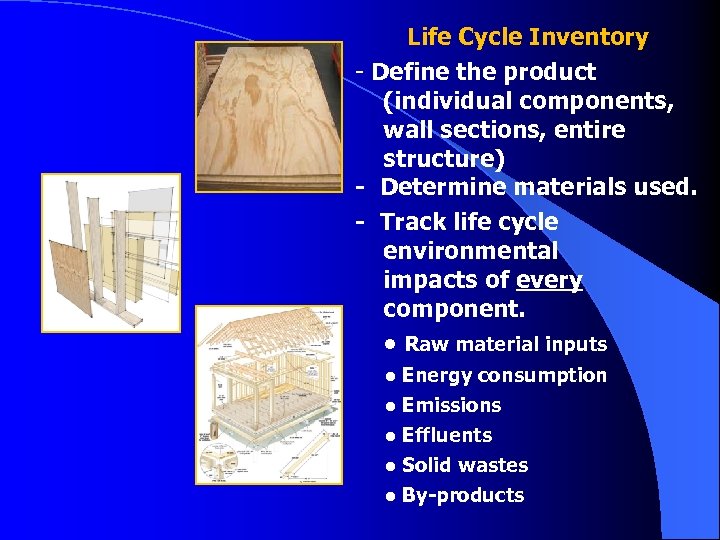 Life Cycle Inventory - Define the product (individual components, wall sections, entire structure) - Determine materials used. - Track life cycle environmental impacts of every component. ● Raw material inputs ● Energy consumption ● Emissions ● Effluents ● Solid wastes ● By-products
 Do this at every step along the way, from raw material extraction to finished product and beyond.
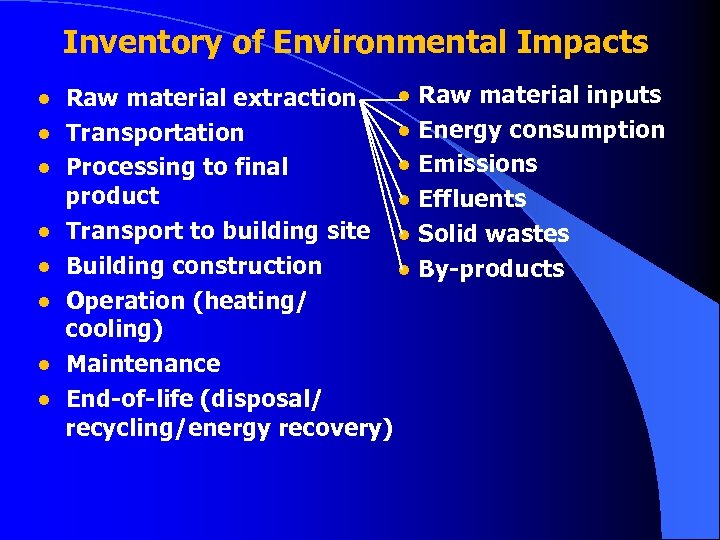 Inventory of Environmental Impacts ● Raw material inputs ● Raw material extraction ● Energy consumption ● Transportation ● Emissions ● Processing to final product ● Effluents ● Transport to building site ● Solid wastes ● Building construction ● By-products ● Operation (heating/ cooling) ● Maintenance ● End-of-life (disposal/ recycling/energy recovery)
 Here is what the life cycle inventory process looks like conceptually (this example shows the inventory process for production of steel framing members used in building construction).
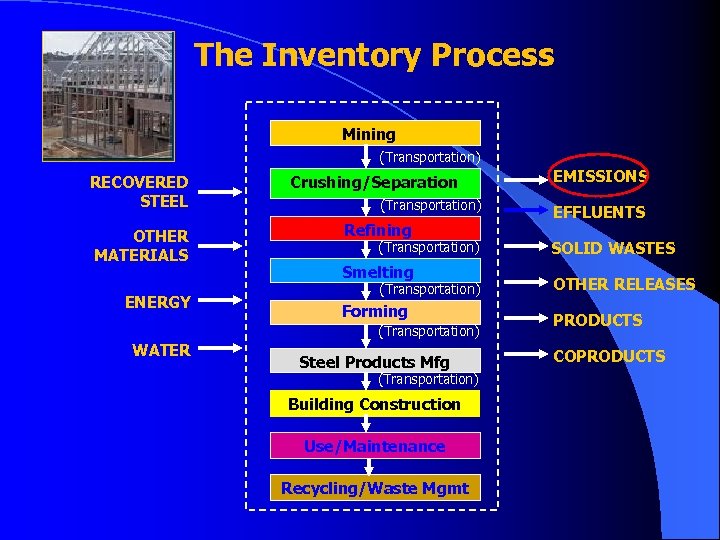 The Inventory Process Mining (Transportation) RECOVERED STEEL Crushing/Separation OTHER MATERIALS Refining ENERGY (Transportation) Smelting (Transportation) Forming (Transportation) WATER Steel Products Mfg (Transportation) Building Construction Use/Maintenance Recycling/Waste Mgmt EMISSIONS EFFLUENTS SOLID WASTES OTHER RELEASES PRODUCTS COPRODUCTS
 The result is a great deal of data.
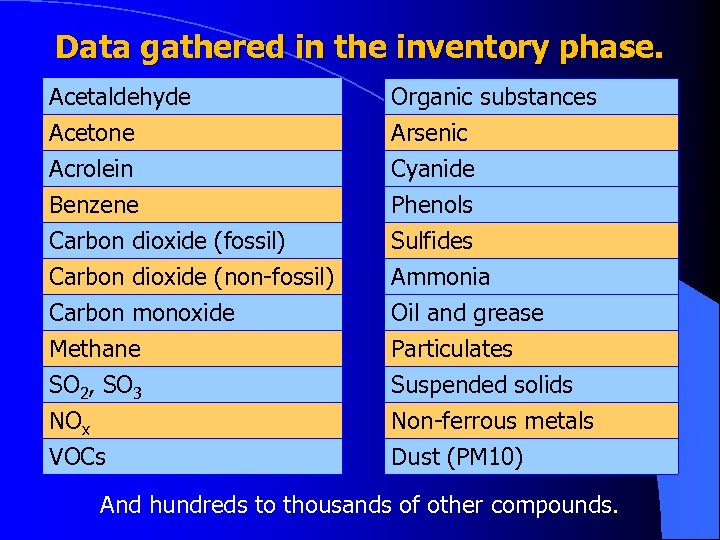 Data gathered in the inventory phase. Acetaldehyde Acetone Acrolein Benzene Organic substances Arsenic Cyanide Phenols Carbon dioxide (fossil) Carbon dioxide (non-fossil) Carbon monoxide Methane SO 2, SO 3 NOx VOCs Sulfides Ammonia Oil and grease Particulates Suspended solids Non-ferrous metals Dust (PM 10) And hundreds to thousands of other compounds.
 The raw data are then evaluated to determine what the effects of various emissions and waste production might be.
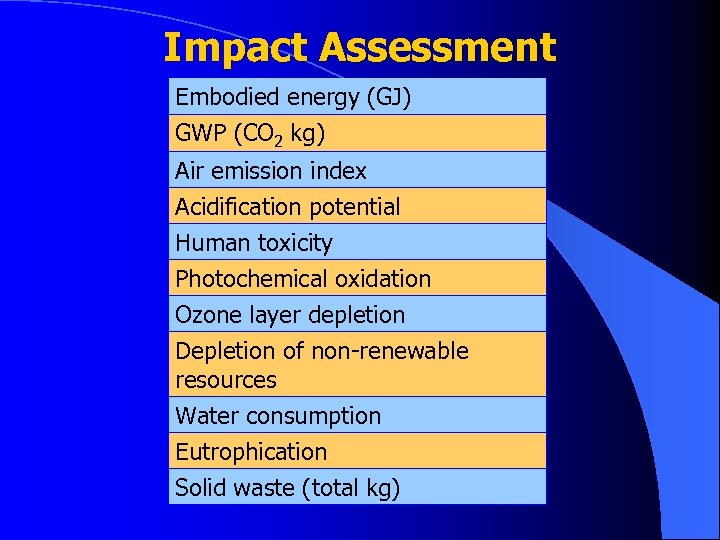 Impact Assessment Embodied energy (GJ) GWP (CO 2 kg) Air emission index Acidification potential Human toxicity Photochemical oxidation Ozone layer depletion Depletion of non-renewable resources Water consumption Eutrophication Solid waste (total kg)
 This information forms a basis for rational thinking about how the environmental impacts of a product or process might be reduced.
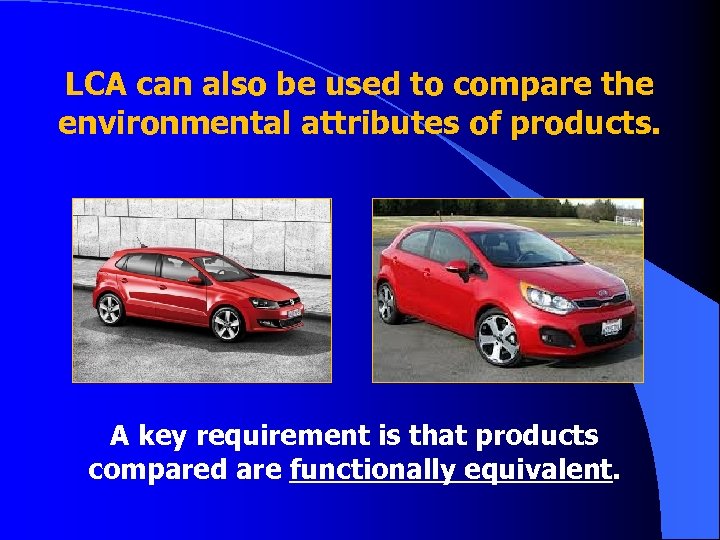 LCA can also be used to compare the environmental attributes of products. A key requirement is that products compared are functionally equivalent.
 Consider for instance, an interior wall of a house. Such a wall can be constructed either using steel or wood framing.
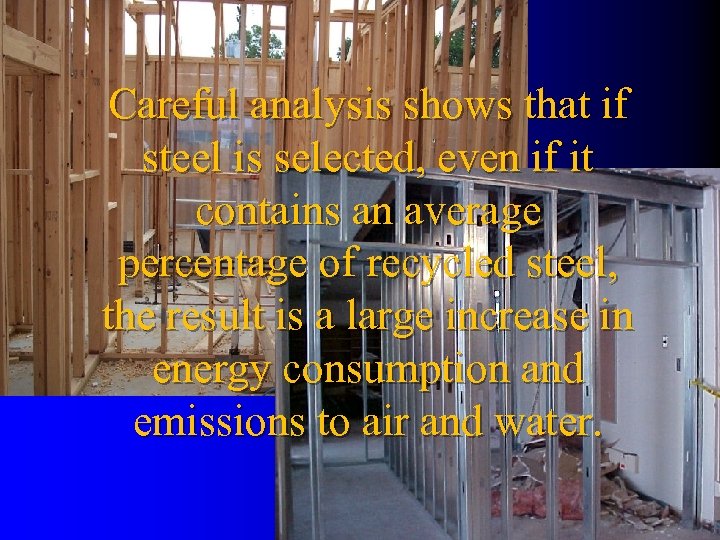 Careful analysis shows that if steel is selected, even if it contains an average percentage of recycled steel, the result is a large increase in energy consumption and emissions to air and water.
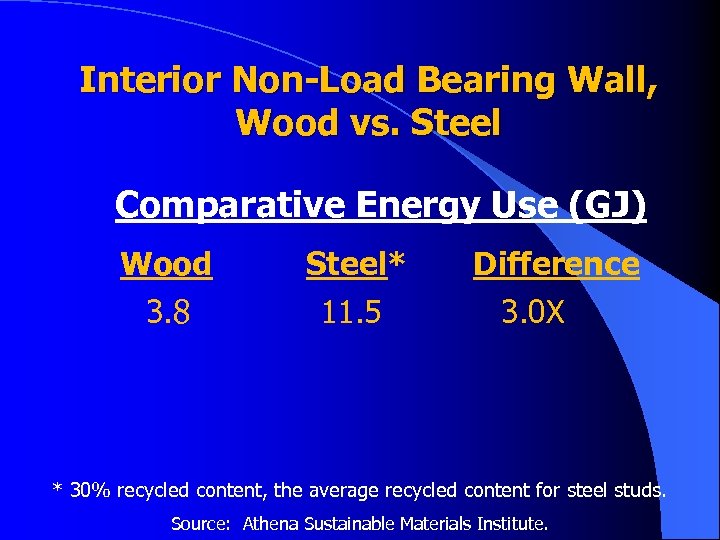 Interior Non-Load Bearing Wall, Wood vs. Steel Comparative Energy Use (GJ) Wood 3. 8 Steel* 11. 5 Difference 3. 0 X * 30% recycled content, the average recycled content for steel studs. Source: Athena Sustainable Materials Institute.
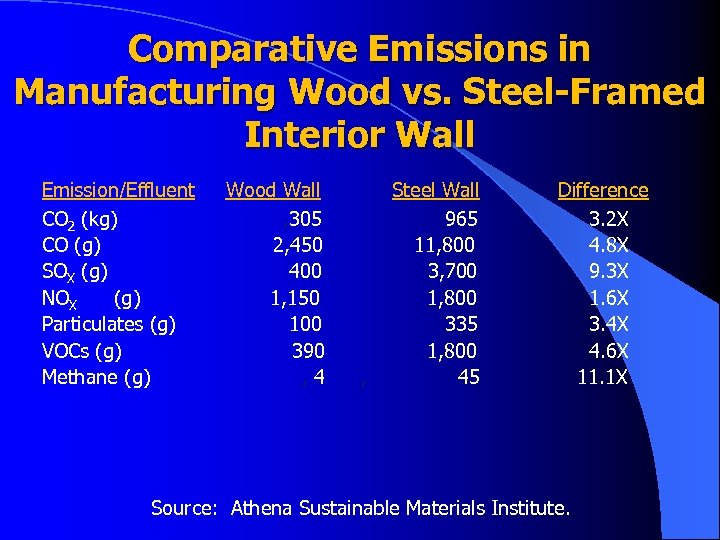 Comparative Emissions in Manufacturing Wood vs. Steel-Framed Interior Wall Emission/Effluent CO 2 (kg) CO (g) SOX (g) NOX (g) Particulates (g) VOCs (g) Methane (g) Wood Wall , 305 2, 450 400 1, 150 100 390 , 4 , Steel Wall 965 11, 800 3, 700 1, 800 335 1, 800 45 Difference 3. 2 X 4. 8 X 9. 3 X 1. 6 X 3. 4 X 4. 6 X 11. 1 X Source: Athena Sustainable Materials Institute.
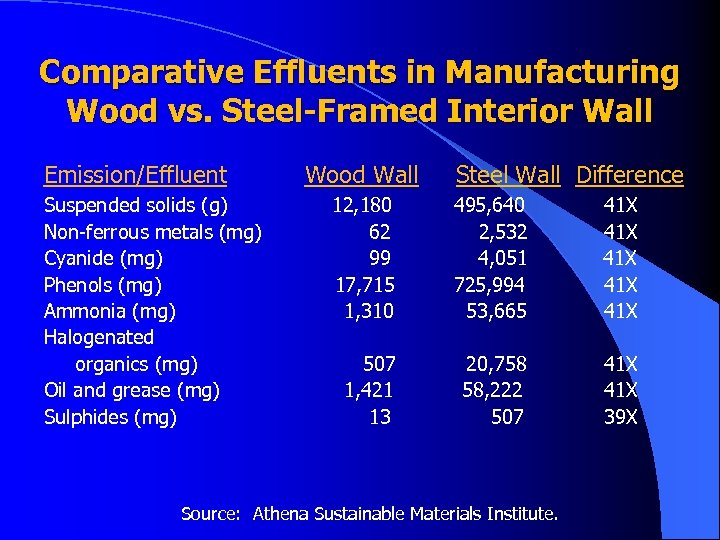 Comparative Effluents in Manufacturing Wood vs. Steel-Framed Interior Wall Emission/Effluent Suspended solids (g) Non-ferrous metals (mg) Cyanide (mg) Phenols (mg) Ammonia (mg) Halogenated organics (mg) Oil and grease (mg) Sulphides (mg) Wood Wall Steel Wall Difference 12, 180 62 99 17, 715 1, 310 495, 640 2, 532 4, 051 725, 994 53, 665 41 X 41 X 41 X 507 1, 421 13 20, 758 58, 222 507 41 X 39 X Source: Athena Sustainable Materials Institute.
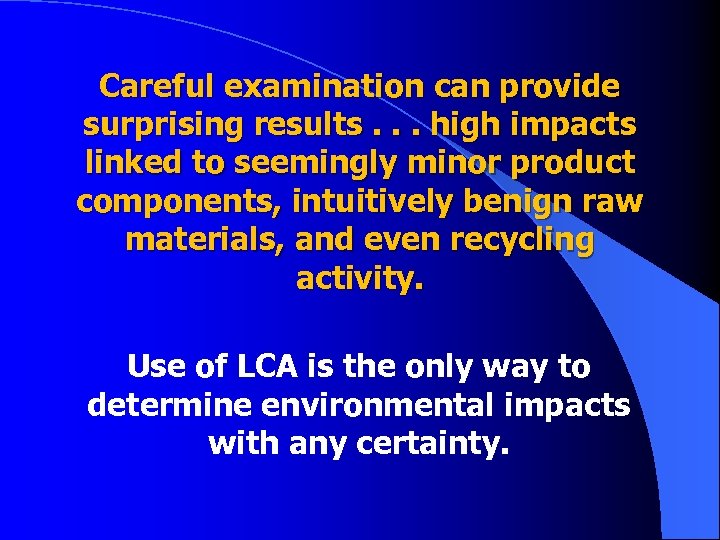 Careful examination can provide surprising results. . . high impacts linked to seemingly minor product components, intuitively benign raw materials, and even recycling activity. Use of LCA is the only way to determine environmental impacts with any certainty.
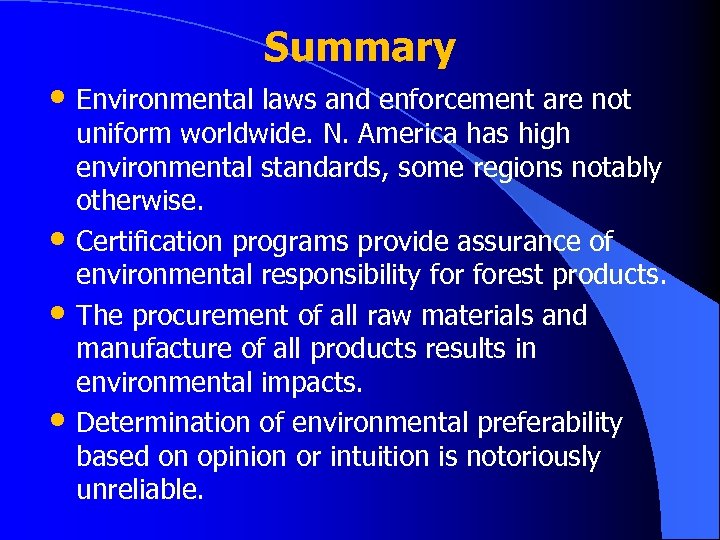 Summary • Environmental laws and enforcement are not • • • uniform worldwide. N. America has high environmental standards, some regions notably otherwise. Certification programs provide assurance of environmental responsibility forest products. The procurement of all raw materials and manufacture of all products results in environmental impacts. Determination of environmental preferability based on opinion or intuition is notoriously unreliable.
 Summary • Life cycle analysis provides a systematic way to • • determine environmental impacts. LCA is used today by companies to identify components and manufacturing operations associated with the greatest environmental impacts – and as a basis for reducing impacts. LCA can also be used as a basis for comparing functionally equivalent products.