


 Скачать презентацию Masterclass PE Fundraising Prof Luc Nijs Founder
c2818203abcf98c9f9097059756b84bd.ppt
- Количество слайдов: 134
 Masterclass PE Fundraising Prof. Luc Nijs Founder & Chairman Horizon Ltd Geneva July 2, 2009 ICBI Super Return Emerging markets Conference
 How today will look like (more or less) § 9. 30 -11. 00 § 11. 15 -12. 30 Data review Structural considerations and applications Terms & conditions (I) § 13. 30 -14. 15 § 14. 30 -16. 00 § 16. 00 -16. 30 Terms & conditions (II) EM PE as an asset class Wrap-up, Q&A and discussion
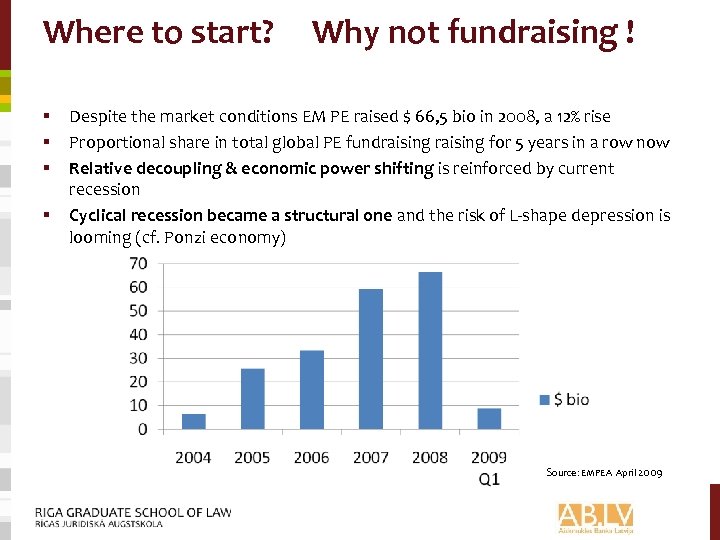 Where to start? § § Why not fundraising ! Despite the market conditions EM PE raised $ 66, 5 bio in 2008, a 12% rise Proportional share in total global PE fundraising for 5 years in a row now Relative decoupling & economic power shifting is reinforced by current recession Cyclical recession became a structural one and the risk of L-shape depression is looming (cf. Ponzi economy) Source: EMPEA April 2009
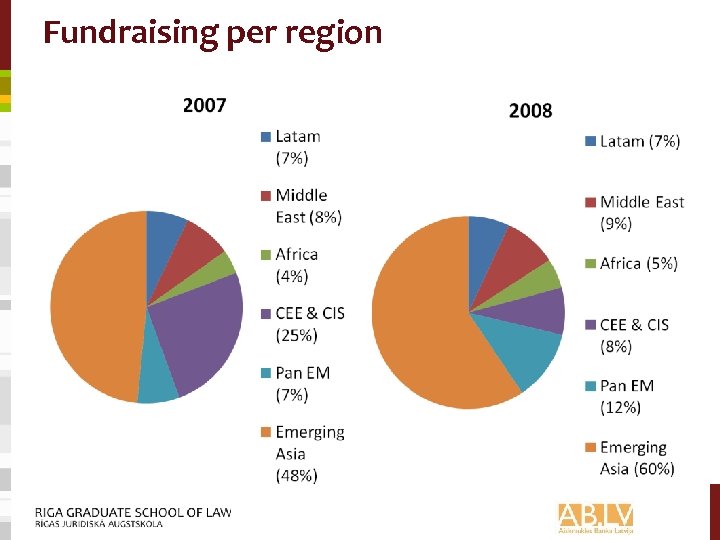 Fundraising per region
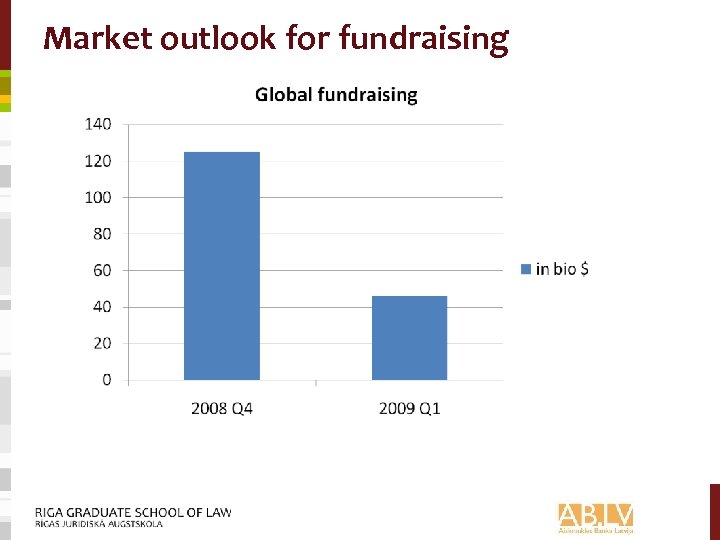 Market outlook for fundraising
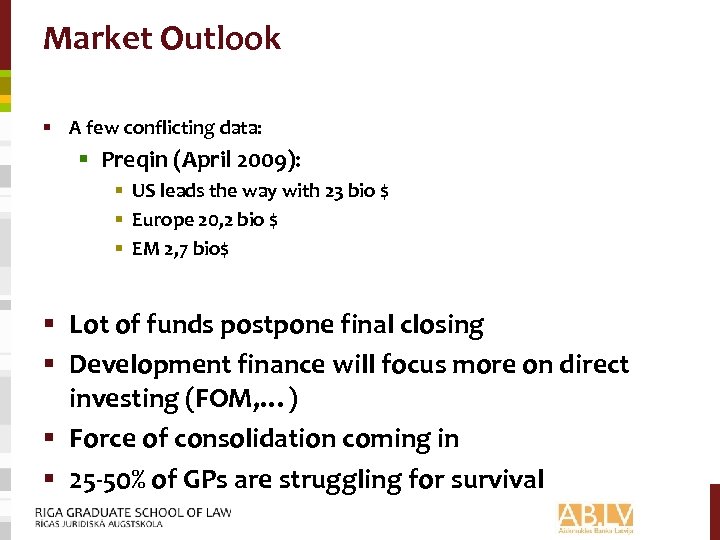 Market Outlook § A few conflicting data: § Preqin (April 2009): § US leads the way with 23 bio $ § Europe 20, 2 bio $ § EM 2, 7 bio$ § Lot of funds postpone final closing § Development finance will focus more on direct investing (FOM, …) § Force of consolidation coming in § 25 -50% of GPs are struggling for survival
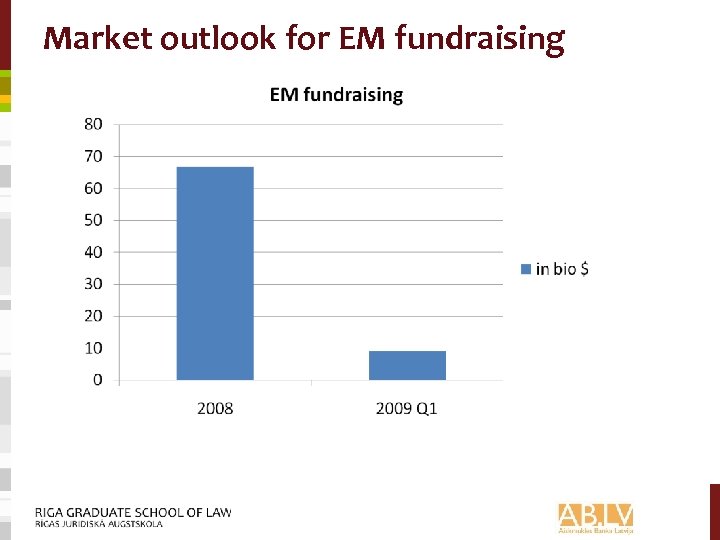 Market outlook for EM fundraising
 The LP View Survey April 2009
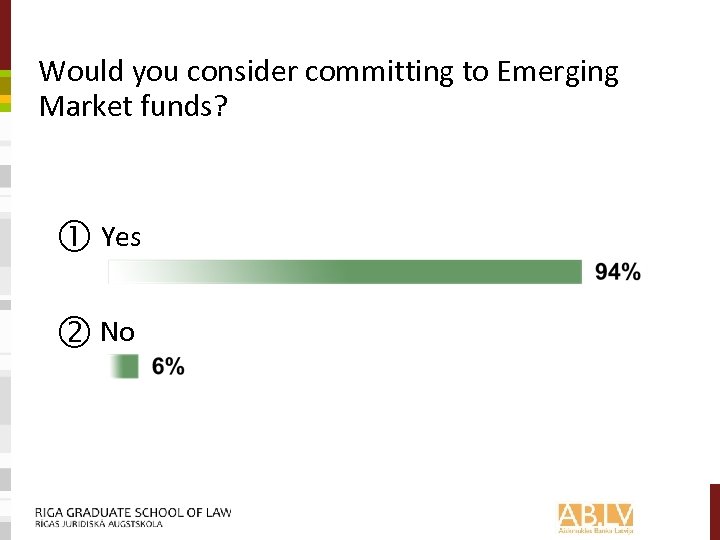 Would you consider committing to Emerging Market funds? Yes No
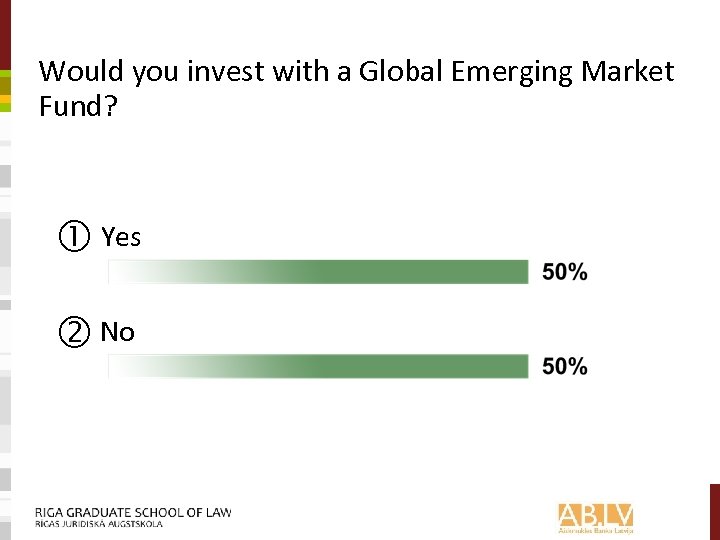 Would you invest with a Global Emerging Market Fund? Yes No
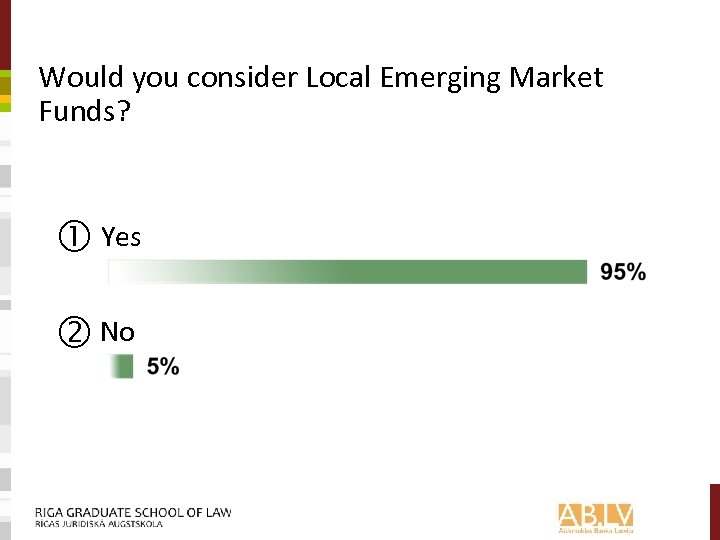 Would you consider Local Emerging Market Funds? Yes No
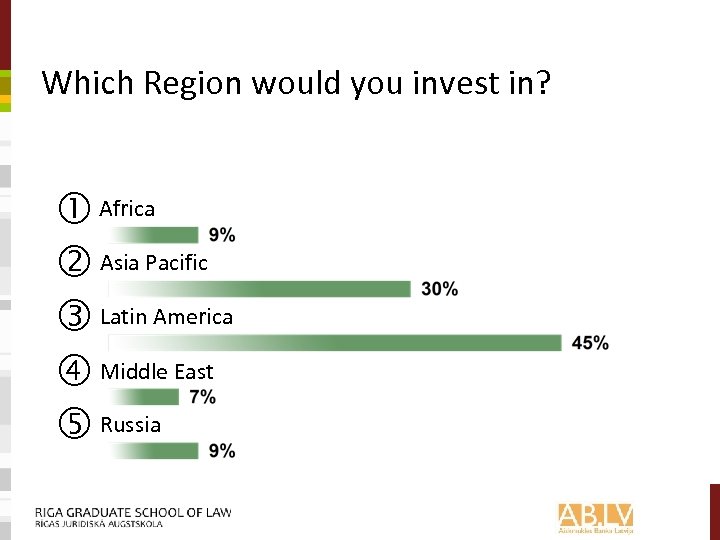 Which Region would you invest in? Africa Asia Pacific Latin America Middle East Russia
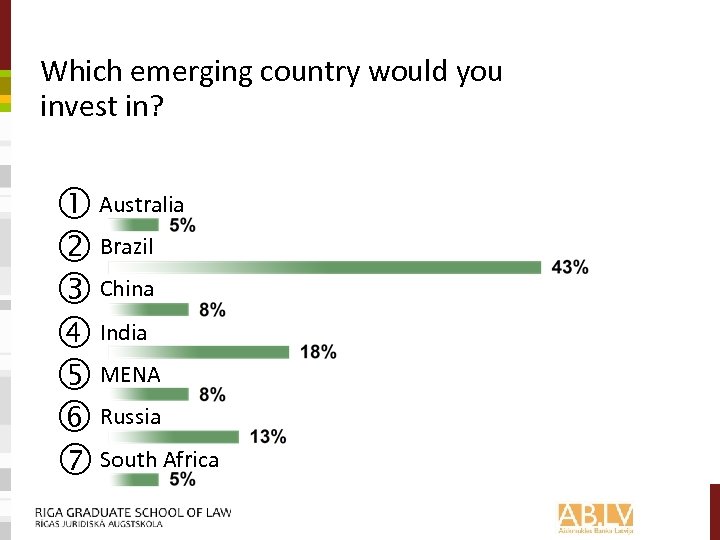 Which emerging country would you invest in? Australia Brazil China India MENA Russia South Africa
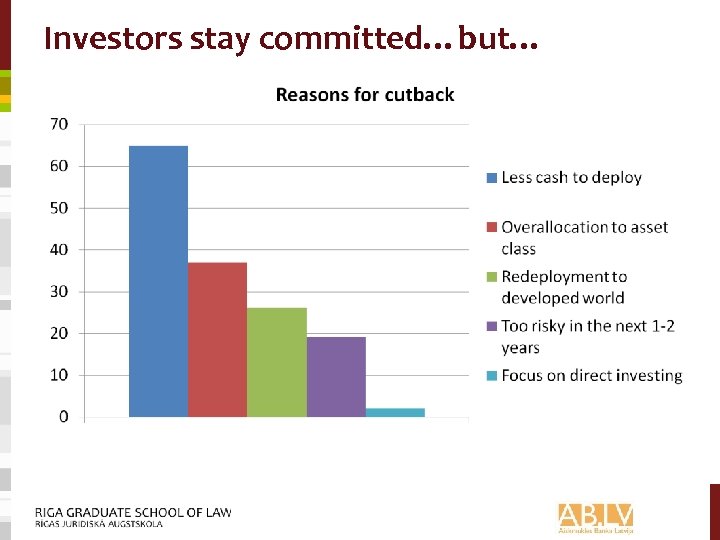 Investors stay committed…but…
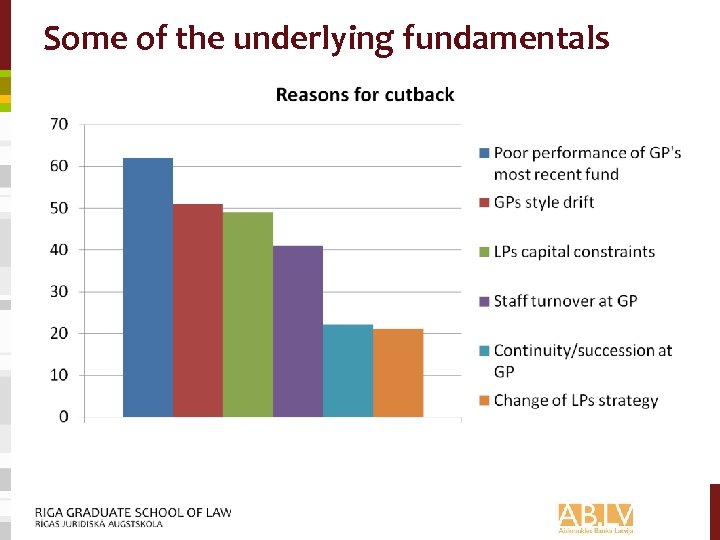 Some of the underlying fundamentals
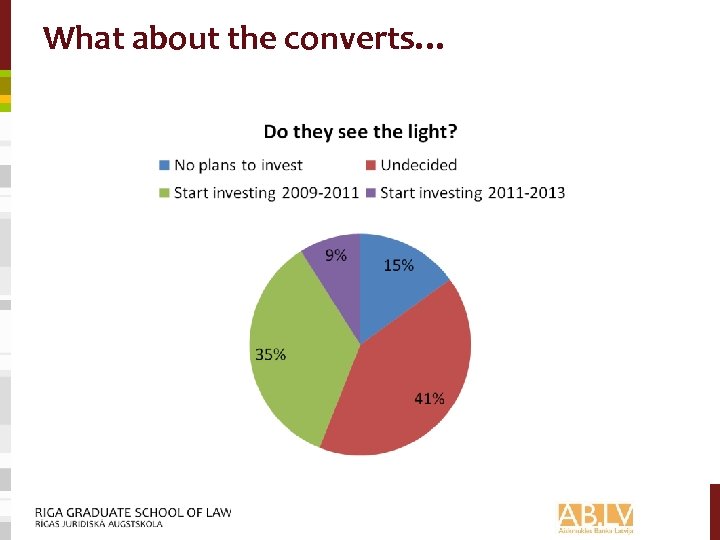 What about the converts…
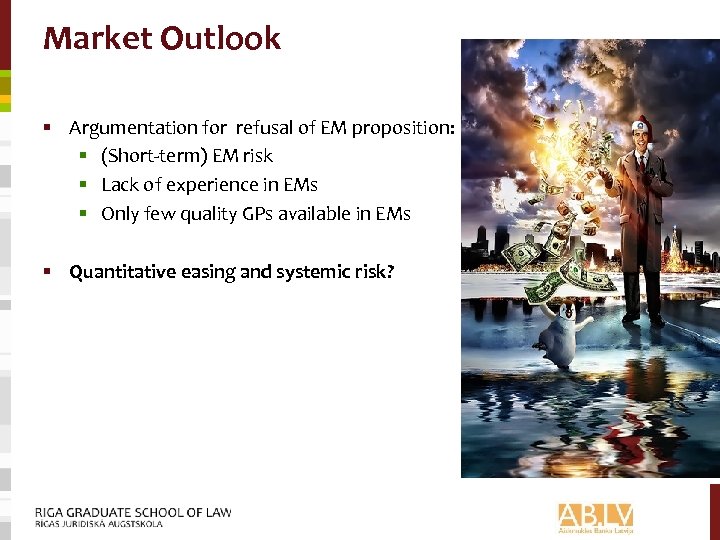 Market Outlook § Argumentation for refusal of EM proposition: § (Short-term) EM risk § Lack of experience in EMs § Only few quality GPs available in EMs § Quantitative easing and systemic risk?
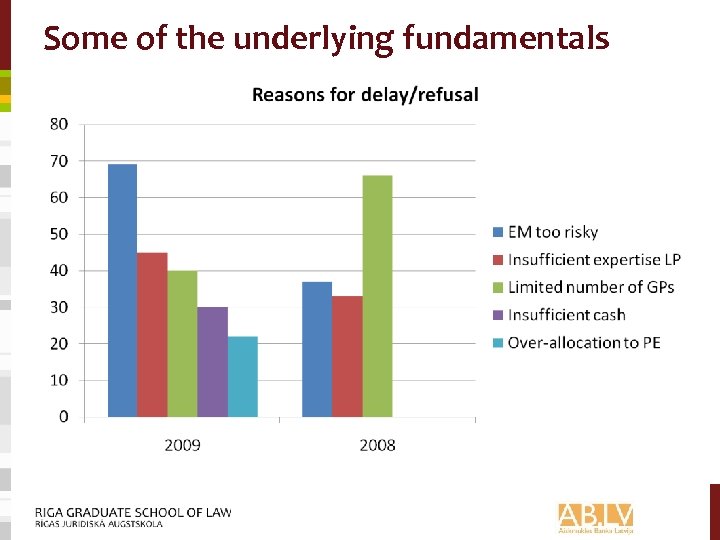 Some of the underlying fundamentals
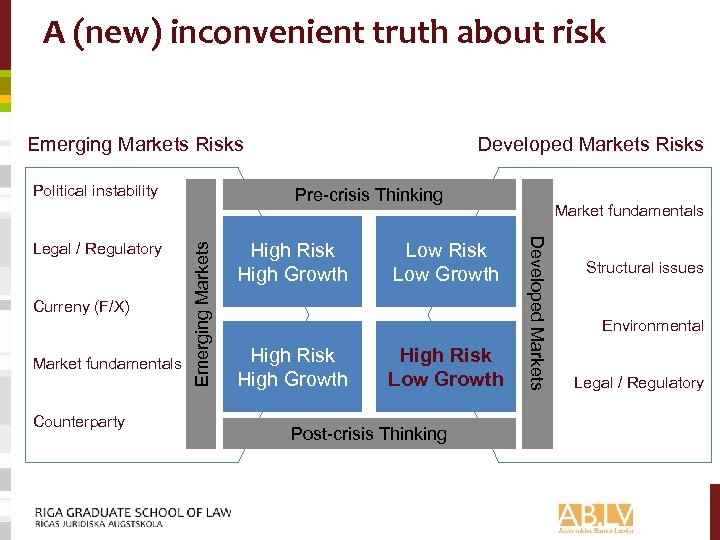 A (new) inconvenient truth about risk Emerging Markets Risks Political instability Market fundamentals Counterparty Emerging Markets Curreny (F/X) Pre-crisis Thinking High Risk High Growth Low Risk Low Growth High Risk Low Growth Post-crisis Thinking Market fundamentals Developed Markets Legal / Regulatory Developed Markets Risks Structural issues Environmental Legal / Regulatory
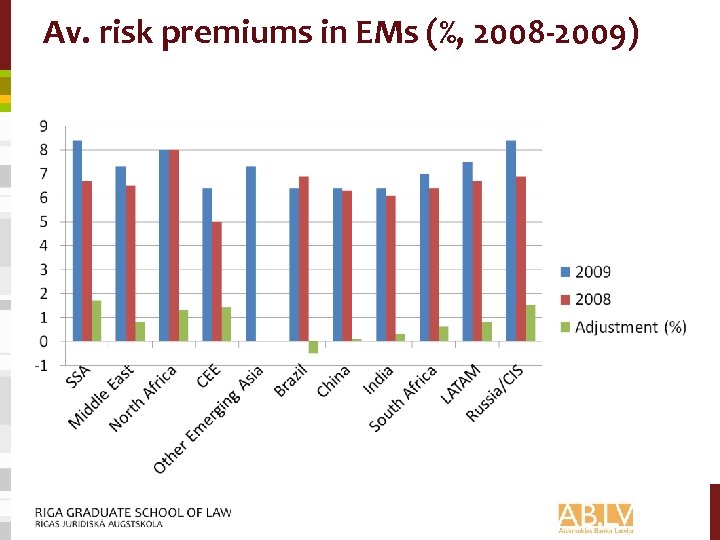 Av. risk premiums in EMs (%, 2008 -2009)
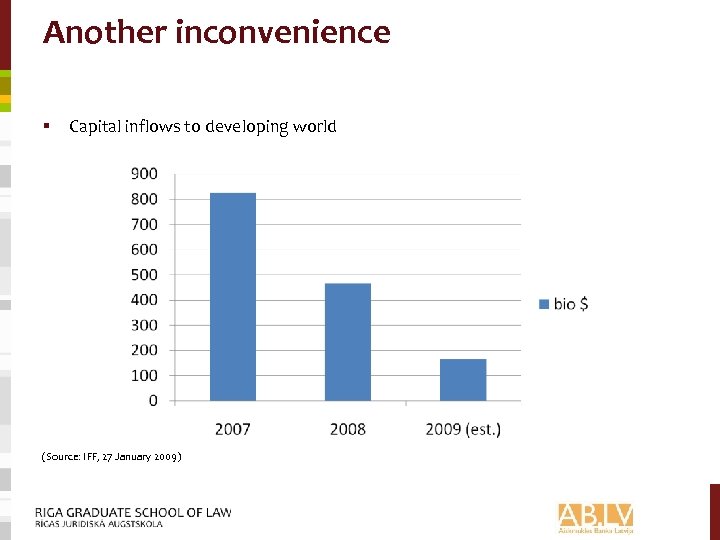 Another inconvenience § Capital inflows to developing world (Source: IFF, 27 January 2009)
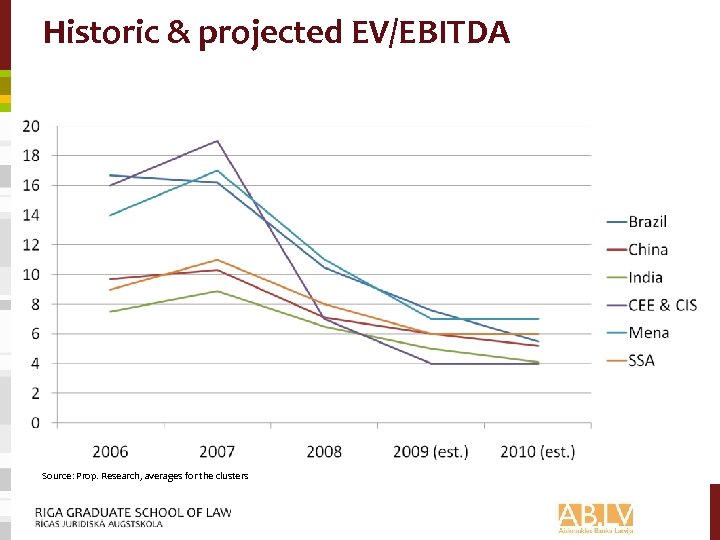 Historic & projected EV/EBITDA Source: Prop. Research, averages for the clusters
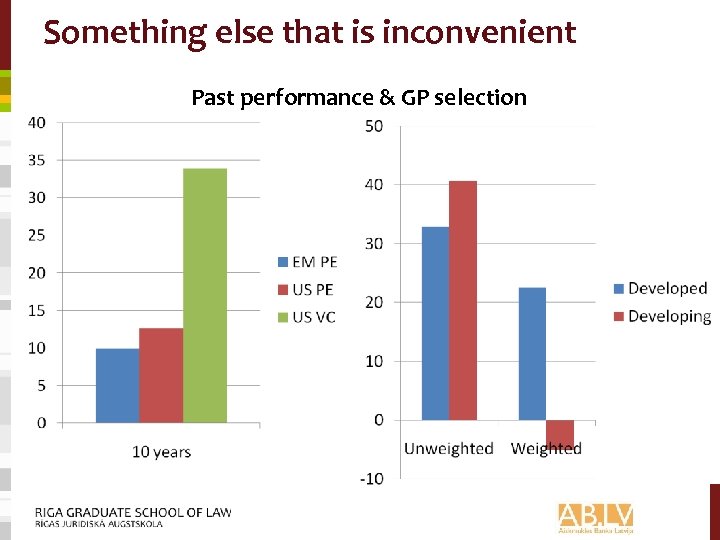 Something else that is inconvenient Past performance & GP selection
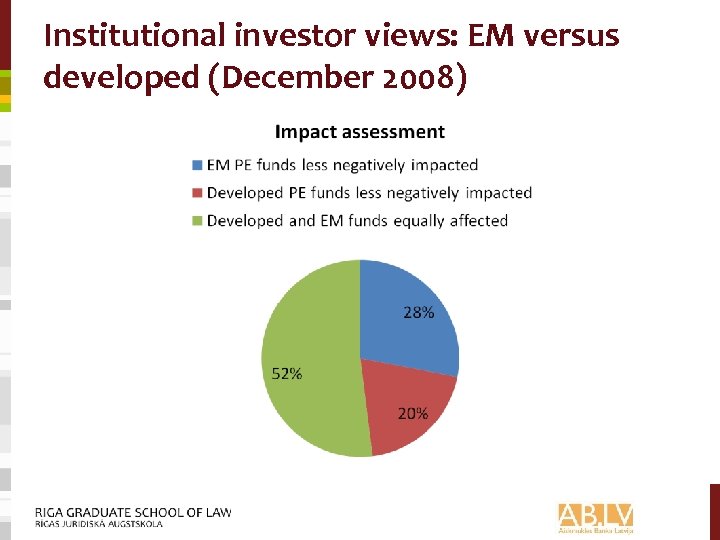 Institutional investor views: EM versus developed (December 2008)
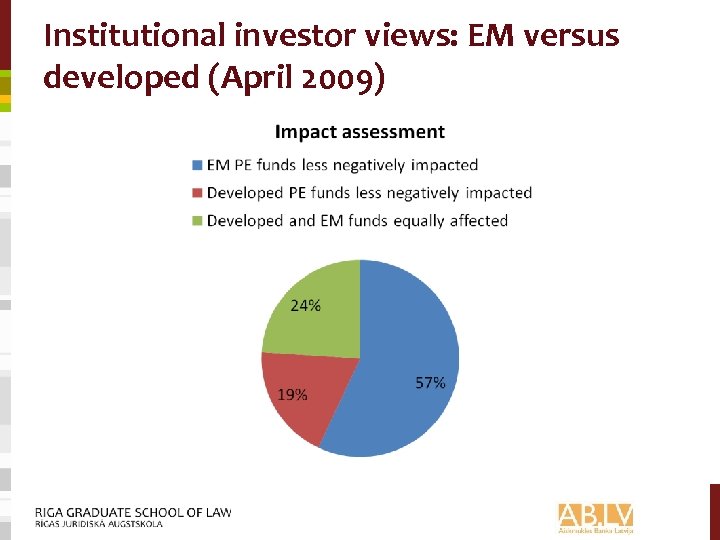 Institutional investor views: EM versus developed (April 2009)
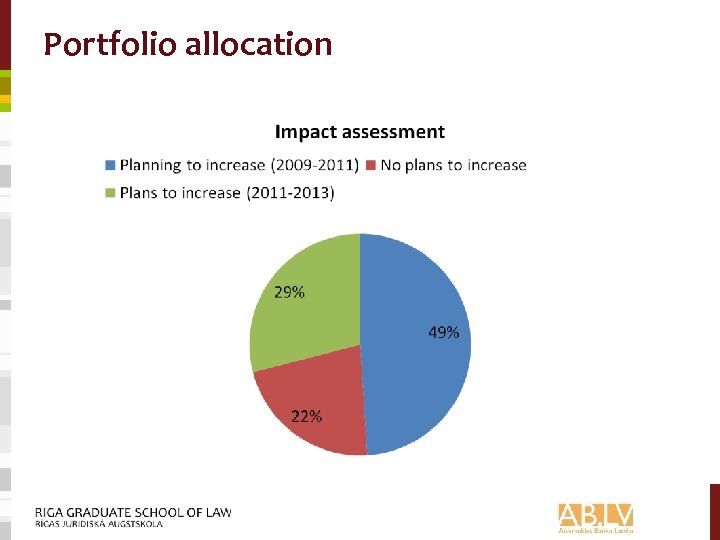 Portfolio allocation
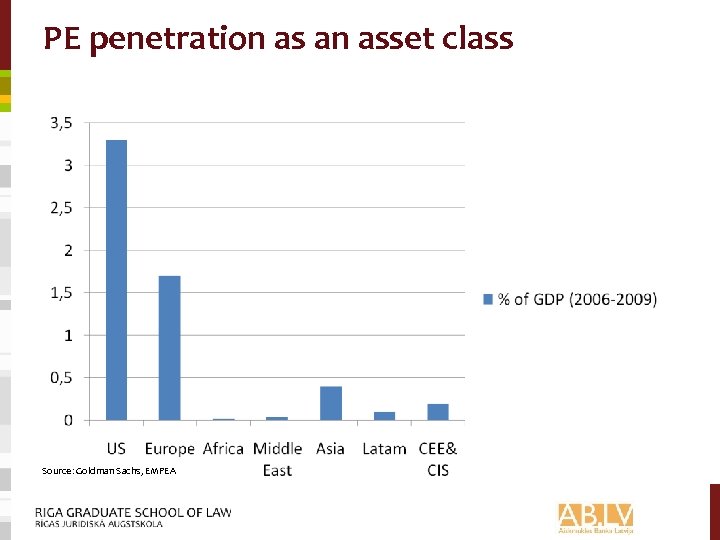 PE penetration as an asset class Source: Goldman Sachs, EMPEA
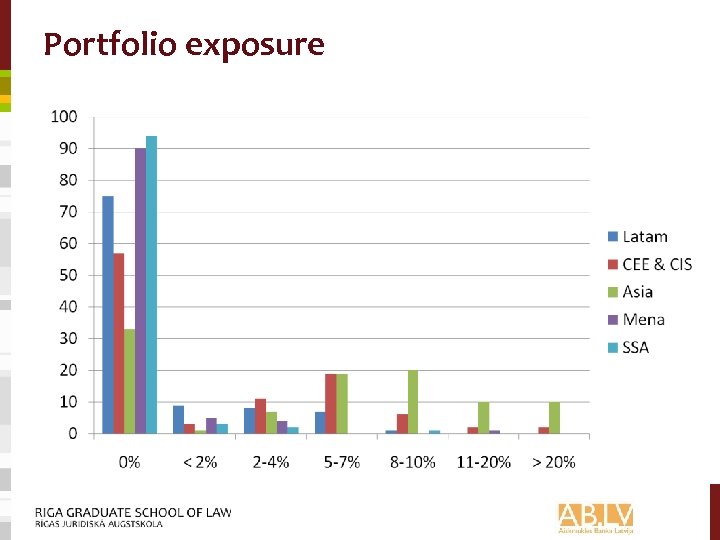 Portfolio exposure
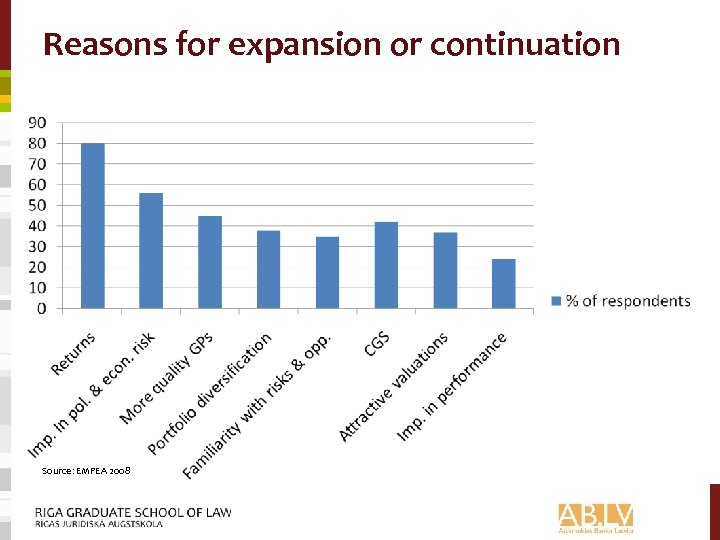 Reasons for expansion or continuation Source: EMPEA 2008
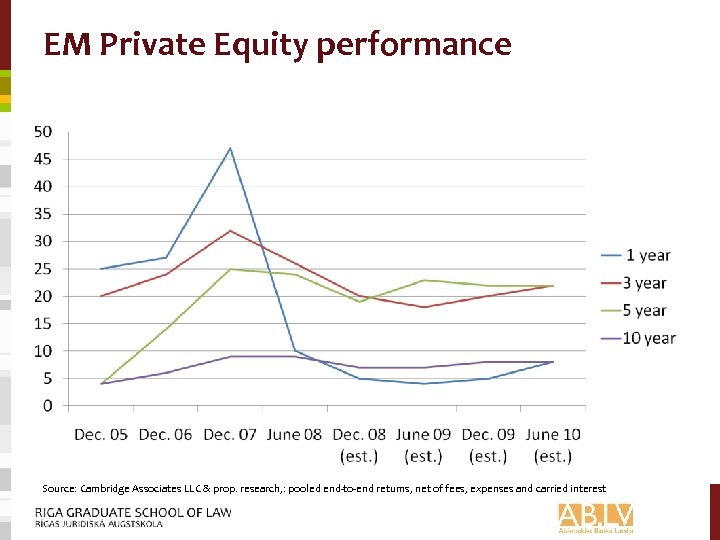 EM Private Equity performance Source: Cambridge Associates LLC & prop. research, : pooled end-to-end returns, net of fees, expenses and carried interest
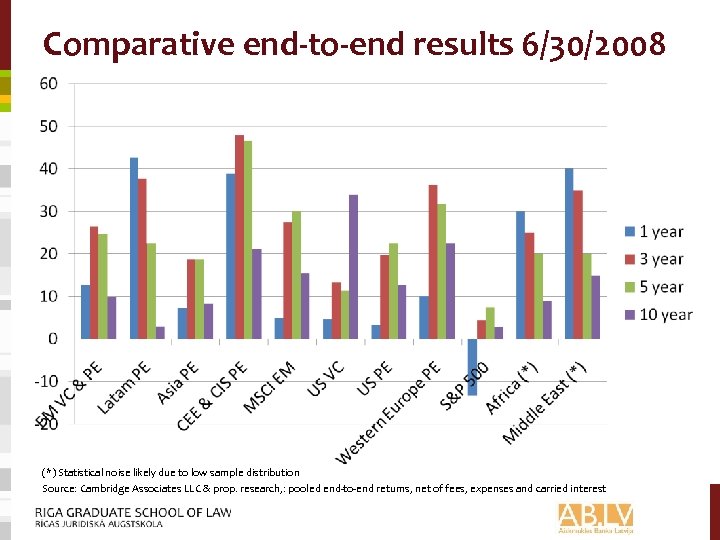 Comparative end-to-end results 6/30/2008 (*) Statistical noise likely due to low sample distribution Source: Cambridge Associates LLC & prop. research, : pooled end-to-end returns, net of fees, expenses and carried interest
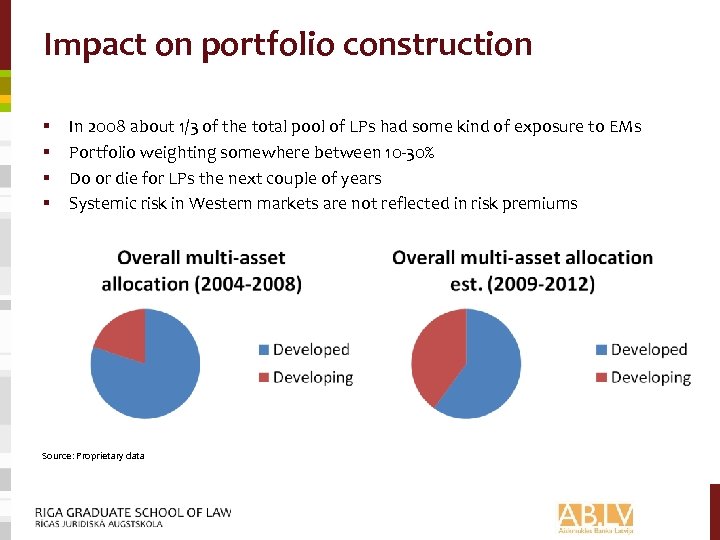 Impact on portfolio construction § § In 2008 about 1/3 of the total pool of LPs had some kind of exposure to EMs Portfolio weighting somewhere between 10 -30% Do or die for LPs the next couple of years Systemic risk in Western markets are not reflected in risk premiums Source: Proprietary data
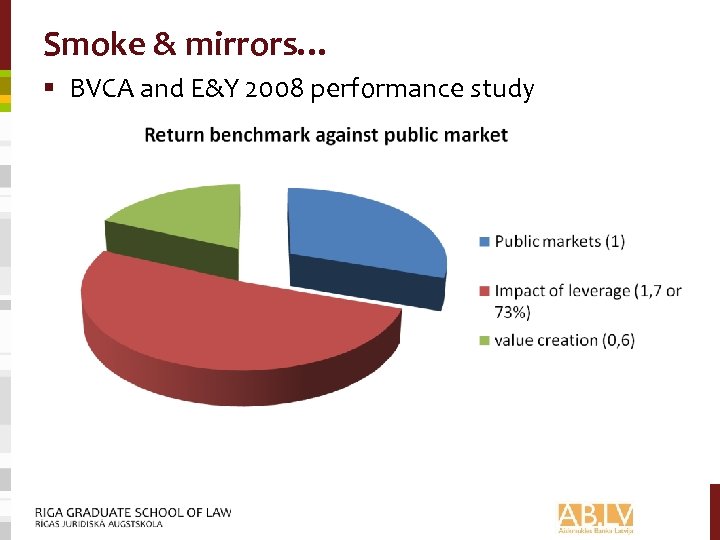 Smoke & mirrors… § BVCA and E&Y 2008 performance study
 A disaster waiting to happen
 So now what… § If PE is an activist shareholders’ position than why have these funds been managed as investment vehicles § Demonstrate inept to manage companies § Focus on financial engineering § Models have to change § Fund structure § Terms & conditions § Exit modeling § Valuation and transparency
 So now what…life after leverage § Value creation/operational side § Impact of average /holding periods § Massive room for improvement of private capital formation § Put capital to work § But do they have the right ‘human capital in place’?
 Is this time going to be different for EMs? § During previous booms and busts the developed and developing world evolved in a parallel fashion § This time there is a (partly) contra-cyclical pattern § Political & regulatory impact § Global versus local teams: the best of both § Business model rethinking & paradigm shift § EM debt usage less or more prudent
 Is there something we can learn from the past?
 Natural questions Is this a crises like every other or a profound shift? How will the industry evolve in the next decade? What are the implications for the asset class? What is the position of EM propositions within this space? § What is the impact on portfolio management and allocation § Can we learn something that might affect the fundraising effort? § §
 This talk § Will seek to answer these questions by looking backwards § Traditionally, very hard to understand key drivers of private equity success § In recent years, much more information § Drawing on large-sample and case evidence § Thoughts about future of private equity more generally… § And particularly in new private equity markets
 Everyone does about the same § Frequent claim among investors: § Emphasis on balancing portfolio by: § Type of fund § Location of fund § Vintage year § Similar to what’s seen in public market investing
 Recent work § Has sought to understand how much difference is… § Between fund classes § Between funds § Seeking to distinguish importance of individual performance
![Evidence from the Yale endowment Source: Lerner [2003]](https://present5.com/presentation/c2818203abcf98c9f9097059756b84bd/image-43.jpg "Evidence from the Yale endowment Source: Lerner [2003]") Evidence from the Yale endowment Source: Lerner [2003]
Evidence from the Yale endowment Source: Lerner [2003]
![More general patterns Source: Kaplan and Schoar [2005]](https://present5.com/presentation/c2818203abcf98c9f9097059756b84bd/image-44.jpg "More general patterns Source: Kaplan and Schoar [2005]") More general patterns Source: Kaplan and Schoar [2005]
More general patterns Source: Kaplan and Schoar [2005]
 The reality § The key difference is between different funds: § Unlike public markets § Investing in the right categories is not nearly as critical as getting into the right companies!
 “Regression to the mean” § Frequently heard stories… § “Our last two funds were a disappointment, but we’re getting back on track…” § “I considered investing in the fund, but I decided that their success must be a fluke. . . ”
 Recent work § Has sought to understand nature of performance: § Is there little continuity from quarter-to-quarter? § Many studies of public markets suggest little persistence: § Mutual funds § Hedge funds § Or is the reality different?
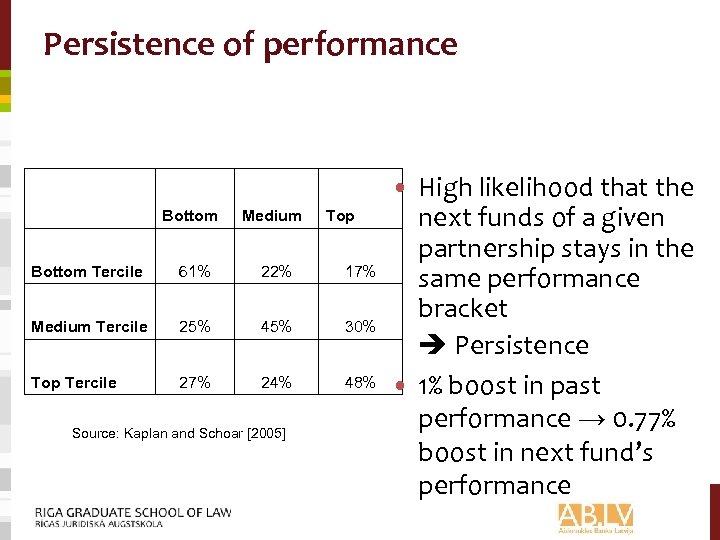 Persistence of performance Bottom Medium Bottom Tercile 61% 22% 17% Medium Tercile 25% 45% 30% Top Tercile 27% 24% 48% Source: Kaplan and Schoar [2005] Top • High likelihood that the next funds of a given partnership stays in the same performance bracket Persistence • 1% boost in past performance → 0. 77% boost in next fund’s performance
 The reality § Performance seems to be very “sticky”: § Good continue to do well § Underperformers continue to do so § While exceptions, seems to be the basic rule: § Seen in buyouts as well as venture
 Growth doesn’t hurt § Numerous venture groups have grown dramatically. § Mid 1980 s and late 1990 s. § Recent dramatic growth by buyout funds § Have typically argued that can sustain performance despite growth § But powerful incentives to grow may induce skepticism § Market is now clearly turning away from the at this stage
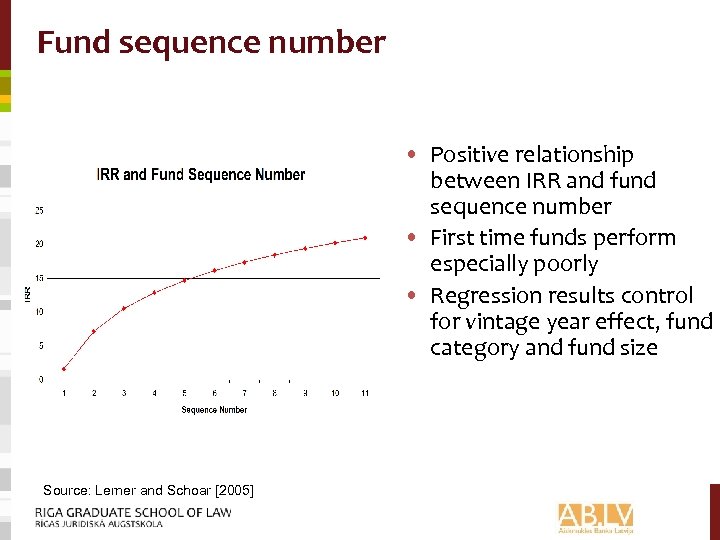 Fund sequence number • Positive relationship between IRR and fund sequence number • First time funds perform especially poorly • Regression results control for vintage year effect, fund category and fund size Source: Lerner and Schoar [2005]
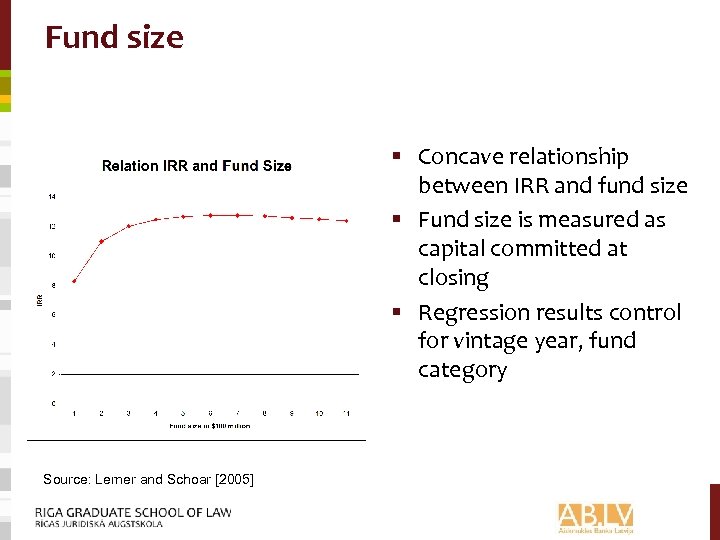 Fund size § Concave relationship between IRR and fund size § Fund size is measured as capital committed at closing § Regression results control for vintage year, fund category Source: Lerner and Schoar [2005]
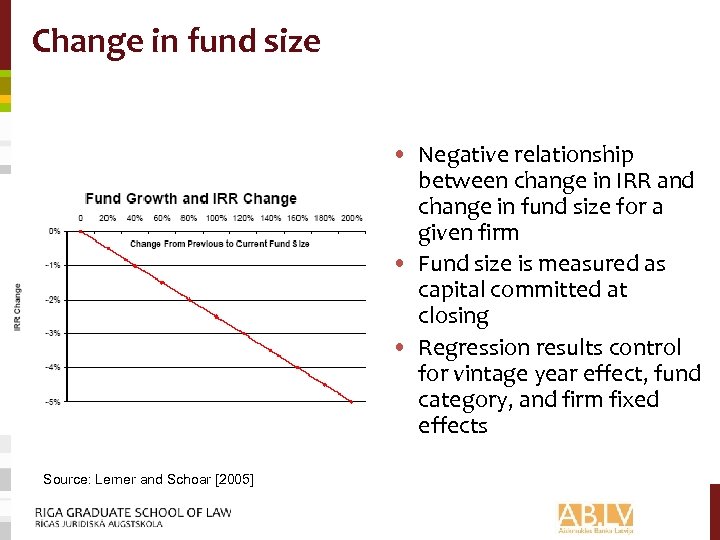 Change in fund size • Negative relationship between change in IRR and change in fund size for a given firm • Fund size is measured as capital committed at closing • Regression results control for vintage year effect, fund category, and firm fixed effects Source: Lerner and Schoar [2005]
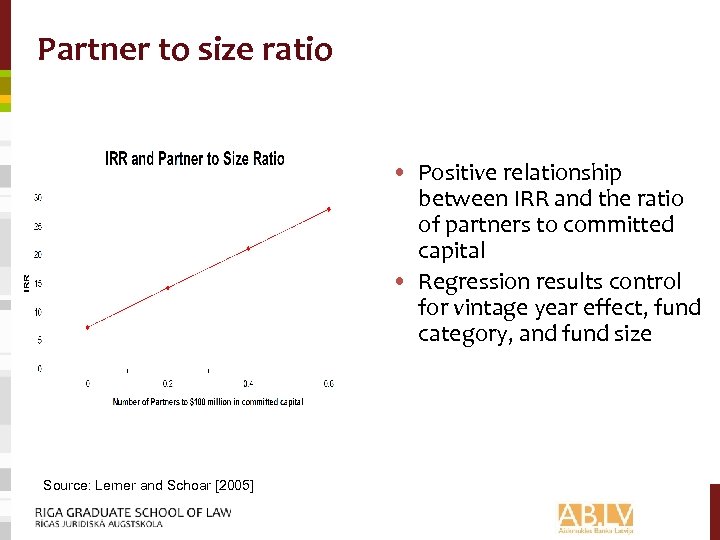 Partner to size ratio • Positive relationship between IRR and the ratio of partners to committed capital • Regression results control for vintage year effect, fund category, and fund size Source: Lerner and Schoar [2005]
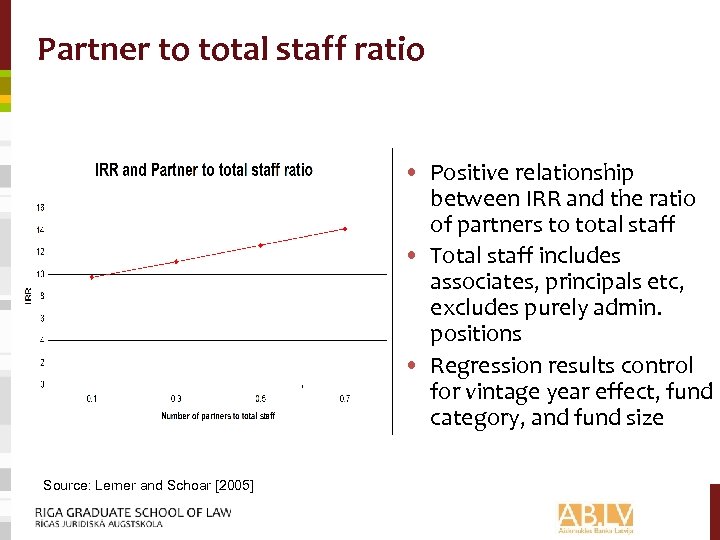 Partner to total staff ratio • Positive relationship between IRR and the ratio of partners to total staff • Total staff includes associates, principals etc, excludes purely admin. positions • Regression results control for vintage year effect, fund category, and fund size Source: Lerner and Schoar [2005]
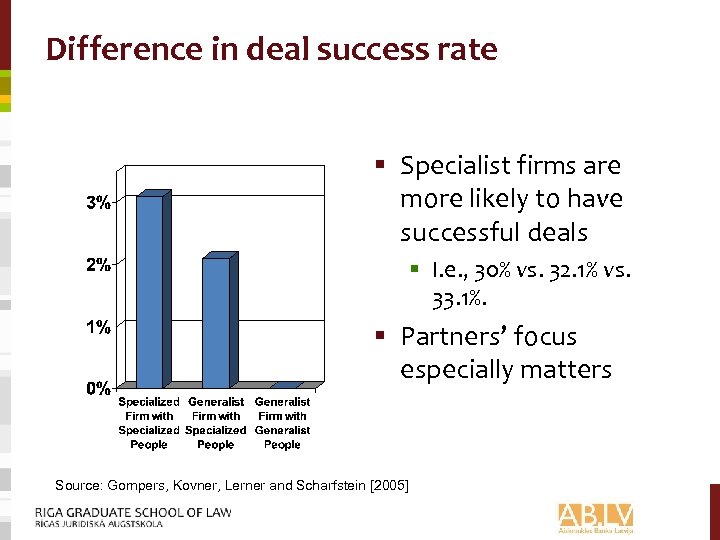 Difference in deal success rate § Specialist firms are more likely to have successful deals § I. e. , 30% vs. 32. 1% vs. 33. 1%. § Partners’ focus especially matters Source: Gompers, Kovner, Lerner and Scharfstein [2005]
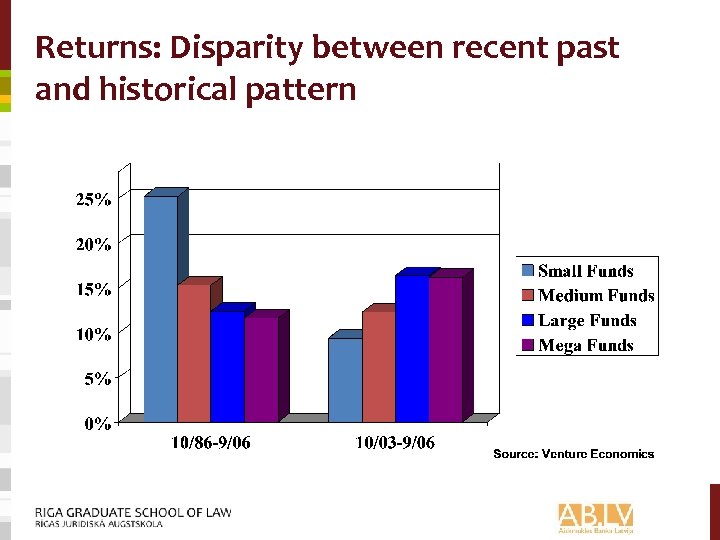 Returns: Disparity between recent past and historical pattern
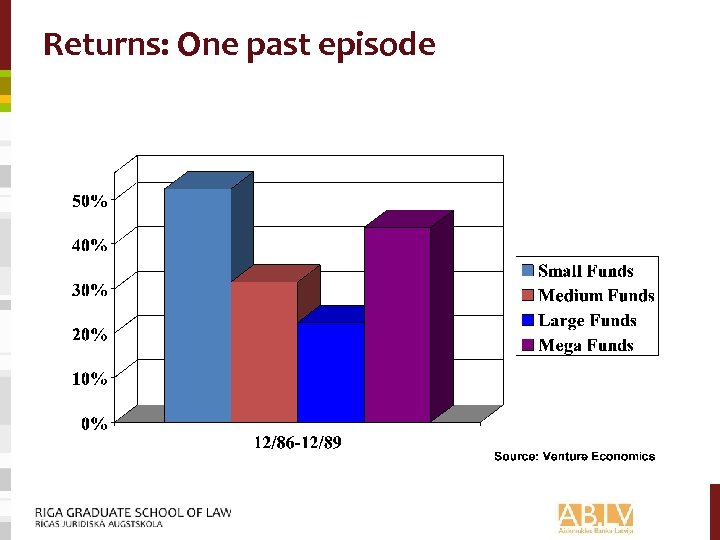 Returns: One past episode
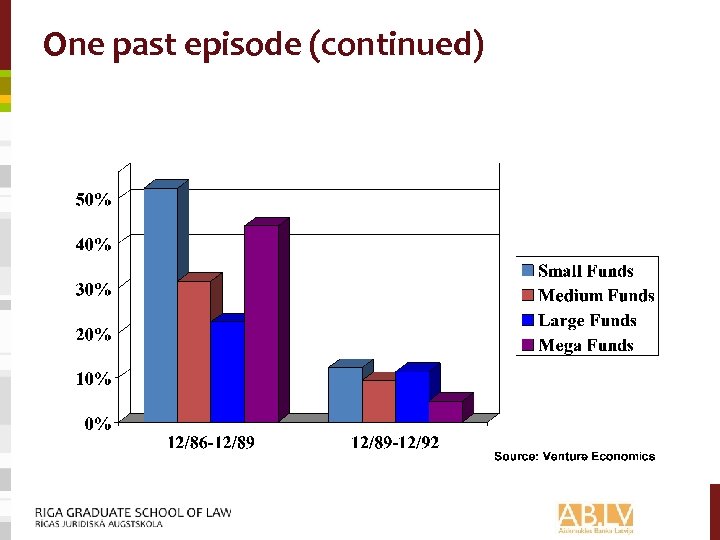 One past episode (continued)
 The reality § Funds with higher sequence number, i. e. , established funds, perform better § Larger funds have better performance—to a point § Rapid growth in capital under management is associated with performance deterioration § May be driven by less impact of partners: § Funds with more partners per dollar managed have higher returns § Funds with higher partner-to-non-partner ratio have higher returns § Decline in specialization leads to poorer performance
 Anyone can play § Lately, great deal of interest from new investors: § Public pension funds § Non-U. S. governmental entities § Attracted by high returns that established investors have enjoyed
 Recent research § Has sought to understand the differences between investors § Does everyone do the same? § Or are there substantial differences? § Key data: § LP investment decisions § Fund returns § GP and LP characteristics
 Performance summary § Substantial performance differences: § ~13% differential in annual returns between endowments and next best § Entirely driven by early- and late-stage VC § Advisors and banks particularly poor § Patterns true when weighted as well
![Performance by investor type Source: Lerner, Schoar and Wang [2005]](https://present5.com/presentation/c2818203abcf98c9f9097059756b84bd/image-64.jpg "Performance by investor type Source: Lerner, Schoar and Wang [2005]") Performance by investor type Source: Lerner, Schoar and Wang [2005]
Performance by investor type Source: Lerner, Schoar and Wang [2005]
 Concerns with univariate tests § Do these reflect other differences: § E. g. , endowments early investors and more heavily weight VC § Examine through regressions: § Regress IRR on fund and LP characteristics § Only include <1999 funds to insure meaningful performance numbers
 Regression analyses § Differences persist: § Endowments outperform; corporate pensions and banks underperform § Proximity negatively associated with performance § Younger LPs do worse: § At least among advisors, banks, corporate pensions, and insurers
 Regression analyses (cont’d) § Market inflows: § Negative in general § Especially for advisors, corporate pensions, and insurers. § Hot markets appear to lead to more herding by these investors § Question: Does a bear market have the same effect?
 Reinvestment decisions § Reinvestment decision should be made with better information and without access constraints § Look at follow-on funds in our sample: § Only look at same classes of funds
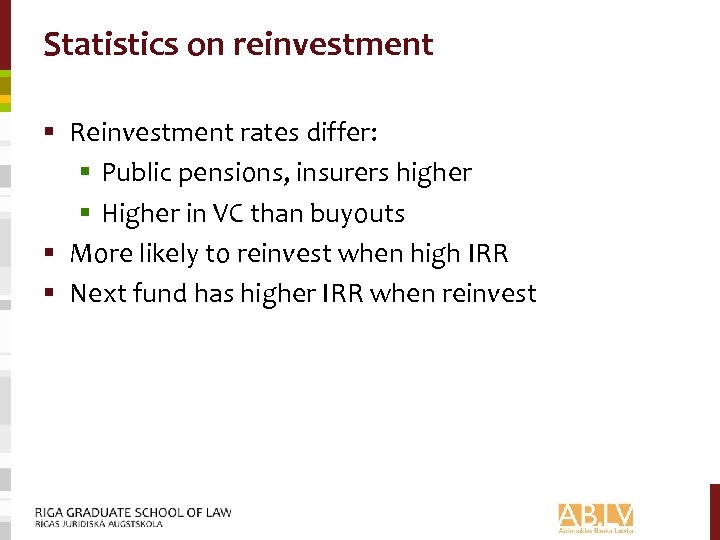 Statistics on reinvestment § Reinvestment rates differ: § Public pensions, insurers higher § Higher in VC than buyouts § More likely to reinvest when high IRR § Next fund has higher IRR when reinvest
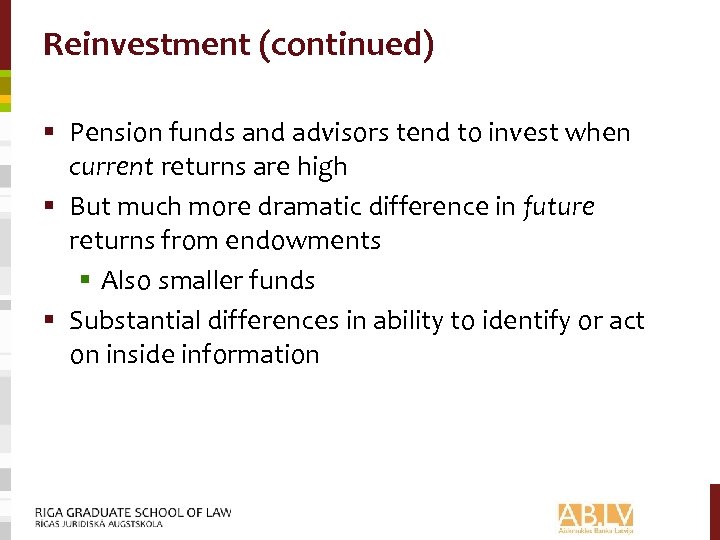 Reinvestment (continued) § Pension funds and advisors tend to invest when current returns are high § But much more dramatic difference in future returns from endowments § Also smaller funds § Substantial differences in ability to identify or act on inside information
![Reinvestment and current returns Source: Lerner, Schoar and Wang [2005]](https://present5.com/presentation/c2818203abcf98c9f9097059756b84bd/image-71.jpg "Reinvestment and current returns Source: Lerner, Schoar and Wang [2005]") Reinvestment and current returns Source: Lerner, Schoar and Wang [2005]
Reinvestment and current returns Source: Lerner, Schoar and Wang [2005]
![Reinvestment and future returns Source: Lerner, Schoar and Wang [2005]](https://present5.com/presentation/c2818203abcf98c9f9097059756b84bd/image-72.jpg "Reinvestment and future returns Source: Lerner, Schoar and Wang [2005]") Reinvestment and future returns Source: Lerner, Schoar and Wang [2005]
Reinvestment and future returns Source: Lerner, Schoar and Wang [2005]
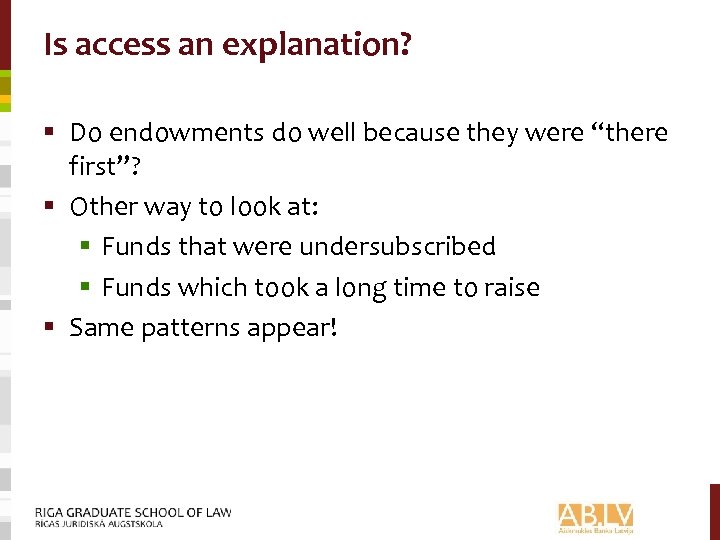 Is access an explanation? § Do endowments do well because they were “there first”? § Other way to look at: § Funds that were undersubscribed § Funds which took a long time to raise § Same patterns appear!
 The reality § Huge disparities in performance. § Superior performance has been largely confined to endowments. § Raise substantial questions about ability of new entrants to succeed.
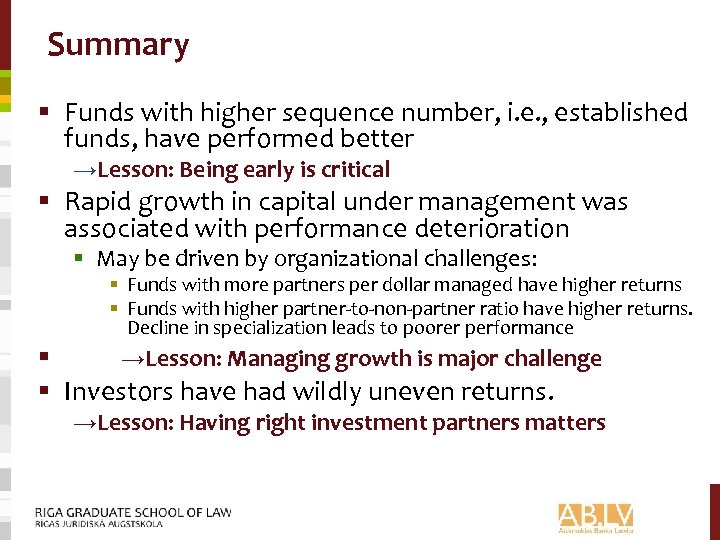 Summary § Funds with higher sequence number, i. e. , established funds, have performed better →Lesson: Being early is critical § Rapid growth in capital under management was associated with performance deterioration § May be driven by organizational challenges: § Funds with more partners per dollar managed have higher returns § Funds with higher partner-to-non-partner ratio have higher returns. Decline in specialization leads to poorer performance § →Lesson: Managing growth is major challenge § Investors have had wildly uneven returns. →Lesson: Having right investment partners matters
 The special challenges of new private equity markets § Lessons from Celtel, Skype and Shanda: § HBS field cases written on all three § Represent Africa, Europe and China § The checks have cleared!
 All markets are global § Skype’s business model depended on consumers calling across borders § Celtel’s pan-African strategy attracted international telecoms equipment companies to become second largest source of financing § Shanda’s revenues were more than 80% dependent on a game written and owned by a Korean company
 Expect deals to be massively more work intensive § Skype’s code was written in Estonia, the management team was spread throughout Europe, the customers were all over, and the founders could not travel to the US § Celtel needed to raise over $400 mm from 2001 to 2004 during the meltdown of the telecommunication investing markets—all of it to be spent in Africa § Shanda was threatened by a lawsuit from the Korean vendor whose game accounted for most of their revenue
 Back to basics § Skype’s founders had control over a sale § Celtel had minority partners in all 15 of its operations (i. e. : 15 different groups in 15 different African countries). It also had an all common stock equity capitalization § Shanda management was furious that SAIF sold some stock after the IPO
 The real value added is transparency § Skype owned its technology as a result of the VC investment § Celtel had a prestigious board who insisted on transparency and openly refused licenses that had the taint of corruption § Shanda’s settlement with its key vendor was negotiated by SAIF
 Luck still counts § (this space intentionally left blank)
 Advice: Top tier firms must be global § § LPs will prefer to go global with people they know, but will be skeptical about execution—so they will pursue a mixed model The top tier firms will need to be global to maintain top tier status—there is simply too much information they would otherwise miss, and the overseas growth and return rates will be higher than US return rates Global top tier firms will outperform local top tier firms over longer periods of time Brands will likely cross borders but are no guarantee of success
 Advice: Tourist VCs will not be successful, you must be on the ground Act global but think local. Local, permanent, day in, day out presence is an absolute must
 Advice: The industry will not be replicate that in the U. S. § § Less developed PE markets require much more resource on each deal Investment strategy may vary from location to location: § Less of a premium for early stage investing in less developed markets
 Advice: There are no settled models for running a global private equity firm § Lots of models to choose from: § § § Large PE firms provide useful models of satellite offices There are interesting models of building an affiliate firm with different GPs and LPs (Accel, Benchmark); There are many examples of investment in independent firms (Chengwei, Argnor) But no set answers yet Keys to success: communication among investing partners, expectation setting between offices, portfolio management globally
 Advice: You can’t do this on the cheap Must be approached with the same intensity and vigor and commitment as your most important initiative
 Advice: The key company value builder is transparency §Exits are through one global market, whether they are M&A or public floats (NY/London) §This is the lesson of the 60’s and 70’s all over again: don’t treat portfolio companies as small companies, treat them as large companies who happen to be small right now §PE firms will need to stockpile management talent and keep overseas offices staffed well enough for frequent, persistent oversight of portfolio companies
 Five Easy Pieces (of Advice) 1. Top tier firms must be global § Global top tier firms will outperform local top tier firms over longer periods of time 2. Tourist VCs will not be successful, you must be on the ground 3. Overseas industry will not be replicas of U. S. § There are no settled models for running a global private equity firm 4. PE Firms can not go global on the cheap § Must be approached with intensity, vigor and commitment. 5. The key company value builder is transparency § Teaching the culture of minority equity ownership may be the lasting legacy of US venture capital.
 An appreciation of the current state of play § Despite the record write-offs, liquidity constraints (distribution drought & the denominator effect) and possible defaults LPs are facing there seems to be a continued interest in the asset class. § UK pension fund association (April 2009): continued support for the PE environment through allocations § Cal. PERS to put less in stocks, raise bet on private equity (June 2009) § Role of private equity in institutional investor portfolios to increase, says fund of funds manager Adveq (June 2009)
 An appreciation of the current state of play § § § Short-term tough with limited visibility LP momentum How to manage a new equilibrium What is the new ‘normal’ How do normal people behave in ‘abnormal times’
 Fundraising efforts § § First-time fund (infra) Follow-up fund Who are you as a team/organization? Track record
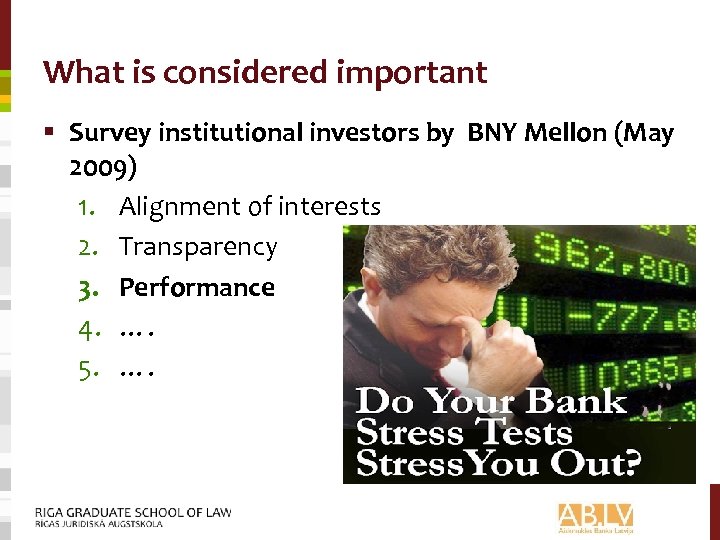 What is considered important § Survey institutional investors by BNY Mellon (May 2009) 1. Alignment of interests 2. Transparency 3. Performance 4. …. 5. ….
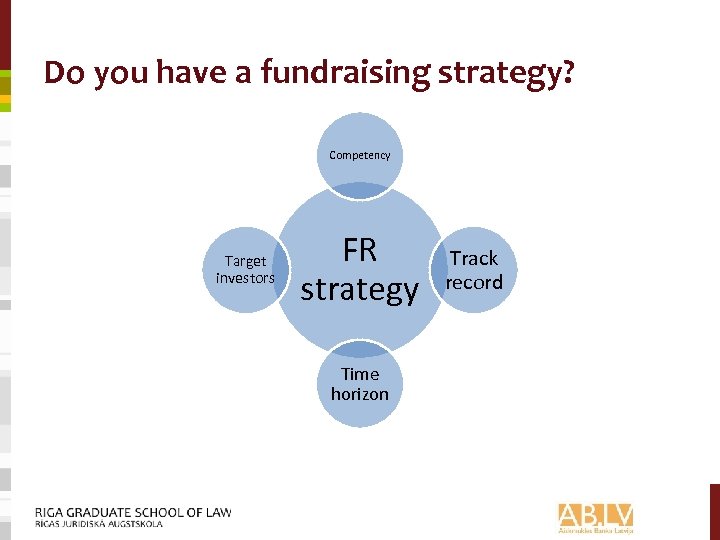 Do you have a fundraising strategy? Competency Target investors FR strategy Time horizon Track record
 Who do you want to approach? § § § § § UHNWI Family offices Pension funds Insurance funds Endowments SWFs Fo. F Other institutional investors In the West or in EMs
 Are EM LPs different than their Western peers § Better understanding of EMs? § More sensitive to (Western) brand association when selecting GPs § Diverting capital flows during crunch times (reversed globalization) § Quite often larger allocations than Western peers § Often faced with regulatory restrictions § Lack of transparent decision-making and communication process
 And what do you know about them? § In particular: § Their asset allocation program § Geographical coverage § Recent performance § Their understanding and experience in PE and alternative assets § Consistency of in-house team § Timeline of their liabilities § F. e. defined benefit vs. defined contribution plans
 And who are you as a sponsor? § § § § What have been your previous fund strategies? Regional/country versus global? Single- versus multi-industry approaches Open ended or closed funds How are you organized? Who is doing fundraising? Fulltime? Do you have Investor relationship managers? What kind of communication protocol do you have in place?
 What comes first? § Putting the whole structure in place § Or raising funds and when feasible put stuff in motion? § The latter occurring more often recently given the uncertainty in the fundraising cycle
 The use of Fo. F § Everybody has its own agenda § Is there still place for Fo. Fs in an economic environment where things are ‘back to basic’ § Only very few Fo. Fs have decent EM experience (despite what they tell you) § Do you want to invest someone’s money you don’t know (remember Bank of NY Mellon survey) § What kind of mandate do they have? § Did they (Fo. Fs) deliver for their investors? § Let’s look at the reasons why they exist anyway?
 The use of Fo. F § Avoid them if you can § Not instrumental for your business going forward § Reality is a bit against my position: § In hedge fund space 50% of commitments come through Fo. F (but are more specialized as well) § ‘Hot money’ issue is something you want to avoid
 UHNWI § Easier to build a relationship with § But reality tells us that given the time lag between commitment and ‘draw down’ defaults are more common than with institutionals § Often need a feeder fund to facilitate smaller commitments
 Your LPs § Do you believe it is your job to educate them? § On emerging markets? § On the asset class? § On expectation re returns?
 The value-add of placement agents § Besides raising capital by putting their Rolodex to work § Expansion of LP network beyond your core geographies § Market your fund knowing local cultures re fundraising and investment strategy § Add value towards PPM and content
 The value-add of placement agents How to position the fund towards investors Pinpoint a meaningful amount to be raised Coordinate road shows and be more efficient Make your fundraising more efficient Pimp up your marketing materials What are the internal processes you have to go through § Match LPs with your investment strategy-Who is buying what? § Moving headcount among LPs § § §
 First-time funds § Feels often like climbing the Everest without oxygen § Team-up with existing player § Work with non- financially focused LPs § Include anchor investors § LPs are not there to create a barrier to entry § Most LPs have boilerplate DD processes whatever they proclaim
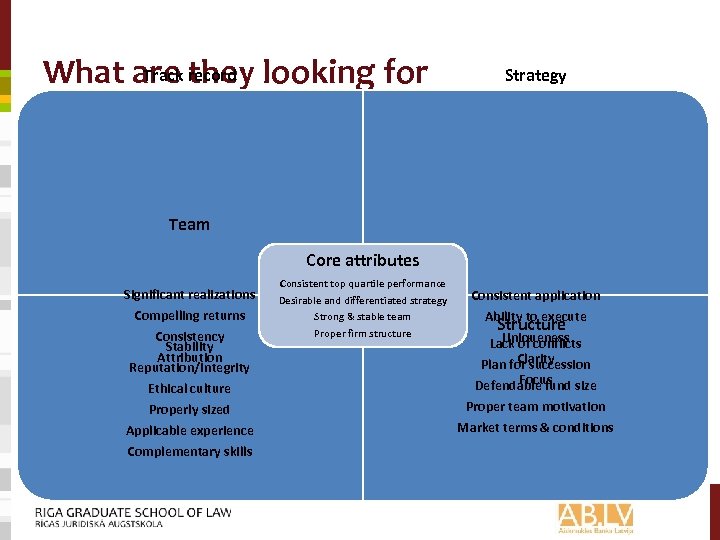 Track they What are record looking for Strategy Team Core attributes Significant realizations Compelling returns Consistency Stability Attribution Reputation/Integrity Ethical culture Properly sized Applicable experience Complementary skills Consistent top quartile performance Desirable and differentiated strategy Strong & stable team Proper firm structure Consistent application Ability to execute Structure Uniqueness Lack of conflicts Clarity Plan for succession Focus Defendable fund size Proper team motivation Market terms & conditions
 Track record § § § § In what? Barrier to entry Why is it so important? Sometimes legal constraints by institutional investors Impressive team & people versus track record? Funds perform consistent within quartiles History tells us something about the future In particular important in environment where new GP have been mushrooming
 Strategy § ESG principles in EMs: risk management or value creation? § In what strategies would that show up? § Real issue in relation to EMs § Are they all executed the same way § Relevant for your portfolio companies but also for yourself as a GP
 Team What is the DNA of your team? What is the set-up of the team? Locations? How is decision-making shared? How is the carry shared? Stability- How are you going to execute your strategy § Is your team ready for the ‘new normal’. . i. e. generating returns by improving operations and creating synergies rather than leverage § Can your HC live up to that test? § § §
 Team § The HC rainmaker paradox § Human Capital center of excellence § Retention § Change management § Compliance § Organizational Development § Recruiting § Sourcing § Resource Development
 The due diligence process § They will tell you that they have a very sophisticated system which is thorough and even groundbreaking § Reality is that most of the process is boilerplate and based on gut feeling § Some of them will not go beyond your track record § That way great time ‘first-time funds’ are missed out on § Be aware of those that tell you the are interested in emerging markets but have never made an allocation before
 The due diligence process Manage the timeline It can also help you emerging your true potential Often external advisors are hired to execute the DD Re-run of older fund number to measure accurateness § What are they looking for? § Besides everything discussed § Deal flow origination capabilities § Exit strategies § §
 The due diligence process § Important given the high dispersion of results in the asset class § Excess returns depend largely on manager selection § Identifying risk and relating then to the return capacity of any given manager against the background of competing investment opportunities
 The due diligence process § Size, geography and strategy screen § Formal part starts with a meeting § Following that the LP will (in)validate the investment thesis through § Site visits at GP and some portfolio companies § Reference checks with existing LPs, portfolio company management team, etc § Track record analysis § Market positioning analysis § Review of legal conditions
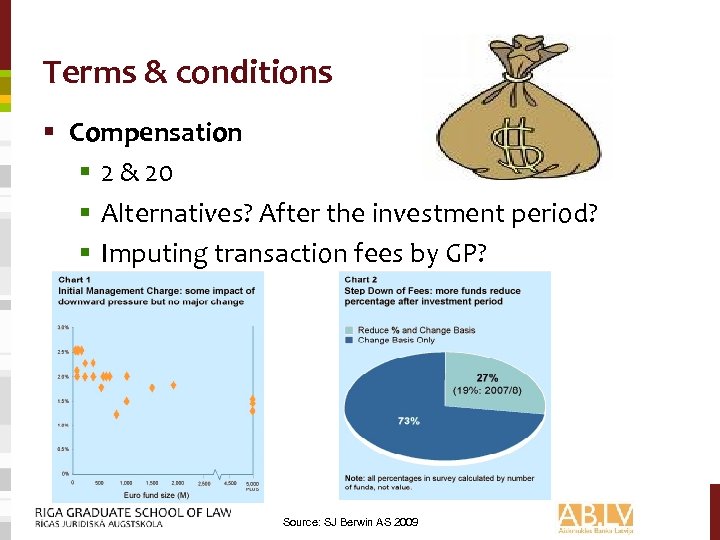 Terms & conditions § Compensation § 2 & 20 § Alternatives? After the investment period? § Imputing transaction fees by GP? Source: SJ Berwin AS 2009
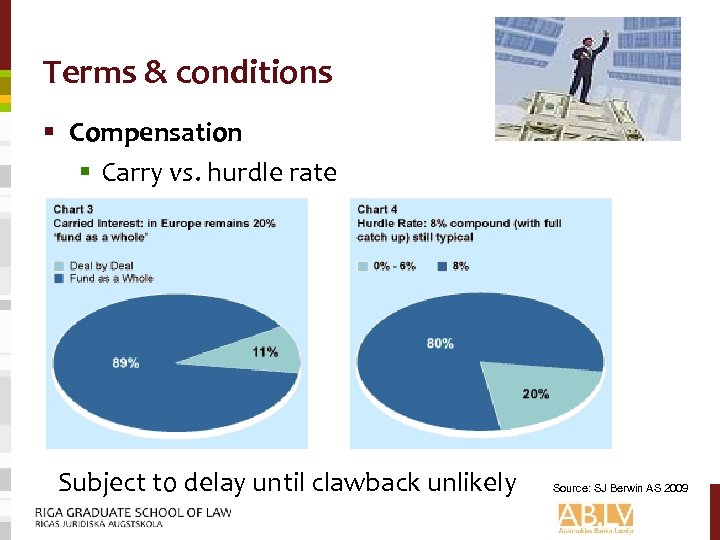 Terms & conditions § Compensation § Carry vs. hurdle rate Subject to delay until clawback unlikely Source: SJ Berwin AS 2009
 Terms & conditions § Fund structure § Open or closed fund structure § Key terminology § Basic considerations § Master/feeder structure § What types of vehicles to use § European vs. US vs. EM investors ? § You can’t be everything to everybody § Offshore structures(? ) § Are you the danger zone after the G 20
 Terms & conditions § Fund structure § Tax transparency § Limited liability for LP and GP § Authorization and/or regulation of fund and manager § Does it support an alignment of interest between GP and LPs § Tax-efficient structuring of man. Fees and carry § Nature of co-investment arrangements § Permanent establishment & operational issues
 Terms & conditions § Fund structure § Combining structures is an option § Increases complexity and costs but will appeal to a wider range of LPs
 Terms & conditions § Governance § EM GPs have reduced track record relative to their Western peers § Different regulatory environment and legal protection of shareholders/partners § Common law vs. Rule of law systems § Role of the Investment committee’s liabilities and responsibilities § Pinning down investment policy to prevent style drift
 Terms & conditions § Managing expectations § Re future returns § Re existing funds § Re the latter: § Re-invest proceeds of realizations, including an ability to re-draw proceeds already distributed § Extended investment periods or reopened a closed fund to new capital, while some have raised annex or top-up funds
 Terms & conditions § Managing expectations: distressed situations § Allow (some) investors to scale down commitments in exchange for some dilution of their interest? § Do you know where you fit in your LPs portfolio?
 Terms & conditions § Communication strategies: § LPs are your primary clients…ALWAYS!!! § How, how much and on what? § Portfolio valuation? § Deal affairs § Quarterly scorecards? § Watch how you communicate as it is determined by your overall objective re the relation with your LP/LP community § Key components of a good IR program?
 Terms & conditions § No-fault divorce? § Once again downward protection mechanism § Big deal or not?
 Terms & conditions § Who are your advisors? § Do they shine off on you? § Madoff § Stanford and the likes § Bring them in for hot issues: § Valuation of the entire portfolio once a year § Structuring the deal § Don’t be stingy: bring in the big guns-it will pay off § What do you want your lawyers to do § Selecting a law firm
 Terms & conditions § Co-investment rights? § § Benefits Detriments Limits Consequences going forward
 Terms & conditions § Co-decision rights? § § § Independence versus commitments Value of independence Board of advisors vs. Investment committee Who is the captain on your ship? Under what conditions Financial conditions for anchor investors?
 Terms & conditions § The Private Offering Memorandum § § § Purposes of the offering memorandum Stages in the life of the offering memorandum Sponsor considerations Contents of the offering memorandum Key terms Marketing and regulatory considerations
 Terms & conditions § The Private Offering Memorandum § Material omissions § Compliance with securities laws for private placement of securities § What does it serve: (1) market the fund and (2) describe risks to avoid liabilities, (3) facilitate due diligence
 Terms & conditions § § § Risk management in EM Creating alpha? What is the system you’re going to use? How to deal with non-economic risk Does Value-At-Risk work the same way here Designing your own system is probably more authoritative
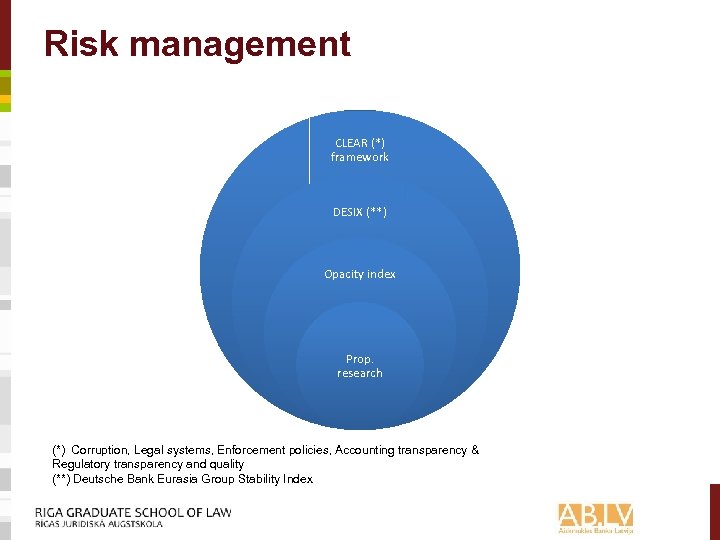 Risk management CLEAR (*) framework DESIX (**) Opacity index Prop. research (*) Corruption, Legal systems, Enforcement policies, Accounting transparency & Regulatory transparency and quality (*) Corruption, Legal systems, Enforcement policies, Accounting transparency & (**) Deutsche Bank Eurasia Group Stability Index Regulatory transparency and quality (**) Deutsche Bank Eurasia Group Stability Index
 Terms & conditions § Put your money where your mouth is § How much do you support the fund with your own money? § Difficult one for first-time-funds § Co-investing in deals by partners privately? § Cross-fund investing not appreciated by LPs
 Terms & conditions § Distributions and balancing carry § § § Avoid clawbacks Fund or deal level Re-investment periods … Redemptions under what conditions
 Contact Riga Graduate School of Law & Finance Chair Strelnieku iela 4 k-2 Riga LV-1010 LATVIA luc. nijs@rgsl. edu. lv Tel. +37167039230