 Скачать презентацию Master s Thesis Project Presentation TECHNOLOGICAL AND BUSINESS CHALLENGES
7875d4c6f182e167882d656660f763b9.ppt
- Количество слайдов: 22



Master’s Thesis Project Presentation TECHNOLOGICAL AND BUSINESS CHALLENGES OF SMART GRIDS Aggregator's Role in Current Electricity Market Author: Fortum supervisor: LUT professor: Date: 29/04/2010 1 Oleg Gulich Ville Karttunen Jarmo Partanen
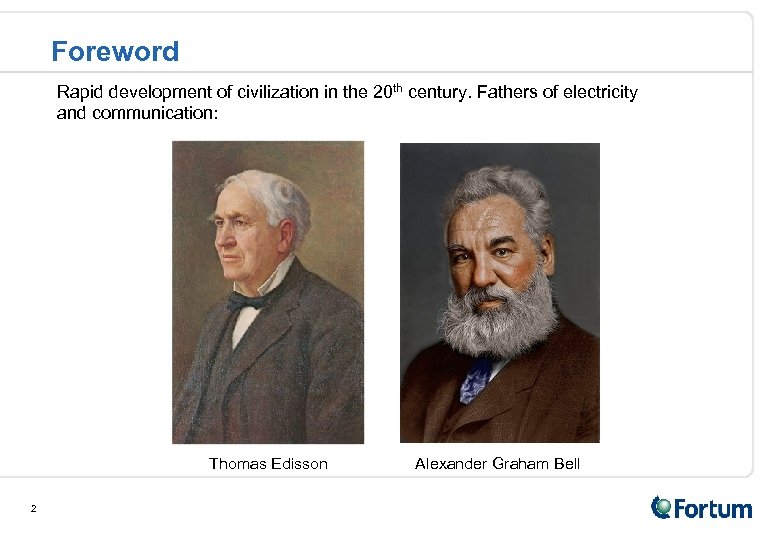
Foreword Rapid development of civilization in the 20 th century. Fathers of electricity and communication: Thomas Edisson 2 Alexander Graham Bell
What is Smart Grid? • ‘System of systems’ concept • A Smart Grid is an electricity network that can intelligently integrate the actions of all users connected to it - generators, consumers and those that do both – in order to efficiently deliver sustainable, economic and secure electricity supplies. • The smart grid is a broad collection of technologies that delivers an electricity network that is flexible, accessible, reliable and economic. Smart grid facilitates the desired actions of its users. It may include distributed generation, the deployment of demand management and energy storage systems or the optimal expansion and management of grid assets 3
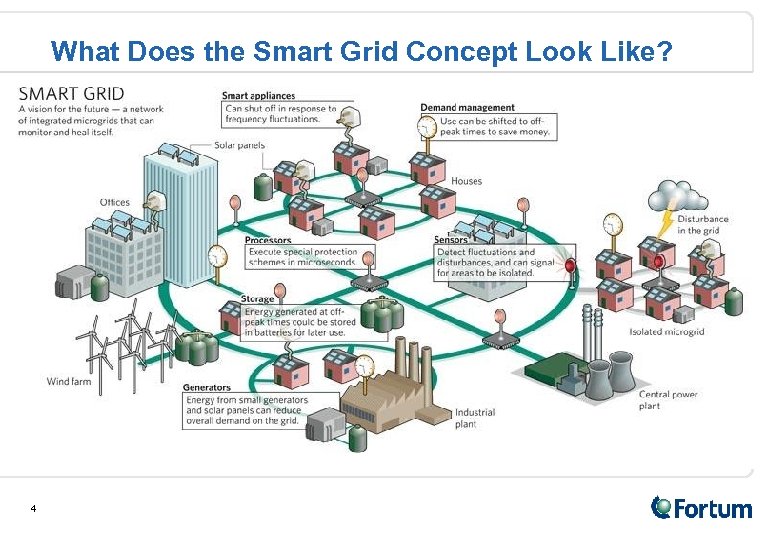
What Does the Smart Grid Concept Look Like? 4
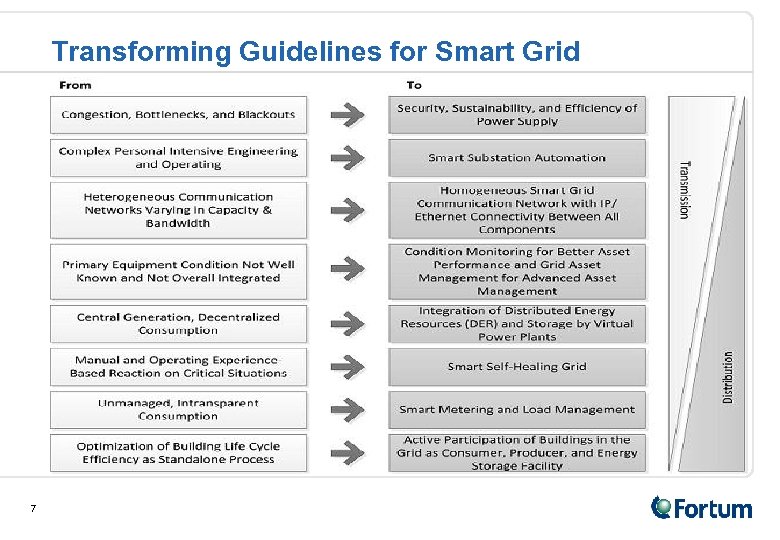
Transforming Guidelines for Smart Grid 7
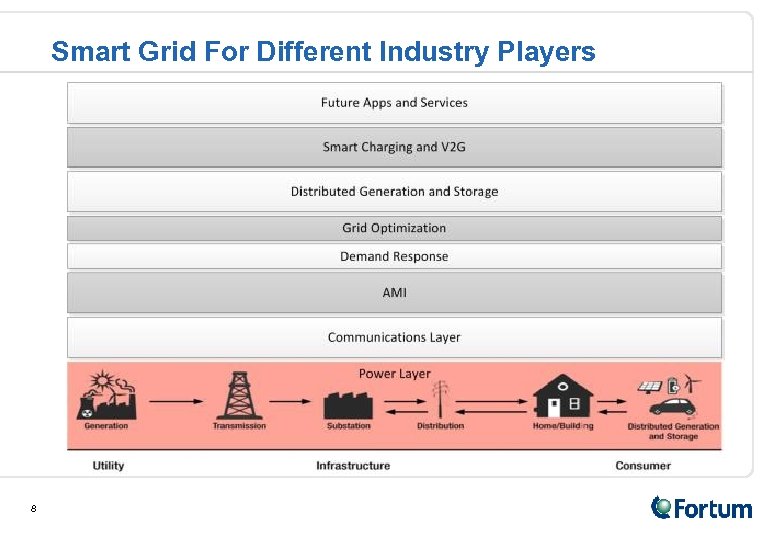
Smart Grid For Different Industry Players 8
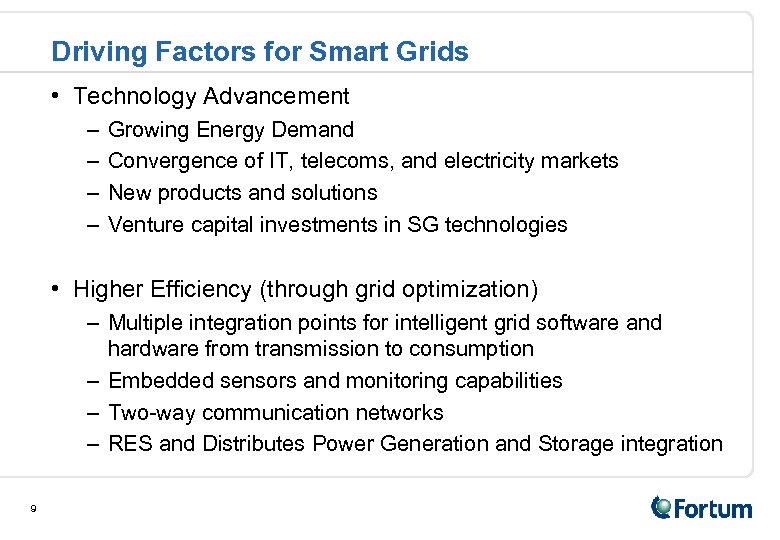
Driving Factors for Smart Grids • Technology Advancement – – Growing Energy Demand Convergence of IT, telecoms, and electricity markets New products and solutions Venture capital investments in SG technologies • Higher Efficiency (through grid optimization) – Multiple integration points for intelligent grid software and hardware from transmission to consumption – Embedded sensors and monitoring capabilities – Two-way communication networks – RES and Distributes Power Generation and Storage integration 9
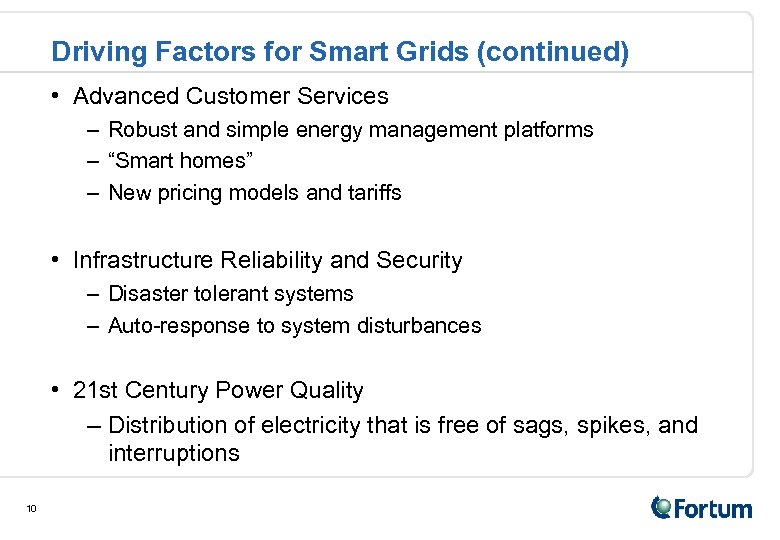
Driving Factors for Smart Grids (continued) • Advanced Customer Services – Robust and simple energy management platforms – “Smart homes” – New pricing models and tariffs • Infrastructure Reliability and Security – Disaster tolerant systems – Auto-response to system disturbances • 21 st Century Power Quality – Distribution of electricity that is free of sags, spikes, and interruptions 10
Applications of Smart Grid: Overview • Demand Response • Energy Storage • Home Area Networks • Advanced Metering Infrastructure • Integration of Distributed Generation • Advanced Utility Control Systems • Smart PHEVs Charging 11
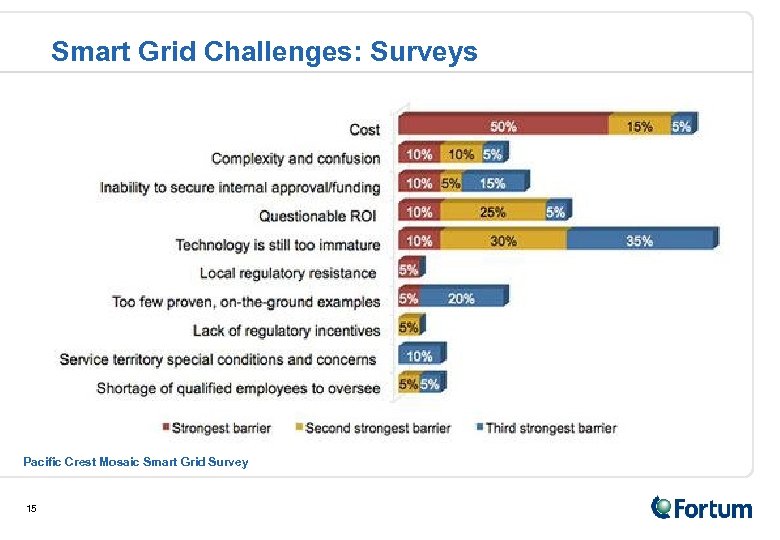
Smart Grid Challenges: Surveys Pacific Crest Mosaic Smart Grid Survey 15
Smart Grid Challenges: Overview All discovered challenges have been split into the following categories: 1. Technology Challenges 2. Economic Challenges 3. Business Challenges 4. Regulation Challenges 16
Aggregator Definition • What is an Electricity Aggregator? – An Aggregator joins brings customers together into a single purchasing unit to negotiate the purchase of electricity from Retail Electric Providers (REPs) or directly from Electricity Markets. – Aggregators shop for their customers and often help them save time, effort, and money. – An Aggregator conducts research on electricity prices, contract terms and conditions, and other services that their customers want, and recommends a REP 19
Aggregator Functions • What are the functions of an Electricity Aggregator? – Grouping customers and participating in the wholesale market to get the lowest possible prices – Planning the use of the Distributed Generators when the associated cost is lower than the market prices – Shifting and managing the movable loads of the customers to hours with a low electricity price – Trading shiftable loads on the balancing markets (ELBAS) 20
Demand Response Profitability Calculations Two business models have been reviewed for feasibility in thesis: • Model 1: Customers enroll to a DR program offered by an Aggregator, buy and install automatic load controlling devices that receive real-time electricity price signals and shift the electricity consumptions according to the preset algorithm (e. g. 5 highest prices during the day are shifted to the cheapest hours). • Model 2: Customers install automatic load controlling devices and subscribe to an aggregator's DR program with extra benefits, such as additional payments from aggregator for load shifting. This way, in addition to usual electricity bill savings gained from load controlling the customers will receive 30% of the revenue made by an aggregator from selling the peak-hour electricity (shifted from those customers) on the electricity market. 27
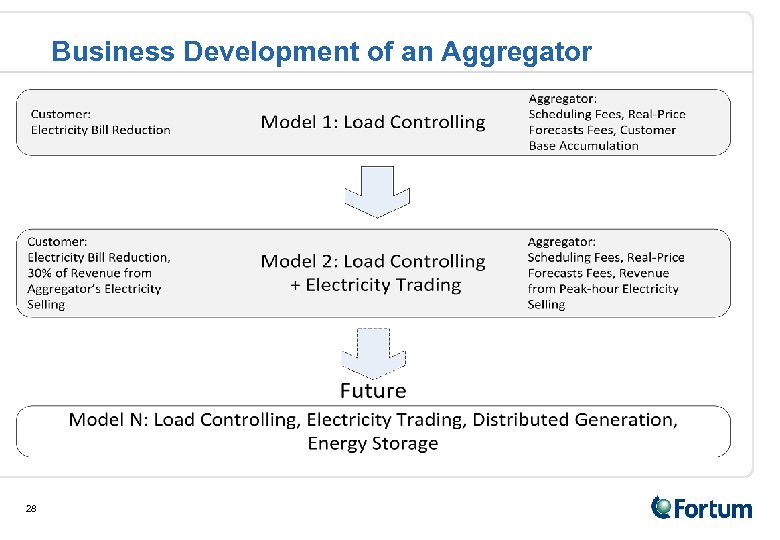
Business Development of an Aggregator 28
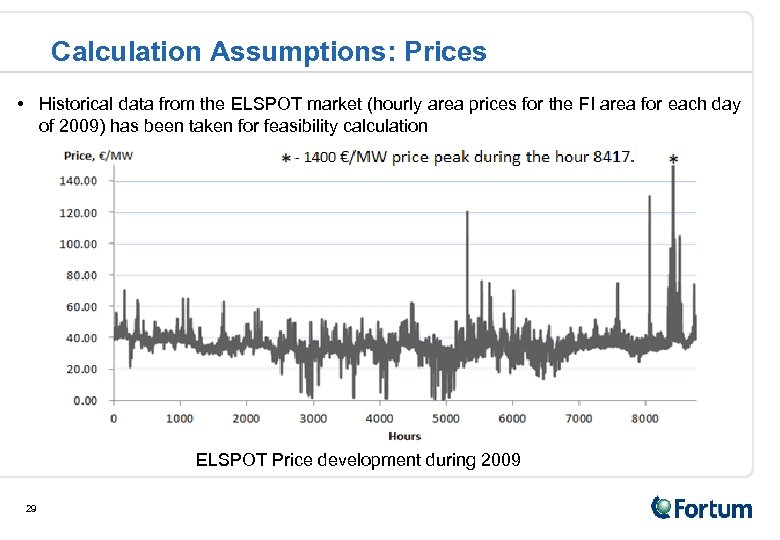
Calculation Assumptions: Prices • Historical data from the ELSPOT market (hourly area prices for the FI area for each day of 2009) has been taken for feasibility calculation ELSPOT Price development during 2009 29
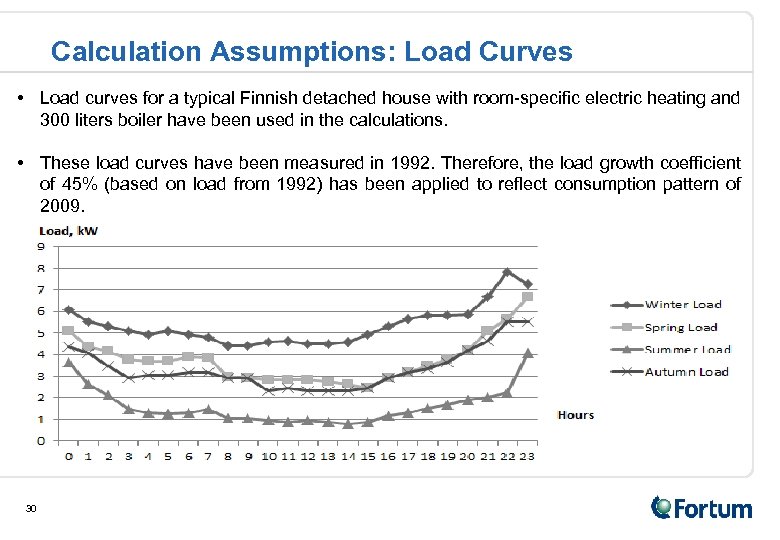
Calculation Assumptions: Load Curves • Load curves for a typical Finnish detached house with room-specific electric heating and 300 liters boiler have been used in the calculations. • These load curves have been measured in 1992. Therefore, the load growth coefficient of 45% (based on load from 1992) has been applied to reflect consumption pattern of 2009. 30
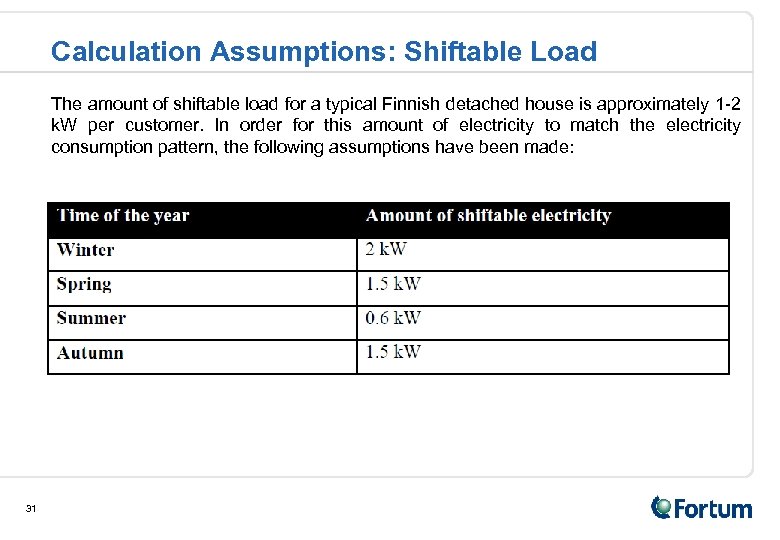
Calculation Assumptions: Shiftable Load The amount of shiftable load for a typical Finnish detached house is approximately 1 -2 k. W per customer. In order for this amount of electricity to match the electricity consumption pattern, the following assumptions have been made: 31
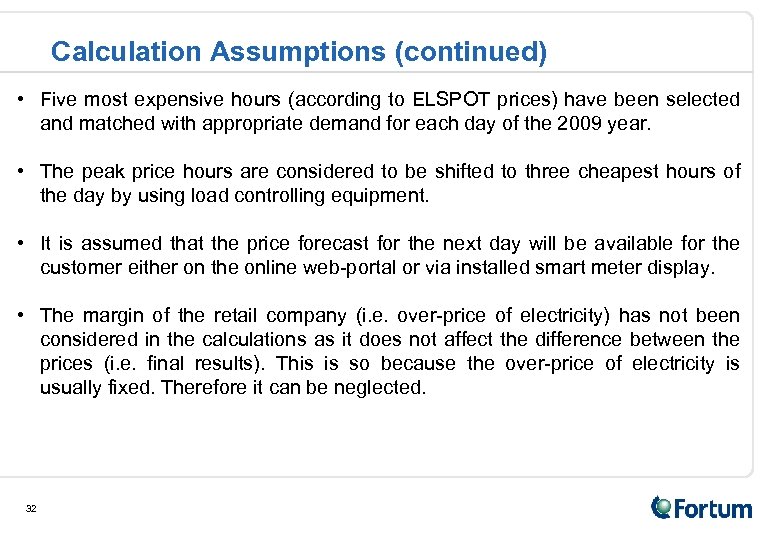
Calculation Assumptions (continued) • Five most expensive hours (according to ELSPOT prices) have been selected and matched with appropriate demand for each day of the 2009 year. • The peak price hours are considered to be shifted to three cheapest hours of the day by using load controlling equipment. • It is assumed that the price forecast for the next day will be available for the customer either on the online web-portal or via installed smart meter display. • The margin of the retail company (i. e. over-price of electricity) has not been considered in the calculations as it does not affect the difference between the prices (i. e. final results). This is so because the over-price of electricity is usually fixed. Therefore it can be neglected. 32
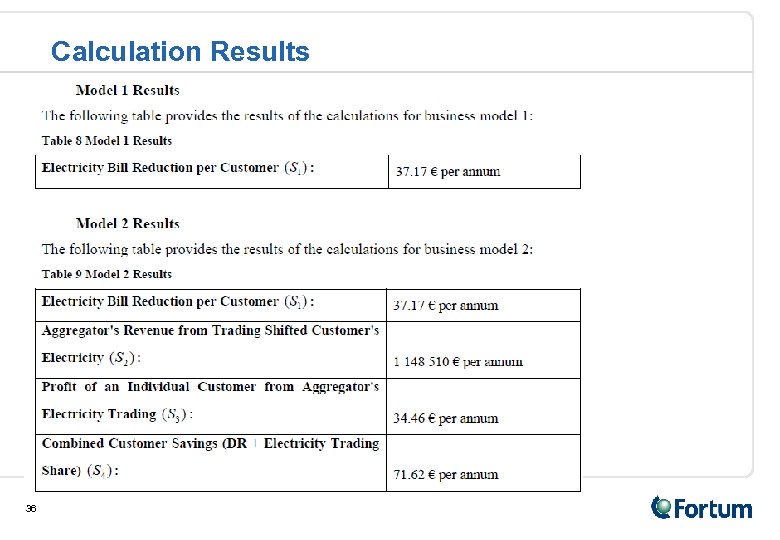
Calculation Results 36
Recommendations for Fortum This thesis was intended to gather major challenges connected with Smart Grid introduction, as well as justifying an aggregator company existence for Fortum Sahkonsiirto Oy company experts. • The results of the calculations have shown that the reviewed aggregator behaviour model 2 (i. e. selling DR on the electricity market (ELSPOT/ELBAS)) has a clear advantage over the model 1 (see Figure 35 for model descriptions). Customers' savings are almost doubled when an aggregator shares a proposed 30% of its revenue from DR electricity trading with them. • Combining Fortum's experience in operating the Nordic wholesale market can create a winning position over various stand-alone energy saving applications, offered by many technology providers. 38
Recommendations for Fortum (continued) The demand response profitability calculations for two possible models have been reviewed in this thesis. However, further researches may be needed to fully understand the nature of an aggregator company positioning among other players on the electricity market. The following researches can be recommended for conduction in this regard: 1. Estimation of operation and management costs of an aggregator-retailer business. 2. Determination of optimal fees and payments charged by an aggregator-retailer. 3. Possible regulatory changes of electricity market for enabling the profitable existence of a 3 rd party aggregator company. 4. Effect of distributed generation on household savings and profit of an aggregator -retailer company. 5. Incorporation of PHEVs charging network into existing distribution grid and ways of making business out of it for an aggregator company. 6. Demand response profitability studies for other customer groups (e. g. apartment houses). 7. Determination of the most profitable country areas for introduction of aggregation business. 39
Скачать презентацию Master s Thesis Project Presentation TECHNOLOGICAL AND BUSINESS CHALLENGES
7875d4c6f182e167882d656660f763b9.ppt