 Скачать презентацию Master Class 16 th June 2012 Low Carbon
7ee0a4dfb89c9f4a1a346ad70904ca3a.ppt
- Количество слайдов: 69



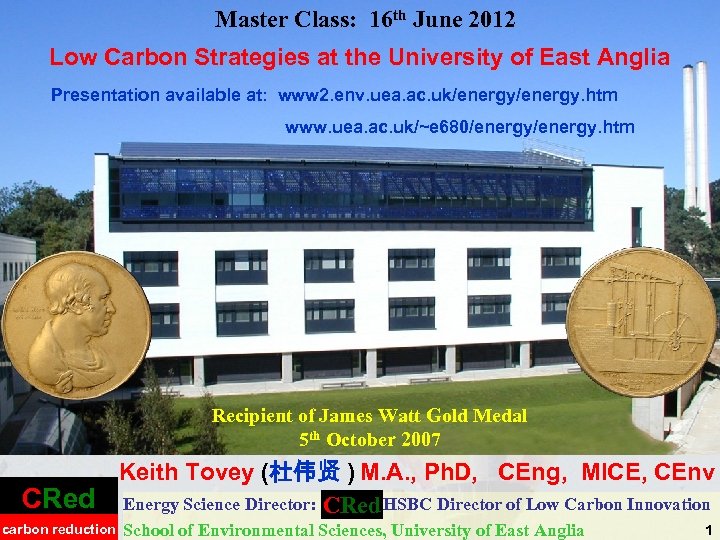
Master Class: 16 th June 2012 Low Carbon Strategies at the University of East Anglia Presentation available at: www 2. env. uea. ac. uk/energy. htm www. uea. ac. uk/~e 680/energy. htm Recipient of James Watt Gold Medal 5 th October 2007 Keith Tovey (杜伟贤 ) M. A. , Ph. D, CEng, MICE, CEnv CRed Energy Science Director: HSBC Director of Low Carbon Innovation CRed carbon reduction School of Environmental Sciences, University of East Anglia 1
Low Carbon Strategies at the University of East Anglia • Low Energy Buildings and their Management • Low Carbon Energy Provision – – – Photovoltaics CHP Adsorption chilling Biomass Gasification Coffee Break at 10: 05 • The Energy Tour – Depart at 10: 20 • Biomass Plant • CHP • ZICER • Questions & Answers • - Energy Security: Hard Choices facing the UK 2
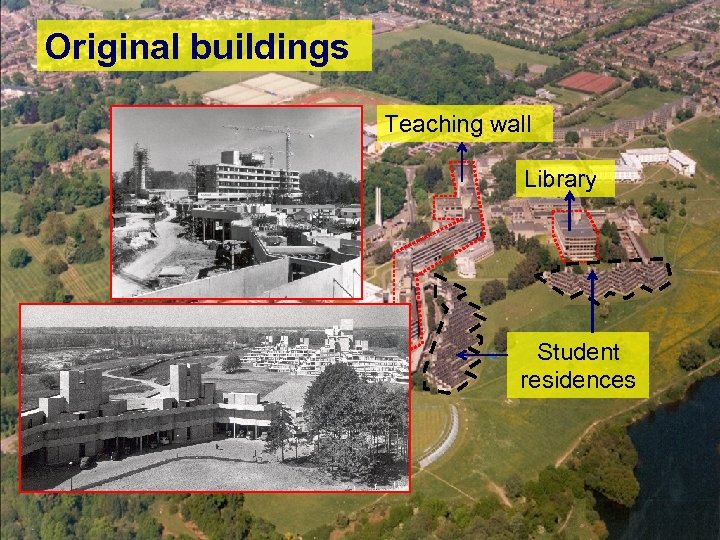
Original buildings Teaching wall Library Student residences 3
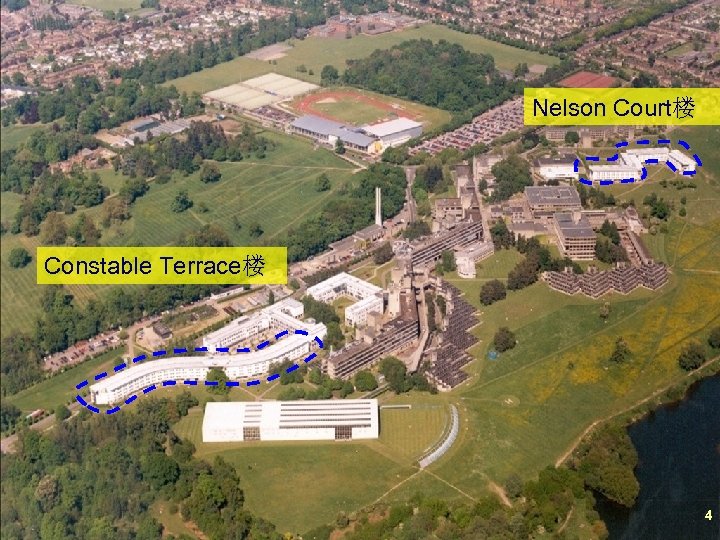
Nelson Court楼 Constable Terrace楼 4
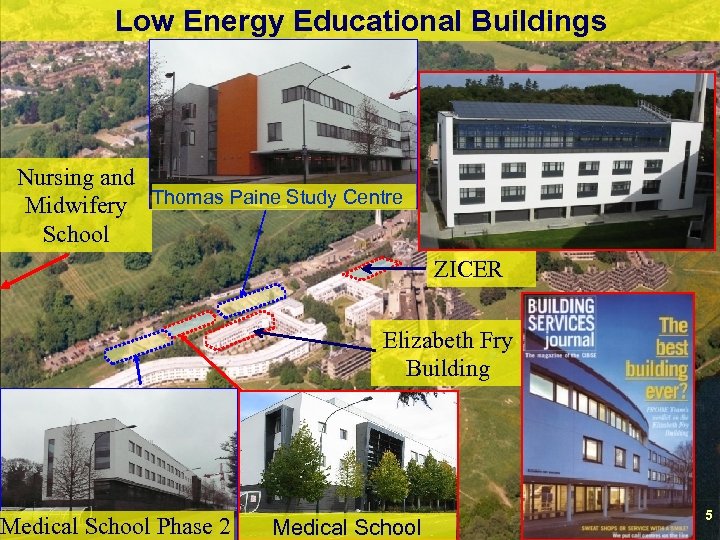
Low Energy Educational Buildings Nursing and Midwifery Thomas Paine Study Centre School Medical School Phase 2 ZICER Elizabeth Fry Building Medical School 5
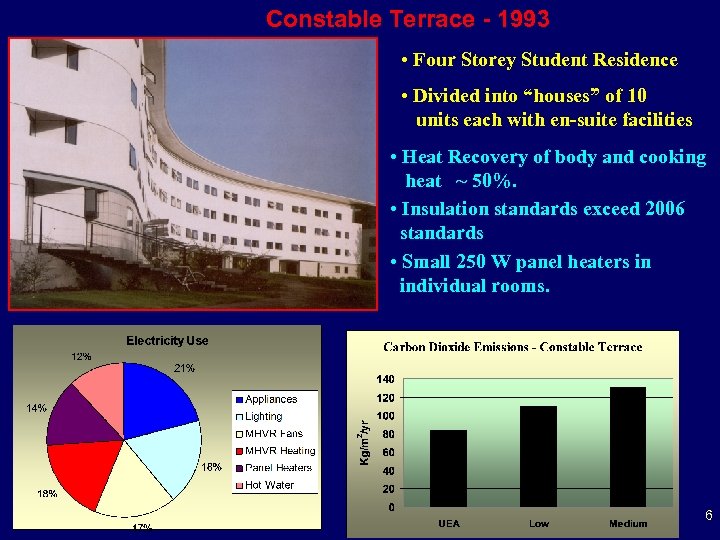
Constable Terrace - 1993 • Four Storey Student Residence • Divided into “houses” of 10 units each with en-suite facilities • Heat Recovery of body and cooking heat ~ 50%. • Insulation standards exceed 2006 standards • Small 250 W panel heaters in individual rooms. 6
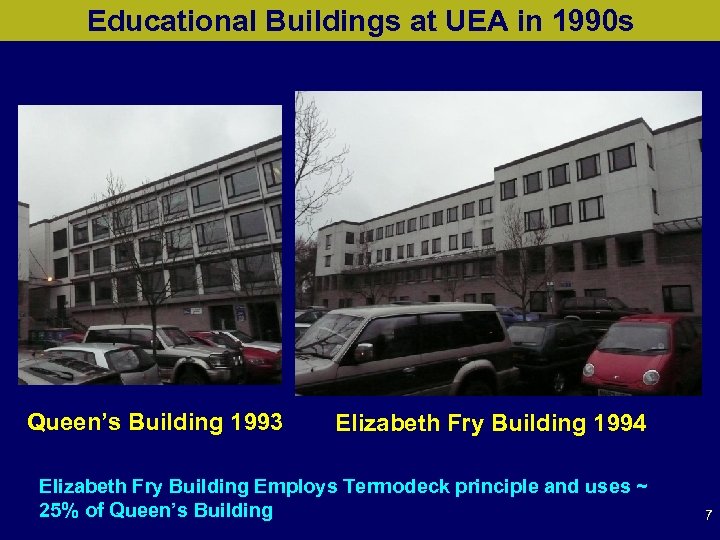
Educational Buildings at UEA in 1990 s Queen’s Building 1993 Elizabeth Fry Building 1994 Elizabeth Fry Building Employs Termodeck principle and uses ~ 25% of Queen’s Building 7
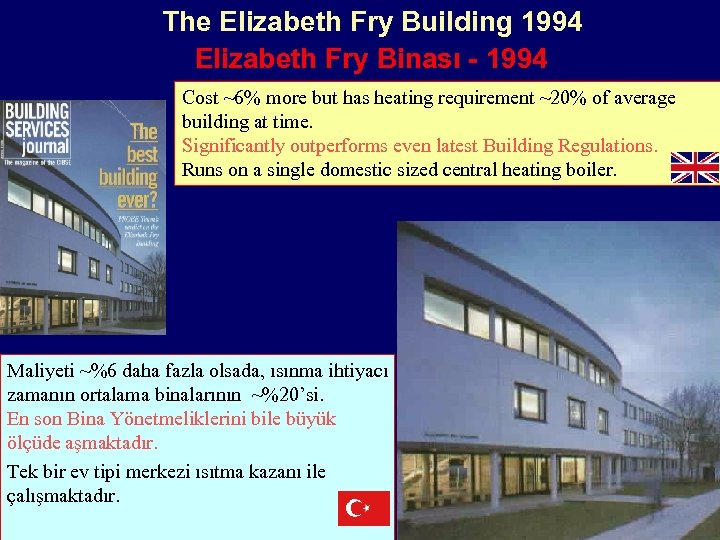
The Elizabeth Fry Building 1994 Elizabeth Fry Binası - 1994 Cost ~6% more but has heating requirement ~20% of average building at time. Significantly outperforms even latest Building Regulations. Runs on a single domestic sized central heating boiler. Maliyeti ~%6 daha fazla olsada, ısınma ihtiyacı zamanın ortalama binalarının ~%20’si. En son Bina Yönetmeliklerini bile büyük ölçüde aşmaktadır. Tek bir ev tipi merkezi ısıtma kazanı ile çalışmaktadır. 8
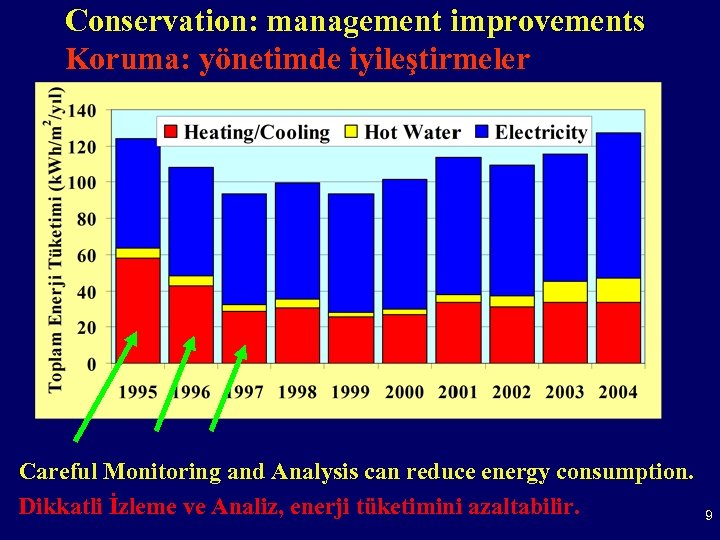
Conservation: management improvements Koruma: yönetimde iyileştirmeler Careful Monitoring and Analysis can reduce energy consumption. Dikkatli İzleme ve Analiz, enerji tüketimini azaltabilir. 9
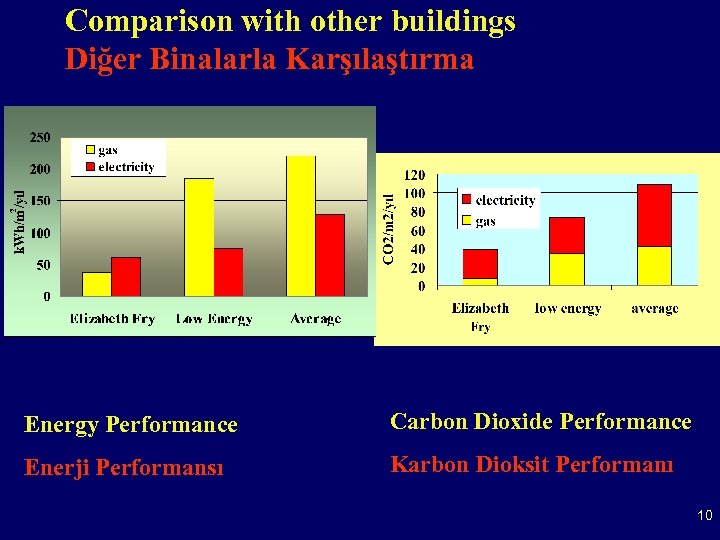
Comparison with other buildings Diğer Binalarla Karşılaştırma Energy Performance Carbon Dioxide Performance Enerji Performansı Karbon Dioksit Performanı 10
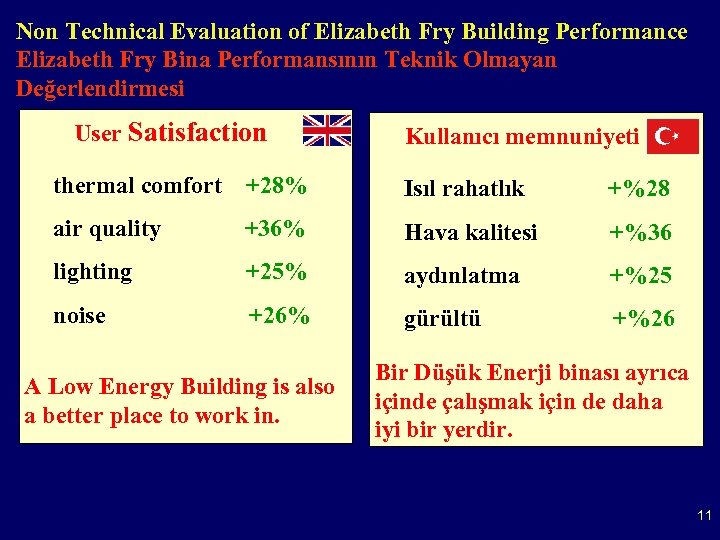
Non Technical Evaluation of Elizabeth Fry Building Performance Elizabeth Fry Bina Performansının Teknik Olmayan Değerlendirmesi User Satisfaction Kullanıcı memnuniyeti thermal comfort +28% Isıl rahatlık +%28 air quality +36% Hava kalitesi +%36 lighting +25% aydınlatma +%25 noise +26% gürültü +%26 A Low Energy Building is also a better place to work in. Bir Düşük Enerji binası ayrıca içinde çalışmak için de daha iyi bir yerdir. 11
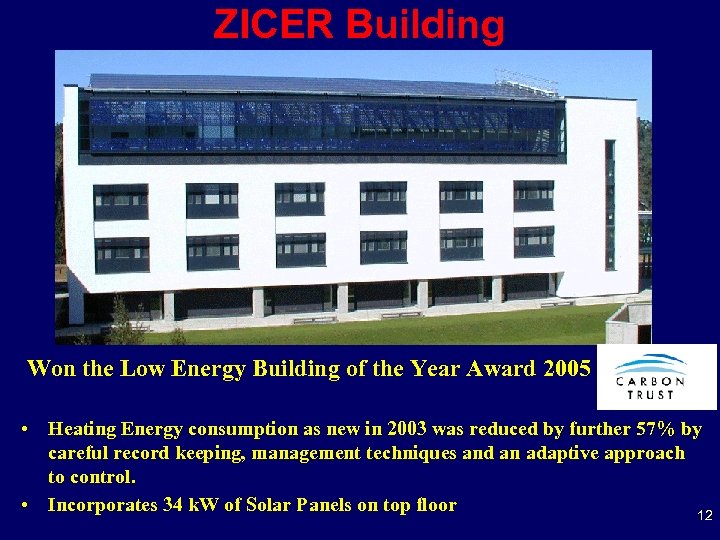
ZICER Building Won the Low Energy Building of the Year Award 2005 • Heating Energy consumption as new in 2003 was reduced by further 57% by careful record keeping, management techniques and an adaptive approach to control. • Incorporates 34 k. W of Solar Panels on top floor 12
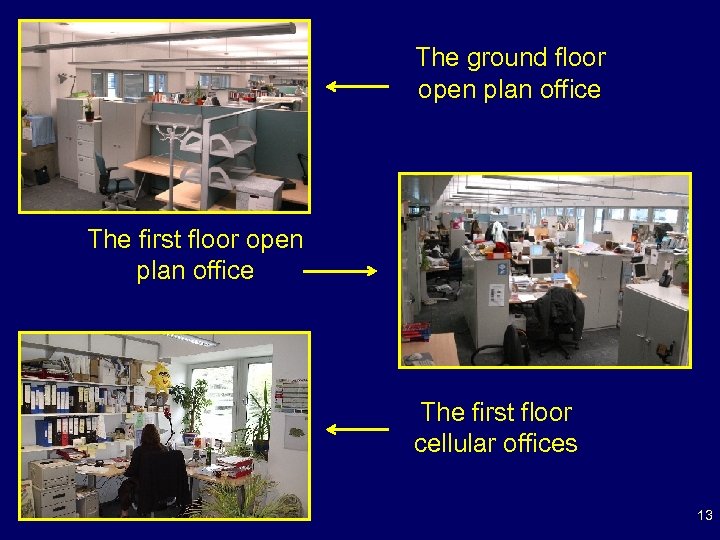
The ground floor open plan office The first floor cellular offices 13
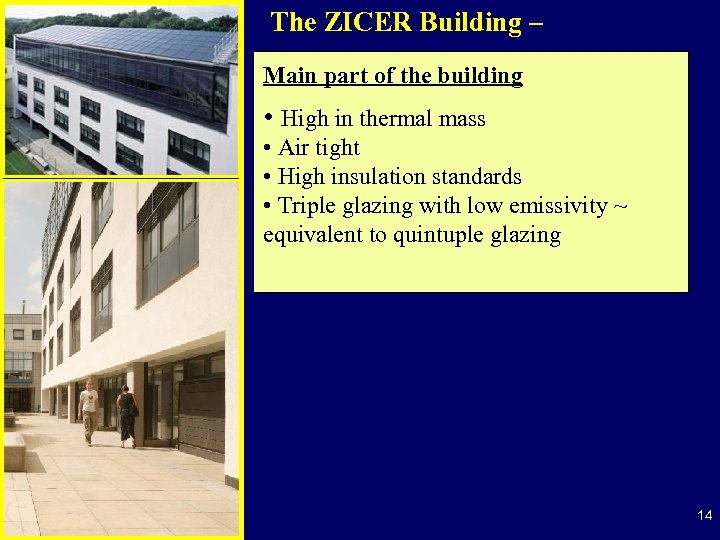
The ZICER Building – Main part of the building • High in thermal mass • Air tight • High insulation standards • Triple glazing with low emissivity ~ equivalent to quintuple glazing 14
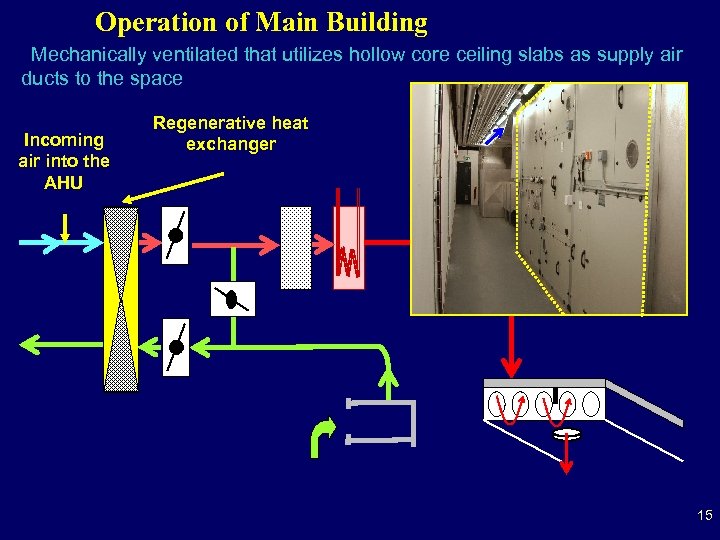
Operation of Main Building Mechanically ventilated that utilizes hollow core ceiling slabs as supply air ducts to the space Incoming air into the AHU Regenerative heat exchanger 15
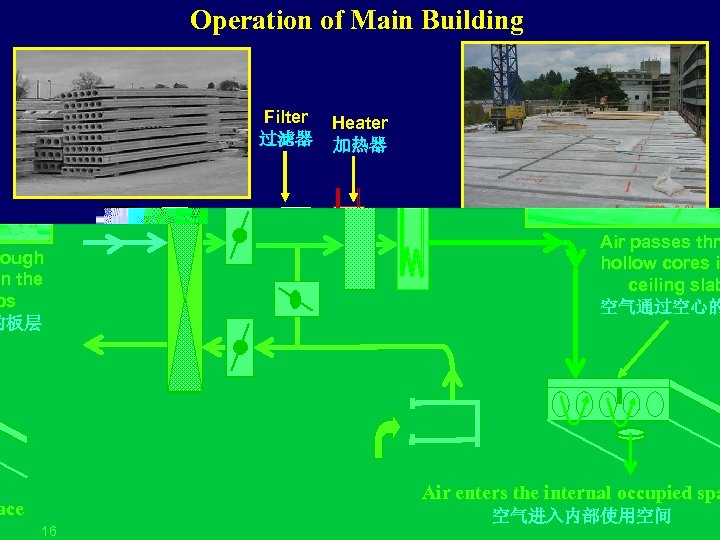
Operation of Main Building Filter 过滤器 Heater 加热器 Air passes through hollow cores in the ceiling slabs 空气通过空心的板层 Air enters the internal occupied space 空气进入内部使用空间 16
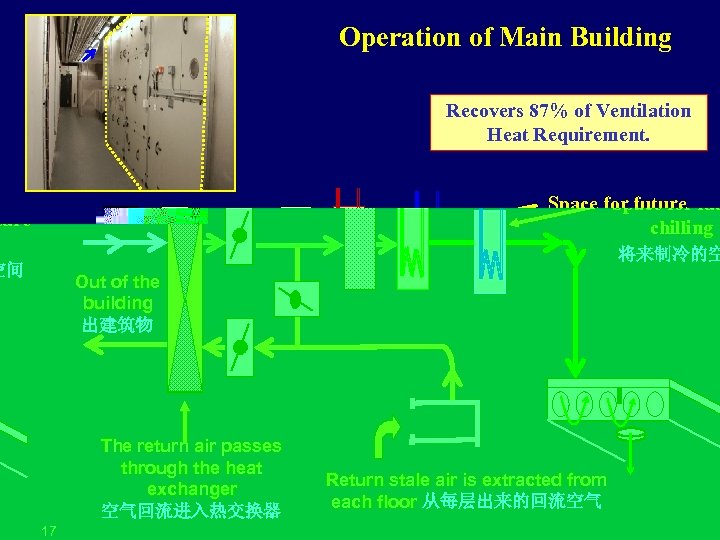
Operation of Main Building Recovers 87% of Ventilation Heat Requirement. Space for future chilling 将来制冷的空间 Out of the building 出建筑物 The return air passes through the heat exchanger 空气回流进入热交换器 Return stale air is extracted from each floor 从每层出来的回流空气 17
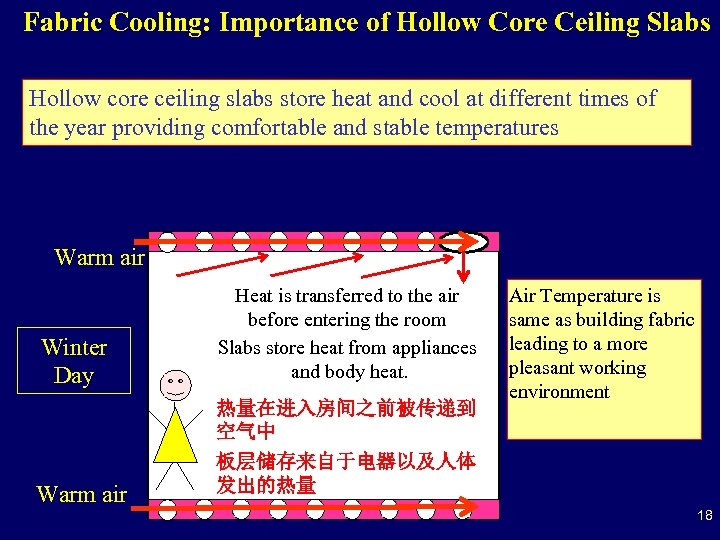
Fabric Cooling: Importance of Hollow Core Ceiling Slabs Hollow core ceiling slabs store heat and cool at different times of the year providing comfortable and stable temperatures Warm air Winter Day Warm air Heat is transferred to the air before entering the room Slabs store heat from appliances and body heat. 热量在进入房间之前被传递到 空气中 板层储存来自于电器以及人体 发出的热量 Air Temperature is same as building fabric leading to a more pleasant working environment 18
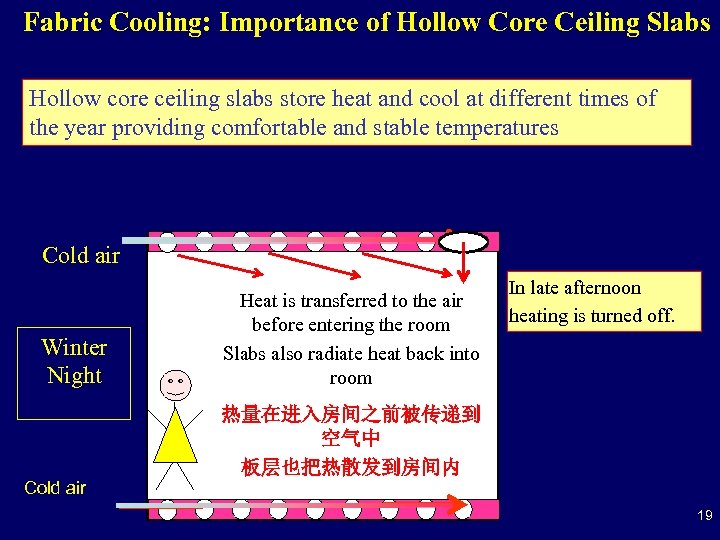
Fabric Cooling: Importance of Hollow Core Ceiling Slabs Hollow core ceiling slabs store heat and cool at different times of the year providing comfortable and stable temperatures Cold air Winter Night Heat is transferred to the air before entering the room Slabs also radiate heat back into room In late afternoon heating is turned off. 热量在进入房间之前被传递到 空气中 板层也把热散发到房间内 Cold air 19
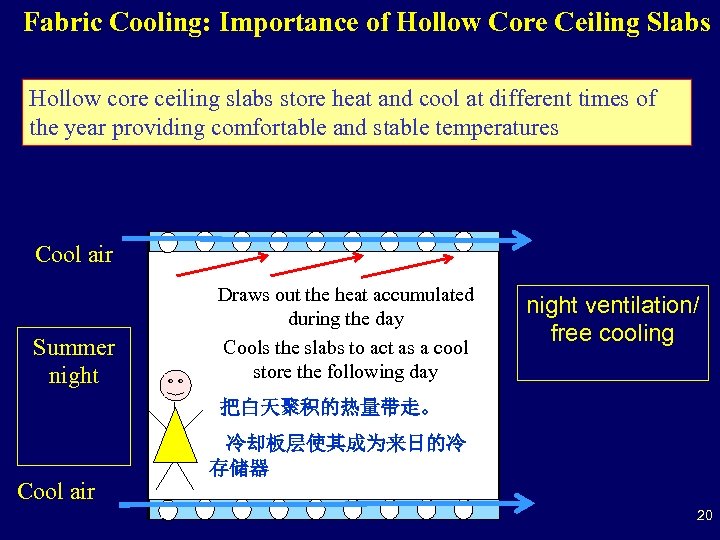
Fabric Cooling: Importance of Hollow Core Ceiling Slabs Hollow core ceiling slabs store heat and cool at different times of the year providing comfortable and stable temperatures Cool air Summer night Draws out the heat accumulated during the day Cools the slabs to act as a cool store the following day night ventilation/ free cooling 把白天聚积的热量带走。 Cool air 冷却板层使其成为来日的冷 存储器 20
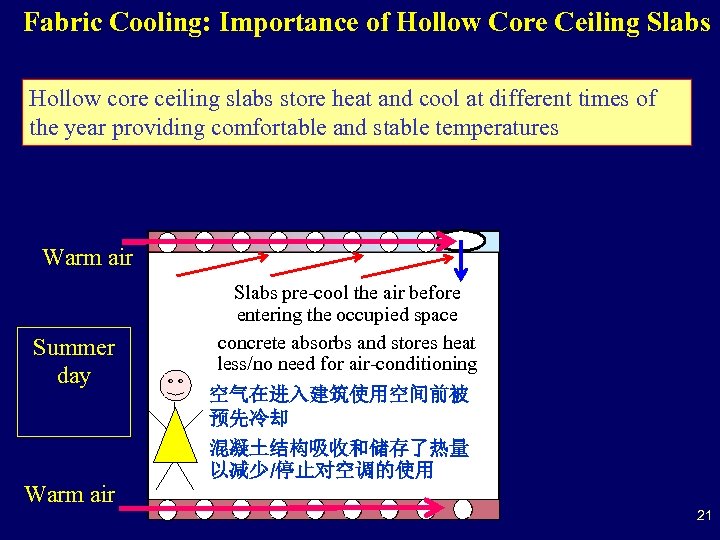
Fabric Cooling: Importance of Hollow Core Ceiling Slabs Hollow core ceiling slabs store heat and cool at different times of the year providing comfortable and stable temperatures Warm air Summer day Warm air Slabs pre-cool the air before entering the occupied space concrete absorbs and stores heat less/no need for air-conditioning 空气在进入建筑使用空间前被 预先冷却 混凝土结构吸收和储存了热量 以减少/停止对空调的使用 21
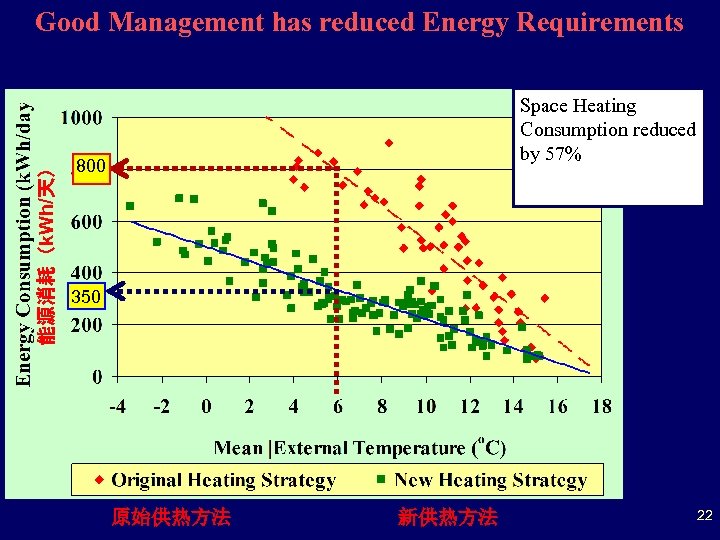
能源消耗(k. Wh/天) Good Management has reduced Energy Requirements Space Heating Consumption reduced by 57% 800 350 原始供热方法 新供热方法 22
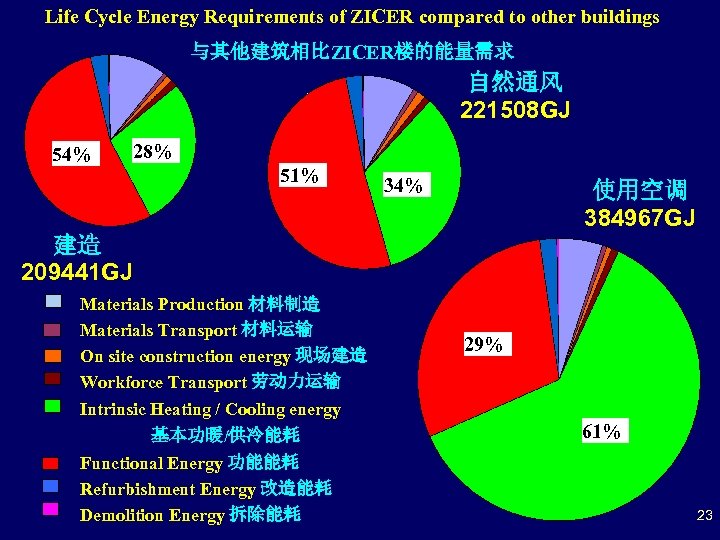
Life Cycle Energy Requirements of ZICER compared to other buildings 与其他建筑相比ZICER楼的能量需求 自然通风 221508 GJ 54% 28% 51% 34% 使用空调 384967 GJ 建造 209441 GJ Materials Production 材料制造 Materials Transport 材料运输 On site construction energy 现场建造 Workforce Transport 劳动力运输 Intrinsic Heating / Cooling energy 基本功暖/供冷能耗 Functional Energy 功能能耗 Refurbishment Energy 改造能耗 Demolition Energy 拆除能耗 29% 61% 23
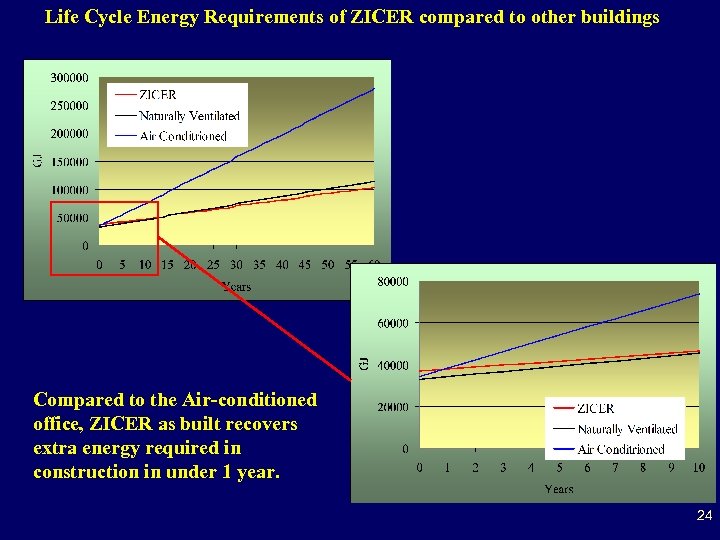
Life Cycle Energy Requirements of ZICER compared to other buildings Compared to the Air-conditioned office, ZICER as built recovers extra energy required in construction in under 1 year. 24
Low Carbon Strategies at the University of East Anglia • Low Energy Buildings and their Management • Low Carbon Energy Provision – Photovoltaics – CHP – Adsorption chilling – Biomass Gasification • The Energy Tour • Energy Security: Hard Choices facing the UK 25
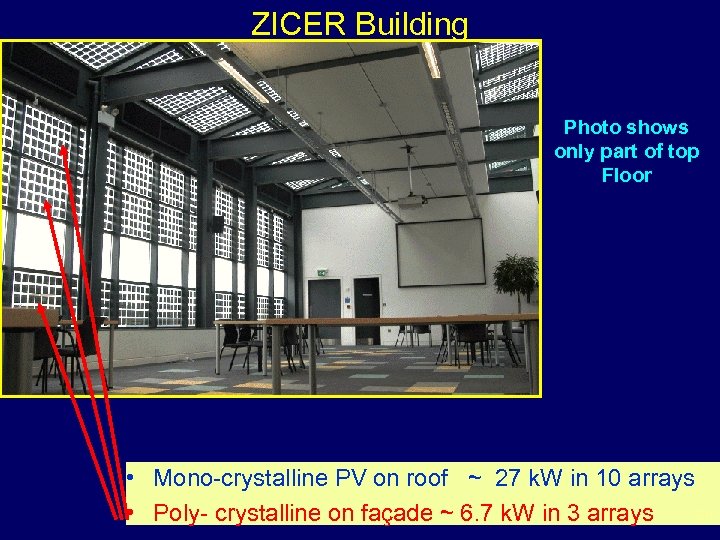
ZICER Building Photo shows only part of top Floor • Mono-crystalline PV on roof ~ 27 k. W in 10 arrays 26 • Poly- crystalline on façade ~ 6. 7 k. W in 3 arrays
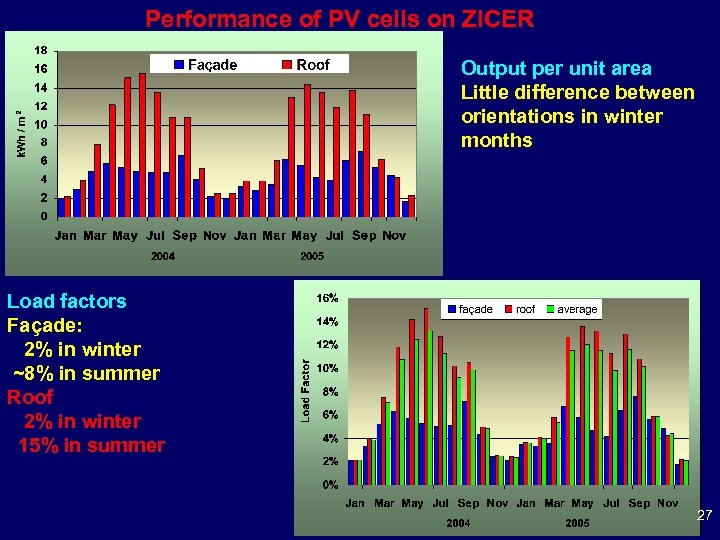
Performance of PV cells on ZICER Output per unit area Little difference between orientations in winter months Load factors Façade: 2% in winter ~8% in summer Roof 2% in winter 15% in summer 27
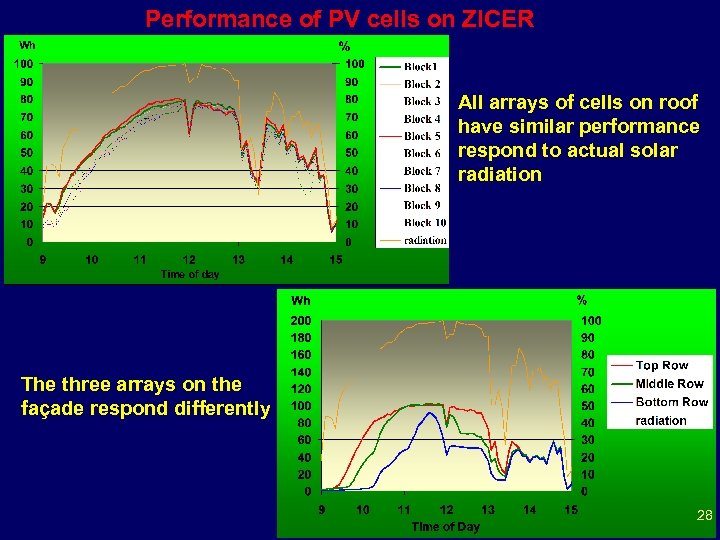
Performance of PV cells on ZICER All arrays of cells on roof have similar performance respond to actual solar radiation The three arrays on the façade respond differently 28
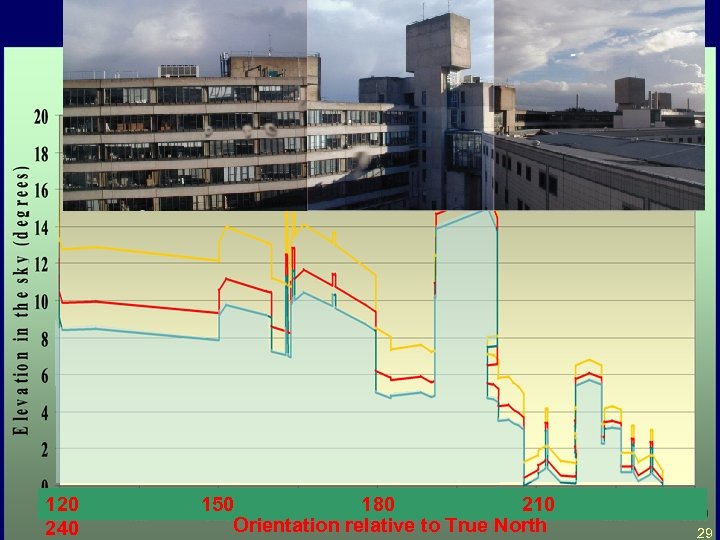
120 240 150 180 210 Orientation relative to True North 29
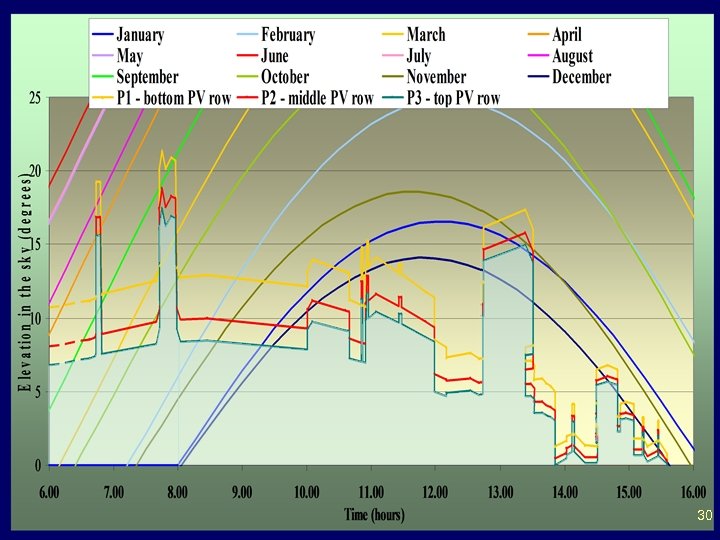
30
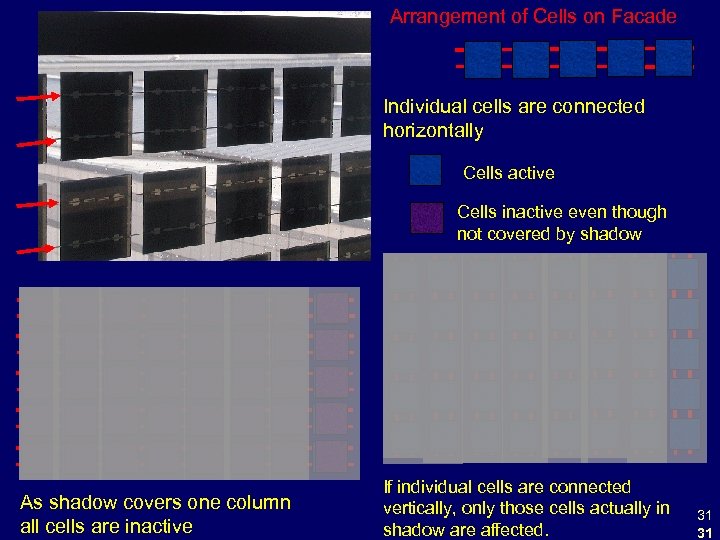
Arrangement of Cells on Facade Individual cells are connected horizontally Cells active Cells inactive even though not covered by shadow As shadow covers one column all cells are inactive If individual cells are connected vertically, only those cells actually in shadow are affected. 31 31
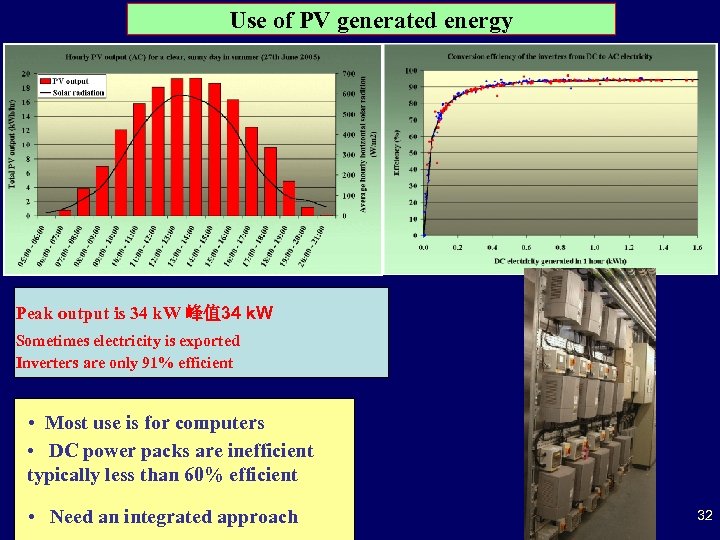
Use of PV generated energy Peak output is 34 k. W 峰值 34 k. W Sometimes electricity is exported Inverters are only 91% efficient • Most use is for computers • DC power packs are inefficient typically less than 60% efficient • Need an integrated approach 32
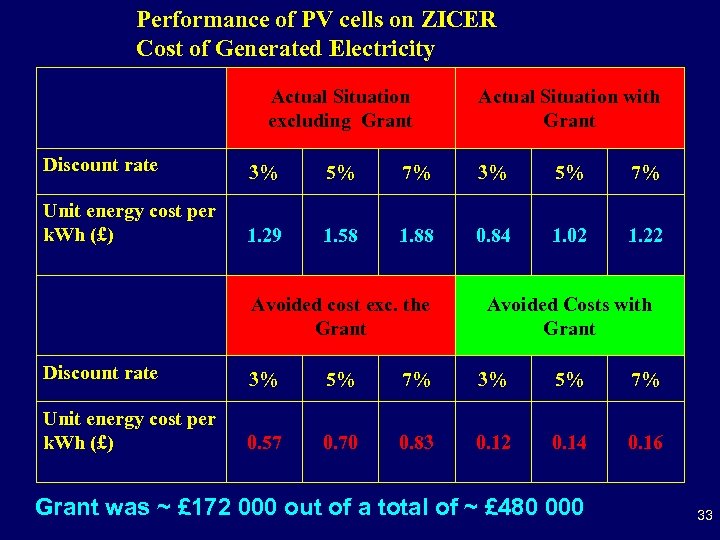
Performance of PV cells on ZICER Cost of Generated Electricity Actual Situation excluding Grant Actual Situation with Grant Discount rate 3% 5% 7% Unit energy cost per k. Wh (£) 1. 29 1. 58 1. 88 0. 84 1. 02 1. 22 Avoided cost exc. the Grant Avoided Costs with Grant Discount rate 3% 5% 7% Unit energy cost per k. Wh (£) 0. 57 0. 70 0. 83 0. 12 0. 14 0. 16 Grant was ~ £ 172 000 out of a total of ~ £ 480 000 33
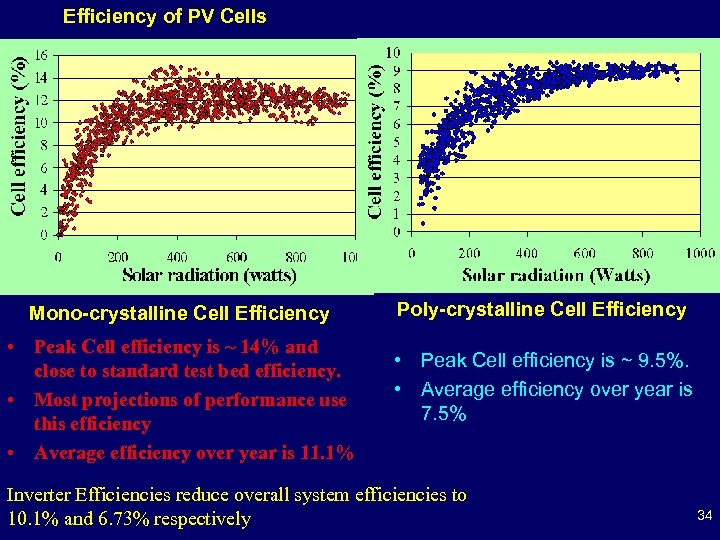
Efficiency of PV Cells Mono-crystalline Cell Efficiency • Peak Cell efficiency is ~ 14% and close to standard test bed efficiency. • Most projections of performance use this efficiency • Average efficiency over year is 11. 1% Poly-crystalline Cell Efficiency • Peak Cell efficiency is ~ 9. 5%. • Average efficiency over year is 7. 5% Inverter Efficiencies reduce overall system efficiencies to 10. 1% and 6. 73% respectively 34
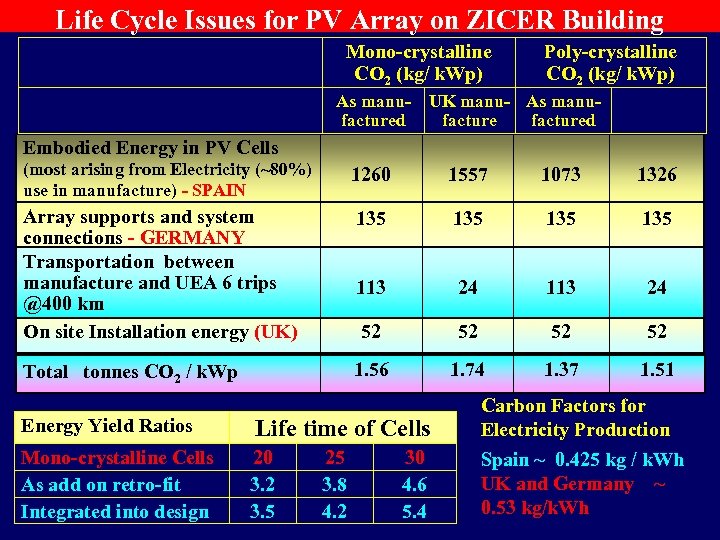
Life Cycle Issues for PV Array on ZICER Building Mono-crystalline CO 2 (kg/ k. Wp) As manufactured Poly-crystalline CO 2 (kg/ k. Wp) UK manu- As manufactured Embodied Energy in PV Cells (most arising from Electricity (~80%) use in manufacture) - SPAIN 1260 1557 1073 1326 Array supports and system connections - GERMANY Transportation between manufacture and UEA 6 trips @400 km On site Installation energy (UK) 135 135 113 24 52 52 Total tonnes CO 2 / k. Wp 1. 56 1. 74 1. 37 1. 51 Energy Yield Ratios Life time of Cells Mono-crystalline Cells As add on retro-fit Integrated into design 20 3. 2 3. 5 25 3. 8 4. 2 30 4. 6 5. 4 Carbon Factors for Electricity Production Spain ~ 0. 425 kg / k. Wh UK and Germany ~ 0. 53 kg/k. Wh
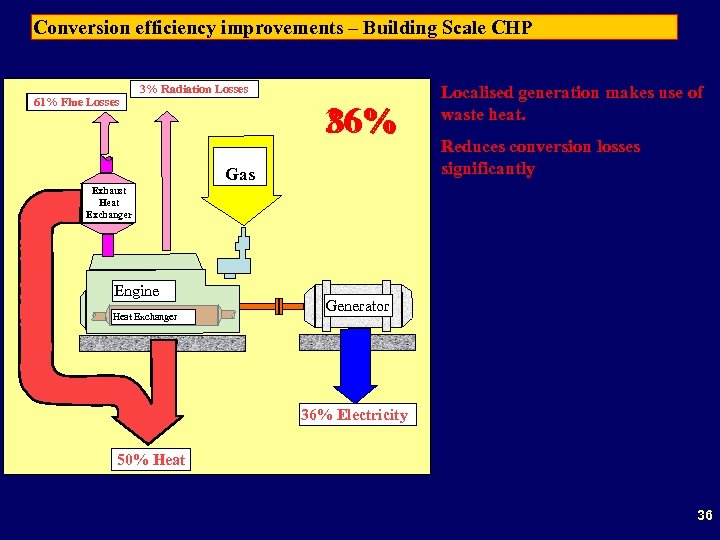
Conversion efficiency improvements – Building Scale CHP 3% Radiation Losses 11% Flue Losses 61% Flue Losses 36% 86% Gas Localised generation makes use of waste heat. Reduces conversion losses significantly Exhaust Heat Exchanger Engine Heat Exchanger Generator 36% Electricity 50% Heat 36
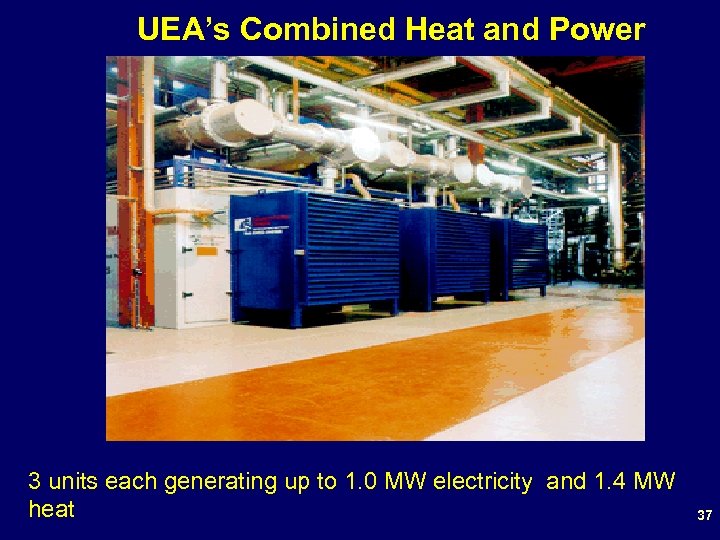
UEA’s Combined Heat and Power 3 units each generating up to 1. 0 MW electricity and 1. 4 MW heat 37
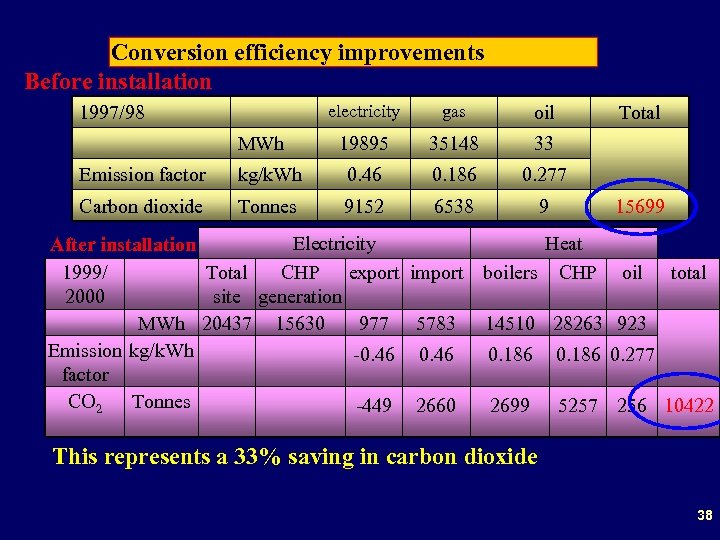
Conversion efficiency improvements Before installation electricity 1997/98 MWh gas oil 19895 35148 33 Total Emission factor kg/k. Wh 0. 46 0. 186 0. 277 Carbon dioxide Tonnes 9152 6538 9 Electricity After installation 1999/ Total CHP export 2000 site generation MWh 20437 15630 977 Emission kg/k. Wh -0. 46 factor CO 2 Tonnes -449 15699 Heat import boilers CHP oil total 5783 14510 28263 923 0. 46 0. 186 0. 277 2660 2699 5257 256 10422 This represents a 33% saving in carbon dioxide 38
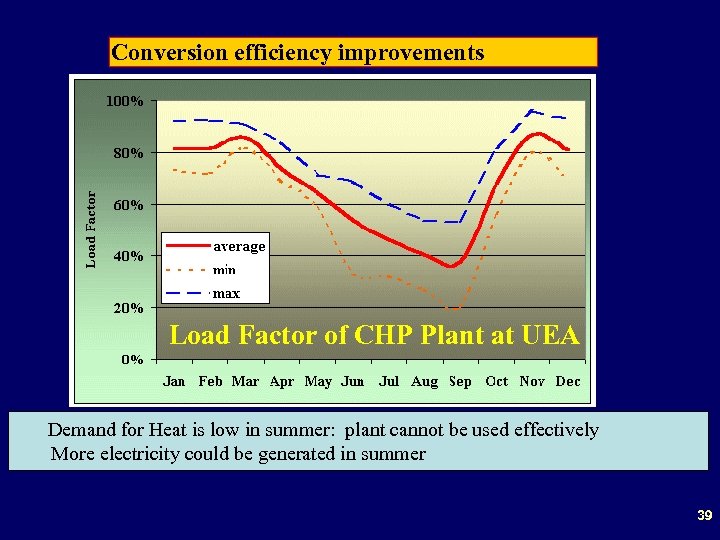
Conversion efficiency improvements Load Factor of CHP Plant at UEA Demand for Heat is low in summer: plant cannot be used effectively More electricity could be generated in summer 39
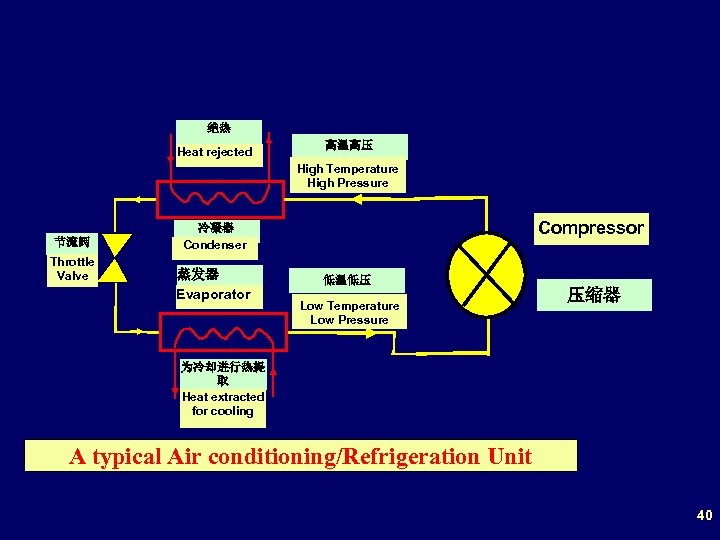
绝热 Heat rejected 高温高压 High Temperature High Pressure 节流阀 Throttle Valve Compressor 冷凝器 Condenser 蒸发器 Evaporator 低温低压 Low Temperature Low Pressure 压缩器 为冷却进行热提 取 Heat extracted for cooling A typical Air conditioning/Refrigeration Unit 40
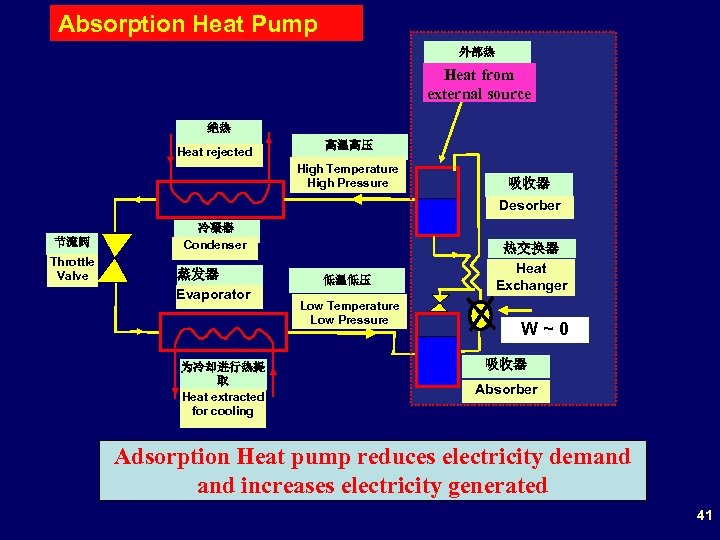
Absorption Heat Pump 外部热 Heat from external source 绝热 Heat rejected 高温高压 High Temperature High Pressure 吸收器 Desorber 节流阀 Throttle Valve 冷凝器 Condenser 蒸发器 Evaporator 为冷却进行热提 取 Heat extracted for cooling 低温低压 Low Temperature Low Pressure 热交换器 Heat Exchanger W~0 吸收器 Absorber Adsorption Heat pump reduces electricity demand increases electricity generated 41
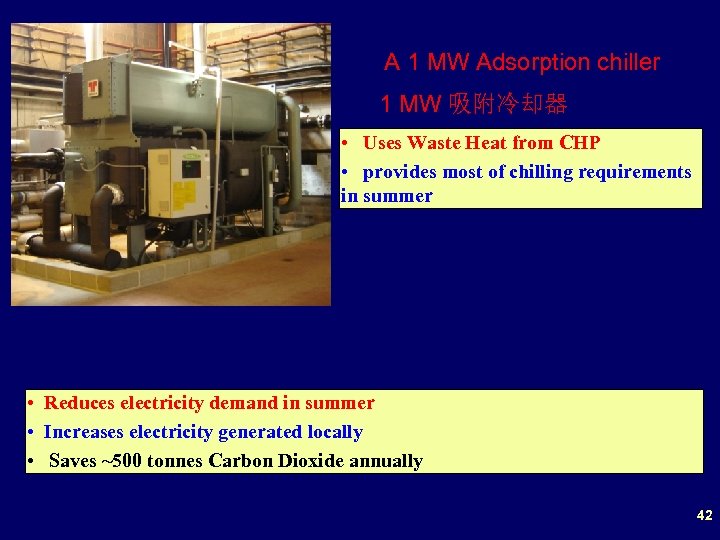
A 1 MW Adsorption chiller 1 MW 吸附冷却器 • Uses Waste Heat from CHP • provides most of chilling requirements in summer • Reduces electricity demand in summer • Increases electricity generated locally • Saves ~500 tonnes Carbon Dioxide annually 42
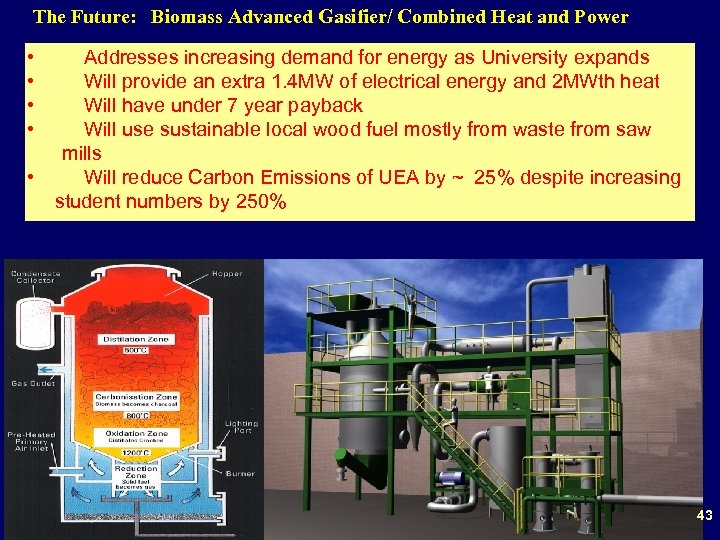
The Future: Biomass Advanced Gasifier/ Combined Heat and Power • • • Addresses increasing demand for energy as University expands Will provide an extra 1. 4 MW of electrical energy and 2 MWth heat Will have under 7 year payback Will use sustainable local wood fuel mostly from waste from saw mills Will reduce Carbon Emissions of UEA by ~ 25% despite increasing student numbers by 250% 43
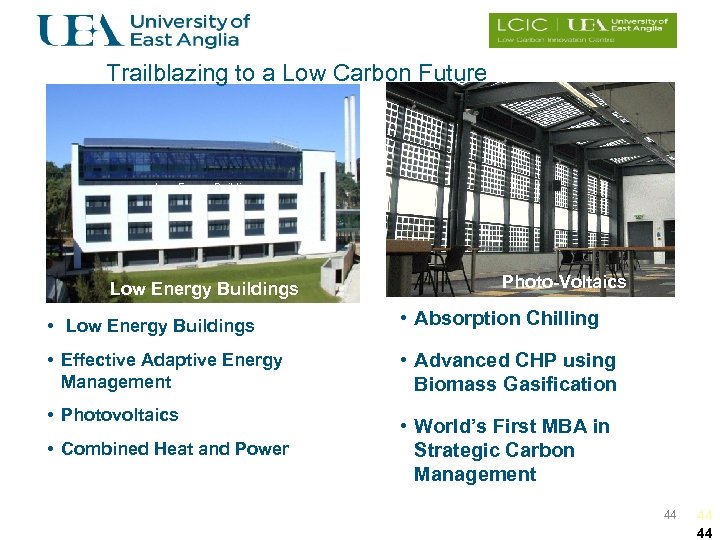
Trailblazing to a Low Carbon Future Low Energy Buildings Photo-Voltaics • Low Energy Buildings • Absorption Chilling • Effective Adaptive Energy Management • Advanced CHP using Biomass Gasification • Photovoltaics Efficient CHP • Combined Heat and Power Absorption Chilling • World’s First MBA in Strategic Carbon Management 44 44 44
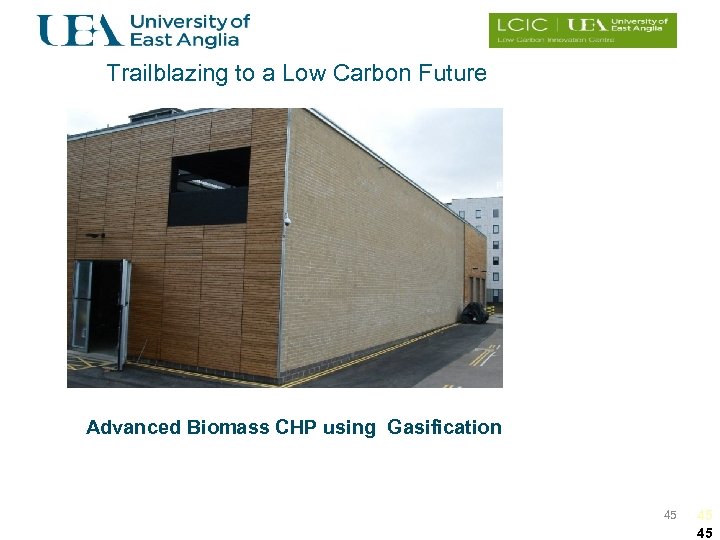
Trailblazing to a Low Carbon Future Photo-Voltaics Efficient CHP Advanced Biomass CHP using Gasification Absorption Chilling 45 45 45
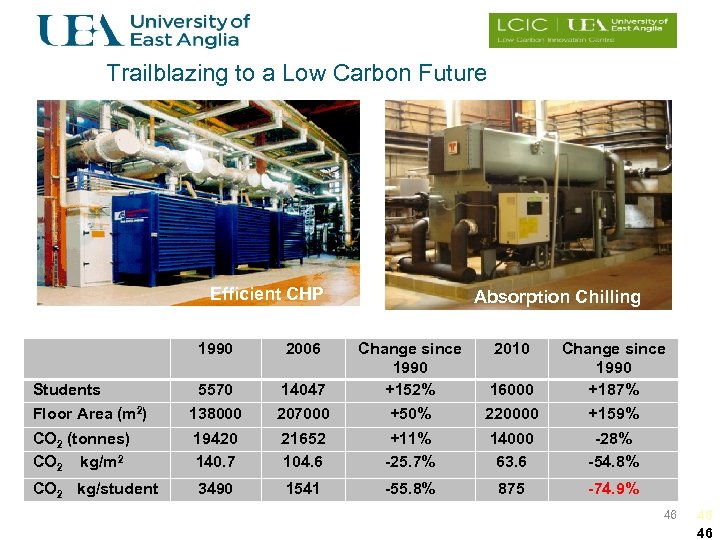
Trailblazing to a Low Carbon Future Efficient CHP 1990 2006 Students Floor Area (m 2) 5570 138000 CO 2 (tonnes) CO 2 kg/m 2 CO 2 kg/student Absorption Chilling 14047 207000 Change since 1990 +152% +50% 2010 16000 220000 Change since 1990 +187% +159% 19420 140. 7 21652 104. 6 +11% -25. 7% 14000 63. 6 -28% -54. 8% 3490 1541 -55. 8% 875 -74. 9% 46 46 46
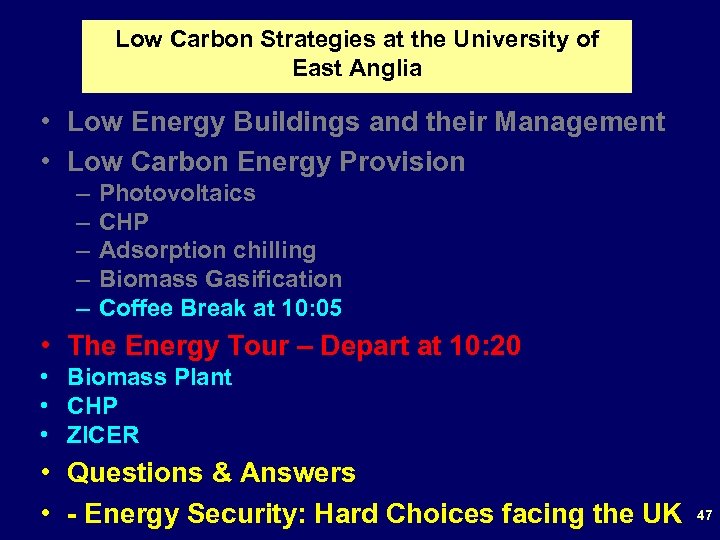
Low Carbon Strategies at the University of East Anglia • Low Energy Buildings and their Management • Low Carbon Energy Provision – – – Photovoltaics CHP Adsorption chilling Biomass Gasification Coffee Break at 10: 05 • The Energy Tour – Depart at 10: 20 • Biomass Plant • CHP • ZICER • Questions & Answers • - Energy Security: Hard Choices facing the UK 47
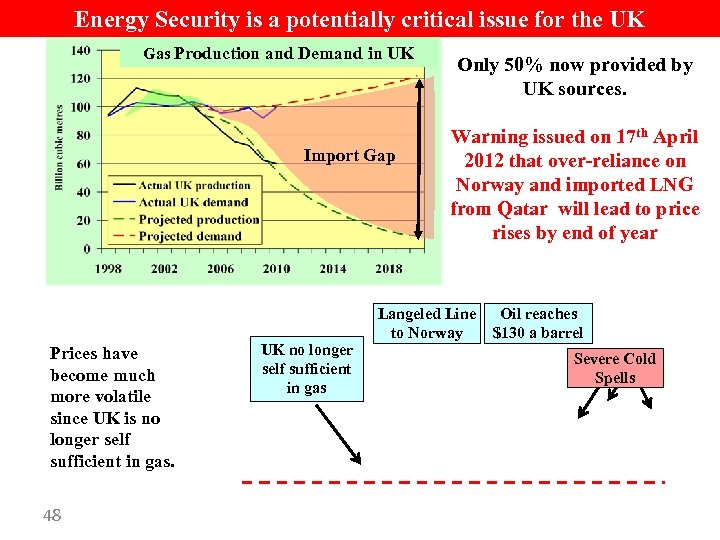
Energy Security is a potentially critical issue for the UK Gas Production and Demand in UK Import Gap Prices have become much more volatile since UK is no longer self sufficient in gas. 48 UK no longer self sufficient in gas Only 50% now provided by UK sources. Warning issued on 17 th April 2012 that over-reliance on Norway and imported LNG from Qatar will lead to price rises by end of year Langeled Line Oil reaches to Norway $130 a barrel Severe Cold Spells
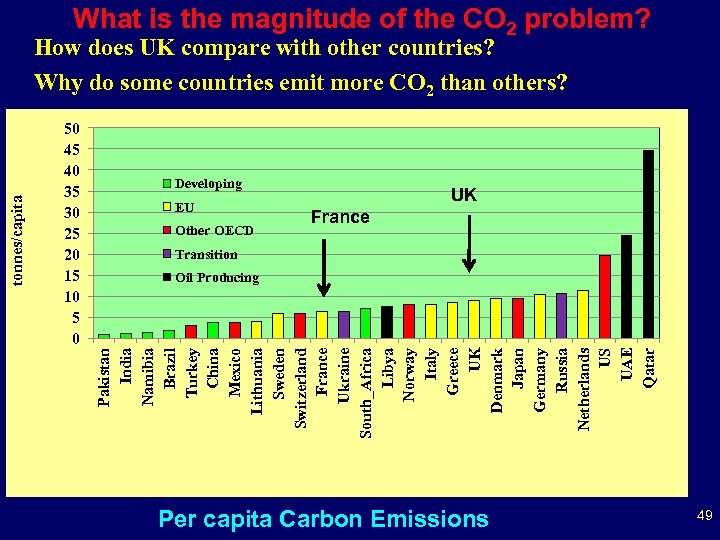
What is the magnitude of the CO 2 problem? 50 45 40 35 30 25 20 15 10 5 0 Developing EU Other OECD UK France Transition Oil Producing Pakistan India Namibia Brazil Turkey China Mexico Lithuania Sweden Switzerland France Ukraine South_Africa Libya Norway Italy Greece UK Denmark Japan Germany Russia Netherlands US UAE Qatar tonnes/capita How does UK compare with other countries? Why do some countries emit more CO 2 than others? Per capita Carbon Emissions 49
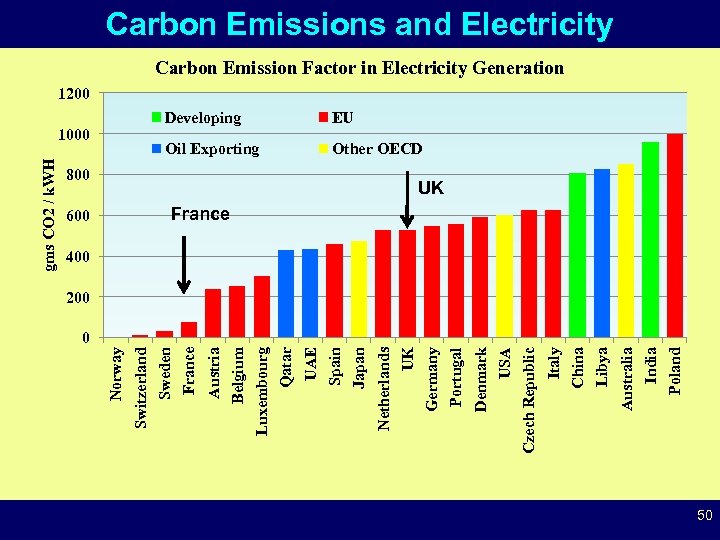
Poland India Australia Libya China Italy Czech Republic USA 800 Denmark EU Oil Exporting Portugal Developing Germany UK Netherlands Japan Spain UAE Qatar Luxembourg Belgium Austria 600 France 1000 Sweden Switzerland Norway gms CO 2 / k. WH Carbon Emissions and Electricity Carbon Emission Factor in Electricity Generation 1200 Other OECD UK France 400 200 0 50
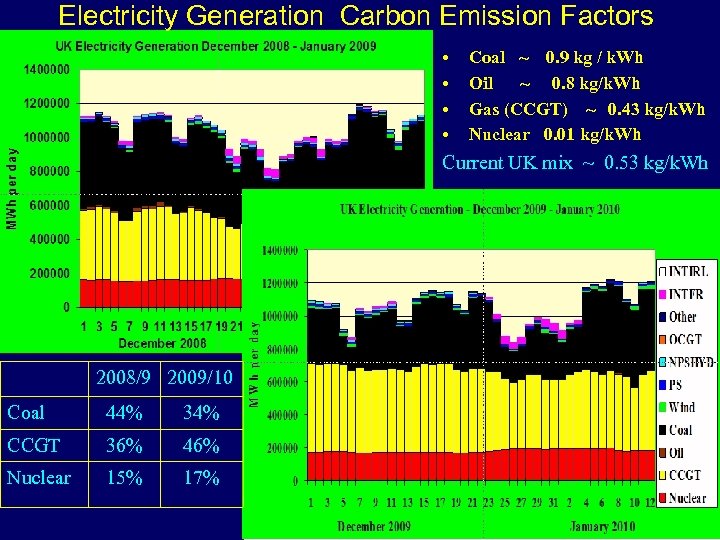
Electricity Generation Carbon Emission Factors • • Coal ~ 0. 9 kg / k. Wh Oil ~ 0. 8 kg/k. Wh Gas (CCGT) ~ 0. 43 kg/k. Wh Nuclear 0. 01 kg/k. Wh Current UK mix ~ 0. 53 kg/k. Wh 2008/9 2009/10 Coal 44% 34% CCGT 36% 46% Nuclear 15% 17%
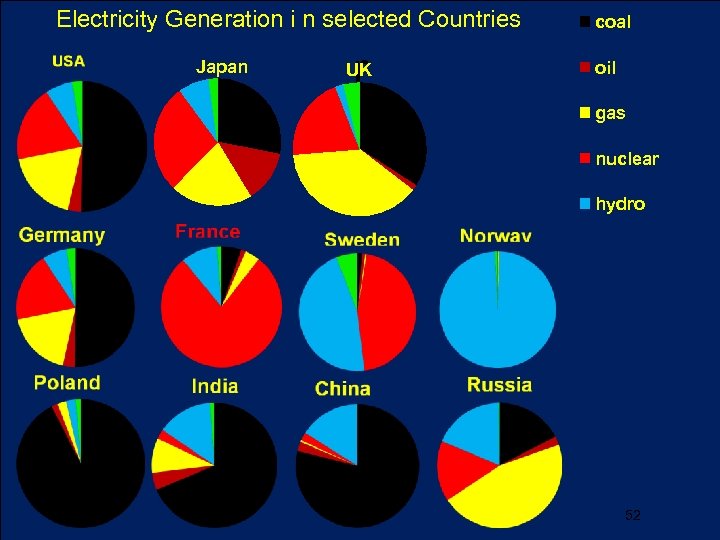
Electricity Generation i n selected Countries Japan r UK coal oil gas nuclear hydro 52
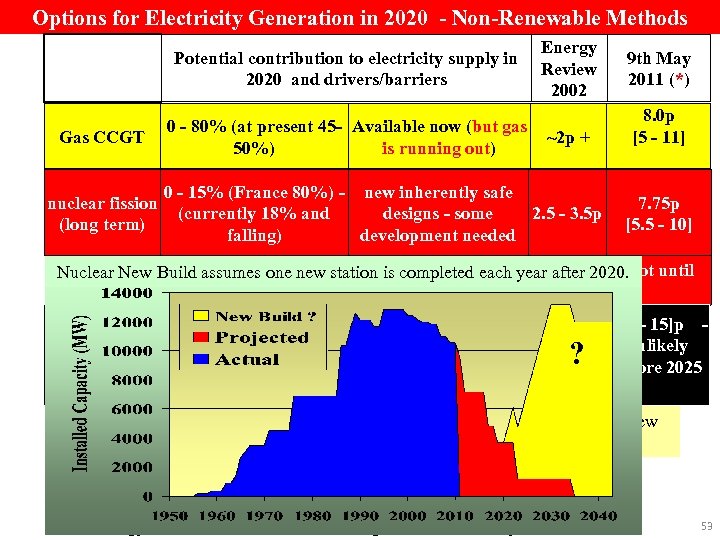
Options for Electricity Generation in 2020 - Non-Renewable Methods Potential contribution to electricity supply in 2020 and drivers/barriers Gas CCGT Energy Review 2002 0 - 80% (at present 45 - Available now (but gas ~2 p + 50%) is running out) 0 - 15% (France 80%) - new inherently safe nuclear fission (currently 18% and designs - some 2. 5 - 3. 5 p (long term) falling) development needed 9 th May 2011 (*) 8. 0 p [5 - 11] 7. 75 p [5. 5 - 10] not available until 2040 at earliest not until Nuclear New nuclear fusion. Build assumes one new station is completed each year after 2020. unavailable 2050 for significant impact [7. 5 - 15]p - Available now: Not Coal currently ~40% but viable without Carbon unlikely "Clean Coal" 2. 5 - 3. 5 p scheduled to fall Capture & before 2025 Sequestration ? Carbon sequestration either by burying it or using methanolisation to create a new transport fuel will not be available at scale required until mid 2020 s if then * Energy Review 2011 – Climate Change Committee May 2009 53
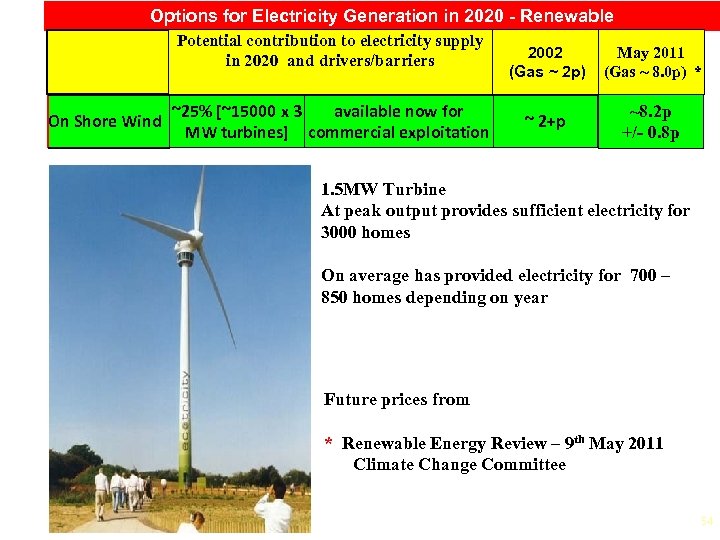
Options for Electricity Generation in 2020 - Renewable On Shore Wind Potential contribution to electricity supply in 2020 and drivers/barriers ~25% [~15000 x 3 available now for MW turbines] commercial exploitation May 2011 2002 (Gas ~ 2 p) (Gas ~ 8. 0 p) * ~ 2+p ~8. 2 p +/- 0. 8 p 1. 5 MW Turbine At peak output provides sufficient electricity for 3000 homes On average has provided electricity for 700 – 850 homes depending on year Future prices from * Renewable Energy Review – 9 th May 2011 Climate Change Committee 54
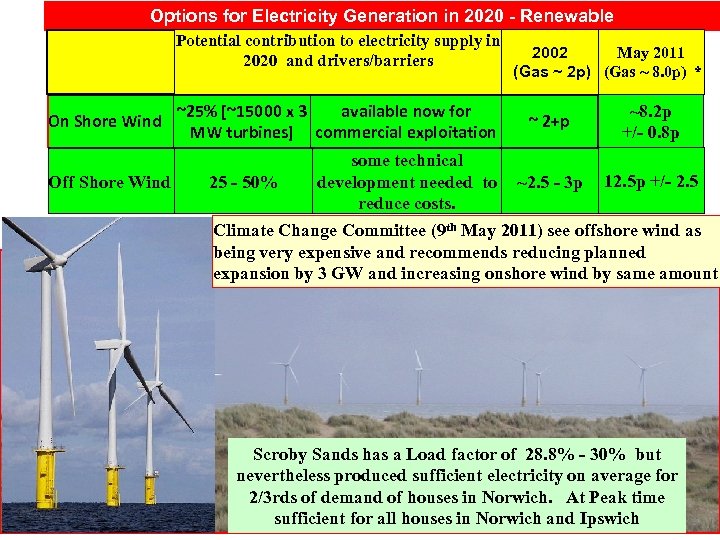
Options for Electricity Generation in 2020 - Renewable On Shore Wind Off Shore Wind Potential contribution to electricity supply in 2020 and drivers/barriers ~25% [~15000 x 3 available now for MW turbines] commercial exploitation May 2011 2002 (Gas ~ 2 p) (Gas ~ 8. 0 p) * ~ 2+p ~8. 2 p +/- 0. 8 p some technical development needed to ~2. 5 - 3 p 12. 5 p +/- 2. 5 25 - 50% reduce costs. Climate Change Committee (9 th May 2011) see offshore wind as being very expensive and recommends reducing planned expansion by 3 GW and increasing onshore wind by same amount Scroby Sands has a Load factor of 28. 8% - 30% but nevertheless produced sufficient electricity on average for 2/3 rds of demand of houses in Norwich. At Peak time sufficient for all houses in Norwich and Ipswich 55
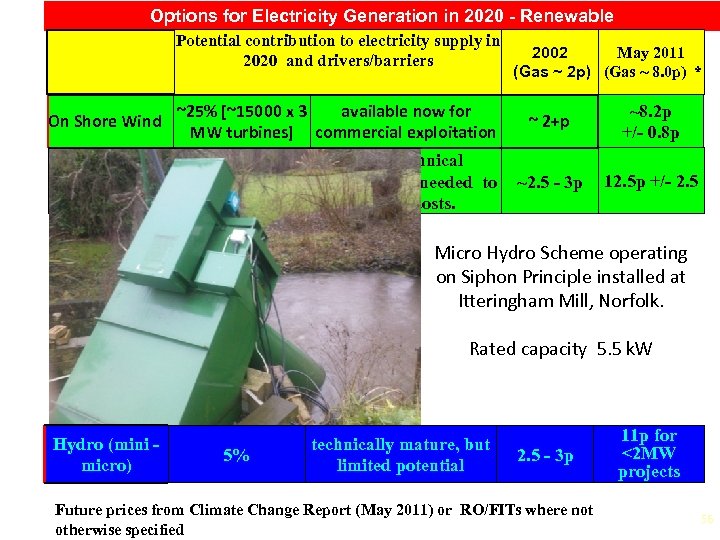
Options for Electricity Generation in 2020 - Renewable On Shore Wind Off Shore Wind Potential contribution to electricity supply in 2020 and drivers/barriers ~25% [~15000 x 3 available now for MW turbines] commercial exploitation 25 - 50% May 2011 2002 (Gas ~ 2 p) (Gas ~ 8. 0 p) * ~ 2+p some technical development needed to ~2. 5 - 3 p reduce costs. ~8. 2 p +/- 0. 8 p 12. 5 p +/- 2. 5 Micro Hydro Scheme operating on Siphon Principle installed at Itteringham Mill, Norfolk. Rated capacity 5. 5 k. W Hydro (mini - micro) 5% technically mature, but limited potential 2. 5 - 3 p Future prices from Climate Change Report (May 2011) or RO/FITs where not otherwise specified 11 p for <2 MW projects 56
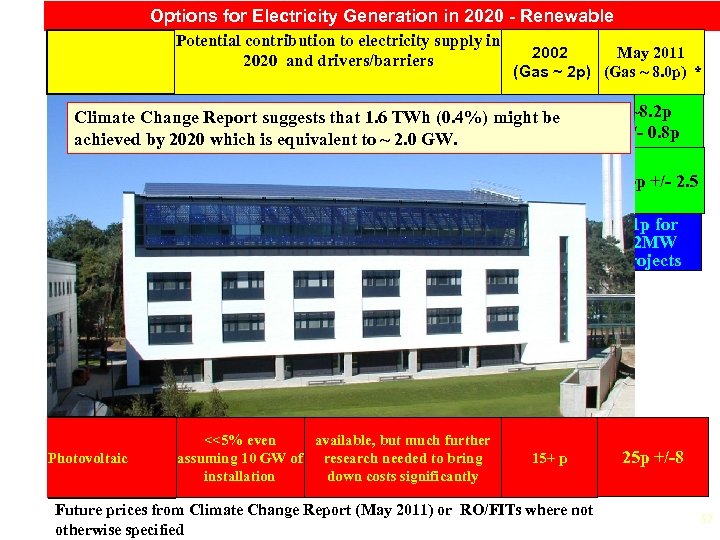
Options for Electricity Generation in 2020 - Renewable Potential contribution to electricity supply in 2020 and drivers/barriers May 2011 2002 (Gas ~ 2 p) (Gas ~ 8. 0 p) * ~25% [~15000 x 3 available now for Climate Change Report suggests that 1. 6 TWh (0. 4%) might be On Shore Wind ~ 2+p MW turbines] commercial exploitation achieved by 2020 which is equivalent to ~ 2. 0 GW. some technical development needed to ~2. 5 - 3 p Off Shore Wind 25 - 50% reduce costs. Hydro (mini - micro) Photovoltaic 5% technically mature, but limited potential <<5% even available, but much further assuming 10 GW of research needed to bring installation down costs significantly ~8. 2 p +/- 0. 8 p 12. 5 p +/- 2. 5 - 3 p 11 p for <2 MW projects 15+ p 25 p +/-8 Future prices from Climate Change Report (May 2011) or RO/FITs where not otherwise specified 57
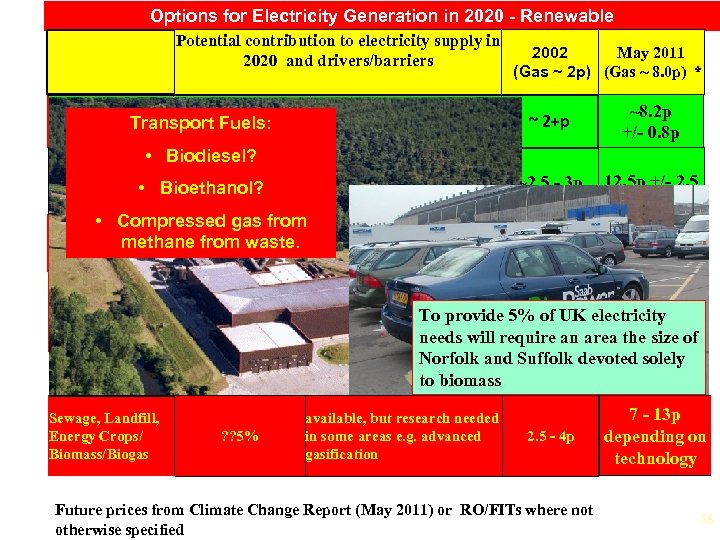
Options for Electricity Generation in 2020 - Renewable Potential contribution to electricity supply in 2020 and drivers/barriers May 2011 2002 (Gas ~ 2 p) (Gas ~ 8. 0 p) * ~25% [~15000 x 3 available now for On Shore Wind ~ 2+p Transport Fuels: MW turbines] commercial exploitation • Biodiesel? some technical development needed to ~2. 5 - 3 p Off Shore Wind 25 - 50% • Bioethanol? reduce costs. • Compressed gas from Hydro (mini - technically mature, but methane from waste. 5% 2. 5 - 3 p micro) limited potential Photovoltaic ~8. 2 p +/- 0. 8 p 12. 5 p +/- 2. 5 11 p for <2 MW projects available, but much further <<5% even assuming research needed to bring 15+ p 25 p +/-8 To provide 5% of UK electricity 10 GW of installation down costs significantly needs will require an area the size of Norfolk and Suffolk devoted solely to biomass Sewage, Landfill, Energy Crops/ Biomass/Biogas ? ? 5% available, but research needed in some areas e. g. advanced gasification 2. 5 - 4 p Future prices from Climate Change Report (May 2011) or RO/FITs where not otherwise specified 7 - 13 p depending on technology 58
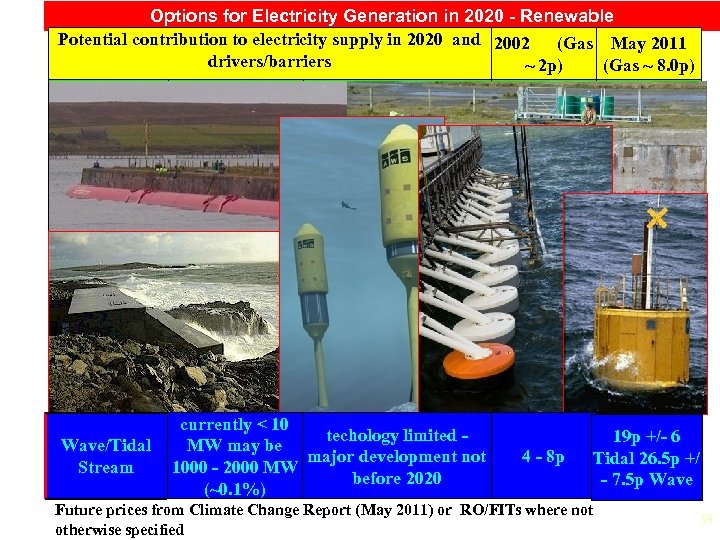
Options for Electricity Generation in 2020 - Renewable Potential contribution to electricity supply in 2020 and 2002 (Gas May 2011 drivers/barriers ~ 2 p) (Gas ~ 8. 0 p) On Shore Wind ~25% available now ~8. 2 p +/- 0. 8 p ~ 2+p Off Shore available but costly 25 - 50% ~2. 5 - 3 p 12. 5 p +/- 2. 5 Wind 11 p for <2 MW Small Hydro 5% limited potential 2. 5 - 3 p projects available, but very Photovoltaic <<5% 15+ p 25 p +/-8 costly available, but research Biomass ? ? 5% 2. 5 - 4 p 7 - 13 p needed currently < 10 techology limited - Wave/Tidal MW may be major development not Stream 1000 - 2000 MW before 2020 (~0. 1%) 4 - 8 p 19 p +/- 6 Tidal 26. 5 p +/ - 7. 5 p Wave Future prices from Climate Change Report (May 2011) or RO/FITs where not otherwise specified 59
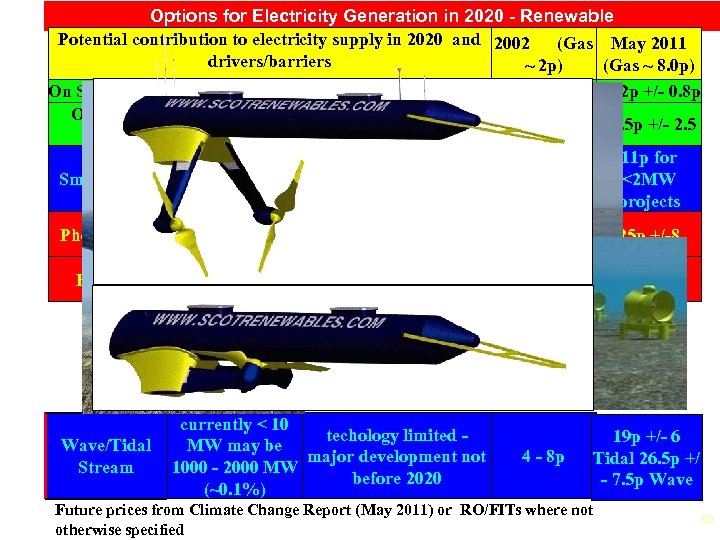
Options for Electricity Generation in 2020 - Renewable Potential contribution to electricity supply in 2020 and 2002 (Gas May 2011 drivers/barriers ~ 2 p) (Gas ~ 8. 0 p) On Shore Wind ~25% available now ~8. 2 p +/- 0. 8 p ~ 2+p Off Shore available but costly 25 - 50% ~2. 5 - 3 p 12. 5 p +/- 2. 5 Wind 11 p for <2 MW Small Hydro 5% limited potential 2. 5 - 3 p projects available, but very Photovoltaic <<5% 15+ p 25 p +/-8 costly available, but research Biomass ? ? 5% 2. 5 - 4 p 7 - 13 p needed currently < 10 techology limited - Wave/Tidal MW may be major development not Stream 1000 - 2000 MW before 2020 (~0. 1%) 4 - 8 p 19 p +/- 6 Tidal 26. 5 p +/ - 7. 5 p Wave Future prices from Climate Change Report (May 2011) or RO/FITs where not otherwise specified 60
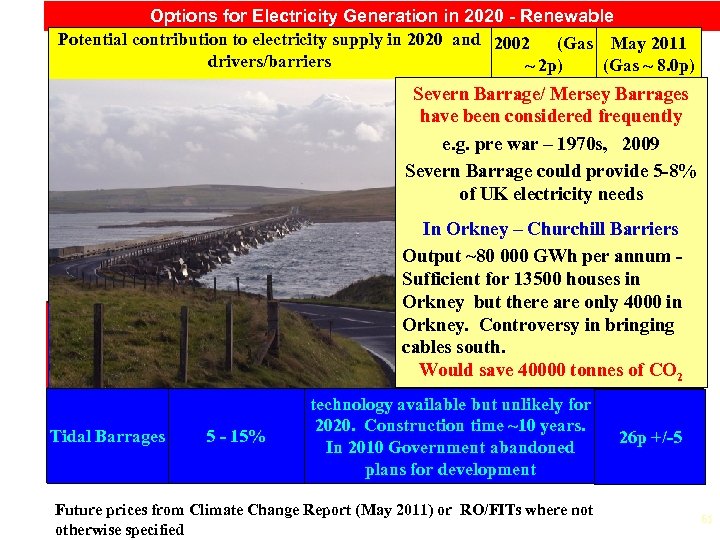
Options for Electricity Generation in 2020 - Renewable Potential contribution to electricity supply in 2020 and 2002 (Gas May 2011 drivers/barriers ~ 2 p) (Gas ~ 8. 0 p) On Shore Wind ~25% available. Severn Barrage/ Mersey Barrages now ~8. 2 p +/- 0. 8 p ~ 2+p Off Shore available but costly have been considered frequently 25 - 50% ~2. 5 - 3 p 12. 5 p +/- 2. 5 Wind e. g. pre war – 1970 s, 2009 11 p for Severn Barrage could provide 5 -8% <2 MW Small Hydro 5% limited potential 2. 5 - 3 p of UK electricity needs projects available, but very In Orkney – Churchill Barriers Photovoltaic <<5% 15+ p 25 p +/-8 costly Output ~80 000 GWh per annum - available, but research Sufficient for 13500 houses in Biomass ? ? 5% 2. 5 - 4 p 7 - 13 p needed Orkney but there are only 4000 in currently < 10 technology limited - 19 p +/- 6 Orkney. Controversy in bringing Wave/Tidal MW may be major development not Tidal 26. 5 p cables south. 4 - 8 p Stream 1000 - 2000 MW before 2020 +/- 7. 5 p Wave Would save 40000 tonnes of CO 2 (~0. 1%) technology available but unlikely for 2020. Construction time ~10 years. Tidal Barrages 5 - 15% 26 p +/-5 In 2010 Government abandoned plans for development Future prices from Climate Change Report (May 2011) or RO/FITs where not otherwise specified 61
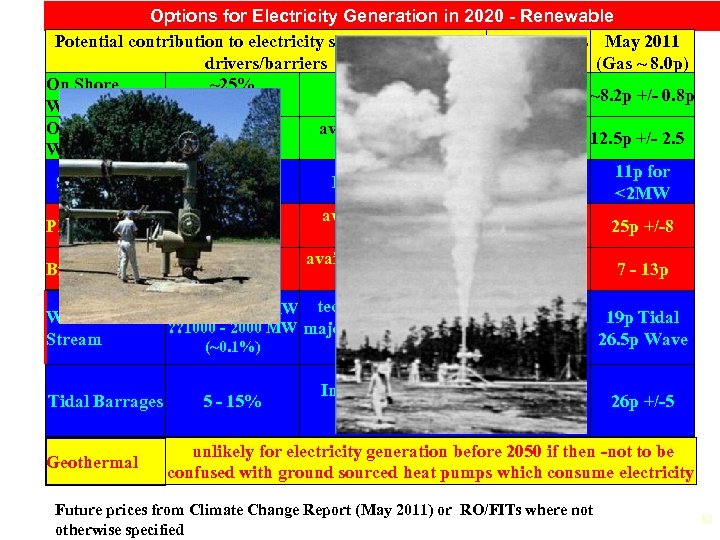
Options for Electricity Generation in 2020 - Renewable Potential contribution to electricity supply in 2020 and 2002 (Gas May 2011 drivers/barriers ~ 2 p) (Gas ~ 8. 0 p) On Shore ~25% available now ~8. 2 p +/- 0. 8 p ~ 2+p Wind Off Shore available but costly 25 - 50% ~2. 5 - 3 p 12. 5 p +/- 2. 5 Wind 11 p for Small Hydro 5% limited potential 2. 5 - 3 p <2 MW available, but very Photovoltaic <<5% 15+ p 25 p +/-8 costly available, but research Biomass ? ? 5% 2. 5 - 4 p 7 - 13 p needed currently < 10 MW technology limited - Wave/Tidal 19 p Tidal ? ? 1000 - 2000 MW major development not 4 - 8 p Stream 26. 5 p Wave (~0. 1%) before 2020 Tidal Barrages Geothermal 5 - 15% In 2010 Government abandoned plans for development 26 p +/-5 unlikely for electricity generation before 2050 if then -not to be confused with ground sourced heat pumps which consume electricity Future prices from Climate Change Report (May 2011) or RO/FITs where not otherwise specified 62
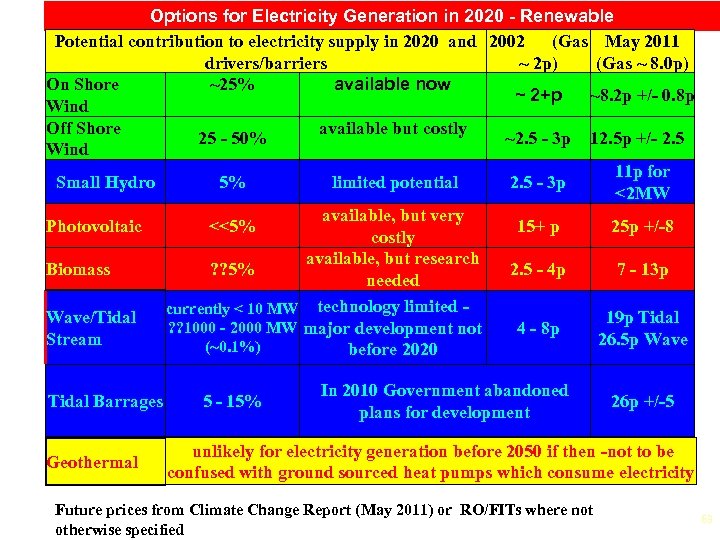
Options for Electricity Generation in 2020 - Renewable Potential contribution to electricity supply in 2020 and 2002 (Gas May 2011 drivers/barriers ~ 2 p) (Gas ~ 8. 0 p) On Shore ~25% available now ~8. 2 p +/- 0. 8 p ~ 2+p Wind Off Shore available but costly 25 - 50% ~2. 5 - 3 p 12. 5 p +/- 2. 5 Wind 11 p for Small Hydro 5% limited potential 2. 5 - 3 p <2 MW available, but very Photovoltaic <<5% 15+ p 25 p +/-8 costly available, but research Biomass ? ? 5% 2. 5 - 4 p 7 - 13 p needed currently < 10 MW technology limited - Wave/Tidal 19 p Tidal ? ? 1000 - 2000 MW major development not 4 - 8 p Stream 26. 5 p Wave (~0. 1%) before 2020 Tidal Barrages Geothermal 5 - 15% In 2010 Government abandoned plans for development 26 p +/-5 unlikely for electricity generation before 2050 if then -not to be confused with ground sourced heat pumps which consume electricity Future prices from Climate Change Report (May 2011) or RO/FITs where not otherwise specified 63
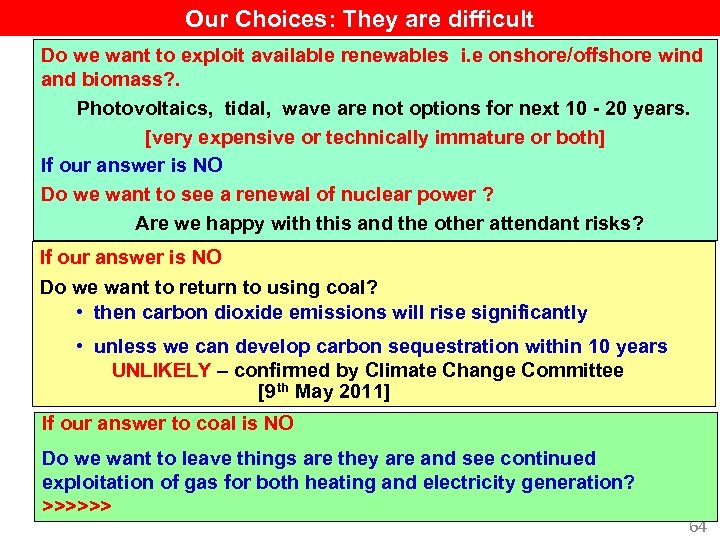
Our Choices: They are difficult Do we want to exploit available renewables i. e onshore/offshore wind and biomass? . Photovoltaics, tidal, wave are not options for next 10 - 20 years. [very expensive or technically immature or both] If our answer is NO Do we want to see a renewal of nuclear power ? Are we happy with this and the other attendant risks? If our answer is NO Do we want to return to using coal? • then carbon dioxide emissions will rise significantly • unless we can develop carbon sequestration within 10 years UNLIKELY – confirmed by Climate Change Committee [9 th May 2011] If our answer to coal is NO Do we want to leave things are they are and see continued exploitation of gas for both heating and electricity generation? >>>>>> 64
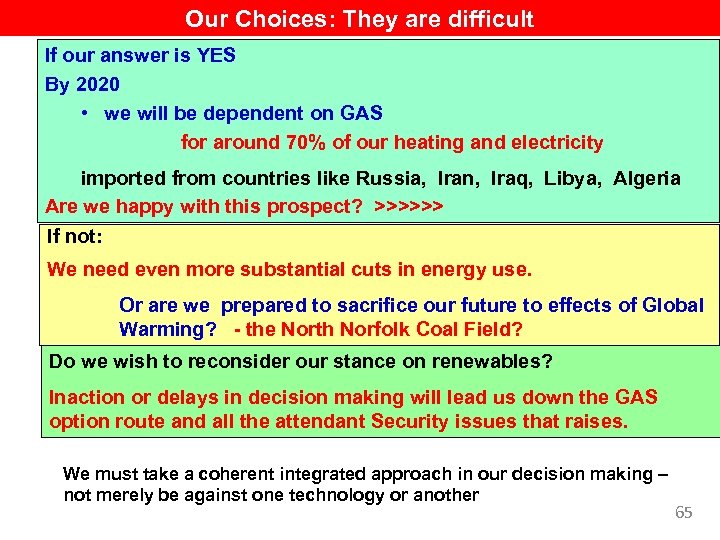
Our Choices: They are difficult If our answer is YES By 2020 • we will be dependent on GAS for around 70% of our heating and electricity imported from countries like Russia, Iran, Iraq, Libya, Algeria Are we happy with this prospect? >>>>>> If not: We need even more substantial cuts in energy use. Or are we prepared to sacrifice our future to effects of Global Warming? - the North Norfolk Coal Field? Do we wish to reconsider our stance on renewables? Inaction or delays in decision making will lead us down the GAS option route and all the attendant Security issues that raises. We must take a coherent integrated approach in our decision making – not merely be against one technology or another 65
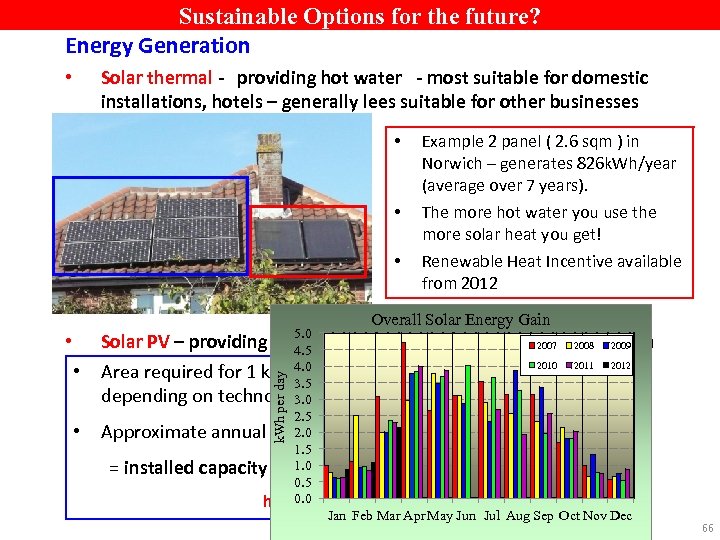
Sustainable Options for the future? Energy Generation Solar thermal - providing hot water - most suitable for domestic installations, hotels – generally lees suitable for other businesses • • Example 2 panel ( 2. 6 sqm ) in Norwich – generates 826 k. Wh/year (average over 7 years). • The more hot water you use the more solar heat you get! • Renewable Heat Incentive available from 2012 Overall Solar Energy Gain • • k. Wh per day • 5. 0 Solar PV – providing electricity - suitable for all sizes 2007 installation of 2008 2009 4. 5 2010 4. 0 Area required for 1 k. W peak varies from ~ 5. 5 to 8. 5 sqm 2011 2012 3. 5 depending on technology and manufacturer 3. 0 2. 5 2. 0 Approximate annual estimate of generation 1. 5 1. 0 = installed capacity * 8760 * 0. 095 0. 0 hours in year load/capacity factor of 9. 5% Jan Feb Mar Apr May Jun Jul Aug Sep Oct Nov Dec 66
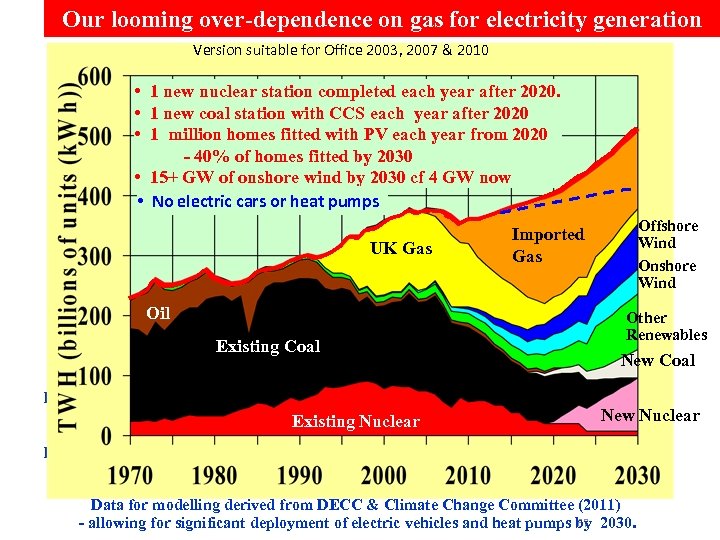
Our looming over-dependence on gas for electricity generation Version suitable for Office 2003, 2007 & 2010 • 1 new nuclear station completed each year after 2020. • 1 new coal station with CCS each year after 2020 • 1 million homes fitted with PV each year from 2020 - 40% of homes fitted by 2030 • 15+ GW of onshore wind by 2030 cf 4 GW now • No electric cars or heat pumps Oil UK Gas Offshore Wind Onshore Wind Imported Gas Existing Coal Oil Existing Nuclear Existing Coal Other Renewables New Coal Data for modelling derived from DECC & Climate Change Committee (2011) New Nuclear - allowing for significant deployment of electric vehicles and heat pumps by 2030. Existing Nuclear Data for modelling derived from DECC & Climate Change Committee (2011) - allowing for significant deployment of electric vehicles and heat pumps by 2030. Data for modelling derived from DECC & Climate Change Committee (2011) 67 - allowing for significant deployment of electric vehicles and heat pumps by 2030.
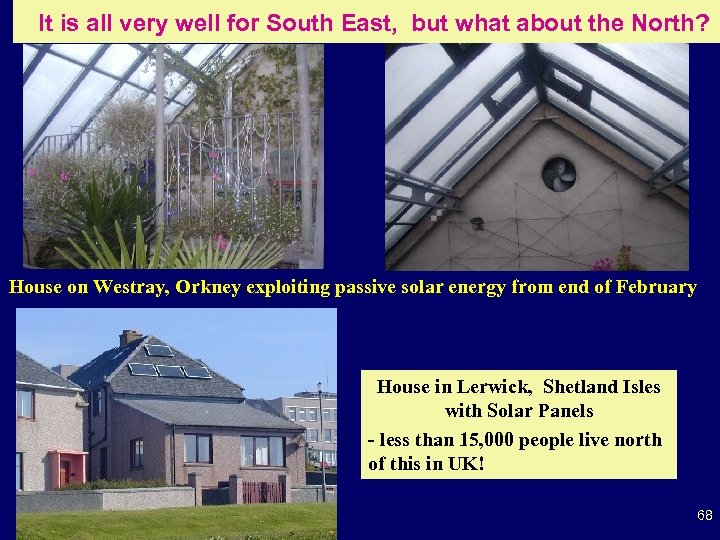
It is all very well for South East, but what about the North? House on Westray, Orkney exploiting passive solar energy from end of February House in Lerwick, Shetland Isles with Solar Panels - less than 15, 000 people live north of this in UK! 68
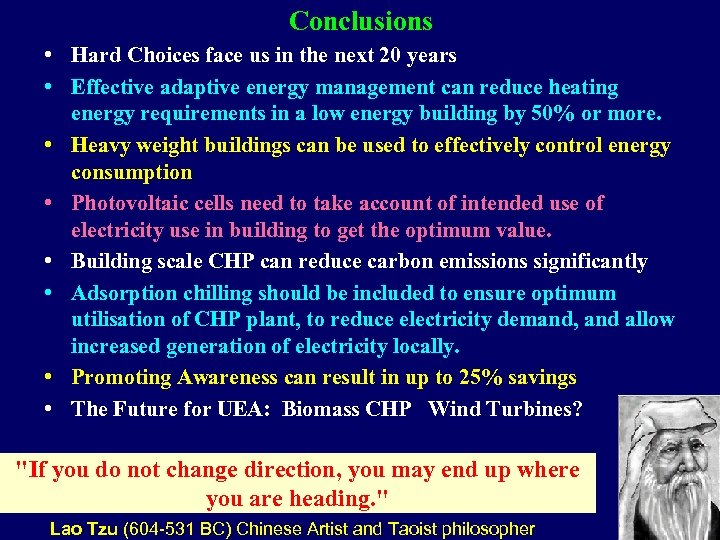
Conclusions • Hard Choices face us in the next 20 years • Effective adaptive energy management can reduce heating energy requirements in a low energy building by 50% or more. • Heavy weight buildings can be used to effectively control energy consumption • Photovoltaic cells need to take account of intended use of electricity use in building to get the optimum value. • Building scale CHP can reduce carbon emissions significantly • Adsorption chilling should be included to ensure optimum utilisation of CHP plant, to reduce electricity demand, and allow increased generation of electricity locally. • Promoting Awareness can result in up to 25% savings • The Future for UEA: Biomass CHP Wind Turbines? "If you do not change direction, you may end up where you are heading. " Lao Tzu (604 -531 BC) Chinese Artist and Taoist philosopher 69
Скачать презентацию Master Class 16 th June 2012 Low Carbon
7ee0a4dfb89c9f4a1a346ad70904ca3a.ppt