 Скачать презентацию MASS-PRODUCTION OF SYNTHETIC SLEEPER — Fabrication works for
9f220012c7018511e8ed72a517471932.ppt
- Количество слайдов: 17



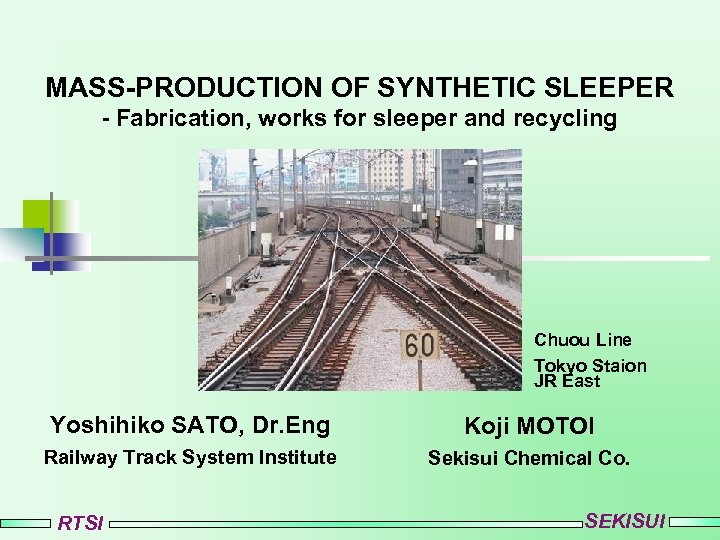
MASS-PRODUCTION OF SYNTHETIC SLEEPER - Fabrication, works for sleeper and recycling Chuou Line Tokyo Staion JR East Yoshihiko SATO, Dr. Eng Koji MOTOI Railway Track System Institute Sekisui Chemical Co. RTSI SEKISUI
Contents 1. Introduction 2. Use and specifications of synthetic sleeper 3. Fabrication 4. Inspection 5. Works for sleepers 6. 5. 1 Turnout 7. 5. 2 Sleepers on bridge 8. 5. 3 Sleepers in directly fastened track 6. Reuse and recycles 7. Concluding remarks RTSI SEKISUI
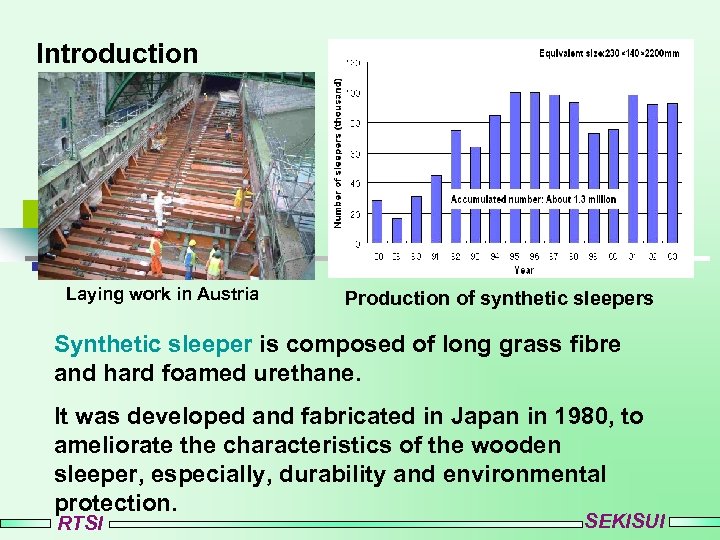
Introduction Laying work in Austria Production of synthetic sleepers Synthetic sleeper is composed of long grass fibre and hard foamed urethane. It was developed and fabricated in Japan in 1980, to ameliorate the characteristics of the wooden sleeper, especially, durability and environmental protection. RTSI SEKISUI
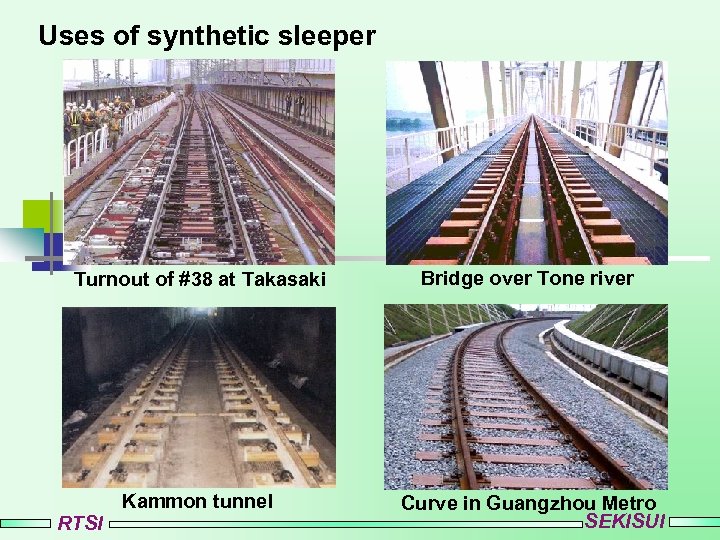
Uses of synthetic sleeper Turnout of #38 at Takasaki Bridge over Tone river Kammon tunnel Curve in Guangzhou Metro SEKISUI RTSI

Specification High mechanical strength little water absorption High electrical insulation High fastening force for dog and screw spikes Notes: JIS Z 2110 (Methods of tests for wood -1994), JIS C 2110 (Testing methods for electric strength of solid insulating material -1994), JIS K 6911 (Testing methods for thermosetting plastics -1995) RTSI SEKISUI
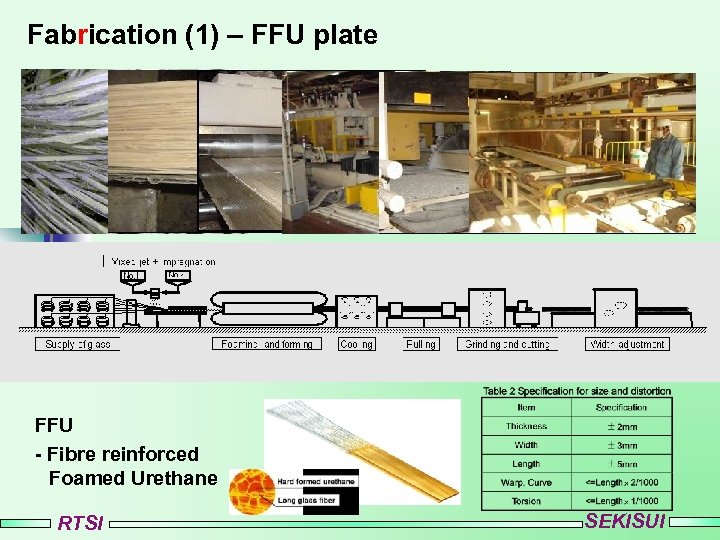
Fabrication (1) – FFU plate FFU - Fibre reinforced Foamed Urethane RTSI SEKISUI
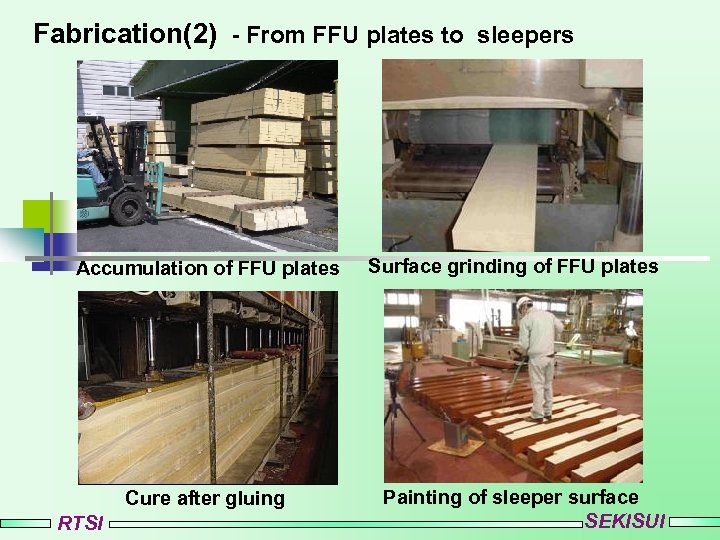
Fabrication(2) - From FFU plates to sleepers Accumulation of FFU plates Cure after gluing RTSI Surface grinding of FFU plates Painting of sleeper surface SEKISUI
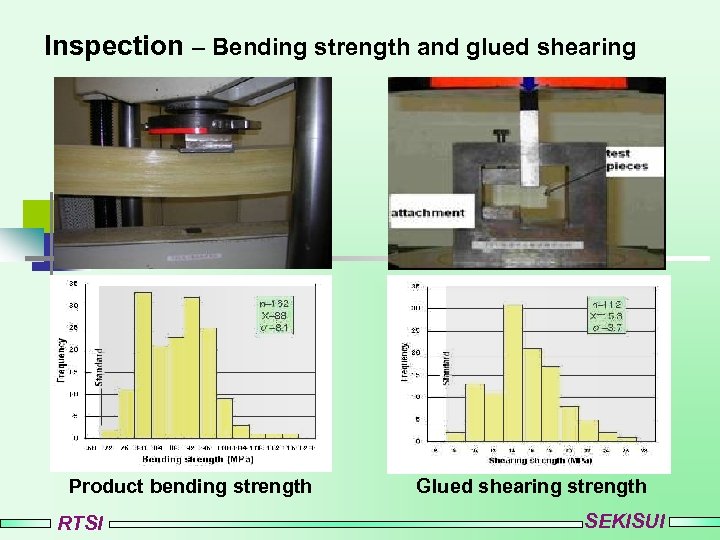
Inspection – Bending strength and glued shearing Product bending strength RTSI Glued shearing strength SEKISUI
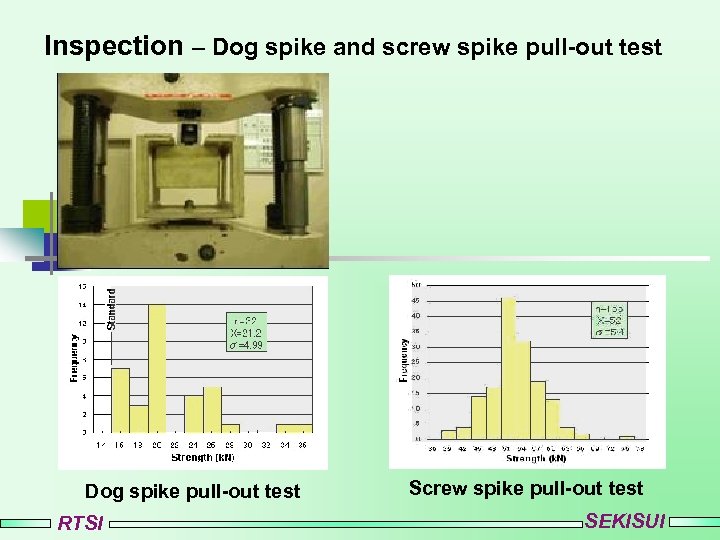
Inspection – Dog spike and screw spike pull-out test Dog spike pull-out test RTSI Screw spike pull-out test SEKISUI
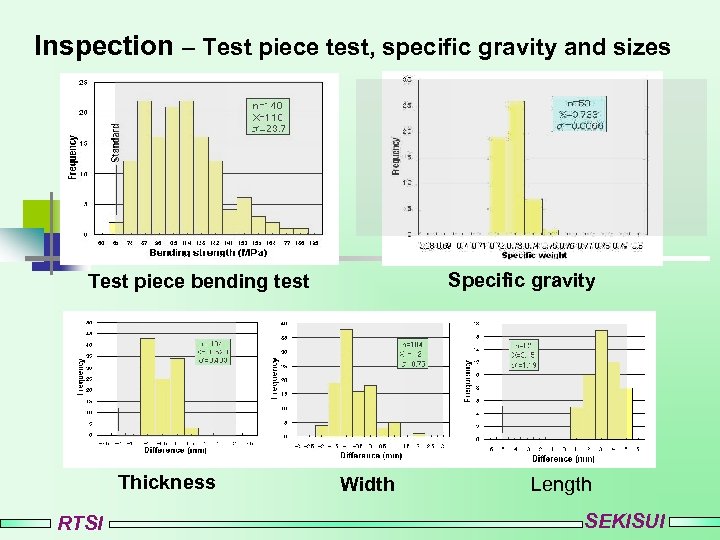
Inspection – Test piece test, specific gravity and sizes Specific gravity Test piece bending test Thickness RTSI Width Length SEKISUI
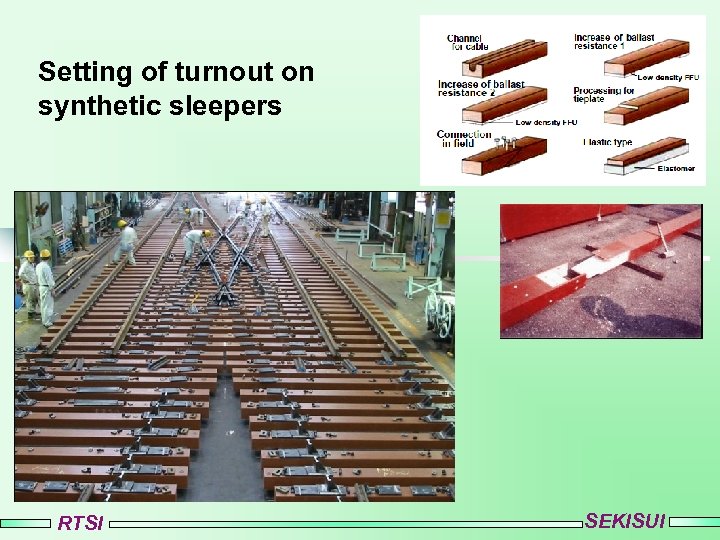
Setting of turnout on synthetic sleepers RTSI SEKISUI
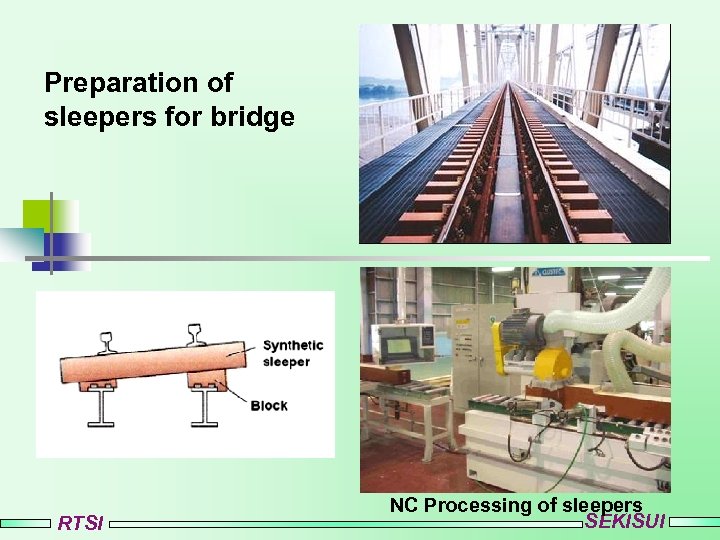
Preparation of sleepers for bridge RTSI NC Processing of sleepers SEKISUI
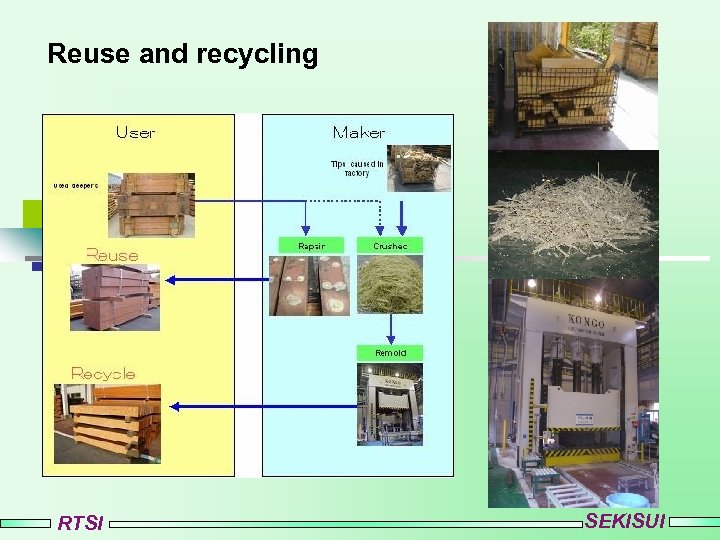
Reuse and recycling RTSI SEKISUI
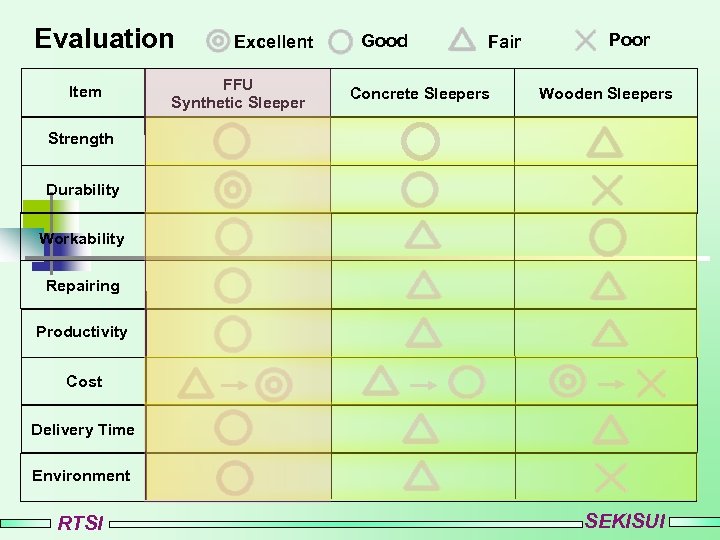
Evaluation Item Excellent FFU Synthetic Sleeper Good Fair Concrete Sleepers Poor Wooden Sleepers Strength Durability Workability Repairing Productivity Cost Delivery Time Environment RTSI SEKISUI
Concluding remarks The historical developments and fundamental characteristics of the synthetic sleeper were introduced in reference [1]. As having documented and demonstrated so far, the supply of mass produced synthetic sleepers is being introduced in a controlled manufactured environment to ensure precision and accuracy of the finished product. Further, the number of different applications and uses of synthetic sleepers have been outlined in the paper. Finally, the reuse and recycling of them are introduced. In the future more developments for actively decreasing the vibration and noise from railway track and for the specific use of synthetic material are expected. RTSI SEKISUI
![Reference [1] Takai H, Sato Y & Sato K, Japanese experiences of using and](https://present5.com/presentation/9f220012c7018511e8ed72a517471932/image-16.jpg "Reference [1] Takai H, Sato Y & Sato K, Japanese experiences of using and")
Reference [1] Takai H, Sato Y & Sato K, Japanese experiences of using and fabricating synthetic sleepers, Railway Engineering 2005. [2] Ohi, S & Nagafugi, T, Performance of synthetic sleeper, Rail International pp. 35 -42, 1990. 05. RTSI SEKISUI
End RTSI SEKISUI
Скачать презентацию MASS-PRODUCTION OF SYNTHETIC SLEEPER — Fabrication works for
9f220012c7018511e8ed72a517471932.ppt