 Скачать презентацию MASS MEDIA AND COMMUNICATION Almat Salamatbekov 20120312 Dana
PR_Public_Relations_1.pptx
- Количество слайдов: 22



MASS MEDIA AND COMMUNICATION Almat Salamatbekov 20120312 Dana Kenenbayeva 20120369 Zhanybek Niyazov 20122077 Adil Akhmettayev 20120435
OUTLINE I. 1. II. Introduction What is PR? Main body 1. History of PR 2. Three general kinds of PR 3. How does it influence society? 4. Advertising vs. PR 5. Marketing vs. PR 6. Advertising vs. PR vs. Marketing III. Conclusion IV. References V. Questions VI. Our Game
WHAT IS PUBLIC RELATIONS? Public Relations definition focuses on the basic concept of public relations — as a communication process, one that is strategic in nature and emphasizing “mutually beneficial relationships. ”
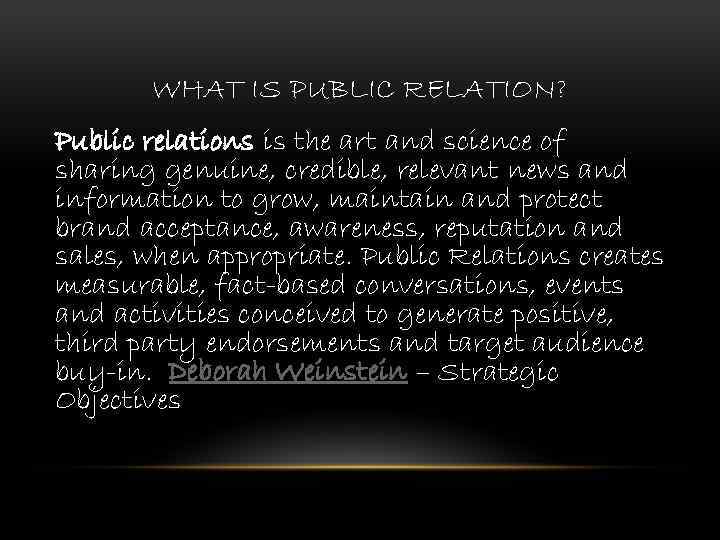
WHAT IS PUBLIC RELATION? Public relations is the art and science of sharing genuine, credible, relevant news and information to grow, maintain and protect brand acceptance, awareness, reputation and sales, when appropriate. Public Relations creates measurable, fact-based conversations, events and activities conceived to generate positive, third party endorsements and target audience buy-in. Deborah Weinstein – Strategic Objectives
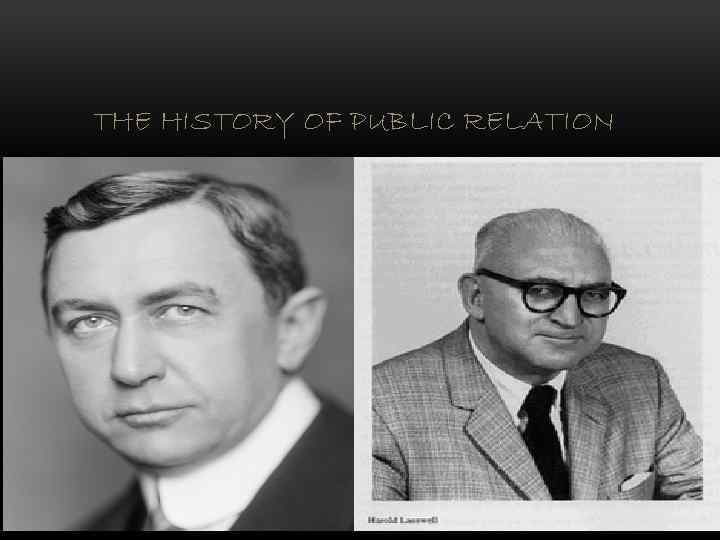
THE HISTORY OF PUBLIC RELATION
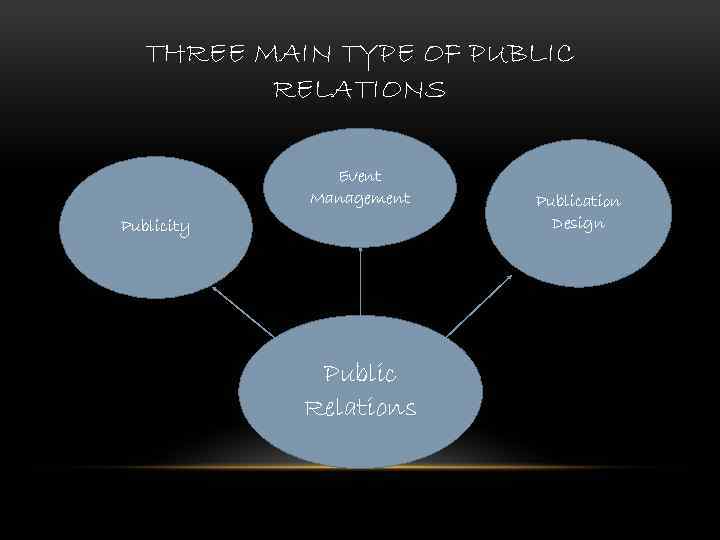
THREE MAIN TYPE OF PUBLIC RELATIONS Event Management Publicity Public Relations Publication Design
PUBLICITY Publicity is way of providing newsworthy information about your company and its product to the general public. It involves Writing a Press Release of newsworthy information about your company and its products and sending it to the media. The media will often use the information if it considers the press release to contain genuine news and not information designed to sell your product. The advantage of publicity over advertising is that publicity is free and usually reaches a larger and broader audience. Public relations is closely related to publicity and focuses on managing the relationship between your company and its customers and the general public. It focuses less on selling your products and more on promoting your company as a good neighbor and a valuable part of the community. Publicity is communication written and produced by public relations professionals intended to create a favorable public image for a client. Publicity usually takes the form of text, audio and video news releases about an individual or organization distributed to newspapers, magazines, radio and television stations, Internet sites and other forms of media. While there may be production costs, the client and the public relations professional do not pay a fee for placement of the information in media. This is called free media. Publicity efforts might also include persuasive interpersonal communication, such as email and other forms of personal messaging, telephone calls, visits and meals.
EVENT MANAGEMENT Event management is the conception, creation, development, scheduling, arrangement, logistical coordination, talent sourcing, production, promotion and execution of events such as product launches, press conferences, corporate meetings, educational conferences, road shows, grand opening events, concerts, award ceremonies, film premieres, launch parties, fashion shows, festivals, games and a variety of meetings. Such managed events are intended to accomplish the desire of a business to generate goodwill. event management is an additional feature used to define a process that helps leverage automation to manage events to become more effective and efficient.

PUBLICATION DESIGN Publication design involves conception, writing, layout and production of a wide variety of presentation media including promotional, sales and image building materials such as catalogs, brochures, manuals, flyers, newspapers, videos, DVD covers, podcasts, film credits, stage props, websites, logotypes, branded packaging, and even t-shirts.

Publication Design
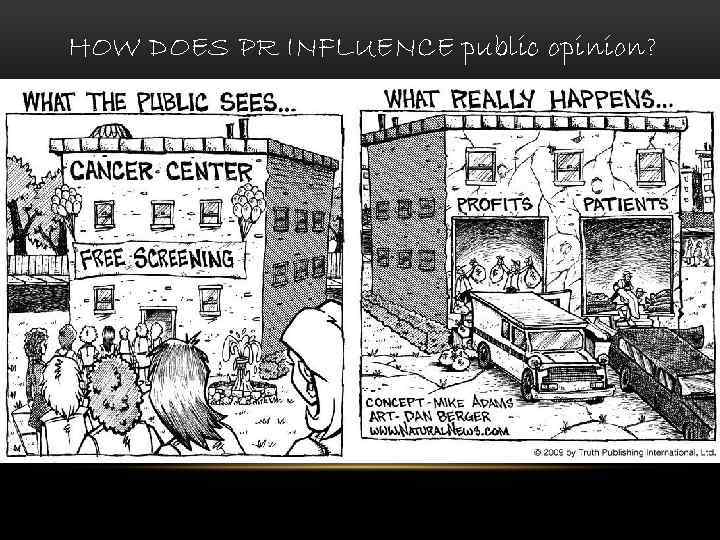
HOW DOES PR INFLUENCE public opinion?
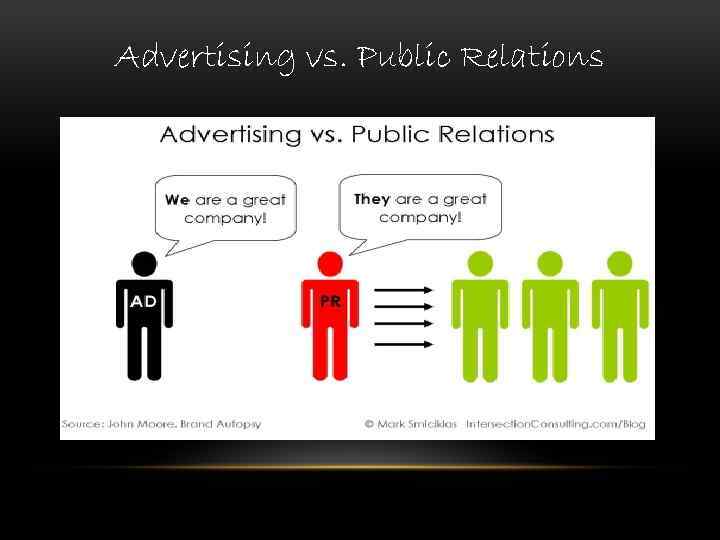
Advertising vs. Public Relations
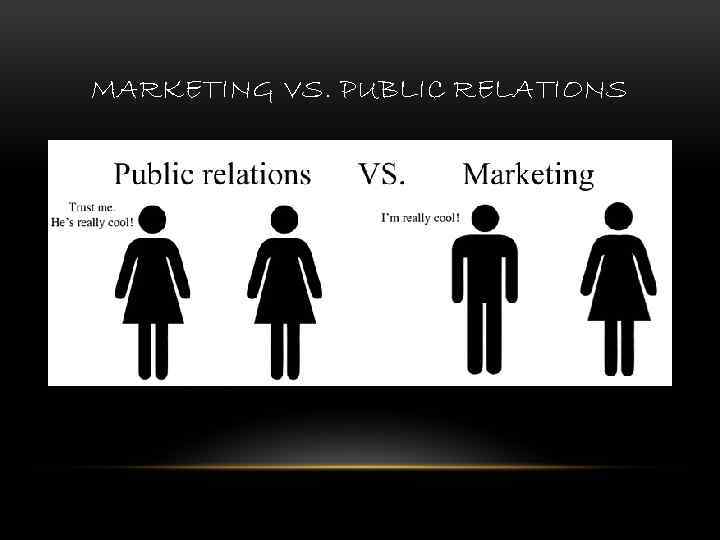
MARKETING VS. PUBLIC RELATIONS
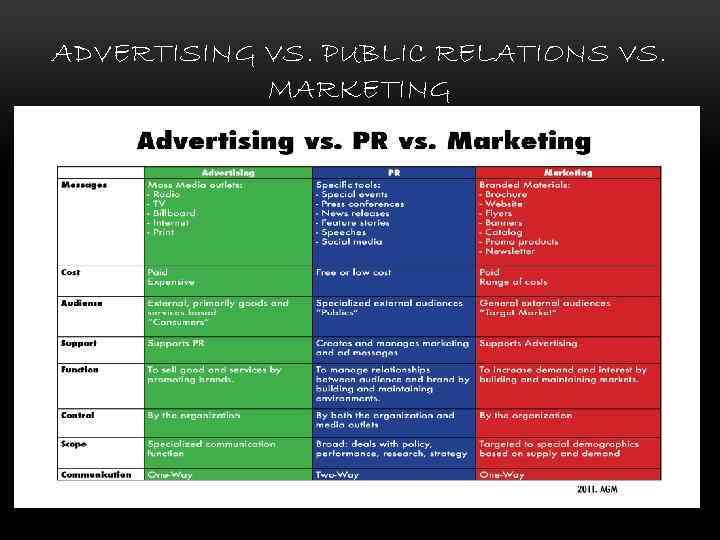
ADVERTISING VS. PUBLIC RELATIONS VS. MARKETING
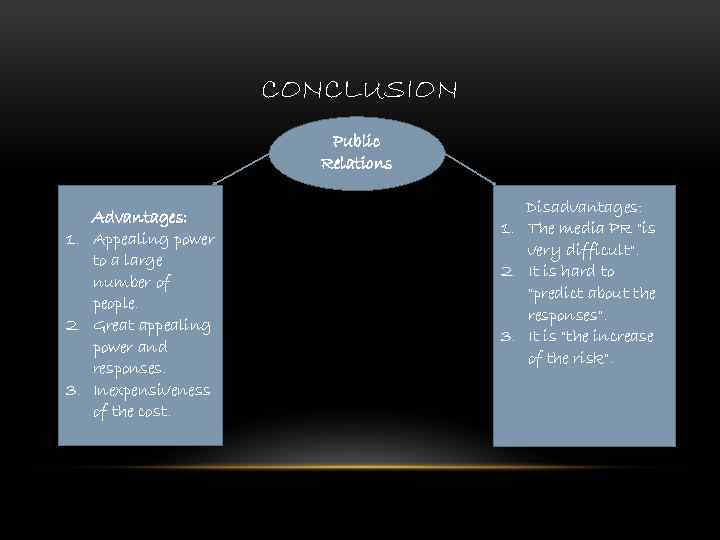
CONCLUSION Public Relations Advantages: 1. Appealing power to a large number of people. 2. Great appealing power and responses. 3. Inexpensiveness of the cost. Disadvantages: 1. The media PR "is very difficult". 2. It is hard to "predict about the responses". 3. It is "the increase of the risk".

REFERENCES • http: //www. agmrc. org/business_development/operating_a_business/prom otion/publicity-and-public-relations/ • http: //www. seo-pr. com/public-relations-history • http: //www 2. uncp. edu/home/acurtis/Courses/Resources. For. Courses/Public Relations/Public. Relations. What. Is. It. html • http: //advertising. about. com/od/careersource/a/10 advpr. htm • http: //heidicohen. com/public-relations-definition/ • http: //heidicohen. com/marketing-versus-pr-whats-the-difference/ • http: //www. e-prest. com/english/pr/advantage. html
QUESTIONS 1. What do Public Relations mean for you? How can you describe it? 2. What are 3 types of PR? What is the feature of them? 3. What is the differences between advertising, public relations and marketing? 4. In your opinion, how does PR influence public opinion?
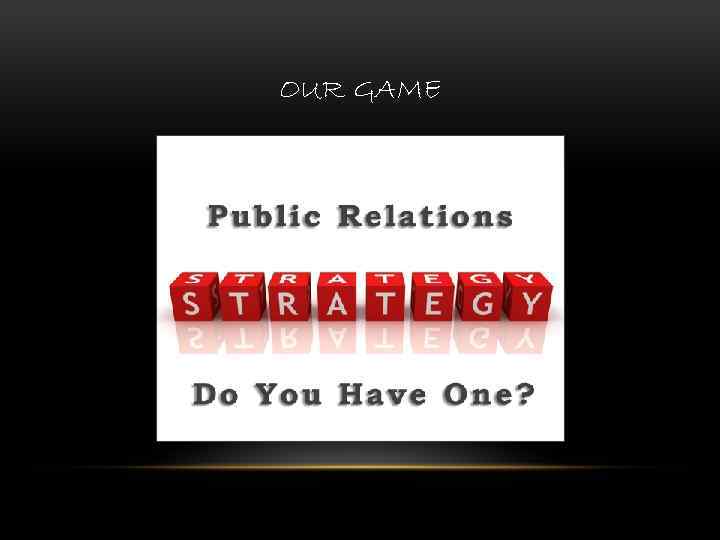
OUR GAME
Скачать презентацию MASS MEDIA AND COMMUNICATION Almat Salamatbekov 20120312 Dana
PR_Public_Relations_1.pptx