


 Скачать презентацию Mass destruction or mass disruption Assessing radiological and
450080a785995a3e2822ed6868112df9.ppt
- Количество слайдов: 24
 Mass destruction or mass disruption? Assessing radiological and nuclear terror scenarios Dr. Yehoshua Socol ICT's 9 th International Conference on Counter-Terrorism Interdisciplinary Center (IDC) Herzliya, Israel September 7 th-10 th, 2009 1
 Acknowledgements Prof I. Segal Technion Dr M. Brill NRC Negev Prof T. Schlesinger NRC Soreq Prof G. Falkovich Weizmann Inst. Prof A. Geifman Boston U Lt-Col B. Brosh Home Front HQ 2
 When Hitler first bombed London the panic the bombs caused did far more damage than the bombs themselves. After the citizens of London lost their exaggerated fears of the bombings, life went on much as normal. And so it would be with a nuclear terrorist attack … Cresson H. Kearny Civil Defense Consultant to the US Government 3
 Radiological Terror • RDD (radiological dispersal device), or “Dirty bomb” n Complexity level: low • radioactive waste + usual explosive n Scale: • Suicide bomber/car (if no panic) 4
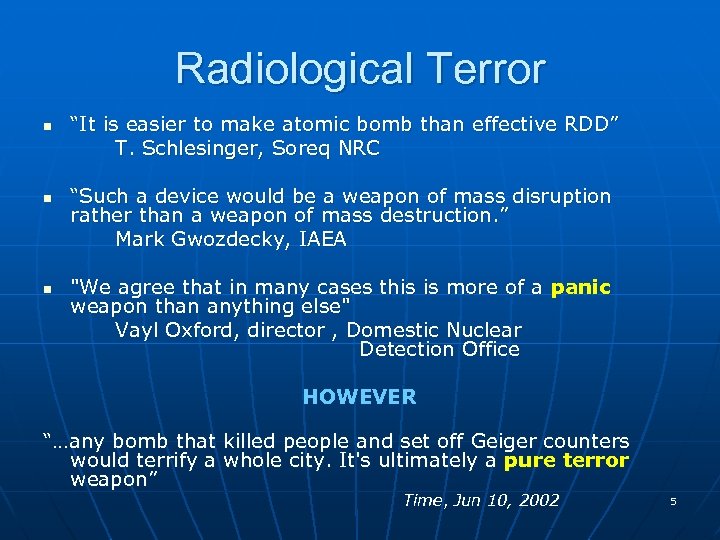 Radiological Terror n n n “It is easier to make atomic bomb than effective RDD” T. Schlesinger, Soreq NRC “Such a device would be a weapon of mass disruption rather than a weapon of mass destruction. ” Mark Gwozdecky, IAEA "We agree that in many cases this is more of a panic weapon than anything else" Vayl Oxford, director , Domestic Nuclear Detection Office HOWEVER “…any bomb that killed people and set off Geiger counters would terrify a whole city. It's ultimately a pure terror weapon” Time, Jun 10, 2002 5
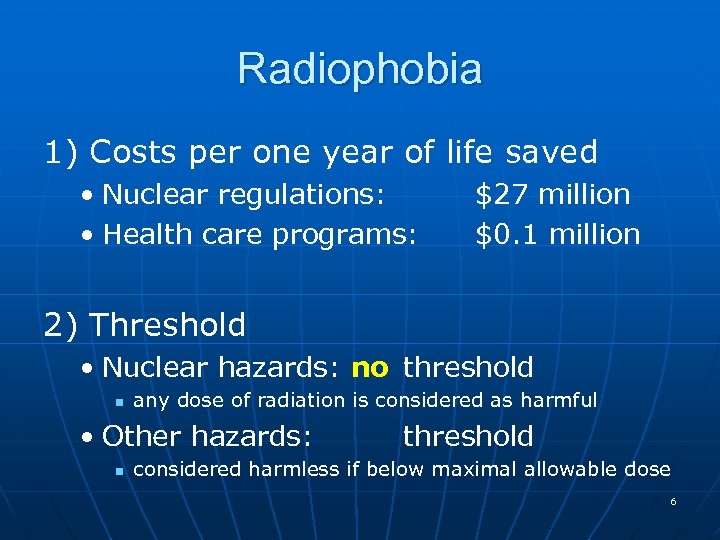 Radiophobia 1) Costs per one year of life saved • Nuclear regulations: • Health care programs: $27 million $0. 1 million 2) Threshold • Nuclear hazards: no threshold n any dose of radiation is considered as harmful • Other hazards: n threshold considered harmless if below maximal allowable dose 6
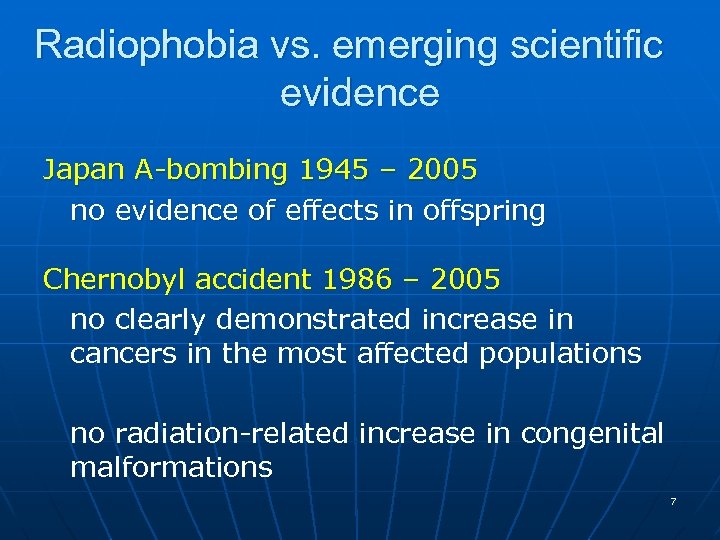 Radiophobia vs. emerging scientific evidence Japan A-bombing 1945 – 2005 no evidence of effects in offspring Chernobyl accident 1986 – 2005 no clearly demonstrated increase in cancers in the most affected populations no radiation-related increase in congenital malformations 7
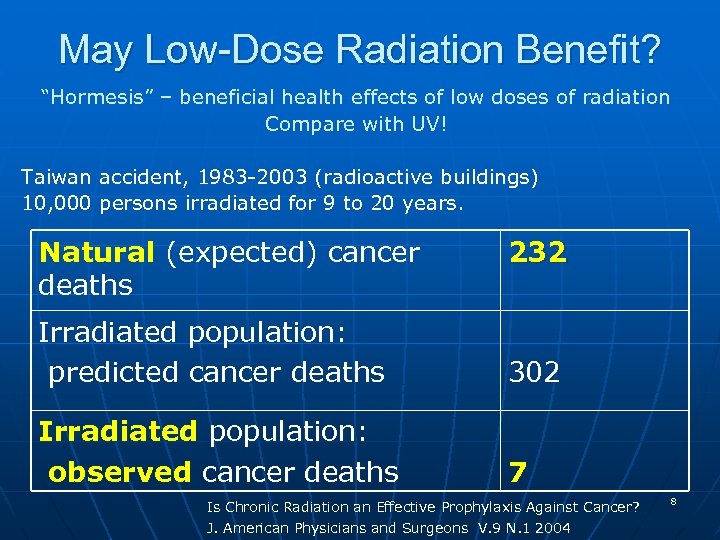 May Low-Dose Radiation Benefit? “Hormesis” – beneficial health effects of low doses of radiation Compare with UV! Taiwan accident, 1983 -2003 (radioactive buildings) 10, 000 persons irradiated for 9 to 20 years. Natural (expected) cancer deaths 232 Irradiated population: predicted cancer deaths 302 Irradiated population: observed cancer deaths 7 Is Chronic Radiation an Effective Prophylaxis Against Cancer? J. American Physicians and Surgeons V. 9 N. 1 2004 8
 Radiophobia endangers us! • Invites radiological terror • Prevents effective screening (X-rays) • Imposes heavy burden on the society 9
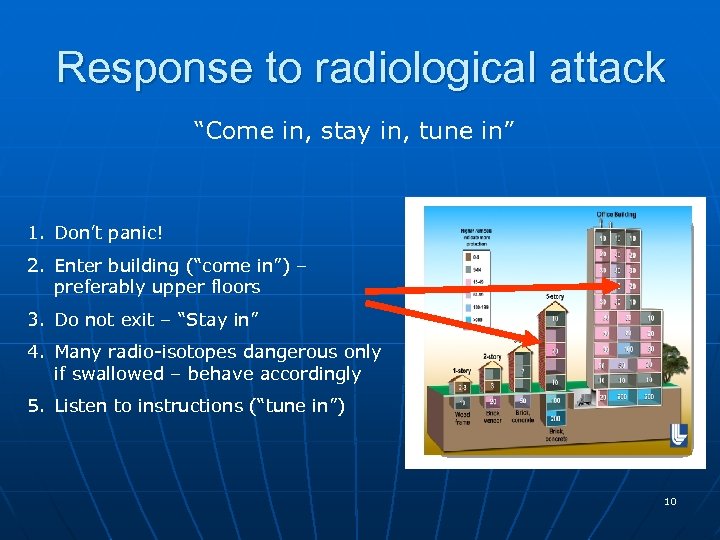 Response to radiological attack “Come in, stay in, tune in” 1. Don’t panic! 2. Enter building (“come in”) – preferably upper floors 3. Do not exit – “Stay in” 4. Many radio-isotopes dangerous only if swallowed – behave accordingly 5. Listen to instructions (“tune in”) 10
 Nuclear Terror 11
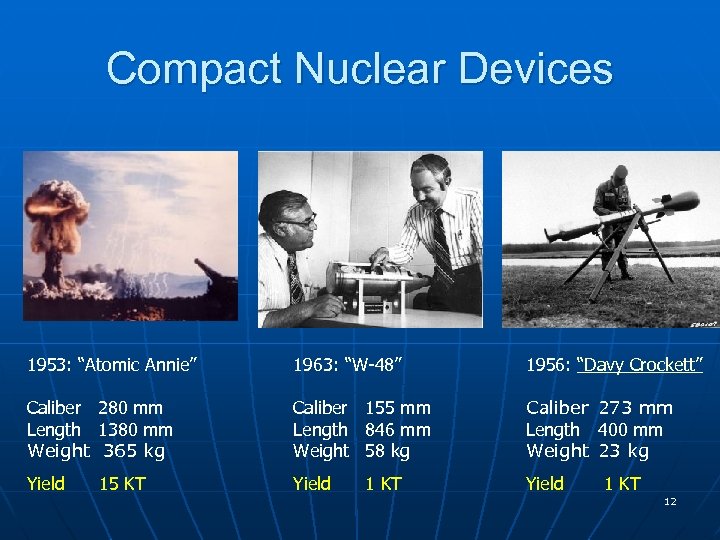 Compact Nuclear Devices 1953: “Atomic Annie” 1963: “W-48” 1956: “Davy Crockett” Caliber 280 mm Length 1380 mm Weight 365 kg Caliber 155 mm Length 846 mm Weight 58 kg Caliber 273 mm Length 400 mm Weight 23 kg Yield 15 KT 12
 Nuclear Terror n Complexity level: extremely high • Rogue-state infrastructure support n Scale: • 9/11 x ? n Casualties – 2 groups • On-spot effects (blast, initial radiation) • Delayed effects (fallout) 13
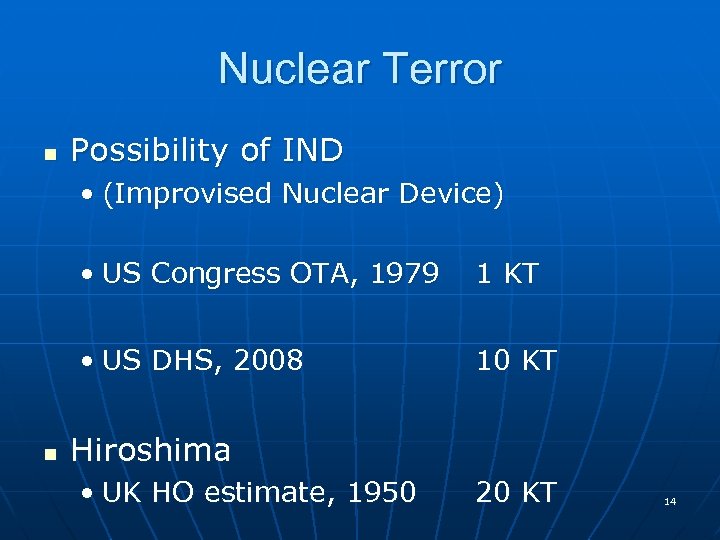 Nuclear Terror n Possibility of IND • (Improvised Nuclear Device) • US Congress OTA, 1979 1 KT • US DHS, 2008 n 10 KT Hiroshima • UK HO estimate, 1950 20 KT 14
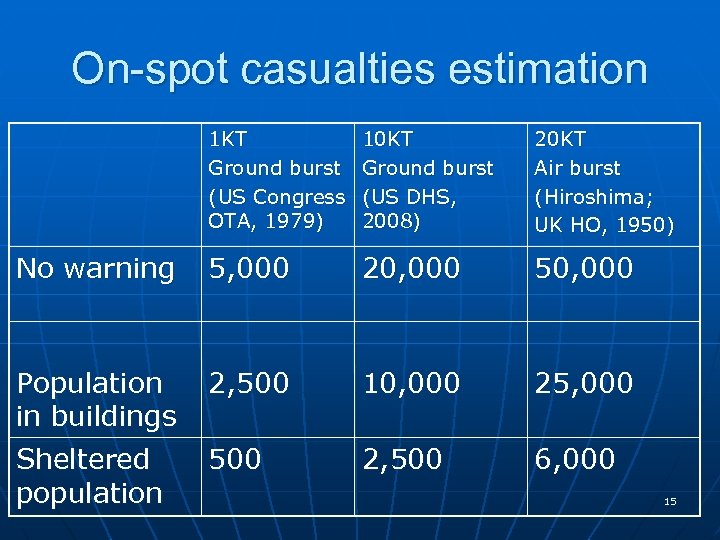 On-spot casualties estimation 1 KT Ground burst (US Congress OTA, 1979) 10 KT Ground burst (US DHS, 2008) 20 KT Air burst (Hiroshima; UK HO, 1950) No warning 5, 000 20, 000 50, 000 Population in buildings Sheltered population 2, 500 10, 000 25, 000 500 2, 500 6, 000 15
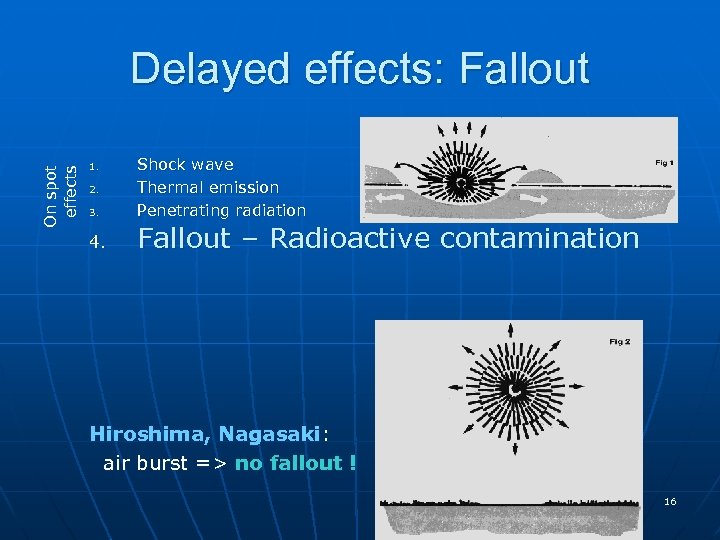 On spot effects Delayed effects: Fallout 1. 2. 3. 4. Shock wave Thermal emission Penetrating radiation Fallout – Radioactive contamination Hiroshima, Nagasaki: air burst => no fallout ! 16
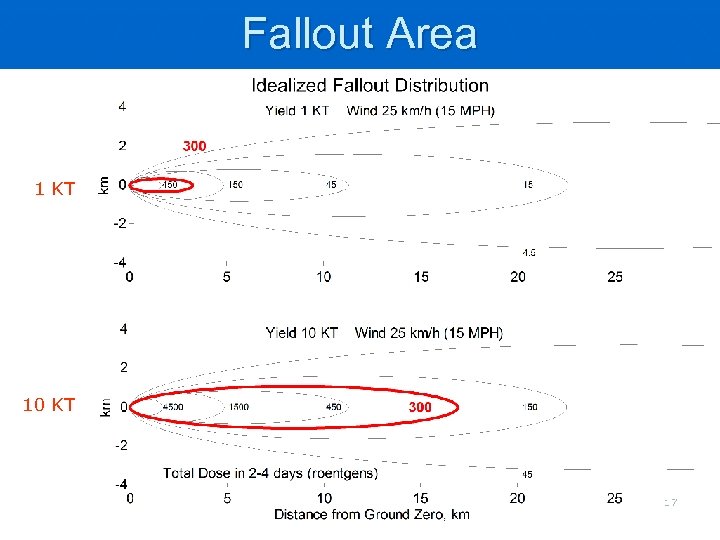 Fallout Area 1 KT 10 KT 17
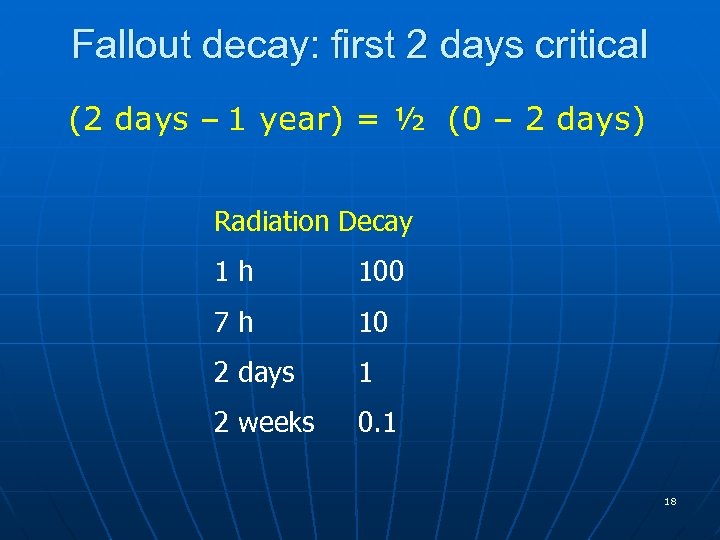 Fallout decay: first 2 days critical (2 days – 1 year) = ½ (0 – 2 days) Radiation Decay 1 h 100 7 h 10 2 days 1 2 weeks 0. 1 18
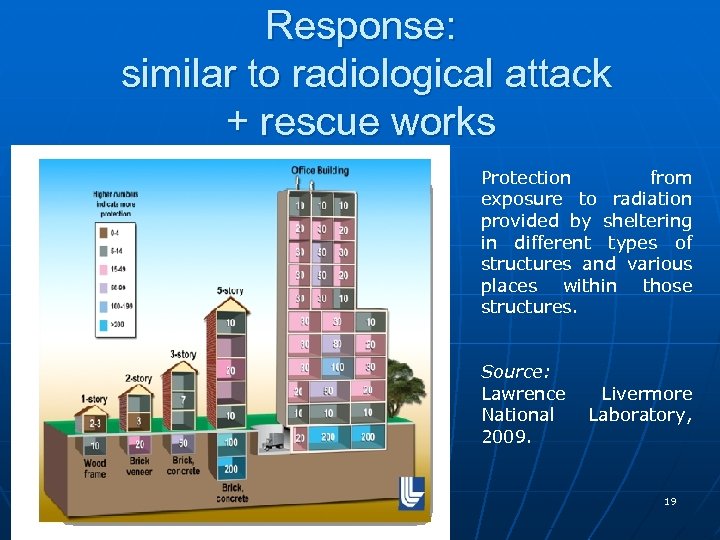 Response: similar to radiological attack + rescue works Protection from exposure to radiation provided by sheltering in different types of structures and various places within those structures. Source: Lawrence Livermore National Laboratory, 2009. 19
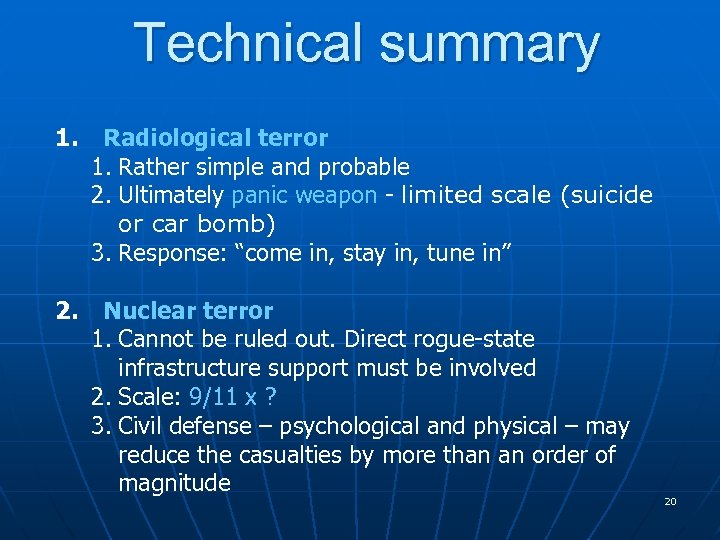 Technical summary 1. Radiological terror 1. Rather simple and probable 2. Ultimately panic weapon - limited scale (suicide or car bomb) 3. Response: “come in, stay in, tune in” 2. Nuclear terror 1. Cannot be ruled out. Direct rogue-state infrastructure support must be involved 2. Scale: 9/11 x ? 3. Civil defense – psychological and physical – may reduce the casualties by more than an order of magnitude 20
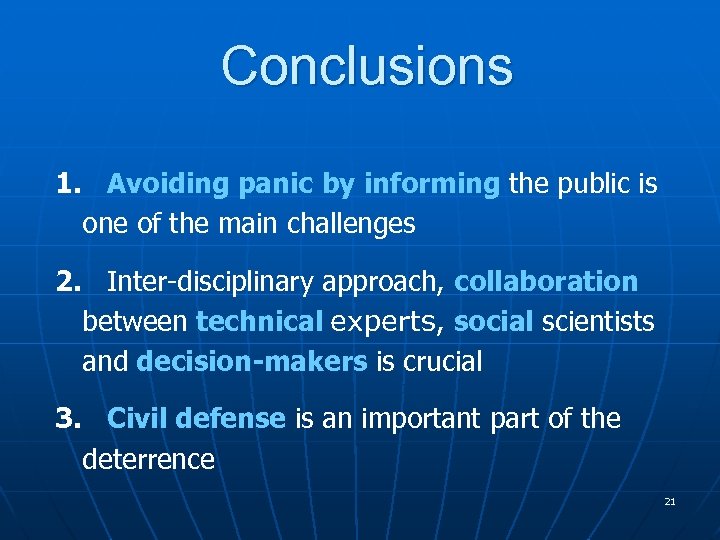 Conclusions 1. Avoiding panic by informing the public is one of the main challenges 2. Inter-disciplinary approach, collaboration between technical experts, social scientists and decision-makers is crucial 3. Civil defense is an important part of the deterrence 21
 Appendices 22
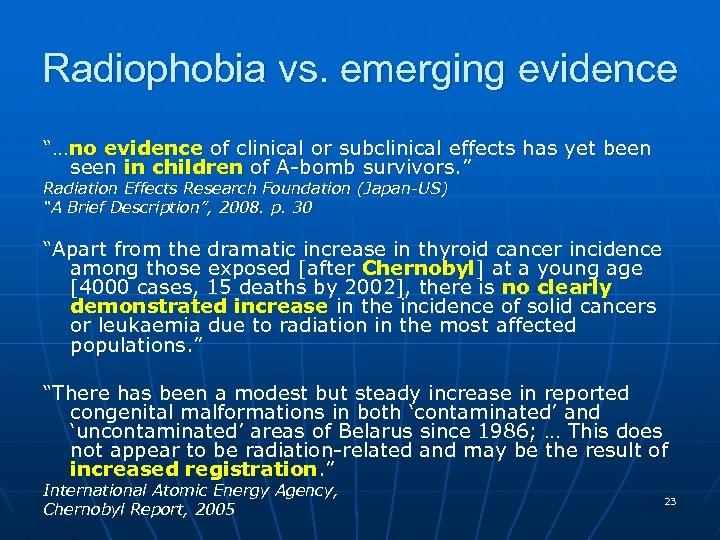 Radiophobia vs. emerging evidence “…no evidence of clinical or subclinical effects has yet been seen in children of A-bomb survivors. ” Radiation Effects Research Foundation (Japan-US) “A Brief Description”, 2008. p. 30 “Apart from the dramatic increase in thyroid cancer incidence among those exposed [after Chernobyl] at a young age [4000 cases, 15 deaths by 2002], there is no clearly demonstrated increase in the incidence of solid cancers or leukaemia due to radiation in the most affected populations. ” “There has been a modest but steady increase in reported congenital malformations in both ‘contaminated’ and ‘uncontaminated’ areas of Belarus since 1986; … This does not appear to be radiation-related and may be the result of increased registration. ” International Atomic Energy Agency, Chernobyl Report, 2005 23
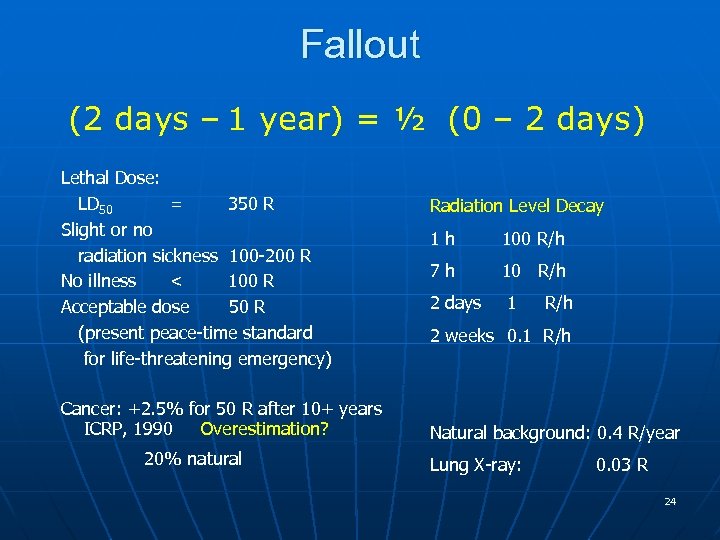 Fallout (2 days – 1 year) = ½ (0 – 2 days) Lethal Dose: LD 50 = 350 R Slight or no radiation sickness 100 -200 R No illness < 100 R Acceptable dose 50 R (present peace-time standard for life-threatening emergency) Cancer: +2. 5% for 50 R after 10+ years ICRP, 1990 Overestimation? 20% natural Radiation Level Decay 1 h 100 R/h 7 h 10 R/h 2 days 1 R/h 2 weeks 0. 1 R/h Natural background: 0. 4 R/year Lung X-ray: 0. 03 R 24