


 Скачать презентацию Maslenitsa Выполнил Харитонов Сергей Maslenitsa the
Презентация Microsoft Office PowerPoint (6).pptx
- Количество слайдов: 13
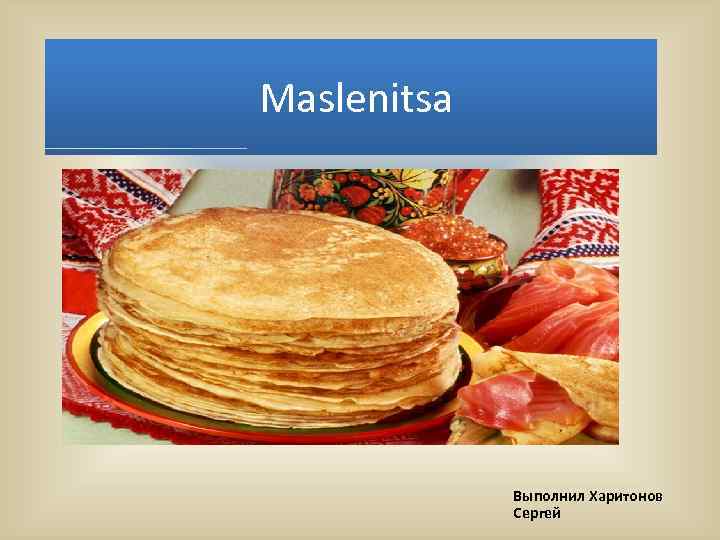 Maslenitsa Выполнил Харитонов Сергей
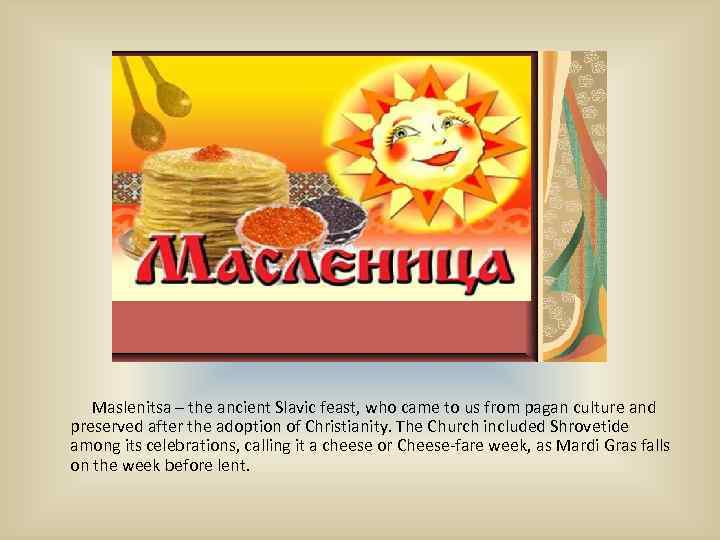 Maslenitsa – the ancient Slavic feast, who came to us from pagan culture and preserved after the adoption of Christianity. The Church included Shrovetide among its celebrations, calling it a cheese or Cheese-fare week, as Mardi Gras falls on the week before lent.
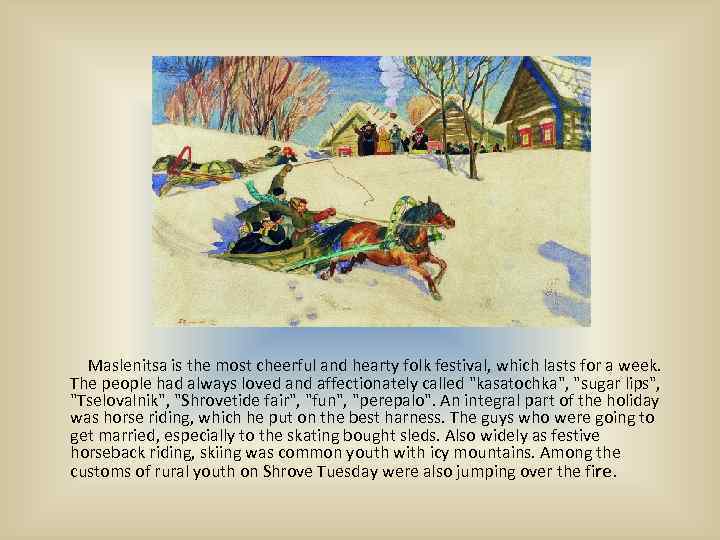 Maslenitsa is the most cheerful and hearty folk festival, which lasts for a week. The people had always loved and affectionately called "kasatochka", "sugar lips", "Tselovalnik", "Shrovetide fair", "fun", "perepalo". An integral part of the holiday was horse riding, which he put on the best harness. The guys who were going to get married, especially to the skating bought sleds. Also widely as festive horseback riding, skiing was common youth with icy mountains. Among the customs of rural youth on Shrove Tuesday were also jumping over the fire.
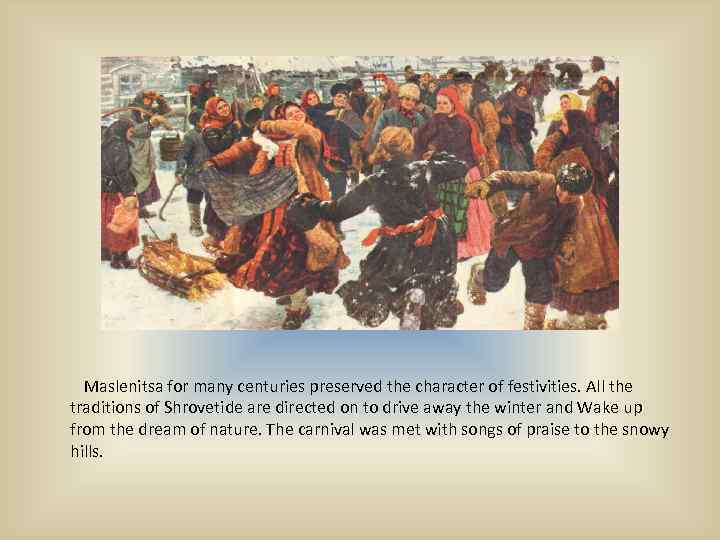 Maslenitsa for many centuries preserved the character of festivities. All the traditions of Shrovetide are directed on to drive away the winter and Wake up from the dream of nature. The carnival was met with songs of praise to the snowy hills.
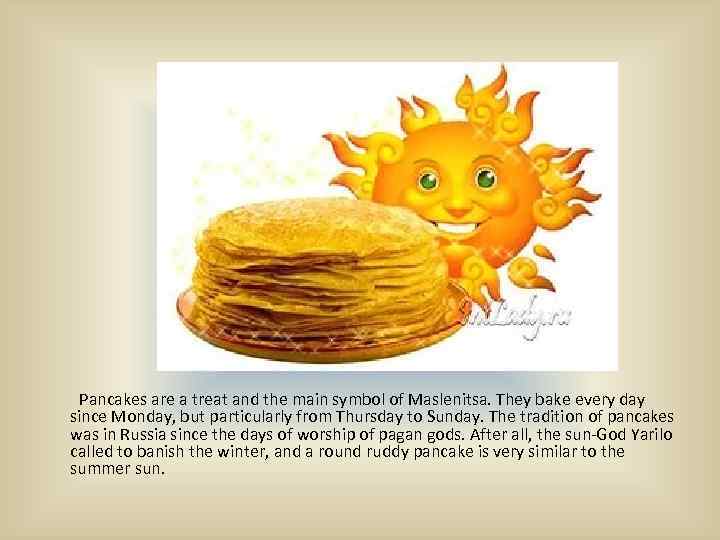 Pancakes are a treat and the main symbol of Maslenitsa. They bake every day since Monday, but particularly from Thursday to Sunday. The tradition of pancakes was in Russia since the days of worship of pagan gods. After all, the sun-God Yarilo called to banish the winter, and a round ruddy pancake is very similar to the summer sun.
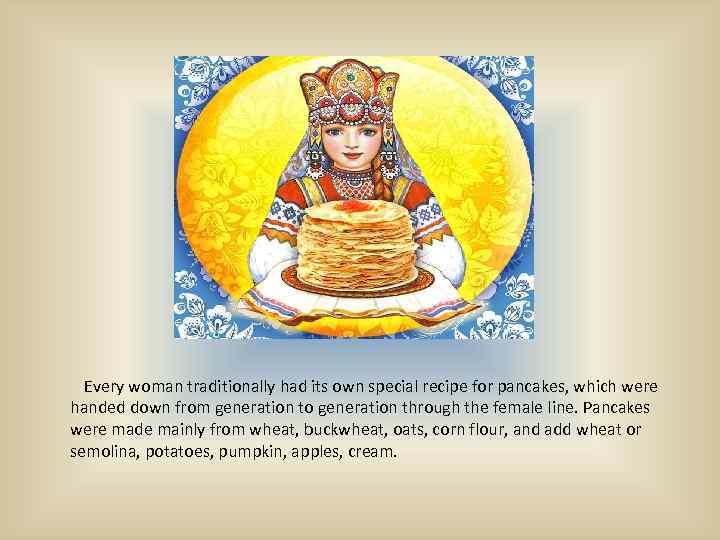 Every woman traditionally had its own special recipe for pancakes, which were handed down from generation to generation through the female line. Pancakes were made mainly from wheat, buckwheat, oats, corn flour, and add wheat or semolina, potatoes, pumpkin, apples, cream.
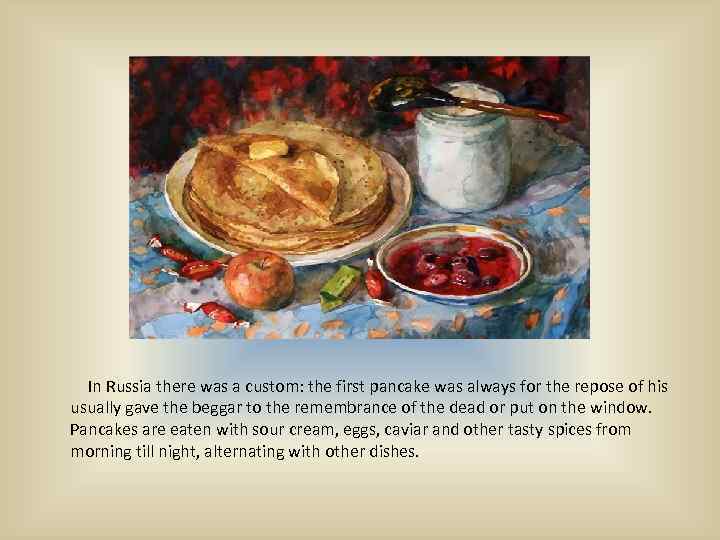 In Russia there was a custom: the first pancake was always for the repose of his usually gave the beggar to the remembrance of the dead or put on the window. Pancakes are eaten with sour cream, eggs, caviar and other tasty spices from morning till night, alternating with other dishes.
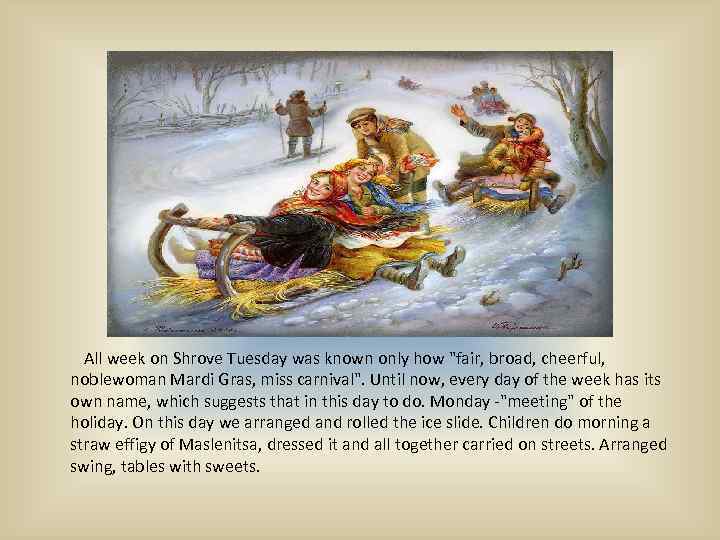 All week on Shrove Tuesday was known only how "fair, broad, cheerful, noblewoman Mardi Gras, miss carnival". Until now, every day of the week has its own name, which suggests that in this day to do. Monday -"meeting" of the holiday. On this day we arranged and rolled the ice slide. Children do morning a straw effigy of Maslenitsa, dressed it and all together carried on streets. Arranged swing, tables with sweets.
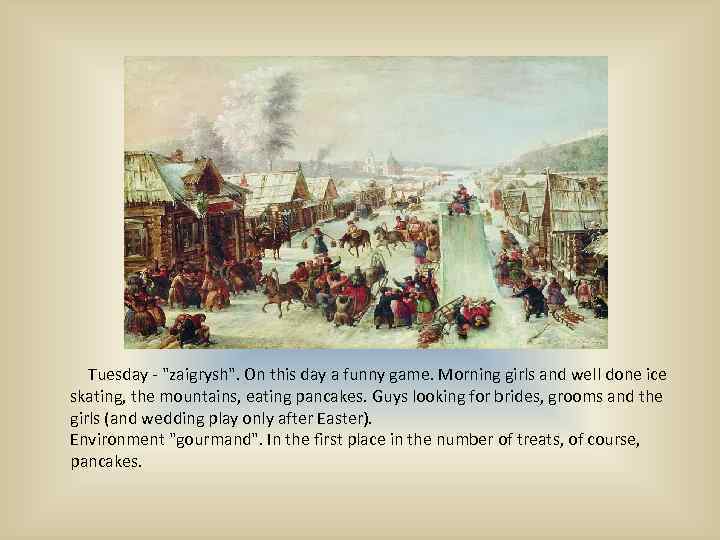 Tuesday - "zaigrysh". On this day a funny game. Morning girls and well done ice skating, the mountains, eating pancakes. Guys looking for brides, grooms and the girls (and wedding play only after Easter). Environment "gourmand". In the first place in the number of treats, of course, pancakes.
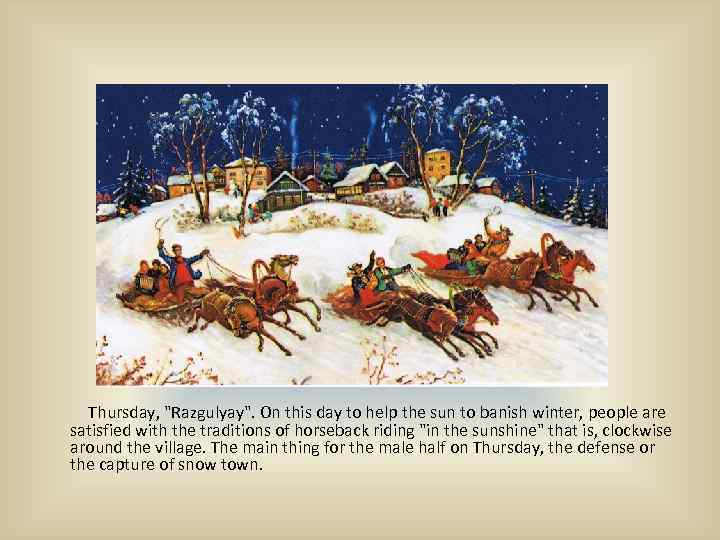 Thursday, "Razgulyay". On this day to help the sun to banish winter, people are satisfied with the traditions of horseback riding "in the sunshine" that is, clockwise around the village. The main thing for the male half on Thursday, the defense or the capture of snow town.
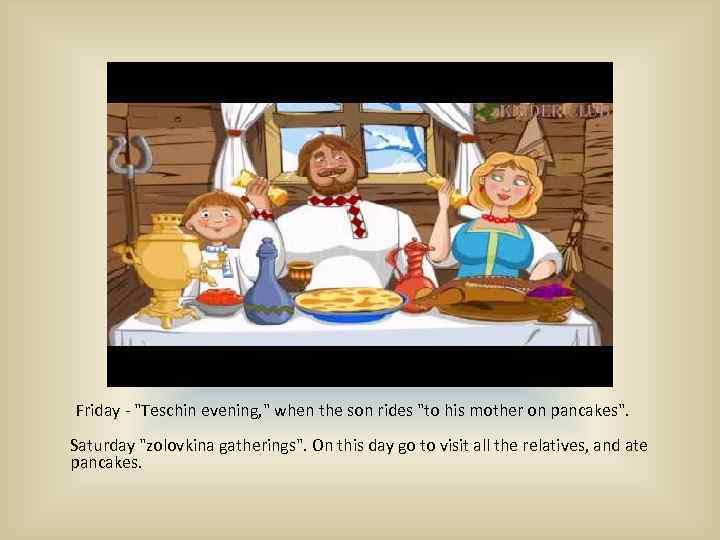 Friday - "Teschin evening, " when the son rides "to his mother on pancakes". Saturday "zolovkina gatherings". On this day go to visit all the relatives, and ate pancakes.
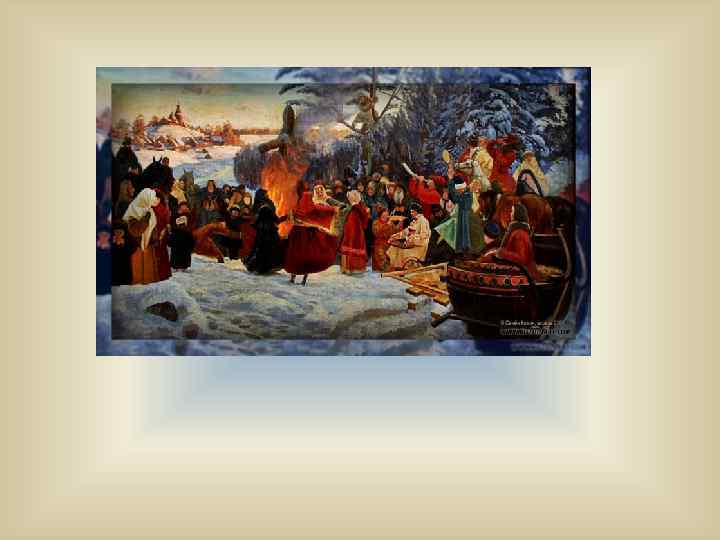
 Sunday is the final "forgiveness day" when asking forgiveness from relatives and acquaintances for offenses and after that, as a rule, cheerfully sing and dance, thus seeing the wide Shrove Tuesday. On this day, a huge bonfire burned a straw effigy, symbolizing the leaving winter. It is set in the heart of a bonfire site and say goodbye to it jokes, songs, dances. Blamed winter for the winter frosts and famine and thank you for exciting winter fun. After that set fire to an effigy under cheerful exclamations and songs. When winter burn, completes the final holiday fun: young people jumping over the fire. This contest ends in agility and the holiday of Maslenitsa.