 Скачать презентацию MARRCH 2007 Annual Conference October 30 2007 Addressing
3df203eee935a89e751f52b2a63efa4d.ppt
- Количество слайдов: 62



MARRCH 2007 Annual Conference October 30, 2007 Addressing “Paperwork Burden” Transforming Data into useful Information for Counselors and Clients Deni Carise, Ph. D. Treatment Research Institute University of Pennsylvania TRI science addiction

Topics State of the Field Delaware Paperwork Burden Review Decreasing Paperwork at Assessment Role of Computer Systems Benefits of Standardizing Data TRI science addiction
State of the Field Results of Initial Work from Recruiting Programs for the National Treatment Outcomes Monitoring System (NTOMS) Leadership Management Staffing Information TRI science addiction
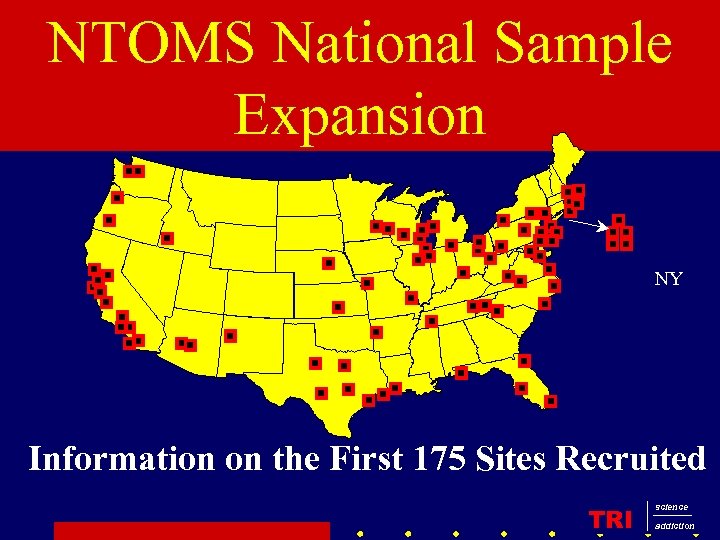
NTOMS National Sample Expansion NY Information on the First 175 Sites Recruited TRI science addiction
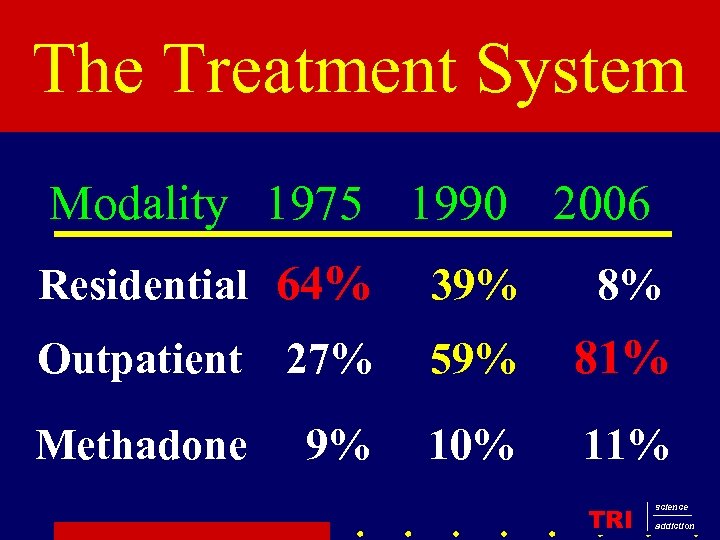
The Treatment System Modality 1975 1990 2006 Residential 64% 39% 8% Outpatient 27% 59% 81% Methadone 10% 11% 9% TRI science addiction
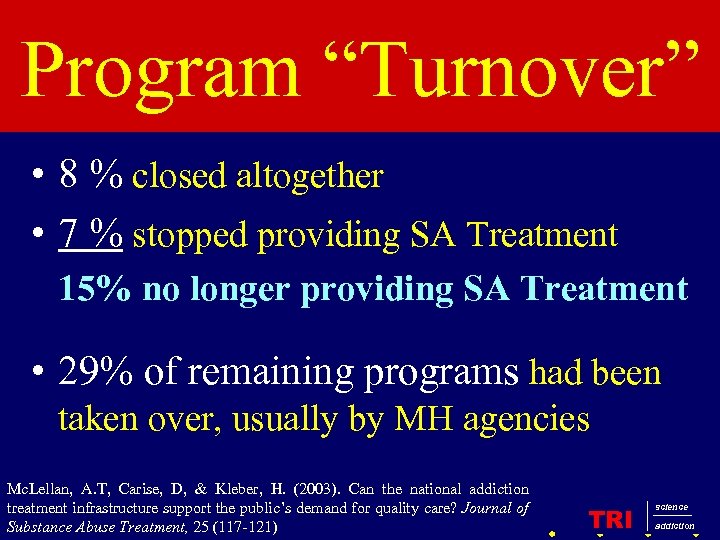
Program “Turnover” • 8 % closed altogether • 7 % stopped providing SA Treatment 15% no longer providing SA Treatment • 29% of remaining programs had been taken over, usually by MH agencies Mc. Lellan, A. T, Carise, D, & Kleber, H. (2003). Can the national addiction treatment infrastructure support the public’s demand for quality care? Journal of Substance Abuse Treatment, 25 (117 -121) TRI science addiction
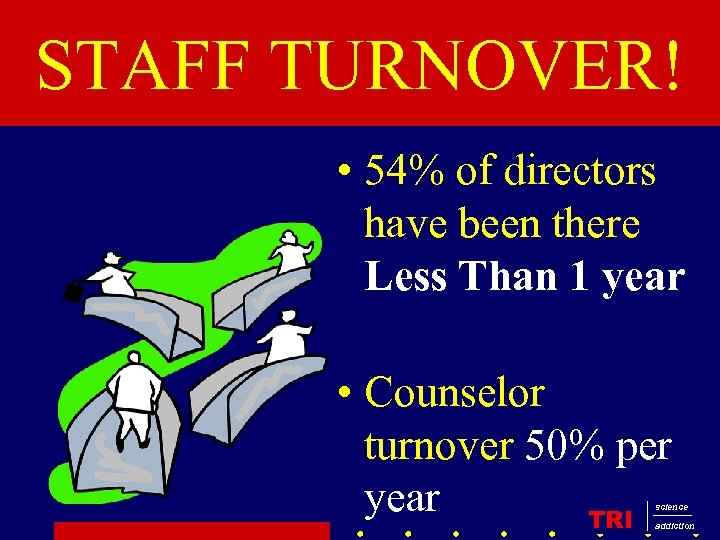
STAFF TURNOVER! • 54% of directors have been there Less Than 1 year • Counselor turnover 50% per year TRI science addiction
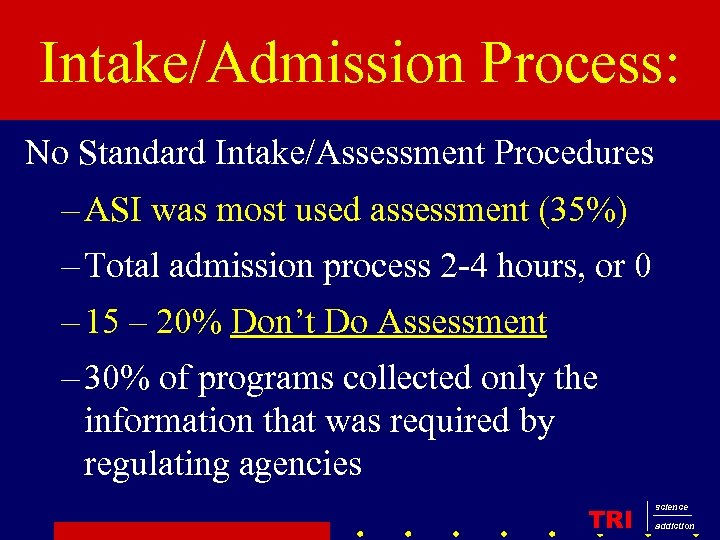
Intake/Admission Process: No Standard Intake/Assessment Procedures – ASI was most used assessment (35%) – Total admission process 2 -4 hours, or 0 – 15 – 20% Don’t Do Assessment – 30% of programs collected only the information that was required by regulating agencies TRI science addiction
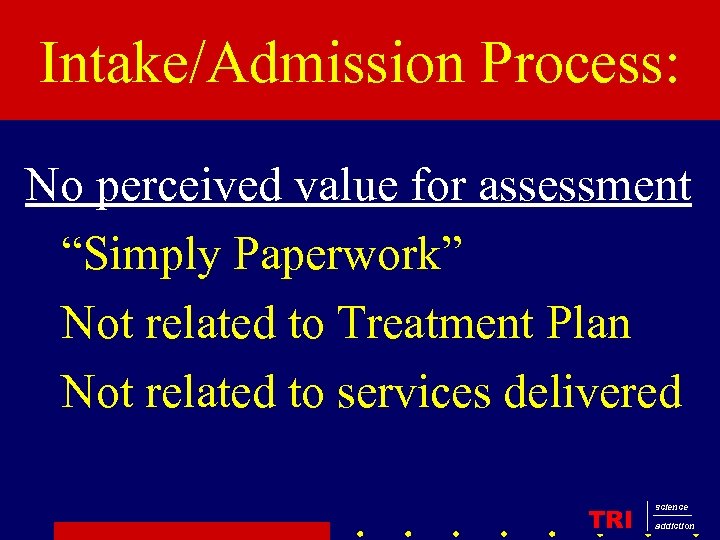
Intake/Admission Process: No perceived value for assessment “Simply Paperwork” Not related to Treatment Plan Not related to services delivered TRI science addiction
Who are the Counselors? A Typical Counselors Day? 3 - 4 Hours – Group Counseling 2 - 3 Hours – Intakes 2 - 3 Hours – “Paperwork” TRI science addiction
Who are the Counselors? Addressing “Paperwork” An Example with the Delaware State Concurrent Recovery Monitoring Grant TRI science addiction
Delaware CRM Project 4 Phases: 1) Evaluation of current data collection in an effort to minimize paperwork burden 2) Collaboratively select CRM items 3) Pilot the collection and reporting of these items in 4 state adult OP SA programs 4) Expand to all 11 state adult OP SA programs and monitor progress TRI science addiction
Phase 1: Who are the Counselors? A Comprehensive Paperwork Burden Review TRI science addiction
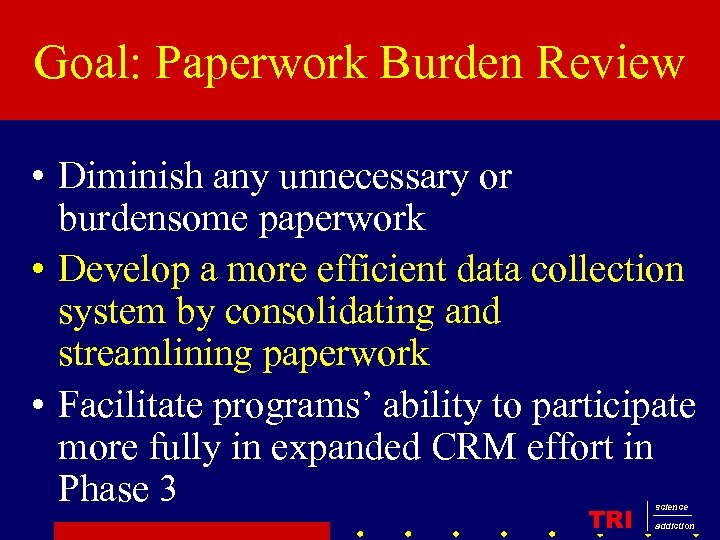
Goal: Paperwork Burden Review • Diminish any unnecessary or burdensome paperwork • Develop a more efficient data collection system by consolidating and streamlining paperwork • Facilitate programs’ ability to participate more fully in expanded CRM effort in Phase 3 TRI science addiction
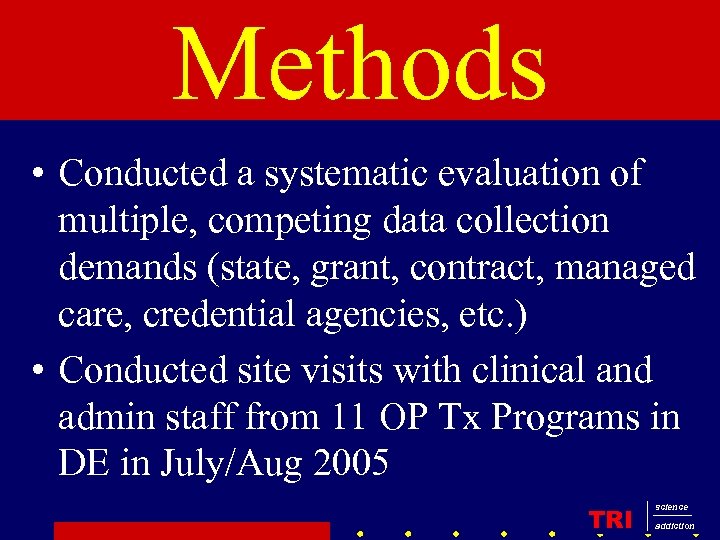
Methods • Conducted a systematic evaluation of multiple, competing data collection demands (state, grant, contract, managed care, credential agencies, etc. ) • Conducted site visits with clinical and admin staff from 11 OP Tx Programs in DE in July/Aug 2005 TRI science addiction
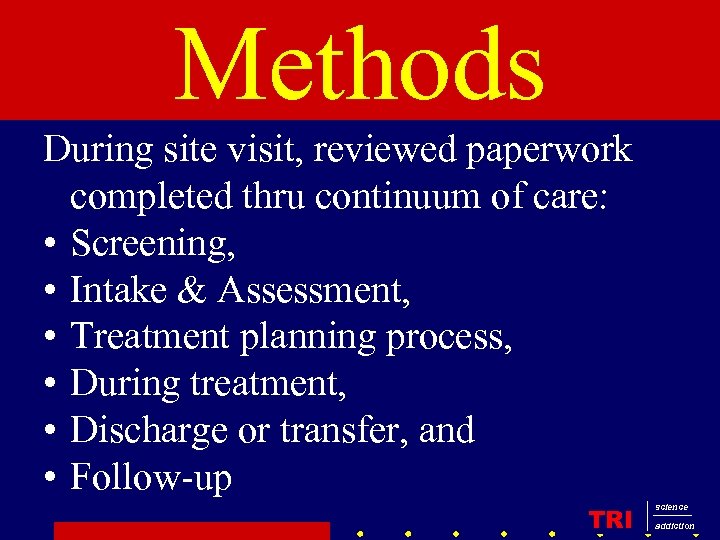
Methods During site visit, reviewed paperwork completed thru continuum of care: • Screening, • Intake & Assessment, • Treatment planning process, • During treatment, • Discharge or transfer, and • Follow-up TRI science addiction
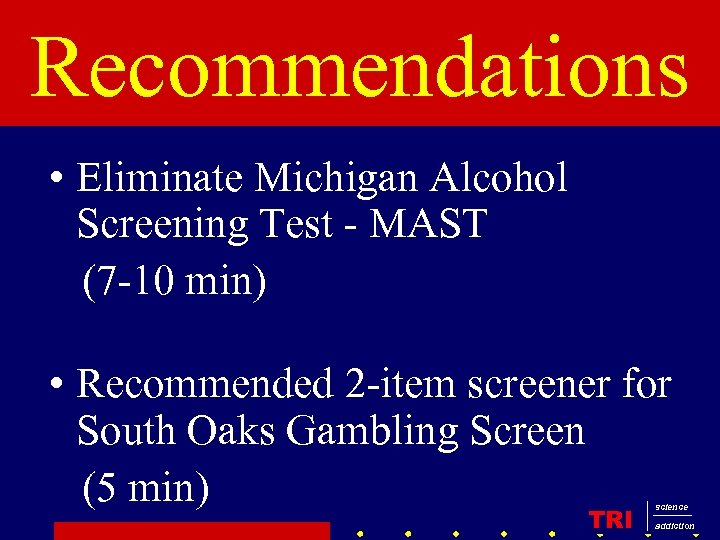
Recommendations • Eliminate Michigan Alcohol Screening Test - MAST (7 -10 min) • Recommended 2 -item screener for South Oaks Gambling Screen (5 min) TRI science addiction
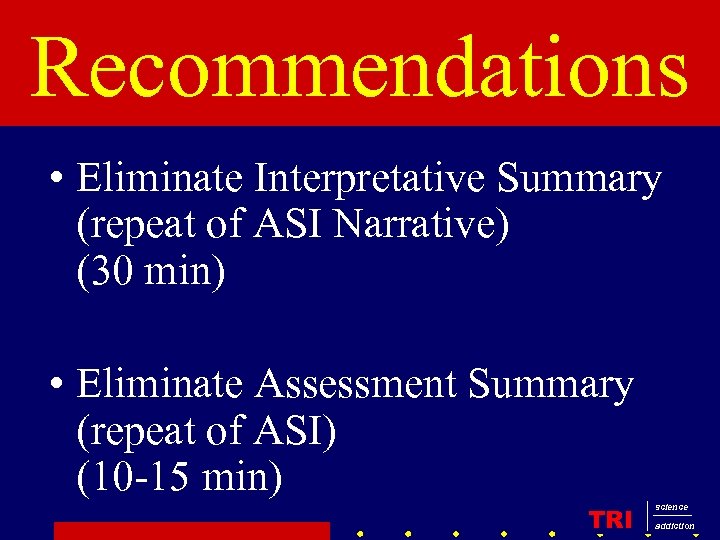
Recommendations • Eliminate Interpretative Summary (repeat of ASI Narrative) (30 min) • Eliminate Assessment Summary (repeat of ASI) (10 -15 min) TRI science addiction
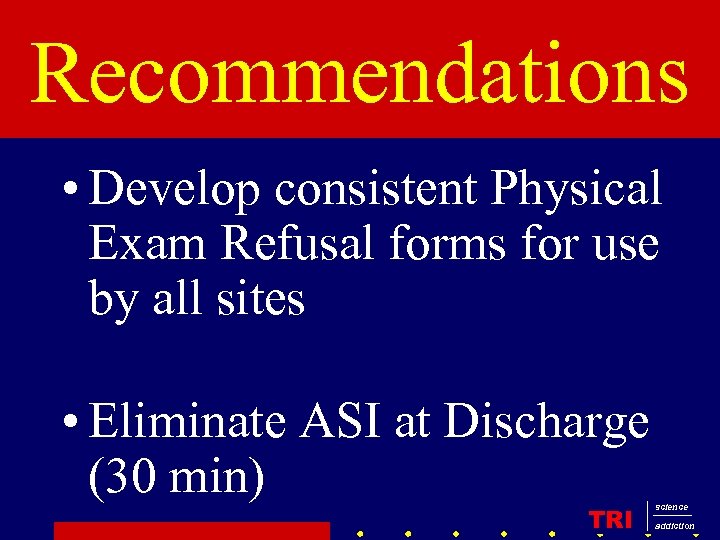
Recommendations • Develop consistent Physical Exam Refusal forms for use by all sites • Eliminate ASI at Discharge (30 min) TRI science addiction
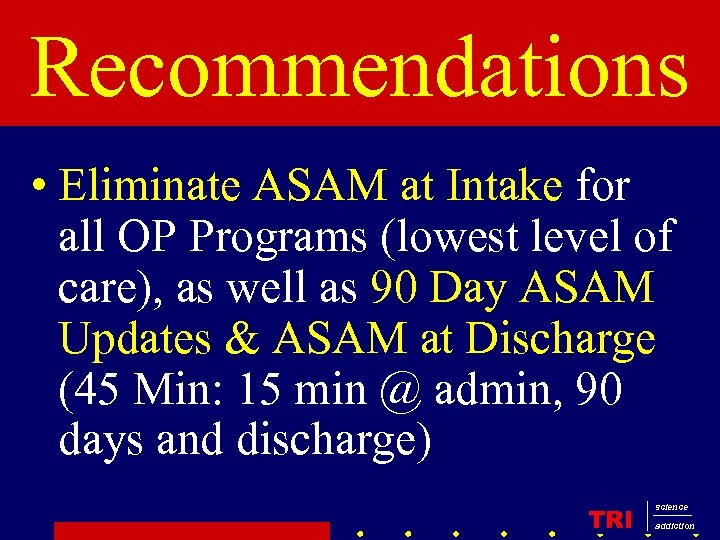
Recommendations • Eliminate ASAM at Intake for all OP Programs (lowest level of care), as well as 90 Day ASAM Updates & ASAM at Discharge (45 Min: 15 min @ admin, 90 days and discharge) TRI science addiction
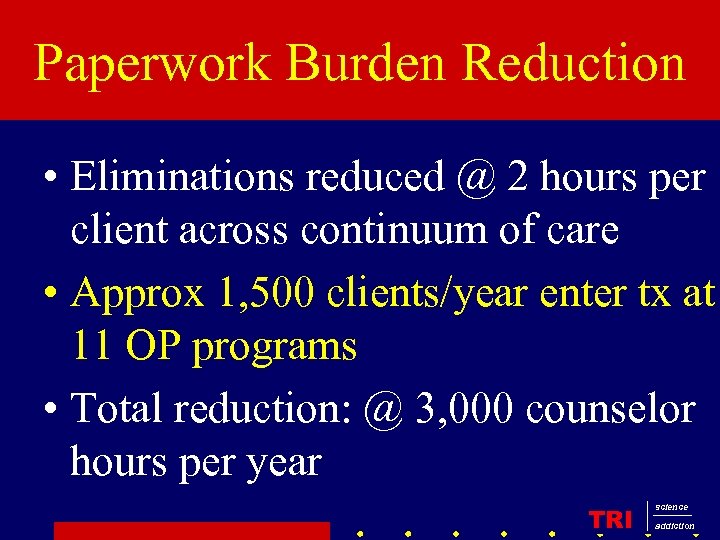
Paperwork Burden Reduction • Eliminations reduced @ 2 hours per client across continuum of care • Approx 1, 500 clients/year enter tx at 11 OP programs • Total reduction: @ 3, 000 counselor hours per year TRI science addiction
Paperwork Burden at Assessment How do computer systems and standardizing data help? TRI science addiction
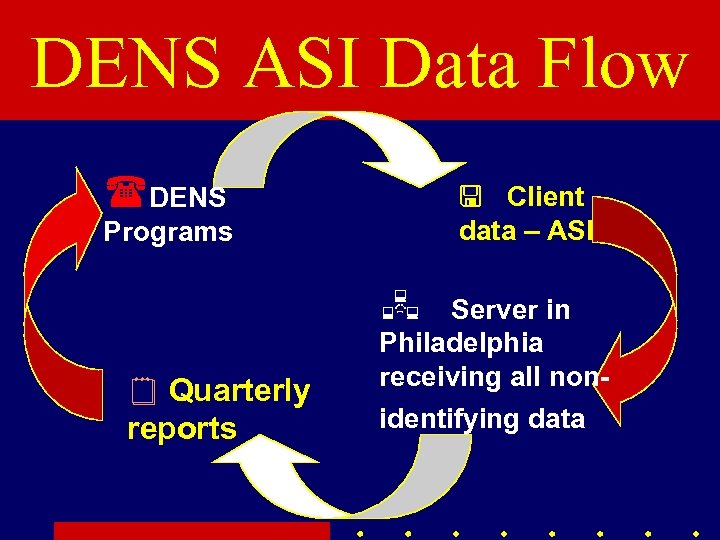
The Drug Evaluation Network System DENS 8 A national system collecting standardized, automated information (using ASI) 8 that is clinically important and policy relevant 8 on people entering addiction treatment and their treatment programs TRI science addiction
Purpose of DENS Standardize information at treatment intake Unified picture of people coming into treatment Purpose of DENS Quickly gather questions of current interest (Changes since 9/11) so this information isn’t always anecdotal Identify new trends - ex: Oxycontin use AND to inform policy TRI science addiction
Significance of DENS 4 The only “real-time” source of information on treatment programs and their patients. 4 Ability to collect varied additional timely and policy relevant patient and program information TRI science addiction

Standardizing Data Collection: The Blood Pressure Model TRI science addiction
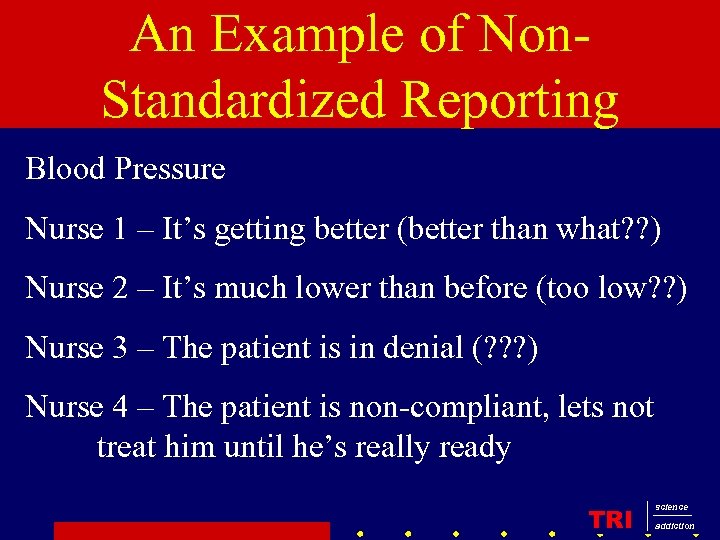
An Example of Non. Standardized Reporting Blood Pressure Nurse 1 – It’s getting better (better than what? ? ) Nurse 2 – It’s much lower than before (too low? ? ) Nurse 3 – The patient is in denial (? ? ? ) Nurse 4 – The patient is non-compliant, lets not treat him until he’s really ready TRI science addiction
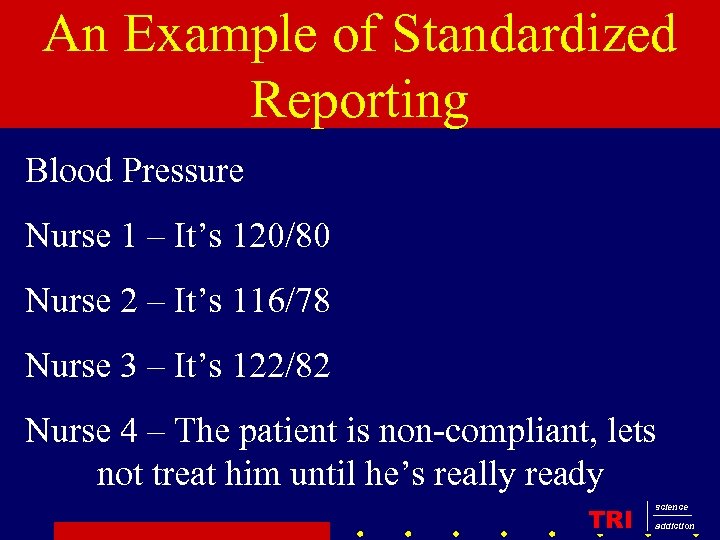
An Example of Standardized Reporting Blood Pressure Nurse 1 – It’s 120/80 Nurse 2 – It’s 116/78 Nurse 3 – It’s 122/82 Nurse 4 – The patient is non-compliant, lets not treat him until he’s really ready TRI science addiction
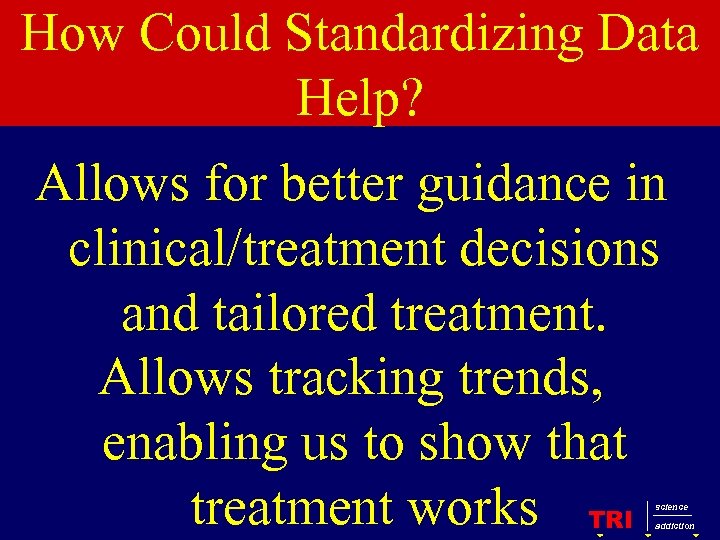
How Could Standardizing Data Help? Allows for better guidance in clinical/treatment decisions and tailored treatment. Allows tracking trends, enabling us to show that treatment works TRI science addiction
Standardized Assessment An example with the Addiction Severity Index TRI science addiction
The Addiction Severity Index • Developed by Tom Mc. Lellan & colleagues at University of Pennsylvania • Standardized, semi-structured, multi-focused screening and assessment tool TRI science addiction
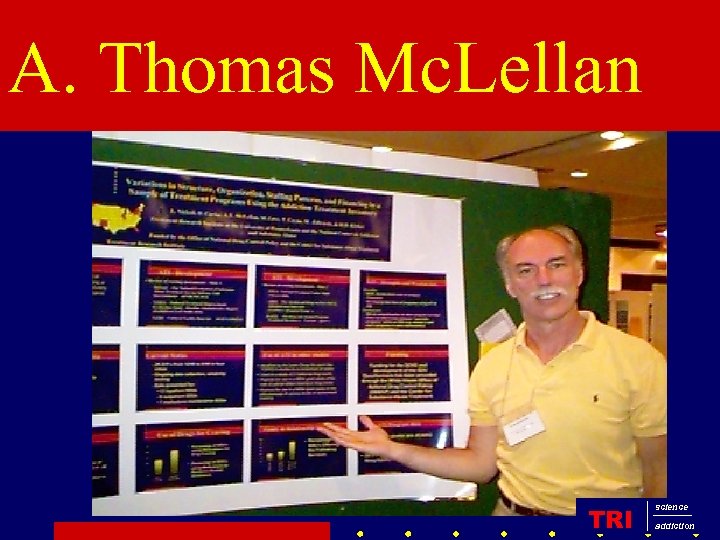
A. Thomas Mc. Lellan TRI science addiction
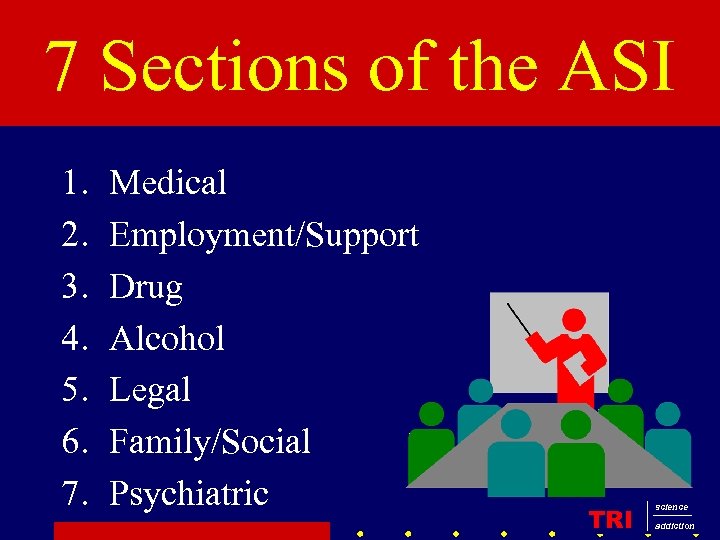
7 Sections of the ASI 1. 2. 3. 4. 5. 6. 7. Medical Employment/Support Drug Alcohol Legal Family/Social Psychiatric TRI science addiction
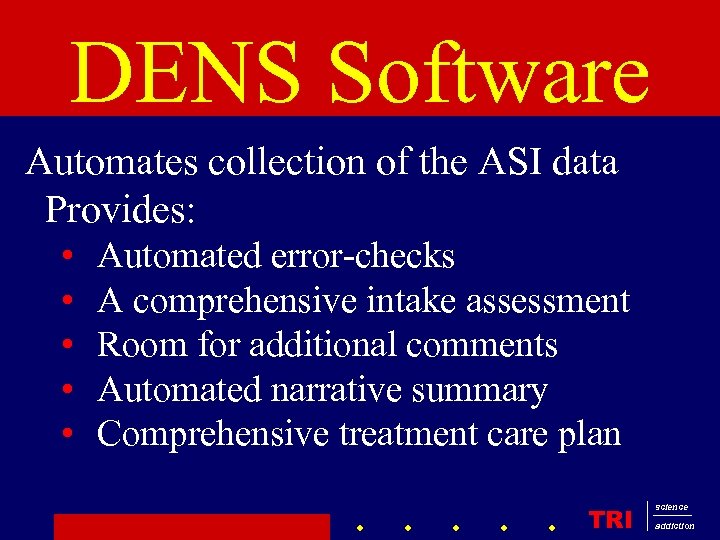
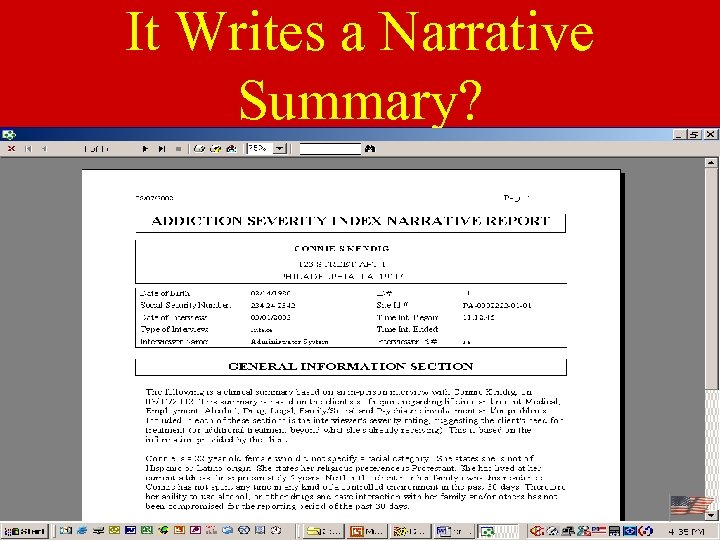
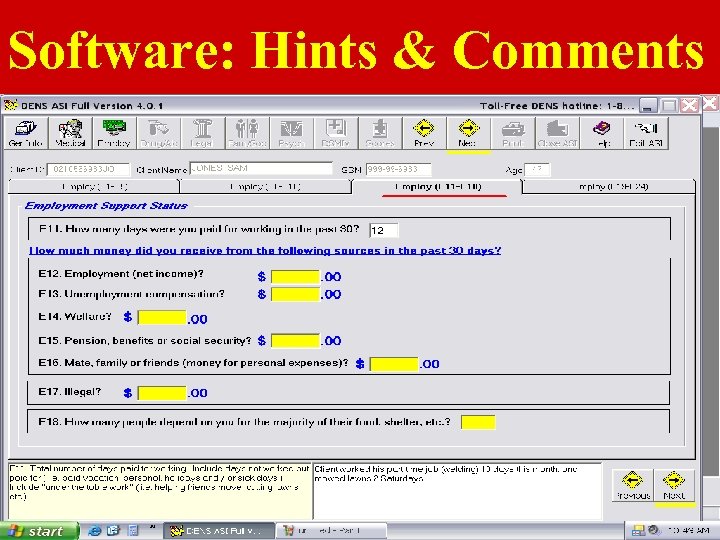
DENS Software Automates collection of the ASI data Provides: • • • Automated error-checks A comprehensive intake assessment Room for additional comments Automated narrative summary Comprehensive treatment care plan TRI science addiction
DENS ASI Software • Software designed with input from clinicians • Assumed most users have little/no computer experience • Users report administration time shorter with software • Can enter comments for every ASI item TRI science addiction
It Writes a Narrative Summary?
Software: Hints & Comments
DENS ASI Data Flow (DENS Client data – ASI Programs ¥ Quarterly reports Server in Philadelphia receiving all nonidentifying data
Trends of Interest? Who is coming in to treatment? TRI science addiction
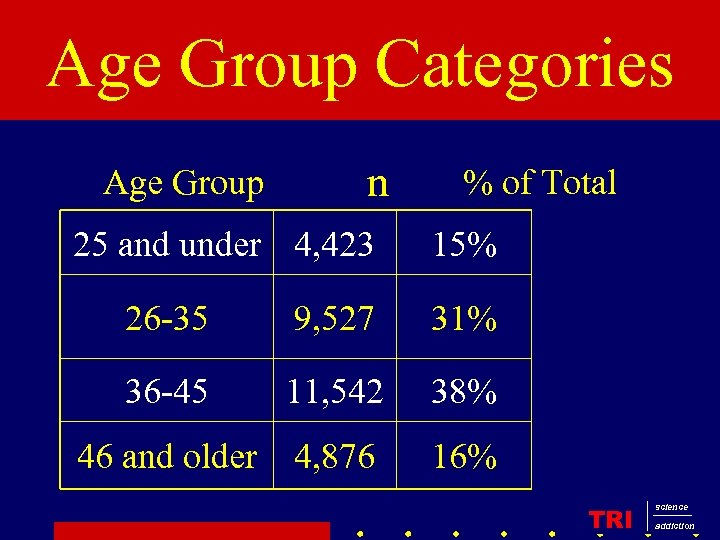
Age Group Categories Age Group n 25 and under 4, 423 % of Total 15% 26 -35 9, 527 31% 36 -45 11, 542 38% 46 and older 4, 876 16% TRI science addiction
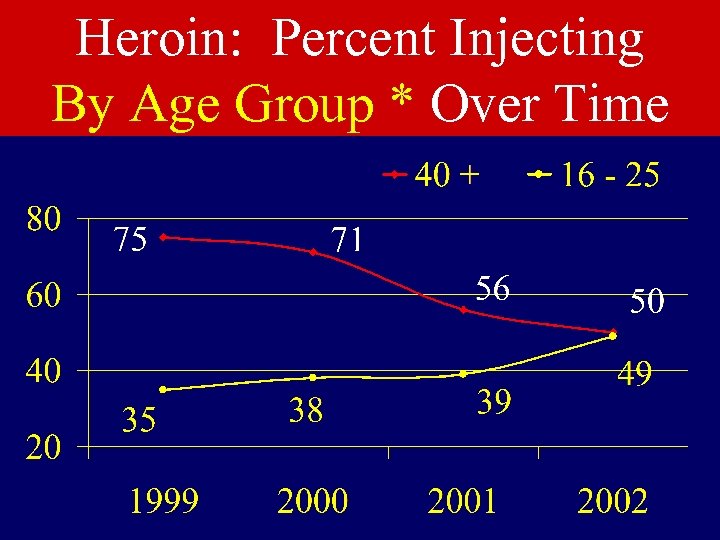
Heroin: Percent Injecting By Age Group * Over Time TRI science addiction
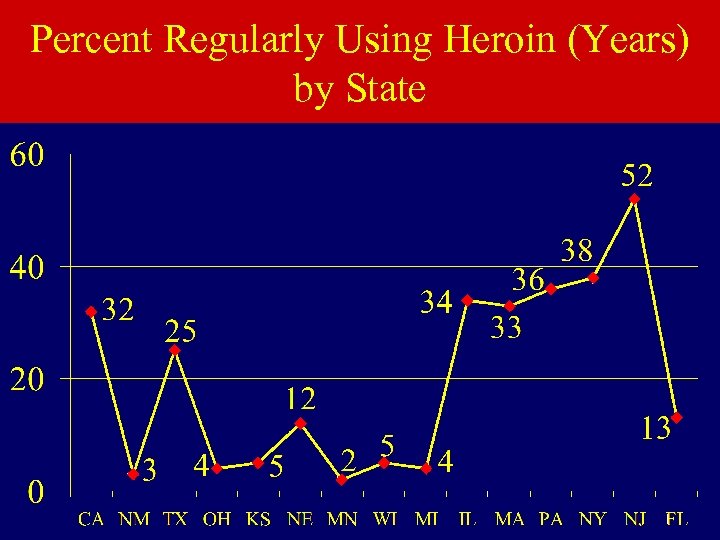
Percent Regularly Using Heroin (Years) by State
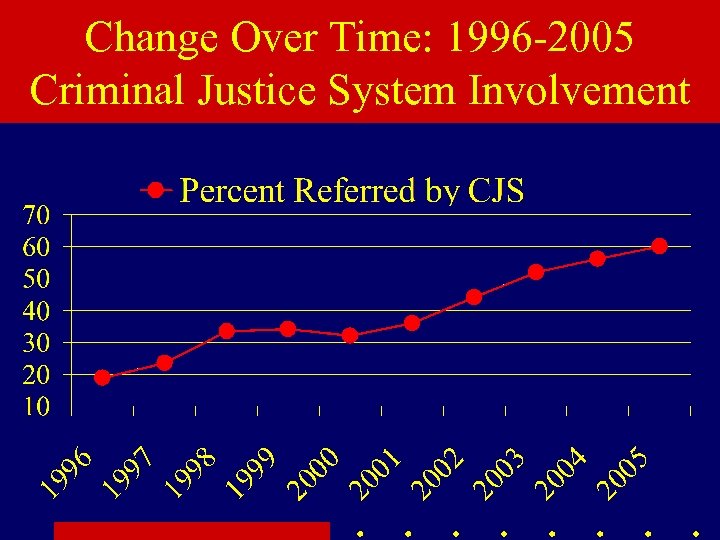
Change Over Time: 1996 -2005 Criminal Justice System Involvement
What Can Data Do for You? Track Trends – Current drug trends Oxy. Contin TRI science addiction

A Flexible Monitoring System Benefits of “Real -Time” Knowledge TRI science addiction
The research question: th 11 Did the September attacks result in changes in the behaviors of counselors and patients in substance abuse treatment? TRI science addiction
Methods • Surveyed 86 counselors at 25 DENS treatment programs • Chicago, Miami, Philadelphia & New York. • November 28, 2001 and January 4, 2002 • Counselors at a Veterans Affairs Medical Center were surveyed to evaluate potential differences in their population TRI science addiction
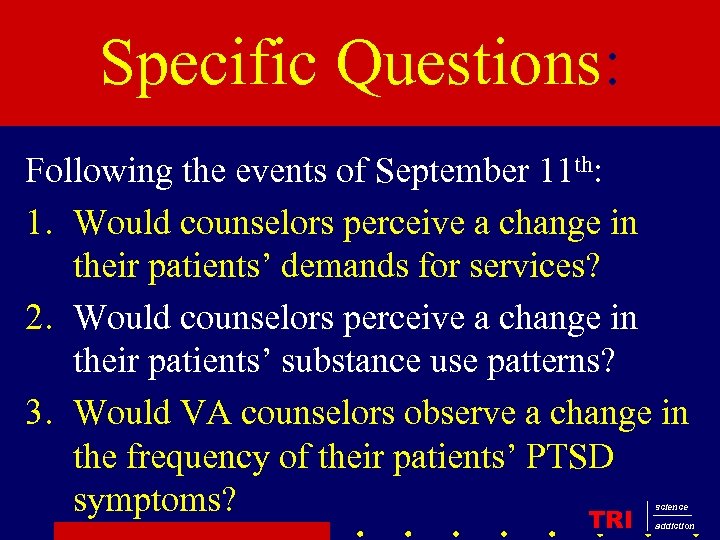
Specific Questions: Following the events of September 11 th: 1. Would counselors perceive a change in their patients’ demands for services? 2. Would counselors perceive a change in their patients’ substance use patterns? 3. Would VA counselors observe a change in the frequency of their patients’ PTSD symptoms? TRI science addiction
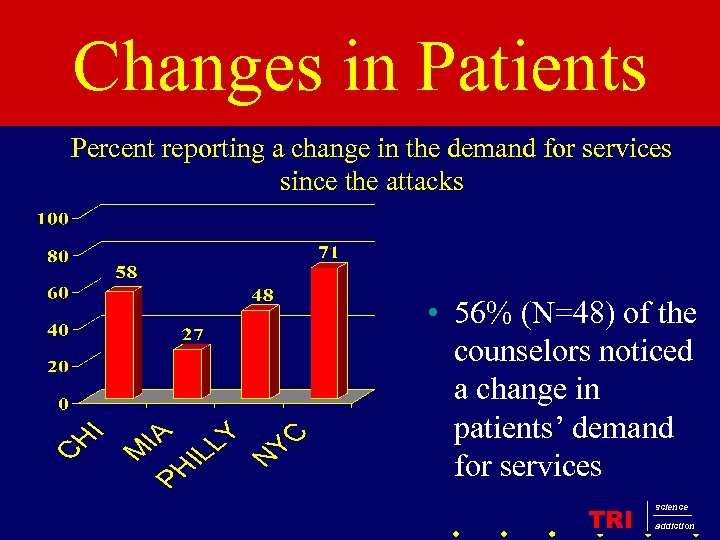
Changes in Patients Percent reporting a change in the demand for services since the attacks • 56% (N=48) of the counselors noticed a change in patients’ demand for services TRI science addiction
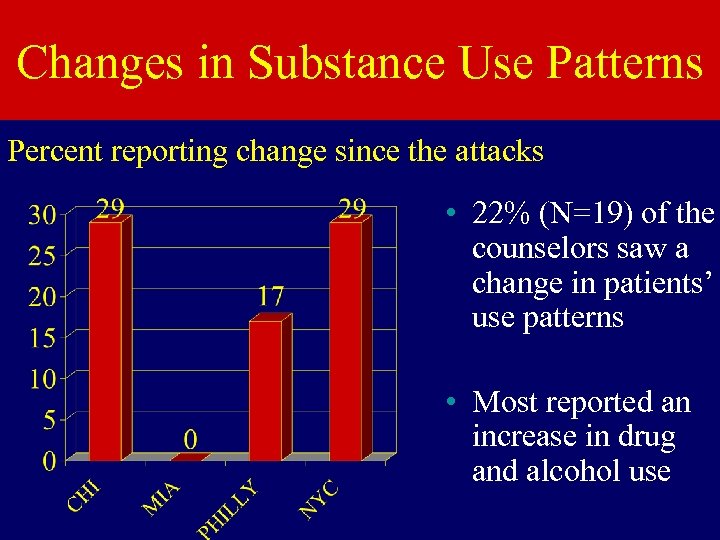
Changes in Substance Use Patterns Percent reporting change since the attacks • 22% (N=19) of the counselors saw a change in patients’ use patterns • Most reported an increase in drug and alcohol use TRI science addiction
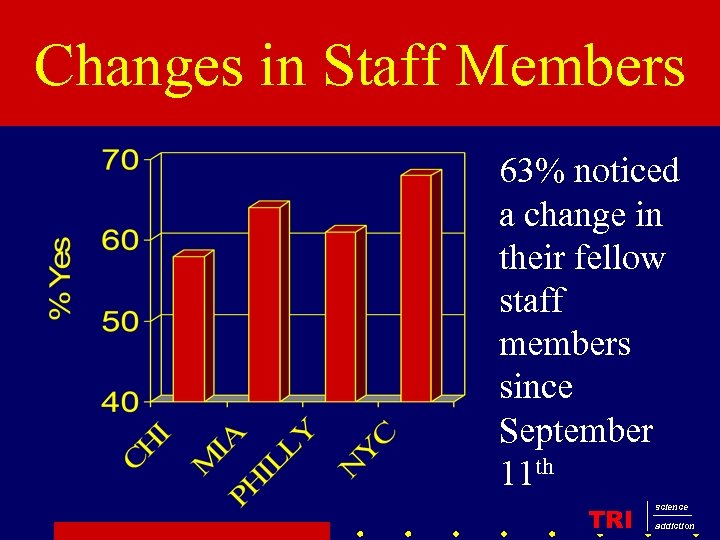
Changes in Staff Members 63% noticed a change in their fellow staff members since September 11 th TRI science addiction
Overall, Staff Members Reported: • More concern about and compassion toward other employees and patients • More anxiety and stress • Fear of layoffs th … following September 11 TRI science addiction
Building on DENS: CASPAR Computer Assisted System for Patient Assessment and Referrals
Background “Wrap-around” services have been shown to improve treatment outcomes But… …few services available in contemporary Treatment Programs …finding “wrap-around” services can be difficult TRI science addiction
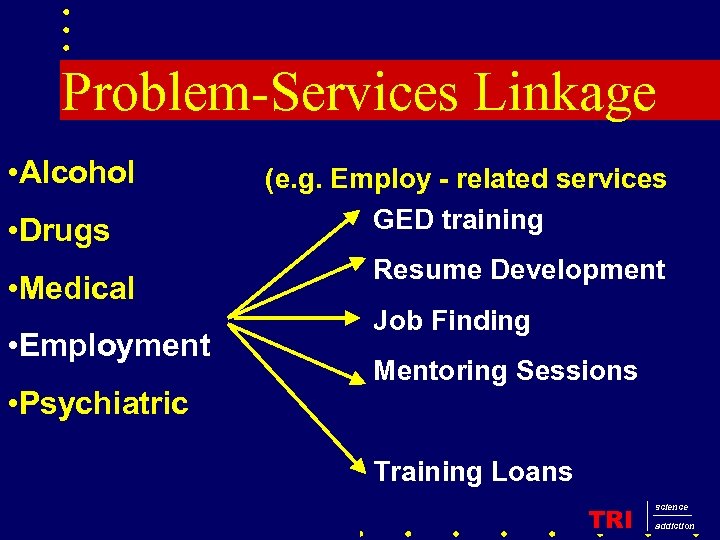
Problem-Services Linkage • Alcohol • Drugs (e. g. Employ - related services GED training • Medical • Employment • Psychiatric Resume Development Job Finding Mentoring Sessions Training Loans Treatment Research Institute TRI science addiction
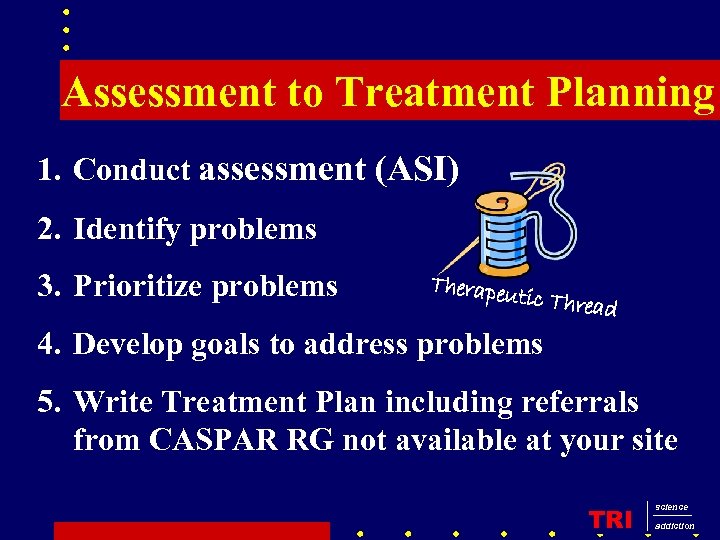
Assessment to Treatment Planning 1. Conduct assessment (ASI) 2. Identify problems 3. Prioritize problems Therapeu tic Threa d 4. Develop goals to address problems 5. Write Treatment Plan including referrals from CASPAR RG not available at your site TRI science addiction
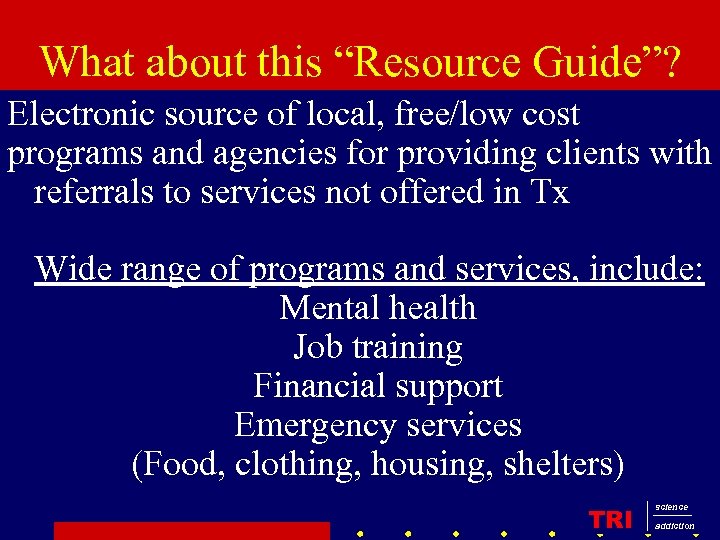
What about this “Resource Guide”? Electronic source of local, free/low cost programs and agencies for providing clients with referrals to services not offered in Tx Wide range of programs and services, include: Mental health Job training Financial support Emergency services (Food, clothing, housing, shelters) TRI science addiction
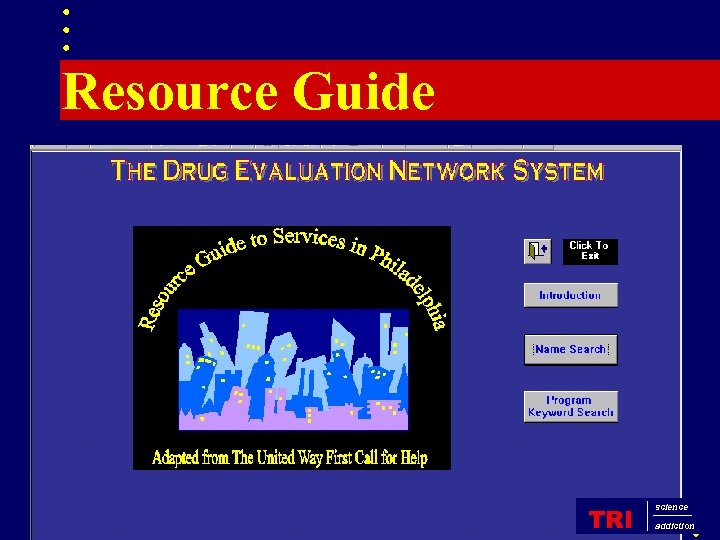
Resource Guide TRI science addiction
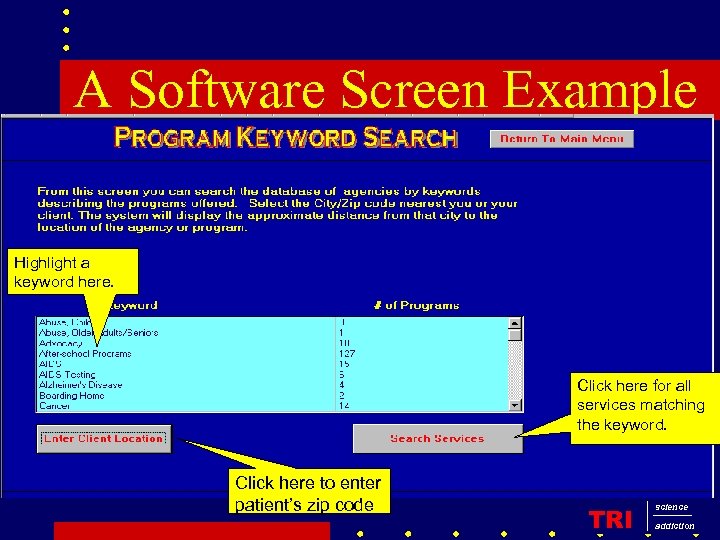
A Software Screen Example Highlight a keyword here. Click here for all services matching the keyword. Click here to enter patient’s zip code. TRI science addiction
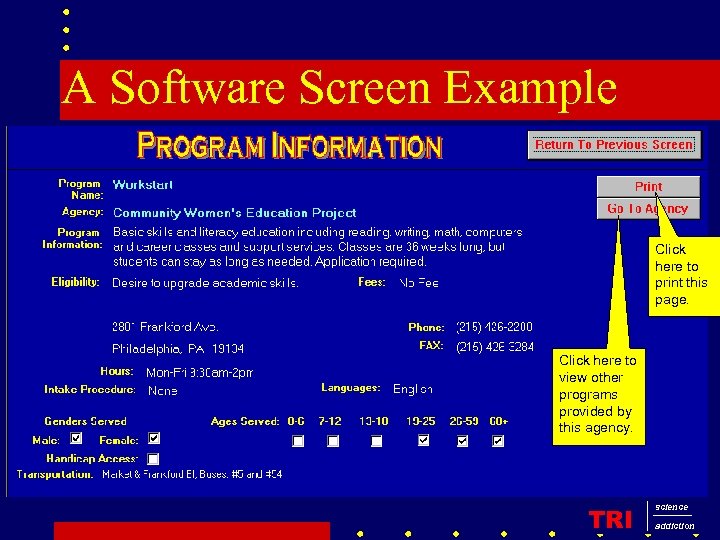
A Software Screen Example Click here to print this page. Click here to view other programs provided by this agency. TRI science addiction
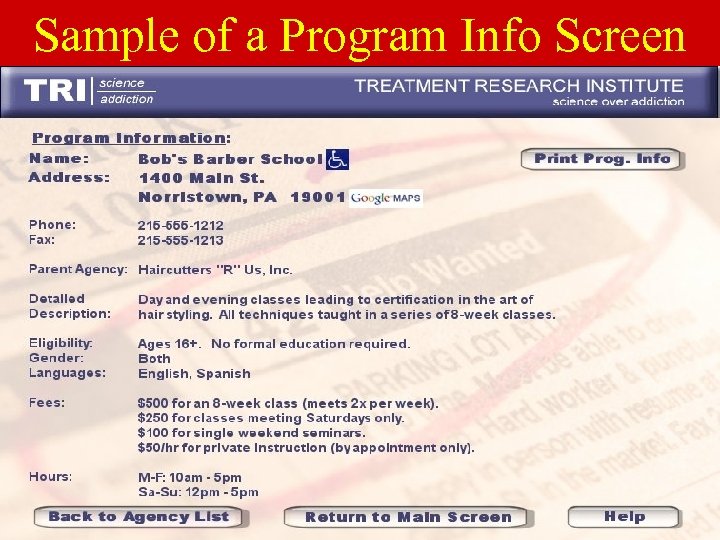
Sample of a Program Info Screen
n a h T ! u o Y k TRI science addiction
Скачать презентацию MARRCH 2007 Annual Conference October 30 2007 Addressing
3df203eee935a89e751f52b2a63efa4d.ppt