 Скачать презентацию Marks Biochemistry Chapter 1 Metabolic Fuels Review
bab7a4d53e27066c238464a5afc95ea6.ppt
- Количество слайдов: 41



Marks’ Biochemistry Chapter 1 – Metabolic Fuels Review
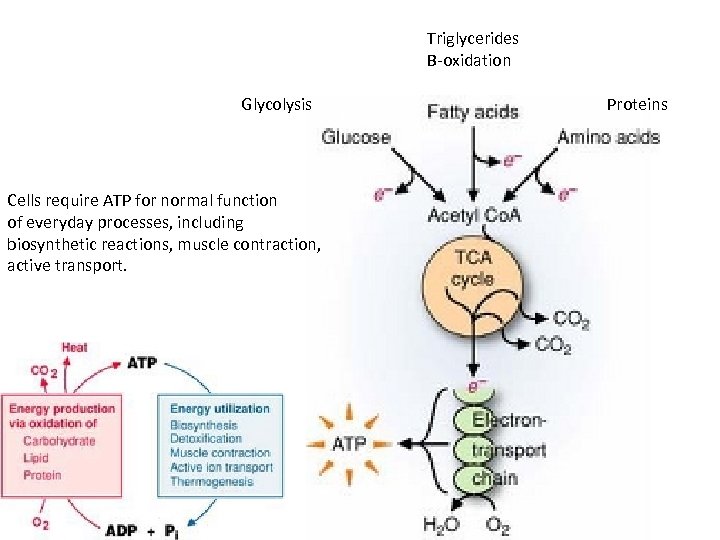
Triglycerides Β-oxidation Glycolysis Cells require ATP for normal function of everyday processes, including biosynthetic reactions, muscle contraction, active transport. Proteins
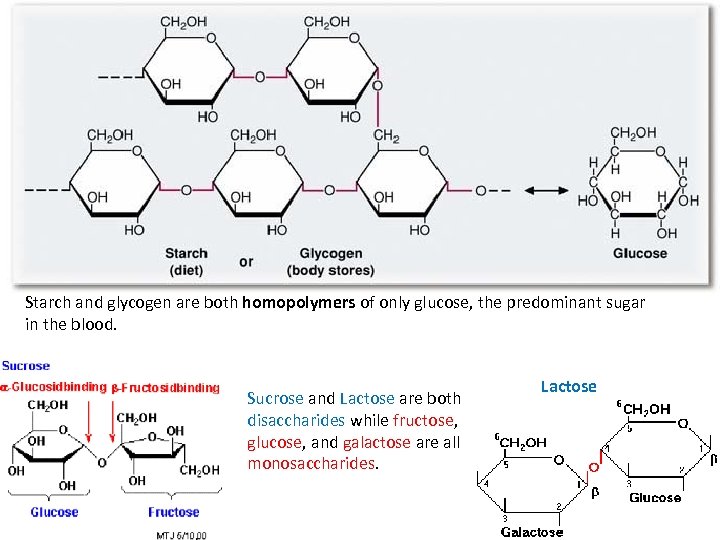
Starch and glycogen are both homopolymers of only glucose, the predominant sugar in the blood. Sucrose and Lactose are both disaccharides while fructose, glucose, and galactose are all monosaccharides. Lactose
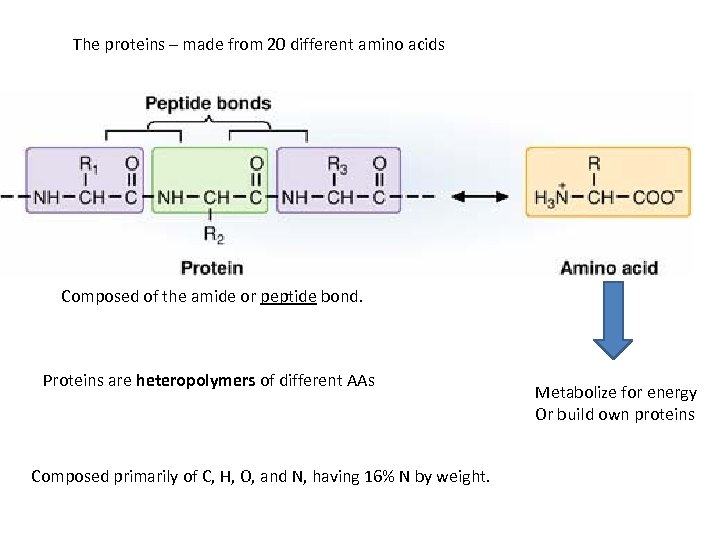
The proteins – made from 20 different amino acids Composed of the amide or peptide bond. Proteins are heteropolymers of different AAs Composed primarily of C, H, O, and N, having 16% N by weight. Metabolize for energy Or build own proteins
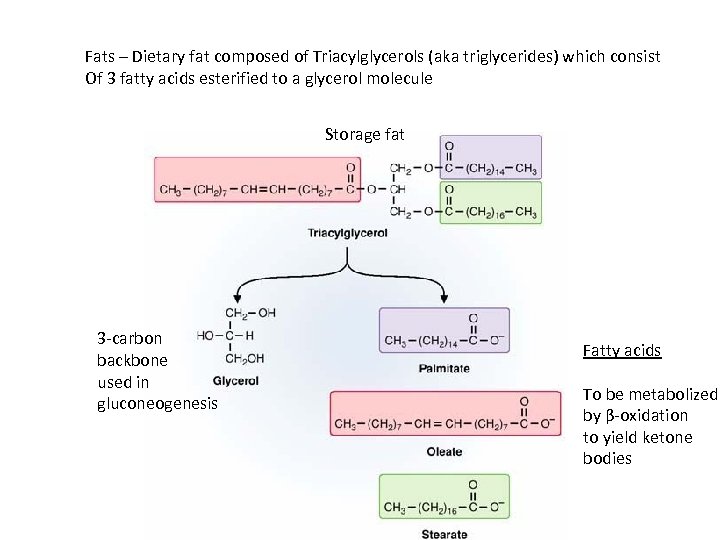
Fats – Dietary fat composed of Triacylglycerols (aka triglycerides) which consist Of 3 fatty acids esterified to a glycerol molecule Storage fat 3 -carbon backbone used in gluconeogenesis Fatty acids To be metabolized by β-oxidation to yield ketone bodies
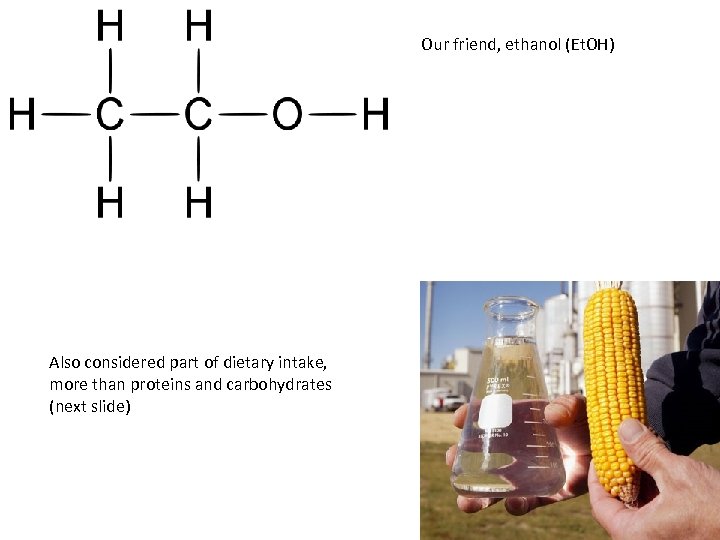
Our friend, ethanol (Et. OH) Also considered part of dietary intake, more than proteins and carbohydrates (next slide)
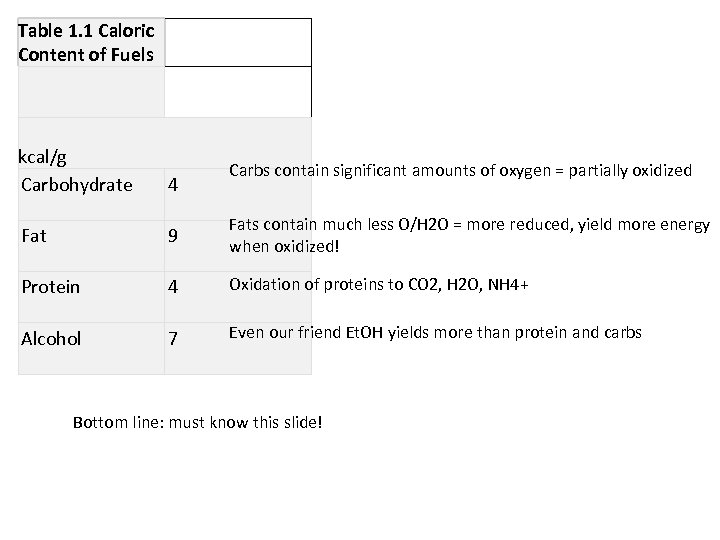
Table 1. 1 Caloric Content of Fuels kcal/g Carbohydrate 4 Fat 9 Fats contain much less O/H 2 O = more reduced, yield more energy when oxidized! Protein 4 Oxidation of proteins to CO 2, H 2 O, NH 4+ Alcohol 7 Even our friend Et. OH yields more than protein and carbs Carbs contain significant amounts of oxygen = partially oxidized Bottom line: must know this slide!
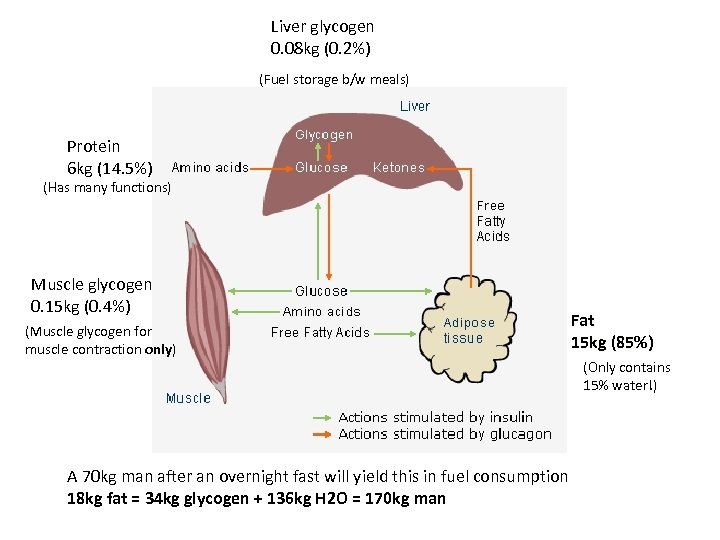
Liver glycogen 0. 08 kg (0. 2%) (Fuel storage b/w meals) Protein 6 kg (14. 5%) (Has many functions) Muscle glycogen 0. 15 kg (0. 4%) (Muscle glycogen for muscle contraction only) A 70 kg man after an overnight fast will yield this in fuel consumption 18 kg fat = 34 kg glycogen + 136 kg H 2 O = 170 kg man Fat 15 kg (85%) (Only contains 15% water!)
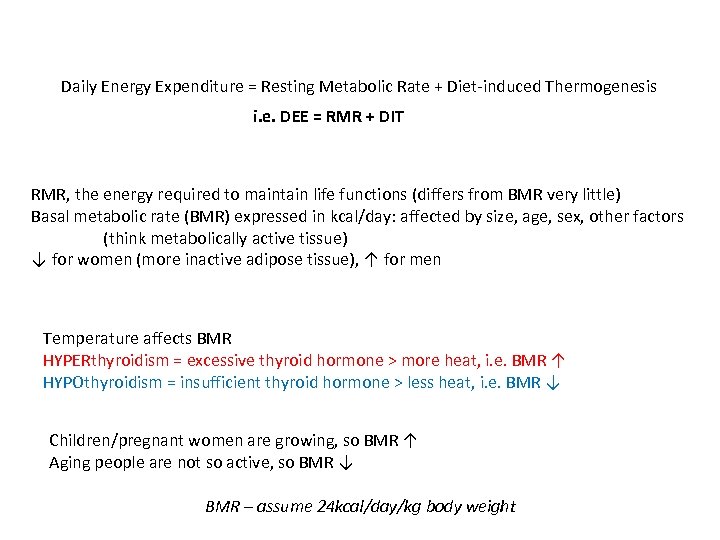
Daily Energy Expenditure = Resting Metabolic Rate + Diet-induced Thermogenesis i. e. DEE = RMR + DIT RMR, the energy required to maintain life functions (differs from BMR very little) Basal metabolic rate (BMR) expressed in kcal/day: affected by size, age, sex, other factors (think metabolically active tissue) ↓ for women (more inactive adipose tissue), ↑ for men Temperature affects BMR HYPERthyroidism = excessive thyroid hormone > more heat, i. e. BMR ↑ HYPOthyroidism = insufficient thyroid hormone > less heat, i. e. BMR ↓ Children/pregnant women are growing, so BMR ↑ Aging people are not so active, so BMR ↓ BMR – assume 24 kcal/day/kg body weight
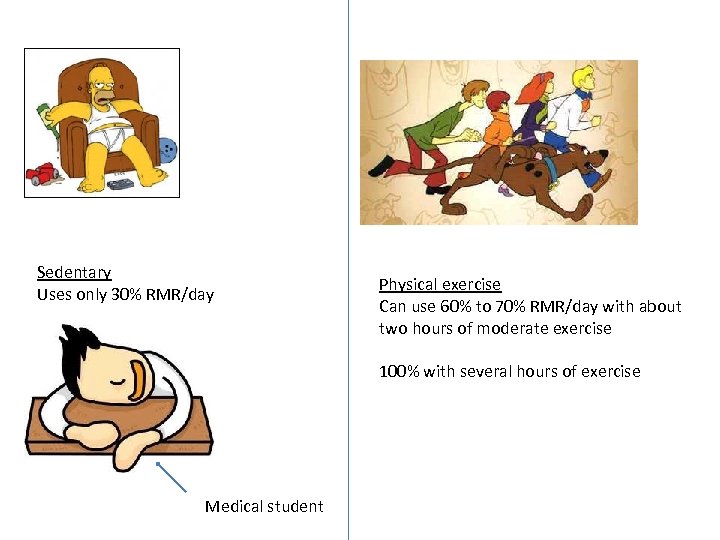
Sedentary Uses only 30% RMR/day Physical exercise Can use 60% to 70% RMR/day with about two hours of moderate exercise 100% with several hours of exercise Medical student
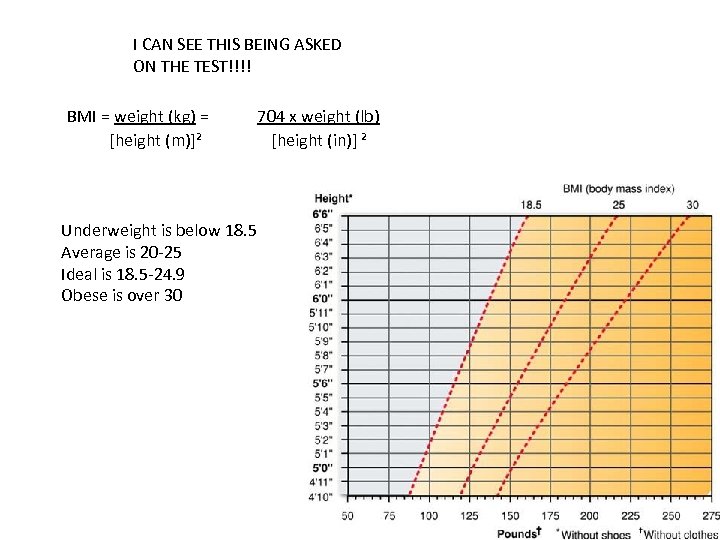
I CAN SEE THIS BEING ASKED ON THE TEST!!!! BMI = weight (kg) = 704 x weight (lb) [height (m)]² [height (in)] ² Underweight is below 18. 5 Average is 20 -25 Ideal is 18. 5 -24. 9 Obese is over 30
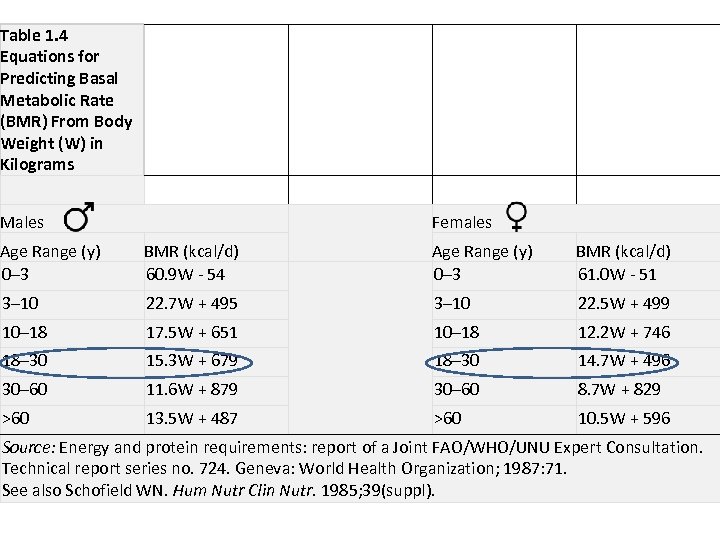
Table 1. 4 Equations for Predicting Basal Metabolic Rate (BMR) From Body Weight (W) in Kilograms Males Females Age Range (y) 0– 3 BMR (kcal/d) 60. 9 W - 54 3– 10 Age Range (y) 0– 3 BMR (kcal/d) 61. 0 W - 51 22. 7 W + 495 3– 10 22. 5 W + 499 10– 18 17. 5 W + 651 10– 18 12. 2 W + 746 18– 30 15. 3 W + 679 18– 30 14. 7 W + 496 30– 60 11. 6 W + 879 30– 60 8. 7 W + 829 >60 13. 5 W + 487 >60 10. 5 W + 596 Source: Energy and protein requirements: report of a Joint FAO/WHO/UNU Expert Consultation. Technical report series no. 724. Geneva: World Health Organization; 1987: 71. See also Schofield WN. Hum Nutr Clin Nutr. 1985; 39(suppl).
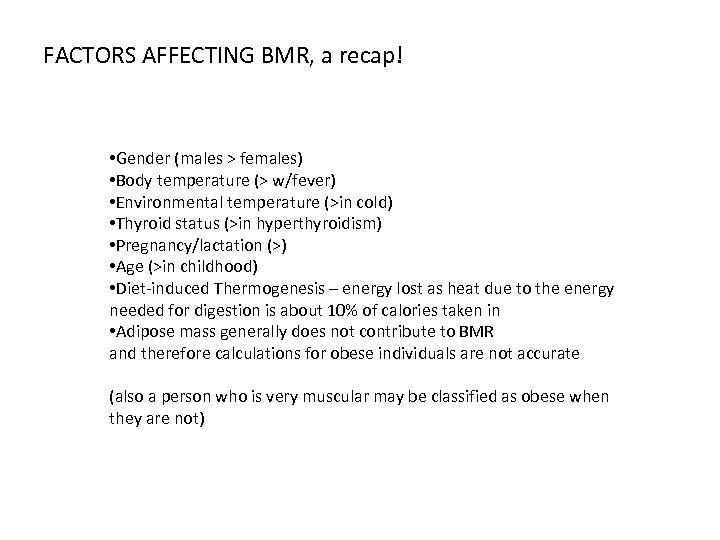
FACTORS AFFECTING BMR, a recap! • Gender (males > females) • Body temperature (> w/fever) • Environmental temperature (>in cold) • Thyroid status (>in hyperthyroidism) • Pregnancy/lactation (>) • Age (>in childhood) • Diet-induced Thermogenesis – energy lost as heat due to the energy needed for digestion is about 10% of calories taken in • Adipose mass generally does not contribute to BMR and therefore calculations for obese individuals are not accurate (also a person who is very muscular may be classified as obese when they are not)
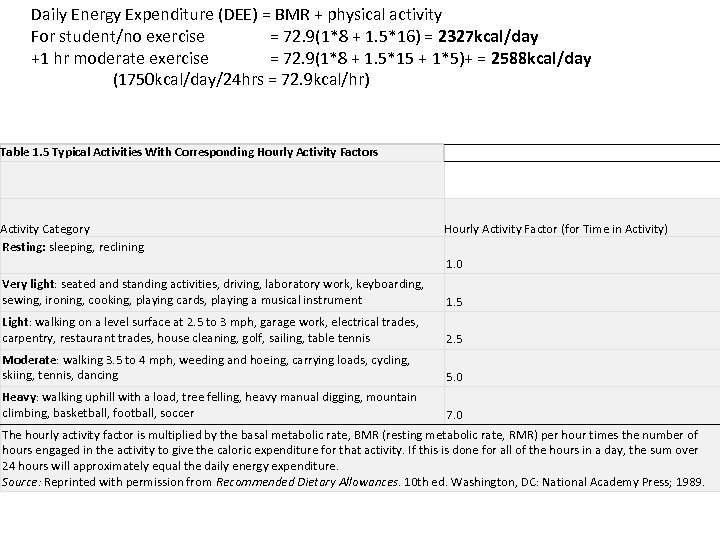
Daily Energy Expenditure (DEE) = BMR + physical activity For student/no exercise = 72. 9(1*8 + 1. 5*16) = 2327 kcal/day +1 hr moderate exercise = 72. 9(1*8 + 1. 5*15 + 1*5)+ = 2588 kcal/day (1750 kcal/day/24 hrs = 72. 9 kcal/hr) Table 1. 5 Typical Activities With Corresponding Hourly Activity Factors Activity Category Resting: sleeping, reclining Hourly Activity Factor (for Time in Activity) 1. 0 Very light: seated and standing activities, driving, laboratory work, keyboarding, sewing, ironing, cooking, playing cards, playing a musical instrument 1. 5 Light: walking on a level surface at 2. 5 to 3 mph, garage work, electrical trades, carpentry, restaurant trades, house cleaning, golf, sailing, table tennis 2. 5 Moderate: walking 3. 5 to 4 mph, weeding and hoeing, carrying loads, cycling, skiing, tennis, dancing 5. 0 Heavy: walking uphill with a load, tree felling, heavy manual digging, mountain climbing, basketball, football, soccer 7. 0 The hourly activity factor is multiplied by the basal metabolic rate, BMR (resting metabolic rate, RMR) per hour times the number of hours engaged in the activity to give the caloric expenditure for that activity. If this is done for all of the hours in a day, the sum over 24 hours will approximately equal the daily energy expenditure. Source: Reprinted with permission from Recommended Dietary Allowances. 10 th ed. Washington, DC: National Academy Press; 1989.
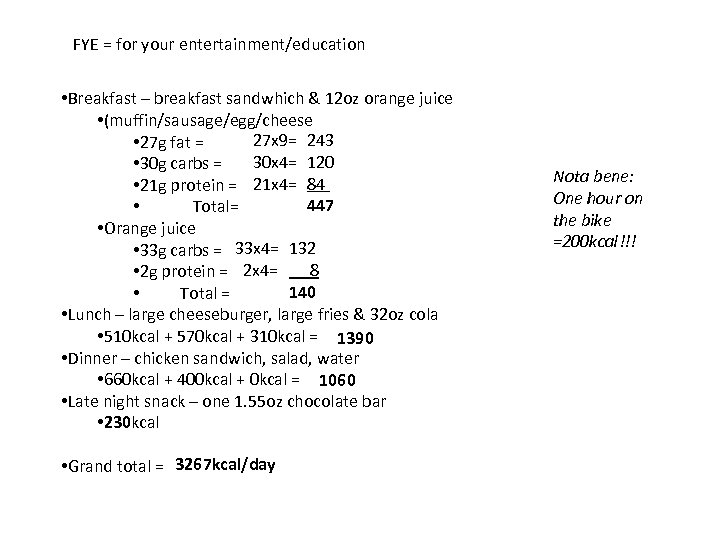
FYE = for your entertainment/education • Breakfast – breakfast sandwhich & 12 oz orange juice • (muffin/sausage/egg/cheese 27 x 9= 243 • 27 g fat = • 30 g carbs = 30 x 4= 120 • 21 g protein = 21 x 4= 84 447 • Total= • Orange juice • 33 g carbs = 33 x 4= 132 • 2 g protein = 2 x 4= 8 140 • Total = • Lunch – large cheeseburger, large fries & 32 oz cola • 510 kcal + 570 kcal + 310 kcal = 1390 • Dinner – chicken sandwich, salad, water • 660 kcal + 400 kcal + 0 kcal = 1060 • Late night snack – one 1. 55 oz chocolate bar • 230 kcal • Grand total = 3267 kcal/day Nota bene: One hour on the bike =200 kcal!!!
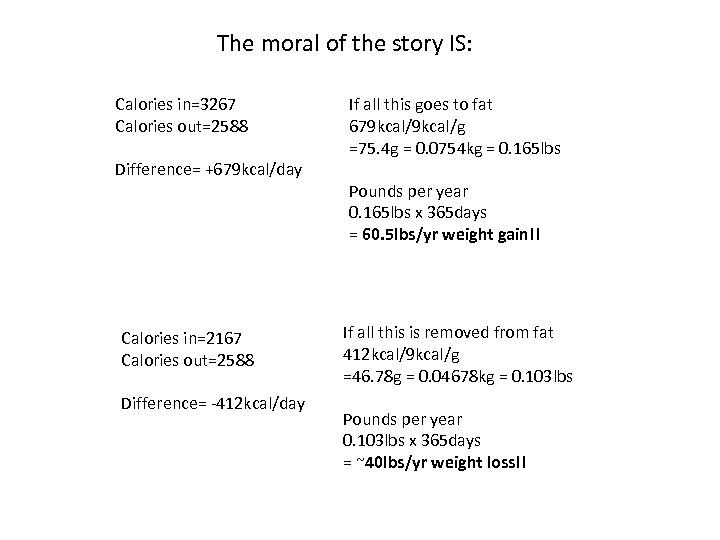
The moral of the story IS: Calories in=3267 Calories out=2588 Difference= +679 kcal/day Calories in=2167 Calories out=2588 Difference= -412 kcal/day If all this goes to fat 679 kcal/g =75. 4 g = 0. 0754 kg = 0. 165 lbs Pounds per year 0. 165 lbs x 365 days = 60. 5 lbs/yr weight gain!! If all this is removed from fat 412 kcal/9 kcal/g =46. 78 g = 0. 04678 kg = 0. 103 lbs Pounds per year 0. 103 lbs x 365 days = ~40 lbs/yr weight loss!!
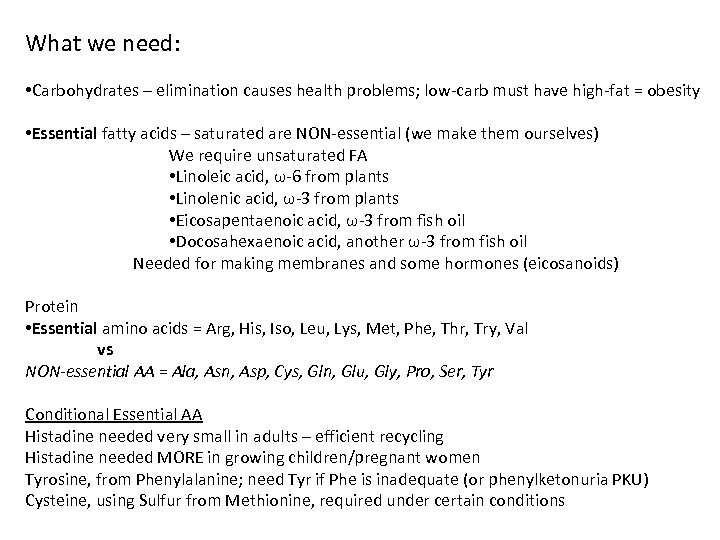
What we need: • Carbohydrates – elimination causes health problems; low-carb must have high-fat = obesity • Essential fatty acids – saturated are NON-essential (we make them ourselves) We require unsaturated FA • Linoleic acid, ω-6 from plants • Linolenic acid, ω-3 from plants • Eicosapentaenoic acid, ω-3 from fish oil • Docosahexaenoic acid, another ω-3 from fish oil Needed for making membranes and some hormones (eicosanoids) Protein • Essential amino acids = Arg, His, Iso, Leu, Lys, Met, Phe, Thr, Try, Val vs NON-essential AA = Ala, Asn, Asp, Cys, Gln, Glu, Gly, Pro, Ser, Tyr Conditional Essential AA Histadine needed very small in adults – efficient recycling Histadine needed MORE in growing children/pregnant women Tyrosine, from Phenylalanine; need Tyr if Phe is inadequate (or phenylketonuria PKU) Cysteine, using Sulfur from Methionine, required under certain conditions
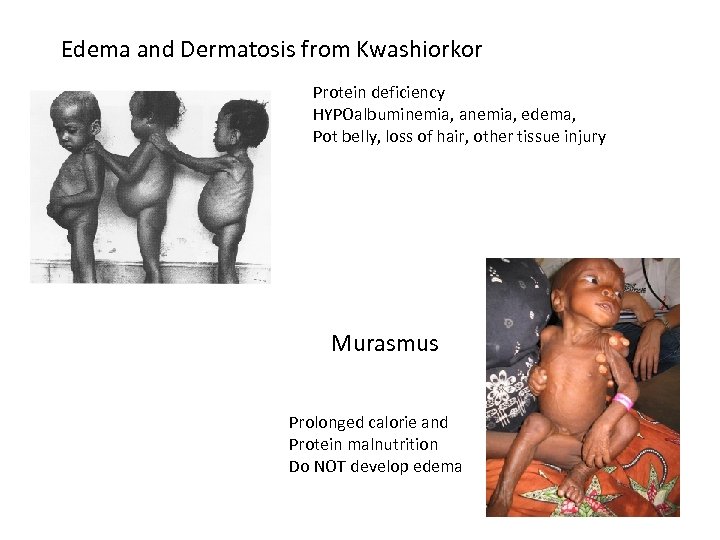
Edema and Dermatosis from Kwashiorkor Protein deficiency HYPOalbuminemia, anemia, edema, Pot belly, loss of hair, other tissue injury Murasmus Prolonged calorie and Protein malnutrition Do NOT develop edema
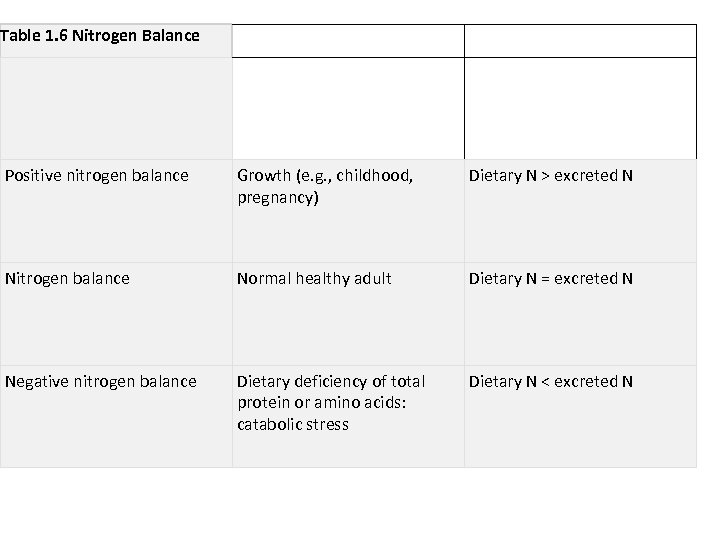
Table 1. 6 Nitrogen Balance Positive nitrogen balance Growth (e. g. , childhood, pregnancy) Dietary N > excreted N Nitrogen balance Normal healthy adult Dietary N = excreted N Negative nitrogen balance Dietary deficiency of total protein or amino acids: catabolic stress Dietary N < excreted N
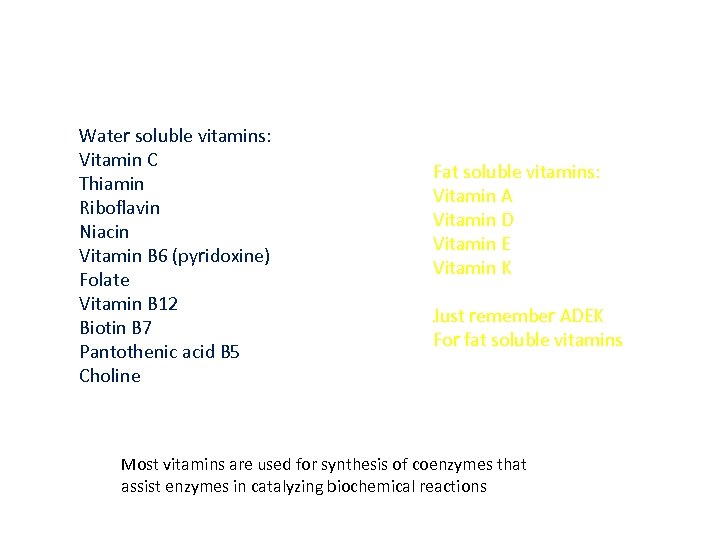
Water soluble vitamins: Vitamin C Thiamin Riboflavin Niacin Vitamin B 6 (pyridoxine) Folate Vitamin B 12 Biotin B 7 Pantothenic acid B 5 Choline Fat soluble vitamins: Vitamin A Vitamin D Vitamin E Vitamin K Just remember ADEK For fat soluble vitamins Most vitamins are used for synthesis of coenzymes that assist enzymes in catalyzing biochemical reactions
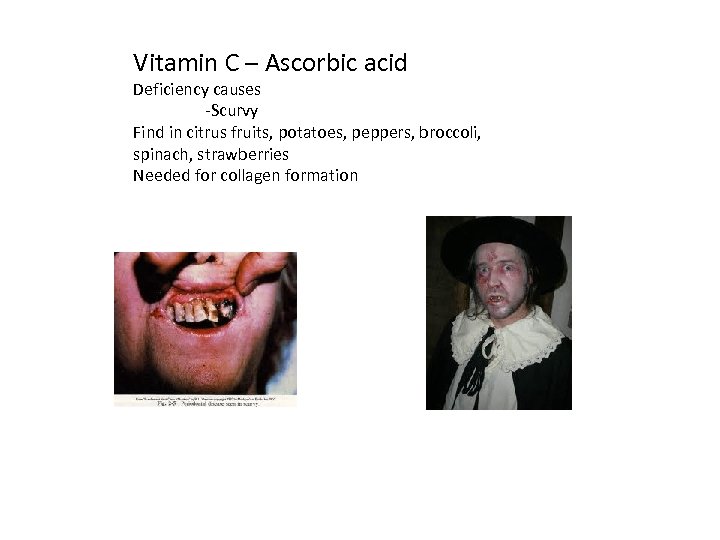
Vitamin C – Ascorbic acid Deficiency causes -Scurvy Find in citrus fruits, potatoes, peppers, broccoli, spinach, strawberries Needed for collagen formation
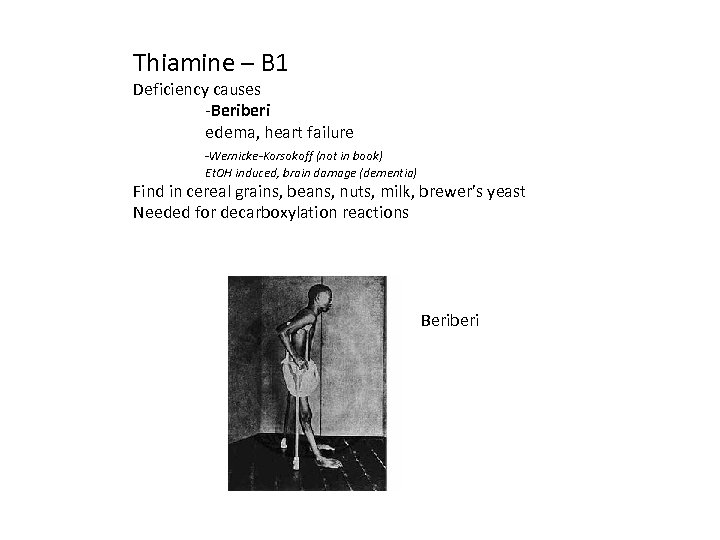
Thiamine – B 1 Deficiency causes -Beriberi edema, heart failure -Wernicke-Korsokoff (not in book) Et. OH induced, brain damage (dementia) Find in cereal grains, beans, nuts, milk, brewer’s yeast Needed for decarboxylation reactions Beriberi
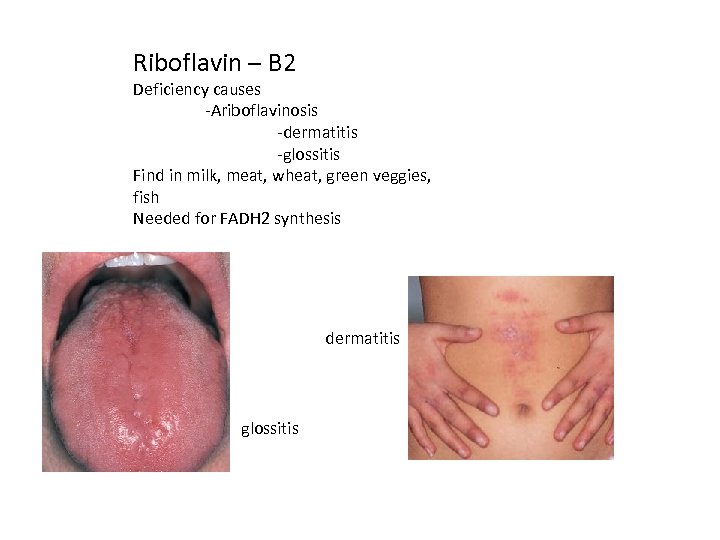
Riboflavin – B 2 Deficiency causes -Ariboflavinosis -dermatitis -glossitis Find in milk, meat, wheat, green veggies, fish Needed for FADH 2 synthesis dermatitis glossitis
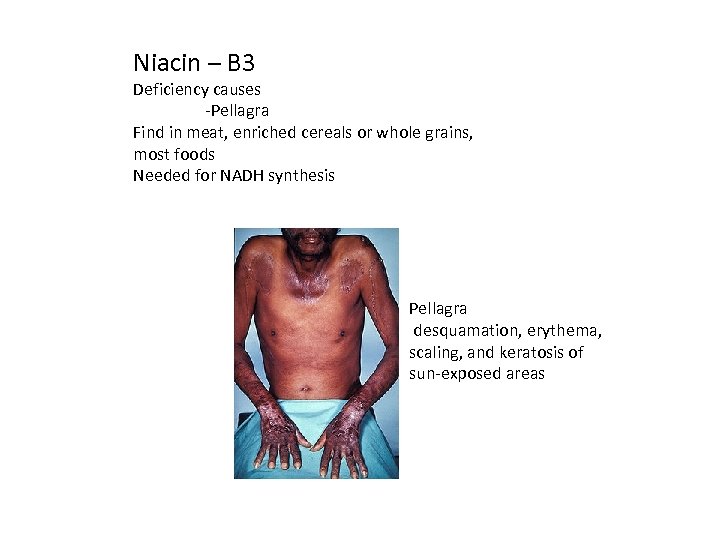
Niacin – B 3 Deficiency causes -Pellagra Find in meat, enriched cereals or whole grains, most foods Needed for NADH synthesis Pellagra desquamation, erythema, scaling, and keratosis of sun-exposed areas
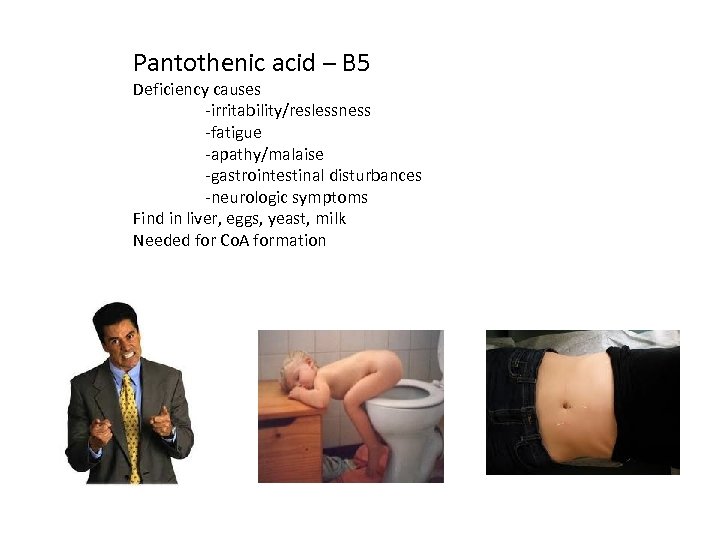
Pantothenic acid – B 5 Deficiency causes -irritability/reslessness -fatigue -apathy/malaise -gastrointestinal disturbances -neurologic symptoms Find in liver, eggs, yeast, milk Needed for Co. A formation
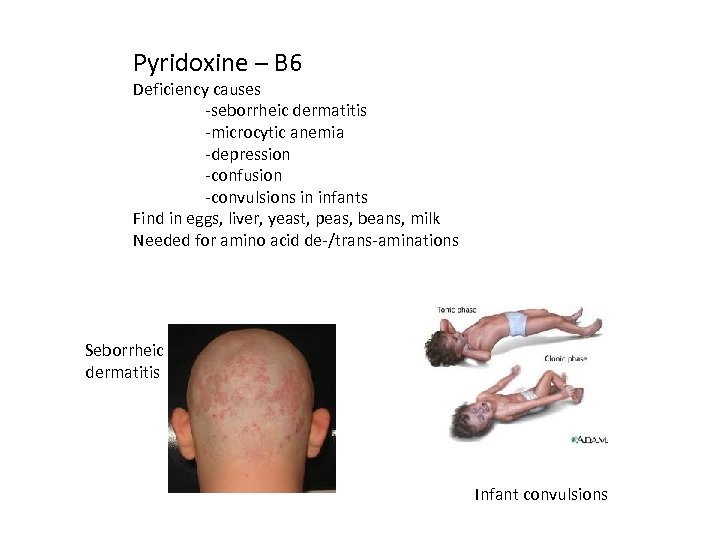
Pyridoxine – B 6 Deficiency causes -seborrheic dermatitis -microcytic anemia -depression -confusion -convulsions in infants Find in eggs, liver, yeast, peas, beans, milk Needed for amino acid de-/trans-aminations Seborrheic dermatitis Infant convulsions
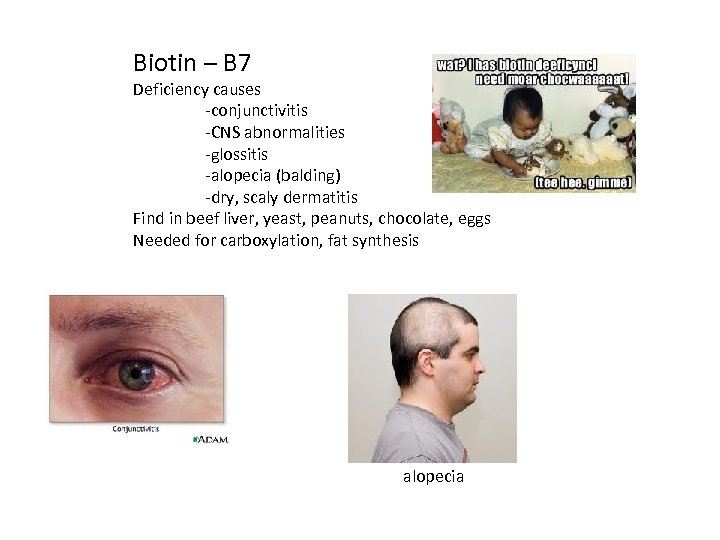
Biotin – B 7 Deficiency causes -conjunctivitis -CNS abnormalities -glossitis -alopecia (balding) -dry, scaly dermatitis Find in beef liver, yeast, peanuts, chocolate, eggs Needed for carboxylation, fat synthesis alopecia
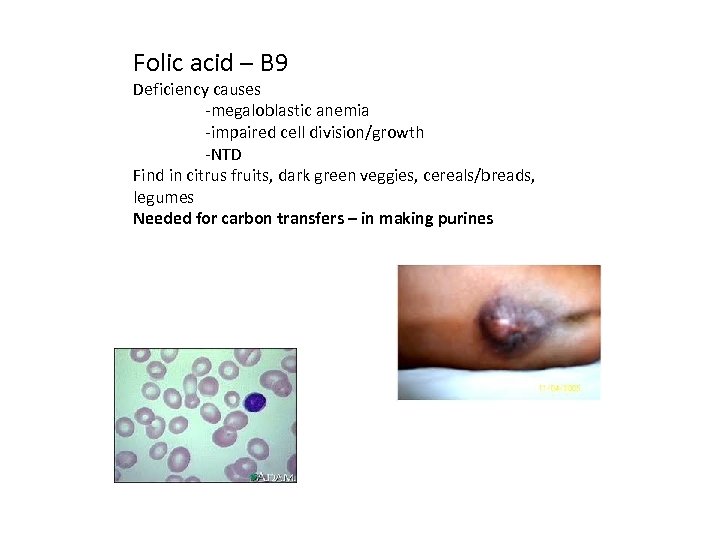
Folic acid – B 9 Deficiency causes -megaloblastic anemia -impaired cell division/growth -NTD Find in citrus fruits, dark green veggies, cereals/breads, legumes Needed for carbon transfers – in making purines
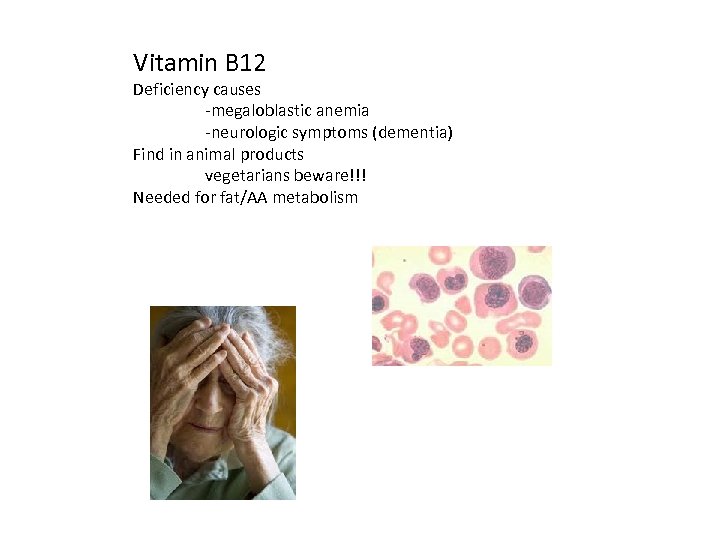
Vitamin B 12 Deficiency causes -megaloblastic anemia -neurologic symptoms (dementia) Find in animal products vegetarians beware!!! Needed for fat/AA metabolism
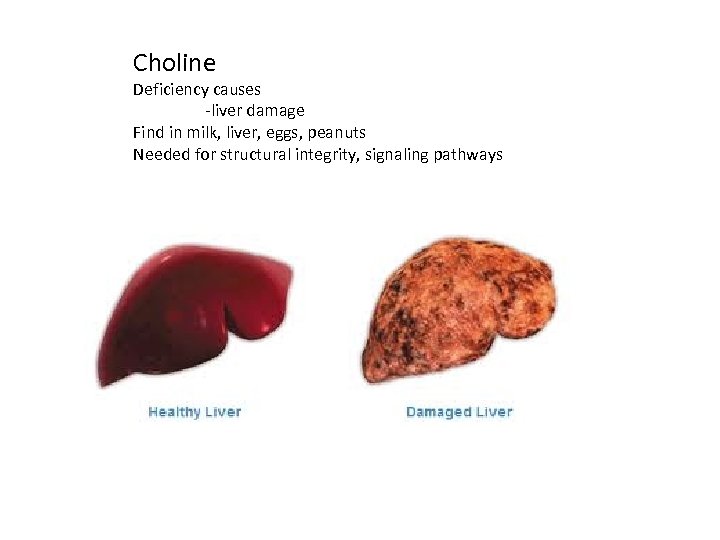
Choline Deficiency causes -liver damage Find in milk, liver, eggs, peanuts Needed for structural integrity, signaling pathways
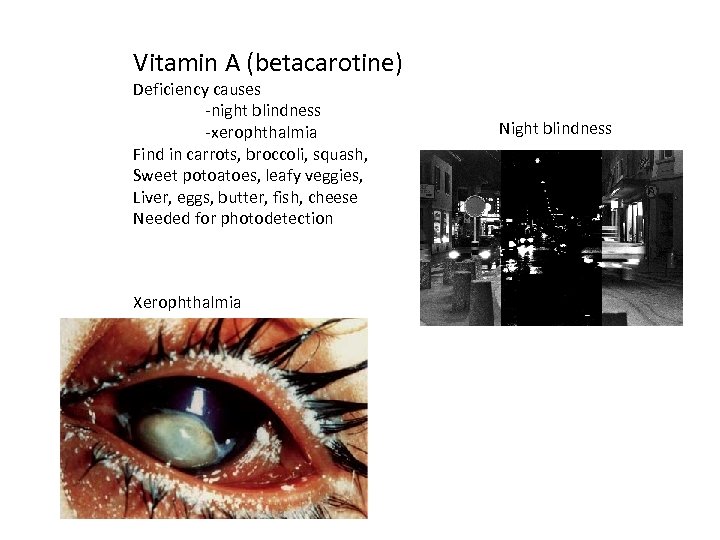
Vitamin A (betacarotine) Deficiency causes -night blindness -xerophthalmia Find in carrots, broccoli, squash, Sweet potoatoes, leafy veggies, Liver, eggs, butter, fish, cheese Needed for photodetection Xerophthalmia Night blindness
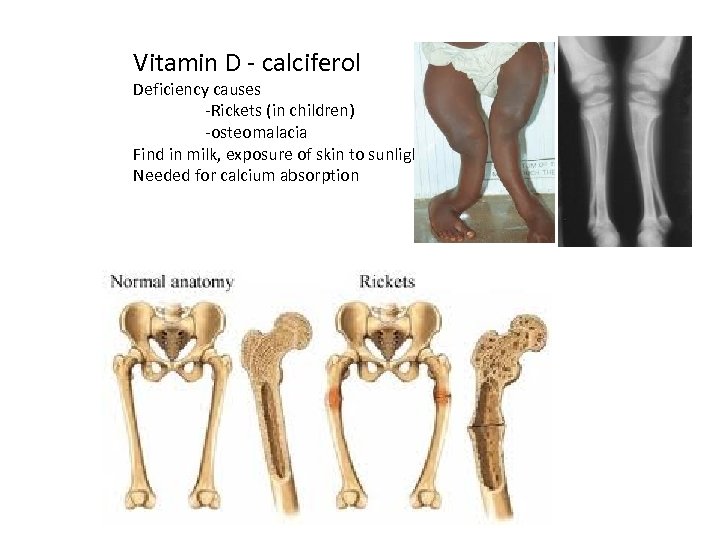
Vitamin D - calciferol Deficiency causes -Rickets (in children) -osteomalacia Find in milk, exposure of skin to sunlight Needed for calcium absorption
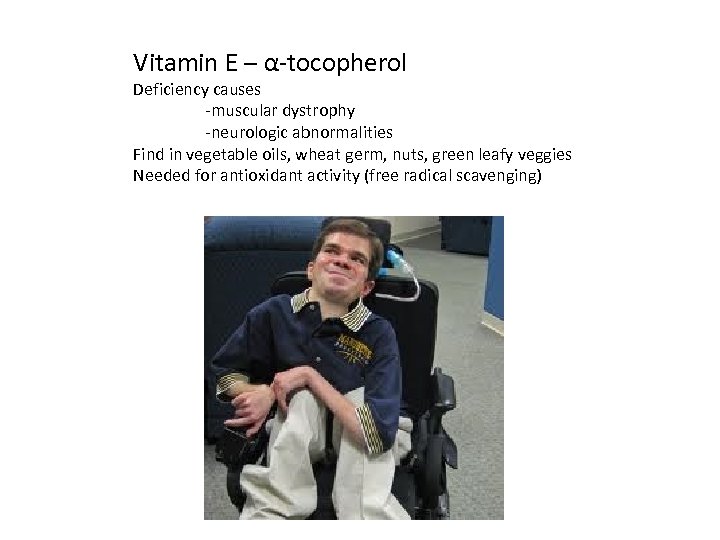
Vitamin E – α-tocopherol Deficiency causes -muscular dystrophy -neurologic abnormalities Find in vegetable oils, wheat germ, nuts, green leafy veggies Needed for antioxidant activity (free radical scavenging)
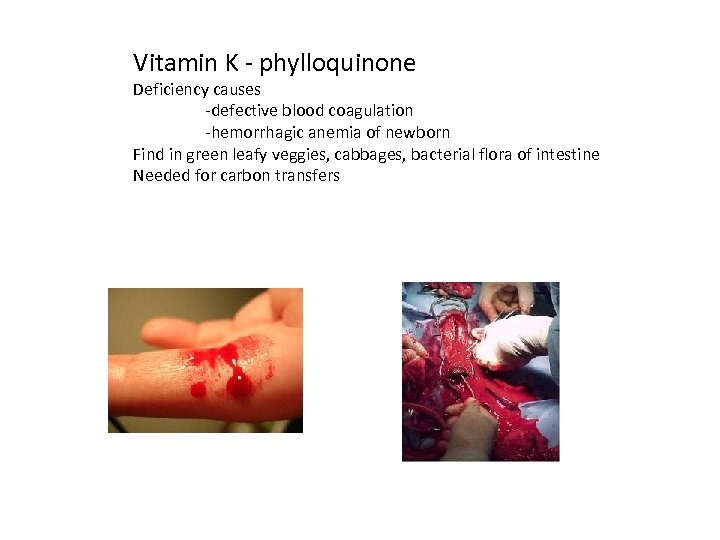
Vitamin K - phylloquinone Deficiency causes -defective blood coagulation -hemorrhagic anemia of newborn Find in green leafy veggies, cabbages, bacterial flora of intestine Needed for carbon transfers
Excessive intake of vitamins cause deleterious effects Hypervitaminosis A – desquamation of skin, birth defects Hypervitaminosis C – diarrhea, GI disturbances Intake normally above when taken in single vitamins, not from foods
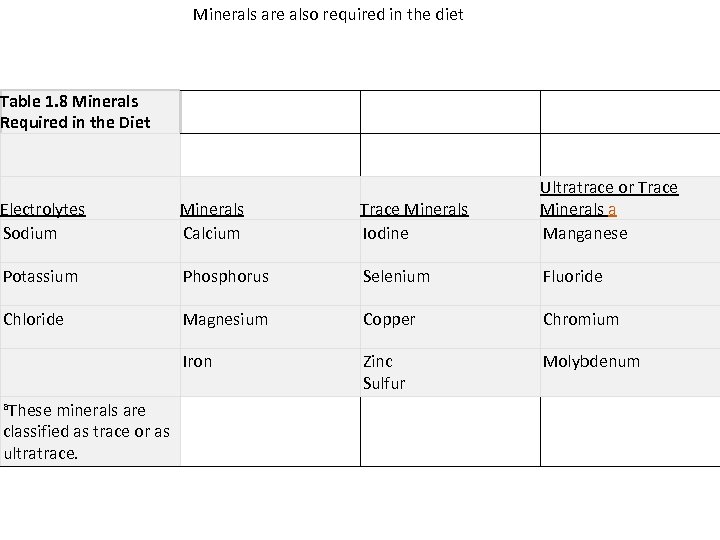
Minerals are also required in the diet Table 1. 8 Minerals Required in the Diet Electrolytes Sodium Minerals Calcium Trace Minerals Iodine Ultratrace or Trace Minerals a Manganese Potassium Phosphorus Selenium Fluoride Chloride Magnesium Copper Chromium Iron Zinc Sulfur Molybdenum a. These minerals are classified as trace or as ultratrace.
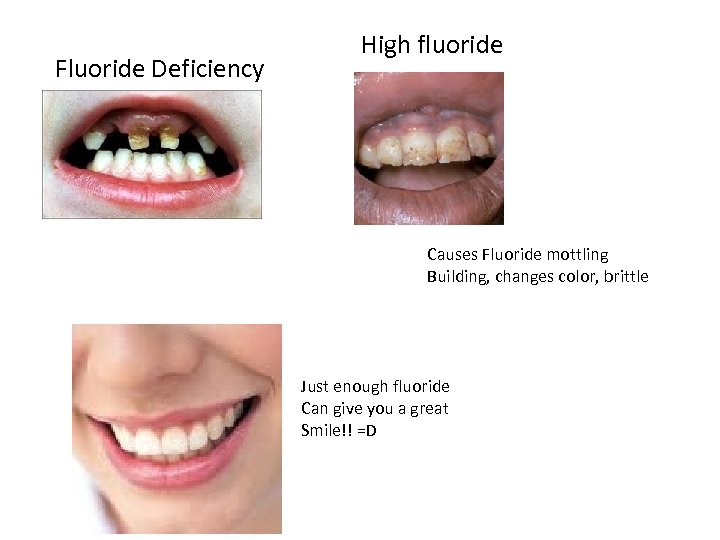
Fluoride Deficiency High fluoride Causes Fluoride mottling Building, changes color, brittle Just enough fluoride Can give you a great Smile!! =D
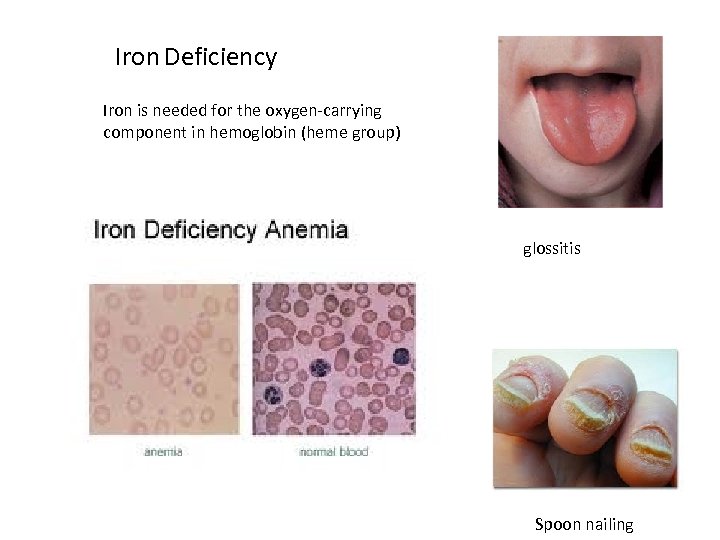
Iron Deficiency Iron is needed for the oxygen-carrying component in hemoglobin (heme group) glossitis Spoon nailing
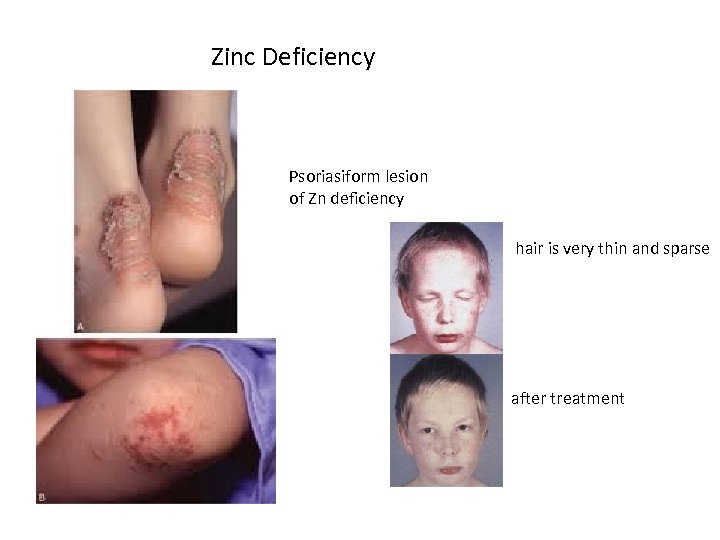
Zinc Deficiency Psoriasiform lesion of Zn deficiency hair is very thin and sparse after treatment
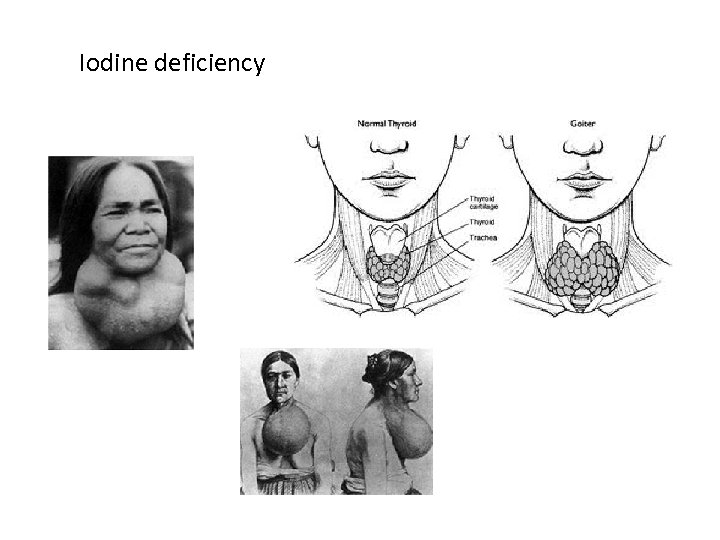
Iodine deficiency
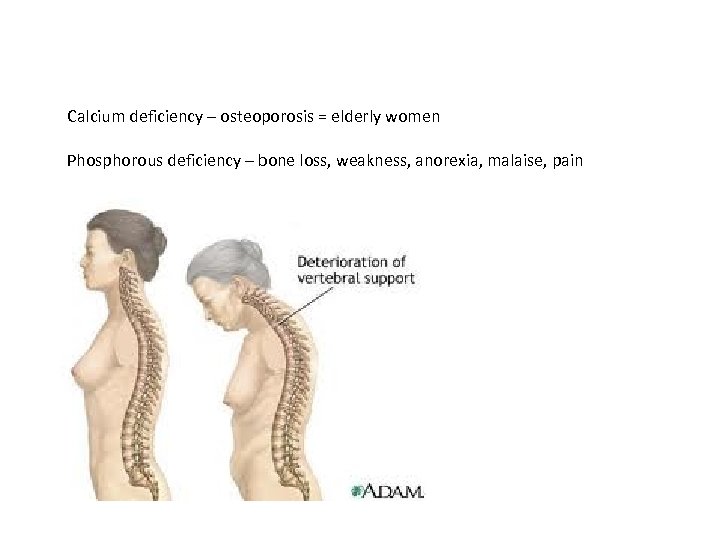
Calcium deficiency – osteoporosis = elderly women Phosphorous deficiency – bone loss, weakness, anorexia, malaise, pain
Скачать презентацию Marks Biochemistry Chapter 1 Metabolic Fuels Review
bab7a4d53e27066c238464a5afc95ea6.ppt