


 Скачать презентацию MARKETING THE INDUSTRY SEGMENTS 4 02 Explain the
51f46d9bfadcbdd9f6406348c1591445.ppt
- Количество слайдов: 38
 MARKETING THE INDUSTRY SEGMENTS 4. 02 Explain the lodging industry.
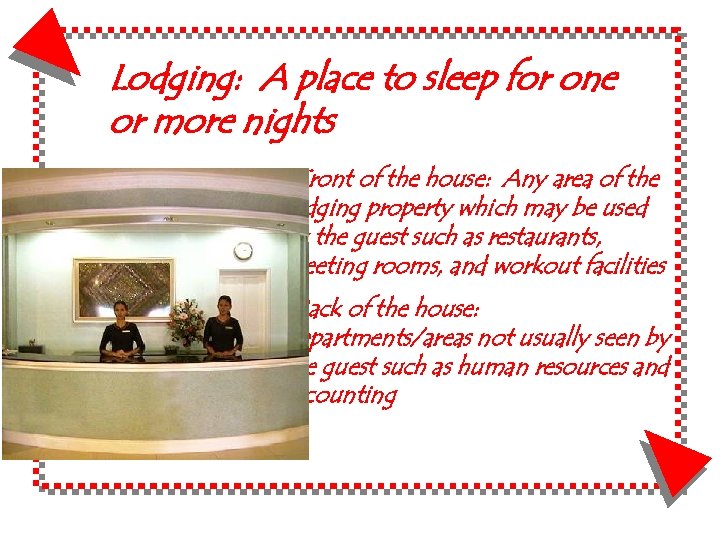 Lodging: A place to sleep for one or more nights • Front of the house: Any area of the lodging property which may be used by the guest such as restaurants, meeting rooms, and workout facilities • Back of the house: Departments/areas not usually seen by the guest such as human resources and accounting
 Lodging properties are classified by… • Price • Level of service • Type of guest • Amenities • Location*
 Lodging properties • Resort hotels • Casino hotels • Airport hotels • Luxury hotels • Convention hotels • Vacation ownership/timeshare • Extended stay hotels • Motels • All-suite hotels • Bed and Breakfast
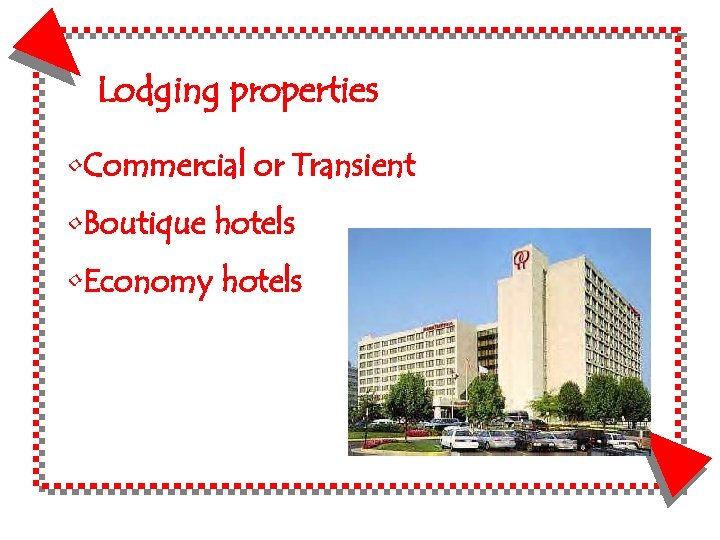 Lodging properties • Commercial or Transient • Boutique hotels • Economy hotels
 Resort hotels • Located in areas known for • Many offer package deals desirable weather, scenery, • A remote location is often recreational activities part of the attraction • May be located near natural • Originally catered to leisure attractions travelers, but have expanded to • Many add recreational include conferences/meetings facilities • Average length of stay 4 -7 • Some are only open during days high season
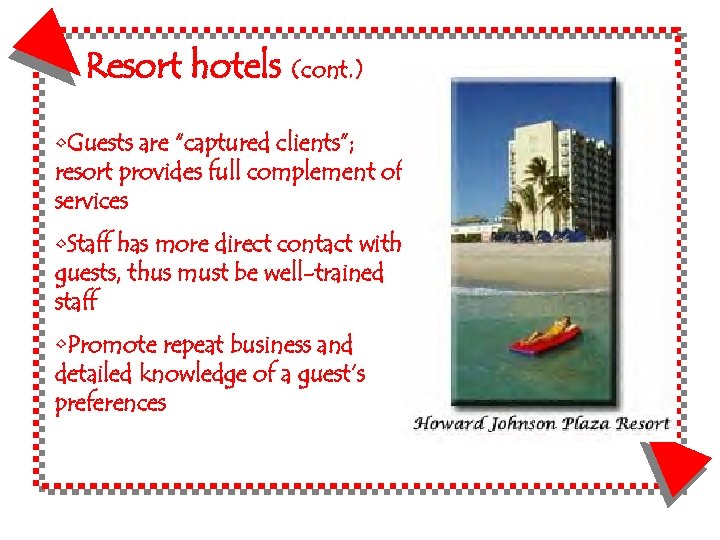 Resort hotels (cont. ) • Guests are “captured clients”; resort provides full complement of services • Staff has more direct contact with guests, thus must be well-trained staff • Promote repeat business and detailed knowledge of a guest’s preferences
 Airport hotels • Located in and around airports • Provide convenient lodging for guests with early flights or for those between connections • Most guests are business travelers; some leisure travelers (70: 30 ratio) • Room service and restaurant hours may be extended to accommodate travelers’ schedules • Convenience is major factor • Properties offer free shuttles to and from airport
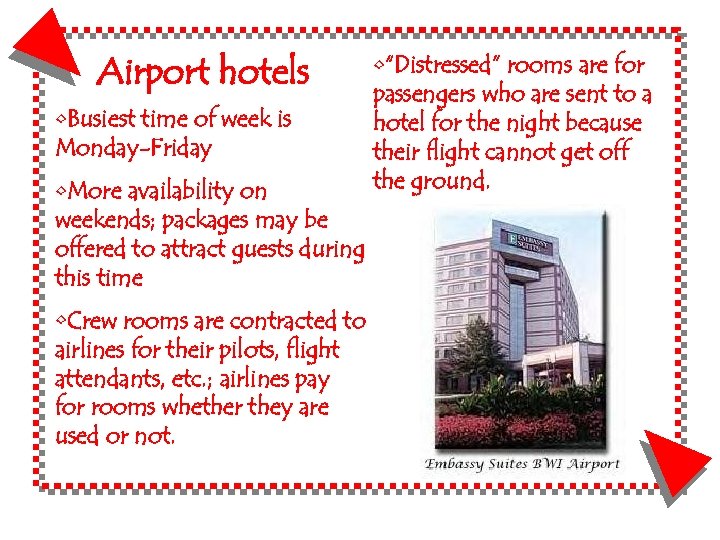 Airport hotels • Busiest time of week is Monday-Friday • More availability on weekends; packages may be offered to attract guests during this time • Crew rooms are contracted to airlines for their pilots, flight attendants, etc. ; airlines pay for rooms whether they are used or not. • “Distressed” rooms are for passengers who are sent to a hotel for the night because their flight cannot get off the ground.
 Convention hotels • Facilities designed to meet needs of groups holding meetings, trade shows, or large conferences • Public areas large enough to accommodate crowds • Attendees usually • Attendees can come from a single dine at the hotel state or from around the world • Large number of guest rooms, multiple meeting rooms, and banquet facilities
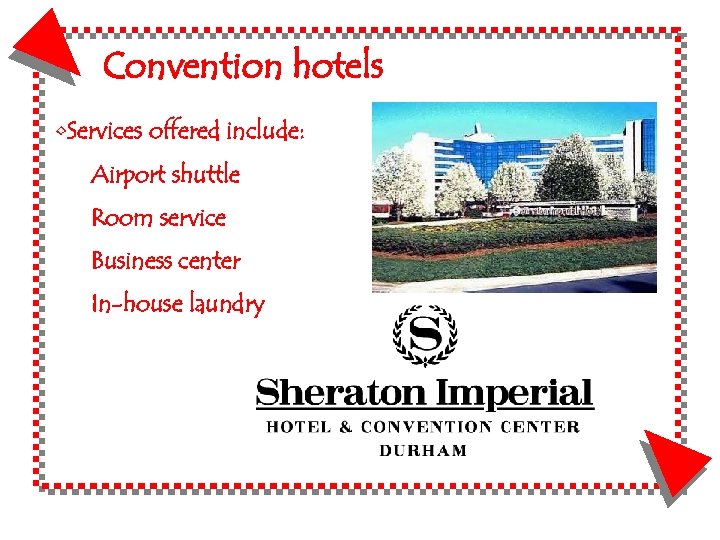 Convention hotels • Services offered include: Airport shuttle Room service Business center In-house laundry
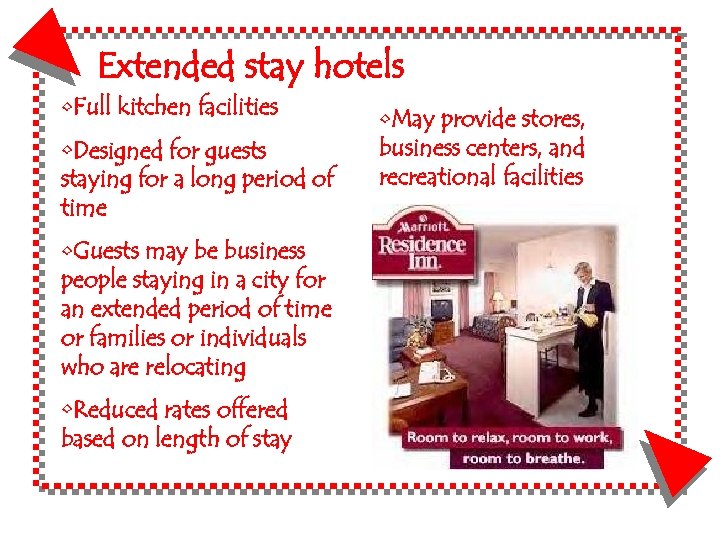 Extended stay hotels • Full kitchen facilities • Designed for guests staying for a long period of time • Guests may be business people staying in a city for an extended period of time or families or individuals who are relocating • Reduced rates offered based on length of stay • May provide stores, business centers, and recreational facilities
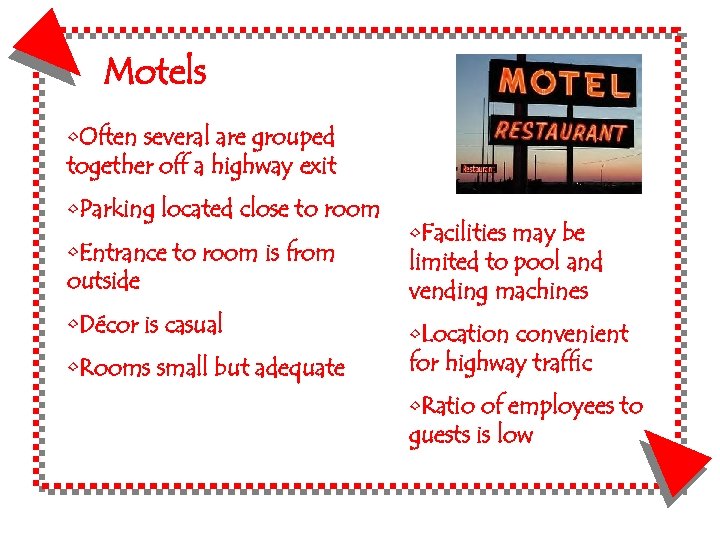 Motels • Often several are grouped together off a highway exit • Parking located close to room • Entrance to room is from outside • Décor is casual • Rooms small but adequate • Facilities may be limited to pool and vending machines • Location convenient for highway traffic • Ratio of employees to guests is low
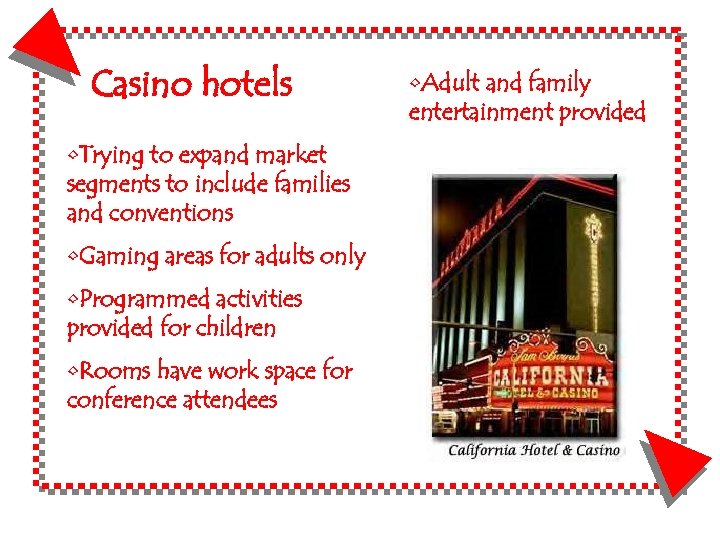 Casino hotels • Trying to expand market segments to include families and conventions • Gaming areas for adults only • Programmed activities provided for children • Rooms have work space for conference attendees • Adult and family entertainment provided
 Luxury hotels • Charges highest prices • Guests expect a high level of service • Appeal to business and leisure guests • Services include: • Concierge, valet, bellhops • Food & beverage outlets • Laundry service • Beauty salons • Health spas • Secretarial services • Ballroom
 Vacation ownership/timeshare • Guests buy a unit for a set period of time each year • Accommodations are high quality • Time period usually broken down in terms of weeks • Owners may be able to swap vacation destinations with other timeshare owners so they can visit different destinations • Vacationers contract at a certain rate for their property so they don’t worry about fluctuating prices
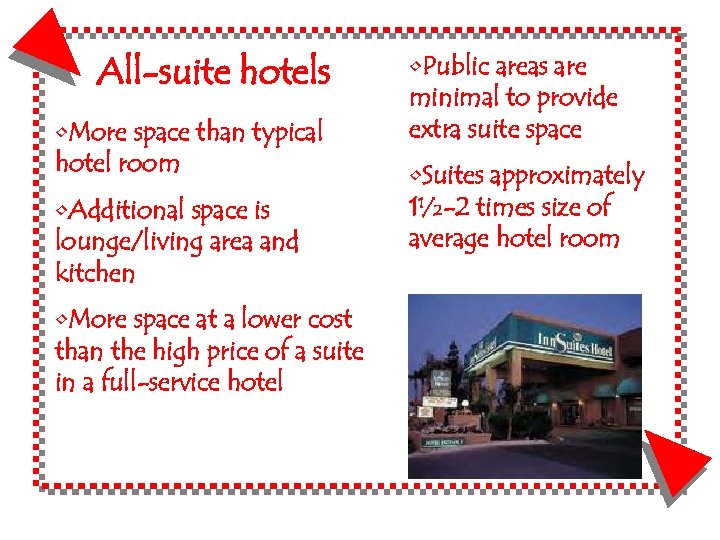 All-suite hotels • More space than typical hotel room • Additional space is lounge/living area and kitchen • More space at a lower cost than the high price of a suite in a full-service hotel • Public areas are minimal to provide extra suite space • Suites approximately 1½-2 times size of average hotel room
 Bed and Breakfast • Alternative to traditional lodging facilities • Private homes offering a limited number of guest rooms • Prices and dwellings vary and reflect the distinctiveness of the region • “Homey” • Friendly atmosphere • Owner lives in the home and is host/hostess to guests • Guests primarily leisure travelers • Owner often only • Rate usually includes employee lodging and breakfast
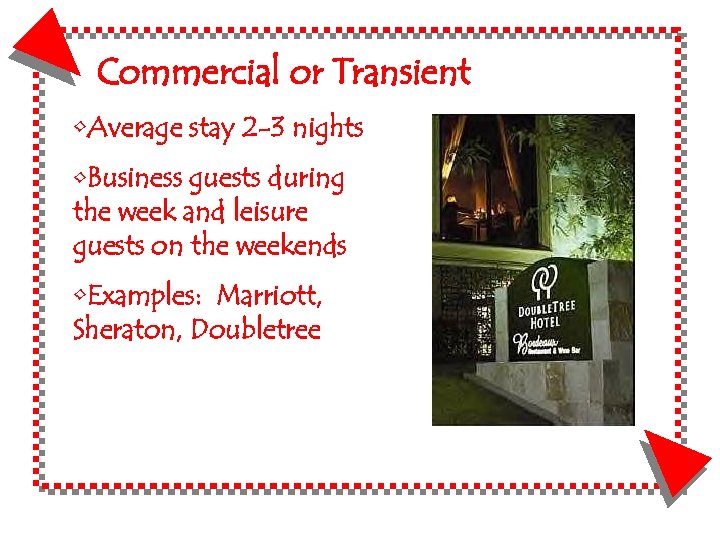 Commercial or Transient • Average stay 2 -3 nights • Business guests during the week and leisure guests on the weekends • Examples: Marriott, Sheraton, Doubletree
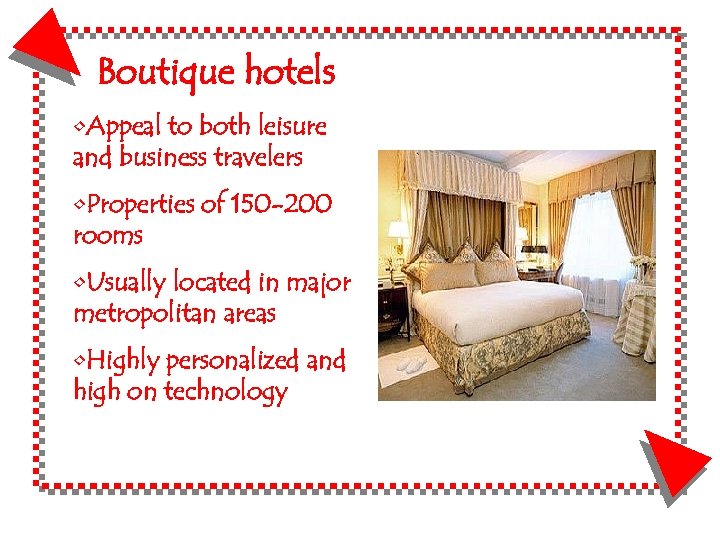 Boutique hotels • Appeal to both leisure and business travelers • Properties of 150 -200 rooms • Usually located in major metropolitan areas • Highly personalized and high on technology
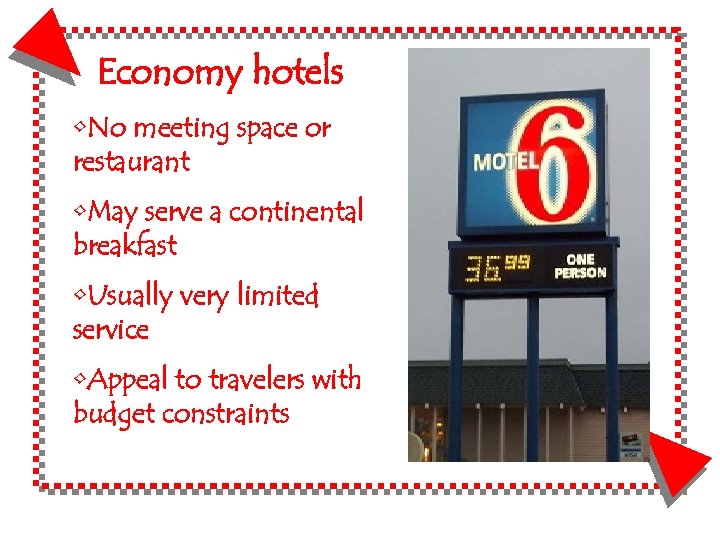 Economy hotels • No meeting space or restaurant • May serve a continental breakfast • Usually very limited service • Appeal to travelers with budget constraints
 Amenities: Gratis features that enhance a guest’s comfort or convenience; the higher the level of service, the more amenities that a guest expects. • Pools • Microwaves • Shampoo/conditioner • Lotion • Double sinks • Bathrobes • Coffee pots • Whirlpool tubs • Data ports
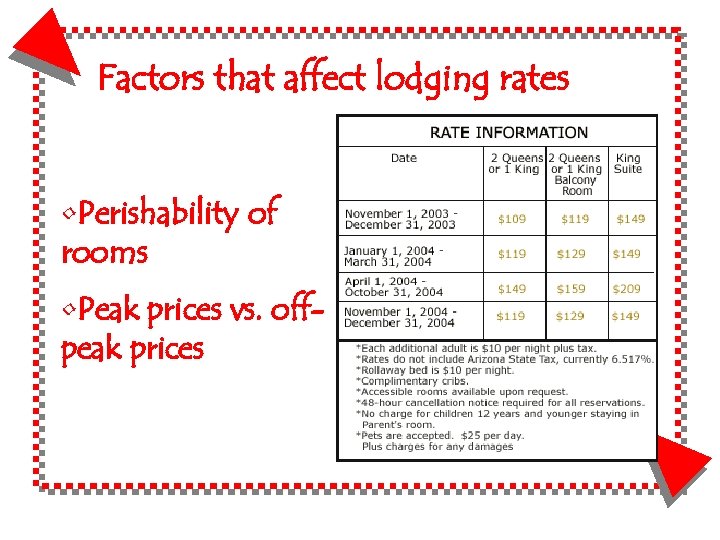 Factors that affect lodging rates • Perishability of rooms • Peak prices vs. offpeak prices
 Perishability of rooms • Rooms are perishable products. • When rooms are not occupied on a particular night, there is no opportunity to make up for lost revenue. • After considering competition, costs, and profit goals, properties may offer special rates/packages to offset the chance of empty rooms.
 Peak prices vs. off-peak prices • Demand for rooms affects prices. • During peak periods, guests are willing to pay more for rooms. • During off-peak periods, guests expect to pay less. • The process of varying rates to maximize profit is “yield management. ”
 Guest rates • Rack rates • Corporates • Group rates • Government rates • Senior citizen rates
 Rack rates • Standard rates quoted to walk-in guests and general inquiries • Usually the highest rates charged for a specific room
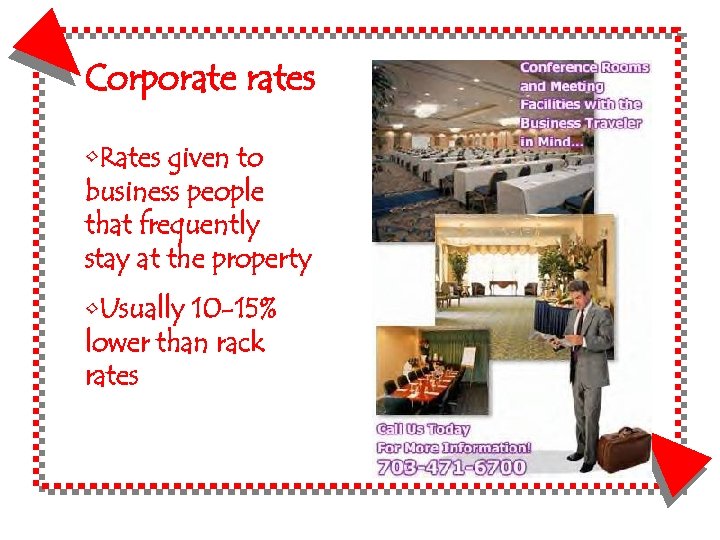 Corporates • Rates given to business people that frequently stay at the property • Usually 10 -15% lower than rack rates
 Group rates • Available to large groups that book a minimum number of rooms • Group bookings are efficient for the hotel, and group sales tend to encourage repeat business
 Government rates • Offered to state or federal government employees • Based on the current daily allowance known as a “per diem” • Encourage repeat business with those qualified guests
 Senior citizen rates • Discount rates are designed to seniors’ limited income. match • Senior citizens represent a sizeable market of travelers. • AARP: A nonprofit membership organization dedicated to focusing on the needs and interests of persons 50 years of age and older; many lodging properties offer special discounts to members.
 Trends in the lodging industry 1. Senior market will continue to grow. 2. Security is an important issue. 3. Families are traveling together, creating a demand for a variety of amenities for different ages. 4. More travelers are using internet to make reservations. 5. Travelers are taking shorter trips more frequently, rather than extended trips, due to demands of work. 6. Business people expect rooms to be equipped for technology. 7. More women are traveling for business.
 Marketing strategies in the lodging industry • Advertising • Personal selling • Sales promotion • Public relations/publicity
 Advertising in the lodging industry • Specific advertising media can enhance the image and trustworthiness of a business. • Many national companies utilize television advertising to reach large audiences. • Properties are able to target specific groups through publications.
 Personal selling in the lodging industry • Takes place on many levels (front desk, restaurants, housekeeping, etc. ) • Personal contact provides immediate feedback and gives customers satisfaction from being able to talk directly to someone. • Knowledgeable sales people have the opportunity to build profitable relationships by greeting returning guests in a personal manner and by remembering guests’ specific preferences.
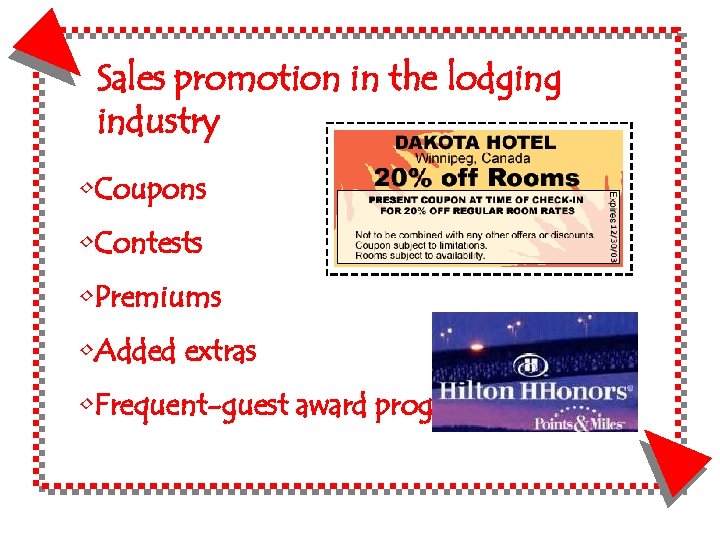 Sales promotion in the lodging industry • Coupons • Contests • Premiums • Added extras • Frequent-guest award programs
 Frequent-guest award programs: A technique that awards free accommodations, upgrades, and other prizes to guests after they spend certain numbers of room nights with the lodging chain. This promotion promotes a long-term relationship with the guest. • Membership is usually free. • Guests receive priority check-in. • Points may be applied to other travel and tourism services; these partnerships enhance the benefits of membership.
 Public relations/publicity • Requires planning and coordination in order to be effective • Examples: announcing openings of new properties; Marriott receiving the top hotel chain ranking in Business Week’s survey in 2003; “Conserving for Tomorrow” initiative at Holiday Inn