 Скачать презентацию MARKETING MANAGEMENT 12 th edition 7 Analyzing Business
Kotler07_media.ppt
- Количество слайдов: 31




MARKETING MANAGEMENT 12 th edition 7 Analyzing Business Markets Kotler Keller
Chapter Questions • What is the business market, and how does it differ from the consumer market? • What buying situations do organizational buyers face? • Who participates in the business-tobusiness buying process? 2
Chapter Questions • How do business buyers make their decisions? • How can companies build strong relationships with business customers? • How do institutional buyers and government agencies do their buying? 3
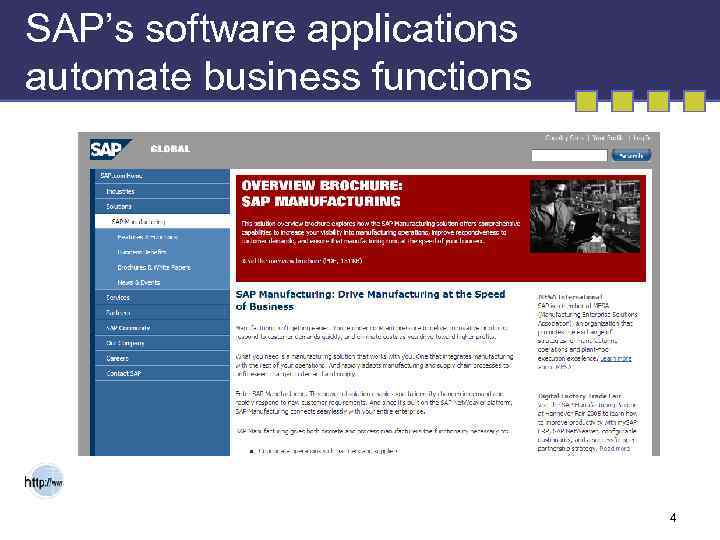
SAP’s software applications automate business functions 4
Organizational Buying Decision-making process by which formal organizations establish the need for purchased products and services, and identify, evaluate, and choose among alternative brands and suppliers. 5
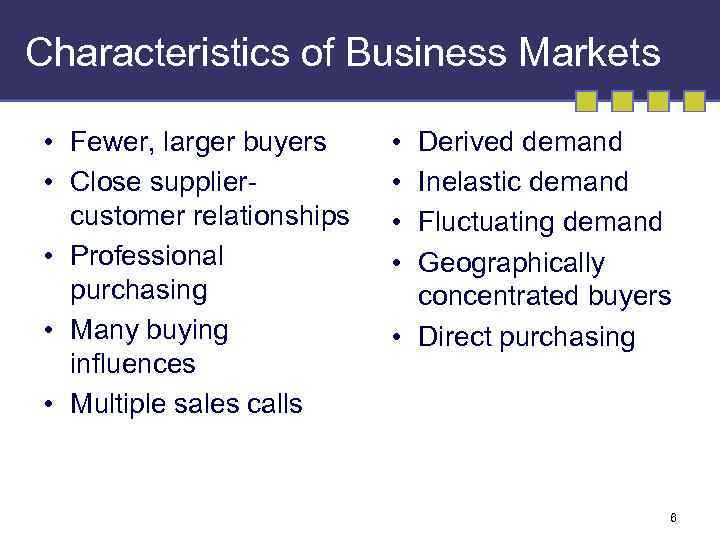
Characteristics of Business Markets • Fewer, larger buyers • Close suppliercustomer relationships • Professional purchasing • Many buying influences • Multiple sales calls • • Derived demand Inelastic demand Fluctuating demand Geographically concentrated buyers • Direct purchasing 6
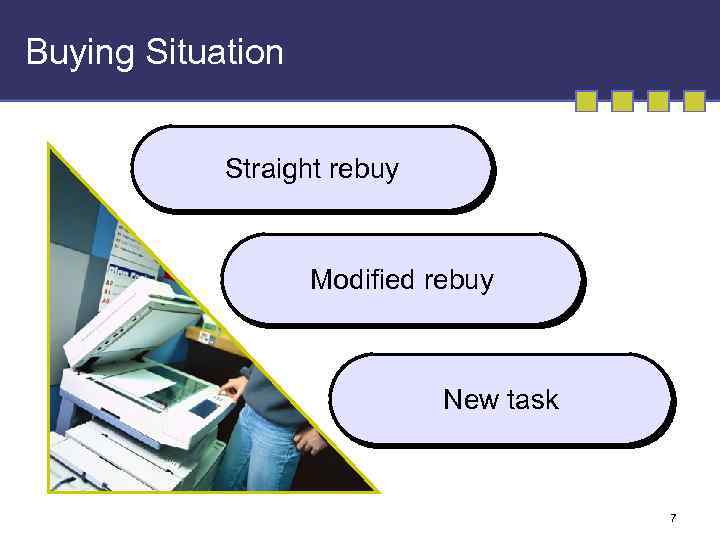
Buying Situation Straight rebuy Modified rebuy New task 7
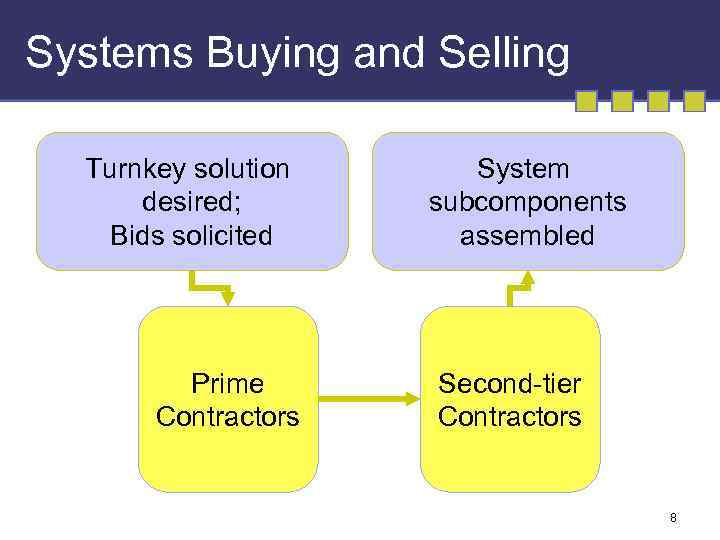
Systems Buying and Selling Turnkey solution desired; Bids solicited Prime Contractors System subcomponents assembled Second-tier Contractors 8
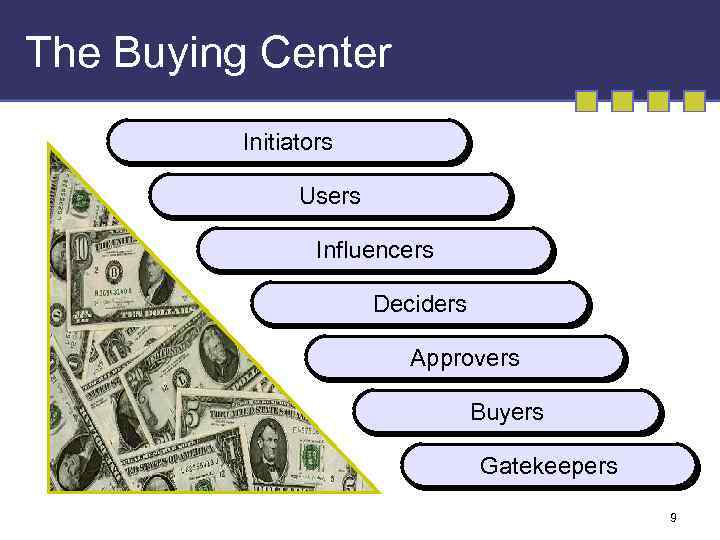
The Buying Center Initiators Users Influencers Deciders Approvers Buyers Gatekeepers 9
Of Concern to Business Marketers • • Who are the major decision participants? What decisions do they influence? What is their level of influence? What evaluation criteria do they use? 10
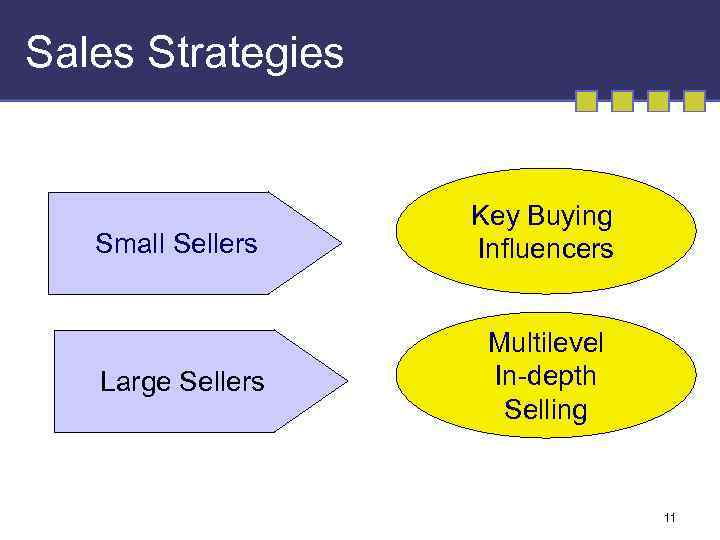
Sales Strategies Small Sellers Key Buying Influencers Large Sellers Multilevel In-depth Selling 11
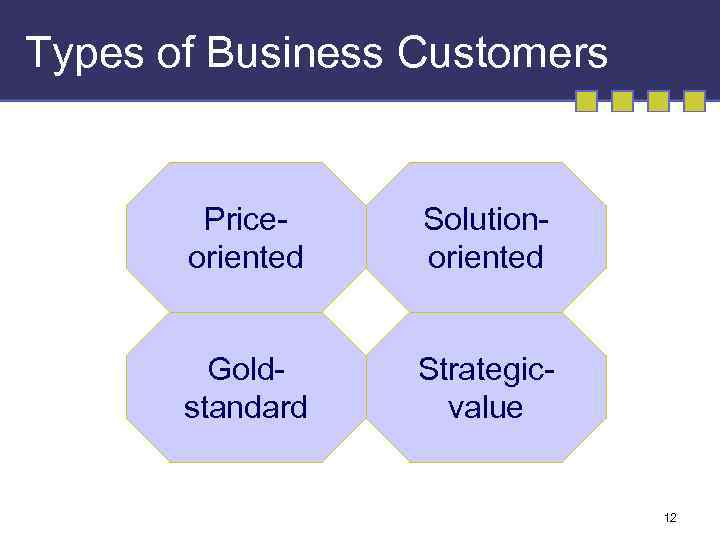
Types of Business Customers Priceoriented Solutionoriented Goldstandard Strategicvalue 12
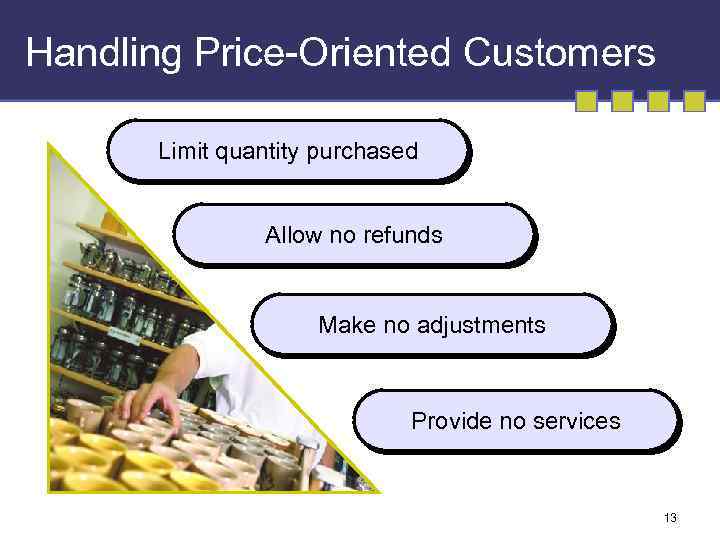
Handling Price-Oriented Customers Limit quantity purchased Allow no refunds Make no adjustments Provide no services 13

Kodak offers services that streamline processes for hospital administrators 14
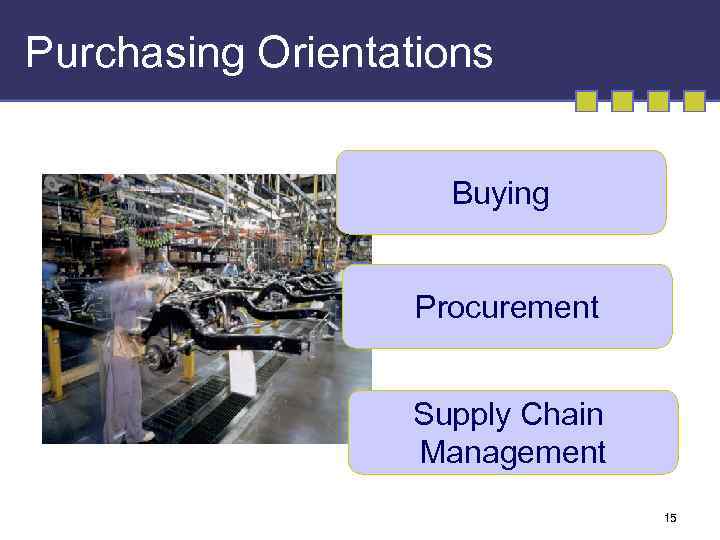
Purchasing Orientations Buying Procurement Supply Chain Management 15
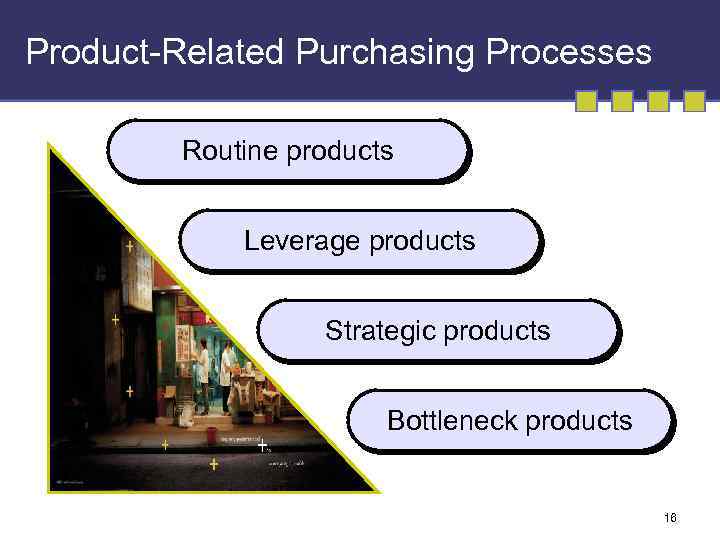
Product-Related Purchasing Processes Routine products Leverage products Strategic products Bottleneck products 16
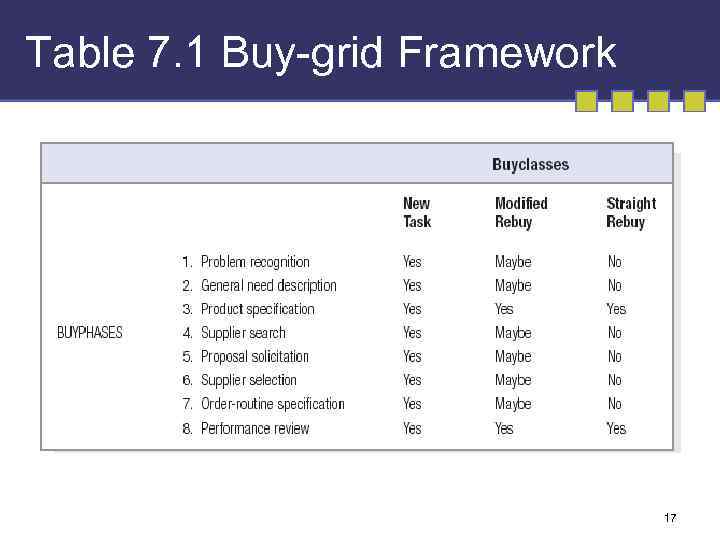
Table 7. 1 Buy-grid Framework 17
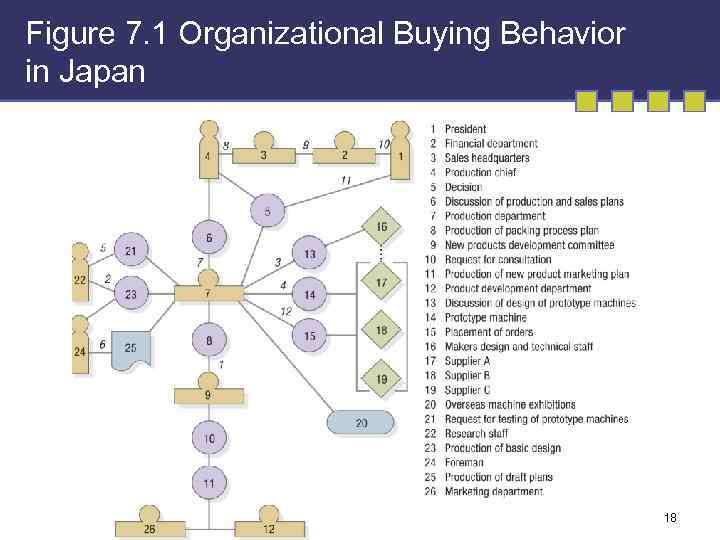
Figure 7. 1 Organizational Buying Behavior in Japan 18
Methods of e-Procurement • • • Websites organized using vertical hubs Websites organized using functional hubs Direct extranet links to major suppliers Buying alliances Company buying sites 19
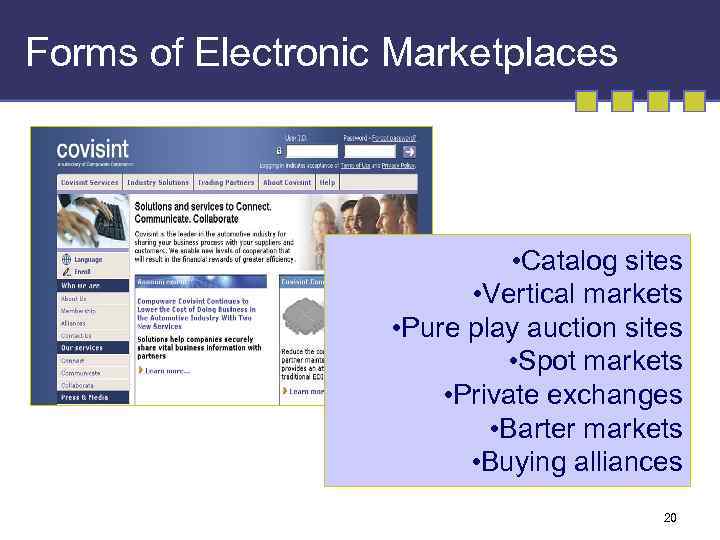
Forms of Electronic Marketplaces • Catalog sites • Vertical markets • Pure play auction sites • Spot markets • Private exchanges • Barter markets • Buying alliances 20
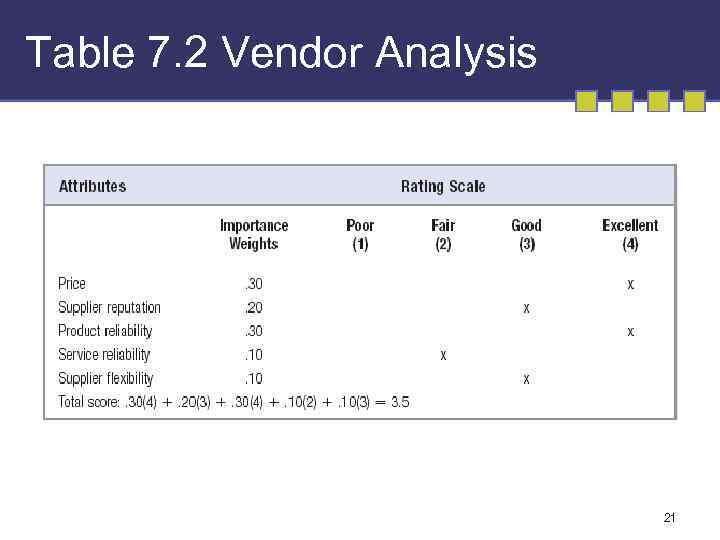
Table 7. 2 Vendor Analysis 21
Assessing Customer Value • Internal engineering assessment • Field value-in-use assessment • Focus-group value assessment • Direct survey questions • Conjoint analysis • Benchmarks • Compositional approach • Importance ratings 22
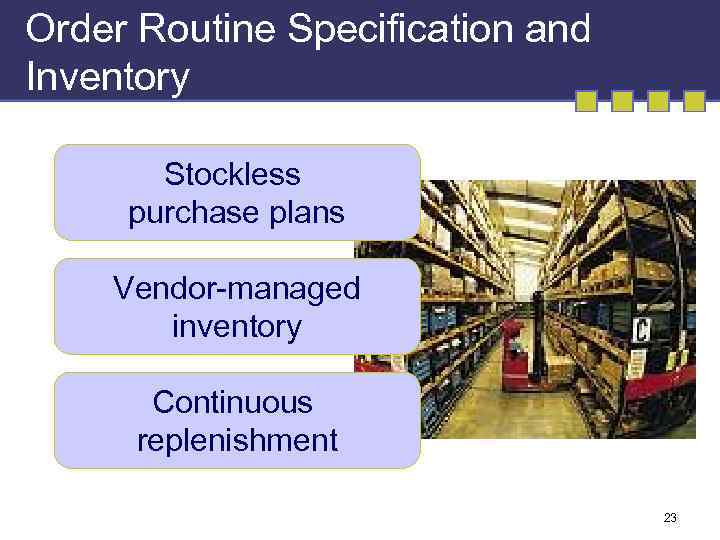
Order Routine Specification and Inventory Stockless purchase plans Vendor-managed inventory Continuous replenishment 23
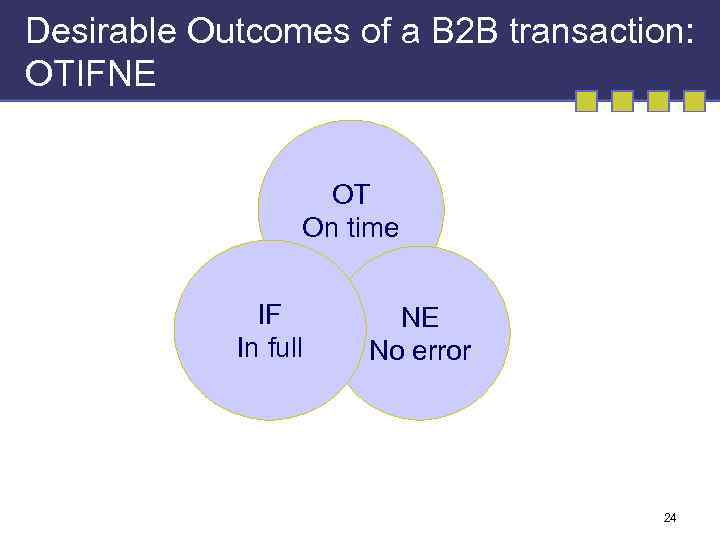
Desirable Outcomes of a B 2 B transaction: OTIFNE OT On time IF In full NE No error 24
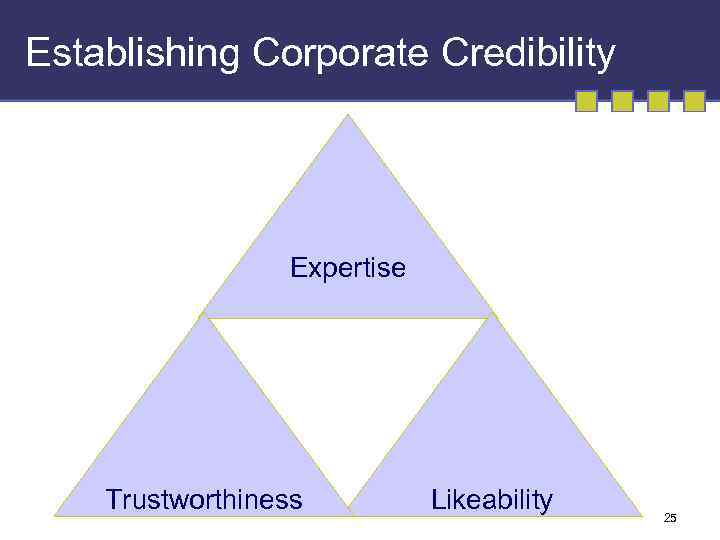
Establishing Corporate Credibility Expertise Trustworthiness Likeability 25
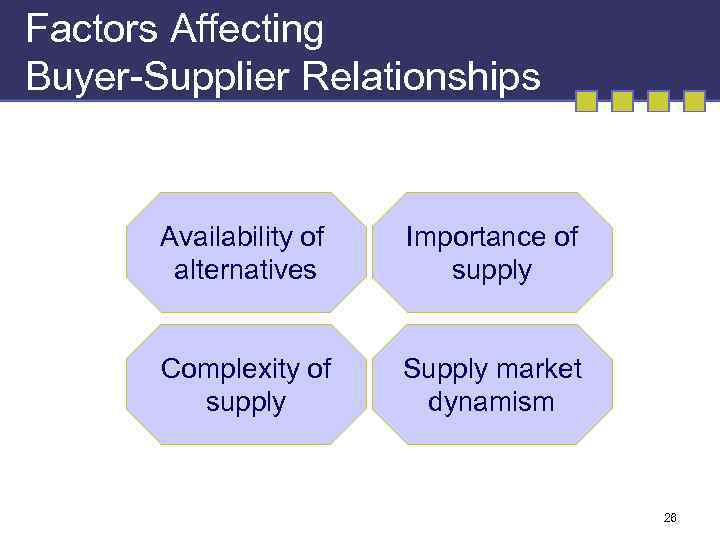
Factors Affecting Buyer-Supplier Relationships Availability of alternatives Importance of supply Complexity of supply Supply market dynamism 26
Categories of Buyer-Seller Relationships • Basic buying and selling • Bare bones • Contractual transaction • Customer supply • • Cooperative systems Collaborative Mutually adaptive Customer is king 27
Opportunism Some form of cheating or undersupply relative to an implicit or explicit contract. 28
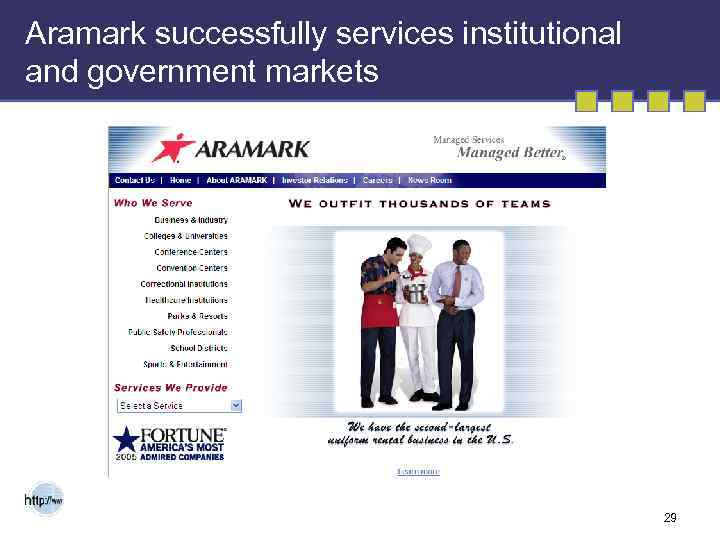
Aramark successfully services institutional and government markets 29
Marketing Debate ü How different is B-to-B Marketing? Take a position: 1. B-to-B requires special, unique 2. marketing concepts and principles. 3. 2. B-to-B is really not that different; 4. basic marketing concepts apply. 30
Marketing Discussion ü How might we apply the consumer behavior topics from Chapter 6 to B-to-B settings? 31
Скачать презентацию MARKETING MANAGEMENT 12 th edition 7 Analyzing Business
Kotler07_media.ppt