 Скачать презентацию Marketing for Managers Rubina D Mello Contents n
28b2903e0b0b3ed53ebcd72894e494ba.ppt
- Количество слайдов: 185



Marketing for Managers Rubina D’Mello
Contents n n n Marketing an Its Applications Marketing planning and Organisation Understanding Consumers Product Management Pricing an Promotion Strategy Distribution and Public Policy
Block 1 Marketing and its Applications
Chapter 1 Introduction to Marketing
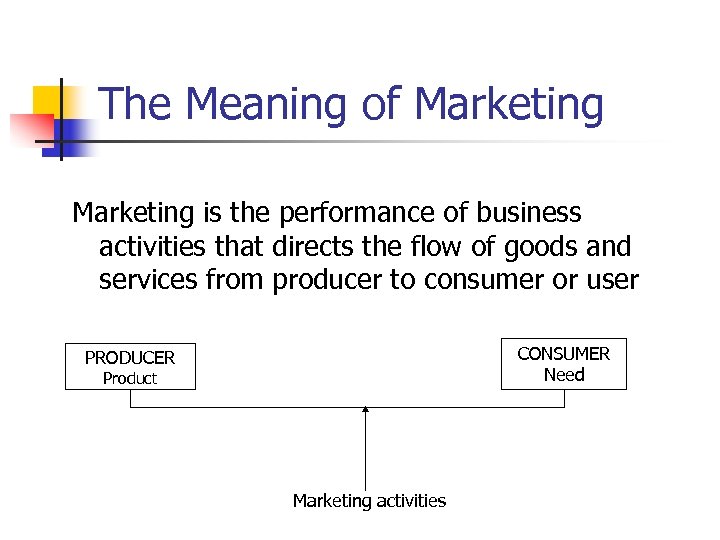
The Meaning of Marketing is the performance of business activities that directs the flow of goods and services from producer to consumer or user CONSUMER Need PRODUCER Product Marketing activities
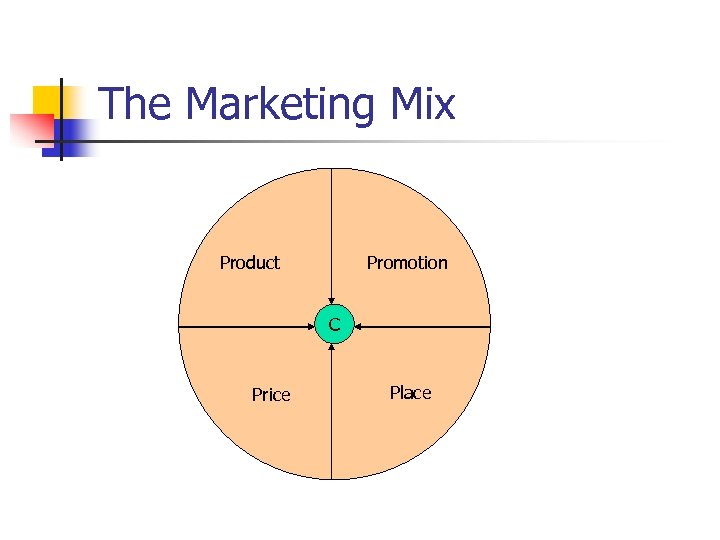
The Marketing Mix Product Promotion C Price Place
Marketing Strategy Needed to create and retain a satisfied customers Strategies n STDP Strategies n Marketing Mix Strategies
STPD Strategies n Segmentation n Aggregating process – A cluster of people with similar needs. A Homogeneous group of customer who will respond to a marketing mix in a similar way. Targeting n Once the market segment is defined, it has to decide how many and which one to target.
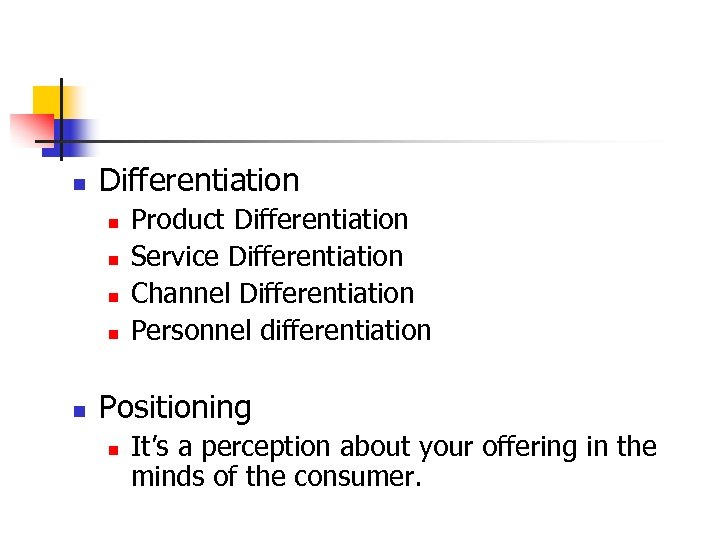
n Differentiation n n Product Differentiation Service Differentiation Channel Differentiation Personnel differentiation Positioning n It’s a perception about your offering in the minds of the consumer.
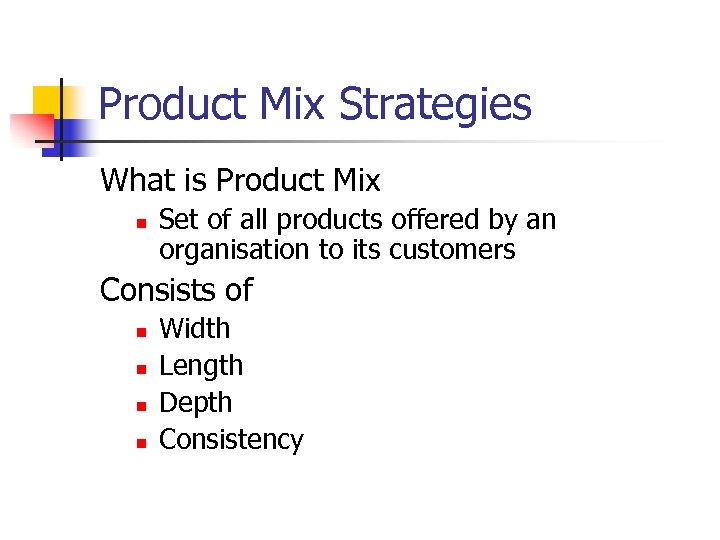
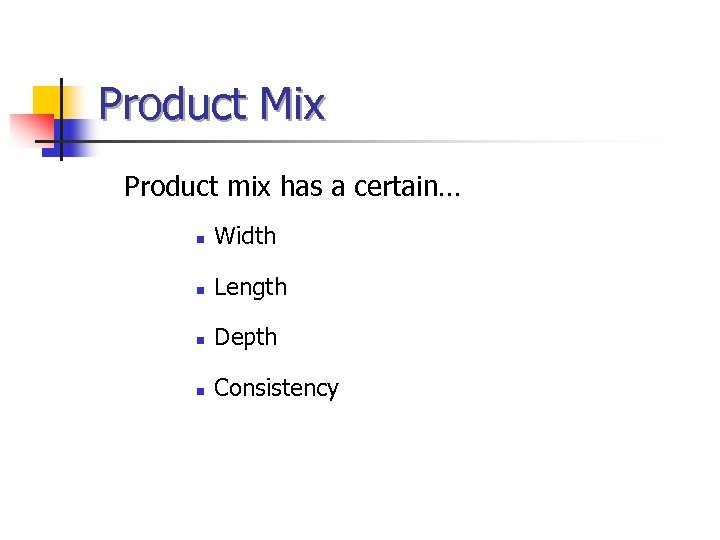
Product Mix Strategies What is Product Mix n Set of all products offered by an organisation to its customers Consists of n n Width Length Depth Consistency
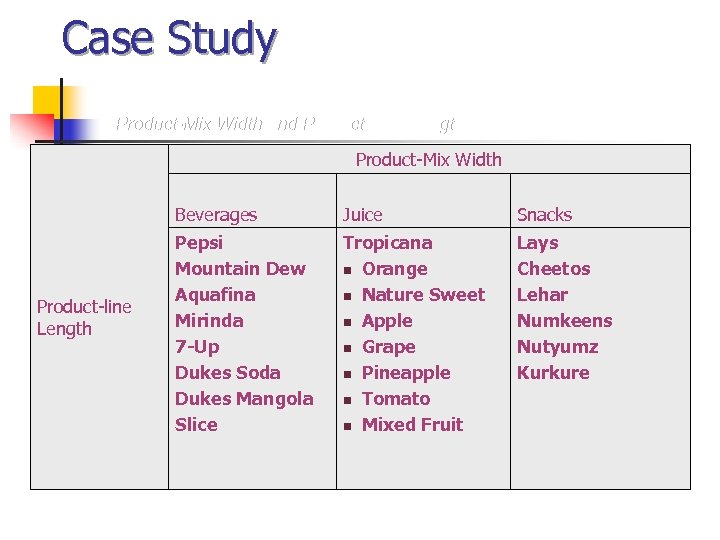
Case Study Product-Mix Width and Product-Line Length for Pepsi. Co India Product-Mix Width Beverages Product-line Length Juice Snacks Pepsi Mountain Dew Aquafina Mirinda 7 -Up Dukes Soda Dukes Mangola Slice Tropicana n Orange n Nature Sweet n Apple n Grape n Pineapple n Tomato n Mixed Fruit Lays Cheetos Lehar Numkeens Nutyumz Kurkure
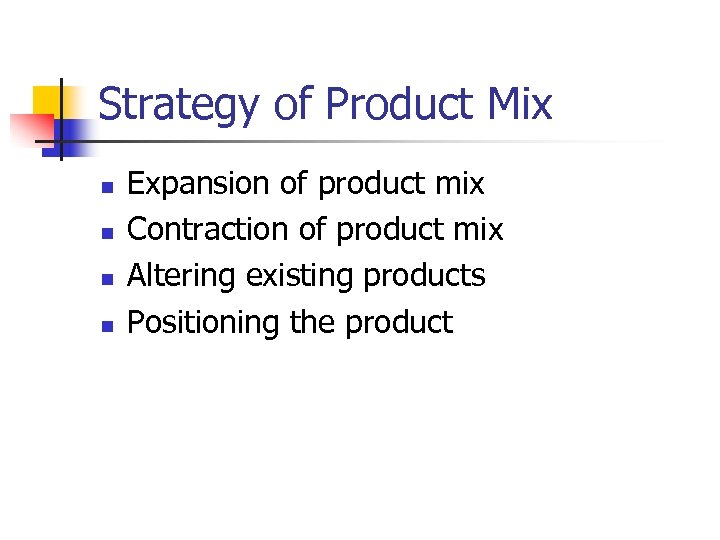
Strategy of Product Mix n n Expansion of product mix Contraction of product mix Altering existing products Positioning the product
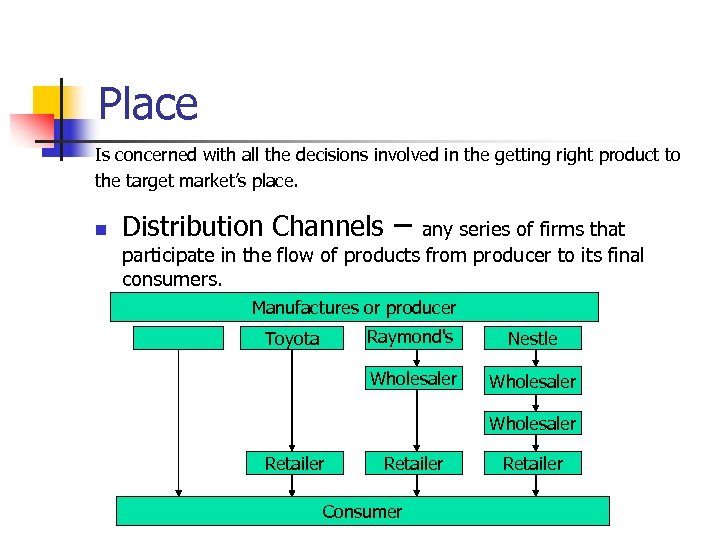
Place Is concerned with all the decisions involved in the getting right product to the target market’s place. n Distribution Channels – any series of firms that participate in the flow of products from producer to its final consumers. Manufactures or producer Raymond's Nestle Wholesaler Toyota Wholesaler Retailer Consumer Retailer
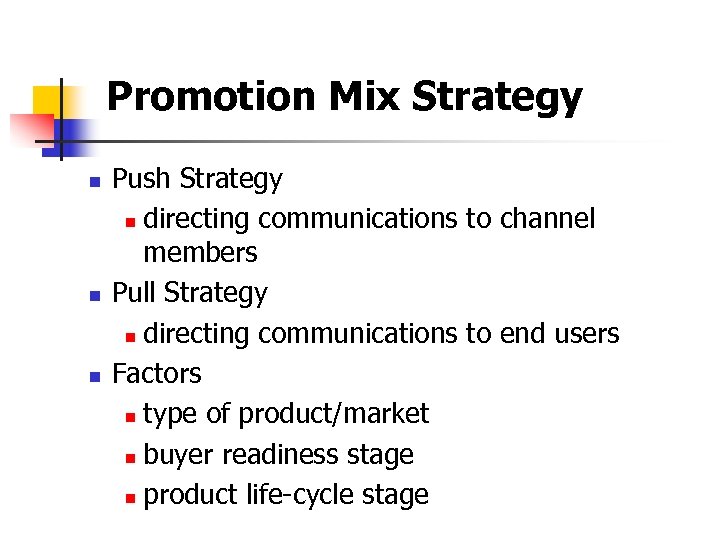
Promotion Mix Strategy n n n Push Strategy n directing communications to channel members Pull Strategy n directing communications to end users Factors n type of product/market n buyer readiness stage n product life-cycle stage
Chapter 2 Marketing in a Developing Economy
Marketing functions performed at different levels of development
Relevance of Marketing in a developing economy n n Marketing and planned economic growth How to view the marketing effort Significance of macro and micro marketing General role of marketing n n Stimulates potential aggregate demand thus enlarge the size of the market It helps in the discover of entrepreneurial talent
Areas of Relevance n n Marketing in agriculture, basic industries, mining and plantation Intermediate industrial goods Semi-industrial products Export trade & services like tourism and banking
The Relevance of Social Marketing n n 4 P’s Social Marketing planning system
Chapter 3 Marketing of services
The service sector n n n The services sector has been growing at a rate of 8% per annum in recent years More than half of our GDP is accounted for from the services sector This sector dominates with the best jobs, best talent and best incomes
“There are no such thing as service industries. There are only industries whose service components are greater or less than those of other industries. Everybody is in service. ” -Theodore Levitt-
What is services? It is the part of the product or the full product for which the customer is willing to see value and pay for it.
Growing Importance of Services n n n Economic well being increases the demand of services Changing lifestyle Complexity of the product
Characteristics of Services Intangibility n Perishability n Inseparability n Variability n Client relationships n Right of owner-ship n
Intangibility n Hard to grasp, concept is abstract n Dramatization often necessary for concept n Hard to separate the service provider and the service
Perishability n Services cannot be stored or held in inventory. n If not used when available, they “go to waste”.
Inseparability n Outlet accessibility can limit the area covered by the service. n Image is important: Image affects the perception of the service.
Variability n Service quality tends to vary considerably. n Haircut from your hair dresser vs. “Javed Habib”
Client Relationships n Relationships between service organizations and customers are often close n Potential for loyalty longterm
Right of owner-ship It is not taken to the service, we merely experience it. n e. g. Services of a doctor, lawyer, teacher, mechanic, etc. . n
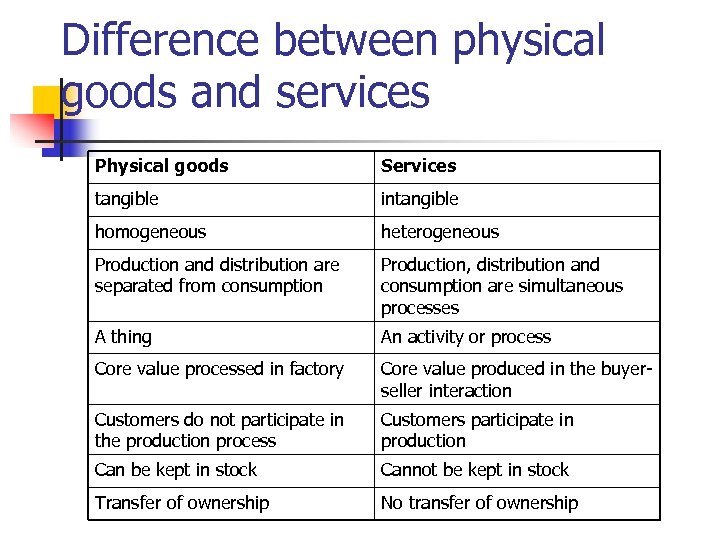
Difference between physical goods and services Physical goods Services tangible intangible homogeneous heterogeneous Production and distribution are separated from consumption Production, distribution and consumption are simultaneous processes A thing An activity or process Core value processed in factory Core value produced in the buyerseller interaction Customers do not participate in the production process Customers participate in production Can be kept in stock Cannot be kept in stock Transfer of ownership No transfer of ownership
SERVICES MARKETING MIX n n n n Product Place Prize Promotion People Physical Evidence Process
In services, the last experience remains uppermost in your mind. Therefore, it is not enough to be good, you have to be consistently good
Service quality is directly proportional to employee satisfaction
Block 2 Marketing Planning and Organisation
Chapter 4 Planning Marketing Mix
The Elements of Marketing Mix n Product activities n n Pricing activities n n Target customers, cost, competition, the law, social responsibility Promotional activities n n Quality, features, style, brand name, packaging, sizes, services, warranties, returns Advertising, personal selling, sales promotion, publicity and public relations Place or Distribution related activities n Physical distribution n n Transportation, warehosuing and storage, Order processing, Inventory control, Location Channels of distribution
The Place of the Marketing Mix in Marketing planning n n n Current Marketing Situation Identification of Problems and Opportunities Defining Objectives Designing the Marketing Strategy Developing the marketing programme
n n The Relationship between Marketing Mix and Marketing Strategy The concept of Optimum Marketing Mix
Marketing Mix and some specific Situation n n New product development and marketing mix Product life cycle and marketing mix Role of Advertising in marketing mix Role of price in marketing mix
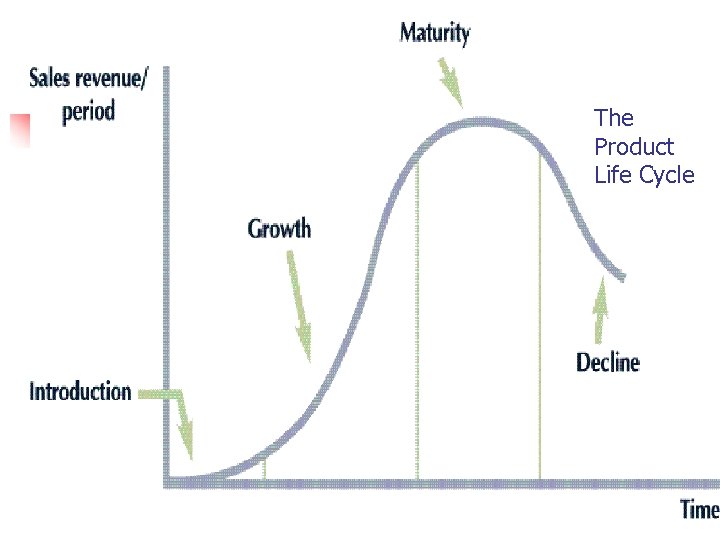
The Product Life Cycle
Chapter 5 Market Segmentation
The Concept of Market n n In respect of the network of institutions like wholesalers and brokers dealing in a product To refer to the nature of demand for the product, as when we speak of the market for soap
n The concept of segmentation n n Relationship of a segment to a market Market Segmentation versus product development Benefits and doubts about segmentation What is grouped in forming segments n What, how, where, when, why, who
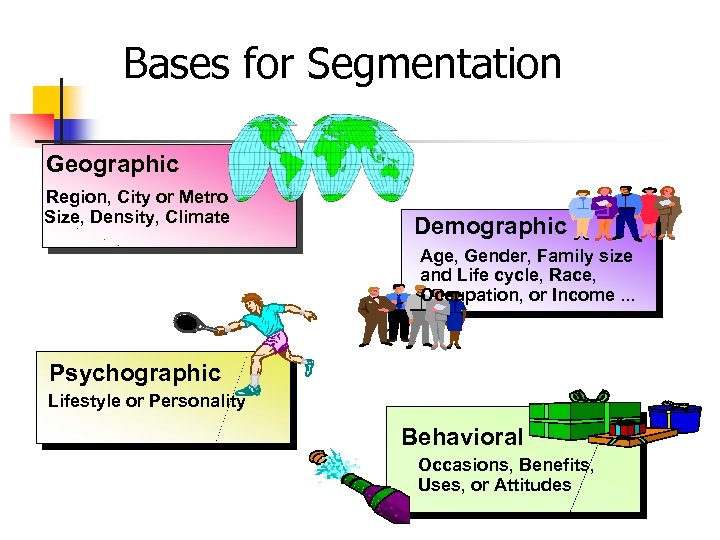
Bases for Segmentation Geographic Region, City or Metro Size, Density, Climate Demographic Age, Gender, Family size and Life cycle, Race, Occupation, or Income. . . Psychographic Lifestyle or Personality Behavioral Occasions, Benefits, Uses, or Attitudes
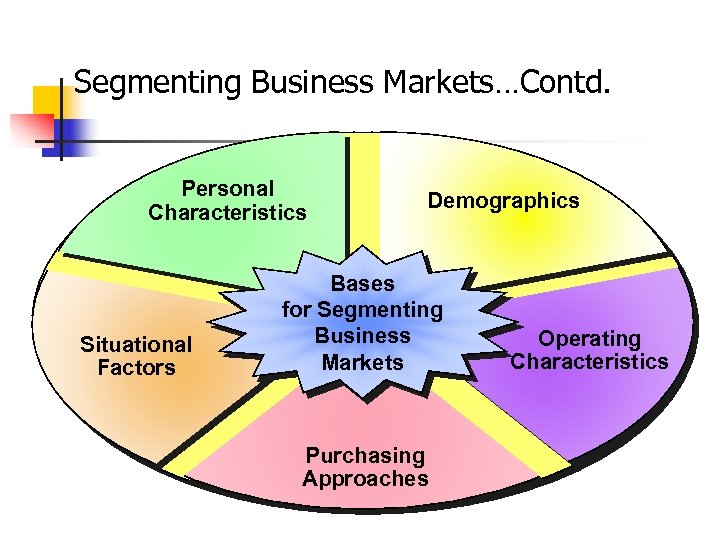
Segmenting Business Markets…Contd. Personal Characteristics Situational Factors Demographics Bases for Segmenting Business Markets Purchasing Approaches Operating Characteristics
How is the basis for segmentation selected? n n Methods that companies use Logical division Perceptual mapping technique Considerations in using perceptual maps
Selection of Segments n General factors n n n n Company trust Size & growth potential Investment needed Profitability Risk Competition Specific Segmentation factors n n Segment durability Mobility Visibility accessibility
Chapter 6 Marketing Organisation
Principles of Designing an Organisation n n n Specialisation Departmentalisation Standardisation Formalisation Centralisation Evaluation Structure
Marketing Organisation n The changing role of Marketing Organisation n n n Simple sales department Sales department with some marketing function Separate marketing department Integrated marketing department Marketing oriented organisation Considerations involved in designing the marketing organisation n n n Statement of objective and goals of the firm Nature of the product/Line of activity Areas of operation Nature of Industry Computerisation & up-gradation of information system External environment & Government intervention.
Marketing Organisation n Methods of designing the Marketing Organisation n n Functional Organisation Product Management Organisation Market Centered Organisation of Corporate Marketing n n No corporate marketing support Minimal corporate marketing support moderate corporate marketing Strong corporate marketing
Chapter 7 Marketing Research & Its Applications
n n n The Context of Marketing Decisions Definition of Marketing Research Purpose of Marketing Research Scope of Marketing Research Procedure n n n n Problem Definition Research design Field Work Data Analysis Report presentation and implementation Marketing Research in India Problems of conducting marketing research
Application of Marketing Research n Sales & Market Analysis n n n n n Determination of market potential Determination of market share Sales forecasting Design of market segmentation studies Target market Distribution channel studies Determination of market characteristics Determination of competitive information Product Research n n n Evaluation of new product ideas Testing for new product acceptance Evaluating the need for change in product information Testing package design Testing of product positioning
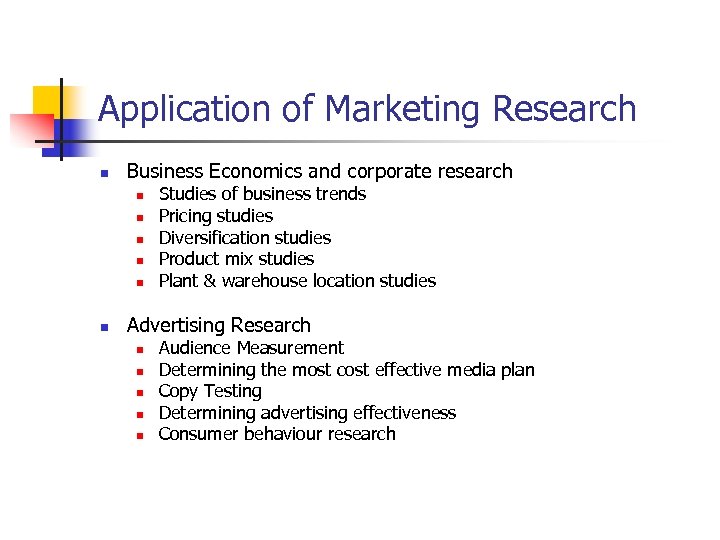
Application of Marketing Research n Business Economics and corporate research n n n Studies of business trends Pricing studies Diversification studies Product mix studies Plant & warehouse location studies Advertising Research n n n Audience Measurement Determining the most cost effective media plan Copy Testing Determining advertising effectiveness Consumer behaviour research
Block 3 Understanding Consumers
Chapter 8 Determinants of Consumer Behaviour
n n n Importance of consumer behaviour for marketers Types of consumers Buyers v/s Users
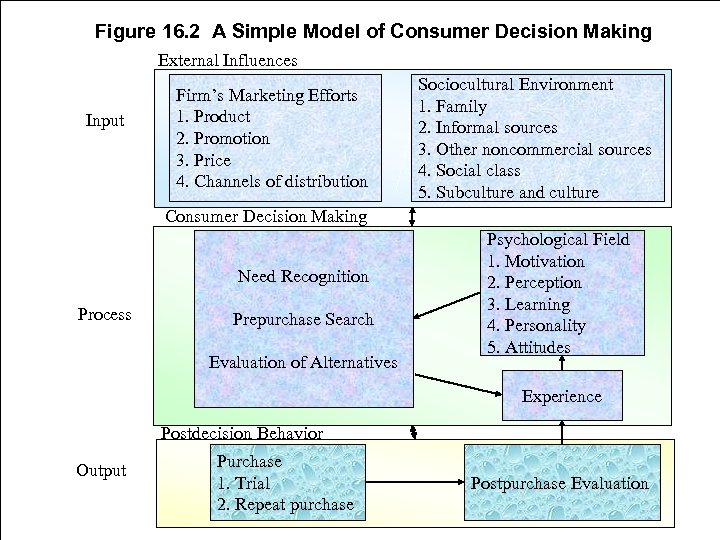
Figure 16. 2 A Simple Model of Consumer Decision Making External Influences Input Firm’s Marketing Efforts 1. Product 2. Promotion 3. Price 4. Channels of distribution Sociocultural Environment 1. Family 2. Informal sources 3. Other noncommercial sources 4. Social class 5. Subculture and culture Consumer Decision Making Need Recognition Process Prepurchase Search Evaluation of Alternatives Psychological Field 1. Motivation 2. Perception 3. Learning 4. Personality 5. Attitudes Experience Postdecision Behavior Output Purchase 1. Trial 2. Repeat purchase Postpurchase Evaluation
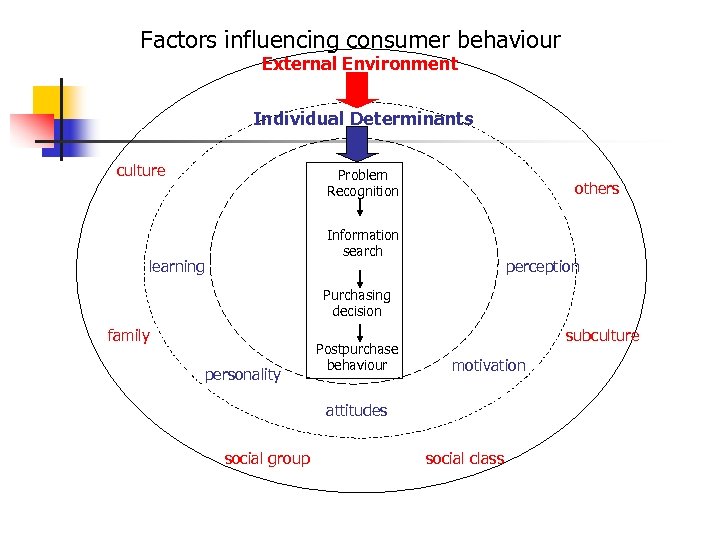
Factors influencing consumer behaviour External Environment Individual Determinants culture Problem Recognition others Information search learning perception Purchasing decision family personality Postpurchase behaviour subculture motivation attitudes social group social class
Chapter 9 Models of Consumer Behaviour
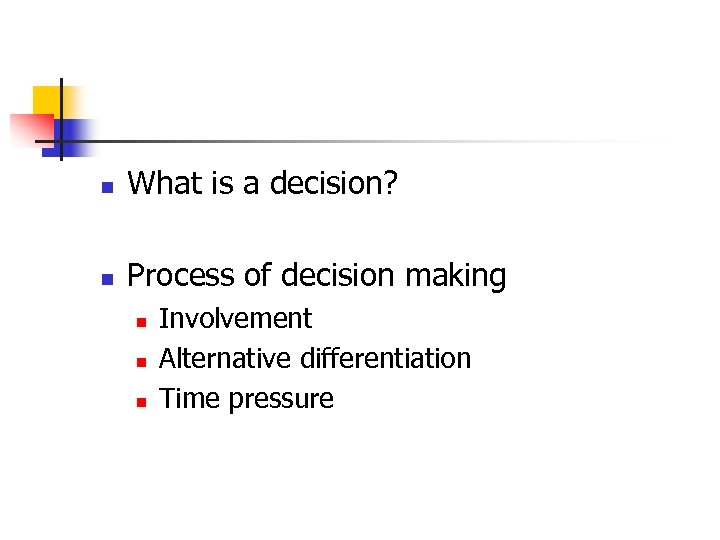
n What is a decision? n Process of decision making n n n Involvement Alternative differentiation Time pressure
Types of Consumer Decision Making n n n What to buy How much to buy Where to buy When to buy How to buy
Levels of Consumer Decision Making n n Buying Roles Buying Behaviour n n n Extensive problem solving Routinized buying behaviour Variety seeking behaviour
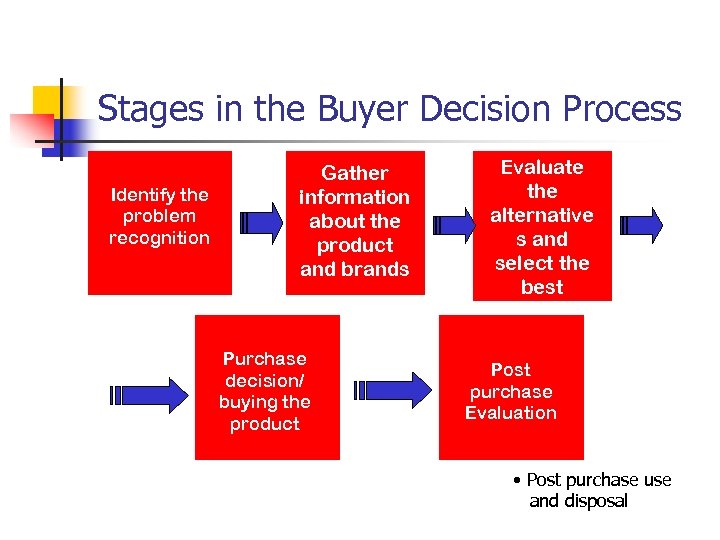
Stages in the Buyer Decision Process Identify the problem recognition Gather information about the product and brands Purchase decision/ buying the product Evaluate the alternative s and select the best possible alternative Post purchase Evaluation • Post purchase use and disposal
Models of Buyer Behaviour n Horward-Seth Model n n n Engel-Kollat-Bloackwell Model n n n Information processing Central control unit Decision process Environmental influences Model of family decision making n n n n Inputs Perceptual & learning constructs Outputs Exogenous or external variable Influencers Gatekeepers Deciders Preparers Buyers users Model of industrial buyer behaviour
Chapter 10 Indian Consumer Environment n n n Demographic Characteristics Income and consumption characteristics Characteristics of organisational consumers Geographic characteristics Market potential Socio cultural characteristics
Block 4 Product Management
Chapter 11 Product decision and strategies
Product Anything that can be offered to a market to satisfy a want or need n n n n n Physical goods Services Experiences Events Persons Places Properties Organizations Information Ideas
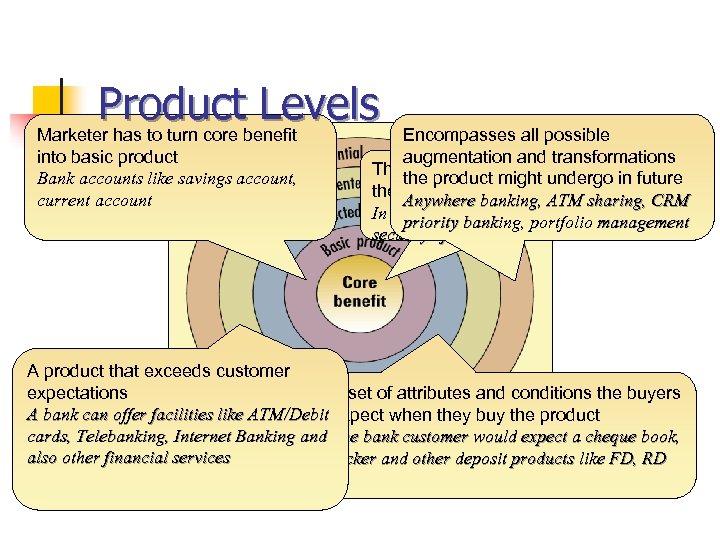
Productbenefit Levels Marketer has to turn core into basic product Bank accounts like savings account, current account Encompasses all possible augmentation and transformations The the product might undergo in future fundamental service or product the customer banking, ATM sharing, CRM Anywhere is buying In a priority banking, portfolio management bank the customer is looking for security of his money A product that exceeds customer expectations A set of attributes and conditions the buyers A bank can offer facilities like ATM/Debit expect when they buy the product cards, Telebanking, Internet Banking and The bank customer would expect a cheque book, also other financial services locker and other deposit products like FD, RD
Product Mix Product mix has a certain… n Width n Length n Depth n Consistency
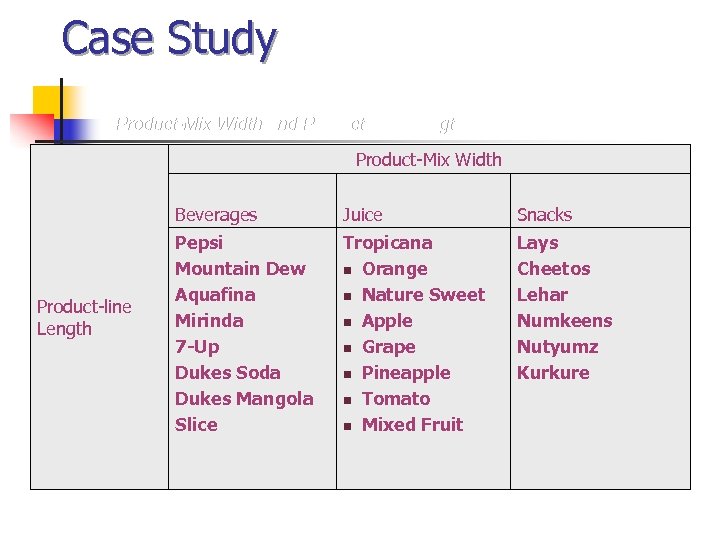
Case Study Product-Mix Width and Product-Line Length for Pepsi. Co India Product-Mix Width Beverages Product-line Length Juice Snacks Pepsi Mountain Dew Aquafina Mirinda 7 -Up Dukes Soda Dukes Mangola Slice Tropicana n Orange n Nature Sweet n Apple n Grape n Pineapple n Tomato n Mixed Fruit Lays Cheetos Lehar Numkeens Nutyumz Kurkure
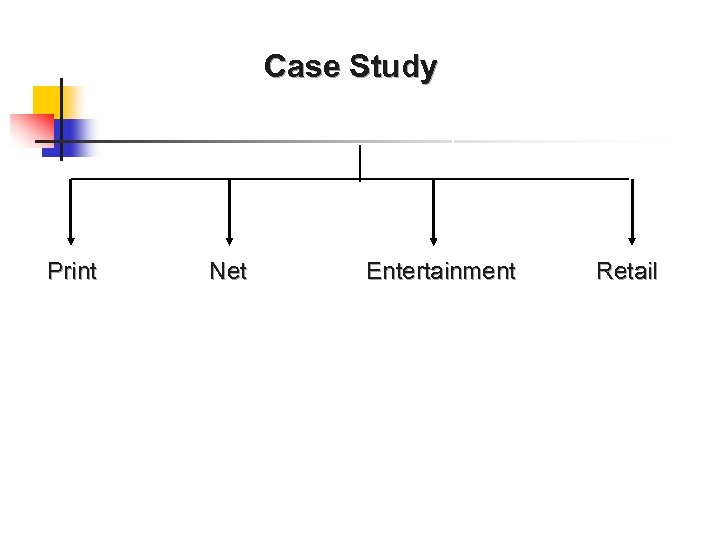
Case Study The Times Group Print Net Entertainment Retail
The Times Group contd. . Print
The Times Group contd. . Net GROUP SITES
The Times Group contd. . Entertainment
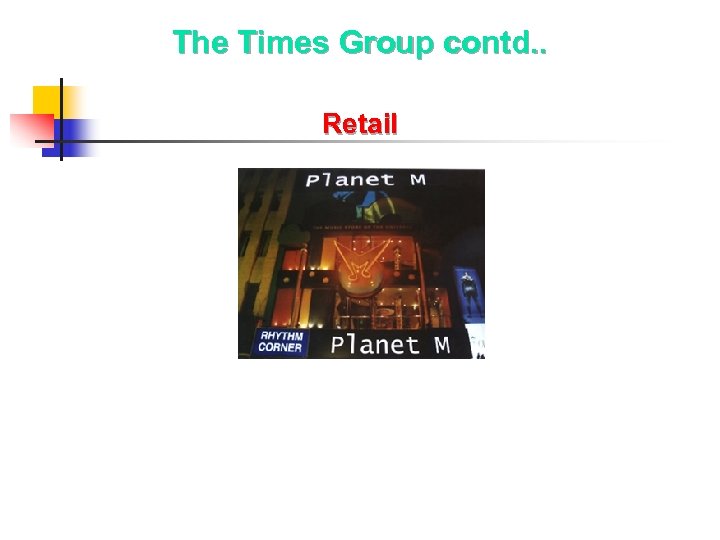
The Times Group contd. . Retail
Product Line Decisions B. Product line Length a. Objectives b. Cycle 1. Line Stretching n n n a. Down market Stretch b. Up market Stretch c. Two way stretch 2. Line Filling n Just-noticeable difference 3. Line Modernization, Featuring and Pruning
Chapter 12 Product Life cycle and New Product Development n The Product Life Cycle Concept n Marketing Mix at different stages
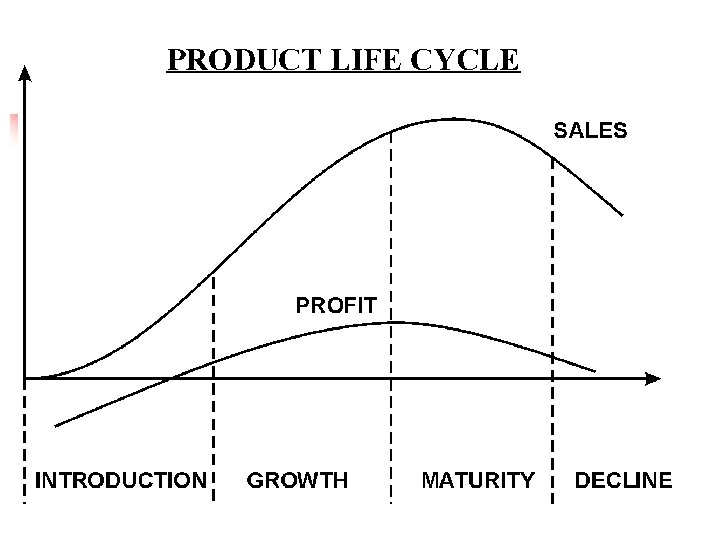
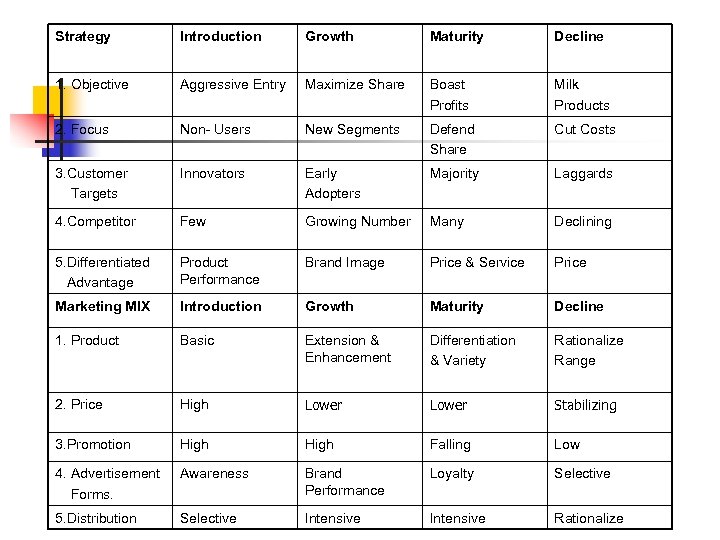
Strategy Introduction Growth Maturity Decline 1. Objective Aggressive Entry Maximize Share Boast Profits Milk Products 2. Focus Non- Users New Segments Defend Share Cut Costs 3. Customer Targets Innovators Early Adopters Majority Laggards 4. Competitor Few Growing Number Many Declining 5. Differentiated Advantage Product Performance Brand Image Price & Service Price Marketing MIX Introduction Growth Maturity Decline 1. Product Basic Extension & Enhancement Differentiation & Variety Rationalize Range 2. Price High Lower Stabilizing 3. Promotion High Falling Low 4. Advertisement Forms. Awareness Brand Performance Loyalty Selective 5. Distribution Selective Intensive Rationalize
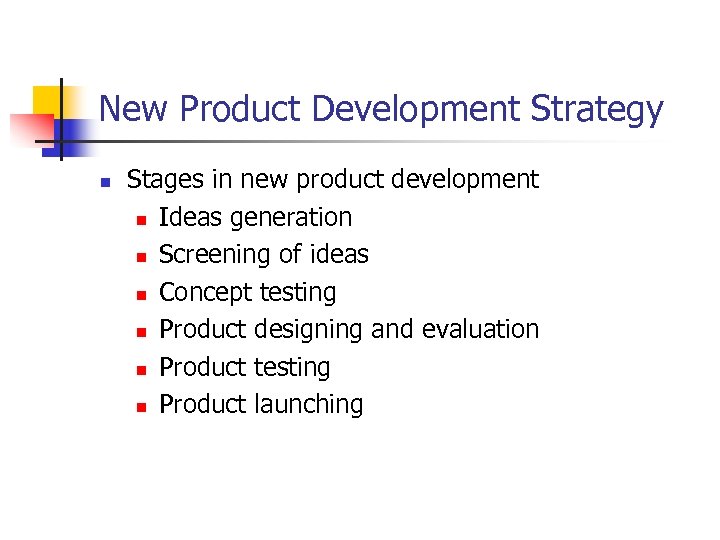
New Product Development Strategy n Stages in new product development n Ideas generation n Screening of ideas n Concept testing n Product designing and evaluation n Product testing n Product launching
Chapter 13 Branding and packaging decison
Branding Definition: “A brand is a name, Term, Sign, Symbol, Brand or combination of them intended to identify the goods or services of one seller or group of sellers and to differentiate them from those of competitors. ” -American Marketing Association • Trademarks – legal right to the exclusive use of that name or mark
Challenges in Branding and decisions Branding to be or not to be. . Whether Produce Manufacturer Brands or Distributor / Private Brands Which Brand Name/s to use Whether to use Line extensions, Brand Extensions, Multi Brands, New Brands or Cobrands
Brand Name Features A Brand name should n n n suggest something about the product’s benefits suggest the product or service category suggest concrete, “high imagery” qualities be easy to spell, pronounce, recognize, and remember be distinctive not carry poor meanings in other countries and languages
Packaging n What is packaging n Packaging Industry n n Functions of packaging n n n Used materials : Metals, plastics, wood, paper, glass, laminates, polysters, etc. Protection, Appeal Performance Offer convenience to the end-users Cost effective Legal dimensions of packaging n Statutory requirements n n n Net weight, when packed Date of manufacture Date of expiry Directions of storage MRP Directions for use
Block 5 Pricing and Promotion Strategies
Chapter 14 Pricing policies and practices
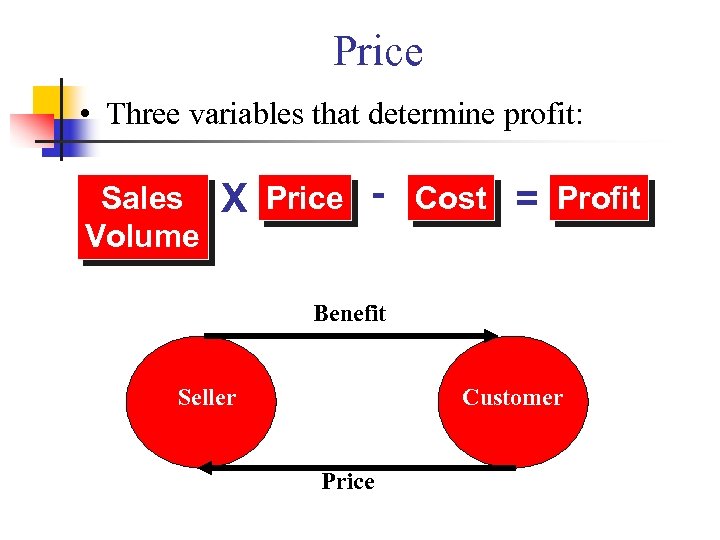
Price • Three variables that determine profit: Sales Volume X Price - Cost = Profit Benefit Seller Customer Price
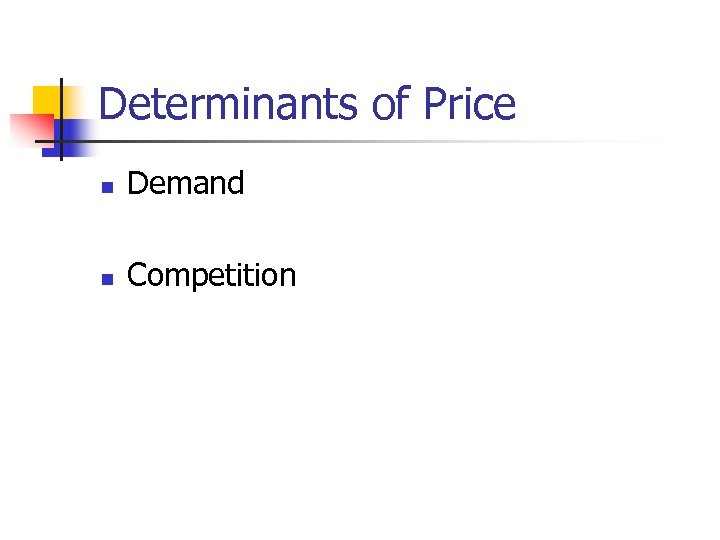
Determinants of Price n Demand n Competition
Setting the Price
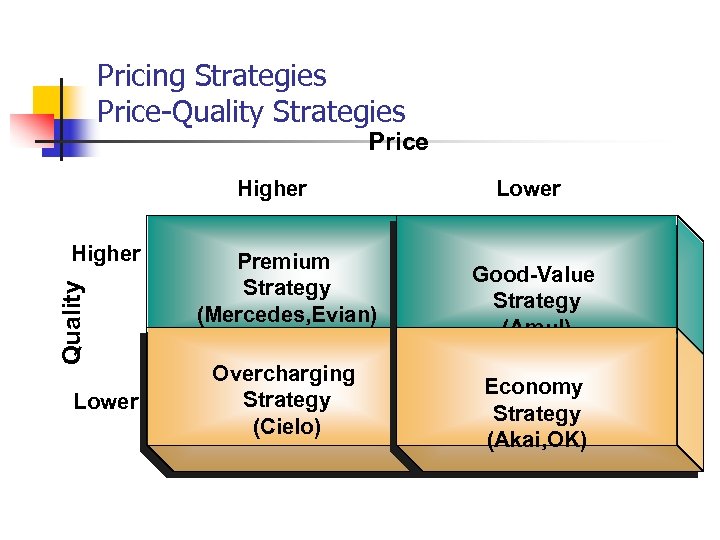
Pricing Strategies Price-Quality Strategies Price Higher Quality Higher Lower Premium Strategy (Mercedes, Evian) Overcharging Strategy (Cielo) Lower Good-Value Strategy (Amul) Economy Strategy (Akai, OK)
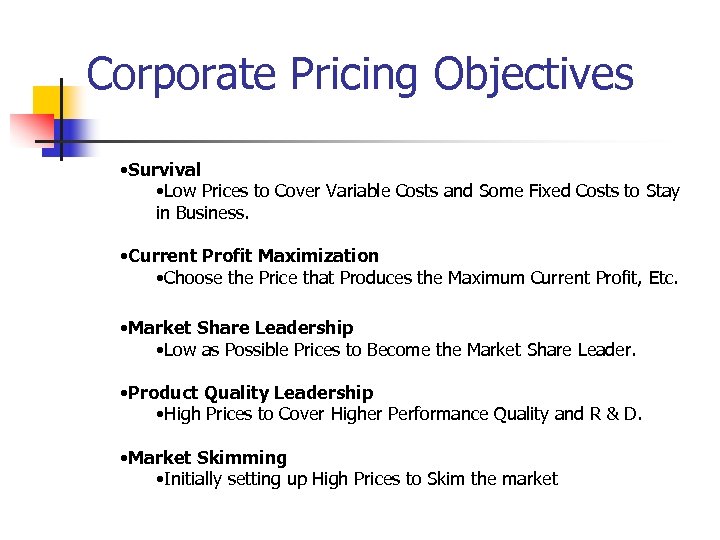
Corporate Pricing Objectives • Survival • Low Prices to Cover Variable Costs and Some Fixed Costs to Stay in Business. • Current Profit Maximization • Choose the Price that Produces the Maximum Current Profit, Etc. • Market Share Leadership • Low as Possible Prices to Become the Market Share Leader. • Product Quality Leadership • High Prices to Cover Higher Performance Quality and R & D. • Market Skimming • Initially setting up High Prices to Skim the market
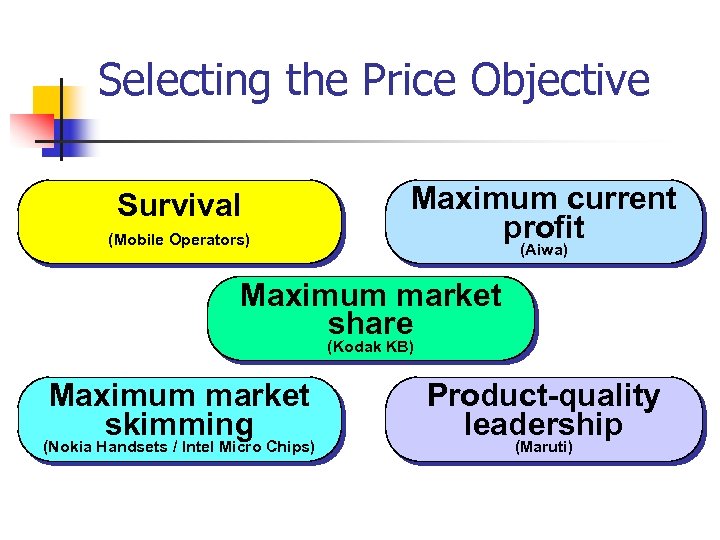
Selecting the Price Objective Survival (Mobile Operators) Maximum current profit (Aiwa) Maximum market share (Kodak KB) Maximum market skimming (Nokia Handsets / Intel Micro Chips) Product-quality leadership (Maruti)
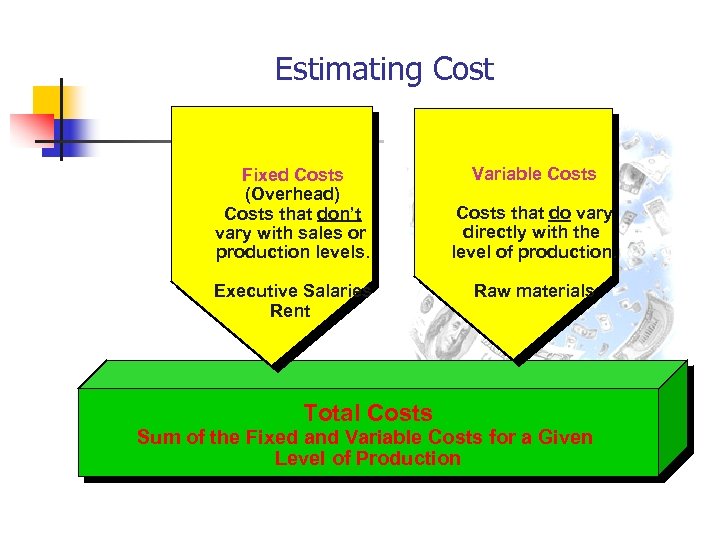
Estimating Cost Fixed Costs (Overhead) Costs that don’t vary with sales or production levels. Executive Salaries Rent Total Costs Variable Costs that do vary directly with the level of production. Raw materials Sum of the Fixed and Variable Costs for a Given Level of Production
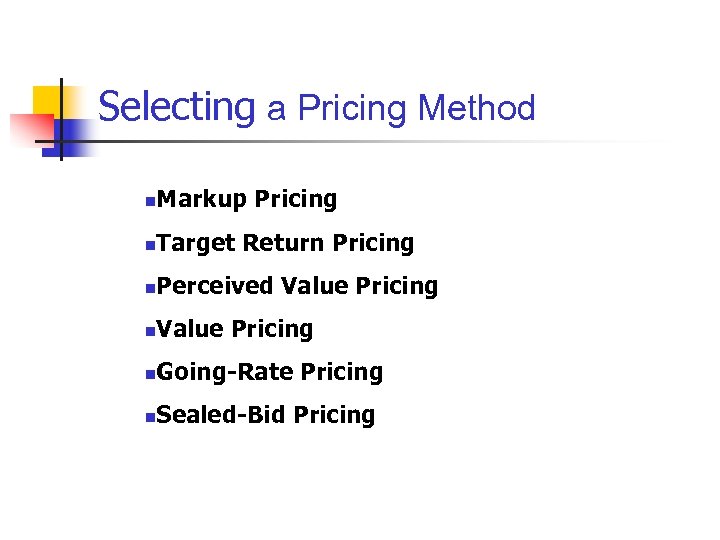
Selecting a Pricing Method n Markup Pricing n Target Return Pricing n Perceived Value Pricing n Going-Rate Pricing n Sealed-Bid Pricing
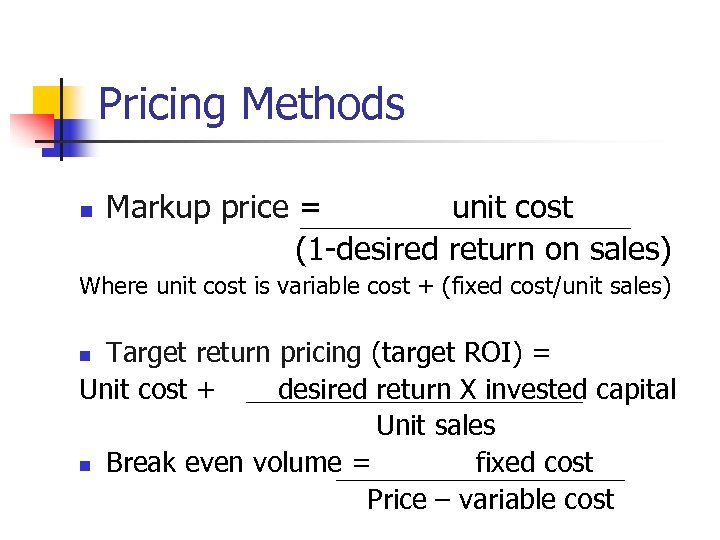
Pricing Methods n Markup price = unit cost (1 -desired return on sales) Where unit cost is variable cost + (fixed cost/unit sales) Target return pricing (target ROI) = Unit cost + desired return X invested capital Unit sales n Break even volume = fixed cost Price – variable cost n
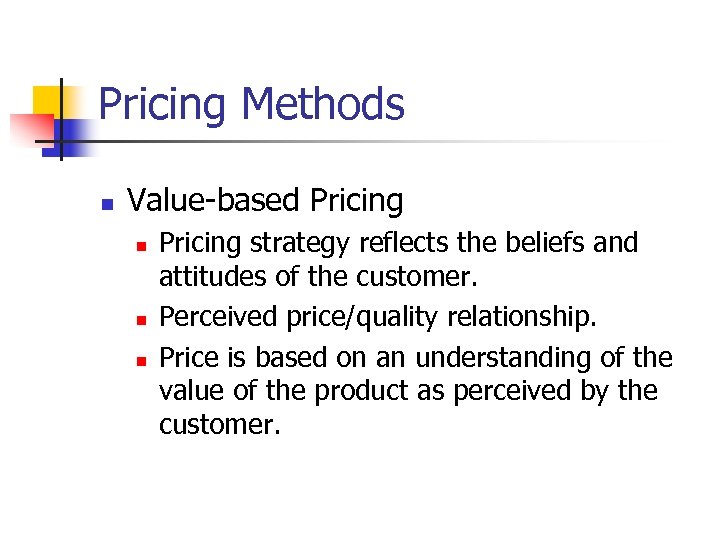
Pricing Methods n Value-based Pricing n n n Pricing strategy reflects the beliefs and attitudes of the customer. Perceived price/quality relationship. Price is based on an understanding of the value of the product as perceived by the customer.
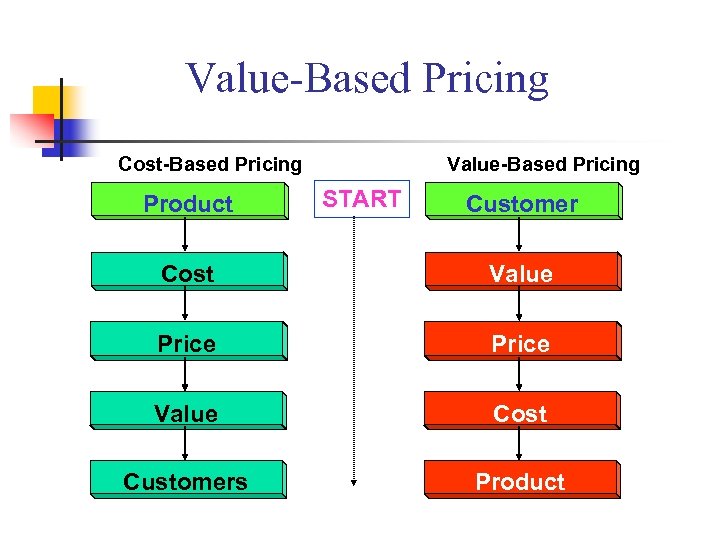
Value-Based Pricing Cost-Based Pricing Product Value-Based Pricing START Customer Cost Value Price Value Cost Customers Product
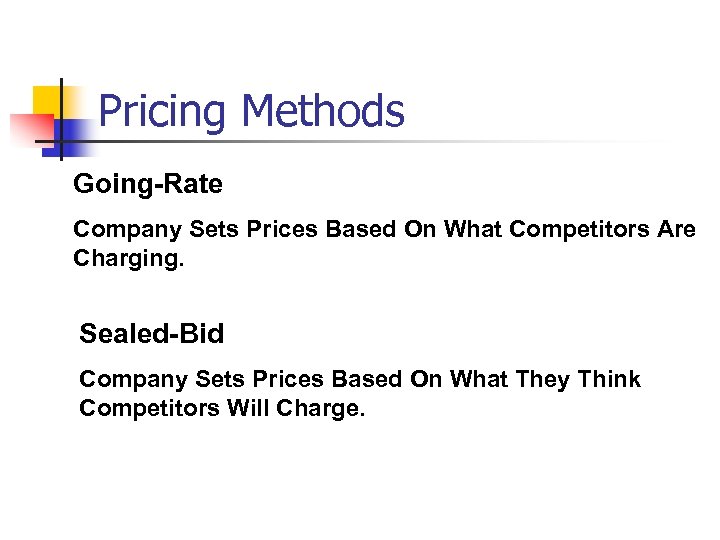
Pricing Methods Going-Rate Company Sets Prices Based On What Competitors Are Charging. Sealed-Bid Company Sets Prices Based On What They Think Competitors Will Charge.
Selecting the Final Price n Psychological pricing n n n Sometimes price is equated to quality Reference Price Influencing of other marketing-mix elements n n Company pricing policies n n The final price must be take in to account the brands quality and advertising relative to competition The Price must be consistent with company pricing policies Impact of price on other parties n such as dealers and distributors
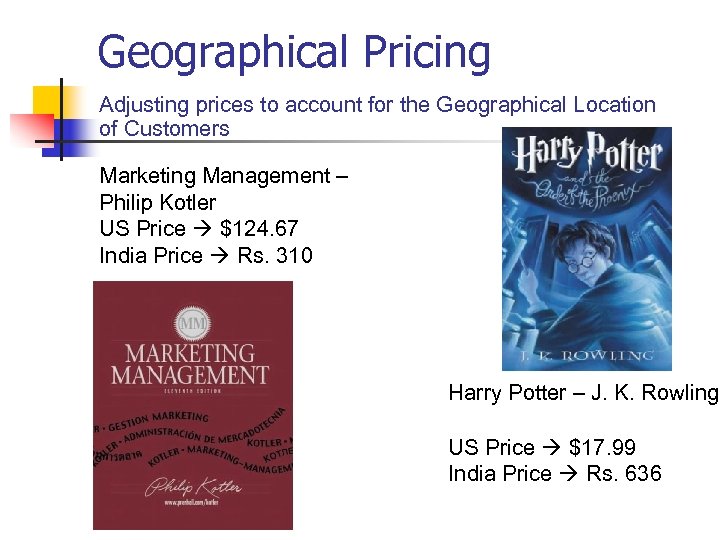
Geographical Pricing Adjusting prices to account for the Geographical Location of Customers Marketing Management – Philip Kotler US Price $124. 67 India Price Rs. 310 Harry Potter – J. K. Rowling US Price $17. 99 India Price Rs. 636
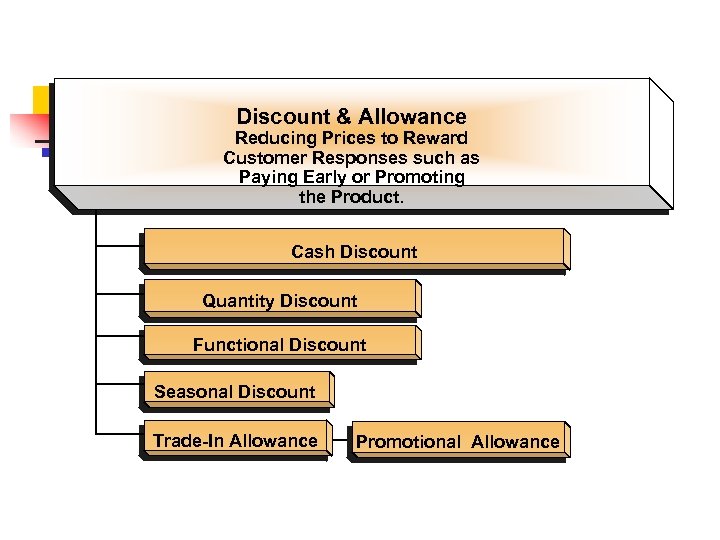
Discount & Allowance Reducing Prices to Reward Customer Responses such as Paying Early or Promoting the Product. Cash Discount Quantity Discount Functional Discount Seasonal Discount Trade-In Allowance Promotional Allowance
Promotional Pricing • Reducing Prices to Increase Short-Run Sales • Reducing Prices to Reward Customer Responses such as Paying Early or Promoting the Product.
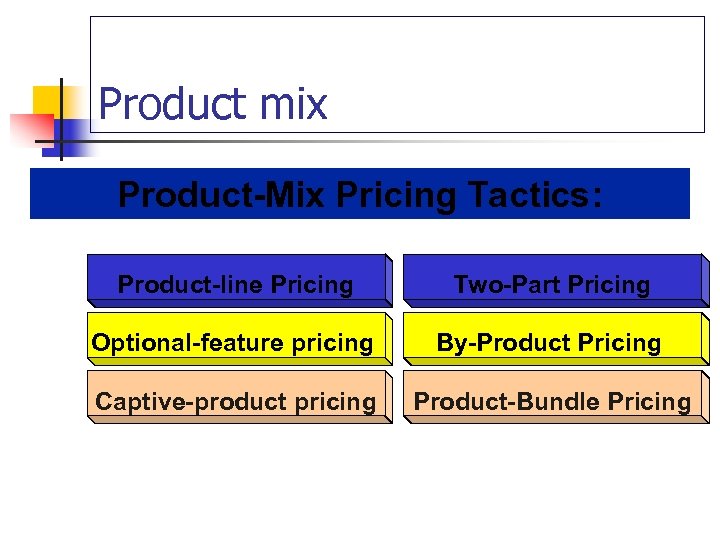
Product mix Product-Mix Pricing Tactics: Product-line Pricing Two-Part Pricing Optional-feature pricing By-Product Pricing Captive-product pricing Product-Bundle Pricing
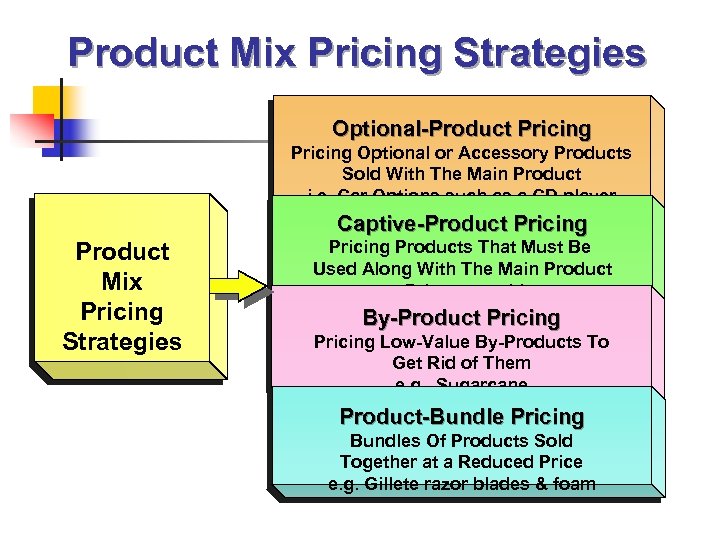
Product Mix Pricing Strategies Optional-Product Pricing Optional or Accessory Products Sold With The Main Product i. e. Car Options such as a CD player Captive-Product Pricing Product Mix Pricing Strategies Pricing Products That Must Be Used Along With The Main Product e. g. Printer cartridges By-Product Pricing Low-Value By-Products To Get Rid of Them e. g. Sugarcane Product-Bundle Pricing Bundles Of Products Sold Together at a Reduced Price e. g. Gillete razor blades & foam
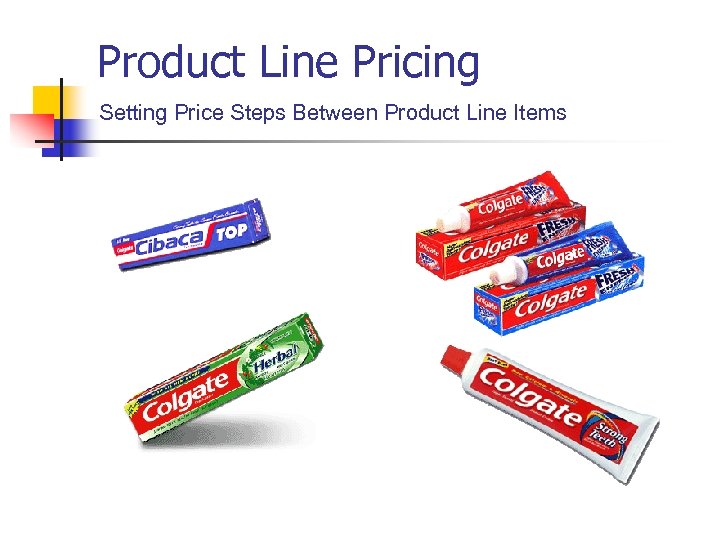
Product Line Pricing Setting Price Steps Between Product Line Items
Analyzing Competitors ’Cost , Prices and Offers n n The company needs to benchmark its costs against its competitors’cost to learn whether it is operating at a cost advantage or disadvantage. The company also needs to learn the price and quality of competitors’ offers
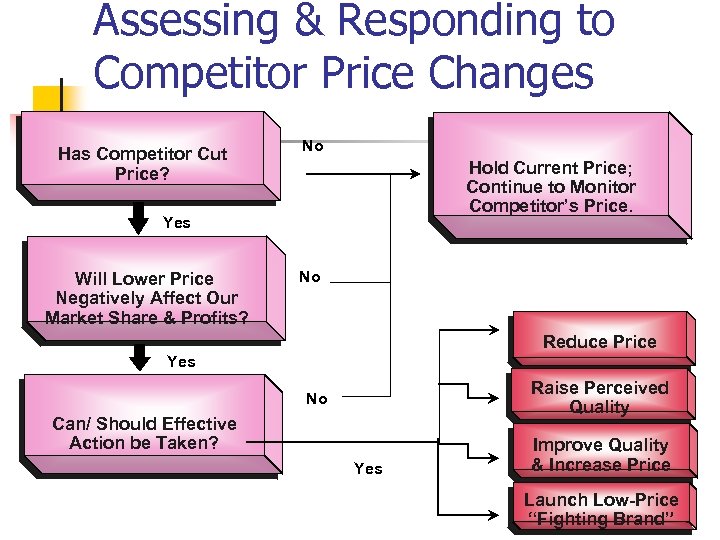
Assessing & Responding to Competitor Price Changes Has Competitor Cut Price? No Hold Current Price; Continue to Monitor Competitor’s Price. Yes Will Lower Price Negatively Affect Our Market Share & Profits? No Reduce Price Yes Raise Perceived Quality No Can/ Should Effective Action be Taken? Yes Improve Quality & Increase Price Launch Low-Price “Fighting Brand”
Chapter 15 Marketing Communication
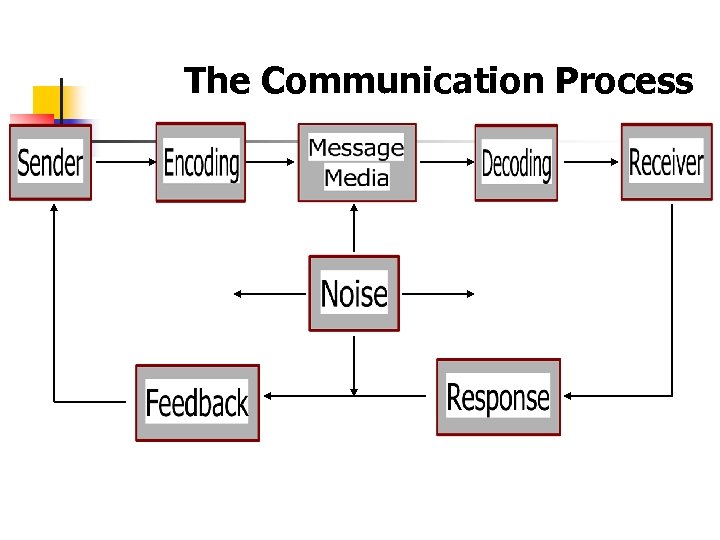
The Communication Process
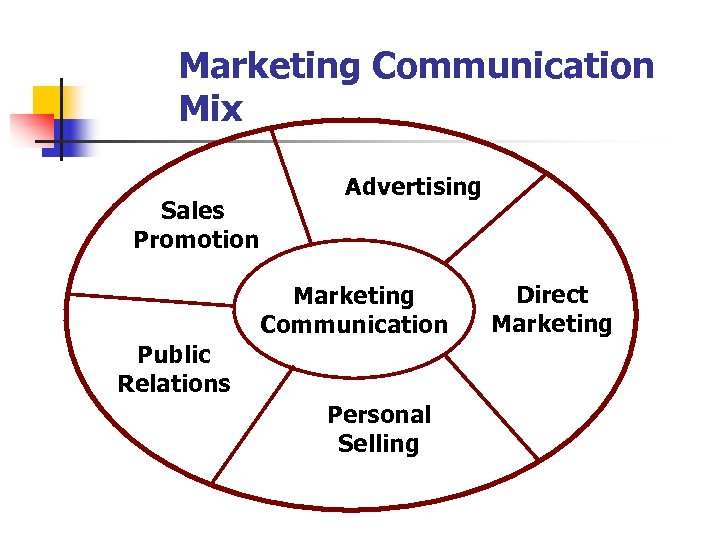
Marketing Communication Mix Sales Promotion Advertising Marketing Communication Public Relations Personal Selling Direct Marketing
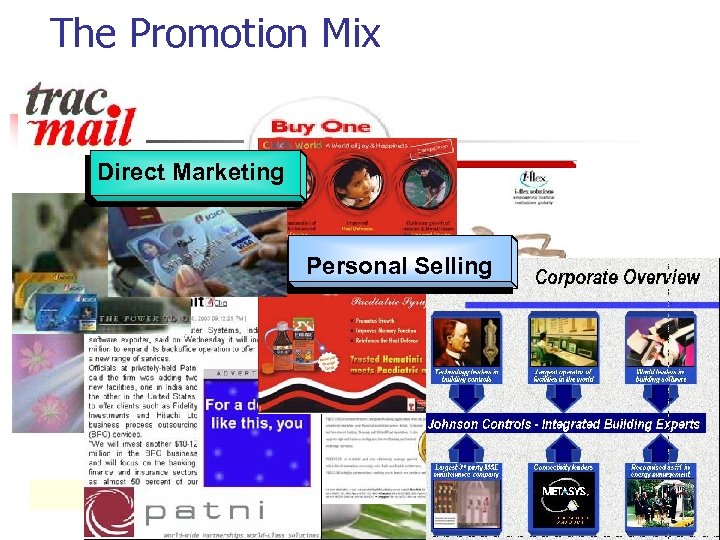
The Promotion Mix Direct Marketing Public Relations Personal Selling Special Offer Advertising Sales Promotion
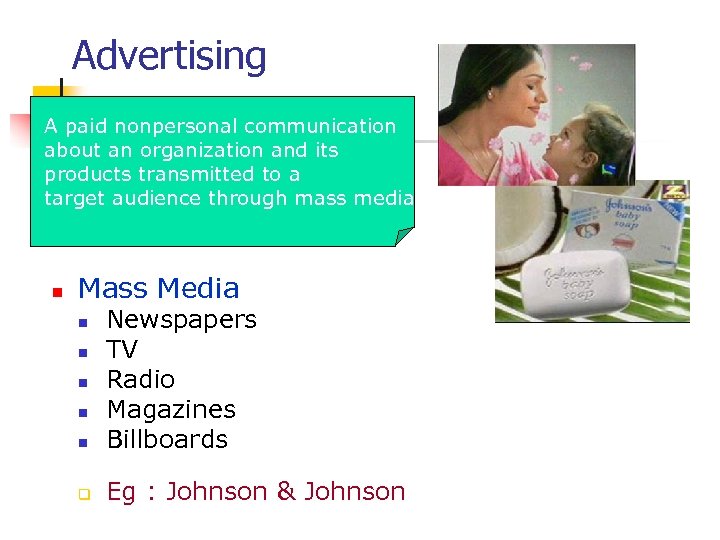
Advertising A paid nonpersonal communication about an organization and its products transmitted to a target audience through mass media n Mass Media n Newspapers TV Radio Magazines Billboards q Eg : Johnson & Johnson n n
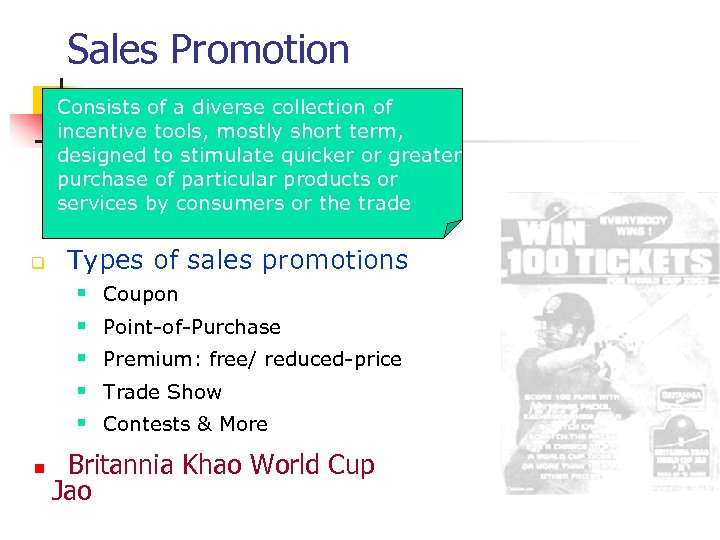
Sales Promotion Consists of a diverse collection of incentive tools, mostly short term, designed to stimulate quicker or greater purchase of particular products or services by consumers or the trade q Types of sales promotions § § § n Coupon Point-of-Purchase Premium: free/ reduced-price Trade Show Contests & More Britannia Khao World Cup Jao
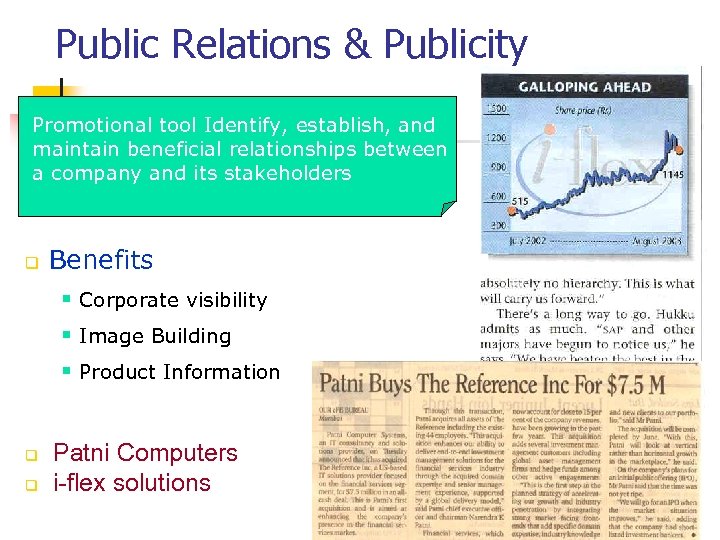
Public Relations & Publicity Promotional tool Identify, establish, and maintain beneficial relationships between a company and its stakeholders q Benefits § Corporate visibility § Image Building § Product Information q q Patni Computers i-flex solutions
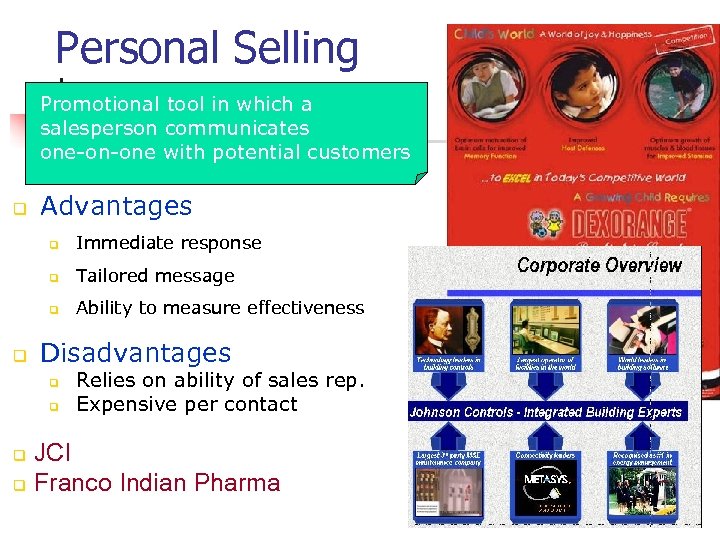
Personal Selling Promotional tool in which a salesperson communicates one-on-one with potential customers q Advantages q q Tailored message q q Immediate response Ability to measure effectiveness Disadvantages q q Relies on ability of sales rep. Expensive per contact JCI q Franco Indian Pharma q
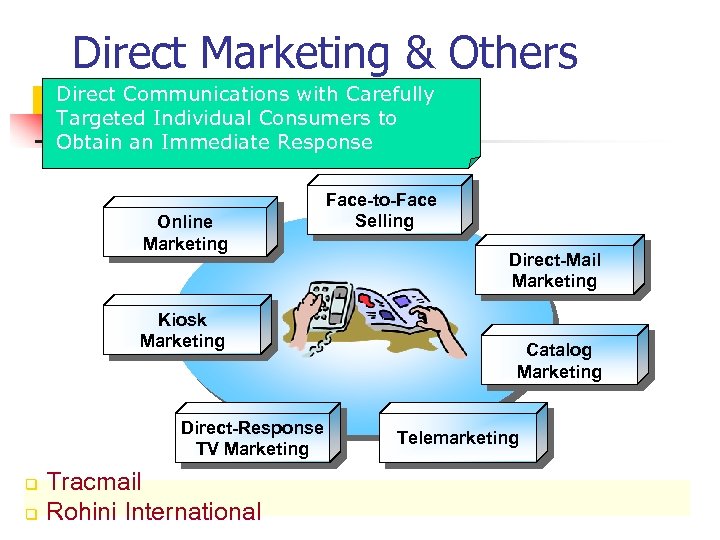
Direct Marketing & Others Direct Communications with Carefully Targeted Individual Consumers to Obtain an Immediate Response Online Marketing Kiosk Marketing Direct-Response TV Marketing Tracmail q Rohini International q Face-to-Face Selling Direct-Mail Marketing Catalog Marketing Telemarketing
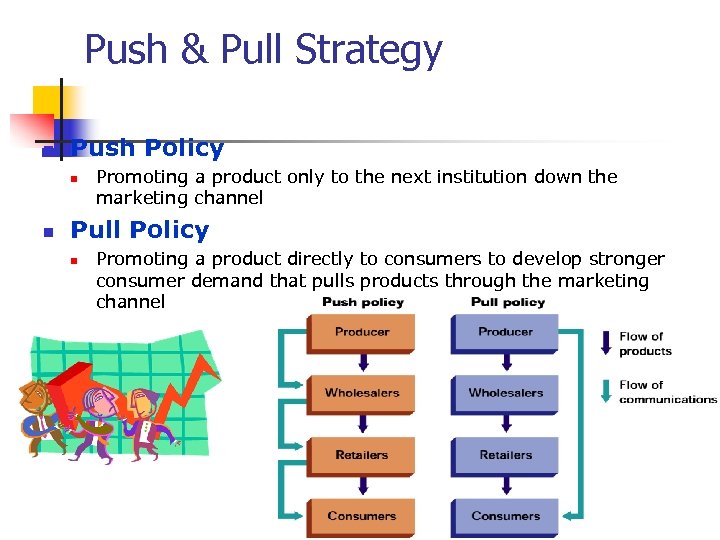
Push & Pull Strategy n Push Policy n n Promoting a product only to the next institution down the marketing channel Pull Policy n Promoting a product directly to consumers to develop stronger consumer demand that pulls products through the marketing channel
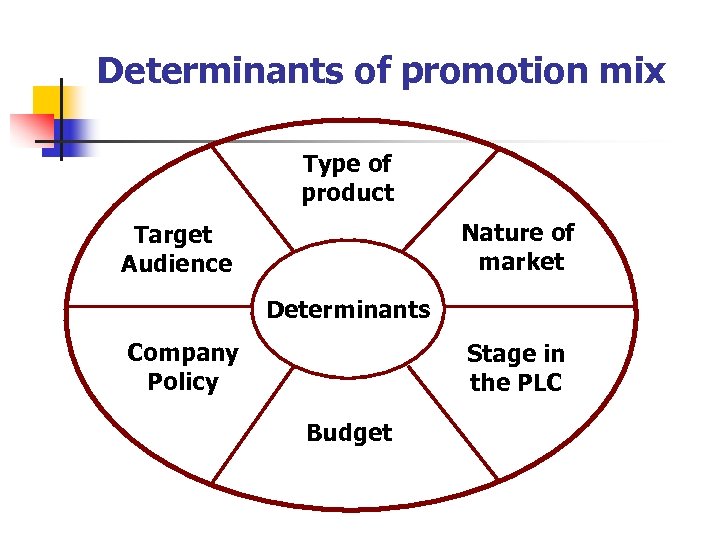
Determinants of promotion mix Type of product Nature of market Target Audience Determinants Company Policy Stage in the PLC Budget
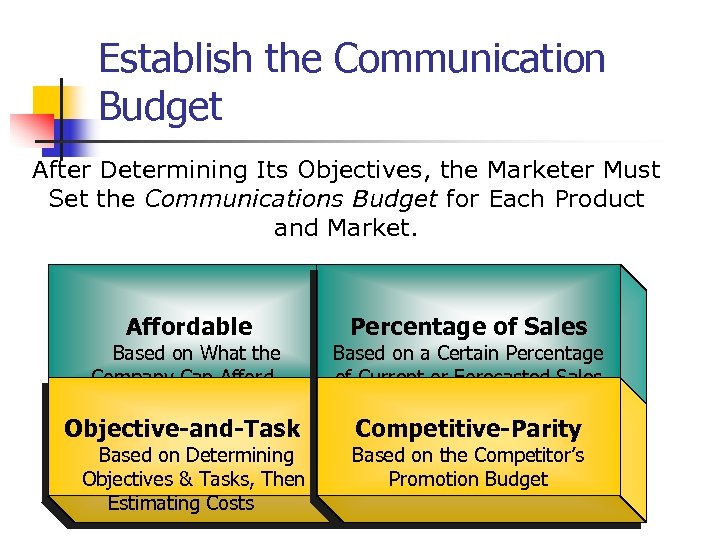
Establish the Communication Budget After Determining Its Objectives, the Marketer Must Set the Communications Budget for Each Product and Market. Affordable Percentage of Sales Based on What the Company Can Afford Based on a Certain Percentage of Current or Forecasted Sales Objective-and-Task Competitive-Parity Based on Determining Objectives & Tasks, Then Estimating Costs Based on the Competitor’s Promotion Budget
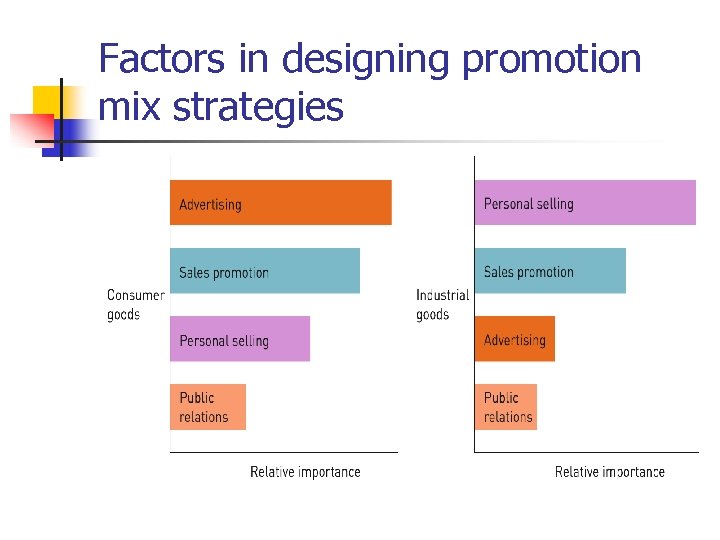
Factors in designing promotion mix strategies
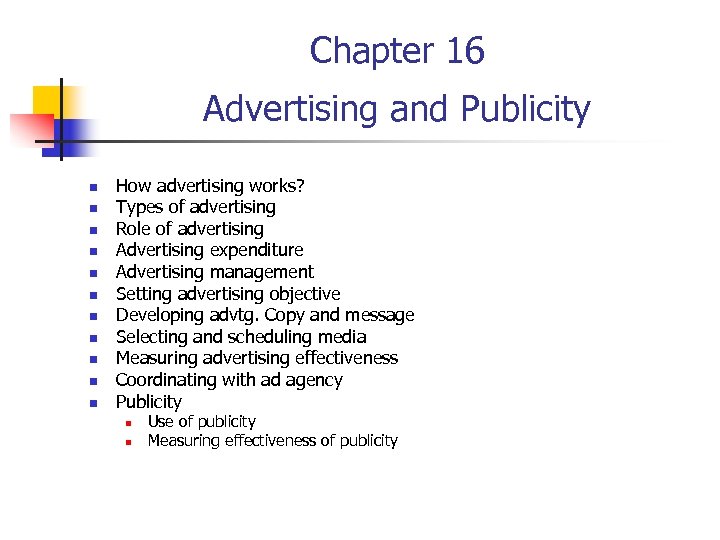
Chapter 16 Advertising and Publicity n n n How advertising works? Types of advertising Role of advertising Advertising expenditure Advertising management Setting advertising objective Developing advtg. Copy and message Selecting and scheduling media Measuring advertising effectiveness Coordinating with ad agency Publicity n n Use of publicity Measuring effectiveness of publicity
Chapter 17 Personal Selling and Sales Promotion
Personal Selling n n Role of personal Selling Types of selling jobs n n n n Merchandise deliveries Inside order-taker Outside order-taker Missionary salesperson Sales engineer Tangible product seller Intangible product seller The selling process n n n n Preparation Prospecting Preapproach Approach Sales presentation Handling objectives Closing the sale Post-sale follow-up
What is sales promotion? Sales promotion consists of a diverse collection of incentive tools, mostly short term, designed to stimulate quicker and or greater purchase of particular products/services by consumers or trade -Kotler “Below the line”
What is sales promotion? n n Non personal promotional effort that are designed to have immediate impact on sales Employed for a pre-determined limited period to increase consumer demand or stimulate market demand
What is sales promotion? n n Sales promotion offers an incentive to buy Encompasses everything that is outside of advertising, PR and DM Uses advertising, PR and DM to deliver the sales promotion Can be planned to increase sales over a long period and not necessarily about immediate results (privilege / mileage points)
Why has SP grown so much? n n n Results ! - immediate / quick boost to sales Results over finite period of time - v/s advertising or PR Results are measurable Easy and inexpensive to implement Costs & efficiency of mass media / advertising has risen considerably
…. n n n Product managers face pressure to increase sales Companies face more competition Consumers have become more deal oriented Sales Promotions work!
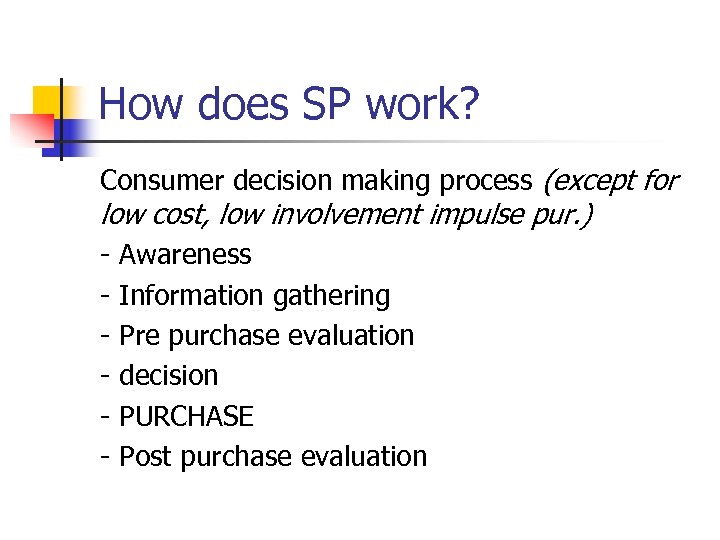
How does SP work? Consumer decision making process (except for low cost, low involvement impulse pur. ) - Awareness Information gathering Pre purchase evaluation decision PURCHASE Post purchase evaluation
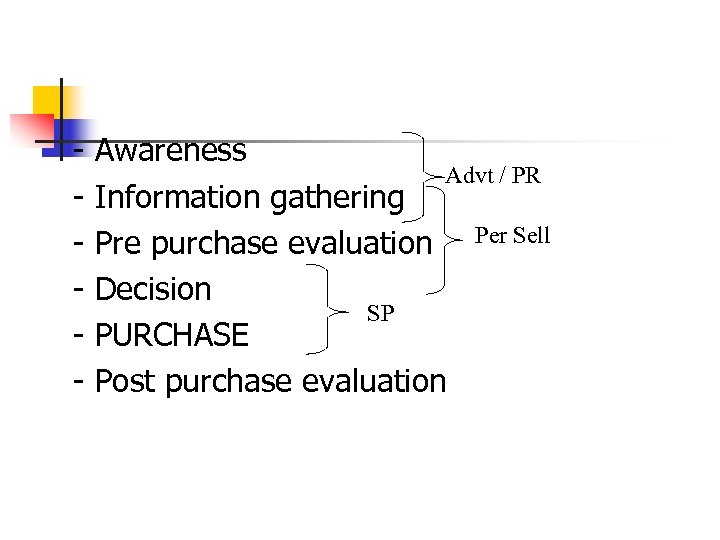
- Awareness Advt / PR Information gathering Pre purchase evaluation Per Sell Decision SP PURCHASE Post purchase evaluation
SP works because. . . n It alters the price / value relationship that the product offers the buyer Lowers price - use of coupons, discounts Add value - value packs, extra free n n n Everybody loves freebies Consumers have a reason to purchase the product NOW Justifies post purchase evaluation
Advantages n n n Sales promotions help shape buying patterns - Annual sales Attract new audiences - trials for new products Increase sales - freebies, buy 1 get 1 free Increases profits Helps move stock / liquidate inventory Increases awareness - reach new buyers
Advantages n n Encourages the consumer to buy more than usual on a single shopping visit Reminder of product, especially when a new product / competitor is about to launch Improving TOM recall of the brand if promo is advertised in mass media Demoralise newly launched brands
Disadvantages n n n Can seem like last minute panic measures and that can signal failure Can give an impression of hard sell Greed for sales - promos are often not related to the strategic elements of the brands mktg. mix Often viewed as simple reactionary techniques to increase sales and profits Dilutes brand value - discount brands
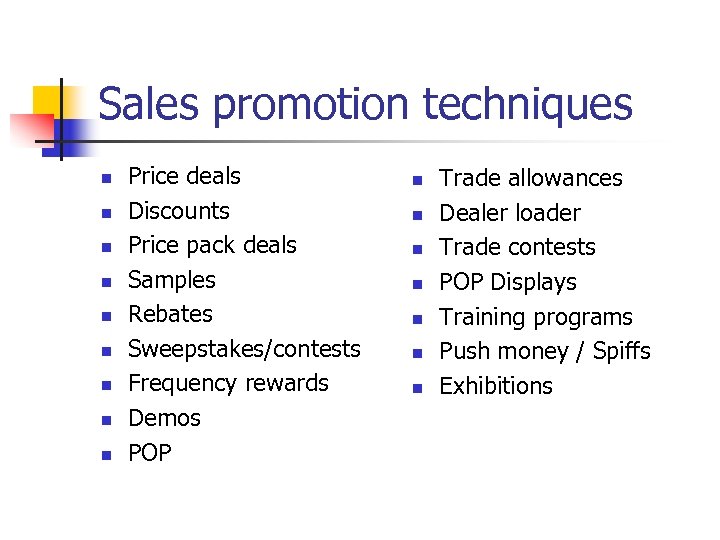
Sales promotion techniques n n n n n Price deals Discounts Price pack deals Samples Rebates Sweepstakes/contests Frequency rewards Demos POP n n n n Trade allowances Dealer loader Trade contests POP Displays Training programs Push money / Spiffs Exhibitions
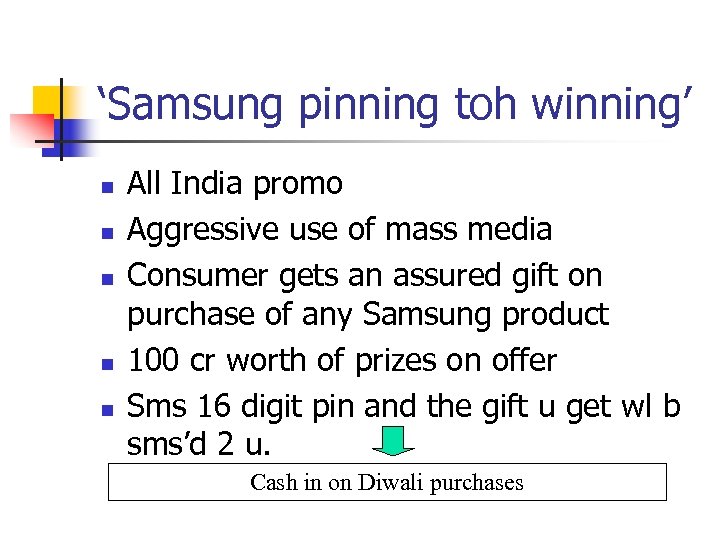
‘Samsung pinning toh winning’ n n n All India promo Aggressive use of mass media Consumer gets an assured gift on purchase of any Samsung product 100 cr worth of prizes on offer Sms 16 digit pin and the gift u get wl b sms’d 2 u. Cash in on Diwali purchases
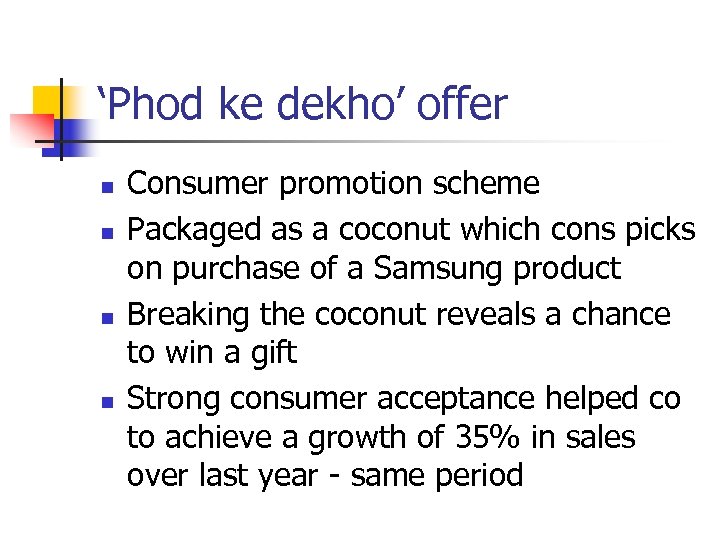
‘Phod ke dekho’ offer n n Consumer promotion scheme Packaged as a coconut which cons picks on purchase of a Samsung product Breaking the coconut reveals a chance to win a gift Strong consumer acceptance helped co to achieve a growth of 35% in sales over last year - same period
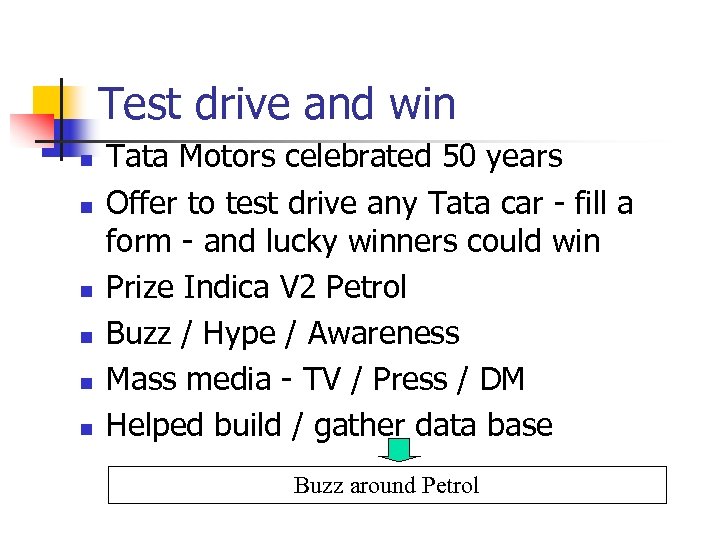
Test drive and win n n n Tata Motors celebrated 50 years Offer to test drive any Tata car - fill a form - and lucky winners could win Prize Indica V 2 Petrol Buzz / Hype / Awareness Mass media - TV / Press / DM Helped build / gather data base Buzz around Petrol
Some historic cases
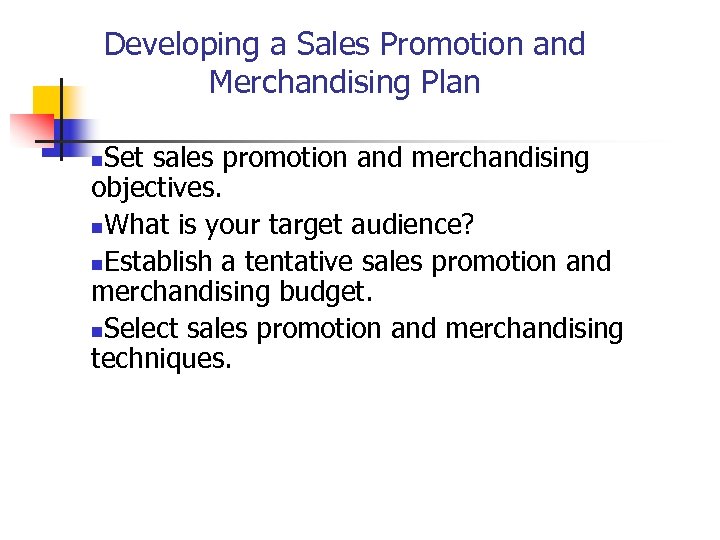
Developing a Sales Promotion and Merchandising Plan Set sales promotion and merchandising objectives. n. What is your target audience? n. Establish a tentative sales promotion and merchandising budget. n. Select sales promotion and merchandising techniques. n
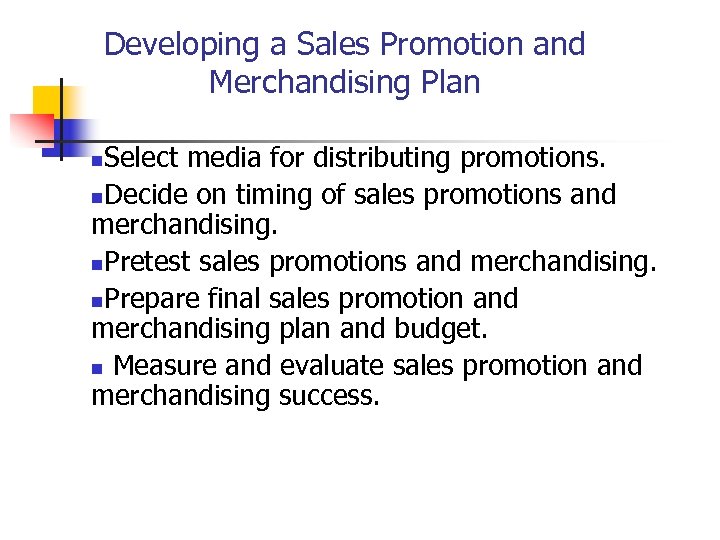
Developing a Sales Promotion and Merchandising Plan Select media for distributing promotions. n. Decide on timing of sales promotions and merchandising. n. Pretest sales promotions and merchandising. n. Prepare final sales promotion and merchandising plan and budget. n Measure and evaluate sales promotion and merchandising success. n
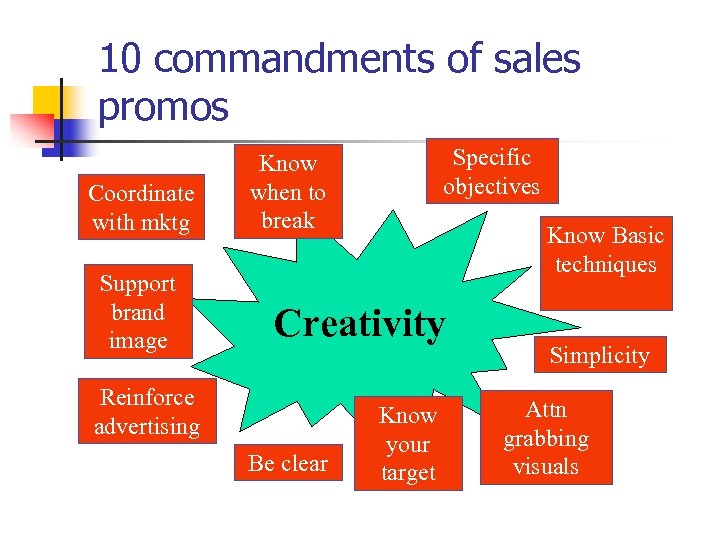
10 commandments of sales promos Coordinate with mktg Support brand image Specific objectives Know when to break Know Basic techniques Creativity Reinforce advertising Be clear Know your target Simplicity Attn grabbing visuals
Block 6 Distribution and Public Policy
Chapter 18 Sales Forecasting n n n What is a sales forecast? How to prepare a sales forecast? Product sales determinants n n Consumer non-durable goods Consumer durable goods Industrial goods Approach to sales forecasting n n Breakdown approach Market build-up approach
n Methods of forecasting n n n n n Executive Judgement Surveys Time series analysis Corelation and regression methods Market tests Combining forecast and using judgement Status of forecasting method usage The evaluation of forecasts Computerised sales forecasting Relating the sales forecast to the sales budget an profit planning
Chapter 19 Distribution Strategy n n Importance of channel of distribution Alternative channels of distribution n n Direct selling Mercantile Agents n n n Merchant Middlemen n n n Brokers Commission agent Wholesalers Retailers Functions performed by retailers Services rendered by the retailers Effective coordination between wholesaler and retailers Types of retailers n n n Department stores Co-operative stores Multiple shops or chain stores
n n Role of middlemen in Indian Economy Selecting an appropriate channel n n n Physical distribution tasks n n n n The type of product Nature and extent of the marker Existing channels for comparable products Buying habits of consumers Cost involved in distribution Location of manufacturing facilities Location of warehouses Mode and method of transportation Inventory decisions Using external distribution agency Location of fixed facilities Specific issues relating to maintenance of stocks
Chapter 20 Managing Sales personnel n n n Selling and sales management Recruitment and selection of salesmen Training of sales personnel Motivating the sales personnel Controlling the sales personnel
Chapter 21 Marketing and Public Policy n n n n Regulatory role of the government Role of government in marketing in developing economy Government control and marketing decision making process Impact of government control on product decision Impact of government control on pricing decision Impact of government control on promotion decision Impact of government control on channel and distribution decision
Chapter 22 Cyber Marketing n n What is cyber marketing Cyber marketing and conventional marketing n n n n Interconnectivity Interactivity Involvement Information Individualisation integrity Cyber marketing model The nature of cyber marketing n n n n Customer profiling, segmentation and targeting Product planning Branding Pricing decision Advertising and sales promotion Distribution Marketing research
n Limitations of cyber marketing n n n n Limits of digitisation Shopping experience Security issues Internet access density Customers used to freebies Dot. com bust Attracting traffic to the internet site
What is internet ? ? n n n Global network of interconnected networks. Includes millions of corporate, government, organizational and private networks. Types of network forming internet Intranet Extranet Web
What is E- Marketing n Process of growing & promoting an organization using online media n Ties creative and technical aspects of internet. n Creating, communicating and delivering value to customers. n Managing customer relationship.
Objectives of Internet Marketing n n n Create Awareness. Generate Interest. Disseminate Information. Create an Image. Create a Strong Brand.
Characteristics of Internet marketing n n Relatively Inexpensive. Wide reach. Allows research, purchase of products and services on convenience. Quick Response.
Differentiators from offline Marketing n n One-to-one vs. one-to-many approach Demographics targeting vs. behavioral targeting. Measurability. Response and immediate results.
Limitations of E- Marketing n n n Dependant on technology. Rigid mindset. Virtual aspect. Security Concern. Maintenance Cost. Global competition.
SWOT Analysis
Strength n n n Your specialist marketing expertise. A new, innovative product or service. Location of your business. Quality processes and procedures. Any other aspect of your business that adds value to your product or service.
Weakness n n n Lack of marketing expertise. Undifferentiated products or services. Location of your business. Poor quality goods or services. Damaged reputation.
Opportunity n n n A developing market such as the Internet. Mergers, joint ventures or strategic alliances. Moving into new market segments that offer improved profits. A new international market. A market vacated by an ineffective competitor
Threat n n n A new competitor in your home market. Price wars with competitors. A competitor has a new, innovative product or service. Competitors have superior access to channels of distribution. Taxation is introduced on your product or service.
Hidden Benefits n n n n Tax Breaks. Low Start up Costs. Low Operating Costs. High Profit Margin. Market for little or no money. You do not need your own Product. Time Freedom. Open 24 Hours in every country.
4 Ps of Internet Marketing
Product n n n Make sure that your product is something that is useful to your intended customers. Make sure that the product does what it says. Ensure Quality. Packaging. Brand Consistency. Good After Sales Service.
Price n n n Competitive Pricing. Customers willingness to pay. Experimentation with price.
Place n n n Placement on Major Search Engines. Placement of vertical search engines/ guides and local search. Placement through affiliates.
Promotion n n Promotion through display advertising. though search marketing. through socal media. through Public Relations.
Strategies of E -Marketing
7 Dimensions to Consider n n n n Personalization. Privacy. Customer Service. Community. Site. Security. Sales Promotion.
Classification of E-Marketing
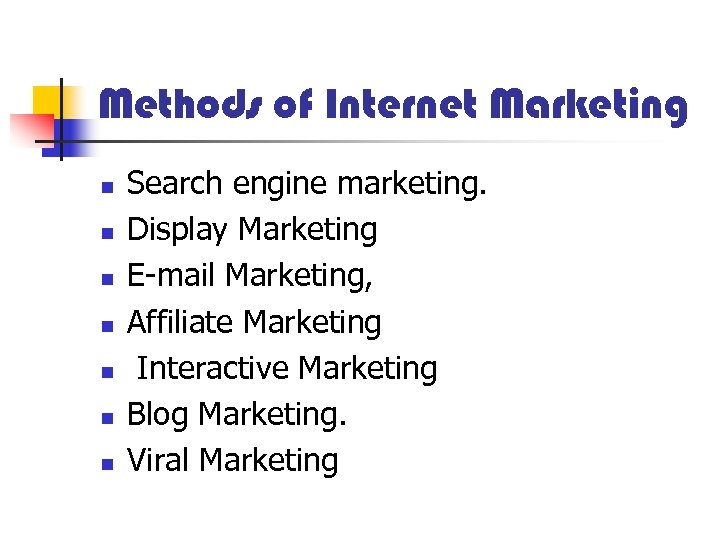
Methods of Internet Marketing n n n n Search engine marketing. Display Marketing E-mail Marketing, Affiliate Marketing Interactive Marketing Blog Marketing. Viral Marketing
Segmentation and Targeting
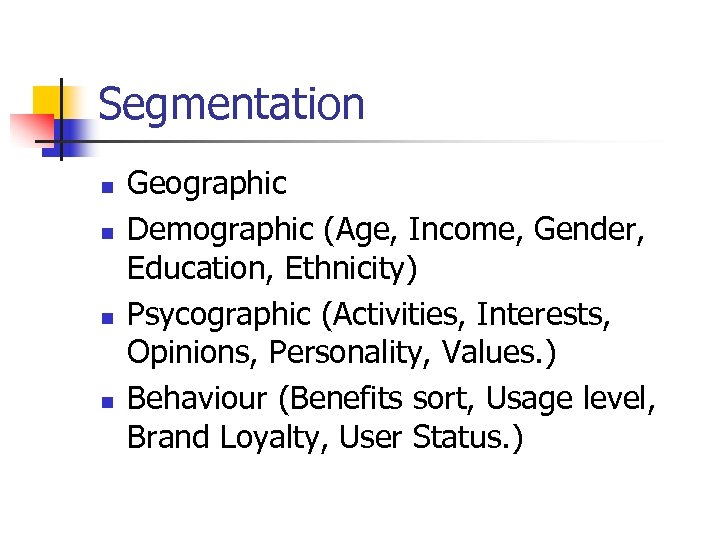
Segmentation n n Geographic Demographic (Age, Income, Gender, Education, Ethnicity) Psycographic (Activities, Interests, Opinions, Personality, Values. ) Behaviour (Benefits sort, Usage level, Brand Loyalty, User Status. )
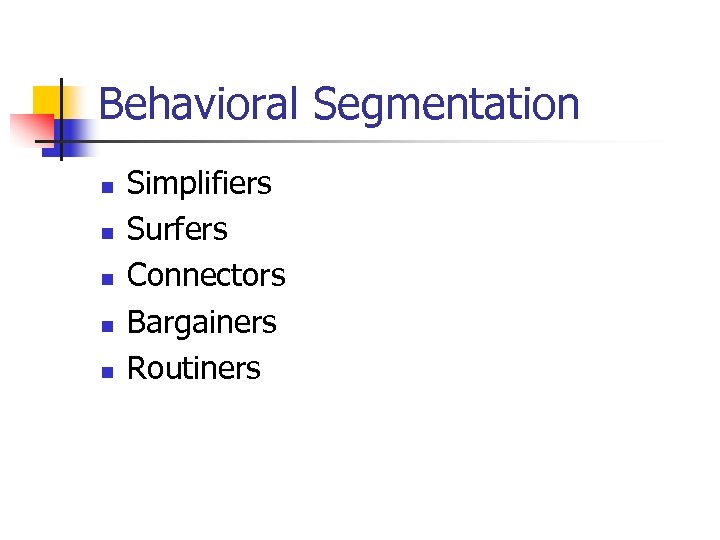
Behavioral Segmentation n n Simplifiers Surfers Connectors Bargainers Routiners
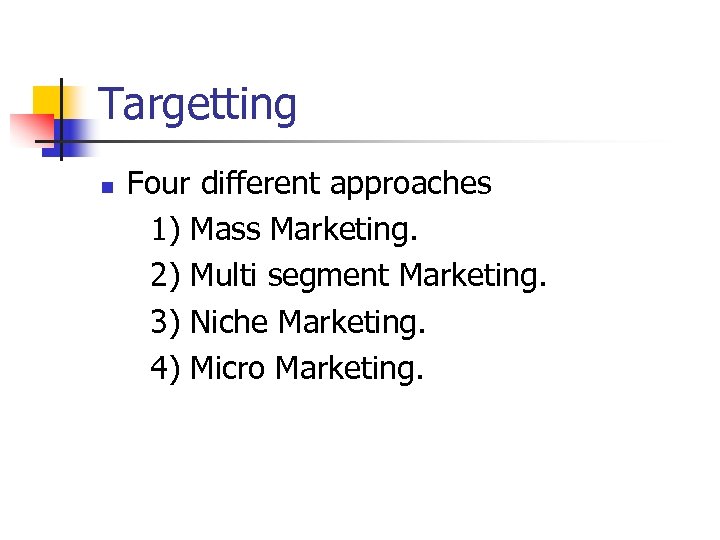
Targetting n Four different approaches 1) Mass Marketing. 2) Multi segment Marketing. 3) Niche Marketing. 4) Micro Marketing.
Differentiation and Positioning Strategies
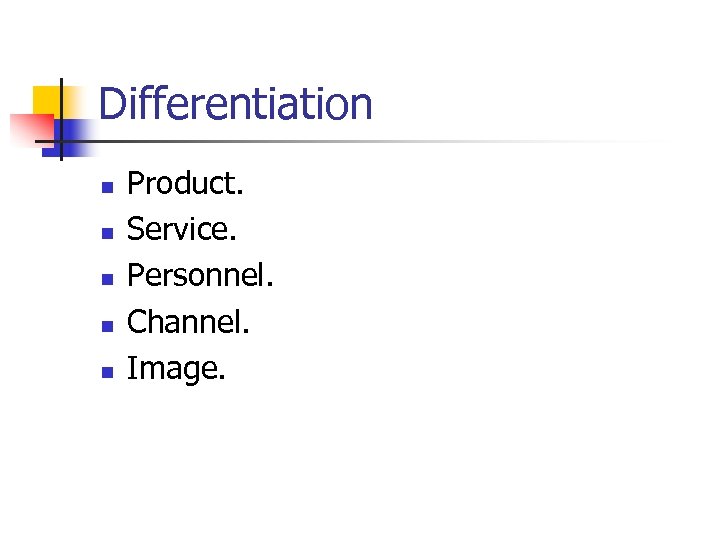
Differentiation n n Product. Service. Personnel. Channel. Image.
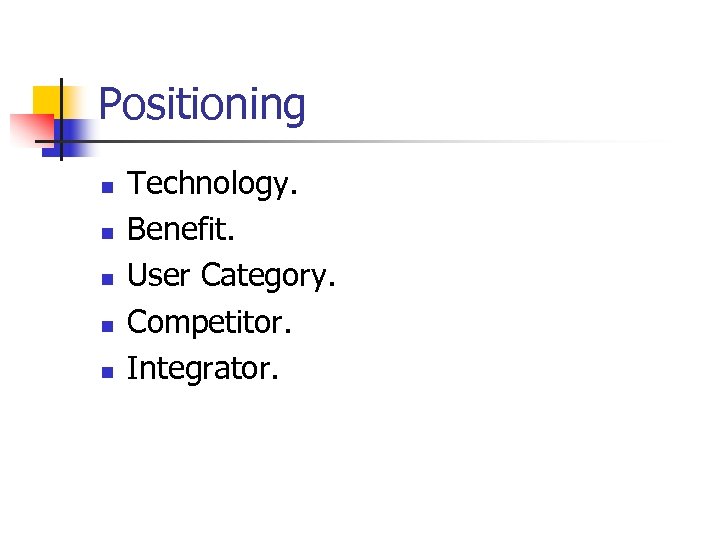
Positioning n n n Technology. Benefit. User Category. Competitor. Integrator.
Скачать презентацию Marketing for Managers Rubina D Mello Contents n
28b2903e0b0b3ed53ebcd72894e494ba.ppt