


 Скачать презентацию MARKETING COMMUNICATION Key Concepts The Role of
7e041b22f8ba9324dea1ec128b68b3af.ppt
- Количество слайдов: 39
 MARKETING COMMUNICATION Key Concepts
 The Role of Promotion Communication by marketers that informs, persuades, and reminds potential buyers of a product in order to influence an opinion or elicit a response.
 Promotion Strategy Promotional Strategy A plan for the optimal use of the elements of promotion: u Advertising u Public Relations u Sales Promotion u Personal Selling Competitive Advantage
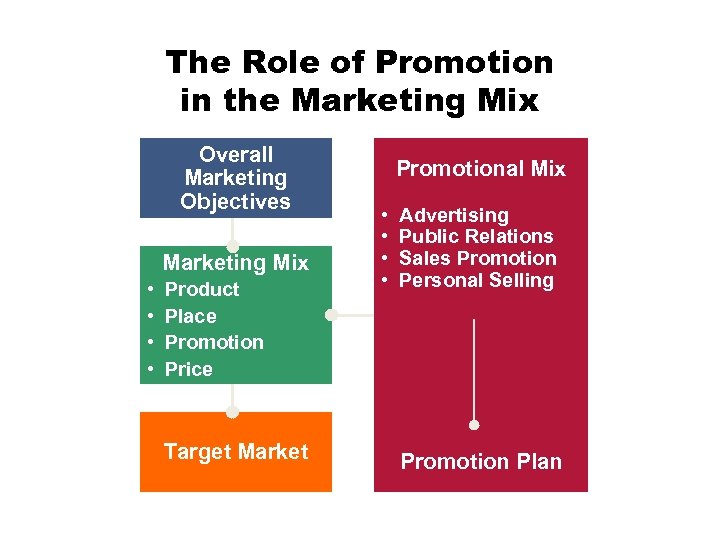 The Role of Promotion in the Marketing Mix Overall Marketing Objectives Marketing Mix • • Product Place Promotion Price Target Market Promotional Mix • • Advertising Public Relations Sales Promotion Personal Selling Promotion Plan
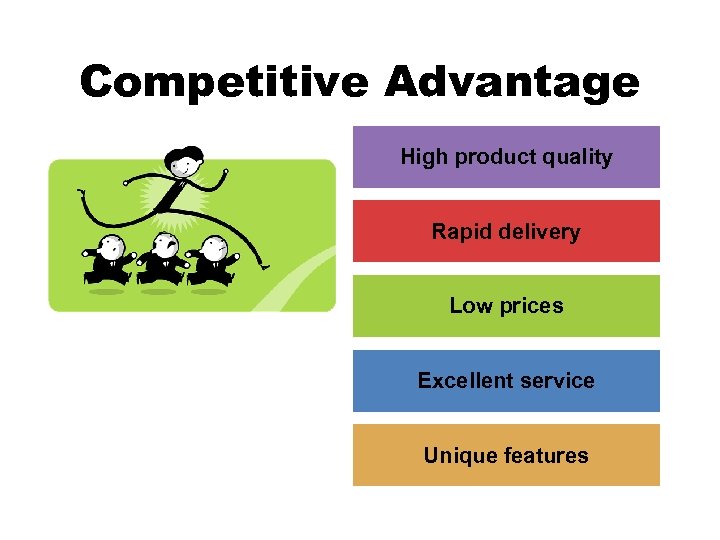 Competitive Advantage High product quality Rapid delivery Low prices Excellent service Unique features
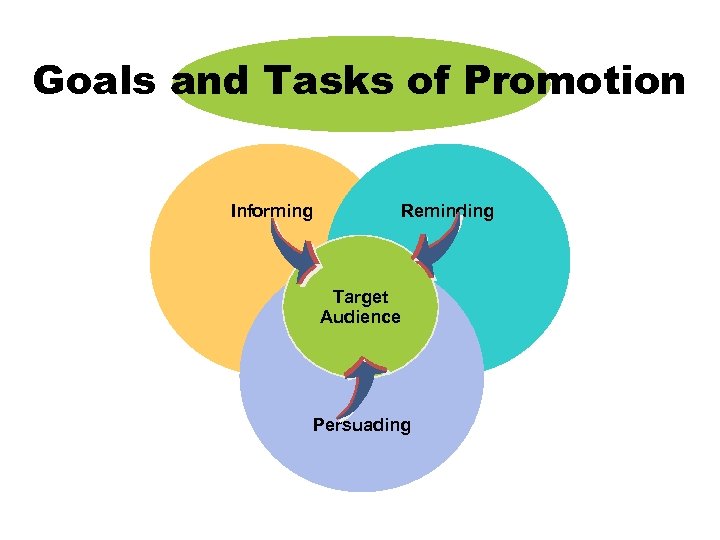 Goals and Tasks of Promotion Informing Reminding Target Audience Persuading
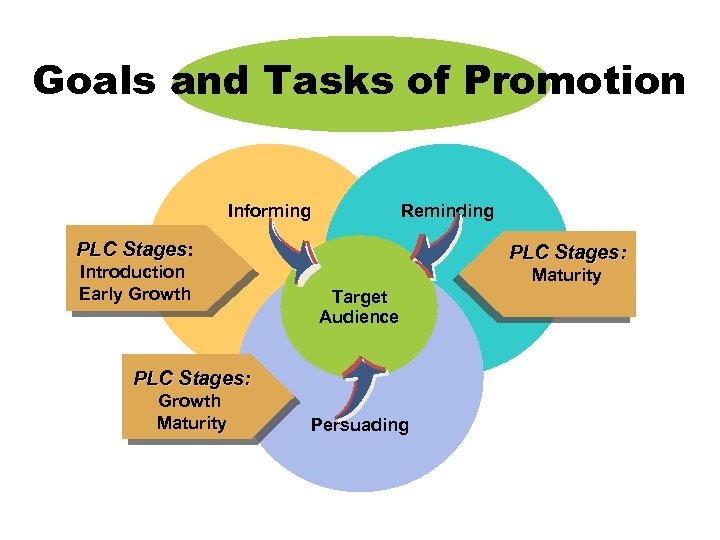 Goals and Tasks of Promotion Informing Reminding PLC Stages: Stages Introduction Early Growth PLC Stages: Maturity Target Audience PLC Stages: Growth Maturity Persuading
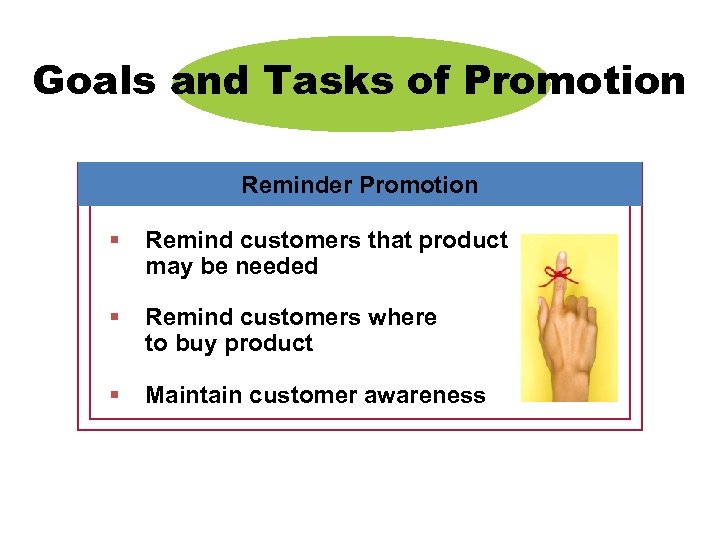 Goals and Tasks of Promotion Reminder Promotion § Remind customers that product may be needed § Remind customers where to buy product § Maintain customer awareness
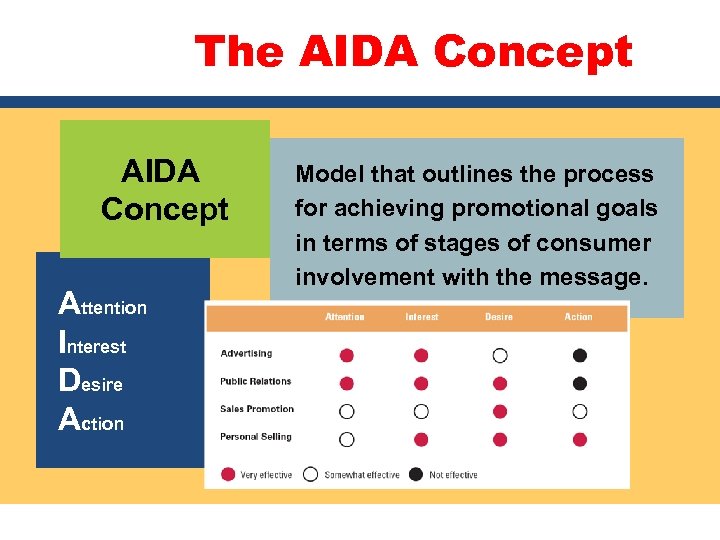 The AIDA Concept Attention Interest Desire Action Model that outlines the process for achieving promotional goals in terms of stages of consumer involvement with the message.
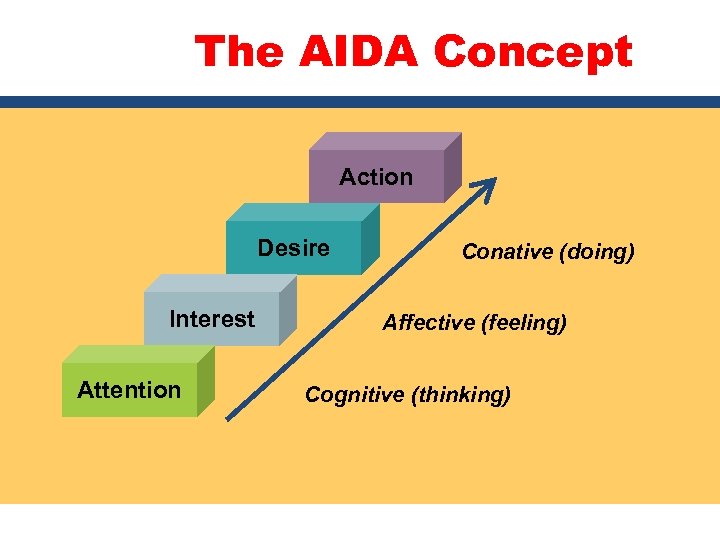 The AIDA Concept Action Desire Interest Attention Conative (doing) Affective (feeling) Cognitive (thinking)
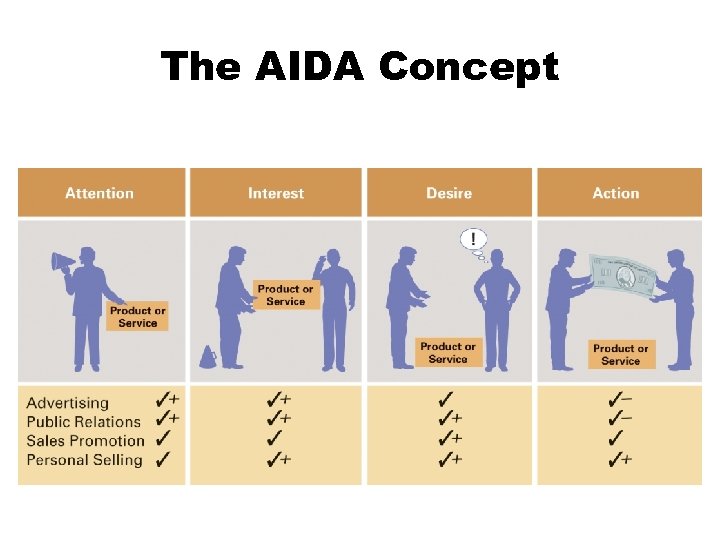 The AIDA Concept
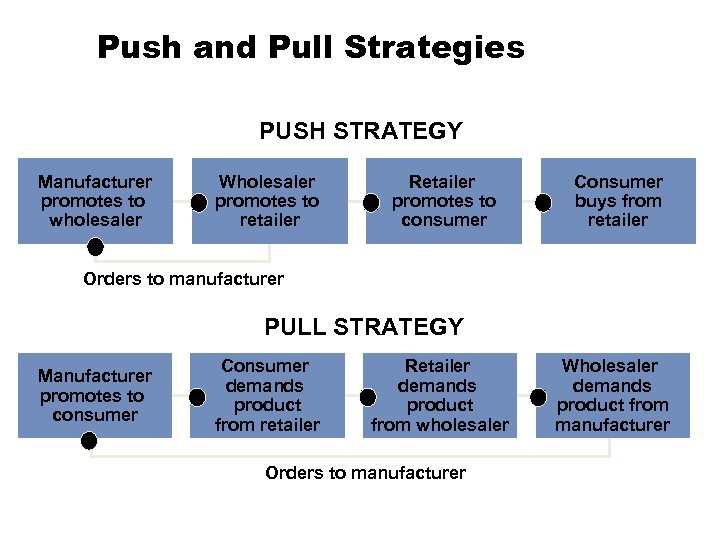 Push and Pull Strategies PUSH STRATEGY Manufacturer promotes to wholesaler Wholesaler promotes to retailer Retailer promotes to consumer Consumer buys from retailer Orders to manufacturer PULL STRATEGY Manufacturer promotes to consumer Consumer demands product from retailer Retailer demands product from wholesaler Orders to manufacturer Wholesaler demands product from manufacturer
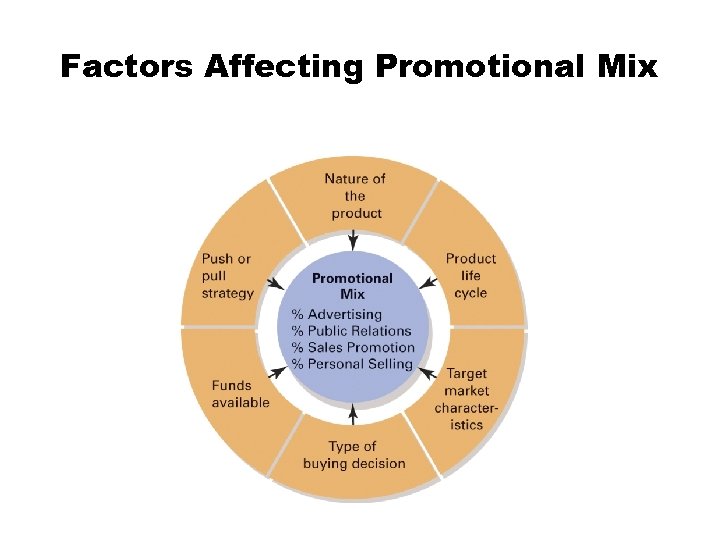 Factors Affecting Promotional Mix
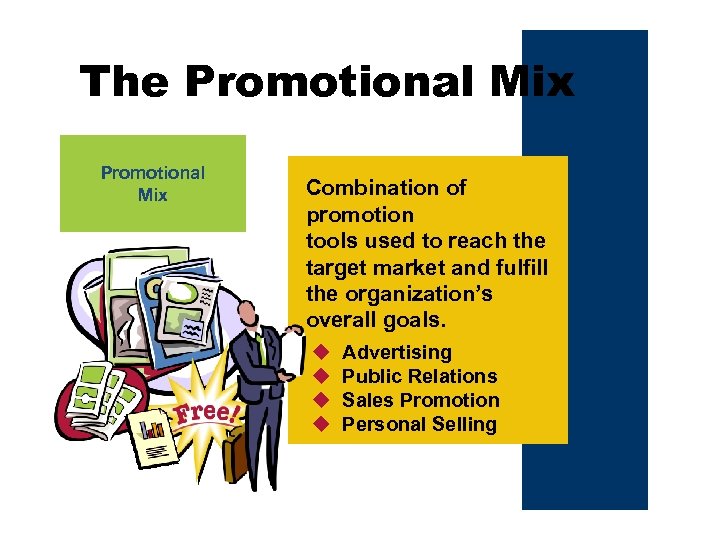 The Promotional Mix Combination of promotion tools used to reach the target market and fulfill the organization’s overall goals. u u Advertising Public Relations Sales Promotion Personal Selling
 The Promotional Mix g in vertis Ad Impersonal, one-way mass communication about a product or organization that is paid for by a marketer.
 Integrated Marketing Communications The careful coordination of all promotional messages to assure the consistency of messages at every contact point where a company meets the consumer.
 IMC Popularity Growth u. Proliferation of thousands of media choices u. Fragmentation of the mass market u. Slash of advertising spending in favor of promotional techniques that generate immediate response
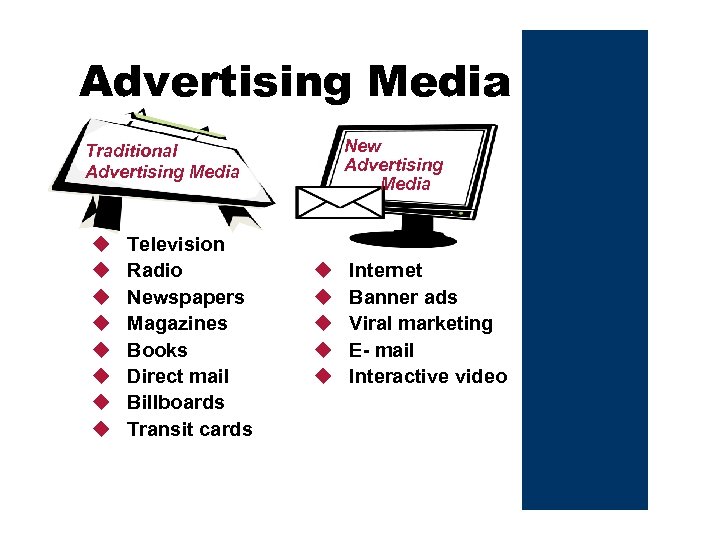 Advertising Media New Advertising Media Traditional Advertising Media u u u u Television Radio Newspapers Magazines Books Direct mail Billboards Transit cards u u u Internet Banner ads Viral marketing E- mail Interactive video
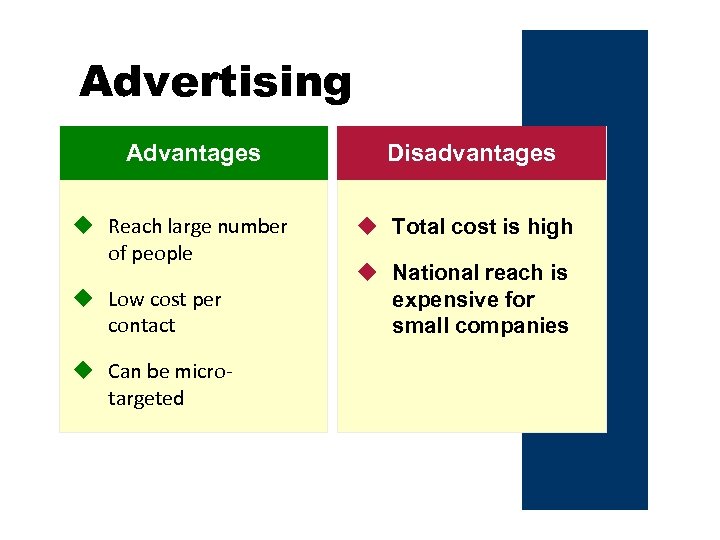 Advertising Advantages u Reach large number of people u Low cost per contact u Can be microtargeted Disadvantages u Total cost is high u National reach is expensive for small companies
 Public Relations c Publi s n elatio R The marketing function that evaluates public attitudes, identifies areas within the organization that the public may be interested in, and executes a program of action to earn public understanding and acceptance.
 The Function of Public Relations u Main tain a p ositive u Edu image cate th e publi compa c abou ny’s ob jectives t the u Intro duce n ew pro ducts u Sup port the sales e u Gen ffort erate fa vorable publicit y
 Sales Promotion Sales n tio romo P Marketing activities— other than personal selling, advertising, and public relations—that stimulate consumer buying and dealer effectiveness.
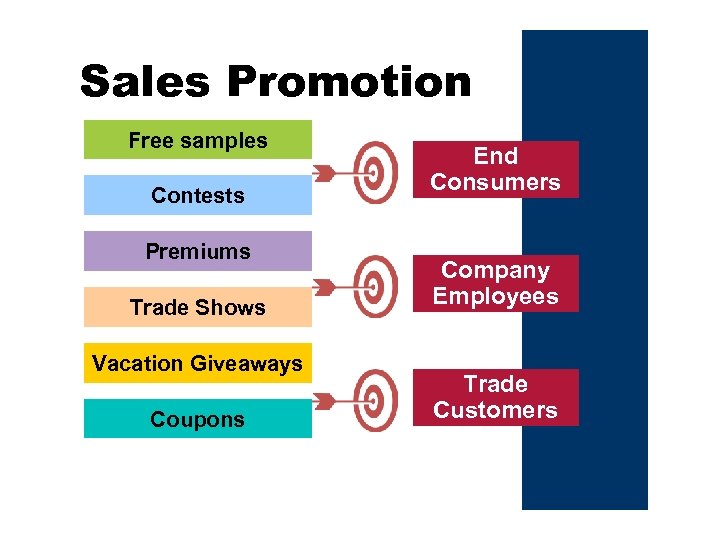 Sales Promotion Free samples Contests Premiums Trade Shows Vacation Giveaways Coupons End Consumers Company Employees Trade Customers
 Personal Selling al erson P g Sellin Planned presentation to one or more prospective buyers for the purpose of making a sale.
 Personal Selling Traditional Selling Relationship Selling
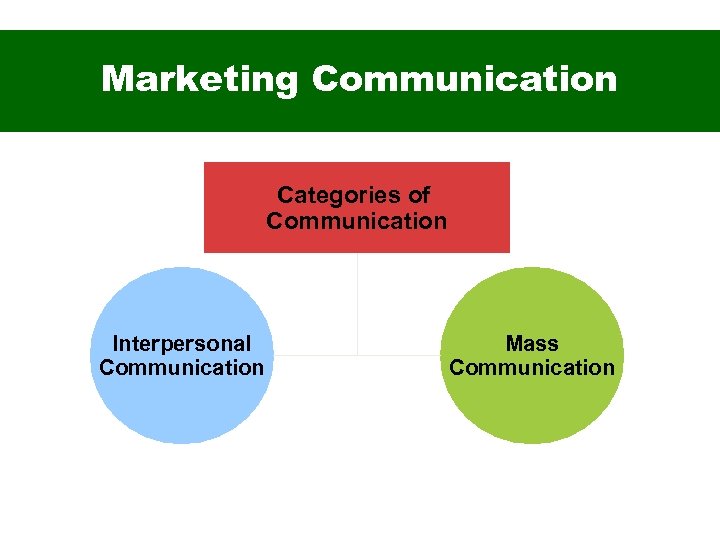 Marketing Communication Categories of Communication Interpersonal Communication Mass Communication
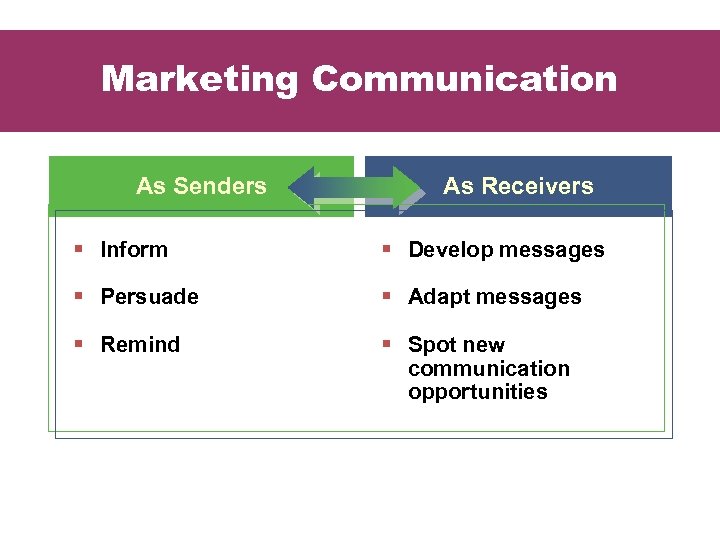
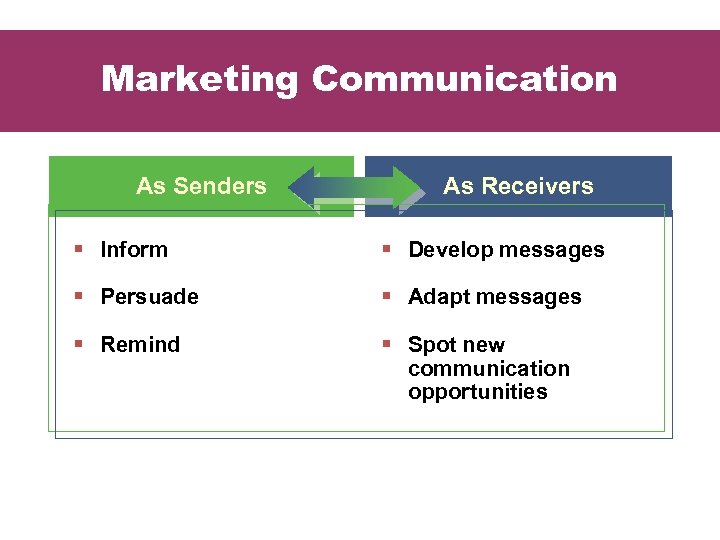 Marketing Communication As Senders As Receivers § Inform § Develop messages § Persuade § Adapt messages § Remind § Spot new communication opportunities
 Marketing Communication As Senders As Receivers § Inform § Develop messages § Persuade § Adapt messages § Remind § Spot new communication opportunities
 The Communication Process Noise Sender Encoding Message Channel Feedback Channel Decoding Message Receiver
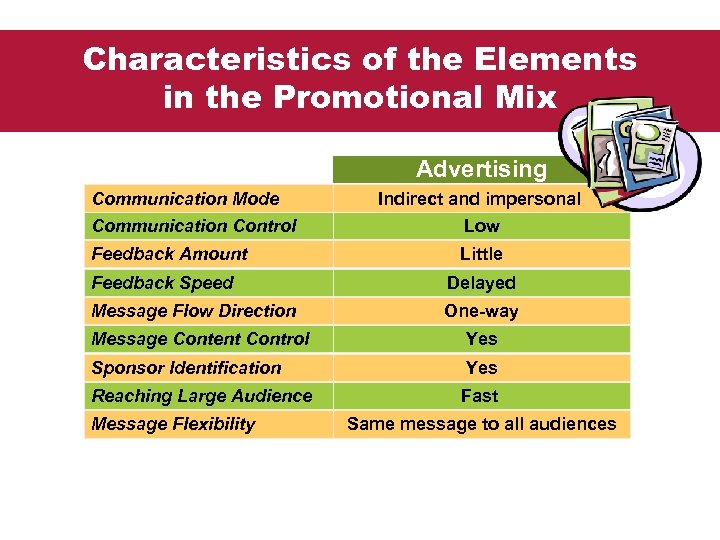 Characteristics of the Elements in the Promotional Mix Advertising Communication Mode Communication Control Feedback Amount Indirect and impersonal Low Little Feedback Speed Delayed Message Flow Direction One-way Message Content Control Yes Sponsor Identification Yes Reaching Large Audience Fast Message Flexibility Same message to all audiences
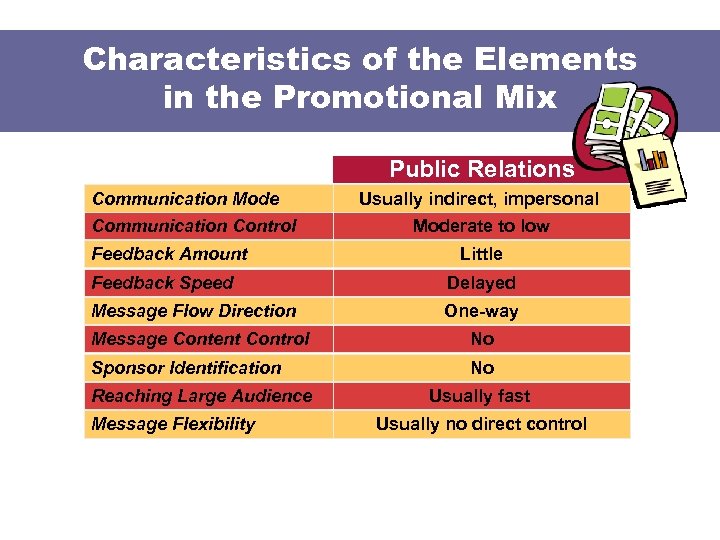 Characteristics of the Elements in the Promotional Mix Public Relations Communication Mode Communication Control Feedback Amount Usually indirect, impersonal Moderate to low Little Feedback Speed Delayed Message Flow Direction One-way Message Content Control No Sponsor Identification No Reaching Large Audience Message Flexibility Usually fast Usually no direct control
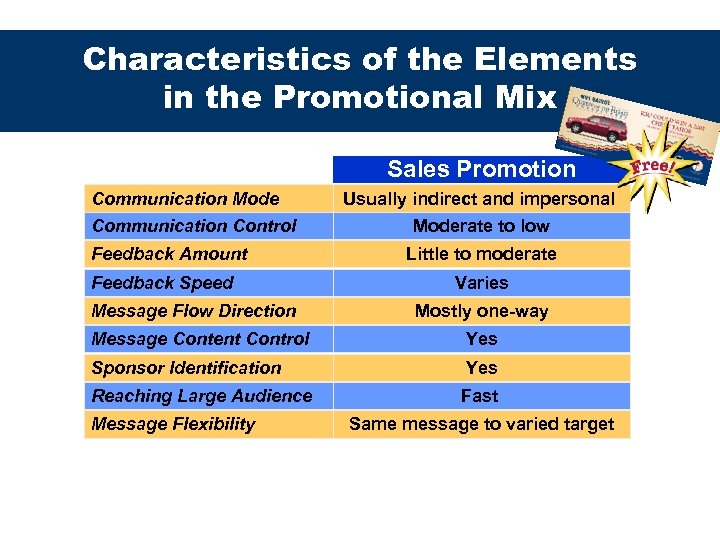 Characteristics of the Elements in the Promotional Mix Sales Promotion Communication Mode Communication Control Feedback Amount Feedback Speed Message Flow Direction Usually indirect and impersonal Moderate to low Little to moderate Varies Mostly one-way Message Content Control Yes Sponsor Identification Yes Reaching Large Audience Fast Message Flexibility Same message to varied target
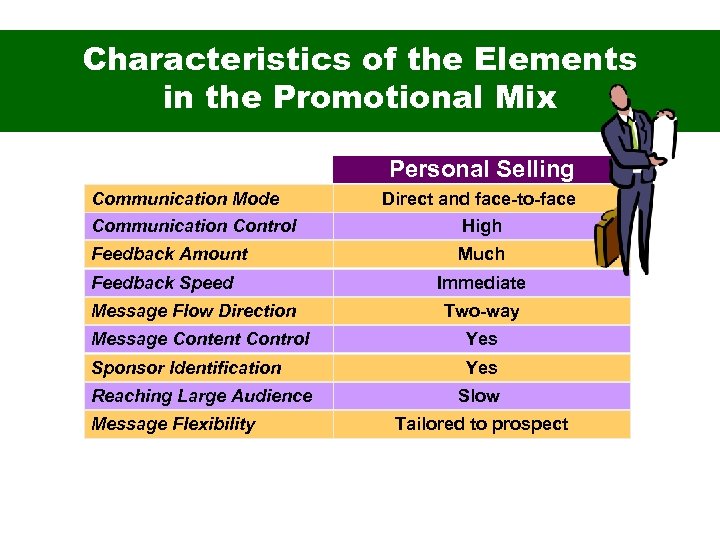 Characteristics of the Elements in the Promotional Mix Personal Selling Communication Mode Communication Control Feedback Amount Feedback Speed Message Flow Direction Direct and face-to-face High Much Immediate Two-way Message Content Control Yes Sponsor Identification Yes Reaching Large Audience Message Flexibility Slow Tailored to prospect
 MARKETING COMMUNICATION IMPACT OF THE NEW MEDIA INTERNET BLOGGING VIRAL MARKETING
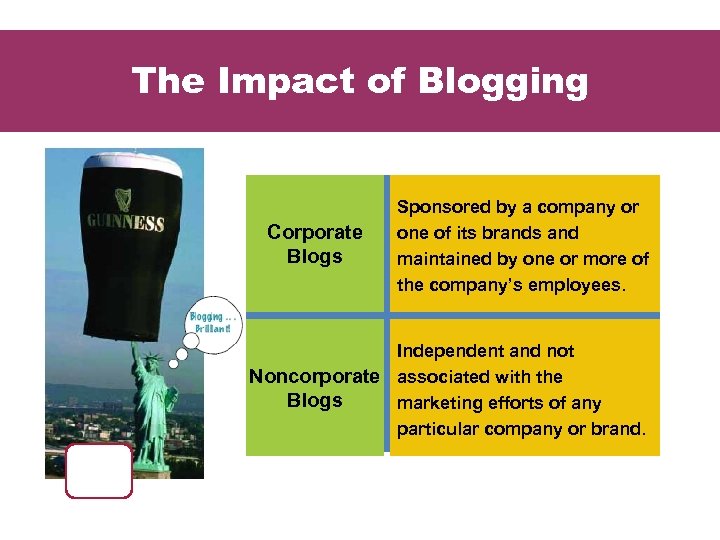 The Impact of Blogging Corporate Blogs Sponsored by a company or one of its brands and maintained by one or more of the company’s employees. Independent and not Noncorporate associated with the Blogs marketing efforts of any particular company or brand. LO 3
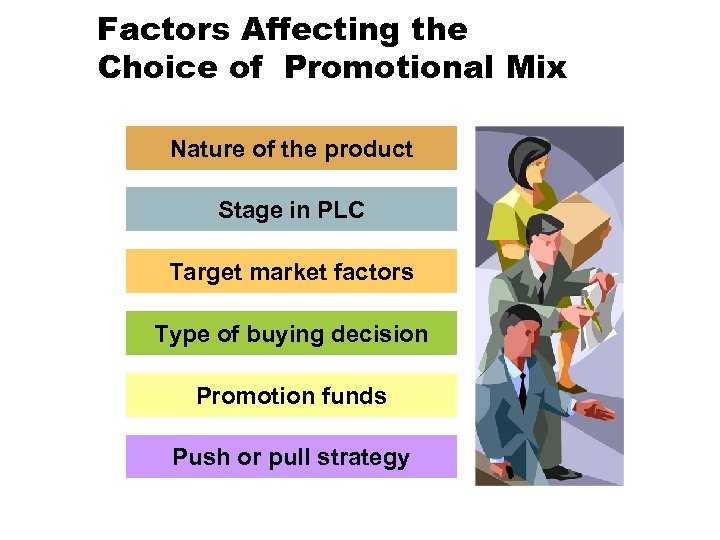 Factors Affecting the Choice of Promotional Mix Nature of the product Stage in PLC Target market factors Type of buying decision Promotion funds Push or pull strategy
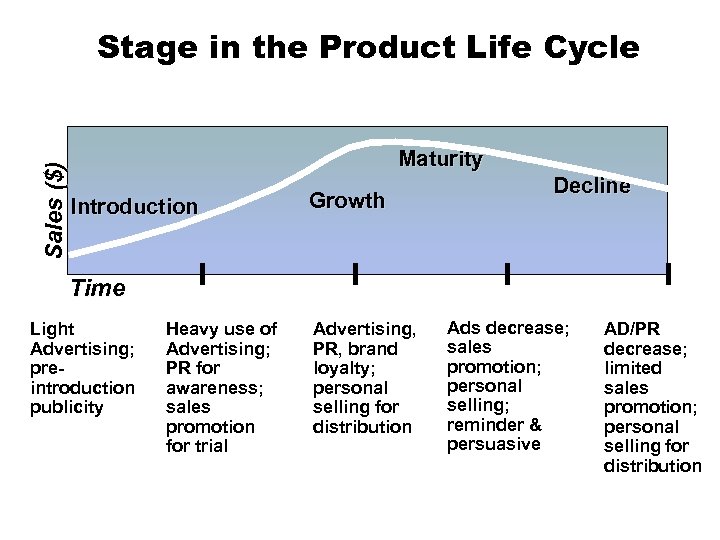 Sales ($) Stage in the Product Life Cycle Maturity Introduction Growth Decline Time Light Advertising; preintroduction publicity Heavy use of Advertising; PR for awareness; sales promotion for trial Advertising, PR, brand loyalty; personal selling for distribution Ads decrease; sales promotion; personal selling; reminder & persuasive AD/PR decrease; limited sales promotion; personal selling for distribution
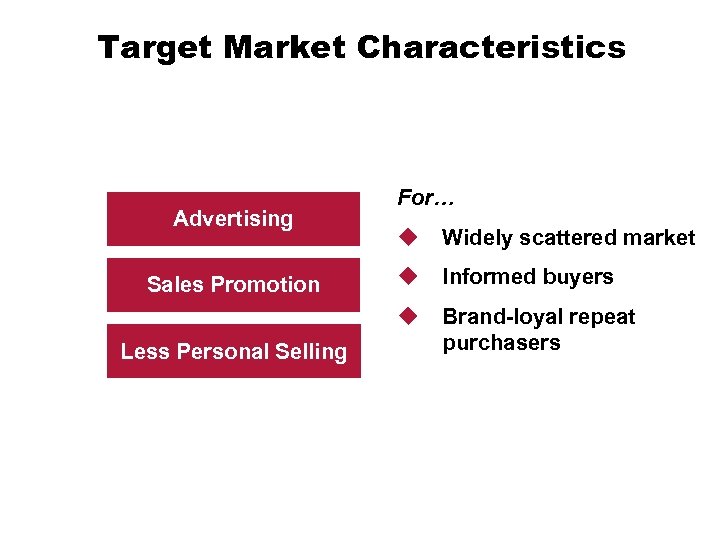 Target Market Characteristics Advertising For… Less Personal Selling Widely scattered market u Informed buyers u Sales Promotion u Brand-loyal repeat purchasers
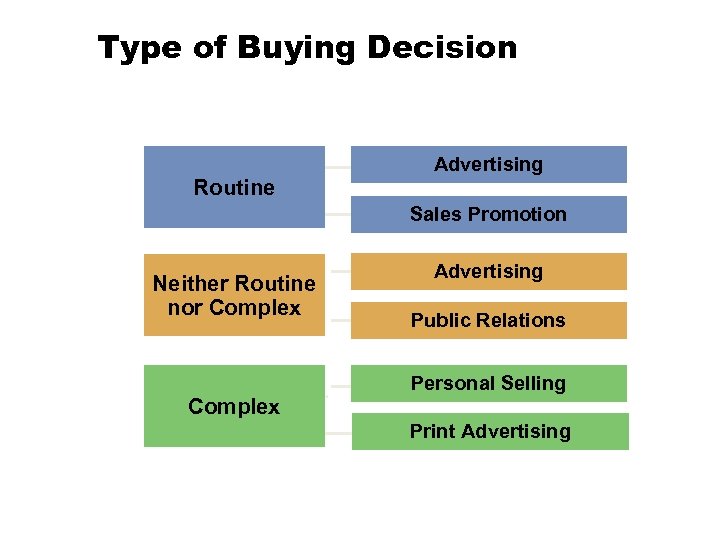 Type of Buying Decision Routine Advertising Sales Promotion Neither Routine nor Complex Advertising Public Relations Personal Selling Print Advertising