


 Скачать презентацию Market Segmentation The process of dividing and
Market Segmentation.pptx
- Количество слайдов: 8
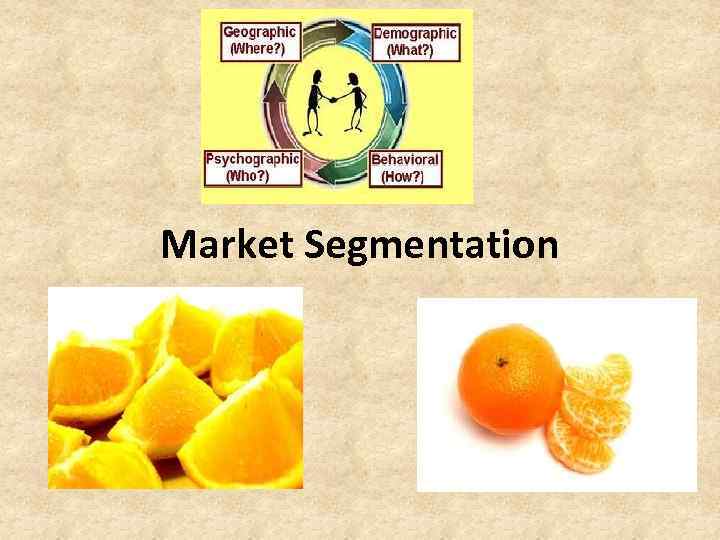 Market Segmentation
 The process of dividing and subdividing a large homogenous market into clearly identifiable segments having similar needs, wants and demand. Its goal is to design a marketing mix that precisely matches the expectations of customers in the targeted segment.
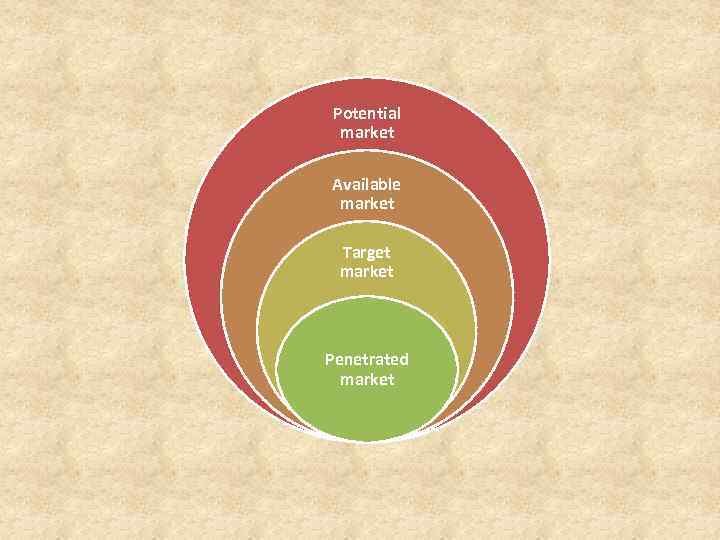 Potential market Available market Target market Penetrated market
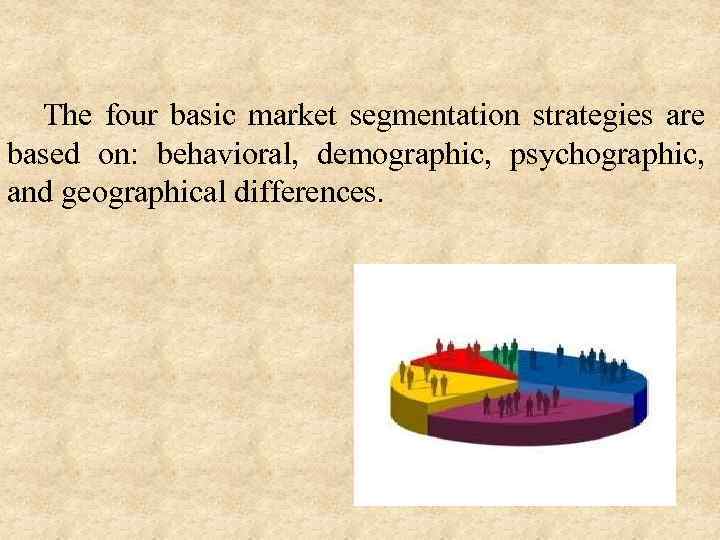 The four basic market segmentation strategies are based on: behavioral, demographic, psychographic, and geographical differences.
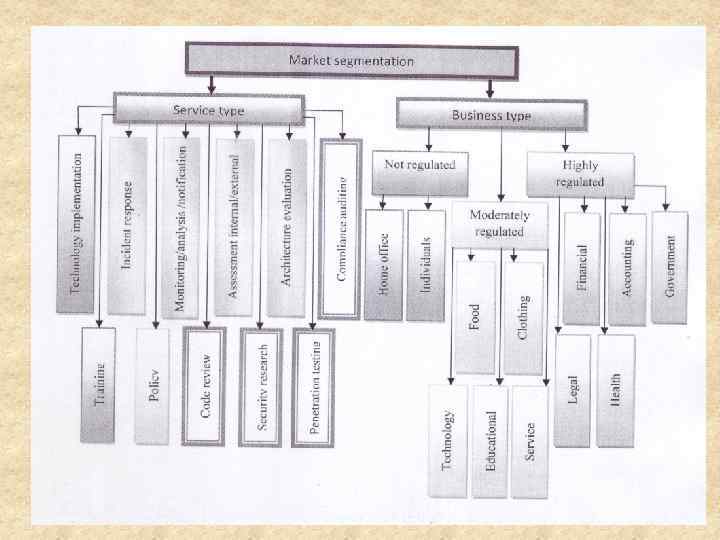
 A market segment is a classification of potential private or corporate customers by one or more characteristics, in order to identify groups of customers, which have similar needs and demand similar products and/or services concerning the recognized qualities of these products, e. g. functionality, price, design
 An ideal market segment meets all of the following criteria: • It can be cost-efficiently reached by market intervention. • It responds similarly to a market stimulus. • It is internally homogeneous (potential customers in the same segment prefer the same product qualities). • It is externally heterogeneous (potential customers from different segments have basically different quality preferences).
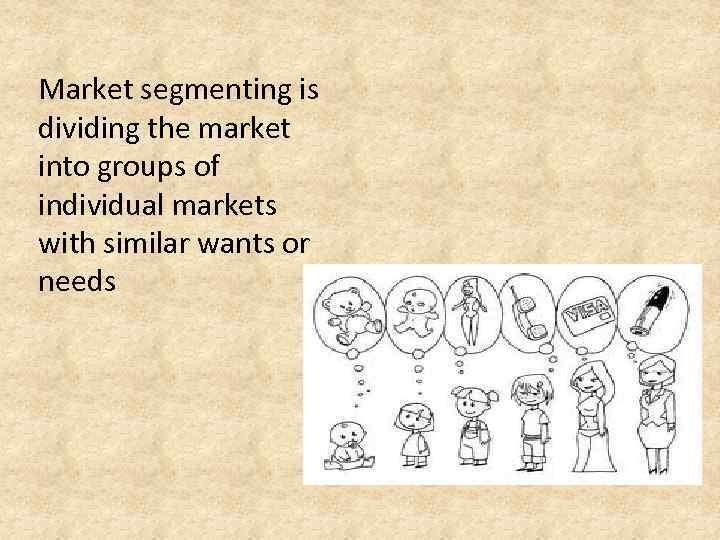 Market segmenting is dividing the market into groups of individual markets with similar wants or needs