


 Скачать презентацию Market Segmentation Targeting and Positioning for Competitive Advantage
Segment, target, positioning.ppt
- Количество слайдов: 21
 Market Segmentation, Targeting, and Positioning for Competitive Advantage
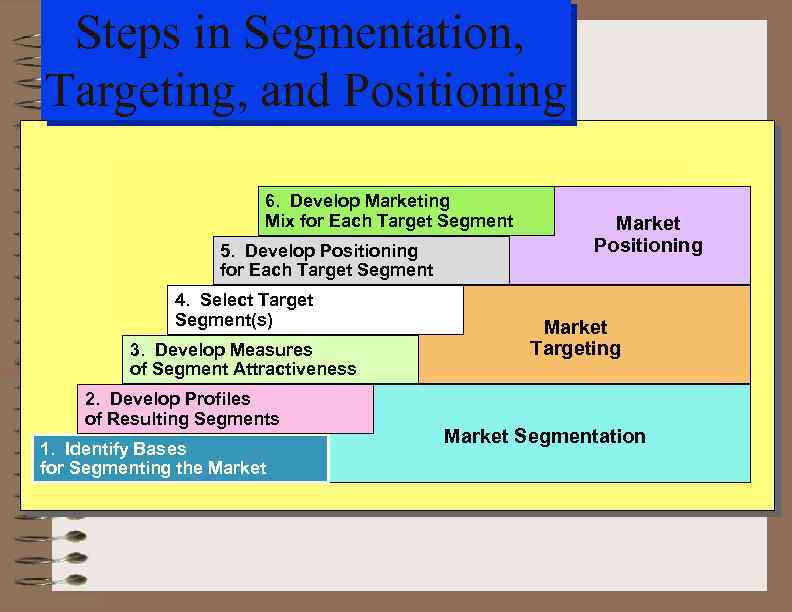 Steps in Segmentation, Targeting, and Positioning 6. Develop Marketing Mix for Each Target Segment 5. Develop Positioning for Each Target Segment 4. Select Target Segment(s) 3. Develop Measures of Segment Attractiveness 2. Develop Profiles of Resulting Segments 1. Identify Bases for Segmenting the Market Positioning Market Targeting Market Segmentation
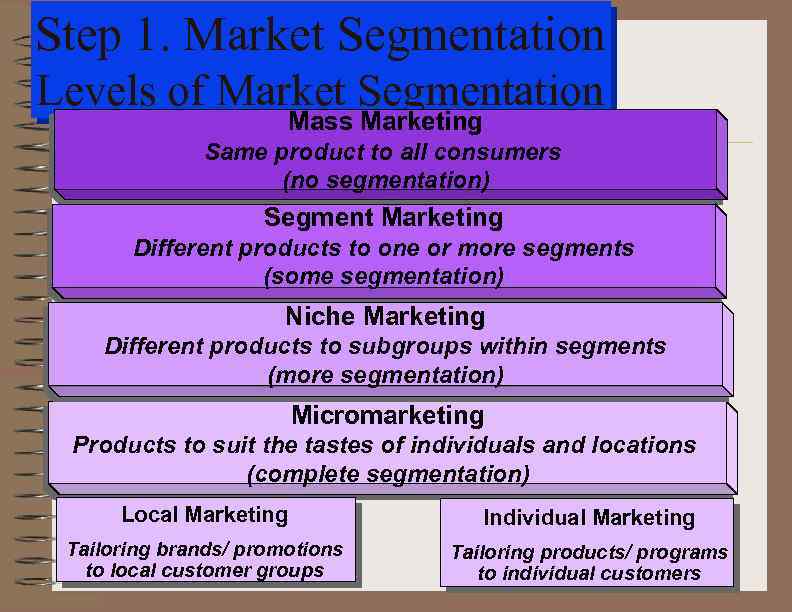 Step 1. Market Segmentation Levels of Market Segmentation Mass Marketing Same product to all consumers (no segmentation) Segment Marketing Different products to one or more segments (some segmentation) Niche Marketing Different products to subgroups within segments (more segmentation) Micromarketing Products to suit the tastes of individuals and locations (complete segmentation) Local Marketing Individual Marketing Tailoring brands/ promotions to local customer groups Tailoring products/ programs to individual customers
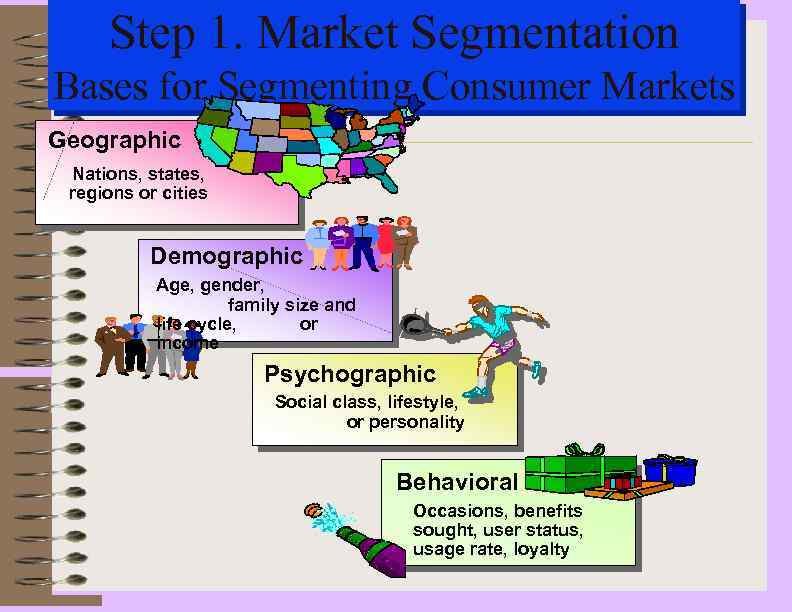 Step 1. Market Segmentation Bases for Segmenting Consumer Markets Geographic Nations, states, regions or cities Demographic Age, gender, family size and life cycle, or income Psychographic Social class, lifestyle, or personality Behavioral Occasions, benefits sought, user status, usage rate, loyalty
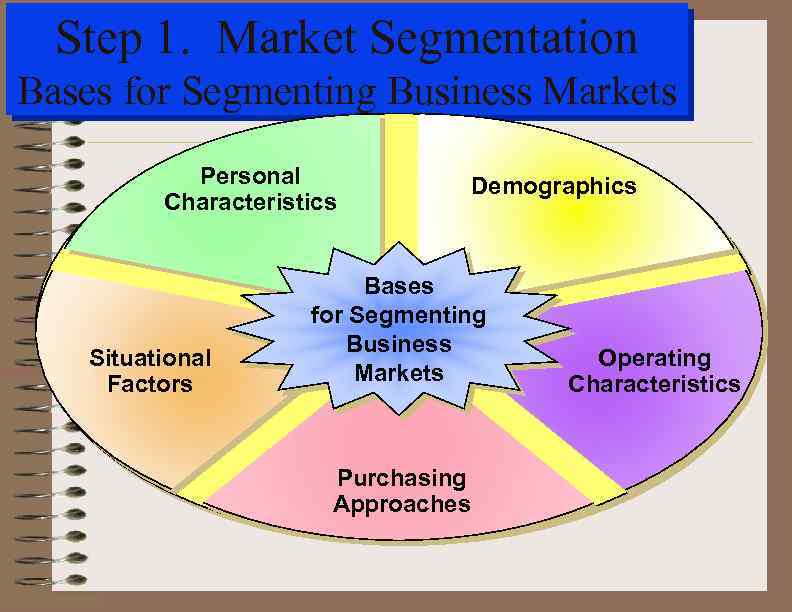 Step 1. Market Segmentation Bases for Segmenting Business Markets Personal Characteristics Situational Factors Demographics Bases for Segmenting Business Markets Purchasing Approaches Operating Characteristics
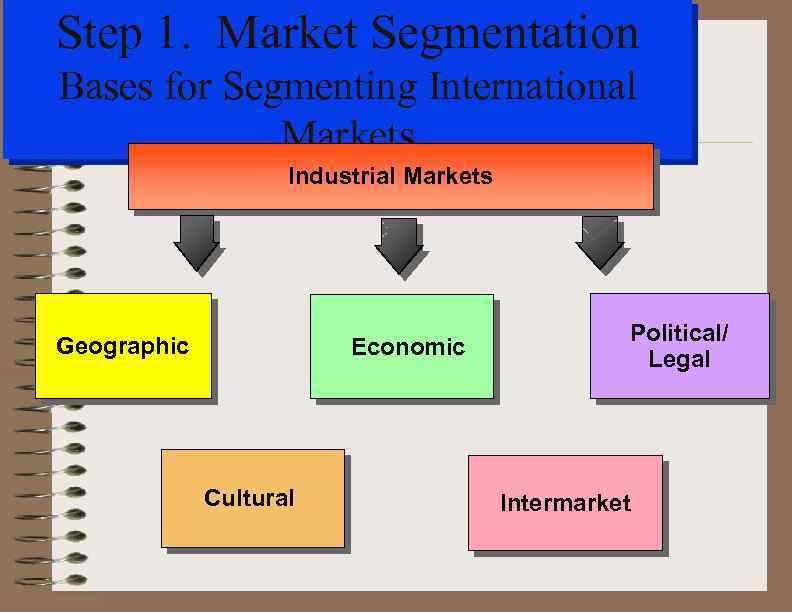 Step 1. Market Segmentation Bases for Segmenting International Markets Industrial Markets Geographic Economic Cultural Political/ Legal Intermarket
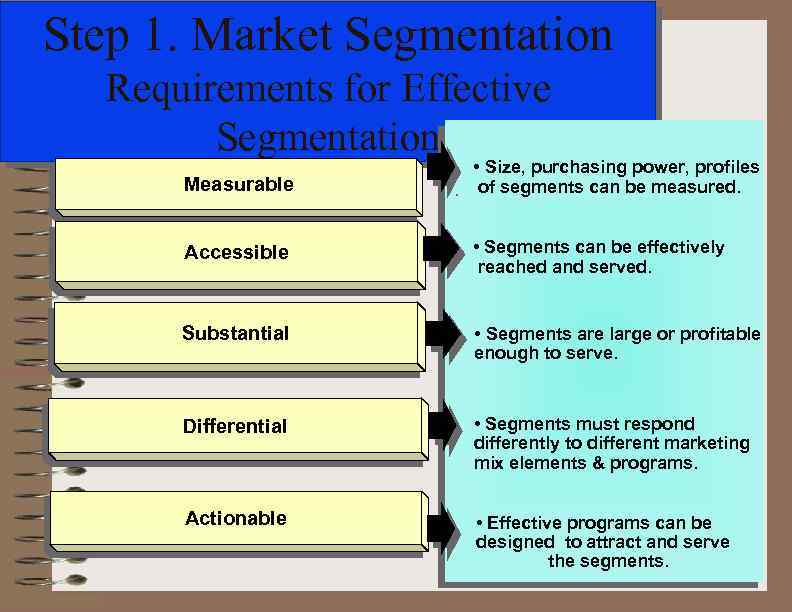 Step 1. Market Segmentation Requirements for Effective Segmentation Measurable • Size, purchasing power, profiles of segments can be measured. Accessible • Segments can be effectively reached and served. Substantial • Segments are large or profitable enough to serve. Differential • Segments must respond differently to different marketing mix elements & programs. Actionable • Effective programs can be designed to attract and serve the segments.
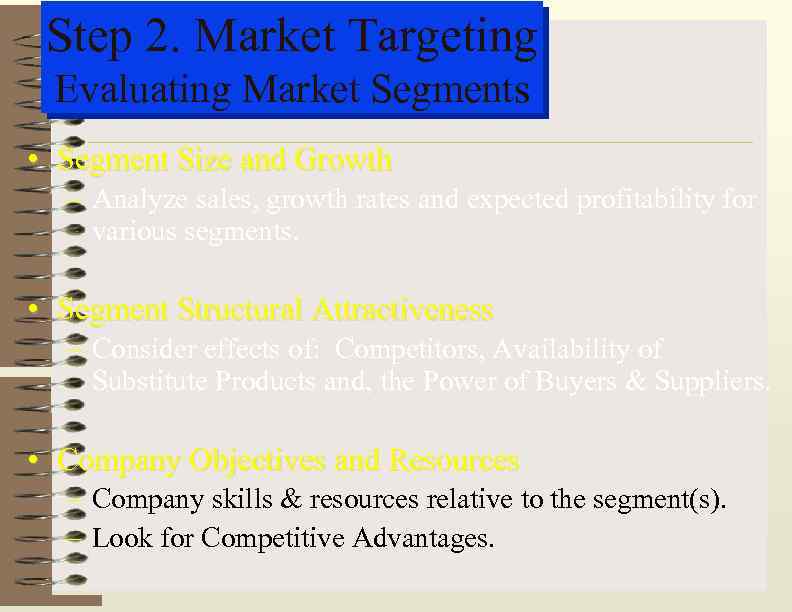 Step 2. Market Targeting Evaluating Market Segments • Segment Size and Growth – Analyze sales, growth rates and expected profitability for various segments. • Segment Structural Attractiveness – Consider effects of: Competitors, Availability of Substitute Products and, the Power of Buyers & Suppliers. • Company Objectives and Resources – Company skills & resources relative to the segment(s). – Look for Competitive Advantages.
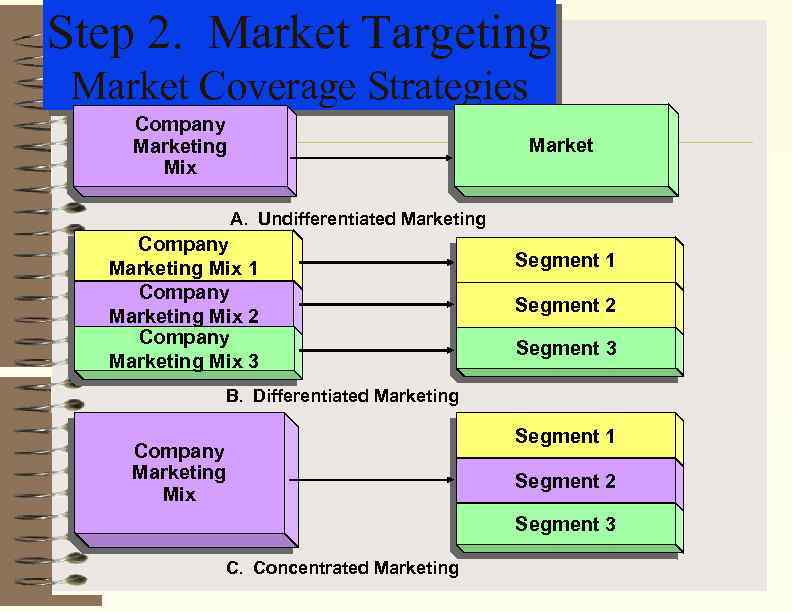 Step 2. Market Targeting Market Coverage Strategies Company Marketing Mix Market A. Undifferentiated Marketing Company Marketing Mix 1 Company Marketing Mix 2 Company Marketing Mix 3 Segment 1 Segment 2 Segment 3 B. Differentiated Marketing Company Marketing Mix Segment 1 Segment 2 Segment 3 C. Concentrated Marketing
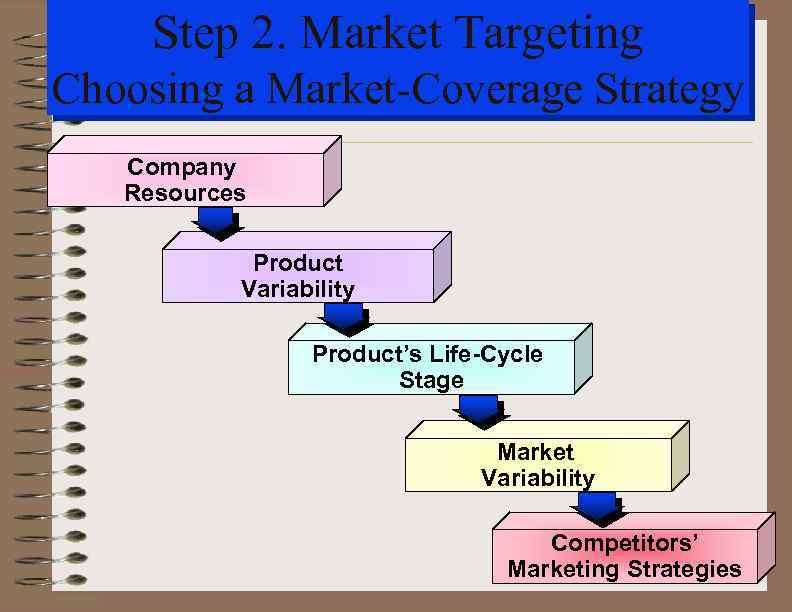 Step 2. Market Targeting Choosing a Market-Coverage Strategy Company Resources Product Variability Product’s Life-Cycle Stage Market Variability Competitors’ Marketing Strategies
 Step 3. Positioning for Competitive Advantage • Product’s Position - the way the product is defined by consumers on important attributes - the place the product occupies in consumers’ minds relative to competing products. • Marketers must: – Plan positions to give their products the greatest advantage in selected target markets,
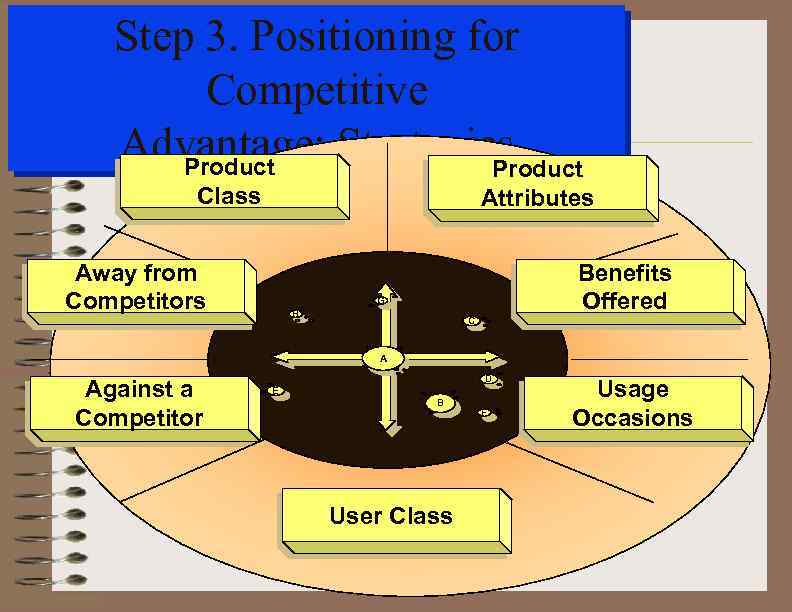 Step 3. Positioning for Competitive Advantage: Strategies Product Class Attributes Away from Competitors Benefits Offered G H C A Against a Competitor D E B User Class F Usage Occasions
 Generic Positioning Strategies • Our product is unique – e. g. Raffles Hotel (oldest hotel); Westin Hotel (tallest hotel) • Our product is different – e. g. Seng Choon eggs (low in cholesterol) Listerine (kills germs) Amex Blue credit card (6 -month rate of 15. 9% vs the market rate of 24%) • Our product is similar – e. g. Thai fragrant rice 13
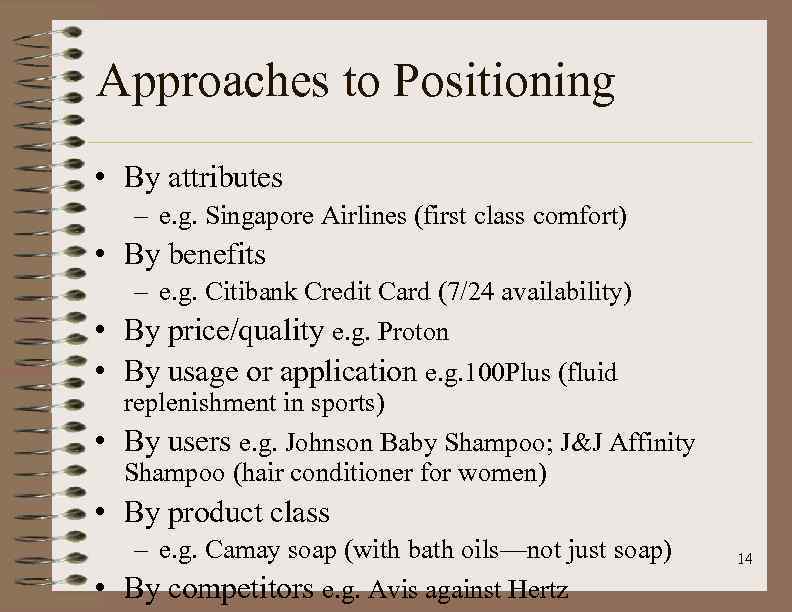 Approaches to Positioning • By attributes – e. g. Singapore Airlines (first class comfort) • By benefits – e. g. Citibank Credit Card (7/24 availability) • By price/quality e. g. Proton • By usage or application e. g. 100 Plus (fluid replenishment in sports) • By users e. g. Johnson Baby Shampoo; J&J Affinity Shampoo (hair conditioner for women) • By product class – e. g. Camay soap (with bath oils—not just soap) • By competitors e. g. Avis against Hertz 14
 Product Positioning Using Perceptual & Preference Maps Marketing managers use a Mapping technique to help them visualize the competitive structure of the market before they develop differentiation and positioning strategies 15
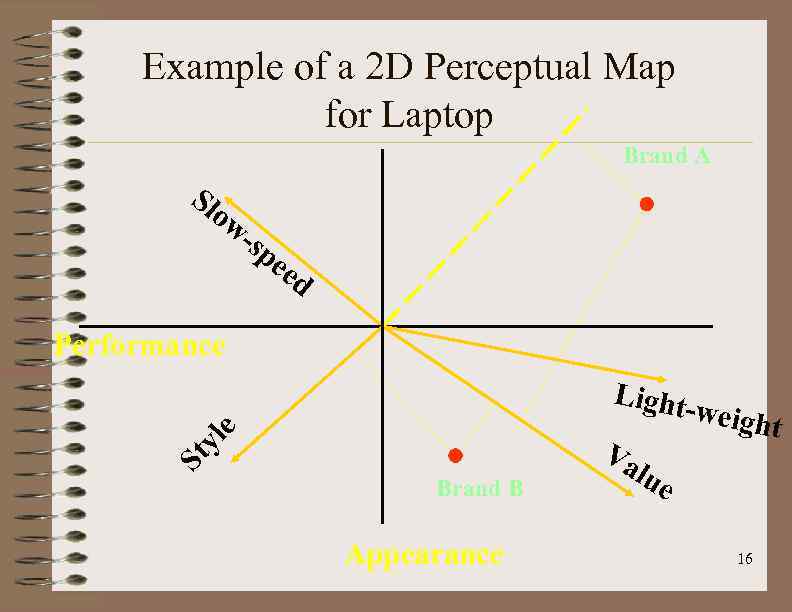 Example of a 2 D Perceptual Map for Laptop Brand A Sl ow -sp ee d Performance St yl e Light. Brand B Appearance Va weigh t lue 16
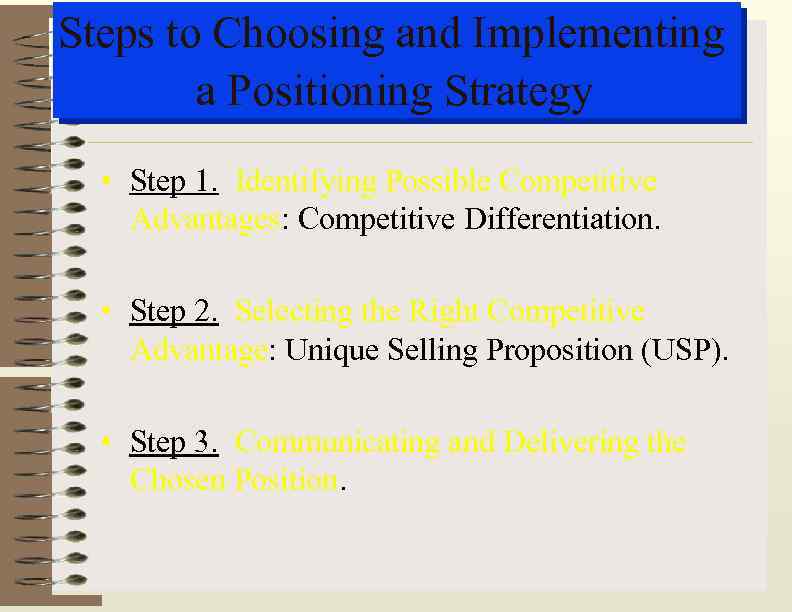 Steps to Choosing and Implementing a Positioning Strategy • Step 1. Identifying Possible Competitive Advantages: Competitive Differentiation. • Step 2. Selecting the Right Competitive Advantage: Unique Selling Proposition (USP). • Step 3. Communicating and Delivering the Chosen Position.
 Repositioning Why reposition? • Competitors position next to you • Consumer preferences changed • New consumer preference cluster • Original mistake 18
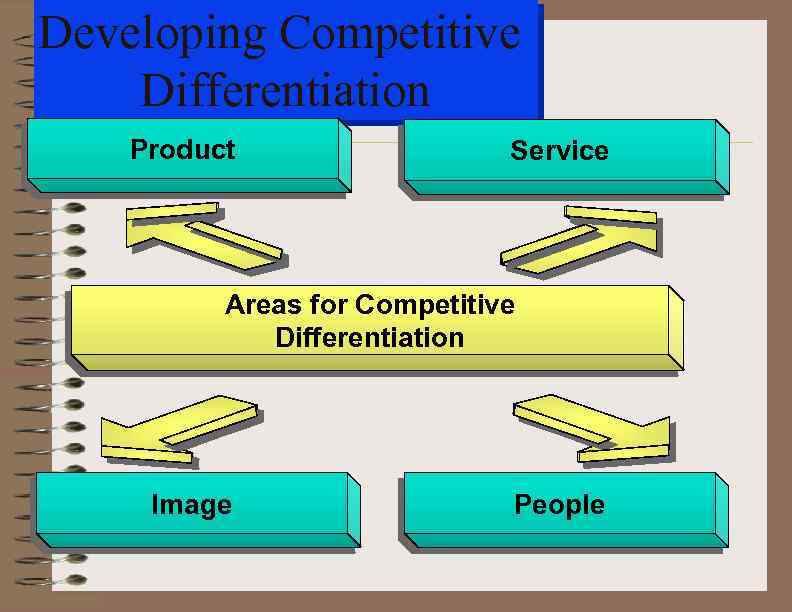 Developing Competitive Differentiation Product Service Areas for Competitive Differentiation Image People
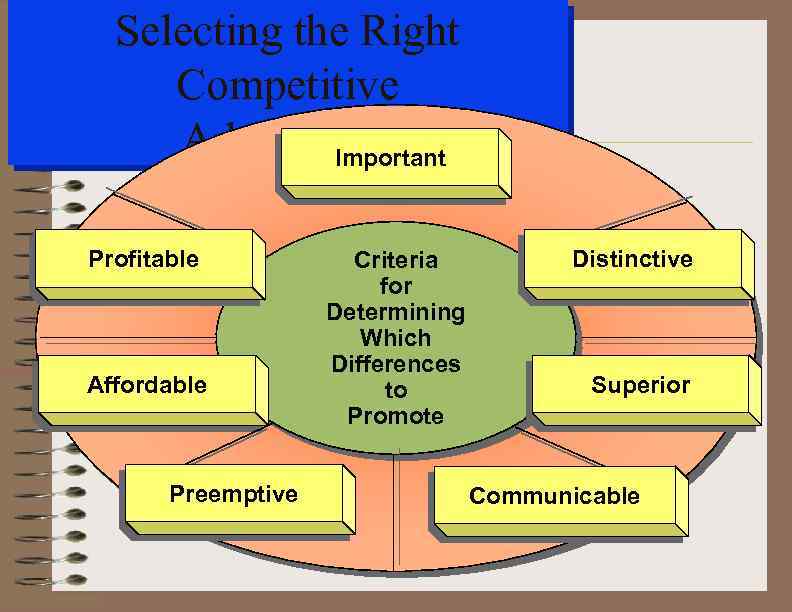 Selecting the Right Competitive Advantages Important Profitable Affordable Preemptive Criteria for Determining Which Differences to Promote Distinctive Superior Communicable
 Rest Stop: Reviewing the Concepts • Define three steps of target marketing: market segmentation, market targeting, and market positioning. • List and discuss the major levels of market segmentation and bases for segmenting consumer and business markets. • Explain how companies identify attractive market segments and choose a market coverage strategy. • Discuss how companies position their products for maximum competitive advantage in the marketplace.