 Скачать презентацию Marie S Curie Individual Fellowships Paul Knobbs European
303cf3bbb331e342aa7e7aa2ac9069ba.ppt
- Количество слайдов: 27



Marie S Curie Individual Fellowships Paul Knobbs European Funding Manager Research Support Office Aston University
What we’ll cover. . . The Research Support Office, Introduction Structure of Horizon 2020, briefly… IF’s and what they are all about Application nuts and bolts Where does everything live Time for questions
The Research Support Office Director – Sally Puzey RDM Team – Karen Woodhall (LHS), Kev O’Reilly (LSS), Nat Golden (ABS), Sarah Lea (EAS), Paul Knobbs (EU, cross University) Marketing/Communication and admin Team – Neil Holland Emily Hammond PURE Co-ordinator – Judy White
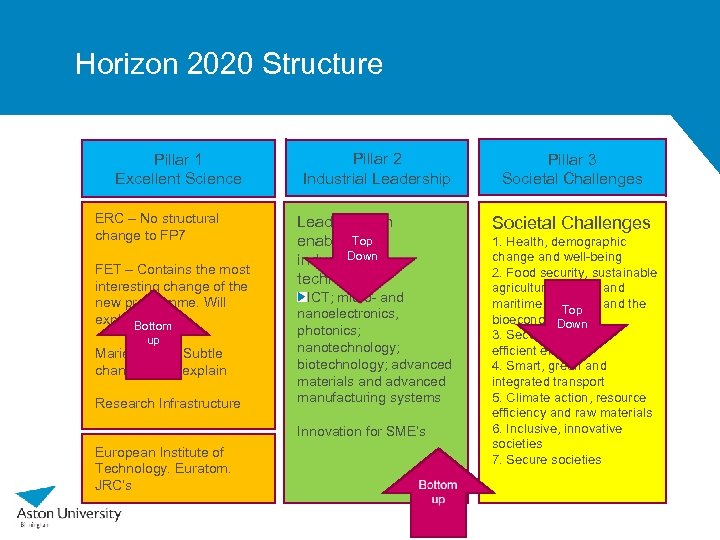
Horizon 2020 Structure Pillar 1 Excellent Science ERC – No structural change to FP 7 FET – Contains the most interesting change of the new programme. Will explain. Bottom up Marie Curie – Subtle changes. Will explain Research Infrastructure Pillar 2 Industrial Leadership in Top enabling and Down industrial technologies ICT; micro- and nanoelectronics, photonics; nanotechnology; biotechnology; advanced materials and advanced manufacturing systems Innovation for SME’s European Institute of Technology. Euratom. JRC’s Pillar 3 Societal Challenges 1. Health, demographic change and well-being 2. Food security, sustainable agriculture, marine and maritime research, and the Top bioeconomy Down 3. Secure, clean and efficient energy 4. Smart, green and integrated transport 5. Climate action, resource efficiency and raw materials 6. Inclusive, innovative societies 7. Secure societies
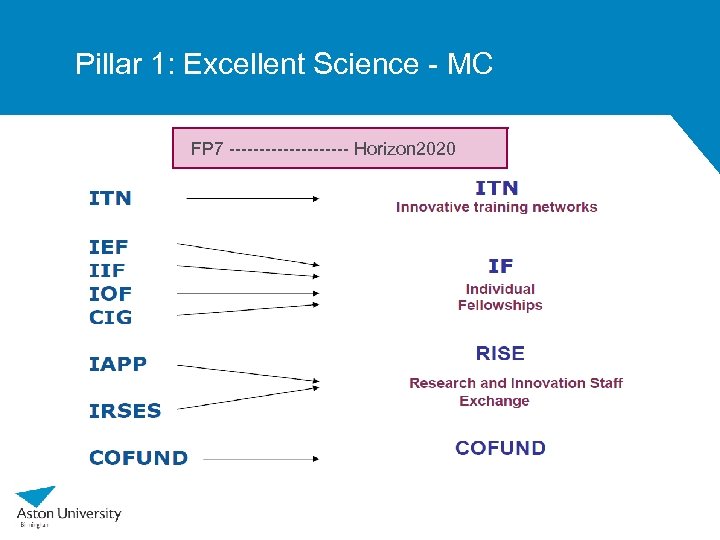
Pillar 1: Excellent Science - MC FP 7 ---------- Horizon 2020
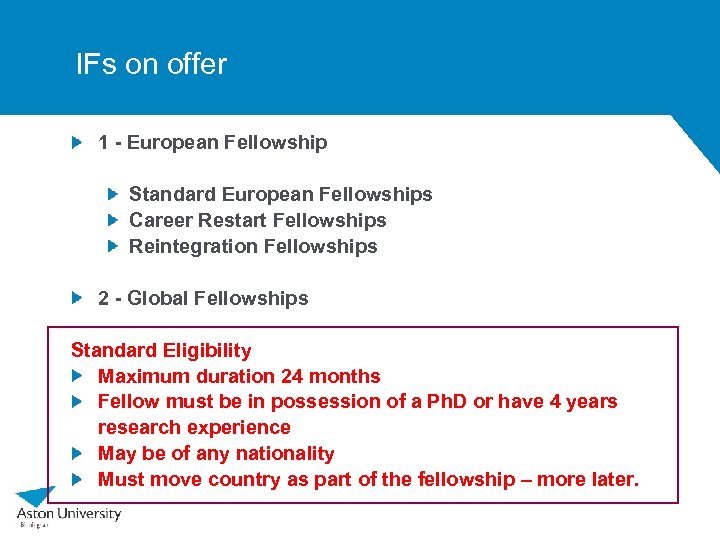
IFs on offer 1 - European Fellowship Standard European Fellowships Career Restart Fellowships Reintegration Fellowships 2 - Global Fellowships Standard Eligibility Maximum duration 24 months Fellow must be in possession of a Ph. D or have 4 years research experience May be of any nationality Must move country as part of the fellowship – more later.
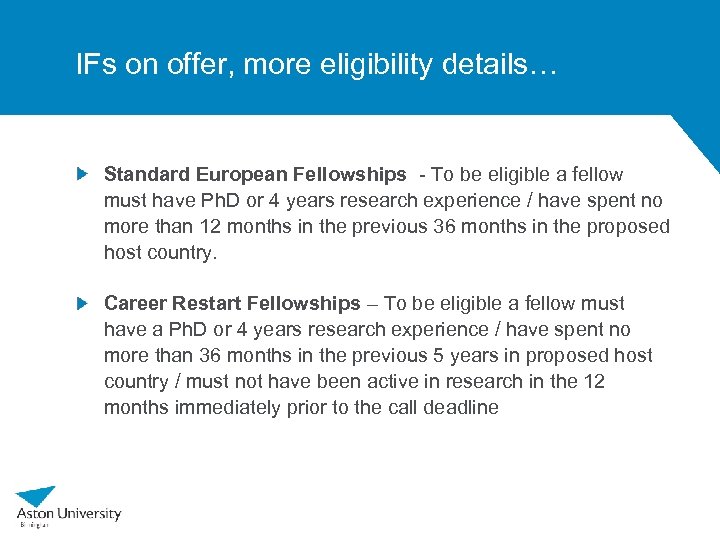
IFs on offer, more eligibility details… Standard European Fellowships - To be eligible a fellow must have Ph. D or 4 years research experience / have spent no more than 12 months in the previous 36 months in the proposed host country. Career Restart Fellowships – To be eligible a fellow must have a Ph. D or 4 years research experience / have spent no more than 36 months in the previous 5 years in proposed host country / must not have been active in research in the 12 months immediately prior to the call deadline
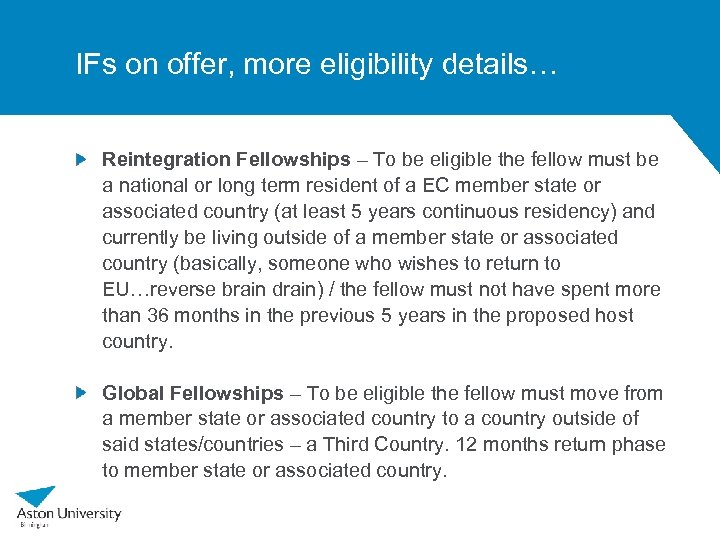
IFs on offer, more eligibility details… Reintegration Fellowships – To be eligible the fellow must be a national or long term resident of a EC member state or associated country (at least 5 years continuous residency) and currently be living outside of a member state or associated country (basically, someone who wishes to return to EU…reverse brain drain) / the fellow must not have spent more than 36 months in the previous 5 years in the proposed host country. Global Fellowships – To be eligible the fellow must move from a member state or associated country to a country outside of said states/countries – a Third Country. 12 months return phase to member state or associated country.
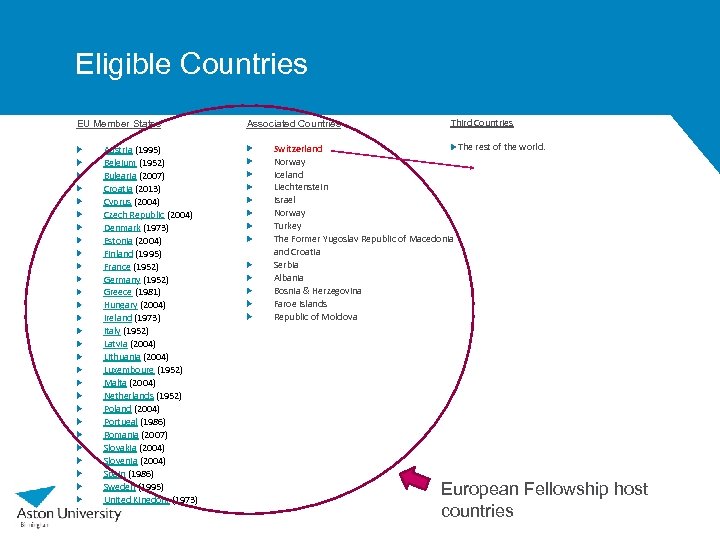
Eligible Countries EU Member States Austria (1995) Belgium (1952) Bulgaria (2007) Croatia (2013) Cyprus (2004) Czech Republic (2004) Denmark (1973) Estonia (2004) Finland (1995) France (1952) Germany (1952) Greece (1981) Hungary (2004) Ireland (1973) Italy (1952) Latvia (2004) Lithuania (2004) Luxembourg (1952) Malta (2004) Netherlands (1952) Poland (2004) Portugal (1986) Romania (2007) Slovakia (2004) Slovenia (2004) Spain (1986) Sweden (1995) United Kingdom (1973) Associated Countries Third Countries The rest of the world. Switzerland Norway Iceland Liechtenstein Israel Norway Turkey The Former Yugoslav Republic of Macedonia and Croatia Serbia Albania Bosnia & Herzegovina Faroe Islands Republic of Moldova European Fellowship host countries
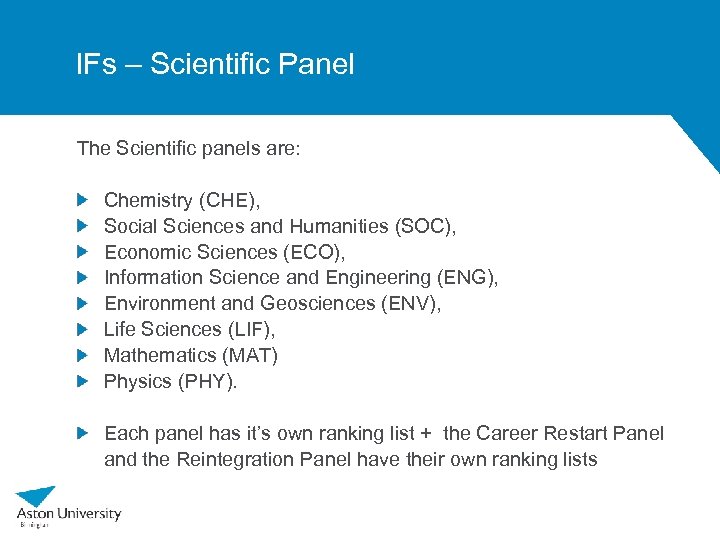
IFs – Scientific Panel The Scientific panels are: Chemistry (CHE), Social Sciences and Humanities (SOC), Economic Sciences (ECO), Information Science and Engineering (ENG), Environment and Geosciences (ENV), Life Sciences (LIF), Mathematics (MAT) Physics (PHY). Each panel has it’s own ranking list + the Career Restart Panel and the Reintegration Panel have their own ranking lists
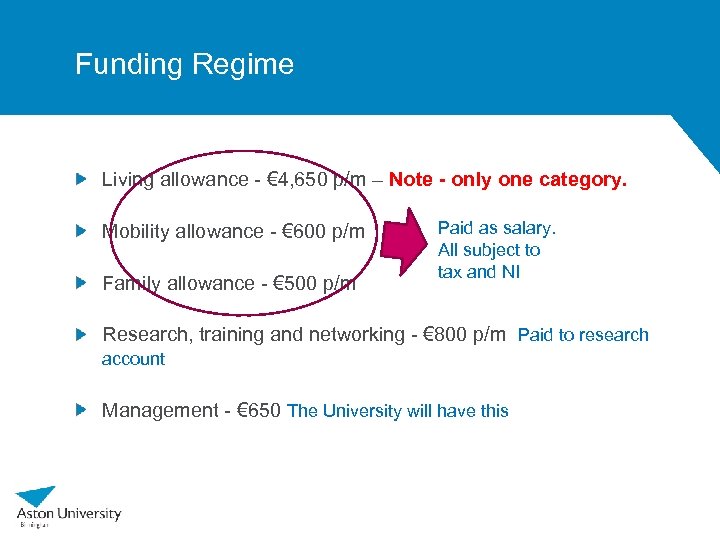
Funding Regime Living allowance - € 4, 650 p/m – Note - only one category. Mobility allowance - € 600 p/m Family allowance - € 500 p/m Paid as salary. All subject to tax and NI Research, training and networking - € 800 p/m Paid to research account Management - € 650 The University will have this
Typical Activities of an Individual Fellowship Mobility is considered by the European Commission essential for the personal and career development of researchers. It allows the enhancement of collaboration, and the acquisition of new skills and knowledge which contribute to increased creativity, efficacy and performance, thereby contributing to career development and a successful, competitive knowledge-based society. Training activities - The Fellow should write in the proposal a concrete plan of training-through-research at the host organisation’s premises. The action should aim to reach a realistic and well-defined objective in terms of career advancement. The action should be created with the final outcome to develop and significantly widen the competences of the Fellow, particularly in terms of multi/interdisciplinary expertise, inter-sectoral experience and transferable skills.
Typical Activities of an Individual Fellowship Secondments - During the implementation of the IF the Fellow may be seconded to another institution in Europe. Such secondments must significantly contribute to the impact of the fellowship and therefore in certain research fields would be e Expected to take place in the non-academic sector A Career Development Plan must be produced by the Experienced Researcher and the supervisor prior to the start of the fellowship. In addition to research objectives, this plan comprises the researcher’s training and career needs, including training on transferable skills, planning for publications and participation in conferences.
Typical Activities of an Individual Fellowship Typical training activities in IFs may include: Primarily, training-through-research under the direct supervision of the supervisor and other members of the scientific staff of the host organisation by the means of an individual personalised action; Hands-on training activities for developing scientific (new techniques, instruments etc. ) and transferable skills (entrepreneurship, proposal preparation to request funding, patent applications, management of IPR, action And…Communication and Dissemination and Public Engagement
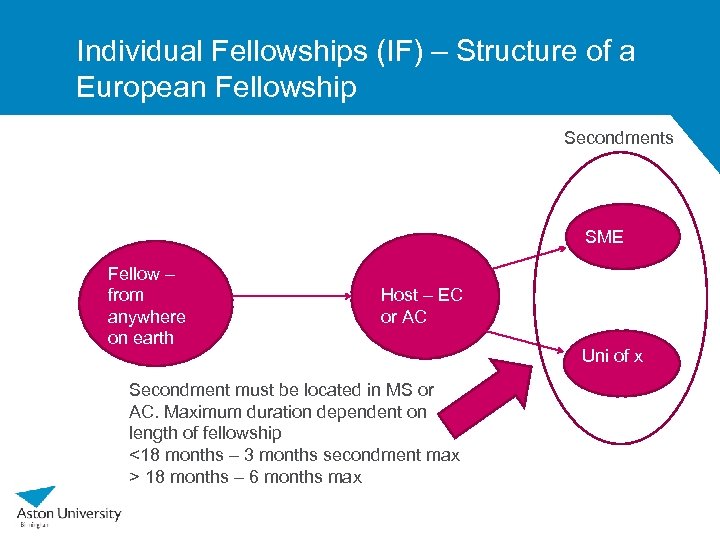
Individual Fellowships (IF) – Structure of a European Fellowship Secondments SME Fellow – from anywhere on earth Host – EC or AC Secondment must be located in MS or AC. Maximum duration dependent on length of fellowship <18 months – 3 months secondment max > 18 months – 6 months max Uni of x
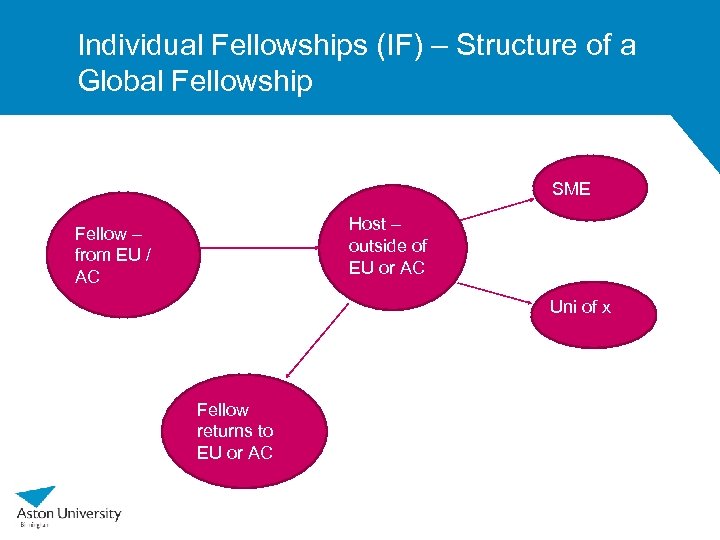
Individual Fellowships (IF) – Structure of a Global Fellowship SME Host – outside of EU or AC Fellow – from EU / AC Uni of x Fellow returns to EU or AC
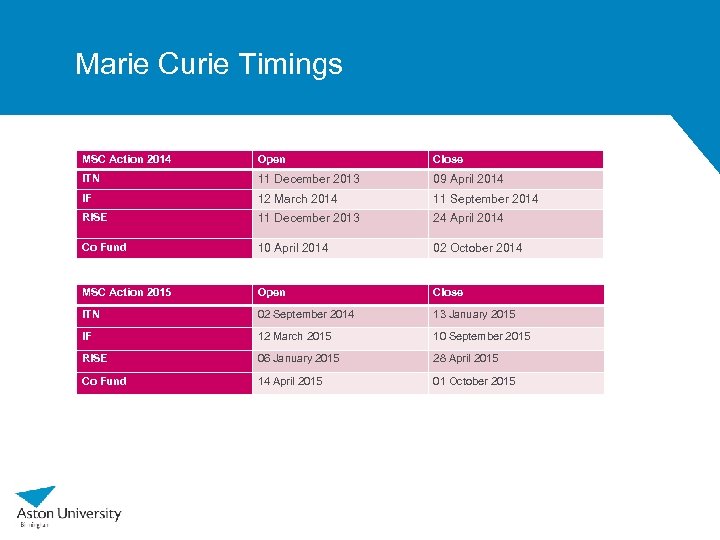
Marie Curie Timings MSC Action 2014 Open Close ITN 11 December 2013 09 April 2014 IF 12 March 2014 11 September 2014 RISE 11 December 2013 24 April 2014 Co Fund 10 April 2014 02 October 2014 MSC Action 2015 Open Close ITN 02 September 2014 13 January 2015 IF 12 March 2015 10 September 2015 RISE 06 January 2015 28 April 2015 Co Fund 14 April 2015 01 October 2015
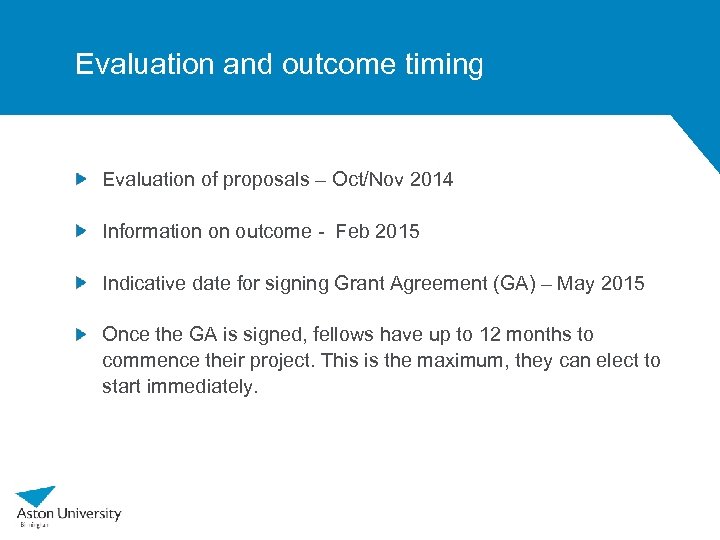
Evaluation and outcome timing Evaluation of proposals – Oct/Nov 2014 Information on outcome - Feb 2015 Indicative date for signing Grant Agreement (GA) – May 2015 Once the GA is signed, fellows have up to 12 months to commence their project. This is the maximum, they can elect to start immediately.
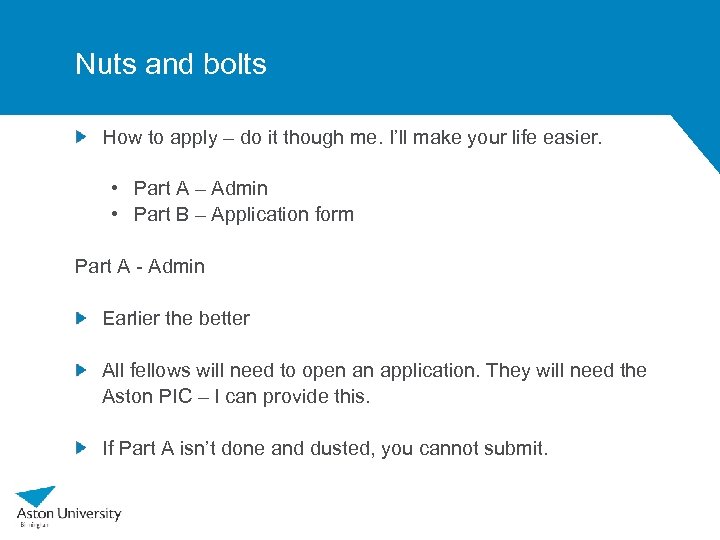
Nuts and bolts How to apply – do it though me. I’ll make your life easier. • Part A – Admin • Part B – Application form Part A - Admin Earlier the better All fellows will need to open an application. They will need the Aston PIC – I can provide this. If Part A isn’t done and dusted, you cannot submit.
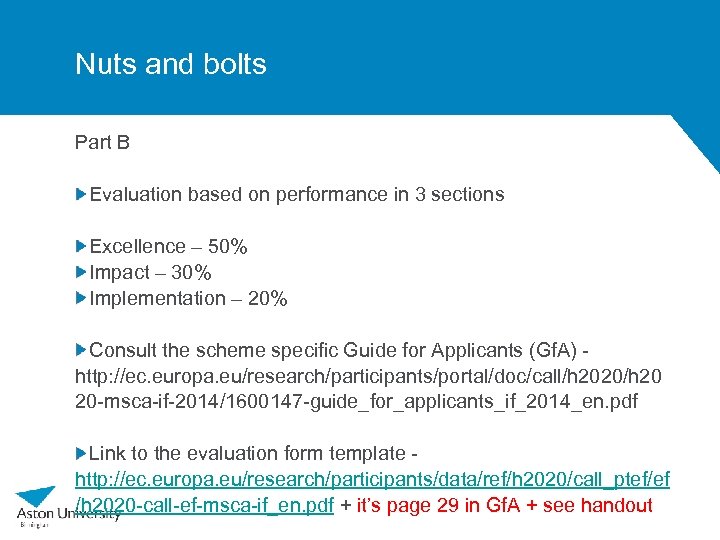
Nuts and bolts Part B Evaluation based on performance in 3 sections Excellence – 50% Impact – 30% Implementation – 20% Consult the scheme specific Guide for Applicants (Gf. A) http: //ec. europa. eu/research/participants/portal/doc/call/h 2020/h 20 20 -msca-if-2014/1600147 -guide_for_applicants_if_2014_en. pdf Link to the evaluation form template - http: //ec. europa. eu/research/participants/data/ref/h 2020/call_ptef/ef /h 2020 -call-ef-msca-if_en. pdf + it’s page 29 in Gf. A + see handout
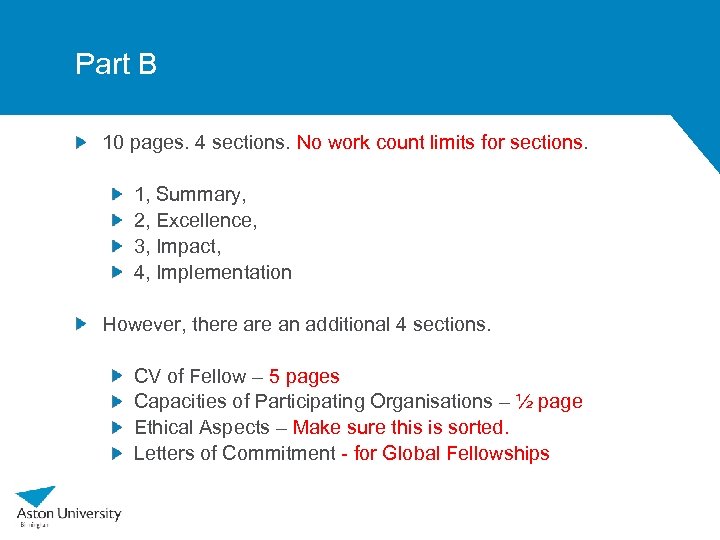
Part B 10 pages. 4 sections. No work count limits for sections. 1, Summary, 2, Excellence, 3, Impact, 4, Implementation However, there an additional 4 sections. CV of Fellow – 5 pages Capacities of Participating Organisations – ½ page Ethical Aspects – Make sure this is sorted. Letters of Commitment - for Global Fellowships
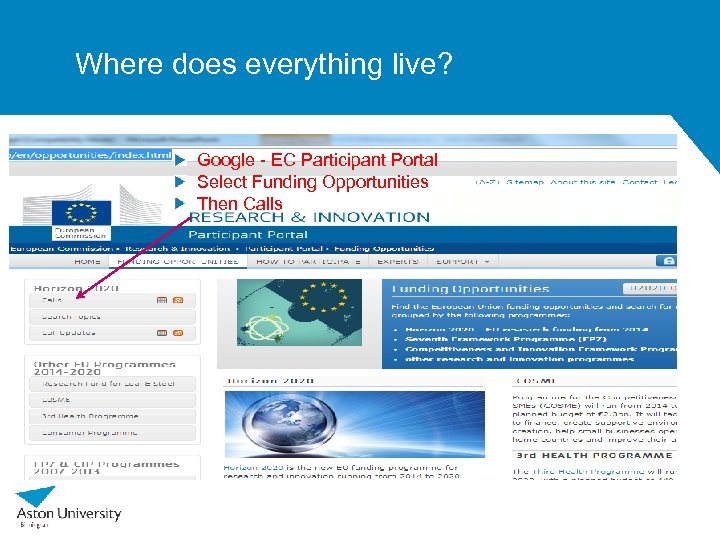
Where does everything live? Google - EC Participant Portal Select Funding Opportunities Then Calls
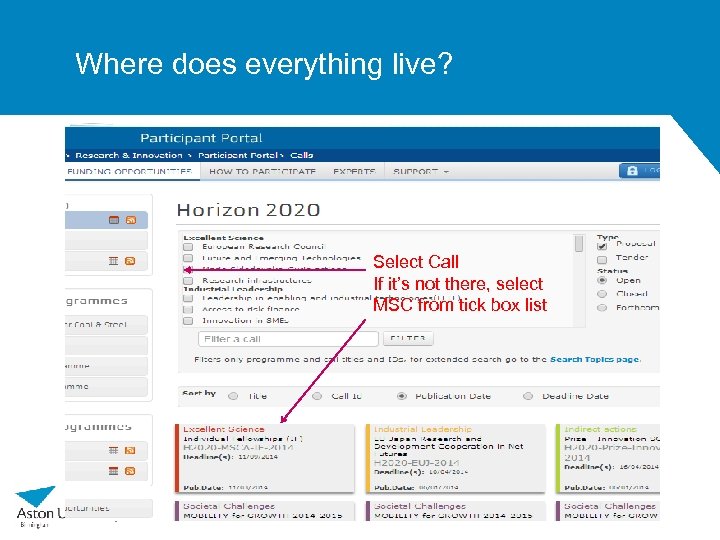
Where does everything live? Select Call If it’s not there, select MSC from tick box list
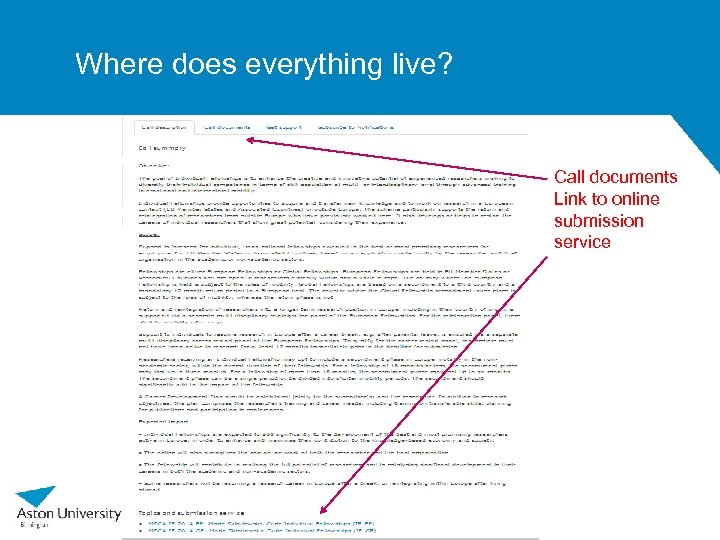
Where does everything live? Call documents Link to online submission service
Concluding points. Online submission service isn’t open yet. I’ll notify you all when it is. Fellow opens the online form. If you put me in contact with prospective fellow I will help out with completing the registration…. Before that…make sure you have a copy of the prospective fellows CV and are happy that it is up to standard. I can help. The bar for these awards is high.
Tips and Websites Become an expert reviewer - http: //ec. europa. eu/research/horizon 2020/index_en. cfm? pg=h 2020 experts Register on UKRO website, receive regular quality information http: //www. ukro. ac. uk/Pages/UKRO. aspx Front door to H 2020, including News and Events http: //ec. europa. eu/programmes/horizon 2020/ H 2020 and Participant Portal, where the calls live http: //ec. europa. eu/research/participants/portal/desktop/en/home. ht Funded EC Projects - http: //cordis. europa. eu/fp 7/projects_en. html
Questions
Скачать презентацию Marie S Curie Individual Fellowships Paul Knobbs European
303cf3bbb331e342aa7e7aa2ac9069ba.ppt