


 Скачать презентацию Marie-Antoinette Louis XVI et La Revolution Française
1b5d282989e596103b79dffbb867f972.ppt
- Количество слайдов: 20
 Marie-Antoinette, Louis XVI, et La Revolution Française
 La biographie • Marie-Antoinette was born in 1755 in Austria as a daughter of the empress Maria Teresa. • She was married to the king of France, Louis XVI when she was barely 15. • For 7 years the marriage was not consumed, which created a big problem for the whole Europe. Finally, with the help of Maria Teresa and a surgeon the problem was solved (Louis got operated ) and Marie-Antoinette was able to get pregnant and deliver children.
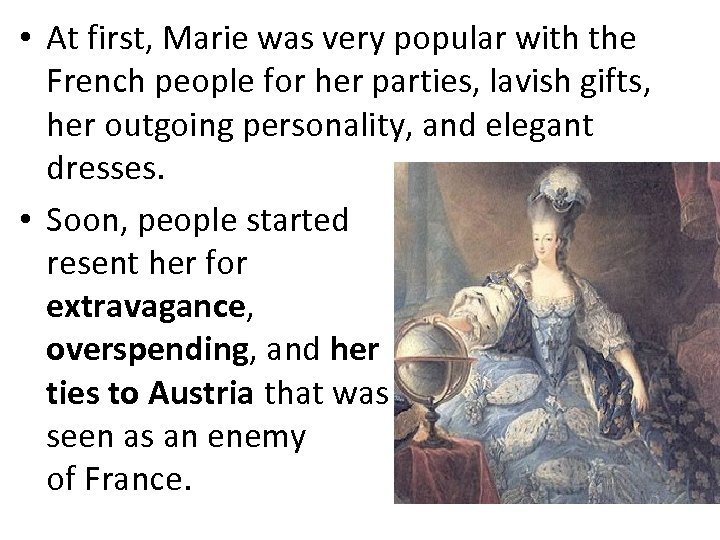 • At first, Marie was very popular with the French people for her parties, lavish gifts, her outgoing personality, and elegant dresses. • Soon, people started to resent her for extravagance, overspending, and her ties to Austria that was always seen as an enemy of France.
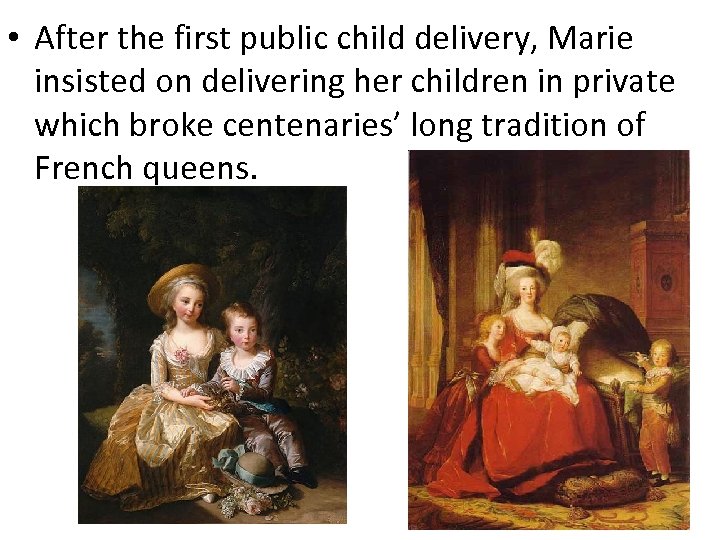 • After the first public child delivery, Marie insisted on delivering her children in private which broke centenaries’ long tradition of French queens.
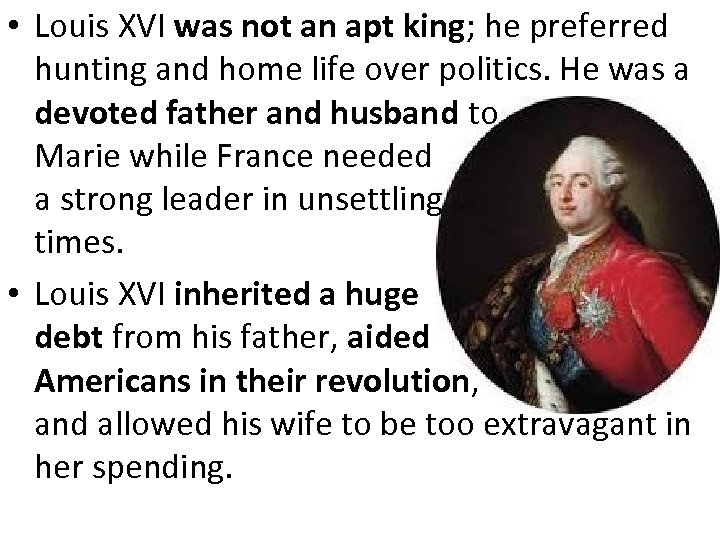 • Louis XVI was not an apt king; he preferred hunting and home life over politics. He was a devoted father and husband to Marie while France needed a strong leader in unsettling times. • Louis XVI inherited a huge debt from his father, aided Americans in their revolution, and allowed his wife to be too extravagant in her spending.
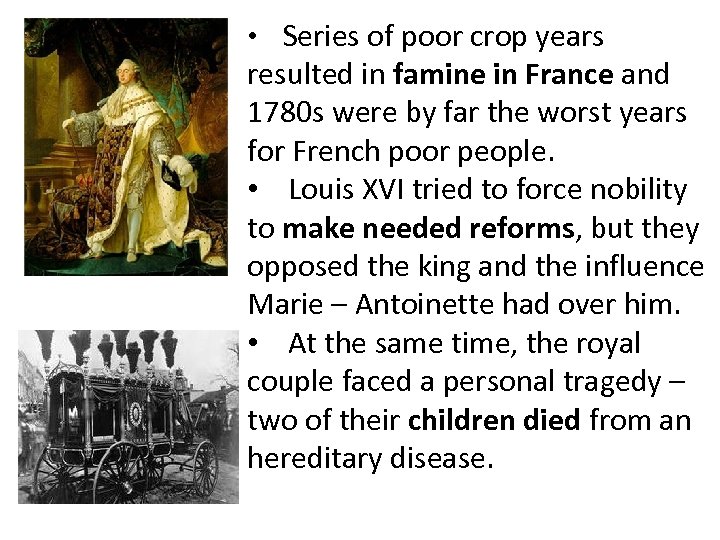 • Series of poor crop years resulted in famine in France and 1780 s were by far the worst years for French poor people. • Louis XVI tried to force nobility to make needed reforms, but they opposed the king and the influence Marie – Antoinette had over him. • At the same time, the royal couple faced a personal tragedy – two of their children died from an hereditary disease.
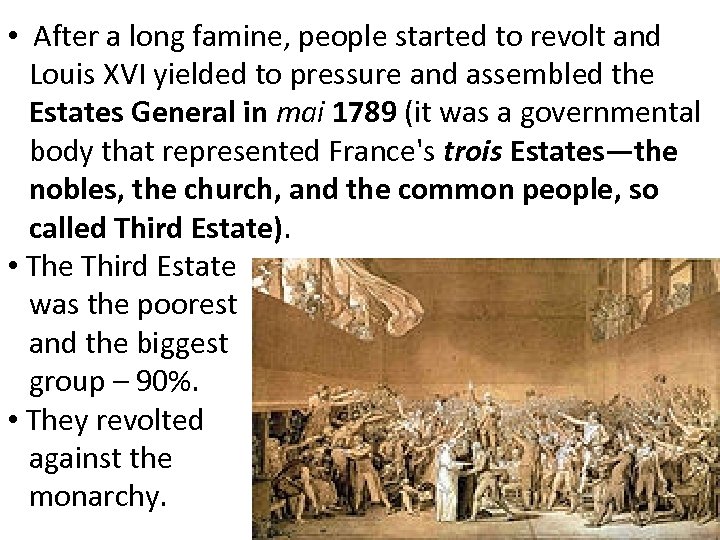 • After a long famine, people started to revolt and Louis XVI yielded to pressure and assembled the Estates General in mai 1789 (it was a governmental body that represented France's trois Estates—the nobles, the church, and the common people, so called Third Estate). • The Third Estate was the poorest and the biggest group – 90%. • They revolted against the monarchy.
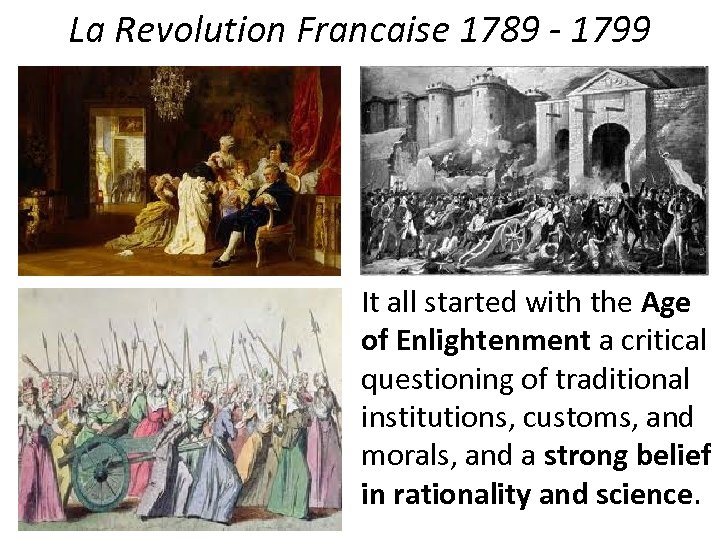 La Revolution Francaise 1789 - 1799 It all started with the Age of Enlightenment a critical questioning of traditional institutions, customs, and morals, and a strong belief in rationality and science.
 1. 2. 3. 4. 5. 6. 7. Reasons behind la Revolution Française: Debt inherited from previous kings, Famine in the country, Helping Americans in their civil war while the government was almost bankrupt, Louis XVI inability to rule the country and overspending, New ideologies – Enlightenment, era of reason and equality, Third Estate refusal to accept the status quo, Extravagance of Marie-Antoinette,
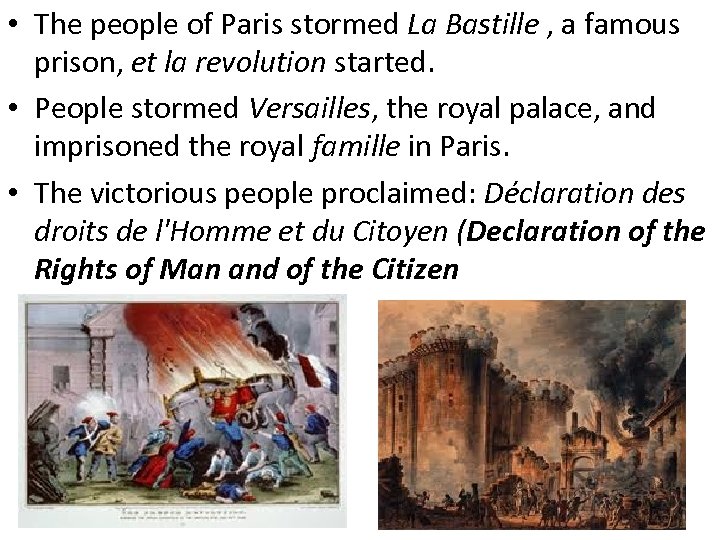 • The people of Paris stormed La Bastille , a famous prison, et la revolution started. • People stormed Versailles, the royal palace, and imprisoned the royal famille in Paris. • The victorious people proclaimed: Déclaration des droits de l'Homme et du Citoyen (Declaration of the Rights of Man and of the Citizen
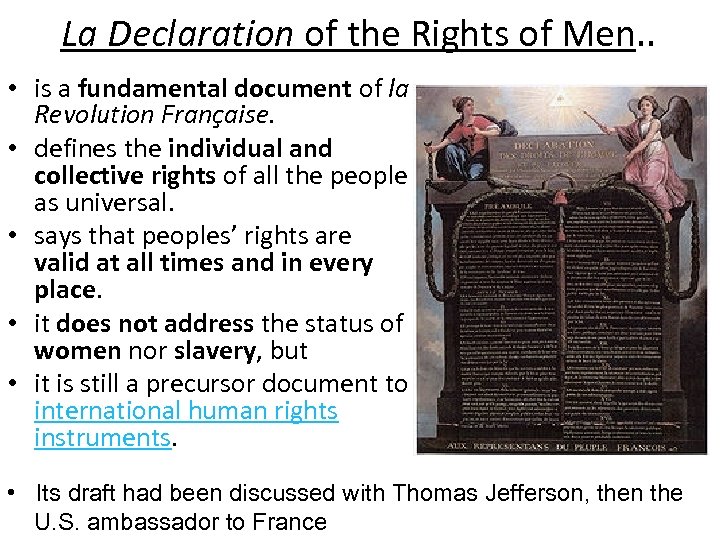 La Declaration of the Rights of Men. . • is a fundamental document of la Revolution Française. • defines the individual and collective rights of all the people as universal. • says that peoples’ rights are valid at all times and in every place. • it does not address the status of women nor slavery, but • it is still a precursor document to international human rights instruments. • Its draft had been discussed with Thomas Jefferson, then the U. S. ambassador to France
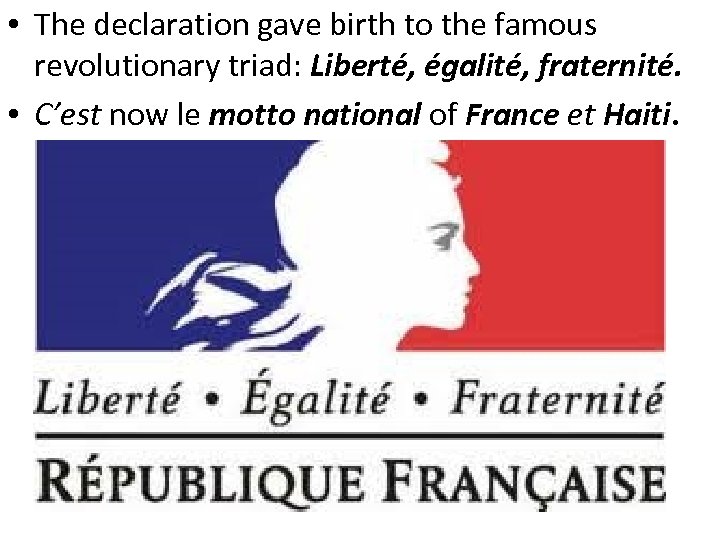 • The declaration gave birth to the famous revolutionary triad: Liberté, égalité, fraternité. • C’est now le motto national of France et Haiti.
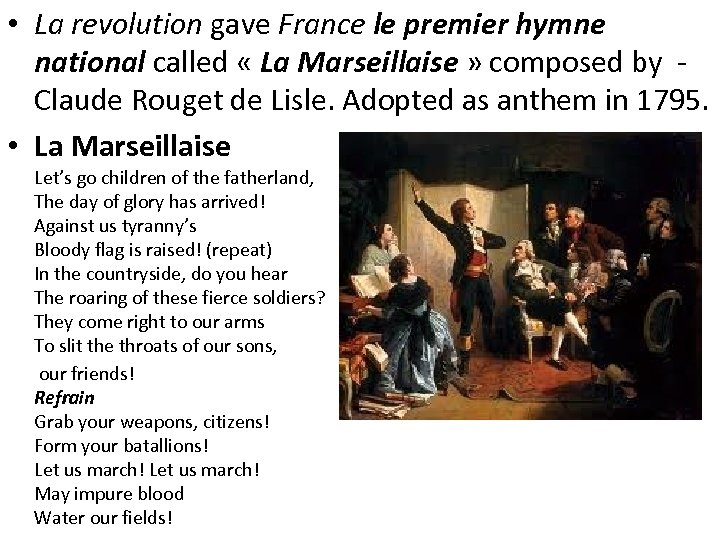 • La revolution gave France le premier hymne national called « La Marseillaise » composed by - Claude Rouget de Lisle. Adopted as anthem in 1795. • La Marseillaise Let’s go children of the fatherland, The day of glory has arrived! Against us tyranny’s Bloody flag is raised! (repeat) In the countryside, do you hear The roaring of these fierce soldiers? They come right to our arms To slit the throats of our sons, our friends! Refrain Grab your weapons, citizens! Form your batallions! Let us march! May impure blood Water our fields!
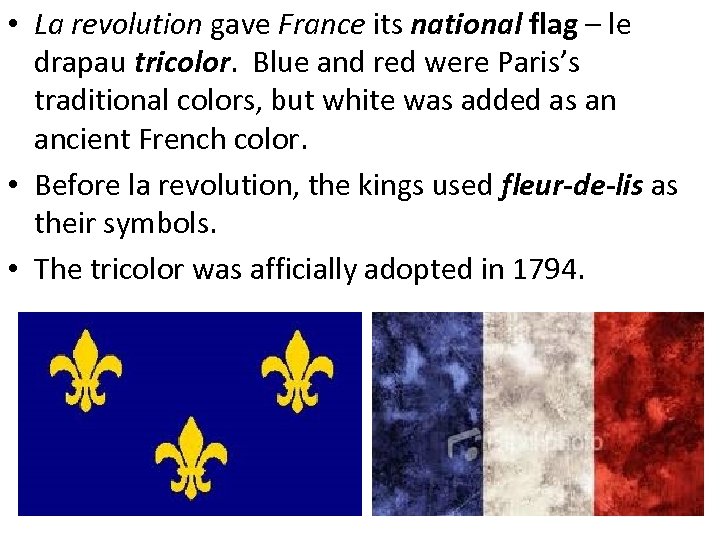 • La revolution gave France its national flag – le drapau tricolor. Blue and red were Paris’s traditional colors, but white was added as an ancient French color. • Before la revolution, the kings used fleur-de-lis as their symbols. • The tricolor was afficially adopted in 1794.
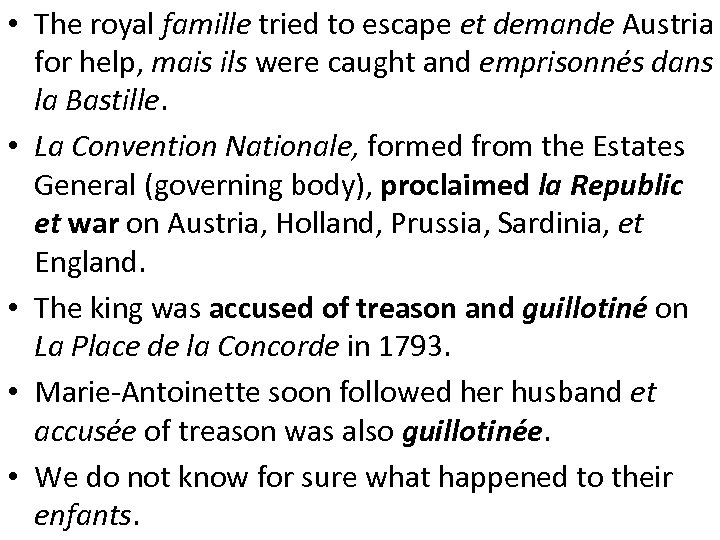 • The royal famille tried to escape et demande Austria for help, mais ils were caught and emprisonnés dans la Bastille. • La Convention Nationale, formed from the Estates General (governing body), proclaimed la Republic et war on Austria, Holland, Prussia, Sardinia, et England. • The king was accused of treason and guillotiné on La Place de la Concorde in 1793. • Marie-Antoinette soon followed her husband et accusée of treason was also guillotinée. • We do not know for sure what happened to their enfants.
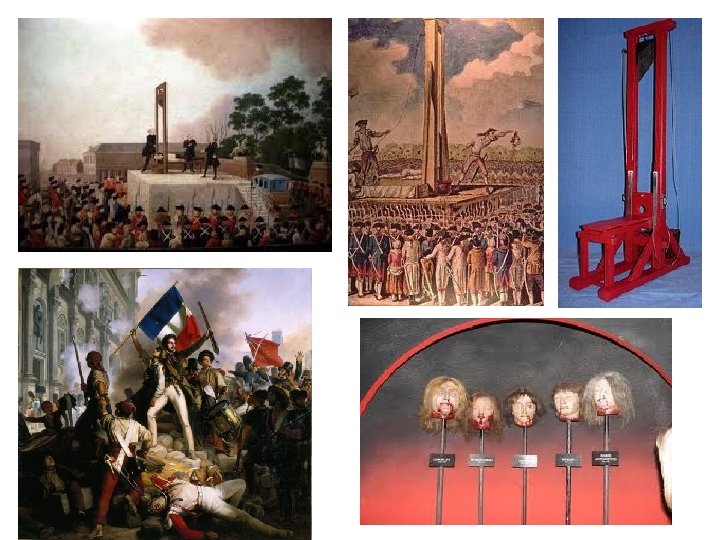
 • Soon after the royal familly was guillotined, other monarchs started to be afraid that the same thing may happen to them and they attacked France. • In France, the reign of terror began iniciated by the leader of The Comittee of Public Safety – Maximilian Robespierre. • Everybody who was against la révolution was guillotiné. • Probably over 16, 000 people, mostly nobles, were guillotinés.
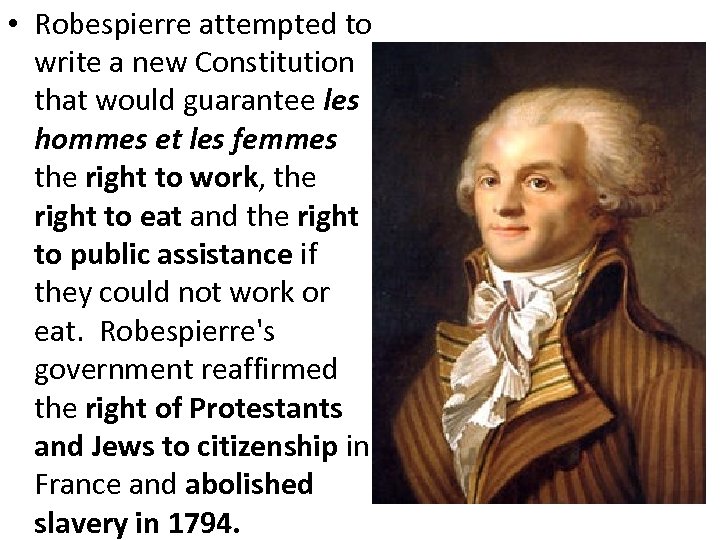 • Robespierre attempted to write a new Constitution that would guarantee les hommes et les femmes the right to work, the right to eat and the right to public assistance if they could not work or eat. Robespierre's government reaffirmed the right of Protestants and Jews to citizenship in France and abolished slavery in 1794.
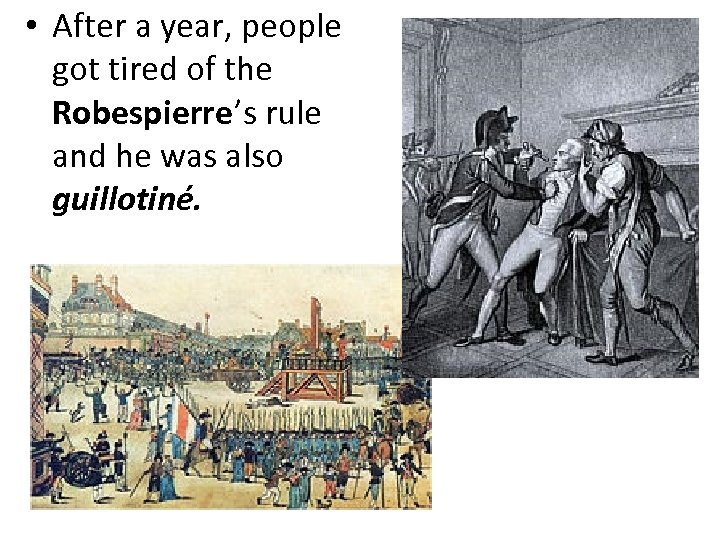 • After a year, people got tired of the Robespierre’s rule and he was also guillotiné.
 The end of la Révolution Française • After Roberspierre the country was in chaos fighting with outside ennemies and internal contrrevolution. • Finally, with the rise of Napoleon Bonaparte, France’ great military leader, the country began a new chapter in its history.