Скачать презентацию Marginal analysis is used to assist people in
d629d34cd1fdaf38c9501ef92946592d.ppt
- Количество слайдов: 23

 Marginal analysis is used to assist people in allocating their scarce resources to maximize the benefit of the output produced. Simply getting the most value for the resources used.
 Marginal analysis: The analysis of the benefits and costs of the marginal unit of a good or input. Marginal = the next unit or extra, additional, change in





 4. If the unit's marginal benefit exceeds (or equals) its marginal cost, it should be added.
 Remember to look only at the changes in total benefits and total costs. If a particular cost or benefit does not change, IGNORE IT !


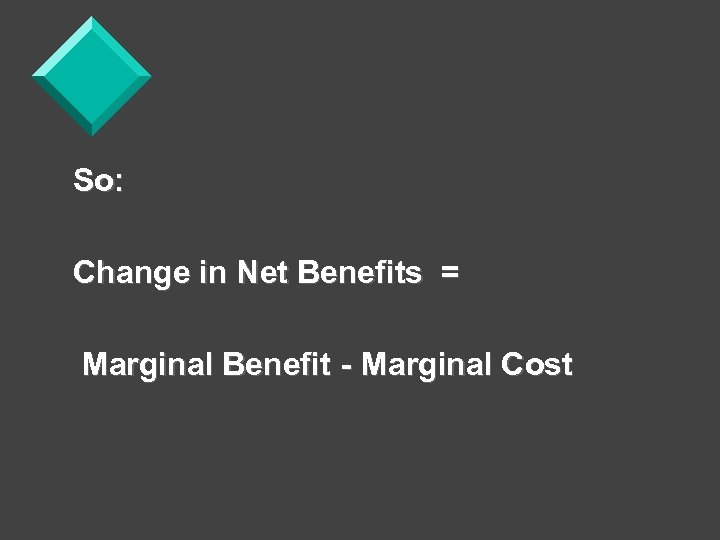 So: Change in Net Benefits = Marginal Benefit - Marginal Cost
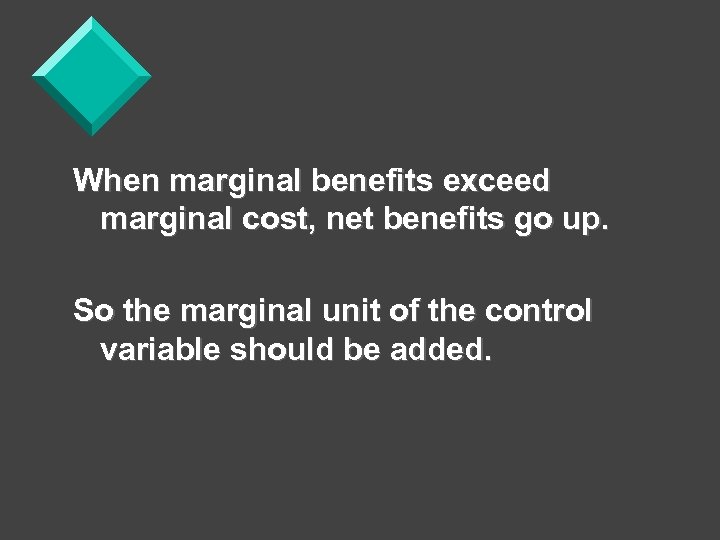 When marginal benefits exceed marginal cost, net benefits go up. So the marginal unit of the control variable should be added.
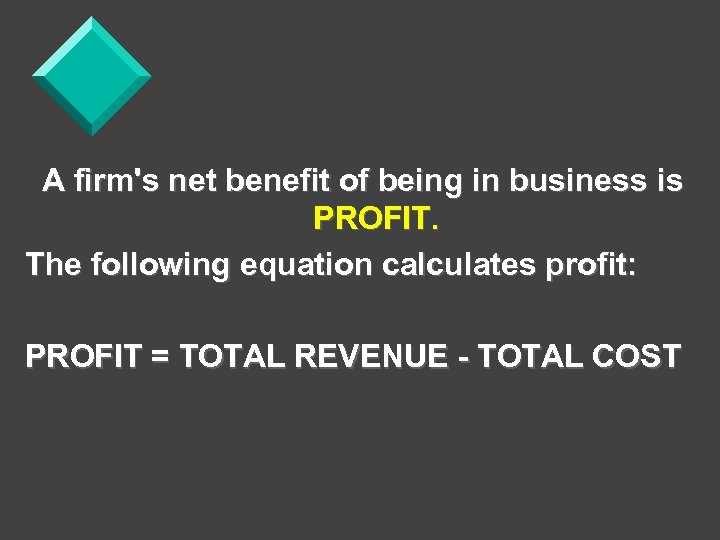 A firm's net benefit of being in business is PROFIT. The following equation calculates profit: PROFIT = TOTAL REVENUE - TOTAL COST
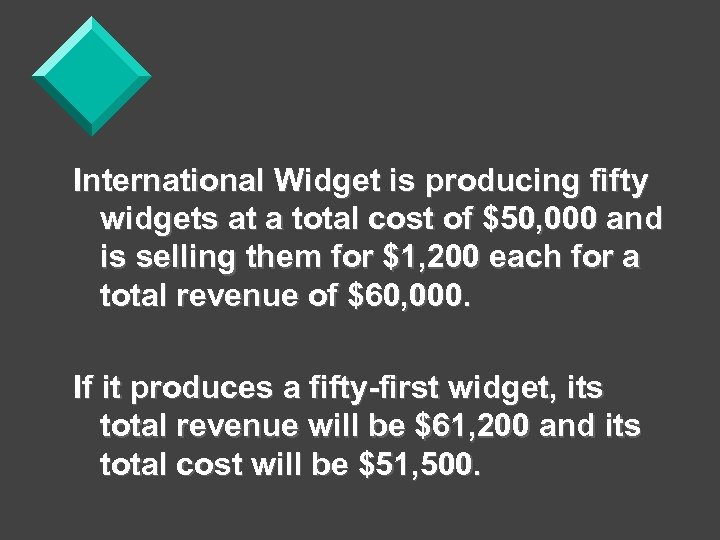 International Widget is producing fifty widgets at a total cost of $50, 000 and is selling them for $1, 200 each for a total revenue of $60, 000. If it produces a fifty-first widget, its total revenue will be $61, 200 and its total cost will be $51, 500.
 Should the firm produce the fifty-first widget?

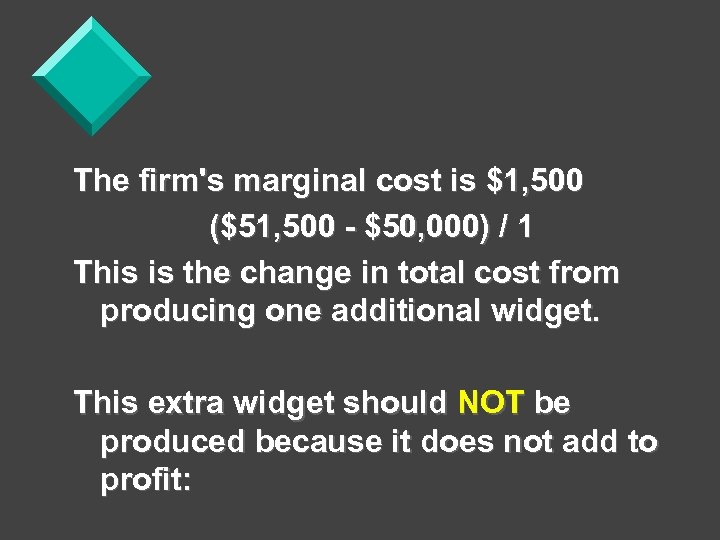 The firm's marginal cost is $1, 500 ($51, 500 - $50, 000) / 1 This is the change in total cost from producing one additional widget. This extra widget should NOT be produced because it does not add to profit:
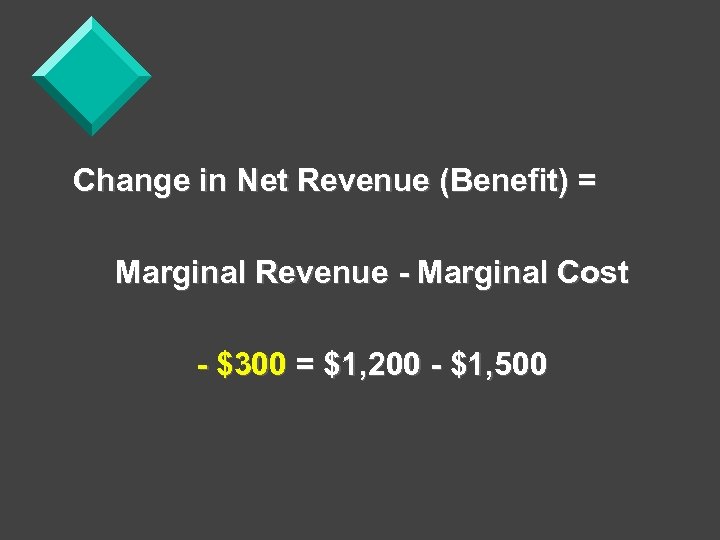 Change in Net Revenue (Benefit) = Marginal Revenue - Marginal Cost - $300 = $1, 200 - $1, 500