


 Скачать презентацию Many Patterns Many Methods New methods for
4dc4dd4c5dbd27b23f7fd63a0f8e1b44.ppt
- Количество слайдов: 30
 Many Patterns & Many Methods New methods for visualising & utilising multiple analysis techniques in polymorph and salt screening systems Gordon Barr, Chris Gilmore & Gordon Cunningham West. CHEM, Chemistry Department, University of Glasgow www. chem. gla. ac. uk/snap
 The Problem • High throughput screening experiments can generate hundreds of PXRD patterns a day • Problems with: • Data quality. • Sample quality. • Data quantity. • Need for automation, and speed. How do you deal with hundreds of samples from a single technique (e. g. XRPD), let alone more than one at once?
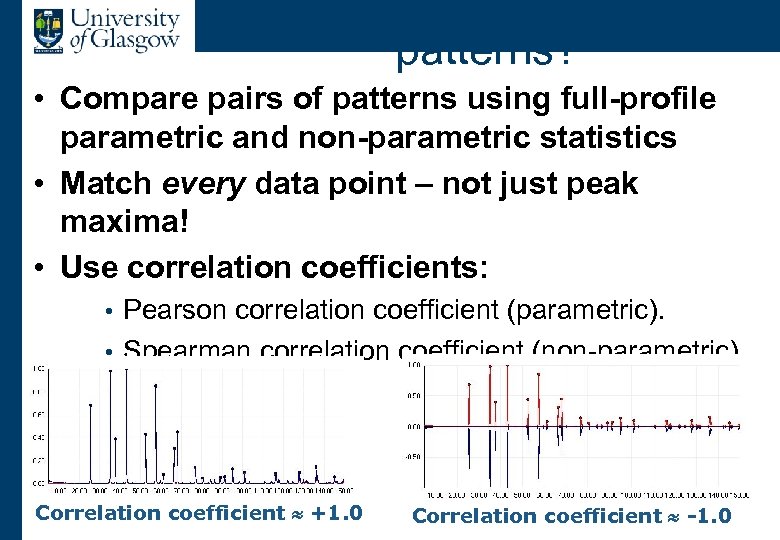 How to cluster powder patterns? • Compare pairs of patterns using full-profile parametric and non-parametric statistics • Match every data point – not just peak maxima! • Use correlation coefficients: Pearson correlation coefficient (parametric). • Spearman correlation coefficient (non-parametric). • Correlation coefficient +1. 0 Correlation coefficient -1. 0
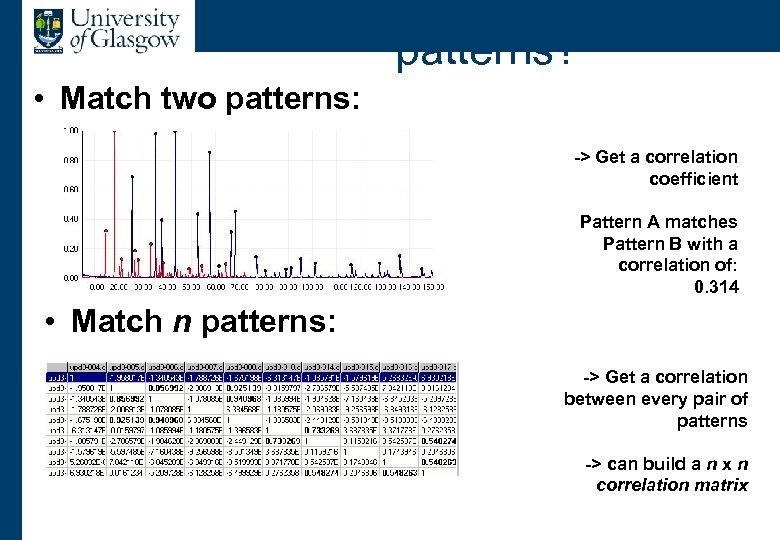 How to cluster powder patterns? • Match two patterns: -> Get a correlation coefficient Pattern A matches Pattern B with a correlation of: 0. 314 • Match n patterns: -> Get a correlation between every pair of patterns -> can build a n x n correlation matrix
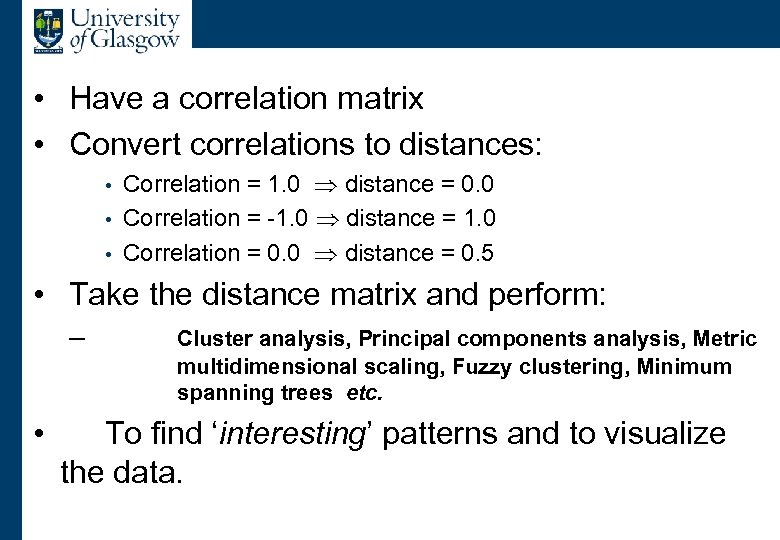 Correlations and Distances • Have a correlation matrix • Convert correlations to distances: Correlation = 1. 0 distance = 0. 0 • Correlation = -1. 0 distance = 1. 0 • Correlation = 0. 0 distance = 0. 5 • • Take the distance matrix and perform: – • Cluster analysis, Principal components analysis, Metric multidimensional scaling, Fuzzy clustering, Minimum spanning trees etc. To find ‘interesting’ patterns and to visualize the data.
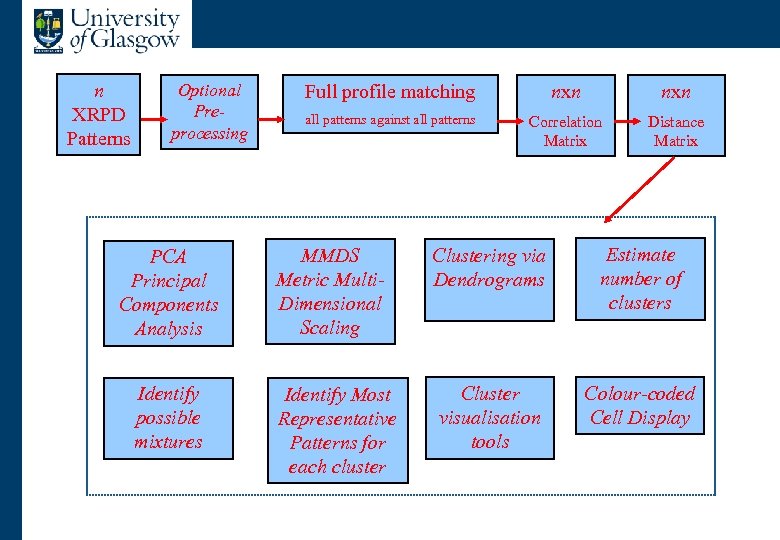 Methodology n XRPD Patterns Optional Preprocessing PCA Principal Components Analysis Identify possible mixtures Full profile matching nxn all patterns against all patterns Correlation Matrix Distance Matrix MMDS Metric Multi. Dimensional Scaling Identify Most Representative Patterns for each cluster Clustering via Dendrograms Estimate number of clusters Cluster visualisation tools Colour-coded Cell Display
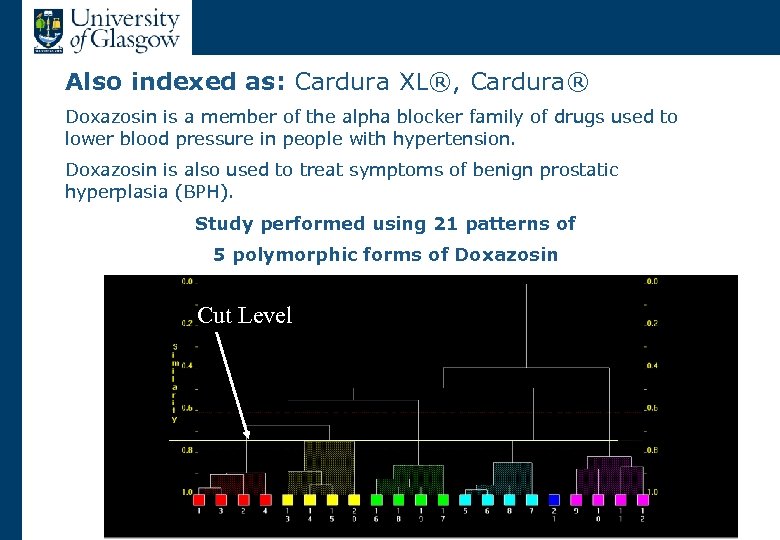 Example: Doxazosin Also indexed as: Cardura XL®, Cardura® Doxazosin is a member of the alpha blocker family of drugs used to lower blood pressure in people with hypertension. Doxazosin is also used to treat symptoms of benign prostatic hyperplasia (BPH). Study performed using 21 patterns of 5 polymorphic forms of Doxazosin Cut Level
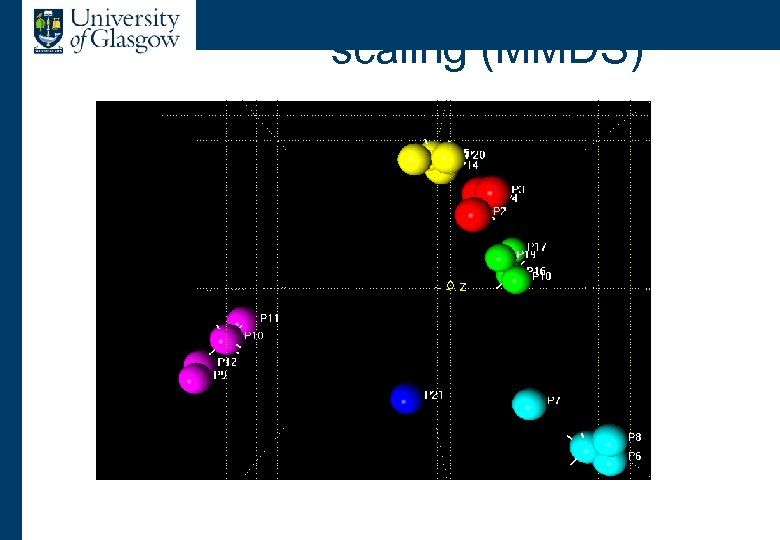 Metric multidimensional scaling (MMDS)
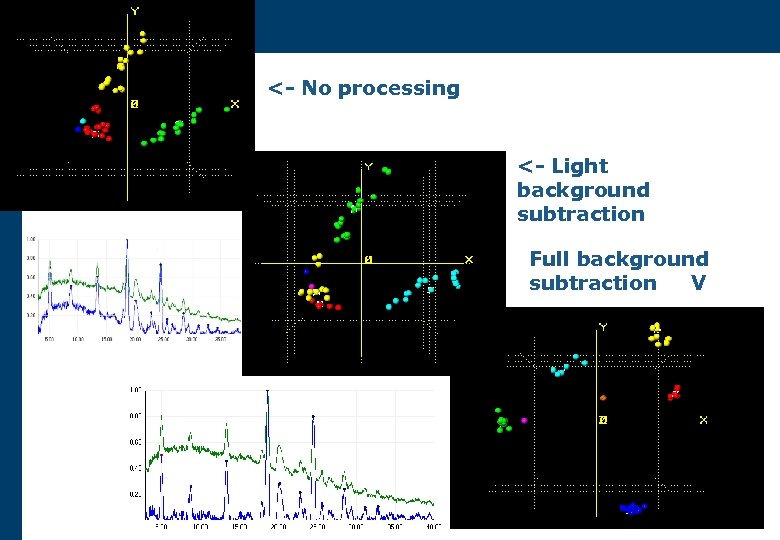 Example: Carbamazepine <- No processing <- Light background subtraction Full background subtraction V
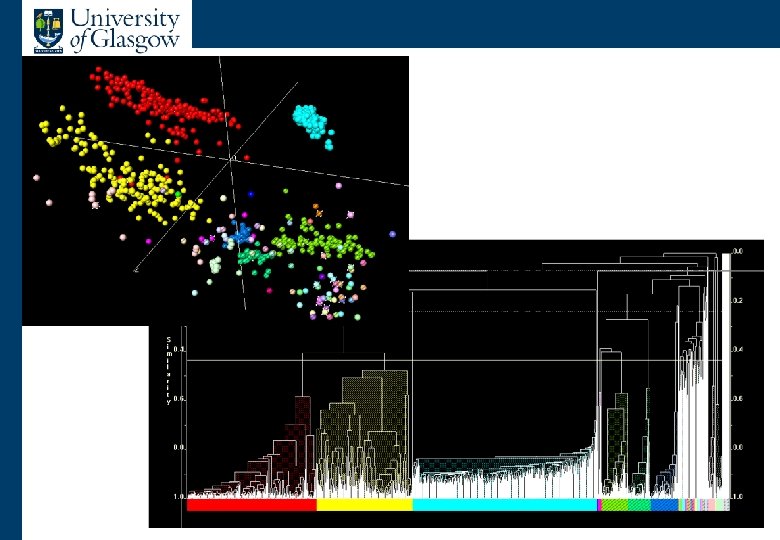 2000 Pattern Dendrogram
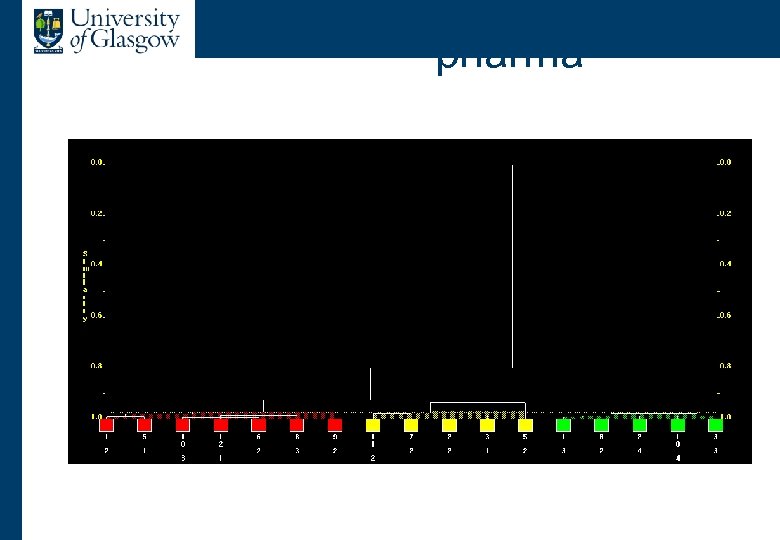
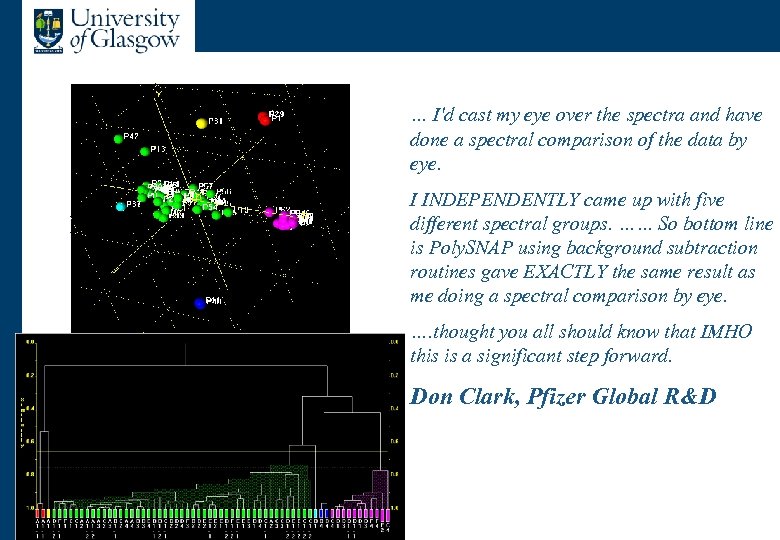 Raman data works too! … I'd cast my eye over the spectra and have done a spectral comparison of the data by eye. I INDEPENDENTLY came up with five different spectral groups. …… So bottom line is Poly. SNAP using background subtraction routines gave EXACTLY the same result as me doing a spectral comparison by eye. …. thought you all should know that IMHO this is a significant step forward. Don Clark, Pfizer Global R&D
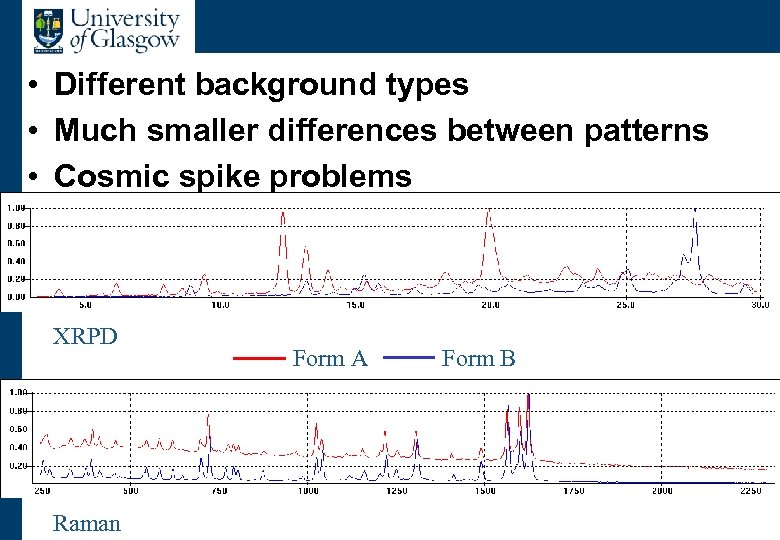 Raman Data Differences • Different background types • Much smaller differences between patterns • Cosmic spike problems XRPD Raman Form A Form B
 Raman Example – 3 form pharma
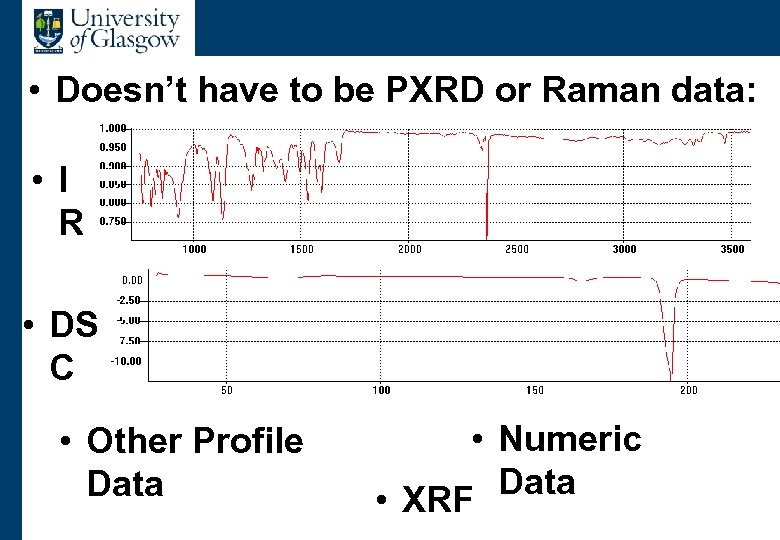 Different Data Types • Doesn’t have to be PXRD or Raman data: • I R • DS C • Other Profile Data • Numeric Data • XRF
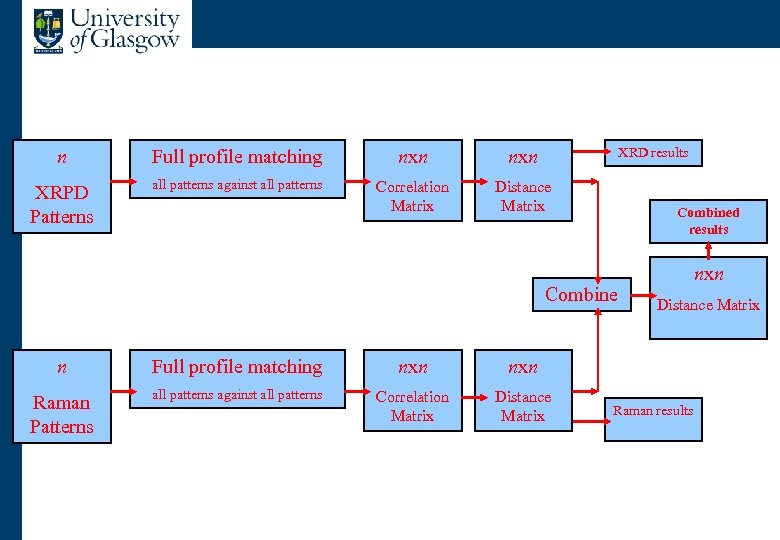
 Multiple datasets • Combined XRPD + Raman instruments now available • Applying multiple techniques to the samples gives additional info to work with • How would we actually combine results from two (or more) such different techniques ?
 Methodology XRD results n Full profile matching nxn XRPD Patterns all patterns against all patterns Correlation Matrix Distance Matrix Combined results Combine n Full profile matching nxn all patterns against all patterns Correlation Matrix Distance Matrix nxn Raman Patterns nxn Raman results
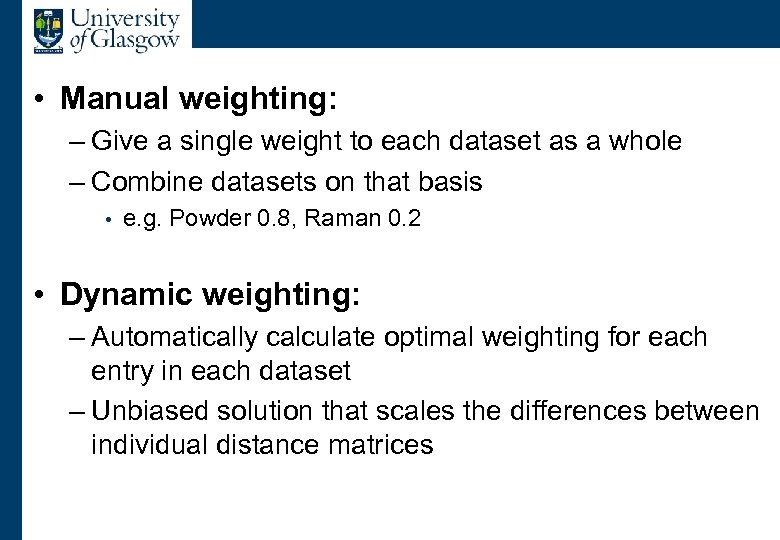 Combining Datasets • Manual weighting: – Give a single weight to each dataset as a whole – Combine datasets on that basis • e. g. Powder 0. 8, Raman 0. 2 • Dynamic weighting: – Automatically calculate optimal weighting for each entry in each dataset – Unbiased solution that scales the differences between individual distance matrices
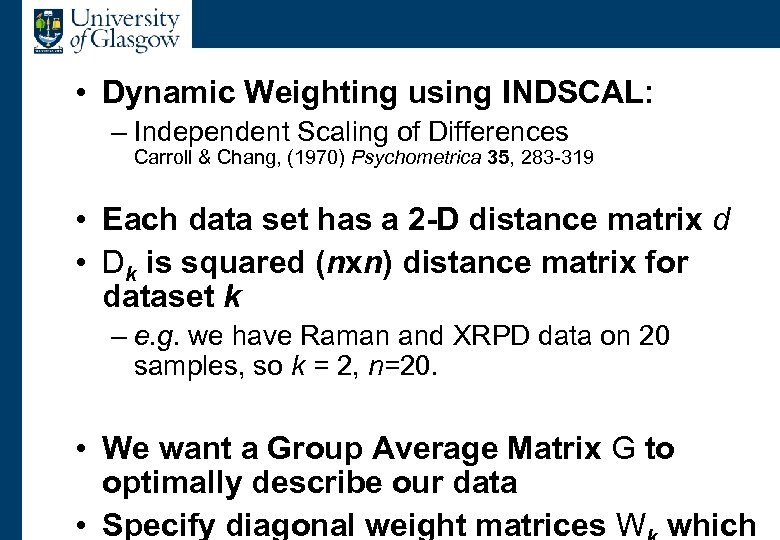 Dynamic Weighting • Dynamic Weighting using INDSCAL: – Independent Scaling of Differences Carroll & Chang, (1970) Psychometrica 35, 283 -319 • Each data set has a 2 -D distance matrix d • Dk is squared (nxn) distance matrix for dataset k – e. g. we have Raman and XRPD data on 20 samples, so k = 2, n=20. • We want a Group Average Matrix G to optimally describe our data • Specify diagonal weight matrices W which
 Dynamic Weighting • Matrices are matched to weighted form of G by minimising (1) • Where • (a double-centering operation on D), and • Solve (1) to get best values for G and W
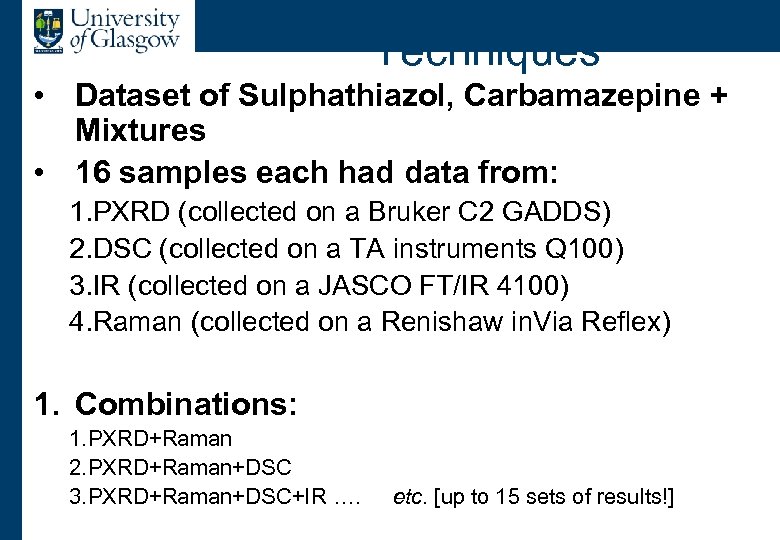 Example: Combining Four Techniques • Dataset of Sulphathiazol, Carbamazepine + Mixtures • 16 samples each had data from: 1. PXRD (collected on a Bruker C 2 GADDS) 2. DSC (collected on a TA instruments Q 100) 3. IR (collected on a JASCO FT/IR 4100) 4. Raman (collected on a Renishaw in. Via Reflex) 1. Combinations: 1. PXRD+Raman 2. PXRD+Raman+DSC 3. PXRD+Raman+DSC+IR …. etc. [up to 15 sets of results!]
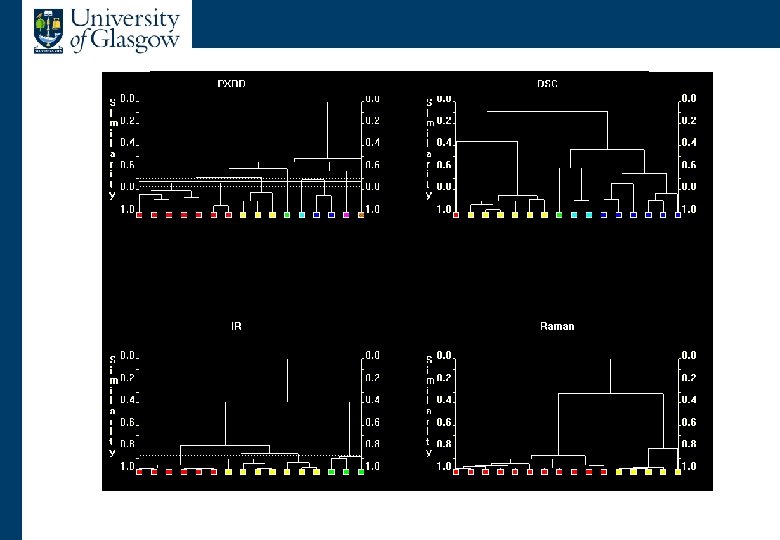 Side by side: Dendrograms
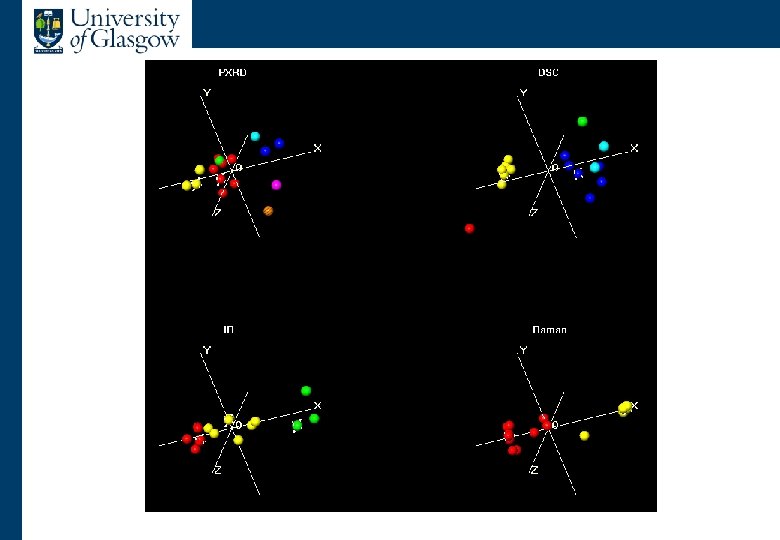 Side by side: 3 D MMDS
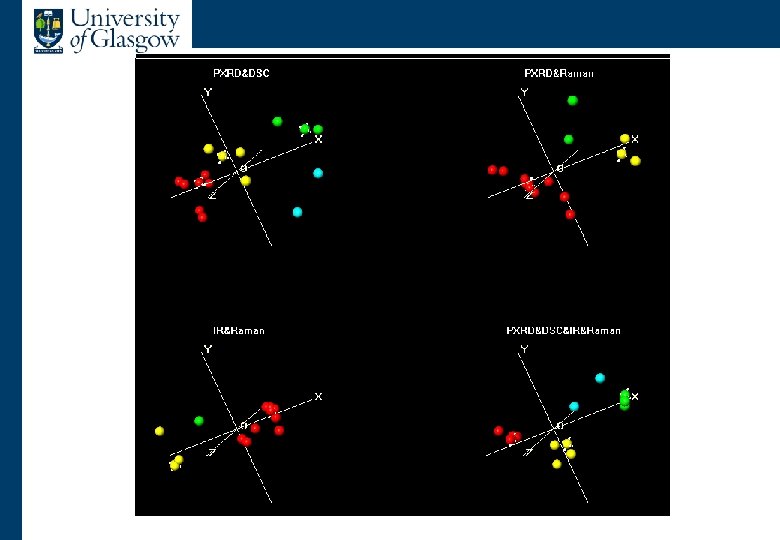 Side by side: 3 D MMDS
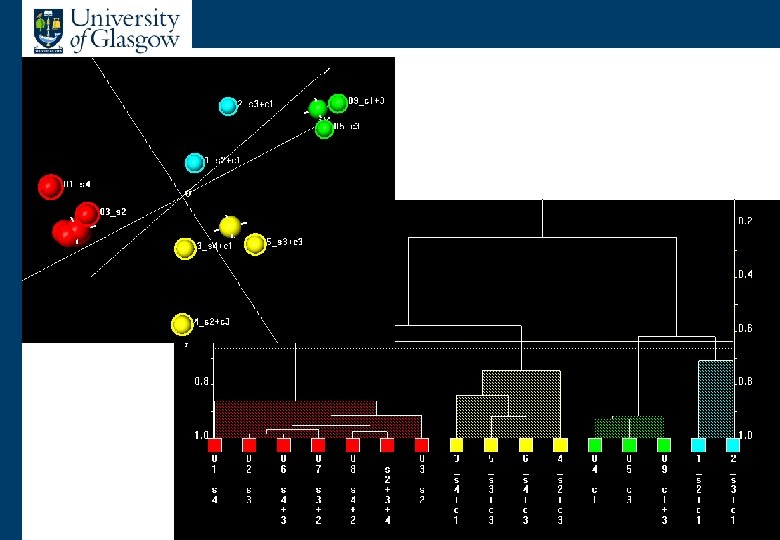 Combined Data: All Four
 Live Demo – Multiple Datasets
 Combined Conclusions • Full Profile Matching + Cluster analysis methods do very well in distinguishing forms automatically using either Raman or PXRD data individually • Combined results using Dynamic Weighting seem to do better than either PXRD or Raman individually • Use of combined data helps highlight any inconsistencies in separate analyses Such inconsistencies would not be obvious with only one data source • Outliers can then be examined manually in detail • • Seeing similar clustering from multiple original data sources increases confidence in the overall results
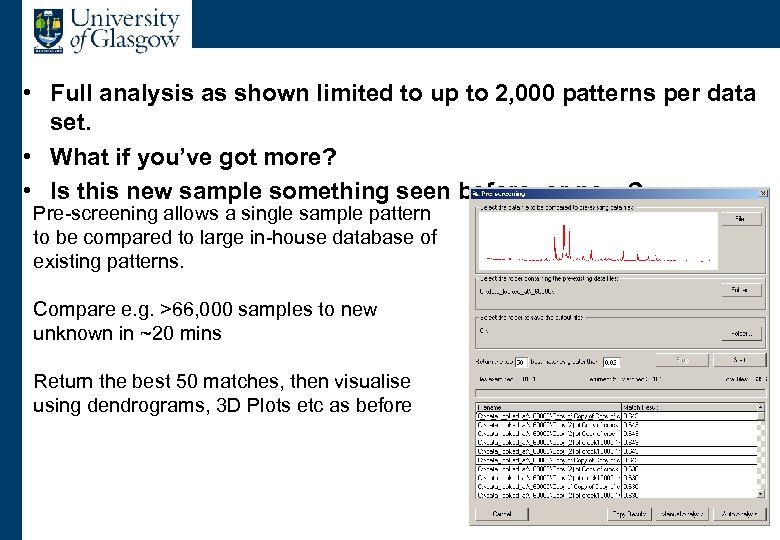 Pre-screening large datasets • Full analysis as shown limited to up to 2, 000 patterns per data set. • What if you’ve got more? • Is this new sample something seen before, or new ? Pre-screening allows a single sample pattern to be compared to large in-house database of existing patterns. Compare e. g. >66, 000 samples to new unknown in ~20 mins Return the best 50 matches, then visualise using dendrograms, 3 D Plots etc as before
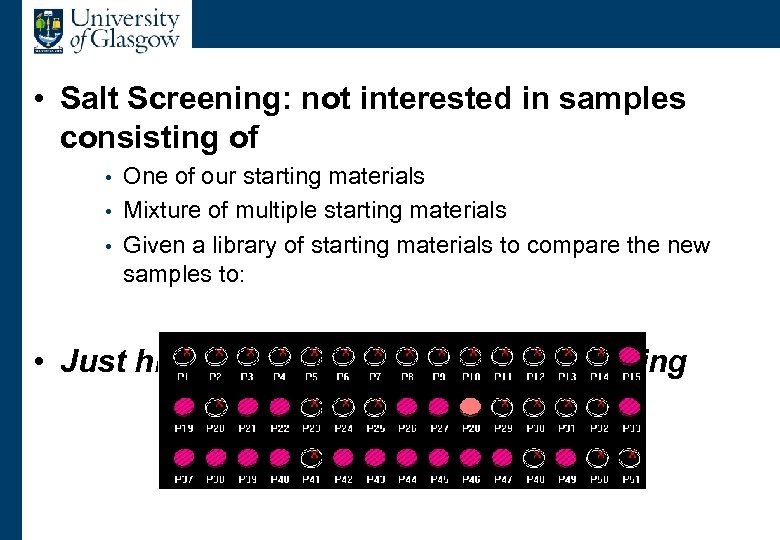 Salt Screening Mode • Salt Screening: not interested in samples consisting of One of our starting materials • Mixture of multiple starting materials • Given a library of starting materials to compare the new samples to: • • Just highlight what’s new and interesting
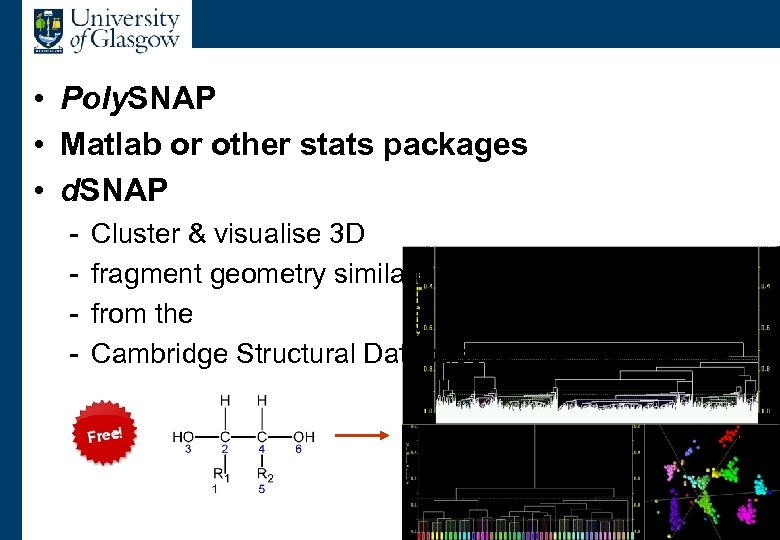 How do I do this? • Poly. SNAP • Matlab or other stats packages • d. SNAP - Cluster & visualise 3 D fragment geometry similarities from the Cambridge Structural Database
 Acknowledgements • Many thanks to…. – Arnt Kern & Karsten Knorr, Bruker AXS – Chris Frampton & Susie Buttar, Pharmorphix – • For more information, please contact us: • Email: Web: • snap@chem. gla. ac. uk www. chem. gla. ac. uk/snap